What to look for in nature in Rhode Island this October
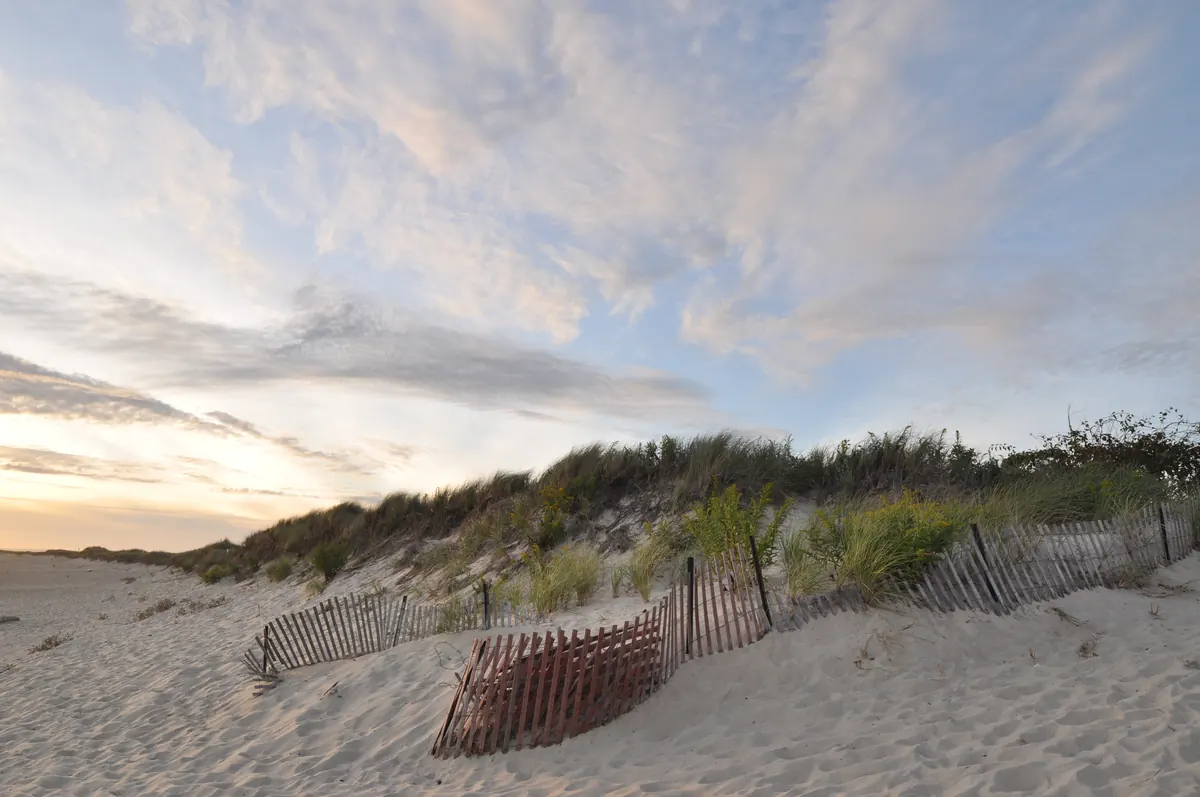
Rhode Island’s October is a coastal month. Young songbirds blown to the shore on northwest winds crowd the thickets of Block Island and Napatree Point, saw-whet owls slip through at night, stripers and tautog feed along the rocks, and the leaves turn in the northwest hills weeks before the oaks of Aquidneck Island. The first freeze comes to the Kingston valley in early October and to Newport Harbor in mid-November. Here is the month, place by place, with dates.
Start here
- Block Island and Napatree in migration. The fall flight peaks on Block Island in late September and October. Go the morning after a northwest wind, when young warblers, sparrows and thrushes pile into the Clay Head thickets and the bayberry at Napatree Point, and falcons hunt the dunes behind them.
- Stripers now, tautog next. Striped bass and bluefish chase bait along the south shore and up the Providence River, false albacore thin out through the month, and the tautog limit rises from three to five fish on October 15 as blackfish move onto the rocks.
- Jupiter vanishes, then the Hunter’s Moon. Early on Tuesday, October 6, the crescent moon hides Jupiter from about 4:25 to 5:30 a.m. in a fully dark sky; Frosty Drew Observatory opens at 4 a.m. for it. Look east at sundown on the 25th and 26th for the Hunter’s Moon, and for Orionid meteors in the moonless hours before dawn midweek, on the 21st and 22nd.
Write it down as it happens. In the Naturalist’s Field Journal, give the Block Island warblers and the first siskin a line on the “birds I have seen” list; put the witch hazel capsules and acorn caps on the seeds-pods-and-cones plate, the occultation morning in the dusk and dawn watch, the surf and gull calls on a map of sounds, and the first white frost in the daily field log.
Regions used below: Northern Rhode Island and the Blackstone Valley; Providence and the upper bay; The western hills (Foster, Scituate, Coventry); South County and the salt ponds; Newport, Aquidneck Island and the East Bay; Block Island.
When do the leaves turn in Rhode Island?
Rhode Island’s color starts in the wooded northwest corner and finishes at the salt water. The state tourism office has it beginning in the northern towns around early October and reaching Newport in the second half of the month; one model-based forecast, with a stated margin of about ten days, centers the statewide peak on October 17–19. A single nor’easter can end the show early.
-
The northwest hills first
Early to mid-October · Foster, Glocester, Burrillville, Scituate; George Washington Management Area
The highest ground in the state, around Jerimoth Hill in Foster, cools first, and the swamp maples in the low spots go scarlet before the oaks on the ridges have moved. The North Foster weather station, at almost 200 meters, is the highest in the freeze table below.
-
Arcadia, Lincoln Woods and the river valleys
Mid-to-late October · Arcadia Management Area; Lincoln Woods State Park, Lincoln
Arcadia, more than 14,000 acres and the state’s largest recreation area, is the place for red and orange oaks and yellow birches late in the month; Lincoln Woods rings a lake with color a few miles from Providence. Arcadia is a management area, so read the orange rule under safety first.
-
The coast and the islands last
Mid-to-late October; oaks later · South County, Aquidneck Island, Block Island
On the coast salt spray browns many leaves before they turn, so the show belongs to the shrubs: sumac and Virginia creeper in red, shadbush in orange. Around Newport the tourism office puts the peak in the middle to latter part of the month, and the oaks there hold russet leaves after the maples are bare.
Photograph one tree on your street each Saturday and note the day it stands bare. For your exact location, the Field almanac estimates leaf-out and leaf-drop dates from satellite data.
Where do migrating birds pile up in Rhode Island in October?
A small state with a long, broken coastline catches more than its share of fall migrants. Young birds on their first trip south drift toward the shore on northwest winds, and when they reach open water they drop into whatever thickets they can find. Rhode Island’s answer to that problem is Block Island and the barrier beaches, and October is their best month.
-
Block Island’s fall songbirds
Late September through October; best the morning after a northwest wind · Clay Head Trail, Rodman’s Hollow and the island’s shrubby interior
The island’s own visitor guide says migration builds through September and peaks in late September and October, with warblers, thrushes and sparrows in the Clay Head thickets and harriers working Rodman’s Hollow. Behind that sits one of the country’s longest-running banding stations, begun in 1967. A University of Rhode Island team analyzed 66,288 birds of 22 species caught there between 1970 and 2021 and found an encouraging pattern: of 18 species that declined in the 1970s and 1980s, 14 had climbed back close to their 1970 levels, and two, the blue-headed vireo and the eastern phoebe, fully recovered. The researchers credit the island’s fruiting shrubs, where exhausted young migrants refuel before the next leg.
-
Saw-whet owls in the nets
Mid-October to Thanksgiving, on nights with the right wind · Block Island and mainland banding sites
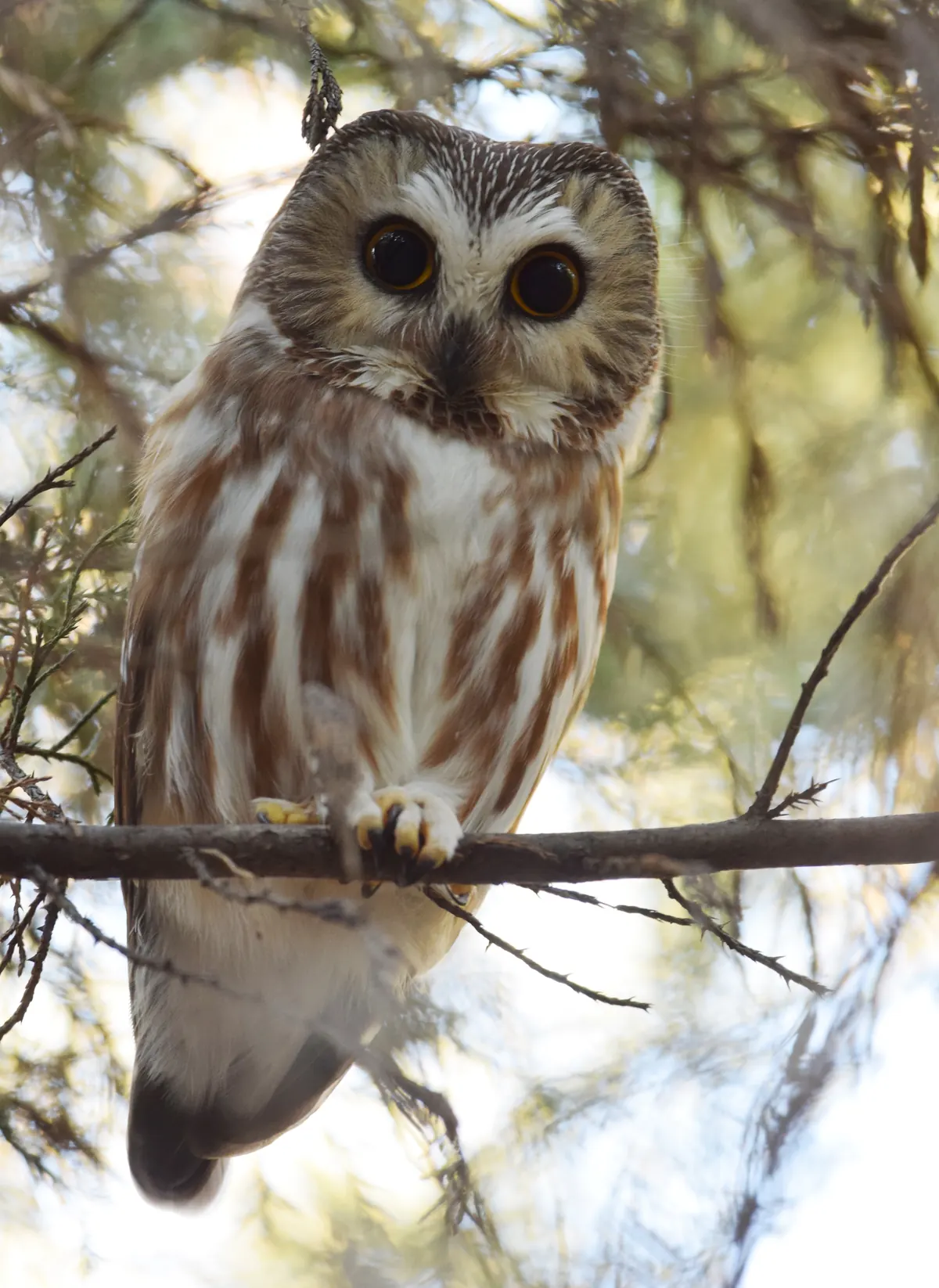
The northern saw-whet owl, about eight inches tall and the smallest owl in the state, moves through at night. On Block Island, The Nature Conservancy’s staff have set mist nets and played the owl’s tooting call on promising evenings from mid-October to Thanksgiving, and one year banded more than 200. Nearly all the owls caught on the island are young birds, because first-year migrants riding north winds get pushed toward the coast while adults follow inland routes. If you find one roosting in a cedar by day, admire it quietly from a distance.
-
Napatree Point
All month · Watch Hill, Westerly; walk west from the Watch Hill beach
This 1.3-mile sand spit reaching into Little Narragansett Bay is a National Audubon Important Bird Area. University of Rhode Island counts there have logged 259 bird species, about 90 percent of them migrants, including at least 23 kinds of warbler as well as hawks, falcons and eagles. Six bat species use it too. After an October front, expect falcons over the dunes and small birds in every bayberry patch.
-
Winter finches: a pine siskin year
October into winter · White pine stands first, feeders later
On September 25 the Finch Research Network predicted a sizable pine siskin irruption in the northeastern states and noted a very good white pine cone crop, so siskins should feed in the woods more than at feeders at first. It predicts only a small, late purple finch flight, small numbers of evening grosbeaks reaching as far as Massachusetts, and no big push of red-breasted nuthatches.
Birders worldwide log everything they find on October Big Day, which this year is the 10th, a Saturday; the Big Sit, a count made from one small circle, spans that Saturday and Sunday. Window strikes kill many migrants in fall; the Audubon Society of Rhode Island lists a workshop on making bird-safe window clings in Bristol on Friday, October 2. Log the first siskin and the last catbird of the season in your journal’s bird list.
What is happening on the Rhode Island shore this month?
The ocean keeps the coast mild well into the fall, and October is when the summer crowd leaves and the migrants take the beaches back.
-
Monarchs in the dune cedars
The tail of the migration; peak at this latitude is mid-September · Napatree Point, the South County barrier beaches, Block Island
Monarch Watch gives September 8–20 as the peak flight at 41° north, a line that passes just south of Block Island, so by October the numbers are falling. The coast stretches the season, though. Monarch Watch notes that storms and strong head winds sweep monarchs toward the shore on the backside of fronts, and at Napatree the stragglers cluster in the red cedars and fuel up on goldenrod and saltbush before crossing open water. A calm, sunny afternoon after a cold front is the time to look. Report any cluster to Journey North.
-
Seaside goldenrod
Late summer and fall · Dunes, beaches and salt marsh edges
Seaside goldenrod is the thick-leaved goldenrod of the beach, with waxy, fleshy leaves that hold water against salt spray and big, arching heads of yellow flowers. The Native Plant Trust records it in every coastal New England state. On a warm afternoon it hums with bees and the odd monarch.
-
The first harbor seals
Seal-watch season runs November through April; boat cruises on the Pawcatuck in October and November · Rose Island and the Newport Bridge; Little Narragansett Bay
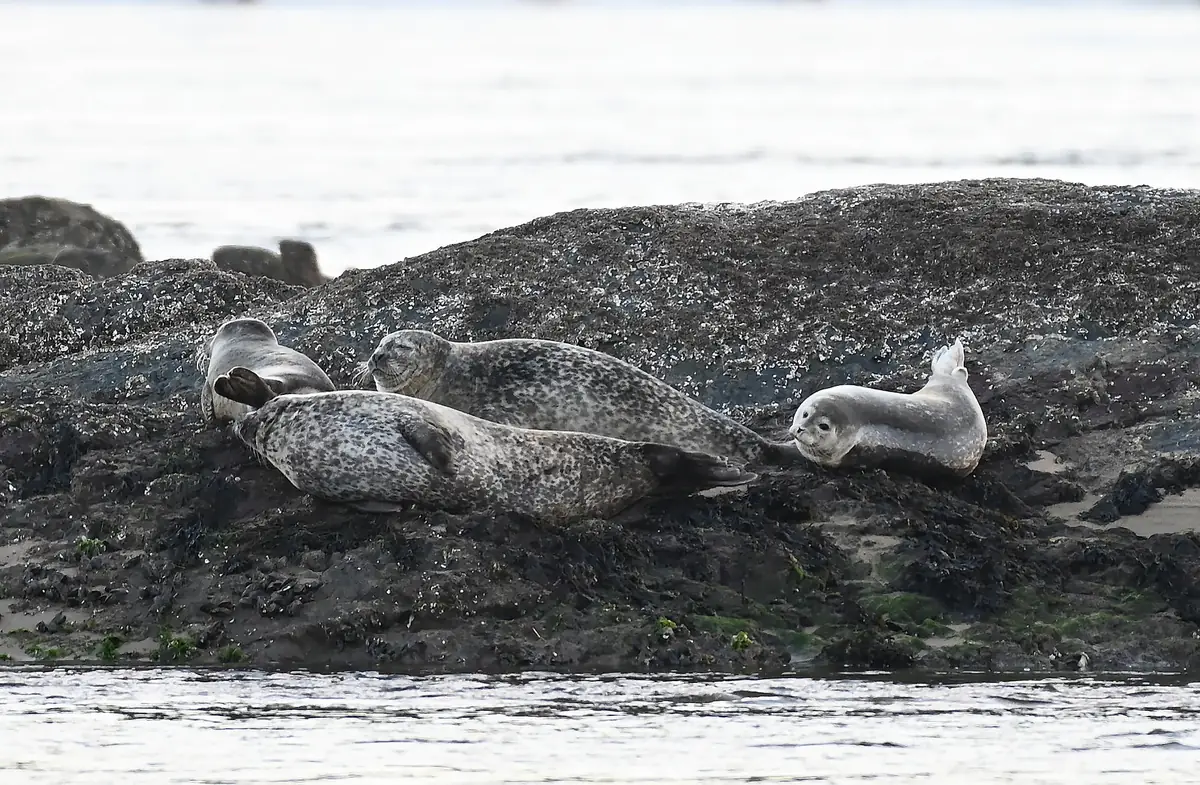
Harbor seals come south from Maine and the Canadian Maritimes to spend the winter in Narragansett Bay, hauling out on rocks such as Citing Rock off Rose Island. Save The Bay’s Newport seal tours run from November to April, but its Westerly nature cruises, which leave from Watch Hill in October and November and head down the Pawcatuck River into Little Narragansett Bay, mix fall color with the chance of an early seal on the rocks.
Beach plum shrubs, native to the Rhode Island dunes, ripen their dusky purple fruit in late summer, so little is left by now, but the thickets still shelter migrants; look into them rather than walking through them, since the dunes are fragile and ticks wait on the edges.
What is biting in Rhode Island waters in October?
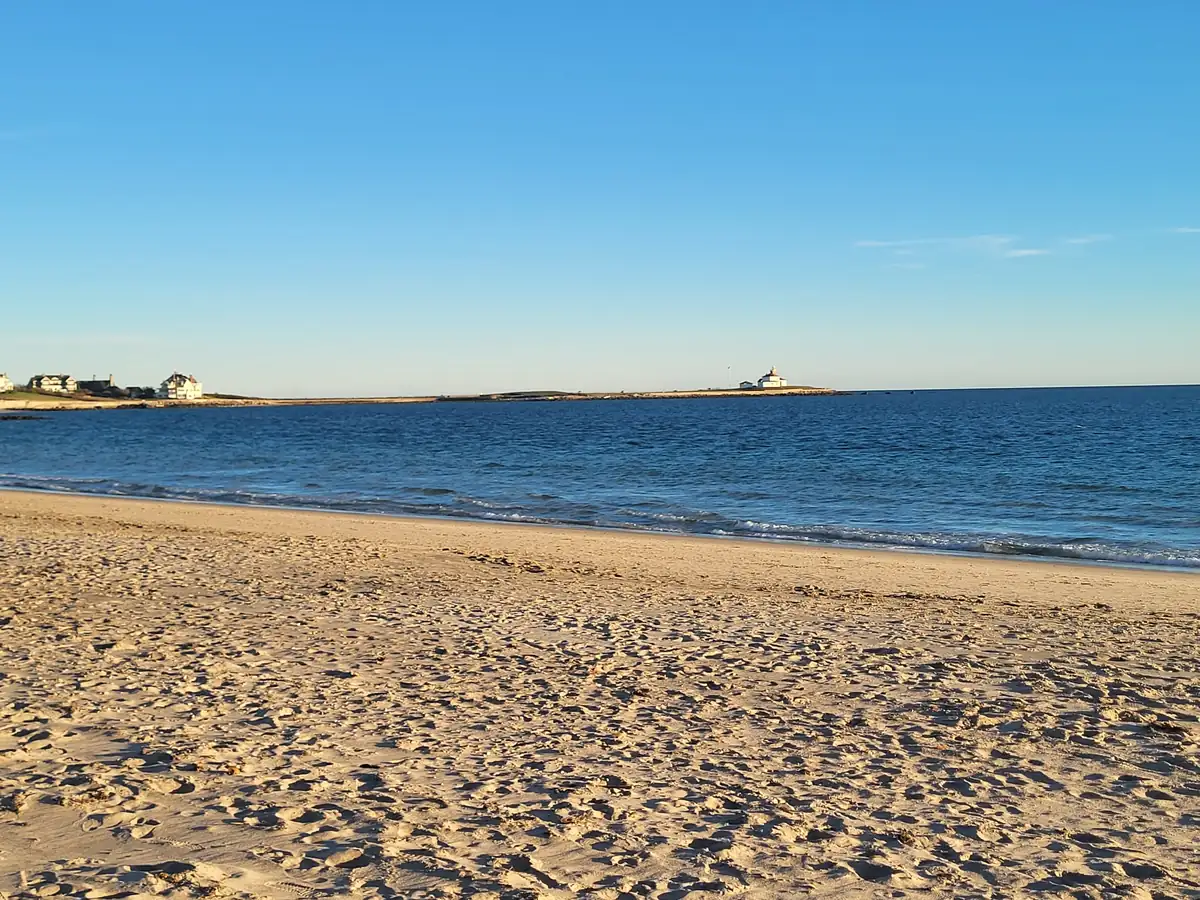
October is the fall run, when bait schools pour out of the bays and the predators follow them along the beaches. Reports from Rhode Island tackle shops last October described striped bass and bluefish blitzing on peanut bunker off the south shore and good numbers of slot and bigger bass up in the Providence and Seekonk rivers.
-
Striped bass
All month, often best at night and at dawn · The south shore beaches, the lower bay, the Providence and Seekonk rivers
Under the 2026 rules an angler may keep a single striper a day, and only one measuring 28 inches up to, but not including, 31 inches; every other bass is released.
-
False albacore and bonito, going
September into October; usually thinning out by late October · Watch Hill, the breachways, Point Judith, Newport
These small, fast tunas arrive in late summer and blitz bait on the surface in bursts that last seconds. By late October they are usually thinning out, as last year’s reports put it. If you see terns and gulls diving and the water boiling off a jetty, that is probably them.
-
Tautog, coming on
Five fish a day from October 15 · Rock piles, ledges and jetties in the lower bay and along the south shore
Tautog, or blackfish, move into the shallows to feed on crabs and mussels as the water cools. Rhode Island’s season runs August 1 to October 14 at three fish a day, then October 15 to December 31 at five, with no more than one fish over 21 inches. Last year’s late-October reports called the tog fishing about as good as it gets.
Black sea bass stay open to shore and private-boat anglers through December 31 at 16 inches or longer, and scup through the end of the year. Jot tide, wind and water temperature beside each catch; after a few seasons those notes beat any fishing report.
When is the first frost and freeze in Rhode Island?
Rhode Island has two freeze seasons a month apart. Inland valleys that drain cold air on still nights freeze early: the Kingston station, in a low spot near the University of Rhode Island, reaches its median first freeze on October 8 and has already frozen by September 30 in one year in ten. The ocean keeps the southeastern shore warm: Newport Rose, a few meters above the harbor, waits until November 13 in a typical year. Providence’s airport in Warwick sits between them at October 30. Frost on the lawn, possible whenever a clear night drops the air to the mid-30s, usually comes before any of these dates.
| Station | One year in ten | Median | Nine years in ten |
|---|---|---|---|
| Woonsocket (Blackstone Valley) | Oct 5 | Oct 19 | Nov 2 |
| N Foster 1 E (northwest hills) | Oct 4 | Oct 19 | Nov 2 |
| Coventry 2 (western Kent County) | Oct 5 | Oct 20 | Nov 4 |
| Providence T F Green Airport (Warwick) | Oct 16 | Oct 30 | Nov 12 |
| Kingston (South Kingstown) | Sep 30 | Oct 8 | Oct 23 |
| Westerly State Airport | Oct 16 | Oct 31 | Nov 12 |
| Tiverton (East Bay) | Oct 20 | Nov 2 | Nov 15 |
| Newport State Airport (Middletown) | Oct 22 | Nov 4 | Nov 17 |
| Newport Rose (Newport Harbor) | Oct 31 | Nov 13 | Nov 27 |
Kingston and Newport Rose sit about ten miles apart, yet their median first freezes differ by five weeks, so a garden’s spot on the slope counts for as much as its town. Every other station in the state is on the Rhode Island frost dates page. When the first clear, calm night is forecast, carry in the potted herbs and strip the tomato vines, and record the first morning the lawn turns white.
How much daylight does Rhode Island lose in October?
About an hour and twenty minutes. Providence loses 80 minutes between October 1 and October 31, roughly 2.7 minutes a day; Woonsocket, the farthest north, loses 82, and New Shoreham on Block Island 78. Sunrise in Providence slides from 6:43 to 7:17 a.m. over the month, and sunset from 6:27 to 5:41 p.m. Once the clocks go back to standard time in the early hours of November 1, a Providence sunset comes at about 4:40 p.m.
| City | Oct 1 | Oct 31 | Lost | Per day |
|---|---|---|---|---|
| Woonsocket | 11 h 45 m | 10 h 23 m | 82 min | 2.7 min |
| Providence | 11 h 44 m | 10 h 24 m | 80 min | 2.7 min |
| Warwick | 11 h 44 m | 10 h 24 m | 80 min | 2.7 min |
| Coventry | 11 h 44 m | 10 h 24 m | 80 min | 2.7 min |
| Newport | 11 h 45 m | 10 h 25 m | 80 min | 2.7 min |
| Westerly | 11 h 45 m | 10 h 26 m | 79 min | 2.6 min |
| New Shoreham | 11 h 45 m | 10 h 27 m | 78 min | 2.6 min |
The Field almanac gives the same numbers for any street address, twilight included.
What is October weather like in Rhode Island, and what will El Niño do to the winter?
October here is mild and fairly wet. NOAA’s 1991–2020 normals give average highs near 64 °F at T. F. Green Airport and Woonsocket and 65 °F at Kingston. The lows show the geography: 42 °F at Woonsocket and Kingston, 45 °F at the airport, 49 °F at Newport Rose beside the harbor. Normal rainfall runs from 4.18 inches at the airport to 5.08 at Woonsocket, and one soaking nor’easter can supply a good share of it. Snow is unusual: the airport’s October normal is two-tenths of an inch, November’s about an inch.
The winter beyond is being set up in the tropical Pacific. Odds for a very strong El Niño through the cold season now top 90 percent, the Climate Prediction Center wrote in mid-September. A NOAA and Northeast Regional Climate Center summary lays out what such winters usually bring here: the polar jet stream shifted north, milder air, and more storms tracking up the coast, about two extra classic nor’easters a winter in one study. Snow is the uncertain part. NOAA’s Climate.gov maps for moderate and strong events show below-normal snow over interior New England, and all of New England came in short on snow in 2015–16; yet the same NOAA summary finds snowfall near the Northeast coast typically running above average in El Niño winters, by as much as 6 inches, and counts the January 2016 blizzard among the big storms of such years. Those two readings pull opposite ways, so for Rhode Island the fair bet is a mild, wet winter whose snow total hangs on the track of a few nor’easters. October feels almost none of this. The official December-to-February outlook is due in mid-October.
For the next few days rather than the next few months, the Weather now page shows the forecast for your location.
What is in the Rhode Island night sky in October?
-
Jupiter goes behind the moon
Tuesday, October 6, about 4:25 to 5:30 a.m. EDT · Due east, the moon about 23 degrees up at the start
The crescent moon, 18 percent lit, rises in Providence at 2:09 a.m. with Jupiter close beside it. For Providence, IOTA’s timings have Jupiter slipping behind the moon’s sunlit limb at 4:25:47 a.m., with the moon about 23 degrees high, and reappearing at the unlit limb at 5:29:41, with the moon near 34 degrees. Civil twilight starts at 6:20, well after it is over. Jupiter’s four bright moons vanish one after another in the minutes before and after. Frosty Drew Observatory in Charlestown, which gives its local times as 4:23 and 5:28, is opening from 4 to 6 a.m. for the event, with telescopes, a live stream on the Sky Theatre screens and a suggested $5 donation.
-
The Hunter’s Moon
Sunday, October 25 and Monday, October 26 at dusk · Low in the east-northeast
Full phase arrives at 12:12 a.m. Monday, which splits the difference: to the eye the moon is round on both evenings. Providence moonrise is 5:13 p.m. on Sunday, 36 minutes ahead of sunset, and 5:45 p.m. on Monday, three minutes ahead of it. Watch it come up over the bay from the western shore, at Rocky Point in Warwick or Conimicut Point. Despite the headlines you may see, this full moon is too far from perigee to count as super.
-
Orionids
Best before dawn on October 21 and 22; active October 2 to November 7 · Anywhere with a dark southern sky
The Orionids are crumbs of Halley’s Comet, quick and often bright, with a broad peak around October 21 and 22. The gibbous moon washes out the evening, so wait until it sets: at 1:54 a.m. on the 21st and 3:01 a.m. on the 22nd in Providence. That leaves two to three hours of dark before dawn begins to brighten the east. The beaches of South County, with the lights of the mainland behind you, are the best Rhode Island spots.
-
Draconids
Evening of Thursday, October 8 · High in the north and northwest after dark
This slow, usually sparse shower peaks early in the evening, before bedtime for most children. The moon does not rise until 4:34 the next morning, so the evening sky is fully dark. Expect only a handful per hour and count yourself lucky if you get more.
-
Saturn at opposition, Venus leaving, Jupiter and Mars at dawn
Saturn opposite the sun October 4; Mars at the Beehive the morning of October 11 · Saturn in the east at dusk; Jupiter and Mars in the east before sunrise
With opposition on the 4th, the ringed planet is in the sky from dusk to dawn all month, and a fattening moon parks beside it for two late-month evenings, the 23rd and 24th. Catch Venus low after sunset in the opening days if you can; after that the sun swallows it, and it swings between Earth and sun on the 23rd. Mornings are for Jupiter, blazing in the east, and Mars, the dim orange dot sliding across the Beehive, a star cluster in Cancer, on the 11th; binoculars show the pair.
-
Public telescope nights
Fridays, October 2, 9, 16 and 23, 7:30 to 9:30 p.m.; October 30 for Halloween · Frosty Drew Observatory, Ninigret Park, Charlestown
Frosty Drew opens its telescopes to the public on Friday nights; October’s listings are 7:30 to 9:30 p.m. on the 2nd, 9th, 16th and 23rd, plus a Halloween night on the 30th, with a $5 donation asked of anyone over four. It sits beside a wildlife refuge, so only red lights are allowed after dark.
| Phase | Date | Time |
|---|---|---|
| Last quarter | Saturday, Oct 3 | 9:25 a.m. EDT |
| New moon | Saturday, Oct 10 | 11:50 a.m. EDT |
| First quarter | Sunday, Oct 18 | 12:12 p.m. EDT |
| Full moon, the Hunter’s Moon | Monday, Oct 26 | 12:12 a.m. EDT (looks full on the evenings of Oct 25 and 26) |
| Last quarter | Sunday, Nov 1 | 3:28 p.m. EST |
A look at Today’s sky tells you whether the drive to the beach is worth it tonight, and the moon phases page lists local rise and set times.
What is blooming and ripening in Rhode Island in October?
-
Witch hazel
Flowers from October into November · Woodland understory, stream banks, rocky slopes
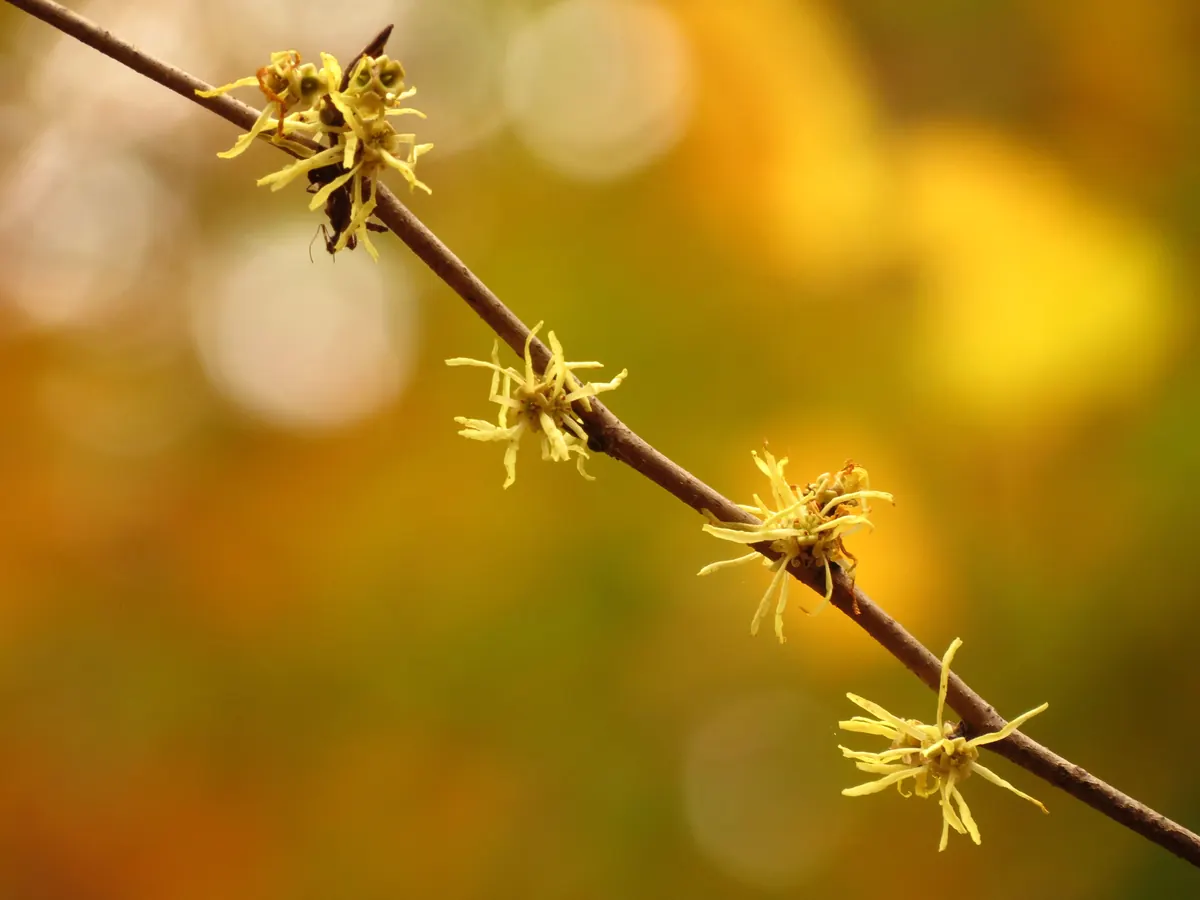
American witch hazel does everything backward. Its crinkly, ribbon-petaled yellow flowers open in the fall, often after the leaves have dropped, and the same branches carry last year’s woody capsules, which split and shoot their black seeds as far as 30 feet, according to the Native Plant Trust. On a dry afternoon in the woods of western Rhode Island, listen for the tick of a capsule firing.
-
The Rhode Island Greening
Ripens September into October · Orchards statewide
The state fruit is a green cooking apple that traces back to about 1650, to a tavern keeper named Green in Middletown on Aquidneck Island. It is large, round and tart, green that turns yellowish when fully ripe, and it keeps into February. Few supermarkets carry it, so ask at the orchard stands; a Greening pie is an old Rhode Island October tradition worth reviving.
-
Asters and goldenrods
Until the first hard freeze · Roadsides, fields, powerline cuts
New England aster, deep purple with a yellow eye, blooms into October beside the tall goldenrods, and together they are the last big nectar supply for bumblebee queens and migrating monarchs. Goldenrod pollen is heavy and sticky and moves by insect; the hay fever in the air belongs to ragweed.
Tape a spent witch hazel capsule or a pressed aster to the journal’s seed-and-pod plate, with the place and date beside it.
What are Rhode Island’s animals doing in October?
-
Marbled salamanders on the move
Late summer and early fall; the eggs hatch when the rains come · Dry vernal pool basins in woodland
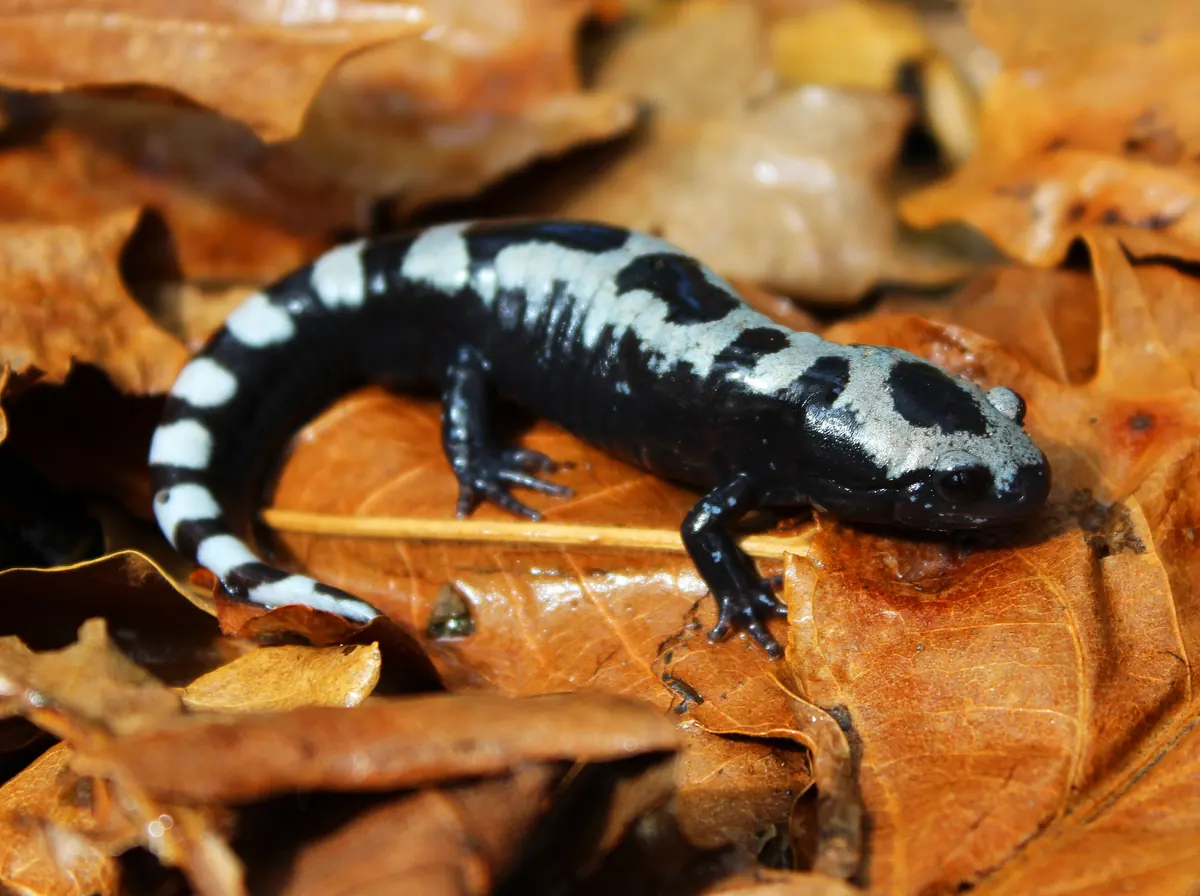
Most salamanders breed in spring pools. The marbled salamander, a stout black animal banded in white (males) or silvery gray (females) and about four inches long, breeds in the fall instead, and southern New England is the northern edge of its range. Females lay their eggs in the dry bottoms of seasonal pools and curl around them until fall and winter rains flood the basin and the larvae hatch. If you find one under a log near a dry woodland hollow, look and put the log back exactly as it was.
-
Deer start the rut
From late October; peak in the last two weeks of November · Statewide, including the suburbs
Across the line in Connecticut, the state wildlife agency puts the start of the deer rut in late October and its peak in the last two weeks of November, and Rhode Island’s deer keep much the same calendar. Watch for rubbed saplings, pawed scrapes under low branches and bucks crossing roads at dusk with their minds elsewhere. The dusk-and-dawn watch plate is made for these weeks.
-
Adult ticks
October and November, and warm days in winter · Leaf litter, brushy edges, dune grass
According to the CDC, blacklegged ticks in their adult stage do most of their questing in the fall and early spring. Adults are larger and easier to spot than summer nymphs, but they still carry Lyme bacteria. Tuck pants into socks, treat clothing, and check everyone, including the dog, after every walk.
-
The cricket count
Until the first hard freeze · Gardens and field edges after dark
Cricket song slows as the evenings cool. A snowy tree cricket’s chirps counted over 14 seconds, plus 40, gives the Fahrenheit temperature within a few degrees, and the cricket thermometer plate has columns for those counts. Note the first silent night.
What can Rhode Island families do outdoors in October?
- Every night, October 1 to November 1: the Jack-O-Lantern Spectacular at Roger Williams Park Zoo in Providence, more than 5,000 carved pumpkins on a darkened trail, 6 to 10:30 p.m. Family Fun Nights with costumed characters are October 6 and 7, 6 to 8 p.m.
- Saturday, October 3: goats and turtles. Audubon’s Fisherville Brook Wildlife Refuge in Exeter introduces the goats that clear its brush (10 a.m. to noon, with root beer floats), and the Audubon Nature Center and Aquarium in Bristol throws a birthday party for Franklin, its eastern box turtle (10 a.m. to 3 p.m.).
- October 3–4: the 52nd Harvest Fair at Norman Bird Sanctuary in Middletown, 10 a.m. to 5 p.m., with pony rides, train rides, music and a largest-pumpkin contest; afterward, walk the sanctuary’s trails.
- Tuesday, October 6, 4 a.m.: Jupiter and the moon. Set the alarm for the occultation, at home or at Frosty Drew in Charlestown.
- October 10–11: the birding weekend. October Big Day on Saturday and the Big Sit through Sunday; a morning on Napatree Point or Clay Head counts for both.
- Late October: owls. Audubon lists Owl-o-ween with live owls in Bristol on Saturday, October 24; a Hunter Moon owl prowl at Powder Mill Ledges in Smithfield on October 26; family owl prowls in Bristol on October 27; and a free Spooky Critters family day in Bristol on Halloween. Audubon program details can change, so confirm times and registration on its calendar.
- Citizen science. Report the last monarch you see to Journey North, add any bird list to eBird, post salamanders and mushrooms to iNaturalist, and join Project FeederWatch, whose count season starts in November.
More states are on our nature pages, and a month of these outings fits in the Naturalist’s Field Journal.
Safety notes for October in Rhode Island
- Orange on the management areas, for everyone. Rhode Island requires every user of state management areas, designated undeveloped state parks and cooperative hunting units, hikers, riders and bikers included, to wear 200 square inches of solid fluorescent orange above the waist and visible from all sides from the second Saturday in September through the last day of February. An orange hat meets the rule; fluorescent camouflage does not. During the shotgun deer season, December 5–31, the requirement rises to 500 square inches, a hat and vest together. Areas limited to archery hunting are exempt. Arcadia, Great Swamp, Big River and George Washington are all management areas, so keep orange in the car, and put some on the dog.
- What is open in October. From the DEM 2026–27 guide: deer archery in Zones 1 and 2 has been open since September 15 and runs to January 31; on Prudence and Patience islands, a disabled hunters’ season runs October 13–16, youth archery October 17–18 and regular archery from October 19; Block Island’s archery days are October 15, 16, 19–23 and 26–30. Youth muzzleloader is October 31–November 1, muzzleloader November 7–December 4. Fall turkey archery runs October 1–31, rabbit from October 1, youth pheasant October 10–12 at Great Swamp, Durfee Hill and Eight Rod Farm, pheasant on state land and woodcock from October 17, ducks October 9–12 before reopening November 25, and youth waterfowl October 24–25.
- Cold water and coastal storms. The bay and the ocean cool through the month; falling off a jetty or tipping a kayak can turn serious fast even when the air is warm, so wear a life jacket and fish the rocks with a partner. October nor’easters bring big surf and rip currents to the south shore; stay off the breakwaters when waves break over them.
- Ticks and mushrooms. Do a full tick check after time in the woods or dunes, and leave wild mushrooms on the ground unless an expert has identified yours in person.
Sources
- Visit Rhode Island (state tourism office): discover the magic of Rhode Island’s fall foliage
- More Than Just Parks: Rhode Island fall foliage forecast, 2026
- Block Island Tourism Council: birding on Block Island (fall migration timing, Clay Head, Rodman’s Hollow)
- Progressive Charlestown / URI: Block Island bird study, 66,288 birds from 1970 to 2021 (September 2025)
- ecoRI News: scientists seek insights into the migration of the 8-inch-tall saw-whet owl (Block Island banding)
- ecoRI News: Napatree Point migration is for the birds, bats and butterflies
- The Watch Hill Conservancy: about Napatree Point
- Finch Research Network: winter finch forecast 2026–2027 (September 25, 2026)
- BirdsCaribbean: October Big Day 2026 (Saturday, October 10)
- The Big Sit! 2026
- My Backyard News: October 2026 Audubon Society of Rhode Island highlights (event dates, times and places)
- Audubon Society of Rhode Island: programs, tours and events calendar
- Monarch Watch: peak migration dates by latitude
- Journey North: monarch sightings and roost reports
- Native Plant Trust Go Botany: seaside goldenrod
- Native Plant Trust Go Botany: beach plum
- Save The Bay: seal watch tours and Westerly nature cruises
- On The Water: Rhode Island fishing report, October 23, 2025
- Rhode Island DEM saltwater regulations via eRegulations: size, season and possession limits, 2026
- NOAA NCEI: U.S. Climate Normals 1991–2020 (first freeze dates, as on the site’s frost page)
- NOAA NCEI: 1991–2020 monthly normals for T. F. Green Airport, Woonsocket, Kingston and Newport Rose (data API)
- U.S. Naval Observatory: sunrise, sunset, moonrise and moonset (data API), Providence
- U.S. Naval Observatory: moon phases 2026
- Climate Prediction Center: ENSO diagnostic discussion, September 10, 2026
- NOAA and Northeast Regional Climate Center: El Niño impacts and outlook, Northeast region (Drought.gov)
- NOAA Climate.gov: how does El Niño affect snowfall over North America?
- NOAA Climate.gov: United States El Niño impacts
- Climate Prediction Center: seasonal outlook discussion
- International Occultation Timing Association: lunar occultation of Jupiter, October 6, 2026 (Providence timings)
- Frosty Drew Observatory: lunar occultation of Jupiter, October 6, 2026
- Frosty Drew Observatory: Stargazing Nights (October 2026 listings)
- EarthSky: visible planets and night sky guide
- EarthSky: meteor shower guide (Draconids, Orionids)
- American Meteor Society: 2026 meteor shower calendar
- Native Plant Trust Go Botany: American witch hazel
- Wikipedia: Rhode Island Greening (origin, ripening, keeping quality)
- Lady Bird Johnson Wildflower Center: New England aster
- Wikipedia: marbled salamander (fall breeding, egg guarding, range)
- CT DEEP: white-tailed deer fact sheet (rut timing in southern New England)
- CDC: Lyme disease, causes and transmission (adult tick seasons)
- CDC: preventing tick bites
- Roger Williams Park Zoo: Jack-O-Lantern Spectacular 2026
- Norman Bird Sanctuary: 52nd Harvest Fair, October 3–4, 2026
- eBird
- iNaturalist
- Project FeederWatch: how to participate
- Rhode Island DEM: 2026–2027 Rhode Island Hunting and Trapping Guide (PDF; season summary and fluorescent orange rules)
- Rhode Island hunting season summary, 2026–2027 (eRegulations)
- Rhode Island Hunting and Trapping Regulations, 250-RICR-60-00-9
- Photos via Wikimedia Commons; licenses and photographers are credited under each picture
