What to look for in nature in Rhode Island this November
November turns Rhode Island’s attention back to the water. The summer boats are hauled, and in their place come the winter residents: harlequin ducks riding the surf off Sachuest Point, eiders and scoters rafting off Beavertail, and harbor seals hauling out on the rocks of Narragansett Bay. Inland, the bucks are chasing does, the oaks and beeches cling to brown leaves after the maples have dropped theirs, and winterberry lights up the swamps in red. With standard time back from the first day, the good light is squeezed into the early afternoon. Below are the places and dates.
Other months in Rhode Island: October, December.
Start here
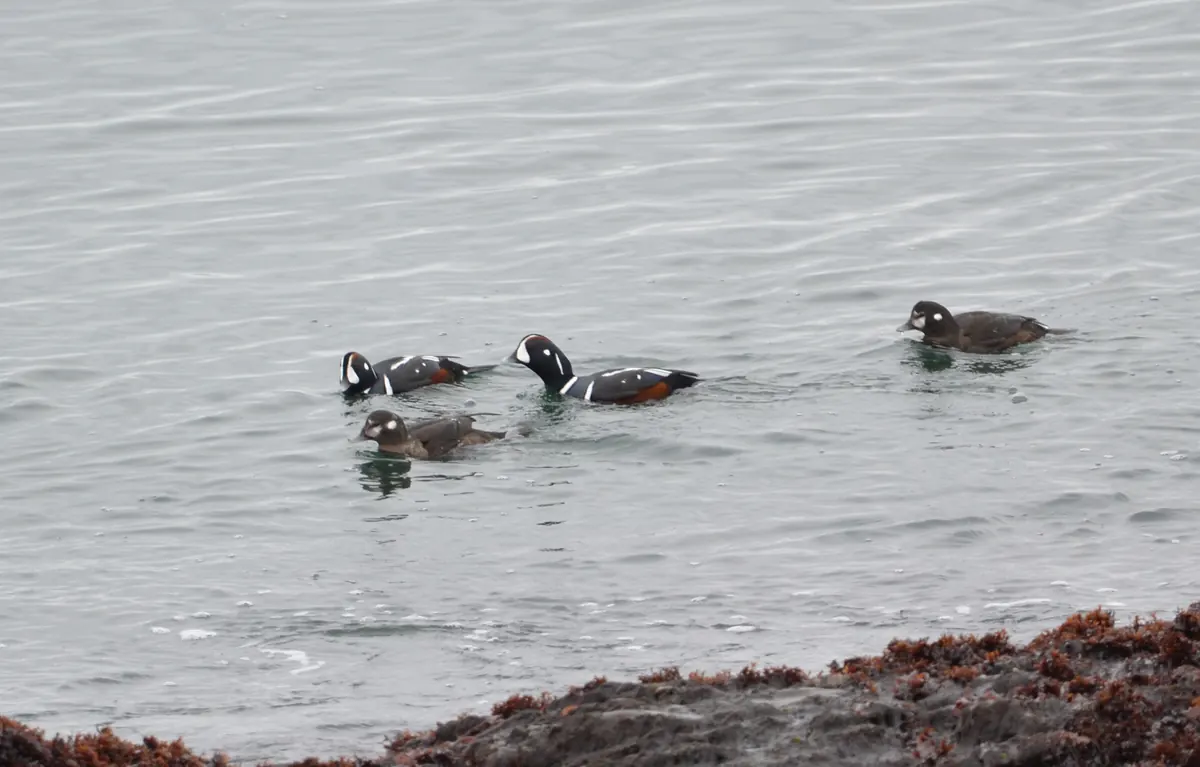
- Harlequins on the Sachuest rocks. The harlequin ducks are back at Sachuest Point National Wildlife Refuge in Middletown, one of the biggest winter gatherings of the species on the Atlantic coast. Walk the loop trail on an afternoon in the second half of the month and scan the eastern shore, where the slate-blue drakes dive in the white water beside common eiders.
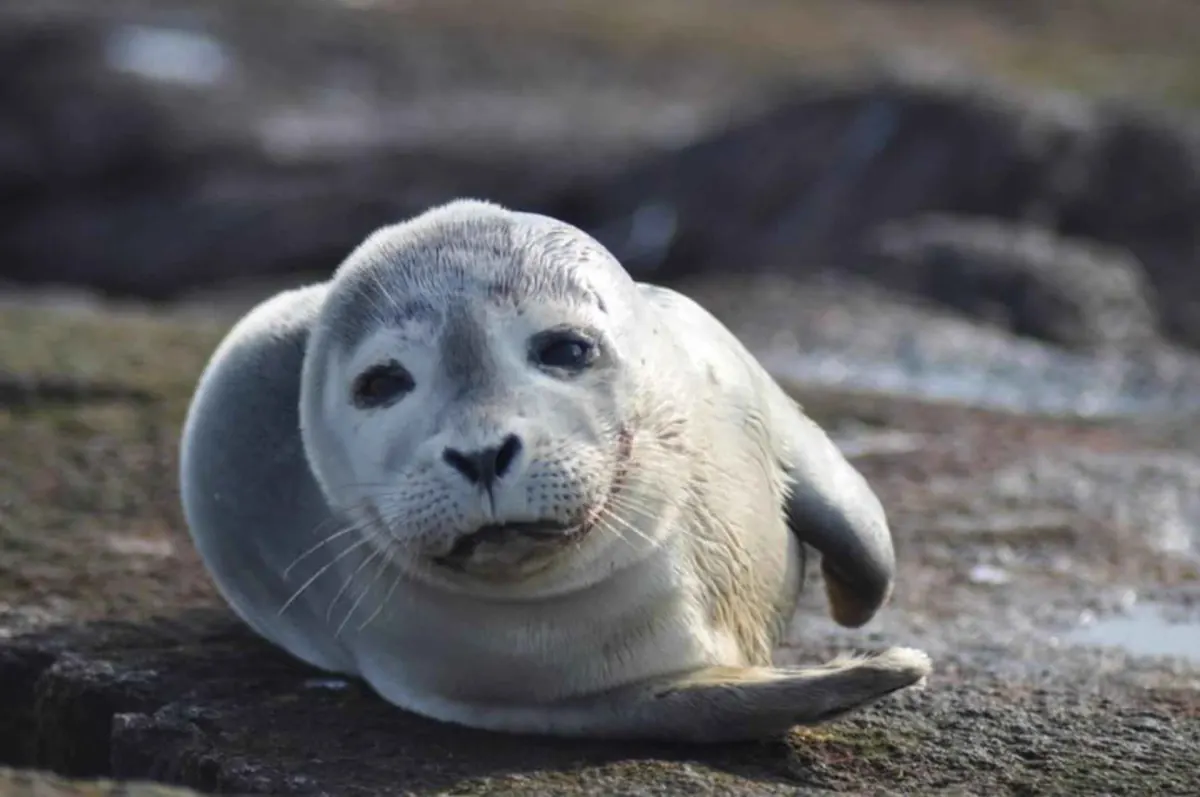
- Seals return to the bay. Harbor seals, the state marine mammal, have been trickling into Narragansett Bay since September, and November is when people start seeing them reliably. Time a walk to Rome Point in North Kingstown for low tide, bring binoculars, and look for gray, banana-shaped bodies on the offshore rocks.
- Leonids, then a Beaver supermoon. In the dark hours ahead of sunrise on Wednesday, November 18, once the half moon is down, the Leonids offer a modest dozen or so meteors an hour from a dark spot. A week later the full Beaver Moon, slightly closer than average, looks round as it rises on November 23 and again on the 24th.
Keep the month in the Naturalist’s Field Journal. Give the season’s first harlequin and eider a line in “birds I have seen”; sketch a buck’s rubs and scrapes for “reading the signs”; the Leonid morning and the Mars and Jupiter pairing go on the dusk and dawn watch; visit Rome Point early and late in the month for “the same place twice”, counting the seals each time; and log the first morning of ice on the birdbath in the daily field log.
Regions used below: Northern Rhode Island and the Blackstone Valley; Providence and the upper bay; The western hills (Foster, Scituate, Coventry); South County and the salt ponds; Newport, Aquidneck Island and the East Bay; Block Island.
When do harlequin ducks and other sea ducks come back to Rhode Island?
Rhode Island’s rocky southern shore, with its mussels, periwinkles and crabs, is a winter feeding ground for ducks that nest on Arctic and subarctic waters. They start arriving in late October, and by the end of November the rafts off the points are building toward their winter peak. Calm, gray days with low swell are the easiest for picking them out.
-
Harlequin ducks at Sachuest Point
From November, numbers building into December and holding through March · Sachuest Point National Wildlife Refuge, Middletown; the eastern shore and the observation platforms
Sachuest’s flock is described as the second biggest winter concentration of harlequins along the Atlantic seaboard, and BirdWatching magazine puts it at more than 100 birds in some years. A drake is blue-gray, rust along the sides, and painted with black-edged white bars and dots; the hen is dusky brown with pale cheek spots. They feed right in the breaking waves, where they dive for crabs and snails, and museum skeletons of the species often show old, healed fractures from being thrown against the rocks. Harlequins are closed to hunting in Rhode Island, and the state’s hunting guide warns duck hunters that the hens look like female buffleheads, goldeneyes and scoters around Sachuest and Beavertail.
-
Eiders, scoters and long-tailed ducks
Arriving through November; present all winter · Beavertail State Park, Jamestown; Brenton Point and the Ocean Drive, Newport; Sachuest; Point Judith
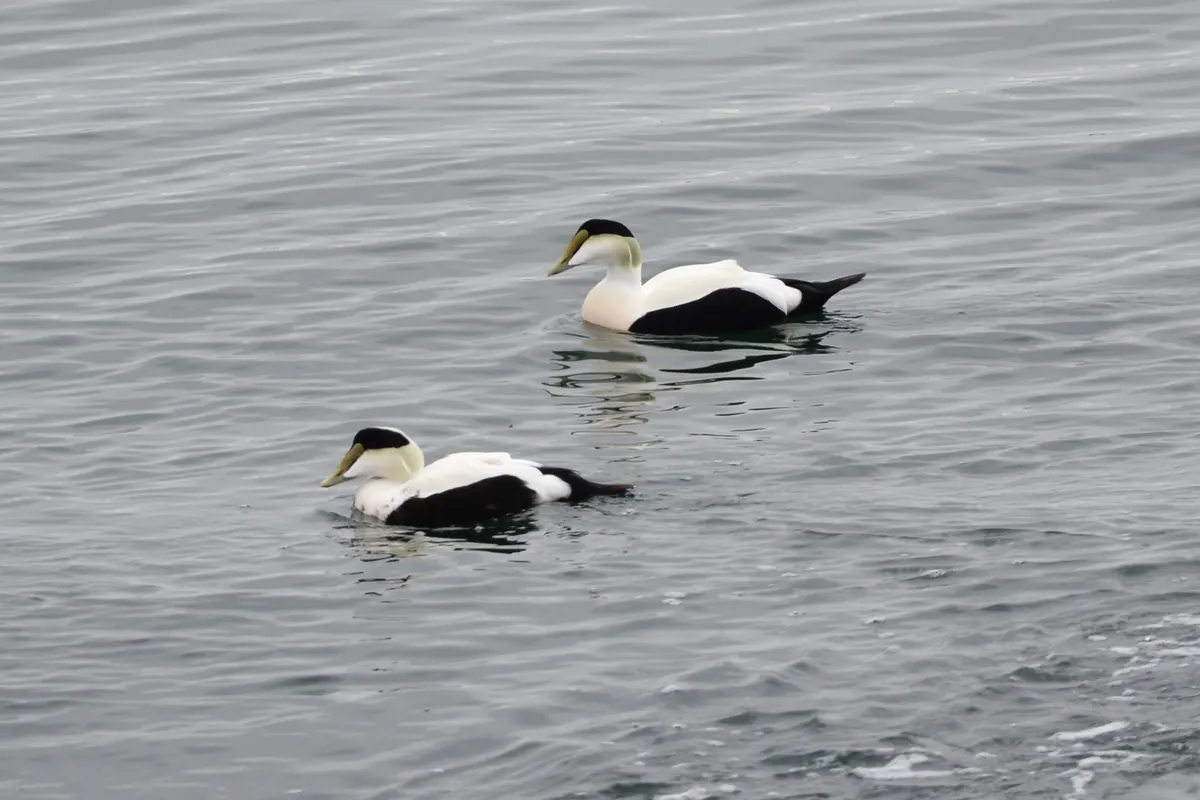
Common eiders are the big, heavy sea ducks of the Rhode Island coast, the males black below and white above with a pale green wash on the nape. National Audubon’s guide to birding the state notes wintering flocks of them along the shore. Look among them for the three scoters (black, surf and white-winged) and for long-tailed ducks, whose yodeling calls carry across the water on still mornings. A spotting scope helps, but many rafts sit within binocular range of the Beavertail rocks.
-
Purple sandpipers and the first snowy owls
Sandpipers from late November; owls in some winters, usually from late fall · Wave-washed rocks at Sachuest; open dunes and marsh edges along the south shore
Audubon lists purple sandpipers on the Sachuest rocks from late November into May: dumpy, dark gray shorebirds with yellow-orange legs that pick through the seaweed just above the surf line. Snowy owls come south in numbers only in some winters; Sachuest has the best record for them in the state, and others have turned up on Moonstone Beach, at the Charlestown Breachway and on Block Island. Give any owl you find plenty of room; every time it flushes it spends energy it needs.
-
Dabbling ducks on the salt ponds
Fall through spring · Trustom Pond National Wildlife Refuge, South Kingstown; Ninigret Pond, Charlestown
Audubon calls Trustom Pond one of the best all-around birding stops in Rhode Island, with a good mix of ducks from fall through spring. In November, look for American black ducks, buffleheads and hooded mergansers settling onto the coastal ponds.
When do harbor seals come back to Narragansett Bay, and where can you see them?
Harbor seals summer in Maine and the Canadian Maritimes and spend the cold months in southern New England. Save The Bay, which has tracked them for about 25 years, says they begin to appear in Narragansett Bay in September and build slowly to a peak in March before leaving in April. November is early in that curve, but by now the regular haul-out rocks are in use, especially around low tide.
-
Rome Point at low tide
Fall through spring; best within an hour or two of low tide on a calm day · John H. Chafee Nature Preserve, Rome Point, North Kingstown
A short walk through the woods from the parking area brings you to the shore of the West Passage, with seal rocks just offshore. As the tide drops the seals climb out to rest, sometimes a dozen or more on a winter day. Stay on the beach and use binoculars: if heads lift and turn toward you, you are close enough. The point is exposed to the wind off the West Passage, so dress warmer than the town forecast suggests.
-
Seal tours from Newport
The season runs November through April, mostly on weekends and school holidays · Newport Harbor, around Rose Island and under the Newport Bridge
Save The Bay’s boat tours idle past seals resting on Citing Rock off Rose Island and on rocks beneath the bridge, with sailings timed to low tide. A one-hour trip costs $25 for adults and $20 for members, seniors and children 3 to 12. In recent seasons the first Newport sailings came around Thanksgiving weekend; check the 2026 schedule and book ahead, since boats fill on holiday weekends.
-
Counting them
One day each March, at the season’s peak · Haul-outs across the bay and around Block Island
Each spring Save The Bay sends trained counters to every known haul-out at the same low tide. On March 18, 2026, 43 scientists, naturalists and volunteers tallied 590 seals in Rhode Island waters in two hours, a little below the year before. Save The Bay reads its long-term results as a stable harbor seal population around the mainland, while gray seals keep increasing on Block Island, where counting began in 2019. The steady numbers are a recovery story: harbor seals had nearly vanished from the bay before the Marine Mammal Protection Act of 1972.
A lone seal on a beach is usually just resting. NOAA asks people to stay 50 yards back and leash dogs, and to call the stranding network only if the animal looks hurt or tangled.
Is fishing still good in Rhode Island in November?
For one fish it is the best month of the year. As the water cools, tautog crowd onto deeper rock piles and feed hard before winter, while the fall run of striped bass passes south and leaves behind the fish that will spend the winter in the rivers.
-
Tautog at their peak
All month; open to December 31 · Rock piles, wrecks and ledges off Newport, Jamestown, Point Judith and the south shore
Last November’s reports from Rhode Island party boats described limits for most anglers and keepers in the teens of pounds, with the fish sliding into deeper water as the month went on. The 2026 rules allow five tautog a day from October 15 through December 31, at least 16 inches long, and no more than one longer than 21 inches. Green crabs and white crabs are the standard bait.
-
Striped bass: last migrants and holdovers
Migrants thinning through the month; holdovers from now into March · The South County shore and the mouth of the bay early; the Providence, Seekonk and Pawcatuck rivers later
By mid-November the big schools of migrating stripers have mostly moved on, and attention turns to holdover bass, smaller fish that winter in the upper bay and the tidal rivers and bite on mild afternoons. Rhode Island keeps striped bass open all year, with a one-fish limit inside the 28-to-31-inch slot.
Cold water is the real hazard now: life jackets on in kayaks and skiffs, and bring a partner to the jetties.
When is the deer rut in Rhode Island?
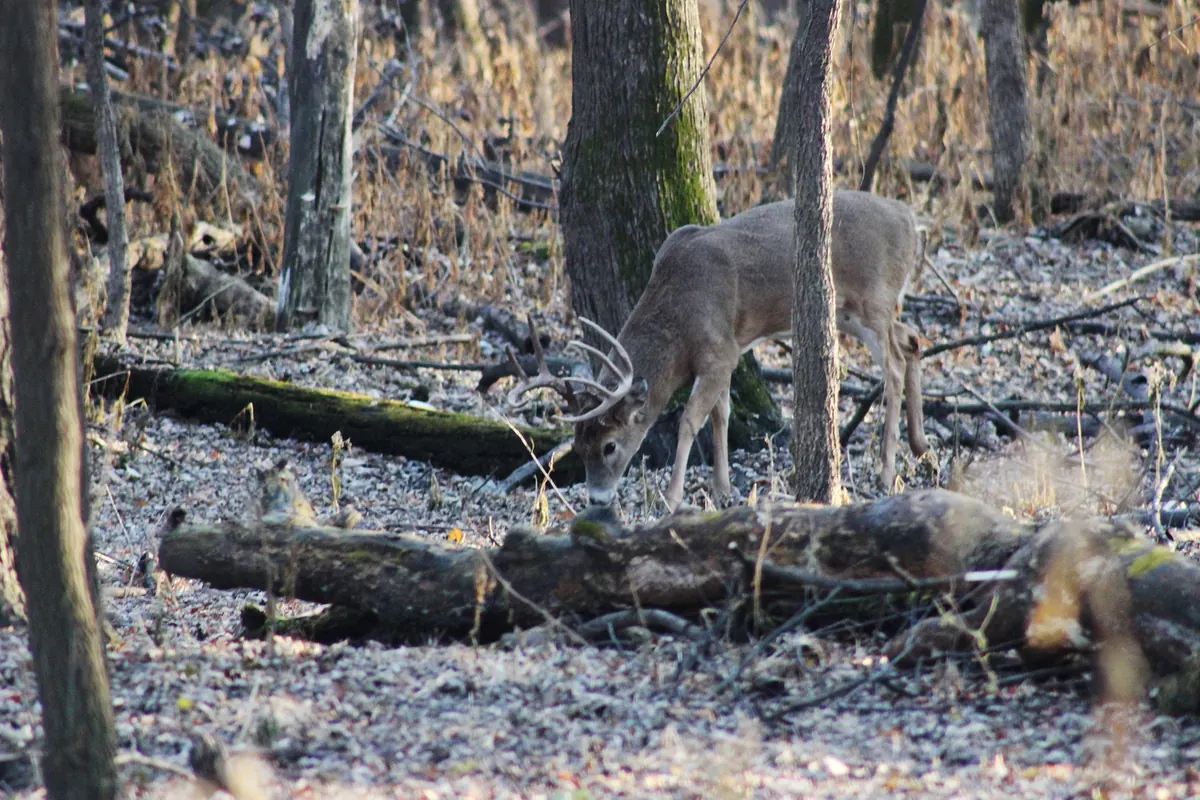
November is the heart of it. The Department of Environmental Management (DEM) describes a breeding season that starts in late October and runs into December, with November the month of the most deer-car crashes. Bucks are restless and careless, following does across fields and roads at any hour, though most crashes happen from sunset to midnight and around sunrise.
-
Rubs, scrapes and chases
All month, peaking in mid-to-late November · Woodland edges statewide, the Bay islands, suburban greenbelts
Look for rubs, young trees scraped raw where bucks clean and spar with their antlers, and scrapes: patches of pawed-up bare soil beneath a low branch, marked with scent. DEM notes that deer move around far more than usual during the rut, so keep an eye out at midday as well as at dusk.
-
Deer on the roads
All month; especially at dusk, the first hours of dark and around sunrise · Route 138, Route 102, Route 1 and back roads in wooded towns
DEM counted 1,163 reported deer-vehicle collisions in 2020. With the clock change, the evening commute now falls right in the riskiest hours. Drive slower on wooded roads after dark, and when a doe darts across, brake for the buck that is likely trailing her. Report any collision to DEM’s 24-hour dispatch line, (401) 222-3070, as well as the police.
Muzzleloader deer season opens November 7; the safety notes below have the dates and the orange rule. For the start of the rut, see the October page.
Which winter birds come to Rhode Island feeders in November?
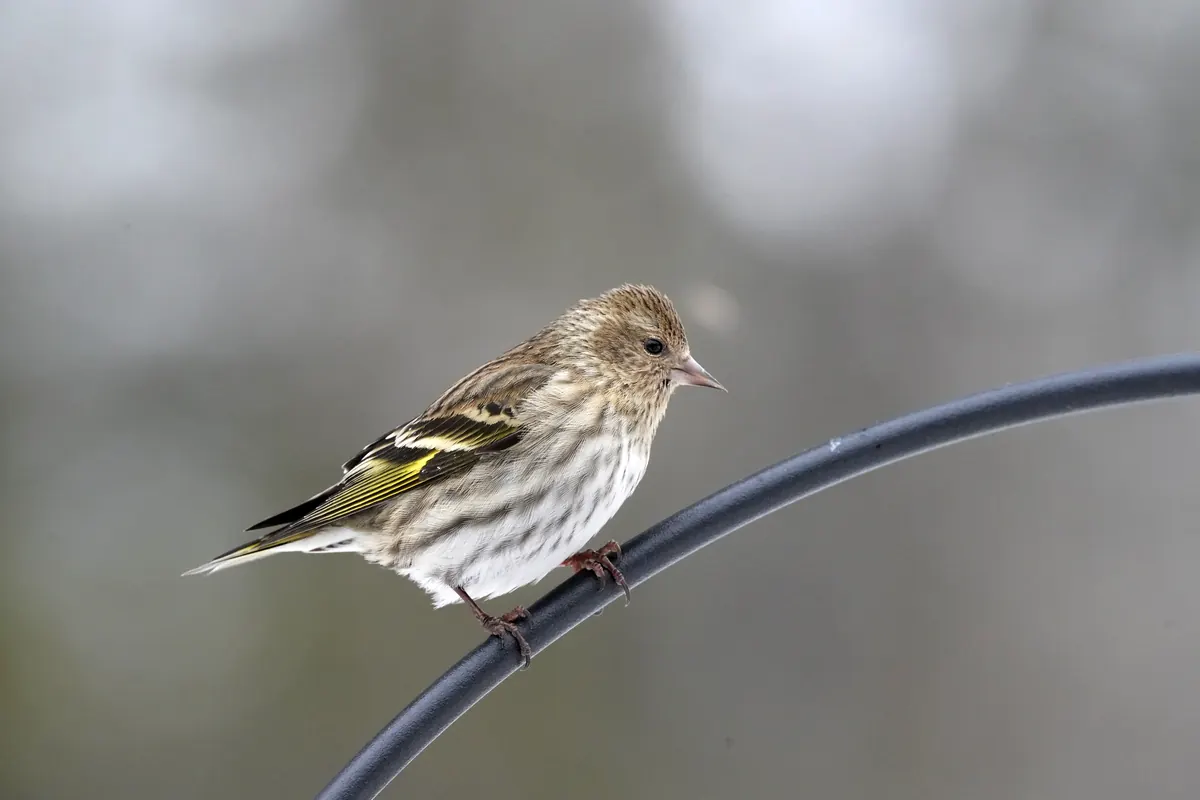
November at the feeder is about arrivals: juncos and white-throated sparrows under the feeders, golden-crowned kinglets in the pines, and, in some years, finches from the north.
-
Winter finches: siskins, crossbills, maybe evening grosbeaks
November into winter · White pine stands first; feeders when the cones run out
The Finch Research Network’s 2026–27 forecast expects a sizable pine siskin irruption in the Northeast and red crossbills in good numbers in the northeastern states, both drawn by a heavy white pine cone crop. It also allows for a small flight of evening grosbeaks south of the boreal forest into Massachusetts, which would put Rhode Island on the edge. Few pine grosbeaks or redpolls are expected, and fewer red-breasted nuthatches than in 2025–26. Listen in the pines for the siskin’s rising, buzzy zreeee and the crossbill’s hard kip-kip.
-
Saw-whet owls, until about Thanksgiving
Mid-October through late November · Block Island; banding sites in Richmond, South Kingstown and Hope Valley
In past seasons, researchers from The Nature Conservancy and the University of Rhode Island ran nighttime owl banding through this window and caught a hundred or more in a good year, according to a 2017 ecoRI News report, with northeast winds bringing the best nights. The owls are tiny and silent, so most people never see one, but a mob of chickadees scolding at the base of a dense conifer is worth a look.
-
Project FeederWatch begins
Sunday, November 1 through April 30 · Any yard, balcony or schoolyard with a feeder
This long-running winter survey from Cornell and Birds Canada asks you to choose back-to-back count days, up to once weekly, and note the most birds of each kind in view together. There is a modest fee to join, and a single count still counts.
Clean feeders and trays every couple of weeks to keep finch diseases from spreading.
What color is left in Rhode Island’s woods and swamps in November?
Across most of the state the red maples have shed by early November. What remains is subtler and lasts longer: the bronze and tan of oaks and beeches that will not drop their leaves, and the scarlet of berries that birds will strip over the winter.
-
Oaks and beeches that hang on
All month and on into spring · Oak woods on Aquidneck Island and in the western hills; beech understory in Arcadia and George Washington
Botanists call this marcescence. According to University of Maryland Extension, oaks, American beech, hornbeam, hophornbeam and witch hazel are slow to form the layer of cells that would cut each leaf loose, so the leaves wither in place; young trees and the lower limbs of older ones do it most. Why is debated; the Extension piece offers two guesses, rustling leaves that keep browsing deer off the buds and a spring drop of new mulch. A stand of young beech, pale tan and rattling in the wind under a bare canopy, makes a November walk.
-
Winterberry
Fruit colors in fall and stays after the leaves fall · Swamp edges and pond shores: Great Swamp, Arcadia, Big River
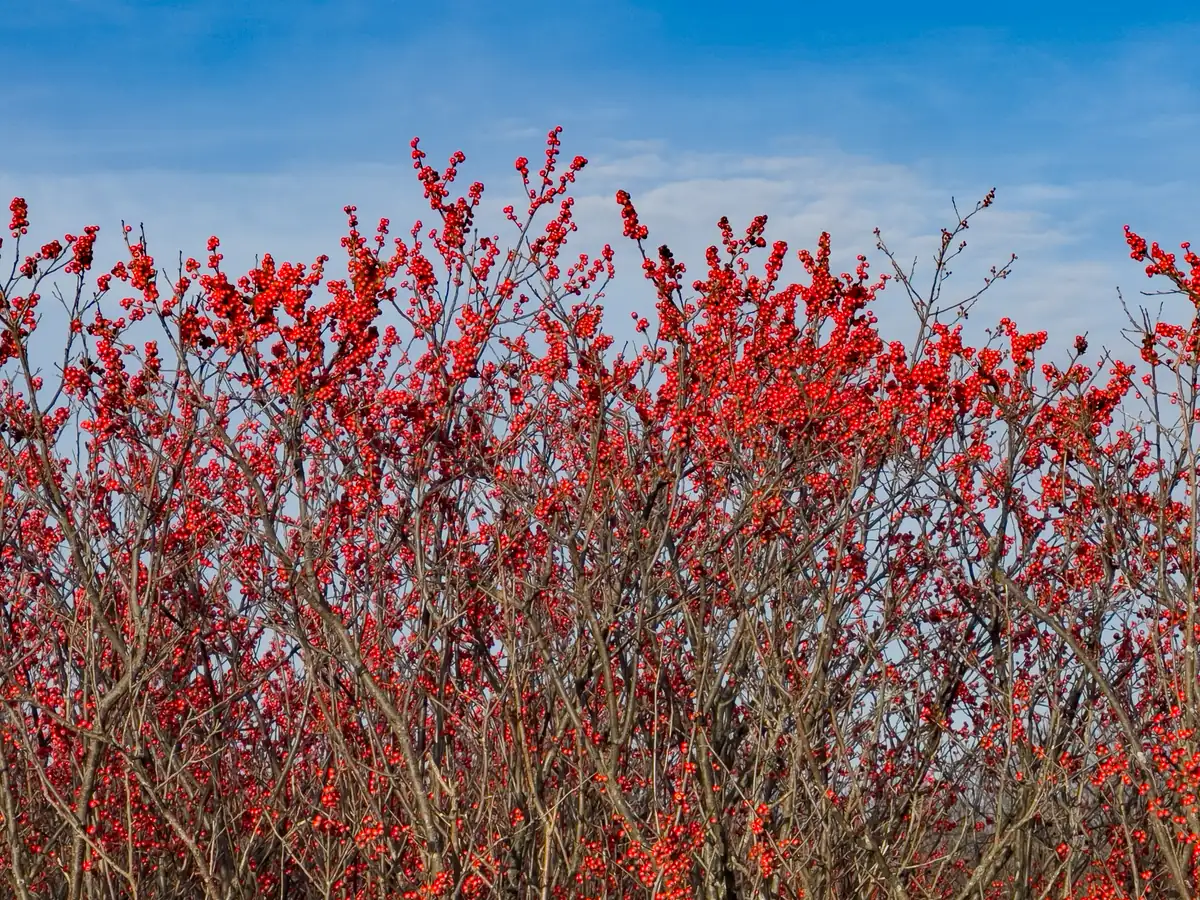
Winterberry is a native holly that drops its leaves, leaving thickets of bare gray twigs packed with red berries along wetland margins. The Native Plant Trust notes that the fruit is an important winter food for birds. Only female plants bear fruit, which is why one shrub can glow while its neighbor stands bare. Leave the branches for the birds and admire them from the trail.
An acorn cap and a spiny beech husk make good additions to the journal’s seeds, pods and cones page; write where you found them.
Has the first freeze usually happened in Rhode Island by November?
Inland, yes; on the southeastern shore, not always. The first table below shows that as November begins, the halfway date for a first freeze is already behind every station apart from Tiverton (November 2), Newport State Airport in Middletown (November 4) and Newport Rose beside the harbor (November 13). The low spots freeze earliest: the Kingston station near the university has frozen by October 23 in nine years out of ten. At Woonsocket, North Foster and Coventry nine years in ten have frozen by about November 2 to 4, and at T. F. Green Airport and Westerly by November 12. Newport Harbor is the last holdout, and in one year in ten it is still waiting on November 27.
| Station | One year in ten | Median | Nine years in ten |
|---|---|---|---|
| Woonsocket (Blackstone Valley) | Oct 5 | Oct 19 | Nov 2 |
| N Foster 1 E (northwest hills) | Oct 4 | Oct 19 | Nov 2 |
| Coventry 2 (western Kent County) | Oct 5 | Oct 20 | Nov 4 |
| Providence T F Green Airport (Warwick) | Oct 16 | Oct 30 | Nov 12 |
| Kingston (South Kingstown) | Sep 30 | Oct 8 | Oct 23 |
| Westerly State Airport | Oct 16 | Oct 31 | Nov 12 |
| Tiverton (East Bay) | Oct 20 | Nov 2 | Nov 15 |
| Newport State Airport (Middletown) | Oct 22 | Nov 4 | Nov 17 |
| Newport Rose (Newport Harbor) | Oct 31 | Nov 13 | Nov 27 |
If your garden sits near the water in Newport, Jamestown or Little Compton, the kale and parsley may keep going well into the month. Everyone else should drain hoses and bring in the terracotta pots. Our Rhode Island frost page lists the rest of the state’s stations, spring dates included.
How early does it get dark in Rhode Island in November?
Very early, and all at once. Rhode Island turns its clocks back one hour in the small hours of Sunday, November 1. On Saturday, October 31, the sun sets in Providence at 5:41 p.m. daylight time; on Sunday it sets at 4:40 p.m. standard time. Through the month Providence then loses another 59 minutes of daylight, about two minutes a day, and by November 30 the sun rises at 6:53 a.m. and sets at 4:16 p.m. The evening low point comes in the first half of December, when Providence sunsets bottom out near 4:15.
| City | Nov 1 | Nov 30 | Lost | Per day |
|---|---|---|---|---|
| Woonsocket | 10 h 21 m | 9 h 22 m | 59 min | 2.0 min |
| Providence | 10 h 22 m | 9 h 23 m | 59 min | 2.0 min |
| Warwick | 10 h 22 m | 9 h 24 m | 58 min | 2.0 min |
| Coventry | 10 h 22 m | 9 h 24 m | 58 min | 2.0 min |
| Newport | 10 h 23 m | 9 h 26 m | 57 min | 2.0 min |
| Westerly | 10 h 23 m | 9 h 26 m | 57 min | 2.0 min |
| New Shoreham | 10 h 25 m | 9 h 27 m | 58 min | 2.0 min |
Type in your town for its own sunrise, sunset and twilight on the daylight calculator.
What is November weather like in Rhode Island, and what might a very strong El Niño bring this winter?
November is the month the ocean’s warmth starts to give out. NOAA’s 1991–2020 normals put the average high near 53 °F at both T. F. Green Airport and Woonsocket, about 54 °F at Kingston. Overnight lows split the state again: about 33 °F at Woonsocket, 34 °F at Kingston, 36 °F at the airport and nearly 40 °F at Newport Rose. Precipitation averages about 4 inches everywhere. Snow is still a sideshow, about an inch on average at the airport and Woonsocket and next to nothing at Newport, but December’s normal at the airport jumps to more than 7 inches.
Behind all of this, the tropical Pacific is warming fast. As of September 10, CPC rated an El Niño in its top, very strong class through the cold months as more than 90 percent likely. A summary from NOAA and the regional climate center at Cornell explains what that has tended to mean here. The polar jet stream sits farther north than usual, keeping the coldest air in Canada, while storms tend to run up the East Coast, so the Eastern Seaboard often ends up wetter than normal. One study it cites found about two more nor’easters on the classic track from south of Cape Hatteras in El Niño winters than in other winters, with strong events most closely tied to the increase. In 2015–16, the strongest El Niño on record at the time, every part of the Northeast ran warm and New England fell short of its usual snow. NOAA’s Climate.gov analysis of snowfall finds the same lean toward less snow in interior New England in moderate and strong events, while warning that a few big storms can flip any single winter. The fair reading for Rhode Island: odds favor a mild, wet winter, and the snow total will depend on where a handful of coastal storms track.
NOAA publishes its December-to-February maps in mid-October (the 15th this year); look for them under the CPC 90-day outlooks.
For the coming days instead, our local weather page has the forecast for wherever you are.
What is in the Rhode Island night sky in November 2026?
-
Leonid meteors
Best before dawn on Wednesday, November 18; also the mornings of the 17th and 19th · High in the east and south after midnight; the radiant in Leo rises late in the evening
The International Meteor Organization calls for an ordinary return, peaking in the early evening of November 17 by Eastern clocks, with rates near 15 an hour in a perfect sky; the predicted encounters with old comet trails are weak, so there is no outburst in prospect. The quarter moon drops below the western horizon close to midnight, and the Leonid hours after it are moonless. Leonids are fast, and the brightest leave glowing trails for a second or two. Ninigret Park in Charlestown and the beaches of South County have the darkest skies within easy reach.
-
The Beaver Moon, a supermoon
Full at 9:53 a.m. on Tuesday, November 24; round on the evenings of the 23rd and 24th · Rising in the east-northeast around sunset
Full phase comes on Tuesday morning, so the moon looks full on both Monday and Tuesday evenings. It is close to perigee and counts as a supermoon, though only slightly bigger than an average full moon to the eye; December’s Cold Moon comes nearer still. Overnight into Tuesday the bright disk crosses the Seven Sisters, which mostly vanish in its glare.
-
Taurid fireballs in a dark sky
Southern Taurids peak around November 5, Northern Taurids around November 12; new moon on the 9th · Most of the night, from the direction of Taurus in the east
Expect only a handful an hour from either stream, but a slow, orange Taurid fireball is the meteor people remember. Both streams are dust from Comet Encke, and the new moon between the peaks keeps the sky dark.
-
Mars and Jupiter together, Venus blazing
Mars and Jupiter closest before dawn on November 15 and 16; Mercury best around November 18 to 25 · Morning sky: Jupiter and Mars high in the south, Venus low in the east-southeast
Jupiter and Mars pass just over a degree apart in Leo, a little more than a finger’s width at arm’s length, with Jupiter much the brighter. Venus, now a morning object, gains altitude daily and hits peak brightness in the last week; Mercury pops up near the horizon before sunup during the third week. In the evening the only bright planet is Saturn, in the south after dark.
-
Public telescope nights
Friday evenings, weather permitting · Frosty Drew Observatory, Ninigret Park, Charlestown
The observatory runs public viewing on Fridays when the sky cooperates. Its November 2026 listings were not posted at the start of October, so check its events page for dates, times and tickets before driving down. Use only red light in the park after dark.
| Phase | Date | Time |
|---|---|---|
| Last quarter | Sunday, Nov 1 | 3:28 p.m. EST |
| New moon | Monday, Nov 9 | 2:02 a.m. EST |
| First quarter | Tuesday, Nov 17 | 6:48 a.m. EST |
| Full moon, the Beaver Moon (a supermoon) | Tuesday, Nov 24 | 9:53 a.m. EST (looks full on the evenings of Nov 23 and 24) |
| Last quarter | Tuesday, Dec 1 | 1:08 a.m. EST |
Before setting an alarm, look at the current sky and cloud cover; for moonrise and moonset times where you live, see the moon phases calendar.
What can Rhode Island families do outdoors in November?
- Sunday, November 1: the clocks go back, and FeederWatch starts. Hang a feeder where the kids can see it from the kitchen and make the first two-day count that weekend.
- Wednesdays in November: free nature walks. Norman Bird Sanctuary in Middletown lists free 45-minute naturalist walks every Wednesday from November through February, 3 to 3:45 p.m.; meet at the Welcome Center a few minutes early. Its schedule also shows free guided bird walks every other Sunday morning. Confirm on the sanctuary’s calendar before you go.
- A low-tide seal walk. Pick a calm weekend day, look up the time of low tide for the West Passage, and walk out to Rome Point with binoculars and something warm to drink. Count the seals and come back at the end of the month to count again.
- A harlequin hunt at Sachuest. The refuge has about three miles of mostly level trail; let the children be the first to spot the white face patches in the surf, and dress for wind.
- Sunday, November 15 or Monday, November 16, before sunrise: two planets side by side. Mars and Jupiter sit close together in the south, Jupiter the brighter of the pair.
- Wednesday, November 18, before dawn: the Leonids. Wake the older kids around 4:30, wrap everyone in sleeping bags outside, and count meteors in quarter-hour blocks.
- Monday, November 23 and Tuesday, November 24: the Beaver Moon. Find a beach or a field with a clear horizon to the east-northeast and be there by sunset.
- Friday, November 27: get outside instead of shopping. In past years DEM has joined the #OptOutside campaign on the day after Thanksgiving, inviting families into state parks and management areas; look for any 2026 plans on the state parks website, and wear orange if you head to a management area.
- Audubon programs. The Audubon Society of Rhode Island’s Nature Center and Aquarium in Bristol has held family days around Veterans Day and the day after Thanksgiving in recent Novembers, and its naturalists lead owl walks on its refuges. The 2026 calendar was not posted in early October; check asri.org for dates and registration.
- Citizen science. Add bird lists to eBird and photos of anything wild to iNaturalist, and look up a Christmas Bird Count circle now: the 2026–27 counts run from December 14 to January 5, and compilers welcome beginners.
Other states and other months are collected on the nature index; jot each outing down in the Naturalist’s Field Journal.
Safety notes for November in Rhode Island
- Wear orange on state land. Everyone using a state management area, an undeveloped state park or a cooperative hunting unit, not only hunters, must wear 200 square inches of solid daylight fluorescent orange above the waist, visible from every side, between the second Saturday of September and February’s final day. A blaze-orange hat meets the rule, and fluorescent camouflage does not. From December 5 through 31, during shotgun deer season, it rises to 500 square inches, a hat plus a vest. Arcadia, Big River, Great Swamp and George Washington are all management areas where the rule applies; only areas restricted to archery hunting are exempt.
- Seasons open in November (DEM 2026–27 guide). Deer archery in Zones 1 and 2 runs September 15 to January 31. Youth muzzleloader is October 31 to November 1, and the regular muzzleloader season November 7 to December 4, with deer checked in person at state check stations on the opening Saturday and Sunday, November 7 and 8. Block Island deer hunting days in November are the 2nd through 6th, 9, 10, 12, 13, 16, 17, 19, 20, 23, 24 and 30. Woodcock close November 30; pheasant (October 17 to February 28), rabbit, squirrel and coyote stay open; fox opens November 7. On the water, the veterans and active military waterfowl days are November 10 and 11, Canada geese are open November 21 to 29, and ducks and sea ducks November 25 to 29 before reopening December 5. Portsmouth, Little Compton, Middletown and Barrington close private land to Sunday hunting.
- Short days. With sunset around 4:15 to 4:40, the light goes fast in the woods. Start hikes by early afternoon, tell someone your route, and carry a light and an extra layer.
- Cold water and nor’easters. The bay and the ocean are cold now, and a fall from a jetty or a capsized kayak becomes dangerous within minutes. November storms throw big surf onto the south shore and over the breakwaters at Point Judith and the Ocean Drive; stay well back from wet rocks when waves are breaking.
- Ticks have not quit. Adult blacklegged ticks are active through the fall and on mild winter days, and they carry Lyme disease. After any walk through brush or beach grass, look over every person and pet.
Sources
- U.S. Fish and Wildlife Service: wildlife watching at Sachuest Point National Wildlife Refuge
- Explore Rhode Island: Sachuest Point National Wildlife Refuge (harlequin duck wintering population)
- BirdWatching: Rhode Island’s harlequin hotspot
- National Audubon Society: birding Rhode Island (Sachuest, Trustom Pond, winter coast)
- Save The Bay: counting seals for 25 years (arrival, peak and departure)
- Save The Bay: seal watch tours and nature cruises
- Save The Bay: seals and seal tours return to Newport (tour season, Citing Rock)
- Save The Bay: annual seal count results, 590 seals across Rhode Island waters (March 2026)
- Rhode Island Families in Nature: John H. Chafee Nature Preserve, Rome Point
- NOAA Fisheries: marine life viewing guidelines
- On The Water: Rhode Island fishing report, November 20, 2025
- Rhode Island DEM saltwater regulations via eRegulations: size, season and possession limits, 2026
- Rhode Island DEM (via RI.gov): deer mating season and drivers, October 22, 2021
- Finch Research Network: winter finch forecast 2026–2027 (September 25, 2026)
- ecoRI News: scientists seek insights into the migration of the saw-whet owl (Rhode Island banding)
- Project FeederWatch: how to participate (season November 1 to April 30)
- University of Maryland Extension: the mystery of marcescence
- Native Plant Trust Go Botany: winterberry
- Native Plant Trust Go Botany: American witch hazel
- NOAA NCEI: U.S. Climate Normals 1991–2020 (first freeze dates, as on the site’s frost page)
- NOAA NCEI: 1991–2020 monthly normals for T. F. Green Airport, Woonsocket, Kingston and Newport Rose (data API)
- Climate Prediction Center: ENSO diagnostic discussion, September 10, 2026
- Climate Prediction Center: 90-day (seasonal) outlooks
- NOAA and Northeast Regional Climate Center: El Niño impacts and outlook, Northeast region (Drought.gov)
- NOAA Climate.gov: how does El Niño affect snowfall over North America?
- U.S. Naval Observatory: moon phases from November 2026
- International Meteor Organization: 2026 meteor shower calendar (Leonids, Taurids)
- EarthSky: what is a supermoon? (2026 full supermoons)
- Farmers’ Almanac: November’s full Beaver Moon
- Star Walk: planetary conjunctions (Mars and Jupiter, November 2026)
- EarthSky: Mercury before sunrise, greatest western elongation
- Frosty Drew Observatory: Stargazing Nights
- Norman Bird Sanctuary: programs and events (free Wednesday nature walks)
- Rhode Island State Parks: DEM and REI invite Rhode Islanders to #OptOutside on Black Friday
- National Audubon Society: join the Christmas Bird Count
- eBird
- iNaturalist
- Rhode Island DEM: 2026–2027 Rhode Island Hunting and Trapping Guide (PDF; seasons, check stations, fluorescent orange, Sunday hunting)
- Rhode Island hunting season summary, 2026–2027 (eRegulations)
- Rhode Island hunting general information, 2026–2027 (eRegulations; fluorescent orange rules)
- CDC: Lyme disease, causes and transmission (adult tick seasons)
- U.S. time zones: daylight saving time ends November 1, 2026
- Audubon Society of Rhode Island: programs, tours and events calendar
- Photos via Wikimedia Commons; licenses and photographers are credited under each picture
