What to look for in nature in South Carolina this April
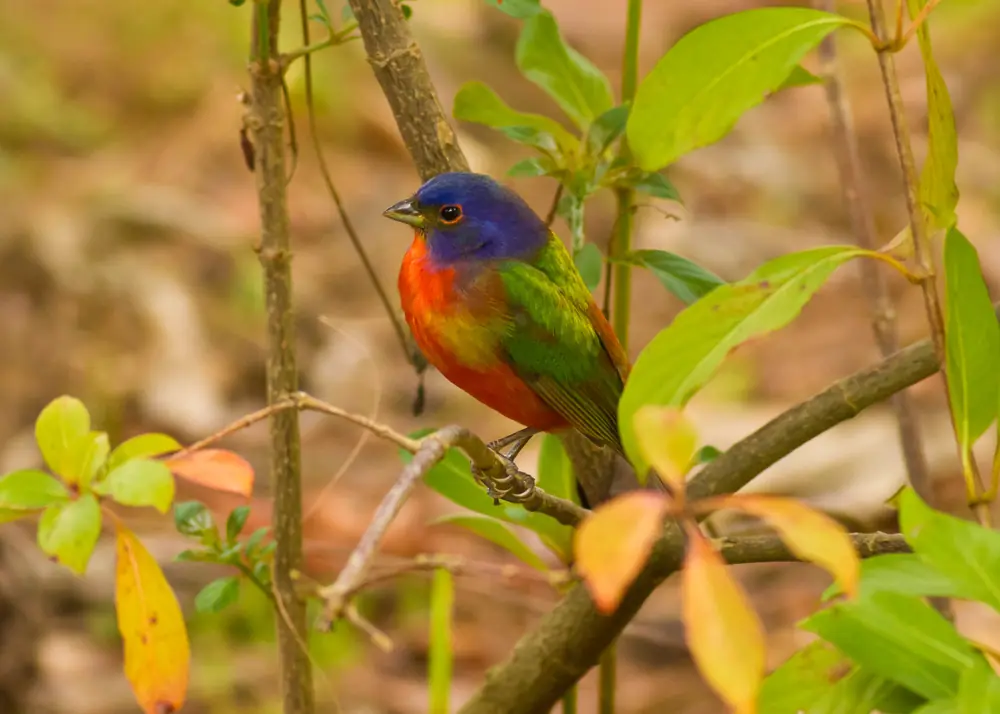
April in South Carolina is the month the state turns green and loud. Painted buntings and orioles return to the coastal forests, warblers pass through the cypress swamps, and shorebirds such as red knots refuel on the beaches of Cape Romain. Horseshoe crabs crawl ashore around the new and full moons, alligators leave their winter dens and begin to court, and Piedmont azaleas open at Congaree. Wildlife managers ask beachfront homes to check their lights before sea turtles nest in May, and the coast’s last freeze is long past, while the Upstate has just left its own behind. It is also a month of severe storms and wildfire. Spring turkey season opens April 3, the Pink Moon reaches full on April 20, and the Lyrid meteors peak on Earth Day under a bright Moon.
Other months in South Carolina: October, November, December, January, February, March.
Start here
- Visit a coastal causeway, boardwalk or refuge in the first half of the month. Painted buntings, warblers, wading birds and alligators all show up at places like Huntington Beach State Park, Santee National Wildlife Refuge and Francis Beidler Forest. Arrive early and sit still.
- Go to the beach at high tide around the April 6 new moon or the April 20 full moon. Horseshoe crabs spawn in spring under the new and full moons. Look from a distance, and report what you see to SCDNR with photos.
- Check your outdoor lights before May 1. Loggerhead nesting season runs May through October, and hatchlings are led astray by artificial light. Switch to turtle-friendly fixtures or shield the glare.
Keep a record: add each spring arrival to “birds I have seen,” log the first painted bunting in the daily field log, note the moon phase and tide beside each horseshoe crab in “the same place twice,” draw the frog and bird songs on a “map of sounds,” and watch a bluebird or wren box under “nest observed.” Track one tree’s leaves with “a tree through the seasons.”
Regions used below: Upstate and the Blue Ridge Escarpment; Midlands and Congaree; Pee Dee and the Sandhills; Grand Strand; Lowcountry and the Sea Islands.
Which migrant birds arrive in South Carolina in April?
April is when the Palmetto State fills with song. Birds that wintered in the Caribbean, Central America and South America stream in over the coast and the swamps, and some stop only long enough to feed before pushing north. Santee National Wildlife Refuge sums up the month in one line of its seasonal guide: painted and indigo buntings, orioles, tanagers, vireos and grosbeaks have returned, and warblers are passing through. The best plan is to pick one habitat and visit it several times, because the cast changes from week to week.
-
Painted buntings
Returning through spring; the refuges describe them as back by April · Brushy coastal forest edges and hummock islands; Santee and Cape Romain refuges; Huntington Beach State Park
Cape Romain National Wildlife Refuge says the painted bunting, summer tanager and orchard oriole return to nest in its forest in spring. Audubon South Carolina describes the bunting as a bird of the state’s hummock islands and forest edges, and lists habitat loss, the “coastal squeeze” of development on one side and sea-level rise on the other, and the illegal pet trade among the causes of its decline. Huntington Beach State Park, which logs more than 300 bird species, features the bunting among its highlights. Gates open at 6 a.m. and close at 6 p.m., with the closing time pushed to 9 p.m. while daylight time is in effect, and the park manager advises avoiding the midday crush between 10 a.m. and 2 p.m.
-
Warblers in the cypress
April, with the sweep of migrants continuing into May · Francis Beidler Forest near Harleyville; Santee National Wildlife Refuge near Summerton
Audubon’s Beidler Forest names the prothonotary warbler among the typical sightings along its 1.75-mile boardwalk, which winds through old cypress and tupelo and is accessible to wheelchairs and strollers with rest shelters at least every fifth of a mile. The refuge at Santee adds that spring migration continues into May as nesting begins. Both are good places to practice listening: sit on a bench, close your eyes for a minute and sort the songs you hear into groups before you look for the singers.
-
Wading birds and wood storks
Spring, while nesting colonies are active nearby · Savannah National Wildlife Refuge impoundments, near the Georgia line
The refuge’s seasonal guide says that ibis, wood storks, egrets and herons nesting nearby visit its impoundments to feed, and that alligators and turtles are easy to spot basking in the sun. Watch from the dikes with binoculars and let the birds come to you.
-
Tell Journey North
Late April, when the sightings pour in · Any yard, trail or feeder
Journey North invites anyone to report first spring sightings, with a species menu and an “all other signs of spring” option for the rest. One of its late-April letters noted that rose-breasted grosbeaks were turning up everywhere in Georgia, Tennessee and the Carolinas that spring. Your own date for the first grosbeak, oriole or bunting at the feeder is useful data if you write it down.
Each new arrival earns a line in the field journal: species, date and weather.
Which shorebirds and horseshoe crabs are on South Carolina’s coast in April?
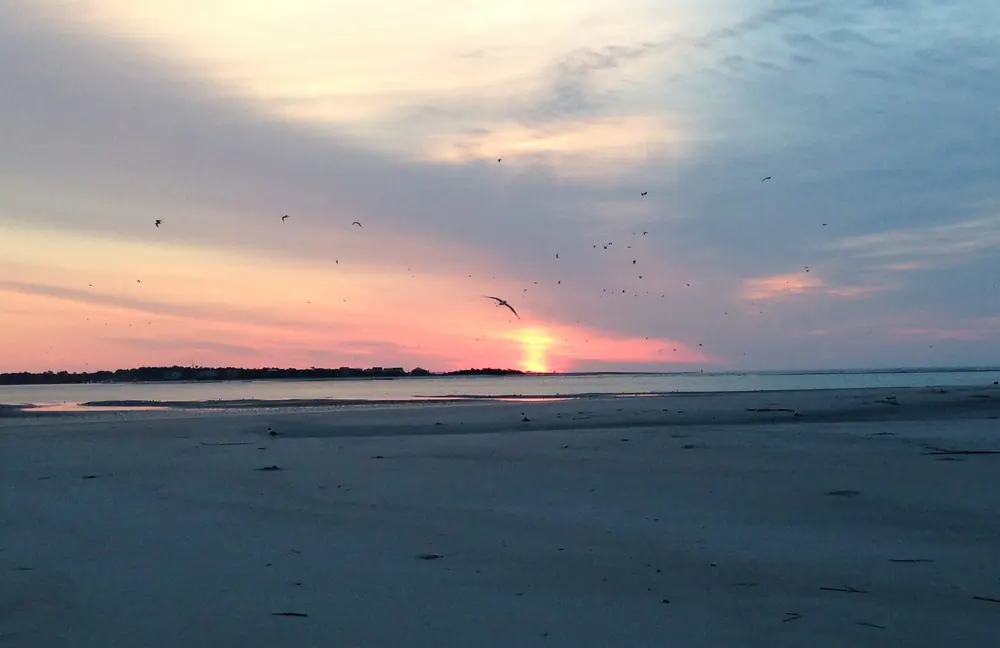
The coast is a refueling station. Birds bound for the Arctic and northern Canada drop onto South Carolina’s beaches, flats and impoundments to feed, rest and then go on. The state’s Department of Natural Resources takes part in the International Shorebird Surveys, counting birds at fixed sites at least monthly to learn when migrants pass and where they gather.
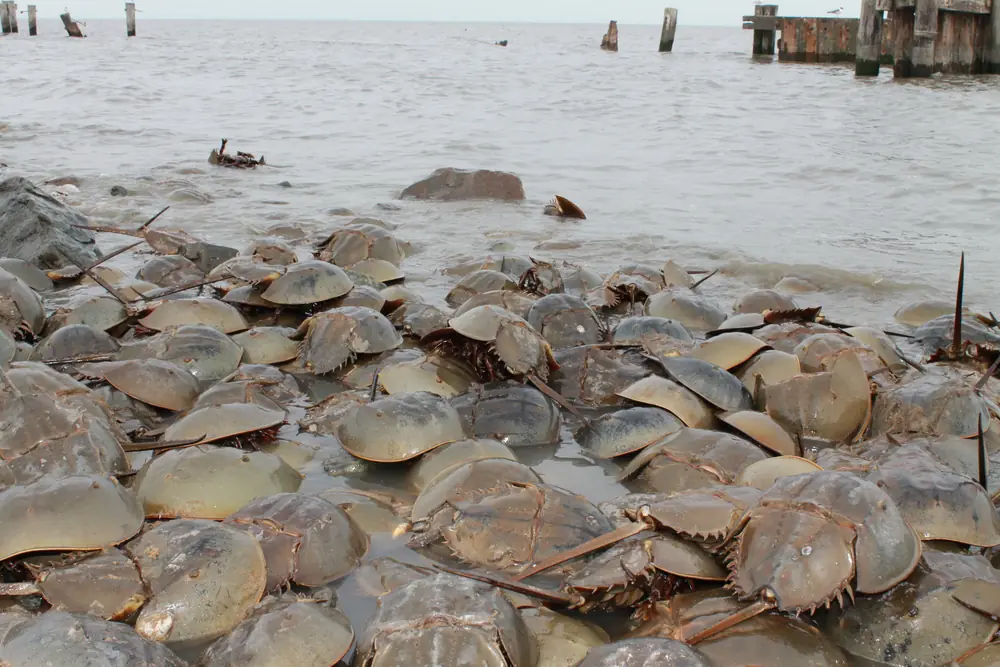
Each spring, adult horseshoe crabs crawl ashore around the new and full moons to mate and lay eggs, and South Carolina’s Department of Natural Resources wants to know where. The agency’s 2024 and 2021 notices describe crabs spawning on beaches and, as research found, in the salt marsh, with eggs sometimes turning up several miles up creeks and rivers. This spring the new moon falls on Tuesday, April 6, and the full Pink Moon on Tuesday, April 20, so those two weeks are the best bet for a night walk at high tide.
-
Red knots at Cape Romain
Spring migration · Beaches of Cape Romain National Wildlife Refuge, reached by boat
The refuge says migratory birds such as the red knot arrive on its beaches to forage and rebuild their energy reserves for the flight farther north. Bulls Island is reached by the concession ferry from Garris Landing, or by private boat, and the refuge asks visitors to respect the signs and ropes that protect nesting birds. Its beaches are already busy with terns, skimmers and plovers staking out nest sites as the knots feed.
-
Sandpipers at Huntington Beach
Spring and fall migration, with some shorebirds present in winter · The causeway and lagoon edges at Huntington Beach State Park, Murrells Inlet
The park’s causeway is its best-known wildlife spot, with alligators in the freshwater lake on one side and feeding wading birds. Check the mud edges with a scope or binoculars for small sandpipers and plovers resting between tides.
-
Look, count and photograph
Around the April 6 new moon and the April 20 full moon, at high tide · Sandy beaches and creek edges along the coast
SCDNR asks anyone who sees crabs spawning to report the sighting with photos through its online survey, which is linked from the agency’s news release. A report that records the date, place and number of crabs helps biologists find new spawning areas and learn when the big runs happen.
Write the moon phase and the tide beside every sighting in a field journal; the moon calendar lists the phases by town.
What wildflowers bloom in South Carolina in April?
Last month the bells opened in the Upstate gorges and the jessamine climbed the fences. In April the show shifts to azaleas and shaded coves, and the woods go from bare to green.
-
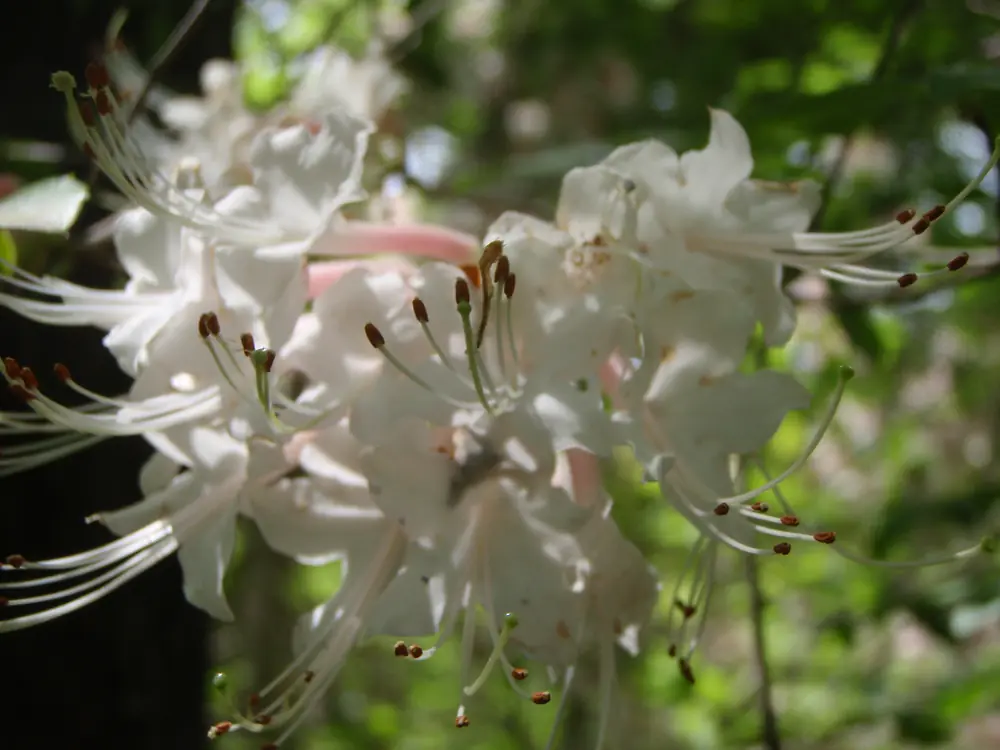
Piedmont azalea and pinkroot at Congaree
Piedmont azalea April to May; pinkroot April to June, per the National Park Service · Congaree National Park, near Columbia
The park’s wildflower guide lists six flowers with April bloom periods, and two of them are fresh arrivals compared with last month: the Piedmont azalea, and pinkroot. Atamasco lily, pawpaw and Carolina jessamine finish their March to April run, and butterweed runs from March into June. The park describes April as one of the best times to visit, with daily highs reaching the mid to upper 70s, rainfall averaging around 3 inches a month and few biting insects.
-
Station Cove Falls Trail
Especially April into May, per South Carolina State Parks · Oconee Station State Historic Site and Sumter National Forest, Oconee County
The state park system calls this the best-documented April wildflower walk in its guide, naming little sweet Betsy, Canada violet and perhaps walking fern. The trail climbs from dry upland through streamside hardwoods into a rich cove forest, and it ends at the falls.
-
Trillium country
Spring, as the cove forests green up · Upstate forests, including the Mountain Bridge Wilderness Area
The South Carolina Native Plant Society’s Upstate chapter calls trillium a harbinger of spring and says the Upstate holds the greatest diversity of these plants anywhere. An interpretive ranger at the Mountain Bridge Wilderness Area has presented to the chapter on the trillium of the Carolinas. Look without picking.
-
A preview of the shoals
Rocky shoals spider lilies, mid-May through mid-June · Landsford Canal State Park, Chester County
The state parks guide says the rocky shoals spider lily peaks from mid-May to mid-June at Landsford Canal, so April is the time to scout the trail and plan a May or June return. Ask the park what is in bloom before you drive.
Wildflower dates slide by a week or two with the weather, so call ahead.
What lives in the pitcher plant bogs of the Sandhills?
The Carolina Sandhills National Wildlife Refuge, near McBee in Chesterfield County, protects longleaf pine ridges and the wet seeps between them. The refuge counts 190 bird species, 41 reptiles and 25 amphibians, and it lists pitcher plants among its rare species.
-
Pitcher plants at Lake Bee
Spring; ask the refuge which species are in flower · Pitcher Plant Overlook, west end of Lake Bee, and the seepage bog near Oxpen Lake 1
The refuge says the seepage bog by Oxpen Lake 1 holds a large pitcher plant population and that the overlook at Lake Bee is a place to view the carnivorous plants. The Pine Barrens treefrog, a state and federally listed species, may be heard from the same overlook. Lake Bee is also the hub for Tate’s Trail, Doe Hill Trail and the Pine Barrens Gentian Trail, with picnic shelters and restrooms.
-
Butterflies and sparrows
Butterflies April through October; Bachman’s sparrow in spring · Trails and wildflower areas across the refuge
The refuge recommends April through October for butterfly watching, and spring for migrants and resident breeders such as Bachman’s sparrow. The visitor center is open weekdays from 7 a.m. to 3:30 p.m., and the grounds are open to foot traffic year round except where posted.
Stay on the boardwalks and trails near the bogs, because pitcher plants and the soft ground around them are easy to damage. The red-cockaded woodpeckers mentioned on the March page are still on show here through May.
Why do you see more alligators in South Carolina in April?
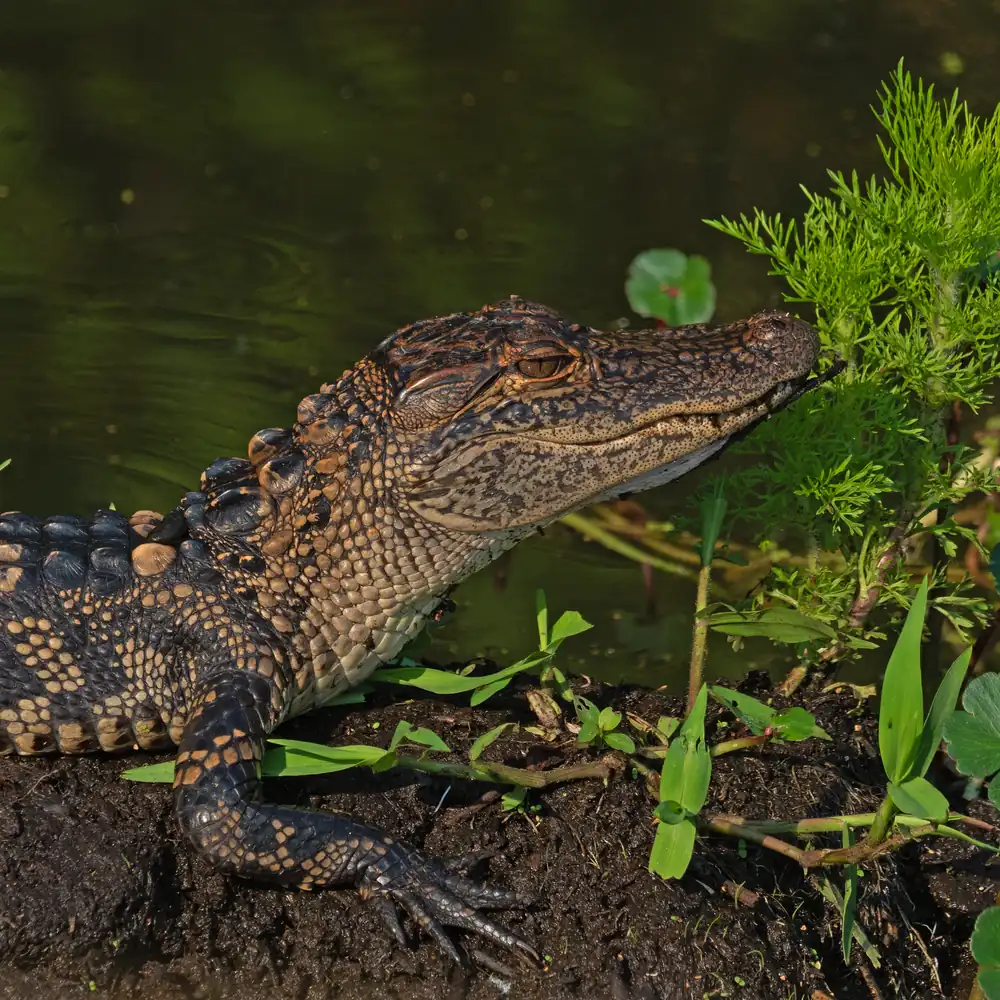
Warm weather tells an alligator to get moving. Magnolia Plantation and Gardens, which shares its Ashley River ponds with a resident population, writes that rising temperatures signal alligators to leave their winter dens and become active again. Santee National Wildlife Refuge reports alligators sunning in canals and on pond edges, and Savannah National Wildlife Refuge says alligators and turtles are easy to spot basking.
-
Courtship begins
April and May · Ponds, lagoons and impoundments such as Magnolia’s gardens
Magnolia’s naturalists say that during April and May males search for mates, bellow in deep, vibrating voices, and perform a “water dance,” making ripples dance on their backs. If you hear a sound like a distant engine across a pond at dusk, that may be an alligator.
-
Where to look safely
Sunny afternoons · Huntington Beach causeway, Santee and Savannah refuges, Magnolia’s ponds
The causeway at Huntington Beach State Park is the state park system’s own pick for alligator viewing beside feeding wading birds. Raised dikes and boardwalks put you above the water and out of reach.
-
Rules of respect
All year, especially in spring · Anywhere with water
Magnolia’s guidance is to stay at least 60 feet away, never feed alligators (it is illegal in South Carolina and makes them lose their wariness of people) and keep pets leashed, since small animals can look like prey. SCDNR’s alligator page lists the agency’s Operation Game Thief number, 1-800-922-5431, for emergencies.
Juvenile alligators wander to smaller water as the season warms, so look at retention ponds and golf-course water hazards before you let a dog or child go near the edge.
Is it too early for sea turtles and right whales in South Carolina?
Loggerhead nesting season runs from May through October, with peak activity from May to mid-August, according to SCDNR, but April is when beach towns and homeowners make their preparations. The department notes that the season traditionally begins on May 1. The first nest of 2025 turned up on Folly Beach on April 29, and the biologist who oversees the program tied that early start to a warm winter and more loggerheads being reported offshore.
The North Atlantic right whale is among the rarest large animals on Earth, and the southeastern coast is where some of the mothers bring their calves. NOAA Fisheries puts the population at about 380 whales, an increase of about 20 since 2020 and the third straight year of growth, with only about 70 reproductively active females. The agency says the whales travel in the fall to shallow coastal waters along the southeastern seaboard, which includes South Carolina, to breed and give birth.
-
Check your lights now
Before May 1 · Beachfront homes and rentals
Turtle hatchlings crawl toward the brightest horizon, which should be the sea, and artificial light can lead them the wrong way. SCDNR says county and local lighting ordinances protect sea turtles, with fines up to $500, and that federal law allows fines up to $25,000 for harming a threatened species like the loggerhead. The department keeps a list of turtle-friendly fixtures and bulbs.
-
Terrapins on the marsh
Spring · Sandy patches of salt marsh at Cape Romain National Wildlife Refuge
Cape Romain says that strikingly patterned diamondback terrapins nest in sandy ground along the salt marsh in spring, and that loggerheads begin arriving in late spring.
-
If you find a turtle in trouble
Any time · Beaches and tidal creeks
Report sick, injured or dead turtles to SCDNR at 1-800-922-5431, observe turtles from a distance, and boat carefully in tidal creeks where turtles feed.
-
The speed zone ends April 15
November 15 through April 15 · The southeastern calving-area zone, off Georgia and northern Florida
NOAA’s ship-strike rule sets a limit of 10 knots for vessels of 65 feet and longer inside the zone during those months. The zone sits south of South Carolina, but boats cruising the whole coast should watch for whales and check for current rules from NOAA before heading out.
-
Keep 500 yards away
Any day of the year · Any water where a right whale appears
It is illegal to approach or stay within 500 yards of a right whale, a distance NOAA compares to five football fields. Mariners who see one can report it at 877-942-5343 (North Carolina to Florida) or call the Coast Guard on channel 16.
Bookmark the SCDNR sea turtle pages now and look up your beach’s volunteer program before the first nest of the year is found.
Most people never see a right whale, which is part of the point, so a calm look at a distant spout on a clear day is a rare event, not an expectation.
What is April weather like in South Carolina, and how bad is storm season?
April is the month the warm season takes hold. In the 1991 to 2020 normals from NOAA, a typical April afternoon reaches 77.1 °F at Charleston and 73.2 °F at Greer, and nights run from the upper 40s inland to the mid 50s at the coast. A freezing night is a rarity, averaging between zero (Charleston) and about half a night (Columbia and Greer) for the month. It is also a wet, stormy month.
-
Severe storms and tornadoes
Spring, when fronts are active · Statewide, with the coastal plain often hit hardest
The State Climatology Office counts an average of 14 tornadoes each year for 1950 through 2017, rising to 26 each year when only 1990 through 2017 is counted. Its weekly summary for April 4 to 10, 2022 describes a warm front lifting north across the state on Tuesday, April 5, which set off supercells and 13 tornadoes south of the Fall Line, including an EF3 in the town of Allendale and a second EF3 that stayed on the ground for nearly 35 miles to Orangeburg. Parts of the Midlands got 3 to 4 inches of rain that day, which brought flash flood advisories to Columbia, and hail up to baseball size fell later that week. Know your county, keep a battery radio or phone alerts on, and have a place to shelter on the lowest floor.
-
Wildfire still a risk
Late winter to early spring · Statewide, especially pine country and the coast
Fire season has not ended. The Forestry Commission puts it in late winter and early spring, and says nearly all wildfires in the state, 98 percent, start with people. The costliest by damage was the Highway 31 fire in Horry County in April 2009, which burned about 19,000 acres, destroyed 76 homes and caused an estimated $50 million in losses. Anyone planning a yard-debris burn must tell the agency first, and local bans can still apply.
| Station | Average high | Average low | Freezing nights | Days 70 °F or warmer | Days 80 °F or warmer | Precipitation | Snowfall |
|---|---|---|---|---|---|---|---|
| Greer (Greenville–Spartanburg) | 73.2 °F | 48.7 °F | 0.6 | 20.1 | 7.4 | 4.04 in | 0.0 in |
| Columbia (Midlands) | 76.7 °F | 51.5 °F | 0.5 | 24.2 | 13.0 | 2.83 in | 0.0 in |
| Florence (Pee Dee) | 76.7 °F | 52.1 °F | 0.3 | 24.0 | 12.6 | 3.00 in | – |
| Charleston International Airport | 77.1 °F | 54.5 °F | 0.0 | 25.7 | 12.4 | 3.29 in | 0.0 in |
No forecast is made here. Anyone curious about the season ahead can open NOAA’s 90-day outlook page, refreshed monthly. For this week, try our local forecast tool.
Is the last spring freeze over in South Carolina?
Almost everywhere, yes, but not quite everywhere. For each main station the table lists the median date of the final freeze, plus the early and late edges of the range. A freeze after the median date is common; one after the nine-in-ten date is a surprise that catches tomatoes, beans and blooming fruit trees.
| Station | One year in ten | Median | Nine years in ten |
|---|---|---|---|
| Greenville | Mar 13 | Mar 28 | Apr 12 |
| Rock Hill | Mar 13 | Mar 31 | Apr 15 |
| Columbia | Mar 4 | Mar 25 | Apr 10 |
| Aiken | Feb 28 | Mar 19 | Apr 5 |
| Florence | Feb 28 | Mar 19 | Apr 5 |
| Myrtle Beach | Mar 2 | Mar 21 | Apr 7 |
| Charleston | Feb 12 | Mar 7 | Mar 27 |
| Beaufort | Feb 2 | Feb 28 | Mar 21 |
Treat the dates as odds. Greenville’s median final freeze is March 28 and nine springs in ten are done by April 12, while Rock Hill’s late date is April 15. Charleston’s late date is March 27 and Beaufort’s March 21, so the coast is nearly always past it. Along the coast April is safe for warm-season transplants, while inland gardeners should wait for their own town’s late date. The frost-date tool has more towns, including the mountains.
How much daylight does South Carolina gain in April?
Roughly an hour, at a rate near two minutes per day, with the whole state on daylight time since the March 14 clock change. Daylight in Greenville stretches from 12 h 34 m at the start of the month to 13 h 34 m at its end, an hour more, and Charleston adds 55 minutes and Beaufort 54. Towns farther north in the state add a little more. Every town in the table finishes April with over 13 hours of light, which leaves plenty of room for an after-dinner walk.
| City | Apr 1 | Apr 30 | Gained | Per day |
|---|---|---|---|---|
| Greenville | 12 h 34 m | 13 h 34 m | 60 min | 2.1 min |
| Rock Hill | 12 h 34 m | 13 h 34 m | 60 min | 2.1 min |
| Columbia | 12 h 33 m | 13 h 31 m | 58 min | 2.0 min |
| Aiken | 12 h 32 m | 13 h 29 m | 57 min | 2.0 min |
| Florence | 12 h 33 m | 13 h 31 m | 58 min | 2.0 min |
| Myrtle Beach | 12 h 33 m | 13 h 30 m | 57 min | 2.0 min |
| Charleston | 12 h 32 m | 13 h 27 m | 55 min | 1.9 min |
| Beaufort | 12 h 32 m | 13 h 26 m | 54 min | 1.9 min |
The extra daylight is the reason the migrant birds, blooming plants and basking reptiles all come on at once. The day-length tool has more towns.
What is in South Carolina’s night sky in April 2027?
Daylight time began on March 14, so every clock time here is Eastern daylight time. Jupiter and Mars own the evening sky and Venus leads the morning.
-
The Pink Moon
April 20, with the Moon turning full in the early evening · Coming up over the eastern horizon as the Sun goes down
The Old Farmer’s Almanac says this moon is named for moss pink, or creeping phlox, one of the first spring wildflowers, not for any color of the Moon. It rises close to sunset, which makes the 19th, 20th and 21st all look round.
-
Lyrid meteors, a poor year
Strongest around nightfall on Earth Day, April 22, though active from about April 14 to 30 · From the constellation Lyra, which climbs in the northeast through the evening
Forecasters expect the maximum at about 9:41 p.m. EDT (a second calculation lands roughly a quarter hour later), but a nearly full Moon (roughly 95 percent lit) rises around 10 p.m. across the eastern states and washes out all but the brightest streaks. The dark window is the stretch of early evening before moonrise, when Lyra sits low. Plan on a handful per hour, with the occasional unannounced burst. The Eta Aquariids in early May catch a new moon and make a better target.
-
Jupiter, Mars and the Moon
Evenings of April 14 and April 15, with the Moon alongside · Well up in the south and southwest once it is dark
A waxing Moon about two-thirds lit hangs next to Jupiter on both nights and lies roughly three degrees from Mars on the 15th. Jupiter outshines Mars and stays up until the small hours, while Mars glows about as brightly as a bright star.
-
Venus before sunrise
The whole month, with a slim crescent Moon close by on April 3 and 4 · Over the eastern horizon in the hour before dawn
Venus, brightest of the planets, rises about an hour and 15 minutes ahead of dawn when the month begins, then sinks toward the glow week by week. Saturn passes the Sun’s far side on the 7th, hidden until it re-emerges in the dawn late in the month.
| Phase | Date | Time |
|---|---|---|
| New moon | Tuesday, Apr 6 | 7:51 p.m. EDT |
| First quarter | Tuesday, Apr 13 | 6:56 p.m. EDT |
| Full moon (Pink Moon) | Tuesday, Apr 20 | 6:27 p.m. EDT |
| Last quarter | Wednesday, Apr 28 | 4:18 p.m. EDT |
Check the cloud forecast before heading out, and use the moon calendar for moonrise by town.
What can South Carolina families do outside in April 2027?
- A causeway walk. Take binoculars to the causeway at Huntington Beach State Park and count the wading birds, alligators and sandpipers.
- A boardwalk morning. Francis Beidler Forest, Audubon’s cypress sanctuary, posts Wednesday to Saturday hours of 9 to 5 and Sunday hours of 11 to 4, at $12 for adults, $7 for ages 6 to 12 and nothing for the youngest visitors. Phone 843-487-9988 to confirm before you go.
- Moon-night crab watch. Around the April 6 new moon and the April 20 full moon, look for horseshoe crabs at a coastal beach at high tide, and report what you see to SCDNR.
- Try NestWatch. This free Cornell Lab program shows volunteers how to locate a nest, check it without bothering the parents and log what happens, using the website or the app.
- City Nature Challenge. This worldwide bioblitz asks people to photograph wild plants and animals in their city and share them through iNaturalist. According to the organizers, the 2027 photo-taking days are April 30 to May 3, with identifications continuing to May 16; ask whether your area has signed up.
- Earth Day, Thursday, April 22. Plant native flowers or clean a creek bank, and pick a tree near your home to follow through the season.
- Moon and Jupiter. Go out after dark on April 14 or 15 and find them side by side.
Young naturalists can write down each find on a journal page. The March page covers the frogs, bells and hummingbirds that carry over, and the nature index lists other states.
Safety notes for April in South Carolina
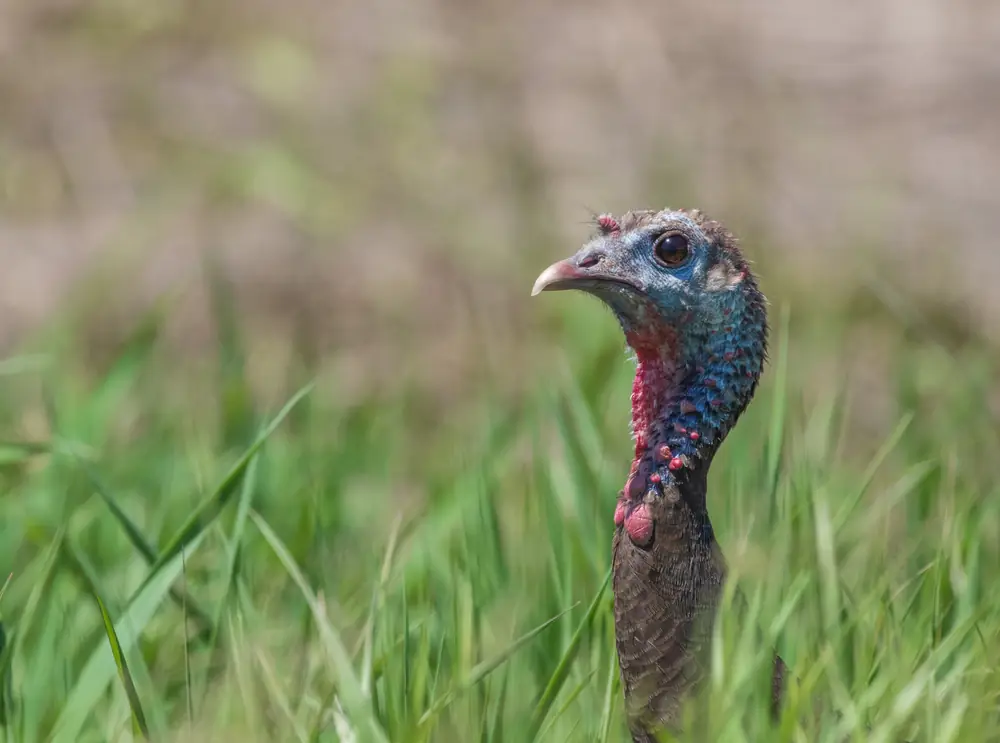
- Spring turkey season. The 2027 regulations open turkey hunting on April 3, and it runs to May 3 on both private land and wildlife management areas. A hunter may take two gobblers a season, one a day, and only one before April 10. Youth weekends (private land) fall on March 27 and 28 and on May 8 and 9. Shooting stops 30 minutes after sunset, and state WMAs stay closed to hunting on Sundays unless a rule says otherwise.
- Hunter orange. The WMA requirement covers deer, bear and hog hunts with guns or muzzleloaders, and turkey hunters are not required to wear it, so hikers on a WMA this month should wear bright colors anyway.
- Ticks. The CDC puts the busy tick months at April through September. Treat gear with permethrin, wear repellent, bathe soon after a walk and look over every part of yourself and your pets.
- Snakes. Only two venomous snakes live in South Carolina, the copperhead and the cottonmouth. SCDNR advises staying calm after a bite and getting to a hospital, and warns against handling, catching or keeping any venomous snake.
- Alligators. Stay at least 60 feet back and keep pets away from the water’s edge.
- Black bears. SCDNR says bears leave their dens in spring and that unsecured food is the most common cause of conflict. Secure garbage, store pet food in airtight containers and call 1-800-922-5431 or 911 for an emergency. Never approach a bear for a photo.
- Rip currents. The National Weather Service cautions that a pleasant beach day can hide a rip current, and that the safest place to swim is a beach with lifeguards on duty.
- Severe weather. Keep alerts on and never drive through floodwater.
- Fire. Report planned debris burns to the Forestry Commission and never leave a flame untended.
Sources (41)
- U.S. Fish and Wildlife Service: seasons of wildlife at Santee National Wildlife Refuge
- U.S. Fish and Wildlife Service: seasons of wildlife at Savannah National Wildlife Refuge
- U.S. Fish and Wildlife Service: seasons of wildlife at Cape Romain National Wildlife Refuge
- U.S. Fish and Wildlife Service: Cape Romain National Wildlife Refuge
- U.S. Fish and Wildlife Service: seasons of wildlife at Carolina Sandhills National Wildlife Refuge
- U.S. Fish and Wildlife Service: Carolina Sandhills outdoor fun
- South Carolina State Parks: Huntington Beach State Park
- South Carolina State Parks: wildflowers
- Audubon Center at Francis Beidler Forest: plan your visit
- Audubon South Carolina: bird research and painted buntings
- Journey North: get your binoculars ready, April 28, 2020
- SCDNR: shorebird surveys
- SCDNR: horseshoe crabs spawning in the marsh, May 14, 2024
- SCDNR: horseshoe crab spawning study, May 6, 2021
- NOAA Fisheries: North Atlantic right whale
- NOAA Fisheries: reducing vessel strikes to North Atlantic right whales
- National Park Service: wildflowers at Congaree National Park
- National Park Service: weather at Congaree National Park
- South Carolina Native Plant Society: Trillium of the Carolinas
- Magnolia Plantation and Gardens: alligators emerge from brumation
- SCDNR: alligator facts
- SCDNR: sea turtle lighting and nesting season
- SCDNR: sea turtle nesting season, April 29, 2025
- NOAA NCEI: U.S. climate normals, 1991–2020 monthly
- South Carolina State Climatology Office: tornado statistics
- South Carolina State Climatology Office: weekly weather, April 4 to 10, 2022
- South Carolina Forestry Commission: wildfire information
- NOAA Climate Prediction Center: 90-day outlooks
- NOAA Global Monitoring Laboratory: solar calculator equations
- U.S. Naval Observatory: moon phases for 2027
- The Old Farmer’s Almanac: full moon names
- SCDNR (eRegulations): turkey regulations, spring 2027
- SCDNR: turkey hunting
- SCDNR (eRegulations): WMA regulations and hunter orange
- SCDNR: black bears emerging from dens
- SCDNR: venomous snakes frequently asked questions
- CDC: preventing tick bites
- National Weather Service: rip current safety
- Cornell Lab: NestWatch
- City Nature Challenge
- Photos via Wikimedia Commons; licenses and photographers are credited under each picture
.jpg)