What to look for in nature in South Carolina this March
March in South Carolina begins in winter and ends in spring, and it can do both on the same day. In the Upstate, the rare Oconee bell opens its white bells above Lake Jocassee, while the Midlands wake to jessamine and wild lilies and the first yellow haze of pine pollen. Peepers and chorus frogs ring out from ditches and bays on warm rainy nights. Hummingbirds are due by the last days of the month, swallow-tailed kites return to the cypress swamps, and on March 15 the coastal nesting season starts, closing the seabird islands to visitors. Peach orchards bloom with a freeze still possible, and the state’s wildfire season is at its peak. The clocks jump ahead on March 14, spring begins on the 20th, and the Worm Moon is full at dawn on the 22nd.
Other months in South Carolina: October, November, December, January, February, April.
Start here
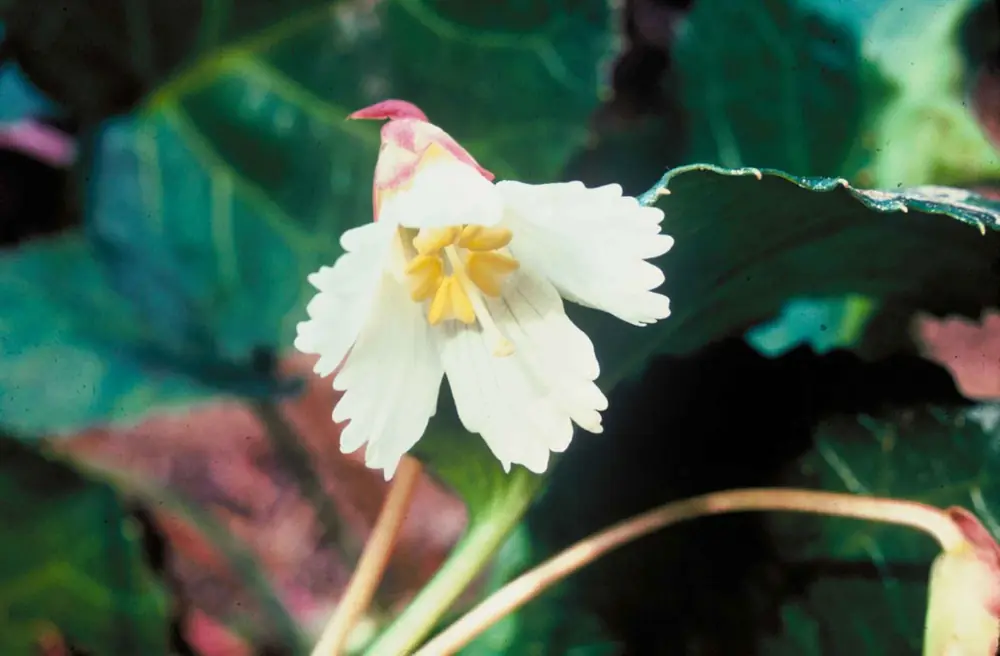
- Walk the Oconee Bell Trail between mid-March and early April. The one-mile trail at Devils Fork State Park runs along shaded stream banks where the flowers grow. Clemson Extension puts the bloom from mid-March to the beginning of April. Stay on the path and leave every plant where it grows.
- Listen for peepers and chorus frogs on a warm, rainy night. Choose a pond, ditch or flooded field beside woods, go after dark and try to separate the voices: peepers peep, while upland chorus frogs trill.
- Hang a clean hummingbird feeder before the last week of March. SCDNR says the first males usually show up in late March, with females about a week behind. Use four parts water to one part sugar, with no dye and no honey, and tell Journey North when your first one appears.
Keep a record: log the date of your first hummingbird in the daily field log, add each new spring arrival to “birds I have seen,” draw the frog chorus on a “map of sounds,” revisit one granite pool or one stretch of beach in “the same place twice,” and sketch pine cones and pollen under “seeds, pods and cones.” A weekly check of a bluebird box fits “nest observed.”
Regions used below: Upstate and the Blue Ridge Escarpment; Midlands and Congaree; Pee Dee and the Sandhills; Grand Strand; Lowcountry and the Sea Islands.
When do Oconee bells bloom in South Carolina?
Few wildflowers carry as much weight as this one. Clemson Extension calls the Oconee bell the rarest spring ephemeral in the United States, an endemic of the southern Appalachians whose core range covers only South Carolina, North Carolina and Georgia. In the Upstate its white, scalloped, bell-shaped flowers open from mid-March to the beginning of April, over round, glossy leaves that stay green through winter. Clemson says the plant is protected, must never be collected from the wild, and has declined with forest clearing, logging, road building and stream impoundment.
-
The Oconee Bell Nature Trail
Mid-March to early April, per Clemson Extension · Devils Fork State Park, on Lake Jocassee near Salem, Oconee County
The state park advertises a one-mile Oconee Bell Nature Trail, and its manager tells first-time visitors in early spring to put the flowers first. Look on shaded, moist stream banks and rocky ledges, where the species thrives in rich, acidic soil. The park posts shorter hours from late fall to mid-spring, so confirm them before you drive up, and stay on the trail, because a single boot can crush a colony.
-
BellFest
Annual, in March; check with the organizer · Devils Fork State Park
Clemson Extension says Friends of Jocassee hosts BellFest every March at Devils Fork, with interpretive walks and talks that celebrate the flower and its protection. The organizer had not yet announced 2027 details at the time of writing, so call the park at 864-944-2639 or ask Friends of Jocassee before building a trip around it.
-
Bloodroot and company in Clemson
March, per the garden · Natural Heritage Garden, South Carolina Botanical Garden, Clemson
If a mountain hike is out of reach, the South Carolina Botanical Garden’s seasonal guide lists Oconee bells blooming in March in its Natural Heritage Garden, along with bloodroot and the halberd-leaf yellow violet, which opens from February through March.
A cold week can hold the buds back and a warm one can bring them out early, so watch the weather before you drive up.
Which frogs are calling in South Carolina in March?
Walk past a ditch, a flooded field or a woodland pond on a warm, wet March night and the air can ring. The calling starts in winter, builds in late winter and peaks as the nights soften. Two small frogs lead the chorus, and a third voice joins them on the coast.
-
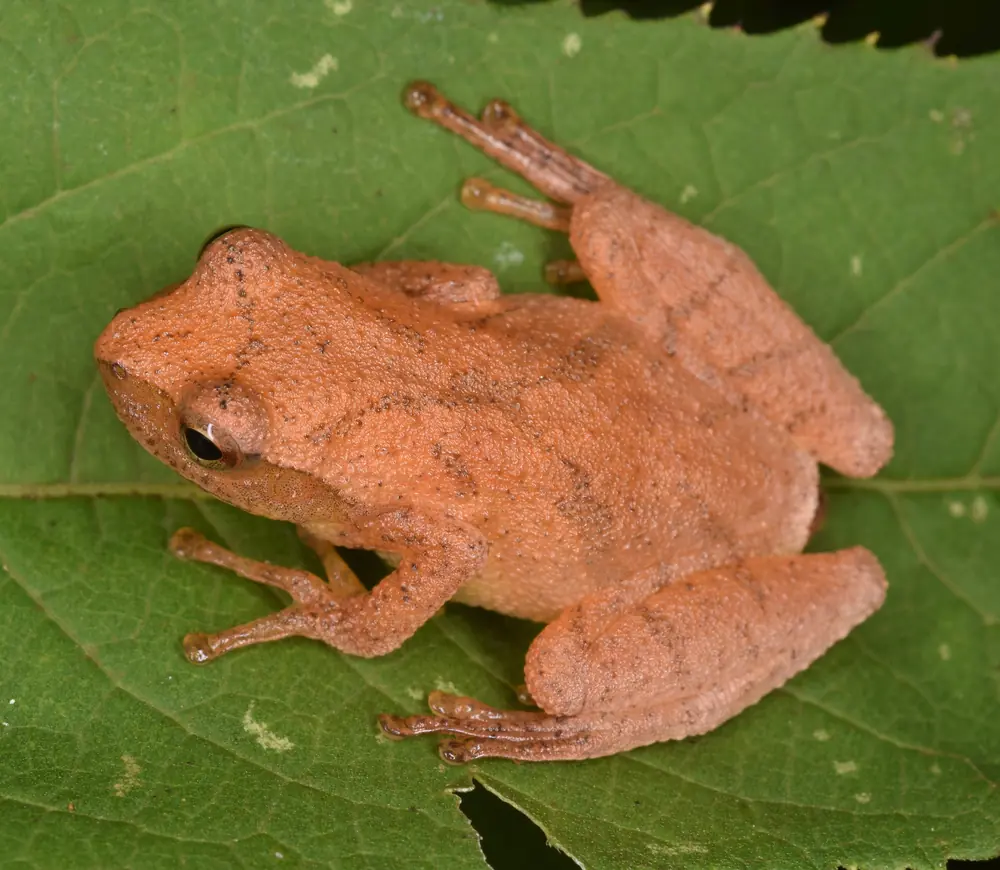
Spring peepers
Winter into early spring; busiest on warm, rainy nights · Marshes, Carolina bays, seasonal ponds, roadside ditches and even neighborhood streams, always near forest
The Savannah River Ecology Laboratory’s species account describes a frog that rarely exceeds an inch long, with a faint, imperfect X on its back and a repeated, high peep that rises a little at the end. South Carolina’s Partners in Amphibian and Reptile Conservation write that the frogs come down from upland woods to breed in flooded fields, marshes, woodland depressions, semipermanent ponds and ditches, and that males call from the ground or from low plants. They are hard to see and easy to hear, so stand still at the pond’s edge for a few minutes and let your ears adjust.
-
Upland chorus frogs
February through March · Wetlands, roadside ditches and slow streams, mostly in the Piedmont and mountains
The same laboratory says this species breeds from February through March, and that it is most common in the Piedmont and mountains, though isolated populations live on the coastal plain, where a different chorus frog usually takes its place. Its call is a quick, smooth trill that sounds like a thumbnail drawn along a pocket comb.
-
A coastal chorus at Cape Romain
Spring · Cape Romain National Wildlife Refuge, Charleston and Georgetown counties
The refuge’s seasonal guide says spring peepers and chorus frogs become vocally active there in spring, and that diamondback terrapins begin nesting in sandy patches of salt marsh.
Frogs call in the dusk and dark, so bring a flashlight with red cellophane over the lens and keep the beam low. FrogWatch USA invites volunteers to monitor one wetland over many evenings from February through August, and local chapters, such as the Winyah Wetlands chapter at the North Inlet-Winyah Bay research reserve, train volunteers to identify calls. Sketch the chorus in the field journal.
What grows in the granite pools at Forty Acre Rock?
At Forty Acre Rock Heritage Preserve in Lancaster County, near Kershaw, a slab of bare granite about 14 acres across rises where the Sandhills meet the Piedmont, according to the Open Space Institute. The slab is a harsh place: thin soil, baking sun, and shallow depressions that fill with rain and dry out again. Specialists live here that grow nowhere else in the state.
-
The spring pools
Spring, while the depressions hold water · The granite flatrock, reached by a 2.5-mile round-trip trail from the lower trailhead
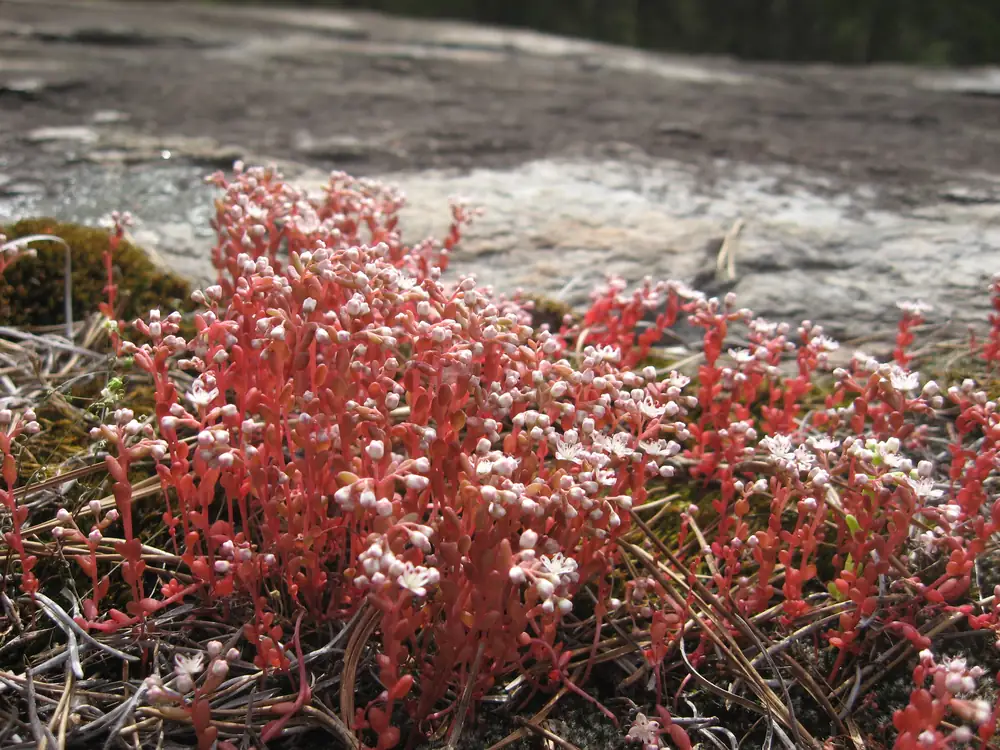
SC Trails describes how water collects in the rock’s hollows in spring and shows off lichens, mosses, sedum and the endangered pool sprite. SCDNR adds that the preserve protects two federally endangered plants, pool sprite and black-spored quillwort, which are adapted to pools that fill and dry and can live nowhere else. Elf orpine, a tiny red succulent that blankets granite outcrops in the Carolinas, belongs to the same community; photographers have recorded it in bloom on a Pickens County outcrop in early April. Bloom depends on the weather, so go after a good rain.
-
Rules that protect the rock
All year · Trails and pools
Under the state’s heritage preserve rules, access is on foot only, and driving through the preserve or around its gates is prohibited. SCDNR’s notice warns that fires built in or near the pools are illegal, that fire destroys seeds when pools are dry, and that spray-painted graffiti is a threat. SC Trails lists the trail as open from dawn to dusk, with pets allowed and no camping.
-
A new entrance, maybe
Expected to open in 2027, per the land trust · North side of the preserve
The Open Space Institute, which has helped add more than 200 acres to the preserve over the past decade, says a new northern entrance is expected to open in 2027. Treat that as a plan and check with SCDNR before you go.
Draw one hollow in March and again after a dry spell, and see what changed.
When do hummingbirds, swallow-tailed kites and painted buntings return?
Late March is when the South Carolina sky changes hands. Birds that spent winter in the tropics begin to trickle in, and the last of the winter ducks slip away.
-
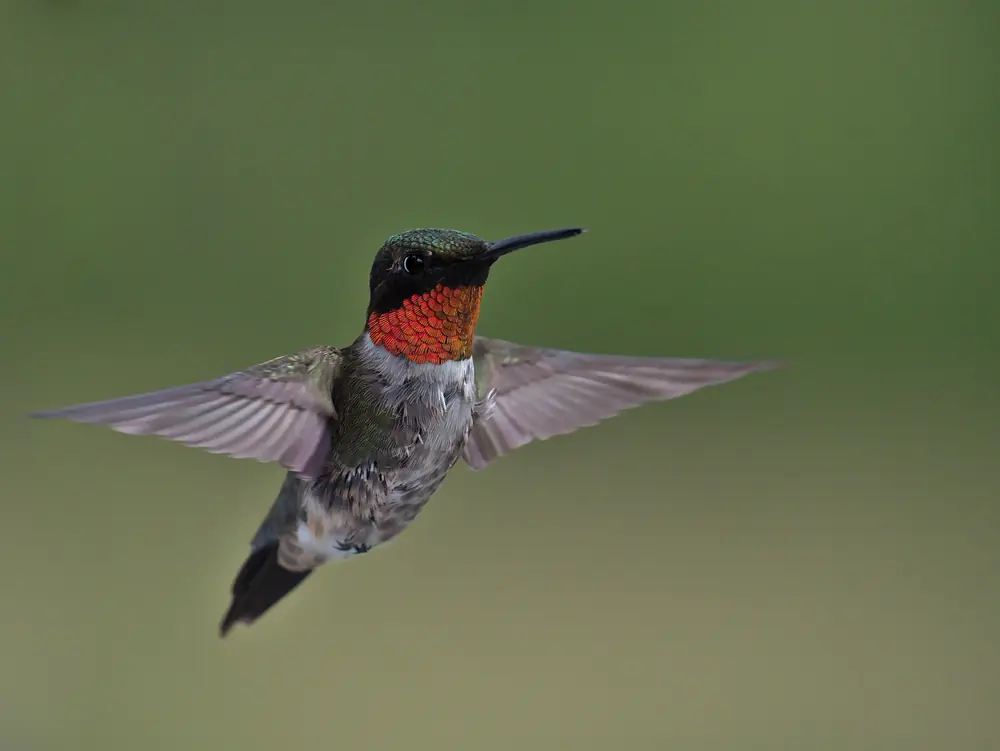
Ruby-throated hummingbirds
Males usually arrive in late March; females about a week later, per SCDNR · Feeders and flowering shrubs statewide
SCDNR’s hummingbird guidance says males begin showing up in late March, followed by the females about a week later, though most of the action at feeders does not pick up until midsummer. Its feeder recipe is four parts water to one part sugar, boiled for about three minutes; skip red dye and honey, and clean the feeder with hot water and vinegar or bleach before you hang it. Journey North, which maps the northward march, reported on March 26, 2025 that one observer in Pageland had seen a bird three days sooner than the year before. Your own first sighting can be added at journeynorth.org.
-
Swallow-tailed kites
Returning to the Southeast from late February to April; nesting March through June · Cypress and pine country of the coastal plain; Beidler Forest’s staff list swallow-tailed and Mississippi kites among spring sightings
Audubon says swallow-tailed kites return to Florida from late February through April and nest from March through June in tall pines and cypresses from Louisiana to South Carolina. Winters are spent in South America, on a round trip of about 10,000 miles. The Nature Conservancy reports that the kite is endangered in South Carolina, that its range once covered 21 states, and that the Waccamaw National Wildlife Refuge may hold the state’s densest concentration of nesting kites. Nests are hidden in pine crowns, so you are likelier to see a kite gliding over a river or swamp than at a nest.
-
Painted buntings and warblers
Late March through May, per an Audubon guide · Santee National Wildlife Refuge, Bear Island, Savannah refuge, Huntington Beach and the Beidler and Congaree swamps
Audubon’s guide to birding the state’s refuges says that late March through May captures the peak of spring activity. Migrants pile up at Santee National Wildlife Refuge, prothonotary warblers sing from the swamp at Francis Beidler Forest, hooded and Kentucky warblers spend the breeding season at Congaree, and painted buntings nest at Huntington Beach, Bear Island and the Savannah and Santee refuges. At Beidler, the center’s own notes say prothonotary warblers nest in cypress knees throughout the sanctuary.
-
The last ducks and the first woodpeckers in the Sandhills
Ducks through early March; red-cockaded woodpeckers best in April and May · Carolina Sandhills National Wildlife Refuge near McBee
The refuge says wintering waterfowl stay through early March. For its red-cockaded woodpeckers, the best viewing runs from April to May: look for pines with white-banded cavity trees, keep at least 200 feet away, and listen for a call like a squeaky toy. The Woodland Pond Trail, about a mile from the refuge office, is suggested for songbirds and possibly Bachman’s sparrow.
First-of-year dates are worth writing down; after a few Marches they tell a story of their own.
What happens on South Carolina’s beaches and islands from March 15?
SCDNR sets the coastal bird nesting season at roughly March 15 to October 15 each year. About a dozen species of shorebirds and seabirds nest on the state’s beaches and islands, from brown pelicans down to little Wilson’s plovers. Seabirds nest in crowded colonies, while shorebirds nest alone.
-
Sanctuaries close to landing
March 15 to October 15 · Crab Bank, Bird Key-Stono and Deveaux Bank seabird sanctuaries
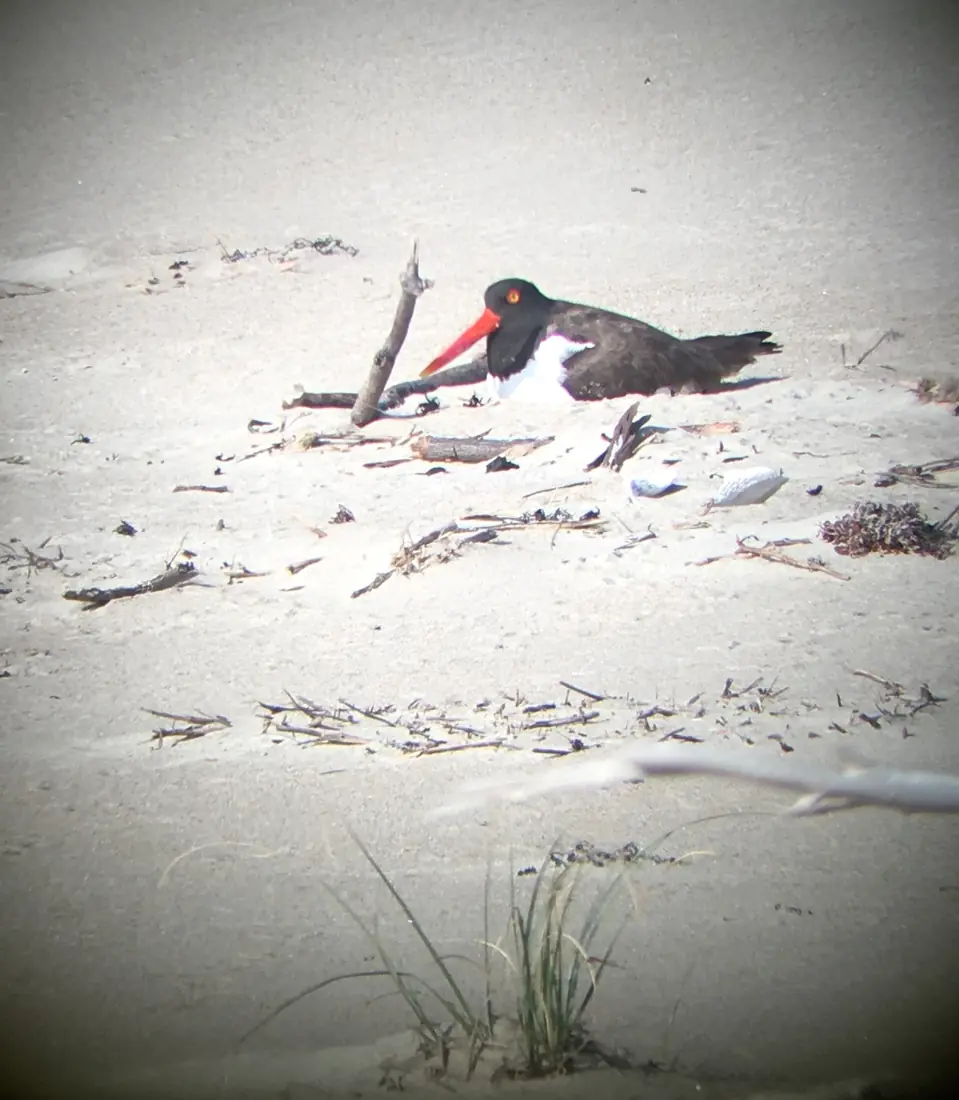
SCDNR keeps these three islands closed to all landing for the whole season. In 2023 its first documented nest of the year was an American oystercatcher’s on Crab Bank, found by a state biologist in late March. SCDNR says coastal bird species have declined 70 percent in the last 40 years, which is why biologists rope off nesting habitat with posts and signs each spring.
-
Brown pelicans on Marsh Island
Nesting in spring; check with the refuge for access · Cape Romain National Wildlife Refuge, Bulls Bay
A 2024 SCDNR presentation reports that Marsh Island has hosted brown pelican nesting continuously for 55 years, averaging 1,368 nests, and notes that the database goes back only to 1969. Cape Romain’s islands also hold roughly 35 percent of the state’s nesting seabirds, according to the same talk (about 4,769 of 13,701 nests a year on average since 1990). The refuge’s seasonal guide lists painted buntings, black skimmers, Wilson’s plovers, American oystercatchers and least terns among spring arrivals.
-
How to share the beach
The whole season · Any South Carolina beach
SCDNR’s advice is to leave dogs at home or keep them on a short leash, because to a nesting bird every dog looks like a predator, and to avoid roped-off areas, which can drive parents off their eggs. Pack out trash, which attracts predators, and walk around birds rather than through them on the wet sand.
Sea turtle season has not started yet. SCDNR says May 1 traditionally marks its beginning, though the first nest of 2025 was found on Folly Beach on April 29, so March is a good time for beachfront homes to check their outdoor lights.
What is blooming in South Carolina’s woods and pinelands in March?
Spring does not arrive on one day. In the Midlands and Lowcountry it arrives as a succession of flowers, and the bottomlands go first.
-
Carolina jessamine
March and April, per the National Park Service · Vines on trees, fences and forest edges across the state
The state flower’s yellow trumpets spill from vines over fences and treetops. The National Park Service lists it as blooming in March and April at Congaree National Park.
-
Atamasco lily, pawpaw and butterweed
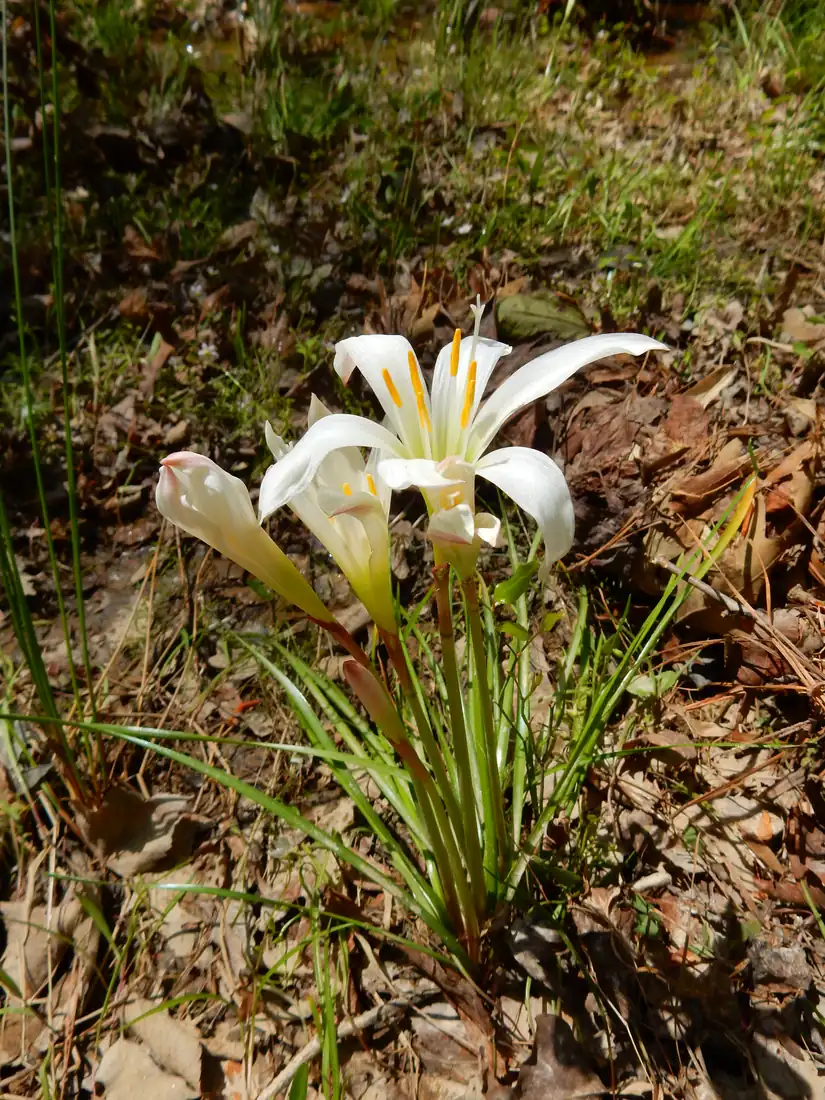
Atamasco lily and pawpaw in March and April; butterweed from March to June · Bottomland forest at Congaree National Park, near Columbia
Congaree’s wildflower guide calls butterweed the most abundant spring wildflower in the bottomland forest and one of the first to bloom each year. White atamasco lilies and the purplish flowers of the pawpaw join it in March and April. The park says spring is one of the best times to visit and that insects are generally not a problem then; it describes spring highs reaching the mid to upper 70s.
-
Pine pollen
Late March through April, per Clemson Extension · Everywhere pines grow, which is nearly everywhere
The yellow film that coats cars and porches comes mostly from pines. Pine pollen grains have two air-filled bladders that carry them on the wind, and because pines depend on chance to reach a female cone, the trees make it in enormous quantities. Clemson’s Home and Garden Information Center cautions against blaming pine pollen automatically for allergies and points instead to birch, oak, elm and juniper.
Pick one oak, maple or pine and draw its buds and catkins every week through April.
Can a March freeze still hurt South Carolina’s peaches and gardens?
Yes, and the stakes are highest for fruit growers. Clemson Extension’s chill-hour guide says that peach cultivars need hours of cold between 32 and 45 °F to wake properly, about 400 to 800 in the lower state and 800 to 1,000 in the upper state. When a warm spell comes early, low-chill plants bloom too soon and the flowers are killed by frost. On March 13 and 14, 2022, temperatures in some orchards fell to 19 °F while the peach crop stood at pink to full bloom; Clemson specialists who toured the damage found far less than they had feared, but warned that it was only March and the danger would last another month. In a field report dated March 10, 2025, extension agents noted peaches blooming across the Ridge in the Midlands and some early varieties in the Upstate in full bloom, and cautioned that early March was not yet out of frost and freeze danger.
| Station | One year in ten | Median | Nine years in ten |
|---|---|---|---|
| Greenville | Mar 13 | Mar 28 | Apr 12 |
| Rock Hill | Mar 13 | Mar 31 | Apr 15 |
| Columbia | Mar 4 | Mar 25 | Apr 10 |
| Aiken | Feb 28 | Mar 19 | Apr 5 |
| Florence | Feb 28 | Mar 19 | Apr 5 |
| Myrtle Beach | Mar 2 | Mar 21 | Apr 7 |
| Charleston | Feb 12 | Mar 7 | Mar 27 |
| Beaufort | Feb 2 | Feb 28 | Mar 21 |
Read the table as odds, not promises. In Columbia, the median last freeze is March 25, and nine springs in ten are finished by April 10, which means about one spring in ten still has a freeze after that. Beaufort’s median is February 28 and Charleston’s March 7, while Greenville’s is March 28 and Rock Hill’s March 31. Look up your own town on the South Carolina frost-date tool, and hold tomato transplants until your town’s nine-in-ten date has passed.
What is March weather like in South Carolina, and why is it fire and storm season?
March is a month of contrasts. NOAA’s normals put the Charleston average afternoon at 70 °F and the Caesars Head one at about 56. Charleston and Beaufort average more than 17 afternoons of 70 °F or warmer, against about three at Caesars Head. Frost is far from finished above the coastal plain: Caesars Head averages nearly 12 freezing nights, Greer six and Columbia four, while Charleston and Beaufort average one or two. Snow is a rarity, with at most a fraction of an inch in the normals.
-
Wildfire
Late winter to early spring · Statewide
The South Carolina Forestry Commission says the state’s wildfire season generally runs from late winter to early spring, that March has historically been the worst month, with a record 3,724 fires in March 1985, and that 98 percent of wildfires start with people. In March 2026, a local TV report said the Commission lifted a statewide burn ban on the 30th, and its fire chief warned that “Any fire you start is your responsibility, even if it rekindles and spreads days later.” State law requires you to notify the Commission before burning yard debris, and local burn bans may apply.
-
Tornadoes and severe storms
Spring, when cold fronts are active · Statewide
The State Climatology Office reports that South Carolina averaged 14 tornadoes a year from 1950 through 2017 and 26 a year from 1990 through 2017, and that spring tornadoes arise from active cold fronts.
| Station | Average high | Average low | Freezing nights | Days 70 °F or warmer | Precipitation | Snowfall |
|---|---|---|---|---|---|---|
| Caesars Head (Blue Ridge Escarpment) | 55.9 °F | 36.6 °F | 11.6 | 3.3 | 5.17 in | 0.3 in |
| Greer (Greenville–Spartanburg) | 64.4 °F | 41.2 °F | 6.0 | 10.6 | 4.48 in | 0.6 in |
| Columbia (Midlands) | 68.3 °F | 43.6 °F | 4.4 | 15.1 | 3.57 in | 0.1 in |
| Florence (Pee Dee) | 68.3 °F | 44.3 °F | 3.9 | 15.1 | 3.19 in | – |
| North Myrtle Beach (Grand Strand) | 64.7 °F | 45.4 °F | 2.9 | 9.1 | 3.59 in | – |
| Charleston International Airport | 70.1 °F | 47.3 °F | 1.6 | 17.5 | 3.35 in | 0.0 in |
| Beaufort MCAS (Lowcountry) | 69.9 °F | 48.7 °F | 1.3 | 17.3 | 3.11 in | 0.0 in |
This page makes no forecast for the month. NOAA publishes its latest 90-day outlook maps near the middle of each month, and the week ahead for your town is on the weather page.
How much daylight does South Carolina gain in March?
More than an hour, and faster than in February. Greenville goes from 11 h 26 m of daylight on March 1 to 12 h 32 m on the 31st, a gain of 66 minutes, while Charleston gains 61 and Beaufort 60. Spring officially begins with the equinox on Saturday, March 20, at 4:25 p.m. EDT (Naval Observatory), when day and night are nearly equal. The bigger change on the clock is the jump on Sunday, March 14, when daylight time begins at 2 a.m. In Columbia, sunrise moves from 6:37 a.m. EST on March 13 to 7:36 a.m. EDT on March 14, and sunset from 6:30 p.m. EST to 7:31 p.m. EDT. By March 31, Columbia’s sunrise is 7:13 a.m. and sunset 7:44 p.m. EDT.
| City | Mar 1 | Mar 31 | Gained | Per day |
|---|---|---|---|---|
| Greenville | 11 h 26 m | 12 h 32 m | 66 min | 2.2 min |
| Rock Hill | 11 h 26 m | 12 h 31 m | 65 min | 2.2 min |
| Columbia | 11 h 27 m | 12 h 31 m | 64 min | 2.1 min |
| Aiken | 11 h 28 m | 12 h 31 m | 63 min | 2.1 min |
| Florence | 11 h 27 m | 12 h 31 m | 64 min | 2.1 min |
| Myrtle Beach | 11 h 28 m | 12 h 30 m | 62 min | 2.1 min |
| Charleston | 11 h 29 m | 12 h 30 m | 61 min | 2.0 min |
| Beaufort | 11 h 30 m | 12 h 30 m | 60 min | 2.0 min |
Greenville’s sunset also passes 7 p.m. on March 14, at 7:36 p.m., and Charleston’s is 7:27 p.m. The after-dinner walk is back in daylight; the day-length tool covers more towns.
What is in South Carolina’s night sky in March 2027?
Venus and Mercury shine in the morning, and Jupiter and Mars stand high in the evening. Times are Eastern; planet rise times shift by about half an hour across the state.
-
Venus and Mercury before dawn
Venus all month; Mercury best March 8 to 25, farthest from the sun on the 17th · Low in the east and east-southeast before sunrise
Venus is a brilliant morning star, about 40 degrees from the sun on March 1 and rising roughly two hours before sunrise, though it will sink toward the sun in coming months. Mercury reaches its widest angle from the sun on March 17 at about 12:20 a.m. EDT, 27.6 degrees west of it. In early March it climbs above the horizon roughly an hour before the sun and is far fainter than Venus, which hangs well above it, so look low toward the east-southeast.
-
Jupiter, Mars and the Moon
The Moon passes Jupiter on March 18 and 19; by our own figures Mars and Jupiter are closest on March 30 to 31 · High in the evening sky
A Moon some 88 percent lit stands next to Jupiter on the evenings of the 18th and 19th, nearest on the 19th (about 0.9 degrees). Later, by our own calculation, Mars and Jupiter stand about 4.3 degrees apart on the evening of Tuesday the 30th, less than half a fist’s width at arm’s length, and both are high in the sky after dark. Jupiter, at magnitude about −2.5, outshines every star.
-
The Worm Moon
Full at 6:44 a.m., Monday, March 22; best evening is Sunday the 21st · Rising in the east around sunset
The full moon arrives in the early morning, before sunrise, so the Moon looks full on the evenings of Sunday the 21st and Monday the 22nd. The Old Farmer’s Almanac gives “Worm Moon” as the March name, citing either earthworms stirring as soil warms or tree-bark larvae. By our calculation the Moon passes perigee on March 19 but is about 372,500 km away at full, too far to count as a supermoon.
| Phase | Date | Time |
|---|---|---|
| New moon | Monday, Mar 8 | 4:29 a.m. EST |
| First quarter | Monday, Mar 15 | 12:25 p.m. EDT |
| Full moon (Worm Moon) | Monday, Mar 22 | 6:44 a.m. EDT |
| Last quarter | Monday, Mar 29 | 8:54 p.m. EDT |
For a clear night, the cloud forecast is the place to start, and the moon calendar has moonrise by town.
What can South Carolina families do outside in March 2027?
- A frog night. After the next warm rain, take the family to a pond, ditch or flooded field at dusk and just listen for peepers and chorus frogs.
- A bell hike. The Oconee Bell Nature Trail at Devils Fork is about a mile, and Clemson Extension puts the bloom from mid-March to early April. Ask the park whether BellFest, which Friends of Jocassee usually holds in March, has a date for 2027.
- Granite pools. Walk the 2.5-mile round trip at Forty Acre Rock after a rain and look for water in the hollows of the stone, staying on the trail.
- A cypress boardwalk. Audubon’s Francis Beidler Forest has a 1.75-mile boardwalk with ten rest shelters, open Wednesday through Saturday from 9 a.m. to 5 p.m. and Sunday from 11 a.m. to 4 p.m. when this page was written, with adult admission at $12 and children 5 and under free. Call 843-487-9988 before visiting.
- Hummingbird watch. Hang a clean feeder in the last week of March and send Journey North your first sighting. Do the same for monarchs: Journey North asks for first sightings of eggs, larvae and adults.
- NestWatch. Cornell Lab’s project teaches you to find nests, watch them without disturbing the birds and report what you see, and a backyard nest box counts.
- Until the end of April: FeederWatch. Counts are flexible, and U.S. participants pay a yearly fee.
- Worm Moon evening, Sunday, March 21. Look east after sunset, then check the garden for earthworms.
Children can log what they see in the Naturalist’s Field Journal. The shad and martins from February carry on into March, and the nature index lists other states.
Safety notes for March in South Carolina
- Spring turkey hunters. SCDNR’s regulations list the 2027 spring season as April 3 to May 3 on private lands and WMAs, with youth weekends on March 27 and 28 (private lands only) and May 8 and 9. The turkey hunters you meet in March will be young hunters on private land that weekend. WMAs are closed to hunting on Sundays unless noted otherwise.
- Other seasons in March. Guns-and-dogs seasons for quail, rabbit, squirrel and fox, and the crow and furbearer seasons, end on March 1, as do the late Canada and snow goose seasons. Raccoon and opossum hunting with guns and dogs runs to March 15.
- Hunter orange. The WMA orange rule applies to deer, bear and hog gun seasons, and turkey hunters are exempt from it, so a walker on a WMA in turkey season should wear bright colors anyway.
- Fire. Notify the Forestry Commission before burning yard debris, check for local bans, and never leave a fire unattended.
- Severe weather. March thunderstorms can bring tornadoes; keep weather alerts on and never drive through floodwater.
- Nesting birds. The seabird sanctuaries are closed to landing from March 15, so stay out of posted areas.
- Snakes. Copperheads and cottonmouths are the state’s venomous species; cottonmouths live in the Sandhills and coastal plain and not in the Upstate. Never handle one, and if someone is bitten, stay calm and get to a hospital.
- Ticks. CDC advises repellent, treated clothing, a shower within two hours of coming indoors and a full body check.
- Black bears. SCDNR says bears are leaving their dens and that removing food sources is the key to avoiding trouble. Close garbage cans, take down bird feeders if bears come, and call 1-800-922-5431 or 911 in an emergency.
- Late freezes. Cover tender plants when the forecast drops below freezing, especially in the Upstate.
Sources (53)
- Clemson HGIC: Oconee bells, rare spring ephemeral of the southern Appalachians
- South Carolina State Parks: Devils Fork State Park
- Friends of Jocassee
- Clemson South Carolina Botanical Garden: seasonal highlights
- Savannah River Ecology Laboratory: spring peeper
- Savannah River Ecology Laboratory: upland chorus frog
- South Carolina Partners in Amphibian and Reptile Conservation: spring peeper
- U.S. Fish and Wildlife Service: seasons of wildlife at Cape Romain National Wildlife Refuge
- FrogWatch USA: become a volunteer
- North Inlet-Winyah Bay research reserve: Winyah Wetlands FrogWatch
- SC Trails: Forty Acre Rock
- SCDNR: enforcement notice about Forty Acre Rock Heritage Preserve
- Open Space Institute: additions to Forty Acre Rock Heritage Preserve
- SCDNR: hummingbirds returning to South Carolina
- Journey North: hummingbirds on their way, March 26, 2025
- Journey North: monarch butterflies
- Audubon Florida: swallow-tailed kites returning
- The Nature Conservancy: a safe place to land (swallow-tailed kites)
- Audubon: birding South Carolina
- Audubon Center at Francis Beidler Forest: plan your visit
- U.S. Fish and Wildlife Service: seasons of wildlife at Carolina Sandhills National Wildlife Refuge
- U.S. Fish and Wildlife Service: birding at Carolina Sandhills National Wildlife Refuge
- SCDNR: coastal bird nesting season has begun, March 30, 2023
- SCDNR: coastal birds in South Carolina
- SCDNR: seabird activity in Cape Romain National Wildlife Refuge (2024 presentation)
- SCDNR: sea turtle nesting season, April 29, 2025
- National Park Service: wildflowers at Congaree National Park
- National Park Service: weather at Congaree National Park
- Clemson HGIC: why pine pollen covers everything in spring
- Clemson News: fruit and brassica crops after the March 2022 freeze
- Clemson HGIC: South Carolina fruit and vegetable field report, March 10, 2025
- Clemson HGIC: understanding chill hours for fruit and nut trees in South Carolina
- NOAA NCEI: U.S. climate normals, 1991–2020 monthly
- South Carolina State Climatology Office: tornado statistics
- South Carolina Forestry Commission: wildfire information
- WMBF News: Forestry Commission lifts statewide burn ban, March 30, 2026
- NOAA Climate Prediction Center: 90-day outlooks
- NOAA Global Monitoring Laboratory: solar calculator equations
- U.S. Naval Observatory: moon phases for 2027
- U.S. Naval Observatory: seasons for 2027
- NIST: daylight saving time
- The Old Farmer’s Almanac: full moon names
- SCDNR (eRegulations): turkey regulations, spring 2027
- SCDNR: turkey hunting
- SCDNR (eRegulations): small game seasons
- SCDNR (eRegulations): migratory bird seasons
- SCDNR (eRegulations): WMA regulations and hunter orange
- SCDNR: black bears emerging from dens
- SCDNR: venomous snakes frequently asked questions
- CDC: preventing tick bites
- Cornell Lab: NestWatch
- Cornell Lab: Project FeederWatch overview
- Photos via Wikimedia Commons; licenses and photographers are credited under each picture
