What to look for in nature in South Carolina this December
For weather statisticians, winter starts on December 1, the first day of the chilliest three-month block, yet a South Carolina winter is anything but idle. Owls hoot their duets in the river swamps and the first bald eagle eggs are laid. After a warm rain the roadside ditches of the coastal plain fill with the trills and tinks of chorus frogs, a breeding season that runs while most of the country is frozen. Count teams spread across the state for the Christmas Bird Counts, loons ride the swells below the Lake Murray dam, and the live oaks, hollies and longleaf pines show what stays green. The sun sets before half past five, and the year’s biggest full moon rises two days after the solstice. Here is the month, with dates and sources.
Other months in South Carolina: October, November.
Start here
- Pick a Christmas Bird Count. More than thirty South Carolina circles hold their one-day counts inside the December 14 to January 5 window, from York–Rock Hill and Keowee to Hilton Head and the ACE Basin. The Carolina Bird Club lists each one with a contact; beginners join a team, and a backyard feeder inside a circle counts too.
- Listen at a wet ditch after a warm rain. Ornate and southern chorus frogs breed in the coastal plain in the cold months. On a mild, damp evening, stop by a flooded roadside ditch or pine-woods pond and listen for a metallic tink or a fast, rattling trill.
- The Geminids, Sunday night, December 13. The year’s richest meteor shower peaks under a moon that sets in the evening. Head out after about 10 p.m. on the 13th and stay as late as you can; rates climb toward 2 a.m., with Gemini near the top of the sky.
Keep a record: copy your count team’s species list into the journal’s bird pages, use “a map of sounds” for owl duets and chorus frogs heard from one spot, let one live oak or holly become “a tree through the seasons,” and give the solstice sunset a line in the dusk and dawn watch. Add the hour and the temperature to every entry.
Regions used below: Upstate and the Blue Ridge Escarpment; Midlands and Congaree; Pee Dee and the Sandhills; Grand Strand; Lowcountry and the Sea Islands.
How do you join a Christmas Bird Count in South Carolina?
Choose the closest circle and email the person who organizes it. Audubon’s Christmas Bird Count, now in its 127th season, runs from Monday, December 14, through Tuesday, January 5. Each count repeats the same circle on one day every winter, and that sameness, year after year, is what gives the results their scientific value. There is no charge, Audubon says, and no skill level required, and anyone living within a circle may report a backyard feeder rather than join a field team.
The Carolina Bird Club keeps the South Carolina list. On October 2 it listed more than 30 South Carolina counts, but only one with a date so far: North Greenville, on Saturday, December 26. The rest post their days through the fall, so check the list again in November.
-
Upstate and Piedmont circles
Dates posted through the fall; North Greenville is Saturday, December 26 · North Greenville, Spartanburg, Clemson, Keowee, Long Cane, Rocky River, Lake Wateree and York–Rock Hill
Inland counts lean toward woodland and feeder birds: white-throated and song sparrows, kinglets, hermit thrushes, yellow-rumped warblers and the resident woodpeckers, with ducks on the big reservoirs. Teams usually divide the circle into sectors and cover farm roads, lake overlooks and suburbs, and some counts send a small crew out before dawn to listen for owls.
-
Midlands, Sandhills and Pee Dee circles
Dates to be announced · Columbia, Congaree Swamp, Lower Saluda, Aiken, Savannah River Site, Four Holes Swamp, Carolina Sandhills NWR, Pee Dee Area, Pinewood and Santee NWR
Here the counts cover bottomland swamp, longleaf sandhills and the Lake Marion refuge marshes in a single region. The Santee and Carolina Sandhills circles, both centered on national wildlife refuges, can add waterfowl and pine-woods specialties to the same day’s list.
-
Coastal circles
Dates to be announced · Litchfield–Pawleys Island, Lewis Ocean Bay–Waccamaw River, Winyah Bay, McClellanville, Charleston, James Island, Edisto Island, ACE Basin, Yemassee, Sea Islands, Hilton Head Island, Sun City–Okatie and Lowcountry
The coastal counts mix beaches, salt marsh, managed impoundments and maritime forest in one circle. Some routes depend on the tide or on a boat, so ask the compiler what your sector will need, and bring a scope if you have one for the open water.
Short on time? Ask the compiler for a feeder form and give the count an hour at the kitchen window.
Where can you see loons, grebes and other winter visitors in South Carolina?
By December the winter residents have settled in. The Carolina Bird Club’s site guides, which mark the cold-season birds at each place with a “w,” point to a handful of spots that reward a short visit with a scope or good binoculars. Pick a calm, overcast morning; light wind keeps the water flat and the birds easy to pick out.
-
Loons and grebes below the Lake Murray dam
All winter; best on calm mornings · The 1.7-mile walking path across the dam, and the dam parks, between Lexington and Irmo
The club’s guide lists common loons, horned and pied-billed grebes, lesser scaup, buffleheads, common goldeneyes and red-breasted mergansers in winter, with Bonaparte’s, ring-billed and herring gulls over the open water. The path across the dam is open all year and looks over the deepest part of the lake. Winter loons are plain gray and white and stay under a long time, so be patient.
-
Mergansers and grebes on the Pitt Street Causeway
Winter, away from high tide · The end of Pitt Street in the Old Village of Mount Pleasant, looking over the Charleston Harbor marshes
A small park with limited parking and no restrooms, but a fine view of mudflats, hooded mergansers, common loons and horned grebes, with a red-necked grebe a rare winter prize. The guide advises skipping high tide, when the flats where shorebirds feed go under water.
-
Sea ducks off Lighthouse Inlet
Winter · Lighthouse Inlet Heritage Preserve at the east end of Folly Beach, reached on foot along the gated end of East Ashley Avenue
Surf, white-winged and black scoters, buffleheads and lesser scaup work the inlet in winter, and purple sandpipers sometimes pick along the rocks. The preserve has firm rules: the gate stays locked, the posted side trails are closed, and dogs are not allowed on this end of the island at all.
-
Hermit thrushes and winter wrens in Congaree
Winter visitors, through about March · The two-mile boardwalk loop at Congaree National Park, near Hopkins
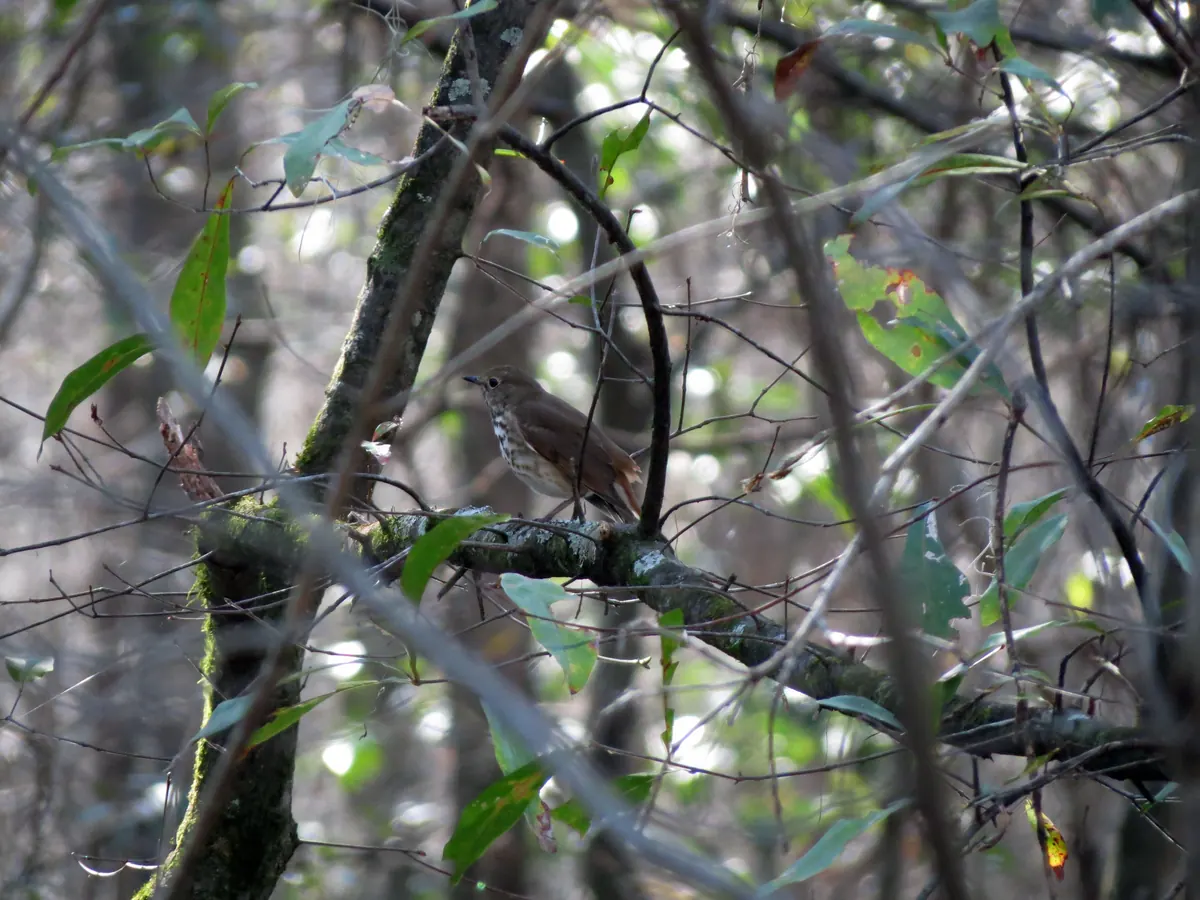
The leafless floodplain forest is easier birding than the summer jungle. The club lists winter wrens, hermit thrushes, fox sparrows and rusty blackbirds among the park’s cold-season birds, and notes that the boardwalk carries you into the bottomland even when the water is fairly high. Look for rusty blackbirds turning over wet leaves along the edges of the sloughs, and enter what you find in eBird.
-
Right whale calves offshore
The calving season runs mid-November to mid-April · Coastal waters from the Grand Strand to Hilton Head
Last season NOAA logged 23 calves, the most in 17 years. The first was seen on November 28 off Ocean Isle Beach, North Carolina, and by the end of December mothers with calves had turned up about 10 miles off the Sullivan’s Island lighthouse, 15 miles off Hilton Head and 18 miles off Kiawah Island. Keep watching from December on. Federal rules keep everyone 500 yards or more from these whales; call NOAA’s sighting line, 877-942-5343, if you spot one.
Make a December list at one of these spots and repeat it in late February, as the loons begin to leave.
When do owls and bald eagles nest in South Carolina?
In the depths of winter, while songbirds are months away from nesting. Great horned owls and bald eagles both lay eggs around the turn of the year, and the reason is the long apprenticeship that follows. Audubon explains that young great horned owls stay near their parents through the summer and into early fall, so laying eggs in midwinter leaves the owlets time to master hunting before cold weather returns.
-
Great horned owl duets
Hooting peaks in December and January; eggs follow in winter · Woodlots, river swamps, golf courses, farm edges and big suburban yards statewide
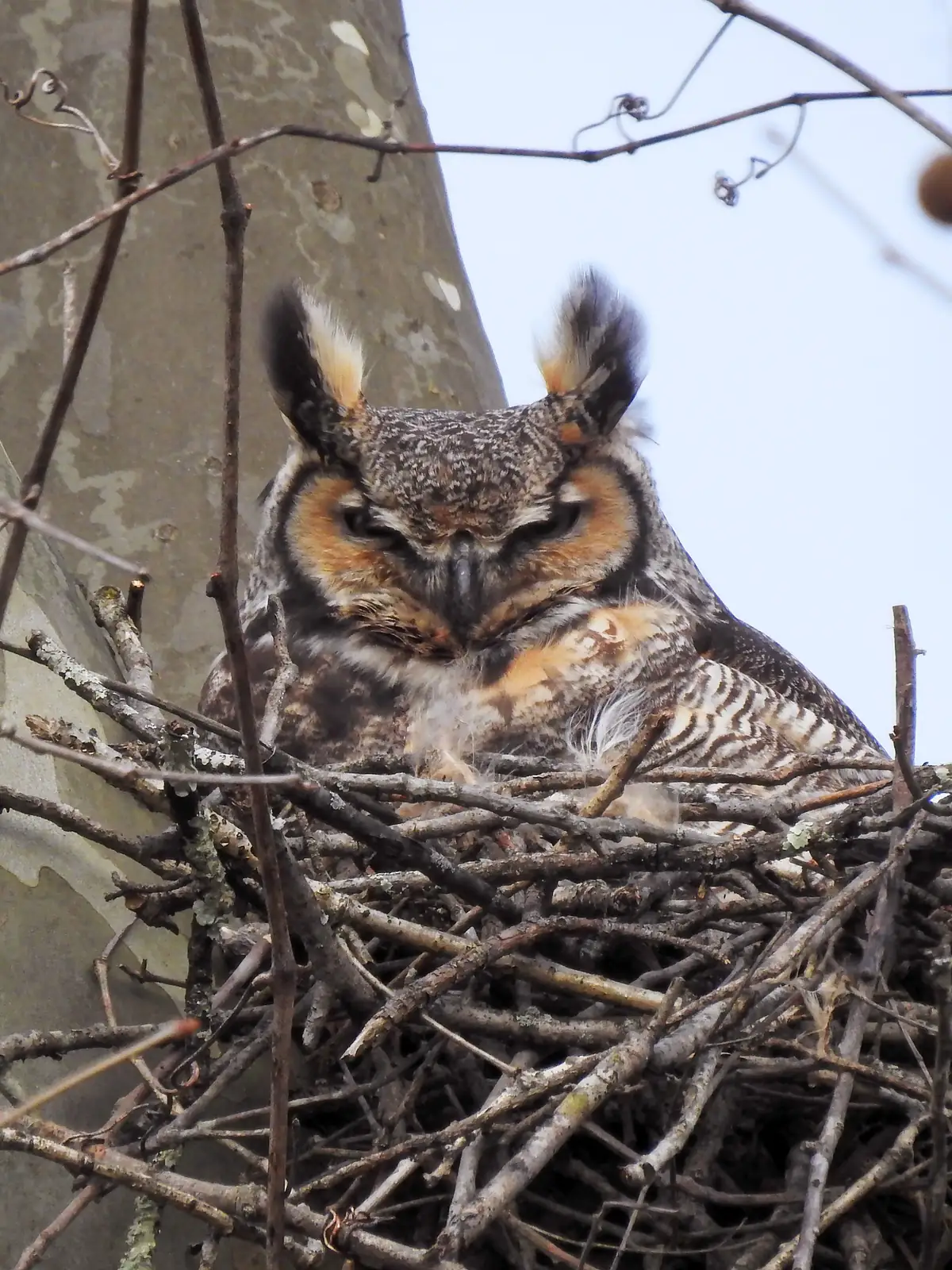
Pairs call back and forth after dark, a deep, soft series that Audubon’s field guide writes as hoo, hoo-hoo, hoo, hoo, with the second and third notes shorter. The owls build no nest of their own; they move into an abandoned stick platform built by hawks, crows, herons or eagles, usually 20 to 60 feet off the ground, and the female lays two or three eggs that hatch after about four to five weeks. A great horned owl sitting in a red-tail’s nest in January, ear tufts poking over the rim, is a classic winter find.
-
Barred owls in the bottomlands
All year; very vocal in winter · Congaree, Francis Beidler Forest, the Santee and Savannah river swamps, and wooded creeks everywhere
The barred owl’s rich baritone, a loud hoo, hoo, hoo-hoo, ending in a drawn-out hoo-aw, is the sound of a Southern swamp, and pairs often answer each other in a cackling racket. They nest in hollow trees and broken snags or in old red-shouldered hawk nests, with two or three eggs incubated for about a month.
-
Bald eagles on eggs
Laying usually in December; incubation about five weeks · Big pines near open water: the ACE Basin, the coastal impoundments, Lakes Marion and Moultrie and the Piedmont reservoirs
SCDNR says most South Carolina eagles lay in December, though eggs can come any time from November to March. A clutch is one to three eggs, and both adults take turns keeping them warm for about five weeks, so chicks may be in the nest by the middle of January. Northern eagles that winter in the state, arriving from late October, add to the birds you see over the lakes. A flat, motionless white head just showing above the rim of a nest is the sign of incubation. Keep your distance.
An owl walk needs no gear but a warm coat. Stand still on a quiet road at dusk, listen for ten minutes, and write down what you hear and from which direction.
Why are frogs calling in South Carolina in December, and how do other animals get through winter?
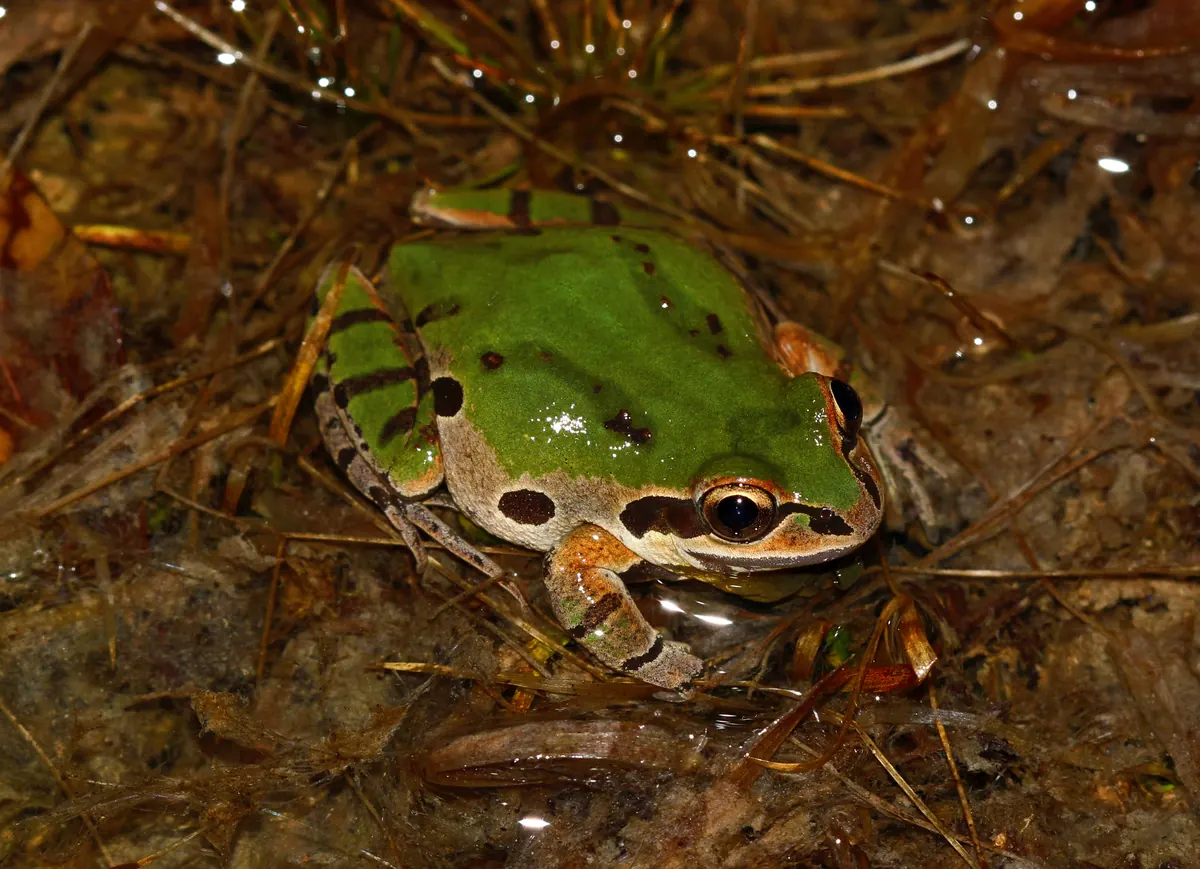
Several frogs of the coastal plain breed in the coldest part of the year, laying their eggs in shallow, rain-filled pools that hold no fish and usually dry out by summer. The Savannah River Ecology Laboratory’s species accounts describe a winter chorus that runs from late fall into spring; the calling is loudest on mild, wet nights.
-
Ornate and southern chorus frogs
Ornate: November through March; southern: activity peaks December through April · Carolina bays, grassy seasonal ponds, cypress ponds and roadside ditches in the coastal plain and Sandhills
The ornate chorus frog, a small, boldly patterned frog of the sandhills and pine flatwoods, calls with a sharp, metallic tink repeated in quick succession, and the laboratory notes that it usually starts earlier than the spring peeper. The southern chorus frog gives a loud, rapid trill of six to twelve notes, then pauses and repeats. Both need fishless water that dries up in summer, which is why the Carolina bays matter so much to them.
-
Spring peepers and southern leopard frogs
Winter into early spring · Marshes, seasonal ponds, ditches and slow neighborhood creeks
Despite the name, peepers breed in winter and early spring in South Carolina, and a big chorus rings like sleigh bells. The southern leopard frog’s call is a guttural chuckle, like a low laugh, and it breeds mostly in winter and spring. In the Upstate and Piedmont, the upland chorus frog, with its comb-tooth trill, usually waits until February.
-
Salamanders in the temporary pools
Marbled larvae hatching after fall rains; spotted salamanders moving on winter rain nights · Fishless woodland pools and floodplain swales
Marbled salamanders lay their eggs on dry ground in autumn, under logs or leaves in a pool basin, and the larvae hatch when winter rains flood the nest; if the rain never comes, the eggs can wait until spring. Spotted salamanders leave their burrows on rainy winter nights to lay big clumps of up to 200 eggs in the same kind of pool. Look, but leave the eggs and adults where they are.
-
Bears in their dens
Winter; cubs born in January or February · The mountains and upper Piedmont, and the coastal plain population
Pregnant females are the bears most sure to den. By SCDNR’s account the cubs arrive in midwinter, in January or February, inside the den after a pregnancy of about 235 days, and stay with their mother for a year and a half. In bear country, keep trash and bird seed secured all winter anyway.
Frog calls are easy to record on a phone. Note the air temperature and whether it rained that day; over a winter, the pattern of which nights bring a chorus becomes clear.
What stays green in South Carolina’s winter woods?
More than in most states. Once the sweetgums and hickories are bare, the Lowcountry still looks green, thanks to live oaks, palmettos, pines, hollies and wax myrtles. With the deciduous trees bare, this is the simplest time of year to tell them apart.
-
Live oaks and Spanish moss
All winter · Coastal towns, sea islands, old cemeteries and avenues
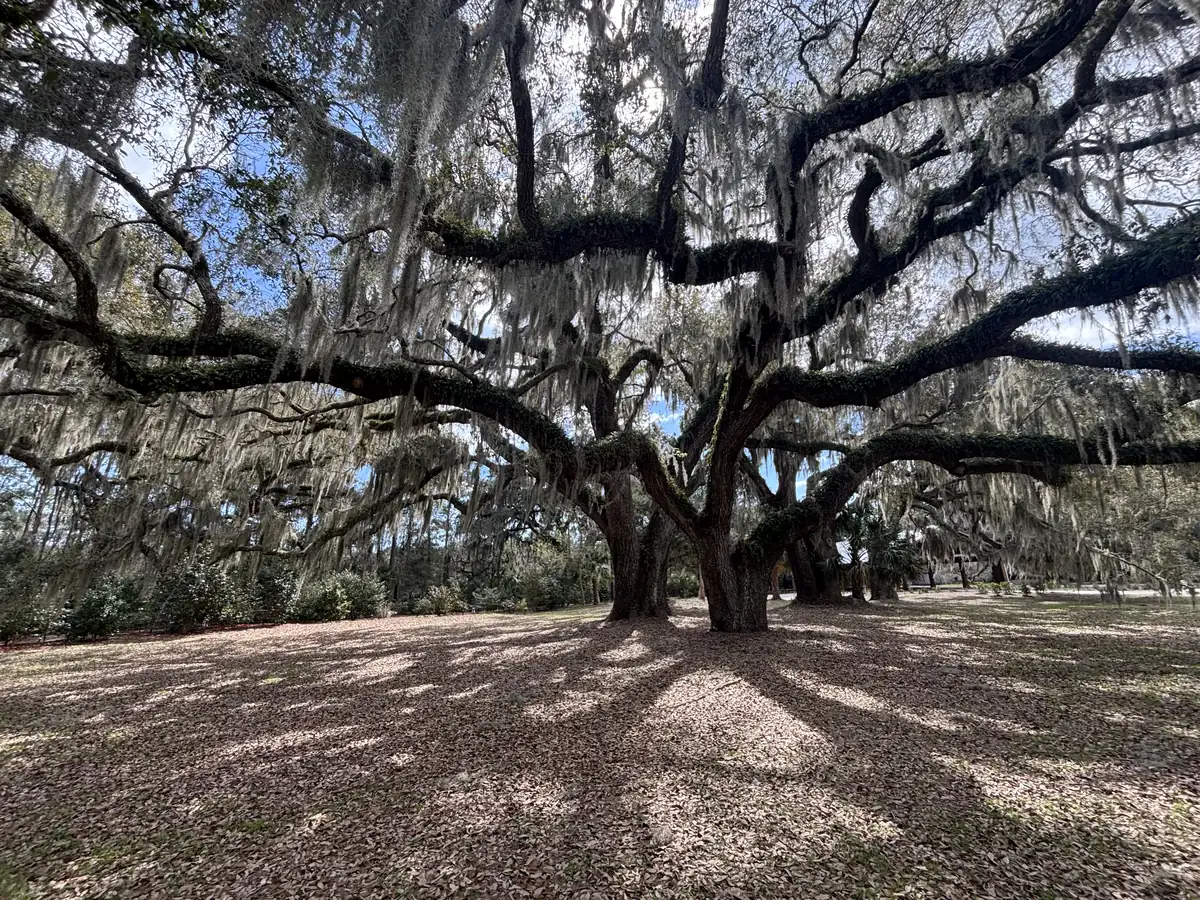
Live oaks hold their small, leathery leaves through the winter, which is how the trees earned their name. The gray curtains hanging from their limbs are Spanish moss, a flowering plant rather than a true moss, and it steals nothing from the tree. Clemson’s Home & Garden Information Center calls it an epiphyte, a plant that uses its host only for support and takes no water or nutrients from it, and says it does the tree little or no harm.
-
American holly and yaupon
Red berries through the winter · Woods, fencerows, dune thickets and yards
American holly is the traditional Christmas holly, with spiny leaves and red berries, and only female trees fruit, so a berry-less holly is most likely a male. Yaupon, native from Long Island to central Florida, has small, smooth-edged leaves and bright red berries clustered along the twigs of female plants. Watch which birds come to feed on them, and when.
-
Mistletoe in the bare branches
White berries in winter · High in oaks, maples and other hardwoods
Once the leaves fall, the green balls in the treetops stand out. American mistletoe is a hemiparasite: it makes its own food by photosynthesis but takes water and minerals from the host. Birds eat the white berries and leave the sticky seeds on other branches, where they sprout. The berries are poisonous to people and pets, so hang it out of reach. It is also the only larval food of the great purple hairstreak butterfly.
-
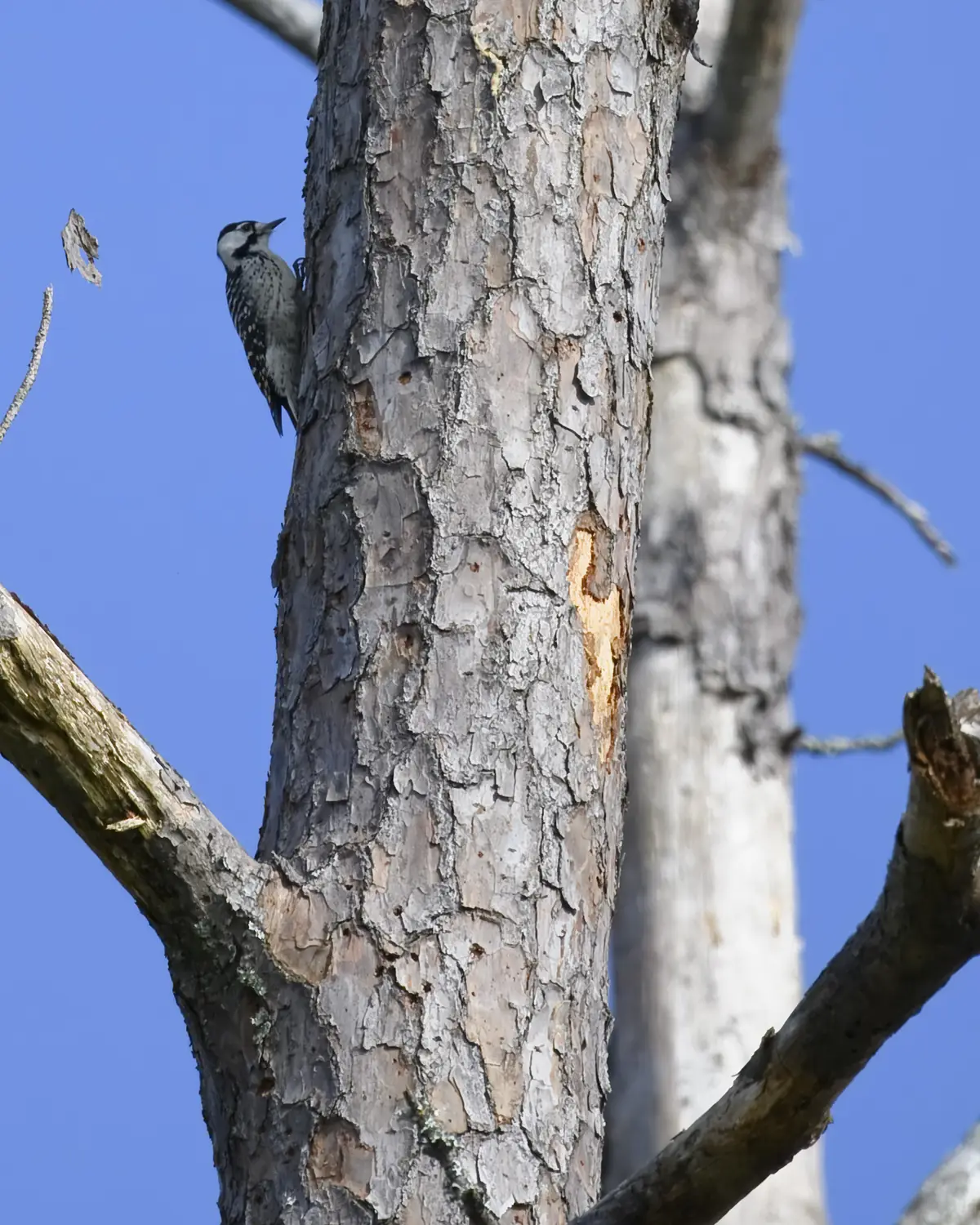
Longleaf pine at Carolina Sandhills
All year; winter means no bugs and long sight lines · Carolina Sandhills National Wildlife Refuge, off US 1 north of McBee in Chesterfield County
The refuge calls itself one of the Southeast’s best places to see the longleaf pine and wiregrass ecosystem, and it supports a recovery population of red-cockaded woodpeckers, which excavate their roost holes in living pines. An auto-tour route begins at the headquarters. Early morning, near the cavity trees, is the likeliest time to see them.
-
Japanese camellias opening
Earliest types from November in the Lowcountry; peak bloom later in winter · Gardens, churchyards and old plantations
Clemson notes that the large-flowered Camellia japonica blooms over a long season, the earliest varieties beginning in November in the Lowcountry and the latest still flowering in May. In a mild December the first flowers open on shrubs that are still covered in fat buds.
Pick one evergreen and sketch a leaf from it now, then do it again in spring, and you have a start on the journal’s “tree through the seasons.”
When is South Carolina’s earliest sunset, and how short is the shortest day?
The earliest sunset comes well before the shortest day. In Columbia the sun goes down earliest, at about 5:15 p.m. around December 5, more than two weeks ahead of the solstice; by New Year’s Eve it sets near 5:25, while sunrise keeps sliding later into January. The state’s earliest sunsets belong to its northeast corner: 5:07 p.m. at Myrtle Beach and 5:09 at Florence. The shortest day is Monday, December 21: 9 h 49 m in Greenville and Rock Hill, and about ten hours in Charleston and Beaufort, which sit farther south.
| City | Dec 1 | Dec 21 | Dec 31 | Earliest sunset |
|---|---|---|---|---|
| Greenville | 9 h 59 m | 9 h 49 m | 9 h 51 m | 5:18 p.m., Dec 5 |
| Rock Hill | 9 h 59 m | 9 h 49 m | 9 h 51 m | 5:12 p.m., Dec 5 |
| Columbia | 10 h 04 m | 9 h 53 m | 9 h 56 m | 5:15 p.m., Dec 5 |
| Aiken | 10 h 06 m | 9 h 56 m | 9 h 58 m | 5:18 p.m., Dec 4 |
| Florence | 10 h 02 m | 9 h 52 m | 9 h 55 m | 5:09 p.m., Dec 5 |
| Myrtle Beach | 10 h 05 m | 9 h 55 m | 9 h 57 m | 5:07 p.m., Dec 4 |
| Charleston | 10 h 09 m | 10 h 00 m | 10 h 02 m | 5:13 p.m., Dec 4 |
| Beaufort | 10 h 11 m | 10 h 01 m | 10 h 04 m | 5:17 p.m., Dec 4 |
The Field almanac gives sunrise, sunset and civil twilight for your own town, from Pickens to Port Royal.
How cold and snowy is December in South Carolina, and what could El Niño bring?
December is cool rather than cold for most of the state, but the range is wide. By NOAA’s 1991–2020 normals, Caesars Head on the escarpment averages a high under 48 °F, more than 16 nights at or below freezing and 2.6 inches of snow, while Beaufort averages highs near 63 °F and fewer than four freezing nights. December is also when the last places get their first freeze: the South Carolina frost tables put the median first 32 °F at Charleston International Airport on November 27 and at Beaufort on December 3, and one Beaufort fall in ten stays frost-free until January 1. Below the mountains, December snow is a novelty: about half an inch at Greer, a tenth at Columbia, none to speak of at Charleston.
| Station | Average high | Average low | Freezing nights | Precipitation | Snowfall |
|---|---|---|---|---|---|
| Caesars Head (Blue Ridge Escarpment) | 47.6 °F | 32.1 °F | 16.6 | 7.08 in | 2.6 in |
| Greer (Greenville–Spartanburg) | 54.9 °F | 34.8 °F | 13.6 | 4.58 in | 0.6 in |
| Columbia (Midlands) | 58.9 °F | 36.5 °F | 11.9 | 3.70 in | 0.1 in |
| Florence (Pee Dee) | 59.4 °F | 38.3 °F | 10.1 | 3.47 in | – |
| North Myrtle Beach (Grand Strand) | 59.3 °F | 40.0 °F | 8.6 | 3.10 in | – |
| Charleston International Airport | 62.7 °F | 41.6 °F | 6.0 | 3.35 in | 0.0 in |
| Beaufort MCAS (Lowcountry) | 62.7 °F | 42.9 °F | 3.8 | 3.17 in | 0.0 in |
Out in the tropical Pacific, the ocean is primed: federal forecasters, in their mid-September assessment, gave this warm event a better than nine-in-ten shot at reaching the very strong class by the cold season. NOAA’s climate.gov explains that in El Niño winters the jet stream tends to stretch east and sag south, steering more storms across the southern states, and that over many years this has meant more snow than usual across the southern half of the country on average, though with wide swings from one El Niño to the next and a long-term downward trend in snowfall as the climate warms. The South Carolina State Climatology Office looked at this for Walhalla, in the Oconee County foothills, from 1896 to 2012: snowfalls of an inch or more were split about evenly among El Niño, La Niña and neutral winters, but half of the 3-inch-plus snows came in El Niño winters, against fewer than a quarter in La Niña ones. So a strong El Niño loads the dice toward a wet winter and a bigger storm or two, not a guaranteed white Christmas. For NOAA’s own temperature and precipitation odds, look for the maps issued October 15 on the 90-day outlook page; for the coming days in your county, open the site’s Weather now page.
What is in South Carolina’s night sky in December 2026?
-
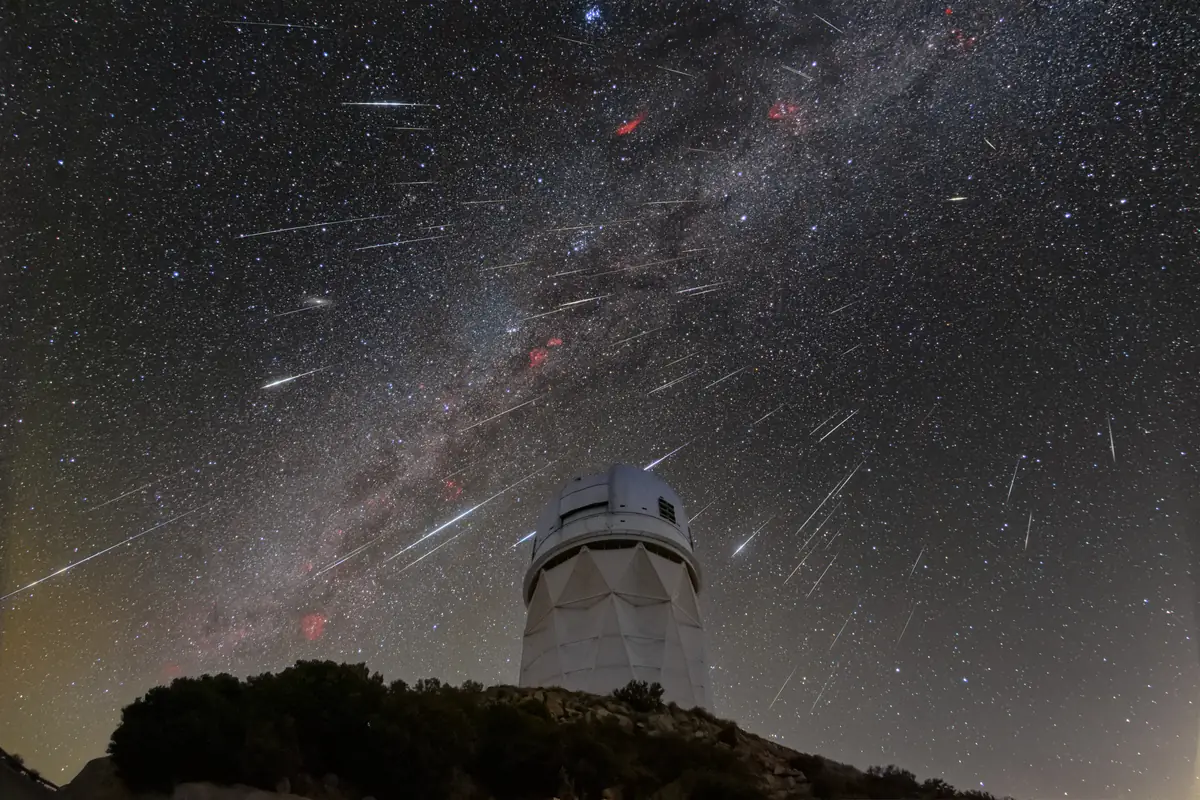
The Geminids
Night of Sunday, December 13, into Monday, December 14 · Anywhere dark; the radiant in Gemini rises in the northeast in early evening and is highest around 2 a.m.
According to the International Meteor Organization, activity tops out near 9 a.m. EST on Monday the 14th, and the organization calls it a moon-free peak: only a thin waxing crescent is up, and it sets in mid-evening. That makes Sunday night into Monday the one to watch, from about 10 p.m. until dawn, with the best rates in the small hours. The IMO’s figure of about 150 meteors an hour assumes a perfectly dark sky overhead; real watchers see fewer, and a lit suburb may give a few dozen in an hour.
-
The winter solstice
Monday, December 21, at 3:50 p.m. EST · Watch where the sun sets, far to the southwest
The sun then turns back north after its southernmost day, which opens astronomical winter. Note the place on the horizon where the sun sets that evening from a window or a fixed place in the yard; in June it will set far to the northwest.
-
The Cold Moon, the year’s biggest
Full at 8:28 p.m. EST, Wednesday, December 23 · Rising in the east-northeast around sunset
Its moment of fullness lands roughly seven hours ahead of perigee, the month’s closest pass, so it beats every other full moon of 2026 for size: a supermoon by any definition. It will look full on the evenings of the 23rd and Christmas Eve. Expect little from the Ursids on the 22nd; that shower is weak at best, and this year moonlight drowns it.
-
Planets: Saturn after dark, Venus and Jupiter before dawn
All month · Saturn in the south and southwest at dusk; Venus low in the southeast before sunrise
Saturn holds the evening sky alone and sinks earlier each week, setting roughly four hours after sundown by the 31st. Venus blazes as the morning star, heading for greatest western elongation on January 3, and a waning crescent slides past Venus and the bright star Spica before sunrise on the 4th and 5th. By late December Jupiter, in Leo, is up by mid-evening and stands high in the south as the sky pales, and Mars, fainter, sits nearby and gains brightness week by week.
| Phase | Date | Time |
|---|---|---|
| Last quarter | Tuesday, Dec 1 | 1:08 a.m. |
| New moon | Tuesday, Dec 8 | 7:52 p.m. |
| First quarter | Thursday, Dec 17 | 12:42 a.m. (late on the night of Wednesday the 16th) |
| Full moon, the Cold Moon | Wednesday, Dec 23 | 8:28 p.m. |
| Last quarter | Wednesday, Dec 30 | 1:59 p.m. |
Clouds decide everything on a meteor night, so check the Today’s sky forecast before you go out, and look ahead with the moon phase calendar.
What can South Carolina families do outside in December 2026?
- Tuesday, December 1: the first day of winter, by the weather books. Start a winter bird list on the fridge and see how many species the family can add by the end of February.
- Saturday, December 5: holiday afternoons in the parks. Santa on the Beach at Myrtle Beach State Park, 9:30 a.m. to 1:30 p.m. (again Sunday the 6th); Santa at the Lodge at Table Rock State Park, 1 to 5 p.m.; and Holiday Cheer at Oconee State Park, 4 to 5 p.m.
- Saturday, December 12: Santa’s at Sesqui 5K at Sesquicentennial State Park in Columbia.
- Sunday night, December 13: Geminid watch. Blankets, a thermos and a reclining chair; young children can go out at 10 p.m. and still see some.
- Monday, December 14: first day of the bird count window. Write to a South Carolina compiler about bringing children along for a morning, or sign up to tally your own feeder.
- Friday, December 18: Hunting Island State Park offers a guided lighthouse climb at sundown (4:45 p.m., an hour long) and an evening Park After Dark program starting at 7:30.
- Monday, December 21: solstice sunset. Mark where the sun goes down and photograph it from the same spot again in March.
- Wednesday, December 23: moonrise of the Cold Moon, minutes after sunset, low in the east-northeast, from a beach or a lakeshore.
- Saturday, December 26: North Greenville Christmas Bird Count.
- Friday, January 1, 2027: a New Year’s walk. On January 1 this year, South Carolina State Parks held guided hikes at dozens of parks, from Caesars Head and Table Rock to Myrtle Beach, with cold-water plunges at Paris Mountain and Hunting Island. The 2027 list had not been posted on October 2; watch the parks’ seasonal events page.
- Citizen science. Keep counting for Project FeederWatch, enter owl and frog-chorus notes in eBird or a notebook, log rain and any snow for CoCoRaHS, and report right whales to NOAA.
The parks also list a holiday light show at Oconee State Park from December 1 to January 10 and a Festival of Trees at Hickory Knob through January 1; call ahead to confirm this year’s dates and hours. Bring the Naturalist’s Field Journal on these outings, revisit the South Carolina November page for the month just ending, and see what December brings elsewhere from the nature hub.
Safety notes for December in South Carolina
- Deer season closes January 1. On private land, gun hunting for deer stays open in all four Game Zones through New Year’s Day, Sundays included, and January 2 is an either-sex youth deer day. Expect hunters in the woods through the holidays.
- December openers. SCDNR’s 2026–27 dates bring the second duck, coot and goose segment from Saturday, December 12, to January 31, then woodcock and the third dove segment from December 18 to January 31. Quail and rabbit seasons with guns are open, as is snipe, and ruffed grouse can be hunted in Game Zone 1. Waterfowl hunters start before sunrise in the marshes and impoundments, so birders should check whether a refuge or wildlife management area pool is being hunted that day.
- Blaze orange. On Wildlife Management Area land, whenever a gun or muzzleloader season for deer, bears or hogs is open, every hunter, including those after small game, must show solid international orange on a hat, vest or coat, under SCDNR rules; bowhunters in archery-only deer seasons and people hunting doves, waterfowl and other migratory birds are exempt. South Carolina does not require it on private land. Anyone hiking near hunted ground in December should wear orange too.
- Dark by half past five. Aim to be back at the car an hour ahead of sunset, pack a light and an extra fleece, and leave your route with a friend. Deer cross roads most often around dusk.
- Cold water and floods. Lakes and the ocean are cold enough in December to cause hypothermia within minutes of a fall; put on a life jacket before you launch a canoe, kayak or boat. Congaree National Park says flooding is most frequent in the cooler months and can come with little or no warning, so check conditions before you set out on the low trails.
- Ice in the mountains. Freezing nights are routine on the escarpment, so expect glazed rocks near waterfalls and slick steps at overlooks, and check the NWS Greenville-Spartanburg forecast before driving up.
Sources
- Carolina Bird Club: Christmas Bird Counts in North and South Carolina, 2026–27
- National Audubon Society: join the Christmas Bird Count
- Carolina Bird Club: Lake Murray Dam site guide
- Carolina Bird Club: Pitt Street Causeway site guide
- Carolina Bird Club: Lighthouse Inlet Heritage Preserve site guide
- Carolina Bird Club: Congaree National Park site guide
- Carolina Bird Club: Carolina Sandhills National Wildlife Refuge site guide
- NOAA Fisheries: North Atlantic right whale calving season 2026
- NOAA Fisheries: how you can help North Atlantic right whales
- National Audubon Society: why great horned owls start nesting in winter
- Audubon Guide to North American Birds: great horned owl
- Audubon Guide to North American Birds: barred owl
- SCDNR: bald eagle biology
- Savannah River Ecology Laboratory: ornate chorus frog
- Savannah River Ecology Laboratory: southern chorus frog
- Savannah River Ecology Laboratory: spring peeper
- Savannah River Ecology Laboratory: southern leopard frog
- Savannah River Ecology Laboratory: upland chorus frog
- Savannah River Ecology Laboratory: marbled salamander
- Savannah River Ecology Laboratory: spotted salamander
- SCDNR: black bear
- Clemson Home & Garden Information Center: Spanish moss
- Clemson Home & Garden Information Center: holly
- Clemson Home & Garden Information Center: camellia
- NC State Extension Plant Toolbox: American mistletoe (Phoradendron leucarpum)
- U.S. Fish and Wildlife Service: Carolina Sandhills National Wildlife Refuge
- NOAA solar calculator equations (sunrise, sunset and day length)
- U.S. Naval Observatory: Earth’s seasons, 2026 (data API)
- NOAA NCEI: 1991–2020 monthly normals for Caesars Head, Greer, Columbia, Florence, North Myrtle Beach, Charleston and Beaufort (data API)
- Site data: NOAA 1991–2020 first-freeze normals for South Carolina stations
- Climate Prediction Center: ENSO diagnostic discussion, September 10, 2026
- Climate Prediction Center: 90-day outlooks (winter outlook issued October 15, 2026)
- NOAA Climate.gov: snow pain or snow gain? How El Niño affects snowfall over North America
- South Carolina State Climatology Office: the impacts of ENSO and AO on South Carolina climate variability (PDF)
- U.S. Naval Observatory: moon phases from November 2026 (data API)
- International Meteor Organization: 2026 meteor shower calendar (archived PDF)
- EarthSky: what is a supermoon? (2026 full supermoons)
- BBC Sky at Night Magazine: supermoons in 2026
- EarthSky: Venus at greatest western elongation
- South Carolina State Parks: holiday and seasonal events (First Day Hikes, light show, Festival of Trees)
- South Carolina State Parks: Myrtle Beach programs and events
- South Carolina State Parks: Table Rock programs and events
- South Carolina State Parks: Oconee programs and events
- South Carolina State Parks: Hunting Island programs and events
- Project FeederWatch: how to participate
- eBird
- CoCoRaHS: South Carolina
- SCDNR (eRegulations): deer seasons on private lands, 2026–27
- SCDNR (eRegulations): migratory bird seasons, shooting hours and bag limits, 2026–27
- SCDNR (eRegulations): small game seasons, 2026–27
- SCDNR (eRegulations): WMA regulations, hunter orange
- South Carolina Code of Laws, Title 50, Chapter 11 (Section 50-11-365)
- National Park Service: Congaree National Park weather
- National Weather Service Greenville-Spartanburg
- Photos via Wikimedia Commons; licenses and photographers are credited under each picture
