What to look for in nature in South Carolina this May
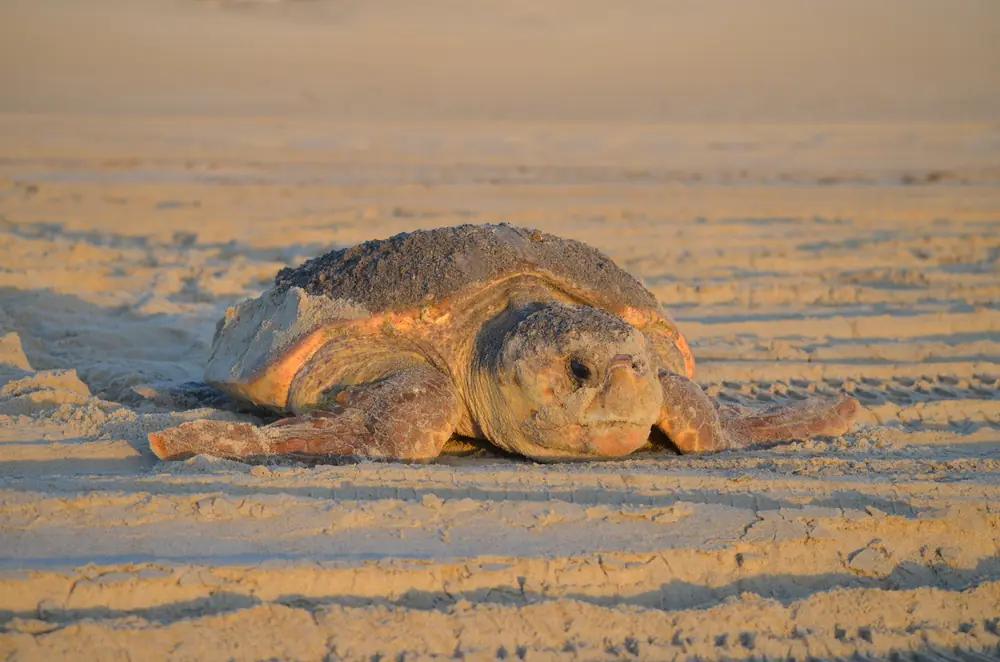
May is when South Carolina’s coast turns toward the next generation. Loggerhead sea turtles begin coming ashore to dig their nests, black skimmers and other shorebirds scrape nests into the sand, and painted buntings and other forest birds are busy raising young. Inland, the Catawba River shoals fill with white spider lilies at Landsford Canal State Park, the Sandhills hold red-cockaded woodpeckers, calling bobwhites and the white flowers of Venus flytraps, and Congaree National Park hosts an evening show of flashing fireflies. The last freeze is a memory in every lowland town, which makes this a month for warm evenings, thunderstorms and long light. Meteors streak across the pre-dawn sky in the first week, under no moonlight at all, and the Flower Moon of May 20, the third of the season’s four full moons, earns the label Blue Moon under an older rule.
Check the cloud forecast before an evening outing, and use the moon calendar to plan around the dark nights.
Other months in South Carolina: October, November, December, January, February, March, April.
Start here
- See the shoals spider lilies at Landsford Canal State Park. The park puts the bloom from mid-May to mid-June along the Catawba River. Walk the 1.5-mile Canal Trail, stay on the path and leave the flowers where they grow.
- Watch for Eta Aquariid meteors before dawn on May 5, 6 or 7. With no Moon in the sky, the shower has a clean stage. Set an alarm for two hours before sunrise, lie back facing east and give your eyes a quarter hour.
- Spend one beach evening with the lights off. Loggerheads nest from May onward, and lights on the dune confuse both mothers and hatchlings. Leave the flashlight and phone in your pocket while you walk.
Keep a record: log the first turtle track or firefly of the season in the daily field log, add each nesting bird to “birds I have seen,” and note the Eta Aquariid count under “dusk and dawn watch.” Draw the lily shoals in “the same place twice,” trace a flower under “seeds, pods and cones” once it sets seed, record the buntings’ songs on a “map of sounds,” and check one bluebird or wren box weekly under “nest observed.”
Regions used below: Upstate and the Blue Ridge Escarpment; Midlands and Congaree; Pee Dee and the Sandhills; Grand Strand; Lowcountry and the Sea Islands.
When do loggerhead sea turtles start nesting in South Carolina?
South Carolina’s Department of Natural Resources (SCDNR) describes the loggerhead nesting season as running from May through October, with the eggs laid from May to mid-August and the hatchlings emerging from July to the end of October. May is the opening month, so most of what you can see this month is the work of the first mothers.
-
The first nests of the season
Usually beginning around May 1, with an occasional early nest in late April · Sandy beaches from the Grand Strand to the Sea Islands
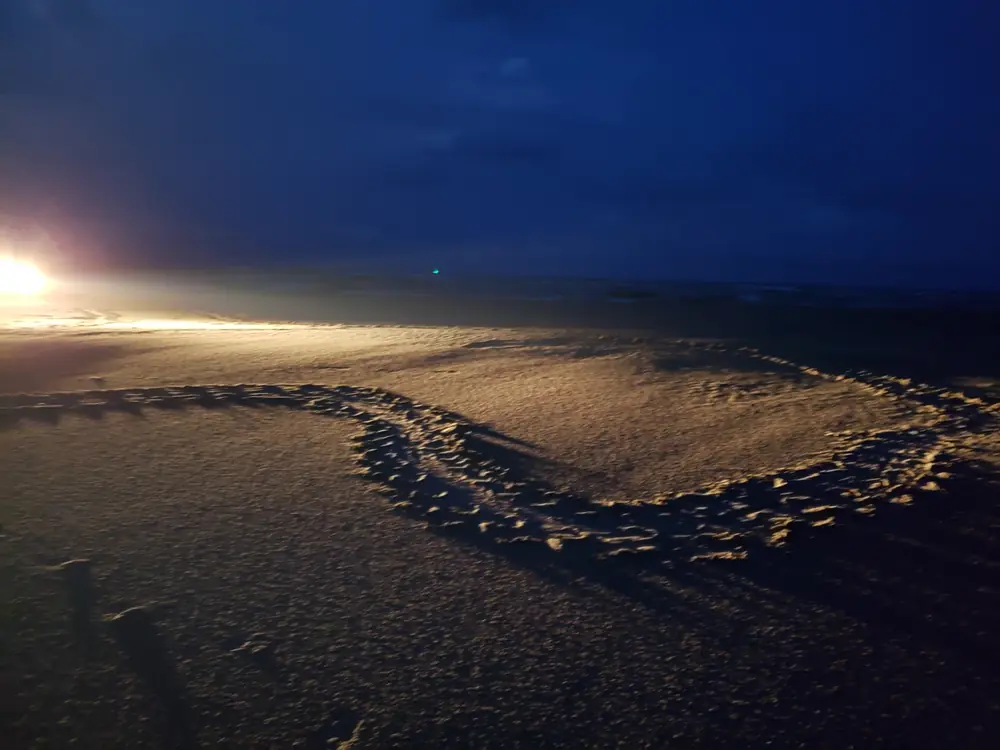
SCDNR’s April 2025 release reported that the first nest of that year was found on April 29 at Folly Beach, a few days ahead of the usual May 1 start, and that Seabrook Island had already logged two false crawls, which are trips ashore that end without a nest. Four species nest in the state: loggerheads, greens, Kemp’s ridleys and leatherbacks, and loggerheads lay most of the nests. A mother digs her nest in the dry sand of the dune system and lays about 120 eggs. SCDNR says a female can nest up to six times in a season, about every two weeks, while NOAA Fisheries gives three to five nests of roughly 100 eggs. Sources differ, so treat both as typical ranges.
-
Counts rise and fall from year to year
Published by SCDNR for 2018 through 2024 · Statewide
The same release lists 2,766 nests in 2018, a record 8,795 in 2019, 5,560 in 2020, 5,644 in 2021, 7,996 in 2022, 6,618 in 2023 and 4,818 in 2024. SCDNR explains that females do not nest every year, so totals swing, and that nesting has trended upward across the Southeast over the past decade. NOAA Fisheries says females mature at about 35 years and breed every two to three years, which is why a single season tells you little.
-
What the beach looks like to a hatchling-to-be
From now through October · Any dark beach
SCDNR says hatchlings steer by the blue and green light reflected off the ocean, and a brighter artificial light can draw them inland. Streetlights, pool lights, flashlights, lanterns, bonfires and landscape lighting all count. The agency warns that harming a threatened species can bring a federal penalty of as much as $25,000, and that breaking a local lighting ordinance can cost up to $500. It recommends turtle-friendly fixtures and bulbs, and it asks visitors to avoid flash photography and to keep their distance from turtles and marked nests.
-
Cape Romain’s big nesting beaches
Spring arrivals, summer nests · Cape Island and the barrier islands of Cape Romain National Wildlife Refuge
Refuge staff describe their beaches as the densest nesting ground for the northern loggerhead population outside Florida, with nest protection under way since 1979. The refuge posts signs, flagging and ropes at the tips of several islands where landing is not allowed during nesting season, and the closures can change with bird activity. The islands are reached only by boat, and pets are not allowed. The Sewee Center posts hours of Wednesday through Saturday, 9 a.m. to 5 p.m., and asks visitors to call 843-928-3368 the day of a visit.
-
Sick or injured turtles
Year-round, with more beach traffic in May · Beaches, creeks and marsh
SCDNR names boat strikes as the leading cause of death for sea turtles in the state and asks boaters to take care in small tidal creeks. To report a sick, injured or dead turtle or a disturbed nest, call 1-800-922-5431. The South Carolina Aquarium’s Sea Turtle Care Center in Charleston treats patients in partnership with SCDNR, and its recovery area is included with aquarium admission.
Dates for 2027 nest counts, turtle walks and hatchling events are not posted yet. Ask the town, state park or refuge near you whether it runs a volunteer program, and follow its rules.
Where can you see synchronous fireflies in South Carolina?
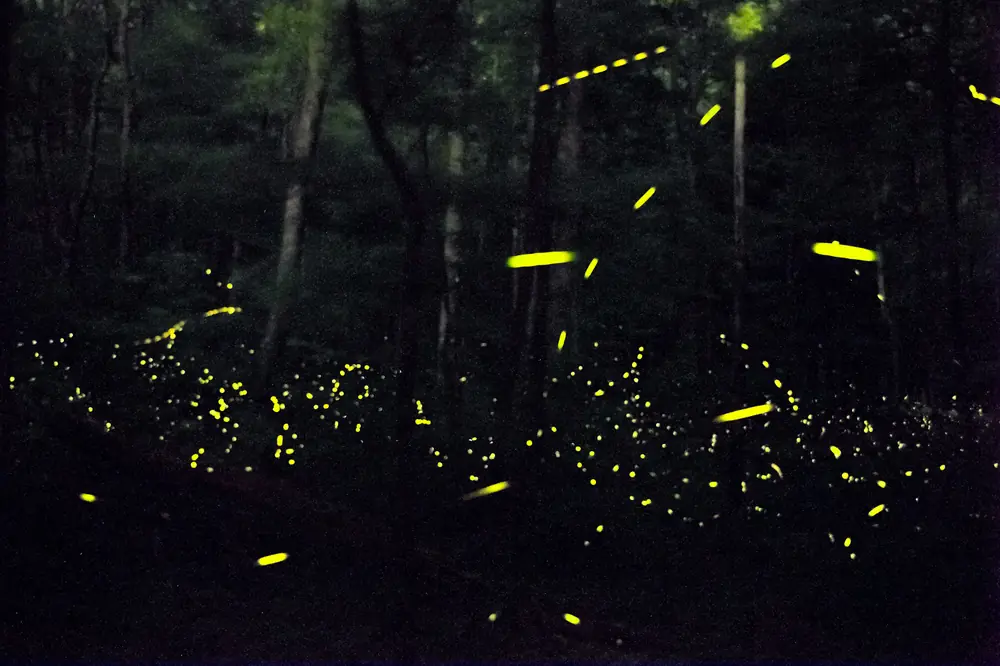
Congaree National Park, near Hopkins, is one of the few places in North America where a synchronous firefly display happens. The National Park Service says the fireflies appear for about two weeks, typically from mid-May to mid-June, and that the park is one of only a few places with the conditions for them to flash together.
-
A lottery for the evening show
Held in early spring; 2027 details were not posted when this was written · Congaree National Park, Hopkins
The park’s page for the 2026 event described a lottery run through Recreation.gov, with one entry per household, a $1 nonrefundable fee to enter and a $24 fee for winners, and 145 passes for each event night. The 2026 event ran May 13 to 20. The park listed no dates or lottery rules for 2027, so check the park’s firefly page and Recreation.gov in early spring, and treat the 2026 rules as an example, not a promise.
-
Rules for a dark forest
Evenings, with the best viewing usually between 9 and 10 p.m. in the 2026 rules · The Firefly Trail
In 2026 the gates opened to pass holders at 7:00 p.m. and closed to entry at 8:30 p.m. Visitors had to stay on the marked trail, use only a red light pointed at the ground, keep phones off as lights or cameras, leave pets at home and apply insect repellent before arriving. Catching or disturbing the insects was not allowed. The park warns that thunderstorms are common that time of evening and that rain can slow or stop the flashing.
-
What the daytime park is like
Daytime, May · Boardwalk and trails
During the firefly event the park closed its visitor center, boardwalk and frontcountry trails at 4:30 p.m. and asked day visitors to be out by then. Call the park at 803-776-4396 for current conditions, and expect the evening to depend on the weather and the water.
Pass holders and anyone else who sees fireflies in their own yard can record them in the daily field log. Watching for the first flash is a family tradition worth starting.
When do the shoals spider lilies bloom at Landsford Canal?
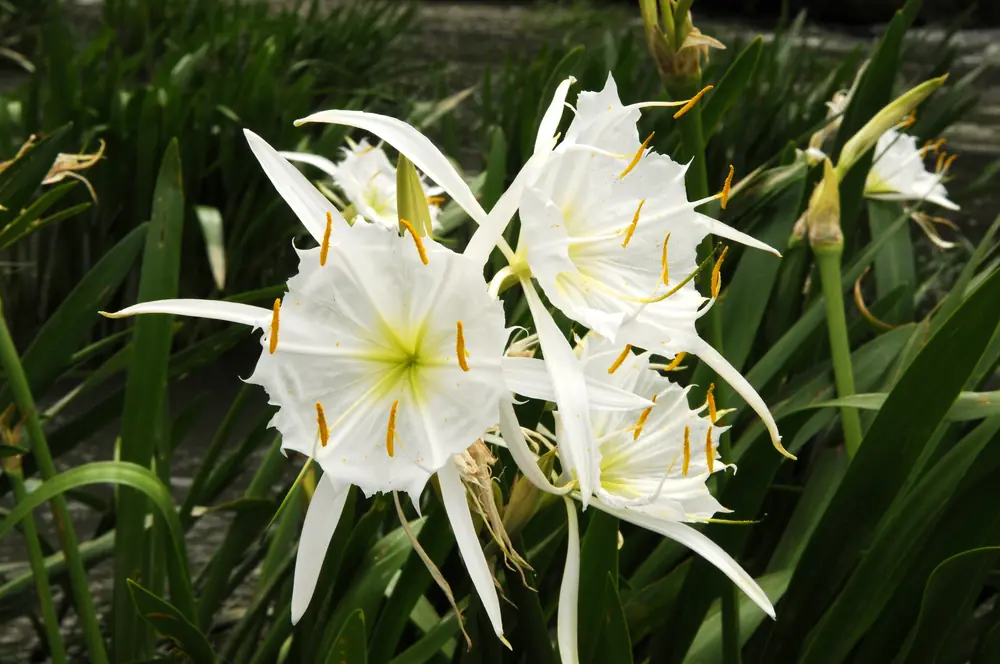
The bloom of the rocky shoals spider lily is South Carolina’s best-known spring flower show on the water. South Carolina State Parks says the lilies at Landsford Canal State Park bloom from mid-May to mid-June in the Catawba River, with the peak during May and June.
-
The Canal Trail at Landsford
Mid-May to mid-June · Landsford Canal State Park
The 1.5-mile Canal Trail passes remains of the historic canal and views of the rocky shoals where the lilies grow. The park is open daily from daylight to dark and charges $6 for adults, $3.75 for South Carolina seniors, $3.50 for ages 6 to 15, and nothing for ages 5 and under. During lily season permitted outfitters offer guided paddling tours, but the park does not rent boats. Bald eagle nesting season runs from December to May, so keep your voices low near the river. A park page links to a festival called Lily Fest but lists no 2027 date, so call 803-789-5800 to confirm.
-
Other flowers at the shoals
May and June · Landsford Canal State Park
The state parks wildflower guide lists cardinal flower, Jack-in-the-pulpit, crane-fly orchid, spicebush, spiderwort, Solomon’s seal, fire pink and yellow passionflower among the park’s other flowers, though it gives bloom dates only for the lilies. Treat that list as a checklist of possibilities, and ask at the office what is out.
-
Waterfall wildflowers at Station Cove
Especially April into May · Station Cove Falls Trail, Oconee Station State Historic Site, Sumter National Forest
The state parks guide calls this trail exceptional for flowers from April into May, naming little sweet Betsy, Canada violet and possibly walking fern. The guide’s timing points to the first part of May, so go early in the month and ask at the site about what is still out.
-
Pinkroot and azaleas in Congaree
April to June · Congaree National Park
The National Park Service lists Piedmont azalea as flowering April to May, pinkroot from April to June and butterweed from March to June. By May the azalea may be fading, but pinkroot and butterweed can still be in flower along the boardwalk.
Keep to marked paths, do not pick or dig any flower, and stay off the rocks in the river unless you are with a permitted outfitter.
What is happening in the Sandhills in May?
The pine uplands of the Sandhills are where May shows its quieter side. The red-cockaded woodpecker, a federally endangered bird, nests in living longleaf pines, and bobwhite quail call from the fields.
-
Red-cockaded woodpeckers
April through June · Pool A area, Carolina Sandhills National Wildlife Refuge
The refuge reports that its woodpeckers have recovered well and names April to June as the time to watch them nest and forage at the Pool A area. Visitors should stay at least 100 feet from cavity trees, which carry white paint bands. A walk at dawn with binoculars and a patient eye is the best approach.
-
Bobwhite calls
May through July · Oxpen, Carolina Sandhills National Wildlife Refuge
The refuge advises listening for the bobwhite’s call from May through July. The birds nest on the ground, so keep to trails. The same refuge lists Bachman’s sparrow among its pine-grassland birds and the brown-headed nuthatch and Pine Barrens tree frog around Lake Bee.
-
Venus flytrap flowers
May through June · Coastal Plain and Sandhills of the Carolinas
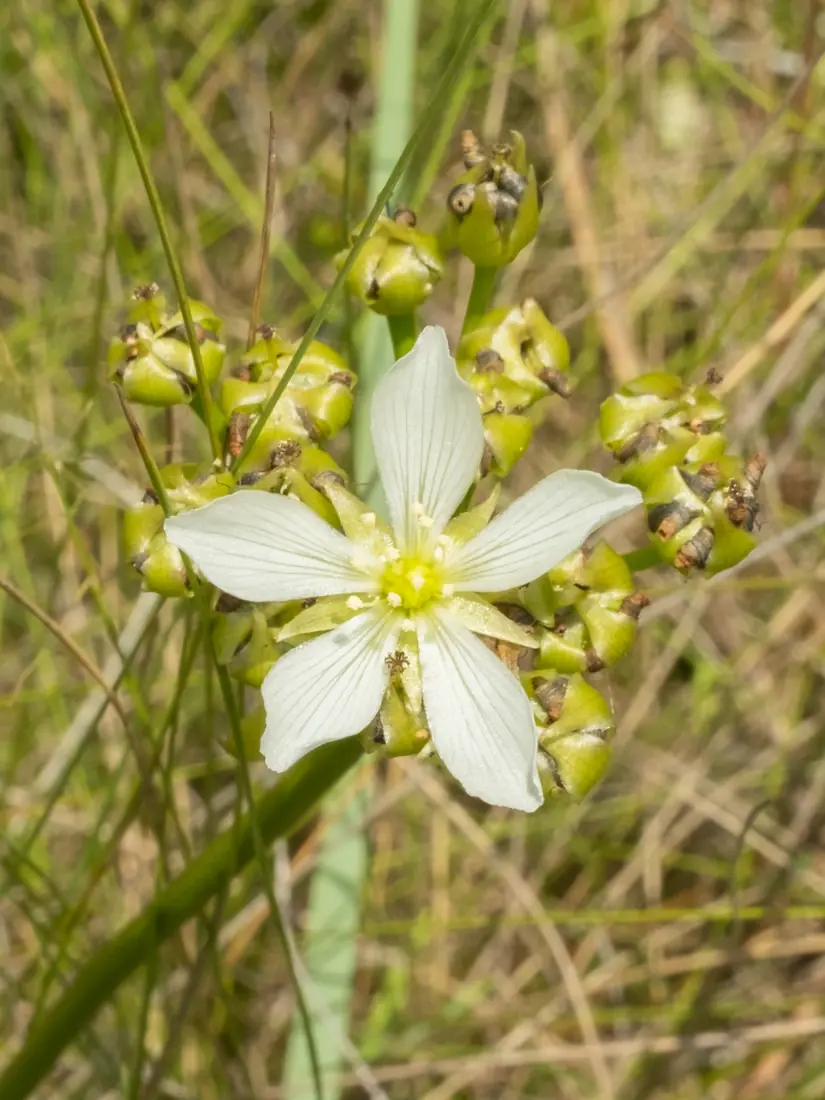
Federal wildlife biologists describe white Venus flytrap flowers from May through June, on a plant whose native home is the Coastal Plain and Sandhills of the two Carolinas. It lives in wet longleaf pine savannas and narrow moist strips between streamhead wetlands and pine uplands. Threats include habitat loss from fire suppression and development, and poaching for the plant trade. Look for the flower stalk and never dig the plant.
For a view of the pitcher plants at Lake Bee and of the seasons earlier in the year, see the April page.
What is on the coast around the May new and full moons?
Tides run strongest near a new or full moon, and this month those fall on May 6 and May 20. Spawning and refueling along the shore follow the same rhythm.
-
Horseshoe crabs in the marsh
Around the new and full moons · Beaches and salt marshes
SCDNR says adult horseshoe crabs come ashore every spring during the new and full moons to spawn. A study led by SCDNR biologist Daniel Sasson, published in 2024, found that spawning in salt marshes is common along the Atlantic coast, and that in South Carolina eggs were sometimes found several miles up creeks and rivers. The researchers also noted that tens of thousands of shorebirds rely on horseshoe crab eggs during migration. Look from a distance, and do not flip or pick up crabs.
-
Red knots at Cape Romain
Spring · Cape Romain National Wildlife Refuge
Cape Romain’s shoreline is designated critical habitat for the red knot, a threatened shorebird, and works as a rest stop on its long journey. In spring the birds arrive to forage and build up energy before flying farther north. If a flock is feeding, keep far back, because every flush costs them fuel.
-
Diamondback terrapins and alligators
Spring · Salt marsh and Bulls Island
The refuge’s spring wildlife list says diamondback terrapins nest in the salt marsh and alligators begin courting on Bulls Island. Slow down on causeways, and give any turtle crossing a road a wide berth.
Check the tide table for your beach, because the best viewing is usually near high tide. Never chase or feed wildlife.
Which animals are raising young in South Carolina in May?
May is nursery season. Birds are on nests, fawns are on the ground and many animals ask for one thing from people: distance.
-
Beach-nesting birds
Spring and summer · Barrier beaches, sandbars and islands
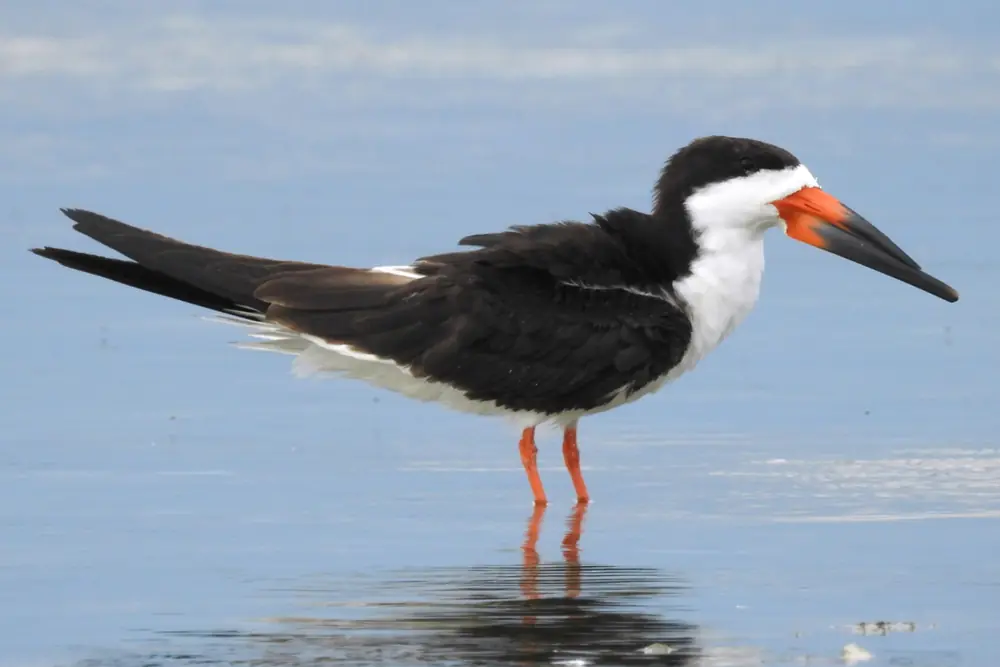
The refuge’s spring wildlife list names black skimmers, Wilson’s plovers, oystercatchers and least terns among the birds on its beaches. SCDNR explains that seabirds such as terns and skimmers nest in dense colonies on islands and barrier beaches, while shorebirds nest alone with camouflaged eggs. Seabirds defend a nest by diving and calling, and a shorebird may run or fake an injury to lead you away. If a bird is doing any of this, you are too close. Keep to the wet sand, respect signs and ropes, and keep dogs away.
-
Forest and swamp nesters
Migration continues and nesting is in full swing in May · Santee National Wildlife Refuge, Francis Beidler Forest
The Santee refuge says painted buntings usually arrive in mid-April to set up territories, and that in May migration continues while nesting is in full swing. At Audubon’s Francis Beidler Forest, researchers study nesting prothonotary warblers in the Four Holes Swamp, and a banding station tracks the survival of breeding birds. The 1.75-mile boardwalk is open Wednesday through Saturday, 9 a.m. to 5 p.m., and Sunday, 11 a.m. to 4 p.m., so that is when to go for a good look.
-
Wading birds and wild turkeys
Spring · Savannah National Wildlife Refuge
The refuge says that in spring ibis, wood storks, egrets and herons feed in its impoundments, wild turkey chicks hatch, bobcats breed and snakes become more active. Purple gallinules and swallow-tailed kites become easier to see in summer. A slow drive and a scope will give you views without a step off the road.
-
Fawns
Late spring · Fields, forest edges and yards
SCDNR advises that an apparently orphaned fawn should be left alone, because it is natural for a doe to leave her fawn by itself for the first few weeks of life. A fawn that is handled or disturbed may be abandoned. If you know the mother is dead, call SCDNR in Columbia at 803-734-3886 or in Charleston at 843-953-9300. Never adopt a fawn as a pet.
If you want to help baby wildlife, the best step is usually to walk away. Photos from far away are fine, and so are notes in the field journal.
What is May weather like in South Carolina, and what storms should you watch?
May brings summer heat early. NOAA’s 1991 to 2020 normals put a typical May afternoon at about 84 °F in Columbia and Charleston and 80 °F in Greer, and the table below shows that the 80-degree mark is reached on most days at the lowland stations. Ninety-degree afternoons begin to appear, and nights stay mild.
-
Thunderstorms and tornadoes
Spring, when fronts are active · Statewide
State climatologists average roughly 14 tornadoes per year across 1950 to 2017, rising to roughly 26 per year for 1990 to 2017, a jump they credit largely to better radar. They link spring twisters mostly to cold fronts that stall or sweep through. Keep weather alerts switched on, learn where you would shelter, and take a thunderstorm warning seriously on any evening walk.
-
Lightning
Afternoons and evenings · Open beaches, lakes and fields
The National Weather Service reports that lightning claims about 20 lives across the country in a typical year, with hundreds more injuries, and urges “Flash, Dash Inside.” At the first rumble, get into a building or a hard-topped car.
-
The start of hurricane season
Season begins June 1 · Coast and inland
The National Weather Service lists the Atlantic hurricane season as June 1 to November 30. Hazards it names include storm surge, inland flooding and tornadoes in outer rain bands. May is a good time to learn your evacuation zone.
-
Wildfire after the peak
Late winter to early spring, tapering by May · Pine country and the coast
The Forestry Commission’s fire season is late winter into early spring, so May is past the worst. About 98 percent of the state’s wildfires are started by people. Anyone burning yard debris must first tell the agency, and a local ban may still apply.
| Station | Average high | Average low | Days 80 °F or warmer | Days 90 °F or warmer | Precipitation |
|---|---|---|---|---|---|
| Greer (Greenville–Spartanburg) | 80.3 °F | 57.5 °F | 18.1 | 2.1 | 4.07 in |
| Columbia (Midlands) | 83.8 °F | 60.5 °F | 24.0 | 7.2 | 3.49 in |
| Florence (Pee Dee) | 83.5 °F | 60.9 °F | 22.8 | 5.8 | 3.71 in |
| Charleston International Airport | 83.6 °F | 63.0 °F | 24.3 | 4.8 | 3.32 in |
No forecast appears on this page. Seasonal outlooks are renewed monthly on NOAA’s 90-day outlook page, and the weather tool on this site covers the days ahead.
Is there any freeze risk left in South Carolina in May?
In the towns below, the answer is almost always no. Each row gives the median date of the final 32-degree night at a town’s main station, bracketed by an early and a late date. Even the late date, the one nine springs in ten have passed, falls by mid-April at every station listed.
| Station | One year in ten | Median | Nine years in ten |
|---|---|---|---|
| Greenville | Mar 13 | Mar 28 | Apr 12 |
| Rock Hill | Mar 13 | Mar 31 | Apr 15 |
| Columbia | Mar 4 | Mar 25 | Apr 10 |
| Aiken | Feb 28 | Mar 19 | Apr 5 |
| Florence | Feb 28 | Mar 19 | Apr 5 |
| Myrtle Beach | Mar 2 | Mar 21 | Apr 7 |
| Charleston | Feb 12 | Mar 7 | Mar 27 |
| Beaufort | Feb 2 | Feb 28 | Mar 21 |
The latest of these dates is Rock Hill’s April 15, and Charleston’s is March 27. Anyone planting in the mountains should check a higher station, since the table covers lower towns. The frost-date tool lists more places, including the Blue Ridge Escarpment, and the April page covers the end of the freeze season.
How much daylight does South Carolina gain in May?
Roughly 40 minutes in all, at about 1.4 minutes per day, a slower pace than earlier in spring because the June solstice is close. Greenville goes from 13 h 36 m on May 1 to 14 h 19 m on May 31, Rock Hill gains the most with 45 minutes, and Beaufort gains the least with 39. By the last day of May every town listed enjoys more than 14 hours between sunrise and sunset, and with the clocks set to daylight time the evenings stay bright late.
| City | May 1 | May 31 | Gained | Per day |
|---|---|---|---|---|
| Greenville | 13 h 36 m | 14 h 19 m | 43 min | 1.4 min |
| Rock Hill | 13 h 35 m | 14 h 20 m | 45 min | 1.5 min |
| Columbia | 13 h 33 m | 14 h 16 m | 43 min | 1.4 min |
| Aiken | 13 h 31 m | 14 h 13 m | 42 min | 1.4 min |
| Florence | 13 h 33 m | 14 h 16 m | 43 min | 1.4 min |
| Myrtle Beach | 13 h 32 m | 14 h 13 m | 41 min | 1.4 min |
| Charleston | 13 h 28 m | 14 h 09 m | 41 min | 1.4 min |
| Beaufort | 13 h 28 m | 14 h 07 m | 39 min | 1.3 min |
The gains taper because the June solstice is close. The day-length tool has more towns.
What is in South Carolina’s night sky in May 2027?
Clock times below are Eastern daylight time. The month offers a meteor shower with no moonlight, a Blue Moon by the seasonal rule, the year’s best evening view of Mercury, and two bright planets after dark.
-
Eta Aquariid meteors
Mornings of May 5, 6 and 7, in the hours before dawn · Low in the east, from a dark spot
Meteors from Halley’s comet streak out of Aquarius between about April 19 and May 28, but by our own calculation the true maximum comes around 11:26 a.m. EDT on May 6, after sunrise, so the mornings on either side are the ones to use. With the Moon new that very day, 2027 is rated an excellent year. SeaSky quotes up to 60 an hour at best, mostly for the Southern Hemisphere, and about 30 for northern viewers. The constellation lifts into view barely an hour or two before daybreak, so a realistic tally for South Carolina is 10 to 30 an hour during the final dark stretch.
-
The Flower Moon and a seasonal Blue Moon
Full at 6:59 a.m. EDT on May 20; the round Moon rises on the evening of May 19 · Rising in the east around sunset
The Old Farmer’s Almanac traces the name to the profusion of spring blooms. Spring by the astronomer’s calendar began March 20 and contains four full moons, those of March 22 and April 20, this one and the June 19 one; counting the third of four as a Blue Moon makes this one qualify, though no month in 2027 has two full moons, which is the more familiar rule. Moonrise on Wednesday, May 19 comes near 8 p.m., and the disk looks round that evening and again the next.
-
Mercury after sunset
Best from about May 12 to June 5, with May 27 and 28 closest to the greatest separation · Low in the west-northwest, 45 to 90 minutes after sunset
Mercury reaches its widest evening separation from the Sun, 22.8 degrees (9:14 a.m. EDT on May 28), which makes May 27 and 28 the pick of the evenings. It is brightest around mid-May and dims quickly into June. An open view to the west-northwest helps, and binoculars make the first sighting easier.
-
Jupiter, Mars and the Moon
Evening of May 12 for Jupiter; May 13 for Mars · High in the southwest after dark
By our calculation, around dusk on May 12 a Moon just short of half lit hangs about 1.2 degrees from Jupiter, which stands high in the evening sky. On May 13 it sits roughly three degrees from Mars, a dimmer, orange-tinged point that, by our figures, goes down near 2 a.m. when the month opens.
-
Venus and Saturn before sunrise
Mornings of May 6 to 8 · Very low in the east, in the half-hour before sunrise
By our calculation the two sit about 0.6 degrees apart on May 7, close enough to fit one binocular field. Thirty minutes before sunrise they are only a few degrees up, which makes this a difficult catch that calls for a clear, flat eastern horizon.
-
The Milky Way’s return
May 1 to 14 and May 25 to 31 are the darkest windows · Low in the south in the dark hours before dawn
The galaxy’s bright core climbs in the south after midnight this month. Windows computed for the central United States are the first two weeks, when the Moon is thin or absent, and the final week, once the waning Moon has set.
| Phase | Date | Time |
|---|---|---|
| New moon | Thursday, May 6 | 6:58 a.m. EDT |
| First quarter | Thursday, May 13 | 12:44 a.m. EDT |
| Full moon (Flower Moon) | Thursday, May 20 | 6:59 a.m. EDT |
| Last quarter | Friday, May 28 | 9:58 a.m. EDT |
Memorial Day falls on Monday, May 31. Use the moon calendar for moonrise at your own town.
What can South Carolina families do outside in May 2027?
- A lily paddle or walk. Take the Canal Trail at Landsford Canal State Park in mid-May or later, or ask the park about guided outfitter tours.
- The firefly lottery. Check the National Park Service page for Congaree and Recreation.gov in early spring for the 2027 rules.
- City Nature Challenge. The 2027 schedule on the organizers’ site has observation days April 30 through May 3, species identifications finishing May 16, then the final tallies on May 20. Ask whether your area has signed up, and share photos through iNaturalist.
- World Migratory Bird Day. The 2026 observance was May 9 and its theme was community science. The organizers had not posted a 2027 date or theme on the page I read, so look for local events and check with them.
- A boardwalk morning. Francis Beidler Forest lists admission of $12 for adults and $7 for ages 6 to 12, with free entry for the youngest children, and says to call 843-487-9988 before holidays.
- Red-cockaded woodpecker watch. Carolina Sandhills National Wildlife Refuge lists the Pool A area for April to June, with a 100-foot buffer from marked trees.
- A meteor morning. Get up early on May 5, 6 or 7 and count the Eta Aquariids.
- Moon night. Go out on May 19 and watch the Flower Moon rise.
Children can record each discovery on a field journal plate. The April page covers migrants and horseshoe crabs at the start of the nesting season, the March page has the frogs and hummingbirds, and the nature index lists other states.
Cornell Lab’s NestWatch has volunteers locate a nest, follow what happens and report it on the website or in the app, guided by rules meant to keep the birds undisturbed.
Safety notes for May in South Carolina
- Spring turkey season. The 2027 turkey regulations page lists April 3 to May 3 on private land and wildlife management areas (WMAs), with a youth season (age 17 and under) on private land on March 27 and 28 and May 8 and 9. Hunters may take two gobblers per season, no more than one per day, and the hours are limited to a window that opens 30 minutes ahead of daybreak and closes 30 minutes past dusk. The page does not list a hunter-orange rule for turkey, so on a WMA wear bright colors anyway and check the area’s own rules.
- Ticks. Federal health officials put peak tick activity between April and September. Pretreat boots and clothing with permethrin, wear a registered repellent, rinse off within a couple of hours of coming inside and inspect everyone, pets included.
- Snakes. SCDNR says to stay calm after a bite and get to a hospital, and warns against handling or capturing any venomous snake. Cottonmouths live mainly in the Sandhills and coastal plain and are not known in the Upstate. Black racers are not venomous and mostly flee.
- Alligators. SCDNR says they may be seen basking, crossing roads and in waterways. Keep your distance and your dog off the bank. In an alligator emergency, phone Operation Game Thief at 1-800-922-5431.
- Black bears. Cubs arrive in the winter den, in January or February according to SCDNR, and mating peaks in June and July. Lock up garbage, pet food and feeders, camp clean, and keep your distance even for a picture. For a bear emergency, dial 1-800-922-5431 or 911.
- Rip currents. A beautiful, calm day can still hide one, the National Weather Service warns, and it cites odds of drowning at a guarded beach of 1 in 18 million, so choose a lifeguard’s stretch of sand.
- Storms and lightning. Go indoors at the first thunder and never drive through floodwater.
- Firefly nights. Apply repellent before you arrive, because the park forbids applying it on site.
- Open burning. Tell the Forestry Commission before any yard-debris fire.
Sources (47)
- SCDNR: sea turtle lighting and nesting season
- SCDNR: sea turtle nesting season, April 29, 2025
- NOAA Fisheries: loggerhead turtle
- South Carolina Aquarium: Sea Turtle Care Center
- U.S. Fish and Wildlife Service: Cape Romain National Wildlife Refuge
- U.S. Fish and Wildlife Service: seasons of wildlife at Cape Romain National Wildlife Refuge
- National Park Service: synchronous fireflies at Congaree National Park
- National Park Service: Congaree National Park
- National Park Service: wildflowers at Congaree National Park
- National Park Service: weather at Congaree National Park
- South Carolina State Parks: Landsford Canal State Park
- South Carolina State Parks: wildflowers
- South Carolina State Parks: Table Rock State Park
- South Carolina State Parks: Huntington Beach State Park
- U.S. Fish and Wildlife Service: seasons of wildlife at Carolina Sandhills National Wildlife Refuge
- U.S. Fish and Wildlife Service: get outdoors at Carolina Sandhills
- U.S. Fish and Wildlife Service: Venus flytrap
- U.S. Fish and Wildlife Service: seasons of wildlife at Santee National Wildlife Refuge
- U.S. Fish and Wildlife Service: seasons of wildlife at Savannah National Wildlife Refuge
- Audubon Center at Francis Beidler Forest: plan your visit
- Audubon South Carolina: bird research
- SCDNR: horseshoe crabs spawning in the marsh, May 14, 2024
- SCDNR: coastal birds
- SCDNR: white-tailed deer
- SCDNR: deer frequently asked questions, including fawns
- SCDNR: black bears
- SCDNR: black bears emerging from dens
- SCDNR: alligators
- SCDNR: venomous snakes frequently asked questions
- SCDNR (eRegulations): turkey regulations, spring 2027
- NOAA NCEI: U.S. climate normals, 1991–2020 monthly
- South Carolina State Climatology Office: tornado statistics
- South Carolina Forestry Commission: wildfire information
- National Weather Service: lightning safety
- National Weather Service: hurricane safety
- National Weather Service: rip current safety
- CDC: preventing tick bites
- NOAA Climate Prediction Center: 90-day outlooks
- NOAA Global Monitoring Laboratory: solar calculator equations
- U.S. Naval Observatory: moon phases for 2027
- SeaSky: astronomy calendar for 2027
- The Old Farmer’s Almanac: full moon names
- World Migratory Bird Day
- City Nature Challenge
- Cornell Lab: NestWatch
- Journey North: hummingbirds
- Photos via Wikimedia Commons; licenses and photographers are credited under each picture
.jpg)