What to look for in nature in South Carolina this February
February is the hinge of the South Carolina year. On paper it is still winter, and a cold snap can glaze the Upstate or even dust the coast, yet in NOAA’s normals Charleston and Beaufort each average nine February afternoons that reach 70 °F. The rivers feel the turn first. Hickory shad, fresh from the Atlantic, crowd the tidal freshwater reaches to spawn, and American shad follow close behind. Purple martin scouts swoop over gourd racks in the southern counties, wood ducks inspect nest boxes over swamp water, and land managers set slow, low fires under the longleaf pines that need them. In the Piedmont’s richest woods, the mottled leaves of trout lilies push through the leaf litter. On February 9 the dikes of the state’s managed duck marshes open to walkers again. Overhead, Jupiter and then Mars reach opposition, and the Snow Moon rises during a faint eclipse.
Other months in South Carolina: October, November, December, January.
Start here
- Count birds for the Great Backyard Bird Count, February 12 to 15. A single quarter hour on one of those days is enough. Watch a feeder, a pond or a park, write down the largest group of each bird you see together, and enter your list in Merlin or eBird.
- Walk a reopened marsh dike after February 9. The impoundment dikes at Santee Coastal Reserve and other managed wetlands open again, in designated areas, on Tuesday, February 9. Go early on a still morning with binoculars or a spotting scope and look for ducks that have not yet started north.
- Find Jupiter rising at sunset on February 10. On Wednesday evening Jupiter sits opposite the sun, so it clears the eastern treeline around sundown and lingers into dawn. Nothing nearby outshines it, and binoculars steadied on a gate or a railing reveal its moons.
Keep a record: write the date of your first purple martin in the daily field log, add every new species from the bird count to “birds I have seen,” give a burned stand of longleaf two visits a few weeks apart in “the same place twice,” and sketch a trout lily leaf in “seeds, pods and cones” or wherever it fits. If you watch a wood duck box, a page under “nest observed” will carry you into spring.
Regions used below: Upstate and the Blue Ridge Escarpment; Midlands and Congaree; Pee Dee and the Sandhills; Grand Strand; Lowcountry and the Sea Islands.
When do shad run up South Carolina’s rivers?
The run starts in winter and builds into spring. Three members of the herring family, the hickory shad, the American shad and the blueback herring, live most of their lives at sea and return to fresh water to spawn. SCDNR’s species account for the state wildlife plan says American shad reach South Carolina between mid-January and mid-May, with spawning tied to water temperature and usually busiest in March and April. The hickory shad keeps an earlier calendar: it moves inland from December through mid-April, and its peak spawning in this state comes in February and early March. For anyone near a coastal river, February is hickory shad month.
-
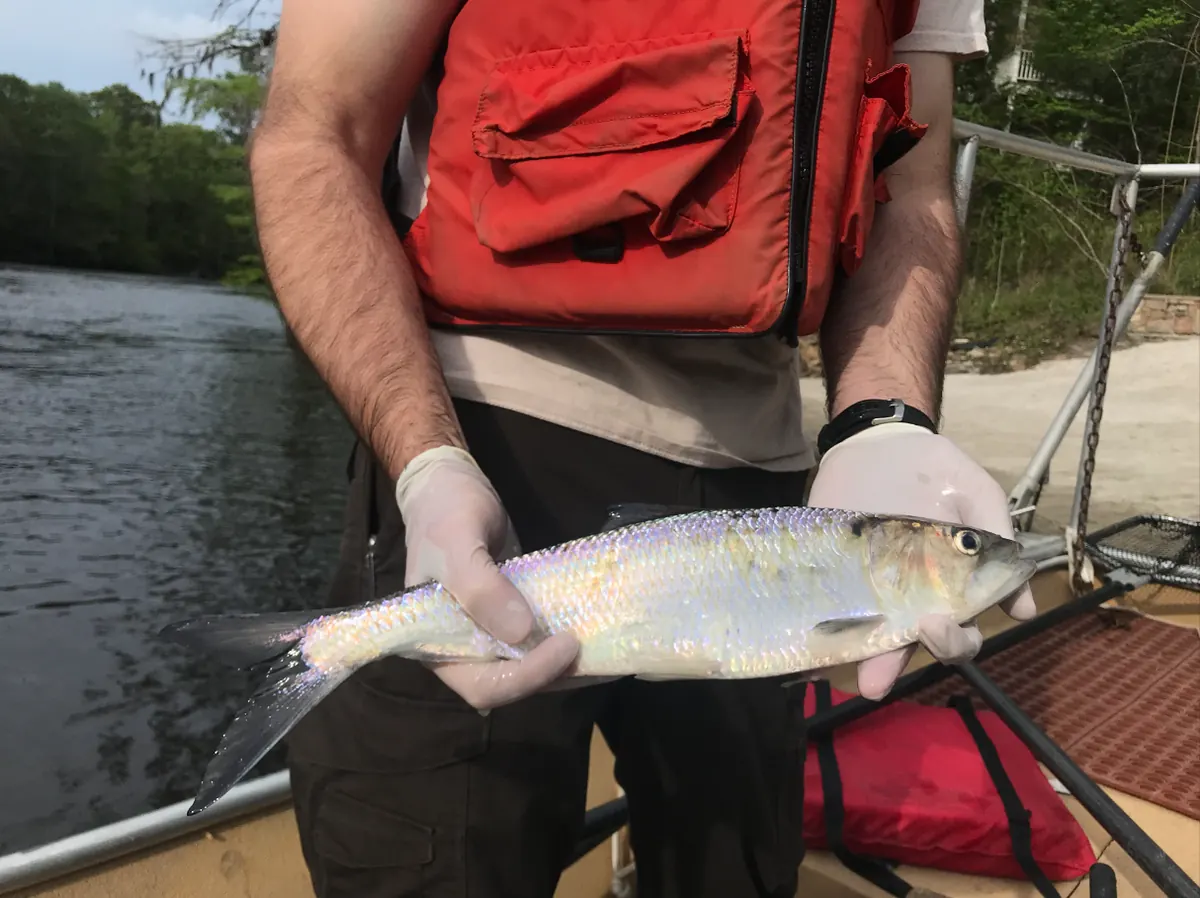
Hickory shad on the tidal rivers
Peak spawning in February and early March · Channel edges of tidal freshwater reaches: the Edisto, Combahee, Santee, Cooper, Waccamaw and Pee Dee systems
Females in South Carolina reach about 22 inches and rarely weigh more than four and a half pounds; anglers call the egg-laden ones roe jacks. SCDNR’s recreational limit is ten shad per person per day, or twenty in the Santee River and the Rediversion Canal, and hook-and-line fishing in fresh water needs a freshwater license. Net seasons and rules differ from river to river, so read the SCDNR shad and herring regulations first.
-
American shad on the move
Arriving from mid-January; most spawning in March and April · The coastal river systems from the Savannah to the Waccamaw and Pee Dee
The American shad is the biggest Atlantic member of the herring family: females in South Carolina grow to about 26 inches, while the males, called bucks, are smaller. They release their eggs in batches as they travel upriver, and the eggs drift in the current until they hatch, usually within a few days. Adults are thought to die after their first spawning run in these southern rivers, so every fish in the February vanguard is on a one-way trip.
-
The St. Stephen fish lift
Through the spring run; call ahead · On the Rediversion Canal at St. Stephen, Berkeley County, about 50 miles north of Charleston
The Army Corps of Engineers and SCDNR finished the lift in 1985, as part of the Cooper River Rediversion Project, to carry migrating fish past the new dam and into the Santee Cooper lakes. SCDNR’s history of the lift says it passes about 400,000 American shad and 350,000 blueback herring a year, along with striped bass and catfish, and quotes a NOAA fisheries expert calling it the most important fish passage facility on the East Coast. An April 2026 Army story puts the figure at 500,000 or more American shad and blueback herring a season, while noting that severe drought was complicating the run. Visits to the lift and the neighboring Jack Bayless hatchery are arranged through SCDNR’s Dennis Wildlife Center in Bonneau, 843-825-3387.
Watch the water temperature, not the calendar: a warm February sends the shad upstream early, and a cold one holds them back into March.
When do purple martins come back to South Carolina?
In a normal year, during February. Clemson Extension says purple martins normally reach the southern part of the state in mid-to-late February, and that many South Carolinians treat their arrival as the real start of spring. These early birds, nicknamed scouts, are mostly older adults heading back to the colonies they used before. Younger birds come weeks later, looking for places of their own.
-
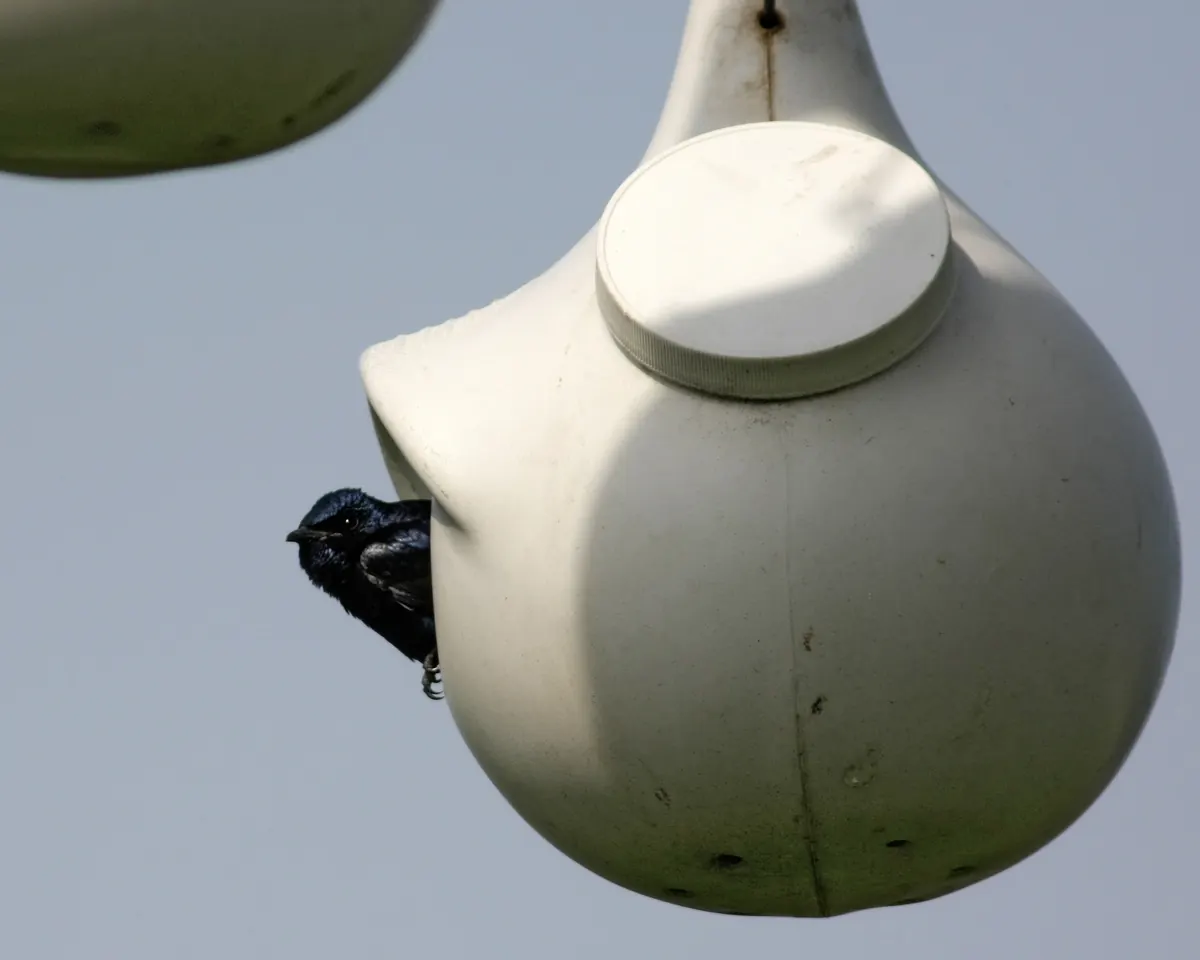
Scouts over the gourd racks
Mid-February in the Lowcountry in a typical year; later inland and in the Upstate · Martin houses and gourd racks near open water and fields, statewide
At first light, watch for a big, dark, glossy swallow circling a colony site and listen for its low chirping overhead. The birds have flown from wintering grounds in South America, in Brazil and nearby countries. Arrival dates swing widely from year to year and place to place, which is why the Purple Martin Conservation Association collects first-sighting reports.
-
Getting housing ready
Before the scouts arrive · Open yards, farm ponds and lakeshores
Clemson recommends mounting housing 15 to 30 feet up on a pole, at least 40 feet from trees and 30 feet from the house, because martins like open air around the colony. Clean out last year’s old nests, and keep the entrances closed or watched until the martins come, since house sparrows and starlings will happily take the compartments first.
-
Tell the scientists
The day you see your first martin · Online, from anywhere
The Purple Martin Conservation Association collects first-arrival reports from martin hosts for its Scout-Arrival Study. A single report with the date and place helps researchers track whether spring migration is shifting.
Note the first martin each year in the same journal. After a few springs you will have your own arrival record to compare with the regional one.
When do wood ducks start nesting in South Carolina?
Remarkably early. The wood duck, South Carolina’s official state duck, nests in tree cavities and in boxes put up for it, and in the coastal plain its season starts in the depth of winter. SCDNR’s nest box guide says the nesting season can start anywhere between December and March.
-
Hens looking for a cavity
Late winter; nesting can start December to March · Swamps, beaver ponds, river oxbows and pond edges with standing timber
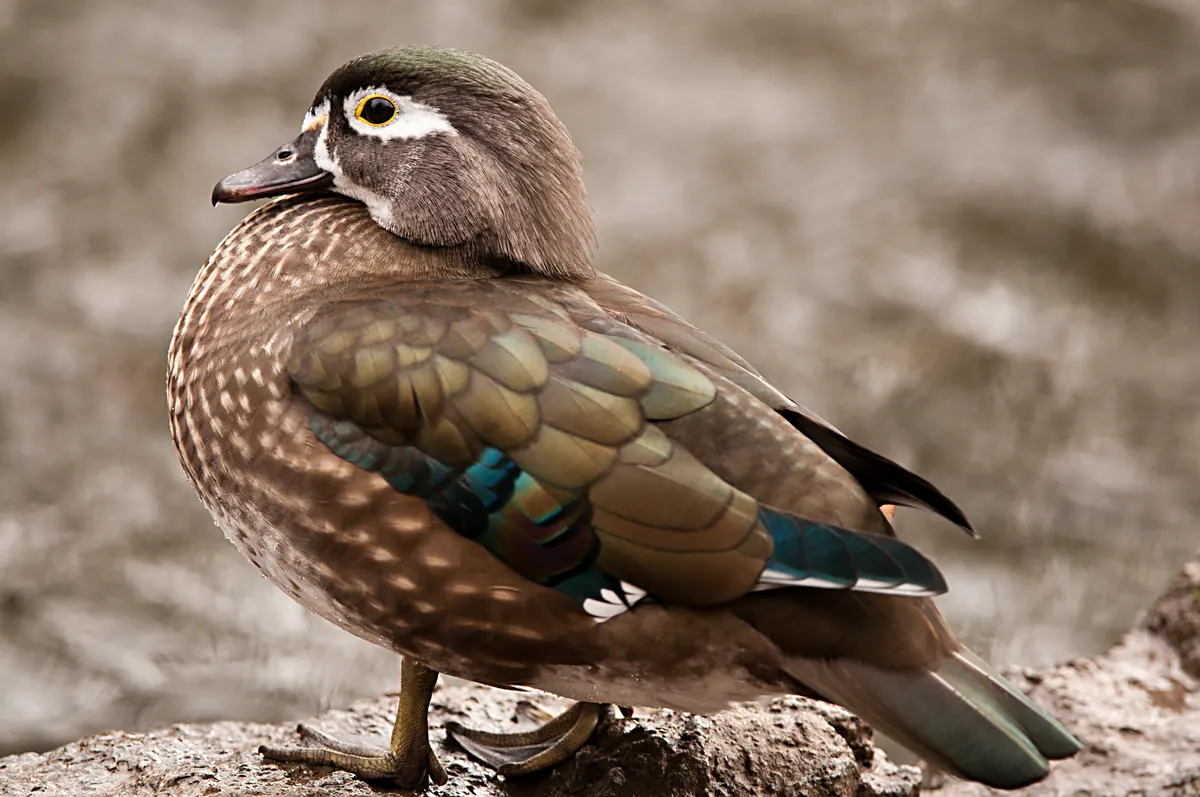
Early on a quiet morning, watch a nest box or a big hollow tree near water. A female wood duck, gray-brown with a white teardrop around the eye, may land on the lip of the hole and slip inside, while her brilliantly colored mate waits on a branch or the water nearby. In a Clemson study of nest boxes in coastal South Carolina, successful wood duck nests sent out about ten ducklings each. The ducklings leave the box for the water soon after they hatch.
-
The state’s nest box program
Applications through Go Outdoors South Carolina · Private land statewide
SCDNR runs a lottery that gives South Carolina residents 18 and older up to three ready-made boxes with predator shields; the applicant supplies a 10-foot four-by-four post. The agency’s construction guide says to put boxes up before the nesting season, which can start anywhere from December to March, to fit each one with an inverted metal cone against climbing raccoons and rat snakes, and to check every box each winter for fresh nesting material.
If you put up a box, check it each winter before the season starts, and leave it alone while a hen is sitting.
Why are South Carolina’s pine woods being burned in February?
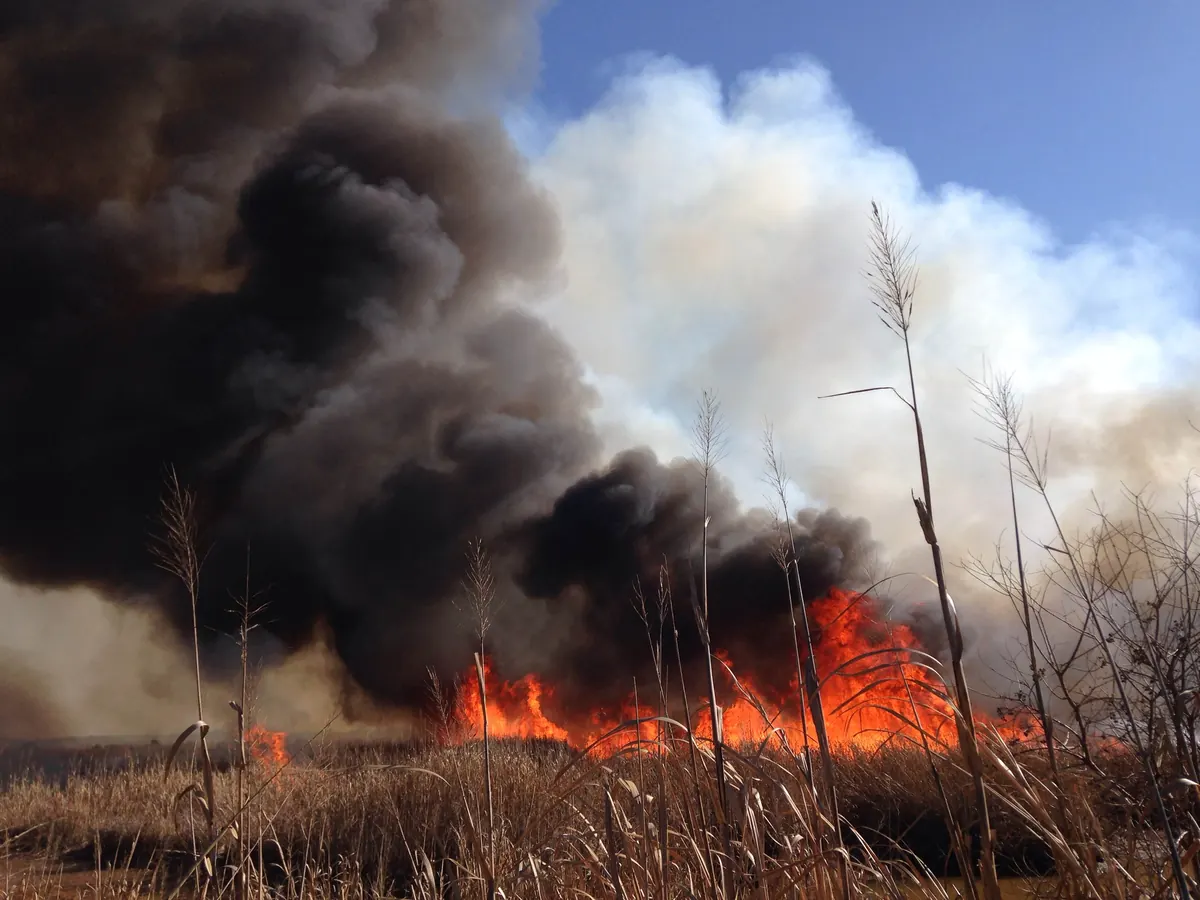
Because the longleaf pine forest was built by fire. Across the Southeast, low fires once swept the pine woods every two to four years and kept them open and grassy. Today the same job is done by prescribed burns, set by trained crews when wind and humidity are right. SCDNR says most of its own burning happens from winter into spring, starting in earnest in January and running through June, on roughly 30,000 to 35,000 acres of forest a year plus 5,000 to 6,000 acres of fields.
-
Carolina Sandhills National Wildlife Refuge
Fire season starts in January and usually ends in June · About 45,000 acres off U.S. Highway 1 near McBee, Chesterfield County
For longleaf pine and wiregrass, the community at the heart of this refuge, few places in the Southeast compare. That forest once spread over more than 90 million acres of the South; about 4.3 million acres remain. The Fish and Wildlife Service burns 10,000 to 15,000 acres here in a typical year. The refuge supports more than 150 family groups of endangered red-cockaded woodpeckers, the only woodpecker that digs its roost and nest holes in living pines; their cavity trees are marked with a white painted band. Fire keeps hardwood shrubs from crowding the open pine stands the woodpeckers need.
-
What a burned stand looks like
Days to months after a burn · Any recently burned longleaf or pine savanna
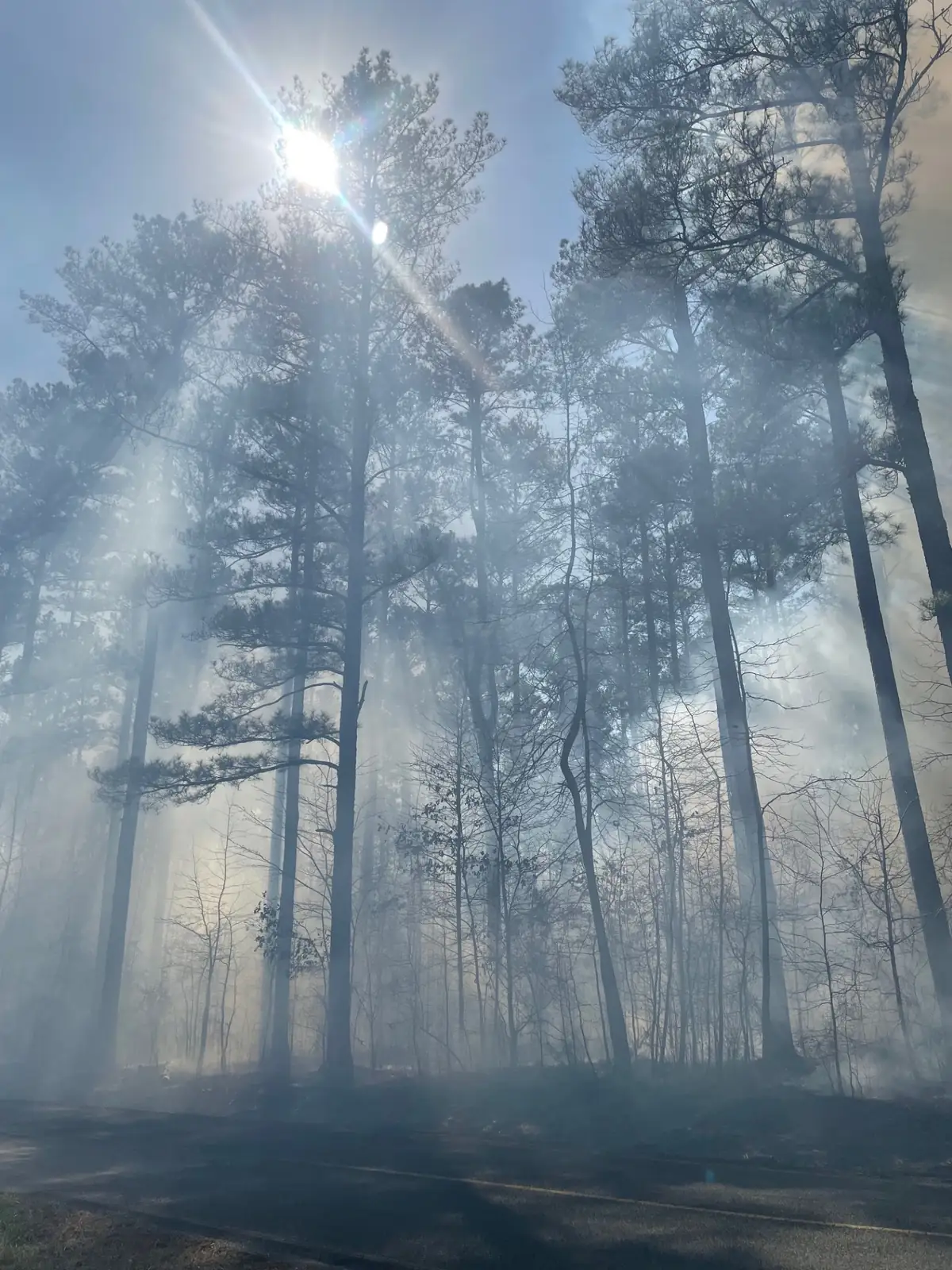
Right after a burn, the ground is black and the lower trunks are scorched, but the tall pines are untouched. SCDNR notes that native grasses and forbs often resprout within days of a prescribed fire.
-
Red-cockaded woodpeckers at dawn
Early morning, all year · Marked cavity trees in open pine stands
At sunrise, stand well back from a tree with a white band. The small black-and-white birds, with barred, ladder-patterned backs, slip out of their roost holes and move off together to forage.
Burn sites may be closed for safety on fire days, and SCDNR posts signs at the entrances. Respect them, and if smoke settles over a road at night, slow right down.
What wildflowers bloom in South Carolina in February?
The earliest wildflowers here grow low and close to the ground, and most of them are easy to walk past. February brings the first of the spring ephemerals in the rich Piedmont woods, fragrant creepers on the dry sandhills, and the state flower opening along the forest edges.
-
Dimpled trout lily at Stevens Creek
Flowers February to April · Stevens Creek Heritage Preserve, McCormick County, and moist hardwood slopes in the Piedmont
Each plant puts up two fleshy leaves blotched in green, brown and purple, which is said to recall a trout’s flank, and a single nodding yellow flower with petals that curl back. NC State Extension gives its bloom season as February to April. Stevens Creek, a heritage preserve managed by SCDNR, has unusually high soil pH that supports one of the richest spring floras in the state. A South Carolina Native Plant Society scouting trip in late February found remnants of earlier trout lily and false rue anemone blooms along with some new flowers, and the preserve also protects the Miccosukee gooseberry, a shrub known only from this area and Jefferson County, Florida. Stay on the trail; the ephemerals are fragile.
-
Trailing arbutus in sandy woods
Flowers February to May · Sandy, acid woods, including the Sandhills
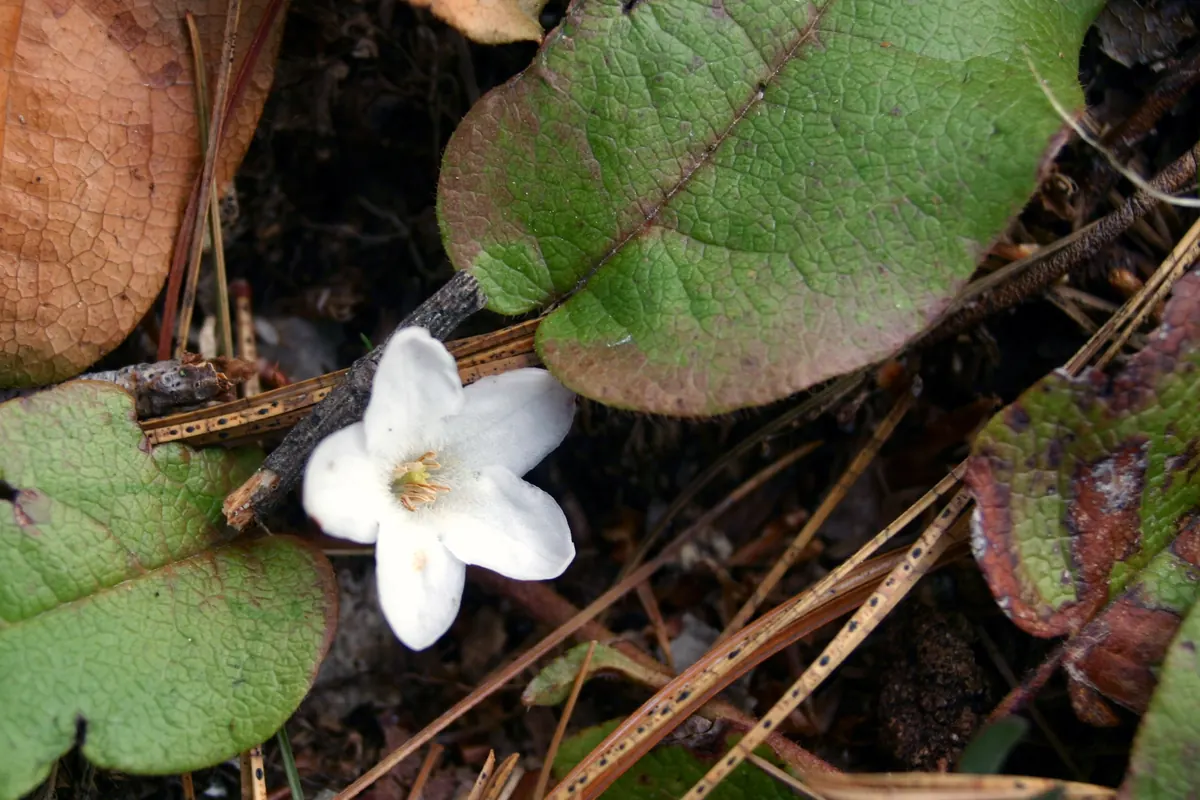
Trailing arbutus is an evergreen creeper with leathery oval leaves. NC State Extension gives its bloom time as February to May and notes that its small, tubular white-to-pink flowers are fragrant and that it is the host plant of the hoary elfin butterfly. Get down on your knees to smell it.
-
Carolina jessamine in flower
February to May, depending on the weather · Forest edges, fencerows and roadsides, climbing into trees
Last month’s swelling buds open into fragrant yellow funnels, about an inch and a half long, that light up the bare treetops along highways in the coastal plain first and the Upstate later. Enjoy the scent from a distance; every part of the vine contains toxic alkaloids, and even its pollen is harmful to honeybees.
Photograph the same trout lily patch every week from late February through March. In a colony, many leaves have no flower beside them, so count leaves and flowers separately each visit.
When do South Carolina’s duck marshes open to birders again?
On February 9. From November 1 through February 8 the state keeps the managed waterfowl impoundments on a dozen wildlife management areas off limits, apart from special hunts, so wintering ducks can rest. Duck season ended on January 31, and on the 9th the dikes open to walkers. The ducks do not leave all at once, and the first weeks after reopening can be excellent.
-
Santee Coastal Reserve
Impoundments open to designated areas from February 9 to October 31 · Off U.S. 17 near McClellanville, Charleston County
SCDNR’s rules close the impoundments to public access from November 1 through February 8 and limit access to designated areas from February 9 through October 31. Inside the reserve, the Nature Conservancy’s Washo Reserve protects a cypress lake that holds the oldest wading bird rookery in continuous use in North America.
-
Donnelley and Bear Island
Daylight hours; closed Sundays at Donnelley and during special hunts · Near Green Pond in the ACE Basin, Colleton County
The Carolina Bird Club’s site guide describes Donnelley’s three-mile Boynton Nature Trail through pine and hardwood forest, swamp and marsh, with wintering soras, Virginia rails, rusty blackbirds, orange-crowned warblers and blue-headed vireos. Bear Island, a few miles away, admits visitors from just before dawn to just after dusk, except on scheduled hunt days. Check SCDNR’s special hunt schedule the week before you go.
-
Ponds at Carolina Sandhills
January and February · On the refuge near McBee
Inland, the refuge manages several ponds for wildlife. Its winter list includes mallards, black ducks, pintails, green-winged teal, American wigeon, ring-necked ducks and hooded mergansers.
Bring a spotting scope and walk slowly. Coming over the crest of a dike sends the nearest birds up, so stop short and look over the top.
Is February still winter in South Carolina, and what might El Niño bring?
It is a month of swings. February is milder than January at every station below, yet the Upstate still averages about 17 freezing nights at Caesars Head and 11 or 12 at Greer, and even Charleston expects four or five. At the same time, warm afternoons are common: Florence averages seven February days of 70 °F or more, and Charleston and Beaufort nine. Snow is rare below the mountains; NOAA’s normal is a tenth of an inch at Charleston and 0.4 inch at Columbia. The last-frost dates for South Carolina towns show how far off a safe planting day still is.
| Station | Average high | Average low | Freezing nights | Days 70 °F or warmer | Precipitation | Snowfall |
|---|---|---|---|---|---|---|
| Caesars Head (Blue Ridge Escarpment) | 48.3 °F | 30.3 °F | 16.8 | 0.3 | 4.82 in | 1.6 in |
| Greer (Greenville–Spartanburg) | 57.0 °F | 34.8 °F | 11.5 | 3.0 | 3.84 in | 1.0 in |
| Columbia (Midlands) | 60.8 °F | 37.3 °F | 9.3 | 6.8 | 3.39 in | 0.4 in |
| Florence (Pee Dee) | 60.8 °F | 38.6 °F | 8.3 | 7.0 | 3.00 in | – |
| North Myrtle Beach (Grand Strand) | 58.2 °F | 39.6 °F | 6.9 | 2.5 | 3.18 in | – |
| Charleston International Airport | 63.8 °F | 41.6 °F | 4.4 | 9.0 | 3.05 in | 0.1 in |
| Beaufort MCAS (Lowcountry) | 63.7 °F | 42.8 °F | 3.1 | 9.0 | 2.91 in | 0.0 in |
This winter comes with a warm Pacific. The September 10 ENSO update from NOAA put this El Niño’s chance of reaching, and keeping, very strong status during the cold months above 90 percent. The South Carolina State Climatology Office says the state can expect 120 to 135 percent of normal precipitation within six to ten months of the onset of a typical El Niño, and its research ties strong events to more ice and snow storms, damaging nor’easters, and coastal erosion and flooding. None of that amounts to a forecast for February 2027. Following the October 15 winter outlook, the Climate Prediction Center posts new three-month outlook maps every month, and our weather page has the coming week for your town.
How much daylight does South Carolina gain in February?
Most of an hour, a faster gain than January’s. In Greenville and Rock Hill the day grows from 10 h 30 m on February 1 to 11 h 24 m on the 28th, a gain of 54 minutes, while Charleston gains 50 and Beaufort 48. By the Naval Observatory’s tables, sunset in Greenville moves from 5:58 p.m. to 6:24 p.m. over the month, and in Charleston from 5:52 to 6:16, which leaves time for an after-work walk by the end of February.
| City | Feb 1 | Feb 28 | Gained | Per day |
|---|---|---|---|---|
| Greenville | 10 h 30 m | 11 h 24 m | 54 min | 2.0 min |
| Rock Hill | 10 h 30 m | 11 h 24 m | 54 min | 2.0 min |
| Columbia | 10 h 34 m | 11 h 26 m | 52 min | 1.9 min |
| Aiken | 10 h 35 m | 11 h 26 m | 51 min | 1.9 min |
| Florence | 10 h 33 m | 11 h 25 m | 52 min | 1.9 min |
| Myrtle Beach | 10 h 35 m | 11 h 26 m | 51 min | 1.9 min |
| Charleston | 10 h 37 m | 11 h 27 m | 50 min | 1.9 min |
| Beaufort | 10 h 39 m | 11 h 27 m | 48 min | 1.8 min |
Sunrise and sunset for any day and place are in the daylight tables. Groundhog Day falls on Tuesday the 2nd, and the sun reaches the exact halfway mark of the astronomical winter on the 3rd or 4th.
What is in South Carolina’s night sky in February 2027?
Two planets reach opposition in Leo just nine days apart, Mercury puts on its finest dusk display of the season, and the full Snow Moon rises during a very faint lunar eclipse. All times are Eastern Standard Time.
-
Mercury after sunset
Late January to about February 10; farthest from the sun on February 3 · Low in the west-southwest, 30 to 45 minutes after sunset
The smallest planet reaches its widest angle from the sun, 18 degrees, on the 3rd. You need a low, clear view to the west-southwest, over a big field or a lake. On Sunday the 7th, look for a hair-thin crescent moon, one day old, just beside it.
-
Jupiter at opposition
Wednesday, February 10, at 7:21 p.m. · East at dusk, high in the south around midnight, west at dawn
Earth now sits on a line between Jupiter and the sun; the planet climbs into view at sunset and does not set until morning, shining at magnitude −2.5 among the stars of Leo. Its closest approach, about 405 million miles, comes earlier the same day. Steadied binoculars reveal up to four tiny moons in a line, shuffled each night.
-
Mars at opposition
Friday, February 19, about 10 a.m.; closest to Earth on the 20th · East after sunset, near Jupiter in Leo
Mars, a steady orange-red point, will not pass this near again until 2029. Even so, at about 63 million miles it stays small in a telescope, since Mars is near aphelion, its greatest distance from the sun. Compare its color with Jupiter’s cream-white glow a short way along the sky.
-
The Snow Moon and a faint eclipse
Full at 6:23 p.m., Saturday, February 20; eclipse from 4:12 to 8:13 p.m., deepest at 6:13 p.m. · Rising in the east around 6:06 p.m. in Charleston, 6:10 in Columbia and 6:15 in Greenville
This is a penumbral eclipse: the moon grazes only the faint fringe of Earth’s shadow, so at best one edge looks a little dusky. In South Carolina the deepest moment comes just as the moon clears the horizon in bright twilight, so most people will notice nothing; a clear, flat eastern view over the ocean or a big lake gives you the only chance. A few almanacs call it a supermoon; stricter lists leave it out. Overnight from Friday into Saturday, a moon one day shy of full slides past Jupiter at close range, and on Saturday evening Leo holds a crowd: the full moon, two bright planets and Regulus, the lion’s heart. Skip any plans for the ring-shaped solar eclipse of February 6: its shadow touches Chile, Argentina and West Africa, and from Greenville to Beaufort the sun stays whole.
| Phase | Date | Time |
|---|---|---|
| New moon | Saturday, Feb 6 | 10:56 a.m. |
| First quarter | Sunday, Feb 14 | 2:58 a.m. |
| Full moon (Snow Moon) | Saturday, Feb 20 | 6:23 p.m. |
| Last quarter | Sunday, Feb 28 | 12:16 a.m. |
The evenings stay dark and moonless from roughly February 2 to 11, the best window for faint stars and for Mercury. Use our cloud forecast to pick a clear night, and check this month’s moon calendar for rise and set times.
What can South Carolina families do outside in February 2027?
- The bird count, Friday the 12th through Monday the 15th. Audubon has scheduled the 30th Great Backyard Bird Count for those four days. Pick any spot, watch for at least fifteen minutes, and log the birds in Merlin or eBird; there is no registration. Let children tally and use the app’s sound ID to check mystery calls.
- From February 9: a marsh walk. Take the family along a newly reopened impoundment dike at Santee Coastal Reserve or Bear Island and count the duck species. The dikes are long and open, so pack water and hats.
- Late February: trout lily hunt. Walk the trail at Stevens Creek Heritage Preserve and see who finds the first mottled leaf, then the first flower. Look but don’t pick.
- A shad trip. Visit a coastal river landing on a falling tide and watch anglers working the current. To see the fish lift at St. Stephen during the run, call SCDNR’s Dennis Wildlife Center first, at 843-825-3387.
- A longleaf day. Drive the roads at Carolina Sandhills refuge, compare a freshly burned stand with an unburned one, and look for the white-banded woodpecker trees.
- Martin watch. If a neighbor or a park has a martin colony, check it at dawn every few days and report your first scout to the Purple Martin Conservation Association.
- Jupiter night, February 10. Rest binoculars on a car roof and sketch the moons as dots; repeat on the 11th and see which ones moved.
- Through April 30: Project FeederWatch. Watch your feeders on two days that follow each other, no more than once a week, keep the peak count for each species, and submit it online.
- Every morning: CoCoRaHS. A rain gauge and a daily report make a good family habit, and El Niño winters can keep it busy.
Young naturalists can keep their notes and sketches in the Naturalist’s Field Journal. See January in South Carolina for the eagles, woodcock and alligators that carry on into this month, and the full set of state-by-state nature guides for other places and seasons.
Safety notes for February in South Carolina
- Hunting seasons in February. Under SCDNR’s 2026–27 dates, quail, rabbit and squirrel stay open to March 1, as do grouse in Game Zone 1, crows, and bobcats and the other furbearers. Fox hunting with dogs continues, and raccoon and opossum hunting at night runs to March 15 on WMAs. Snipe close February 28. Saturdays, February 6 and 13, are federal youth and veteran waterfowl days, and late seasons for Canada geese and light geese run from February 15 to March 1. Deer gun seasons and the regular duck season are over. Expect hunters with dogs in fields and thickets until March.
- Hunter orange. On wildlife management areas, SCDNR’s rule puts every hunter in solid international orange (hat, coat or vest), small game hunters too, while firearm or muzzleloader seasons for deer, bear or hogs are open on that area, and anyone hunting hogs on a WMA must always wear it. Waterfowl, dove and other migratory bird hunters are exempt. The state’s orange law also reaches walkers on a WMA during deer season. Elsewhere, a blaze-colored cap costs little on land where hunting is allowed.
- Smoke from prescribed burns. Burns are planned for days when smoke lifts and drifts away, but it can settle into low ground at night. Slow down in smoke on rural roads, and obey closure signs at burn sites.
- Cold water. Air can be in the 70s while the rivers and lakes are still winter-cold. If you paddle a river or marsh, keep a life jacket on and wear clothes that stay warm when wet.
- Ice and late storms. February can still bring freezing rain or snow to the Upstate, and in strong El Niño winters the State Climatology Office links more ice and snow storms and more nor’easters. Check the NWS forecast and road conditions before driving into the mountains.
- Coastal flooding. Nor’easters and high tides can flood marsh roads and causeways in Charleston, Beaufort and Georgetown counties. Never drive through water on the road.
- Coyotes and pets. Coyotes live throughout the state and breed in late winter, with pups born in spring. Keep cats indoors and small dogs leashed, especially at dusk.
- Ticks. They become active on the first warm days; check yourself, your children and your dog after a walk in tall grass.
Sources
- SCDNR, South Carolina State Wildlife Action Plan species account: alosines (American shad, hickory shad, blueback herring)
- SCDNR (eRegulations): shad and herring fishing regulations
- SCDNR (eRegulations): finfish size and catch limits
- SCDNR: shad and herring fishing
- SCDNR: history of the St. Stephen Fish Lift
- SCDNR: St. Stephen Fish Lift, herring and shad passage
- U.S. Army Corps of Engineers (army.mil): obstacles abound with dams, drought and dinner (April 2, 2026)
- Clemson University Extension: preparing for purple martins
- Purple Martin Conservation Association: Scout-Arrival Study
- Croft et al., Box-nesting wood ducks and black-bellied whistling ducks in coastal South Carolina, Journal of the Southeastern Association of Fish and Wildlife Agencies 9 (2022)
- Croft, Reproduction and nest-box selection by wood ducks and black-bellied whistling ducks in coastal South Carolina (Clemson thesis)
- SCDNR: wood duck box program
- SCDNR: wood duck box construction and placement
- Crocker and Fendley, Effectiveness of a statewide cooperative wood duck nest box program (SEAFWA proceedings)
- SCDNR: benefits of prescribed burning
- South Carolina Forestry Commission: prescribed burning
- U.S. Fish and Wildlife Service: Carolina Sandhills National Wildlife Refuge
- U.S. Fish and Wildlife Service: Carolina Sandhills National Wildlife Refuge, what we do
- U.S. Fish and Wildlife Service: Carolina Sandhills National Wildlife Refuge general brochure (2019)
- South Carolina Native Plant Society: Midlands field trip to Stevens Creek Heritage Preserve
- South Carolina Native Plant Society: a must-see site for wildflower enthusiasts (Stevens Creek)
- NC State Extension Plant Toolbox: dimpled trout lily (Erythronium umbilicatum)
- NC State Extension Plant Toolbox: trailing arbutus (Epigaea repens)
- NC State Extension Plant Toolbox: Carolina jessamine (Gelsemium sempervirens)
- SCDNR (eRegulations): WMA regulations, impoundment closures and hunter orange, 2026–27
- SCDNR: managed lands special regulations (Santee Coastal Reserve, Bear Island)
- The Nature Conservancy: Washo Reserve
- Carolina Bird Club: Donnelley Wildlife Management Area site guide
- NOAA NCEI: 1991–2020 monthly normals for Caesars Head, Greer, Columbia, Florence, North Myrtle Beach, Charleston and Beaufort (data API)
- Site data: NOAA 1991–2020 freeze-date normals for South Carolina stations
- Climate Prediction Center: ENSO diagnostic discussion, September 10, 2026
- Climate Prediction Center: 90-day outlooks (updated monthly)
- South Carolina State Climatology Office: the impacts of ENSO and AO on South Carolina climate variability
- South Carolina State Climatology Office: El Niño/Southern Oscillation
- NOAA solar calculator equations (sunrise, sunset and day length)
- U.S. Naval Observatory: moon phases from December 30, 2026 (data API)
- U.S. Naval Observatory: sunrise and sunset for Greenville, February 28, 2027 (data API)
- U.S. Naval Observatory: moonrise and sunset for Charleston, February 20, 2027 (data API)
- U.S. Naval Observatory: Earth’s seasons, 2027 (data API)
- Fred Espenak: Sky Event Almanac 2027
- NASA Goddard: lunar eclipses 2021–2030
- NASA Goddard: solar eclipses 2021–2030
- EarthSky: Jupiter at opposition
- Old Farmer’s Almanac: eclipses
- National Audubon Society: about the Great Backyard Bird Count
- Great Backyard Bird Count
- Project FeederWatch: how to participate
- eBird
- CoCoRaHS: South Carolina
- SCDNR (eRegulations): small game seasons, 2026–27
- SCDNR (eRegulations): migratory bird seasons, shooting hours and bag limits, 2026–27
- SCDNR: coyotes in South Carolina
- National Weather Service Greenville-Spartanburg
- National Weather Service Charleston, SC
- Photos via Wikimedia Commons; licenses and photographers are credited under each picture
