What to look for in nature in South Carolina this January
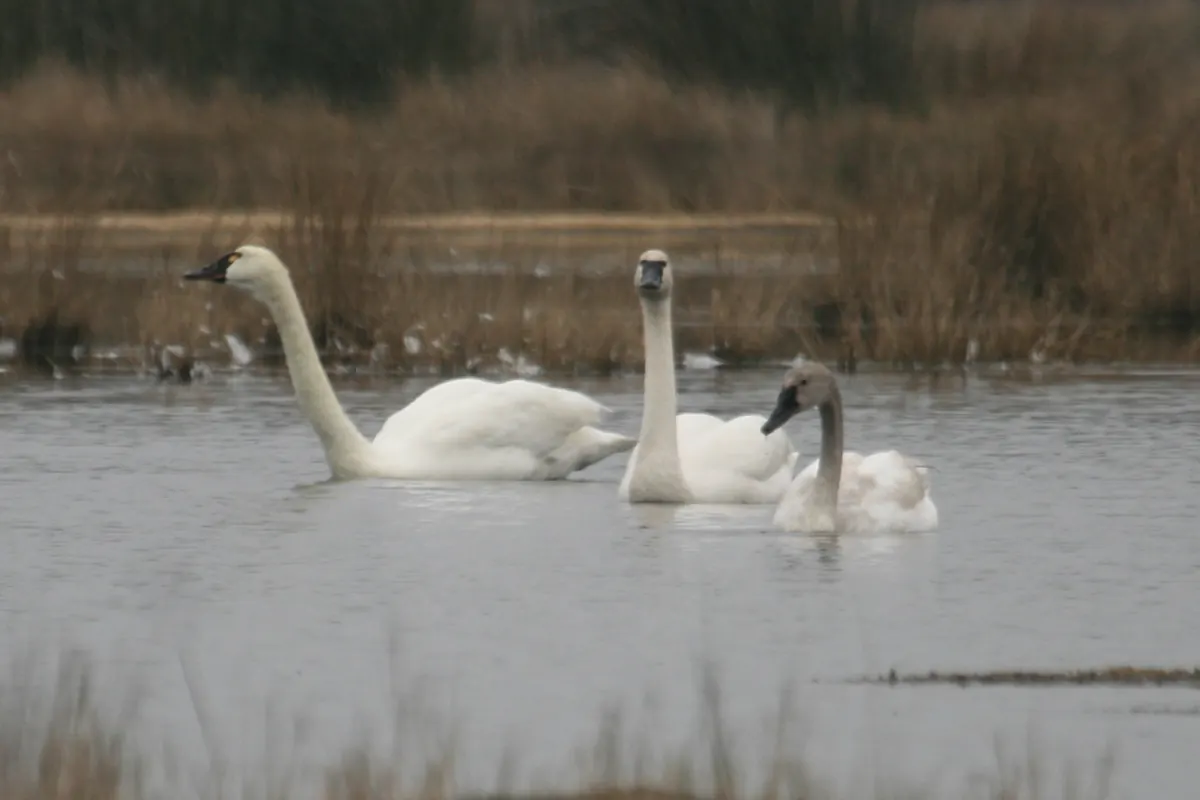
January is the bottom of the thermometer in South Carolina: in NOAA’s long-term normals, all seven stations on this page, from the Blue Ridge Escarpment to Beaufort, post their lowest average highs and lows of the year in this month. Yet the breeding year is already under way. Most of the state’s bald eagles laid their eggs in December, so chicks are hatching in big pines along the marsh edges, and state biologists count wintering eagles along fixed river routes in the first half of the month. In the coastal plain, one of the most important wintering grounds anywhere for the American woodcock, males start their twittering flights over old fields at dusk. Ducks crowd the managed impoundments that stay closed to visitors until February 8, right whale mothers nurse calves offshore, and on any afternoon that turns warm an alligator may haul out onto a sunny bank. Red maples bloom before the month is out.
Other months in South Carolina: October, November, December, February.
Start here
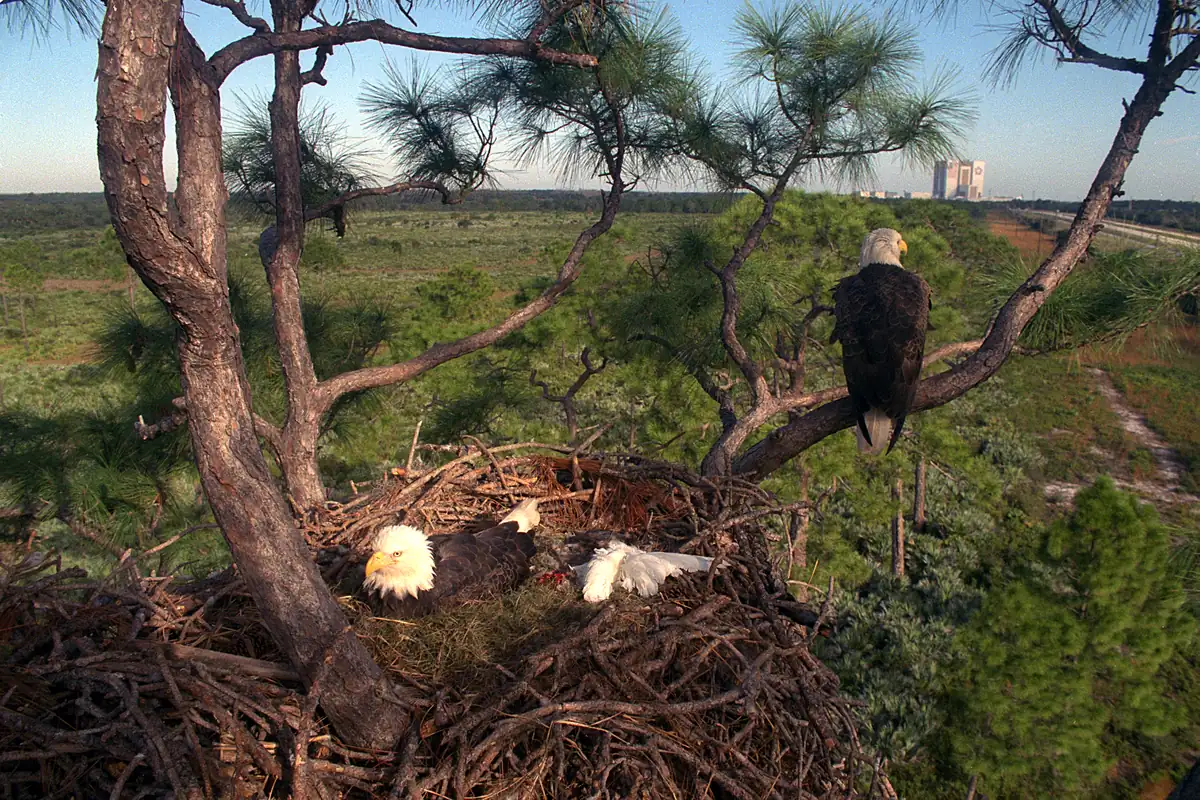
- Watch an eagle nest from a respectful distance. Chicks hatch in many South Carolina nests this month. Find a big pine near open water with a bulky stick nest, stay well back with binoculars, and watch for an adult standing on the rim and tearing food rather than sitting flat.
- Stand at a field edge at dusk for woodcock. On a calm, mild evening, wait beside an overgrown field next to damp woods in the coastal plain. Listen for a nasal bzeep from the ground, then the twittering of wings as a male spirals up into the half-light.
- The Quadrantids, Sunday night, January 3. The strongest meteor shower of early winter peaks in the small hours of Monday, January 4, and the slim crescent moon stays low until near dawn. Give it an hour before first light from a dark field facing northeast.
Keep a record: give an eagle nest a page under “nest observed” and visit it once a week, note woodcock flights and owl calls in the dusk and dawn watch, sketch red maple flowers for “a tree through the seasons,” and list the ducks you see from one fixed spot in “the same place twice” before and after the impoundments reopen. Put the temperature beside each entry; in January it explains most of what you see.
Regions used below: Upstate and the Blue Ridge Escarpment; Midlands and Congaree; Pee Dee and the Sandhills; Grand Strand; Lowcountry and the Sea Islands.
When do bald eagle chicks hatch in South Carolina?
Mostly from January into early February. According to SCDNR, egg laying in the state generally happens in December, though it can come any time between November and March, and both parents share about five weeks of incubation. That puts the first downy chicks in many nests in January and early February. The young then stay in the nest for 10 to 12 weeks, and the whole cycle, from courtship to the day the juveniles stop depending on their parents, runs about seven months.
-
Chicks in the nest
Hatching through January in most nests; later where eggs were laid late · Big live pines at the forest and marsh edge, usually within about 0.6 mile of open water: the ACE Basin, the coastal rivers, Lakes Marion and Moultrie and the Piedmont reservoirs
SCDNR reports that 79 percent of the state’s eagle nests are in live pines, the rest in cypress or dead trees, and that a nest can be 4 to 6 feet across and 3 feet deep. Hatching changes what you see. An adult that sat low and still in December now stands on the rim, bends and tears at a fish, and prey deliveries pick up; the downy chicks themselves stay hidden for weeks. The big reservoirs, which SCDNR credits with about 592,800 acres of new inland feeding water, explain why eagles now nest far from the coast. Watch from a road or boat at long range, and move off if an adult calls or flies.
-
The Midwinter Bald Eagle Survey
The first two weeks of January · About 45 standard routes, most of them on the state’s major waterways
Every January SCDNR takes part in the nationwide winter eagle count that the Army Corps of Engineers organizes. Observers run the same non-overlapping routes each year and record every bald eagle they meet, mostly from boats, since the routes follow big rivers and lakes. The tally includes resident breeders and northern eagles wintering here, so one morning on a reservoir can show white-headed adults and mottled brown young together.
-
Low-flying planes over the Lowcountry
Usually February, after most chicks have hatched · Coastal and inland areas around Charleston, Walterboro and the Savannah River
To count chicks, SCDNR biologists fly low over known nests, sometimes at treetop height, in flights planned with the Federal Aviation Administration. In 2026 the flights ran through all of February over the Charleston, Walterboro and Savannah areas. The 2027 schedule had not been announced on October 2. The surveys track a remarkable recovery: 13 occupied territories in 1977, more than 200 pairs by 2005, and over 350 pairs monitored in 2016.
Pick one nest you can see legally from a public road or landing and visit it on the same weekday each week. By late March the chicks will be standing up, dark and nearly adult-sized.
Where can you see American woodcock in South Carolina in January?
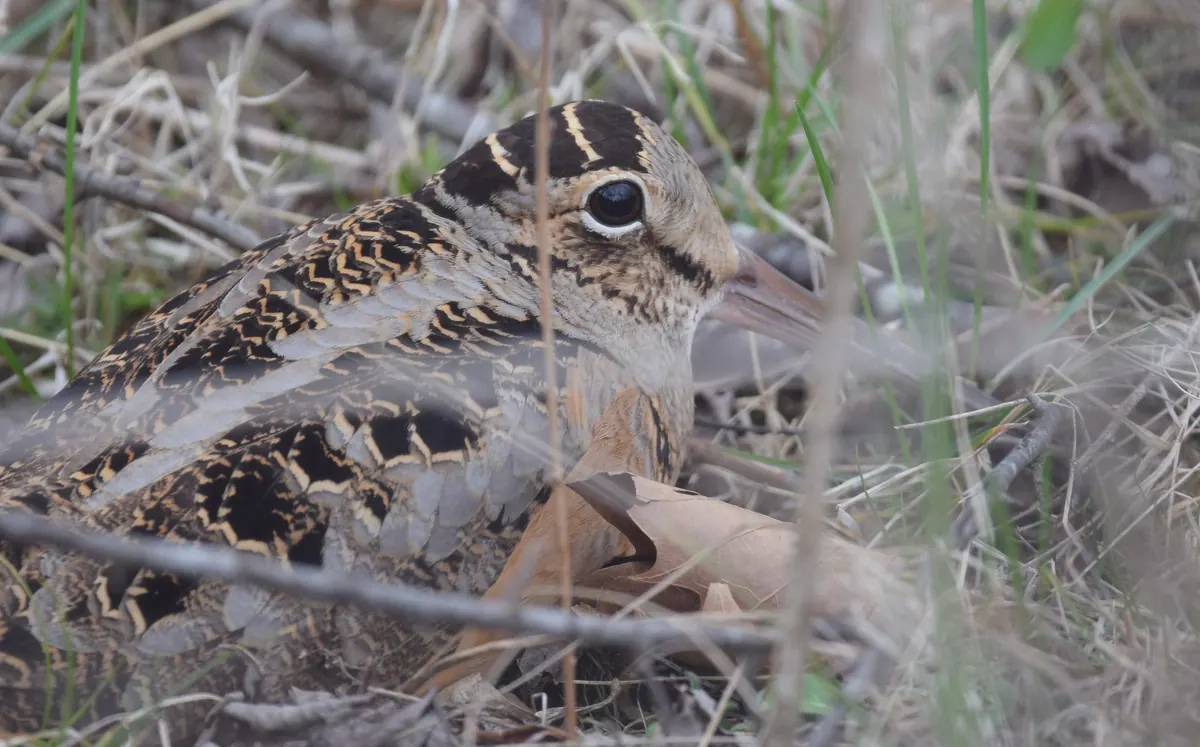
Almost anywhere in the coastal plain where damp woods meet open, brushy ground. The U.S. Forest Service’s species review names the coastal plain of South Carolina as one of just three areas where wintering woodcock are densest, the others being the western Gulf Coast and the lower Delmarva Peninsula. These plump, short-legged shorebirds of the forest probe soft soil for earthworms with a bill up to three inches long, and they spend the day hidden in thickets, which is why most people never see one.
-
Sky dances at dusk
Evenings and early mornings; sometimes from December when the weather is warm · Old fields, young pine stands and clearings beside wet thickets, from the Sandhills to the sea islands
Males begin displaying on the wintering grounds, the Forest Service notes, and in the South nesting begins in late January and February. A displaying male stands on bare ground and repeats a loud, buzzy bzeep, which Audubon likens to a nighthawk, about every two seconds. Then he rises in a wide spiral, his narrow outer wing feathers twittering, and drops back down in a zigzag with a liquid, chirping song. Arrive ten minutes after sunset, stand still at the edge of the opening, and listen before you look.
-
Fields at night
After dark all winter · Fallow fields, clearcuts and old pastures next to daytime cover
Wintering woodcock often leave the thickets after dark. A U.S. Geological Survey study in the Georgia Piedmont found they chose larger fields, preferred fallow old fields and seed-tree clearcuts to pastures, and picked spots with dense shrubs over bare soil. That is why one sometimes flushes from a farm lane in the headlights.
-
Santee National Wildlife Refuge
Winter · On the north shore of Lake Marion, off I-95 near Summerton
The Fish and Wildlife Service lists Santee among the southeastern refuges where woodcock can be found. Several waters and back roads there stay closed until March to leave the wintering waterbirds in peace, so plan a dusk visit around the open trails and roads. Woodcock hunting season ends January 31.
Record each evening’s first bzeep against the time of sunset. Over a few weeks the flights start later on the clock as the evenings lengthen.
Where do ducks spend January in South Carolina?
In the old rice fields. Many of the coastal plain’s best duck marshes are former rice impoundments with working water-control gates, managed by SCDNR and the Fish and Wildlife Service. By January they hold the winter’s full mix of dabbling and diving ducks. The catch is access: to give the birds a quiet place, the state closes a long list of managed impoundments to everyone except scheduled hunters from November 1 until February 8.
-
Bear Island from Bennett’s Point Road
All winter, from the roadside only until the closure ends · Bear Island Wildlife Management Area, in the ACE Basin southeast of Green Pond, Colleton County
The Carolina Bird Club’s site guide describes a long list of rarities seen here, among them Eurasian wigeon, cinnamon teal, common goldeneye and eared grebe, on top of the area’s wintering waterfowl. In winter, birders are limited to the edges of Bennett’s Point Road, including Mary’s House Pond just south of the houses by the main entrance. The guide is blunt: stay out of closed areas even when a gate stands open, or risk a ticket.
-
Impoundments reopen February 9
Closed November 1 to February 8; open to designated areas from February 9 · Managed impoundments on a dozen WMAs, including Bear Island, Donnelley, Santee Coastal Reserve and Santee Delta
The state’s 2026–27 management area rules allow entry during the closure only for special hunts. Duck season ends January 31, and on February 9 the dikes open again to walkers in designated areas, often with plenty of ducks still on the ponds.
-
ACE Basin National Wildlife Refuge
Winter; call ahead on deer hunt days · Edisto and Combahee units; the refuge office is in the 1828 Grove house near Hollywood
The refuge manages wetlands where wintering ducks gather. The Grove house, a rice plantation manor built in 1828 and one of only three antebellum houses in the area to survive the Civil War, stands at the center of the Edisto Unit. That unit closes to hiking during deer hunts; the refuge office, 843-889-3084, has the schedule.
Diving ducks favor the middle of big ponds, where a spotting scope earns its weight; a gray, windless morning keeps the water flat.
Are right whale calves and piping plovers on the South Carolina coast in January?
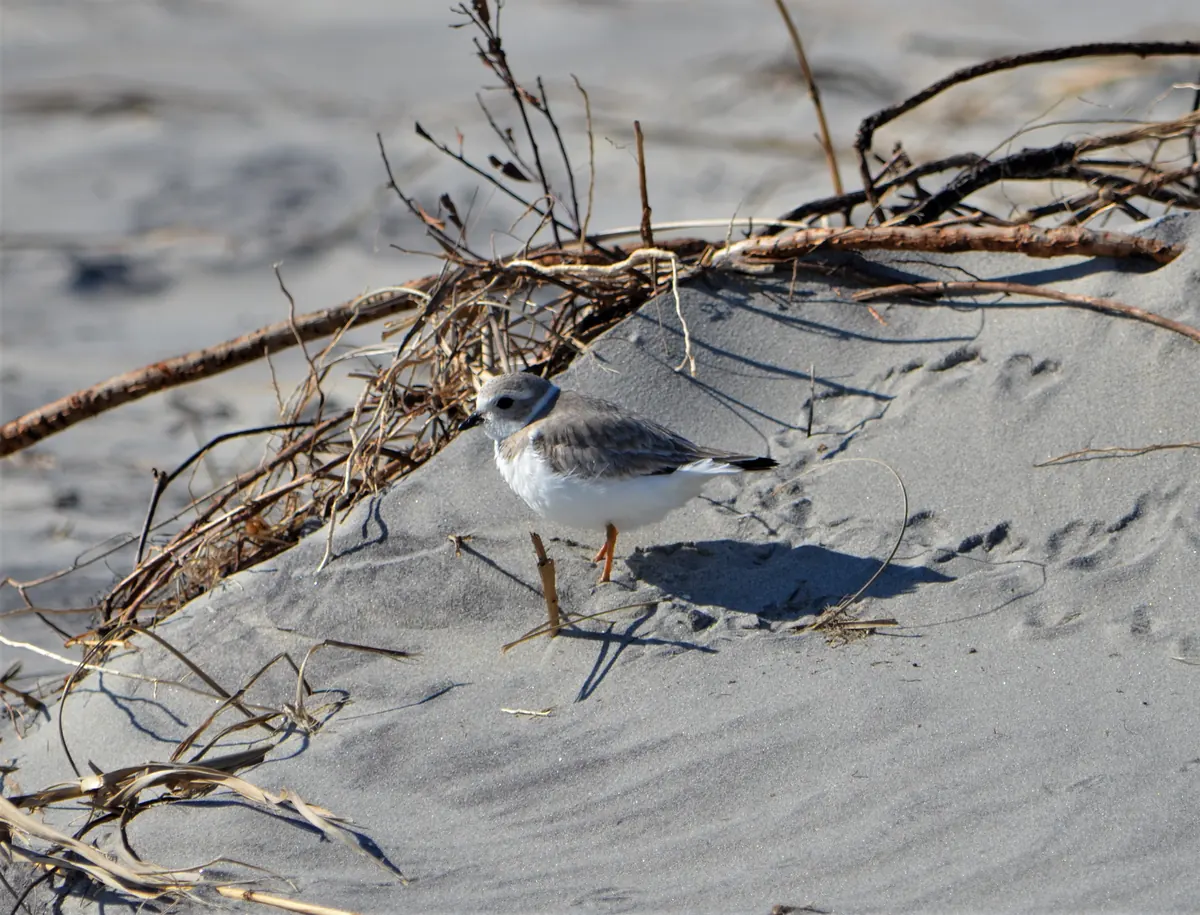
Yes, both. The calving season for North Atlantic right whales runs from mid-November to mid-April, so January is the heart of it. The same weeks find piping plovers, a threatened species, feeding on the state’s quieter inlet beaches far from their northern nesting grounds.
-
Right whale mothers and calves
Mid-November to mid-April · Nearshore waters from the Grand Strand to Hilton Head
The season that ended in April 2026 was a good one. NOAA’s survey teams, flying four planes for more than 1,400 hours and working from three research vessels, identified 129 right whales off the Southeast, over a quarter of all the living adults and juveniles, and counted 23 calves. From shore, look for a black back with no dorsal fin and a V-shaped blow. By federal law no one may approach within 500 yards, and the Southeast sighting line is (877) WHALE-HELP, 877-942-5343.
-
Piping plovers on the inlets
Fall migration through spring; present all winter · Inlet beaches, sandbars and uninhabited islands along the barrier coast
SCDNR says piping plovers spend the winter along the inlets of barrier beaches and on shifting sandbars and undeveloped islands. They are small, round and the color of dry sand, and in winter they lack the bold black neck band and bright orange bill of the breeding season, so look for a pale plover running and stopping on the flats at falling tide. Many carry colored leg bands. SCDNR and the Fish and Wildlife Service resight banded birds to learn how long they live and how faithfully they return, so photograph the bands from a distance and report the combination. Keep dogs leashed and give feeding flocks a wide berth.
Larger vessels must slow down off the state’s ports while the whales are here, and NOAA asks every boater to keep to 10 knots or less where right whales have been reported; check the current zones before running an inlet.
Why do alligators come out on warm January days in South Carolina?
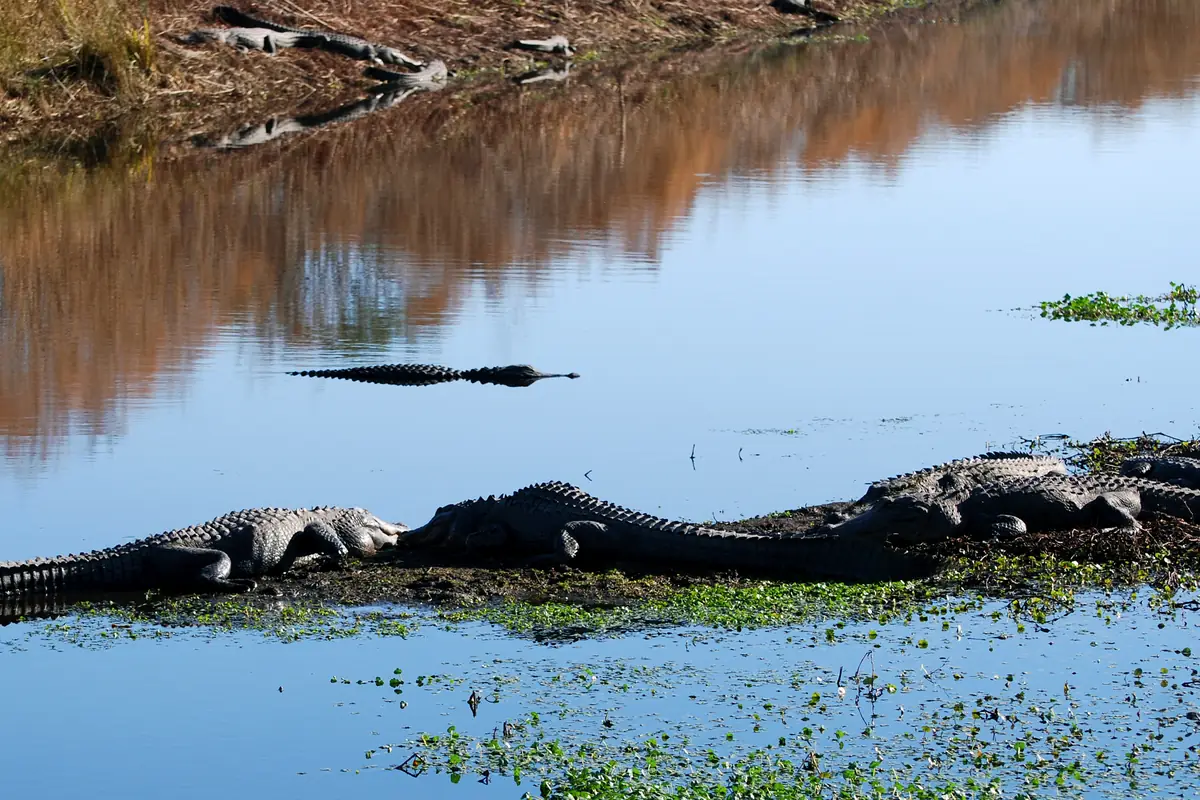
To warm up, not to hunt. Alligators are ectotherms: their body temperature follows their surroundings. Through cold spells they stay sluggish in deep water or in a den, but a run of sunny, mild afternoons draws them onto banks. Speaking for SCDNR on South Carolina Public Radio, Tom Mullikin explained that sun-warmed mud, grass or even pavement helps raise an alligator’s temperature after cold water and chilly nights, and that the animals slip back into sheltered water when the weather turns again.
-
Alligators on a sunny bank
Mild, sunny afternoons from January on · Impoundment dikes, refuge ponds, golf course lagoons and blackwater creeks in the coastal plain
An SCDNR essay on Groundhog Day and the Lowcountry puts alligators forward as the coast’s own winter forecasters. As daylight lengthens in January, they bask on the warmer days, so a January gator is usually soaking up heat, not looking for a meal. Give every alligator plenty of room and never feed one. A cold animal can still move fast.
-
Spotted salamander egg masses
Winter and early spring; eggs hatch in four to eight weeks · Shallow, fishless woodland pools and wet swales, statewide
After the winter rain nights when adults move to the pools, look for the results: firm, clear jelly clumps of up to 200 eggs, according to the Savannah River Ecology Laboratory, often fastened to twigs under the water and sometimes tinged green with algae. The larvae take two to four months more to transform and leave. Watch from the edge, and do not lift the masses out of the water.
On a warm afternoon after a cold week, walk an impoundment dike at a refuge and count basking alligators, turtles and snakes along one stretch. Repeat the walk after the next cold front and compare.
What is flowering in South Carolina’s woods in January?
More than you might expect. Some native trees bloom on bare twigs, ferns wake with every rain, and the state flower is budding. With the canopy open, it is also a fine month to learn trees by twig, bud and bark.
-
Red maple in flower
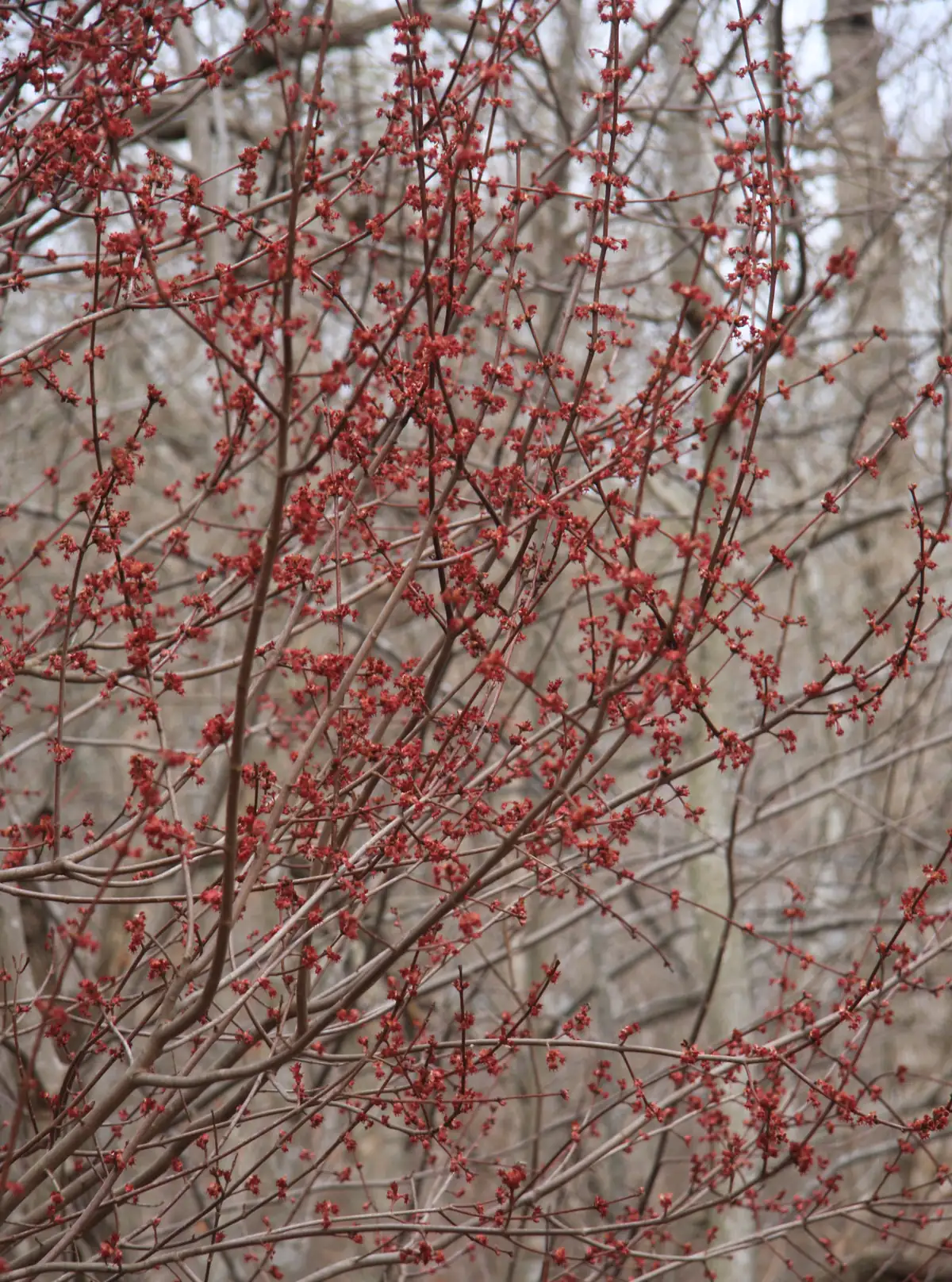
January to March, earliest in the coastal plain · Swamp edges, creek bottoms and yards statewide
NC State Extension’s plant database gives red maple’s flowering season as January to March: small, drooping clusters of red to burgundy flowers on bare twigs that give bare treetops a reddish haze. The early nectar draws bees on warm days, and later the winged seeds and the buds become a main late-winter food for gray squirrels. Even before the flowers open, the twigs are easy to name: red buds with several scales that overlap like shingles, and smooth, light gray bark on young stems.
-
Resurrection fern after rain
Any time it rains, all winter · Along the upper limbs of live oaks, and on old logs and stumps
In dry weather the little fern along a live oak’s branches curls up gray-brown and looks dead. When rain returns, NC State Extension explains, the fronds open and start photosynthesizing again, which is how the plant got its name. Compare one limb before and after a rain.
-
Carolina jessamine in bud
Flowers February to May; watch buds in late January · Woodland edges, fencerows and pine woods, climbing into trees
South Carolina’s state flower is an evergreen vine whose fragrant, golden, trumpet-shaped flowers, an inch to an inch and a half long, open from February to May, depending on location, according to NC State Extension. By late January the buds are swelling, and on a sheltered southern exposure near the coast a few early flowers may open. Admire it with your eyes only: Clemson’s Home & Garden Information Center warns that all parts of the plant are very poisonous, and children have been poisoned by sucking the nectar.
Cut nothing, but photograph one red maple twig each week from early January until the leaves appear. Lined up in the journal, the photos make a short film of spring arriving.
Is January the coldest month in South Carolina, and will El Niño bring snow?
Yes. It is the chilliest month at every station below, by NOAA’s 1991–2020 normals. At Caesars Head, on the Blue Ridge Escarpment, the average high is 44.8 °F and about 20 nights a month dip to 32 °F or lower, including seven or eight nights, on average, at 20 °F or colder. Columbia averages about 14 freezing nights, Charleston about nine and Beaufort about eight. Snow is still the exception below the mountains: the normal January snowfall is 2.7 inches at Caesars Head, 1.6 at Greer, 0.6 at Columbia and 0.2 at Charleston. Spring’s last frosts come weeks later; the South Carolina freeze-date tables show when, town by town.
Every so often a big storm rewrites the averages. On January 21 and 22, 2025, by the State Climatology Office’s account, most of the Lowcountry picked up two to four inches of snow and sleet and parts of the Pee Dee up to five; a CoCoRaHS observer near Myrtle Beach measured 6.0 inches. The cold that followed reached 4 degrees at the NWS stations near Caesars Head and at Jocassee.
| Station | Average high | Average low | Freezing nights | Nights 20 °F or colder | Precipitation | Snowfall |
|---|---|---|---|---|---|---|
| Caesars Head (Blue Ridge Escarpment) | 44.8 °F | 27.9 °F | 20.4 | 7.5 | 6.02 in | 2.7 in |
| Greer (Greenville–Spartanburg) | 52.8 °F | 32.1 °F | 16.3 | 3.4 | 4.12 in | 1.6 in |
| Columbia (Midlands) | 56.8 °F | 34.6 °F | 13.9 | 2.1 | 3.49 in | 0.6 in |
| Florence (Pee Dee) | 57.1 °F | 36.0 °F | 13.0 | 2.0 | 3.08 in | – |
| North Myrtle Beach (Grand Strand) | 55.7 °F | 36.7 °F | 12.4 | 1.5 | 3.01 in | – |
| Charleston International Airport | 60.2 °F | 38.9 °F | 9.1 | 0.8 | 3.37 in | 0.2 in |
| Beaufort MCAS (Lowcountry) | 60.3 °F | 40.1 °F | 7.8 | 0.3 | 2.90 in | 0.0 in |
This winter starts with the tropical Pacific running hot. The federal ENSO update of September 10 said this event had better than nine chances in ten of peaking in the very strong range during the cold months. What has that meant here before? The NWS office in Wilmington, which covers the Pee Dee and the Grand Strand, looked back at El Niño winters in Florence: on average they brought 11.28 inches of winter precipitation against a normal of 9.55. The State Climatology Office links strong El Niño events to more ice and snow storms and damaging nor’easters. A statewide study in Clemson’s Journal of South Carolina Water Resources also found wetter El Niño winters, while warning that the effect changes from place to place and event to event. So: a lean toward wet and stormy, with no promise of snow. NOAA updates its seasonal outlook maps each month after the October 15 winter outlook; for the forecast near you this week, open our weather page.
How much daylight does South Carolina gain in January?
A little over half an hour. In Greenville and Rock Hill the day stretches from 9 h 52 m on January 1 to 10 h 28 m by the 31st, 36 minutes more, while Charleston and Beaufort, already the longest-lit, add 33. The gains are slow in the first week and noticeably quicker by the end. Sunrise stays stubbornly late right through January, so the added light falls in the late afternoon.
| City | Jan 1 | Jan 31 | Gained | Per day |
|---|---|---|---|---|
| Greenville | 9 h 52 m | 10 h 28 m | 36 min | 1.2 min |
| Rock Hill | 9 h 52 m | 10 h 28 m | 36 min | 1.2 min |
| Columbia | 9 h 56 m | 10 h 32 m | 36 min | 1.2 min |
| Aiken | 9 h 59 m | 10 h 33 m | 34 min | 1.1 min |
| Florence | 9 h 55 m | 10 h 31 m | 36 min | 1.2 min |
| Myrtle Beach | 9 h 58 m | 10 h 33 m | 35 min | 1.2 min |
| Charleston | 10 h 03 m | 10 h 36 m | 33 min | 1.1 min |
| Beaufort | 10 h 04 m | 10 h 37 m | 33 min | 1.1 min |
For a woodcock walk, time your arrival with the daylight and twilight tables for your own town.
What is in South Carolina’s night sky in January 2027?
Three highlights: a well-timed Quadrantid shower, Venus at its widest swing west of the Sun, and the nearest full moon of 2027. Times are given in EST.
-
The Quadrantids
Peak expected Sunday night, January 3, into Monday morning, January 4 · Face northeast; the radiant, near the handle of the Big Dipper, climbs higher toward dawn
Meteors from this shower fly between late December and January 12, yet the strong part lasts only around six hours. Two forecasts bracket it: about 10:30 p.m. Sunday, says the American Meteor Society, or 12:47 a.m. Monday, says EarthSky. Over South Carolina the radiant stands tallest just before Monday’s twilight begins, so plan to be out then. The thin waning crescent, under a fifth lit, rises late in the night and barely brightens the sky. Away from town lights, expect dozens an hour at best; in a lit suburb, many fewer.
-
Venus at its greatest morning elongation
Sunday, January 3, and all month · Southeast before sunrise
On the 3rd Venus reaches 47 degrees from the Sun, glowing at magnitude −4.3 in the dawn. A modest telescope shows its disk half lit, like a quarter moon. It stays a dazzling morning star through spring.
-
The Wolf Moon, a supermoon
Full at 7:17 a.m., Friday, January 22 · Rising in the east-northeast at dusk on Thursday the 21st; setting in the west-northwest at dawn on the 22nd
Perigee, the Moon’s closest point, comes the previous afternoon, so this full moon lies just 222,229 miles off, nearer than any other in 2027. Watch on Thursday night: it comes up around sunset and hangs, perfectly round, in the west as Friday dawns. It still looks full on Friday evening. An east-facing beach or a wide lake makes the best moonrise stage.
-
Moon and Jupiter
Evening of Saturday, January 23 · East, after moonrise
A day after full, the Moon slides very close to Jupiter around 7:24 p.m., with Regulus, the brightest star in Leo, close by later in the night. Jupiter keeps brightening ahead of its February 10 opposition.
-
Mercury and Saturn in the evening
Saturn all month; Mercury from late January · Southwest after dark; Mercury low in the west-southwest in twilight
Saturn, a steady cream-colored point, sets a little earlier in the southwest every evening. Mercury, entering its best dusk apparition of the season in late January, peaks in early February; search 30 to 45 minutes after sunset, low over an open western view.
| Phase | Date | Time |
|---|---|---|
| New moon | Thursday, Jan 7 | 3:24 p.m. |
| First quarter | Friday, Jan 15 | 3:34 p.m. |
| Full moon (Wolf Moon, a supermoon) | Friday, Jan 22 | 7:17 a.m. |
| Last quarter | Friday, Jan 29 | 5:55 a.m. |
The darkest evenings fall between about January 3 and 12, around the new moon. Look at tonight’s cloud forecast before staying up, and plan around moonrise with our moon phase calendar.
What can South Carolina families do outside in January 2027?
- Friday, January 1: a New Year’s Day hike. South Carolina State Parks held guided First Day Hikes at parks across the state on January 1, 2026. On October 2 the 2027 list was not yet up; check the parks’ holiday and seasonal events page in December.
- January 1 to 5: the last days of the Christmas Bird Count. Audubon’s count window closes Tuesday, January 5. Several South Carolina circles had not set dates on October 2, so check the Carolina Bird Club’s list for a count in the new year and write to its compiler; families are welcome on teams or at a feeder.
- Sunday night, January 3: Quadrantid watch. Rise an hour before Monday’s dawn, bundle into blankets on a lawn chair, and keep a family tally of shooting stars.
- Early January: an eagle tally of your own. While state crews run the Midwinter Bald Eagle Survey, spend an hour at a lake overlook or a boat landing, count adults and brown juveniles separately, and enter the list in eBird.
- A mild evening: woodcock walk. Ten minutes after sunset, stand quietly at the edge of a brushy field near damp woods and listen for the bzeep.
- A warm afternoon: alligator count. Walk a refuge dike or an observation boardwalk and count the basking alligators, staying well back from the edge.
- Thursday, January 21: Wolf Moon rise, at dusk over an open eastern view.
- Through April 30: Project FeederWatch. Pick two back-to-back count days, tally the highest number of each species seen at once, and report to the Cornell Lab.
- Every morning: CoCoRaHS. Read a rain gauge daily and report rain and any snow.
- Report what matters. Phone right whale sightings to NOAA, and send leg-band combinations from piping plovers to SCDNR.
Watch birdcount.org for the 2027 Great Backyard Bird Count, which normally lands around the middle of February. Take the Naturalist’s Field Journal along, look back at December in South Carolina for the frog calls and owl duets that carry on into this month, and visit the nature pages for other states and months.
Safety notes for January in South Carolina
- Hunting seasons in January. Gun season for deer on private land ends January 1 in all four Game Zones, and Saturday, January 2, is a statewide either-sex youth deer day. Under SCDNR’s 2026–27 dates, ducks, coots and Canada geese stay open to January 31; brant, January 2 to 31; woodcock and the last dove segment, to January 31; snipe, to February 28. Quail, rabbit, squirrel, fox, grouse (Game Zone 1) and the other furbearers run to March 1, raccoons and opossums to March 15, and the trapping season from December 1 to March 1. Expect shotguns at first light around marshes, impoundments and fields.
- Hunter orange. On wildlife management area lands, SCDNR’s rule requires every hunter there, small game included, to show solid international orange on the head, chest or back (a hat, vest or coat) while any firearm deer, bear or hog season is running there; archers in bow-only deer seasons and migratory bird hunters are the exceptions, and WMA hog hunters must wear it whenever they hunt hogs. State law also tells other WMA users, hikers and birders included, to wear orange during any deer season there. The rule does not reach private land, but orange is a sensible choice for any walker near hunted ground.
- Cold water and cold snaps. January is the coldest month, and a fall from a kayak into a winter lake or tidal creek can bring on hypothermia quickly. Wear a life jacket, wear layers that still insulate when wet, and tell someone your route.
- Ice on the escarpment. The Upstate mountains average about 20 freezing nights in January. Waterfall spray glazes rocks and steps, and shaded roads stay icy after a storm. Check the NWS Greenville-Spartanburg forecast before you drive up.
- Winter storms. Snow and freezing rain are rare in the Lowcountry but can shut roads statewide, as the January 2025 storm did. Pay attention to NWS winter storm watches and don’t travel in freezing rain.
- Short days. The evenings are lengthening, but slowly. Carry a light on afternoon walks, start back to the car well before sunset, and watch for deer on roads at dusk.
- Swamp floods. Congaree National Park’s low trails flood most often in the cool season, sometimes with little warning; check conditions first.
- Alligators. A basking alligator that looks half asleep can still lunge. Keep pets leashed and well back from the water’s edge.
Sources
- SCDNR: South Carolina’s bald eagles, biology
- SCDNR: South Carolina’s bald eagles, Midwinter Eagle Survey
- SCDNR: South Carolina’s bald eagles, past nesting surveys
- South Carolina Public Radio: SCDNR to conduct bald eagle nest surveys throughout February (2026)
- U.S. Forest Service Fire Effects Information System: American woodcock (Scolopax minor)
- Audubon Guide to North American Birds: American woodcock
- U.S. Fish and Wildlife Service: January 2025 bird of the month, American woodcock
- U.S. Geological Survey: use of fields at night by wintering American woodcock
- U.S. Fish and Wildlife Service: Santee National Wildlife Refuge
- Carolina Bird Club: Bear Island Wildlife Management Area site guide
- SCDNR (eRegulations): WMA regulations, closures and hunter orange, 2026–27
- U.S. Fish and Wildlife Service: Ernest F. Hollings ACE Basin National Wildlife Refuge
- NOAA Fisheries: North Atlantic right whale calving season 2026
- NOAA Fisheries: by the numbers, 2026 North Atlantic right whale calving season
- NOAA Fisheries: how you can help North Atlantic right whales
- SCDNR: piping plover
- South Carolina Public Radio, Into the Wild: alligators basking in the winter sun (SCDNR)
- SCDNR: Groundhog Day and Lowcountry alligators
- Savannah River Ecology Laboratory: spotted salamander
- NC State Extension Plant Toolbox: red maple (Acer rubrum)
- NC State Extension Plant Toolbox: resurrection fern (Pleopeltis polypodioides)
- Clemson Home & Garden Information Center: Carolina jessamine
- NOAA NCEI: 1991–2020 monthly normals for Caesars Head, Greer, Columbia, Florence, North Myrtle Beach, Charleston and Beaufort (data API)
- South Carolina State Climatology Office: weekly summary, January 21–22, 2025 winter storm
- Site data: NOAA 1991–2020 freeze-date normals for South Carolina stations
- Climate Prediction Center: ENSO diagnostic discussion, September 10, 2026
- Climate Prediction Center: 90-day outlooks (winter outlook issued October 15, 2026)
- National Weather Service Wilmington: winter outlook 2023–2024 (El Niño winters at Florence)
- Journal of South Carolina Water Resources (Clemson): the influence of ENSO warm and cold events on South Carolina’s seasonal precipitation
- NOAA solar calculator equations (sunrise, sunset and day length)
- U.S. Naval Observatory: moon phases from December 30, 2026 (data API)
- U.S. Naval Observatory: Earth’s seasons and perihelion, 2027 (data API)
- Fred Espenak: Sky Event Almanac 2027
- American Meteor Society: meteor shower calendar
- EarthSky: Quadrantid meteor shower
- EarthSky: what is a supermoon?
- EarthSky: Venus at greatest western elongation
- South Carolina State Parks: holiday and seasonal events (First Day Hikes)
- Carolina Bird Club: Christmas Bird Counts in North and South Carolina, 2026–27
- National Audubon Society: join the Christmas Bird Count
- Project FeederWatch: how to participate
- eBird
- CoCoRaHS: South Carolina
- Great Backyard Bird Count
- SCDNR (eRegulations): deer seasons on private lands, 2026–27
- SCDNR (eRegulations): migratory bird seasons, shooting hours and bag limits, 2026–27
- SCDNR (eRegulations): small game seasons, 2026–27
- SCDNR (eRegulations): trapping and commercial fur harvesting
- National Park Service: Congaree National Park weather
- National Weather Service Greenville-Spartanburg
- Photos via Wikimedia Commons; licenses and photographers are credited under each picture
