What to look for in nature in South Dakota this March
March in South Dakota is a month of arguments between seasons. A blizzard can close Interstate 90 one week, and a hillside of pasque flowers can open the next. Out on the prairie, male grouse stamp and boom on traditional dancing grounds before dawn. Snow geese pour north through the Sand Lake country while the lakes are still locked in ice, and frogs that freeze solid each winter thaw out and start calling from meltwater ditches. Prairie dogs court above ground, black-footed ferrets are counted by spotlight in the Conata Basin, and the sun stays up well over an hour longer by the 31st. Clocks go forward on Sunday the 14th, the equinox arrives on Saturday the 20th, and a full Worm Moon follows on the 21st and 22nd.
Other months in South Dakota: October, November, December, January, February, April.
Start here
- Be in a grassland before sunrise. Pick a prairie morning with light wind and listen from the road before it is light. Greater prairie-chickens and sharp-tailed grouse boom and stamp on their dancing grounds at first light, and the sound carries a long way across open grass. Stay in the car or well back so you do not flush the birds.
- Count the geese at a big marsh. Choose a day when the wind has swung to the south and scan the sky above Sand Lake, Lake Andes or the lakes near Huron for long wavering lines of white and gray. Write down the date of your first flock of snow geese and of your first sandhill cranes.
- Listen at a flooded ditch at dusk. On a mild evening, stand quietly by roadside meltwater or a shallow wetland and listen for a sound like a fingernail drawn along a comb. That is the boreal chorus frog, and it can be calling while ice still rims the pool.
In the Naturalist’s Field Journal, a dusk and dawn watch page suits the grouse mornings and the frog evenings, and a map of sounds lets you sketch where each chorus and each booming ground sits. Give your first snow geese, sandhill cranes, killdeer and meadowlarks a line each on the birds-I-have-seen plate. Visit one pasque flower patch twice, once in bud and once in bloom, for the same-place-twice plate, and use the daily field log to note the day of the first open water on a nearby pond. The reading-the-signs plate fits the March swings from blizzard to thaw, and a tracks-to-know page can hold prairie dog and ferret sign near a dog town.
Regions used below: Black Hills; West River prairie and the Badlands; Missouri River and the big reservoirs; Glacial Lakes and the northeast; Southeast and Sioux Falls.
Where can you watch prairie grouse dance in South Dakota in March?
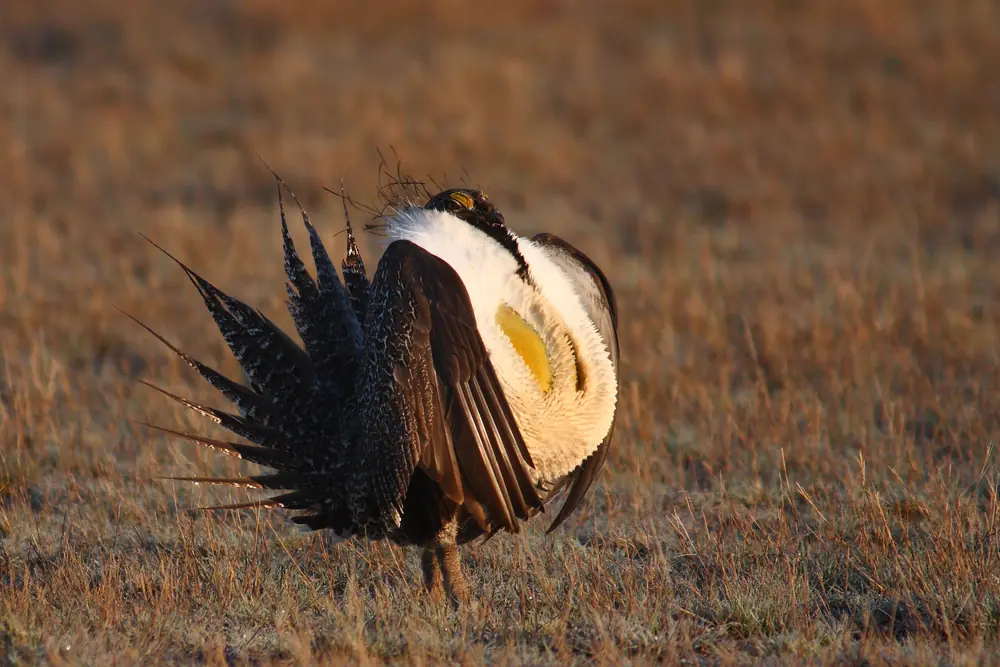
Three kinds of grouse dance on the open prairie before sunrise each spring, and March is when the dancing starts. Sage-grouse, sharp-tailed grouse and greater prairie-chickens all gather on traditional sites called leks, where males compete for mates. Game, Fish and Parks says sage-grouse lekking in South Dakota typically begins as early as late February and peaks in April or early May, so March is the opening act. The best place to learn the sounds is a big public grassland, and the best time is the hour around first light.
-
Sage-grouse in the northwest corner
Late February into early June; usually peaks in April or early May · Butte and Harding counties, far northwestern South Dakota
Game, Fish and Parks says sage-grouse once lived across the western third of the state, including the Black Hills, and now hold on only in parts of Butte and Harding counties. The agency’s count in 2024 found 17 leks with 94 males in all. Its action plan sets a recovery threshold of at least 300 males counted on all leks for two years in a row before even a limited hunting season is considered, and the last hunt, in 2016, issued 40 permits.
The same management document recommends that industry avoid drilling, pipelines and fence building within two miles of leks in use from March 1 through May 15, in the hour before sunrise and two hours after. A visitor on foot can disturb a lek too, so do not go looking for one. This is a story to follow in the agency’s counts, not a place to walk into.
-
Sharp-tailed grouse and prairie-chickens on the national grassland
Surveys run roughly mid-March to mid-May; viewing blinds usually open to reservations from April 1 · Fort Pierre National Grassland, south of Fort Pierre, and other large native prairies
The Forest Service counts displaying males on Fort Pierre National Grassland every spring, from roughly mid-March through mid-May, starting as the sun begins to rise. Its 2025 survey tallied 1,221 displaying males, a 40 percent rise on the previous record year, and the agency says greater prairie-chicken and sharp-tailed grouse numbers were the highest in the 50 years of the survey. The grassland covers 116,000 acres of mixed-grass prairie south of Fort Pierre.
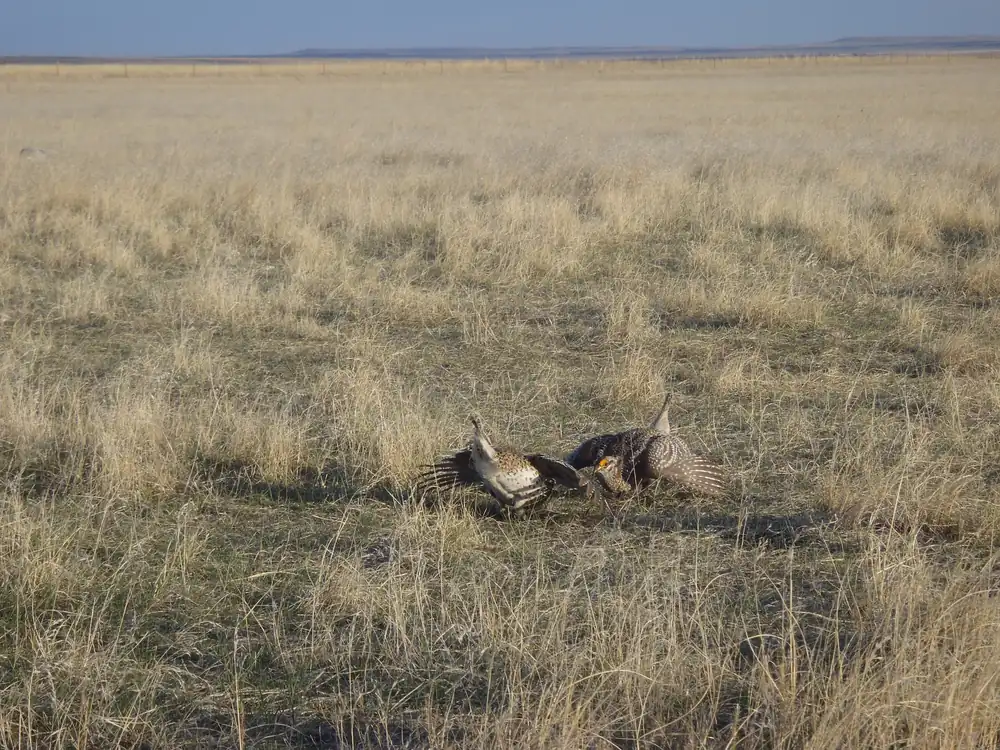
A male prairie-chicken swells the orange sacs at his throat and booms. A male sharp-tailed grouse drops his head, cocks his tail and stamps his feet in a blur, flashing a purple neck patch. South Dakota Birds and Birding notes that both species display on leks well before nesting in May and June. Three unheated plywood viewing blinds are set up on the grassland each spring. The Forest Service page we read said reservations ran from April 1 to May 15, that requests open each year on February 1, that there is no fee, and that you must arrive one hour before sunrise and stay at least one hour after. Call 605-224-5517 and check the 2027 dates, because March is usually before the blinds open.
Rules of the lek are simple: arrive in the dark, stay inside a vehicle or blind, never walk toward displaying birds, and leave before the birds do. A flock flushed from its dancing ground in a cold March dawn burns energy it needed for the nest.
What migrants pass through South Dakota in March?
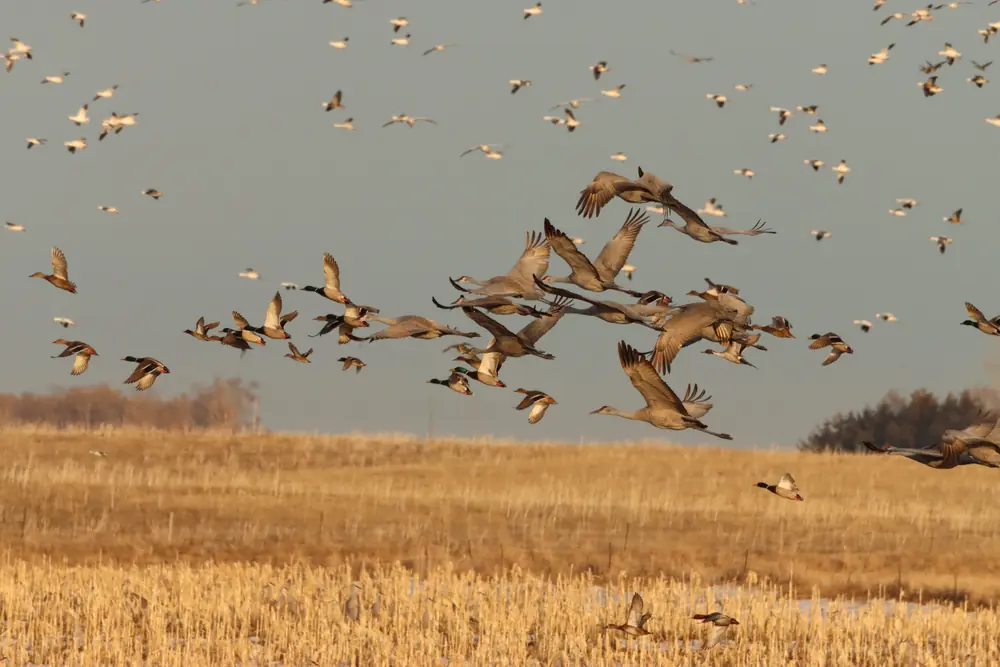
Snow geese are the headline, but March carries a long procession of waterfowl, cranes and early songbirds across the state. South Dakota lies in the Central Flyway, and the first warm spell swings the flocks north. Timing swings with the weather: in a late-snow spring such as 2023, ice holds the geese south of the refuges and the push can then be over in days.
-
Snow geese at Sand Lake
Flocks arrive as the ice opens; the rush often runs through March and into April · Sand Lake refuge in Brown County, plus farm fields and sheet water across the James River valley
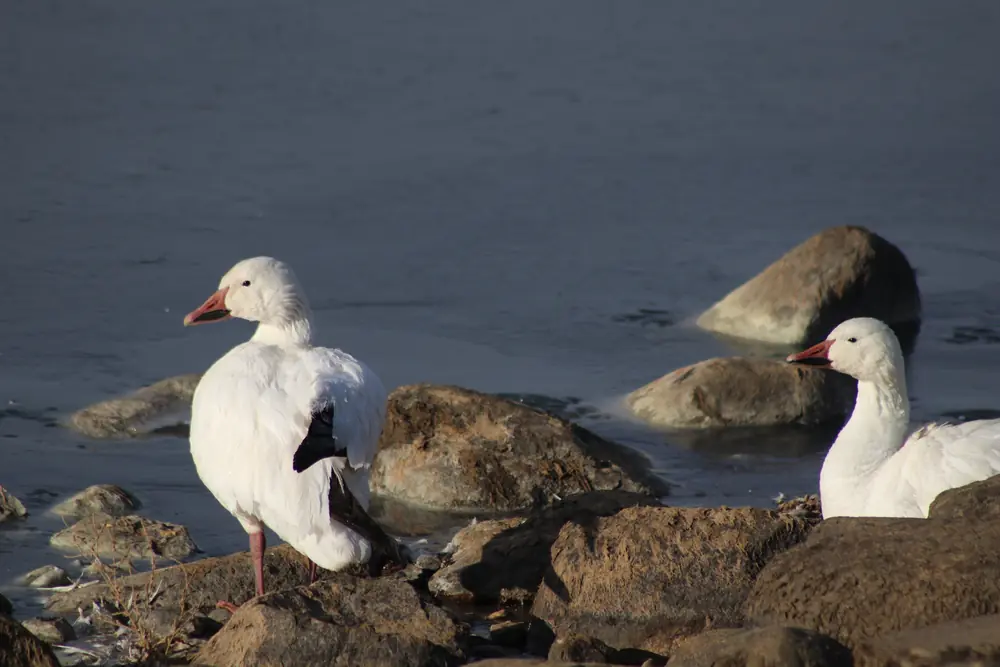
The refuge’s own page says its spring snow goose migration has been documented at more than 1.2 million birds. Spring conditions decide everything. The refuge’s migration report of March 12, 2026 put snow goose numbers at around 10,000, with birds moving through more than stopping, and the snow line already well north. After a snowy 2023, the refuge reported on April 11 that the lake was still mostly frozen, and on April 26 that the snow goose migration had pushed through in a hurry, with most large groups using sheet water elsewhere in the district.
-
White-fronted, cackling and Canada geese, and tundra swans
March, as the ice opens · Sand Lake and the northeastern lakes
The March 2026 report also listed white-fronted, Canada and cackling geese in good numbers, along with mallards and pintails. South Dakota Birds and Birding calls the tundra swan a fairly common migrant in spring and fall and names the northeast, especially around Sand Lake, as the place to find them.
-
Sandhill cranes, and the rare whooping crane
Spring; timing varies with the thaw · Central and western South Dakota, with a few in the east
South Dakota Birds and Birding rates the sandhill crane a common migrant through the west and middle of South Dakota, but uncommon to rare in the east. The same site calls the whooping crane a rare migrant, most often in the center of the state and often traveling with sandhills. If you spot a tall white crane with black wingtips, keep your distance and report it without posting its exact location.
-
Killdeer, meadowlarks and the first songs
Mid to late March in a mild year · Wet fields, gravel roads and fence lines statewide
South Dakota Birds and Birding says the killdeer is often among the earliest migrants, sometimes arriving in March while it is still quite cold. Western meadowlarks, robins and red-winged blackbirds tend to fill in right behind the geese in a mild spring, but the dates swing with the weather.
For a weekly read on where the ducks and geese are, Game, Fish and Parks publishes waterfowl migration reports, and the Sand Lake refuge posts its own migration notes on its activities page.
When do frogs start calling in South Dakota?
The first frogs are not the ones you expect. Two small species spend the winter frozen solid under leaf litter and thaw when meltwater pools fill, and they can be breeding while snow and ice still rim the water. The Amphibians and Reptiles of South Dakota website has the species accounts that this section draws on.
-
Boreal chorus frog
Calls as early as March and continues into late May · Roadside ditches, temporary pools, marshes and river backwaters statewide
The site calls the boreal chorus frog common throughout South Dakota yet rarely seen outside the breeding season. Its breeding call is a run of metallic clicks that climb in pitch, a sound the site compares to a finger dragged over a stiff comb. Breeding activity begins as early as March, and ice and snow may still be present at the pond. The frogs freeze, producing glucose that keeps ice crystals from damaging cells, then thaw and move to water. Tadpoles often finish transforming by late June.
-
Wood frog
A short window, typically late March to early April · Northeastern South Dakota and the Prairie Coteau
Wood frogs breed over a short period in South Dakota, typically from late March into early April, in pools filled by snowmelt and spring rain. The call is a soft, duck-like cackle. The site notes the species’ range has expanded recently from the northeastern corner of Roberts County into Deuel County and onto the Prairie Coteau, for reasons that remain unknown. A female lays up to 1,000 eggs in large clumps attached to plants, which hatch in about three weeks.
-
Tiger salamanders on the move
Early spring, on and after heavy rain · Wetlands and prairie near ponds, sometimes basements and root cellars
Adult tiger salamanders are seldom seen because most of their movement happens in early spring, to and from breeding ponds, during and shortly after heavy rains. They shelter underground, often in old prairie dog burrows, and are typically active from April through September. The site says breeding timing depends on temperature and rainfall. A salamander caught crossing a wet road at night is best helped along the way it was already facing, then wash your hands.
Cold snaps do not stop the chorus for long, since both species tolerate freezing, and calling picks up again on the next mild evening. The state site has a Submit Observation page if you want to add what you hear.
When do pasque flowers bloom in South Dakota?
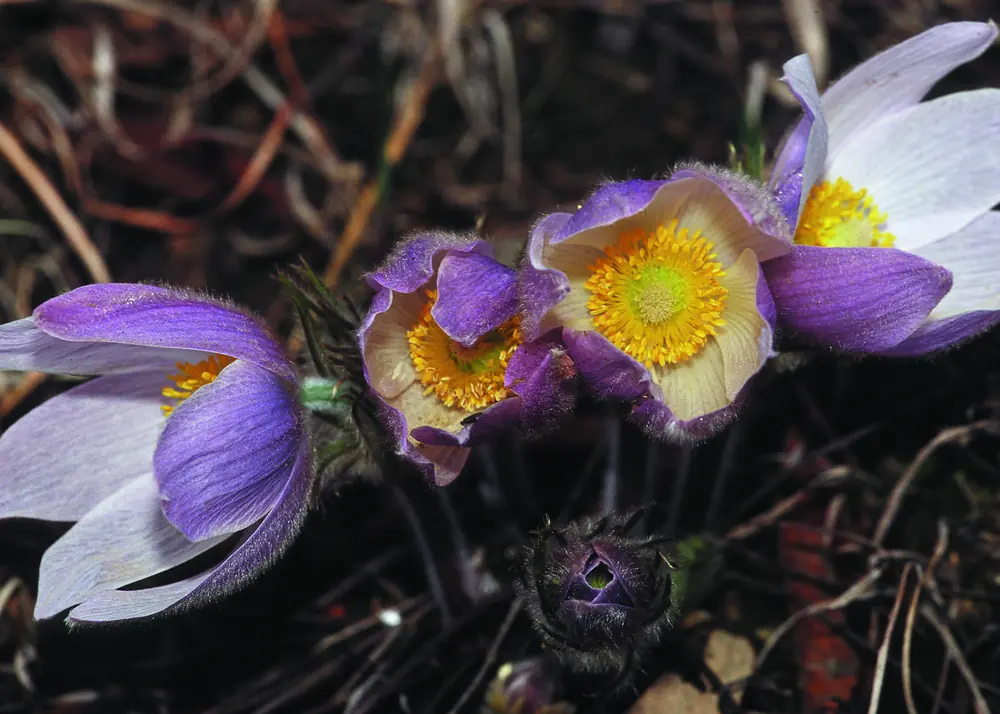
The pasque flower, South Dakota’s state flower, is often the first wildflower of the year, a silky lavender cup on a hairy stem that pushes up through last year’s brown grass. The date depends entirely on the weather. A Sioux Falls writer who has logged his first wildflower sighting for a decade told South Dakota Magazine that the average is April 11, with first sightings ranging from as early as mid-March to as late as the first week of May.
-
Prairie hillsides in the east
Late March to late April, depending on warmth and moisture · Prairie hills in Hanson County and the eastern counties
The same writer, Christian Begeman, found a handful of fresh blooms in Hanson County on April 2 in the spring he described, and said he likes to shoot them early, when the pink and purple are more saturated and wind and frost have not yet damaged the petals. A week later, on prairie hills in Deuel and Brookings counties, he found snow still in the ditches and frost in the ground and no wildflowers at all, and when he went back to the Hanson County patch the next day, more buds had arrived but few stood more than a couple of inches high. The lesson is that the same week can be early in one county and late in the next.
-
Black Hills and the southern Hills
March in a warm year; later at higher elevation · Wind Cave National Park and prairie foothills
The National Park Service says the pasque flower is one of the earliest blooms at Wind Cave, flowering in March, with peak wildflower season from mid-May through early July. Higher in the Hills the bloom comes weeks later.
Look rather than pick. A pasque flower patch that is visited weekly will teach you more about how the season is moving than a calendar will. Our February guide for South Dakota covers the thaw days that come before the bloom, and the frost dates page for South Dakota shows the typical last freeze for towns near you.
What happens in prairie dog towns and black-footed ferret country in March?
The prairie dog towns of western South Dakota are never fully asleep, since the animals slow down in winter but stay active, and March is when they begin to court. They share the ground with one of the continent’s rarest mammals, which is also starting its breeding season.
-
Prairie dog courtship
Starting in March and continuing through early April · Badlands and Wind Cave national parks and other prairie dog towns west of the Missouri
According to the Park Service, black-tailed prairie dogs breed from March into early April. The pregnancy lasts roughly a month, litters run one to six, and the blind, hairless pups stay below ground for about six weeks, so the first ones show up on the surface around May.
-
Black-footed ferrets in the Conata Basin
Mating season is March to April; spotlight surveys in spring · Conata Basin and Badlands National Park, with the Buffalo Gap National Grassland
The National Park Service says black-footed ferrets mate in March and April, after a gestation of 41 to 43 days, with litters of three to five kits that stay underground for about two months. In the early morning hours of March 20, 2026, biologists swept the Conata Basin with spotlights, watching for emerald eyeshine, then briefly captured ferrets to microchip and vaccinate them and take cheek swabs and hair samples before returning them to their burrows. Ferrets hunt at night and are almost never seen by visitors, so treat this as a story to know about, not an animal to find.
A March visit to a dog town rewards patience. Park on the road shoulder with the engine off, stay in the vehicle, and use binoculars. The Amphibians and Reptiles of South Dakota website says prairie rattlesnakes are often associated with rocky outcrops and prairie dog towns, so keep to trails and do not reach into burrows.
When does the ice go out, and when do walleye and pike spawn?
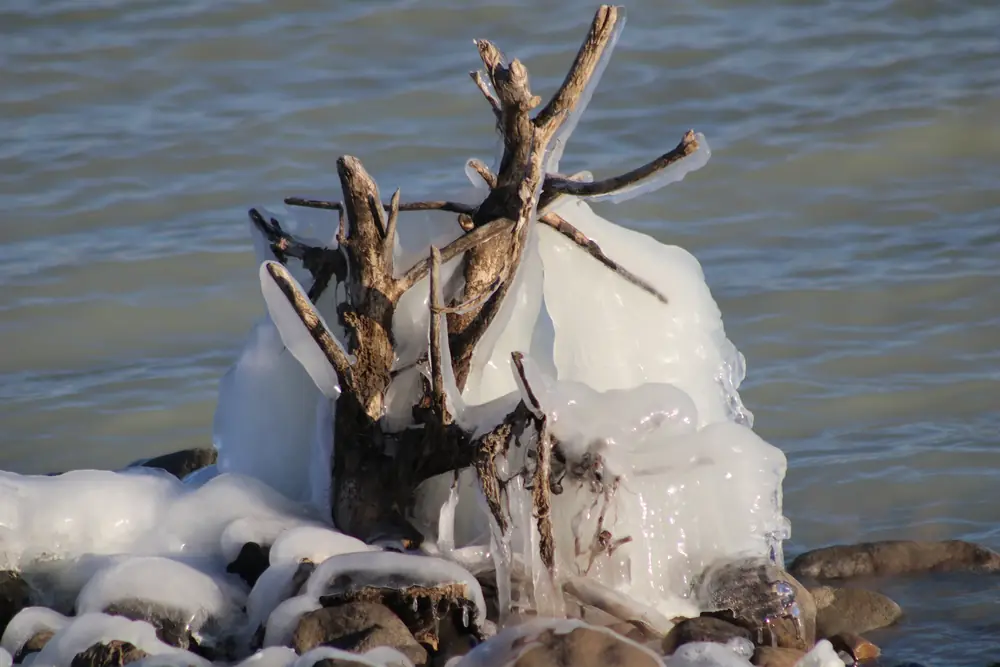
Ice-out is the quiet event that sets the rest of the season going, and it varies by weeks from year to year. Ice-out on South Dakota lakes swings by weeks from year to year, from late March in an early spring to early May in a late one, according to a state fisheries administrator interviewed in 2020. Once the ice is off the eastern lakes, northern pike spawn, and walleye follow when the water warms a bit.
-
Pike spawn as the ice leaves
At ice-out, anywhere from late March to early May · Eastern South Dakota lakes and shallow bays
In an interview published by the Capitol News Bureau in April 2020, the state fisheries administrator said northern pike spawn as the ice is leaving the lakes and that crews begin setting test nets for walleye in the eastern part of the state once the water warms. Smaller eastern waters warm faster than Lake Oahe, so egg-taking on Oahe starts later.
-
The state walleye egg-take
Early April in an early spring; late April after a late ice-out · Northeastern lakes, the Moreau River and Lake Oahe
Game, Fish and Parks says the Blue Dog State Fish Hatchery at Waubay typically incubates 100 million walleye eggs and stocks 60 million fish a year, with eggs taken each spring from northeastern lakes, the Moreau River and Lake Oahe.
Ice is never uniform in March. Meltwater, current and wind open channels along shorelines and under bridges while the middle still looks solid, so stay off it, and log the ice-out date of your local pond in your field journal.
What is March weather like in South Dakota?
March is one of the most changeable months on the northern plains. Normal March highs run from the upper 30s in the northeast to the upper 40s in the west, normal lows sit between about 19 and 25 degrees, and the swings around those averages are large. The table shows NOAA’s 1991–2020 normals at seven stations, and our weather guide goes deeper on forecasts. Check the Climate Prediction Center’s 90-day outlooks, updated monthly, for the latest seasonal view.
| Station | Average high | Average low | Snowfall | Precipitation | Days with 1 in or more of snow cover |
|---|---|---|---|---|---|
| Lead (northern Black Hills) | 47.1 °F | 24.6 °F | 27.6 in | 2.24 in | 19.6 |
| Rapid City Regional Airport | 48.2 °F | 22.6 °F | 8.4 in | 0.91 in | 6.0 |
| Pierre Regional Airport | 45.7 °F | 22.9 °F | 5.0 in | 0.96 in | 9.2 |
| Aberdeen Regional Airport | 41.7 °F | 19.4 °F | 6.3 in | 0.89 in | 12.4 |
| Watertown Regional Airport | 38.6 °F | 19.6 °F | 5.4 in | 1.00 in | 14.5 |
| Huron Regional Airport | 43.7 °F | 22.1 °F | 6.6 in | 1.15 in | 10.8 |
| Sioux Falls (Foss Field) | 45.0 °F | 24.3 °F | 7.2 in | 1.60 in | 10.1 |
Blizzards. The storm of March 13 and 14, 2019 is the one to remember. The National Weather Service in Aberdeen described a low of rare intensity that brought heavy rain and some freezing rain east of a line along the western side of the James Valley and 6 to 12 inches of snow to the west, with north wind gusts of 45 to 70 mph, widespread blizzard conditions, drifts of 12 feet or more in central South Dakota, closed portions of Interstate 90 and power outages. The Rapid City office logged 18 inches near Kadoka and 16 inches in the central Black Hills. Treat any March forecast as one that can flip within a day.
Flooding and frost. The Sioux Falls office issues a Spring Flood and Water Resources Outlook each spring; its 2026 edition, issued on March 12, listed river ice, soil moisture, snowpack and frost depth among its ingredients, adding that recent significant floods in the state had come from early-summer heavy rain and not from snowmelt. The 2019 storm shows the other side: the Sioux Falls office headlined its summary “Heavy Rain and Snow Melt Create Widespread Flooding.” Find the current outlook from your nearest National Weather Service office, and watch for water over gravel roads.
Fire. The state fire meteorologist told KOTA in March 2025 that dry conditions, strong winds and warm temperatures make March a subpeak for fire activity across the state, with fuels cured and ready to burn. In the Black Hills Forest Fire Protection District, state rules make a pile-burning permit valid from November 1 to March 31 (Administrative Rules of South Dakota 61:33:01:03), and in 2025 the state reminded residents that burn piles had to be completely out by March 31.
When is the last spring freeze in South Dakota?
March is far too early for tender seedlings, and the table shows why. The median last freeze falls in late April or very early May in the south and southeast and in the first half of May across the rest of the stations below. For a town near you, see the frost dates page for South Dakota.
| Station | One year in ten | Median | Nine years in ten |
|---|---|---|---|
| Lemmon | Apr 30 | May 10 | May 24 |
| Aberdeen | Apr 27 | May 9 | May 22 |
| Watertown | Apr 26 | May 7 | May 20 |
| Pierre | Apr 24 | May 6 | May 21 |
| Rapid City | May 1 | May 12 | May 26 |
| Mitchell | Apr 12 | Apr 27 | May 10 |
| Sioux Falls | Apr 18 | May 1 | May 14 |
| Yankton | Apr 13 | Apr 27 | May 10 |
Only one spring in ten sees its final freeze by the earliest date shown for a station, and the latest date marks when freezing has ended in all but one spring in ten. Pasque flowers and chorus frogs shrug off those freezes. Tomatoes do not.
How much daylight does South Dakota gain in March?
March is when day length changes fastest. From Lemmon to Yankton the sun is up for roughly an hour and a half longer on March 31 than on March 1, with the northern towns gaining the most. Day length below runs from sunrise to sunset in eight cities, so the clock change does not touch it. The sunrise and sunset times themselves jump an hour later on the clock when the clocks go forward at 2 a.m. on the 14th, in both the Central and Mountain zones. Our day length guide has a calculator for your own town.
| City | Mar 1 | Mar 31 | Gained | Per day |
|---|---|---|---|---|
| Lemmon | 11 h 07 m | 12 h 45 m | 98 min | 3.3 min |
| Aberdeen | 11 h 09 m | 12 h 45 m | 96 min | 3.2 min |
| Watertown | 11 h 10 m | 12 h 44 m | 94 min | 3.1 min |
| Pierre | 11 h 10 m | 12 h 42 m | 92 min | 3.1 min |
| Rapid City | 11 h 11 m | 12 h 43 m | 92 min | 3.1 min |
| Mitchell | 11 h 12 m | 12 h 42 m | 90 min | 3.0 min |
| Sioux Falls | 11 h 12 m | 12 h 41 m | 89 min | 3.0 min |
| Yankton | 11 h 13 m | 12 h 41 m | 88 min | 2.9 min |
The March equinox lands on Saturday afternoon the 20th, at 3:25 p.m. CDT in the east and 2:25 p.m. MDT in the west. From then on the Sun rises north of due east. One practical effect of the clock change: a dawn outing on Monday the 15th starts nearly an hour later by the clock than the same outing the Saturday before, so set your alarm accordingly.
What can you see in the South Dakota night sky in March 2027?
March evenings bring Jupiter and Mars high overhead in the east and south, and the mornings belong to Venus and, for a brief spell, Mercury. All times below are Central or Mountain, in standard time up to Saturday, March 13, and daylight time from Sunday, March 14. Planet rise and set minutes quoted here were computed for the middle of the country, so expect them to shift by up to about half an hour across South Dakota.
-
Jupiter and Mars after dark
All month; best pairing on the evenings of Mar 30 and 31 · High in the east to south after dark
Jupiter, near its brightest at magnitude about -2.5 in early March, stays in the evening sky all spring, in the Leo and Cancer region. Mars, at about magnitude -1.1, is farther along in Leo. Both set many hours after sunset, so they are visible for most of the night. Our own computation puts the two about 4 degrees apart on the evenings of March 30 and 31, an easy pair to spot high in the sky around 8 p.m.
-
Mercury and Venus before dawn
Mercury best Mar 8 to Mar 25; greatest elongation on Mar 16 in Central and Mountain time · Low in the east-southeast before sunrise
Before sunrise, a flat eastern horizon pays off. Mercury is at its farthest from the Sun, about 28 degrees, on the 16th, and for the first half of March it climbs over the horizon roughly an hour ahead of daybreak, though spring mornings give the Northern Hemisphere only a shallow angle on it. Dazzling Venus (magnitude -4.1) clears the horizon close to two hours before daybreak at the start of March and sits far above Mercury. By our own computation, a slim old crescent Moon passes close to Venus at daybreak on March 4 and 5.
-
The Worm Moon
Full Monday, Mar 22; best evening Sunday, Mar 21 · Rising in the east around sunset
The Moon is exactly full in the predawn hours of Monday the 22nd, shortly before it sets, which makes Sunday evening the best time to see it: it clears the eastern horizon a little before sunset, by our computation at about 6:40 p.m. in Rapid City and about 7:15 to 7:30 p.m. in Sioux Falls and Pierre. By the same computation, the young Moon sits within about a degree of the Pleiades star cluster on the evening of the 13th.
-
Dark skies and aurora
Around the Mar 8 new moon; aurora any clear dark night · Dark prairie and Black Hills sites away from town lights
By our own calculation the Milky Way’s core is a low predawn sight in March, best near the March 8 new moon, though the dark window is short this far north. Space-weather forecasters note that geomagnetic storms favor the weeks around each equinox, but no agency predicts them months ahead. Check NOAA’s 30-minute aurora outlook on the night.
| Phase | Date | Time |
|---|---|---|
| New moon | Monday, Mar 8 | 3:29 a.m. CST (2:29 a.m. MST) |
| First quarter | Monday, Mar 15 | 11:25 a.m. CDT (10:25 a.m. MDT) |
| Full moon (Worm Moon) | Monday, Mar 22 | 5:44 a.m. CDT (4:44 a.m. MDT); best evening Sunday, Mar 21 |
| Last quarter | Monday, Mar 29 | 7:54 p.m. CDT (6:54 p.m. MDT) |
See our moon phases guide for other months and the cloud guide for reading the sky by day. March is also the time of year for fast-moving fronts, so a clear evening forecast can change by midnight.
What can South Dakota families do outdoors in March 2027?
March is still a muddy, windy month, so plan short outings with dry shoes and a flexible schedule. Most of the best ideas cost nothing and need only a notebook.
-
Keep a first-of-the-year list
All month · Your yard, a park or a gravel road
Write down the date you first see or hear a killdeer, a meadowlark, a robin, a flock of geese and a pasque flower. Journey North collects spring sightings from observers across North America, and the state amphibian and reptile website takes frog observations from the public. Share the date, not a nest or den location.
-
Go to a refuge at lunchtime
March, when the ground allows; call ahead · Sand Lake National Wildlife Refuge, Lake Andes and the Huron Wetland Management District
Refuge roads and tour loops can close while the ground is wet and the snow melts. The March 12, 2026 report said the tour loop was closed and might open in mid-April, and in April 2023 the refuge reported the loop closed for an extended period and warned of very wet and muddy conditions, so call or check the refuge page before you drive. Pack binoculars and a sack lunch, and put a child in charge of the tally sheet.
Spring grouse viewing from the Forest Service blinds is an April and May family outing; requests usually open on February 1, so call early.
Safety notes for March in South Dakota
March is a month for caution about weather, ice, fire and wildlife, and for a quick check of the regulations if you hunt or fish.
-
Blizzards and mud roads
All month · Statewide, especially open prairie and the Interstate 90 corridor
Carry a winter kit in the car through March and stay home under a blizzard warning. The Forest Service notes that roads on the Fort Pierre National Grassland become difficult in wet weather and suggests four-wheel drive or parking on the highway shoulder when in doubt.
-
Spring turkey and light goose seasons
Light goose order usually mid-February to mid-May; turkey draws close in March, with prairie seasons usually opening in April · Statewide; check unit rules
The 2025 spring light goose conservation order ran from February 17 to May 15, statewide, and covered snow, blue and Ross’s geese; other goose species could not be taken. Expect hunters near field edges. For spring turkey, the 2026 prairie season ran from April 11 to May 31, with the third draw closing on March 24 and leftover licenses sold from March 26; state parks and recreation areas were closed to hunting after April 30 unless a unit description said otherwise. The 2027 dates were not published when we wrote this, so check Game, Fish and Parks before you plan, and see the agency for any blaze orange or other requirement that applies to the season you are in.
-
Ticks, snakes and fire
Warm days from late March · Grass, brush and rocky outcrops
South Dakota State University Extension says ticks are among the first pests to appear in spring, so check yourself after time outdoors. The prairie rattlesnake lives in grasslands, rocky outcrops and prairie dog towns, so watch where you step on sunny days. On windy, dry days, skip outdoor burning and keep hot vehicles off tall grass.
Our Naturalist’s Field Journal and nature guide have more for every month, and our February guide for South Dakota covers the winter side of this story.
Sources (47)
- South Dakota Game, Fish and Parks: sage-grouse (range, 2024 lek count, hunting threshold)
- South Dakota Game, Fish and Parks: Management of Greater Sage-Grouse in South Dakota, January 2022 (lekking season, lek habitat, March 1 to May 15 disturbance guidance)
- U.S. Forest Service: Grouse Viewing Blinds, Fort Pierre (reservation dates, rules, blind size, road warning)
- U.S. Forest Service: Fort Pierre National Grassland (recreation page)
- U.S. Forest Service: Prairie grouse numbers soar at Fort Pierre National Grassland (2025 survey, 1,221 displaying males)
- South Dakota Birds and Birding: greater prairie-chicken
- South Dakota Birds and Birding: sharp-tailed grouse
- U.S. Fish and Wildlife Service: Sand Lake National Wildlife Refuge
- U.S. Fish and Wildlife Service: Sand Lake refuge activities page (migration report of March 12, 2026)
- U.S. Fish and Wildlife Service: Hunting at Sand Lake National Wildlife Refuge (full text of the March 12, 2026 migration report)
- U.S. Fish and Wildlife Service: Sand Lake Refuge Conditions and Migration Report, April 11, 2023
- U.S. Fish and Wildlife Service: Sand Lake Refuge Conditions and Migration Report, April 26, 2023
- U.S. Fish and Wildlife Service: Sand Lake National Wildlife Refuge (spring migration of more than 1.2 million snow geese)
- South Dakota Game, Fish and Parks: Blue Dog State Fish Hatchery (walleye egg numbers)
- South Dakota Birds and Birding: sandhill crane
- South Dakota Birds and Birding: whooping crane
- South Dakota Birds and Birding: tundra swan
- South Dakota Birds and Birding: killdeer
- South Dakota Game, Fish and Parks: waterfowl migration reports
- South Dakota Game, Fish and Parks: 2025 light goose conservation order (dates, species, limits)
- Amphibians and Reptiles of South Dakota: boreal chorus frog
- Amphibians and Reptiles of South Dakota: wood frog
- Amphibians and Reptiles of South Dakota: tiger salamander
- Amphibians and Reptiles of South Dakota: prairie rattlesnake
- Amphibians and Reptiles of South Dakota: home page (species list and observation submissions)
- South Dakota Magazine: First Flowers (first wildflower dates, pasque flowers, snow trillium)
- National Park Service: Wind Cave wildflowers (pasque flower blooms in March)
- National Park Service: Prairie Dogs, Pipsqueaks of the Prairie (March mating, gestation, pups)
- National Park Service: Black-footed ferrets in the Badlands (mating season, gestation, kits)
- Black Hills Parks and Forests Association: Black-footed ferret survey in the Conata Basin, March 20, 2026
- KELOLAND News: fisheries administrator on walleye spawning (April 29, 2020)
- South Dakota Legislative Research Council: Administrative Rules of South Dakota 61:33:01:03, Black Hills burn permit types and dates
- NOAA NCEI: U.S. climate normals, 1991–2020
- NOAA NCEI: 1991–2020 monthly normals station files (Lead USC00394834, Rapid City USW00024090, Pierre USW00024025, Aberdeen USW00014929, Watertown USW00014946, Huron USW00014936, Sioux Falls USW00014944)
- National Weather Service Aberdeen: March 13-14, 2019 blizzard in review
- National Weather Service Rapid City: March 13-14, 2019 blizzard summary
- National Weather Service Sioux Falls: Heavy Rain and Snow Melt Create Widespread Flooding, March 13-14, 2019
- National Weather Service Sioux Falls: 2026 Spring Flood and Water Resources Outlook, issued March 12, 2026
- KOTA: Fire danger, use extra caution when enjoying spring-like weather (March 10, 2025)
- KOTA: Deadline to extinguish burn piles in the Black Hills National Forest (March 24, 2025)
- NOAA Climate Prediction Center: 90-day outlooks
- U.S. Naval Observatory: dates of primary phases of the Moon, 2027
- South Dakota Game, Fish and Parks: turkey hunting
- South Dakota Game, Fish and Parks: 2026 spring turkey prairie season application and dates
- South Dakota State University Extension: Be On the Lookout for Ticks
- Journey North: tracking migrations season by season
- Photos via Wikimedia Commons; licenses and photographers are credited under each picture
