What to look for in nature in South Dakota this October
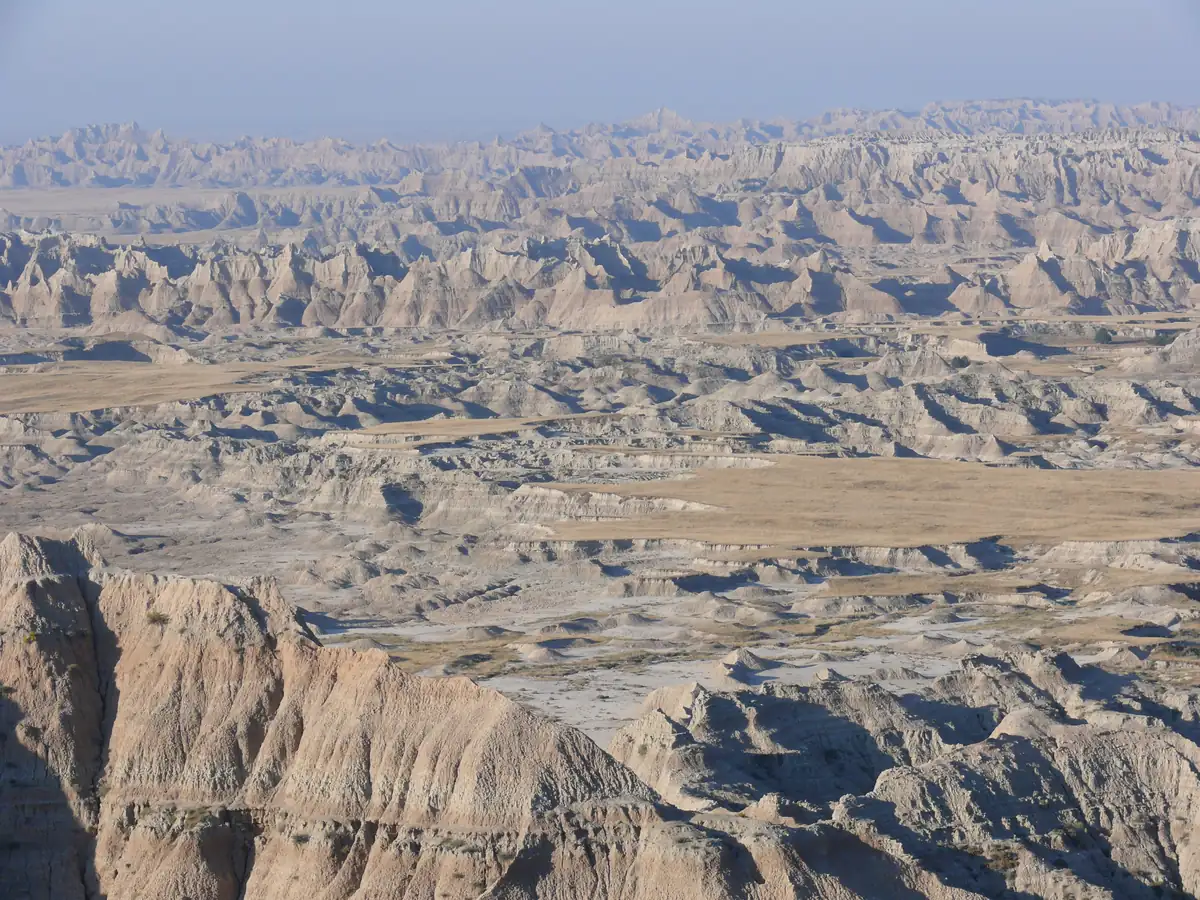
South Dakota’s October is a hinge month. The Black Hills aspens finish their show in the first week, the prairie turns the color of rust and straw, pheasant season opens on the third Saturday, and the first big pushes of snow geese reach the northeast lakes. On the Missouri, chinook salmon swim up a concrete ladder on Lake Oahe to be spawned by hand. Most of the state has usually had its first freeze by October 1, yet Sioux Falls often waits until mid-month, and the Hills can get a foot of snow in a single storm. What follows is organized by region and dated wherever a source allows.
Start here

- The pheasant opener, and what it means for everyone else. Resident hunters get public land to themselves October 10–12, and the traditional season opens statewide on Saturday, October 17, with shooting from 10 a.m. Central Time. Last season hunters took about 1.35 million roosters, the best harvest in years. If you are not hunting, that weekend is a good time to wear orange on public ground or to walk a city trail instead.
- Salmon, geese and elk. All month, chinook salmon climb the fish ladder at Whitlock Bay on Lake Oahe, west of Gettysburg, and an observation deck lets you watch. Snow geese build on the northeast lakes as the month goes on, and Wind Cave rangers lead elk-bugling evenings through October 10.
- Jupiter disappears, then the Hunter’s Moon. Around 3 a.m. Central on Tuesday, October 6, a thin waning moon climbs out of the eastern horizon with Jupiter tucked against it and swallows the planet; East River gets both the vanishing and the return, very low. Later come the Orionid mornings of October 21–22 and a Hunter’s Moon that turns full late on Sunday the 25th.
For the Naturalist’s Field Journal: log your first Harris’s sparrow and first skein of snow geese under “birds I have seen,” put a bugling bull or a rooster cackling at first light on the map of sounds, and press a bur oak acorn beside a ponderosa cone on the seeds-pods-and-cones plate. Give one cottonwood a tree-through-the-seasons page and write the date of the first hard freeze in the daily field log.
Regions used below: Black Hills; West River prairie and the Badlands; Missouri River and the big reservoirs; Glacial Lakes and the northeast; Southeast and Sioux Falls.
When is fall color in the Black Hills and across South Dakota?
The Black Hills turn first, and this year they turned early. The Spearfish Chamber’s leaf reporter, a local writer who has tracked Spearfish Canyon since 2020, puts the usual peak between September 23 and October 3 and warned that this year’s hot, dry late summer might bring it early. Her September 28 report called the canyon 100 percent, “high to peak color,” with leaf drop already moderate, neon-yellow ash from Rim Rock Lodge to Bridal Veil Falls, and the best aspens farther up Scenic Byway 14A past Spearfish Canyon Lodge. Go in the first few days of October; after that, count on bare birch and gold on the ground.
-
Aspen and birch in the high Hills
Late September into the first week of October · Spearfish Canyon, the upper byway near Savoy and Roughlock Falls, the Custer and Hill City high country
Quaking aspen and paper birch are the gold in a forest that is otherwise dark ponderosa pine, so the color comes in patches rather than whole hillsides. The 19-mile byway has frequent pull-offs, and the Roughlock Falls trail is about two miles round trip. The higher you go, the earlier the leaves fall: Hill City’s median first freeze is September 10, and a hard freeze ends the show overnight.
-
Cottonwoods and bur oaks along the rivers
Mid-October, later in the southeast · Missouri River bottoms, the Big Sioux and James valleys, Newton Hills and Good Earth state parks
East of the Hills, color follows the rivers: cottonwoods yellow along the Missouri, and bur oaks at Newton Hills and Good Earth turn bronze and hang on. No one forecasts a peak for them; mid-October is a fair guess, with the first hard freeze as referee.
-
The prairie’s own color
All month · Grasslands statewide; the Outdoor Campus prairie in Sioux Falls; Buffalo Gap and Fort Pierre national grasslands
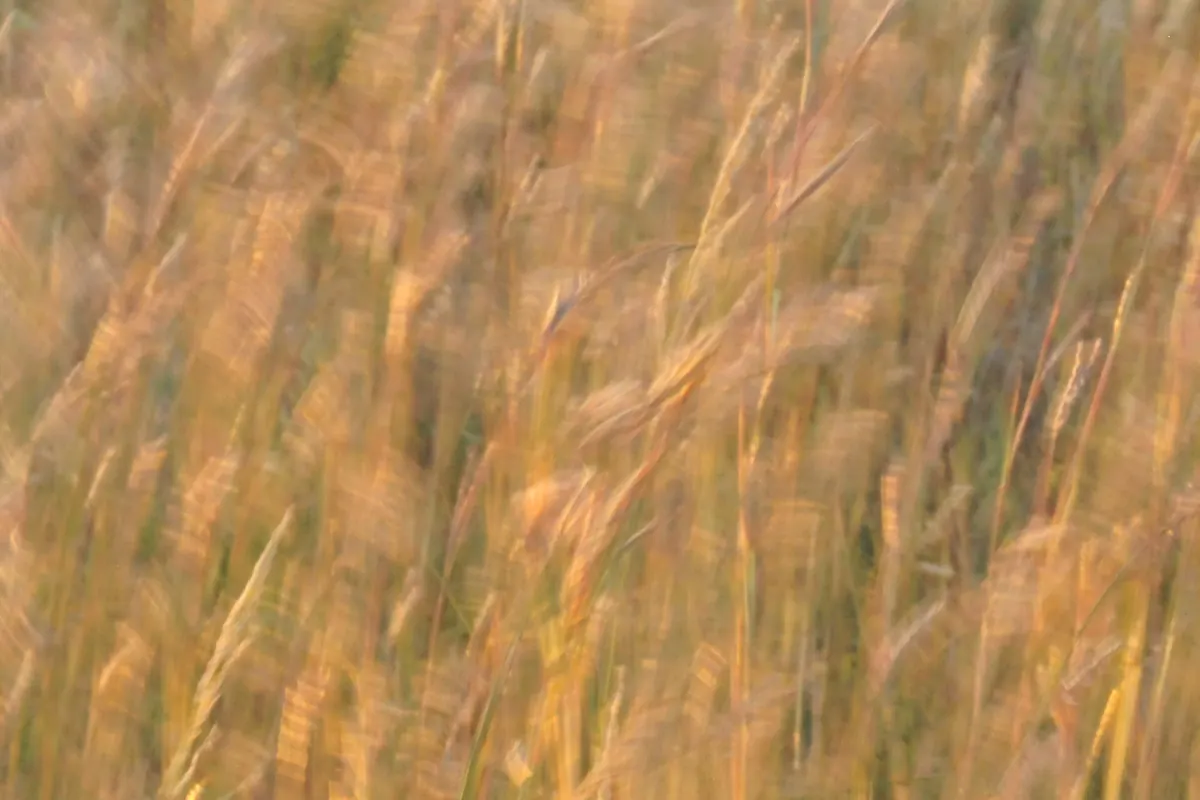
The grasses are the fall color most South Dakotans drive past. Big bluestem, the tallgrass whose three-part seed head earned it the name turkeyfoot, can reach eight feet, and its fall color is what the Wildflower Center calls “maroonish-tan.” Little bluestem goes coppery, switchgrass pale gold, and the sumac on the draws a hard red. A low-sun evening on a mixed-grass slope is what the colours-of-the-day plate is for.
Before the drive, check how long the light will last: the Field almanac gives sunset and twilight for any address, and in October the days here shrink by close to three minutes every day.
When does pheasant season open in South Dakota in 2026?
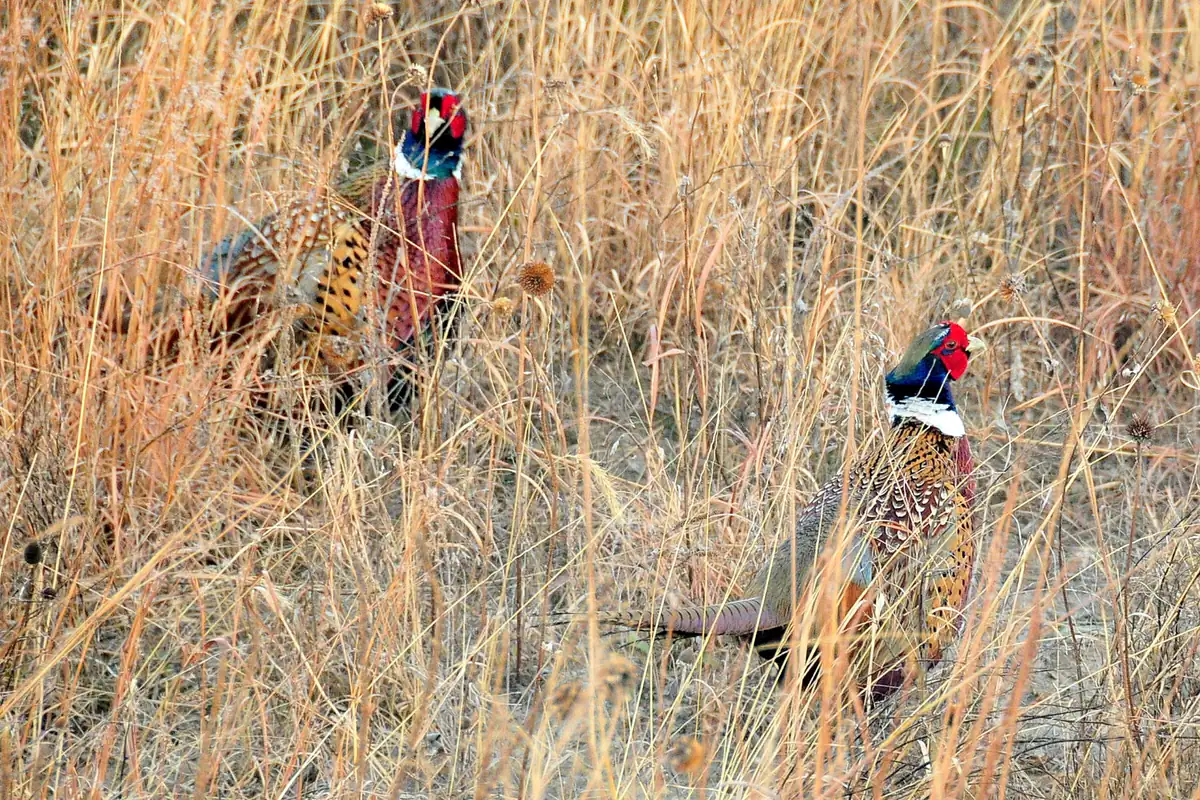
Pheasants are South Dakota’s signature October animal, and the season is the state’s biggest outdoor event of the year. Game, Fish and Parks sets three windows for 2026: a youth and mentored season from September 26 to October 4, a resident-only season on public land October 10–12, and the traditional season from Saturday, October 17, through January 31. Shooting opens at 10 a.m. Central Time every day, statewide, which means 9 a.m. by the clock in Rapid City. The daily limit is three roosters.
-
Where the birds are
October through January · East-central South Dakota above all; the James River valley, Spink, Beadle and Brown counties
GFP’s 2026 upland outlook says pheasants “are most abundant in east-central South Dakota,” where idle grass, row crops and winter cover sit side by side. Nearly 140,000 hunters took more than 1.35 million roosters in 2025, the highest harvest in recent history, and averaged 9.7 birds each, the best since 2011; preserves added another 400,000. The agency adds that more roosters are harvested in two weeks of October than any other state takes in a full season. Redfield, which calls itself the Pheasant Capital of the World, traces its claim to the 1908 release of ringnecks in Spink County, the state’s first successful one.
-
Watching rather than hunting
Dawn and dusk, all month · Road ditches, shelterbelts, cattail sloughs and food plots
You do not need a gun to enjoy them. A rooster’s crow is a harsh two-note cackle with a drum of wings after it, loudest just after sunrise, and the birds come out to gravel roads and field edges early and late in the day to pick grit and waste grain. The Outdoor Campus in Sioux Falls holds an Intro to Pheasant Hunting class, on pheasants and hunting safety for all ages (8 and up recommended), from 10 to 11:30 a.m. on opening day, October 17.
-
Prairie grouse and partridge
Open since September 19 · Grasslands and field edges statewide
Sharp-tailed grouse and prairie chickens share a September 19–January 31 season, as do gray partridge. GFP counted about 17,000 grouse hunters and 53,000 grouse taken in 2025.
What birds are migrating through South Dakota in October?
October is the Central Flyway’s busy month over the Dakotas: warblers and shorebirds give way to ducks, geese and sparrows. This year a dry summer shapes the picture: GFP’s September 21–25 waterfowl report found that in the southeast “over half of the sloughs were dried up” before recent rains, and around Pierre many ponds were dry or very low, so local duck production was poor and scouting matters more than usual.
-
Snow geese at Sand Lake and the Glacial Lakes
Building from mid-October; the biggest flocks often late October into November · Sand Lake National Wildlife Refuge, 27 miles northeast of Aberdeen; Waubay; the lakes around Webster and Watertown
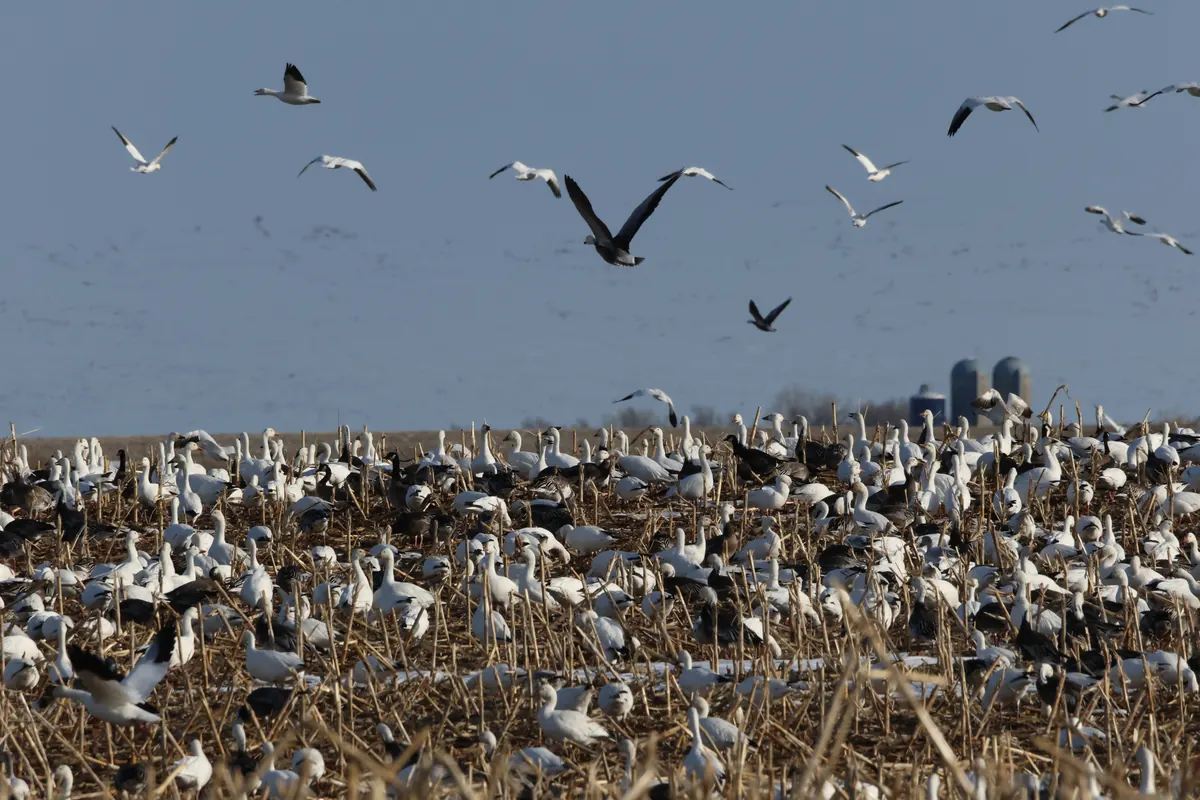
Sand Lake, a Wetland of International Importance on the James River north of Columbia, is the place to watch the white geese come in. The refuge says its fall snow goose peaks “may reach peaks of 500,000 individuals,” though spring is bigger still. Timing depends on the weather to the north; the biggest flights tend to ride the first hard cold fronts at month’s end or in November. Note that the refuge’s Wildlife Drive and interior roads close to the public in mid-October, so late-season goose watching happens from Highway 10, the county roads and the headquarters area on Brown County 16.
-
Trumpeter swans at Lacreek
Arriving through fall, staying the winter · Lacreek National Wildlife Refuge, about 13 miles southeast of Martin
Lacreek provides “critical wintering habitat for the High Plains trumpeter swan population.” A 4.5-mile auto tour route starts at the visitor center; listen for the swans’ horn-like calls before you find them.
-
Harris’s sparrow, the Plains specialist
Passing through in October · Shelterbelts, brush piles, farmyards and city parks, especially East River
This big sparrow, with a black face and a pink bill, nests only where the northern forest gives way to tundra in north-central Canada and winters on the southern Great Plains. Audubon notes that it leaves the nesting grounds by early September, “travels slowly,” and reaches its wintering range mostly in November, which makes the Dakotas its October corridor. Look for it with white-crowned sparrows and juncos under feeders and along hedgerows.
-
Bald eagles on the Missouri
A few late in October; in numbers by winter · Below Fort Randall Dam near Pickstown; Eagle Drive at Karl E. Mundt National Wildlife Refuge
The river below Fort Randall stays open when everything else freezes, and bald eagles winter there; the Karl E. Mundt refuge counts 100 to 300 in the area. The refuge itself is closed to protect the roost; watch from Eagle Drive. Expect only early arrivals in October.
-
Sandhill cranes overhead
Late September through October · Mostly over central and western South Dakota
Cranes cross the state in long, high, rattling lines on their way south. The crane season, which runs September 26 to November 22 in the open unit, tells you where they are expected. The Outdoor Campus in Rapid City has a talk on crane behavior on October 20.
Counting days: eBird’s worldwide Big Day falls on Saturday, October 10, The Big Sit is set for that weekend (check its site for the rules), and Project FeederWatch opens November 1, so hang the feeder now and learn the regulars.
Where can you hear elk bugle and see bison in South Dakota in October?
The southern Hills and the Badlands hold this month’s big-animal stories, plus one of the rarest mammals on the continent.
-
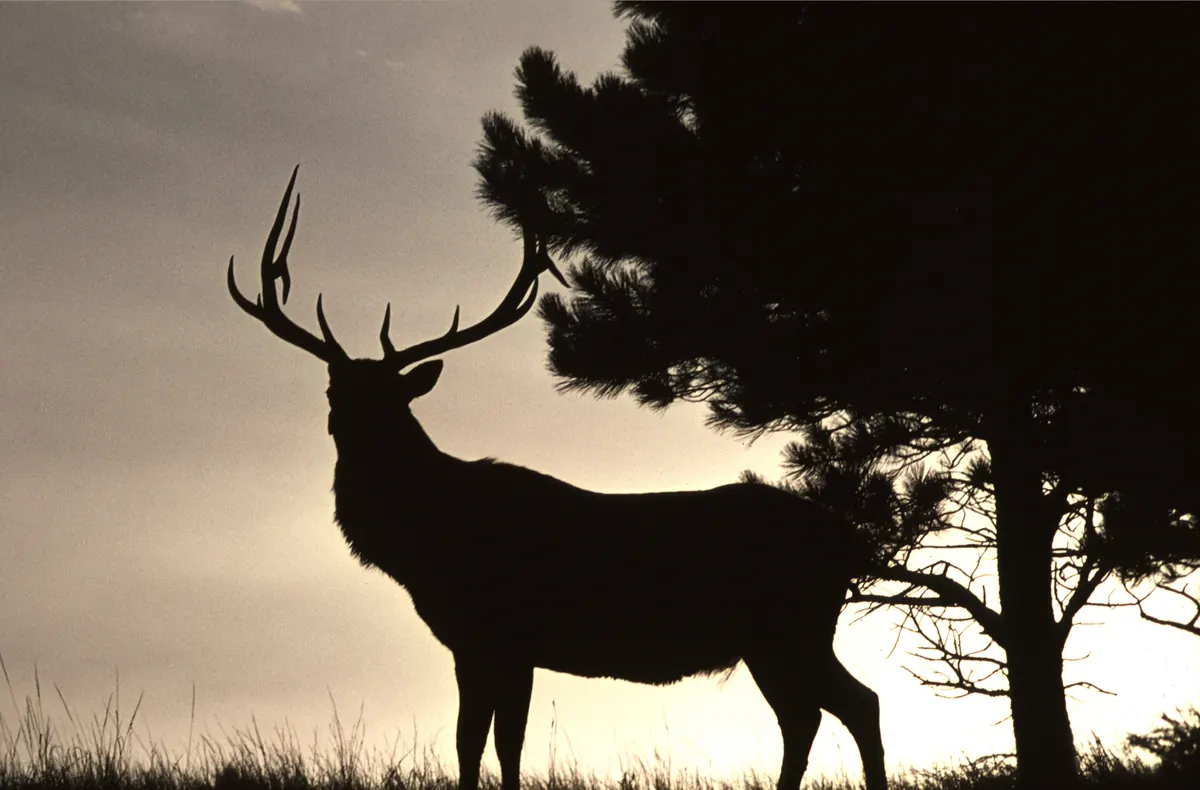
Elk bugling at Wind Cave
Monday, Wednesday and Saturday evenings through October 10, 7 p.m. · Wind Cave National Park visitor center lawn, north of Hot Springs
The park describes the high, wailing whistle of a bull elk as the sound that “heralds the arrival of fall and the elk’s mating season,” and the rut runs through September and October. Rangers meet visitors on the visitor center lawn at 7 p.m. on Mondays, Wednesdays and Saturdays through October 10, give a short talk, then drive to a pullout to listen. Dress warmly and bring a light and something to sit on. On your own, watch the edges of clearings early and late, and do not spotlight elk or play recordings to call them.
-
Custer State Park after the roundup
All month · Wildlife Loop Road, Custer State Park
The 2026 Buffalo Roundup, on September 25, moved a herd of about 1,300 bison toward the corrals. GFP says crews “will work the remainder of the herd in October,” testing, branding and sorting, so the herd you see along the Wildlife Loop this month may be split into groups and moving. A non-trophy bison hunt, for residents who drew the license, opens October 5.
-
Bison in the Badlands
All month · Sage Creek Rim Road and the Badlands Loop Road
Badlands National Park keeps about 1,200 bison, brought back in 1963 from Theodore Roosevelt National Park, and it holds its own roundup each fall.
-
Black-footed ferrets in Conata Basin
At night, all year; young ferrets on their own by fall · Prairie dog towns in and around Conata Basin, south of the Badlands Wall
Between 1996 and 1999, 147 black-footed ferrets were released into Conata Basin, and the park says about 200 to 300 now live in the wild across their whole range. Ferrets sleep up to 21 hours a day and hunt prairie dogs, which make up about 90 percent of their diet, at night. Kits are on their own at about 90 days old, so by autumn the year’s young are out finding towns of their own. Seeing one takes luck.
-
Deer and pronghorn
All month; deer activity building toward November · Statewide; pronghorn West River
Pronghorn are easiest to see from the road West River, and the rifle season (October 3–18) keeps them wary. White-tailed and mule deer bucks begin rubbing saplings and pawing scrapes as the November rut approaches. The dusk-and-dawn watch plate is built for exactly these hours.
What is happening on the Missouri River in South Dakota in October?
Two of the state’s oddest fisheries happen only in October.
-
Chinook salmon at Whitlock Bay
All of October · Whitlock Bay Spawning and Imprinting Station, Lake Oahe, about 18 miles west of Gettysburg
Chinook salmon cannot reproduce on their own in Lake Oahe, so GFP runs them up a concrete fish ladder at Whitlock Bay and spawns them by hand. The agency says the station “will be in operation during the month of October,” collecting 250,000 to a million eggs in a season, which become about 250,000 young salmon stocked the next year. You cannot enter the fenced work area, but “the salmon ladder may be viewed from an observation deck” reached by a path along the south fence. A salmon climbing a ladder in the middle of the Great Plains is worth the drive.
-
Paddlefish below Gavins Point
October only · The Missouri from Gavins Point Dam downstream to the Big Sioux River
GFP issues a limited number of licenses to snag or bow-fish paddlefish “between Gavins Point Dam and the Big Sioux River during the month of October.” The paddlefish, with its long, paddle-shaped snout and a skeleton mostly of cartilage, is one of the oddest fish in the river; from the shore at the dam tailwaters you can sometimes watch anglers fight one.
-
Walleye on the reservoirs
As the water cools · Lake Oahe, Lake Sharpe, Lake Francis Case
Anglers expect walleye to move shallower as the reservoirs cool, and fall tournaments on Francis Case (October 10) and Lewis and Clark (October 31) show how many anglers stay out. Write the water temperature next to every catch in the daily field log.
When is the first frost and freeze in South Dakota?
For most of South Dakota the typical first freeze is already behind us when October begins. Aberdeen’s median date is September 26, Watertown Regional Airport’s September 30, and at Hill City, high in the Hills, the median is September 10. The late holdouts are the southeast and the Missouri valley: Pierre Regional Airport reaches its median on October 3, Yankton 2 E on October 11, and the Sioux Falls Airport not until October 13, with a one-in-ten chance of staying above freezing until October 28. In Rapid City the airport freezes a week sooner than the station in town (medians of October 1 and October 8), probably because cold air pools on the open plain east of the city on still nights. Expect a frosted windshield earlier than that, on still, starry nights when the official thermometer has not yet dipped below the upper 30s.
| Station | One year in ten | Median | Nine years in ten |
|---|---|---|---|
| Hill City (central Black Hills) | Aug 29 | Sep 10 | Sep 26 |
| Lead (northern Black Hills) | Sep 15 | Sep 29 | Oct 13 |
| Rapid City (in town) | Sep 26 | Oct 8 | Oct 23 |
| Mobridge Municipal Airport (north-central, Missouri River) | Sep 21 | Oct 4 | Oct 17 |
| Pierre Regional Airport (central) | Sep 20 | Oct 3 | Oct 17 |
| Aberdeen (James River valley) | Sep 14 | Sep 26 | Oct 7 |
| Watertown Regional Airport (Glacial Lakes) | Sep 19 | Sep 30 | Oct 13 |
| Sioux Falls Airport (southeast) | Sep 28 | Oct 13 | Oct 28 |
| Yankton 2 E (Missouri valley, southeast) | Sep 27 | Oct 11 | Oct 23 |
Every station in the state, including your nearest one, is listed on the South Dakota frost dates page. Note the morning the birdbath first skins over; ten Octobers of that date describe your own yard better than any airport.
How much daylight does South Dakota lose in October?
About an hour and a half over the month, more in the north. Lemmon, on the North Dakota line, loses 93 minutes between October 1 and October 31; Aberdeen loses 92, Sioux Falls 85 and Yankton 84. By the clock, sunrise in Sioux Falls slides from 7:25 to 8:01 a.m. and sunset from 7:08 to 6:19 p.m. Rapid City, on Mountain time, goes from a 6:51 a.m. sunrise and 6:33 p.m. sunset to 7:28 a.m. and 5:44 p.m. Standard time comes back when 2 a.m. Sunday, November 1, turns into 1 a.m., and the drive home from work slips into dusk.
| City | Oct 1 | Oct 31 | Lost | Per day |
|---|---|---|---|---|
| Lemmon | 11 h 41 m | 10 h 08 m | 93 min | 3.1 min |
| Aberdeen | 11 h 42 m | 10 h 10 m | 92 min | 3.1 min |
| Watertown | 11 h 42 m | 10 h 12 m | 90 min | 3.0 min |
| Pierre | 11 h 43 m | 10 h 15 m | 88 min | 2.9 min |
| Rapid City | 11 h 42 m | 10 h 16 m | 86 min | 2.9 min |
| Mitchell | 11 h 43 m | 10 h 17 m | 86 min | 2.9 min |
| Sioux Falls | 11 h 43 m | 10 h 18 m | 85 min | 2.8 min |
| Yankton | 11 h 44 m | 10 h 20 m | 84 min | 2.8 min |
Any ranch, farm or town address works in the Field almanac, which lists that spot’s daily light.
What is October weather like in South Dakota, and what will El Niño mean this winter?
October is usually a dry, bright, windy month on the prairie, with warm afternoons and cold nights. NOAA’s 1991–2020 normals give an average October high of about 61 °F at Sioux Falls and Pierre, 60 °F at Rapid City, 59 °F at Aberdeen and 56 °F at Watertown, and the average lows run from about 33 °F at Aberdeen and Rapid City to 38 °F at Sioux Falls. Normal precipitation runs from 1.41 inches at Rapid City to 2.36 at Sioux Falls. Normal October snowfall is only 1.3 to 1.7 inches across the eastern and central cities and 3.0 inches at Rapid City, but it is 19.3 inches at Lead, at 5,100 feet in the northern Hills, where October is a winter month in all but name.
The state enters the month dry. The September 22 Drought Monitor map had roughly two-thirds of the state in moderate or worse drought, and a quarter of it severe or worse. Cured grass plus wind means grass-fire weather.
October can also turn violent. On October 3–5, 2013, the storm the Weather Channel named Atlas began as rain and turned to heavy, wet snow; the Rapid City weather office recorded 55 inches at Lead and an official 23.1 inches at Rapid City, with gusts of 50 to 70 mph. The same office counts livestock losses as the storm’s most staggering toll: thousands of cattle, sheep and horses, and even bison. Lead averages almost two inches of snow even in September, but a plains blizzard this early is rare.
Looking past October, Pacific warming dominates. Odds of El Niño strengthening into a very strong event by winter exceed 90 percent, according to NOAA’s ENSO discussion dated September 10. NOAA’s Climate.gov describes El Niño’s winter pattern as roughly the reverse of La Niña’s and stresses that its influence is “a matter of probability, not certainty,” which is exactly what South Dakota’s record shows. We counted ten winters since 1957 when the Oceanic Niño Index peaked at 1.5 or more, using NOAA station records: Aberdeen came in warmer than its average for the thirty winters from 1990–91 to 2019–20 in eight of them and had less snow than average in all ten; Pierre and Rapid City were short of snow in nearly every one; Sioux Falls, by contrast, got more snow than average in six of the ten, including big snow years in 1982–83, 2009–10 and 2015–16. In the last strong event, 2023–24, the state climatologist reported eastern South Dakota running 15 to 20 °F above average for the first three weeks of February and a “snow drought” in the Black Hills. So a mild, thin-snow winter is the better bet west and north, with Sioux Falls less predictable. October itself usually shows little of it; El Niño’s grip tightens toward midwinter, and this month’s weather belongs to the fronts. NOAA’s winter outlook comes out in mid-October.
Our Weather now page covers this week, which in October is usually the week that matters.
What is in South Dakota’s night sky in October?
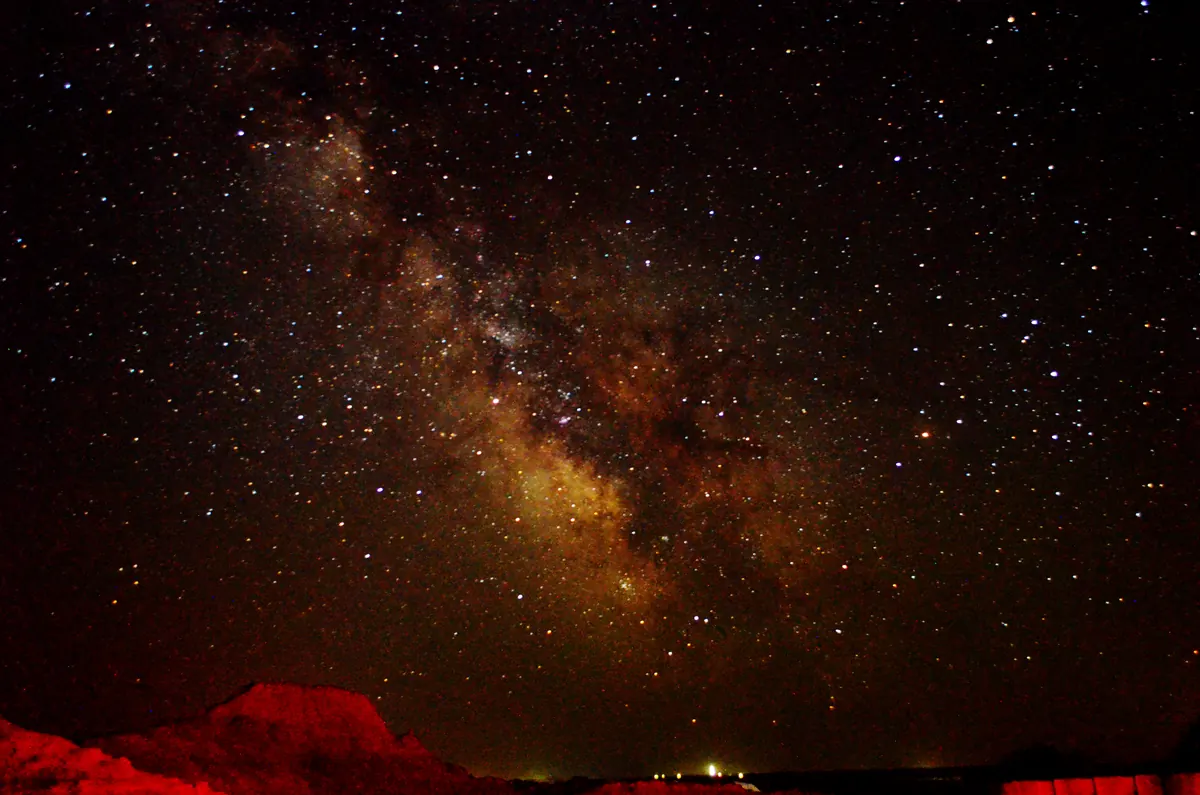
Dry air and long nights make October a fine month for the stars, and West River skies are among the darkest in the middle of the country. The Badlands’ ranger night-sky viewings end with September, so bring your own blanket; the new moon of October 10 gives the darkest evenings.
-
Jupiter slips behind the moon
Early morning, Tuesday, October 6 · Just above the eastern horizon; find a hilltop or open field
East River, the crescent clears the horizon a little before 3 a.m. CDT (2:52 at Sioux Falls, 2:55 at Aberdeen), Jupiter beside it. The International Occultation Timing Association’s nearest listed sites give the timing: at Sioux City the planet vanishes about 3:24 a.m. CDT with the moon just 4 degrees high and comes back out about 4:13, 13 degrees high; Minneapolis, a little higher at 8 and 16 degrees, is a fair guide for the northeast. In Rapid City the moon rises at 2:18 a.m. MDT and the disappearance, at 2:30, happens barely a degree above the skyline, so Black Hills watchers should aim for the reappearance near 3:10 a.m. MDT, 8 degrees up.
-
Saturn all night
Opposition October 4; the moon alongside October 23–24 · East at dusk, south at midnight
Opposition falls on the 4th, so Saturn rises around sundown and sets around sunup, a pale gold dot in an empty stretch of sky; any backyard telescope will show its rings. A fattening moon parks close by on the 23rd and 24th.
-
Morning planets; Venus bows out
Mars at the Beehive on the morning of October 11 · East before dawn; Venus in the west at dusk only in early October
Before sunrise Jupiter outshines everything in the east, with fainter, ruddy Mars above it; on the 11th the red planet drifts through the Beehive cluster, which binoculars frame nicely. Venus lingers low in the evening glow for only the first few days of the month before sliding between Earth and the sun (inferior conjunction) on October 23.
-
Two meteor showers
Draconids on the evening of the 8th; Orionids before dawn October 21–22 · Anywhere away from town lights
The Draconids come from the north in early evening and are usually few and slow, a good first shower for a child who cannot stay up late, and this year the evening sky is moonless. The Orionids, dust from Halley’s Comet, run from October 2 into early November their richest mornings being the 21st and 22nd. Wait out the moon: on the 22nd it sets at 3:45 a.m. CDT at Sioux Falls, 3:51 at Aberdeen, 4:00 at Pierre and 3:12 a.m. MDT at Rapid City, which leaves a dark stretch before morning twilight.
-
The Hunter’s Moon
Evenings of Sunday, October 25, and Monday, October 26 · Rising in the east around sunset
Full at 11:12 p.m. CDT, 10:12 MDT, on the 25th, so both evenings show a full-looking disk. Sioux Falls sees it rise at 5:53 p.m. on the 25th, before its 6:28 sunset, and at 6:23 p.m. the next night; Rapid City’s moonrise is 5:18 p.m. MDT, then 5:48. It is not a supermoon.
| Phase | Date | Central time | Mountain time |
|---|---|---|---|
| Last quarter | Saturday, Oct 3 | 8:25 a.m. CDT | 7:25 a.m. MDT |
| New moon | Saturday, Oct 10 | 10:50 a.m. CDT | 9:50 a.m. MDT |
| First quarter | Sunday, Oct 18 | 11:12 a.m. CDT | 10:12 a.m. MDT |
| Full moon (Hunter’s Moon) | Sunday, Oct 25 | 11:12 p.m. CDT; full-looking on the evenings of Oct 25 and 26 | 10:12 p.m. MDT |
| Last quarter | Sunday, Nov 1 | 2:28 p.m. CST | 1:28 p.m. MST |
Our Today’s sky page forecasts tonight’s clouds hour by hour; look up moonrise for your own county on the moon phases page.
What is blooming, seeding and crawling in South Dakota in October?
-
The last asters
Until a hard freeze; aromatic aster into late October · Prairie remnants, road ditches, pastures
SDSU Extension lists nine native asters that flower in South Dakota from August to October and singles out aromatic aster as “one of the last to bloom,” with flowers into late October. Asters put out many heads at once, so a late bumblebee or a straggling butterfly can feed in one spot and save energy. Monarchs, by contrast, are gone: By Monarch Watch’s latitude table the peak passage over South Dakota ends by mid-September, earlier in the north. Any October monarch is a late one and worth a report to Journey North.
-
Acorns, cones and fruit
All month · Bur oak woods in the southeast and the Hills; chokecherry and buffaloberry thickets; ponderosa pine forest
Bur oak acorns, with their shaggy caps, are down in the southeast river woods and along the eastern edge of the Hills. Ponderosa pine cones are opening and dropping their winged seeds.
-
Woolly bears
Warm afternoons all month · Roads, sidewalks and trail edges
Woolly bears, the young of the Isabella tiger moth, are crossing roads in search of leaf litter to freeze in for the winter. SDSU Extension reports that it can survive temperatures reported as low as −90 °F with a natural antifreeze. As for forecasting, Extension points out the rusty middle band grows as the caterpillar ages and records the summer behind it, not the winter ahead.
-
Prairie rattlesnakes heading for the dens
Warm days until the cold settles in · Badlands, Missouri breaks, rocky West River slopes
Prairie rattlesnakes spend the winter in communal dens under rock outcrops or in old prairie dog burrows, sometimes with other snake species, and Badlands National Park notes they stay active on warmer days until winter sets in. Watch where you put hands and feet on sunny rock, and if you are bitten, call 911.
-
Lady beetles and bugs on the south wall
Warm spells after the first cold snap · Sunny south and west sides of houses
Multicolored Asian lady beetles, which SDSU Extension says make up about a third of all lady beetle photos sent to the Lost Ladybug Project, tend to gather on warm walls on sunny afternoons after the first cold nights, hunting for cracks to spend the winter in. Seal gaps around windows and vacuum, rather than crush, the ones that get in.
What outdoor events can South Dakota families do in October 2026?
- Saturday, October 3: Newton Hills Fall Festival, near Canton. The 26th annual festival has a craft fair and children’s make-and-take crafts from noon to 5 p.m. with pumpkin-throwing trebuchets, then a self-guided two-mile walk through the woods with musicians along the path from 7 to 9 p.m.; the pumpkin-decorating contest takes entries from 10 a.m. to noon.
- Saturday, October 10: Hartford Beach Harvest Fest on Big Stone Lake, 4 to 7 p.m., with a pumpkin patch, hayrides and cider; no registration. It is also the day of eBird’s global bird count.
- Tuesday, October 13: Raptors and owl pellets at the Outdoor Campus in Rapid City, 10 to 11:30 a.m., ages 6 and up, with registration.
- October 16 and 17: Halloween Night Hike, “Tatanka Story,” in Custer State Park. Guided one-hour hikes along the creek trail and through the Game Lodge campground leave every 15 minutes, 5:30 to 8 p.m. Friday and 2 to 5 p.m. Saturday; the hike is free with a park license, but you must reserve by phone at 605-394-2693. Costumes welcome.
- Saturday, October 24: Trick or Treat Trails at Big Sioux Recreation Area in Brandon, 3 to 6:30 p.m., and a trunk-or-treat with hayrides and a spooky trail at Richmond Lake near Aberdeen from 2 p.m.
- Late October: Our Living Prairie at the Outdoor Campus in Sioux Falls, a hands-on look at soil, roots and prairie animals for ages 12 and up. The registration listing gives Thursday, October 29, 10 to 11:30 a.m., while its description says October 22; confirm with the Outdoor Campus (605-362-2777).
- Saturday, October 31: Bat Appreciation at the Outdoor Campus in Sioux Falls, 10 a.m. to noon, all ages, on South Dakota’s 13 bat species, with a bat house to build (one per household); or Mortimer’s Monstrous Halloween at Oakwood Lakes near Bruce, 2 to 5 p.m., with trolley rides and an apple slingshot.
- Citizen science. Send any late monarch to Journey North, submit a checklist on October 10, and enroll in Project FeederWatch, whose season begins November 1. The South Dakota Ornithologists’ Union holds its fall meeting in Yankton beginning November 6.
Most state park events require a park entrance license, and several of the Outdoor Campus classes fill up, so register early. The full statewide calendar is in GFP’s Go Outdoors event search. Neighboring states have their own October guides on our nature pages, and a child who wants to write it all down can use the Naturalist’s Field Journal.
Safety notes for October in South Dakota
- Hunting seasons and the orange rule. South Dakota law requires anyone hunting big game other than turkey or mountain lion with a firearm to wear at least one fluorescent orange or fluorescent pink garment above the waist: a hat, cap, shirt, jacket, vest, coverall or poncho. In October that covers the antelope rifle season (October 3–18), the Black Hills and Custer State Park elk rifle season (October 1–31) and the Custer State Park non-trophy bison hunt (from October 5). For pheasants, GFP calls orange for youth hunters “advisable” rather than required. Archery deer has been open since September 1, and the firearm deer seasons start with the Black Hills on November 1, West River on November 14 and East River on November 21. Duck season is open in the Low Plains North and Middle zones since September 26, opens in the High Plains on October 10 and in the Low Plains South on October 24. If you hike on walk-in areas, game production areas or national grasslands this month, wear orange too, and give your dog an orange vest.
- Deer on the road. State Farm’s latest claims data give South Dakota drivers a 1-in-86 chance of an animal collision in a year, 10th highest in the country, and nationally November, October and December are the three worst months. Slow down at dusk and dawn, and brake rather than swerve.
- Early snow and cold nights. Remember Atlas: an October storm can drop feet of snow in the northern Hills and put a blizzard on the plains. Carry a winter kit in the car from now on, and check the forecast before a long drive on U.S. 212 or I-90 West River.
- Fire, snakes and bison. With much of the state in drought, one spark from a chain or a hot exhaust can start a grass fire; park off tall grass. Rattlesnakes are still out on warm afternoons, and bison and elk in the parks are faster and more dangerous than they look; give bison at least 100 feet.
- Cold water. The reservoirs chill quickly in October, and a fall from a boat is a cold-water emergency. Wear the life jacket.
Sources
- South Dakota Game, Fish and Parks: 2026 Hunting and Trapping Handbook (season dates, fluorescent orange rule, shooting hours)
- South Dakota Game, Fish and Parks: 2026 upland outlook (pheasant and grouse season preview)
- South Dakota Game, Fish and Parks: fall waterfowl migration report, September 21–25, 2026
- South Dakota Game, Fish and Parks: Whitlock Bay salmon spawning station
- South Dakota Game, Fish and Parks: paddlefish seasons
- South Dakota Game, Fish and Parks: Custer State Park Buffalo Roundup, September 25, 2026
- Go Outdoors South Dakota: statewide event and class search (state parks and Outdoor Campus programs)
- Go Outdoors South Dakota: Newton Hills 26th annual Fall Festival, October 3, 2026
- Go Outdoors South Dakota: Newton Hills pumpkin decorating contest, October 3, 2026
- Go Outdoors South Dakota: Hartford Beach Harvest Fest, October 10, 2026
- Go Outdoors South Dakota: Raptors and Owl Pellets, Outdoor Campus Rapid City, October 13, 2026
- Go Outdoors South Dakota: Halloween Night Hike, Tatanka Story, Custer State Park, October 16–17, 2026
- Go Outdoors South Dakota: Intro to Pheasant Hunting, Outdoor Campus Sioux Falls, October 17, 2026
- Go Outdoors South Dakota: Sandhill Crane Behavior and Hunting, Outdoor Campus Rapid City, October 20, 2026
- Go Outdoors South Dakota: Trick or Treat Trails, Big Sioux Recreation Area, October 24, 2026
- Go Outdoors South Dakota: Trunk-or-Treat Halloween, Richmond Lake, October 24, 2026
- Go Outdoors South Dakota: Our Living Prairie, Outdoor Campus Sioux Falls (listing dated October 29, 2026)
- Go Outdoors South Dakota: Bat Appreciation, Outdoor Campus Sioux Falls, October 31, 2026
- Go Outdoors South Dakota: Mortimer’s Monstrous Halloween, Oakwood Lakes, October 31, 2026
- Spearfish Chamber of Commerce: 2026 Spearfish Canyon fall color report
- Spearfish Canyon: fall colors scenic drive (byway length, Roughlock Falls trail)
- Lady Bird Johnson Wildflower Center: big bluestem
- Lady Bird Johnson Wildflower Center: aromatic aster
- U.S. Fish and Wildlife Service: Sand Lake National Wildlife Refuge
- U.S. Fish and Wildlife Service: Sand Lake National Wildlife Refuge, visiting (Wildlife Drive season, directions)
- U.S. Fish and Wildlife Service: Lacreek National Wildlife Refuge
- U.S. Fish and Wildlife Service: Karl E. Mundt National Wildlife Refuge
- National Audubon Society: Harris’s sparrow field guide
- BirdsCaribbean: October Big Day 2026 (Saturday, October 10)
- The Big Sit! 2026 (October 10–11)
- Project FeederWatch: project overview (season starts November 1)
- South Dakota Ornithologists’ Union: calendar (fall meeting, Yankton)
- National Park Service, Wind Cave: elk bugling programs and fall cave tours (September 2, 2026)
- National Park Service, Wind Cave: elk
- National Park Service, Badlands: bison
- National Park Service, Badlands: black-footed ferrets
- National Park Service, Badlands: prairie rattlesnakes
- Amphibian Publishing: South Dakota frost dates (NOAA 1991–2020 normals)
- NOAA NCEI: U.S. climate normals, 1991–2020
- Applied Climate Information System (RCC-ACIS): station normals and monthly records used for our October and El Niño tallies
- U.S. Drought Monitor: South Dakota, map of September 22, 2026
- National Weather Service Rapid City: October 3–5, 2013, historic blizzard
- NOAA Climate Prediction Center: ENSO diagnostic discussion, September 10, 2026
- NOAA Climate Prediction Center: Oceanic Niño Index
- NOAA Climate.gov: how El Niño and La Niña affect the winter jet stream and U.S. climate
- SDSU Extension (state climatologist): spring 2024 climate outlook, on the 2023–24 El Niño winter
- U.S. Naval Observatory: sun and moon rise, set and transit times (data API)
- U.S. Naval Observatory: phases of the moon
- International Occultation Timing Association: occultation of Jupiter, October 6, 2026
- American Meteor Society: meteor shower calendar
- NIST: daylight saving time
- SDSU Extension: asters of South Dakota
- SDSU Extension: are those woolly bear caterpillars I see crawling?
- SDSU Extension: lady beetles of South Dakota
- Monarch Watch: peak migration dates by latitude
- Journey North: monarch sightings and fall roost reports
- Redfield Chamber of Commerce: Pheasant Capital of the World welcomes hunters for the 2026 season
- U.S. Fish and Wildlife Service: Sand Lake National Wildlife Refuge, about the refuge
- National Park Service, Badlands: enjoy the night sky (viewings May through September)
- State Farm: how likely are you to have an animal collision? (claims July 2025–June 2026)
- Photos via Wikimedia Commons; licenses and photographers are credited under each picture
