What to look for in nature in Utah this April
April is the month Utah’s wetlands fill and its slopes begin to bloom. On the Great Salt Lake, avocets, grebes and ibis arrive in numbers, while sage-grouse males strut at first light on the sagebrush flats. Yellow balsamroot climbs the Wasatch foothills, Zion’s bighorn ewes drop their lambs, and the Fruita orchards at Capitol Reef open apple and pear blossoms. Alta still gets about 50 inches of snow on average this month, but St. George’s average high is 75 °F. Here is the Utah April, from Cache Valley to Color Country.
Other months in Utah: October, November, December, January, February, March.
Start here

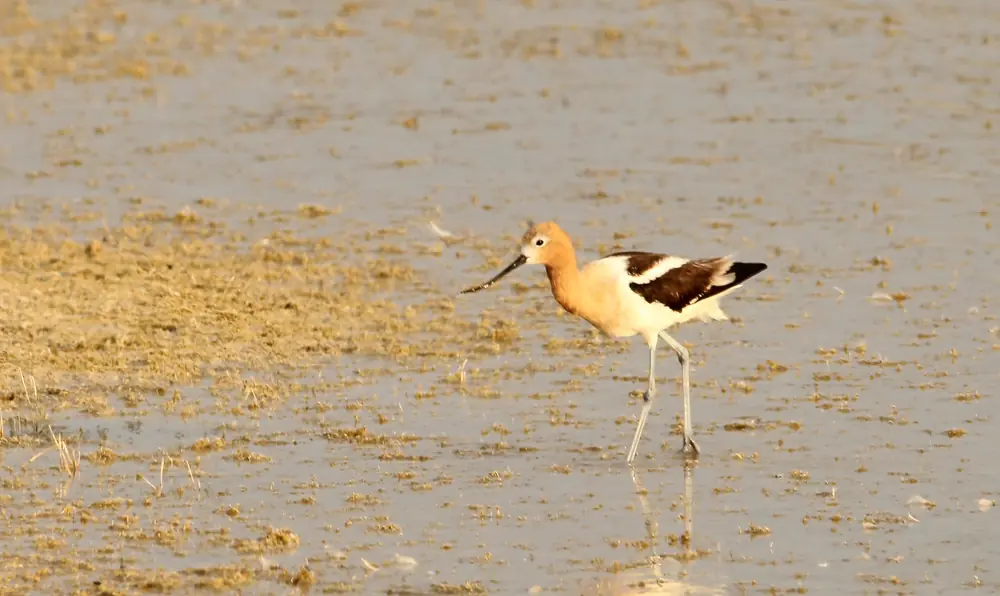
- Count the shorebirds at the Great Salt Lake. A late-April statewide survey in 2023 found American avocets the most numerous shorebird, with Wilson’s phalaropes second. Take binoculars to Farmington Bay or the Antelope Island causeway and see how many species you can name.
- Look for balsamroot on a foothill trail. Red Butte Garden lists arrowleaf balsamroot as blooming March through May and cutleaf balsamroot in April and May. A walk on the Bonneville Shoreline Trail is a good place to start.
- Watch the Pink Moon rise on April 20. The full Moon arrives at 4:27 p.m. MDT, so the best view comes that evening as it climbs out of the east. Moonless nights around the April 6 new Moon are ideal for stargazing.
In the Naturalist’s Field Journal, note the year’s first avocet, ibis or hummingbird on birds I have seen, and use the daily field log for blooms along your trail. Use nest observed for any nest you spot from afar, and the same place twice to compare a foothill slope in early and late April. Use tree through the seasons for the day an apple or cottonwood opens its first buds.
Regions used below: Cache Valley and the north; Wasatch Front and the Great Salt Lake; Wasatch Back and the Uintas; Uinta Basin; Central Utah and the high plateaus; Canyon Country and Moab; Color Country and St. George.
Which migrating birds crowd Utah’s wetlands in April, and where do you see them?
April is when the wetland migration turns from ducks to long-legged waders. A BYU Universe report puts the spring passage at about mid-February into early June, and BYU wildlife biologist Keeli Marvel explained that shorebirds stopping at the Great Salt Lake feed on brine shrimp and brine flies and can double their weight there before moving on. The refuge guide for Bear River says April is the month that grebes and wading birds show up, and the U.S. Fish and Wildlife Service’s seasonal guide for Fish Springs gives early April to mid-May as that refuge’s shorebird window.
-
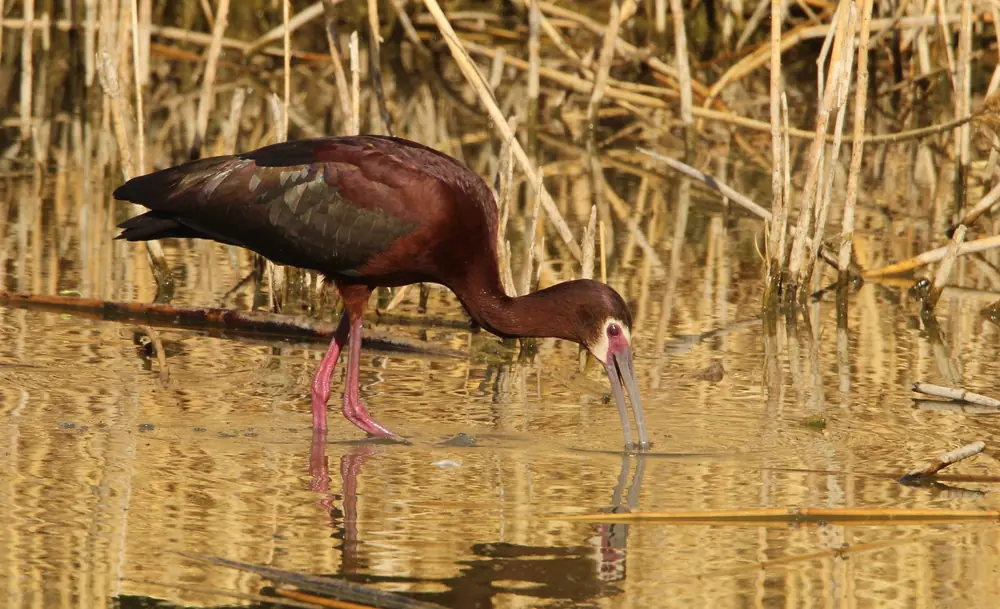
Bear River Migratory Bird Refuge
April, as the first wading birds and grebes arrive · West of Brigham City, Box Elder County; the auto tour route is about 12 miles
The refuge’s monthly guide names white-faced ibis, snowy egrets, black-crowned night herons, long-billed curlews and three kinds of grebe (eared, western and Clark’s) among the April arrivals, and says lesser yellowlegs, marbled godwits and long-billed dowitchers begin to gather. It also gives 40,000 to 50,000 as the usual spring count for all species together. May brings phalaropes and the first nesting broods.
-
Great Salt Lake shorebirds, Farmington Bay and Antelope Island
Late April, when a statewide count was run in 2023 · Farmington Bay Waterfowl Management Area, the Antelope Island causeway and shoreline, and the lake’s other shores
The DWR’s 2023 spring survey, run April 24 to 28 with 115 volunteers and biologists, counted 84,128 shorebirds at 69 sites on the Great Salt Lake, Utah Lake, Fish Springs and the Amalga Barrens. It logged 23 species and 447 snowy plovers, and American avocets were the most numerous bird, followed by Wilson’s phalaropes. Biologists thought the total was lower than expected because a long winter had held migration back. The DWR names Antelope Island for shorebirds and burrowing owls, and says Farmington Bay sees more than 300 species pass through in spring and fall.
-
Fish Springs National Wildlife Refuge
Shorebird migration runs early April to mid-May · Western desert of central Utah, far from the Wasatch Front
The refuge’s seasonal guide says each spring day can bring something new as birds return from the south, many in breeding plumage and showing courtship displays, and it describes the refuge as a stopover and breeding ground on the Pacific Flyway.
-
Utah Lake and the Provo River Delta
Goslings and ducklings appear late April to May · Utah Lake State Park and the Provo River Delta, Utah County
The DWR’s list of spring birding places names Utah Lake State Park and the delta for their ducklings and goslings, and mentions loons and other waterbirds on mountain reservoirs such as East Canyon, Hyrum, Echo and Pineview in the north, and Red Fleet, Steinaker and Big Sandwash in the Uinta Basin.
Spring festivals follow in May. The DWR’s 2026 listing shows its World Migratory Bird Day event at the Eccles Wildlife Education Center on May 9, 2026, and Davis County’s Great Salt Lake Bird Festival on May 14 to 17, 2026, with field trips that open for registration in mid-March. Neither organizer had listed 2027 dates when we looked in early October, so ask them and watch the festival’s website.
Is mid-April the peak for sage-grouse dancing in Utah?
Often, yes, though the timing slides with the weather. The DWR’s 2026 lek count report says the survey’s first counts usually come in March or early April and aim to catch the highest male attendance, which it says generally falls in mid-April, with the date varying across the state. Counting is done at least three times, about a week apart, between early March and mid-May. In 2026 a mild winter started the dancing before many crews began, so the peak may have been missed.
-
Greater sage-grouse on the lek
Mid-April is typical for the most males; mild or late springs shift it · Sagebrush flats across northern, central and southern Utah; many leks lie on private ground or closed roads
Males fan their tails and inflate their chests to strut for hens in the dim light before sunrise. The report also describes aerial searches: fixed-wing infrared flights on the mornings of April 5 to 8, 2026, helped look for leks in the southeastern part of the state. It describes populations that rise and fall on an eight- to ten-year cycle and had begun to decline after a recent high, with dry years limiting how many young birds survive.
-
Viewing a lek without disturbing it
From before dawn until the birds drift off · Public land with a DWR-approved viewing site, or a guided trip
The Bridgerland Audubon Society’s online calendar ran only through December 2026 when we checked in October, and listed no spring 2027 trips. Check the DWR calendar and your local Audubon chapter in March. A lek is best watched from a parked car with the engine off, because a person on foot can scatter the males and the hens may not return that day.
When do the Wasatch foothills turn yellow with balsamroot?
The foothills bloom later than the red-rock desert, and April is when the first big splashes of color climb the slopes above the Salt Lake and Utah valleys. The Natural History Museum of Utah’s botany collections manager, Allison Izaksonas, told the museum’s blog that a short walk on a Wasatch foothill path such as the Bonneville Shoreline Trail soon turns up the yellow, sunflower-like balsamroots.
-
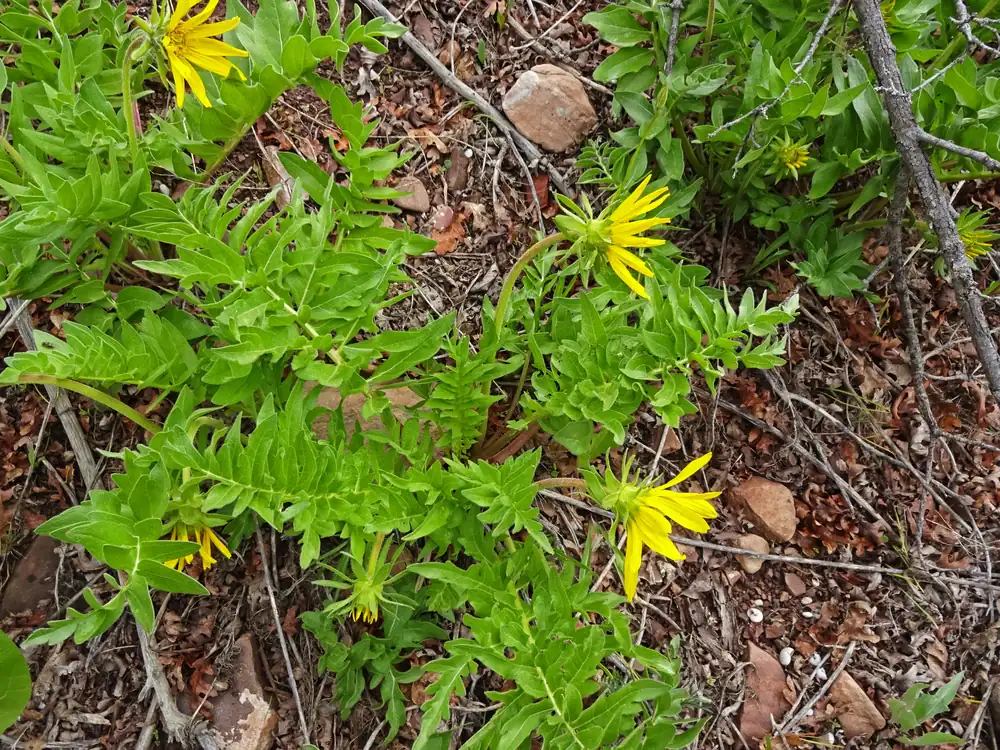
Arrowleaf and cutleaf balsamroot
Red Butte Garden lists arrowleaf balsamroot as blooming March through May and cutleaf balsamroot April and May · Dry foothills, benches and sagebrush slopes along the Wasatch Front
Izaksonas says these yellow plants are not actually sunflowers, though Red Butte Garden places both species in the aster family along with them.
-
Utah milkvetch and sagebrush bluebells
Bloom described by the museum in late April · Foothill trails and sagebrush slopes, especially along the Wasatch Range
Izaksonas singled out Utah milkvetch, a plant found mostly along the Wasatch Range, for its bright pink flowers, and sagebrush bluebells for their hanging blue bells. She reminded readers to forage ethically, which on public trails mostly means leaving native plants where they grow. If you do not know a plant, take a photo and let iNaturalist suggest a name.
Dry years thin the display, and a freeze after the flowers open can brown the petals. Look low on south-facing slopes first, since they warm and bloom early.
What blooms in Utah’s red-rock country in April?
Southern Utah’s peak wildflower weeks start in April. Moab’s April average high is 72.3 °F, Zion Canyon’s is 73.1 °F and St. George’s is 75.0 °F, per NOAA’s normals (see the table in the snow section). Two park pages give the best published timing.
-
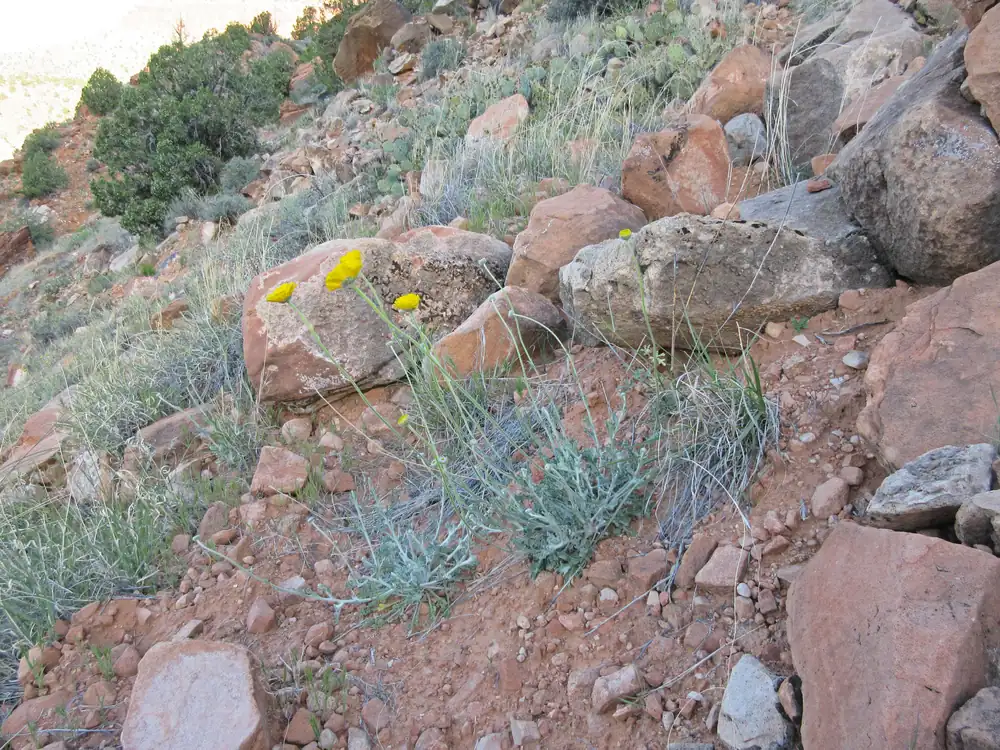
Desert marigold and slickrock paintbrush at Zion
Early to mid April, per park staff · Lower elevations of Zion National Park
The park’s wildflower page names desert marigold, and the eye-catching slickrock paintbrush as flowers that often surprise visitors with their color in early to mid April. The page adds that hanging gardens at seeps, such as along the Weeping Rock, Emerald Pools and Riverside Walk trails, keep flowers going in cooler microhabitats, with shooting star, golden columbine and scarlet lobelia among the summer bloomers.
-
Arches wildflower weeks
April and May are generally best, depending on rain · Arches National Park; the park runs an online flower guide sorted by bloom month
The National Park Service says desert seeds wait for enough seasonal rain before sprouting, so each year’s display differs widely. Stay on trails and bare rock while you look.
Park entry rules can shift between seasons, and nothing for spring 2027 had been announced in early October, so look at the park’s page before planning a Moab trip.
Which Utah animals are breeding, nesting or birthing in April?
March was the month of waking. April is the month of courtship and young. Four stories belong to this stretch of spring.
-
Utah prairie dog courtship at Bryce Canyon
Breeding runs late March through late April · Meadows near the visitor center and main road in Bryce Canyon National Park
Park Service biologists describe a breeding season from late March into late April, a gestation of about 30 days and litters of one to seven pups. Fewer than 60 percent of young survive their first year and only about 30 percent their second, which is why each colony matters. The park also holds an annual Utah Prairie Dog Day in May, a ranger-led event whose 2027 date and program you should confirm with the park.
-
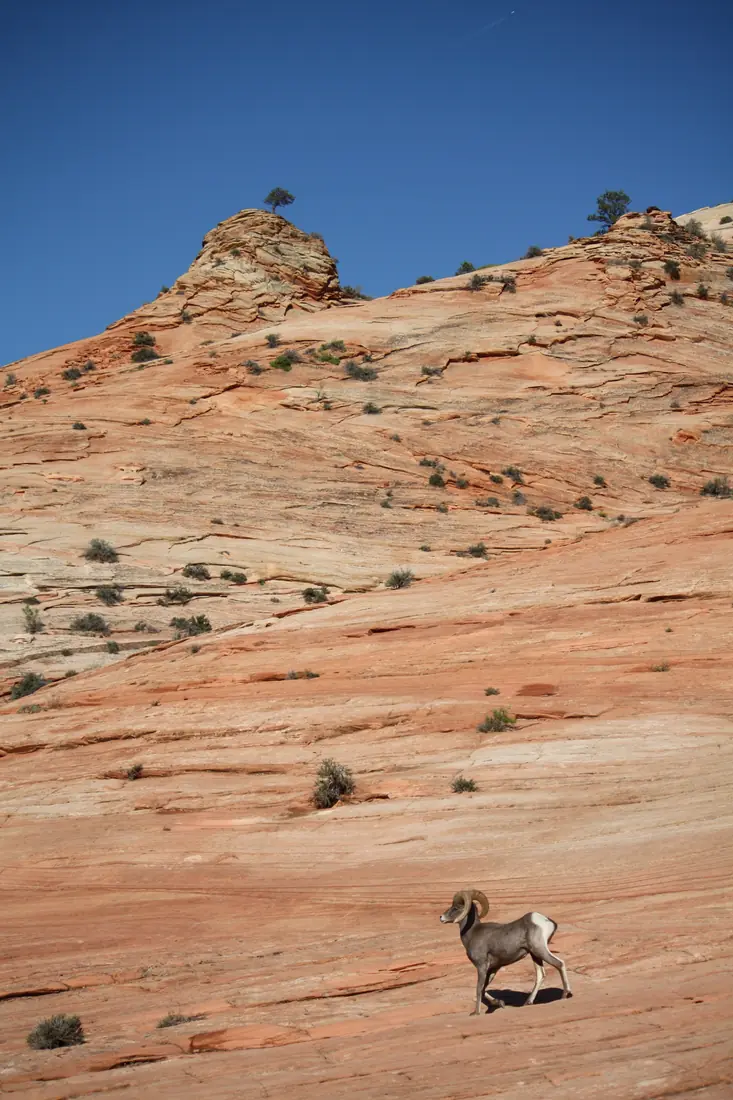
Desert bighorn lambs in Zion
Lambs are born from mid-January through the end of April · East side of Zion National Park, between the Zion-Mount Carmel Tunnel and the East Entrance
The park says the herd grew from 14 sheep released in 1978 to more than 500 animals by 2018. The park advises driving carefully, using roadside pullouts for viewing and keeping a safe distance from bighorn and other wildlife.
-
Wild turkeys gobbling
A first peak in gobbling usually comes in mid-April · Wooded mountain country
In a 2015 St. George News story, DWR upland game coordinator Jason Robinson said that toms call hardest at the start of the breeding season in mid-April, and again in May when hens that lost nests are seeking mates. Cold, wet weather cuts the time they gobble. Walk in quietly at dawn and listen from a distance, and remember that turkey hunters share the woods this month.
-
Black-chinned hummingbirds
First arrivals in early April in southern Utah · Low desert where desert holly blooms
A Wildlife Society account of a BLM hummingbird banding project says black-chinned hummingbirds, southern Utah’s most common species, appear in early April, around the time the desert holly blooms, and begin breeding in early May. Broad-tailed hummingbirds reach the mountains at places like Bryce Canyon and Boulder Mountain later, with breeding starting around late May.
What happens to the snow and rivers in April, and which trails stay risky?
April is when Utah’s snow turns from a bank account into a river. Alta still averages 50.0 inches of snow this month, while St. George, Moab and Zion get none, per the table below. The Utah Avalanche Center’s archived spring advisories show the pattern: in its April 25, 2013 advisory, forecaster Bruce Tremper noted more than a couple of feet of new snow from steady storms, south-facing slopes already wet top to bottom, and wet slides likelier each afternoon, so he urged a get-out-early-and-get-home-early routine and staying off any slope near 35 degrees or steeper that is getting wet.
-
Zion’s Narrows
Snowmelt closures in the park’s record usually run from early or mid April to mid or late May · Zion Canyon, the bottom-up hike from the Temple of Sinawava
Once the river is over 150 cubic feet per second, nobody may enter the Narrows. The park’s table lists snowmelt closures in 2012, 2013, 2016, 2017, 2019, 2020, 2023 and 2024, and says winter and early spring often bring high, cold water. Rangers recommend quick-drying fabrics rather than cotton, to prevent hypothermia.
-
Ice and cold water
March and April · Reservoirs, ponds and rivers statewide
Utah State Parks tells visitors to stay off late-season ice, March through April, completely. It describes the 1-10-1 principle: gasping in the first minute, loss of fine motor control by 10 minutes and trouble with body temperature by an hour, so put on a life jacket and pick layers that suit cold water.
-
Dust on the snow
Spring wind events · The Wasatch Range
A University of Utah team studied the April 13, 2017 dust event at Alta. Dust from the storm darkened the snow, which absorbed more sunlight and melted about a week earlier, and they linked part of it to the Great Salt Lake’s exposed lake bed. The team concluded that dust warrants more attention as a driver of melt.
| Station | Snowfall | Precipitation | Average high | Average low |
|---|---|---|---|---|
| Logan (Utah State University) | 4.1 | 2.26 | 56.5 | 36.0 |
| Randolph | 6.1 | 1.34 | 52.0 | 25.2 |
| Salt Lake City airport | 2.9 | 2.16 | 61.9 | 41.8 |
| Alta | 50.0 | 4.78 | 42.3 | 24.8 |
| Heber | 4.0 | 1.39 | 61.4 | 29.9 |
| Vernal | 0.6 | 0.75 | 59.9 | 33.5 |
| Manti | 4.6 | 1.39 | 59.4 | 34.1 |
| Bryce Canyon National Park | 5.9 | 0.77 | 53.5 | 28.9 |
| Moab | 0.0 | 0.77 | 72.3 | 42.6 |
| Kanab | 1.8 | 0.88 | 69.2 | 37.3 |
| Zion National Park | 0.0 | 1.22 | 73.1 | 43.8 |
| St. George | 0.0 | 0.66 | 75.0 | 45.7 |
For background only: the Natural Resources Conservation Service reported Utah’s April 1, 2026 snowpack as the lowest in its record, which begins in 1930, with the next-lowest year, 2015, roughly five times higher. The National Weather Service in Salt Lake City said in its April 4, 2026 drought statement that record-breaking warmth this water year raised snow levels and limited accumulation, and that March all-time high records fell across the state. One year does not predict the next, and the snowpack numbers for 2027 will be posted by the NRCS Utah Snow Survey as the season unfolds.
What is April weather like in Utah, and what hazards should you watch for?
April behaves like two seasons at once. Salt Lake City’s average high is 61.9 °F and its average low 41.8 °F, Logan’s 56.5 and 36.0, Moab’s 72.3 and 42.6, and Alta’s 42.3 and 24.8, per NOAA’s 1991 to 2020 normals (see the table above). Randolph’s average April low is 25.2 °F and Heber’s 29.9 °F, so cold mornings are normal even when afternoons feel mild.
Watch for these:
- Frost after bloom. USU Extension’s pest advisory on a freeze in April 2022 warned that with peach trees in full bloom across central and northern Utah, half an hour at 27 °F could kill about a tenth of the flowers. See the freeze section.
- Wind and blowing dust. The University of Utah team found that post-frontal winds carried most of the dust in the April 2017 storm they studied. Check forecasts before towing a trailer or camping on a ridge.
- High water. Creeks that were quiet in March can rise quickly on warm afternoons, and cold runoff makes a fall into the water dangerous.
- Late snow. Alta’s normal April snowfall of 50.0 inches means the high country can look like winter well after the valleys have greened up.
NOAA’s Climate Prediction Center refreshes its 90-day outlook page every month; open it to see what is current. For the days ahead, see our weather forecast page.
When does Utah’s last spring freeze end, and when should you plant?
In a typical year, St. George’s final spring freeze arrives March 14, the Salt Lake City airport’s April 8 and Park City’s May 29 (NOAA, 1991 to 2020). Our Utah frost dates page looks up your own town. The planting guide from USU Extension marks the average last spring frost as the day to plant tender crops such as cucumbers, sweet corn and squash, about when the first apples reach full bloom, and tomatoes, peppers and melons about two weeks after that, once the soil is warm.
-
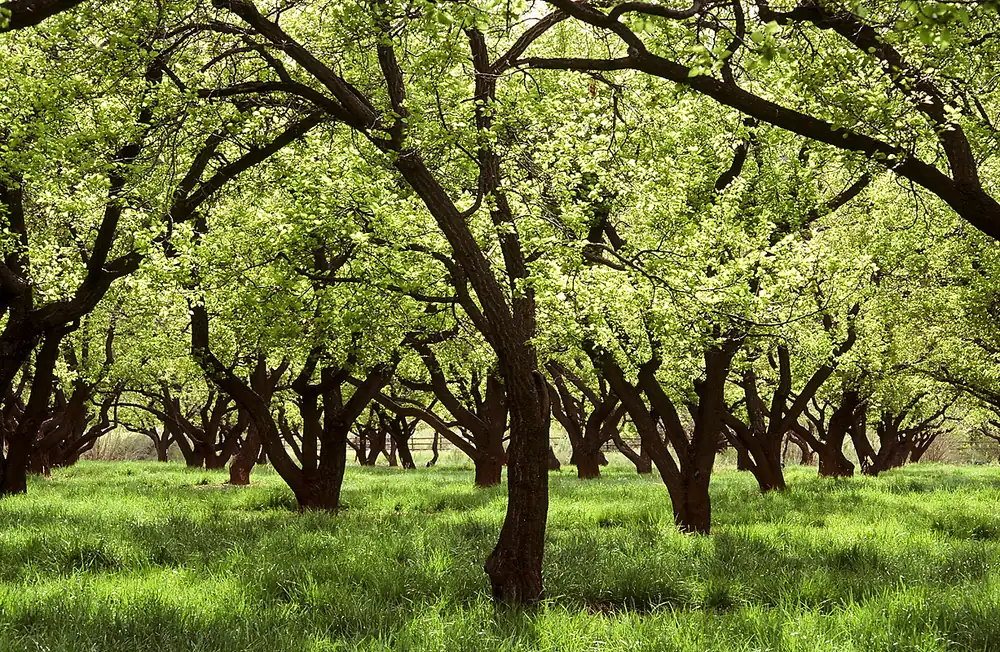
Apples and pears bloom in the Capitol Reef orchards
Apples early April to early May; pears late March to early May; peaches late March to late April · The Fruita orchards, Capitol Reef National Park
The National Park Service’s bloom table puts April squarely in apple and pear season there, and says bloom and harvest dates can run a few weeks early or late depending on winter. Apricot bloom is listed as ending by mid-April. See our March page for Utah for the park’s fruit hotline. The park only opens its orchards for picking once fruit is ripe and “U-Pick” signs are posted.
-
How cold is too cold for a bloom?
Any clear night after trees leaf out or flower · Orchards and yards statewide
USU researchers tested flowers at different stages for the coldest temperatures that would kill 10 and 90 percent of them. For peach trees in full bloom, the Extension’s April 2022 advisory gives 27 °F for 30 minutes as enough to kill about a tenth of the flowers and 24 °F as enough to kill nine tenths. Trees set more flowers than a crop needs, so a light freeze is not always a disaster. Frost cloth that reaches the ground, applied in daytime to trap warmth, protects a few small trees; plastic does not.
-
What to plant in April
As soon as the soil dries out · Home gardens across the state
USU lists peas, spinach, onions, radishes and kohlrabi as hardy seed crops for the first work in spring, and beets, lettuce, carrots and potatoes a week or two after that, about two weeks before the average last frost. Recommended dates differ widely across Utah’s climates, so match them to your own town, and note that Washington County has its own schedule.
| Station | One year in ten | Median | Nine years in ten |
|---|---|---|---|
| Logan Utah St Univ (Cache Valley) | Apr 14 | Apr 30 | May 19 |
| Ogden Hinkley Airport (Ogden) | Apr 4 | Apr 22 | May 10 |
| Salt Lake City International Airport (Salt Lake City) | Mar 17 | Apr 8 | Apr 30 |
| Provo Byu (Provo) | Mar 31 | Apr 18 | May 5 |
| Park City (Wasatch Back) | May 12 | May 29 | Jun 14 |
| Vernal (Uinta Basin) | Apr 24 | May 7 | May 28 |
| Moab (Canyon Country) | Mar 25 | Apr 11 | Apr 28 |
| Cedar City (Color Country) | Apr 19 | May 4 | May 28 |
| St George (St. George) | Feb 27 | Mar 14 | Apr 6 |
Think of each row as odds. The first column is an optimistic date and the last a cautious one; waiting for the cautious date almost always keeps tender plants safe.
How much daylight does Utah gain in April?
The days keep growing quickly. Across April, St. George gains 65 minutes of daylight and Logan 77, with the other cities in between. Daylight time began on March 14, which makes the evenings feel long. By April 30 Logan’s day reaches 14 hours, and Salt Lake City’s is a few minutes short of that.
| City | Apr 1 | Apr 30 | Gained | Per day |
|---|---|---|---|---|
| Logan | 12 h 43 m | 14 h 00 m | 77 min | 2.7 min |
| Ogden | 12 h 42 m | 13 h 57 m | 75 min | 2.6 min |
| Salt Lake City | 12 h 41 m | 13 h 56 m | 75 min | 2.6 min |
| Provo | 12 h 40 m | 13 h 53 m | 73 min | 2.5 min |
| Vernal | 12 h 41 m | 13 h 54 m | 73 min | 2.5 min |
| Moab | 12 h 39 m | 13 h 47 m | 68 min | 2.3 min |
| Cedar City | 12 h 37 m | 13 h 44 m | 67 min | 2.3 min |
| St. George | 12 h 37 m | 13 h 42 m | 65 min | 2.2 min |
For a town not listed here, use the daylight calculator.
What can you see in Utah’s night sky in April 2027?
Utah’s dry air makes April nights crisp. Every time below is Mountain Daylight Time, and the Moon’s come from the Naval Observatory. DarkSky International holds International Dark Sky Week in April, timed to the new moon, which this year comes on April 6; its organizers publish the dates, so check darksky.org for the week.
-
The Pink Moon
Full at 4:27 p.m. MDT on Tuesday, April 20; best evening is the 20th · Anywhere with an open eastern horizon
Almanacs call April’s full Moon the Pink Moon. It turns full in the afternoon, so watch Tuesday evening after sunset as it climbs the eastern sky, and note that it looks full the night before and the night after too. See the phase table below for the other dates.
-
The Lyrids, a poor year
Active about April 14 to 30; peak about 7:41 p.m. MDT on Thursday, April 22 · Dark skies, looking toward the northeast after dark
The International Meteor Organization lists the maximum at about 1:41 UT on April 23, which is 7:41 p.m. MDT on the 22nd (our own computation puts it roughly 14 minutes later), and it calls conditions poor. The Moon is about 95 percent lit and climbs into view near 10 p.m., leaving just the early evening dark. At its best the shower yields around 20 meteors an hour, according to the American Meteor Society and Sea and Sky, but this year’s bright Moon will hide most of them; count on a few per hour.
-
The Milky Way before dawn
Best mornings about April 1 to 14 and April 28 to 30, when no Moon is up · Dark sites far from the Wasatch Front and St. George, low in the southeast before dawn
The bright core of the Milky Way rises in the dark hours before sunrise this month and can be up for up to about two hours at 40 degrees north latitude, which runs through northern Utah. Plan around the April 6 new moon, which leaves the sky moonless for the first part of the month.
-
Planets: Venus at dawn, Jupiter and Mars at dusk
All month; the Moon visits Venus on the mornings of April 3 and 4, and Jupiter and Mars on April 14 and 15 · Venus low in the east before sunrise; Jupiter and Mars high in the south and southwest after dark
Brilliant Venus clears the horizon more than an hour before sunrise early in the month, with that lead shrinking a little by May. A 9 percent crescent Moon stands near it on those early April mornings. Jupiter stays up for hours after sunset in the Cancer and Leo region. On April 14 and 15 a Moon that is 68 percent lit passes about a degree from it, and Mars, shining at about magnitude 0 in mid-month, sits near the Moon then as well. Saturn is lost in the Sun’s glare this month, passing behind it on the 7th.
| Phase | Date | Time |
|---|---|---|
| New moon | Tuesday, Apr 6 | 5:51 p.m. MDT |
| First quarter | Tuesday, Apr 13 | 4:56 p.m. MDT |
| Full moon, the Pink Moon | Tuesday, Apr 20 | 4:27 p.m. MDT |
| Last quarter | Wednesday, Apr 28 | 2:18 p.m. MDT |
Our moon phase calendar covers each night, and the satellite cloud map helps you pick a clear night.
What can families do outdoors in Utah in April 2027?
- Find a shorebird. Pick a wetland such as Farmington Bay or Antelope Island, bring binoculars and count the avocets, then look up the odd one in a field guide. Late April is the window when the DWR ran its 2023 count.
- Go on a balsamroot hunt. Walk a foothill trail and compare arrowleaf and cutleaf balsamroot, then add a photo to iNaturalist.
- Join the City Nature Challenge. The worldwide event’s own site shows photo-taking from April 30 to May 3, 2027, identifications from May 4 to 16 and results on May 20. Whether the Wasatch region will join in 2027 had not been announced, so check with the Natural History Museum of Utah and iNaturalist.
- Plant a tree on Arbor Day. The state’s Division of Forestry, Fire and State Lands marks Arbor Day on the final Friday of April, which falls on April 30 in 2027.
- Mark Earth Day, Thursday, April 22. The organizers’ 2027 theme concerns food and the planet, so pick up litter on a creek trail or start a vegetable bed.
- See the tulips. Ashton Gardens at Thanksgiving Point in Lehi runs an annual tulip festival that in 2026 filled 50 acres with more than a million flowers from early April to mid-May. The 2027 dates had not been posted, so ask Thanksgiving Point.
The Naturalist’s Field Journal pages on a daily field log, nest observed and the same place twice suit April, when change comes weekly. See our March page for Utah for the swans and Easter-flowers just ending.
Safety notes for April in Utah
Spring turkey hunts. The DWR’s 2026 to 2027 guidebook sets the limited-entry spring turkey hunts for April 10 to 29, 2027, the youth spring general-season hunt for April 30 to May 2, and the general season for May 3 to 31. Hikers in turkey country should expect hunters at dawn and stay on marked trails.
Hunter orange. The guidebook strongly encourages orange for upland game hunts and discourages it for turkey hunts, because bright colors can be mistaken for a gobbler’s head, and it tells hunters to avoid white, red, black and blue as well.
Spring bear pursuit. The 2026 spring bear pursuit ran from March 28 through May 25 outside the restricted units. Dates for 2027 will appear in the next guidebook, so look at the DWR’s bear page before hiking with a dog.
Shed antlers. Gathering shed antlers or horns from January 1 to May 31 requires the certificate that comes with the DWR’s free online course, which must be redone annually. An emergency closure is possible, so confirm gathering is open first.
A digital permit at wildlife areas. The DWR says a free digital access permit or a license is required at wildlife management areas in four Utah counties as of July 1, 2026. Check whether the area you plan to visit is covered before you go.
Cold water and ice. Skip any ice in March or April, wear a life jacket on cold reservoirs and rivers and remember the 1-10-1 rule.
Snowmelt and storms. Rivers rise on warm days, the Zion Narrows closes when the river passes 150 cubic feet per second, and wet avalanches become likelier each afternoon. Start early and be off steep slopes by midday.
Wildlife. Keep your distance from prairie dog colonies, where fleas can carry sylvatic plague, and from ewes with lambs, nesting birds and hens with young. Do not feed or touch young animals.
Sources (40)
- USFWS: Monthly Bird Happenings at Bear River Migratory Bird Refuge (written January 2023)
- Utah DWR: where to celebrate World Migratory Bird Day and other places to bird-watch this spring (May 5, 2026)
- TownLift: over 84,000 shorebirds counted during spring survey (June 2, 2023)
- BYU Universe: spring migration begins, Utah expecting hundreds of thousands of birds (March 11, 2024)
- USFWS: Seasons of Wildlife, Fish Springs National Wildlife Refuge
- Bridgerland Audubon Society: 28th Annual Great Salt Lake Bird Festival
- Bridgerland Audubon Society: upcoming events
- Utah DWR: Utah greater sage-grouse lek count report, 2026
- Utah DWR: wildlife events calendar
- Natural History Museum of Utah: take time to walk among the wildflowers this spring (April 29, 2022)
- Red Butte Garden: arrowleaf balsamroot
- Red Butte Garden: cutleaf balsamroot
- NPS, Zion National Park: wildflowers
- NPS, Arches National Park: wildflowers
- NPS, Bryce Canyon National Park: Utah prairie dog
- NPS, Zion National Park: bighorn sheep
- St. George News: wild turkey hunt starts, turkey numbers growing (April 19, 2015)
- The Wildlife Society: BLM partners monitor Utah hummingbirds
- NPS, Capitol Reef National Park: orchards
- NPS, Zion National Park: the Narrows
- Utah Avalanche Center: Salt Lake advisory for April 25, 2013
- Utah State Parks: cold weather and water safety
- University of Utah: dust threatens to destroy Utah’s snow
- Iron County Today: lowest April 1 snow water equivalent in Utah’s recorded history (NRCS, April 3, 2026)
- NWS Salt Lake City: drought information statement for Utah, April 4, 2026
- NOAA NCEI: 1991 to 2020 monthly climate normals for Utah stations
- NOAA Climate Prediction Center: 90-day outlooks
- USU Extension IPM pest advisories: frost protection (April 11, 2022)
- USU Extension: suggested vegetable planting dates for Utah
- U.S. Naval Observatory: Moon phases
- Sea and Sky: astronomy calendar 2027
- City Nature Challenge: dates
- Utah Division of Forestry, Fire and State Lands: urban and community forestry (Arbor Day)
- EARTHDAY.ORG
- Thanksgiving Point: Tulip Festival 2026 tickets on sale
- Utah DWR: 2026 to 2027 waterfowl, upland game and turkey guidebook
- Utah DWR: 2026 black bear, cougar and furbearer guidebook
- Utah DWR: gathering shed antlers or horns
- Utah DWR: wildlife and waterfowl management areas
- Photos via Wikimedia Commons; licenses and photographers are credited under each picture
