What to look for in nature in Utah this March
March is the month when Utah’s two seasons overlap the most. Alta still averages 71 inches of snow in March, while St. George’s average afternoon high is nearly 68 °F. In between, the Great Salt Lake wetlands fill with swans on their way north, sandhill cranes begin to arrive, and sage-grouse start their dawn dances on the sagebrush flats. Down in the red-rock country, the first Easter-flowers bloom in hanging gardens, and prairie dogs surface at Bryce Canyon. Clocks change on the 14th, and the equinox comes six days later. Here is the Utah March, from Cache Valley to St. George.
Other months in Utah: October, November, December, January, February, April.
Start here

- Watch the swans at Bear River. The Bear River refuge’s own guide puts tundra swan numbers around 10,000 in the first two weeks of March. Climb the observation tower west of Brigham City, scan the marsh to the north, then drive the 12-mile auto tour route.
- Look for Easter-flowers. The cave primrose blooms in March and April in hanging gardens and seeps in the sandstone near Moab and in Arches National Park. Go on a warm afternoon, stay on trail, and look in the shady, damp alcoves.
- Spring forward on March 14. The clocks jump ahead at 2 a.m. on Sunday, March 14. That evening the Sun sets at 7:33 p.m. in Salt Lake City, and the equinox follows on Saturday the 20th at 2:25 p.m.
In the Naturalist’s Field Journal, log the first sandhill crane you hear on birds I have seen, and start a map of sounds for the spring chorus frogs and the first meadowlark. Use the tree through the seasons page for the day the first buds open on a cottonwood or fruit tree, and give a prairie dog colony or an early-morning lek a dusk and dawn watch entry, noting how many animals you see.
Regions used below: Cache Valley and the north; Wasatch Front and the Great Salt Lake; Wasatch Back and the Uintas; Uinta Basin; Central Utah and the high plateaus; Canyon Country and Moab; Color Country and St. George.
When do tundra swans pass through Utah, and where can you see them?
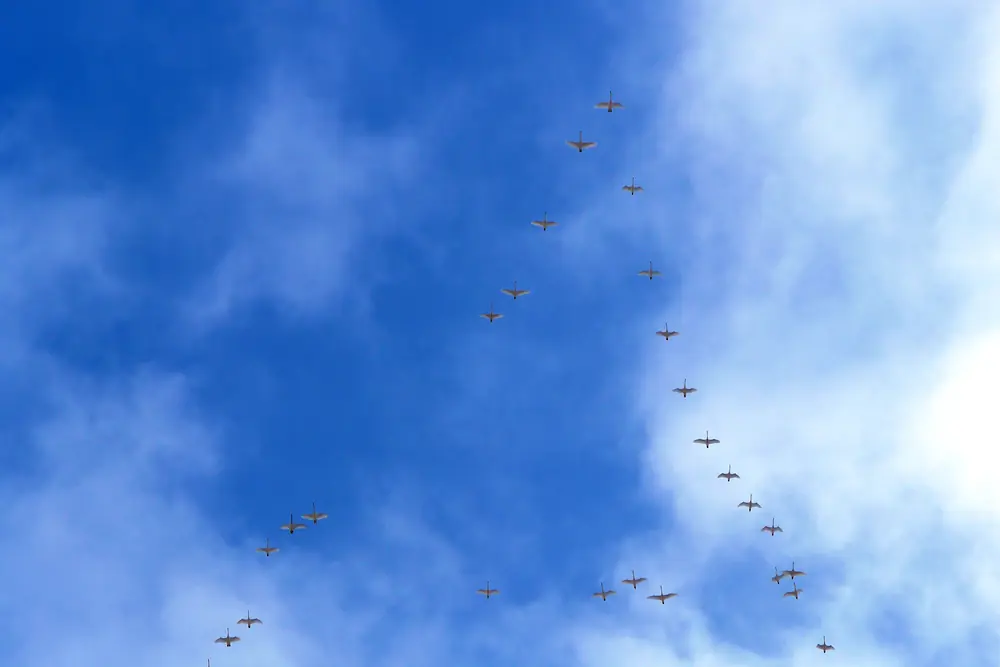
March is the month for swans. The Utah Division of Wildlife Resources (DWR) says the spring peak is typically in March, when tundra swans and trumpeter swans rest in Utah’s wetlands on the way from wintering grounds in California to nesting sites in Canada and Alaska. Trumpeters are the bigger bird, with wingspans past 8 feet, and they lack the yellow patch near the eye that tundra swans wear. Three public places stand out.
-
Bear River Migratory Bird Refuge
Peak numbers usually come in the first two weeks of March · About 12 miles west of Brigham City; take I-15 exit 363 and go west on West Forest Street
The refuge’s own monthly guide says tundra swans that wintered on the refuge are joined in March by birds that wintered in California’s Sacramento Valley, with numbers around 10,000 in the first and second weeks. Park at the large lot with the observation tower and scan the marsh to the north, then drive the 12-mile auto tour route, where the DWR says you could see thousands of swans. Overall bird numbers there peak in March and April at 40,000 to 50,000, the guide says.
-
Compton’s Knoll at Salt Creek Waterfowl Management Area
March, while the swans are in · About 12 miles northwest of Corinne, Box Elder County
A small hill on the southeast side of the management area puts you above the marsh, and two blinds sit at the bottom. Bring binoculars or a spotting scope. The DWR asks visitors to stay behind the closed gates and view only from the knoll or the blinds, because the rest of the area is closed for part of the year.
-
Eccles Wildlife Education Center at Farmington Bay
Swans are sometimes present in March; check before you drive · Farmington, Davis County
The center sits inside the Farmington Bay Waterfowl Management Area and keeps a mounted tundra swan and trumpeter swan indoors. In 2026 the DWR closed the area’s Goose Egg Island gate to motor vehicles from February 16 through mid-September, to protect nesting wildlife, while leaving the 2-mile dirt road open to walkers and bikers. That timing is an annual pattern, so look up the current status. The center itself is exempt from the digital permit that now covers most of the area’s other land (see the safety section).
No swan events for 2027 had been posted as of early October. The DWR wildlife calendar lists viewing events as the division adds them, so check it in February.
Which birds come back to Utah’s marshes in March, and do the sandhill cranes?
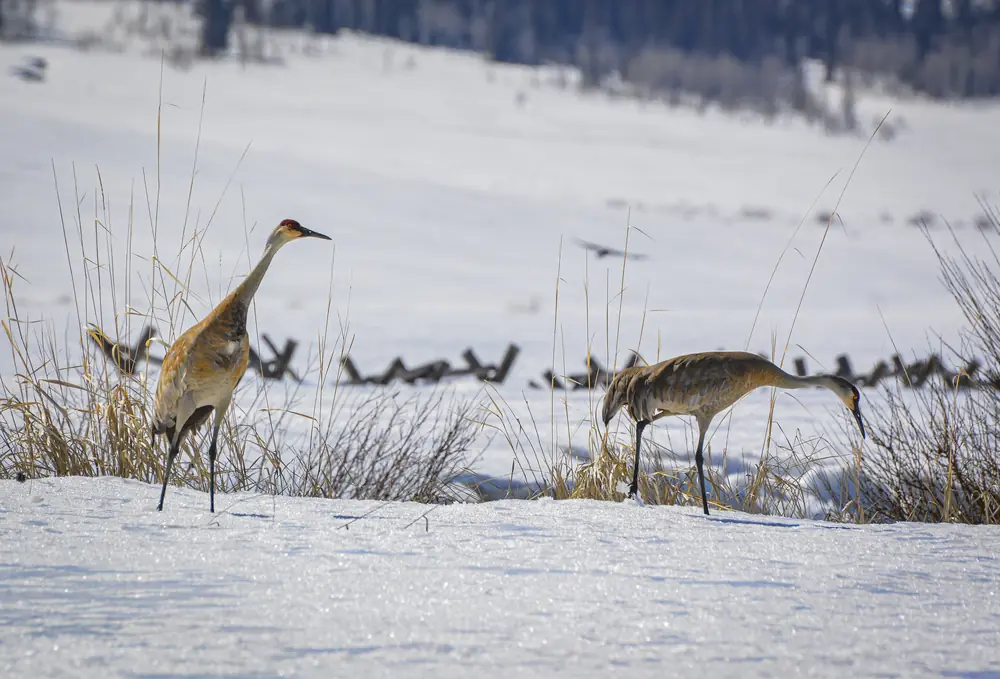
Yes, the cranes are among the first. Wild About Utah, the Utah Public Radio nature series, says sandhill cranes arrive in Utah beginning in March and stay through the summer breeding season, in marshes, meadows and fields across the northern part of the state. The Bear River refuge’s guide lists sandhill crane among the summer birds that March is typically the first month to welcome back.
-
Sandhill cranes
From March; the dancing starts as pairs form · Marshes, meadows and fields of northern Utah; the Uinta Basin near Jensen and Ouray also holds cranes
Listen first. The call is loud and rattling, and the DWR says it can be heard up to 2.5 miles away. A courting pair bows, leaps and flaps with wings out, and may toss sticks or grass into the air. Males and females call in unison as a duet, which helps hold the pair together. The DWR’s Northeastern Region says the birds typically lay two eggs in spring, and that more may become year-round residents of the basin, which is good for watchers and a headache for farmers.
-
Avocets, stilts, pelicans and a few more
March, in small numbers first · Bear River refuge and nearby wetlands
The same refuge guide names cinnamon teal, double-crested cormorants, American white pelicans, killdeer, American avocets, black-necked stilts, marsh wrens, yellow-headed blackbirds, tree swallows and savannah sparrows as the first returning summer birds, and says migrating ducks such as American wigeon, northern pintail, northern shoveler and redhead pass through. Refuge staff also describe geese and ducks as beginning to arrive in early March. Eared, western and Clark’s grebes, long-billed curlews, snowy egrets and white-faced ibis come in April.
-
Antelope Island State Park
Open year-round, 6 a.m. to 10 p.m. · Antelope Island, Great Salt Lake
The park’s own FAQ says drones are prohibited from March through November, and allowed by permit only from December through February. That is a rule worth knowing before you pack a drone.
Arrival dates drift with the weather, so write down the day you first hear a crane and compare it next year.
Where do Utah’s sage-grouse dance, and when?
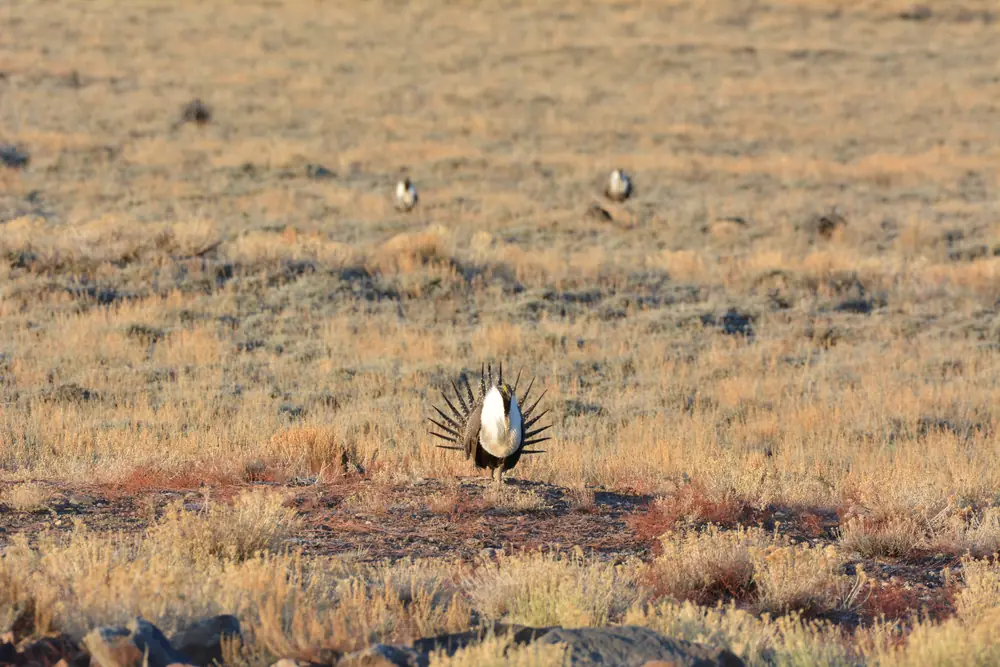
Spring on Utah’s sagebrush benches begins before dawn with a performance. Male greater sage-grouse gather on traditional strutting grounds called leks, where they display for the hens. The DWR sends crews to count them every spring, and its reports explain the calendar.
-
Greater sage-grouse leks
Counts run from early March to mid-May; the biggest crowds are usually in mid-April · Sagebrush country in northern, central and southwest Utah, such as Rich County, Strawberry Valley and Parker Mountain
The DWR’s protocol calls for at least three counts a week apart at each known lek, starting 30 minutes before sunrise and ending 90 minutes after it. Counters work from the car, or from far off on foot, so the birds are not disturbed. The 2026 report tallied 4,716 males across the state and found males on 247 of the 398 leks it counted at least once. It also said mild winter weather started the lekking early, before many areas were counted, and that the survey window will start a week sooner in spring 2027 if conditions are mild again.
-
Watching a lek yourself
In the hour around sunrise · Public sagebrush land; many leks are down dirt roads that turn slick
The Bridgerland Audubon Society ran a lek field trip on May 2, 2026, meeting in Logan before dawn and driving to a lek south of the DWR’s Hardware Ranch. Chapters and the DWR offer trips like this in spring, but no 2027 dates had been posted as of October, so ask the chapter or the DWR before you go. On your own, stay in the car, turn off the engine and lights, and never walk onto the lek. State rules also bar dog training within half a mile of sage-grouse and sharp-tailed grouse leks from March 1 to May 31.
The DWR’s report says the long-term counts have trended lower, with dry conditions in the past two winters cutting the wet habitat chicks depend on. Seeing a lek is a privilege, so keep your distance and leave when the birds start to leave.
What blooms and wakes up in southern Utah’s desert in March?
The canyon country is a month ahead of the north. Daily highs at St. George and Zion average in the upper 60s in March, and Moab’s average is 64.6 °F, per NOAA’s normals (see the table below). Plants and animals respond. Two stories belong to this month.
-
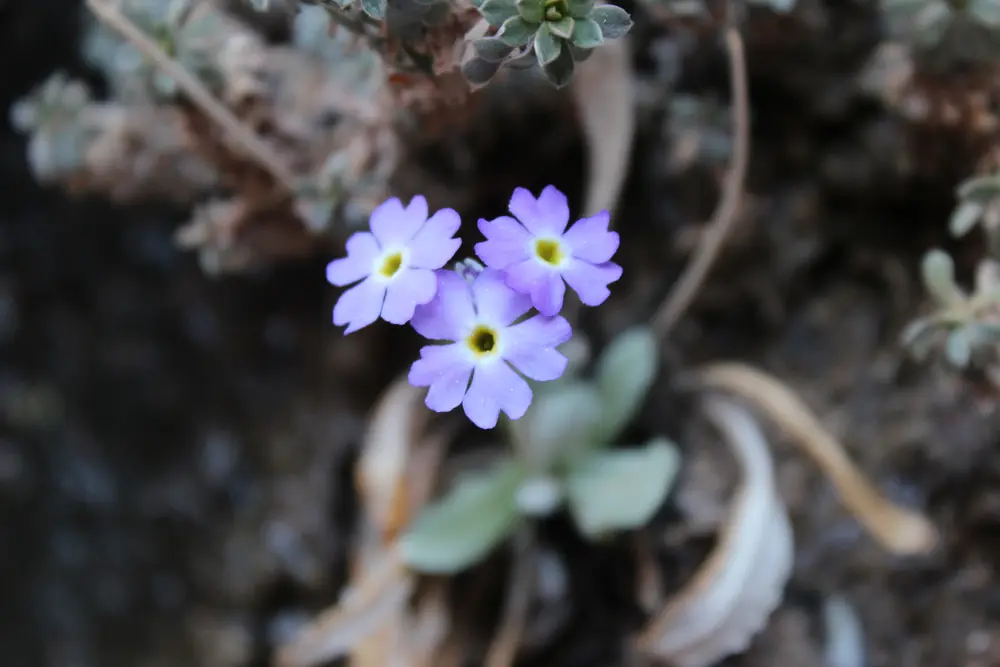
Easter-flower, or cave primrose
March and April · Seeps and hanging gardens in sandstone alcoves, in Arches National Park and at Grandstaff Canyon near Moab
The National Park Service lists Primula specuicola as blooming in March and April at Arches, in hanging gardens and streamside alcoves of Entrada and Navajo Sandstone, and names Grandstaff Canyon, outside the park near Moab, as a place where it has been seen at seeps. The plant stands 2 to 11 inches tall and carries clusters of 5 to 40 lavender to pink flowers with a yellow-rimmed throat. It lives on wet rock, so stay on the trail.
-
The larger desert bloom is mostly a few weeks away
Early to mid April in Zion; April and May at Arches, depending on rain · Zion National Park lowlands, Arches National Park
Zion’s park staff say desert marigold and slickrock paintbrush often catch visitors by surprise in early to mid April, and Arches says April and May are generally the best months, with the display changing a lot from year to year. Desert wildflower seeds only sprout after significant seasonal rain, so a dry winter means a thin bloom. March is the time to scout, not to promise a carpet.
-
Mojave desert tortoises
Most active March to June, and again September to October · Red Cliffs National Conservation Area and Red Cliffs Desert Reserve, north of St. George
According to the Fish and Wildlife Service, a Mojave tortoise may spend as many as nine months of the year underground; its busy seasons are March through June and again in September and October. The Mojave population has carried a threatened listing since 1990. The BLM manages 45,600 acres at Red Cliffs with more than 130 miles of trails. If you see one, watch from where you stand and let it go on its way; it is a protected animal.
Which Utah animals wake up in March?
Winter sleepers stir as the ground warms, and so do the animals that eat them. These are the ones to look for, with the caution each one needs.
-
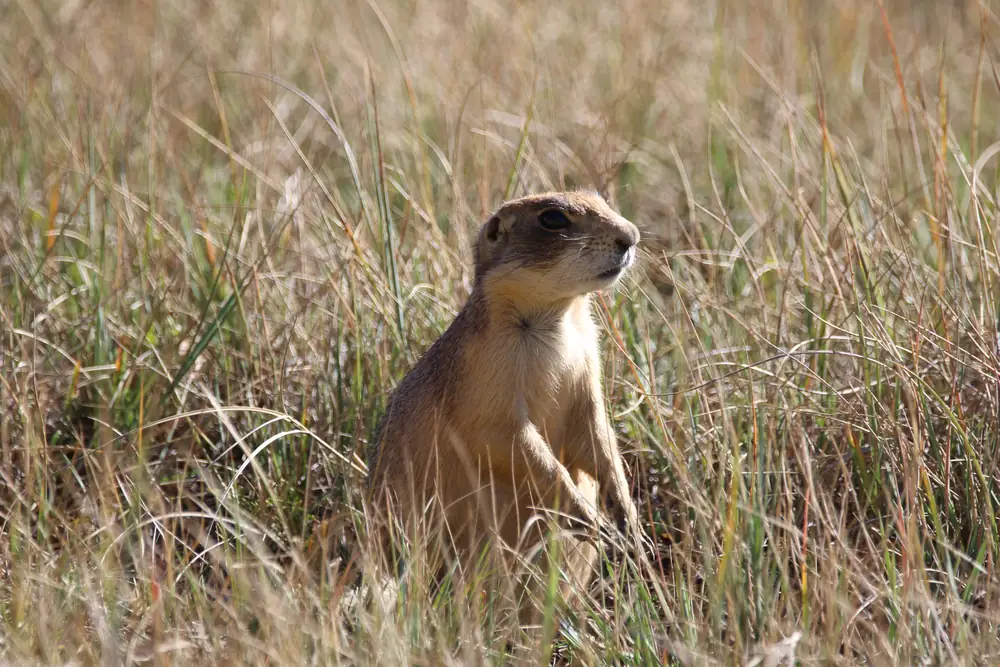
Utah prairie dogs at Bryce Canyon
From late March, when breeding begins · Meadows beside the main park road near the visitor center
The National Park Service says Utah prairie dogs retreat to their burrows in October and stay down until late March. The park holds more than 600 of them in 10 towns. The species’ population fell from about 95,000 in the 1920s to about 3,000 in the 1970s, and reintroductions have helped rebuild it. Watch from the pavement and keep your distance, because fleas on wild rodents can spread sylvatic plague.
-
Black bears leaving their dens
March or April, depending on snow · Forested mountains and foothill neighborhoods statewide
The DWR says Utah’s black bears typically emerge in March or April. Hungry bears are drawn to anything that smells like food, so lock food and scented items in a vehicle, take down bird feeders, clean the grill and secure garbage. If you meet a bear, hold still, speak calmly, resist the urge to run or climb, and let it leave.
-
California condors courting near Zion
Egg-laying runs from late January to early April · Zion National Park and the canyon country of southern Utah
The National Park Service describes condor courtship and nest-site selection as a winter activity that ends with a single egg, laid between late January and early April, with incubation lasting about 56 days. A DWR release in October 2026 counted 95 condors in the wild Arizona and Utah population and called lead poisoning the leading cause of death for free-flying condors here. If you spot a nest or a courting pair, keep your distance.
-
Frogs at the water’s edge
Spring, starting as the ice goes out · Wetlands, ponds and slow creeks at all elevations
Wild About Utah calls the western (boreal) chorus frog the most common native frog heard in spring, whose call sounds like a thumbnail run down the teeth of a comb; the best listening is just after sunset near water. The DWR begins its Columbia spotted frog surveys in March, counting the softball-sized egg masses at sites such as Diamond Fork, and its biologists link egg counts to how much water the wetlands hold. The 2024 count at Diamond Fork was the largest there since 2016, after a wet previous year.
-
Rattlesnakes, early and slow
First warm days, most active late spring and early summer · Rocky benches, dry canyons and foothills
Utah has five rattlesnake species, and the Great Basin rattlesnake is the one you are likeliest to meet. The DWR says to stay at least 10 feet away and step around. It is illegal to harass or kill one.
Is March still winter in Utah’s mountains?
Often, yes. The normals table below puts Alta’s March snowfall at 71.4 inches, and Bryce Canyon’s at 13.2. In spring the avalanche problems tend to shift from new-snow instabilities to wet snow once things warm up. South-facing slopes get wet first, so aim for north-facing terrain, start early before the day warms and read the Utah Avalanche Center’s morning forecast.
March storms can be rough on the valleys too. The National Weather Service office in Grand Junction, whose area includes eastern Utah and western Colorado, recalled March 2025 for a storm from the 5th to the 8th with gusts over 50 mph and one to two feet of mountain snow, another round of snow on the 13th to 15th that made travel difficult, and a storm on the first day of spring that left 6 to 12 inches on its northern and central mountains.
-
Last spring’s warm-up
Spring 2026, for context · Statewide
The Utah Snow Survey reported 2.7 inches of water in the snowpack statewide on April 1, 2026, the lowest since measurements began in 1930, after a peak of 8.4 inches on March 9 and the fastest melt on record. A Utah Climate Center forecaster described March 2026 as 10 to 15 degrees above average statewide, with Salt Lake City reaching 84 °F on March 20 and St. George 97 °F. One March does not decide the next, so treat 2027’s snow as an open question.
-
Zion’s Narrows
In the park’s record, closures usually began in April and ended between early May and late June · Zion Canyon
The National Park Service closes the Narrows to all travel when the river runs above 150 cubic feet per second, and whenever the National Weather Service issues a flash flood warning. Its closure table shows snowmelt closures starting between April 3 and April 30 in most years from 2012 through 2024, and on March 11 in 2017; in several years, including 2025 and 2026, the river stayed open most of the time. Winter and early spring bring cold water and high flow, so check the park’s conditions page before you plan a hike.
| Station | Snowfall | Precipitation | Average high | Average low |
|---|---|---|---|---|
| Logan (Utah State University) | 8.5 | 2.17 | 48.2 | 29.8 |
| Randolph | 10.3 | 1.07 | 42.4 | 18.0 |
| Salt Lake City airport | 5.9 | 1.75 | 55.3 | 36.3 |
| Alta | 71.4 | 6.17 | 36.8 | 20.2 |
| Heber | 6.7 | 1.17 | 52.7 | 23.8 |
| Vernal | 1.6 | 0.68 | 51.1 | 26.5 |
| Manti | 5.9 | 1.27 | 53.1 | 29.2 |
| Bryce Canyon National Park | 13.2 | 1.27 | 45.8 | 23.3 |
| Moab | 0.2 | 0.70 | 64.6 | 35.6 |
| Kanab | 1.8 | 1.40 | 62.2 | 32.6 |
| Zion National Park | 0.7 | 2.01 | 66.1 | 38.7 |
| St. George | 0.2 | 1.02 | 67.8 | 39.0 |
Dust is the other March story. A University of Utah study published in 2018 found that a single dust storm in April 2017 delivered half of the season’s dust to the Wasatch snow, which then melted about a week sooner, and that the exposed bed of the Great Salt Lake is an emerging source. Most of that dust arrived in strong winds just after a front passed.
What is March weather like in Utah, and what hazards should you watch for?
Expect big swings. Salt Lake City’s average March high is 55.3 °F and low 36.3 °F, while Zion averages a high of 66.1 °F and Alta a high of 36.8 °F, per the table above. The same week can bring a 60-degree afternoon in the valley and a foot of new snow in the canyons.
Four hazards deserve a plan:
- Wind and dust. A March 2025 storm in eastern Utah brought gusts over 50 mph, and dust from dry lakebeds can darken the sky.
- Avalanches. Slides continue to be possible on steep slopes throughout the month.
- Fast melt and high water. Warm spells swell the creeks, and the Narrows in Zion closes when the river runs high or a flash flood warning is issued.
- Late freezes after early blooms. Utah Climate Center forecasters warned in spring 2026 that plants that had already started to bloom could be damaged when colder air returned. See the freeze table below.
NOAA’s Climate Prediction Center puts out a new 90-day outlook each month, around mid-month; open the page for the current one. For this week’s storms, see our weather forecast page.
When is Utah’s last spring freeze, and what does it mean for blossoms and gardens?
The last freeze comes weeks apart across the state. At St. George the median last freeze of 32 °F is March 14, at Salt Lake City airport April 8, and at Park City May 29, according to NOAA’s 1991 to 2020 normals. USU Extension notes that last-frost dates can vary by many days within just a few miles, so look up your own town on our Utah frost dates page.
-
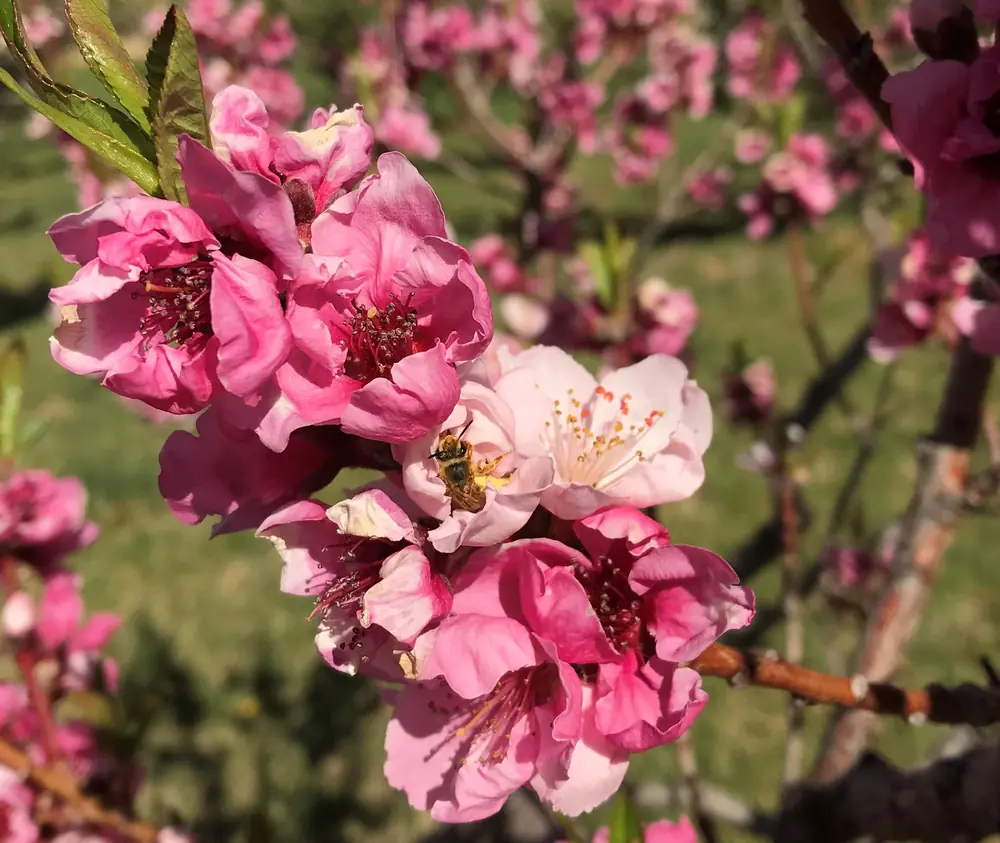
Fruit blossoms at Capitol Reef
Apricots early March to mid-April; peaches late March to late April; pears late March to early May; apples early April to early May · The Fruita orchards, Capitol Reef National Park
The park’s historic orchards hold about 1,900 trees, and the National Park Service says apricots in the Gifford Orchard are often covered in pale blossoms in March. It adds that bloom and harvest times can vary by a few weeks either way with winter temperatures, and that you can call the park’s information line at (435) 425-3791 and press 1, then 5, for the fruit hotline.
-
How cold is too cold for open blossoms?
Whenever a freeze follows warm days · Orchards and yards statewide
Open blossoms are far less hardy than dormant buds, so a freeze after a warm spell can wipe out a crop. USU horticulturist Ben Scow described a statewide shortage of fruit in 2026 after late spring frosts hit blossoms and newly set fruit. Weather forecasters in early April 2026 cautioned gardeners about the cold snaps after the early warmth.
-
Planting the cool-season crops
As soon as the soil dries out · Home gardens
USU Extension’s planting guide lists hardy vegetables such as peas, spinach and onions to go in as soon as the soil dries out: about February 15 at St. George, March 15 at Ogden, Provo, Farmington and Salt Lake City airport, and April 1 on the Logan campus. Hardy crops tolerate a freeze, but tomatoes and squash do not.
| Station | One year in ten | Median | Nine years in ten |
|---|---|---|---|
| Logan Utah St Univ (Cache Valley) | Apr 14 | Apr 30 | May 19 |
| Ogden Hinkley Airport (Ogden) | Apr 4 | Apr 22 | May 10 |
| Salt Lake City International Airport (Salt Lake City) | Mar 17 | Apr 8 | Apr 30 |
| Provo Byu (Provo) | Mar 31 | Apr 18 | May 5 |
| Park City (Wasatch Back) | May 12 | May 29 | Jun 14 |
| Vernal (Uinta Basin) | Apr 24 | May 7 | May 28 |
| Moab (Canyon Country) | Mar 25 | Apr 11 | Apr 28 |
| Cedar City (Color Country) | Apr 19 | May 4 | May 28 |
| St George (St. George) | Feb 27 | Mar 14 | Apr 6 |
Read the freeze table as odds. “One year in ten” is an early date, and “nine years in ten” is a late one, so a gardener who waits for the later column will usually be safe.
How much daylight does Utah gain in March?
March is when daylight grows fastest: across the month St. George adds 71 minutes of daylight and Logan 84, with the other cities between. The U.S. Naval Observatory puts the March equinox at 2:25 p.m. MDT on Saturday the 20th, the moment spring begins astronomically.
Daylight saving time begins by statute on Sunday the 14th, and the evening light jumps by an hour overnight. Salt Lake City’s sunset is 6:32 p.m. Mountain Standard Time on Saturday the 13th and then 7:33 p.m. Mountain Daylight Time on Sunday the 14th, while sunrise shifts from 6:43 a.m. to 7:41 a.m. By March 31, sunrise is at 7:13 a.m. and sunset at 7:51 p.m., both daylight time. On March 1 sunrise is at 7:02 a.m. and sunset at 6:19 p.m., standard time.
| City | Mar 1 | Mar 31 | Gained | Per day |
|---|---|---|---|---|
| Logan | 11 h 16 m | 12 h 40 m | 84 min | 2.8 min |
| Ogden | 11 h 17 m | 12 h 39 m | 82 min | 2.7 min |
| Salt Lake City | 11 h 17 m | 12 h 38 m | 81 min | 2.7 min |
| Provo | 11 h 18 m | 12 h 38 m | 80 min | 2.7 min |
| Vernal | 11 h 18 m | 12 h 38 m | 80 min | 2.7 min |
| Moab | 11 h 21 m | 12 h 36 m | 75 min | 2.5 min |
| Cedar City | 11 h 22 m | 12 h 35 m | 73 min | 2.4 min |
| St. George | 11 h 23 m | 12 h 34 m | 71 min | 2.4 min |
The daylight calculator gives times for any Utah town that is missing from the table.
What can you see in Utah’s night sky in March 2027?
Utah’s clear, dry air and its dark corners make March a good month to look up. Times below are Mountain Standard Time before the clock change on March 14, and Mountain Daylight Time on and after it. Moon times come from the U.S. Naval Observatory; the planet rise and set times are our own calculations for the central United States and can move by up to half an hour here.
-
The Worm Moon
Full at 4:44 a.m. MDT on Monday, March 22; best evening Sunday, March 21 · Anywhere with an open eastern horizon
Many almanacs name March’s full moon the Worm Moon. Because it turns full before dawn on the 22nd, Sunday evening the 21st is the one to watch: the Moon climbs out of the east about when the Sun goes down. It will also look full the evenings before and after. The table gives all four phases.
-
Mercury at its best in the morning
Best mornings about March 8 to 25; farthest from the Sun late on March 16 Mountain time · Low in the east-southeast before sunrise
Mercury is farthest west of the Sun, at 27.6 degrees, late on March 16 Mountain time. Look about an hour before sunrise, low over the horizon, where it shines at about magnitude +1 to 0. Brilliant Venus shares the morning sky, up some two hours before dawn on March 1.
-
Jupiter and Mars after dark
All month; the Moon passes Jupiter on the evenings of March 18 and 19 · High in the east to south after dusk, in Leo
Jupiter and Mars were both at opposition in February, and both remain easy to find all month. Our computed positions put the 88-percent-lit Moon about a degree from Jupiter on the 18th and 19th, and have Mars and Jupiter closest, roughly 4 degrees apart, late on the evening of March 30. Saturn sinks into the evening twilight during the month and passes behind the Sun on April 7.
-
The Milky Way returns before dawn
Best nights about March 5 to 16, near the March 8 new moon, and again around March 31 · Dark sites far from the Wasatch Front, in the hours before dawn
By our calculations, the bright core of the Milky Way clears the horizon in the dark pre-dawn hours only in March, for at most about 85 minutes at 40 degrees north, and only on moonless nights. Plan around the new moon on March 8.
| Phase | Date | Time |
|---|---|---|
| New moon | Monday, Mar 8 | 2:29 a.m. MST |
| First quarter | Monday, Mar 15 | 10:25 a.m. MDT |
| Full moon, the Worm Moon | Monday, Mar 22 | 4:44 a.m. MDT |
| Last quarter | Monday, Mar 29 | 6:54 p.m. MDT |
NOAA’s 30-minute aurora forecast shows the expected aurora oval; strong storms can push red or green glow low into Utah’s northern sky, though they cannot be predicted months ahead. Check the moon phase calendar for every night and the satellite cloud map for clear skies.
What can families do outdoors in Utah in March 2027?
- Swan watch at Bear River. Take a thermos and binoculars to the observation tower and drive the 12-mile auto tour route, then count the swans, the cranes and the ducks. Ask at the Wildlife Education Center what has been seen lately.
- Find an Easter-flower. Search a seep in the red-rock country near Moab for the lavender cave primrose, which blooms in March and April, and photograph it without stepping off the trail.
- Go to a lek before dawn. Watch for a spring field trip from the DWR or a local Audubon chapter; dates are usually posted shortly beforehand, and none for 2027 were posted as of October.
- Call the fruit hotline. Capitol Reef’s hotline tells you where the blossoms stand before you drive to the orchards.
- Join a citizen-science project. Add a sighting to iNaturalist, or track the dates your plants leaf and flower with Nature’s Notebook, the USA National Phenology Network’s program.
For a record of it all, the Naturalist’s Field Journal pages on birds I have seen, a map of sounds and the same place twice work well in spring. See our February page for Utah for the eagles and geese that are just leaving.
Safety notes for March in Utah
Hunting seasons that overlap March. The DWR’s 2026 to 2027 guidebooks set these dates: light geese (snow, blue and Ross’s) may be hunted through March 10, 2027, and snowshoe hares through March 15. Spring general-season turkey permits go on sale on March 11, 2027, at 8 a.m. Mountain Daylight Time, with the limited-entry spring turkey hunt running April 10 to 29 and the general season May 3 to 31. The 2026 spring bear pursuit season ran March 28 to May 25 in units that are not restricted, and the 2027 dates will be in the new bear guidebook, so check the DWR page before you hike. Cougar may be pursued or hunted year-round in unrestricted units. Expect shotgun fire at marshes and reservoirs early in the month.
Hunter orange. The upland game guidebook strongly encourages wearing it for upland hunts, but it discourages turkey hunters from wearing it because a bright color can be mistaken for a turkey’s head. Hikers in spring hunting country should make themselves seen and heard.
Shed antlers. From January 1 through May 31, shed gatherers need the free online ethics course behind them and the certificate on their person. If a harsh winter forces emergency feeding, the DWR director can close shed gathering statewide; the division did so from February 7 through April 30 in 2023. Do not chase animals, and report a skull with antlers attached through the Deadhead Reporter app.
A digital permit for wildlife management areas. Since July 1, 2026, anyone 18 or older needs a Utah hunting, fishing or combination license, or a free digital access permit, to enter the wildlife and waterfowl management areas in Davis, Salt Lake, Utah and Weber counties. The DWR says the Eccles Wildlife Education Center and Hasenyager Reserve are exempt. The rule will be phased in statewide.
Cold water and ice. Utah State Parks says to avoid late-season ice entirely in March and April. In cold water, the body goes through cold shock in the first minute, loses muscle control by about ten minutes and starts to become hypothermic after about an hour, so wear a life jacket.
Wildlife. Keep your distance from wild animals, do not feed them, and never touch or pick up a baby animal, as the DWR advises. Lock up food in bear country, and give rattlesnakes 10 feet.
Avalanches, flash floods and wind. Check the Utah Avalanche Center forecast before heading into steep terrain, avoid canyon bottoms when thunderstorms threaten and slow down for crosswinds.
Sources (55)
- Utah DWR: 3 places you can see swans migrating through Utah in March (February 10, 2026)
- USFWS: Monthly Bird Happenings at Bear River Migratory Bird Refuge (written January 2023)
- USFWS: Seasons of Wildlife, Bear River Migratory Bird Refuge
- Wild About Utah (Utah Public Radio): sandhill cranes, Utah’s meadow dancers
- Utah DWR: attend two sandhill crane events in the Uintah Basin (September 29, 2026)
- National Audubon Society: sandhill crane guide
- Utah DWR: Eccles Wildlife Education Center
- Utah DWR: wildlife and waterfowl management areas
- Utah DWR: wildlife events calendar
- Utah DWR: tips and resources for wildlife viewing
- Utah State Parks: Antelope Island State Park
- Utah DWR: Utah greater sage-grouse lek count report, 2025
- Utah DWR: Utah greater sage-grouse lek count report, 2026
- Bridgerland Audubon Society: Greater Sage Grouse lek field trip (May 2, 2026)
- Utah DWR: 2026 to 2027 waterfowl, upland game and turkey guidebook
- Utah DWR: 2026 black bear, cougar and furbearer guidebook
- Utah DWR: black bear information
- Utah DWR: 2026 Utah big game field regulations
- Utah DWR: gathering shed antlers or horns
- NPS, Arches National Park: wildflowers
- NPS, Arches National Park: cave primrose (Primula specuicola)
- NPS, Zion National Park: wildflowers
- NPS, Zion National Park: the Narrows closure conditions
- USFWS: desert tortoise (Gopherus agassizii)
- BLM: Red Cliffs National Conservation Area
- NPS, Bryce Canyon National Park: Utah prairie dog
- TownLift: Utah’s black bears are waking up (April 22, 2026)
- NPS, Zion National Park: condor pair likely incubating an egg (April 2016)
- NPS, Zion National Park: Utah’s first condor chick (June 2014)
- Utah DWR: how to help birds of prey near Zion during the 2026 hunts (October 6, 2026)
- Wild About Utah: the call of springtime, Utah’s frogs and toads
- Utah Public Radio: the DWR conducts its annual spotted frog surveys (April 24, 2024)
- TownLift: rattlesnakes in Utah, what to know as snakes emerge this spring (March 17, 2026)
- NWS Grand Junction: March 2025 climate summary
- KPCW: Utah’s April 1 snowpack lowest in history (April 8, 2026)
- Park Record: 2026 snowpack the lowest ever recorded since 1930 (April 8, 2026)
- Utah Public Radio, Utah Climate Center forecast for March 25, 2026
- Utah Public Radio, Utah Climate Center forecast for April 3, 2026
- University of Utah: dust threatens to destroy Utah’s snow
- NOAA NCEI: 1991 to 2020 monthly climate normals for Utah stations
- NOAA Climate Prediction Center: 90-day outlooks
- NPS, Capitol Reef National Park: orchards
- USU Today: Ask an Expert, late spring frosts expected to cause fruit famine across Utah (May 29, 2026)
- USU Extension: spring has sprung, but frost still likely
- USU Extension: suggested vegetable planting dates for Utah
- U.S. Naval Observatory: Moon phases
- U.S. Naval Observatory: Earth’s seasons and apsides, 2027
- U.S. Naval Observatory: Sun rise and set for Salt Lake City, March 14, 2027
- Sea and Sky: astronomy calendar 2027
- 15 U.S. Code 260a: daylight saving time
- NOAA Space Weather Prediction Center: aurora 30-minute forecast
- Utah State Parks: cold weather and water safety
- USA National Phenology Network: Nature’s Notebook
- iNaturalist
- Photos via Wikimedia Commons; licenses and photographers are credited under each picture
