What to look for in nature in Utah this December
For meteorologists, winter begins on December 1: averaged over the years, no three months run colder than December, January and February. The sun’s own turning point, the solstice, follows on the 21st. Utah takes the change at every elevation at once. Alta’s average December brings close to 80 inches of snow while St. George’s brings none, elk walk down into the hay meadows of Blacksmith Fork Canyon, and the bald eagles that winter here line the cottonwoods around the Great Salt Lake marshes. Birders fan out across the valleys for the Christmas Bird Count, and the year ends with the earliest sunsets, a bright meteor shower and the biggest full moon of 2026. Here is the month, region by region.
Other months in Utah: October, November.
Start here

- Count birds on December 19. Bridgerland Audubon’s Cache Valley count, held every winter since 1955, takes place on Saturday, December 19, and usually turns up around 100 species. Sign up for a sector or tally the feeder outside your own kitchen window; about two dozen other Utah circles run between December 14 and January 5.
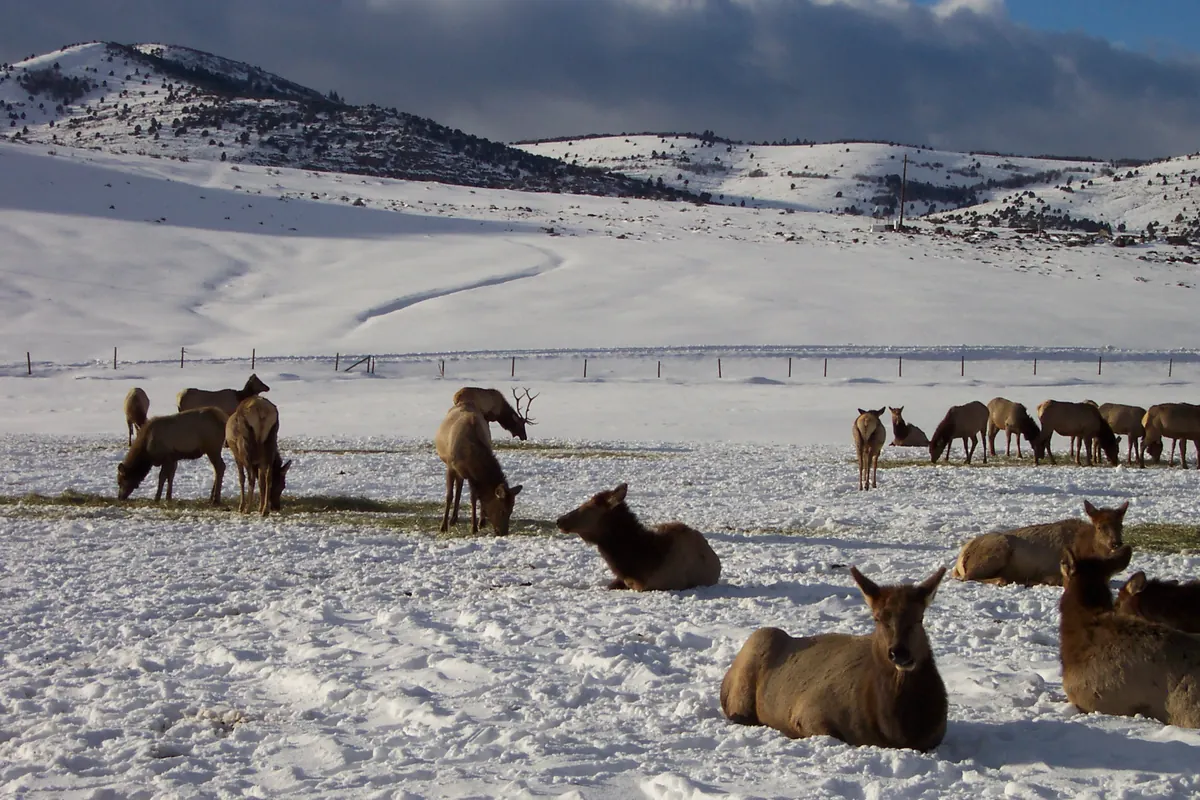
- Ride out among the elk. From Saturday, December 5, horse-drawn sleighs (or wagons when the snow is thin) carry visitors into the elk herd at Hardware Ranch, east of Hyrum. Weekends only, tickets sold on site the same day, and the elk come down on their own schedule.
- Geminids, then the Cold Moon. On the night of Sunday, December 13, wait until the thin crescent Moon has set in the evening, then watch for Geminid meteors until dawn. Ten nights later, on Wednesday the 23rd, comes the closest full moon of 2026, full at 6:28 p.m. Mountain time.
In the Naturalist’s Field Journal, let the birds-I-have-seen list hold the count-day tally and any rosy-finch; use mammal watch for elk at Hardware Ranch and a moose browsing willows; fill tracks to know with the first clean prints after a valley snow; and press a sprig of fir or juniper on the seeds, pods and cones page. Keep the dusk and dawn watch around December 8, near the year’s earliest sunset along the Wasatch Front, and again on the solstice two weeks later.
Regions used below: Cache Valley and the north; Wasatch Front and the Great Salt Lake; Wasatch Back and the Uintas; Uinta Basin; Central Utah and the high plateaus; Canyon Country and Moab; Color Country and St. George.
When is the Christmas Bird Count in Utah, and how can I take part?
The tradition dates to 1900: on one winter day, teams tally each bird inside a set circle 15 miles wide. National Audubon coordinates it, Utah’s circles each choose a day in the December 14 to January 5 window, and nobody pays to take part. In the 125th count season, the winter of 2024 to 2025, Utah held 25 counts, and the Provo circle found the most species in the state, 116.
-
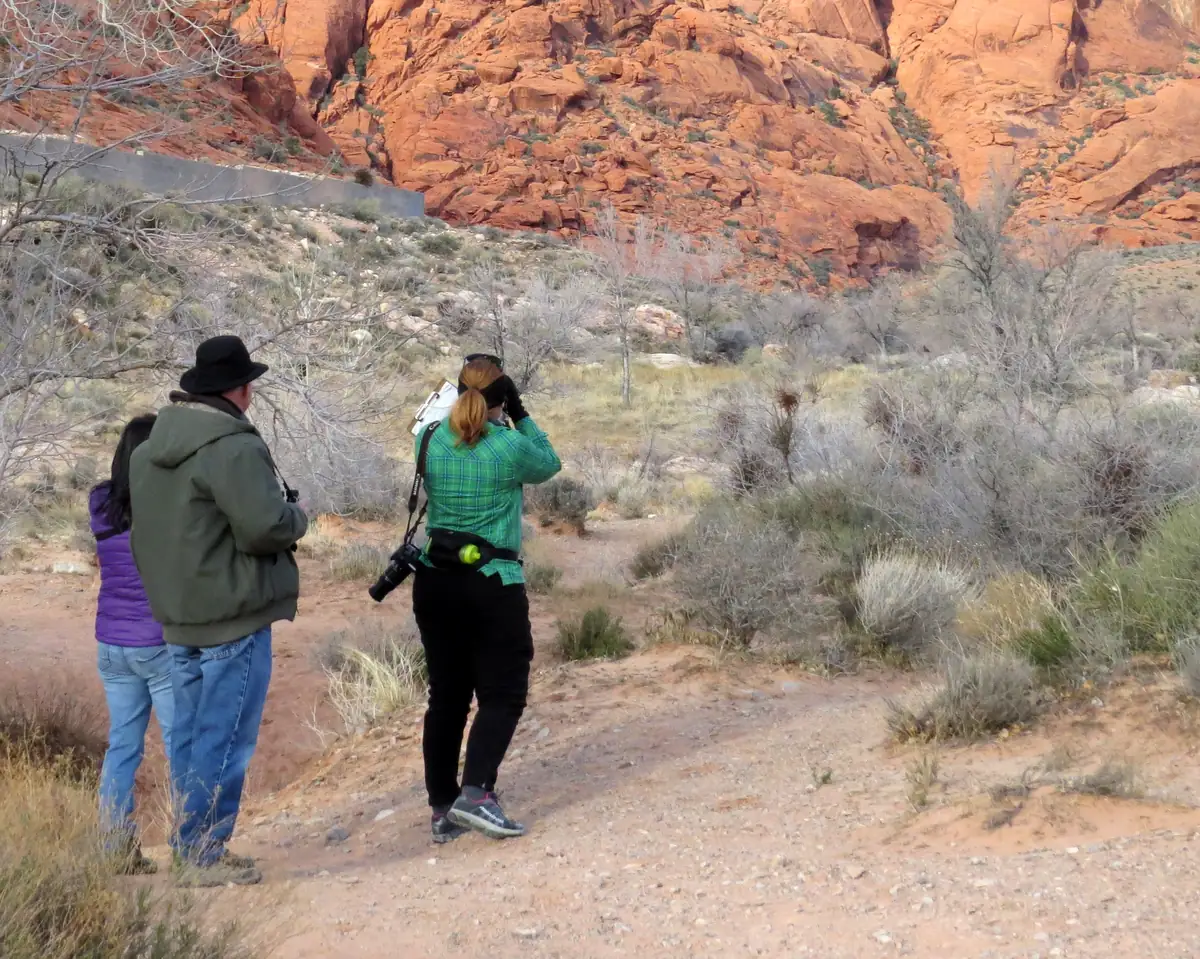
Cache Valley (Logan) count
Saturday, December 19, 2026 · A circle 7.5 miles in radius centered at Main Street and Hyde Park Lane, north Logan
Bridgerland Audubon has organized this count since 1955. Its circle covers about 177 square miles, split into eleven sectors, one of them an owling crew that starts at 4 a.m. The chapter says the day usually produces about 100 species. Sign up through Audubon’s Mobilize page; walk a sector with a leader or count from home, feeder or not.
-
The other Utah circles
Each circle picks one day between December 14 and January 5 · From Cache Valley to St. George, including Salt Lake, Ogden, Provo and the national parks
Local Audubon chapters and bird clubs run most Utah counts, and many had not posted 2026 dates in early October. Audubon’s circle map gives each count’s compiler; write ahead so a leader can place you, and beginners are paired with stronger birders.
-
What a Utah count turns up
All day, owls before dawn · Marshes, open water, river corridors, city parks and backyards
Northern counts lean on the ducks that stay while water stays open, such as mallards, goldeneyes and buffleheads, and on raptors: the Bear River refuge lists bald and golden eagles, rough-legged hawks, northern harriers and prairie falcons as winter regulars.
Missed your count? A list from your own window on December 19 still makes a good journal page, and eBird will take it.
Where can I see bald eagles and swans in Utah in December?
December is the hinge of the waterbird year on the Great Salt Lake. The Bear River refuge says December, January and February have its lowest waterbird totals, often under 20,000 birds, as the wetlands freeze and thaw over and over. What stays is hardy: a few ducks, some swans, and the eagles that come for them.
-
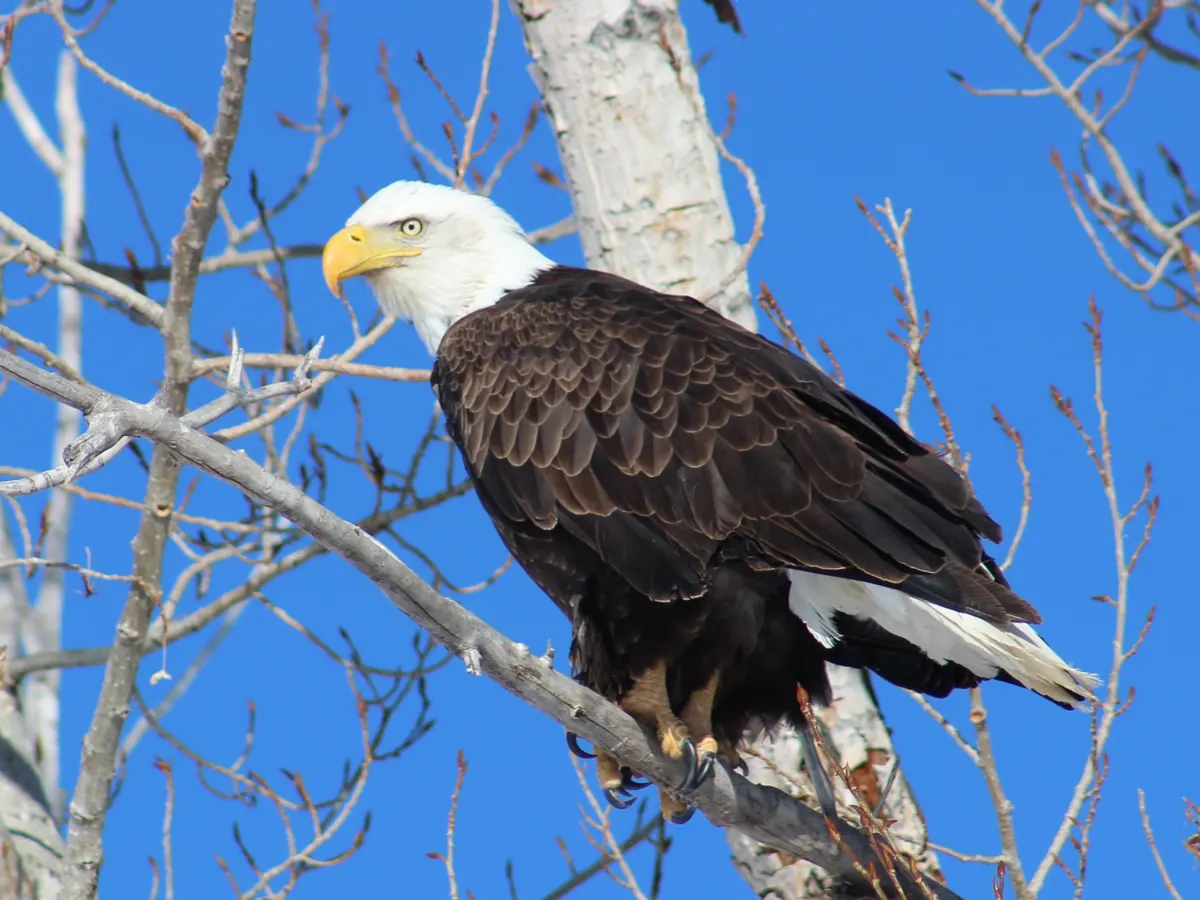
Bald eagles settling in
Numbers build through December toward a peak in late winter · Farmington Bay, Willard Bay, the Weber River, Salt Creek, Utah Lake, Sanpete County
Eagles are still arriving; the DWR says hundreds are here by February, and Bear River’s average peak, 63 birds, comes in the first week of March (the refuge record is 181, on March 8, 1992). The division’s guide also points to cottonwoods along the Weber River near Croydon and below Echo Reservoir, the Compton’s Knoll viewing area at Salt Creek Waterfowl Management Area west of Corinne (the rest of the area is closed), and Wales Reservoir and Utah Lake State Park. Scan the crowns of big trees slowly.
-
Eccles Wildlife Education Center
Open Tuesday to Saturday, 11 a.m. to 4 p.m., in the DWR’s latest listing · Farmington, at the edge of Farmington Bay Waterfowl Management Area
From this free center you can often see eagles out on the management area. Confirm hours before you go.
-
Tundra swans head for California
After the first solid freeze, often in early December · Bear River Migratory Bird Refuge and the marshes of Box Elder County
Once the shallow marshes lock up, the refuge says, most tundra swans move on to winter in California’s Sacramento and San Joaquin delta; in a mild winter some stay into February or later. If a hard cold snap is forecast, go the weekend before it.
-
The last eared grebes
The departure wave can run into December · Open water of the Great Salt Lake
In some years the grebes’ exodus only gets going in December, the DWR says, so a few rafts may remain early in the month.
Pull all the way off the road before you raise the binoculars; the DWR asks drivers never to stop in a lane for an eagle.
Which winter finches will come to Utah this year?
Utah’s winter bird list swings from year to year with the cone and seed crops of the West, and this is an unusual year. In its 2026 to 2027 winter forecast, published September 25, the Finch Research Network described a widespread failure of limber, whitebark, pinyon and ponderosa pine cones across the interior West. Utah’s pinyon and ponderosa country lies inside that region.
-
Red crossbills on the move
Already moving since late summer · Conifer stands with any cone crop; also spruce in parks and cemeteries
According to the forecast, Type 2 red crossbills started heading east out of the interior West in July and August. Crossbills pry seeds from closed cones with their crossed bill tips and wander wherever cones are. If you find some, record their calls with your phone and attach the audio to an eBird list; call types are how experts tell them apart.
-
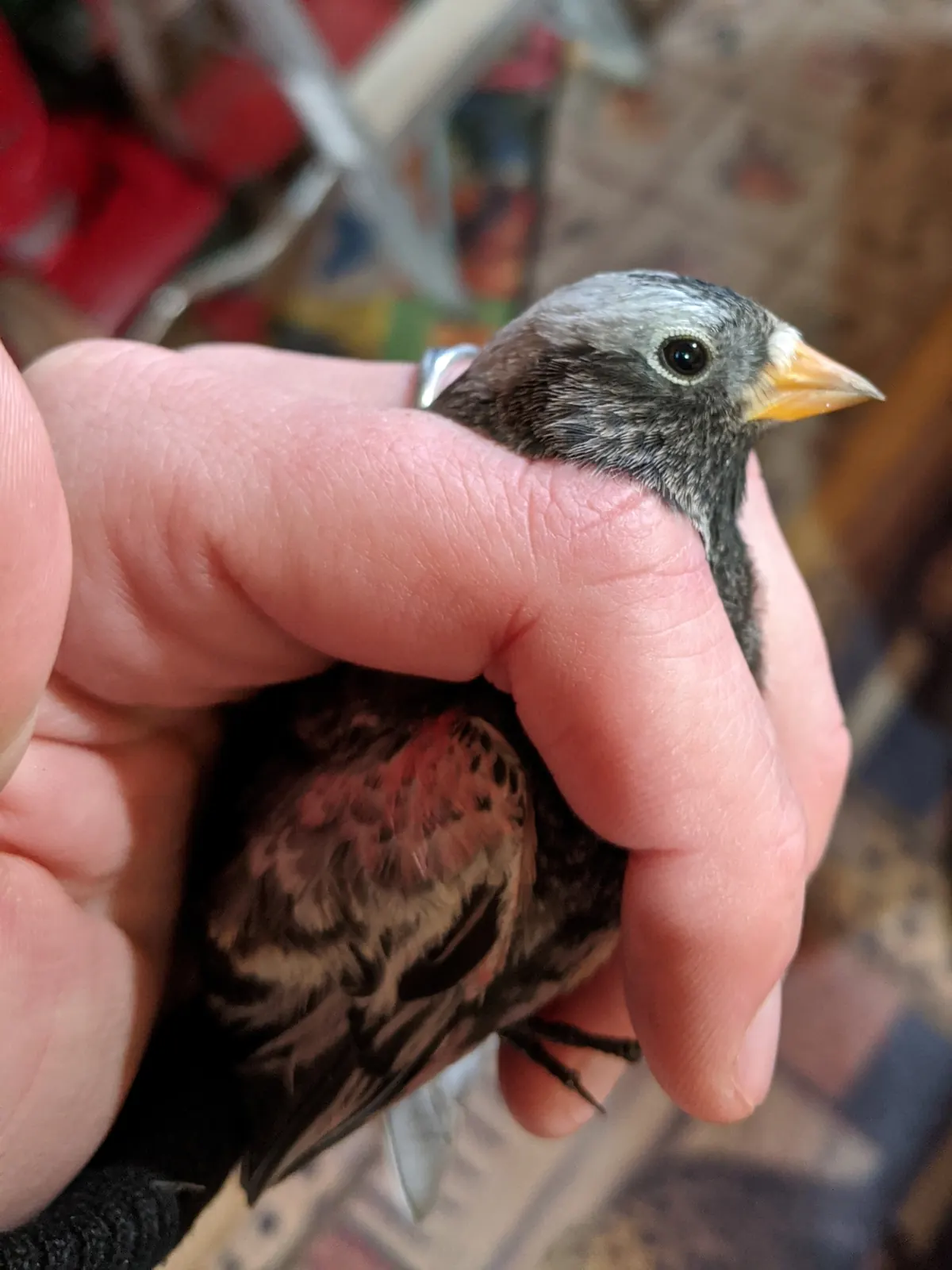
Rosy-finches in the high valleys
When storms push them off the peaks, often December through February · High mountain valleys and the towns in them
Black rosy-finches nest on the high summits of the northern Great Basin, and Audubon’s field guide says winter flocks drop into high valleys and often into towns. Males are blackish with a gray nape and rosy wash on belly and wings, and the bill turns yellow in winter. Audubon puts the population near 120,000, living on mountaintops that are among the habitats most exposed to warming.
-
Who probably will not come
This winter · Northern feeders
Pine siskins should head for good seed crops in the Northeast and British Columbia, a big mountain-ash crop should hold pine grosbeaks and Bohemian waxwings in the north, and redpolls should come south only in small numbers, mostly around the western Great Lakes. Any of them would be a real find here.
Project FeederWatch runs all winter; regular counts from one window will show which finches came and which never did.
Where can you see elk, moose and deer in Utah in December?
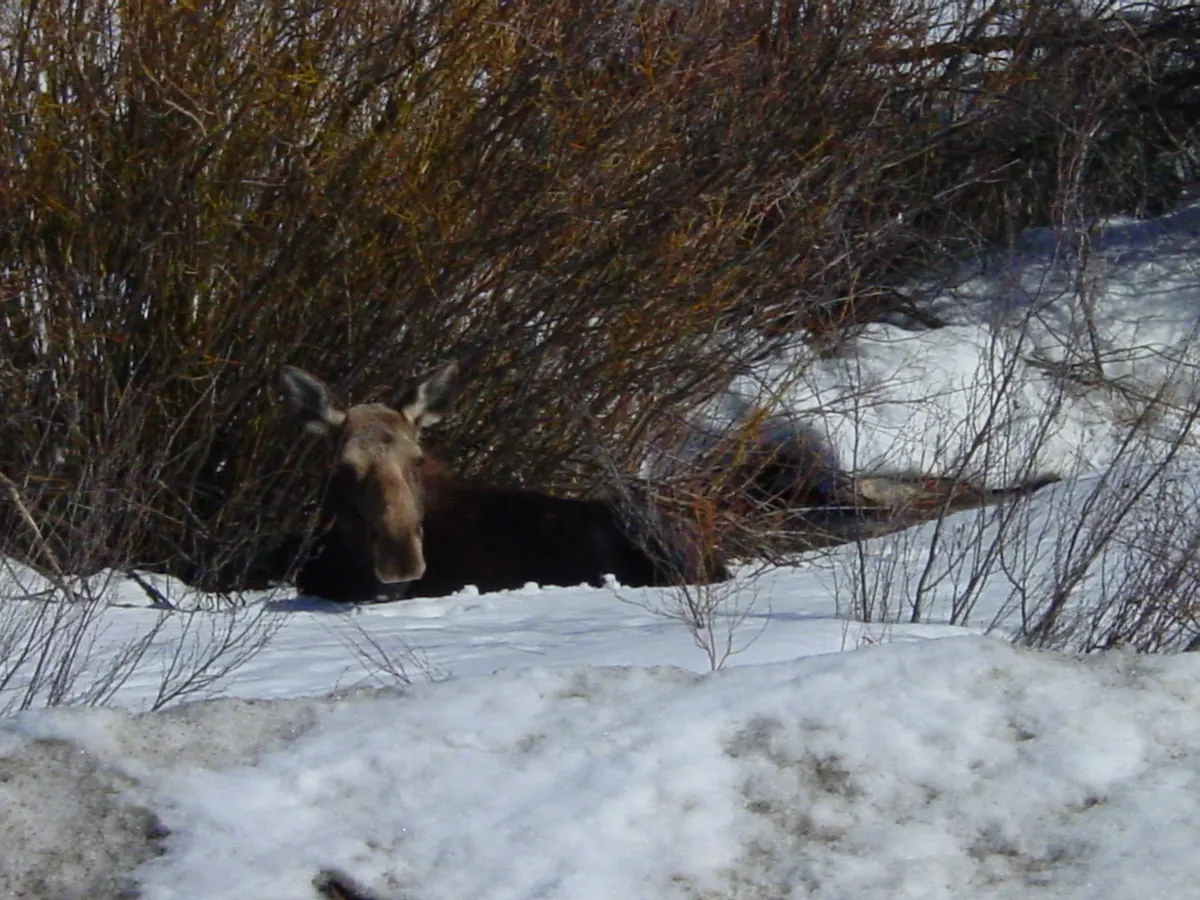
Deep snow on the high ground drives Utah’s big grazers down to winter range, closer to roads and towns than at any other time of year. That makes them easy to watch and easy to stress.
-
Elk and sleigh rides at Hardware Ranch
Rides Fridays, Saturdays and Sundays from December 5 to February 15, 10 a.m. to 4:30 p.m. · Hardware Wildlife Management Area, Blacksmith Fork Canyon, east of Hyrum
Each winter the DWR feeds 500 to 600 Rocky Mountain elk here on about 300 tons of grass hay grown on the ranch. Rides last about 45 minutes and cost $12.50 from age 9, $5 for ages 4 to 8, and nothing for children 3 and under; tickets are sold only at the education center on the day. The elk drift down when the weather turns harsh, and on some days stay up on the benches, so call ahead (435-753-6206) to ask where the herd is.
-
Moose in the foothills and neighborhoods
All winter · Northern and northeastern mountains, including the canyons and benches of the Wasatch Front
Utah has 2,500 to 3,000 moose, and Wild Aware Utah says that in winter they switch to bark and twigs, which can bring them into foothill neighborhoods. A lowered head, raised neck hair, a licked snout or pinned ears mean back away now; in some regions moose injure more people than bears.
-
Mule deer on winter range
All winter, most visible at dawn and dusk · Sagebrush benches, foothills and canyon mouths
Winter deer live on body fat plus sagebrush and other woody browse, and their gut microbes shift through the year to match. That is why Wild Aware Utah warns against feeding them: a sudden new diet can leave a deer full of food it cannot digest. Give them distance, leash the dog and drive slowly at dusk.
Write down the first day you see elk on the Hardware meadow and the snow depth that morning; after a few winters the pairs of numbers start to talk.
How do Utah’s animals and red-rock landscapes get through winter?
Winter strategies in Utah are as varied as its elevations: some animals sleep it out, some stockpile, and some just eat whatever is above the snow. Even the rock has a winter routine.
-
Utah prairie dogs, asleep since October
Hibernating from October until late March · Meadows of the Paunsaugunt Plateau in and around Bryce Canyon, and other colonies in southwestern Utah
Because plateau winters are so long, Bryce Canyon National Park says, its Utah prairie dogs go underground in October and hibernate until late March. Summer’s busy colonies are snowy mounds now.
-
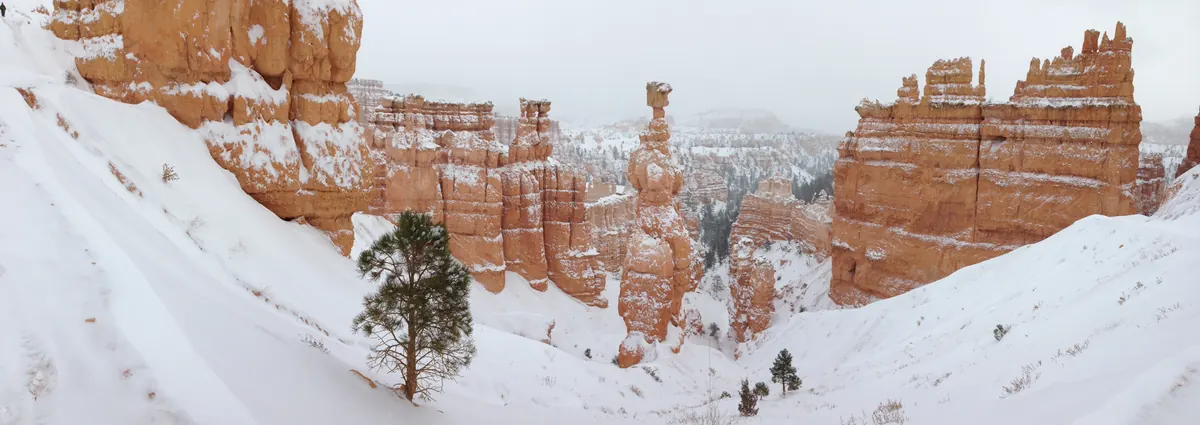
Ice that carves the hoodoos
On more than 170 nights a year · Bryce Canyon National Park
The park counts more than 170 nights a year when Bryce swings above and below freezing. Meltwater seeps into cracks, freezes, swells by about 9 percent and pries the rock apart; over ages that ice wedging turns walls into windows and windows into hoodoos. The park’s weather page lists December averages of 36 °F by day and 15 °F at night, about 14 inches of snow, and a record low of minus 23 °F.
-
Tracks in new snow
The morning after a light snowfall · Canyon trails, foothill fences, the edges of frozen ponds
An inch of new snow records everything. Look for the split hearts of mule deer, a coyote’s oval four-toed prints in a straight line, and the paired bounds of weasels and squirrels, and photograph each beside a glove for scale. Utah bars trail cameras on public land through December 31, and drones may not be used to find or watch wildlife until February.
Sketch one set of tracks on the tracks to know page and write down what you think the animal was doing: walking, running, stopping to sniff.
How do you tell Utah’s evergreens apart, and where can you cut a Christmas tree?
Once the aspens and oaks are bare, Utah’s mountains turn into a study in evergreens. A permit to cut your own Christmas tree is also a good excuse to learn them.
-
Christmas tree permits on national forests
Uinta-Wasatch-Cache in-person sales from November 9, 2026, while permits last; online through Recreation.gov · Uinta-Wasatch-Cache, Ashley, Fishlake, Dixie and Manti-La Sal national forests
All five of Utah’s national forests sell permits on Recreation.gov, each with its own rules. The Uinta-Wasatch-Cache caps trees at 20 feet with a stump of 6 inches or less, allows only subalpine fir on the Heber-Kamas district and only juniper in the Stansbury Mountains, and bans cutting limber pine. Fishlake says to take the whole tree, not just the top, restricts blue and Engelmann spruce in some districts and allows ponderosa only on Boulder Mountain. Wilderness, campgrounds, plantations, timber sales and streamsides are off-limits, and winter roads call for chains.
-
Fir or spruce?
Any time · Spruce-fir forest of the Uintas, the Wasatch and the high plateaus
Twirl a single needle: a flat, soft fir needle will not roll, while a square, sharp spruce needle does. Subalpine fir grows in narrow spires, and its upright cones shatter on the branch; spruce cones hang down and fall whole.
-
Pines and junipers lower down
Any time · Foothills, pinyon-juniper woodland and ponderosa forest
Pine needles come in bundles: one in singleleaf pinyon, two in Colorado pinyon, usually three in ponderosa, five in limber pine. Junipers have scaly leaves and blue, berry-like cones that birds eat all winter. This year, notice how few fresh pinyon and ponderosa cones hang on the branches.
Press one short twig of each kind on the seeds, pods and cones page, with the place and elevation where you found it.
How much snow does Utah get in December, and will it be a white Christmas?
In December the gap between Utah’s mountains and its deserts is at its widest. NOAA’s 1991 to 2020 normals give Alta, high in Little Cottonwood Canyon, 79.8 inches of December snow; the Salt Lake City airport averages 12.1 and Logan 15.8, while Moab gets about 5 and St. George none.
-
Chances of a white Christmas in Salt Lake City
December 25 · Salt Lake City, official records
By the Salt Lake City Weather Service office’s count, an inch or more of snow has covered Salt Lake City’s ground on December 25 in half the years since 1928, and 3 inches in 22 percent. Snow falling on the day itself is rarer: a measurable amount in 30 percent of years since 1884, an inch or more in 19 percent.
-
Zion in winter
All month · Zion Canyon and the Kolob Terrace
Expect afternoons of 50 to 60 °F, hard frost at night, ice on shaded trails, and some trail closures when ice falls from the cliffs. The park shuttle usually runs only from Christmas to New Year’s Day.
-
Inversion days
Between storms, all winter · Wasatch Front, Cache Valley and Uinta Basin
Between storms, cold air pools on the snowy valley floors under warmer air and haze builds until the next front clears it; a canyon drive often climbs into sun. Check air.utah.gov for no-burn days.
| Station | Snowfall | Average high | Average low |
|---|---|---|---|
| Logan (Utah State University) | 15.8 | 33.6 | 18.9 |
| Randolph | 13.7 | 29.0 | 6.3 |
| Salt Lake City airport | 12.1 | 39.0 | 25.3 |
| Tooele | 17.2 | 38.5 | 20.6 |
| Alta | 79.8 | 30.2 | 14.5 |
| Heber | 17.8 | 37.0 | 14.1 |
| Echo Dam | 16.4 | 35.6 | 14.2 |
| Provo (BYU) | 11.2 | 41.4 | 24.4 |
| Manti | 13.3 | 37.6 | 18.5 |
| Richfield | 4.7 | 41.0 | 16.2 |
| Bryce Canyon headquarters | 15.3 | 36.8 | 17.0 |
| Moab | 4.9 | 43.9 | 22.0 |
| Kanab | 5.3 | 48.5 | 24.6 |
| Zion National Park | 1.7 | 52.5 | 29.3 |
| St. George | 0.0 | 53.0 | 27.9 |
Randolph, in the Bear River valley of Rich County, averages a December low of just 6 °F, the coldest in the table. The Utah frost dates page shows when your station’s last spring freeze usually comes, which is the number to watch once winter turns.
Will a very strong El Niño bring Utah a big snow year?
This winter’s El Niño looks set to be a big one: the Climate Prediction Center’s outlook dated September 10 rated a very strong peak as more than 90 percent likely. Utah sits on the seam of El Niño’s usual pattern, so the answer depends on where you ski or shovel.
The south is the safest bet. Talking to Utah Public Radio, CPC meteorologist Scott Handel grouped parts of Utah with Arizona and New Mexico on the wetter side of the pattern and called the Great Basin and northern Utah more of a toss-up. State climatologist Jon Meyer sees the clearest signal in the south. History cuts both ways: the 1982 to 1983 winter ended with floodwater running down State Street, while 2015 to 2016 finished near normal.
For December itself, the north has often started slowly: Ski Utah’s Evan Thayer told KSL that northern snowpack in these winters tends to lag early and gain from January. The wild card is warmth; Joel Lisonbee of the National Integrated Drought Information System noted that mountain temperatures will decide between rain and snow.
NOAA’s December-to-February maps are due October 15; look for them among the Climate Prediction Center three-month outlooks. For this week’s storms, open our local forecast.
When is the earliest sunset in Utah, and how short is the shortest day?
Daylight is shortest at the solstice on Monday, December 21, yet sunsets reach their earliest almost two weeks sooner. In Salt Lake City the sun sets at 5:00 p.m. on December 8, its earliest of the year; by the solstice that has crept to 5:03, and by New Year’s Eve to 5:10. Sunrise keeps sliding later the whole time, from 7:33 a.m. on December 1 to 7:48 on the solstice and 7:52 on the 31st, which is why the darkest mornings come after the shortest day. Logan, the farthest north, bottoms out at 9 hours 9 minutes of daylight; St. George still gets 9 hours 37 minutes. Vernal, the farthest east of these cities, has the earliest sunset in the table, 4:51 p.m.; St. George, far to the west, sets latest, at 5:17 p.m. on December 6.
| City | Dec 1 | Dec 21 | Dec 31 | Earliest sunset |
|---|---|---|---|---|
| Logan | 9 h 23 m | 9 h 09 m | 9 h 13 m | 4:57 p.m., Dec 8 |
| Ogden | 9 h 26 m | 9 h 12 m | 9 h 16 m | 4:59 p.m., Dec 8 |
| Salt Lake City | 9 h 28 m | 9 h 15 m | 9 h 18 m | 5:00 p.m., Dec 8 |
| Provo | 9 h 31 m | 9 h 18 m | 9 h 22 m | 5:00 p.m., Dec 8 |
| Vernal | 9 h 30 m | 9 h 17 m | 9 h 20 m | 4:51 p.m., Dec 8 |
| Moab | 9 h 40 m | 9 h 29 m | 9 h 31 m | 4:57 p.m., Dec 7 |
| Cedar City | 9 h 45 m | 9 h 33 m | 9 h 37 m | 5:13 p.m., Dec 6 |
| St. George | 9 h 48 m | 9 h 37 m | 9 h 39 m | 5:17 p.m., Dec 6 |
Everyone gains back a few minutes by December 31. To see exactly when the light goes at your own trailhead, try the day length and twilight tool.
What can you see in Utah’s night sky in December 2026?
Long, dry nights make December a fine sky month if you dress for it. Ten Utah state parks, Antelope Island, Goblin Valley, Dead Horse Point and Snow Canyon among them, hold dark sky certification. Times below are Mountain Standard Time.
-
The Geminid meteors
Night of Sunday, December 13 into Monday, December 14 · Anywhere dark; the radiant near Castor and Pollux is high in the east by late evening
This is the year’s richest shower, and 2026 sets it up well. The International Meteor Organization places the maximum on the daytime side of December 14 for North America, which makes Sunday night the best bet, and calls it moon-free: the slim crescent sets in mid-evening, around 9 to 10 p.m. Counts rise with the radiant and peak near 2 a.m. The organization’s figure of 150 an hour is an ideal-sky number; real counts are lower, though a Utah desert comes close. Bring a sleeping bag and a thermos.
-
The solstice
Monday, December 21, 1:50 p.m. · Watch where the sun sets on the horizon
At 1:50 p.m. the sun turns north again. For days around it the sunset point on your skyline hardly moves, the old sense of solstice, a standing sun. That evening the gibbous Moon sits on or beside the Pleiades.
-
The Cold Moon
Full at 6:28 p.m. on Wednesday, December 23 · Rising in the east-northeast around sunset
Perigee follows the moment of fullness by roughly seven hours, which makes this the largest-looking full moon of 2026. It still looks round when it rises on Christmas Eve, and its light swamps the small Ursid shower around the 22nd.
-
Planets
All month · Saturn in the south and southwest after dark; Venus, Jupiter and Mars before dawn
After dusk, only Saturn shows among the planets: a steady pale-yellow point in the south and southwest, setting earlier each week. Venus is the dazzling point low in the southeast before sunrise; the waning crescent slides past it, with Spica in between, on the mornings of the 4th and the 5th. Jupiter, among the stars of Leo, is up in the east by mid-evening as the year closes; Mars, a dawn planet too, gains a little brightness week by week.
| Phase | Date | Time |
|---|---|---|
| New moon | Tuesday, Dec 8 | 5:52 p.m. |
| First quarter | Wednesday, Dec 16 | 10:42 p.m. |
| Full moon, the Cold Moon | Wednesday, Dec 23 | 6:28 p.m. (also looks full on Christmas Eve) |
| Last quarter | Wednesday, Dec 30 | 11:59 a.m. |
Next up, the Quadrantids peak on January 3, 2027, in the evening Utah time, with almost no Moon. Before a night drive, look at current cloud cover, and find moonrise times for your town with our phase calendar.
What can families do outdoors in Utah in December 2026?
- Every Wednesday (December 2 to 30): bird walks at Fielding Garr Ranch. Antelope Island State Park hosts an hour-long walk through the ranch’s busy wetland, 9 to 10 a.m., meeting at the ranch picnic area; there is no charge beyond park entry, and binoculars can be borrowed.
- From Saturday, December 5: sleigh rides at Hardware Ranch. Fridays to Sundays, 10 a.m. to 4:30 p.m., tickets at the education center on the day.
- Saturday, December 12: Second Saturday trail cleanup. Utah’s Hogle Zoo and the Jordan River Commission meet at Millrace Park in Taylorsville, 10 a.m. to noon, to clear trash before it reaches the Jordan River; free.
- Sunday night, December 13: Geminid meteors. Start after the crescent Moon sets; younger children can catch a few before bedtime, though the best rates come later.
- Tuesday, December 15: garden storytime. Salt Lake County Library brings songs and stories for little ones to West Jordan’s Conservation Garden Park, no charge, with sessions at 9 and 10 a.m.
- Wednesday, December 16: Shoshone plant stories. Tracy Aviary’s monthly program on how Northwestern Shoshone families have used Utah plants, at 10 a.m. in Liberty Park, free with aviary admission.
- Saturday, December 19: the Cache Valley Christmas Bird Count. Families can count at a home feeder inside the circle or join a field sector.
- Saturday, December 26: Birding 101 and a community bird walk at the Ogden Nature Center with Wasatch Audubon, 9 to 11 a.m., free; register ahead. The listing also says the monthly series skips December, so check with the nature center before you go.
- New Year’s Day 2027: First Day Hikes. This nationwide state park tradition puts rangers and hikers on trails on January 1; Utah State Parks had not posted its list when we checked, so watch its events calendar in December.
- Citizen science. Put your counts on eBird and Project FeederWatch, and post winter tracks, mosses and lichens to iNaturalist.
Give each outing its own dated entry in the Naturalist’s Field Journal. If you missed the swans, Utah’s November page has them; other states are on the nature index.
Safety notes for December in Utah
- Hunting seasons open in December. Waterfowl: ducks to January 16 in the northern zone and January 23 in the southern zone; dark geese to January 31 in the northern area and February 15 on the Wasatch Front; the first light-goose segment closes December 22 in the north and December 15 in the south; tundra swans close December 13. Upland: pheasant through December 6, quail and ruffed and dusky grouse through December 31, chukar and gray partridge to February 15, cottontails to February 28. Big game: extended archery elk runs to December 15 (to January 31 in West Cache), limited-entry late archery elk from November 28 to December 13, and a HAMSS bull elk hunt on the East Canyon unit from December 19 to 27. Expect hunters at waterfowl management areas on any December morning.
- Hunter orange. Utah Code 23A-11-205 makes big game hunters display hunter orange on an outer garment. Archers, muzzleloader and HAMSS hunters are exempt wherever no general any-legal-weapon buck or bull hunt is under way, which in December means everywhere. The DWR strongly encourages orange for upland bird hunters, and skiers and snowshoers on public land are wise to wear something bright too.
- Ice. Utah State Parks sets 4 inches of clear, hard ice as the minimum for walking and 6 for snowmobiles or ATVs, and warns that ice is never completely safe. If you go through, remember its 1-10-1 rule: about a minute to get your breathing under control, roughly ten minutes of useful movement, and about an hour before hypothermia takes over.
- Avalanches. Steep backcountry slopes in the Wasatch and Uintas can slide in any storm cycle. Read the Utah Avalanche Center forecast before skiing, snowshoeing or sledding near steep ground, and carry rescue gear and the training to use it.
- Moose and winter driving. Give moose a wide berth on trails and in neighborhoods. On canyon roads, carry chains, food and a blanket, and expect deer and elk on the pavement at dusk.
- Cold and short days. Most of Utah loses the sun near 5 p.m., and clear nights on the high plateaus can drop below zero. Dress in layers, carry a headlamp, and on snowy trails plan on twice your normal hiking time, as the state parks advise.
Sources
- Bridgerland Audubon Society: Cache Valley (Logan) Christmas Bird Count, December 19, 2026
- Audubon Community Science on Mobilize: Cache County-Logan Christmas Bird Count sign-up
- National Audubon Society: join the Christmas Bird Count (December 14 to January 5)
- National Audubon Society: join or start a Christmas Bird Count (circle finder and compilers)
- National Audubon Society: the 125th Christmas Bird Count summary (Utah counts and top circle)
- U.S. Fish and Wildlife Service: monthly bird happenings, Bear River Migratory Bird Refuge (PDF; winter birds, swans, eagle peak)
- Utah DWR: bald eagle viewing in Utah (2026 flyer, PDF)
- Utah DWR Great Salt Lake Ecosystem Program: birds of the lake (eared grebes, tundra swans)
- Finch Research Network: winter finch forecast 2026 to 2027 (September 25, 2026)
- National Audubon Society field guide: black rosy-finch
- Project FeederWatch: how to participate
- eBird
- Utah DWR: Hardware Wildlife Management Area
- Utah DWR: visiting Hardware Ranch, 2026 to 2027 sleigh and wagon rides
- Wild Aware Utah: moose
- Wild Aware Utah: mule deer (winter diet and why not to feed deer)
- National Park Service: Utah prairie dogs at Bryce Canyon
- National Park Service: hoodoos and the freeze-thaw cycle at Bryce Canyon
- National Park Service: Bryce Canyon weather (December normals and record low)
- National Park Service: Zion seasons (winter conditions and holiday shuttle)
- Utah DWR Wildlife Notebook: American black bear (PDF, via Wild Aware Utah)
- Utah DWR: bear incidents doubled from last year (August 27, 2026)
- Recreation.gov: Christmas tree permits by national forest
- Recreation.gov: Uinta-Wasatch-Cache National Forest Christmas tree permit (2026 rules)
- Recreation.gov: Fishlake National Forest Christmas tree permit
- NOAA NCEI: 1991 to 2020 monthly normals, December, Utah stations (data API)
- National Weather Service Salt Lake City: White Christmas information (climate book, PDF)
- National Weather Service Salt Lake City: climate book
- Utah Division of Air Quality: conditions and burn forecast
- Climate Prediction Center: ENSO diagnostic discussion, September 10, 2026
- Climate Prediction Center: official 90-day outlooks (winter outlook issued October 15, 2026)
- Utah Public Radio: strong El Niño could bring Utah a wetter winter (September 4, 2026)
- Fox 13: could a super El Niño bring Utah a big snow year? (state climatologist Jon Meyer)
- KSL: what a super El Niño could mean for Utah ski resorts (August 2026)
- U.S. Naval Observatory: phases of the Moon from November 2026 (data API)
- U.S. Naval Observatory: Earth’s seasons, 2026 (solstice time, data API)
- International Meteor Organization: 2026 meteor shower calendar (PDF, archived)
- EarthSky: what is a supermoon? (2026 full supermoons)
- JPL Horizons ephemeris service (planet and Moon positions)
- Utah State Parks: dark skies (ten certified parks)
- Utah State Parks: bird walk at Fielding Garr Ranch, December 16, 2026 (one of five Wednesday walks)
- Utah State Parks: events calendar
- Utah Outdoor Recreation: Second Saturday trail cleanup, Taylorsville, December 12, 2026
- Utah Outdoor Recreation: storytime at Conservation Garden Park, December 15, 2026
- Tracy Aviary: the Shoshone Plant Experience, December 16, 2026
- Utah Outdoor Recreation: Birding 101 and community bird walk, Ogden Nature Center, December 26, 2026
- America’s State Parks: First Day Hikes
- iNaturalist
- Utah DWR: what hunters should know about the 2026 waterfowl season
- Utah DWR: what hunters should know about the 2026 upland game hunts
- Utah DWR: 2026 to 2027 Waterfowl, Upland Game and Turkey Guidebook (PDF; pheasant and quail dates, orange advice)
- Utah DWR: 2026 Utah Big Game Field Regulations guidebook (PDF; December hunts, hunter orange, trail cameras, drones)
- Utah State Legislature: Utah Code 23A-11-205, hunter orange
- Utah State Parks: cold weather and ice safety
- Utah Avalanche Center
- Photos via Wikimedia Commons; licenses and photographers are credited under each picture
