What to look for in nature in Utah this February
February closes out meteorological winter, and in Utah it is a month that faces two ways. On average, Alta’s February snowfall tops that of every other month, and the high country is still deep in it. Yet down in the marshes and fields, the first northbound travelers are already arriving: thousands of snow geese drop into the farm fields around Delta, red-winged blackbirds start singing from the cattails at Bear River, and golden eagles tidy their cliff nests before laying eggs. The bald eagles that wintered here are at their most numerous, the evenings run past six o’clock by mid-month, and two bright planets reach opposition in the same week. Here is the Utah February, from Cache Valley to St. George.
Other months in Utah: October, November, December, January.
Start here
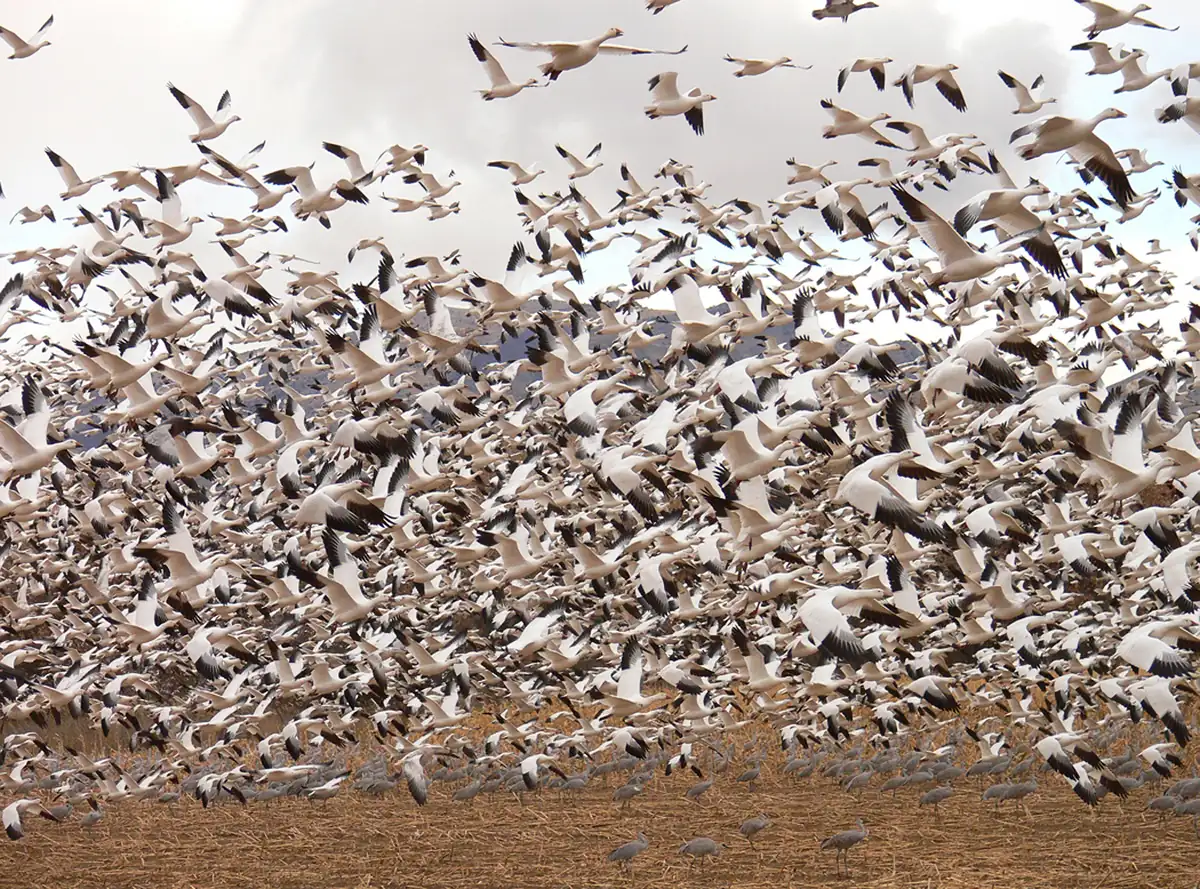
- Watch the geese lift off at Delta. Snow geese pass through the Delta area in late January and February. Get to Gunnison Bend Reservoir, west of town, by midmorning, when the flocks usually leave the fields for the water, or come back in the late afternoon to see them head out again.
- Count birds for four days. This year’s Great Backyard Bird Count covers the four days from February 12 to the 15th. Fifteen minutes at a window, a park pond or the Eccles Wildlife Education Center counts, and every list helps.
- Two planets at opposition. Jupiter reaches opposition in midweek, on February 10, with Mars nine days behind on the 19th. Both rise around sunset and stay up all night in Leo; on Saturday the 20th the full Snow Moon joins them.
In the Naturalist’s Field Journal, put the snow goose flight on a dusk and dawn watch page, with the times the flocks lifted off. Add the first singing red-winged blackbird to birds I have seen, start a map of sounds for coyote choruses after dark, and use reading the signs for fresh coyote or fox tracks in late snow. If you find a golden eagle carrying sticks to a cliff ledge, give it a nest observed entry, watched from far away.
Regions used below: Cache Valley and the north; Wasatch Front and the Great Salt Lake; Wasatch Back and the Uintas; Uinta Basin; Central Utah and the high plateaus; Canyon Country and Moab; Color Country and St. George.
When do snow geese come to Delta, Utah, and how do you see them?
Every late winter, the farm country around Delta in Millard County turns white with birds. Snow geese that spent the winter farther south stop here on their way north, feeding in the stubble fields and resting on the reservoir west of town. The Division of Wildlife Resources says the flocks move through the Delta area in late January and February, and up to 20,000 geese, most of them snow geese, have used the reservoir during past festivals.
-
Gunnison Bend Reservoir
Late January through February; most active midmorning and late afternoon · Gunnison Bend Reservoir and the surrounding fields, just west of Delta
The geese keep a daily schedule. At first light they feed in the fields around the reservoir; then, usually between 9 and 10:30 a.m., the DWR says they take off together and fly to the water, where they spend the next few hours. Some time between 4 and 6 p.m. they rise again and head back to the fields. The takeoff is the moment to wait for: thousands of white bodies with black wingtips, and a noise you can hear long before you can see them. Bring binoculars and watch from public roads and pullouts.
-
The Delta Snow Goose Festival
Annual, usually a Friday and Saturday in the second half of February · Delta, with free DWR viewing at Gunnison Bend Reservoir
The Delta Chamber of Commerce runs the festival, and DWR biologists set up at the reservoir both days to help visitors find the flocks and to explain the migration. In 2026 it was held February 20 and 21. No 2027 dates were posted as of early October; check the Delta Chamber of Commerce or the DWR news page before planning the drive.
-
Snow, Ross’s and blue geese
Whenever the flocks are in · Fields and reservoirs in Millard County
In winter a snow goose can look entirely white except for its black wingtips, as the DWR describes it. Look closely in the flock for smaller Ross’s geese, with stubby bills, and for the dark blue morph of the snow goose. Hunters may take these light geese in the southern goose area from January 15 to March 10, but the 2026 to 2027 guidebook closes Millard County to light goose hunting from February 15 to 28, during the second half of the month.
Snow geese are not the only waterbirds moving in the south. The DWR also points to Jackson Flat Reservoir in Kanab, where mallards, American wigeons, northern shovelers, cinnamon teal, northern pintails and redheads are the likeliest ducks, and trumpeter swans turn up now and then.
Is February the best month to see bald eagles in Utah?
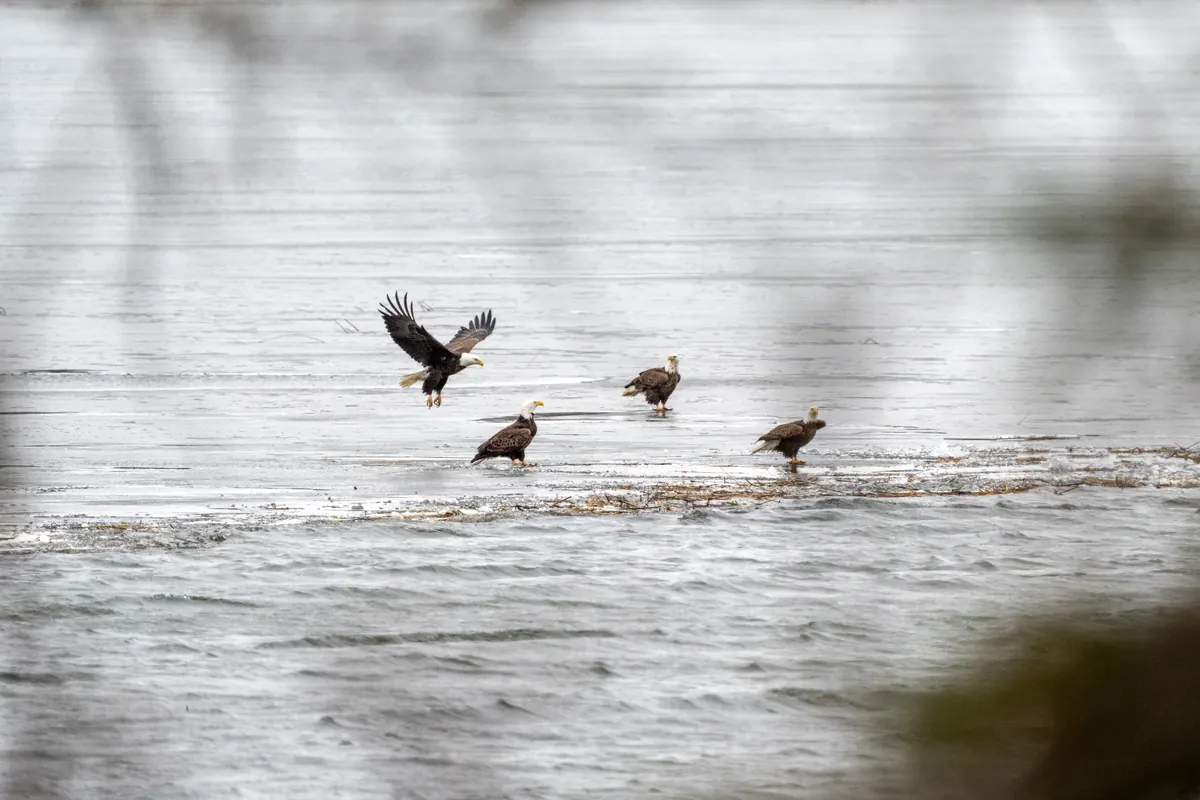
Yes, by the DWR’s own reckoning: its viewing guide names February as the prime eagle month, with hundreds of birds in the state as it starts. The birds spent December arriving and January crowding around open water. Now they are at their most numerous, and before long they start drifting back north.
-
Peak numbers, then the turn north
All month; the Bear River peak usually comes in the first week of March · Bear River Migratory Bird Refuge, Farmington Bay, Willard Bay, Utah Lake, the Cedar City and Sanpete roosts
An older month-by-month summary from Bear River Migratory Bird Refuge, updated in 2016, puts the refuge’s average eagle peak at 63 birds in the first week of March, with an all-time high of 181 counted on March 8, 1992, and says the eagles are mostly gone by the end of March. So late February is the run-up to the top of the season along the Bear River. Watch for eagles standing on the ice beside open leads, and for a young bird and an adult squabbling over a fish or a dead duck.
-
Telling an adult from a youngster
Any time · Wherever eagles perch
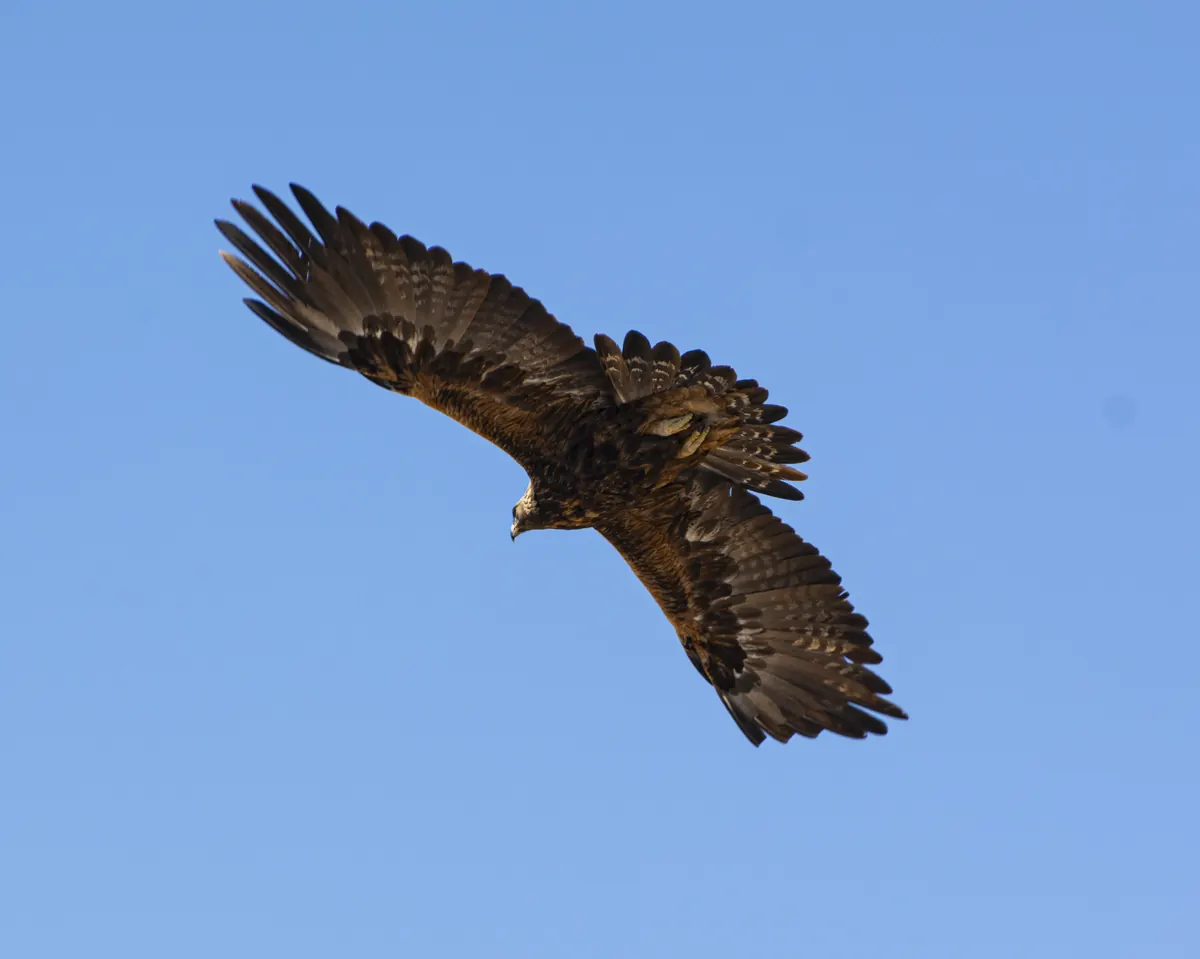
White heads and tails come only with adulthood, at four or five, so most gatherings include several mottled brown immatures. The DWR guide adds that bald eagles are not actually bald, that females are larger than males, and that a wingspan runs 6 to 7.5 feet. A young bald eagle and an adult golden eagle can look alike at a distance; the golden has a smaller head and, when perched, feathered legs right down to the toes.
-
DWR viewing events
Some years in February; watch the DWR’s news page · Statewide
The division has a long tradition of February eagle-watching events with spotting scopes and biologists, but it does not hold them every year, and none had been announced for 2027 in early October. The Eccles Wildlife Education Center at Farmington Bay remains the warmest option, which the DWR’s recent flyer lists as free and open late morning to late afternoon, Tuesdays through Saturdays. For the roost sites and the January build-up, see Utah’s January page.
Spotted one from the highway? The DWR asks drivers to pull completely off the road before looking. Log your eagles on eBird, with a note on how many are adults.
Which Utah birds of prey start nesting in February?
For a few of Utah’s raptors, February is not the end of winter but the start of the breeding year. The great horned owls began first, and two cliff nesters, the golden eagle and the peregrine falcon, are back at their ledges.
-
Golden eagles at the nest
Eggs usually laid from late February to early March · Cliffs and big trees, especially in canyon country, the West Desert ranges and the mountains
The golden eagle became Utah’s official state bird of prey in 2022, and the DWR noted at the time that most of Utah’s goldens stay in the state all year. Pairs mate for life and often reuse the same nest for many years, usually on a cliff. In Utah they normally lay eggs from late February to early March, typically two, and the female does most of the incubating, for about 45 days. If you find an active nest, watch it with a spotting scope from well away.
-
Peregrines return to Zion’s walls
Arriving at nesting cliffs before March 1 · Zion National Park: Angels Landing, the Great White Throne, Cable Mountain, Mount Kinesava and other big walls
Every year Zion closes the climbing routes on cliffs used by nesting peregrine falcons starting March 1, and the park says that date comes from its monitoring of when peregrines arrive at their nest sites, a record kept since 2001. In other words, by the end of February the falcons are back on the sandstone. Scan the upper cliffs for a compact, pointed-winged falcon flying fast along the walls. A pair that is disturbed during nesting may abandon the site for the rest of the year, which is the reason for the closures.
-
Owls on eggs
All month · Cottonwood bottoms, canyons and older neighborhoods
The great horned owls that started hooting in December are now incubating in borrowed hawk nests and on rock ledges. If you know where a pair nested last year, check it with binoculars from a distance for an ear-tufted head above the rim, then leave it be.
Avian flu has hit Utah’s raptors and owls in recent winters, so do not handle a dead hawk, eagle or owl. The DWR asks people to report any dead raptor or scavenger to the nearest division office.
What are the first signs of spring in northern Utah in February?
Spring migration at the Great Salt Lake does not wait for March. Even while the marshes freeze and thaw, the first returning birds start to show and to sound off along the Bear River and the lake’s eastern shore.
-
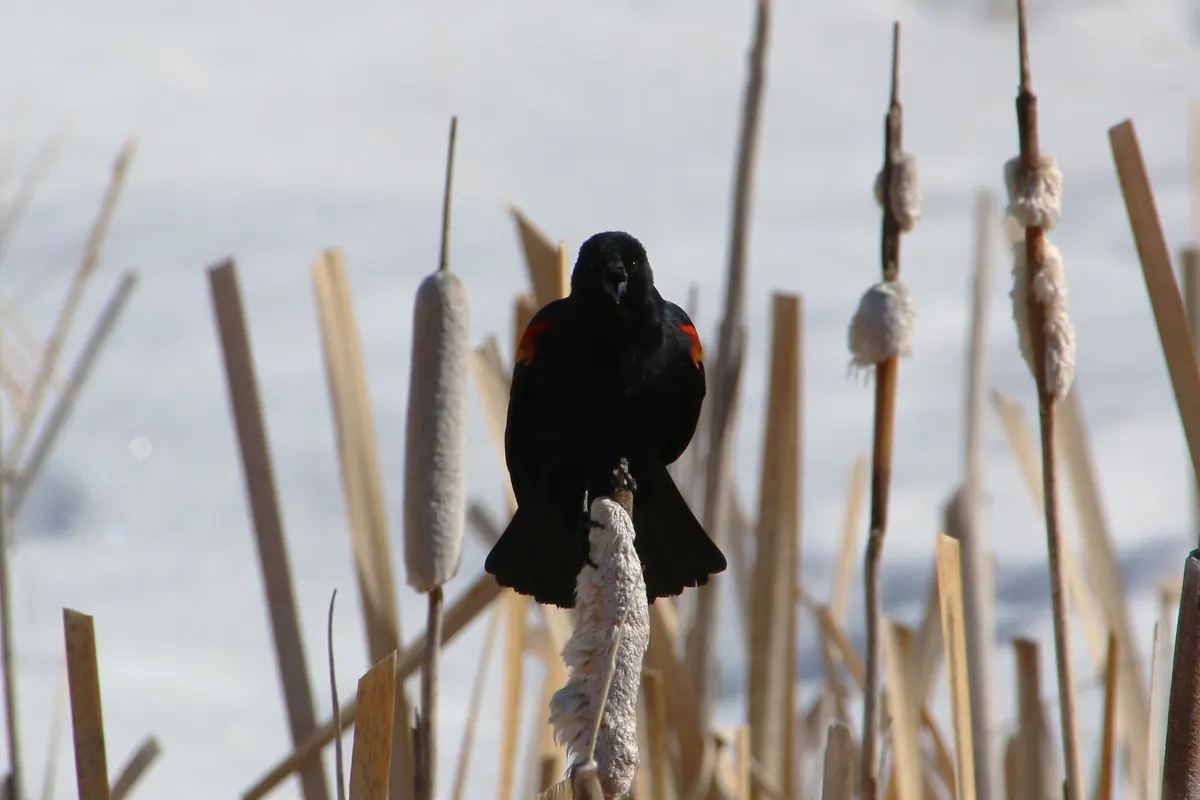
Red-winged blackbirds start singing
February · Cattail marshes at Bear River Migratory Bird Refuge, Farmington Bay and Salt Creek
Bear River Migratory Bird Refuge marks February with one short line in its seasonal calendar: the red-winged blackbirds begin to sing. Males claim a cattail stalk, puff out their red shoulder patches and give a gurgling, rising song. It is one of the first territorial songs of the year in the marsh, and worth noting the date you first hear it.
-
Swans on the move
Late in the month; the spring peak is usually in March · Bear River auto tour route, Compton’s Knoll at Salt Creek, Farmington Bay
Utah sits on a main spring route for both tundra and trumpeter swans, the DWR says, and the birds rest and refuel in its wetlands on their way to Canada and Alaska. In a mild winter some tundra swans never leave Bear River at all and stay through February. The big flocks come later: the DWR puts the spring peak in March, when the Bear River auto tour can show thousands. To tell them apart, look for the yellow mark near a tundra swan’s eye, which the bigger trumpeter lacks.
-
Changes at Farmington Bay
Usually from mid-February · Farmington Bay Waterfowl Management Area
The DWR closes motor vehicle access through the Goose Egg Island gate each year from mid-February into September to protect nesting birds; in 2026 the closure began on February 16. You can still walk or bike in. Check the WMA page before going, since dates and gate hours can change.
Sandhill cranes, which Wild About Utah says arrive in March, and the refuge’s big late-March duck flights are still weeks away. The marsh can still freeze hard overnight in February, so a warm morning is the best time to listen.
Why are coyotes and foxes so active in Utah in February?
Late winter is mating season for Utah’s wild dogs. Coyote pairs and red foxes travel farther, call more and show up in odd places, including backyards, golf courses and the edges of new subdivisions.
-
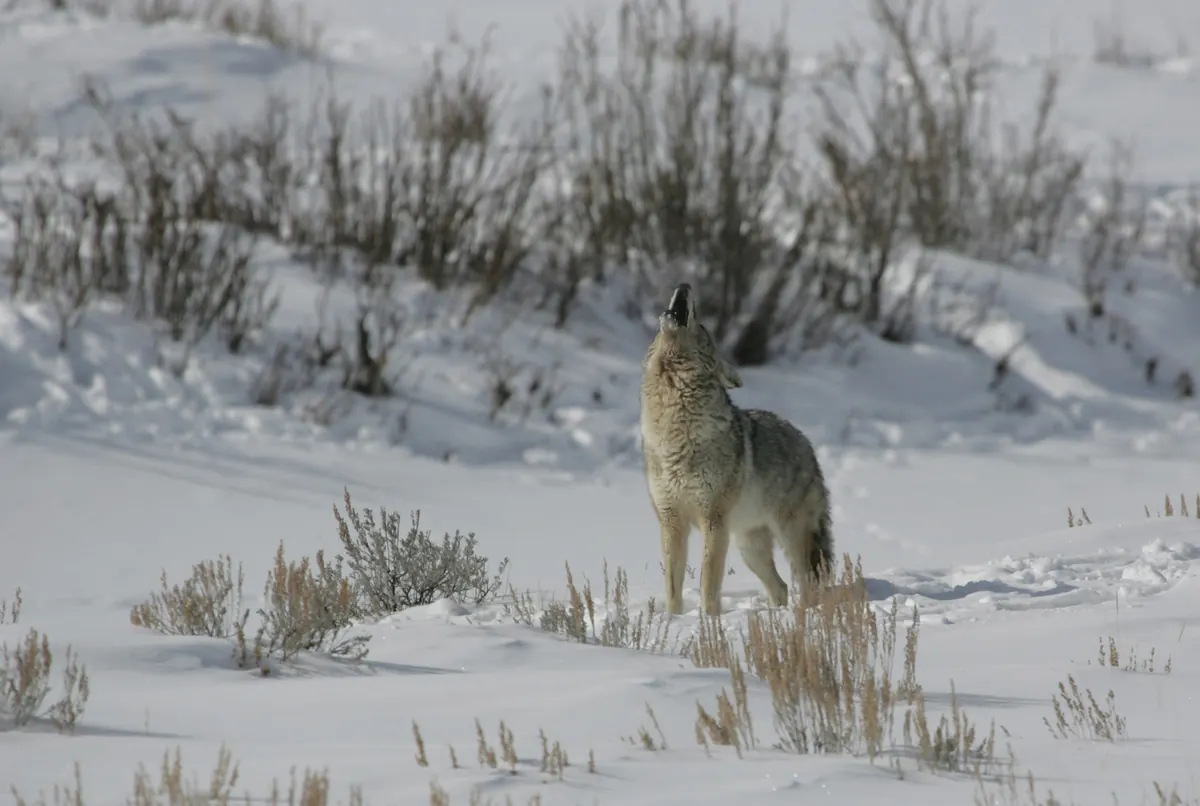
Coyote choruses
Mating season runs roughly December to February, with breeding into March · Statewide, from sagebrush valleys to suburbs along the Wasatch Front and in Washington County
According to Wild Aware Utah, whose partners include the DWR, coyotes grow more vocal and territorial during the mating season and again while raising pups from April to July. A Utah Tech wildlife biologist told KUTV in January 2026 that coyotes in the St. George area change their movements during breeding and may wander into neighborhoods they usually avoid. They are rarely a danger to people, but a cat or small dog is the size of their prey. Keep pets in at night, walk dogs on a leash, and do not leave pet food outside.
-
Red foxes pairing up
Breeding mid-January to early February; kits born March to May · Valleys and towns, especially along the Wasatch Front
Red foxes breed from mid-January into early February, according to Wild Aware Utah, and the pair then readies a den in the ground or under a rock or building, often one they use year after year. Late in the month, listen at night for short barks and an eerie scream, which are normal fox calls rather than an animal in distress. A pair of fox tracks in a straight line across fresh snow is a good find for the journal.
-
Antlers on the ground
Late winter · Winter range on foothills and benches
Mule deer bucks and bull elk drop their antlers through late winter. Remember that Utah requires a free online ethics course before you gather sheds between January 1 and May 31, and that walking through winter range in February costs deer energy they cannot spare.
The DWR lists Hardware Ranch’s sleigh and wagon rides into the elk herd in Blacksmith Fork Canyon as running Fridays through Sundays to February 15. That makes February 13 and 14 the final weekend; call the center to ask whether rides also run on Presidents’ Day.
How do Utah’s deer and elk make it to the end of winter?
For mule deer, the end of February is the hard part. Fat reserves built in the fall are nearly spent, the snow on the benches is often crusted, and green-up is still weeks away. Biologists use this stretch of the year to measure how the herds are doing.
-
Helicopter captures and collars
Typically November to March · Winter ranges statewide
Each winter the DWR captures big game with a helicopter crew and a net gun, checks each animal’s health and fits GPS collars before releasing it. During the 2025 to 2026 winter the division handled 1,433 animals, including 1,022 deer, 239 elk, 88 bighorn sheep, 34 moose, 30 bison and 20 mountain goats. Captures in March measure body fat coming out of winter, check whether does are pregnant, and place transmitters that signal when a fawn is born. Cold weather helps the animals recover from the stress.
-
When the DWR feeds deer, and why you should not
Only in severe winters · Places where deep snow buries winter forage
In January 2023, after deep snow and poor body condition in Rich and Summit counties, the DWR started emergency feeding with pellets made for a deer’s digestion; the time before that was 2017. The division warns that deer fed hay can starve with full stomachs, and it will not feed where chronic wasting disease is present, since crowding deer spreads it. Its biologists also point out that losing some fawns and old animals in a hard winter is normal for mule deer. The best help from the public is distance.
Give deer and elk plenty of room on ski trails and dog walks this month; every time they run through deep snow they burn energy they need to reach spring.
Is February the snowiest month in Utah’s mountains?
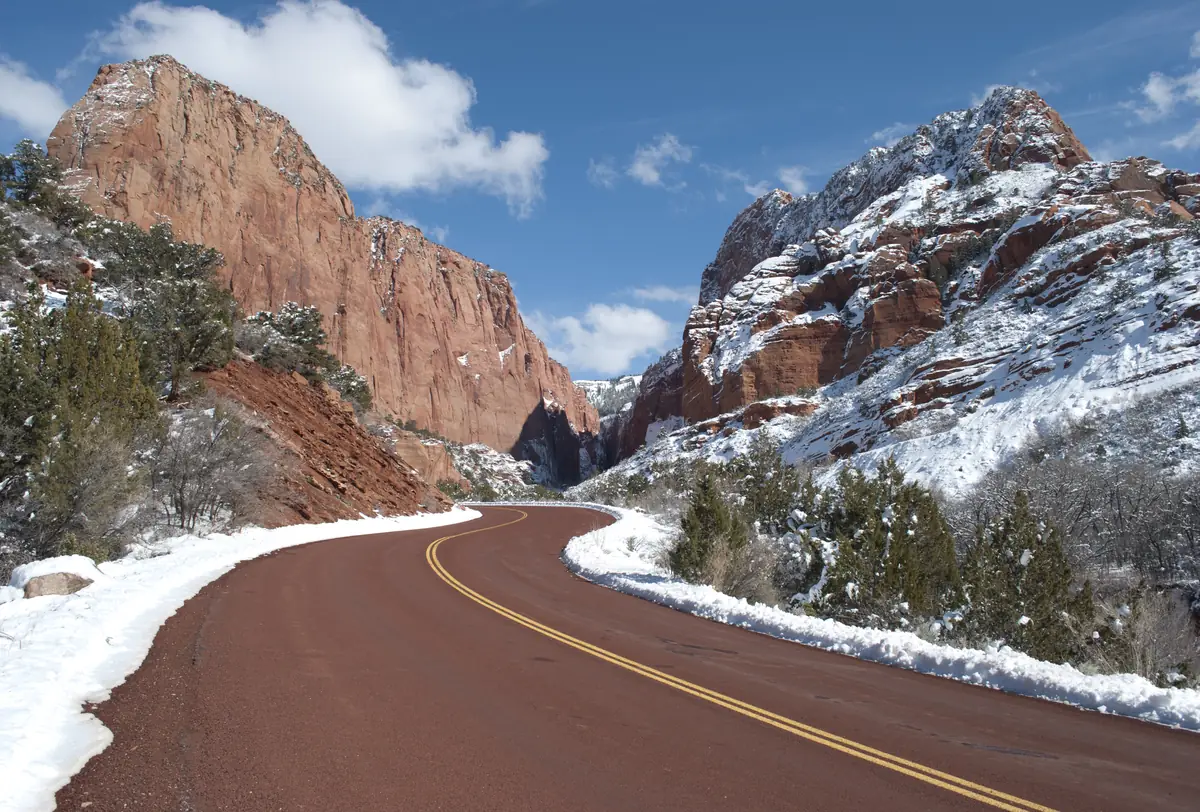
At Alta, it is. In NOAA’s 1991 to 2020 normals, the town at the top of Little Cottonwood Canyon averages 81.2 inches of snow in February, a little more than December and January and more than any other month of the year. Lower down the picture changes: most valley stations see their snowfall ease off after January, and the southern towns start warming. The table shows a spread of stations from north to south.
| Station | Snowfall | Precipitation | Average high | Average low |
|---|---|---|---|---|
| Logan (Utah State University) | 12.2 | 1.61 | 36.9 | 21.1 |
| Randolph | 12.6 | 1.05 | 31.6 | 6.5 |
| Salt Lake City airport | 10.7 | 1.30 | 44.7 | 28.6 |
| Alta | 81.2 | 5.40 | 30.7 | 15.4 |
| Heber | 13.9 | 1.72 | 41.3 | 15.8 |
| Vernal | 3.9 | 0.56 | 37.1 | 16.5 |
| Manti | 10.4 | 0.97 | 42.6 | 22.5 |
| Bryce Canyon National Park | 18.1 | 1.70 | 38.8 | 18.4 |
| Moab | 1.4 | 0.66 | 52.1 | 27.2 |
| Kanab | 5.8 | 1.92 | 54.0 | 27.8 |
| Zion National Park | 0.8 | 2.06 | 57.6 | 33.6 |
| St. George | 0.5 | 1.38 | 59.3 | 32.4 |
February snow matters more than usual in 2027. The NRCS Utah Snow Survey reported that the snowpack on April 1, 2026, was the lowest in Utah since systematic measurements began around 1930, and that the next-lowest year, 2015, had about five times as much water in the snow. Utah’s snowpack normally builds into early spring, so a snowy or dry February goes a long way toward deciding next summer’s water. The NRCS posts updated snowpack reports for each basin through the season. For the usual date of the last spring freeze where you live, see the Utah frost dates.
What does a very strong El Niño mean for Utah’s late winter?
The tropical Pacific is not in doubt: NOAA’s September 10, 2026, ENSO discussion rated a very strong peak for this El Niño as better than nine chances in ten. Utah’s response is the open question.
Speaking to KUER in September, the Utah Climate Center’s Jon Meyer, an assistant state climatologist, urged people to pump the brakes. Utah sits in the gap between El Niño’s usual wetter South and drier North, and he said past strong events have given the state about as many poor winters as good ones, which leaves the outlook close to a coin flip.
NOAA’s Climate.gov and the U.S. Geological Survey both note that the wetter signal is likelier in southern Utah than in the north, so watch the storm track this month, especially across the south, and remember that one big February storm can change a season’s story.
NOAA refreshes its three-month outlooks every month; the version issued in mid-January will cover February through April. For this week’s storms, see the weather forecast page.
How much daylight does Utah gain in February?
Light returns quickly now. Salt Lake City’s sunrise comes at 7:38 a.m. on the 1st and 7:03 a.m. by the 28th; at the other end of the day, sunset slides from 5:45 to 6:18 p.m., passing 6 o’clock around the 13th. The cities in the table pick up between 58 and 69 minutes over the month, Logan the most and St. George the least, and all of them pass 11 hours of daylight by the end of it. Punxsutawney’s groundhog has his day on Tuesday the 2nd, but the astronomical middle of winter, equally far from solstice and equinox, lands on the 3rd or 4th.
| City | Feb 1 | Feb 28 | Gained | Per day |
|---|---|---|---|---|
| Logan | 10 h 03 m | 11 h 12 m | 69 min | 2.6 min |
| Ogden | 10 h 05 m | 11 h 13 m | 68 min | 2.5 min |
| Salt Lake City | 10 h 07 m | 11 h 15 m | 68 min | 2.5 min |
| Provo | 10 h 09 m | 11 h 15 m | 66 min | 2.4 min |
| Vernal | 10 h 08 m | 11 h 15 m | 67 min | 2.5 min |
| Moab | 10 h 16 m | 11 h 18 m | 62 min | 2.3 min |
| Cedar City | 10 h 20 m | 11 h 20 m | 60 min | 2.2 min |
| St. George | 10 h 22 m | 11 h 20 m | 58 min | 2.1 min |
Clocks spring forward on March 14, and evenings jump an hour later in one night. The local times for any Utah town are in our daylight calculator.
What can you see in Utah’s night sky in February 2027?
February brings Utah the best planet show of the winter. All times are Mountain Standard Time. The darkest evenings, with no moonlight, fall around the new moon of February 6, from about the 2nd to the 11th; that is the week for the Milky Way’s winter stretch and for faint galaxies from a dark-sky park.
-
Jupiter at opposition
Wednesday, February 10, 5:21 p.m. · Rising in the east at sunset, high in the south around midnight
Earth slips between the giant planet and the Sun at opposition, which puts Jupiter up from dusk to dawn. At magnitude −2.5 it outshines Sirius, and on this date roughly 405 million miles separate us. Brace binoculars against a car roof and look for the Galilean moons, little sparks lined up on either side of the disk.
-
Mars at opposition
Friday, February 19, around 8 a.m.; closest to Earth on the 20th · In Leo, rising in the east at dusk
Mars has its turn nine days later, in the same constellation. Because the red planet is close to aphelion, this opposition is a modest one, and even at its closest, on February 20, it stays about 63 million miles away, shining a steady orange at magnitude −1.2. It will not come this close again until 2029.
-
The Snow Moon
Full at 4:23 p.m. on Saturday, February 20 · Rising in the east around sunset
The Moon is full in the late afternoon, so look for it rising on Saturday evening, with Jupiter, the star Regulus and Mars strung out nearby in Leo. Friday night, February 19 into the 20th, brings the Moon, just shy of full, very close to Jupiter. Almanacs split over whether the Snow Moon qualifies as a supermoon; to the eye it will look ordinary. Its penumbral eclipse happens mostly in daylight for Utah and is over by 6:13 p.m., close to moonrise here, so skip it. No part of the February 6 annular solar eclipse reaches North America; its path crosses Chile, Argentina and the South Atlantic.
-
Mercury after sunset
Late January to about February 10; best around the evening of the 2nd · Low in the west-southwest, 30 to 45 minutes after sunset
This is the little planet’s best evening appearance of the winter, with its greatest elongation east of the Sun late on the 2nd, Mountain time. You need a flat western horizon, such as the Great Salt Lake shore or open desert. On Sunday, February 7, look for a very thin crescent Moon close to Mercury in the twilight. Venus is still brilliant before dawn in the southeast.
| Phase | Date | Time |
|---|---|---|
| New moon | Saturday, Feb 6 | 8:56 a.m. |
| First quarter | Sunday, Feb 14 | 12:58 a.m. |
| Full moon, the Snow Moon | Saturday, Feb 20 | 4:23 p.m. |
| Last quarter | Saturday, Feb 27 | 10:16 p.m. |
Solar maximum came in 2024, though a strong solar storm could still paint a red glow low in the north over Utah; NOAA’s Space Weather Prediction Center issues the warnings. Plan a night out with the moon phase calendar and check the satellite cloud map first, since valley fog and low cloud can hide the sky while the mountains are clear.
What can families do outdoors in Utah in February 2027?
- Presidents’ Day weekend: the 30th Great Backyard Bird Count. Over those four days, February 12 to 15, put in 15 minutes or longer counting every bird you can identify, as often as you like, and submit each tally with eBird or the Merlin app. Feeders, a city pond and a drive along the Bear River auto tour all count.
- The Delta Snow Goose Festival. Held each year in February, with free DWR goose viewing at Gunnison Bend Reservoir (February 20 and 21 in 2026). Watch the Delta Chamber of Commerce and DWR news for the 2027 dates.
- The Bryce Canyon Winter Festival. Ruby’s Inn, at the park’s entrance, hosts it every Presidents’ Day weekend, with snowshoe and cross-country ski outings, archery and other workshops, most of them free. Confirm the 2027 schedule with Ruby’s Inn.
- Early February: last chance at Hardware Ranch. Horse-drawn sleigh or wagon rides into the elk herd run on Friday, Saturday and Sunday from 10 a.m. until 4:30 p.m., with the season listed as ending February 15; the last full weekend is the 13th and 14th.
- Waterbirds in Kanab. In February 2026 the DWR held a free waterbird viewing morning at Jackson Flat Reservoir. Check the DWR’s wildlife events calendar in late January to see if it returns.
- Eagles from indoors. The Eccles Wildlife Education Center at Farmington Bay is free, with taxidermy tundra and trumpeter swans to compare before you look for the real ones.
- Wednesday, February 10: Jupiter night. After supper, have children find the brightest point low in the east, then count Jupiter’s moons through binoculars.
- Citizen science. Keep counting at a feeder for Project FeederWatch, log the first singing blackbird on eBird, and photograph tracks and early buds for iNaturalist.
Date each outing and write it up in the Naturalist’s Field Journal. Earlier in the winter? Read Utah in December, or browse the nature guides for every state.
Safety notes for February in Utah
Hunting seasons open in February. According to the DWR’s 2026 to 2027 guidebooks: dark geese in the Wasatch Front goose area through February 15; light geese (snow, blue and Ross’s) from February 1 to March 10 in the Eastern Box Elder, Northern and Wasatch Front goose areas and from January 15 to March 10 in the southern area, except Millard County, which is closed February 15 to 28; crows through February 28; chukar and gray partridge through February 15; cottontails through February 28 and snowshoe hares to March 15; and fall turkey management hunts, mostly on private land, through February 28. Bobcat, marten, badger, gray and kit fox, ringtail, spotted skunk and weasel seasons run to March 1, beaver and mink to April 1, and cougar, coyote and red fox may be taken year-round. Expect shotgun fire near marshes and reservoirs, especially where light geese are feeding.
Hunter orange. Utah Code 23A-11-205 ties the orange requirement to big game hunts, and no general-season rifle deer or elk hunt is open in February, so few hunters you meet will be required to wear it. The upland game guidebook still urges chukar, partridge and rabbit hunters to wear it, while advising turkey hunters to avoid it. On foot near hunting areas, wear a bright hat or vest yourself.
Avalanches. February’s storms load the Wasatch, Uintas, Manti-Skyline and La Sals with new snow. Read the Utah Avalanche Center forecast every day you go into or under steep terrain, and carry a beacon, shovel and probe with someone trained to use them.
Thinning ice. Late-winter sun and the first thaws weaken reservoir ice from the edges and around inlets. Utah State Parks wants 4 inches or more of clear, hard ice under anyone on foot; test as you go and stay off ice that is gray, slushy or pulling away from shore.
Sick or dead birds. Avian flu is still circulating in Utah’s wild birds. Do not touch dead birds; report five or more dead waterfowl or shorebirds, or any dead raptor or scavenger, to the nearest DWR office.
Cold, wind and roads. Randolph’s average February low is 6.5 °F, and high basins get much colder on calm, clear nights. Dress in layers, keep a blanket, water and traction devices in the car, and watch for deer and elk on canyon roads at dusk.
Sources
- Utah DWR: attend 2 upcoming events to see waterfowl and other migratory bird species (February 5, 2026)
- Utah DWR: 2026 to 2027 waterfowl, upland game and turkey guidebook
- Utah DWR: bald eagle viewing in Utah (flyer, January 2026)
- USFWS: monthly bird happenings, Bear River Migratory Bird Refuge
- USFWS: Bear River Migratory Bird Refuge
- Utah DWR: wildlife news
- Utah DWR: golden eagle named state bird of prey (March 25, 2022)
- NPS, Zion National Park: seasonal climbing closures
- NPS, Zion National Park: do not disturb, peregrine falcons are nesting (March 1, 2022)
- Wild About Utah (Utah Public Radio): great horned owl
- Utah DWR: latest avian flu outbreak impacting wild birds throughout Utah (February 13, 2026)
- Utah DWR: 3 places you can see swans migrating through Utah in March (February 10, 2026)
- Wild About Utah: sandhill cranes, Utah’s meadow dancers
- Utah DWR: wildlife and waterfowl management areas
- Wild Aware Utah: coyotes
- Wild Aware Utah: red foxes
- KUTV: coyote breeding season brings wildlife closer to Washington County neighborhoods (January 23, 2026)
- Utah DWR: shed antler gathering
- Utah DWR: Hardware Ranch sleigh rides
- Utah DWR: over 1,400 big game animals assessed and GPS collared during 2025 to 2026 winter captures (March 23, 2026)
- Utah DWR: emergency deer feeding in parts of northern Utah (January 23, 2023)
- NOAA NCEI: 1991 to 2020 monthly climate normals for Utah stations
- NRCS Utah Snow Survey: lowest April 1 snow water equivalent in Utah’s recorded history (special report, April 3, 2026)
- NRCS: Utah Snow Survey Program
- NOAA Climate Prediction Center: ENSO diagnostic discussion, September 10, 2026
- NOAA Climate Prediction Center: 90-day outlooks
- KUER: will Mother Nature (and El Niño) make up for last year’s lousy Utah winter? (September 14, 2026)
- NOAA Climate.gov ENSO blog: United States El Niño impacts (Southwest wet signal depends on El Niño strength; dry signal in the northern Rockies)
- USGS Climate Adaptation Science Centers: regional super El Niño impacts, Southwest U.S. (southeastern Utah often wetter; northern and western Utah wet, dry or normal)
- U.S. Naval Observatory: Moon phases
- U.S. Naval Observatory: Earth’s seasons and apsides, 2027
- Fred Espenak: Sky Event Almanac 2027
- EarthSky: Jupiter at opposition
- SEDS: Mars in 2027
- NASA: lunar eclipses of 2021 to 2030
- NASA: solar eclipses of 2021 to 2030
- Old Farmer’s Almanac: eclipses
- Sea and Sky: astronomy calendar 2027
- NOAA Space Weather Prediction Center: aurora forecast
- 15 U.S. Code 260a: daylight saving time
- National Audubon Society: Great Backyard Bird Count
- Ruby’s Inn: Bryce Canyon Winter Festival
- Utah DWR: wildlife events calendar
- Project FeederWatch: how to participate
- eBird
- iNaturalist
- Utah DWR: 2026 black bear, cougar and furbearer guidebook
- Utah Avalanche Center
- Utah Code 23A-11-205: hunter orange
- Utah State Parks: cold weather safety
- Photos via Wikimedia Commons; licenses and photographers are credited under each picture
