What to look for in nature in Utah this May
May is when Utah’s migration turns into nesting. At the Bear River refuge, the first goose and duck broods appear in mid-May, while phalaropes, terns and kingbirds arrive. In the red-rock country, rock wrens build their stone paths at Capitol Reef and black-chinned hummingbirds begin to breed. On dry slopes the state flower, the sego lily, opens its white cup, and the snowmelt that fills the Virgin River can keep the Narrows closed. Alta still averages 15.9 inches of snow in May, while St. George’s average high is 85.4 °F. Here is the Utah May, from Cache Valley to Color Country.
Other months in Utah: October, November, December, January, February, March, April.
Start here
- Look for a sego lily on a dry slope. Utah’s state flower blooms from May to July at Capitol Reef, according to the park, and later at higher elevations. Photograph it, leave it in the ground and never eat a wild bulb, since death camas is a poisonous lookalike.
- Watch for the first broods at Bear River. The refuge’s own guide says the first fuzzy broods of geese and ducks appear in mid-May, followed by the earliest avocets. Drive the 12-mile auto tour, which is open sunrise to sunset.
- See the Flower Moon rise on May 19. The full Moon arrives at 4:59 a.m. MDT on May 20, so the evening before gives the best view. Sea and Sky gives it the extra title of Blue Moon under the seasonal rule.
Two Naturalist’s Field Journal plates suit May: birds I have seen, for your first hummingbird of the year, and nest observed, for a nest watched from far away. Use the daily field log for a sego lily or penstemon bloom, and give the dawn Eta Aquariid watch or a Memorial Day evening a dusk and dawn watch entry. The same place twice lets you compare a foothill slope in April and in late May.
Regions used below: Cache Valley and the north; Wasatch Front and the Great Salt Lake; Wasatch Back and the Uintas; Uinta Basin; Central Utah and the high plateaus; Canyon Country and Moab; Color Country and St. George.
What is May like at Bear River and the Great Salt Lake wetlands?
The refuge’s own bird guide for Bear River says the number of species there peaks twice a year, with the songbird migrations in May and August, and it reports more than 75 species seen in each of those months in 2022. March and April bring the big flocks of swans, ducks and waders. May brings variety, plus the first families.
-
Late arrivals: phalaropes, terns, kingbirds and swallows
May, according to the refuge’s month-by-month guide · Bear River Migratory Bird Refuge, west of Brigham City, Box Elder County
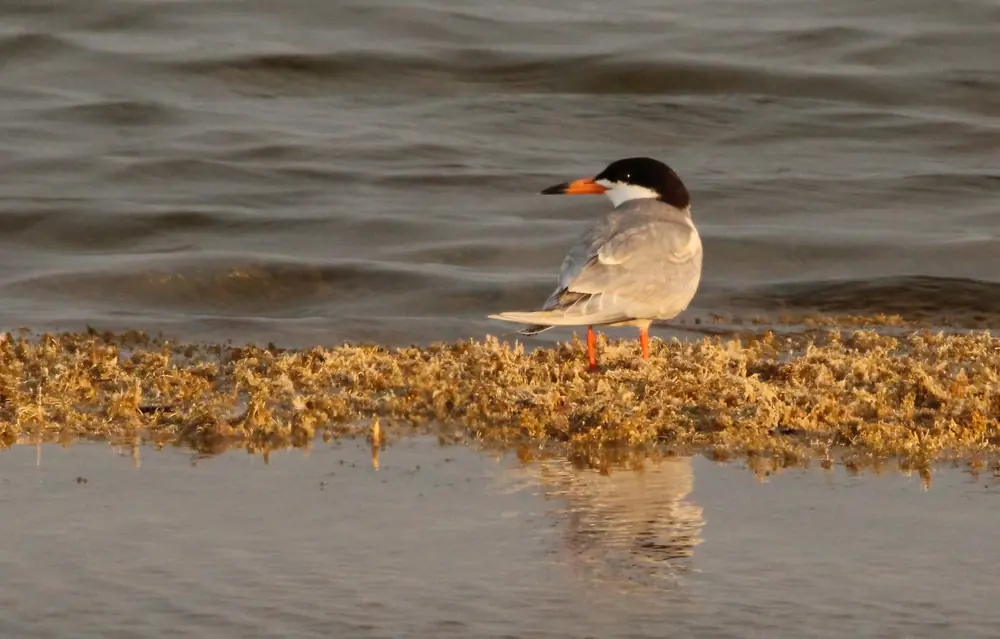
The guide lists phalaropes, Forster’s terns, western and eastern kingbirds, and bank, cliff and barn swallows among the birds that arrive in May. It adds that the nesting colonies are well along by then, naming double-crested cormorants, great blue herons, mallards, white-faced ibis and California gulls. Look for the terns hovering over open water and the swallows over the water.
-
The first fuzzy broods
Mid-May for the first geese and ducks, followed by the earliest avocet chicks · Marsh edges and shallow ponds along the refuge’s auto tour route
According to the same guide, the first broods of geese and ducks appear in mid-May, quickly joined by the earliest hatched American avocets. Watch from the car, which makes a good blind, and do not walk toward chicks. By June the young Canada geese have grown so large they are hard to tell from their parents.
-
Driving the loop
Daily, sunrise to sunset · The 12-mile self-guided auto tour route
The DWR describes the auto tour as a daily drive between sunrise and sunset, and the refuge says its route and trails stay open every day of the year. Its Wildlife Education Center keeps shorter hours in that guide (8 a.m. to 4 p.m. Tuesday through Friday, 10 a.m. to 4 p.m. Saturday, closed Sunday, Monday and federal holidays), written in January 2023. Memorial Day falls on May 31 in 2027, so call ahead if you plan to go inside.
-
Farmington Bay and the Eccles Wildlife Education Center
May, with some trail sections closed to protect nesting birds · Farmington, Davis County
The DWR says more than 300 species move through Farmington Bay each spring and fall, and that parts of the area have seasonal closures to protect nesting birds. Early mornings, roughly 6 to 9 a.m., are when birds are most vocal and active, the agency notes.
-
Great Salt Lake Shorelands Preserve and Antelope Island
Spring migration, through May · Between Farmington Bay and the Antelope Island causeway; Antelope Island State Park
The DWR lists the preserve’s marshes and mudflats along the lake’s eastern shore, and Antelope Island for shorebirds and burrowing owls. The island’s state park page says drones are prohibited there from March through November, which includes the whole of May.
The shorebirds that start in April are covered in our April page for Utah, and the swans that left in March are on our March page.
Which other Utah refuges and reservoirs are busy in May?
The Great Salt Lake is not the only place birds stop. Two other federal refuges, one in the western desert and one beside the Green River, have their own May stories, and the DWR also points birders to mountain reservoirs where migrating loons and pelicans sometimes rest.
-
Fish Springs National Wildlife Refuge
Shorebird migration continues until mid-May; goslings and some shorebird chicks begin to appear in May, with more young birds in June and July · Western desert of Juab County, a long gravel drive from the Wasatch Front
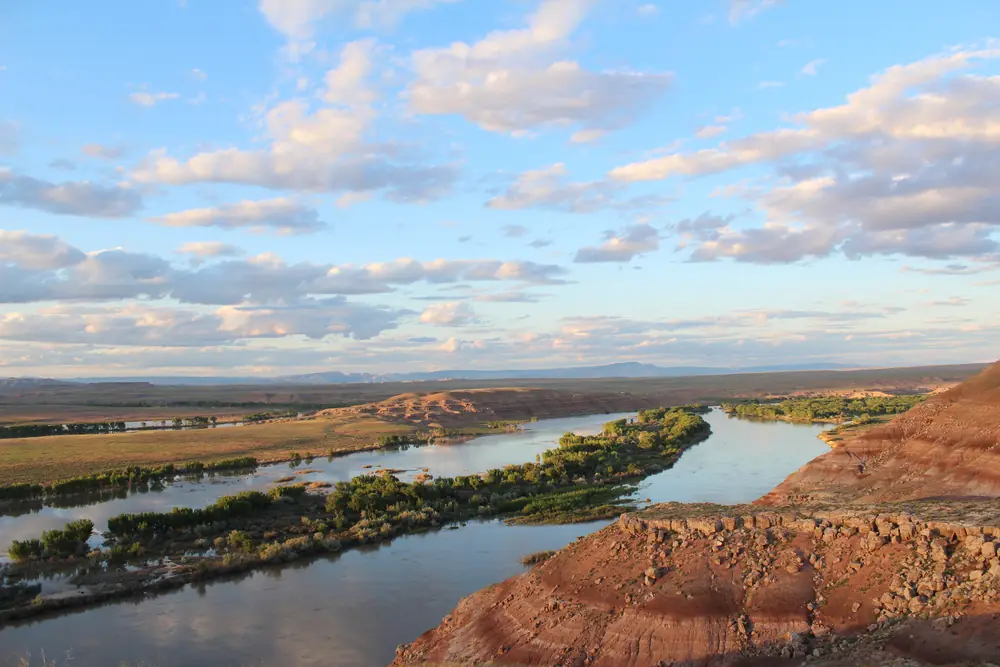
The refuge’s seasonal guide says shorebirds keep moving through until mid-May, and that young birds start to appear as early as May, such as goslings of Canada geese and some shorebird chicks. It names nesting colonies of black-crowned night herons, white-faced ibises, great blue herons and snowy egrets. The DWR calls the refuge arguably one of the best places to see birds in Utah.
-
Ouray National Wildlife Refuge
By May, most migrating songbirds are arriving · Along the Green River in the Uinta Basin; the DWR lists a 9-mile self-guided auto tour with an observation tower
The refuge’s seasonal guide says Canada geese are settling into territories, red-tailed hawks and ospreys are starting to nest, and young great horned owls are learning to fly. It says the yellow-billed cuckoo stays to nest while many other songbirds continue north. The same page counts about 140 kinds of flowering plants other than grasses, among them sego lily, showy milkweed, wild sunflower and scarlet globemallow.
-
Mountain reservoirs
Spring migration · East Canyon, Hyrum, Echo and Pineview in the north; Big Sandwash, Matt Warner, Red Fleet and Steinaker in the Uinta Basin
The DWR names these as places where common loons pass north, and says pelicans can often be seen at Matt Warner Reservoir at this time of year.
-
Utah Lake and the Provo River delta
Late April and May · Utah Lake State Park and the Provo River Delta, Utah County
The DWR says young ducklings and goslings can often be seen on the Provo River and Utah Lake in late April and May.
When is World Migratory Bird Day in 2027, and does Utah hold a bird festival?
World Migratory Bird Day has two dates because the birds migrate on two schedules. The organizers’ own site says Canada and the United States mark the day on May’s second Saturday, but its page showed no 2027 date or theme at our last visit, so confirm the date with the organizers.
-
World Migratory Bird Day in Utah
Confirm the organizers’ 2027 date; local events are not yet announced · Last year’s Utah event was at the Eccles Wildlife Education Center, Farmington
In 2026 the DWR held its event there on Saturday, May 9, from 11 a.m. to 3 p.m., free but with advance registration requested. It included short eBird workshops, information on the Utah Birding Slam and binoculars to borrow for the nature trail. Whether the center will host a 2027 event had not been announced, so check the DWR’s events calendar in the spring.
-
Great Salt Lake Bird Festival
Held in mid-May in 2026 (May 14 to 17); 2027 dates not yet listed · Davis County, with field trips around the Wasatch Front
The county’s page for the 28th annual festival listed headquarters at the Western Sports Park near Farmington Station, a family day on Saturday, May 16, 2026, and many field trips with registration in advance. It listed no 2027 dates. Ask Davis County before planning around it.
-
Bridgerland Audubon
Local outings through the year · Cache Valley
The chapter’s calendar lists only fall and winter 2026 events so far, such as a bird walk on October 10. Spring trips are usually added later, so look again in the new year.
Birding by yourself works well too: the DWR suggests going out in the early morning, when birds are most active.
Which birds nest in Utah’s canyons and orchards, and when do hummingbirds arrive?
May is when migration turns into nesting, and the red-rock country has its own cast. The National Park Service has documented more than 230 bird species at Capitol Reef, and the Fruita district’s old orchards and cottonwoods draw some of them close to the road.
-
Fruita’s nesters
Breeding season, which is spring and early summer · Fruita and the cliffs around it, Capitol Reef National Park
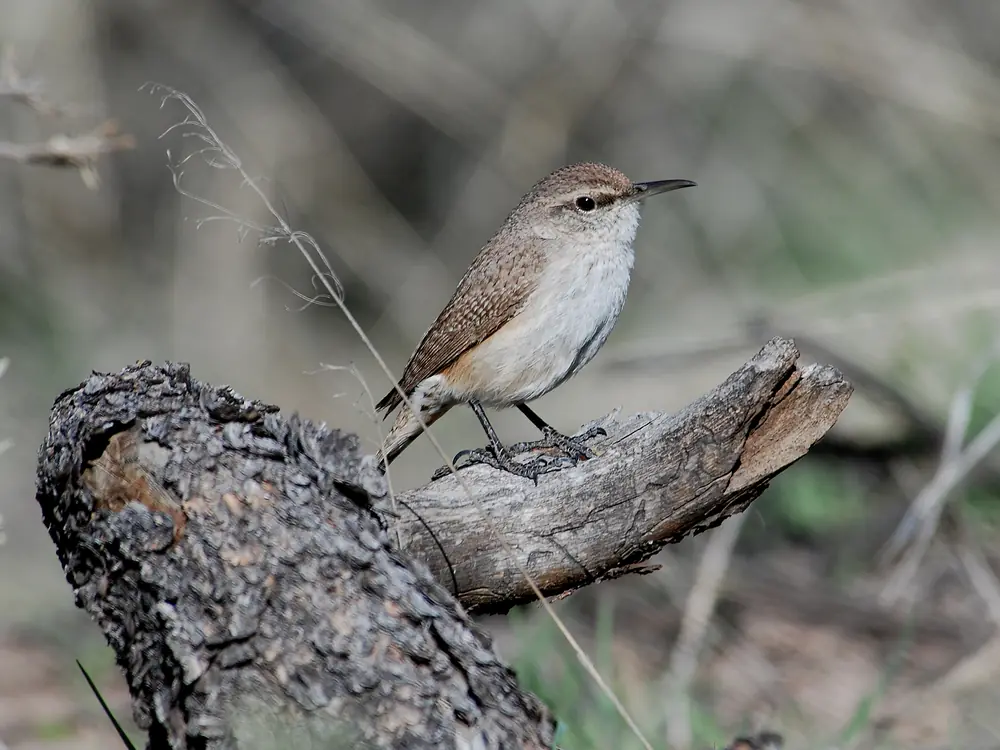
The park describes the Bullock’s oriole as a common summer resident around Fruita that hangs a pouch-shaped nest high in trees. The rock wren builds a path of small stones leading to its nest in a crevice, and the spotted towhee nests low in bushes and may raise two broods of three to five young in a season. Canyon wrens, which nest in crevices, and golden eagles, which nest on cliff faces and often reuse a nest, round out the cast.
-
Black-chinned hummingbirds
Arrive early April; breeding starts in early May · Lower elevations of southern Utah, such as the Escalante area
A Wildlife Society report on the Bureau of Land Management’s banding program calls the black-chinned hummingbird southern Utah’s most common species and says it appears in early April, when the desert holly blooms. Breeding starts in early May, and the banders catch the year’s young from late June through September.
-
Broad-tailed and rufous hummingbirds
Broad-tailed breeding starts in late May; rufous hummingbirds pass south about the first of July · Bryce Canyon National Park and the Boulder Mountain banding sites
The same report places the broad-tailed hummingbird in the mountains and says its breeding starts in late May. The rufous hummingbird, the second most common species in the study, arrives about July 1 on its way south. If you put out a feeder, keep it clean and change the sugar water often.
A hummingbird or oriole sighting belongs in the Naturalist’s Field Journal, with the date beside it.
When does the sego lily, Utah’s state flower, bloom?
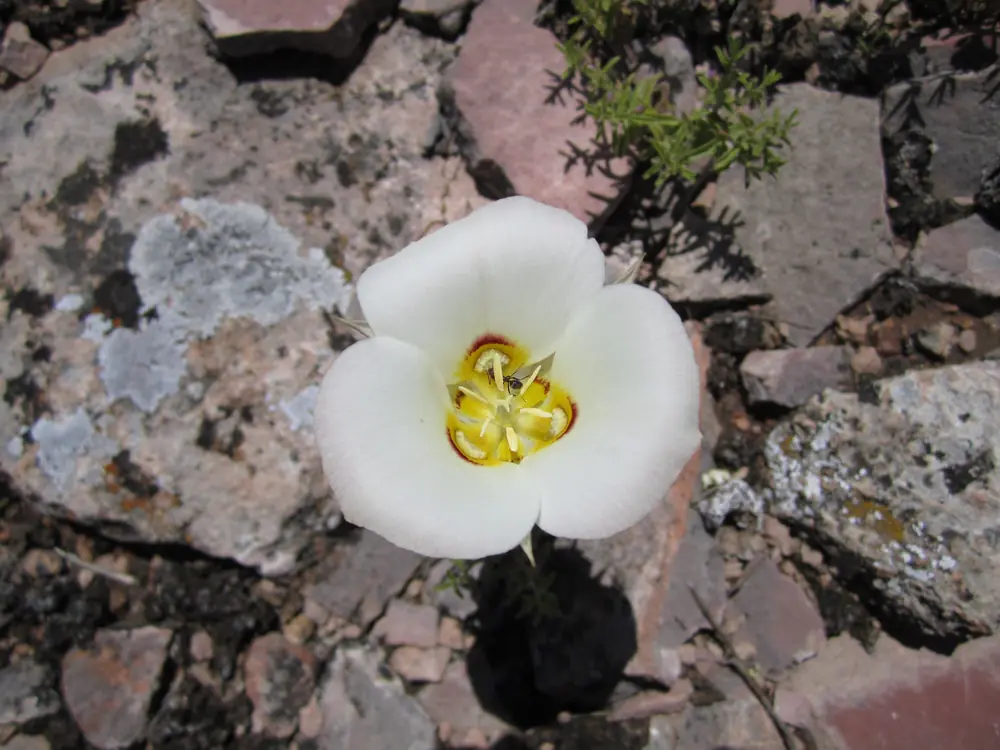
The sego lily was formally named Utah’s state flower in 1911, according to the Utah Public Radio nature series Wild About Utah. Its range of bloom is wide because the plant grows from the valleys to the mountain meadows, so the timing depends on how high you are.
-
A white cup on a dry slope
May to July at Capitol Reef; later higher up · Dry, rocky soil on foothills and mountainsides
Capitol Reef’s wildflower list gives May to July as the sego lily’s bloom window there. A Wild About Utah segment posted in July 2020 said the flower had been in the meadows since early June and was ending at lower elevations. Put the two together and you get a staircase: lower slopes first, the high country weeks later. Ouray National Wildlife Refuge also lists the sego lily among its many flowering plants.
-
A flower with a story
Any time you see one · Foothills and mountain meadows
Wild About Utah says Native peoples made a porridge from the bulbs and that settlers dug them as emergency food during a cricket infestation. The segment asks visitors not to disturb the plant, which is the right rule today: photograph it and leave it in the ground.
-
A deadly lookalike
Death camas is a very common early spring plant in the foothills · Utah’s foothills
Wild About Utah warns that death camas can be mistaken for sego lily, blue camas and wild onions. It reports that eight adults in Juab County ate its bulbs thinking they were safe, that all became ill and that three needed medical treatment. Its estimate of a fatal dose is about four or five bulbs for a young child. Never eat a wild bulb you have not identified with certainty. If you suspect poisoning, call the Utah Poison Control Center at 800-222-1222.
What blooms in Utah’s red-rock country in May?
Bloom in the southern canyons begins in March and keeps rolling. Arches National Park rates April and May as usually the prime wildflower months, with another chance in early fall after a wet monsoon, and warns that how long the bloom lasts depends on precipitation and shifts from year to year.
-
Penstemon and paintbrush
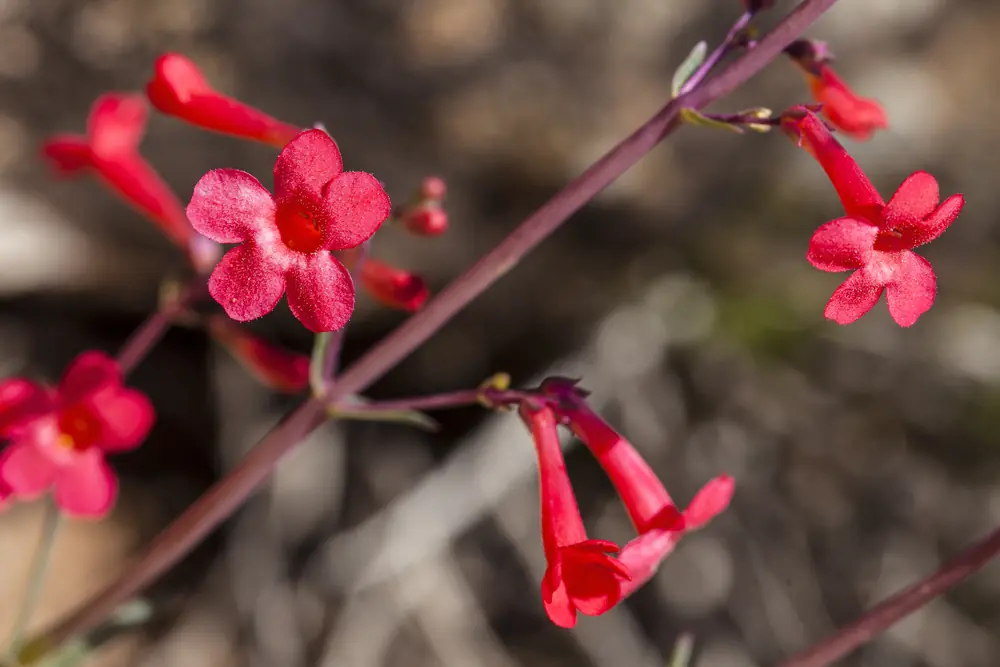
April to June at Capitol Reef · Capitol Reef National Park and similar sandy desert soils
The park’s list gives Utah penstemon and desert Indian paintbrush a bloom period of April to June. Watch for the penstemon’s pink spires on sandy benches and the paintbrush’s red-orange tips in the sagebrush.
-
Later bloomers
May to August or later · Capitol Reef National Park
Capitol Reef’s own bloom windows put Prince’s plume at May to November, desert trumpet at May to August, pale evening primrose at May to September, showy milkweed at May to August and showy four o’clock at May to July. Common globemallow runs from mid-April to October.
-
Hanging gardens at Zion
Throughout the summer, according to the park · Weeping Rock, Emerald Pools and Riverside Walk, Zion National Park
The park names shooting star, golden columbine and scarlet lobelia as flowers of these seeps. Zion’s desert marigold and slickrock paintbrush bloom earlier, in early to mid April, so by May you are looking for the shadier garden plants instead. The cave primrose at Arches is over by then; see our March page.
-
Fruita orchards in May
Apples and pears bloom into early May; apricot harvest is late June to mid-July · The historic orchards at Fruita, Capitol Reef National Park
According to the park’s orchard page, the dates for bloom and harvest can slide a few weeks in either direction with the winter’s temperatures. Fruit hotline: call 435-425-3791, press 1, then 5. Pick only from orchards with U-Pick signs and pay at the self-pay station.
What is May weather like in Utah, and what happens to the snow and rivers?
May is the month Utah’s mountains and valleys finally move toward the same season, though the gap is still wide. Salt Lake City’s average high is 72.6 °F and its average low 50.4 °F, Logan’s 66.8 and 44.4, Moab’s 82.6 and 50.7, and Alta’s 52.6 and 33.4, in NOAA’s 1991 to 2020 normals, tabulated below. St. George’s average May high is 85.4 °F, and it gets only 0.33 inch of precipitation on average. Alta still averages 15.9 inches of snow.
-
Zion’s Narrows and the spring runoff
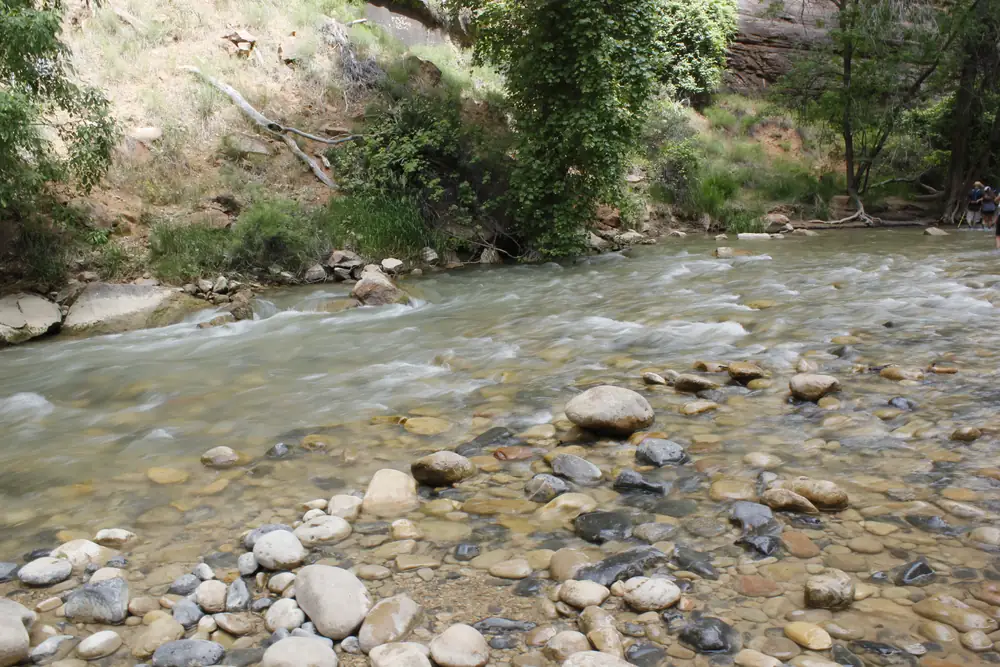
April through May in many years · The Narrows, Zion National Park
At flows above 150 cubic feet per second the Narrows is closed to everyone, a line that spring snowmelt often crosses. Its closure table lists April 3 to May 22 in 2016, April 6 to June 22 in 2019, April 8 to June 19 in 2023 and April 11 to May 19 in 2024, and notes that these reflect when flow exceeded 150 most of the time. Flows of 70 to 150 make walking against the current hard even when the gate is open. Check the park’s Narrows page for current conditions.
-
Cold water
All month · Rivers, lakes and reservoirs fed by snowmelt
Utah State Parks’ 1-10-1 rule describes the danger: a minute of gasping at first, about ten minutes of useful movement, then about an hour before hypothermia takes over. The agency advises dressing for the water temperature, not the air temperature, and wearing a life jacket near cold water.
-
Thunderstorms and flash floods
Afternoons, especially in canyons · Slot canyons and drainages
Zion’s Narrows page notes that afternoon thunderstorms are possible all year and that life-threatening flash floods are more frequent in monsoon season. A Flash Flood Warning closes the Narrows, and it stays closed for at least two hours after the warning ends. The Salt Lake City forecast office posts a separate flash flood page for several slot canyons, including Buckskin Gulch and Little Wildhorse, worth reading before a canyon day.
| Station | Snowfall | Precipitation | Average high | Average low |
|---|---|---|---|---|
| Logan (Utah State University) | 0.3 | 2.41 | 66.8 | 44.4 |
| Randolph | 1.8 | 1.87 | 61.8 | 33.0 |
| Salt Lake City airport | 0.1 | 1.82 | 72.6 | 50.4 |
| Alta | 15.9 | 3.47 | 52.6 | 33.4 |
| Heber | 0.8 | 1.40 | 71.2 | 36.2 |
| Vernal | 0.0 | 1.04 | 70.2 | 42.6 |
| Manti | 0.7 | 1.47 | 69.0 | 41.8 |
| Bryce Canyon National Park | 1.5 | 0.91 | 63.1 | 36.6 |
| Moab | 0.0 | 0.82 | 82.6 | 50.7 |
| Kanab | 0.0 | 0.59 | 78.7 | 44.7 |
| Zion National Park | 0.0 | 0.77 | 83.5 | 52.5 |
| St. George | 0.0 | 0.33 | 85.4 | 55.5 |
Alta’s normal of 15.9 inches of May snow means high-country trails can still be snowy, and the freeze table below shows late freezes remain possible at higher stations. New seasonal outlooks go up every month at the Climate Prediction Center’s 90-day outlook address, and the near-term forecast lives on our weather page.
When is Utah’s last spring freeze, and when can you plant tomatoes?
The last freeze comes in March in St. George, in April along the Wasatch Front and in late May in Park City, per the NOAA 1991 to 2020 normals in the table. Where you live decides when to plant, so use our Utah frost dates page for your own town.
-
Tomatoes wait
At least a week after your average last frost · Home gardens statewide
A USU Extension gardening column says to plant very tender crops such as squash, melons, tomatoes, peppers and eggplants at least a week after the average last frost. Tomatoes sulk in cold weather even without frost. Its example is Logan, whose average last frost it gives as May 14, which puts tomatoes in no earlier than about May 21. That column’s frost table is older than NOAA’s current normals, so the dates differ from the table below; Park City is June 9 there and May 29 below.
-
Frost after bloom
Any clear, calm night in May at higher elevations · Orchards, yards and mountain valleys
In late May 2026, a USU Extension horticulturist said that late spring frosts had left most of Utah with very little fruit. Check the forecast on clear nights, and cover small trees if frost is expected.
-
Higher ground
Late May and early June · Park City, Heber, Randolph and the Uinta Basin
Heber’s May average low is 36.2 °F and Randolph’s is 33.0 °F, close enough to freezing that a cold night can still produce one. Wait for the median date or later before setting out tender plants there.
| Station | One year in ten | Median | Nine years in ten |
|---|---|---|---|
| Logan Utah St Univ (Cache Valley) | Apr 14 | Apr 30 | May 19 |
| Ogden Hinkley Airport (Ogden) | Apr 4 | Apr 22 | May 10 |
| Salt Lake City International Airport (Salt Lake City) | Mar 17 | Apr 8 | Apr 30 |
| Provo Byu (Provo) | Mar 31 | Apr 18 | May 5 |
| Park City (Wasatch Back) | May 12 | May 29 | Jun 14 |
| Vernal (Uinta Basin) | Apr 24 | May 7 | May 28 |
| Moab (Canyon Country) | Mar 25 | Apr 11 | Apr 28 |
| Cedar City (Color Country) | Apr 19 | May 4 | May 28 |
| St George (St. George) | Feb 27 | Mar 14 | Apr 6 |
Read each row as a set of odds: the left date is a gamble that pays off one spring in ten, the right date is the safe bet, and the median sits between.
How much daylight does Utah gain in May?
Days keep getting longer, though more slowly than in March. Across May, Logan gains 57 minutes and St. George 48, with the other cities between. By May 31, Logan’s day is 14 hours and 59 minutes, one minute short of 15 hours, and Salt Lake City’s is 14 hours and 53 minutes. The longest day of the year comes in June.
| City | May 1 | May 31 | Gained | Per day |
|---|---|---|---|---|
| Logan | 14 h 02 m | 14 h 59 m | 57 min | 1.9 min |
| Ogden | 13 h 59 m | 14 h 56 m | 57 min | 1.9 min |
| Salt Lake City | 13 h 58 m | 14 h 53 m | 55 min | 1.8 min |
| Provo | 13 h 56 m | 14 h 49 m | 53 min | 1.8 min |
| Vernal | 13 h 57 m | 14 h 52 m | 55 min | 1.8 min |
| Moab | 13 h 49 m | 14 h 40 m | 51 min | 1.7 min |
| Cedar City | 13 h 45 m | 14 h 35 m | 50 min | 1.7 min |
| St. George | 13 h 44 m | 14 h 32 m | 48 min | 1.6 min |
Our daylight calculator covers towns that are not in the table.
What can you see in Utah’s night sky in May 2027?
Times below use Mountain Daylight Time, which Utah has kept since March 14, converted from the Naval Observatory’s universal-time listings. Short nights and a few good events make May a rewarding month.
-
The Flower Moon, a seasonal Blue Moon
Full at 4:59 a.m. MDT on Thursday, May 20; best evening is Wednesday, May 19 · Any open eastern horizon after sunset
In the almanac tradition May’s full Moon is the Flower Moon. In Utah it turns full a little before dawn on Thursday the 20th, so a Cache Valley or Moab evening on Wednesday the 19th gives you the better show, with the Moon lifting over the eastern ranges as the light fades. Sea and Sky also gives it a second title. This spring holds four full moons, March through June, and in that count May’s is the third, which earns the label. The modern meaning, a second full moon inside a single month, never happens in 2027.
-
Eta Aquariid meteors
Best mornings May 5, 6 and 7 before dawn; the shower is active from late April to late May · A dark site with a clear view to the east and south
Pick a morning from the 5th to the 7th and be outside around 4 a.m. with a blanket, a hot drink and a notepad. The American Meteor Society lists the peak night as May 5 to 6 and calls lunar conditions very favorable, since the Moon is a 2 percent crescent. Near the equator and northward the society expects modest numbers, roughly 10 to 30 per hour in the dark before sunrise. Utah is well north of the equator and the shower’s source point in Aquarius rises close to sunrise here, so count on seeing fewer than that. Sea and Sky rates 2027 as a strong year.
-
Mercury after sunset
Findable from about May 12 to June 5; farthest from the Sun on May 28 · Low in the west-northwest, 45 to 90 minutes after sunset
Mercury’s farthest swing east of the Sun, about 23 degrees, comes at 7:14 a.m. MDT on Friday, May 28. That is daylight in Utah, so use the evenings before and on that date. Around mid-month it follows the Sun below the horizon by about an hour and a half and shines at roughly magnitude minus 0.6, then it fades through June. Find an unobstructed western horizon, and bring binoculars for hazy evenings.
-
Jupiter, Mars, Venus and Saturn
All month; the Moon visits Jupiter on May 12 and Mars on May 13 · Jupiter and Mars after dark; Venus and Saturn low in the east before sunrise
By our calculations Jupiter and Mars shine for hours after dusk. A half-lit Moon stands next to Jupiter on May 12, and sits about 3 degrees from Mars the following night. Venus is the brighter dawn object, up some 60 minutes before the Sun, and Saturn trails it, rising only 40 minutes before sunrise on May 1 in our own calculations. On Friday, May 7, the two bright points nearly touch, only 0.6 degree apart. They hug the eastern horizon, so choose a spot with a flat skyline and bring binoculars.
-
The Milky Way returns
Best nights about May 1 to 14 and May 25 to 31 at 40 degrees north, up to about 3.8 hours · Dark sites far from the Wasatch Front and St. George, looking south
The galactic center sits low in the southern sky, and May opens the best months for seeing it. The windows above, which are our own calculations, count nights when it stands well up, the sky is completely dark and the Moon is down. The new moon of May 6 anchors the first window, and Utah’s clear desert air makes the most of it.
| Phase | Date | Time |
|---|---|---|
| New moon | Thursday, May 6 | 4:58 a.m. MDT |
| First quarter | Wednesday, May 12 | 10:44 p.m. MDT |
| Full moon, the Flower Moon | Thursday, May 20 | 4:59 a.m. MDT |
| Last quarter | Friday, May 28 | 7:58 a.m. MDT |
Check the cloud map before driving out to a dark site, and use the moon calendar for the nights between these four phases.
What can families do outdoors in Utah in May 2027?
- Look for a baby bird without touching it. Watch from a car or from a distance at a refuge such as Bear River, where the first goose and duck broods appear in mid-May, and count the chicks you see.
- Find the state flower. Go out with a camera and look for a sego lily on a dry slope. Take a photo, add it to iNaturalist, and leave the plant where it is.
- Join the City Nature Challenge, if your area does. The event’s own site shows the 2027 schedule: photographs April 30 to May 3, then identifications through May 16 and a results announcement on May 20. It named no Utah region, so ask the Natural History Museum of Utah, or join as an individual on iNaturalist.
- Set an alarm for meteors. Choose a morning between May 5 and 7, haul out a camp chair before sunrise and count streaks for half an hour.
- Celebrate World Migratory Bird Day. Its 2027 date was not yet listed on the organizers’ site, so look there and on the DWR calendar for a Utah event.
- Plan Memorial Day. It falls on Monday, May 31, and many refuges and parks will be busy. Go early.
The Naturalist’s Field Journal plates on a nest observed, dusk and dawn watch and the same place twice suit May well. Our April page for Utah has the shorebirds and balsamroot you may still catch early in the month.
Safety notes for May in Utah
Turkey season. According to the state’s 2026 to 2027 hunting guidebook, the youth turkey hunt is April 30 to May 2, 2027, and the statewide general spring season is May 3 to 31, 2027. Cooperative wildlife management units may hold hunts any time from April 10 to May 31. Hunters head out before sunrise.
Hunter orange. For turkey hunts the guidebook discourages hunter orange, because hunters sometimes mistake bright colors for a turkey’s head, and its calling tips tell hunters to avoid white, red, orange, black and blue, the colors of most gobblers. Because those are the colors a hunter is told to avoid, a hiker in turkey country in May is safest staying on marked trails, staying away from dawn calling spots and speaking up if a hunter is near.
Shed antlers. From January 1 to May 31 you must carry the free antler-gathering certificate, earned each year through an online course, and you may not enter closed areas or private land without permission.
Sage-grouse leks. The same guidebook bans training dogs within a half mile of a sage-grouse or sharp-tailed grouse lek from March 1 through May 31, so leave the dog at home if you visit one.
Rattlesnakes. A local news report (TownLift) says Utah has five species and that they are most active in late spring and early summer; check the Division of Wildlife Resources for details. Keep at least 10 feet away, look before reaching onto a ledge or stepping over a log, keep dogs leashed and treat any snake you cannot identify as venomous. Do not harass a snake; it is illegal in Utah.
Bears. The DWR says to keep food and scented items in a vehicle or bear-safe container, never in your tent, and to stay alert at dawn and dusk. If you meet a bear, hold your ground, stay calm and get your bear spray ready.
Cold water and high rivers. Wear a life jacket near snowmelt-fed water, and use the 1-10-1 rule above. Do not enter the Narrows if the river is high.
Wildlife. Keep a respectful distance from animals, and do not feed or touch them. The National Park Service notes that fleas on prairie dogs can spread sylvatic plague, so watch colonies from a safe distance.
Sources (39)
- USFWS: Monthly Bird Happenings at Bear River Migratory Bird Refuge (written January 2023)
- Utah DWR: where to celebrate World Migratory Bird Day and other places to bird-watch this spring (May 5, 2026)
- USFWS: Seasons of Wildlife, Fish Springs National Wildlife Refuge
- USFWS: Seasons of Wildlife, Ouray National Wildlife Refuge
- Bridgerland Audubon Society: upcoming events
- Davis County: Great Salt Lake Bird Festival
- World Migratory Bird Day: official site
- Utah DWR: wildlife events calendar
- Utah State Parks: Antelope Island State Park
- NPS, Capitol Reef National Park: birds
- NPS, Capitol Reef National Park: wildflowers
- NPS, Capitol Reef National Park: orchards
- The Wildlife Society: BLM partners monitor Utah hummingbirds
- Wild About Utah (Utah Public Radio): sego lily
- Wild About Utah (Utah Public Radio): toxic plants
- NPS, Arches National Park: wildflowers
- NPS, Arches National Park: cave primrose (Primula specuicola)
- NPS, Zion National Park: wildflowers
- NPS, Zion National Park: bighorn sheep
- NPS, Zion National Park: the Narrows
- NPS, Bryce Canyon National Park: Utah prairie dog
- Utah DWR: 2026 to 2027 waterfowl, upland game and turkey guidebook
- Utah DWR: gathering shed antlers or horns
- Utah DWR: black bear information
- Utah DWR: safety in black bear country
- TownLift: rattlesnakes in Utah, what to know as snakes emerge this spring (March 17, 2026)
- Utah State Parks: cold weather and water safety
- NWS Salt Lake City: flash flood information
- NOAA NCEI: 1991 to 2020 monthly climate normals for Utah stations
- NOAA Climate Prediction Center: 90-day outlooks
- USU Extension: spring has sprung, but frost still likely
- USU Today: Ask an Expert, late spring frosts expected to cause fruit famine across Utah (May 29, 2026)
- U.S. Naval Observatory: Moon phases
- Sea and Sky: astronomy calendar 2027
- American Meteor Society: meteor shower calendar
- City Nature Challenge: dates
- iNaturalist
- USA National Phenology Network: Nature’s Notebook
- Photos via Wikimedia Commons; licenses and photographers are credited under each picture
.jpg)