What to look for in nature in Vermont this April
April is the month Vermont changes color, one valley and one hillside at a time. Snow still lies in the high woods on the first, yet by the thirtieth the sun is up before 5:50 a.m. and down after 7:55 p.m. in Burlington (all April times here are daylight time). The sugar season winds down, the ice leaves the ponds, and loons drop onto open water. Peepers, toads and the first treefrogs fill the evenings, hepatica and bloodroot give way to trout lily and red trillium, and the fiddleheads rise along the rivers near the end of the month. Hermit thrushes, kinglets and swallows arrive, wild turkeys gobble from the ridges, and anglers line the streams on trout opening day. April is also Vermont’s peak month for brush fires and a month of mud, so the trails ask for patience. Dates worth marking: the Pink Moon on the 20th, Earth Day on the 22nd, and the Vermont Maple Festival in St. Albans on April 23 to 25.
Other months in Vermont: October, November, December, January, February, March.
Start here
- Listen at a pond edge on a mild evening. A few minutes after sunset, stand quietly beside a pond or wet field and listen. Peepers, toads and the first treefrogs call in overlapping choruses, and the Reptile and Amphibian Atlas lists the months for each.
- Visit the Maple Festival in St. Albans. The festival’s own site gives April 23 to 25, 2027, for its St. Albans weekend, with the program still to come.
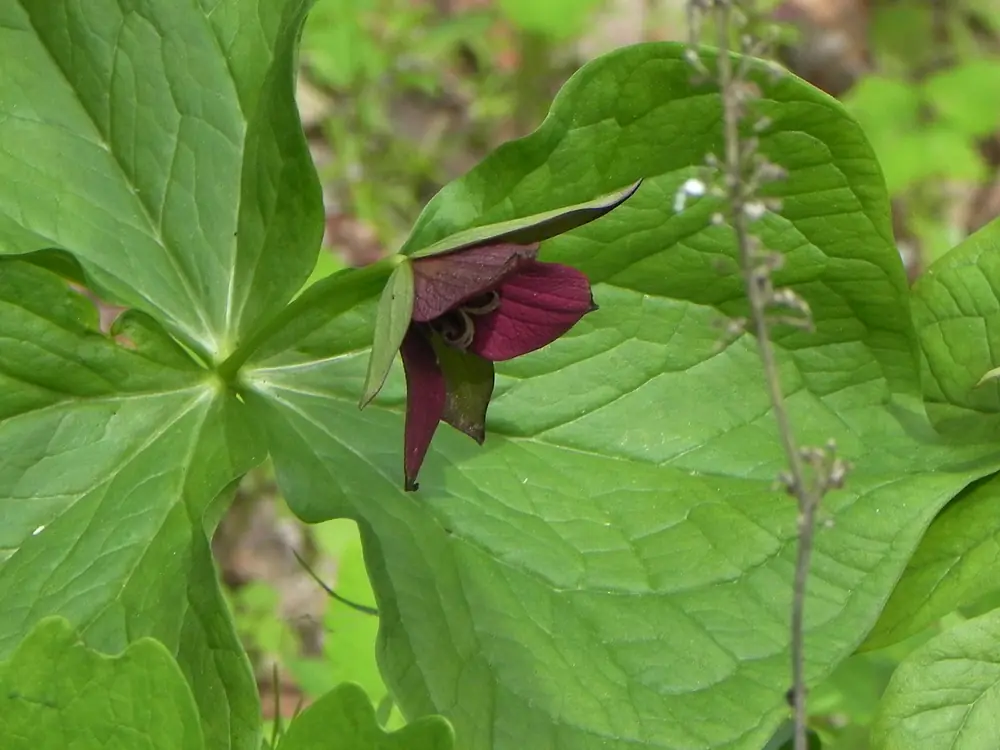
- Find the first trout lily and red trillium. Walk a low-elevation woodland trail during late April, stay on the path, and photograph the flowers without picking them.
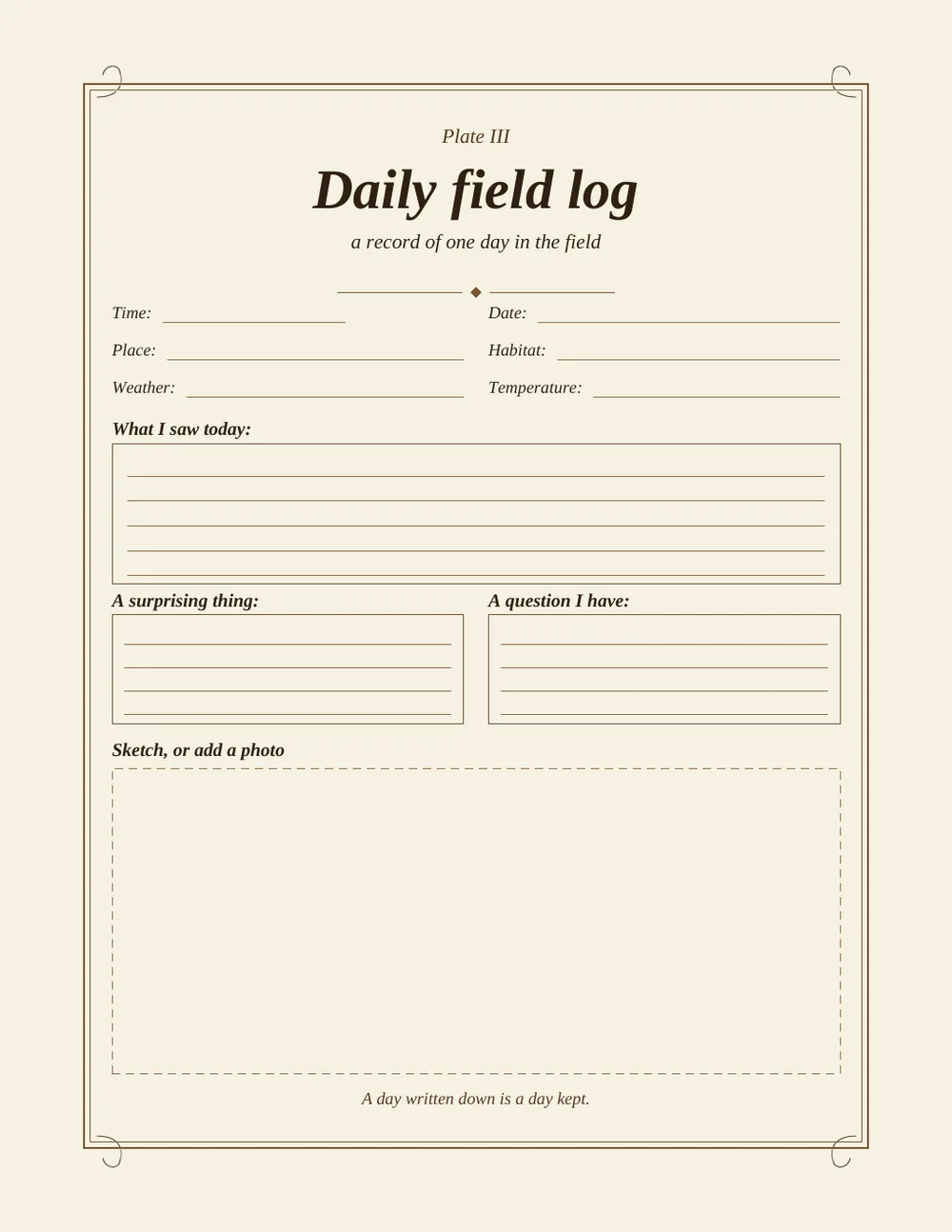
April rewards a first-of-year list: the date of the first peeper, loon, hermit thrush and fiddlehead. Enter them in the daily field log and on the plate for birds I have seen, and mark the pond where frogs call on a map of sounds. Follow one maple from bud to leaf for a tree through the seasons, sketch a turkey track for tracks to know, and revisit one hillside every week with the same place twice to watch the green climb. Use dusk and dawn watch for the Pink Moon’s rising.
Regions used below: Champlain Valley and the Islands; Northeast Kingdom; Green Mountains; Central Vermont and the Capital Region; Southern Vermont and the Connecticut River Valley.
Does Vermont’s sugaring season end in April, and what is the Maple Festival?
Sap flows only when nights freeze and afternoons reach 40 to 45 °F or warmer, according to the Vermont Maple Sugar Makers’ Association. When the nights stay above freezing, the season is over, and the association says a typical one lasts four to six weeks. In a warm year that can mean the last boil happens before April begins; in a cold year, the northern hills may still be boiling in the first days of the month. The peak of the season, and the open-house weekend that goes with it, is covered in the March guide.
-
The last syrup of the year
Whenever the nights stop freezing, often by early April · Sugarhouses statewide
The association explains that the syrup made at the end of the season is the darkest and strongest, the grade that suits cooking and baking better than pouring over pancakes.
-
Vermont Maple Festival
April 23, 24 and 25, 2027, per the festival’s own site · St. Albans
The festival’s site names the 2027 edition the 60th anniversary of the event and lists the theme “Sweet Traditions with Strong Roots.” It names a Maple Beverage Tasting and a Maple Ambassador Contest among the events but has not yet posted a full schedule. In past years the festival has included pancake breakfasts, tastings, cooking demonstrations, a parade, live entertainment and artisan vendors. Check the festival site for hours and locations before you go.
-
When the maples leaf out
Sugar maple buds break open, on average, around May 5 on Mount Mansfield’s lower slope · Proctor Maple Research Center, Underhill, 1,400 feet
The Vermont Monitoring Cooperative has watched sugar maple buds at the Proctor Maple Research Center since 1991. Its 2017 update gives day 125 of the year (about May 5) as the long-term average for first bud break, and day 119 (about April 29) for 2017, an early year. The center sees a weak but steady drift toward earlier springs.
When does the ice go out on Vermont lakes, and when do loons come back?
A Vermont lake is “out” when it has lost its ice from shore to shore. Vermont Department of Environmental Conservation limnologist Mark Mitchell told VTDigger in 2023 that the department collects ice-out reports from citizens to follow climate trends, and anyone can send one through an online form on the department’s site. Dates swing by weeks from one spring to the next, so the list below gives records and averages rather than a single date.
-
Joe’s Pond ice-out contest
Ice-out has ranged from April 5, 2010 to May 6, 1992; the 38-year average since 1988 is April 23 · West Danville
Each winter a cinder block on a pallet with a clock mechanism is set on the pond; the clock stops when the ice lets go, and entrants guess the day and minute. WCAX reported that the 2026 ice-out was the 39th contest, and the average date over 38 years is April 23. Tickets are $1, and in a recent year the Boston Globe reported that entries closed on April 1, with about half the proceeds going to the winner and the rest to the Joe’s Pond Association. Contest rules for 2027 are not posted yet, so check with the association.
-
Lake Iroquois and the long trend
Lake Iroquois in Hinesburg: earliest March 9, 2000; latest April 27, 2007 · Statewide, 15 lakes with at least 20 years of data
VTDigger reported that Vermont lakes with at least 20 years of consistent reports are losing ice about 1.5 days earlier each decade. Lake Iroquois holds a $1 contest of its own.
-
Lake Champlain in spring
Flood stage is 100 feet above sea level · Lake Champlain
In 2026 the National Weather Service in Burlington recorded Lake Champlain as closed (frozen over) on February 13, and its list of recent years shows no other closure from 2020 to 2025. In the record spring of 2011, the Lake Champlain Basin Program says record snowmelt and heavy rains pushed the lake above its 100-foot flood stage on April 13, kept it there for 67 days until June 19, and crested it at 103.27 feet on May 6.
-
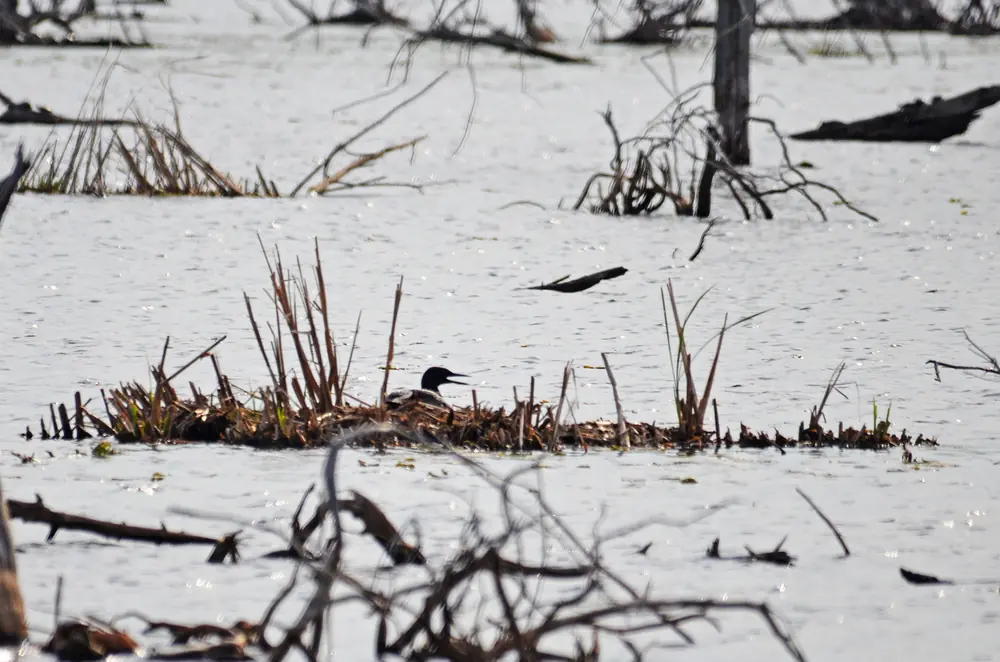
Common loons return
April, soon after ice-out · Lakes and ponds statewide
The Vermont Center for Ecostudies says loons return to their breeding lakes as the ice goes out. Its Vermont Loon Conservation Project reports 115 nesting pairs now, up from seven pairs about four decades ago. Volunteers monitor nests from mid-May through August, and the project builds floating nest platforms where water levels rise and fall. Stay well back from nesting loons, respect floating warning signs and report loons that look distressed.
Which birds arrive in Vermont in April?
The short-distance migrants came in March; April adds birds that depend on insects and the first leaf buds, and the long-distance warblers follow. The Vermont Center for Ecostudies describes the pattern simply: robins, killdeer, wood ducks and phoebes arrive in March and April, and warblers and wood-pewees come from late April through May. The March guide covers the blackbirds, phoebes and woodcock that open the season.
-
Hermit thrush, Vermont’s state bird
Spring, from wintering grounds inside the United States · Woodlands statewide, near small openings
Vermont named the hermit thrush its state bird in 1927. The Vermont Breeding Bird Atlas notes that it winters in the United States rather than the tropics, and that it nests on slightly drier ground than its relatives the veery and the Swainson’s thrush, often near a small opening in the woods. Between the two atlas periods it was found in 171 survey blocks instead of 155, with the greatest gain in the Champlain Valley.
-
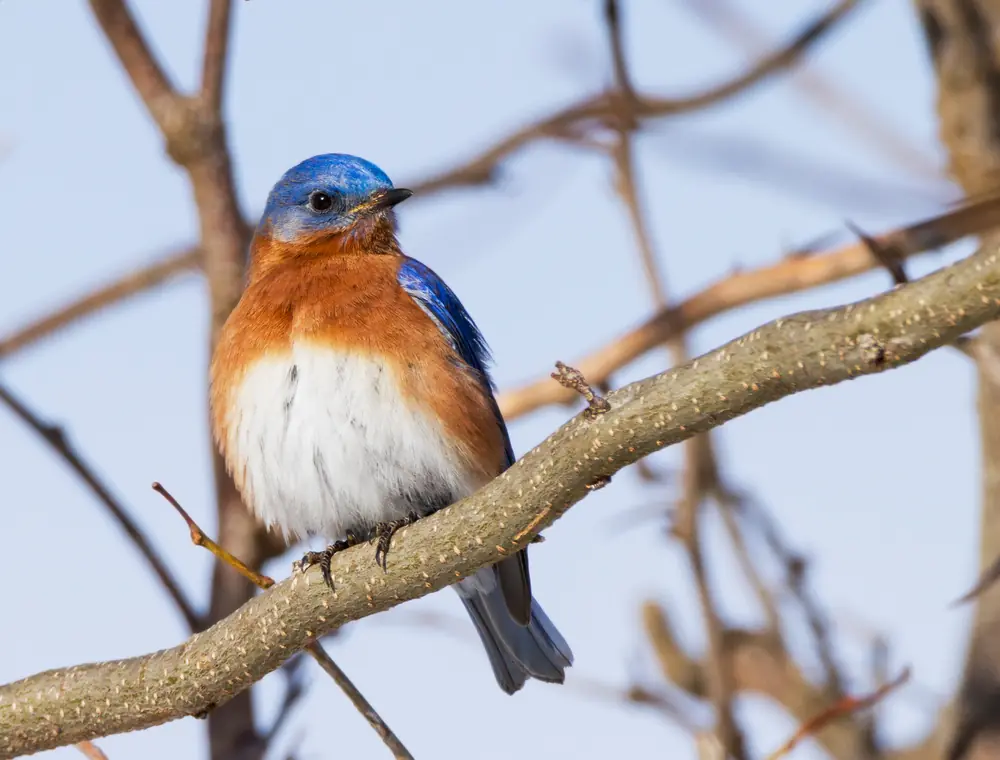
Tree swallows, bluebirds and kinglets
Swallows from mid-March; ruby-crowned kinglets mid- to late April · Ponds, open fields, nest-box trails and wooded edges
The atlas says tree swallows can return as early as mid-March, before the last hard frosts, which makes them vulnerable to cold snaps. Eastern bluebirds were found in 122 blocks in the second atlas against 92 in the first, a 33 percent gain, and the atlas credits volunteer nest-box trails, which supply most of the state’s nest sites. The Center’s 2024 field guide places ruby-crowned kinglets in Vermont from mid- to late April.
-
Pine warblers, chipping sparrows and the first warblers
Late April, with more through May · Pine stands, yards and shrubby edges
The Vermont Center for Ecostudies lists pine warblers and chipping sparrows among the first migrants of spring, and says house wrens arrive carrying nesting material. Bobolinks come in late April through May. On April 22, 2017, the Rutland County Audubon walk at West Rutland Marsh also found early yellow-rumped warblers.
-
West Rutland Marsh in April
Rutland County Audubon’s April walk; check with the chapter for 2027 · West Rutland
That 2017 walk, with 36 birders from age 7 to 89, recorded 53 species, a new April high against the chapter’s April average of 42. It included a Virginia rail and an American bittern heard right away, a flock of 63 tree swallows, an uncommon red-shouldered hawk, 26 swamp sparrows, and bloodroot in bloom.
-
Missisquoi National Wildlife Refuge
Walking trails open dawn to dusk all year; the Jeep Trail is closed April through August · Swanton
The U.S. Fish & Wildlife Service says the refuge hosts Lake Champlain’s biggest gathering of waterfowl, with wood ducks, mallards and teal especially common. Its marshes also hold American bitterns and Wilson’s snipe, and its fields hold bobolinks. Black terns, a state endangered species, nest on floating mats within sanctuary areas later in the season, one reason the Jeep Trail closes in April.
Which frogs are calling in Vermont in April?
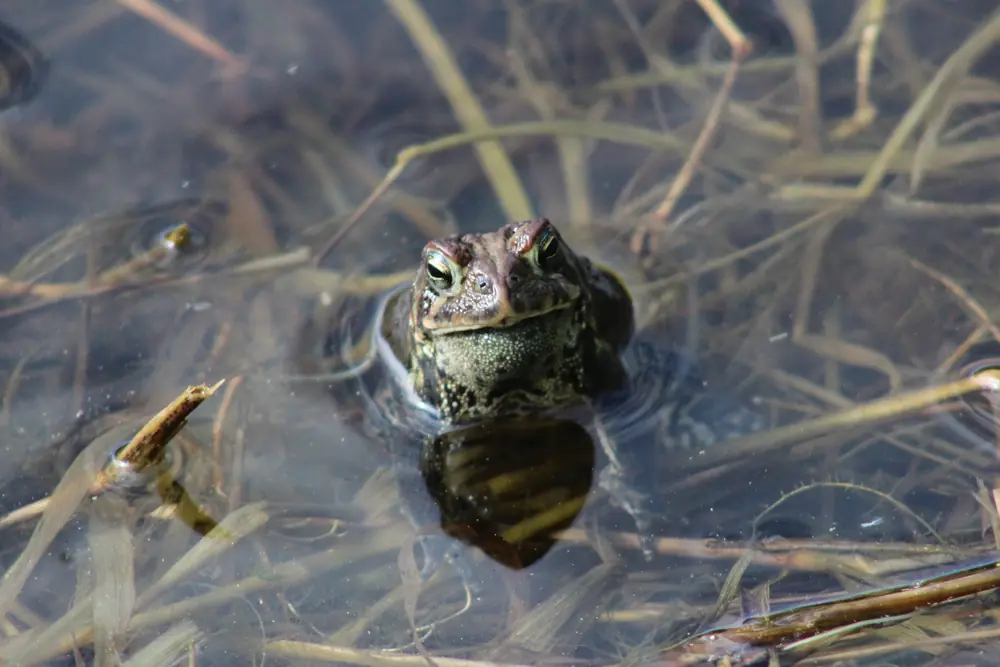
Frogs tell you the season by sound, and the Vermont Reptile and Amphibian Atlas lists the months in which each species is usually heard. Calling follows the weather: mild spells start it early, and shaded or high-elevation sites start later. April is the month when the chorus widens from peepers and wood frogs to include toads, treefrogs and the less common species in the table below.
-
Spring peepers
Calls reported from as early as March 15, with peak activity in early May · Shrubby wetlands, pond edges and flooded fields
The Center reports that a male peeper can make three to four thousand peeps an hour for several hours a night, and that the muscles along his sides average 15 percent of his body mass. Naturalist Albert Wright, who kept records from 1900 to 1912, heard the first peepers on average on April 4. Atlas volunteers in the 1990s heard them around March 20, about 13 days earlier.
-
Toads, treefrogs and the less common frogs
April through May or longer, depending on species · Ponds, wet meadows, wooded wetlands
American toads and gray treefrogs call from April through July. The less frequently reported boreal chorus frog and northern leopard frog call in April and May, and the pickerel frog from April through June.
-
Fairy shrimp in the vernal pool
April, for only a few weeks · Vernal pools and woodland ponds
The Center’s 2022 April guide describes fairy shrimp as small crustaceans that reach about three-quarters of an inch and live only a few short weeks in these seasonal pools. Roughly 5,000 pools, known or likely, are on the Center’s map of Vermont, and volunteers adopt pools to monitor the amphibians and invertebrates in them. See the March guide for the road crossings that come first.
| Frog or toad | Months usually heard |
|---|---|
| Spring peeper | March through July |
| Wood frog | March through June |
| American toad | April through July |
| Gray treefrog | April through July |
| Boreal chorus frog | April through May |
| Northern leopard frog | April through May |
| Pickerel frog | April through June |
| Green frog | April through early August |
| Bullfrog | May through early August |
Photos and calls sent to the Reptile and Amphibian Atlas become part of the state’s distribution record.
Which wildflowers and early bees can you find in Vermont in April?
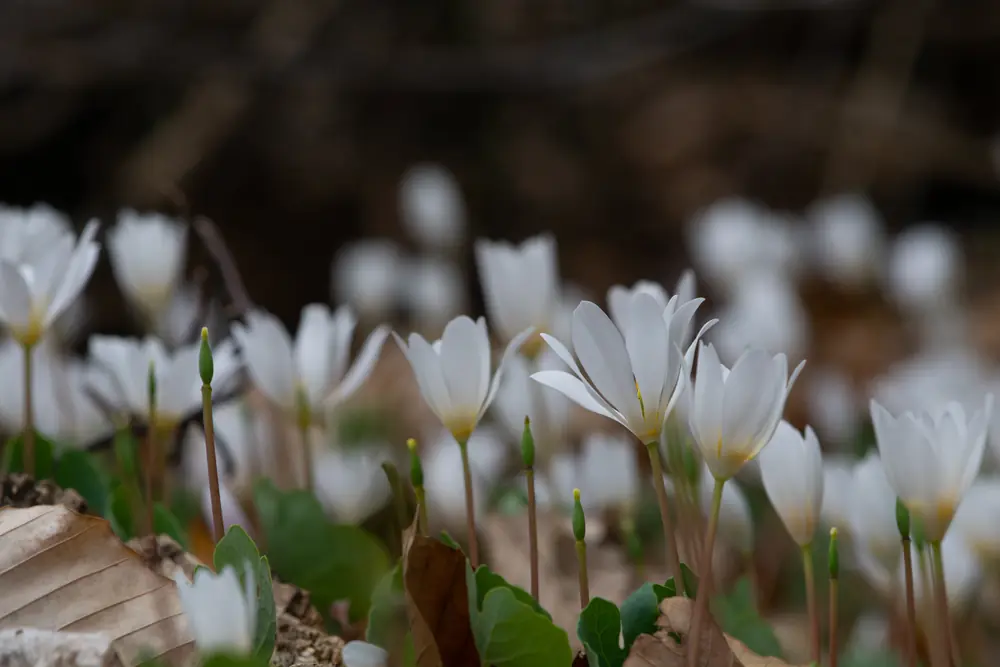
Spring wildflowers have a short window, between snowmelt and the closing of the forest canopy, and the Vermont Land Trust divides it in two. Hepatica, bloodroot, coltsfoot and early saxifrage come first, in March and April on sunny sites. The richer second wave, which includes trilliums, trout lily, columbine, spring beauty, foamflower and golden saxifrage, peaks from late April into May.
-
Hepatica, bloodroot and spring beauty
April on sunny slopes and in sugarwoods · Northern hardwood forests, limestone woods in the Champlain Valley, seeps and ledges
The Land Trust names four main habitats for spring flowers: northern hardwood forest, the limestone forests of the Champlain Valley, moist woodland edges and seeps, and calcareous ledges. The Vermont Center for Ecostudies also describes spring beauties in the sugarwoods, wild leeks pushing through the leaf litter with a sweet-onion smell, and the drooping catkins of beaked hazelnut. At West Rutland Marsh on April 22, 2017, bloodroot was in bloom and marsh marigold was budding.
-
Trout lily and red trillium
Late April into May · Rich, rocky woods and slopes
Shelburne Farms says these plants thrive in rocky woods where water and eroded rock bring nutrients downslope. Its naturalists note that ants carry the seeds home and eat the oily body attached to each one without eating the seed, which is how many spring flowers spread. The trout lily’s leaves are gone by early June. Take photographs and leave the plants, as the Land Trust asks: many take years to produce their first flower.
-
Willows and the mining bees
April, when willow catkins open · Wet fields, stream banks and pond edges
The Center’s April guide calls willows a main pollen source for early pollinators, and reports that at least eight Vermont mining bee species specialize on willows. Red-tailed mining bees are among those gathering pollen in April. Shelburne Farms counts over 300 bee species in Vermont.
-
West Virginia white butterfly
Flight from April 12 (earliest Vermont record, 2006) to June 5 (latest, 2003) · Moist hardwood woods with toothwort
This small white butterfly lays its eggs only on crinkleroot and cut-leaved toothwort, according to the Center’s 2021 April guide, and its flight is mostly over by the second week of June. Its flight can begin in the middle of April.
When are fiddleheads ready, when does trout season open, and what is gobbling in the woods?
For many Vermonters, April means a fishing rod, a basket and a turkey call. The state’s agencies publish the details each year, and most 2027 dates are not out yet, so each item below says what is known and where to check.
-
Fiddleheads
About April 20 in central Vermont, lasting three to four weeks, per Northern Woodlands · River banks, brooks and damp woods
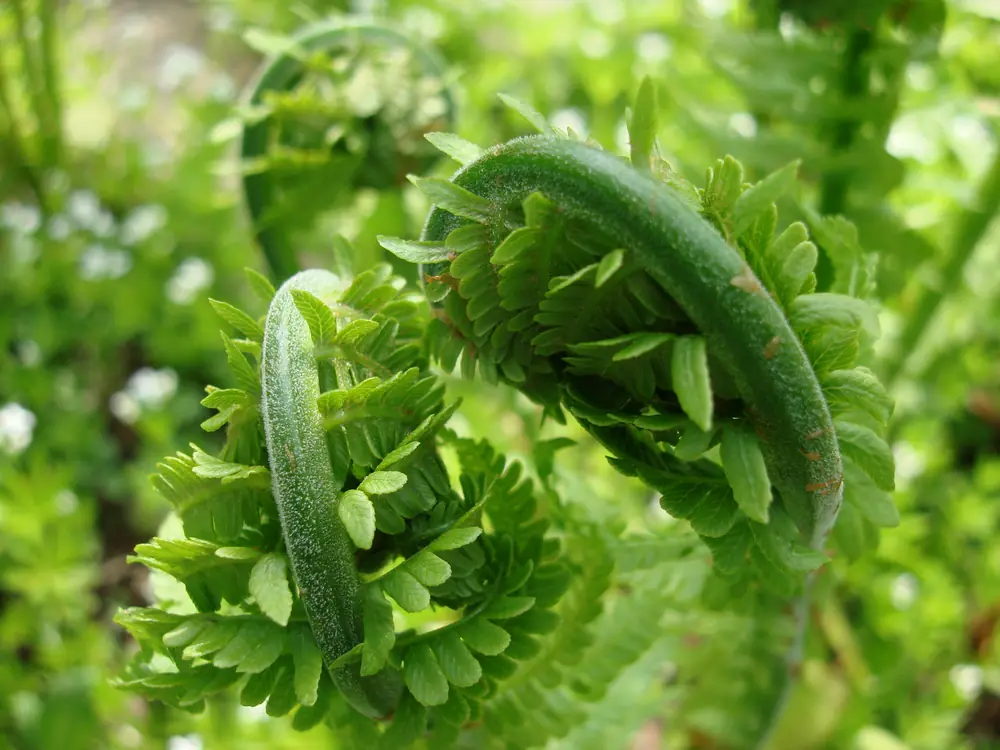
Northern Woodlands says a traditional signal that fiddleheads are ready is when tulips, forsythia and shadbush are in bloom. The edible ostrich fern is smooth, with a deep U-shaped groove along the stalk and a brown papery covering, as the Vermont Agency of Agriculture also describes, and fiddleheads are about an inch across. Avoid the whitish, fuzzy bracken fern. Northern Woodlands advises boiling or steaming them for 10 minutes before eating, and leaving at least one fiddlehead on each plant and avoiding crowns with fewer than six stems. Get the landowner’s permission first.
-
Trout season
2026 opened Saturday, April 11; the 2027 date will be announced in the spring · Low-elevation rivers and streams, stocked ponds
Vermont Fish & Wildlife announces the opening date each spring, and the fishing guide and regulations list it. Fisheries biologist Shawn Good advised in 2026 that early-season anglers do best on small to medium low-elevation streams that are not muddy with runoff, fishing slowly along the bottom. Nearly all waters are open year-round for catch-and-release with artificial lures and flies only, and no live bait.
-
Walleye on the Lamoille River
Spawning in spring; the state sampled the river in mid-April 2023, after the peak · Lamoille River
Vermont restarted walleye stocking in the Lamoille in 2023 for the first time in more than two decades, according to the Valley News. The catch rate fell from about 10 walleye per 20 hours of fishing in 1994 to one per 20 hours in 2021, and in the 1990s more than 100 vehicles would line the river on opening day.
-
Wild turkeys
Youth and novice hunting weekend was April 25 and 26 in 2026; the regular season ran May 1 to 31 · Farm country and oak and hickory woods, mostly in the southwest foothills, southern Champlain Valley and eastern lowlands
Vermont Fish & Wildlife says the turkey was essentially absent before 1969, and hunters took more than 5,000 in 2024. Gobbling heard at dawn in the woods is the males advertising to hens. The 2027 season dates are not posted; check the department’s seasons page, which listed the youth and novice weekend in the last weekend of April in 2025 and 2026.
-
Ruffed grouse drumming
Spring mornings · Young aspen and mixed woods
The Vermont Breeding Bird Atlas describes the ruffed grouse’s far-carrying spring drumming display, and says Vermont is something of a regional stronghold, with the species in 170 blocks in the second atlas against 172 in the first. The older local name is “partridge.”
What is April weather like in Vermont, and why is it the peak of fire season?
In the NOAA 1991–2020 normals, April average highs run from the upper 40s to the mid-50s °F in the valleys and hills, and about 42 °F on the Mount Mansfield summit, where the average April snowfall is 21.4 inches. Average lows stay above freezing only at the two Champlain Valley stations in the table, Burlington and St. Albans. Snow cover there lasts about two days, reaches 11 to 13 days at Island Pond and Sutton, and averages 30 days at the summit.
-
Brush fires before green-up
April and May · Statewide, on dry, windy days with dead grass
Vermont Public reported that three-quarters of Vermont’s wildfires occur in April and May. National Weather Service meteorologist Robert Haynes explained that strong cold fronts often bring faster winds, and the fuel is the dead grass, leaves and twigs left from last year before the new growth begins. A burn needs a Permit to Kindle Fire, issued by the forest fire warden of your town, and a warden can ban all burning when danger is high.
-
Mud season and trail closures
Usually through late May · High-elevation trails
The Green Mountain Club puts the start of mud season in late March or early April and its end in late May, with closures typically lasting until Memorial Day. High-elevation trails are the most vulnerable because soils are thin and the plants fragile. Follow the closures listed on TrailFinder, and try low-elevation walks such as Mount Philo in Charlotte, Mount Independence in Orwell, Sentinel Rock in Westmore or Paul’s Ledges in Putney.
| Station | Average high | Average low | Snowfall | Precipitation | Days with snow cover |
|---|---|---|---|---|---|
| Burlington International Airport (Champlain Valley) | 55.3 °F | 35.9 °F | 4.1 in | 3.07 in | 2.2 |
| St. Albans (Franklin County) | 52.0 °F | 33.4 °F | 6.2 in | 3.23 in | 2.5 |
| Rutland | 55.2 °F | 30.6 °F | 3.2 in | 3.11 in | 2.4 |
| St. Johnsbury (Northeast Kingdom) | 56.7 °F | 32.0 °F | 4.7 in | 3.15 in | 3.7 |
| Newport (Lake Memphremagog) | 50.8 °F | 29.2 °F | 4.5 in | 3.34 in | 6.3 |
| Island Pond (Northeast Kingdom) | 49.4 °F | 28.9 °F | 5.7 in | 3.35 in | 11.1 |
| Sutton (Northeast Kingdom) | 48.7 °F | 29.5 °F | 9.2 in | 3.89 in | 12.9 |
| Mount Mansfield (summit) | 42.6 °F | 27.5 °F | 21.4 in | 6.31 in | 30.0 |
For the latest seasonal outlook, see NOAA’s 90-day outlook page, which is updated every month. This guide does not summarize it.
When is Vermont’s last spring freeze?
Per NOAA’s 1991–2020 normals, the median last freeze falls between April 28 and 30 at Burlington, South Hero and Vergennes, May 5 at Montpelier, around May 11 to 15 at Bennington, St. Johnsbury, Newport and Rutland, and May 23 on the Mount Mansfield summit. Half of all years are later than the median, and the “nine years in ten” column runs into the last days of May in the north and into June on the summit. A warm April is a poor guide to planting; the Vermont frost dates page lists every station.
| Station | One year in ten | Median | Nine years in ten |
|---|---|---|---|
| Burlington International Airport (Champlain Valley) | Apr 17 | Apr 29 | May 11 |
| South Hero (Champlain Islands) | Apr 19 | Apr 28 | May 10 |
| Vergennes (Addison County) | Apr 20 | Apr 30 | May 11 |
| Montpelier (Capital Region) | Apr 23 | May 5 | May 21 |
| St. Johnsbury (Northeast Kingdom) | Apr 30 | May 13 | May 25 |
| Newport (Lake Memphremagog) | May 1 | May 14 | May 28 |
| Mount Mansfield (summit, about 3,950 feet) | May 5 | May 23 | Jun 8 |
| Rutland | May 1 | May 15 | May 31 |
| Bennington (southwest) | Apr 26 | May 11 | May 28 |
The weather guide explains how to read a forecast before a clear, cold night.
How much daylight does Vermont gain in April?
Burlington’s day lengthens from 12 h 46 m on April 1 to 14 h 11 m on April 30: 85 extra minutes, just under three a day. On April 1 the Sun rises about 6:34 a.m. and sets about 7:20 p.m.; on April 30 it rises about 5:45 a.m. and sets about 7:56 p.m. (Burlington, daylight time, per the U.S. Naval Observatory). The Sun is up before 6 a.m. from about April 21 or 22 on.
| City | Apr 1 | Apr 30 | Gained | Per day |
|---|---|---|---|---|
| Burlington | 12 h 46 m | 14 h 11 m | 85 min | 2.9 min |
| St. Albans | 12 h 47 m | 14 h 12 m | 85 min | 2.9 min |
| Newport | 12 h 46 m | 14 h 13 m | 87 min | 3.0 min |
| St. Johnsbury | 12 h 46 m | 14 h 11 m | 85 min | 2.9 min |
| Montpelier | 12 h 45 m | 14 h 10 m | 85 min | 2.9 min |
| Rutland | 12 h 44 m | 14 h 07 m | 83 min | 2.9 min |
| Brattleboro | 12 h 43 m | 14 h 04 m | 81 min | 2.8 min |
| Bennington | 12 h 44 m | 14 h 03 m | 79 min | 2.7 min |
Check day length for your own town with the daylight guide.
What can you see in Vermont’s night sky in April 2027?
Spring evenings are mild enough for sky-watching at last. Jupiter shines in the evening sky all month, Venus is a bright morning star that sinks lower each week, and a bright Pink Moon fills the third week. Every time below is Eastern daylight time, because the clocks moved ahead on March 14.
-
Pink Moon
Full at 6:27 p.m. EDT on Tuesday, April 20 · Eastern horizon at dusk
In Burlington the Sun sets at 7:44 p.m. on April 20 and the Moon rises about 12 minutes later, at 7:56 p.m., according to the U.S. Naval Observatory. Pink is only a folk name for the April full moon; low in the sky the Moon looks pale gold.
-
Lyrid meteors, a poor year
Peak around 9:41 p.m. EDT Thursday, April 22 (the night of April 22 to 23) · Northeast sky, toward Lyra
SeaSky calls the Lyrids an average shower of about 20 meteors an hour at best. In 2027 the Moon is three days past full, and it is about 95 to 97 percent lit on the 22nd, rising near 10:20 p.m. in Burlington (our own computation, which can be a minute or two off). Only the early evening is dark, and the radiant is low then, so a handful an hour is the likeliest count. A surprise burst is possible but cannot be predicted.
-
Jupiter, Mars and the Moon
The Moon passes Jupiter on April 14 and 15; Mars is near the Moon on April 15 · High in the sky after dark
On the evenings of Wednesday, April 14 and Thursday, April 15, a Moon that is about two-thirds lit sits next to Jupiter, less than a degree apart at closest. Mars, fading but still brighter than most stars, sits about 3 degrees from the Moon late on April 15.
-
Venus at dawn, and the new moon
The thin crescent Moon is near Venus on the mornings of April 3 and 4; new moon April 6 · Low in the east before sunrise
Brilliant Venus clears the eastern horizon about 75 minutes before the Sun on the 1st and only about an hour before it by the 30th, so the best views come early in the month. Those figures are our own computation for mid-latitudes; allow a few minutes either way in Vermont. The new moon on April 6 at 7:51 p.m. EDT means dark evenings through mid-month. Saturn is hidden by the Sun’s glare around its April 7 conjunction and is back at dawn in May.
-
Looking ahead to May
Eta Aquariid meteors begin about April 19; peak in the first week of May · Southeast sky before dawn
The Eta Aquariids peak right at the new moon on May 6, an excellent year, though northern latitudes such as Vermont’s see lower rates than the South. See the moon phases guide for how the phases look.
| Phase | Date | Time |
|---|---|---|
| New moon | Tuesday, Apr 6 | 7:51 p.m. EDT |
| First quarter | Tuesday, Apr 13 | 6:56 p.m. EDT |
| Full moon (Pink Moon) | Tuesday, Apr 20 | 6:27 p.m. EDT; rises 7:56 p.m. in Burlington |
| Last quarter | Wednesday, Apr 28 | 4:18 p.m. EDT |
| New moon | Thursday, May 6 | 6:58 a.m. EDT |
Use the cloud guide to judge whether a clear night is likely.
What can Vermont families do outdoors in April 2027?
- Saturday and Sunday, April 3 and 4, before sunrise: look east. A thin crescent Moon sits near bright Venus.
- Any mild evening: listen for peepers. Stand at a pond edge a few minutes after sunset and count how many species you hear.
- Tuesday, April 6: new moon. Dark evenings all week make fainter stars easy to see.
- Mid-April: trout opening day. The department announces the date each spring; in 2026 it was Saturday, April 11.
- Evenings of April 14 and 15 (Wednesday, Thursday): the Moon beside Jupiter. Look high in the sky after dark.
- Tuesday, April 20: Pink Moon rise. Face east near 7:56 p.m. in Burlington.
- Around April 20 and later: fiddlehead season begins in central Vermont. Go with someone who knows ostrich fern.
- Thursday, April 22: Earth Day. Pick one tree and visit it the same time each week.
- Friday to Sunday, April 23 to 25: Vermont Maple Festival, St. Albans. The festival’s site lists these dates; confirm the schedule before you go.
- All month: help the record. Report a lake’s ice-out to the Department of Environmental Conservation, monitor a loon lake or a vernal pool, and finish your feeder counts before Project FeederWatch’s November-to-April season closes.
- Plan ahead: Saturday, May 1, Green Up Day. State law makes the first Saturday in May a day for roadside cleanup.
The nature hub links every state and month, and the March and February Vermont guides cover the earlier thaw. Keep your April firsts in the Naturalist’s Field Journal.
Safety notes for April in Vermont
- Turkey hunting. The 2027 spring turkey season was still unannounced as this page was written. In 2026 the youth and novice weekend was April 25 and 26 and the regular season ran May 1 to 31; check the Fish & Wildlife seasons page. Walk in the woods with care on those days.
- Hunter orange. State law does not require hunter orange, though the regulations suggest an orange hat and vest at minimum.
- Fire. Burn nothing without a permit from your town fire warden, and expect a refusal on dry, windy days. About three-quarters of the year’s wildfires come in April and May.
- Mud and trails. Skip high-elevation trails and follow posted closures. Walking around mud widens the trail and damages plants.
- Cold, swift water. Spring streams run high and cold. Wade carefully, and do not trust pond ice in April: Joe’s Pond has gone out as late as May 6.
- Fiddleheads. Pick only ostrich fern, cook it for 10 minutes, and ask the landowner first.
- Ticks. Blacklegged ticks can be found whenever it is above freezing, the Vermont Department of Health reports. Nymphs are most active in May and June, and tick-related emergency visits are most common in spring and fall.
- Bears. Fish & Wildlife says to keep birdfeeders down from mid-March through December and lock up garbage. Feeding bears is illegal.
Sources (48)
- U.S. Naval Observatory: Sun and moon rise and set, Burlington, April 1, 2027
- U.S. Naval Observatory: Sun and moon rise and set, Burlington, April 20, 2027
- U.S. Naval Observatory: Sun and moon rise and set, Burlington, April 22, 2027
- U.S. Naval Observatory: Sun and moon rise and set, Burlington, April 30, 2027
- U.S. Naval Observatory: Moon phases 2027
- SeaSky: Astronomy calendar 2027
- Vermont Maple Sugar Makers’ Association: How it’s made
- Vermont Maple Festival
- Vermont Monitoring Cooperative: Forest phenology, 2017 long-term update
- Boston Globe: Joe’s Pond ice-out contest (April 2026)
- WCAX: Ice out at Joe’s Pond (April 16, 2026)
- VTDigger: Vermonters are encouraged to report ice-out dates on lakes and ponds (March 27, 2023)
- National Weather Service Burlington: Lake Champlain closure (freeze-over) record
- Lake Champlain Basin Program: Lake Champlain floods of 2011
- Vermont Center for Ecostudies: Loon pairs arriving on Vermont lakes
- Vermont Center for Ecostudies: Loon conservation
- Vermont Center for Ecostudies: A field guide to April
- Vermont Center for Ecostudies: Field Guide to April (2021)
- Vermont Center for Ecostudies: Field Guide to April (2022)
- Vermont Center for Ecostudies: Field Guide to April (2024)
- Vermont Center for Ecostudies: Vernal pool monitoring
- Vermont Atlas of Life: Hermit thrush (Vermont Breeding Bird Atlas)
- Vermont Atlas of Life: Tree swallow (Vermont Breeding Bird Atlas)
- Vermont Atlas of Life: Eastern bluebird (Vermont Breeding Bird Atlas)
- Vermont Atlas of Life: Ruffed grouse (Vermont Breeding Bird Atlas)
- Rutland County Audubon: West Rutland Marsh April monitoring report (2017)
- U.S. Fish & Wildlife Service: Missisquoi National Wildlife Refuge
- Vermont Reptile and Amphibian Atlas: Frog calling times
- Vermont Land Trust: Spring wildflowers and ephemerals (April 2026)
- Shelburne Farms: Vermont’s extraordinary spring ephemerals
- Northern Woodlands: Fiddlehead season
- Vermont Agency of Agriculture: Fiddleheads
- Vermont Business Magazine: Vermont’s trout season opens April 11 (2026)
- Valley News: The state gives the Lamoille River’s walleye a helping hand
- Vermont Fish & Wildlife: Hunting and trapping seasons
- Vermont Fish & Wildlife: Spring turkey hunting begins soon
- Vermont Fish & Wildlife: Wild turkey
- Vermont Hunting Regulations: General hunting information (hunter orange)
- Vermont Public: It’s a high-risk time for fires in Vermont (April 17, 2024)
- Vermont Forests, Parks and Recreation: Prevent forest fires
- Green Mountain Club: Mud season
- NOAA NCEI: Monthly climate normals 1991–2020, Vermont stations
- NOAA Climate Prediction Center: 90-day outlooks
- Vermont Department of Health: Tick activity in Vermont
- Vermont Fish & Wildlife: Bears are waking, take down birdfeeders
- Project FeederWatch: How to participate
- Vermont Statutes: 1 V.S.A. § 377, Green Up Day
- Photos via Wikimedia Commons; licenses and photographers are credited under each
