What to look for in nature in Vermont this December
On the weather books, winter in Vermont starts December 1, when meteorological winter begins; in the woods it often arrives a week or two sooner. By now the hardwood hills are gray and the color that remains belongs to balsam fir, red spruce, hemlock and pine. The sun sets close to 4:10 in the north of the state during the second week of the month, the snow stake on Mount Mansfield starts its long climb, and the birds that stay become easier to count: feeders go back up, volunteers fan out across more than twenty Christmas Bird Count circles, and in some winters snowy owls drop onto the flat farmland of Addison County. Under the snow and the leaves, bats, frogs and chipmunks are each getting through the cold in their own way. This guide gives the places, the dates and the sources.
Other months in Vermont: October, November.
Start here
- Count birds for science. Audubon’s 127th count season opens December 14 and closes January 5. North Branch Nature Center’s Montpelier–Plainfield circle has set Saturday, December 19, and newcomers are welcome; if you live inside a circle, your backyard feeder can be part of the tally.
- The year’s earliest sunsets. Around December 9 and 10 the sun sets at about 4:07 p.m. in Newport and 4:13 in Burlington, the earliest of the season. After that, evenings slowly lengthen, even though the shortest day is not until the solstice on Monday, December 21.
- Geminids, then a big Cold Moon. Sunday night, December 13, brings the strongest meteor shower of the year, with the slim moon gone by mid-evening. On the 23rd the Cold Moon turns full only hours from its nearest approach, making it 2026’s largest-looking full moon.
Short days leave long evenings for the journal. Enter count-day birds and any snowy owl on the “birds I have seen” list, tape a hemlock cone and a fir needle to the seeds, pods and cones page, and sketch the first clear fisher, fox or snowshoe hare prints of the season on tracks to know. The dusk-and-dawn watch suits the 4 p.m. sunset; note the minute the sun leaves your ridge on the solstice, and return to the same place twice, once in early December and again in the new year, to see what the snow has changed.
Regions used below: Champlain Valley and the Islands; Northeast Kingdom; Green Mountains; Central Vermont and the Capital Region; Southern Vermont and the Connecticut River Valley.
When is the Christmas Bird Count in Vermont in 2026, and how do you join?
Bird counting at Christmas began more than a century ago as an alternative to holiday shooting matches, and some Vermont counts still end the day around a table; Woodstock’s ends with turkey. National Audubon sets the window, and the 127th season covers the 23 days from December 14 to January 5, 2027. A compiler picks one day, divides a 15-mile-wide circle into sectors, and sends teams out from dawn.
-
More than twenty circles
One day per circle, between December 14 and January 5 · Statewide, from Island Pond and Barnet to Bennington, Brattleboro and the Champlain Islands
A 2018 Vermont Center for Ecostudies list named 23 count circles touching the state, among them Burlington, Ferrisburgh, Middlebury, Hinesburg–Huntington, Mt. Abraham, Rutland, Woodstock, Springfield, Saxtons River, Winhall–Windham, Lamoille County, Hunger Mountain, Island Pond, Barnet, East Franklin County and the Champlain Islands–St. Albans. Some circles straddle a border: Hanover–Norwich takes in the Upper Valley, and the Plattsburgh count reaches across the lake. Audubon’s circle map shows each one and whether it still needs help; email the compiler well before count day.
-
Montpelier–Plainfield, December 19
Saturday, December 19, 2026 · Plainfield, Montpelier, East Montpelier, Calais, Orange, Barre and Marshfield
North Branch Nature Center has already posted its date. The center calls this one of the oldest circles in the state, counted every year since 1960, and invites new counters to sign up with its staff. Residents inside the circle can also report the birds at their own feeders that day.
-
What a count finds
Results posted in January · Brattleboro, Woodstock and every other circle
Last year’s Brattleboro count, on December 20, 2025, found 4,324 birds of 52 species, Southeastern Vermont Audubon reported, including the count’s first eastern phoebe. Decades of these lists show change: a Vermont Center for Ecostudies biologist has pointed out that northern cardinals were absent from Vermont before the 1970s, and that red-bellied woodpeckers and Carolina wrens are also recent arrivals.
Beginners are useful: teams need spotters, a list keeper and a driver. Bring binoculars, warm boots and a thermos.
Where can you see snowy owls and bald eagles in Vermont in winter?
Two big birds of prey make December worth a drive along the lake: one that may or may not come south this year, and one that has recovered so well it is now dependable.
-
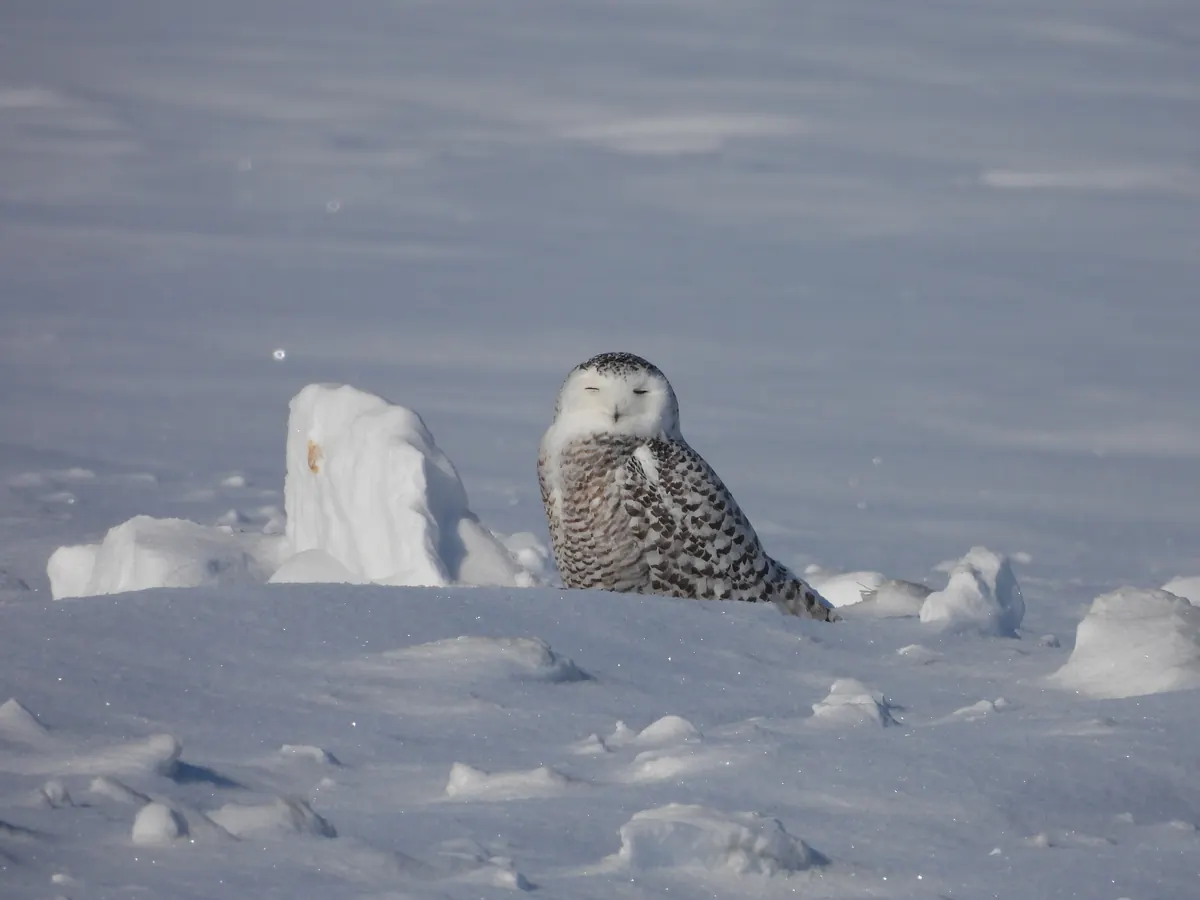
Snowy owls in the Addison flats
In irruption years, from mid-November through the winter · Open farmland around Addison and Shoreham; also the Colchester Causeway and the islands
These white owls nest on the tundra and reach Vermont in good numbers only some years. The Vermont Center for Ecostudies explains that big flights tend to follow a lemming boom: plenty of young owls survive, and adults drive them out of their territories. In Vermont the broad, flat fields of Addison County are the most reliable place to find them, and the center has also noted birds on the Colchester Causeway. Whether 2026–27 is a big year will show up in eBird’s Vermont reports. If you find one, watch from the car and keep your distance; a snowy owl flushed again and again wastes energy it needs.
-
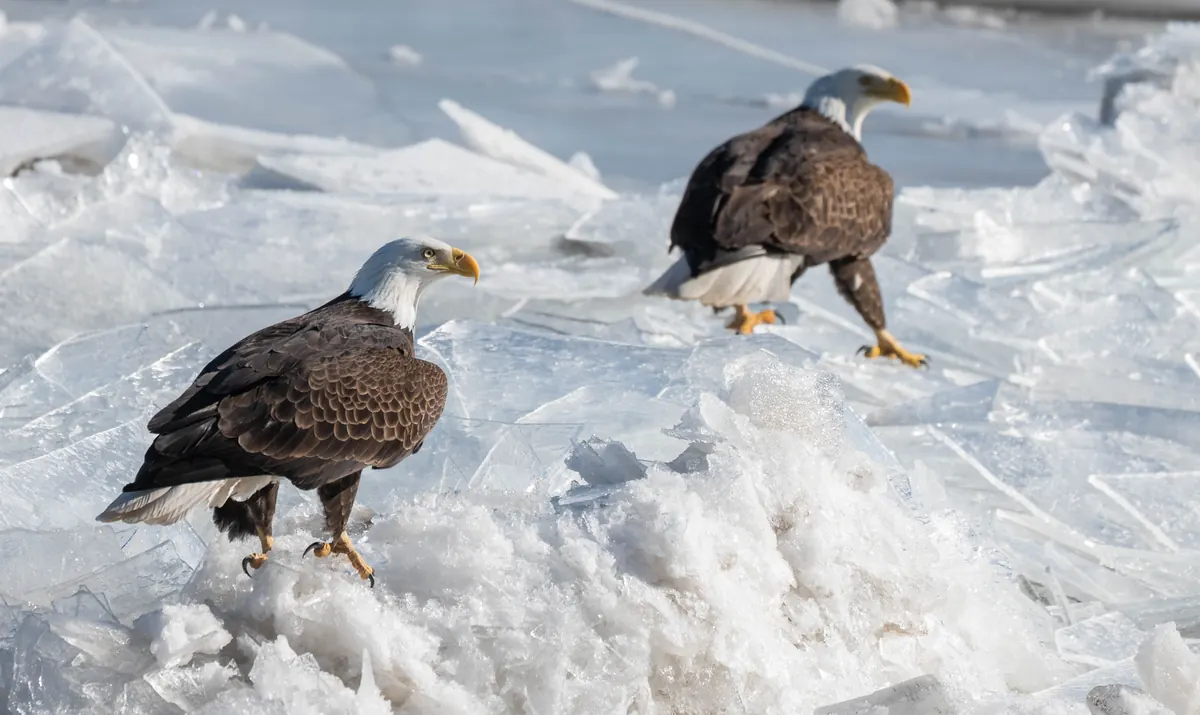
Bald eagles at open water
Most visible from December into early spring · The Connecticut River, Lake Champlain and its bays, Lake Memphremagog
The Lake Champlain Committee notes that eagle sightings around the lake peak in winter and early spring, when birds from places where the water has frozen gather wherever they can still catch fish. Vermont’s own population has come back too. The state’s first nesting pair raised young in 2008, the bald eagle came off Vermont’s endangered list on February 10, 2022, and VTDigger reported 38 nesting pairs in 2025, most of them along the Connecticut River. Scan the edges of ice shelves and tall riverside trees below dams, where the current keeps the water open longest.
-
Great horned owls start to duet
Late December into January · Woodlots next to farm fields, especially in the Champlain Lowlands
Few birds in Vermont nest earlier than the great horned owl. Northern Woodlands describes pairs calling back and forth by early January, the female’s voice higher than the male’s, and the Vermont Breeding Bird Atlas found that 40 percent of the state’s records of the species came from the Champlain Lowlands, where pine woods for roosting sit beside open land for hunting. On a still, cold night near the solstice, step outside after dark and listen for a deep, soft series of hoots answered by a slightly higher voice.
The rough-legged hawks and snow buntings that came in November share the same fields all winter.
When can you put bird feeders up in Vermont, and which birds will come?
December 1 is the date Vermont Fish & Wildlife gives for the start of feeding season. The reason is bears: most are in their dens from December 1 to April 1, the department says, though some delay denning or wake to feed in a warm spell.
-
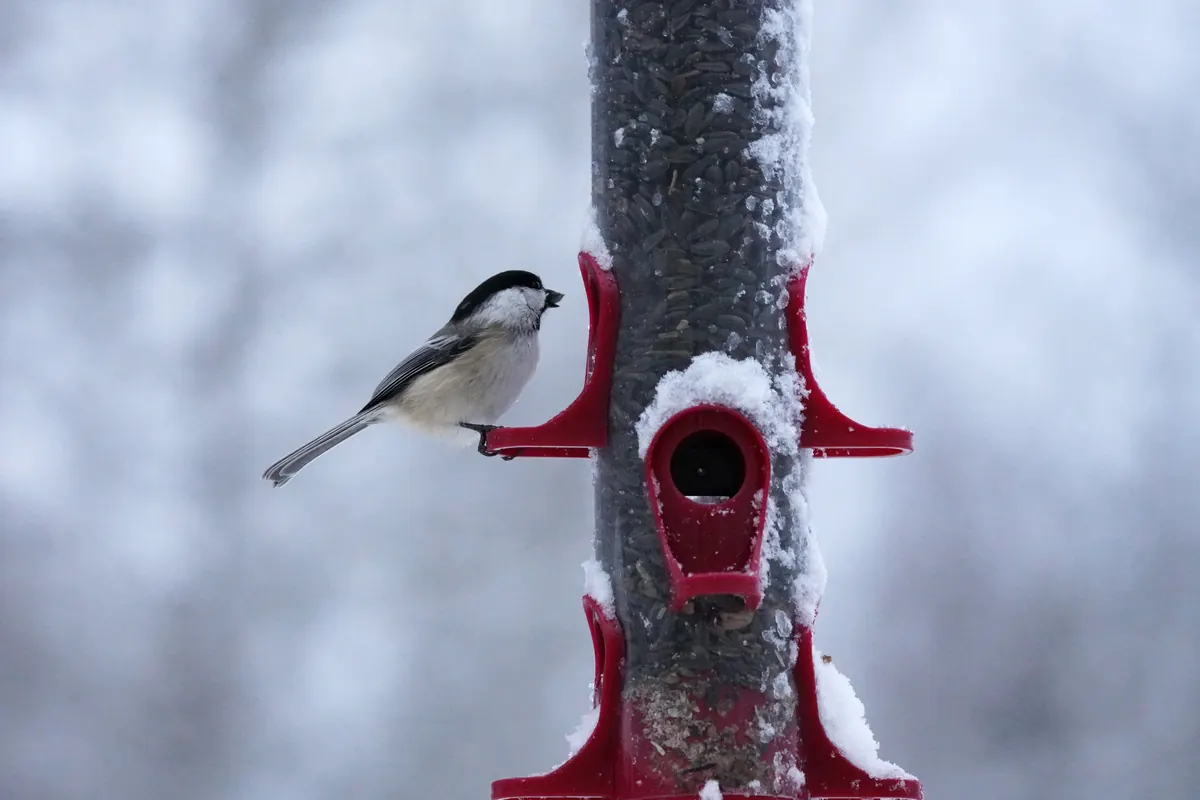
The regulars
From the first day you fill the feeder · Backyards statewide
Chickadees tend to discover a freshly filled feeder before anything else, then come tufted titmice, white-breasted and red-breasted nuthatches, downy and hairy woodpeckers, blue jays, juncos and, in much of the state, northern cardinals. Black-oil sunflower seed draws the widest mix, the department says, and a suet cake will keep the woodpeckers coming in a cold snap.
-
Winter finches
Unpredictable; best from December into March · Feeders near conifers; also the woods
The Finch Research Network’s fall forecast expected pine siskins and red crossbills in good numbers across the Northeast this winter, along with some purple finches, but only small numbers of evening grosbeaks and redpolls. With a heavy white pine and cedar cone crop in the woods, many finches may stay out in the forest rather than at the feeder, at least early in the season.
-
Bears, windows and cats
All winter · Your yard
The department warns that bears sometimes wake and wander during a winter thaw, so take feeders in if one appears. To cut window strikes, place feeders within 3 feet of the glass or more than 30 feet away, keep cats indoors, and scrub feeders every couple of weeks with a 10 percent bleach solution and let them dry completely before you refill.
Project FeederWatch, open since November 1, takes counts until the end of April; a winter of your tallies will show the week the siskins reached your yard.
How do you tell Vermont’s evergreen trees apart in winter?
With the leaves down, Vermont’s conifers stand out from a long way off. Three of them, balsam fir, red spruce and eastern hemlock, are easy to confuse until you pull one needle and look closely. The Native Plant Trust’s Go Botany guide gives the clues.
-
Balsam fir
All year; the classic Christmas tree · Cool forests, swamp edges and high slopes, especially in the Northeast Kingdom and the mountains
Fir needles are flat, so you cannot roll one between finger and thumb, and they are whitish underneath. The smooth young bark carries blisters full of resin, and crushing a twig releases the sweet balsam smell. Its cones sit upright near the crown and come apart in place.
-
Red spruce
All year · Higher slopes and cold hollows; the dark band below the summits of the Green Mountains
Spruce needles are four-sided and roll easily between your fingers; they are also sharp. Go Botany says red spruce twigs are finely hairy, which separates it from white spruce, and that it favors the cool, moist air of higher elevations and frost pockets. Its cones hang down and drop whole.
-
Eastern hemlock
All year · Shady ravines, stream banks and north-facing slopes
Hemlock needles are short and flat, each on a tiny stalk, with two pale lines beneath, and the small egg-shaped cones dangle from the tips of the twigs. In southern Vermont, look at the undersides of hemlock twigs for tiny tufts of white wool: that is the hemlock woolly adelgid, an invasive insect that has been concentrated in Windham County with spots in southern Windsor and Bennington counties. The tufts show best from November to May, which makes winter the time to look, and the state’s forest health staff ask people to report any they find outside the known area.
-
Eastern white pine
All year · Old fields, ridges and village edges statewide
The easy one: soft, long needles in bundles of five. This year’s heavy cone crop is feeding the crossbills and siskins.
If you want a tree from the woods, the Green Mountain National Forest sells cut-your-own permits through Recreation.gov for $5 a tree plus a $2.50 booking fee, up to two per household. Trees can be no taller than 20 feet, the stump must be cut to 6 inches or less, and cutting is not allowed in wilderness areas, active timber sales, campgrounds or picnic areas. Buying a live, potted tree to plant outside after the holidays? Our Vermont frost dates show when hard spring frosts usually end in your area.
How do Vermont’s animals survive the winter?
Bears and beavers were the November story. By December the rest of the cast has chosen its strategy: sleep in a cave, freeze solid, nap beside a pantry, or keep hunting through the snow.
-
Bats in a Dorset cave
Hibernating from fall to about mid-April · Caves and old mines; Aeolus Cave in Dorset, owned by The Nature Conservancy and gated
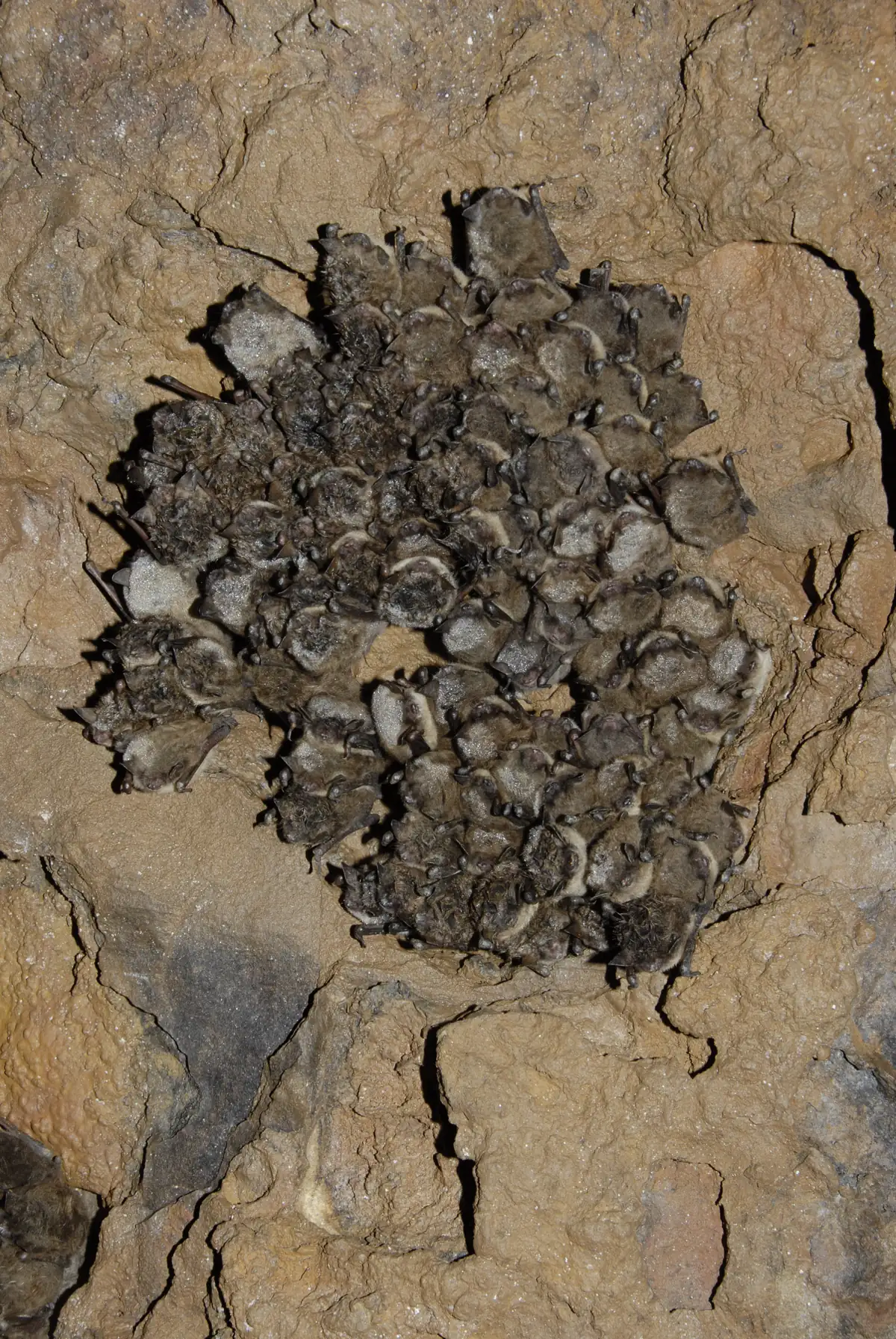
Six of Vermont’s nine bat species spend the winter hanging in caves and mines. The most famous is Aeolus Cave, high on a Dorset mountainside, where biologists in the 1960s estimated a quarter of a million bats hibernated each winter. Then came white-nose syndrome, a fungal disease first seen in the Northeast in 2006, which Vermont Fish & Wildlife says has killed more than 5.7 million bats in the region and cut the state’s cave bat populations by more than 90 percent; the little brown bat is now state endangered.
-
Wood frogs, frozen in the leaves
From the first hard freezes until spring · Just under the leaf litter in hardwood forests
Most of our frogs spend the winter in pond-bottom mud, but the wood frog stays on land, tucked a couple of inches under the dead leaves, and simply freezes. Northern Woodlands explains that as ice starts to form, the frog turns its stored glycogen into glucose, raising its blood sugar as much as 200-fold, and that sugar keeps the inside of its cells from freezing while up to 65 percent of its body water turns to ice between them. When spring rains come, the frogs thaw and head for the vernal pools to breed.
-
Chipmunks and their pantries
Mostly underground from late fall to early spring · Burrows along stone walls, woodpiles and forest edges
Eastern chipmunks do not fatten up the way bears do. Instead they fill an underground larder with nuts and seeds, and Northern Woodlands notes that sleeping chipmunks wake from time to time to eat from it, and may even pop out on a mild winter day.
-
Fisher, fox and hare: the ones still out
All winter, best the morning after a light snow · Conifer and mixed forests, stone walls, stream edges
Vermont Fish & Wildlife says fishers now live in virtually every town in the state, favoring conifer and mixed woods where the canopy keeps the snow shallow; they are one of the few predators that regularly kill porcupines. In fresh snow, look for the fisher’s paired bounding prints along logs and stone walls.
Please do not feed deer. Vermont Fish & Wildlife’s landowner guide says winter feeding is illegal in the state and often kills deer, because their gut microbes are tuned to woody browse and a sudden meal of corn upsets them, and feeding sites draw deer away from the shelter of their wintering yards toward roads and dogs. The Naturalist’s Field Journal has a mammal watch plate for the tracks you do find.
How much snow does Vermont usually get in December?
December is when snow starts to stay on the ground in most of Vermont, though how much depends heavily on elevation and on which side of the mountains you live. NOAA’s 1991–2020 normals give Burlington 19.5 inches of December snowfall, an average high of 35.0 °F and an average low of 21.3 °F, and snow cover of an inch or more on about 17 days of the month. The Northeast Kingdom gets more, and the summit of Mount Mansfield far more.
-
The Mount Mansfield snow stake
Read every day since November 1954 · Near the summit of Mount Mansfield, Stowe
Snow depth at a stake near the top of Vermont’s highest mountain has been measured daily since November 1954 at a National Weather Service cooperative station, and the University of Vermont’s Forest Ecosystem Monitoring Cooperative archives the record. WCAX reported that the average depth there on December 4 is just 17 inches, and that the stake typically does not reach 50 inches until late January. Last winter broke the rules: the stake hit 50 inches in the first week of December 2025, the earliest on record, and VTDigger reported 63 inches by mid-month, against a normal of about 22.
-
Lake Champlain stays open
Bays may skim with ice in late December; the broad lake almost never freezes before late January · Shallow, sheltered bays first; the broad main lake last
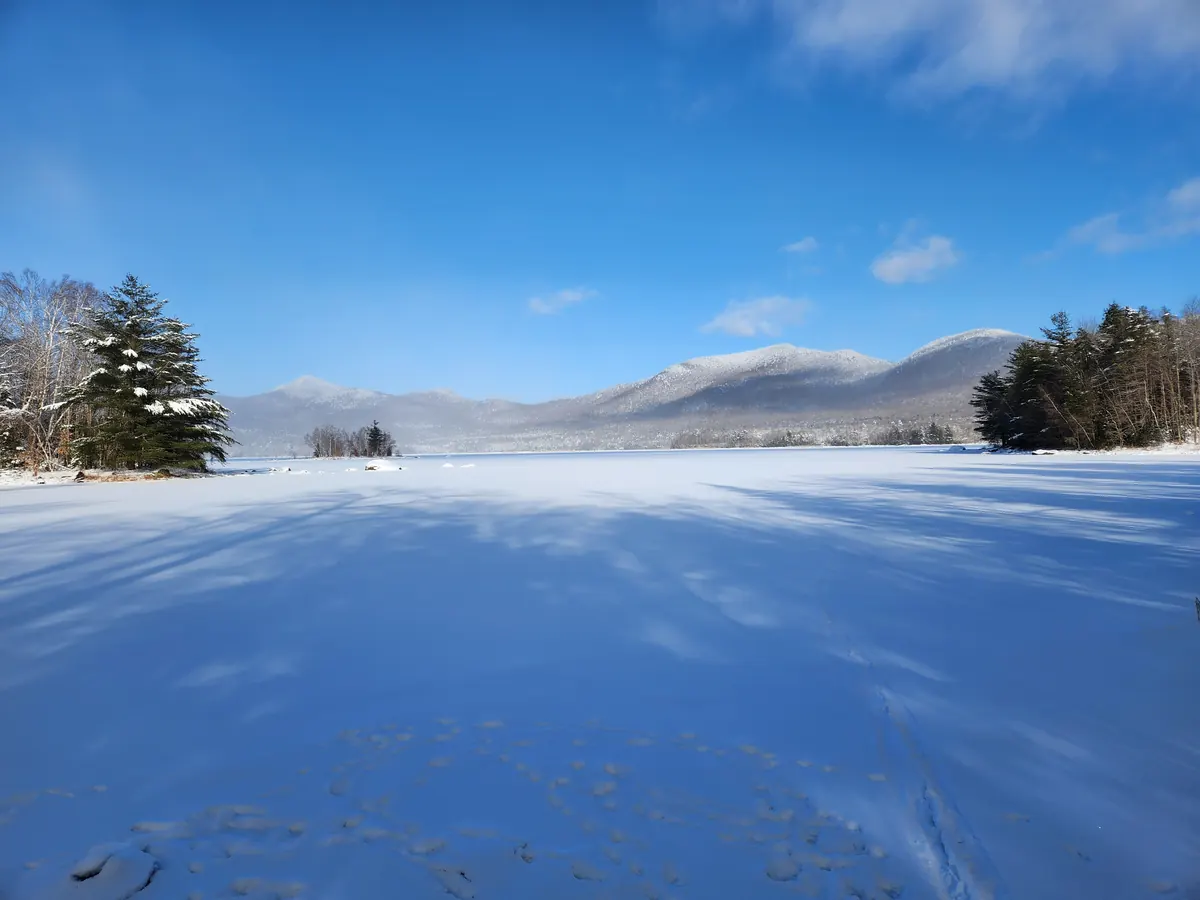
The National Weather Service office in Burlington keeps a list of the dates the lake “closed,” meaning ice reached across the broad lake from Burlington to Port Kent, New York, going back to 1816. There is no December closing on it. The earliest recorded was January 7, 1868; most closings fall from mid-January to mid-February, and in many recent winters the lake has not closed at all. It closed on February 13, 2026, the first time since 2019.
| Station | Average high | Average low | Snowfall | Days with snow cover |
|---|---|---|---|---|
| Burlington International Airport (Champlain Valley) | 35.0 °F | 21.3 °F | 19.5 in | 16.6 |
| South Hero (Champlain Islands) | 34.0 °F | 20.5 °F | 10.9 in | 14.4 |
| St. Albans (Franklin County) | 32.3 °F | 17.8 °F | 16.0 in | 16.9 |
| Cornwall (Addison County) | 33.0 °F | 17.5 °F | 13.4 in | 15.8 |
| Rutland | 35.1 °F | 16.3 °F | 18.3 in | 17.7 |
| Northfield (central Vermont) | 34.5 °F | 14.5 °F | 21.3 in | 22.8 |
| St. Johnsbury (Northeast Kingdom) | 33.1 °F | 17.2 °F | 20.4 in | 22.2 |
| Newport (Lake Memphremagog) | 29.2 °F | 13.5 °F | 25.2 in | 22.8 |
| Island Pond (Northeast Kingdom) | 29.7 °F | 13.5 °F | 25.1 in | 25.7 |
| Sutton (Northeast Kingdom) | 29.0 °F | 13.0 °F | 27.7 in | 25.8 |
| Mount Mansfield (summit) | 26.6 °F | 12.9 °F | 43.2 in | 30.4 |
Notice the islands: South Hero, out in the lake, averages barely half of Burlington’s December snow, while Sutton and Island Pond in the Kingdom average more than two feet. For snow in the forecast this week, check our Weather now page before you set out.
Will a strong El Niño mean a mild, low-snow winter in Vermont?
Probably milder, possibly less snowy, and nothing is guaranteed. In its September 10 discussion, Climate Prediction Center forecasters gave better than nine-in-ten odds to a very strong event lasting through the coming winter. Past events are the guide to what that means here.
NOAA’s climate.gov analysis of El Niño winters from 1959 to 2023 found snowfall reduced in interior New England, along with the Great Lakes and the northern Rockies. A Northeast summary written by NOAA with the regional climate center at Cornell explains the jet stream pattern behind that: during El Niño the northern storm track tends to sit farther north than usual while a southern one runs across the southern states, which leaves New England between the two. During the record 2015–16 event every part of the Northeast was warmer than normal, New England came up short on snow, and the Burlington weather office later called that winter the city’s warmest on record.
The same summary is careful to add that every El Niño is different, and that the Arctic Oscillation and North Atlantic Oscillation can push a winter the other way and cannot be forecast months ahead. A single nor’easter on the right track can still bury the state. On October 15 NOAA issues its official outlook for the winter; the December to February maps will be posted with the 90-day outlooks.
When is the earliest sunset in Vermont, and when do the days start getting longer?
Most people assume the earliest sunset comes on the shortest day. It does not. In Vermont the sun sets earliest around December 9 and 10, at about 4:13 p.m. in Burlington and 4:07 in Newport, and by the solstice the sunset in Burlington has already slipped back to 4:16. Sunrise runs the other way, still drifting later past Christmas and reaching about 7:29 a.m. in Burlington from late December into the first days of January. At the solstice, 3:50 p.m. on Monday, December 21, Burlington has 8 hours 50 minutes of daylight and Newport, farthest north in the table, 8 hours 46 minutes.
| City | Dec 1 | Dec 21 | Dec 31 | Earliest sunset |
|---|---|---|---|---|
| Burlington | 9 h 05 m | 8 h 50 m | 8 h 54 m | 4:13 p.m., Dec 10 |
| St. Albans | 9 h 04 m | 8 h 47 m | 8 h 51 m | 4:11 p.m., Dec 10 |
| Newport | 9 h 02 m | 8 h 46 m | 8 h 50 m | 4:07 p.m., Dec 10 |
| St. Johnsbury | 9 h 06 m | 8 h 50 m | 8 h 54 m | 4:08 p.m., Dec 9 |
| Montpelier | 9 h 07 m | 8 h 51 m | 8 h 55 m | 4:11 p.m., Dec 9 |
| Rutland | 9 h 11 m | 8 h 56 m | 9 h 00 m | 4:15 p.m., Dec 9 |
| Brattleboro | 9 h 16 m | 9 h 01 m | 9 h 05 m | 4:16 p.m., Dec 9 |
| Bennington | 9 h 16 m | 9 h 01 m | 9 h 04 m | 4:18 p.m., Dec 9 |
The reason is the tilt of Earth’s axis combined with its slightly oval orbit, which makes solar noon drift later through December. In practice, by December 31 Burlington’s sunset is back to 4:23 and the day is 4 minutes longer than at the solstice. Sun times for your own town, with twilight, are in our Field almanac.
What can you see in Vermont’s night sky in December 2026?
Fifteen hours of darkness give December the longest nights of the year, and this one is well stocked: the best meteor shower of the year, 2026’s nearest full moon, and Venus blazing in the morning. All times are EST.
-
Venus and the crescent moon at dawn
Mornings of December 4 and 5, and all month · Southeast before sunrise
Venus is the dazzling light in the southeast before dawn all month, far brighter than any star. The old crescent moon drifts past it on December 4 and 5, with the star Spica close to the moon on the 4th. Jupiter and Mars are also up before dawn, Jupiter bright and high, Mars smaller and orange.
-
The Geminids
Night of Sunday, December 13, into Monday the 14th; active December 4 to 20 · Anywhere dark; the radiant near Castor and Pollux is high after midnight
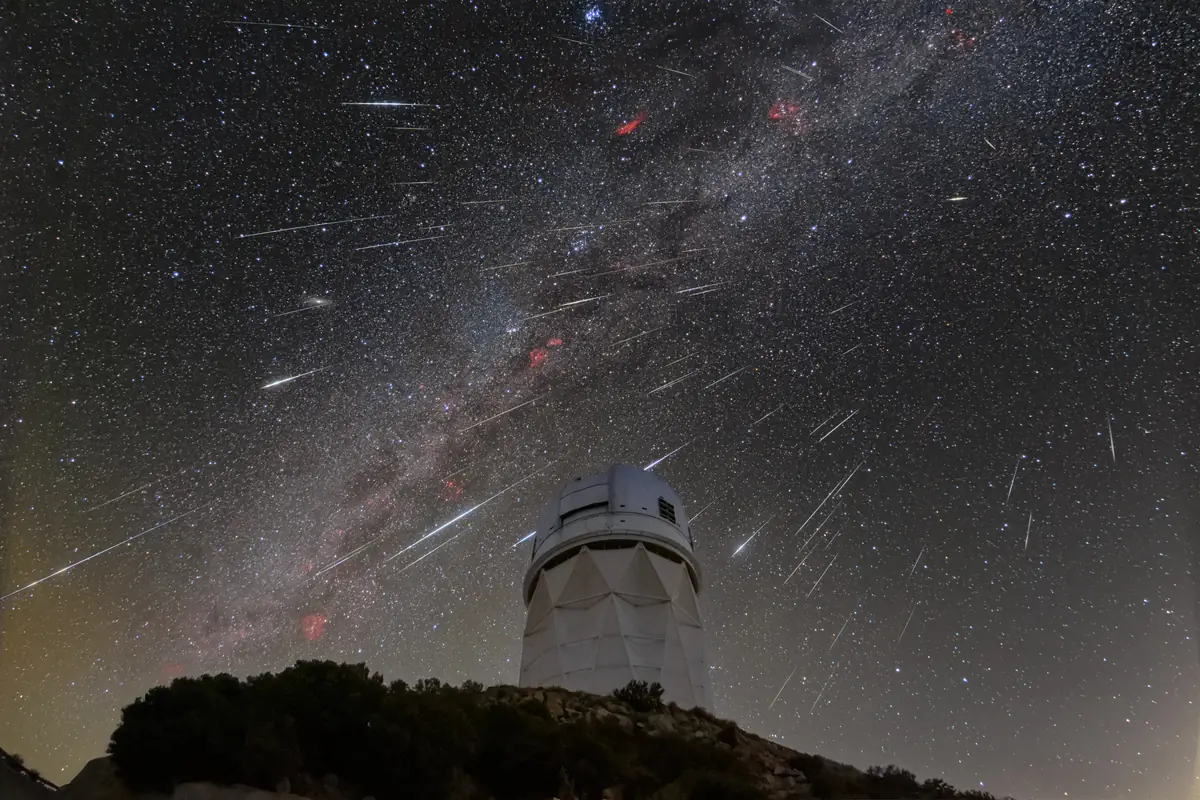
The International Meteor Organization gives an ideal-sky peak rate near 150 per hour, and in 2026 the young crescent moon sets in the mid-evening and leaves the hours after that moonless. A backyard observer sees far fewer, yet a dark field in the hills can deliver several dozen an hour, most of all near 2 a.m. Wear every layer you own, lie on a foam pad, and keep phone screens off.
-
Saturn in the evening, a gibbous moon at the Pleiades
Evenings all month; the moon near the Pleiades on December 21 · South and southwest after dusk
Saturn, steady and pale gold, is the lone bright planet of the early evening. On December 21, shortly after dark, the fat gibbous moon sits beside the Pleiades in the east.
-
The Cold Moon, the closest full moon of 2026
Full at 8:28 p.m. on Wednesday, December 23; nearly full on Christmas Eve · Rising in the northeast around sunset
Seven hours or so after the full phase, the moon reaches perigee, its nearest point this month. EarthSky calls it the closest full supermoon of the year, and the BBC’s Sky at Night magazine lists it as the third and last supermoon of 2026. On a snowy night it lights the fields well enough to read tracks without a flashlight. The Ursid meteors peak the night before, but under that bright moon they will be hard to see.
| Phase | Date | Time |
|---|---|---|
| Last quarter | Tuesday, Dec 1 | 1:08 a.m. EST |
| New moon | Tuesday, Dec 8 | 7:52 p.m. EST |
| First quarter | Thursday, Dec 17 | 12:42 a.m. EST |
| Full moon (Cold Moon) | Wednesday, Dec 23 | 8:28 p.m. EST; closest full moon of 2026 |
| Last quarter | Wednesday, Dec 30 | 1:59 p.m. EST |
| New moon | Thursday, Jan 7, 2027 | 3:24 p.m. EST |
Northern lights are still possible this winter, since the solar cycle, though past its peak, is still active, though nobody can predict a display weeks out. Check cloud cover for the evening on Today’s sky, and the moon phases calendar gives the moon’s rising time for any Vermont town.
What can Vermont families do outdoors in December 2026?
- Tuesday, December 1: hang the feeder. Vermont Fish & Wildlife’s feeding season starts today; keep a tally sheet by the window and enter the counts in Project FeederWatch.
- Saturday, December 12, 8 to 9 a.m.: bird walk at Missisquoi. The Friends of Missisquoi National Wildlife Refuge have posted this date for their monthly survey walk on the Maquam/Black Creek Trail; the refuge trails are open from dawn to dusk all year.
- Sunday night, December 13: Geminid watch.
- Saturday, December 19: Christmas Bird Count in Montpelier and Plainfield. Sign up through North Branch Nature Center, or find another circle and its compiler on Audubon’s count map. Southeastern Vermont Audubon’s Brattleboro count was on the Saturday before Christmas last year; check its page for the 2026 date.
- Monday, December 21: the solstice.
- Wednesday, December 23, at dusk: the Cold Moon rises.
- Any weekend: cut your own tree in the Green Mountain National Forest with a $5 permit, booked on Recreation.gov; a child in fourth grade with the federal Every Kid Outdoors pass pays just the booking fee.
- Any day: VINS in Quechee. The raptor center welcomes visitors every day, 10 to 5. Its Forest of Lights evening display has run on select December nights in past years; check for 2026 dates.
- Any snowy morning: a tracking walk. Vermont State Parks are open all year with no off-season entry fee, though most gates are closed and you walk in.
- Friday, January 1, 2027: a New Year’s hike. Last January 1, Vermont State Parks and partners led free guided hikes at places including Elmore, Camel’s Hump, Button Bay, Brighton and Bomoseen state parks and Mount Mansfield State Forest. Watch the state parks’ events page and America’s State Parks for the 2027 list, which had not been posted in early October.
For other states, see the nature hub; November’s goose fields and deer rut are on the Vermont November page.
Safety notes for December in Vermont
- Hunting continues into December. Vermont Fish & Wildlife’s 2026–27 calendar has the muzzleloader deer season from November 30 to December 13 and deer archery through December 15. Ruffed grouse and gray squirrel stay open through December 31, hare and rabbit through mid-March in most units, and coyote hunting has no closed season. On Lake Champlain, duck hunting runs through December 27; Interior zone ducks close December 8. The late Canada goose season runs December 1 to January 4 in both of those zones, and in the Connecticut River zone the goose seasons continue to December 24 and then from December 25 to January 4. Fisher trapping is December 1 to 31, and beaver and otter trapping continues through March.
- Orange is recommended, not required. Vermont has no hunter-orange law, but the state’s hunting regulations urge at least an orange hat and vest, and cite a New York finding that 94 percent of hunters in mistaken-for-game accidents were not wearing orange. Walkers on wildlife management areas, state forests and off-season state parks should wear it too through mid-December, and an orange vest suits the dog.
- Ice. First ice on ponds is thin and uneven. Vermont Fish & Wildlife wants anglers on no less than 3 to 4 inches of hard, clear ice, and 6 inches or more when the ice is the milky gray kind left by thawing and refreezing. Test it often with a spud bar, carry wearable ice picks, never go alone, and keep off ice over moving water, at inlets and outlets, and near the edges of Lake Champlain’s bays.
- Cold and early dark. Sunset comes soon after 4, so set out by late morning, pack a light and spare layers, and leave your route with someone. Above treeline on Mansfield or Camel’s Hump, ice and wind make December a mountaineering month; microspikes or crampons and a turnaround time are essential.
- Roads. Snow squalls and freezing rain can glaze back roads in minutes, and deer and moose still cross after dark.
- Bears. A few bears may stay up into December after a good beech and acorn year; take feeders in if one visits.
Sources
- National Audubon Society: join the Christmas Bird Count (December 14, 2026, to January 5, 2027; circle map)
- Vermont Center for Ecostudies: join the 119th Christmas Bird Count in Vermont (2018 list of count circles)
- North Branch Nature Center: Montpelier–Plainfield Winter Bird Count (December 19, 2026)
- Southeastern Vermont Audubon: Brattleboro Christmas Bird Count (2025 results)
- WBUR: 50 years of counting birds in Woodstock, Vermont (January 6, 2025)
- Vermont Public: Vermonters get out and count the birds (December 26, 2023)
- Vermont Center for Ecostudies: ghosts from the Arctic (snowy owls in Vermont)
- Vermont Center for Ecostudies: the season’s first snowy owls
- eBird
- Lake Champlain Committee: the return of the eagle
- VTDigger: bald eagle removed from state endangered list (February 10, 2022)
- VTDigger: bald eagle population soars in the region (April 19, 2026)
- Northern Woodlands: in January, owl courtship begins
- Vermont Breeding Bird Atlas (Vermont Center for Ecostudies): great horned owl
- Vermont Fish & Wildlife: December is the start of bird feeding season (November 25, 2025)
- Finch Research Network: winter finch forecast 2026–2027
- Project FeederWatch: how to participate
- Native Plant Trust, Go Botany: balsam fir
- Native Plant Trust, Go Botany: red spruce
- Native Plant Trust, Go Botany: eastern hemlock
- Vermont Invasives: hemlock woolly adelgid population may be on the rise
- Recreation.gov: Green Mountain National Forest Christmas tree permit
- Vermont Fish & Wildlife: little brown bat
- Vermont Fish & Wildlife: got bats? (white-nose syndrome losses)
- Yale Environment 360: in Aeolus Cave, a search for the vanishing bats of the Northeast (March 24, 2011)
- Northern Woodlands: frogs withstand winter by freezing
- Northern Woodlands: the eastern chipmunk
- Vermont Fish & Wildlife: fisher
- Vermont Fish & Wildlife: landowner’s guide, white-tailed deer (winter feeding)
- NOAA NCEI: 1991–2020 monthly normals for Vermont stations
- University of Vermont, Forest Ecosystem Monitoring Cooperative: Mount Mansfield summit daily data
- WCAX: Mount Mansfield sets record for earliest 50-inch snow depth (December 6, 2025)
- VTDigger: Vermont’s tallest peak buried under record-breaking powder (December 16, 2025)
- National Weather Service Burlington: Lake Champlain closing dates
- Climate Prediction Center: ENSO diagnostic discussion, September 10, 2026
- Climate Prediction Center: 90-day outlooks (winter outlook issued October 15, 2026)
- NOAA climate.gov: how does El Niño affect snowfall over North America? (October 26, 2023)
- NOAA and Northeast Regional Climate Center: El Niño impacts and outlook, Northeast region
- National Weather Service Burlington: The Four Seasons newsletter, winter 2016–17 (looking back at winter 2015–16)
- U.S. Naval Observatory: moon phases from November 2026
- U.S. Naval Observatory: Earth’s seasons, 2026
- International Meteor Organization: 2026 meteor shower calendar
- EarthSky: what is a supermoon?
- BBC Sky at Night: supermoons in 2026
- NOAA Space Weather Prediction Center: solar cycle progression
- Friends of Missisquoi National Wildlife Refuge: events calendar (December 12 bird walk)
- U.S. Fish and Wildlife Service: Missisquoi National Wildlife Refuge
- Vermont Institute of Natural Science (VINS): hours and events
- Vermont Department of Forests, Parks and Recreation: park events (First Day Hikes)
- America’s State Parks: First Day Hikes
- Vermont State Parks: winter activities (open all year, no off-season entry fee)
- Vermont Fish & Wildlife: 2026–27 hunting and trapping seasons
- Vermont Fish & Wildlife: Vermont’s 2026–27 migratory game bird seasons are announced
- Vermont hunting regulations (eRegulations): general hunting information, hunter orange
- Vermont Fish & Wildlife: ice fishing fun and safety (January 13, 2026)
- Vermont Fish & Wildlife: black bear
- Photos via Wikimedia Commons; licenses and photographers are credited under each picture
