What to look for in nature in Vermont this November
November in Vermont belongs to the bare hillside. The maples are done, the beeches and young oaks rattle with dry tan leaves, and on the first evening of the month the clocks go back and darkness arrives before supper. The month is far from empty, though. Snow geese linger in the Addison fields, snow buntings and rough-legged hawks drift down from the Arctic to replace them, bucks leave fresh scrapes along the woods roads, bears and beavers finish stocking up, and the first measurable snow usually reaches Burlington in the opening week or two. Here is where to look, when to go, and who says so.
Other months in Vermont: October, December.
Start here
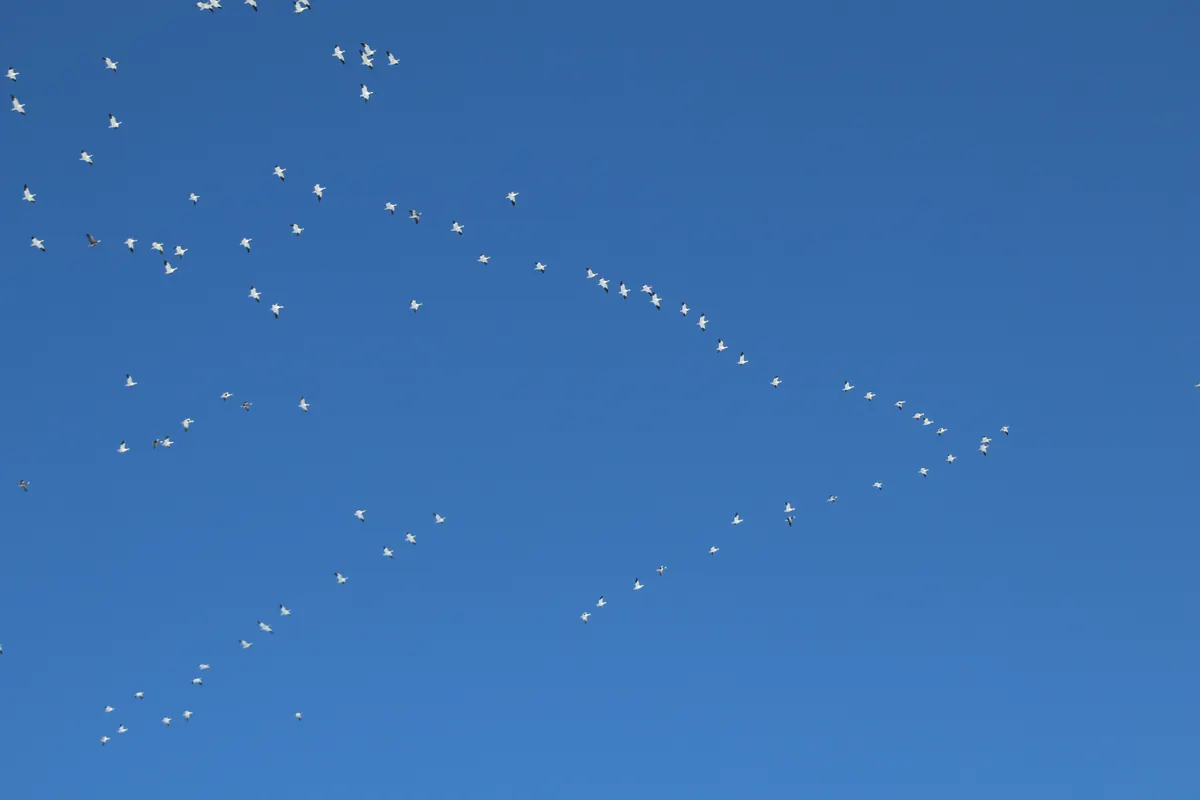
- The goose fields of Addison. Snow geese at Dead Creek usually stay near their peak into the first days of November. Scan from the Route 17 pull-off, or drive to the end of Gage Road when the flock sits at the back of the refuge, and look along the gravel roads for snow buntings.
- Feeders wait for December. Vermont Fish & Wildlife asks people to hold off on bird feeders until December 1, because bears are still awake and hungry. You can still join Project FeederWatch on November 1 by counting the birds in your plantings.
- Mars beside Jupiter. Sunday and Monday mornings, the 15th and 16th, put ruddy Mars a finger’s width from Jupiter in Leo, high in the southern sky. Dazzling Venus is lower in the east-southeast.
A bare November is a fine time to fill a journal. Add the snow geese, the first snow bunting and any rough-legged hawk to “birds I have seen,” draw a buck rub or a beaver-chewed stump on the reading-the-signs plate, and press a pale beech leaf onto a tree-through-the-seasons page in the week it finally lets go. When the first snow comes, the tracks-to-know plate is waiting, and the dusk-and-dawn watch can hold whatever crosses the hayfield at 4:30. Note the date and the temperature each time.
Regions used below: Champlain Valley and the Islands; Northeast Kingdom; Green Mountains; Central Vermont and the Capital Region; Southern Vermont and the Connecticut River Valley.
Where can you see snow geese and winter field birds in Vermont in November?
The Champlain Valley changes cast in November. The big goose flocks thin out, the last ducks bunch up on the open lake, and birds that nested on the tundra arrive to spend the winter in the farm country between the Green Mountains and the lake.
-
The last of the snow geese
Typical peak late October into the first week or so of November · Dead Creek Wildlife Management Area, Addison: the Route 17 viewing area west of Route 22A, and the end of Gage Road
Vermont Fish & Wildlife’s Dead Creek brochure says goose numbers usually top out from the end of October into early November, so the opening days of this month are worth a drive. Shifting migration routes have cut the flock to roughly 5,000 birds, a quarter of the 20,000 that once stopped. When the geese are feeding at the far end of the refuge, the brochure points visitors to the end of Gage Road for a closer look. Stay outside the orange gates: the refuge is closed to people at all times, and the goose management areas are open to hunters by permit only.
-
Snow buntings, horned larks and rough-legged hawks
Arriving through November and staying into March · Gravel roads and field edges in Addison County, especially around Dead Creek and Gage Road
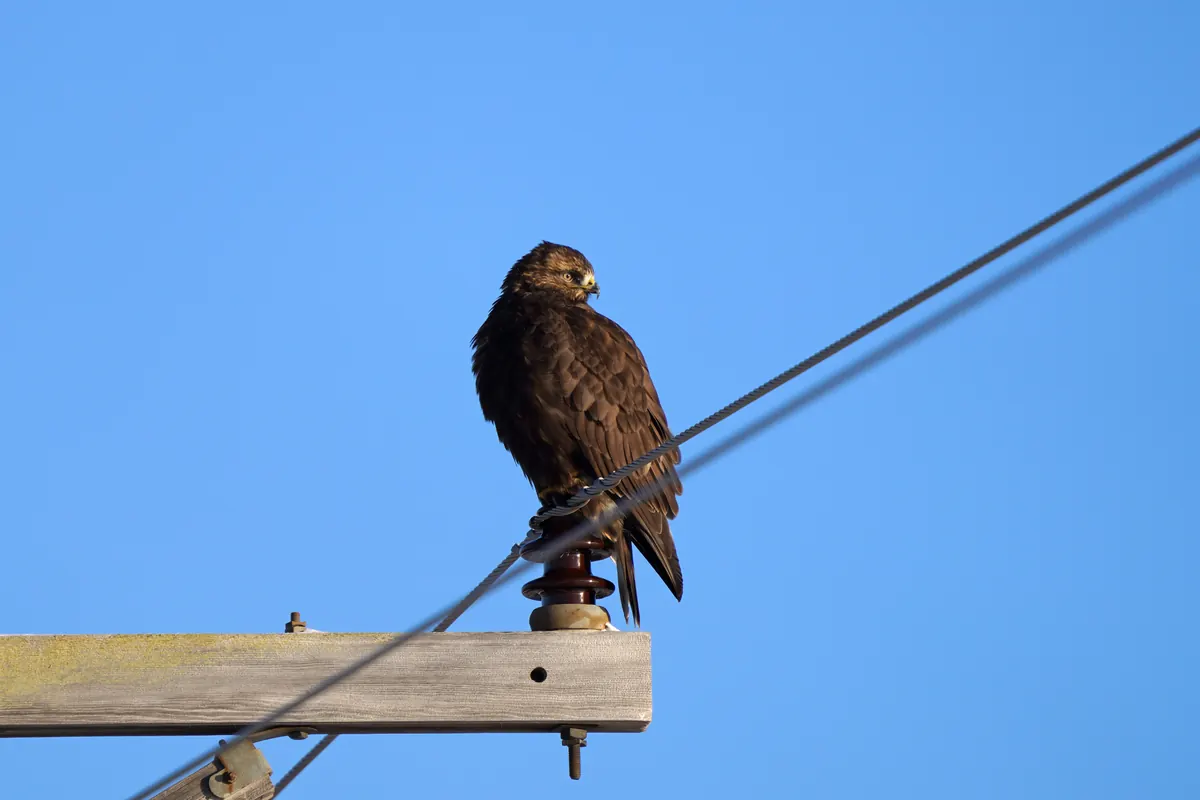
The same brochure calls the colder months a good time for rough-legged hawks and snowy owls and suggests checking gravel roads and the edges of fields for flocks of snow buntings and horned larks. A lifting bunting flock looks like blown snow. Rough-legged hawks breed in the Arctic and hunt open country here in winter, often hovering in one place over a field before they drop on a vole. A Champlain Valley birding column also lists Lapland longspurs and northern shrikes among the field birds of late fall, so scan every bunting flock for a darker bird.
-
Ducks on the big lake, and a two-week pause
Lake Champlain zone duck season closed November 2–20, reopening November 21 · Missisquoi National Wildlife Refuge, Swanton; the Missisquoi delta and the northern bays
The U.S. Fish and Wildlife Service describes Missisquoi as holding the largest concentration of waterfowl on Lake Champlain, and its trails are open year round from dawn to dusk. Divers such as scaup and goldeneyes build on the open lake as the shallow marshes skim over. This year the Lake Champlain duck season has a split: hunting stops after November 1 and resumes on November 21, so the middle of the month is a quieter time to walk the marsh edges. The Friends of Missisquoi lead their monthly bird-monitoring walk on Saturday, November 21, from 8 to 9 a.m. on the Maquam and Black Creek trail, 371 North River Street; no registration is needed.
-
The hawk watch’s final days
Daily count through Saturday, November 14 · Putney Mountain, Putney; a 0.7-mile walk from the parking area
The Putney Mountain count runs from September 1 until the second Saturday of November, which is the 14th this year. The late flights are small but can be choice: rough-legged hawks and golden eagles are on the site list, and snow buntings pass over the summit in November. Go on a clear northwest-wind day, dressed for January.
Log your sightings in eBird; Addison lists show when the tundra birds arrive.
When can Vermonters put bird feeders back up, and which winter finches are coming?
The feeders wait a month, but the cone crop means many birds will not need them.
-
December 1, not November 1
Feed birds from December 1 to April 1 · Backyards statewide
Vermont Fish & Wildlife recommends waiting until December 1 to hang feeders and taking them down by April 1, because black bears are still active in the fall. The department’s bear account explains why November is risky: when fall foods are scarce most bears den by mid-November, but when beechnuts and acorns are abundant they keep eating through the November snows and into December. State law makes feeding bears illegal, even by accident. If a bear does find your feeder after December 1, the department suggests taking it down for a week so the bear moves on to its den.
-
Pine siskins and red crossbills
Arriving from October; best in November and December · White pines, cedars, hemlocks and spruces
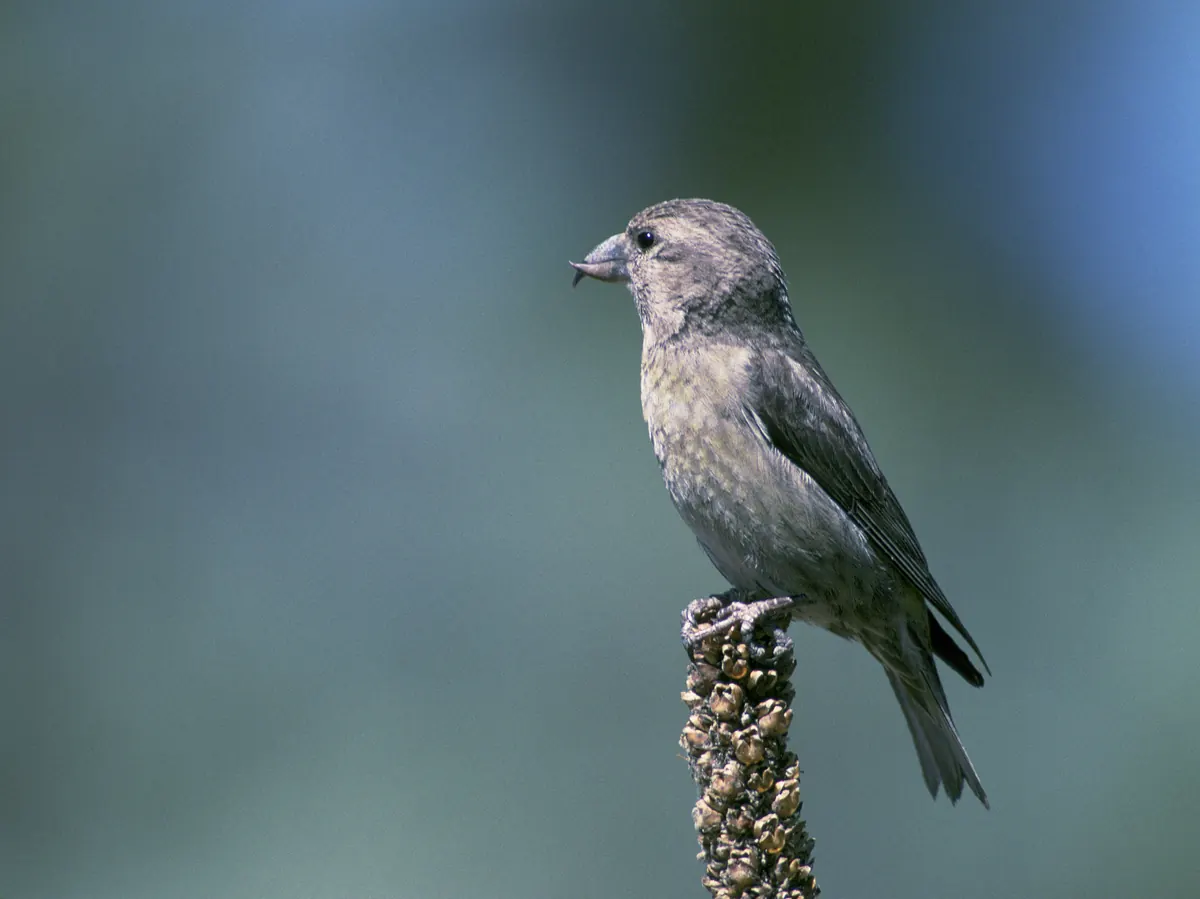
In his September 27 outlook, finch forecaster Tyler Hoar rates the Northeast’s white pine and white cedar cone crops very good, with hemlock and spruce fair to good in places, and predicts a sizable irruption of pine siskins into the Northeastern states and more good numbers of red crossbills from Ontario to the northeastern United States. Listen in the tops of white pines for siskins’ rising, buzzy zzzreee and the crossbills’ hard kip notes; both feed on cones, so you may find them in the woods long before they visit a feeder.
-
Purple finches, and probably few grosbeaks or redpolls
Through the winter · Conifers, mountain-ash and birches
The same forecast gives purple finches a moderate chance of moving south, helped by a strong mountain-ash crop. It expects only a small movement of evening grosbeaks, not much of a pine grosbeak flight, possibly a small flight of redpolls, and few Bohemian waxwings this far south.
-
FeederWatch without a feeder
Season opens November 1 and runs to April 30 · Any yard, porch or window view
FeederWatch, a Cornell Lab and Birds Canada project, says you do not need feeders to take part: birds drawn to your shrubs, seed heads and water count too. Count on a pair of back-to-back days, at most weekly, recording the largest group of each species in view at once.
A garden left standing, with seed heads, a crabapple and a brush pile, is November’s best feeder.
When is the deer rut in Vermont, and what are deer doing in November?
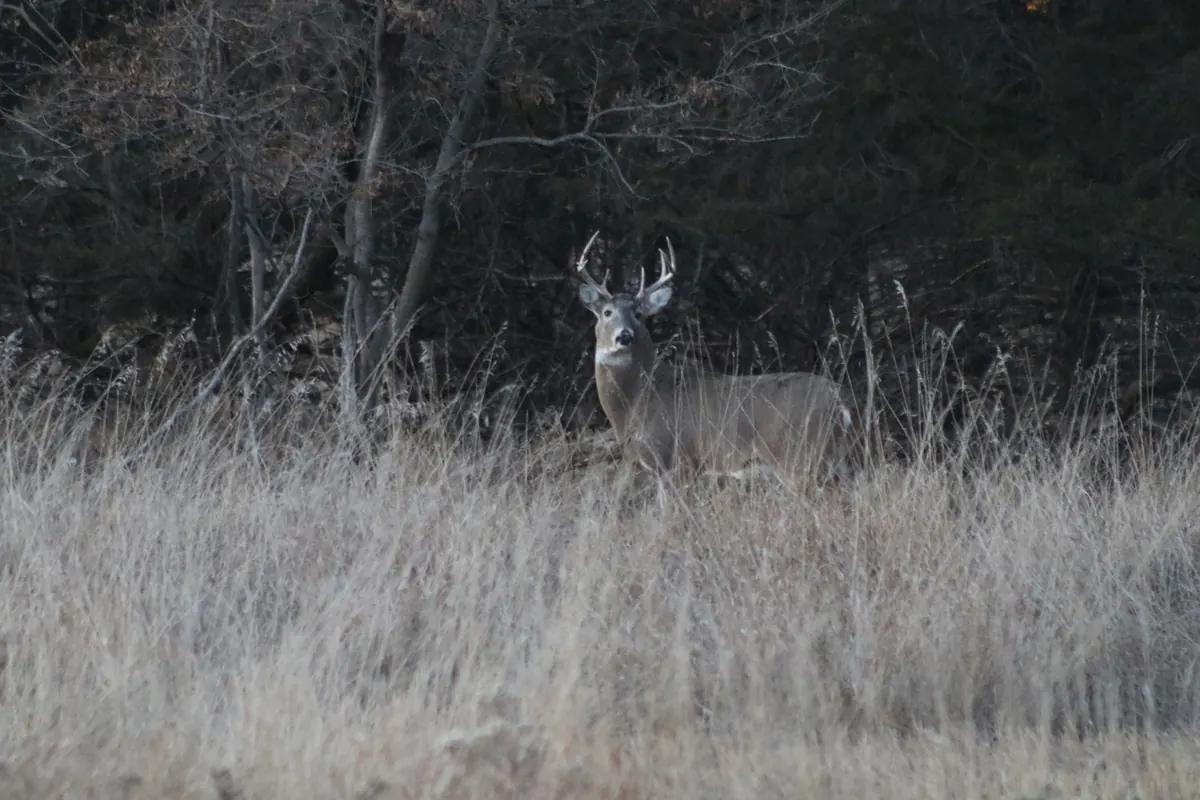
Vermont Fish & Wildlife puts white-tailed deer breeding between October and December, with fawns born about six and a half months later. November sits in the middle of that span, and it is the month when bucks are most visible, moving in daylight and paying less attention to roads and people.
-
Scrapes, rubs and bucks in daylight
All month, most often at first and last light · Field edges, woods roads and old orchards statewide
Look for saplings scraped bare a foot or two above the ground and for patches of pawed bare earth under a low branch, often along the edge of a hayfield.
-
Toward the deer yards
Late fall into winter, as snow deepens · Hemlock, spruce and fir stands, often on south- and east-facing slopes and along streams
When the snow gets deep, many Vermont deer leave their summer range for wintering areas under evergreens. The department says these deer yards cover only seven to eight percent of the state’s forests, and that deer may travel 10 to 15 miles to reach them. The evergreen canopy catches snow in its branches, so it is shallower underneath, and holds in a little warmth on the coldest nights.
-
Sharing the woods in rifle season
Youth and novice weekend November 7–8; regular season November 14–29 · Most woods and fields, including state lands
The 16-day regular deer season is Vermont’s busiest hunting stretch, and it covers both the middle weekend of the month and Thanksgiving. Dates for every season, and the orange advice, are in the safety section below.
A light snow on a November morning is the best tracking surface of the year. Draw a deer track at life size on the tracks-to-know plate, and note the gap between prints; a running deer leaves its hoofprints splayed.
How do Vermont’s bears, beavers and snowshoe hares get ready for winter?
Bears sleep it out, beavers stock an underwater pantry, and snowshoe hares change coats.
-
Bears heading for dens
Most den from mid-November into December, depending on food · Brush piles, hollow trees, rock ledges and blowdowns
The department’s black bear account says bears will keep feeding through the snows of November and into December in years when food is abundant, and den by mid-November when it is not. Females choose more sheltered dens than males, and their cubs, usually two, are born in late January or early February weighing only 8 to 10 ounces.
-
Beavers and the food pile
Busiest before the ponds ice over · Beaver ponds and slow streams statewide
Vermont’s beavers do not hibernate. Instead they sink branches of favored trees into a large underwater pile near the lodge, a food cache they can reach under the ice all winter; the department reckons a family of eight needs about a ton of bark to get through. They work from late afternoon into the night, so the hour before dark is the time to sit quietly by a pond. Fresh pale chips around a pointed stump mean they are still cutting. The November full moon is often called the Beaver Moon, a name that fits this rush to finish before freeze-up.
-
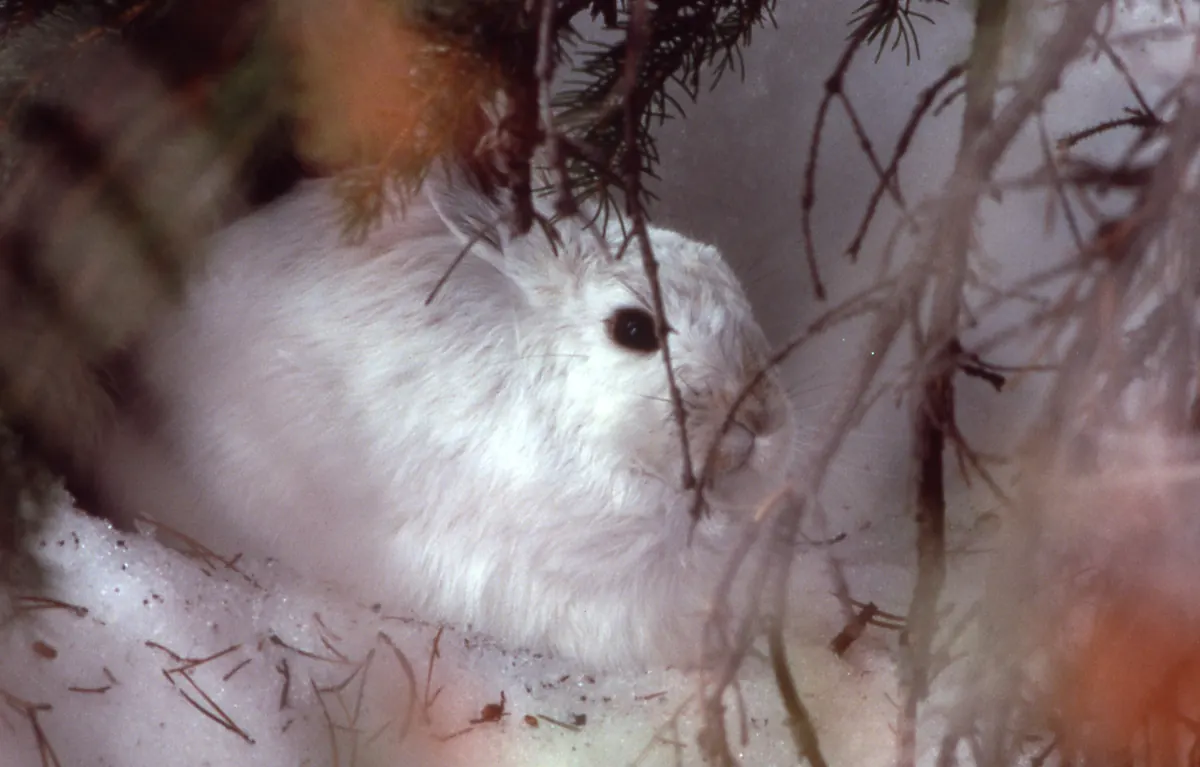
Snowshoe hares turning white
The fall molt runs through autumn, timed largely by day length · Spruce, fir and cedar swamps and young conifer stands, especially in the mountains and the Northeast Kingdom
Vermont Fish & Wildlife notes the snowshoe’s old name, the varying hare, for the way its coat changes from brown to white. A Northern Woodlands article by a wildlife ecologist explains that shortening days drive much of the timing, so a hare can be white before the snow arrives. Studies it describes found weekly survival dropped 7 to 12 percent when a hare’s coat did not match the ground, and New England showed the highest frequency of that mismatch. A patchy brown-and-white hare on bare November leaves is a good record for the mammal watch page.
Fisher, mink and otter stay active all winter; their tracks show up on the first snow along streams and stone walls, and the reading-the-signs plate is the place for them.
Are salmon still running in Vermont rivers in November?
The landlocked salmon run is winding down, and the fall season for the Winooski fish lift ends in the middle of the month.
-
The Winooski fish lift
Fall operation through November 15 · Winooski One dam, Winooski
The Low Impact Hydropower Institute’s certificate for the Winooski One project gives the fall lift season as October 1 through November 15. Salmon caught in the lift are loaded into a truck and released upstream of the project, some above the Essex 19 dam, where they can reach spawning gravel.
-
Hatchery Cove stays closed
Through November 30, 2026 · Hatchery Cove at the mouth of Hatchery Brook, Grand Isle
A small fishing closure, 20 by 100 feet in front of Hatchery Brook, protects salmon as they move into the brook, where department staff collect eggs to raise fish for Lake Champlain.
Brook trout eggs are now buried in clean stream gravel, where they will stay until late winter; if you cross a small brook on a hike, step on rocks rather than the pale gravel beds.
Why are some Vermont trees still holding leaves in November?
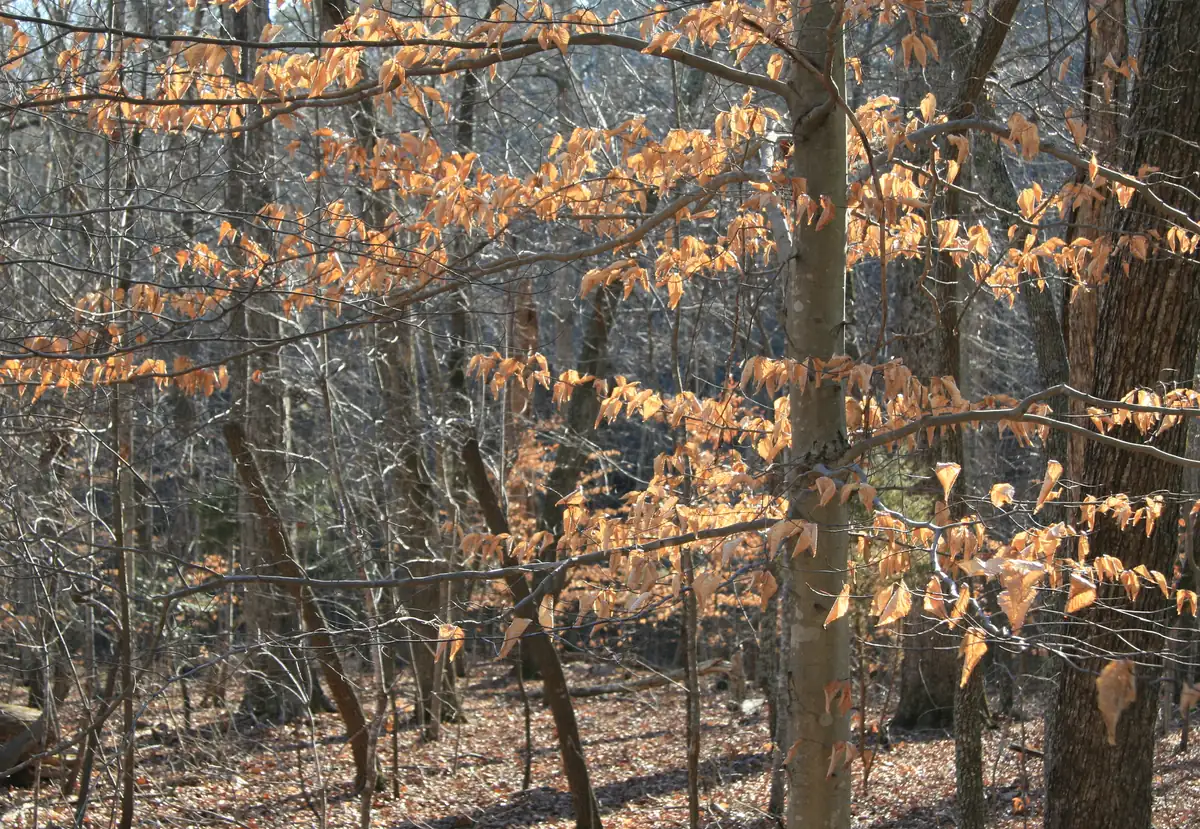
Once the maples, birches and ashes are bare, the woods look gray from a distance, but walk in and you will see warm tan and copper patches at eye level. Those are beeches and oaks, and they may keep those leaves until spring.
-
Beech and oak that hang on
November through winter · Understory beech and young red oaks, especially on lower branches
Botanists call this marcescence. Northern Woodlands magazine says you see it mostly on saplings and on a tree’s lowest limbs, and lists several ideas for why: the leaves may screen buds from deer and moose, guard twigs against frost, trap snow around the trunk like a fence, or drop in spring when the tree can use the nutrients. The author also allows that beech and oak may simply be partway along the evolutionary road to shedding every leaf in fall. A young beech in a gray November forest glows almost white in low sun; it is a fine subject for the tree-through-the-seasons plate.
-
Bare tamaracks, full pine cones
Tamaracks bare by early November; cones open through the winter · Bogs and wet lowlands for tamarack; white pine and cedar stands everywhere
The golden tamaracks of late October have dropped their needles, leaving knobby twigs studded with small cones. Meanwhile the very good white pine and white cedar cone crops noted by the finch forecasters are hanging in the evergreens, food for red squirrels, crossbills and siskins. Pick up a fallen white pine cone and a cedar cone for the seeds, pods and cones page; they look nothing alike.
-
The last flowers: witch hazel
Into early November in sheltered spots · Hardwood understory and stream banks
Witch hazel flowers late, and in a mild fall a few blossoms can hang on after its own leaves have dropped. Look for thread-thin yellow petals on bare twigs; the woody seed capsules from last year’s flowers sit on the same branches.
Bare branches reveal last summer’s bird nests; sketch one before snow flattens it.
Has Vermont had its first freeze, and when does the first snow fall?
By November the freeze question is largely settled. In NOAA’s 1991–2020 records each station in the table reaches its median first freeze before Halloween, and even the late, lake-warmed places reach 32 °F by early November in nine years out of ten: November 1 at Burlington and Vergennes, November 2 at South Hero in the Champlain Islands. The Northeast Kingdom, the summits and Rutland have been freezing since late September. In an ordinary year, then, no part of Vermont is still frost-free when November arrives; only a mild autumn keeps the islands waiting a few days longer.
-
First snow in the valleys
Burlington’s average first measurable snow is around November 7 · Lowlands first get a coating; the mountains are often already white
WCAX gives November 7 as Burlington’s average date for the first measurable snow. A study by the National Weather Service office in Burlington of records from 1906 to 2009 found wide year-to-year swings, with a trend line showing the first snow arriving about six days earlier over the century, from around November 12 to November 6. NOAA’s 1991–2020 normal snowfall for November at Burlington’s airport is 5.7 inches, and the high country gets much more.
| Station | One year in ten | Median | Nine years in ten |
|---|---|---|---|
| Burlington International Airport (Champlain Valley) | Oct 2 | Oct 15 | Nov 1 |
| S Hero (Champlain Islands) | Oct 4 | Oct 20 | Nov 2 |
| Vergennes (Addison County) | Oct 2 | Oct 17 | Nov 1 |
| Montpelier 2 (Capital Region) | Sep 28 | Oct 9 | Oct 24 |
| Saint Johnsbury (Northeast Kingdom) | Sep 21 | Oct 3 | Oct 16 |
| Newport (Lake Memphremagog) | Sep 17 | Sep 30 | Oct 13 |
| Mount Mansfield (summit, about 3,950 feet) | Sep 16 | Sep 30 | Oct 12 |
| Rutland | Sep 13 | Sep 27 | Oct 8 |
| Bennington Morse St Airport (southwest) | Sep 19 | Oct 2 | Oct 17 |
For a station closer to home, our Vermont frost dates page lists them all. Drain hoses, bring in ceramic pots before they crack, and mulch the garlic once the ground starts to stiffen.
How early does it get dark in Vermont in November?
Very early. Vermonters set clocks back on Sunday, November 1, and that evening the sun sets in Burlington at 4:42 p.m. By November 30 it sets there at 4:15, and in Newport, near the Canadian border, at 4:09. Across the month the towns in the table below give up an hour or more of daylight each, from 60 minutes in Brattleboro to 67 in Newport, which is farthest north.
| City | Nov 1 | Nov 30 | Lost | Per day |
|---|---|---|---|---|
| Burlington | 10 h 12 m | 9 h 07 m | 65 min | 2.2 min |
| St. Albans | 10 h 11 m | 9 h 05 m | 66 min | 2.3 min |
| Newport | 10 h 10 m | 9 h 03 m | 67 min | 2.3 min |
| St. Johnsbury | 10 h 12 m | 9 h 07 m | 65 min | 2.2 min |
| Montpelier | 10 h 13 m | 9 h 08 m | 65 min | 2.2 min |
| Rutland | 10 h 15 m | 9 h 13 m | 62 min | 2.1 min |
| Brattleboro | 10 h 17 m | 9 h 17 m | 60 min | 2.1 min |
| Bennington | 10 h 18 m | 9 h 17 m | 61 min | 2.1 min |
Sunsets keep creeping earlier into the first half of December, then turn around ahead of the solstice. To get the sun times for your own Vermont town, twilight included, open our Field almanac.
What is November weather like in Vermont, and what could El Niño mean for the winter?
November is Vermont’s gray month, raw and changeable, with rain in the valleys and snow on the ridges. NOAA’s 1991–2020 normals give Burlington an average high of 46.4 °F and low of 32.1 °F, with 2.70 inches of precipitation. At the Barre–Montpelier airport, higher and farther from the lake, the averages are 42.8 °F and 26.0 °F with 2.85 inches. Burlington’s normal snowfall climbs from 5.7 inches in November to 19.5 in December.
As for the winter ahead, NOAA’s forecasters, in the El Niño update dated September 10, made a very strong El Niño the heavy favorite, above 90 percent, from fall through winter. How much that matters in the Green Mountains is another question. A NOAA meteorologist told VTDigger in July that El Niño can bring milder winters to New England, with some chance of extra precipitation mainly near the coast, but that a dependable precipitation signal for inland Vermont is hard to find. NOAA’s climate.gov blog has long cautioned that in the Northeast the El Niño link is not very strong, and that the North Atlantic Oscillation can matter more. The most recent strong event is still a sobering reference: the Burlington weather office reported that winter 2015–16 was the city’s warmest on record and among its least snowy.
On October 15 NOAA releases the official outlook for winter; find the December to February maps among the 90-day outlooks. For the forecast this week, check Weather now.
What can you see in Vermont’s night sky in November 2026?
With sunset before 5 p.m., the stars are out by suppertime, and the new moon on November 9 gives the darkest stretch of the month. Times below are Eastern Standard Time.
-
Taurid fireballs in the dark week
Southern Taurids peak November 5, Northern Taurids November 12 · Radiant in Taurus, well up in the east by mid-evening
The International Meteor Organization expects only about 5 to 10 Taurids an hour at best, but these slow meteors are known for occasional bright fireballs, and the new moon between the two peaks leaves the sky free of moonlight. On the morning of the 5th, the slim old moon stays down until the small hours, leaving the evening dark.
-
Mars and Jupiter together, Venus and Mercury low
Closest before dawn on November 15 and 16; Mercury best about November 18 to 25 · High in the south (Mars and Jupiter); low in the east-southeast (Venus, Mercury)
Brilliant Jupiter and much dimmer, rust-colored Mars close to within about 1.2 degrees of each other in Leo, near the bright star Regulus. Low in the east-southeast, Venus is rising higher each dawn after its late-October pass of the sun, and it shines brightest of all, magnitude −4.9, from about November 24 to 27, Thanksgiving week. Mercury joins it low in the twilight in the week after November 18. Evenings offer only Saturn, in the south.
-
The Leonids
Before dawn on Wednesday, November 18 · Radiant in Leo, rising around midnight and highest just before dawn
The International Meteor Organization’s 2026 calendar forecasts about 15 Leonids hourly at best, with the nominal peak falling at suppertime Eastern time on the 17th and no outburst predicted. The first-quarter moon sets around midnight, so the best window is from then until the sky brightens on the 18th.
-
The Beaver Moon
Full at 9:53 a.m. on Tuesday, November 24; round on the evenings of the 23rd and 24th · Rising in the east-northeast around sunset
The moon is full about 30 hours before its closest approach to Earth this month, close enough that EarthSky and others list it as a supermoon, though a modest one; the December full moon will be nearer still. Overnight on the 23rd it crosses close to the Pleiades, too bright to let the cluster show well. Uranus, in Taurus, is at opposition on November 25: a binocular dot for those with a chart.
| Phase | Date | Time |
|---|---|---|
| Last quarter | Sunday, Nov 1 | 3:28 p.m. EST |
| New moon | Monday, Nov 9 | 2:02 a.m. EST |
| First quarter | Tuesday, Nov 17 | 6:48 a.m. EST |
| Full moon (Beaver Moon) | Tuesday, Nov 24 | 9:53 a.m. EST; looks full the evenings of Nov 23 and 24 |
| Last quarter | Tuesday, Dec 1 | 1:08 a.m. EST |
See whether clouds will spoil a pre-dawn alarm on the Today’s sky page, and look up local moonrise times on our moon phases calendar.
What can Vermont families do outdoors in November 2026?
- Sunday, November 1: FeederWatch begins. Sign up with Project FeederWatch and count the birds in your shrubs and seed heads; the feeder can wait until December 1.
- Mondays, November 2 and 9, 9:30 to 11 a.m.: Free Nature Playgroup at Green Mountain Audubon Center in Huntington
- Thursdays, November 5, 12 and 19, 10 a.m. to noon: Robin’s Nest Nature Playgroup at North Branch Nature Center, 713 Elm Street, Montpelier, free.
- Thursday, November 12, 8 to 10 a.m.: bird-monitoring walk at Green Mountain Audubon Center, Huntington.
- The first week of November: snow geese at Dead Creek. Watch from the car at the Route 17 pull-off in Addison.
- Saturday, November 14: last day of the Putney Mountain hawk count. It is also opening day of rifle season, so everyone, the dog included, should wear orange.
- Wednesday, November 18, before dawn: the Leonids.
- Saturday, November 21, 8 to 9 a.m.: Missisquoi bird walk with the Friends of Missisquoi on the Maquam and Black Creek trail in Swanton.
- Monday or Tuesday, November 23 or 24, at dusk: watch the Beaver Moon rise over the eastern hills, then visit a beaver pond in daylight to look for the food pile.
- Friday, November 27: the day after Thanksgiving in a state park. Vermont State Parks are open year round, with no entry fee in the off-season; most gates are locked, so you walk in. Hunting is allowed in the parks in the off-season, so the department suggests parks that keep their gates closed, such as Mount Philo, Molly Stark and Townshend, or Niquette Bay, Underhill and Knight Point.
- Any day: live raptors in Quechee. The VINS Nature Center lists itself as open daily, 10 a.m. to 5 p.m., with live raptors; call ahead around Thanksgiving.
More months and more states are collected on our nature hub, and if you missed October’s foliage and salmon, they are on the Vermont October page. The Naturalist’s Field Journal has room for each outing above.
Safety notes for November in Vermont
- November is the heart of hunting season. The youth and novice deer weekend is November 7–8 and the 16-day regular deer season runs November 14–29, with the December muzzleloader season opening November 30. Deer archery continues to December 15. Bear late season is November 14–22, fall turkey archery closes November 13, and the fall turkey shotgun-or-archery season runs to November 1 or November 8 depending on the unit. Grouse and gray squirrel stay open all month and woodcock through November 9. On Lake Champlain the duck season is closed November 2–20 and reopens on the 21st; in the Interior zone ducks are open through December 8, and Canada geese in both of those zones through November 23. Check the Connecticut River zone dates in the migratory bird regulations.
- Orange is your choice, and a wise one. Vermont does not require hunters to wear orange, but the state’s hunting regulations strongly urge it, citing a New York study in which 94 percent of the hunters involved in mistaken-for-game accidents were not wearing it. Anyone walking in the woods this month, hunter or not, should wear a blaze orange hat and vest, and dogs need an orange vest or collar too. Hunting is allowed on state lands, including state parks, in the off-season; hunters must stay 500 feet from park buildings and facilities, which makes park roads a sensible choice for a walk.
- Early ice is not safe ice. Ponds may skim over late in the month, but Vermont Fish & Wildlife treats three to four inches of clear black ice as the minimum for safe ice fishing, and at least six inches of cloudy gray ice. Keep children and dogs off November ice entirely.
- Short days. With the sun down between about 4:10 and 4:40 p.m., set out by midmorning, pack a headlamp even for a short walk, and leave word of your route. High summits can be icy while valleys are only wet.
- Bears. Keep feeders, trash and compost secured until December 1 and later if bears are still about.
- Ticks. The Vermont Department of Health warns that ticks can be out whenever the air is above freezing, so check yourself, children and pets after mild-day walks.
- Deer on the road. The rut and the early dark put deer on the roads during the evening drive. Slow down where fields meet woods; where one deer crosses, others often follow.
- Paddlers: lakes and rivers are chilling fast, so a life jacket stays on in every boat.
Sources
- Vermont Fish & Wildlife: Dead Creek Wildlife Management Area brochure (snow geese, Gage Road, winter raptors, snow buntings)
- Lake Champlain Region: late fall and early winter birding in the Champlain Valley (December 4, 2019)
- U.S. Fish and Wildlife Service: Missisquoi National Wildlife Refuge
- Friends of Missisquoi National Wildlife Refuge: events calendar (bird walk November 21)
- BirdWatching: Putney Mountain Hawk Watch, Putney, Vermont
- HawkCount (Hawk Migration Association of North America): Vermont sites
- eBird
- Vermont Fish & Wildlife: December is the start of bird feeding season
- Vermont Fish & Wildlife: black bear (denning, cubs, fall foods)
- Vermont Fish & Wildlife: bears are on the prowl in Vermont (feeding bears is illegal)
- Finch Research Network: winter finch forecast 2026–2027 (September 27, 2026)
- Project FeederWatch: how to participate (November 1 to April 30)
- Vermont Fish & Wildlife: white-tailed deer (breeding season, deer wintering areas)
- Vermont Fish & Wildlife: beaver (food caches, activity, trapping season)
- Vermont Fish & Wildlife: snowshoe hare
- Northern Woodlands: White hares in a brown forest (Winter 2021)
- Low Impact Hydropower Institute: Winooski One certificate (fish lift operating dates)
- Vermont Fish & Wildlife: fishing restricted in part of Hatchery Cove to protect spawning salmon (September 25, 2026)
- Northern Woodlands: why do some leaves persist on beech and oak trees well into winter?
- Native Plant Trust, Go Botany: American larch (tamarack)
- Native Plant Trust, Go Botany: American witch-hazel
- NOAA NCEI: 1991–2020 monthly normals for Burlington International Airport and Barre–Montpelier Airport
- NOAA Regional Climate Centers (ACIS): 1991–2020 freeze data
- WCAX: halfway point to next winter in Vermont and the North Country (July 2026; average first measurable snow)
- National Weather Service Burlington: a brief overview of long-term snow climatology for Burlington, VT
- Climate Prediction Center: ENSO diagnostic discussion, September 10, 2026
- Climate Prediction Center: 90-day outlooks (winter outlook issued October 15, 2026)
- VTDigger: as strong El Niño develops off the Pacific, experts say Vermont impact is tough to tease out (July 12, 2026)
- NOAA climate.gov ENSO blog: United States El Niño impacts
- National Weather Service Burlington: The Four Seasons newsletter, winter 2016–17 (looking back at winter 2015–16)
- U.S. Naval Observatory: moon phases from November 2026
- U.S. Naval Observatory: sun and moon rise and set (data API)
- International Meteor Organization: 2026 meteor shower calendar
- EarthSky: what is a supermoon?
- EarthSky: Uranus at opposition
- Audubon events in Vermont (Green Mountain Audubon Center, November 2026)
- North Branch Nature Center: events (Robin’s Nest Nature Playgroup)
- Vermont State Parks: winter activities (open all year, no off-season entry fee)
- Vermont State Parks: off-season use and hunting in Vermont State Parks
- Vermont Institute of Natural Science (VINS): plan your visit
- Vermont Fish & Wildlife: 2026–27 hunting and trapping seasons
- Vermont Fish & Wildlife: Vermont’s 2026–27 migratory game bird seasons are announced (July 20, 2026)
- Vermont hunting regulations (eRegulations): general hunting information, hunter orange
- Vermont Fish & Wildlife: ice fishing fun and safety (January 13, 2026)
- Vermont Department of Health: tickborne diseases
- Photos via Wikimedia Commons; licenses and photographers are credited under each picture
