What to look for in nature in Vermont this March
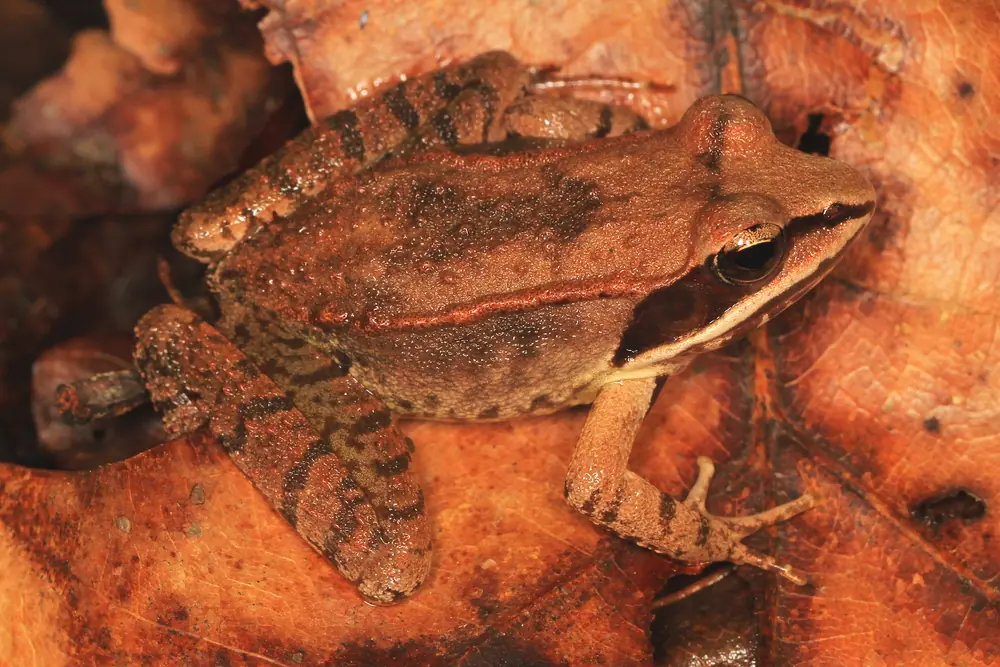
March is the month when Vermont argues with itself. Snow still covers the northern hills and the summits, yet by March 31 the sun is up before 6:40 a.m. and down after 7 p.m. (daylight time), with each day about three minutes longer than the last. Sugarmakers wait for nights below freezing followed by afternoons in the 40s, and sugarhouses across the state welcome visitors on the weekend of March 20 and 21. On the first mild, rainy night, wood frogs and spotted salamanders leave the leaf litter and head for the vernal pools, crossing roads as they go. At dusk, a male woodcock rises from an old field and spirals into the sky. Red-winged blackbirds claim their cattails, the first skunk cabbage melts its way up through frozen mud, and bears begin to wander out of their dens. Then mud season arrives, and the trails ask for a break. Three dates are worth marking: the clock change on the 14th, the equinox on the 20th, and a full moon at breakfast time on the 22nd.
Other months in Vermont: October, November, December, January, February, April.
Start here
- Go out on the first warm, rainy night. When the ground has thawed, the temperature stays above 40 °F and rain falls after dark, wood frogs and spotted salamanders move toward breeding pools. Walk a quiet back road with a flashlight, stay on the shoulder, and look for the small shapes on the pavement.
- Visit a sugarhouse on March 20 or 21. The Vermont Maple Sugar Makers’ Association lists Maple Open House Weekend for Saturday, March 20, and Sunday, March 21, 2027. Sugarhouses around the state open for tours and tastings, usually with syrup and sugar on snow.
- Stand at an old field edge at dusk. A few minutes after sunset, a male American woodcock begins to buzz out its call from the ground, then climbs in widening spirals and drops back with a twittering of wings. Use a quiet spot near brushy, damp ground and let the light fade.
This month rewards first-of-year dates: write down when the blackbird, phoebe and skunk cabbage appear, and the temperature and rainfall on the night the frogs first call. Mark where a woodcock performs on the map of sounds, and sketch its dusk silhouette for the dusk and dawn watch. Press a maple twig for a tree through the seasons, draw bear, hare and skunk prints on tracks to know, and photograph the same place twice to see how fast the snow retreats. Mud season suits reading the signs: note which slope dries first.
Regions used below: Champlain Valley and the Islands; Northeast Kingdom; Green Mountains; Central Vermont and the Capital Region; Southern Vermont and the Connecticut River Valley.
Is March the peak of sugaring season in Vermont?
February brought the first drips. Sap moves when a freezing night gives way to a day in the 40s, and March has many such pairs. The Vermont Maple Sugar Makers’ Association describes a harvest window of about four to six weeks that ends when the warm days of late spring arrive, sometimes sooner than anyone would like. The start shifts with the weather, so the first boil moves from year to year. See the February guide for how sap flows in the first place.
-
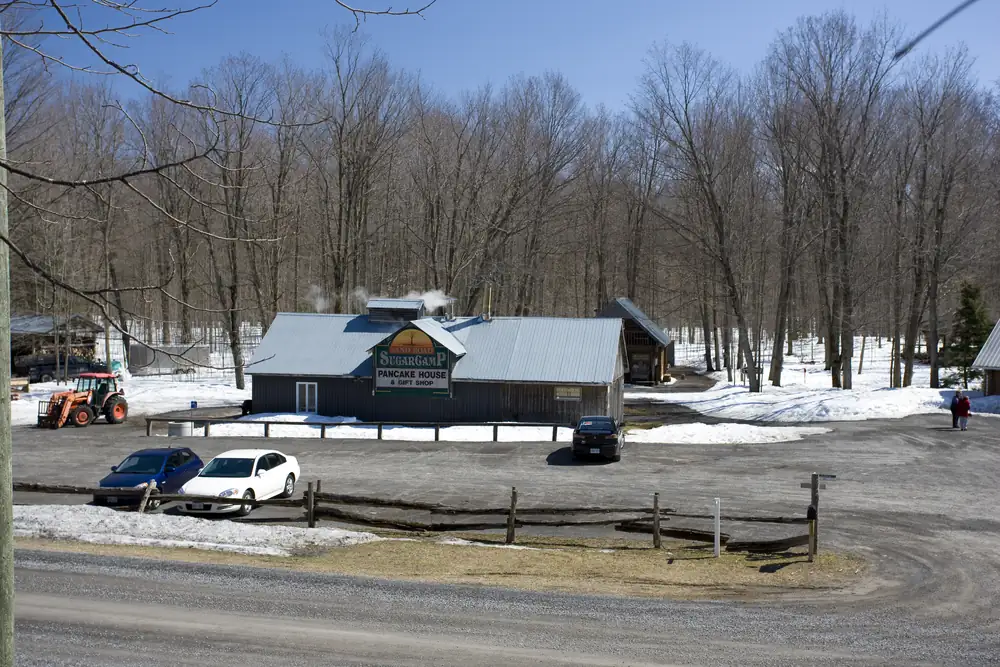
Maple Open House Weekend
Saturday and Sunday, March 20 and 21, 2027, per the Vermont Maple Sugar Makers’ Association · Sugarhouses across the state
The association’s page lists the 2027 dates and describes the weekend as a chance to visit sugarhouses and see maple made. In 2026, it reports, more than 80 sugarhouses and businesses offered tours, tastings, live music and more. Sugarmaking depends on the weather, so confirm with a sugarhouse that it is open and boiling before you drive.
-
From sap to syrup
Boiling follows each run · Sugarhouses and sugarbushes statewide
Sugarmakers boil roughly 40 gallons of sap into a gallon of syrup on average, a ratio the association says can range from 20 to 100. Its grades follow the calendar: golden comes early and delicate, amber in the middle, and dark and very dark late and strong.
-
Vermont’s crop in numbers
2026 season · Statewide
The University of Vermont Extension reports that Vermont produced 3,091,000 gallons of syrup in 2026, 53 percent of the national crop, from 8,200,000 taps, a yield of 0.377 gallons per tap.
-
A bird-friendly sugarbush
Trails open year-round; check Audubon for special days · Green Mountain Audubon Center, Huntington
Audubon Vermont taps 600 maples every spring and makes nearly 100 gallons of syrup, still gathering sap in buckets and boiling it over a wood fire. The trails through the sugarbush are open year-round, and Audubon has held sugar-on-snow parties during Open House Weekend, so check its calendar for 2027 plans.
When do frogs and salamanders cross Vermont roads?
Biologists call it a “big night”: one evening when the snow is melting, the soil has thawed, rain is falling and the air stays above 40 °F, and many amphibians leave the woods in a single evening. Vermont Fish & Wildlife lists those conditions in its 2026 spring advisory. The main movement often comes in early April, but a mild, wet night in late March can start it; the Vermont Center for Ecostudies recorded wood frogs in the Champlain Valley on March 23 in one recent year.
-
Wood frogs
Late March into April, often while ice still floats on the pool · Vernal pools and woodland ponds statewide
Wood frogs freeze solid in winter and thaw in spring, then breed in an explosive burst, with most of the mating packed into a few days. Males make loud, duck-like clucking calls, and they outnumber females at the pool by a wide margin.
-
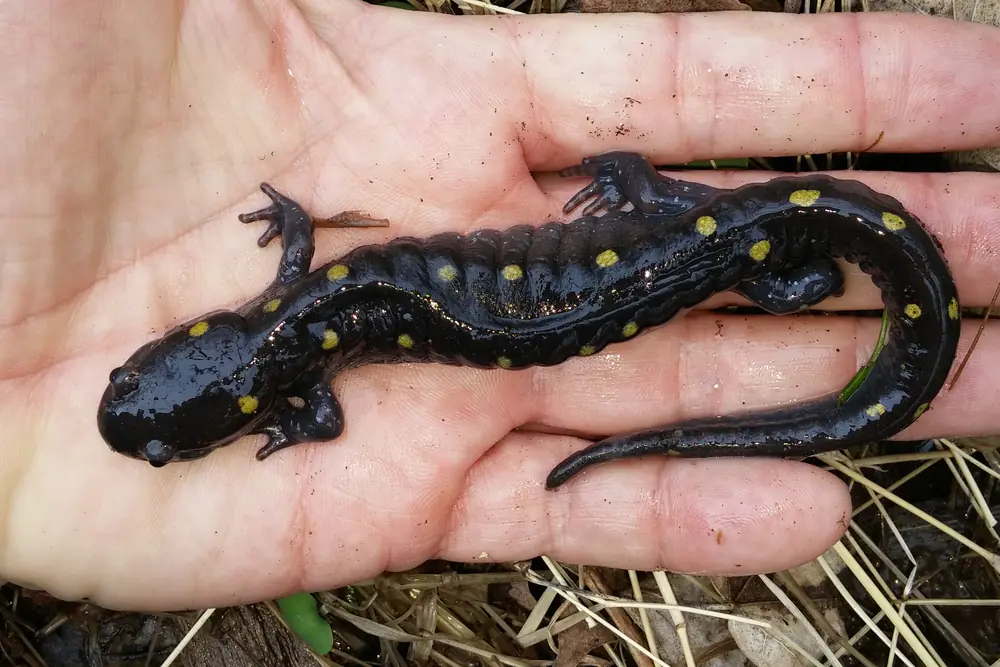
Spotted and blue-spotted salamanders
Warm, rainy nights after the ground thaws · Hardwood forests near breeding pools
The state’s herpetologist names spotted and blue-spotted salamanders among the amphibians that cross roads in early spring. They spend most of the year out of sight. A Vermont Public volunteer on a Big Night counted spring peepers, wood frogs, yellow-spotted salamanders and four-toed salamanders among several hundred animals helped across a single road. Volunteers on that night moistened their hands before touching any animal.
-
Spring peepers
Late March, according to one Vermont naturalist; check on mild evenings · Shrubby wetlands and pond edges
The tiny frog with the shrill, rising peep is a sign that the thaw has stuck. Listen for the peepers’ nighttime chorus on mild nights from late March on.
-
Helping on the road
Any Big Night, after dark · Roads between woods and wetlands; crossings in Brattleboro, Hartford and elsewhere
Roads kill many migrating amphibians, with some stretches losing over half, according to the Atlas’s Jim Andrews. Volunteer groups, including the Bonnyvale Environmental Education Center in Brattleboro (organizing crossings for about 20 years as of 2023), the Hartford Salamander Team, North Branch Nature Center and the Cornwall Conservation Commission, train people to carry animals across. Fish & Wildlife’s herpetologist advises using back roads, parking fully off the pavement, wearing an orange vest and flashers, and going with a buddy. VTDigger reported in 2023 that Vermont had only one amphibian underpass, in Monkton.
Send photos to the Vermont Reptile and Amphibian Atlas, which lists 11 frog and 10 salamander species for the state. The Vermont Center for Ecostudies has mapped nearly 5,000 known and potential vernal pools and recruits volunteers to monitor them.
Which birds return to Vermont in March?
Spring migration in Vermont starts with birds that winter only a short flight away and can find thawed ground, open water or insects early. The state’s big wave of warblers is still weeks off, but March has a steady trickle of firsts. Vermont Center for Ecostudies conservation biologist Rosalind Renfrew told VTDigger in 2014 that lengthening daylight triggers the hormonal changes behind both migration and territorial singing.
-
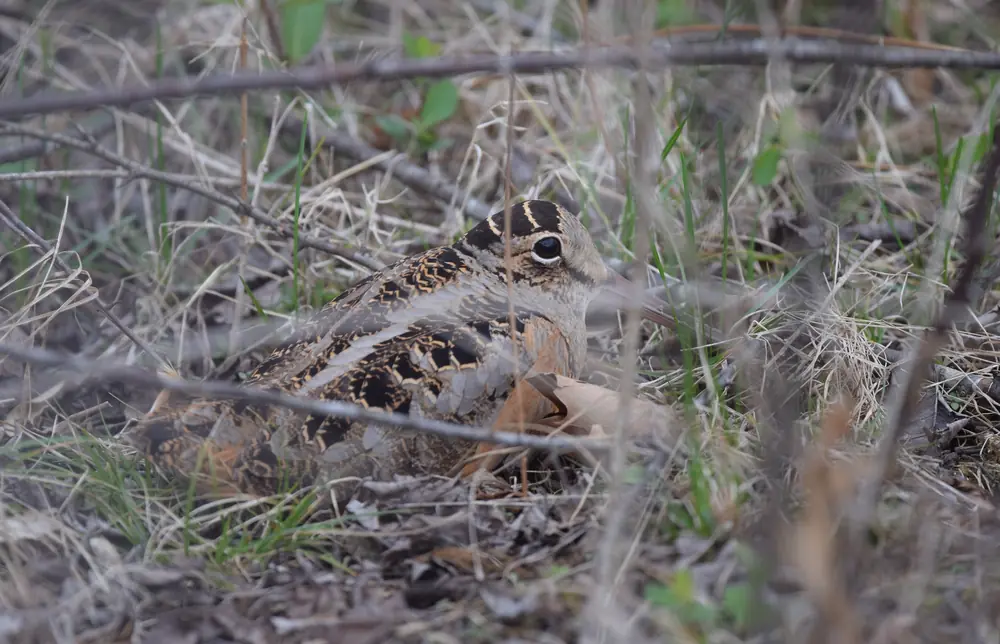
American woodcock
Males arrive as early as March; display at dusk · Abandoned fields and brushy openings next to damp woods
Vermont Fish & Wildlife says woodcocks arrive as early as March, males first, and need two kinds of cover: moist young forest for feeding and nesting, and open “singing grounds” of old field with blueberry, goldenrod or dogwood. The Vermont Center for Ecostudies describes the display: starting a few minutes after sunset, a male calls a buzzy peent from the ground, then climbs in a spiral up to about 300 feet while his wings twitter, and falls back in silence. A single male may do as many as 24 sky dances in an evening, most about six. Fish & Wildlife reports yearly declines of about 1.5 to 2.5 percent in its two Vermont study populations since the 1970s.
-
Red-winged blackbirds
Late February into March, males first · Cattail marshes and wet fields
VTDigger’s Audrey Clark called the red-winged blackbird one of the first songbirds to fly back. Males arrive ahead of females and stake out territory, and the Vermont Breeding Bird Atlas notes that one male can hold ground with up to 15 females in it.
-
Eastern phoebes, killdeer, turkey vultures and tree swallows
Phoebes in early March, killdeer in late March or early April, vultures and swallows from late February through early April · Ledges and bridges, farm fields, open sky, and open water
Phoebes come back early and build on ledges close to people, and killdeer follow in late March or early April. The VTDigger piece lists turkey vultures and tree swallows as arriving between late February and early April. The Atlas found turkey vultures in 158 percent more survey blocks in its second survey than in its first.
-
Ducks and geese on open water
As the ice goes out, from March into April · Missisquoi National Wildlife Refuge in Swanton and other Lake Champlain marshes
At Missisquoi, the U.S. Fish & Wildlife Service reports Lake Champlain’s biggest waterfowl gathering, mostly wood ducks, mallards and teal. Walking trails stay open dawn to dusk all year, but the Jeep Trail shuts from April to August for nesting and migrating birds, which makes March a good month to use it.
Project FeederWatch continues through April 30, so feeder counts still count.
Which Vermont birds are nesting in March?
While most songbirds are still south, some of Vermont’s big predators are already sitting on eggs or claiming cliffs. March is also the month when some of the state’s best viewing spots get closed to hikers.
-
Peregrine falcons and the cliff closures
Closures began March 15 in 2025 and 2026 and ran to August 1; 2027 list not yet posted · Cliffs including Bolton Notch, Deer Leap, Hazen’s Notch, Fairlee Palisades, Mount Horrid, Red Rocks Park and Snake Mountain
In 2026 Vermont Fish & Wildlife closed 14 cliff sites from March 15 through August 1 to protect nesting peregrines, and the U.S. Forest Service did the same on the Green Mountain National Forest at Rattlesnake Cliff in Salisbury and Mount Horrid–Great Cliff in Rochester in 2025. Expect a similar mid-March start in 2027, but check the department’s list, because sites are added or removed. The recovery is a Vermont success: the Peregrine Fund began reintroductions in 1975, young birds were released from nest boxes between 1982 and 1987, and the species came off the endangered list in 2005.
-
Great horned owls
Eggs can be laid while snow still falls · Open, patchy country; borrowed hawk and heron nests
The Vermont Breeding Bird Atlas says females sometimes incubate eggs while snow is still falling. They use borrowed nests, broken tree stubs and even the underside of a railroad bridge. The species is listed as uncommon in the state, down 33 percent between the two atlas periods, probably as forests have matured and barred owls have increased.
-
Northern saw-whet owls
Courtship in March; breeding March to July · Coniferous and mixed woods
The Vermont Center for Ecostudies says males sing a steady too-too-too call from sunset to sunrise starting as early as January, and courtship runs through March. Males weigh about 75 grams and females about 100, so expect to hear far more than you see.
-
Canada jays and bald eagles
Canada jays nest March to April; bald eagle eggs from early March to as late as early May · High-elevation spruce-fir forest; river and lake shores
The Vermont Center for Ecostudies notes that Canada jays begin incubating two to five eggs in mountain conifers in March or April, long before most birds nest. Its field guide says eagle egg-laying runs from early March into early May, with about 35 days of incubation; the February guide follows eagles back to their nests.
Audubon Vermont asks visitors to respect cliff closures and keep a few hundred feet from eagle nests, and to report sightings to eBird.
What are bears and other Vermont mammals doing in March?
For mammals, March is a hungry, restless month: the food that fattened them in fall is gone, and the new growth that feeds them has not come up.
-
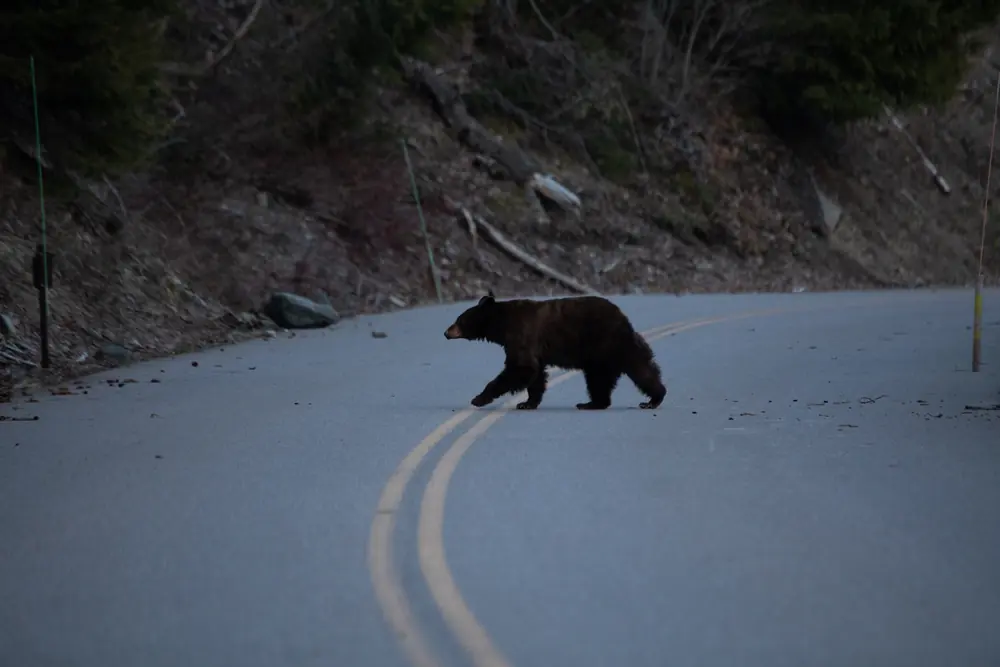
Black bears wake up
Mid-March in recent years; deep snow may hold some in until April · Everywhere except the Champlain Islands, with the most in the Green Mountain spine and the Northeast Kingdom
Vermont Fish & Wildlife says bears now leave their dens in mid-March, about two weeks earlier than the old rule of thumb, and find little natural food. Cubs born in late January or early February weigh only 8 to 10 ounces at birth, about the size of a chipmunk, the department says. Wetland grasses and green leafy plants are the main spring food, but they are thin fare, so bears turn to birdfeeders, trash, chicken coops and beehives. The department recommends taking down feeders from mid-March to December, locking garbage in bear-resistant containers, and using electric fencing for chickens and bees. Feeding bears, even by accident, is illegal under 10 V.S.A. § 4827a.
-
Snowshoe hares
Breeding March to July · Spruce-fir and young forest
The Vermont Center for Ecostudies reports snowshoe hares breeding from March, with males fighting for females, a gestation of 36 to 37 days and young born from May.
-
Skunks, muskrats and foxes
Skunks and muskrats breed in March; fox kits arrive from March to May · Field edges, ponds and marshes
Striped skunks leave their burrows in March at the peak of their breeding season; the Vermont Center for Ecostudies reminds readers that a skunk can spray as far as 25 feet. Muskrats begin breeding in March and have two to nine young per litter. Red fox kits are born from March to May.
-
Moose and winter ticks
Female ticks start dropping off moose in March · Northeast Kingdom
The Vermont Center for Ecostudies says engorged female winter ticks begin falling from moose in March, and you can see dark adult ticks on the snow. A moose can carry up to 75,000. Vermont Fish & Wildlife says heavy loads can kill calves, especially in the northeast corner of the state.
What wakes up in Vermont’s woods and wetlands in March?
The first flowers and insects come where the sun and the snowmelt meet: south-facing slopes, wet seeps and sap runs.
-
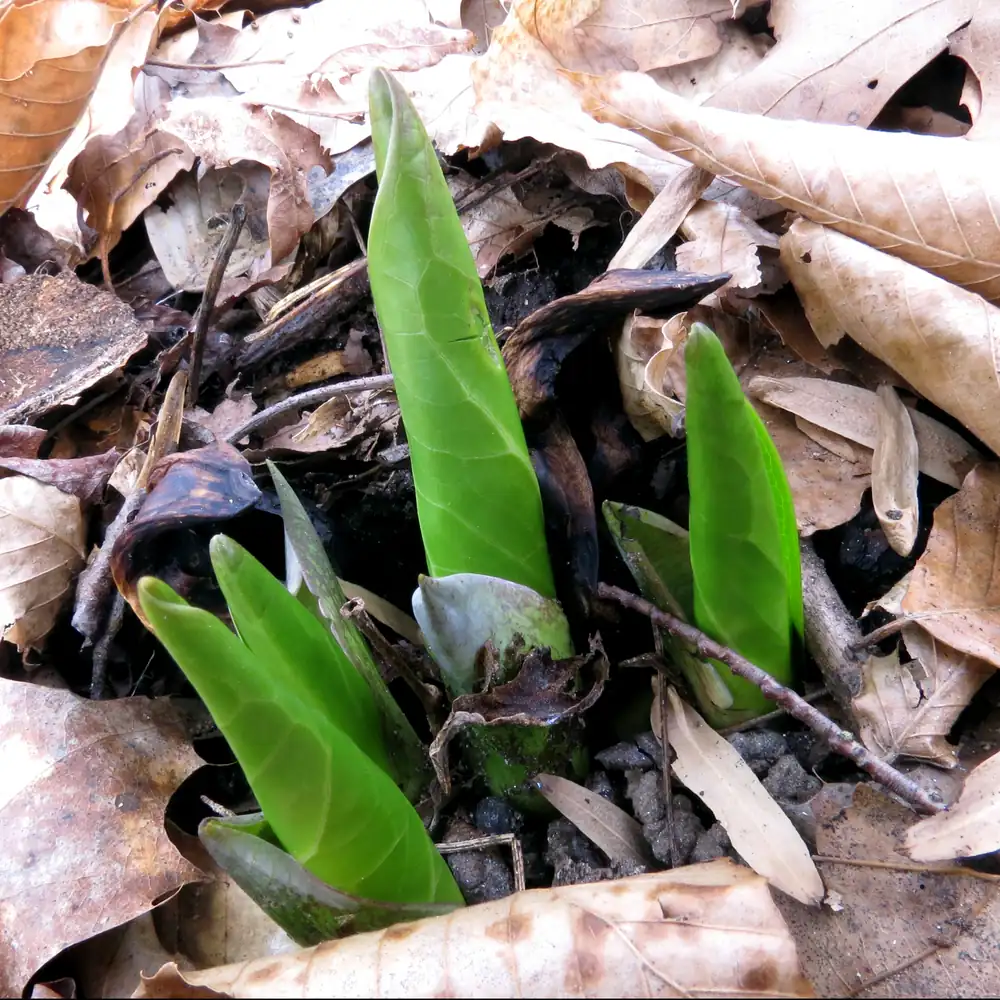
Skunk cabbage
As early as February; usually March in most of the state · Wet woods and swamps
The Vermont Center for Ecostudies calls skunk cabbage one of the earliest spring flowers and says it heats its flower to about 75 °F so that it melts through snow. The center’s earlier guide says it stays about 36 degrees warmer than the air. The smell, skunky and garlicky, draws flies and carrion beetles as pollinators. Photographing the visitors and posting them to iNaturalist’s Pollinator Interactions on Plants project is a useful early-season record.
-
Coltsfoot, hepatica and silver maple
As the snow melts, late March into April · Roadsides, sunny woodland edges and floodplains
The center lists coltsfoot and sharp-lobed hepatica among the first wildflowers to bloom as snow melts. Silver maple makes the earliest maple flowers, small red blooms that open before the leaves.
-
Butterflies that overwintered
Warm, sunny days in late March · Woods edges and sunny trails
Mourning cloaks, Milbert’s tortoiseshells and eastern commas spend winter tucked into crevices as adults and fly on the first warm days, seeking mates rather than nectar.
-
Mining bees and painted turtles
Late March; mining bees can fly with snow still on the ground · Sunny banks, sap-wet maples, ponds
Mining bees of the genus Andrena are among the first bees out, the males appearing days before the females and coming to maple sap, and over a dozen bee species have been recorded in late March in recent years. Painted turtles begin basking on logs, since they must warm from about 43 °F to 63–73 °F to become active.
What is March weather like in Vermont, and what is mud season?
March in the NOAA 1991–2020 normals is a month of big contrasts: average highs run from the low 30s °F on the summit of Mount Mansfield to the low 40s at St. Johnsbury, with average lows under 32 °F everywhere in the table. Snow still covers the ground on most March days in the Northeast Kingdom and on the summit.
-
A parade of storms
Mid-March in particular · Statewide
National Weather Service Burlington meteorologist Seth Kutikoff told VTDigger in 2023 that the middle of March tends to bring a run of stormy weather, with temperatures just cold enough for heavy snow. The records bear that out. News reports at the time called a March 7, 2011 storm Burlington’s biggest March snowfall on record and said that 9.5 inches on March 14, 2023 set a daily snowfall record.
-
Mud season
Typically the second half of March or early April, through late May · Dirt roads and trails statewide, especially at high elevation
The Green Mountain Club explains that Vermont’s clay-rich, rocky soils drain poorly, and frozen ground keeps snowmelt near the surface. High-elevation trails are the most fragile, with thin soils and rare plants. The club works with the Vermont Department of Forests, Parks and Recreation to post trail closures each week, and suggests dirt roads, rail trails and low-elevation hikes in the meantime.
| Station | Average high | Average low | Snowfall | Days with snow cover |
|---|---|---|---|---|
| Burlington International Airport (Champlain Valley) | 40.9 °F | 23.6 °F | 17.5 in | 17.1 |
| South Hero (Champlain Islands) | 40.1 °F | 21.7 °F | 10.6 in | 16.2 |
| St. Albans (Franklin County) | 36.8 °F | 20.0 °F | 16.2 in | 16.5 |
| Cornwall (Addison County) | 39.5 °F | 20.1 °F | 11.9 in | 14.8 |
| Rutland | 41.3 °F | 18.1 °F | 13.8 in | 17.2 |
| Northfield (central Vermont) | 40.9 °F | 16.7 °F | 13.9 in | 23.3 |
| St. Johnsbury (Northeast Kingdom) | 42.2 °F | 19.9 °F | 15.8 in | 22.3 |
| Newport (Lake Memphremagog) | 36.6 °F | 14.9 °F | 19.4 in | 25.8 |
| Island Pond (Northeast Kingdom) | 35.6 °F | 14.2 °F | 22.1 in | 28.8 |
| Sutton (Northeast Kingdom) | 35.4 °F | 16.1 °F | 23.5 in | 28.2 |
| Mount Mansfield (summit) | 30.2 °F | 15.6 °F | 38.7 in | 31.0 |
The newest seasonal outlooks live on NOAA’s 90-day outlook page, refreshed monthly; this page does not say what they show. The weather guide explains forecasts.
When is Vermont’s last spring freeze?
Not in March. In the NOAA 1991–2020 normals, the median last freeze comes in the last days of April around Lake Champlain and from the middle of May in the Northeast Kingdom, Rutland and Bennington, with the Mount Mansfield summit later still. Nights at or below 32 °F remain likely well past the equinox, which is why the first warm weeks are a poor guide to planting. Every station appears on the Vermont frost dates page.
| Station | One year in ten | Median | Nine years in ten |
|---|---|---|---|
| Burlington International Airport (Champlain Valley) | Apr 17 | Apr 29 | May 11 |
| South Hero (Champlain Islands) | Apr 19 | Apr 28 | May 10 |
| Vergennes (Addison County) | Apr 20 | Apr 30 | May 11 |
| Montpelier (Capital Region) | Apr 23 | May 5 | May 21 |
| St. Johnsbury (Northeast Kingdom) | Apr 30 | May 13 | May 25 |
| Newport (Lake Memphremagog) | May 1 | May 14 | May 28 |
| Mount Mansfield (summit, about 3,950 feet) | May 5 | May 23 | Jun 8 |
| Rutland | May 1 | May 15 | May 31 |
| Bennington (southwest) | Apr 26 | May 11 | May 28 |
A median means half of all years are later.
How much daylight does Vermont gain in March?
Burlington’s day stretches from 11 h 11 m on March 1 to 12 h 43 m on March 31: 92 extra minutes, just over three per day. Clock times need care. Before the change on March 14, Burlington’s sun rises at about 6:30 a.m. and sets about 5:41 p.m. on March 1 (EST); on March 13 the sunset is about 5:56 p.m. EST. The next evening, now on EDT, the sunset is about 6:57 p.m., with the sunrise near 7:07 a.m. By March 31 the sun comes up about 6:36 a.m. and goes down about 7:19 p.m., both EDT.
| City | Mar 1 | Mar 31 | Gained | Per day |
|---|---|---|---|---|
| Burlington | 11 h 11 m | 12 h 43 m | 92 min | 3.1 min |
| St. Albans | 11 h 10 m | 12 h 43 m | 93 min | 3.1 min |
| Newport | 11 h 09 m | 12 h 43 m | 94 min | 3.1 min |
| St. Johnsbury | 11 h 10 m | 12 h 43 m | 93 min | 3.1 min |
| Montpelier | 11 h 10 m | 12 h 42 m | 92 min | 3.1 min |
| Rutland | 11 h 11 m | 12 h 41 m | 90 min | 3.0 min |
| Brattleboro | 11 h 13 m | 12 h 41 m | 88 min | 2.9 min |
| Bennington | 11 h 13 m | 12 h 41 m | 88 min | 2.9 min |
Find your own town in the daylight guide.
What can you see in Vermont’s night sky in March 2027?
The evenings are still long enough for sky-watching before bedtime. Jupiter and Mars hold the evening sky, Venus blazes before dawn, and the full moon is up before sundown. Times here are Eastern, and everything after March 14 is on daylight time.
-
Full Worm Moon
Full at 6:44 a.m. EDT on Monday, March 22; look on the evening of Sunday, March 21 · Open eastern horizon
Because the exact full moment comes at daybreak, the moon already looks full the night before. In Burlington it clears the horizon about 6:34 p.m. EDT on March 21, some half hour ahead of the 7:06 p.m. sunset. Worm is one of several folk names; Sap Moon and Crow Moon are others.
-
Jupiter and Mars after dark
The Moon visits Jupiter on March 18 and 19; Mars and Jupiter pair up around March 30 · High in the evening sky
Look for Jupiter shining beside the waxing Moon on March 18 and 19; by our computation they stand less than a degree apart at their nearest on the 19th, with the Moon about 88 percent lit. By the same computation, Jupiter and Mars come within roughly four degrees of each other around March 30 and 31, close enough to pick out together without optics.
-
Mercury and Venus at dawn
Mercury’s widest swing from the Sun is March 17; best viewing March 8 to 25 · Low in the east-southeast before sunrise
Published figures for the central states put Mercury rising roughly an hour ahead of the Sun in early March. Vermont lies farther north on a shallow spring ecliptic, so look for it lower and bring a flat horizon. Venus outshines everything near it and stands well above. By our computation a thin crescent moon sits close to Venus on March 4 and 5.
-
Clock change and equinox
Clocks change at 2 a.m. on Sunday, March 14; equinox Saturday, March 20, at 4:25 p.m. EDT · Everywhere
Federal law starts daylight saving time on the second Sunday of March, so March 14 is the date in 2027. The equinox arrives six days later.
| Phase | Date | Time |
|---|---|---|
| New moon | Monday, Mar 8 | 4:29 a.m. EST |
| First quarter | Monday, Mar 15 | 12:25 p.m. EDT |
| Full moon (Worm Moon) | Monday, Mar 22 | 6:44 a.m. EDT; best evening Mar 21 |
| Last quarter | Monday, Mar 29 | 8:54 p.m. EDT |
| New moon | Tuesday, Apr 6 | 7:51 p.m. EDT |
The moon phases guide shows how each phase looks, and the cloud guide helps judge whether the sky will cooperate.
What can Vermont families do outdoors in March 2027?
- March 4 or 5, before sunrise: look east. A skinny crescent moon sits close beside bright Venus.
- Any thawing, rainy night above 40 °F: help amphibians cross. Contact Bonnyvale in Brattleboro, the Hartford Salamander Team or North Branch Nature Center about their volunteer crossing nights and training, which usually depend on the weather.
- Sunday, March 14: clocks go forward. Use the extra evening light for a woodcock watch at dusk.
- Saturday and Sunday, March 20 and 21: Maple Open House Weekend. The association lists these dates for 2027; confirm each sugarhouse’s hours before you go.
- Saturday, March 20: equinox. Measure a shadow at 4:25 p.m. EDT and mark where the sun sets.
- Sunday, March 21: Worm Moon rise. Look east around 6:30 p.m. in Burlington.
- All month: tally feeder birds. FeederWatch counts continue to April 30.
- Walk a refuge trail. Missisquoi’s walking trails are open daily from dawn to dusk; the Jeep Trail closes in April.
- Plan ahead: Vermont Maple Festival. The festival’s site shows April 23, 24 and 25, 2027, in St. Albans.
Other Vermont months, and other states, are linked from the nature hub. Log your firsts in the Naturalist’s Field Journal.
Safety notes for March in Vermont
- Hunting and trapping. The state’s 2026–27 list closes hare and cottontail hunting on March 14 in most management units and on March 31 in units D and E, with beaver, otter and muskrat trapping also ending March 31. Keep dogs close near streams and ponds. The 2027 spring turkey dates were not yet posted; the 2026 season was May 1 to 31, so check the department’s page.
- Hunter orange. Orange is not legally required in Vermont; the regulations still advise a hat and vest at minimum.
- Ice and the shanty deadline. Vermont law requires ice-fishing houses off the ice before it can no longer support them or by the last Sunday in March, whichever comes first, which is March 28 in 2027. Fish & Wildlife has warned that warm temperatures, snowmelt runoff and rain break down lake ice quickly in March, from above and below.
- Mud and trails. Stay off muddy high-elevation trails and follow posted closures from the Green Mountain Club and the Department of Forests, Parks and Recreation. Peregrine cliff closures usually begin mid-March.
- Bears. Take down birdfeeders by mid-March and lock up trash.
- Driving on amphibian nights. Slow down near wetlands on rainy nights, and if you help animals cross, use an orange vest, flashers and a buddy.
- Ticks. The Vermont Department of Health says blacklegged ticks can be active whenever the temperature is above freezing, with peak activity in May and June.
- Brush fires. Burning requires a Permit to Kindle Fire from the town forest fire warden, who may refuse when fire danger is elevated. State agencies report 96 wildland fires in 2024, with burning debris the leading cause.
Sources (61)
- U.S. Naval Observatory: Sun and moon rise and set, Burlington, March 1, 2027
- U.S. Naval Observatory: Sun and moon rise and set, Burlington, March 13, 2027
- U.S. Naval Observatory: Sun and moon rise and set, Burlington, March 14, 2027
- U.S. Naval Observatory: Sun and moon rise and set, Burlington, March 31, 2027
- Vermont Maple Sugar Makers’ Association: Maple Open House Weekend
- Vermont Maple Sugar Makers’ Association: How it’s made
- Northern Woodlands: Why does sap run?
- UVM Extension: Maple statistics
- Vermont Business Magazine: 2026 Vermont maple season production leads nation
- Audubon Vermont: Maple sugaring at Green Mountain Audubon Center
- Vermont Maple Festival
- Vermont Fish & Wildlife: Slow down for frogs and salamanders (March 18, 2026)
- VTDigger: A sign of spring, officials warn motorists to mind the migration of frogs and salamanders (April 3, 2023)
- The Commons: Bonnyvale Environmental Education Center salamander crossings
- Vermont Public: Big night out (April 18, 2018)
- Vermont Reptile and Amphibian Atlas
- Vermont Reptile and Amphibian Atlas: Wood frog
- Vermont Center for Ecostudies: Vernal pool monitoring
- Vermont Center for Ecostudies: Field Guide to March (2020)
- Vermont Center for Ecostudies: Field Guide to March (2021)
- Vermont Center for Ecostudies: Field Guide to March (2022)
- Vermont Center for Ecostudies: Field Guide to March (2024)
- Vermont Center for Ecostudies: Field Guide to March (2025)
- Vermont Center for Ecostudies: American woodcock, April 2020 photo-observation of the month
- Vermont Fish & Wildlife: American woodcock
- Vermont Atlas of Life: American woodcock (Vermont Breeding Bird Atlas)
- Vermont Atlas of Life: Red-winged blackbird (Vermont Breeding Bird Atlas)
- Vermont Atlas of Life: Turkey vulture (Vermont Breeding Bird Atlas)
- Vermont Atlas of Life: Great horned owl (Vermont Breeding Bird Atlas)
- VTDigger: Landscape confidential, harbingers of spring (April 6, 2014)
- Charlotte News: Coming soon to a neighborhood near you, spring (March 8, 2018)
- U.S. Fish & Wildlife Service: Missisquoi National Wildlife Refuge
- Project FeederWatch: How to participate
- Vermont Fish & Wildlife: Peregrine falcon
- Vermont Business Magazine: Some cliff tops and overlooks are closed to protect nesting peregrines (2026)
- U.S. Forest Service, Green Mountain National Forest: temporary peregrine cliff closures (2025)
- Vermont Fish & Wildlife: Some cliff tops and overlooks closed to protect nesting peregrines (2019)
- Audubon Vermont: Peregrine falcon and bald eagle monitoring
- Vermont Fish & Wildlife: Bears are waking, Vermonters should take down birdfeeders (2025)
- Vermont Fish & Wildlife: Black bear
- The Commons: Bears awakening
- Vermont Fish & Wildlife: Moose
- Green Mountain Club: Mud season
- VTDigger: Recent storms bolster Vermont’s snowfall totals (March 24, 2023)
- NBC News: Northeast sees 2 feet of snow and flooding (March 2011)
- NOAA NCEI: Monthly climate normals 1991–2020, Vermont stations
- NOAA NCEI: U.S. Climate Normals
- NOAA Climate Prediction Center: 90-day outlooks
- Vermont Fish & Wildlife: Ice conditions are deteriorating rapidly (March 2020)
- Vermont Statutes: 10 V.S.A. § 4612, fishing houses
- Vermont Fish & Wildlife: Hunting and trapping seasons
- Vermont Hunting Regulations: General hunting information (hunter orange)
- Vermont Department of Health: Tick activity in Vermont
- Vermont Forests, Parks and Recreation: Prevent forest fires
- Waterbury Roundabout: State issues guidance for backyard burning (May 2025)
- U.S. Naval Observatory: Moon phases 2027
- U.S. Naval Observatory: Earth’s seasons, 2027
- U.S. Naval Observatory: Sun and moon rise and set, Burlington, March 21, 2027
- SeaSky: Astronomy calendar 2027
- Cornell Law School: 15 U.S.C. 260a, daylight saving time
- Photos via Wikimedia Commons; licenses and photographers are credited under each
