What to look for in nature in Virginia this March
Meteorological spring begins on March 1, and in Virginia it arrives first in the wet places. On the first mild, rainy night, spotted salamanders walk to the pools where they hatched and American toads begin to trill, while hickory shad and river herring gather below the fall lines at Fredericksburg and Richmond. Ospreys are back on their platforms along the Bay, the first eagle chicks are hatching, and tundra swans and other waterfowl are heading north. Hepatica and bloodroot open in the woods, the bluebells are still weeks away, and sap is boiling in the mountains of Highland County. The clock moves ahead an hour on the 14th, spring officially starts on the 20th, and a full Worm Moon sets at dawn on the 22nd. Read on for what to find from the Blue Ridge to the Tidewater.
Other months in Virginia: October, November, December, January, February, April.
Start here

- Visit a vernal pool on the first warm, rainy night. DWR says spotted salamanders migrate under cloud cover when the temperature and humidity rise. Go after dark with a flashlight, look from the bank, and drive slowly on the way.
- Watch for the first shad at the fall line. Hickory shad and river herring arrive first, from late February, and American shad build toward their mid-April to May peak. Choose a public spot at Fredericksburg or Richmond, and wear a flotation vest if you wade.
- Taste the maple harvest in Highland County. The 67th annual Maple Festival is announced for March 13 to 14 and 20 to 21, 2027. Check the chamber’s page for the program, then watch the first bluebell and redbud buds on the way home.
March fills the Naturalist’s Field Journal quickly. Put the first warm, rainy night on the map of sounds, marking which frogs and toads you heard and from where. Give a spring day its entry on the daily field log, with the high and low beside it. Sketch redbud flowers before the first leaf opens, using the tree through the seasons plate, and keep the nest observed page for the osprey platform you pass every week.
Regions used below: Southwest Virginia and the Blue Ridge; Shenandoah Valley; Northern Virginia; Central Virginia and the Piedmont; Southside; Tidewater and Hampton Roads; Eastern Shore.
Which amphibians are on the move in Virginia in March?
Nearly all of them, as soon as a night turns warm and wet. In Virginia the big movement of salamanders and toads comes in March, a little behind the first wood frogs of February. The Department of Wildlife Resources (DWR) describes the salamander migration as one that happens under cloud cover, with a rise in temperature and humidity, and on the best nights hundreds or thousands of animals walk to the same pool.
-
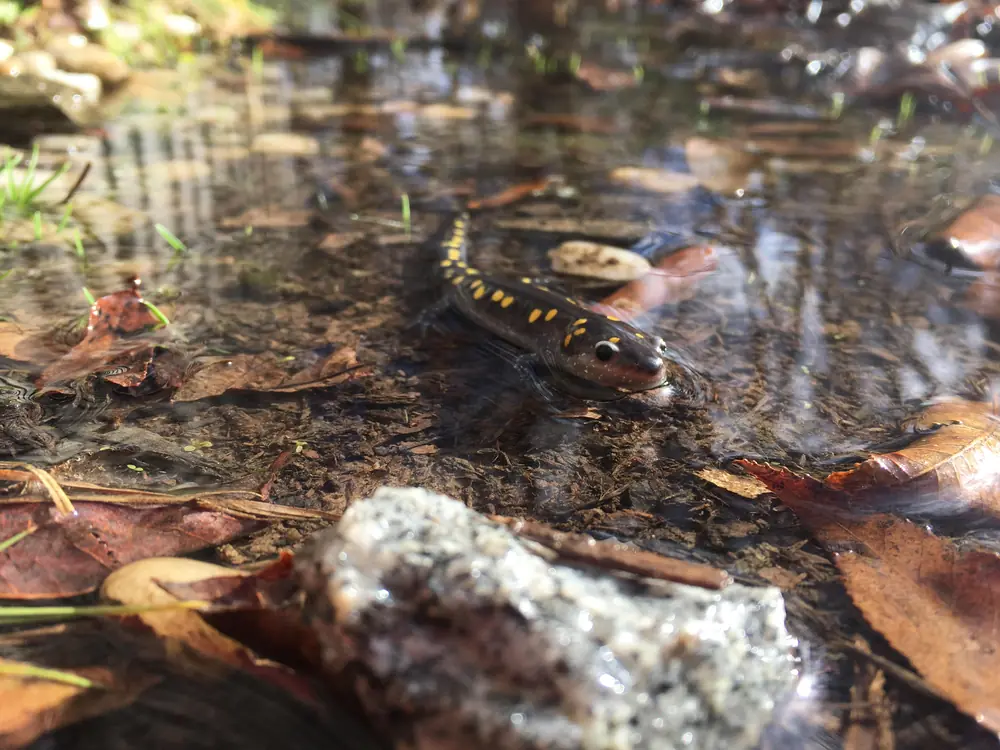
Spotted salamanders
March to May breeding season, in a rush on the first mild, rainy nights · Vernal pools and flooded woodland hollows across the state, from the Coastal Plain to the mountains
DWR puts the breeding season between March and May, with the males setting out slightly ahead of the females. Each pair attaches round clumps of eggs, 2.5 to 4 inches long and about 100 eggs apiece, to underwater plants. The Department of Forestry notes that a mass can look clear, milky or green when an alga grows in it, and DWR says hatching takes about a month. Spotted salamanders use landmarks to find the pool where they hatched, so a road cutting through that route can be deadly on the one wet night they choose to cross.
-
Marbled salamanders
Eggs laid in autumn; larvae appear when the pools fill · Dry pool basins in bottomland woods and floodplains
The marbled salamander does things backwards. The Department of Forestry says the adults lay eggs in the fall, in pools that are still dry, and the females guard them until the rains come. A DWR volunteer who monitors vernal pools describes the larvae as light brown and speckled, with external gills.
-
Wood frogs and spring peepers at full volume
February to April for wood frogs; peepers continue beyond · Temporary pools, flooded ditches and woodland swamps
DWR calls wood frogs explosive breeders from February to April, once temperatures reach about 50 degrees, and describes the eggs as floating mats laid communally by the thousands in shallow ephemeral ponds. March is the month to catch the tail end of the quacking: if you missed the chorus in February, a warm rain in March may still bring it back. The wood frog is two to three times larger than a spring peeper, and the peeper is about an inch long, tan or brown, with a darker X on its back.
-
American toads begin to trill
Breeding in March or April, calling March to August · Shallow pools and wet meadows, including garden ponds
DWR says the eastern American toad breeds in March or April in shallow pools and wet meadows. The call is a musical trill that can last up to 30 seconds, and at the height of the season it may come in daytime as well as at night. A single female can lay up to 20,000 eggs in long gelatinous strands. The Virginia Herpetological Society lists the calling season as March through August, so these are the first of the summer voices. The Virginia Herpetological Society also lists the Coastal Plain leopard frog as calling from March; Fowler’s toads and Cope’s gray treefrogs follow in April, and bullfrogs and green frogs in May.
Two courtesies help amphibians. Stay on the bank: a DWR monitoring volunteer avoids wading to protect the habitat and the developing larvae, and sterilizes boots before every pool visit to avoid spreading chytrid fungus, a disease that is fatal to amphibians. And when the weather is wet and mild, drive slowly past wetlands: DWR’s guide to Virginia’s frogs and toads covers 27 species, and many of them cross roads on the very same evenings.
When do shad and herring run up Virginia’s rivers?
The runs start in March and build through April and May. DWR’s fisheries biologists write that river herring and hickory shad come first, from late February once the water is warmer than 46 degrees, and that American shad can show up as early as March in some years. The fish gather below the fall line, the boundary where each river drops from rocky rapids to the slower tide, which in Virginia means the Potomac near Washington, the Rappahannock at Fredericksburg and the James at Richmond.
-
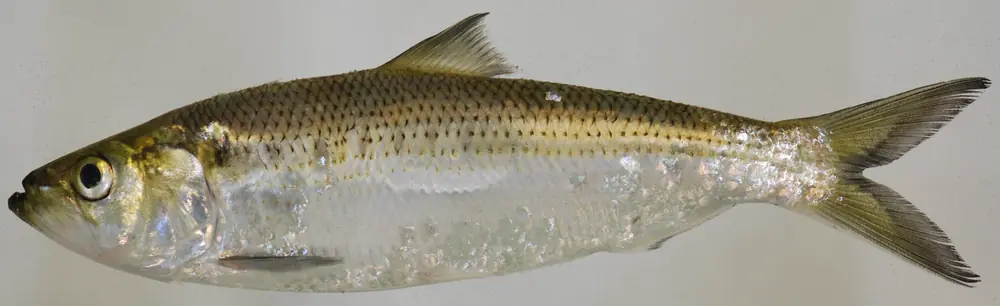
Hickory shad and alewives
Late February through April · The Rappahannock, James and Potomac below their falls
DWR says alewives and hickory shad arrive in late February once the water passes 46 degrees and run through April, and that hickory shad spawn at their peak near 61 degrees. A hickory shad is a fish of one to two pounds, the most common catch on the Rappahannock. Rules for hickory shad have changed in recent years, so check DWR and the Virginia Marine Resources Commission before fishing.
-
Blueback herring
Late March through May · The same fall-line rivers, and their tributaries
Blueback herring arrive in late March and run through May, spawning at their peak when the water is in the mid-60s, according to DWR. DWR’s spring 2024 regulations summary put alewives and bluebacks under a statewide moratorium requiring release, so these are fish to watch, not to take.
-
American shad
Peaks mid-April through May at about 65 degrees; a few in March · The James at Richmond, the Rappahannock at Fredericksburg, the Potomac
DWR says American shad activity generally peaks in mid-April through May, with 65 degrees the prime spawning temperature, though a few may appear in early March. They are the largest of the group, three to six pounds on the Rappahannock, and every American shad caught in Virginia must be released. Virginia’s Wildlife Action Plan ranks the species in Tier 4a of its Species of Greatest Conservation Need, and DWR’s Fish Passage Program works to remove barriers to its spawning water. In March, expect the first fish, not the crowd.
-
Where to watch
Late March into May · Fredericksburg and Richmond
On the Rappahannock, DWR says shad are present from late March into May, with public access around the Route 17 and US 1 bridge crossing at Fredericksburg. On the James, the run typically peaks from mid-April to early May, and public ramps near the Richmond fall line include Ancarrow Landing, Osborne Landing and Deep Bottom. DWR advises a flotation vest for anyone wading into deeper water.
Watch the river a little more each week through April. The February page covers the earlier yellow perch run,.
Which birds are arriving and leaving in Virginia in March?
March is a turnover month. Ospreys reclaim their nests, the first eagle chicks hatch, tundra swans and other waterfowl drift north, and the first shorebirds and hummingbirds are only a few weeks away.
-
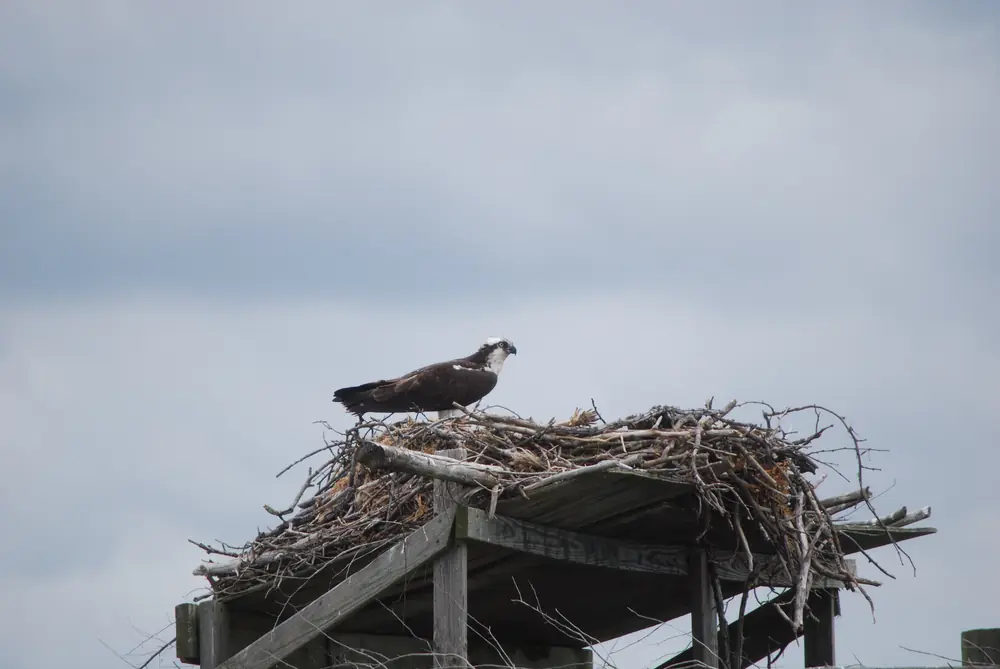
Ospreys return to the Bay
Late February or early March for experienced breeders; later for young birds · Channel markers, platforms, poles and dead trees along the Chesapeake Bay and its tidal rivers
The Chesapeake Bay Program says experienced breeders reach old nest sites in late February or early March, with less experienced birds later, and that pairs return to the same nest year after year. They build or repair a bulky nest of branches, corn stalks and shoreline debris, and the female incubates for about a month. The Center for Conservation Biology estimates eight to ten thousand breeding pairs on the Bay, about one in four of the ospreys that nest in the lower 48. Its research found that nesting success fell as menhaden, an oily fish, became a smaller part of the diet.
-
Bald eagle chicks hatching
Most eggs hatch in March · Tall pines and tulip poplars near tidal water; the James River and Chesapeake tributaries
The Center for Conservation Biology reports that most James River eggs are laid by mid-February and incubation averages about 35 days, so the first chicks hatch in March; they branch out onto nearby limbs at nine to ten weeks and fledge at about twelve. Watch from a distance with binoculars and never stand under an active nest.
-
Waterfowl heading north
March · Chincoteague, Back Bay, the Potomac and Mason Neck
Chincoteague National Wildlife Refuge’s seasonal guide says that in March migratory waterfowl begin to leave for their northern breeding grounds, while shorebirds arrive and begin courting. The Chesapeake Bay Program says tundra swans migrate back to the Arctic in early spring. Light geese, which include snow geese, may be hunted in Virginia until March 10, 2027.
Ruby-throated hummingbirds are not here yet: Journey North reported them crossing into Virginia in the first days of April 2026, so early April is the safer bet. At Chincoteague the changeover is easiest to see, with ducks and geese leaving and shorebirds arriving on the same marsh, though the refuge’s southern island closes from March 15 to protect the threatened piping plover and other beach-nesting birds.
Which wildflowers bloom in Virginia in March?
The ones that hurry. Spring ephemerals flower in the light that reaches the forest floor in the weeks before the canopy closes, and they vanish by early summer. The Virginia tourism office’s guide to early spring wildflowers says that hepatica, bloodroot, trout lily, rue-anemone, spring beauty and several violets begin emerging in early March.
-
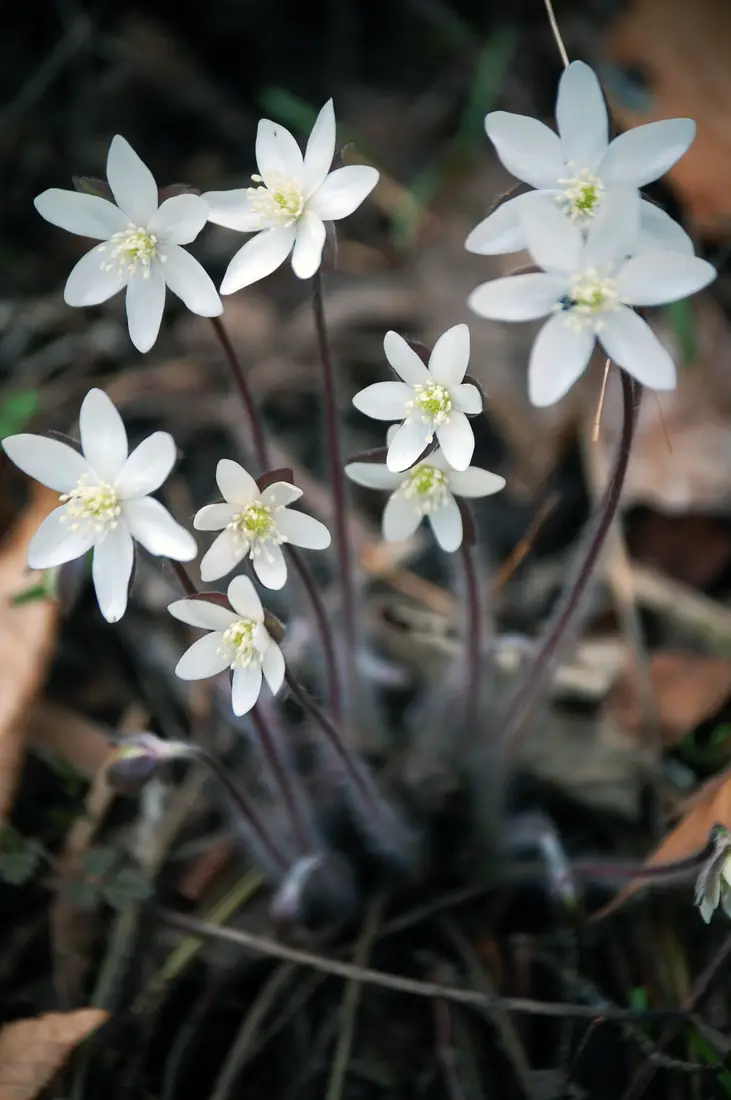
Hepatica, bloodroot and spring beauty
Early March into April, varying by elevation and the year · Rich, moist woods in the Piedmont and the Blue Ridge, including state parks and national forests
Northern Virginia’s soil and water conservation district says spring beauty blooms over the longest span, from February in some places to May in others, and feeds mason bees and other early insects, while bloodroot flowers for only a couple of days. Your own year may run a week or two behind that.
-
Virginia bluebells: starting
Leaves up in March; peak in April, usually the first two weeks · Bull Run Regional Park, Ball’s Bluff, Seneca, Riverbend, Manassas National Battlefield Park and Merrimac Farm Wildlife Management Area
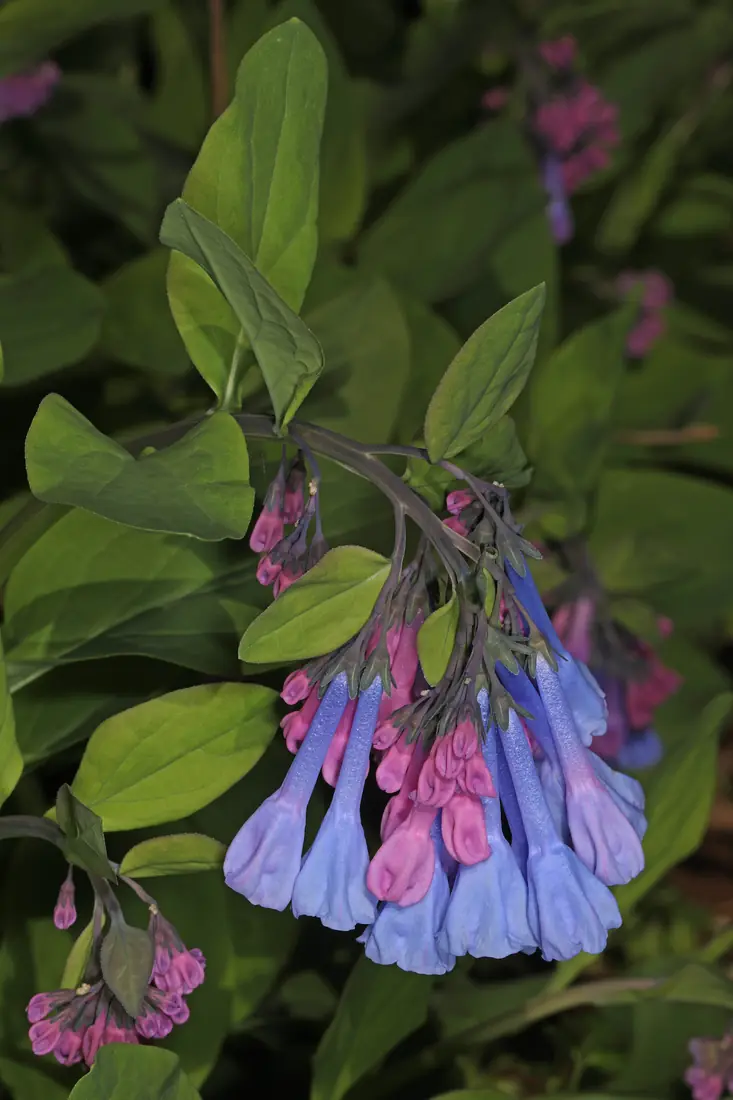
NOVA Parks naturalist Matt Felperin told WTOP in 2026 that bluebells tend to run in the first two weeks of April, with a peak that lasts only seven to ten days in any one place. Bull Run Regional Park alone has more than 150 acres along its floodplain forest. In March you will mostly find leaves and pink buds, a good reason to scout now and return in April. His advice: wear good boots, because it is muddy.
Flowering dogwood does not open until about mid-April, and mountain laurel waits until May, according to the same tourism guide. In the Naturalist’s Field Journal the first-bloom date of each flower is a good thing to record year over year.
What is blooming on Virginia’s trees in March, and where can you taste maple syrup?
Red maples have been in flower since February, so the first trees you notice in March are the ones that follow: eastern redbud, serviceberry and, in a few special corners of the Tidewater, whole fields of daffodils. And in the mountains the sugar maples are still running.
-
Eastern redbud
Late March to early April · Roadsides, woodland edges and the Piedmont
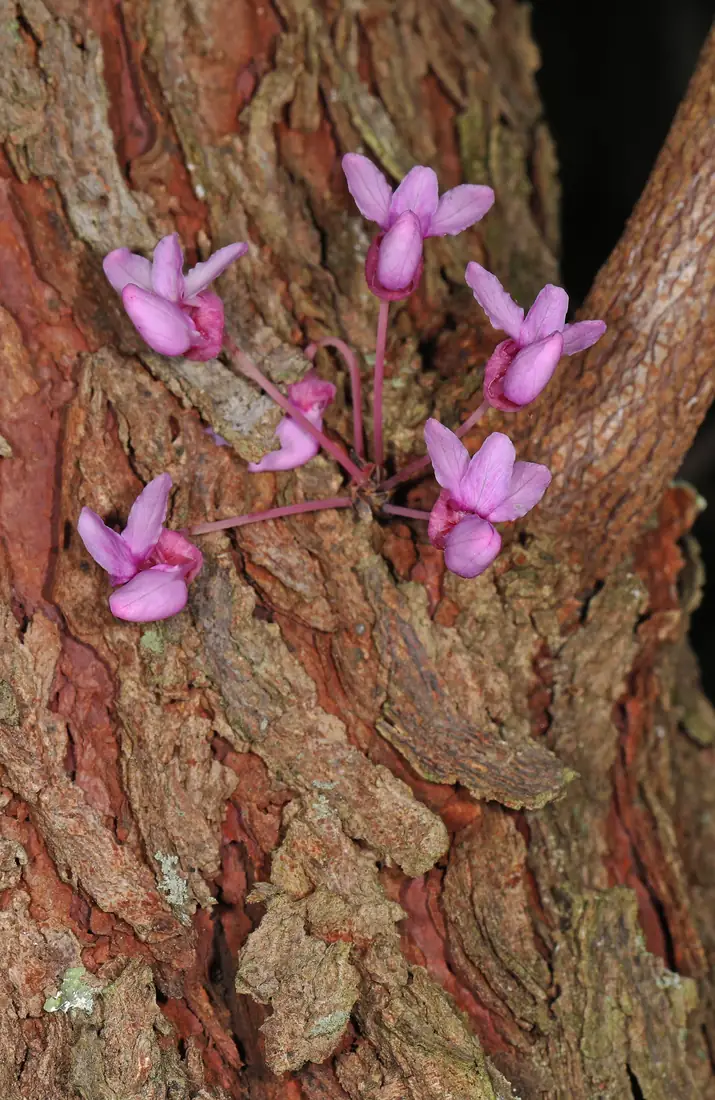
The tourism office’s guide puts the pinkish-purple blooms of eastern redbud in late March; the flowers open on bare branches before any leaves.
-
Daffodils on the Middle Peninsula
Several weeks of bloom, with varieties opening at different times · Gloucester and Mathews Counties
The Virginia Department of Forestry describes whole fields, patches of forest and roadsides carpeted in daffodils in Gloucester and Mathews Counties, where many varieties bloom over several weeks. English settlers brought the flowers in the 1600s, and by the early 1900s more than 150 families grew them on 1,000 acres. The Daffodil Festival there is annual; check with Gloucester County for its 2027 date. Daffodils standing in the middle of a wood often mark an abandoned homestead.
-
Highland County Maple Festival
March 13 to 14 and March 20 to 21, 2027 · Highland County, in the mountains on the West Virginia line
The Highland County Chamber of Commerce announces the 67th annual Maple Festival for March 13 to 14 and March 20 to 21, 2027, but had not yet posted the program, so check its page for tours and the juried craft show. The chamber lists seven producers on the Virginia Maple Syrup Trail, and visitors may call ahead to arrange a tour and taste syrup.
The February page covers the red maple and skunk cabbage that opened the season.
What are Virginia’s bears, snakes and young animals doing in March?
Waking up, and hungry. Natural foods are scarce in early spring, and DWR says bears emerging from winter dens look for easy meals.
-
Black bears out of the den
Late winter into spring · Forests statewide, and neighborhoods beside them
DWR’s annual spring reminder (March 27, 2026) says adult bears are more active now and mothers with cubs begin leaving the den. Cubs may be separated from their mother briefly and almost never need help; if you see cubs up a tree, leave the area, because the mother often returns at night to call them down. The Wildlife Conflict Helpline logged nearly 2,300 bear conflict calls in 2025, mostly over unsecured trash (41 percent), birdfeeders (10 percent) and pet chickens or their feed (7 percent).
DWR’s BearWise advice: lock garbage in a shed or use a bear-resistant container, take birdfeeders down, store pet and livestock feed in locked sheds, clean grills, and never leave food in a car. Call 1-855-571-9003 only if a cub is visibly injured, lethargic or has stayed in one spot for over 24 hours.
-
Copperheads, later
Mostly from April · Forests, wetlands and fields statewide, except the barrier islands
DWR describes the northern copperhead as a heavy-bodied snake of 24 to 36 inches with chestnut hourglass bands, found throughout Virginia below about 910 meters, and says it mates in April or May. It is sluggish and depends on camouflage, so watch your feet around rock piles and leaf litter on the first warm days.
Many young animals will be on the ground well before the fawns of May and June. DWR’s advice for any apparently abandoned youngster is the same: give it space and leave it alone, because wild mothers leave their young for long periods. If an animal is truly injured or orphaned, call the helpline at 1-855-571-9003 (Monday through Friday, 8 a.m. to 4:30 p.m.) or find a licensed rehabilitator through DWR’s website.
When is the last spring freeze in Virginia?
Later than the first warm week of March suggests. The median last freeze at each city’s main station, from NOAA’s 1991–2020 normals, is April 3 in Charlottesville, Richmond and Roanoke and April 11 in Winchester. Only Norfolk, on the coast, has a median in March (March 17). In about one spring out of ten Winchester is still freezing after April 29.
| Station | One year in ten | Median | Nine years in ten |
|---|---|---|---|
| Winchester | Mar 30 | Apr 11 | Apr 29 |
| Charlottesville | Mar 19 | Apr 3 | Apr 23 |
| Richmond | Mar 19 | Apr 3 | Apr 18 |
| Roanoke | Mar 19 | Apr 3 | Apr 18 |
| Norfolk | Feb 27 | Mar 17 | Mar 31 |
Read it as a range: in nine springs out of ten the last freeze is done by the date in the last column. Our Virginia frost dates list more towns. A freeze in late March can still catch tender new growth, so cover or hold off on anything you do not want to lose.
How much daylight does Virginia gain in March?
TBD
| City | Mar 1 | Mar 31 | Gained | Per day |
|---|---|---|---|---|
| Winchester | 11 h 19 m | 12 h 36 m | 77 min | 2.6 min |
| Arlington | 11 h 20 m | 12 h 36 m | 76 min | 2.5 min |
| Charlottesville | 11 h 21 m | 12 h 35 m | 74 min | 2.5 min |
| Richmond | 11 h 22 m | 12 h 35 m | 73 min | 2.4 min |
| Roanoke | 11 h 23 m | 12 h 34 m | 71 min | 2.4 min |
| Norfolk | 11 h 23 m | 12 h 33 m | 70 min | 2.3 min |
| Chincoteague | 11 h 22 m | 12 h 35 m | 73 min | 2.4 min |
| Bristol | 11 h 23 m | 12 h 34 m | 71 min | 2.4 min |
Because the table counts the hours between sunrise and sunset, the clock change cannot affect it. On Sunday, March 14, at 2 a.m., Virginia’s clocks leap ahead one hour, and from then on sunrise and sunset both read an hour later than they did the day before. Our daylight page has sunrise and sunset for your own town.
What is March weather like in Virginia, and what are the hazards?
Changeable, and wetter than February. By NOAA’s 1991–2020 normals, March highs reach about 60 at Norfolk, Richmond and Roanoke, but it is still a month with freezing nights: Dulles averages 15.2 nights at or below 32 degrees, and the mountain station at Bluefield, on the West Virginia side of the line, averages 6.5 inches of snow.
-
Snow is not finished
Any time in March · The northern Piedmont, the Blue Ridge and the mountains
The National Weather Service office in Sterling lists 19.8 inches in three days at Dulles in March 2014 as the heaviest March snowfall in its records, and the storm of March 13 to 14, 1993 also ranks, with 14.1 inches in two days. Most Marches bring far less, as the table shows.
-
Spring wildfire season peaks
Mid-March to April · Dry, windy days on leaf litter; the largest 2024 fires were in Page, Rockingham and Lee counties
The 4 p.m. burning law and the spring fire season run from February 15 through April 30; open burning before 4 p.m. is barred, and burners must stay with the fire and fully extinguish it. In spring 2024 the Department of Forestry answered 411 wildfires that burned nearly 20,000 acres, the most in 30 years, and activity peaked on March 20, when low humidity and gusty wind sparked 88 wildfires in under 24 hours. Spring 2023 had 330 fires and 2,174 acres.
-
Severe weather season begins
Tornado season builds toward April · Statewide
Virginia holds a statewide tornado drill during Severe Weather Awareness Week each March; in 2026 the week was March 9 to 13 and the drill was Tuesday, March 10 at 9:45 a.m., with a back-up date two days later. No 2027 date had been announced when we wrote this, so ask the National Weather Service or the Virginia Department of Emergency Management. Virginia has tornadoes in every month, with peaks in April and again in September.
| Station | High (°F) | Low (°F) | Nights below 32 °F | Precipitation (in.) | Snowfall (in.) |
|---|---|---|---|---|---|
| Norfolk | 60.1 | 41.3 | 4.2 | 3.69 | 0.4 |
| Wallops Island (Eastern Shore) | 54.5 | 37.0 | 9.7 | 3.91 | 0.7 |
| Richmond | 59.6 | 37.2 | 9.5 | 4.00 | 1.1 |
| Washington (Reagan National), for Northern Virginia | 56.5 | 38.6 | 7.5 | 3.50 | 2.0 |
| Dulles Airport | 54.8 | 33.6 | 15.2 | 3.50 | 3.9 |
| Lynchburg | 58.2 | 34.6 | 12.8 | 3.76 | 2.4 |
| Roanoke | 59.0 | 37.6 | 9.8 | 3.51 | 2.3 |
| Bristol (Tri-Cities Airport, just over the Tennessee line) | 59.4 | 35.4 | 12.3 | 3.96 | 1.1 |
| Bluefield (Mercer County Airport, West Virginia) | 51.4 | 33.0 | 13.9 | 3.84 | 6.5 |
The Climate Prediction Center publishes new seasonal outlooks near the middle of each month at 8:30 a.m. Eastern time; its three-month outlook maps show the latest, and we do not repeat them here. For the next few days, use the forecast page; the cloud guide teaches you to read an approaching front.
What is in Virginia’s night sky in March 2027?
A month with a lot going on overhead: Jupiter and Mars in the evening, Mercury and Venus before dawn, and the last glimpses of Saturn in the west, with a clock change and the equinox in between. Sky details here were worked out for the middle of the country; Virginia sees them within about half an hour.
-
The equinox
Saturday, March 20, 4:25 p.m. EDT · Everywhere
The Sun passes from the southern to the northern half of the sky at 4:25 p.m. Eastern Daylight Time, by the U.S. Naval Observatory’s tables, and day and night are nearly equal that weekend.
-
The Worm Moon
Full at 6:44 a.m. EDT, Monday, March 22 · The Moon rises full the evening before
The Moon is full at 6:44 a.m. on Monday, March 22, shortly before sunrise, which makes the evening of Sunday, March 21, near sunset, the better time to watch it climb out of the east. The Old Farmer’s Almanac ties the name Worm Moon to ground that is warming and to the earthworms, beetle larvae and grubs that stir; Crow, Sap and Sugar Moon are among the other traditional names.
-
Mercury in the morning
Best from about March 8 to March 25; greatest elongation 12:20 a.m. EDT, March 17 · Low in the east-southeast before sunrise
Mercury’s best morning showing of the spring runs from about the 8th to the 25th, with its widest angle from the Sun, 27.6 degrees, at 12:20 a.m. EDT on the 17th. Look toward the east-southeast roughly an hour ahead of sunrise from an open ridge or field. Venus, much brighter, is the point of light above it.
-
Jupiter and Mars in the evening
All month; the Moon beside Jupiter on March 18 and 19 · High in the south and southwest after dark
Jupiter, just past its February opposition, rides high in the evening sky in the Leo and Cancer region, with Mars not far away. Our own computation has a gibbous Moon, 88 percent illuminated, sliding to within about a degree of Jupiter on the nights of March 18 and 19, and Mars and Jupiter 4.3 degrees apart after dark on March 30. Saturn’s last evening views come in early March, low in the west, before the Sun’s glare swallows it.
| Phase | Date | Time |
|---|---|---|
| New moon (standard time) | Monday, Mar 8 | 4:29 a.m. |
| First quarter | Monday, Mar 15 | 12:25 p.m. |
| Full moon, the Worm Moon | Monday, Mar 22 | 6:44 a.m. (before sunrise) |
| Last quarter | Monday, Mar 29 | 8:54 p.m. |
| New moon | Tuesday, Apr 6 | 7:51 p.m. |
Our moon phases page shows the Moon day by day. No meteor shower is worth planning around in March; the Lyrids come in late April.
What can Virginia families do outdoors in March 2027?
- Go to the Maple Festival, March 13 to 14 or 20 to 21. Check the Highland County chamber’s page for the program.
- Walk to a salamander pool. When rain and mild air arrive together after dusk, carry a flashlight to a vernal pool near woods and look from its edge.
- Join FrogWatch USA. The Virginia Living Museum’s herpetology staff host a chapter; the free training has two parts and you must attend both. Ask the museum when the next training and the monitoring season begin.
- Walk the shoreline with a naturalist. Widewater State Park lists Winter Birding Walks at the visitor center on Tuesday, March 9, and Saturday, March 27, each from 9 to 10:30 a.m.
- Take the kids fishing. Douthat State Park lists a Kid’s Fishing Day at the Camp Carson picnic shelter on Saturday, March 27, from 9 a.m. to noon, and Terrific Trees for homeschoolers on Wednesday, March 3, from 10:30 a.m. to 12:30 p.m.
- Pick your bluebell place now. The best displays are usually in the first half of April, so March is the month to choose a park and check its page, and Journey North maps the first hummingbirds.
Programs can be cancelled or changed, so confirm with the park or organizer. Last month’s page, February in Virginia, covers the frogs, woodcock and perch that came first, and the nature index lists every state.
Safety notes for March in Virginia
- Deer hunting continues in a few places. The late urban archery season (antlerless only) runs January 3 to March 28, 2027 in participating cities, towns and counties. A late antlerless-only firearms season ends the same day in Arlington, Fairfax, Loudoun and Prince William, plus designated private lands elsewhere.
- Blaze orange or pink. Whoever hunts while a firearms deer season is open needs blaze color: either a hat or upper-body garment of solid orange or pink fabric visible from every direction, or 100 square inches of it displayed at shoulder height. Waterfowl and dove hunters are exempt, and spring turkey hunters are not covered by it. Walkers in public hunting areas in Northern Virginia do well to wear something bright through March 28.
- Other seasons. Light geese (snow geese) are open until March 10, and crows on Mondays, Wednesdays, Fridays and Saturdays until March 19. Hunting is allowed on Sundays, with an exclusion zone of 200 yards around a house of worship. DWR’s turkey page lists a youth and apprentice weekend on April 3 and 4 and the regular season from April 10; confirm in the current regulations.
- Trout waters need a license. A trout license is needed for designated stocked waters from October 1 through June 15, and stocking runs through May 31. DWR stocks about 1.2 million catchable trout a year in 135 streams and 32 ponds and lakes, and posts spring stocking dates two to three months ahead.
- The 4 p.m. burning law is in force until April 30; do not burn outdoors before 4 p.m.
- Ticks are already active. Virginia Tech Extension says blacklegged ticks are active all year, adults seeking hosts in winter and nymphs in spring and summer, and that all stages of the lone star tick are active in spring and summer. The Virginia Department of Health advises repellent with DEET, picaridin or lemon eucalyptus, pants tucked into socks, 10 minutes in a hot dryer for clothes, and a full body check. An infected blacklegged tick generally must stay attached 24 to 72 hours to pass on the Lyme bacterium.
- Bears, snakes and young animals. Secure garbage, take down birdfeeders, leave cubs and other young animals alone, and watch where you step near rock piles.
- Cold, fast rivers. Shad and trout streams are cold in March and the current can be swift: wear a flotation vest if you wade.
- Wet nights on the road. Amphibians cross roads on the first mild, rainy nights, so slow down wherever a road touches a wetland.
- Beach closure. The southern island portion of Chincoteague National Wildlife Refuge closes on March 15 to protect nesting birds.
Sources (52)
- Highland County Chamber of Commerce: Highland County Maple Festival
- Highland County Chamber of Commerce: Virginia Maple Syrup Trail
- Virginia DWR: spotted salamander
- Virginia Department of Forestry: spring break for salamanders
- Virginia DWR blog: vernal pools, spring’s night life
- Virginia DWR blog: I spy salamanders
- Virginia DWR: wood frog
- Virginia DWR: eastern American toad
- Virginia DWR blog: frog Friday, frog calls
- Virginia Herpetological Society: frogs and toads of Virginia
- Virginia Living Museum: FrogWatch USA
- Virginia DWR: American shad
- Virginia DWR blog: ’tis the anadromous fish season
- Virginia DWR blog: target shad with spin or fly on the Rappahannock
- Virginia DWR: tidal James River
- Chesapeake Bay Program field guide: osprey
- Center for Conservation Biology: osprey in the Chesapeake Bay
- Center for Conservation Biology: facts about Virginia eagles
- Chincoteague National Wildlife Refuge: seasons of wildlife
- Chesapeake Bay Program field guide: tundra swan
- Virginia DWR: American woodcock
- Journey North: hummingbird migration moves along with sightings in Kentucky, Virginia and Missouri (April 8, 2026)
- Journey North
- Virginia Tourism Corporation: early spring wildflowers in Virginia
- Fairfax County Northern Virginia Soil and Water Conservation District: early spring ephemeral wildflowers
- WTOP: sweeping carpets of color, the Virginia bluebells are on their way (March 2026)
- Virginia Department of Forestry: what’s in the woods, daffodils
- Virginia Department of Forestry: signs of spring (red maple)
- Virginia DWR: reminder, spring brings increased bear activity (March 27, 2026)
- Virginia DWR: northern copperhead
- Virginia DWR: reminder, if you find a fawn, leave it alone (2026)
- NOAA NCEI: 1991–2020 monthly normals for Virginia stations (data API)
- NWS Baltimore/Washington: top snowstorms at Washington, Baltimore and Dulles
- Virginia Department of Forestry: fire laws (4 PM Burning Law)
- Virginia Department of Forestry: news release, spring 2024 fire season (May 23, 2024)
- NWS Baltimore/Washington: Virginia Severe Weather Awareness Week 2026
- Virginia Places: tornadoes and derechos in Virginia
- Climate Prediction Center: 90-day outlooks
- U.S. Naval Observatory: moon phases, March and April 2027 (data API)
- U.S. Naval Observatory: Earth’s seasons, 2027 (data API)
- Old Farmer’s Almanac: full moon in March, the Worm Moon
- Virginia State Parks: events calendar, March 2027
- Virginia DWR: 2026–27 deer seasons
- Virginia DWR: 2026–27 migratory game bird seasons
- Virginia DWR: small game seasons
- Virginia DWR: spring turkey seasons
- Virginia DWR: general hunting regulations (blaze color, Sunday hunting)
- Virginia DWR blog: DWR trout stocking explained
- Virginia Department of Health: tick safety tips
- Virginia Cooperative Extension: tick-borne diseases in Virginia (ENTO-504)
- National Park Service: Shenandoah in winter
- Photos via Wikimedia Commons; licenses and photographers are credited under each picture
