What to look for in nature in Virginia this November
November is the month Virginia’s winter visitors move in. Tundra swans from the Arctic settle on the Potomac marshes and Back Bay, snow geese pour onto Chincoteague by Thanksgiving, golden eagles slip down the Appalachian ridges to spend the winter in the high country, and northern bald eagles start to swell the numbers on the tidal rivers. Bucks are at the peak of the rut in mid-month, the mountain bears are choosing dens, and on the coast the bald cypress and the oaks give the year its last color. What follows is a guide to where and when, from the Cumberland Plateau to the Atlantic.
Other months in Virginia: October, December.
Start here

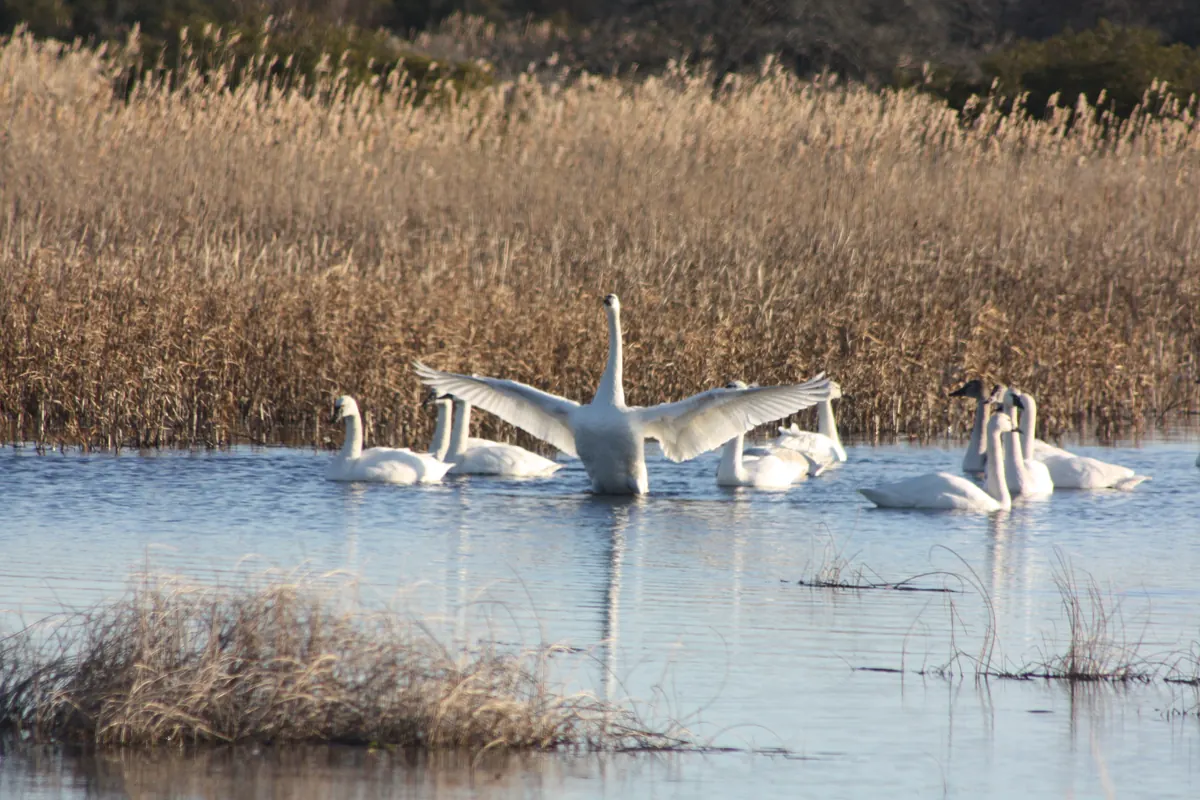
- Swans on the Great Marsh. Tundra swans begin landing on the Potomac at Mason Neck in November and build to flocks of several hundred by midwinter. Walk the paved Great Marsh Trail out to its platform, and time the visit for high tide, when the swans are more likely to gather in view.
- Peak of the rut, mid-November. Virginia’s deer biologists put the peak of breeding at about November 16 every year, the same week the general firearms season opens on November 14. Bucks are moving at all hours and crossing roads without looking; dusk and dawn drives deserve extra care all month.
- Leonids, then the Beaver Moon. The Leonids peak overnight into Wednesday, November 18. Give the half-lit Moon until a little past midnight to set, then lie back and face east until the sky pales. Tuesday morning, November 24 at 9:53 a.m. EST, brings the full Beaver Moon, a mild supermoon; Monday’s and Tuesday’s moonrises both show a round disk.
As the winter birds come in, let the Naturalist’s Field Journal hold the record. Your first tundra swan, snow goose or golden eagle of the season belongs on the Naturalist’s Field Journal plate for birds I have seen, along with where you stood: Mason Neck, Rockfish Gap, a farm pond; use the map of sounds for swans calling over a marsh at night; the mammal watch page suits a buck crossing a field at dusk; and a soft persimmon or a round cypress cone can be drawn life size on the seeds, pods and cones plate. If a young beech near you keeps its tan leaves, start the same place twice page now and go back in March.
Regions used below: Southwest Virginia and the Blue Ridge; Shenandoah Valley; Northern Virginia; Central Virginia and the Piedmont; Southside; Tidewater and Hampton Roads; Eastern Shore.
When do tundra swans and snow geese get to Virginia?
Through November, for the most part. The Chesapeake Bay Program dates the tundra swan’s arrival in the Bay region to late October and early November, after a flight from breeding grounds on the Arctic tundra of Canada and Alaska, and around the capital the swans turn up in November, according to the Northern Virginia Bird Alliance; in 2025 the first eBird report from Mason Neck came on November 13. Snow geese follow the same calendar on the coast, and Chincoteague’s refuge names November and December as its peak months for migrating waterfowl. The swans you see now will stay until early spring.
-
Tundra swans at Mason Neck
From mid-November; several hundred by midwinter · Elizabeth Hartwell Mason Neck National Wildlife Refuge, Lorton
Mason Neck, bought in 1969 as the first national wildlife refuge set aside for bald eagles, wraps around a 207-acre freshwater tidal marsh on the Potomac. Two trails reach it: the paved Great Marsh Trail, about three-quarters of a mile to an observation platform, and the Woodmarsh Trail, with a covered platform more than a mile from the lot. The Bird Alliance advises going at high tide; one checklist on December 29, 2025 counted 460 swans. Tell a tundra swan from the resident mute swan by its straight neck and black bill, which often carries a yellow fleck at its base.
-
Back Bay closes its dikes for the birds
Dike trails closed November 1 to March 31 · Back Bay National Wildlife Refuge, Virginia Beach
From November 1 the refuge shuts its East and West Dike trails until the end of March, leaving the impoundments to the wintering ducks, tundra swans and snow geese. The boardwalks out to the beach stay open. To see the interior, book a seat on False Cape State Park’s Blue Goose tram tour, which runs on Sunday afternoons in November (noon to 4 p.m. every Sunday of the month, the 1st through the 29th; book ahead with the park).
-
Chincoteague and Waterfowl Weekend
Thanksgiving, Thursday November 26 to Sunday November 29 · Chincoteague National Wildlife Refuge, Assateague Island
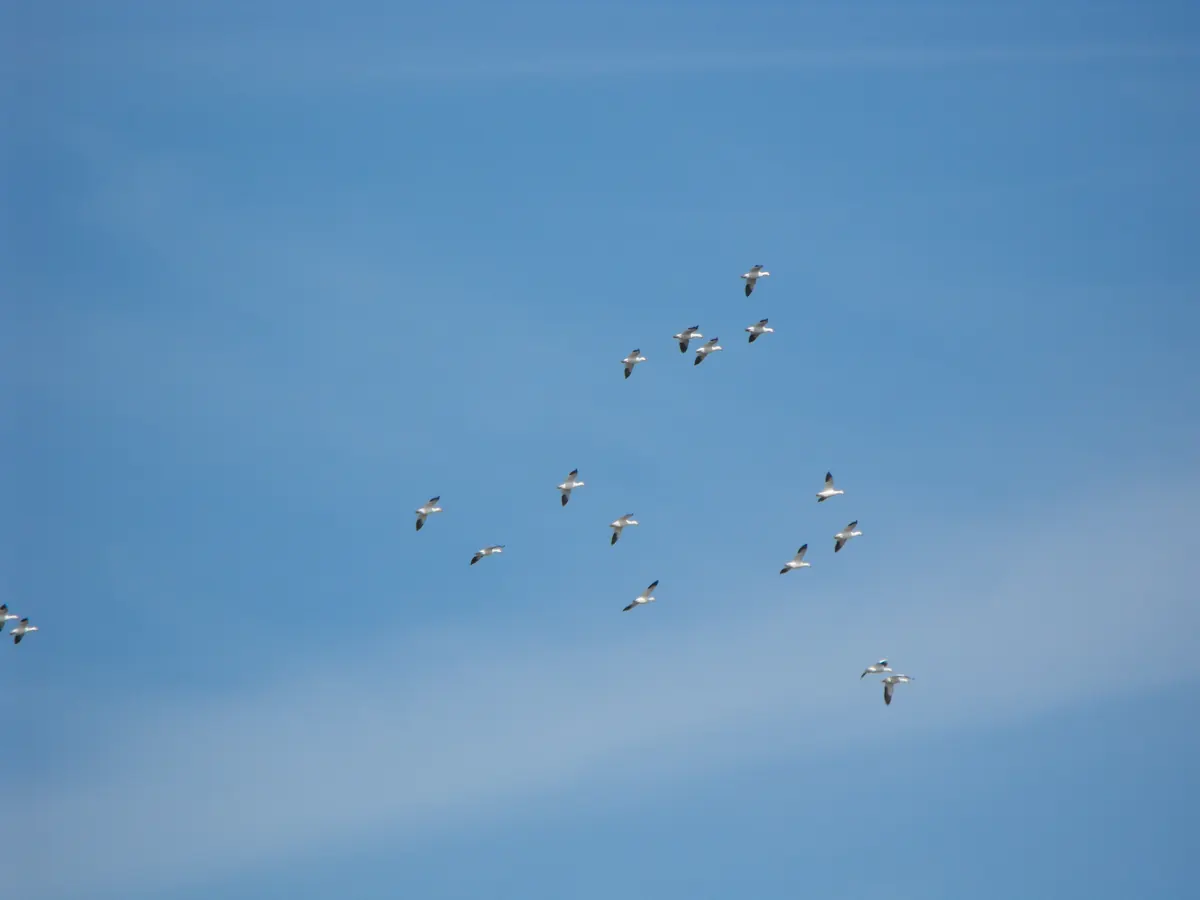
Thousands of snow geese spend the winter at Chincoteague or stop to rest and feed on their way farther south, the refuge says. Its Waterfowl Weekend falls over Thanksgiving, four days when no hunting takes place on the refuge. In 2025 the Wildlife Loop was open to cars from 9 a.m. to dusk on all four days and the 7.5-mile Service Road on the Saturday and Sunday afternoons; check with the refuge for the 2026 hours. From November the refuge itself is open 6 a.m. to 6 p.m.
-
Sea ducks and gannets at the Bridge-Tunnel
Building through November; at its best in winter · Chesapeake Bay Bridge-Tunnel, scenic overlook at the north end
The Department of Wildlife Resources calls the Bridge-Tunnel the best winter birding site in Virginia. From late November, the overlook at the north end almost always turns up loons, grebes, scoters, red-breasted mergansers and gannets diving offshore; check the pilings for great cormorants among the double-crested. Getting onto the islands themselves is another matter: the department says the southernmost has been closed for tunnel construction, and the others need an advance application and a fee, so check before planning on it.
Waterfowl hunting overlaps all of this: the second duck season runs November 18 to 29, light-goose season opens November 25, and a permit-only tundra swan season begins November 15. Refuges post their hunt days, and a clear northwest wind after a front, which you can check on the current conditions page, is often what brings the next wave of birds down the coast.
Where can you see eagles in Virginia in November?
Both of the country’s eagles are on the move this month, in different parts of the state. Bald eagles are year-round residents on the tidal rivers, but the Center for Conservation Biology at William & Mary tracks a second wave that comes down from northeastern Canada and the northern states ahead of the freeze up north: their numbers “increase through November and December,” the Center writes, and peak in January. Golden eagles are the mountain story, and one that took a while to be believed.
-
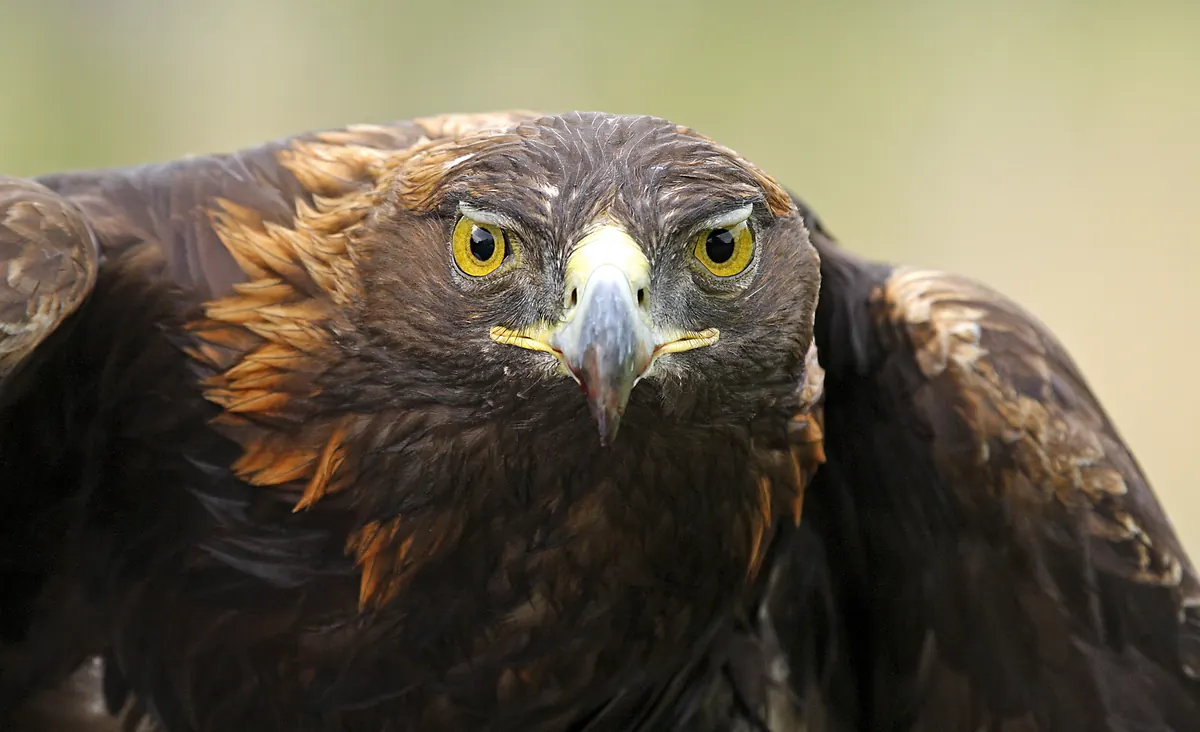
Golden eagles on the ridges
Late October through November on the hawk watches; winter in the mountains · Rockfish Gap, Harvey’s Knob, Kiptopeke; wintering in the Appalachians
The Department of Wildlife Resources says golden eagles arrive by late October and through November and stay through the winter, mostly in the Appalachians, with a few on the Coastal Plain. Its biologists learned how many there were only after 2009, when trail cameras set on deer carcasses along high ridges kept photographing them; more than 35 were later fitted with transmitters. On the hawk watches they are a late-season prize: Rockfish Gap averages only about ten in a fall, and its best November days have brought six.
-
Red-tailed hawks, the last big flight
Early to late November · Rockfish Gap and Kiptopeke, both counting through November 30
After the falcons and sharp-shins of October, the big buteos take over. Rockfish Gap logs about 700 red-tails in an average season, and its record day for the species came on November 6, 1985, with 751. At Kiptopeke, red-tails, golden eagles and turkey vultures keep coming down the peninsula through November. Both watches close for the year on November 30.
-
Bald eagles courting at Mason Neck
November and December · Mason Neck refuge and Mason Neck State Park; the James, Rappahannock and Potomac
The refuge notes that its eagles begin courtship in November and December, ahead of laying in midwinter. Look for pairs perched side by side near last year’s nest, adding sticks, or calling to each other in their high, chattering voice. The Center has written that the James can hold more than 400 eagles at once, and birders at Conowingo Dam, at the head of the Bay, often read color bands on eagles from New York, New Hampshire, Massachusetts and Ontario.
Adult goldens look uniformly chocolate brown, with a gilded wash on the back of the head; a young bald eagle is also dark, but blotched with white underneath and much bigger-headed. If you are unsure, photograph it and write down the date and ridge in your bird list.
When is the deer rut in Virginia, and when do bears den?
-
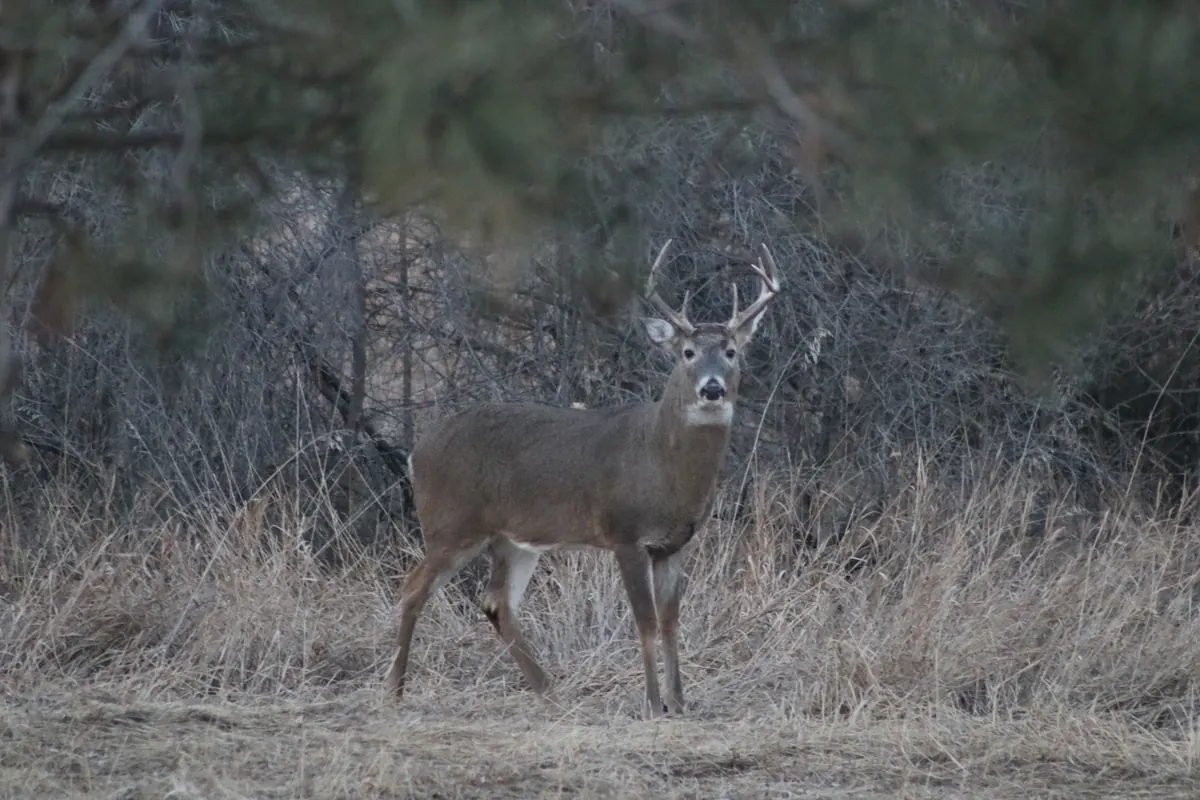
The rut peaks around November 16
Peak breeding mid-November, every year · Statewide
Virginia’s fawns are mostly born in the first week of June, and counting back the roughly 200 days of a doe’s pregnancy puts the peak of breeding about November 16. The Department of Wildlife Resources is firm that day length, not cold snaps or the Moon, sets that date. Watch a field edge at first or last light: bucks with swollen necks trail does with their noses down, and fresh scrapes appear under low branches along woodland trails.
-
Deer on the roads
All month, worst from dusk to dawn · Every county
Between half and two-thirds of Virginia’s deer-vehicle crashes happen in October, November and December, the department has reported. One deer crossing in front of you usually means another is right behind it. With sunset between about 5 and 5:30 p.m. once the clocks change, the evening commute now runs through the worst hour.
-
Bears going to den
October to January, depending on food · The mountains, the Piedmont, and the Dismal Swamp
In the mountains most Virginia bears den in big hollow trees, sometimes far above the ground, and others use rock cavities, brush piles from timber cuts, or simply a nest of leaves on open ground. They do not eat or drink once they settle, but they are light sleepers and may wander on a warm winter day. When they go in depends on food and weather, the department says, and this fall’s acorn crop is patchy: the department’s 2026 survey rates the white oaks above their recent normal and the red oaks below average. Cubs are born in the den between early January and mid-February.
-
Brook trout finishing their spawn
Through mid-November · Shenandoah and Blue Ridge headwater streams
Shenandoah National Park’s native brook trout spawn from early October until about the middle of November, the females digging shallow redds in clean gravel. The eggs sit there all winter and hatch from mid to late January. The fish feed mostly near dawn and dusk and spook easily, so watch from the bank and keep your boots out of the riffles.
The mammal watch page in the journal is made for this month: one field, the same time each evening, and a line for every deer, fox or bear you see.
Will winter finches and northern birds come to Virginia feeders this year?
Probably not many. The Finch Research Network’s forecast for the winter of 2026–27, posted in late September, finds the conifer seed crops good across the eastern boreal forest, with eastern white pine and northern white cedar especially heavy. With that much food up north, it expects finches to stay in the northern woods and does not expect large irruptions into the southeastern states. It expects pine siskins to stay mostly in the cedar and hemlock forests of the Northeast, suspects any purple finch flight will be late and small at best, and does not expect last winter’s flood of red-breasted nuthatches to repeat; redpolls and evening grosbeaks may make small moves south of the boreal forest but are unlikely to reach Virginia in numbers.
-
Project FeederWatch begins November 1
November 1 to April 30 · Any yard, balcony or schoolyard with a feeder
Pick two days in a row, as often as once a week, and note, species by species, the most birds in view together at any moment. Cornell Lab and Birds Canada use the counts to follow winter bird populations across the continent; participants pay a small fee. A year when the finches stay north still makes useful data.
-
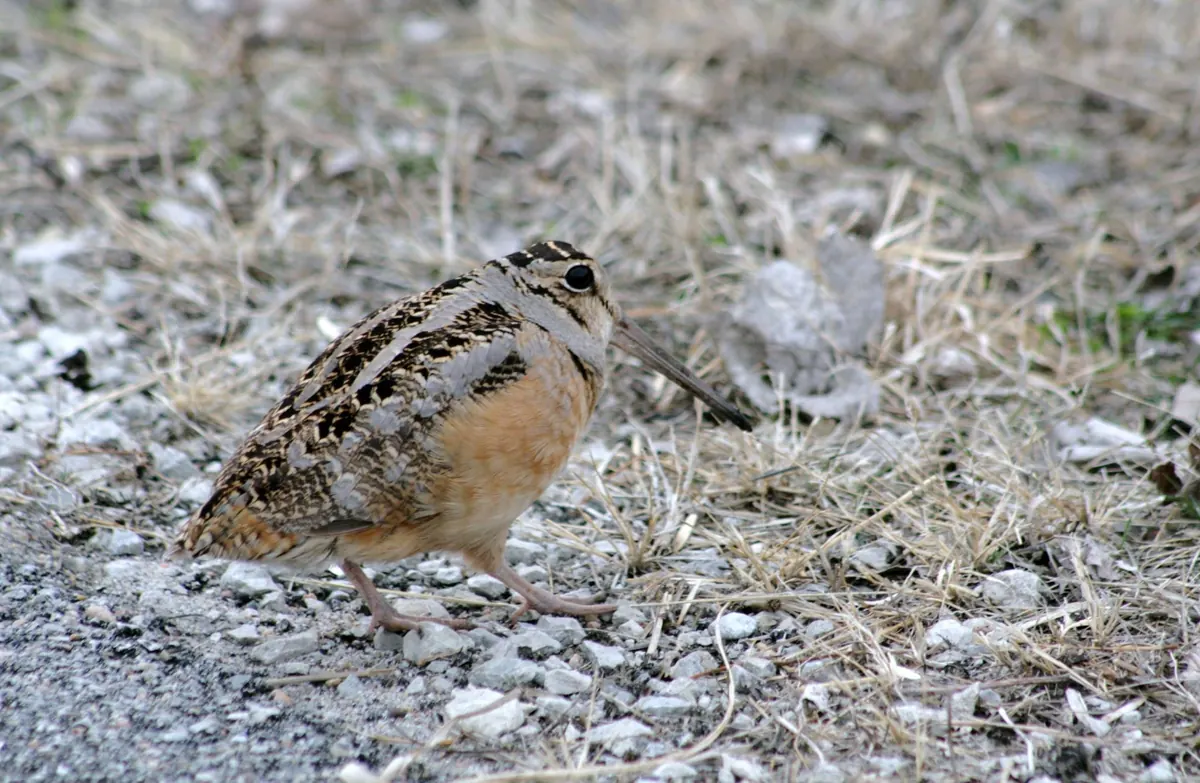
Woodcock at dusk on the Eastern Shore
Late November into February · Eastern Shore of Virginia National Wildlife Refuge, Cape Charles
At the southern tip of the Delmarva Peninsula, the refuge describes American woodcock flying from the woods out to the fields at dusk from late November through February, their wings twittering. Stand at a field edge as the light goes and listen.
Where is there still fall color in Virginia in November?
Toward the coast and in the lowlands. Virginia State Parks’ own map of the season puts the central parks at their peak in early November and the coastal parks, from Kiptopeke and First Landing up to Mason Neck and Widewater, in early to mid November. By then the mountains are bare above the valleys, and the last color belongs to the oaks, the sweetgums, and one tree that surprises people: a conifer that turns orange.
-
Bald cypress turning copper
November, before the needles drop · First Landing’s Bald Cypress Trail, the Great Dismal Swamp, Jamestown Island
Bald cypress is one of the few conifers that loses its needles every autumn, as the Jamestown site notes. Clemson’s extension service describes the branchlets passing from tan to orange-red to reddish-brown before they fall. Seen across the dark water of the Dismal Swamp or from First Landing’s trail, a stand of cypress in that rusty phase is one of the best sights of the coastal fall.
-
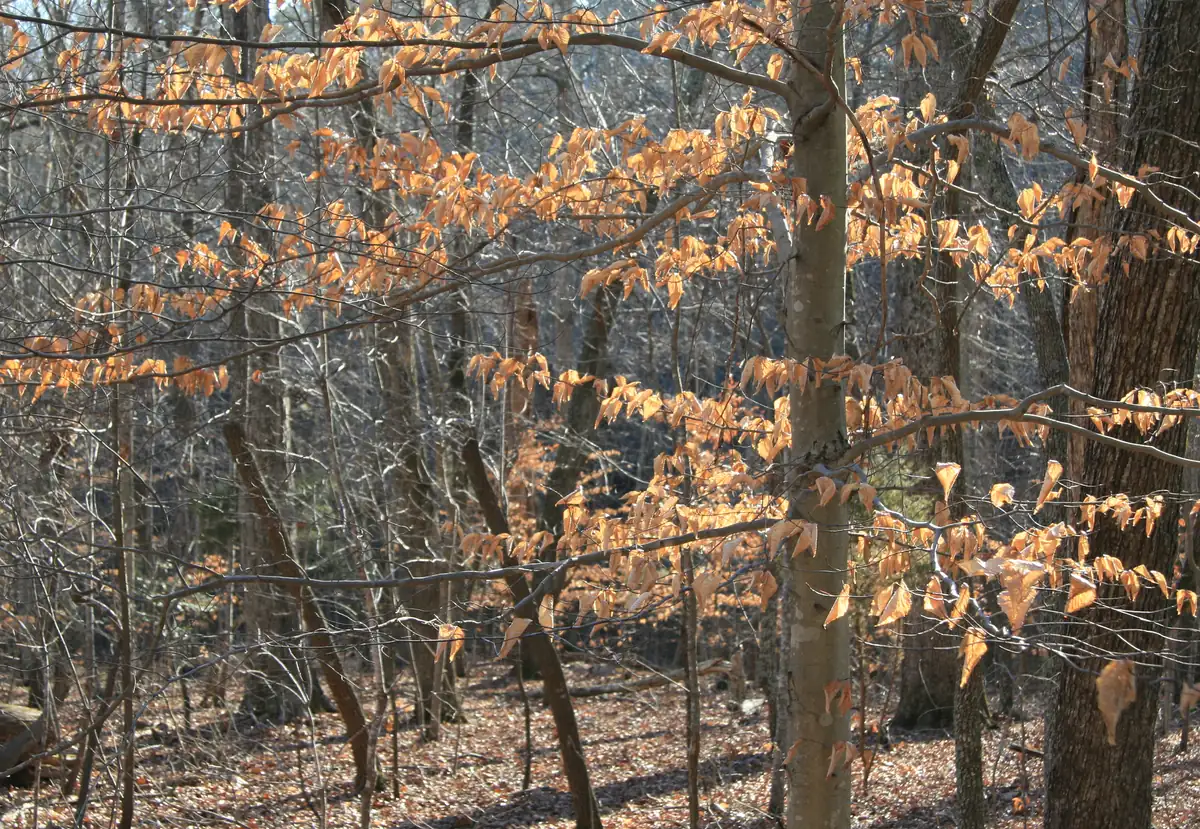
Beeches and oaks that keep their leaves
From November until spring · Young beeches and oaks in any hardwood forest
Some trees let their leaves die but do not drop them, a habit called marcescence. American beech is the best known, along with many oaks, hornbeam and hophornbeam, mostly on young trees and on lower branches about as high as a deer’s head. One explanation is that the papery leaves protect the buds from browsing. The leaves rattle in the wind all winter and fall only when new buds push them off in spring.
-
Persimmons ripening
Into November, after the leaves fall · Old fields, fencerows and woodland edges
American persimmon trees are male or female, and only the females bear fruit. The fruit often hangs on the bare branches after the leaves have gone, and the Master Gardeners of Northern Virginia note that freezing does not harm it. It is puckeringly astringent until it is fully ripe, soft and wrinkled, when it usually drops; birds and mammals soon clear the ground beneath a good tree.
Virginia State Parks posts its foliage report into November; if you only want to know whether your own street has color left, look up for a minute on the way to the car. The October page follows the earlier color in the mountains.
Has Virginia had its first freeze yet?
Much of it has by the start of November, and the rest usually gets there before Thanksgiving. In the 1991–2020 normals, Bristol’s median date for a first freeze is October 20, Roanoke’s October 28 and Winchester’s October 29, so the mountains, the Valley and the far southwest normally begin the month already frozen. Fredericksburg (November 1) and Richmond (November 4) sit right at their medians in the first week. Charlottesville’s station usually waits until November 10, and the water-warmed cities wait longest: Norfolk’s median is November 16 and Washington’s Reagan National, the best guide for Arlington and Alexandria, November 18. In one year in ten Norfolk has gone into December without a freeze.
| Station | One year in ten | Median | Nine years in ten |
|---|---|---|---|
| Bristol (Tri-Cities Airport, just over the Tennessee line) | Oct 7 | Oct 20 | Nov 4 |
| Roanoke | Oct 14 | Oct 28 | Nov 9 |
| Winchester | Oct 14 | Oct 29 | Nov 11 |
| Fredericksburg | Oct 19 | Nov 1 | Nov 12 |
| Richmond | Oct 23 | Nov 4 | Nov 19 |
| Charlottesville | Oct 29 | Nov 10 | Nov 28 |
| Norfolk | Nov 4 | Nov 16 | Dec 1 |
| Washington (Reagan National), for Northern Virginia | Nov 5 | Nov 18 | Dec 6 |
Your nearest station may differ from these by a week or more, especially in a frost pocket; find it on the Virginia first and last frost page. A gardener in Hampton Roads can still pick greens and leave the parsley out, while one in Abingdon should be draining hoses.
How much daylight does Virginia lose in November?
Between 48 and 53 minutes, depending on latitude, but the evenings shrink much faster than that, since Virginia returns to standard time overnight into the first Sunday, November 1, and an hour of evening light moves to the morning. Sunset in Richmond jumps from 6:12 p.m. on Halloween to 5:11 p.m. the next day, then slides to 4:52 by November 30; sunrise moves back to 6:35 a.m. on the 1st and creeps to 7:05 by month’s end. Bristol sits so far west in its time zone that its evenings stay lighter: sunset there is 5:13 p.m. on November 30, while Norfolk’s is 4:49.
| City | Nov 1 | Nov 30 | Lost | Per day |
|---|---|---|---|---|
| Winchester | 10 h 31 m | 9 h 38 m | 53 min | 1.8 min |
| Arlington | 10 h 32 m | 9 h 40 m | 52 min | 1.8 min |
| Fredericksburg | 10 h 34 m | 9 h 43 m | 51 min | 1.8 min |
| Charlottesville | 10 h 35 m | 9 h 45 m | 50 min | 1.7 min |
| Richmond | 10 h 36 m | 9 h 47 m | 49 min | 1.7 min |
| Roanoke | 10 h 38 m | 9 h 49 m | 49 min | 1.7 min |
| Norfolk | 10 h 39 m | 9 h 51 m | 48 min | 1.7 min |
| Bristol | 10 h 40 m | 9 h 52 m | 48 min | 1.7 min |
By late November the daily loss is easing, and Virginia’s earliest sunsets of all come in the first ten days of December, ahead of the solstice. For your own town, the sunrise and daylight calculator gives each day’s figures.
What is November weather like in Virginia, and will El Niño make the winter wet?
Cool, mostly dry and changeable. In the 1991–2020 normals, November’s average high is about 62 °F at Norfolk, 60 at Richmond and 59 at Roanoke, and the average low drops to the mid-30s at Lynchburg, Bristol and Dulles. Rain totals are modest, about 3 inches at most stations, from 2.88 inches at Wallops Island to 3.39 at Lynchburg. Snow is rare but not unheard of: the normals give Bristol and Dulles about three-tenths of an inch for the month, Roanoke a tenth, and Richmond and Norfolk none, while the high ground around Mount Rogers and along the West Virginia line sees its first flakes earlier.
The coast’s November risk is the nor’easter. In mid-November 2009, the remnant of Hurricane Ida re-formed off the Mid-Atlantic coast and stalled for more than three days, pushing water through six high tides in a row; the Sewells Point gauge in Norfolk reached 7.74 feet above mean lower low water, which the Virginia Institute of Marine Science judged a likely record for a nor’easter there. Hurricane season itself runs to November 30.
Then there is El Niño. Forecasters at the Climate Prediction Center, in their September 10 update, gave a very strong event over fall and winter odds above 90 percent. For Virginia that leans toward wetter rather than snowier. Kevin Grise, a climate scientist at the University of Virginia, has explained that El Niño tends to steer winter storms along the Atlantic coast, giving the state better odds of a wet winter and, in some years, a big snowstorm. The National Weather Service office for Baltimore and Washington found that strong El Niño winters there have averaged warmer and wetter than normal, but with snow split almost evenly: of the seven strong events since 1950, four brought well above normal snowfall and three almost none. NOAA’s winter outlook is scheduled for October 15, and when it appears, go straight to the Climate Prediction Center’s 90-day maps and judge the Virginia shading for yourself.
For today’s sky and the clouds overhead, see what the clouds are doing.
What is in Virginia’s night sky in November?
-
The Leonids
Before dawn on Wednesday, November 18 · Leo, rising in the east around midnight
According to the International Meteor Organization, the Leonids reach their maximum at 6:45 p.m. EST on November 17. Fifteen or so an hour is a fair hope away from town lights; nobody is forecasting an outburst in 2026. The radiant in Leo is not up until late evening, and the Moon, just past first quarter, is down soon after midnight, so the best window is from moonset until the sky brightens on the morning of the 18th. The mornings either side are worth a look too.
-
Taurid fireballs
Southern Taurids about November 5; Northern Taurids about November 12 · Taurus, well up by mid-evening
Neither stream is rich, but both throw the odd slow, bright fireball, and the new moon of November 9 keeps the week between the two peaks dark. The Taurids are debris from Comet Encke.
-
Four planets before dawn
Mid-November; Mars and Jupiter closest on the mornings of Nov 15 and 16 · East and southeast before sunrise
The morning sky is the busy one. Venus climbs out of the dawn glow through November and peaks in brilliance from about November 24 to 27, outshining everything in the sky but the Moon. In Leo, Jupiter draws up beside the fainter, ruddy Mars, the pair separated by just over a degree, on the dawns of November 15 and 16. Low in the east-southeast, Mercury makes a fourth; it is farthest from the Sun on November 20, so the mornings from about the 18th to the 25th give the best chance. In the evening, Saturn is alone in the south and southwest after dark.
-
The Beaver Moon and the Pleiades
Monday, November 23 and Tuesday, November 24 · Rising in the east at dusk
The Beaver Moon comes slightly nearer than an average full moon, enough for the supermoon label, and appears full on both nights; Tuesday is nearer the exact moment. Overnight on the 23rd it passes close by the Pleiades, though its glare will drown most of the cluster. Look up local moonrise times on the moon calendar.
-
Star parties in the dark parks
November 7, 13 and 14 · Staunton River and James River state parks
Staunton River State Park hosts “Stories of the Stars” on its observation field on Saturday, November 7, 7 to 9 p.m., and James River State Park, also an International Dark Sky Park, holds star parties on Friday and Saturday, November 13 and 14, 6 to 10 p.m., in the dark-moon week.
| Phase | Date | Time |
|---|---|---|
| Last quarter | Sunday, Nov 1 | 3:28 p.m. |
| New moon | Monday, Nov 9 | 2:02 a.m. |
| First quarter | Tuesday, Nov 17 | 6:48 a.m. |
| Full moon, the Beaver Moon | Tuesday, Nov 24 | 9:53 a.m. (round on the evenings of Nov 23 and 24) |
| Last quarter | Tuesday, Dec 1 | 1:08 a.m. |
No eclipses are visible from the United States this month.
What can Virginia families do outdoors in November?
- Count birds at home. Sign up for Project FeederWatch, which starts November 1, and keep a tally sheet by the window.
- Join a winter birding walk. Widewater State Park, on the Potomac in Stafford County, leads winter birding walks with a volunteer birder on Tuesday, November 10 and Saturday, November 28, 9 to 10:30 a.m. In the far southwest, the Southwest Virginia Museum in Big Stone Gap leads “Birding in the Gap” on Saturday, November 14, 9 to 11 a.m.
- Learn trees without leaves. Sky Meadows State Park holds a winter tree identification workshop on Saturday, November 14, 10 a.m. to 2 p.m., using bark, buds and leaf scars. Douthat State Park’s homeschool naturalists meet on Wednesday, November 4, for “Fur, Tracks, and Scat.”
- Go out after dark. False Cape State Park leads “False Cape After Dark” night hikes on Friday, November 6 and Saturday, November 21, 5 to 8 p.m., starting from the Back Bay refuge lot; Natural Bridge State Park’s dark-sky evening on Saturday, November 21, 7 to 9 p.m., takes in a bright waxing gibbous Moon over the Blue Ridge, three nights before it is full. Add the star parties in the sky section.
- Opt Outside on Friday, November 27. False Cape runs an #OptOutside hike from noon to 4 p.m. the day after Thanksgiving, and Twin Lakes State Park has “Squirreling Around,” a ranger program about squirrels in winter, at 2 p.m. Virginia State Parks usually adds more Thanksgiving-weekend programs late in the month, so check its events calendar.
- Visit a national park for free. U.S. citizens and residents get into Shenandoah without paying on Wednesday, November 11, Veterans Day. Skyland closes for the season on November 8, and Big Meadows Lodge, the Byrd Visitor Center and the Big Meadows campground on November 29.
- Make a Thanksgiving trip to Chincoteague. Waterfowl Weekend, November 26 to 29, is the easiest time to see the snow geese from the car.
For classes, citizen science and guided walks near you, look up your local chapter of the Virginia Master Naturalists or a bird club such as the Northern Virginia Bird Alliance.
Safety notes for November in Virginia
- Firearms deer season. The general firearms season opens Saturday, November 14 on private land in most of the state and runs to January 2; in Chesapeake, Virginia Beach and the part of Suffolk east of the Dismal Swamp it has been open since October 1 and closes November 30. Early muzzleloader season runs October 31 to November 13 and archery to November 13. Bear seasons overlap too: muzzleloader November 7 to 13 in most counties and firearms from November 23, November 27 or November 30 depending on the county. Fall turkey reopens around Thanksgiving in most of the state, and the second duck split is November 18 to 29. Hunting is allowed on Sundays in Virginia, except within 200 yards of a place of worship, so do not assume a Sunday walk is a quiet one.
- Wear orange. During the firearms deer seasons, Virginia requires every hunter, and anyone with a hunter, to have on a hat or upper-body clothing of solid blaze orange or blaze pink that can be seen from every direction, or to display at least 100 square inches of it at shoulder level. Hikers are not bound by it, but on national forest land and wildlife management areas a bright hat and vest are simple insurance, and a bright collar or vest suits a dog.
- Skyline Drive after dark. In past firearms seasons Shenandoah National Park has closed sections of Skyline Drive overnight, from 5 p.m. to 8 a.m., to discourage poaching; it described the practice in 2016 as more than three decades old. Check the park’s alerts before planning a sunset drive in late November.
- Short days. Sunset comes before 5:15 p.m. statewide by the end of the month. Begin long walks in the morning, keep a headlamp in the pack, and let someone at home know the trail and your expected time out.
- Cold water and wind. The Bay and the rivers are cooling fast; a paddler who tips over in November is in real danger within minutes, so keep the life jacket zipped and dress for the water temperature rather than the air. Watch the forecast for nor’easters before a barrier-island trip.
- Ticks and bears. Adult blacklegged ticks still bite on mild days, so keep up the tick checks. In bear country, keep bird feeders down until the bears have denned and secure the trash.
- Fire. Leaf litter dries quickly on a breezy November afternoon; check the Department of Forestry’s burn rules before burning leaves or lighting a campfire.
Sources
- Chesapeake Bay Program: tundra swan
- Northern Virginia Bird Alliance: tundra swans at Mason Neck
- U.S. Fish and Wildlife Service: Elizabeth Hartwell Mason Neck National Wildlife Refuge, species and seasons
- Virginia DWR Bird and Wildlife Trail: Mason Neck National Wildlife Refuge
- U.S. Fish and Wildlife Service: Back Bay National Wildlife Refuge rules (dike trail closure)
- Virginia DWR Bird and Wildlife Trail: Back Bay National Wildlife Refuge
- U.S. Fish and Wildlife Service: Chincoteague National Wildlife Refuge, visiting hours and Waterfowl Weekend
- U.S. Fish and Wildlife Service: Chincoteague National Wildlife Refuge, species
- Chincoteague Chamber of Commerce: Waterfowl Weekend (2025 loop and Service Road hours)
- Virginia DWR Bird and Wildlife Trail: Chesapeake Bay Bridge-Tunnel
- Birding Virginia: Chesapeake Bay Bridge-Tunnel north scenic overlook
- Virginia DWR: 2026–27 migratory game bird seasons
- Center for Conservation Biology: migratory bald eagle populations in Virginia
- Center for Conservation Biology: bald eagle concentration areas in the Chesapeake Bay
- Virginia DWR blog: discovering Virginia’s golden eagles
- Virginia DWR: golden eagle research and conservation
- HawkCount: Rockfish Gap Hawk Watch site profile and season data
- HawkCount: Kiptopeke Hawkwatch site profile and season data
- Virginia DWR blog: fawning dates are key to rut timing
- Virginia DWR blog: drivers stay alert, deer are on the move
- Virginia DWR: black bear (denning)
- Virginia DWR blog: 2026 acorn production report
- National Park Service: brook trout in Shenandoah
- Finch Research Network: Winter Finch Forecast 2026–2027
- Project FeederWatch: how to participate
- U.S. Fish and Wildlife Service: Eastern Shore of Virginia National Wildlife Refuge, species and seasons
- Virginia State Parks: peak foliage periods by region
- Virginia State Parks: fall foliage report
- Historic Jamestowne: bald cypress
- Clemson Cooperative Extension: bald-cypress
- Clemson Cooperative Extension: when leaves don’t let go (marcescence)
- Master Gardeners of Northern Virginia: Diospyros virginiana, common persimmon
- NOAA NCEI: 1991–2020 first-freeze probability normals (data API; Bristol and the main airports)
- NOAA NCEI: 1991–2020 monthly normals for November (temperature, precipitation, snowfall; data API)
- Virginia Institute of Marine Science: the November 2009 nor’easter’s storm tide
- Climate Prediction Center: ENSO diagnostic discussion, September 10, 2026
- Climate Prediction Center: 90-day seasonal outlooks
- University of Virginia: Q&A, what is a super El Niño (Kevin Grise, March 30, 2026)
- NWS Baltimore/Washington: El Niño and winters in the Washington-Baltimore area
- U.S. Naval Observatory: moon phases (data API)
- International Meteor Organization: 2026 meteor shower calendar (PDF)
- EarthSky: what is a supermoon (2026 list)
- EarthSky: Mercury’s greatest western elongation
- EarthSky: Uranus at opposition
- Star Walk: planetary conjunctions of 2026 (Mars and Jupiter)
- Virginia State Parks: events calendar, November 2026
- Virginia State Parks: what’s happening in November
- Virginia State Parks: Opt Outside
- National Park Service: Shenandoah fees and 2026 fee-free days
- National Park Service: Shenandoah operating dates and hours
- National Park Service: Shenandoah night closures of Skyline Drive during hunting season (2016 release)
- Virginia DWR: 2026–27 deer seasons
- Virginia DWR: 2026–27 bear seasons
- Virginia DWR: turkey seasons
- Virginia DWR: general hunting regulations (blaze orange and pink, Sunday hunting)
- Virginia Department of Health: tick identification and seasonal activity
- Virginia Department of Forestry: wildfire prevention and burn laws
- Photos via Wikimedia Commons; licenses and photographers are credited under each picture
