What to look for in nature in Virginia this February
Meteorological winter ends with February, and across Virginia this is when the cold season starts to come apart at the seams. Dulles still averages more February snow than in January, yet on the first rainy night above 50 degrees the woodland pools of the Piedmont fill with the clucking of wood frogs. Male woodcock spiral up over old fields at dusk, yellow perch push up the tidal creeks to spawn, and Highland County sugar camps boil down sap in the southernmost commercial maple country in the nation. Most eagles are already on eggs, tundra swans grow restless on the Potomac, and red maples blush along the roadsides. In the sky, Jupiter and Mars both reach opposition, and the full Snow Moon rises on February 20 with a barely visible eclipse under way. The sections below cover the month from Bristol to the Eastern Shore.
Other months in Virginia: October, November, December, January.
Start here

- Listen at a wet ditch on a warm, rainy night. DWR says wood frogs breed in explosive bursts once it reaches about 50 °F, and spring peepers and upland chorus frogs join in from February. After dark, stand quietly by a flooded woodland pool or roadside ditch and count the voices.
- Watch a woodcock sky dance. In late February, males rise from the edges of open fields in the half hour after sunset, climb hundreds of feet on twittering wings and tumble back down. Listen for the buzzy peent on the ground, then look up.
- See the Snow Moon rise with Jupiter and Mars. On Saturday, February 20, the Moon is full at 6:23 p.m. and rises around sunset with a faint penumbral eclipse in progress. Jupiter and Mars, both just past opposition, shine nearby in Leo.
February fills the Naturalist’s Field Journal fast. Begin your map of sounds the evening the frogs first call, marking each pool or ditch and which voices you heard. A woodcock evening belongs on the dusk and dawn watch, timed from sunset to the first peent. Return to the eagle nest from January for the nest observed page and note the day the sitting bird first stands up to feed something small. Draw a flowering red maple twig on the reading the signs plate, and if you visit a sugar camp, put the day’s high and low beside it on the daily field log.
Regions used below: Southwest Virginia and the Blue Ridge; Shenandoah Valley; Northern Virginia; Central Virginia and the Piedmont; Southside; Tidewater and Hampton Roads; Eastern Shore.
When do frogs start calling in Virginia?
Usually in February, on the first mild, wet nights. Virginia’s earliest frogs spend the winter on land or in the mud and move to shallow, temporary pools as soon as a warm rain arrives, sometimes with snow still lying in the woods. Which species you hear depends on where you live.
-
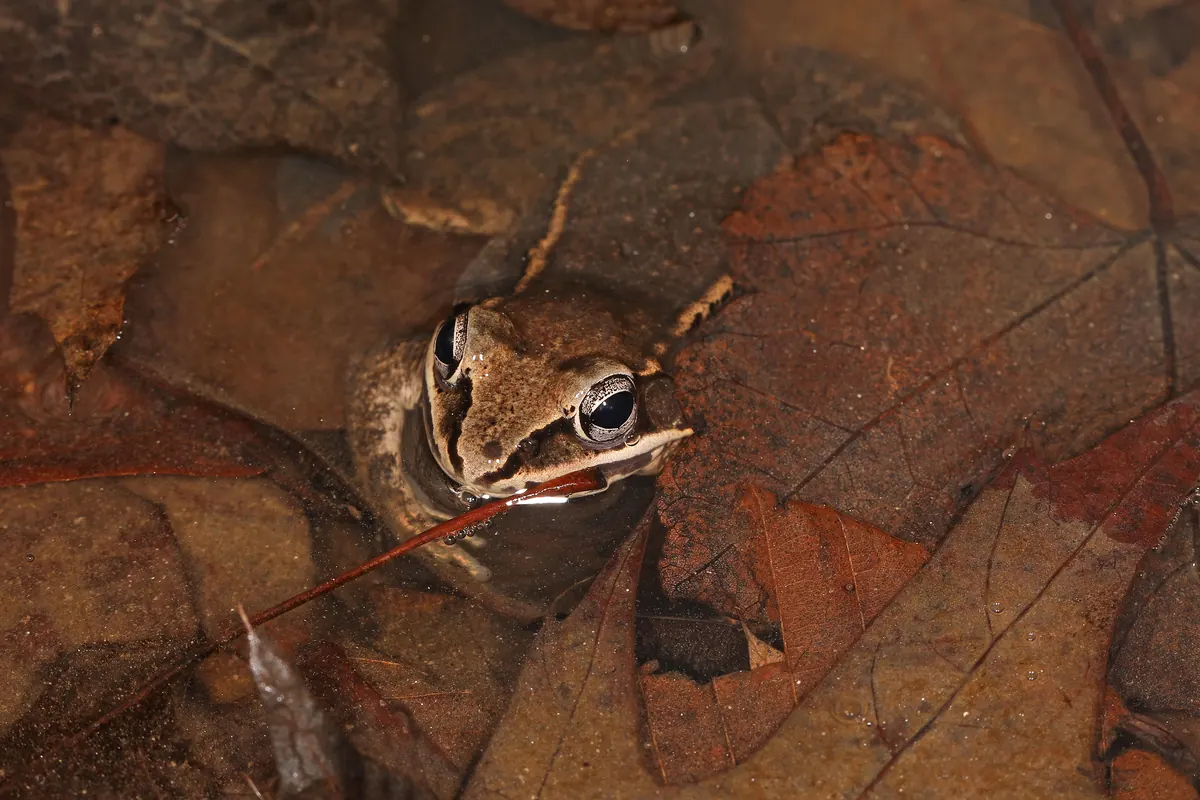
Wood frogs
February to April, often in a burst of a few nights · Woodland pools in northern, western and southwestern Virginia; the southeastern edge of the range is Hanover County, just northeast of Richmond
The Department of Wildlife Resources (DWR) calls wood frogs explosive breeders: they gather from February into April when air temperatures reach about 50 °F, and a whole pool can finish its season in a few nights. The call is a rough, clucking quack; a pool in full voice sounds like a flock of mallards gossiping under the leaves. Wood frogs are the most land-loving of the state’s true frogs and spend the winter under leaf litter on the forest floor.
Females lay their eggs together, by the thousands, in floating mats near the edge of shallow pools that dry out by summer, which keeps fish from eating them. If you find a pool with a mass of jelly the size of a dinner plate, look from the bank rather than wading in.
-
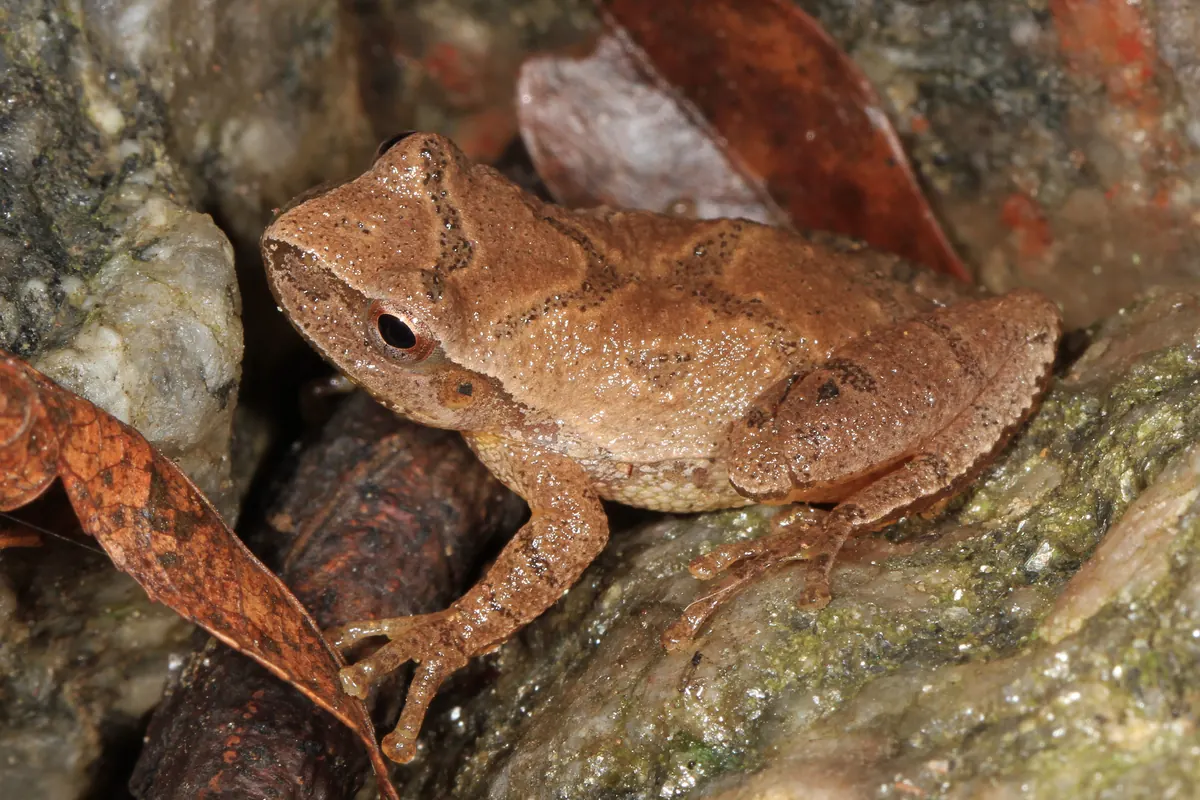
Spring peepers
Late February through June · Statewide, in wet meadows, roadside ditches, wooded swamps and small spring pools
These tan frogs are barely over an inch long and wear a dark X on the back, yet their high, single peep, repeated about once a second, carries for a long way. DWR notes that peepers begin breeding statewide from late February, set off by longer days and the first warm spells, and that they call mostly at night but also on cloudy, rainy afternoons. A cold snap shuts them up; the next mild evening brings them back. They are rarely seen outside the breeding season, so a flashlight held low over a ditch on a calling night is your best chance to catch one with its throat sac puffed out.
-
Upland chorus frogs
February to May · Mostly the Coastal Plain, with scattered records in the Piedmont and mountains
The call is a rising creek, repeated over and over, much like the sound of a fingernail dragged along a comb. Upland chorus frogs prefer open places to deep forest, such as flooded power-line cuts, farm fields, sinkhole ponds and ditches along country roads. DWR notes that they sometimes call when the air is below freezing, which makes them one of the first frog voices of the year in Tidewater and Southside.
Where can you see woodcock sky dances in Virginia?
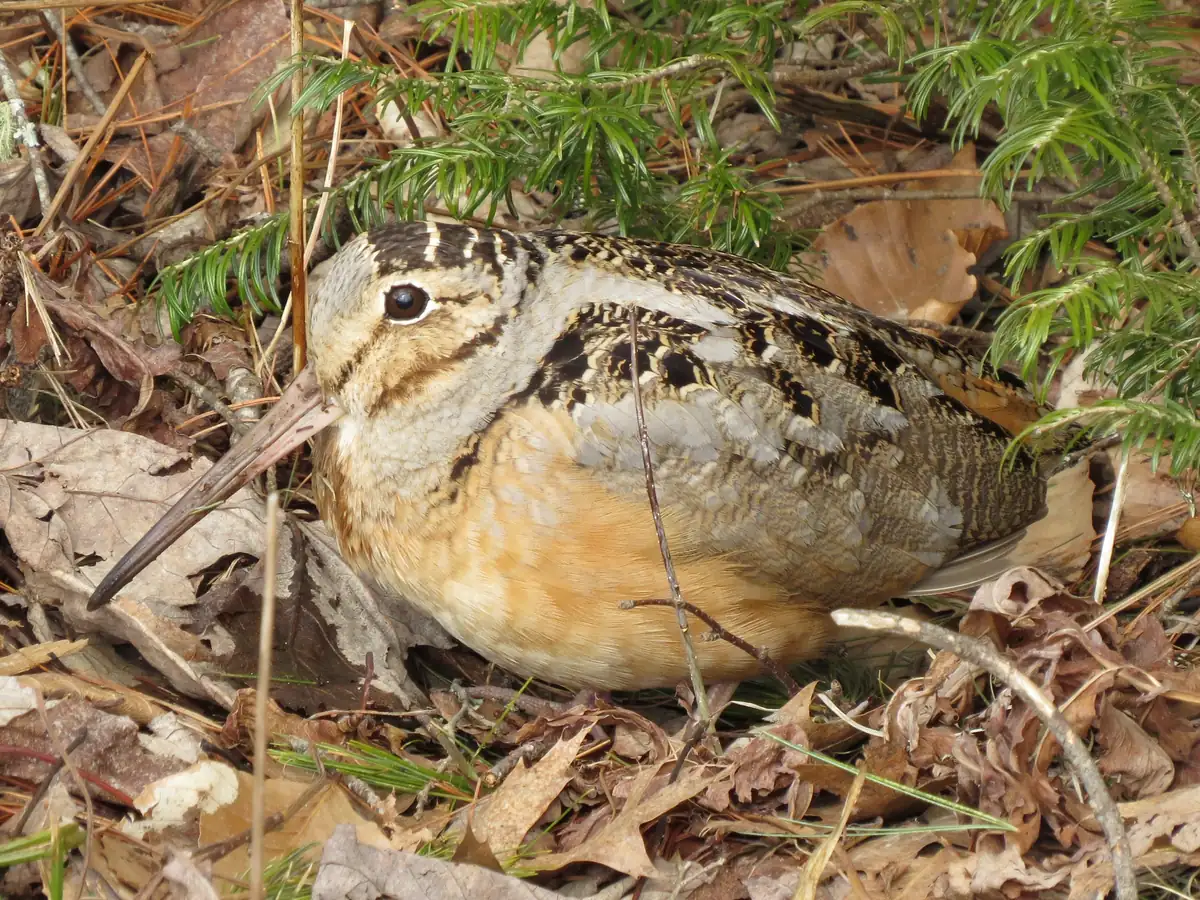
Over any brushy old field next to damp woods, at dusk, starting in late February. The American woodcock, a plump, long-billed shorebird that lives in the forest, is already in Virginia: some winter here, and DWR puts the peak of migration through the state in February and March.
-
The sky dance
Usually late February into March, in the half hour after sunset and before sunrise · Open fields, forest clearings and abandoned farmland near moist woods with earthworms
DWR describes the display this way: once the ground has thawed and the snow is gone, a male stands at the edge of a clearing and gives a short, nasal peent, again and again. Then he takes off in a silent, sloping climb that carries him hundreds of feet up, where air rushing through three narrow outer wing feathers makes a high twittering. At the top the twitter breaks into bursts, he starts chirping out loud, and he zigzags and loops back down, often landing close to where he started. Then the peenting begins again.
Powhatan State Park, west of Richmond, has held a ranger-led Woodcock Watch on a late-February Saturday evening the past two years; check the parks’ events calendar for 2027. On your own, to find one, walk or drive slowly past likely fields at dusk with the window down and listen. Once you hear peenting, stand still at the field edge with the western sky behind the bird; the climb is easiest to follow as a dark speck against the afterglow.
-
The earliest nests in the state
Eggs from mid-February on the Coastal Plain · Young woods and thickets near display fields
A DWR biologist, writing on the agency’s blog, gave the recorded egg dates for Virginia by region: February 11 to April 21 on the Coastal Plain, March 3 to May 20 in the Piedmont, and April 1 to May 18 in the mountains and valleys, adding that local observations in the southwest suggest some females there lay by late February or early March. Woodcock nest on the ground and the hen sits tight on her four eggs, trusting her dead-leaf camouflage, so keep dogs leashed in fields where birds are displaying.
Which Virginia birds are nesting in February, and which are on the move?
The big raptors are far ahead of everyone: most bald eagle pairs have eggs by mid-month. Smaller birds spend February choosing a site, the wintering swans start to drift north, and the first ospreys come back.
-
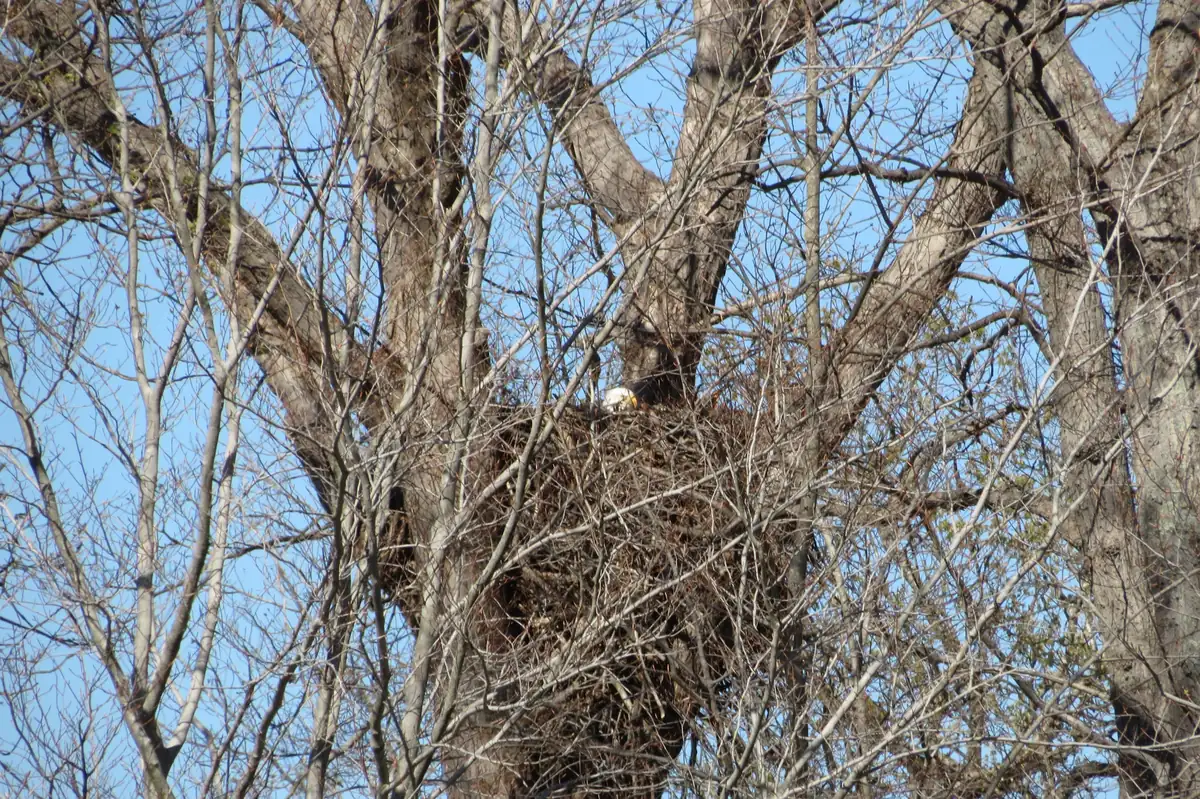
Bald eagles on eggs, and the survey planes
Incubation through February and March; first chicks from about early March · Big tidal rivers and their creeks, especially around the Potomac and Rappahannock
The Center for Conservation Biology (CCB) at William & Mary reports that along the James, most pairs have laid by mid-February. Incubation lasts about 35 days on average, both parents take turns, and the female usually takes the night shift. Eagles begin incubating with the first egg, so the chicks hatch a few days apart and the oldest gets a head start on its siblings. A nest that looks empty may not be: watch for a white head just showing over the rim, or the swap when one adult flies in and the other leaves.
Late February also brings the first of CCB’s two annual survey flights, in a small plane flown about 100 meters above the shorelines, to find occupied territories; the second round in late April and May counts the young. The survey began in 1956, and in 2016 it recorded 1,070 occupied breeding territories in 57 counties and 12 cities, up from about 20 pairs in 1970, with Westmoreland, King George and Essex counties holding the most.
-
Bluebirds and wood ducks house hunting
From February · Nest boxes, fence lines and wooded swamps
The Department of Forestry’s February field notes say bluebirds and wood ducks start inspecting nest cavities this month, mourning doves begin cooing and courting, and red-tailed hawks get ready to nest. If you have a bluebird box, clean out last year’s nest now, and watch for a male perched on the roof, flicking his wings at a female.
-
Tundra swans getting ready to go
Some leave as early as February; most by mid-March · The Great Marsh and Belmont Bay at Mason Neck, Back Bay, Chincoteague and other tidal marshes
Staff at Mason Neck State Park say some tundra swans can start north as early as February; in the year their biologist was asked, the flocks left in mid-March. The trip to breeding grounds between Alaska’s North Slope and Hudson Bay takes the swans several months, with stopovers to feed. On a calm morning, listen for the high, whooping woo-hoo that the Chesapeake Bay Program uses to describe their call; restless flocks call more and take short practice flights before they finally go.
-
The first ospreys
Experienced birds from late February or early March · Channel markers, duck blinds and old nest platforms around the Bay and the tidal rivers
The Chesapeake Bay Program notes that experienced breeders begin returning to their old nests in late February or early March, with younger birds later, and the Department of Forestry’s field notes likewise expect ospreys back from the Caribbean and courting by late February. Most Virginians notice them in early March, so a February osprey on a channel marker is worth writing down with the date. Purple martin scouts, the oldest birds of a colony, occasionally turn up at Virginia martin houses in the second half of February too; the Purple Martin Conservation Association’s scout-arrival map tracks them.
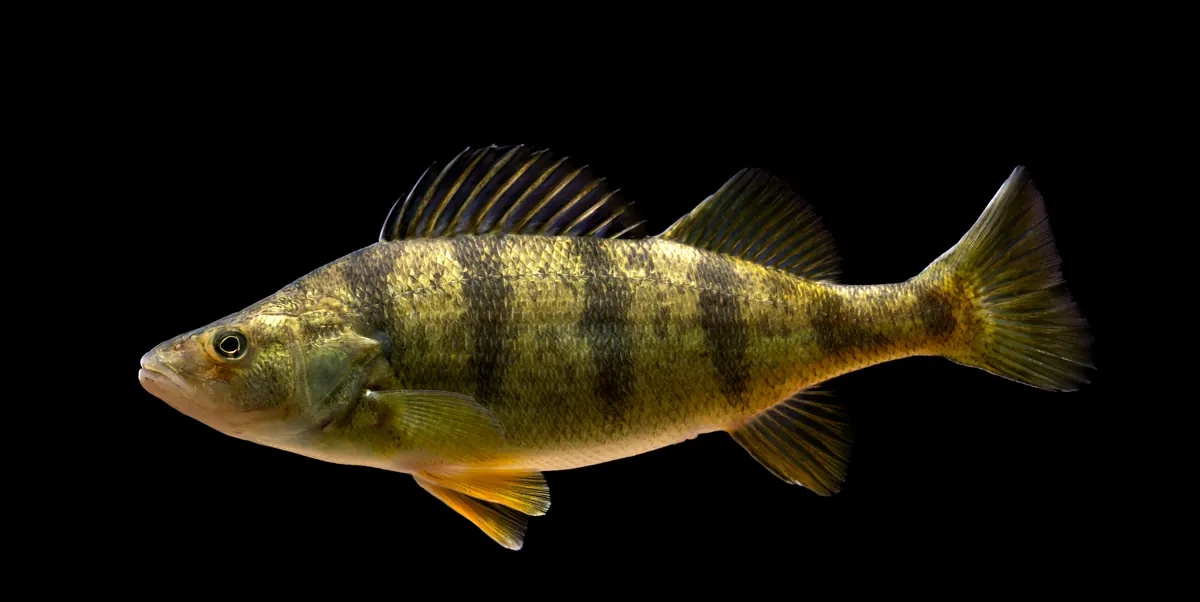
When is the yellow perch run in Virginia?
Late February into March, when the tidal rivers warm toward 45 to 50 °F. Yellow perch are among the first fish in Virginia to spawn each year, and they draw both anglers and herons to the upper ends of the tidal creeks.
-
The run upstream
Late February to mid-March · The Northwest River near Chesapeake first, then the Rappahannock, Potomac, Chickahominy and Nottoway tributaries
DWR says yellow perch start spawning in late February or early March as the days lengthen and the water nears 45 to 50 °F, and singles out the Northwest River, in southern Chesapeake, as one of the first rivers in the state with a run of big perch. On the tidal Rappahannock below Port Royal, the agency’s 2026 fishing forecast puts most of the action from the end of February through the first couple of weeks of March.
Most yellow perch are 6 to 8 inches long, and a big one reaches 14 or 15. Females lay their sticky eggs along the banks on fallen branches and other woody debris. If you fish, the minimum size in Virginia’s tidal rivers of the Bay is 9 inches.
Where does maple sap run in Virginia?
In Highland County, high in the mountains along the West Virginia line, which its chamber of commerce describes as home to the southernmost commercial maple syrup industry in the United States. Elevation gives the county the late-winter pattern sugarmakers need: sunny afternoons above freezing and hard frosts at night.
-
Sugar season in the high valleys
Mid-January through the end of March, depending on the weather · Sugar camps around Monterey, Blue Grass and Bolar in Highland County
The Highland County Chamber of Commerce says the maple season can run from mid-January through the end of March. Producers tap sugar maples and collect the sap in buckets or through plastic tubing, then boil it down in kettles, pans or evaporators. The sap is roughly 98 percent water, and it takes about 40 quarts of it to make a single quart of syrup; a good tree can give 20 quarts in 12 hours on a strong run.
It is a gamble every year. In 2026 one long-time camp closed for the festival’s final weekend after a short season of snow, ice and then a quick warm-up left its production down about half and its syrup sold out.
-
The Maple Festival, next month
March 13–14 and 20–21, 2027 · Countywide, Highland County
The 67th Highland County Maple Festival, the official maple festival of Virginia, is set for the second and third weekends of March 2027, with sugar camp tours, pancake and buckwheat breakfasts and a juried craft show. The sap itself runs now: a few camps welcome visitors outside the festival, so call ahead in February if you want to see an evaporator steaming. Pack boots and warm layers for the high valleys.
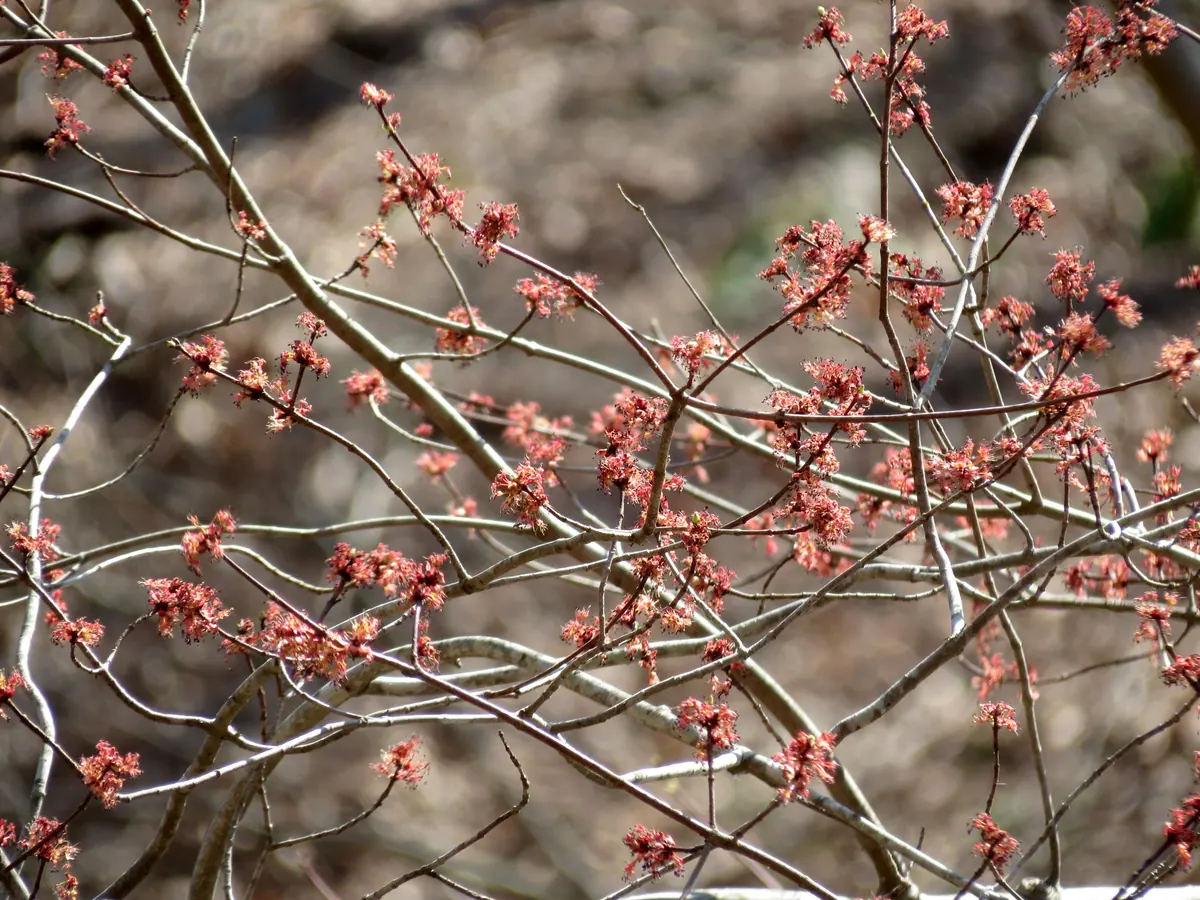
What is the first tree to flower in Virginia?
Red maple, in most of the state. By late February its tiny flowers put a red haze over swamps and road cuts while every other tree is still bare. Down at ground level, the year’s first wildflower is in full swing, though the big wave of woodland wildflowers, bloodroot, trout lily and hepatica among them, generally waits for March.
-
Red maple in flower
February in the east, later in the mountains · Swamps, bottomland woods, roadsides and yards statewide
A Department of Forestry area forester calls red maple one of the first native trees to burst into color in February, and Virginia Tech’s dendrology fact sheet describes its flowers as small hanging clusters, usually bright red but sometimes yellow, opening before the leaves. Look closely and you can tell the trees apart: red maple is polygamo-dioecious, meaning some trees are entirely male, some entirely female, and some carry both. Male flowers have long stamens dusted with pollen; female flowers show forked red styles that become the familiar helicopter seeds in late spring.
-
Skunk cabbage, now in earnest
Peak of bloom in February · Seeps and spring-fed creek bottoms, mostly in the Piedmont and mountains
In January a few hoods showed in mild spells. By mid-February, when the Department of Forestry usually expects bloom, whole seeps can be dotted with the mottled maroon hoods. On a frosty morning, look for the ring of bare mud the plant’s own warmth melts around it.
Are groundhogs really awake on Groundhog Day in Virginia?
Mostly not. DWR says Virginia’s woodchucks hibernate from October through February and mate around March, just after they come up. And February 2 (a Tuesday in 2027) slightly jumps the gun: winter’s astronomical midpoint, halfway from the December solstice to the spring equinox, comes on February 3–4. Several other mammals, though, are wide awake and courting.
-
Woodchucks under the ground
Hibernating through February; mating around March · Burrows along field edges, fence rows, road banks and suburban yards
Look for a big entrance with a fan of fresh dirt along a fence row or field edge. After a snowfall, no tracks at the hole means the owner is still asleep. Four or five young follow in April.
-
Striped skunks on the move
Breeding February and March · Farmland, woods edges and neighborhoods statewide
DWR gives the skunk breeding season as February to March, with two to ten young born in May. Skunks may den alone or share a winter den, and February’s courting animals are out and about on mild nights, so this is a month when you may smell one on a night drive. Give a skunk plenty of space; one stamping its front feet is warning you.
-
Coyotes and raccoons
Coyotes breed January and February; raccoons January to March · Statewide
Coyotes spread into Virginia from the west within living memory; among DWR’s early records is a male shot in Floyd County in 1983, and they now live throughout the state. They breed in January and February and the pups arrive in April and May, so this is a good month to hear pairs yipping after dark. Raccoons are in the middle of their own breeding season, and a Forestry technician’s field note suggests February mud along a stream bank as the place to find their hand-like prints.
How much daylight does Virginia gain in February?
Roughly an hour, from 58 minutes at Norfolk and Bristol to 64 at Winchester, and now the gain comes at both ends of the day. In Richmond sunset slides from 5:34 p.m. on the 1st to 6:02 p.m. on the 28th, the first 6 o’clock sunsets since October, and sunrise comes about half an hour earlier. Bristol, far to the west, has sunset at 6:22 p.m. by February 28.
| City | Feb 1 | Feb 28 | Gained | Per day |
|---|---|---|---|---|
| Winchester | 10 h 13 m | 11 h 17 m | 64 min | 2.4 min |
| Arlington | 10 h 15 m | 11 h 18 m | 63 min | 2.3 min |
| Charlottesville | 10 h 18 m | 11 h 19 m | 61 min | 2.3 min |
| Richmond | 10 h 20 m | 11 h 19 m | 59 min | 2.2 min |
| Roanoke | 10 h 21 m | 11 h 21 m | 60 min | 2.2 min |
| Norfolk | 10 h 23 m | 11 h 21 m | 58 min | 2.1 min |
| Chincoteague | 10 h 19 m | 11 h 19 m | 60 min | 2.2 min |
| Bristol | 10 h 23 m | 11 h 21 m | 58 min | 2.1 min |
The daily gain keeps climbing until about the March equinox, when the days are stretching at their quickest. Northern Virginia gains a few minutes more than the south because day length changes more quickly at higher latitudes. For any Virginia address, the daylight calculator lists sunrise and sunset for each day.
How snowy is February in Virginia, and what could El Niño do?
Snowier than you might expect. By the 1991–2020 normals, February snowfall edges out January’s at Reagan National, Dulles, Lynchburg and Roanoke, and Dulles averages 7 inches for the month, while Norfolk averages just 1.5. Highs run 3 to 4 degrees warmer than in January, and most stations are a little drier.
| Station | High (°F) | Low (°F) | Nights below 32 °F | Precipitation (in.) | Snowfall (in.) |
|---|---|---|---|---|---|
| Norfolk | 53.4 | 35.1 | 10.2 | 2.90 | 1.5 |
| Wallops Island (Eastern Shore) | 48.5 | 31.1 | 16.4 | 2.81 | 2.3 |
| Richmond | 51.6 | 30.4 | 17.3 | 2.61 | 2.2 |
| Washington (Reagan National), for Northern Virginia | 48.3 | 31.8 | 15.4 | 2.62 | 5.0 |
| Dulles Airport | 46.1 | 26.7 | 21.1 | 2.61 | 7.0 |
| Lynchburg | 49.6 | 28.0 | 19.4 | 2.91 | 3.6 |
| Roanoke | 50.8 | 30.8 | 17.2 | 2.89 | 4.8 |
| Bristol (Tri-Cities Airport, just over the Tennessee line) | 50.9 | 29.2 | 18.3 | 3.81 | 3.0 |
| Bluefield (Mercer County Airport, West Virginia) | 43.4 | 26.5 | 18.6 | 2.90 | 8.8 |
February has delivered some of northern Virginia’s deepest snows. In the record tables of the National Weather Service office in Sterling, the largest two-day snowfall ever measured at Dulles is 32.4 inches on February 5–6, 2010, and February storms in 1983, 2003 and 1979 also rank among its top ten. Both the 2010 and 2003 storms came in El Niño winters.
Going into this winter the tropical Pacific is warming fast, and government forecasters gave better than nine-to-one odds on September 10 that El Niño turns very strong. The Sterling office’s own review of El Niño winters since 1950 found that, around Washington and Baltimore, strong events have on average brought warmer and wetter Decembers through Februarys than normal. Snow is the wild card: in that record, four strong El Niño winters out of seven ran well above normal for snow, while the remaining three had almost none. The 2009–10 record winter, the office points out, came during a moderate event, not a strong one. The official seasonal outlook first appears on October 15 and is reissued each month; the Climate Prediction Center’s three-month outlook maps show the current lean for Virginia.
The forecast page covers the days ahead, and once you start planning the garden, our Virginia frost dates list each town’s usual date of the final spring frost.
What is in Virginia’s night sky in February 2027?
Two planets at opposition in one month, a Snow Moon that rises in partial shadow, and Mercury low at dusk. All times are Eastern Standard Time.
-
Jupiter at opposition
Wednesday, February 10, 7:21 p.m. · Rising in the east at sunset, high in the south around midnight, in Leo
Jupiter sits opposite the Sun this evening, so it rises at sunset and stays in the sky until dawn, shining at magnitude −2.5. Jupiter and Earth are nearest each other earlier that day, about 405 million miles apart. With binoculars propped on a fence post you may catch its four largest moons as pinpricks lined up beside the disk.
-
Mars at opposition
Friday, February 19 (closest to Earth on the 20th) · East at dusk, also in Leo, east of Jupiter
Mars reaches opposition on the 19th and comes nearest the following day, at about 63 million miles. This is a far-off opposition, because Mars is near aphelion, the outermost point of its orbit, so it gets only to magnitude −1.2 and shows a tiny disk through a telescope. Even so, its orange glow stands out clearly against cream-white Jupiter.
-
The Snow Moon and a faint eclipse
Full at 6:23 p.m. Saturday, February 20; eclipse 4:12 to 8:13 p.m., deepest at 6:13 p.m. · Low in the east at moonrise
This full moon grazes the faint outer zone of Earth’s shadow (a penumbral eclipse), and the eclipse is already in progress when it rises over Virginia: moonrise is 5:47 p.m. in Norfolk, 5:51 in Richmond and 6:12 in Bristol, the last almost exactly at the deepest point. Expect a faint smudge of gray along one side of the low, rising Moon in twilight, if anything at all; it is easy to miss entirely. Some almanacs call this a supermoon and others do not. The almost-full Moon passes very close to Jupiter during the night of February 19–20, and on the 20th it shares Leo with Jupiter, Mars and Regulus.
-
Mercury after sunset
Best in the first ten days of February · Low in the west-southwest, 30 to 45 minutes after sunset
Mercury is at its best evening elongation on Wednesday the 3rd, and on Sunday the 7th a day-old sliver of Moon hangs very near it after sunset; a clear western horizon and binoculars help. Before dawn, Venus shines brilliantly in the southeast throughout February.
| Phase | Date | Time |
|---|---|---|
| Last quarter | Friday, Jan 29 | 5:55 a.m. |
| New moon | Saturday, Feb 6 | 10:56 a.m. |
| First quarter | Sunday, Feb 14 | 2:58 a.m. |
| Full moon, the Snow Moon | Saturday, Feb 20 | 6:23 p.m. (penumbral eclipse at moonrise) |
| Last quarter | Sunday, Feb 28 | 12:16 a.m. |
| New moon | Monday, Mar 8 | 4:29 a.m. |
Around the new moon of Saturday the 6th, roughly February 2 to 11, the evenings are moonless and best for the winter Milky Way. The February 6 annular solar eclipse can be seen only from the far Southern Hemisphere and western Africa; none of it is visible in Virginia or elsewhere in the United States. Our moon calendar lists moonrise for your town, and the cloud outlook is worth a look before a night at the telescope.
What can Virginia families do outdoors in February 2027?
- Count birds for science, February 12–15. The 30th Great Backyard Bird Count, per Audubon, runs Friday through Presidents’ Day, Monday, February 15. Spend a quarter of an hour or more watching birds on any of those days, wherever you like, and enter the list in the eBird or Merlin app.
- Go on a frog walk. Wait for the first rainy evening above 50 °F, put on boots and headlamps, and visit a flooded ditch or woodland pool. Record the chorus and match it to DWR’s species pages at home.
- Watch a woodcock. Find an old field near damp woods, arrive 15 minutes before sunset late in the month, and stay until it is nearly dark. Powhatan State Park has run a ranger-led Woodcock Watch on a late-February Saturday in recent years; look for 2027’s date on the parks’ events calendar.
- Bird the Potomac shore. Widewater State Park, on Aquia Creek in Stafford County, has winter birding walks scheduled for the mornings of Tuesday, February 9, and Saturday, February 27, and a Junior Duck Stamp art and conservation session for students on the afternoon of Saturday, February 20.
- Look for whales. The Virginia Aquarium’s whale-watching boats keep sailing from Virginia Beach through the winter, searching for humpbacks, dolphins and seabirds; trips are weather-dependent and whales are not promised.
- Visit a sugar camp. Call a Highland County producer to ask whether the sap is running, or save the trip for the Maple Festival on March 13–14 or 20–21.
Weather can cancel winter programs at short notice, so confirm with the park or organizer first. The nature guides index collects all our state months, including January in Virginia.
Safety notes for February in Virginia
- Deer hunting is not over everywhere. The urban archery season for antlerless deer runs January 3 to March 28, 2027, inside participating cities and towns (among them Richmond, Lynchburg, Charlottesville, Harrisonburg, Newport News and Suffolk) and in Chesterfield, Fairfax, James City, Prince William, Roanoke, Stafford and York counties, with some exclusions. A late antlerless-only firearms season also continues to March 28 in four Northern Virginia counties, Arlington, Fairfax, Loudoun and Prince William, and the towns and cities within them, plus private land in nineteen other counties, among them Frederick, Culpeper, Montgomery, Hanover and York.
- Blaze orange or pink. Virginia’s rule for any firearms deer season: hunters, and whoever accompanies them, need a solid blaze orange or pink hat or top that is visible all the way around, or 100 square inches of blaze material displayed at shoulder height. In February that applies wherever the late antlerless season is open; waterfowl hunters are exempt. Hikers on public hunting land do well to wear something bright anyway, and Sunday hunting is legal in the state.
- Other seasons open this month. Resident Canada geese to February 21; light geese (snow geese) to March 10; a Youth and Veterans Waterfowl Hunting Day on Saturday, February 6; ruffed grouse west of I-95 to February 13; rabbits and gray and red squirrels to February 28; crows on Mondays, Wednesdays, Fridays and Saturdays to March 19. Trapping seasons for beaver, bobcat, red and gray foxes, mink, muskrat, opossum, otter, raccoon and weasel all close February 28, and coyotes are open year-round.
- The 4 p.m. burning law starts February 15. From February 15 through April 30, Virginia law forbids setting fire to brush, leaves, grass or debris in or within 300 feet of woodland before 4 p.m. Dry leaves, low humidity and gusty winds make late winter the start of the spring wildfire season.
- Storms, snow and ice. A February nor’easter can bring heavy snow inland, high tides and flooding on the coast, and ice on the roads in between. Skyline Drive in Shenandoah National Park closes in snow and ice. Keep off frozen ponds; Virginia ice is rarely thick enough to trust, and February rivers are cold enough that perch anglers and paddlers should wear a life jacket.
- Wet nights on the road. On the first warm, rainy nights, frogs and salamanders cross roads near wetlands. Drive slowly near wetlands, and anyone who stops to carry animals across should wear something reflective.
- Give nesting birds room. Eagles and owls on eggs should never be flushed. View nests from well back, and do not linger under a nest tree.
Sources
- Virginia DWR: spring peeper
- Virginia DWR blog: looking forward to spring peepers
- Virginia DWR: wood frog
- Virginia DWR: upland chorus frog
- Virginia DWR: spotted salamander
- Virginia DWR blog: listen for the peent to view timberdoodles in flight
- Virginia DWR blog: American woodcock, the forest species few have seen
- Virginia State Parks: Woodcock Watch at Powhatan State Park (February 21, 2026)
- Virginia State Parks: woodcock bird watching at Powhatan State Park (February 22, 2025)
- Center for Conservation Biology: facts about Virginia eagles
- Center for Conservation Biology: Virginia bald eagle annual survey
- Center for Conservation Biology: Virginia bald eagle breeding population exceeds 1,000 pairs (2016)
- Virginia Department of Forestry: springtime in February?
- Virginia State Parks blog: come see the swans at Mason Neck State Park
- Chesapeake Bay Program field guide: tundra swan
- Chesapeake Bay Program field guide: osprey
- Purple Martin Conservation Association: purple martin timeline
- Gazette-Journal: purple martins return to Virginia
- Virginia DWR blog: ISO trophy yellow perch?
- Virginia DWR: 2026 tidal rivers fishing forecast
- Highland County Chamber of Commerce: Highland County Maple Festival
- Highland County Chamber of Commerce: Virginia Maple Syrup Trail
- Virginia Department of Forestry: signs of spring (red maple)
- Virginia Department of Forestry: wake up, seedlings!
- Virginia Tech Dendrology: red maple fact sheet
- Virginia Department of Forestry: the smell of spring (skunk cabbage)
- Northern Virginia Soil and Water Conservation District: early spring ephemeral wildflowers
- Virginia DWR: woodchuck
- Virginia DWR: striped skunk
- Virginia DWR: coyote
- Virginia Department of Forestry: field notes, February 2018 (raccoon tracks)
- U.S. Naval Observatory: Earth’s seasons and apsides, 2027
- NOAA NCEI: 1991–2020 monthly normals for Virginia stations (data API)
- NWS Baltimore/Washington: top snowstorms at Washington, Baltimore and Dulles
- NWS Baltimore/Washington: El Niño and DC/Baltimore winters
- Climate Prediction Center: Oceanic Niño Index
- Climate Prediction Center: ENSO diagnostic discussion, September 10, 2026
- Climate Prediction Center: 90-day outlooks
- U.S. Naval Observatory: moon phases, December 2026 to March 2027 (data API)
- U.S. Naval Observatory: moonrise and moonset, Richmond, February 20, 2027 (data API)
- Fred Espenak: Sky Event Almanac 2027
- NASA Goddard: lunar eclipses, 2021 to 2030
- NASA Goddard: solar eclipses, 2021 to 2030
- EarthSky: Jupiter at opposition
- SEDS: the 2027 opposition of Mars
- Old Farmer’s Almanac: eclipses
- Audubon: the Great Backyard Bird Count, February 12–15, 2027
- Virginia State Parks: events calendar, February 2027
- Virginia Aquarium: boat tours
- Virginia DWR: 2026–27 deer seasons
- Virginia DWR: 2026–27 migratory game bird seasons
- Virginia DWR: small game seasons
- Virginia DWR: furbearer trapping seasons
- Virginia DWR: general hunting regulations (blaze color, Sunday hunting)
- Virginia Department of Forestry: fire laws (4 PM Burning Law)
- Code of Virginia § 10.1-1142: regulation of fires in or near forest land
- National Park Service: Shenandoah in winter
- Photos via Wikimedia Commons; licenses and photographers are credited under each picture
