What to look for in nature in Virginia this May
May is when Virginia finishes turning green and the wildlife gets down to the business of raising young. In the mountains the forest canopy closes over a crowd of nesting warblers, tanagers and thrushes, and pink azaleas open along Skyline Drive. On the coast, hundreds of thousands of shorebirds pass through the barrier islands, horseshoe crabs come ashore on high tides, and the Chesapeake Bay fills with the first striped bass anglers, blue crabs and cownose rays. Turtles wander across back roads, bullfrogs begin calling, and white-tailed does hide their spotted fawns in the grass. The sky has its own appointments: the Eta Aquariid meteors on moonless mornings around May 6, a Flower Moon on the 20th that earns the seasonal Blue Moon label, and little Mercury hugging the western horizon at dusk near the end. Everything below is arranged region by region, from the Clinch Mountain highlands to the Eastern Shore.
Other months in Virginia: October, November, December, January, February, March, April.
Start here
- Learn one warbler song before you go out. The woods are loud at dawn and the singers hide in new leaves. Pick one species from the Virginia Department of Wildlife Resources (DWR) list, learn its song from a recording, and listen for it from a trail or park bench in the first hour of daylight.
- Slow down for turtles and leave fawns where they are. DWR says May and June are the busiest months for turtles on Virginia roads, and that fawns found alone are almost never orphaned. The best help you can give is a careful drive and a respectful distance.
- Look up on the morning of May 6. The Eta Aquariid meteors peak around a new moon this year, so the sky is dark. Plan on a lawn chair and a blanket in the last hour or two before dawn, and expect a modest number of meteors rather than a storm.
May suits the Naturalist’s Field Journal on its nest observed plate, where you can follow one robin, bluebird or wren nest from the first twigs to the empty cup, and on the same the place twice plate if you photograph or sketch one woodland trail every week as it closes over. The mammal watch plate is the right place to log a fawn sighting from a distance, and the colours of the day plate takes the pink of an azalea hillside or a sunrise ahead of the Eta Aquariids.
Regions used below: Southwest Virginia and the Blue Ridge; Shenandoah Valley; Northern Virginia; Central Virginia and the Piedmont; Southside; Tidewater and Hampton Roads; Eastern Shore.
Which warblers, tanagers and hummingbirds can you find in Virginia in May?
Most of them are on territory by now, and singing. DWR says about 34 warbler species come through Virginia each year, and its advice for watching them is to go out early and listen. In May the question shifts away from who is merely passing and toward who is setting up a nest, and the mountains answer differently from the swamps. Shenandoah National Park counts more than 190 species of resident and transient birds, about half of which breed there, including 18 species of warblers.
With the trees in full leaf, your ears will do most of the work. Warblers feed high and move constantly, so a single recognized song is worth ten glimpses.
-
Cerulean warblers in the southwestern highlands
Spring migration and the start of nesting · Clinch Mountain Wildlife Management Area and the Mount Rogers area
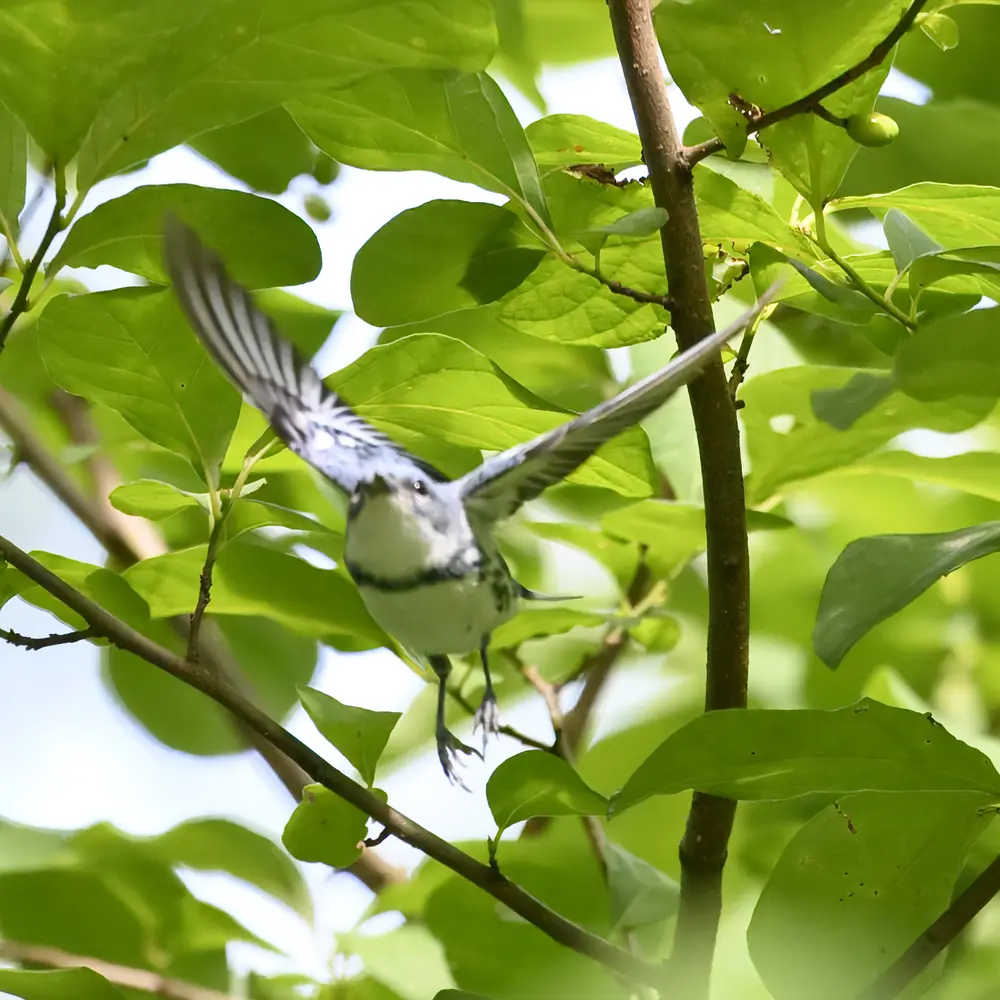
DWR names Clinch Mountain and Mount Rogers as places to look for cerulean warblers in Southwest Virginia. The birds sit near the tops of tall hardwoods, which is the hard part. Shenandoah National Park notes that cerulean warblers have declined because forest habitat has been lost, but that a visitor may still find one. Go at first light, stand still under big trees on a ridge, and listen for a buzzy song rising at the end before you lift your binoculars.
-
Breeding warblers and scarlet tanagers on the Blue Ridge
On territory through the month · Skyline Drive overlooks, Big Meadows and the trails of Shenandoah National Park
The park says its position on the Blue Ridge crest makes it important for long-distance migrants, both as a corridor and as nesting ground. It describes the scarlet tanager as a bird that stays in the upper canopy and is seldom seen, and says Big Meadows supports some birds found nowhere else in the park. The park says its elevations are usually cooler than the lowlands by 10 to 20 degrees, so spring there trails the Piedmont, and its May average is about 55 degrees.
-
Prothonotary and Swainson’s warblers in the swamps
Spring migration and the nesting season · James River Park in Richmond and Great Dismal Swamp National Wildlife Refuge
DWR points to James River Park for prothonotary warblers and to Great Dismal Swamp for Swainson’s warblers. The refuge itself describes spring as a time of moderate weather with few insects, and says that its trails are mostly earthen roads that may be muddy, so wear boots. It lists October through May as the best months for hiking, which puts May at the end of the comfortable season before summer heat and biting insects arrive.
-
Hummingbirds at the feeder
Present from spring through early autumn · Gardens, porches and forest edges statewide
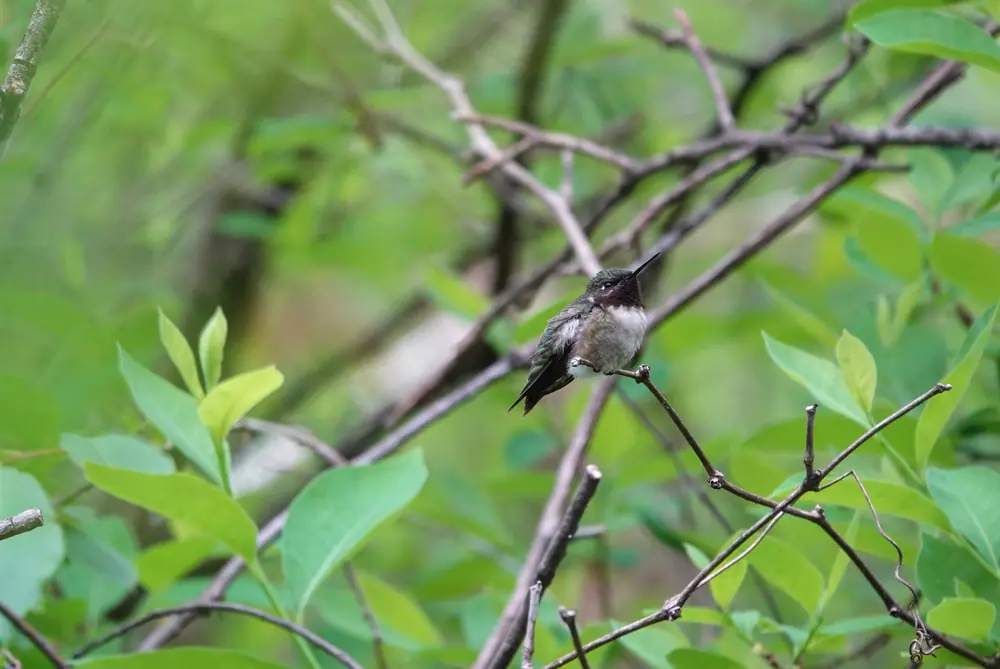
The Chesapeake Bay Program says the ruby-throated hummingbird visits the region from spring through autumn. After courtship the female builds a tiny nest in a tree above an open area, usually lays two eggs, and incubates them for 10 to 14 days. Chicks leave the nest 18 to 22 days after hatching. Journey North keeps sighting maps that show how far north the birds have reached, and it welcomes reports. If you hang a feeder, clean it often and keep it where a window will not mislead a bird.
For where to look, DWR’s Virginia Birding and Wildlife Trail lists sites in each region. The April page covers the arrival of the first migrants.
Why is May a big month for shorebirds, horseshoe crabs and striped bass on Virginia’s coast?
Because the barrier islands, bay and ocean all peak at once. The Nature Conservancy (TNC) says that in spring and late summer the beaches, marshes and mudflats of the Virginia Coast Reserve fill with hundreds of thousands of migrating shorebirds. Chincoteague National Wildlife Refuge says that in April and May a variety of migratory shorebirds and songbirds arrive on the refuge.
-
Red knots and whimbrels on the barrier islands
Spring stopover; the sources we read give no peak dates · The Eastern Shore’s barrier islands, marshes and mudflats, best seen by boat tour or from Chincoteague and Eastern Shore of Virginia refuges
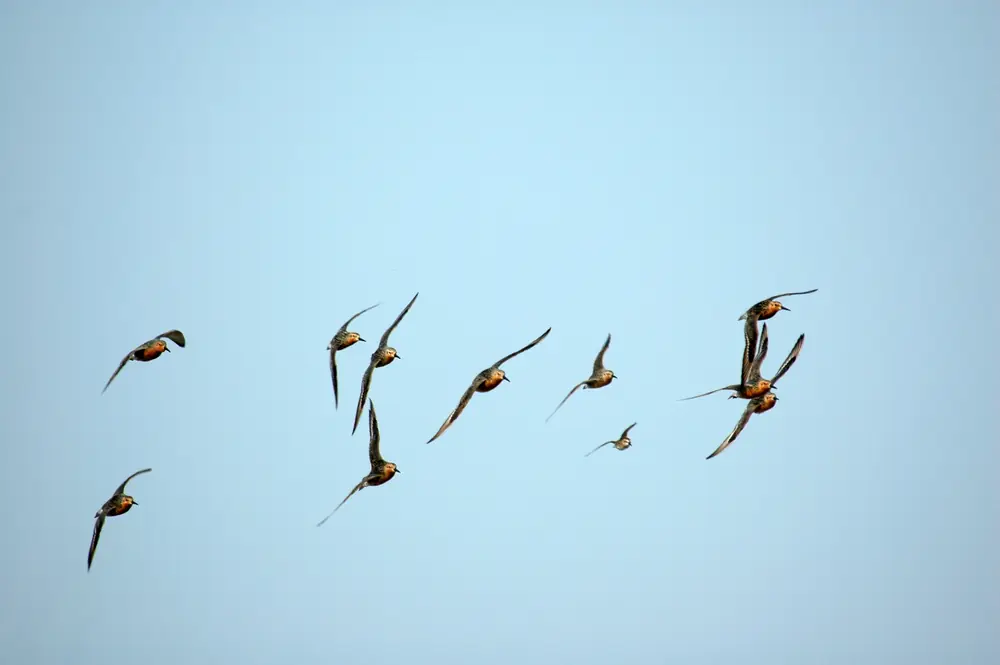
TNC reports that the Virginia Coast Reserve holds the second-biggest gathering of passing red knots anywhere in the country, and that whimbrels may fly more than 4,000 miles between Arctic nesting grounds and wintering areas in the Caribbean and South America. The Conservancy’s page does not give May counts or peak dates, so treat the month as a window and ask a refuge office or local bird club what is being seen. Keep well back: these birds are fattening for a very long flight, and disturbance costs them energy.
-
Horseshoe crabs spawning on beaches
Peak in May and June, on evening high tides near the new and full moons · Sandy shores of the lower and middle Chesapeake Bay
The Chesapeake Bay Program says horseshoe crabs spawn in spring and summer, peaking in May and June, usually on evening high tides when the Moon is full or new. A female may lay clusters of about 4,000 eggs near the high-tide line and come back on later tides. Shorebirds eat the eggs, and so do fish and sea turtles. In 2027 the new moon arrives May 6 and the full moon May 20, which makes the days around those two dates the best bet for a quiet bay beach. The Program’s page does not single out Virginia beaches, so choose a public sandy shore and go at dusk.
-
Striped bass, blue crabs and cownose rays
Striped bass in the Chesapeake Bay: May 16 to June 15 under the rules we read; crabs and rays present all month · The Chesapeake Bay and its tributaries; Virginia’s coastal waters for the ocean season
The Virginia Marine Resources Commission’s recreational rules (the 2026 version when we read them) list a Bay spring striped bass season from May 16 through June 15, one fish per angler in a 19- to 24-inch slot, and an ocean season starting May 16 with a 28- to 31-inch slot. Circle hooks are required with bait. The page showed no open season for May 1 to 15, and the rules change, so confirm the 2027 version before you fish. Cobia open on June 15, after this month ends.
On the water, the Bay Program says blue crabs mate from May through October, and cownose rays visit the lower and middle Bay from May to October. Their fin tips can break the surface and look like a shark’s fin, which explains many shark reports.
Beach-nesting terns, skimmers and plovers continue their season: TNC lists April through August for the island nesting birds, and Chincoteague closes the southern end of its island to the public from March 15 to protect plover habitat. Treat any rope or sign on a beach as a nursery boundary.
Which turtles and frogs are on the move in Virginia in May?
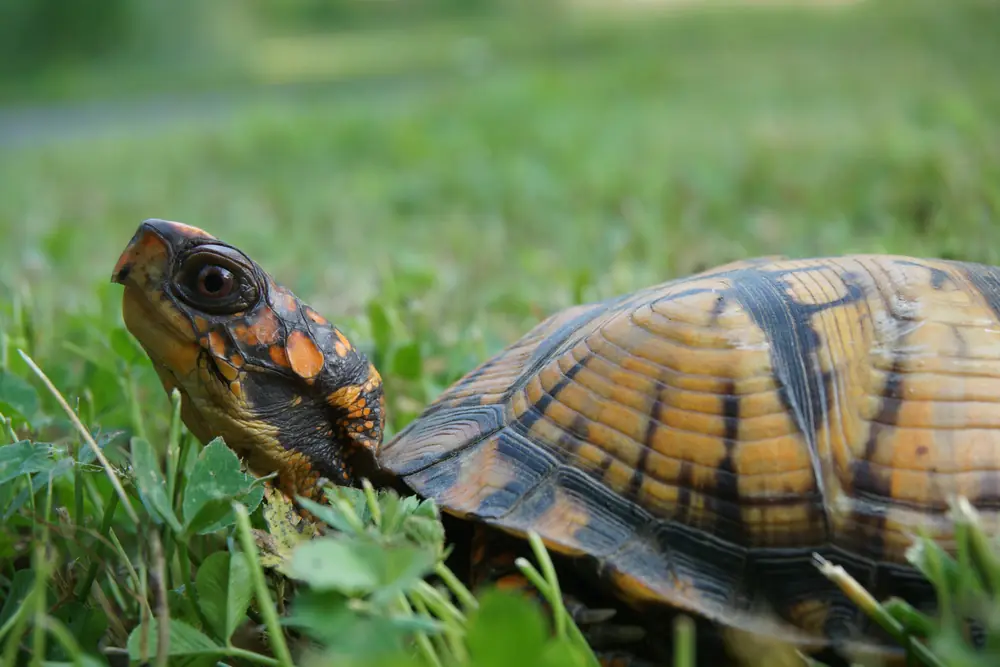
Turtles first, because they are the ones you will meet on pavement. DWR’s blog on turtles and drivers says May and June are the peak months for turtles crossing Virginia roads, and that thousands are killed each year. At the same time, the frog chorus changes cast, with the early singers fading and the summer voices taking over.
-
Eastern box turtles looking for nesting sites
Nesting from late May through July · Woodland edges, fields, gardens and the roads that cross them
DWR says box turtles come out of winter dormancy in early spring and stay active until late fall, and that nesting runs from late May through July, with 2 to 7 eggs per nest. If you stop to help one cross, DWR’s advice is to pull over only where it is safe and to move it to the roadside it was already facing. Never relocate one to a new neighborhood: a box turtle spends its life in a small home range.
-
Diamondback terrapins on Bay beaches
Mating in May, nesting after · Brackish marshes, beaches and tidal creeks of the Chesapeake Bay and the Eastern Shore
The Chesapeake Bay Program’s field guide says terrapin mating usually happens at night in May, after which females come ashore and dig a shallow nest in the sand, with eggs taking 60 to 100 days to hatch. It lists predators, habitat loss, boat propellers and crab pot entrapment among the threats. A terrapin on a sandy road shoulder near a marsh in late spring is probably a nesting female.
-
Loggerhead sea turtles at the start of the season
DWR gives a breeding season of April to August · Barrier-island beaches
The DWR species page for the loggerhead says nearly all nesting sites in the United States are on barrier islands, with a breeding season of April to August, 55 to 70 days of incubation and 2 to 3 nests per female. It does not give Virginia counts or say what to do if you find a nest. If you see a track, a nest marker or a stranded turtle, keep your distance and ask the refuge or beach office for the right number to call.
-
Bullfrogs, green frogs and the summer chorus
Bullfrogs and green frogs call May to August; spring peepers through June · Farm ponds, lake edges, ditches and slow streams
The Virginia Herpetological Society’s guide gives the North American bullfrog and the green frog a calling season of May to August, Fowler’s toad and Cope’s gray treefrog April to August, the eastern narrow-mouthed toad May to September, and the spring peeper February to June. The pickerel frog, listed for April and May, is nearly done. A pond at dusk now has several overlapping voices, which is a good test for a beginner with a recording app.
The refuge at Great Dismal Swamp notes that young turtles cross roads around dusk and dawn, so slow down on wooded back roads at those hours. See the April page for the earlier amphibians.
What should you do about a fawn alone in the grass, and what are turkeys and fireflies doing in May?
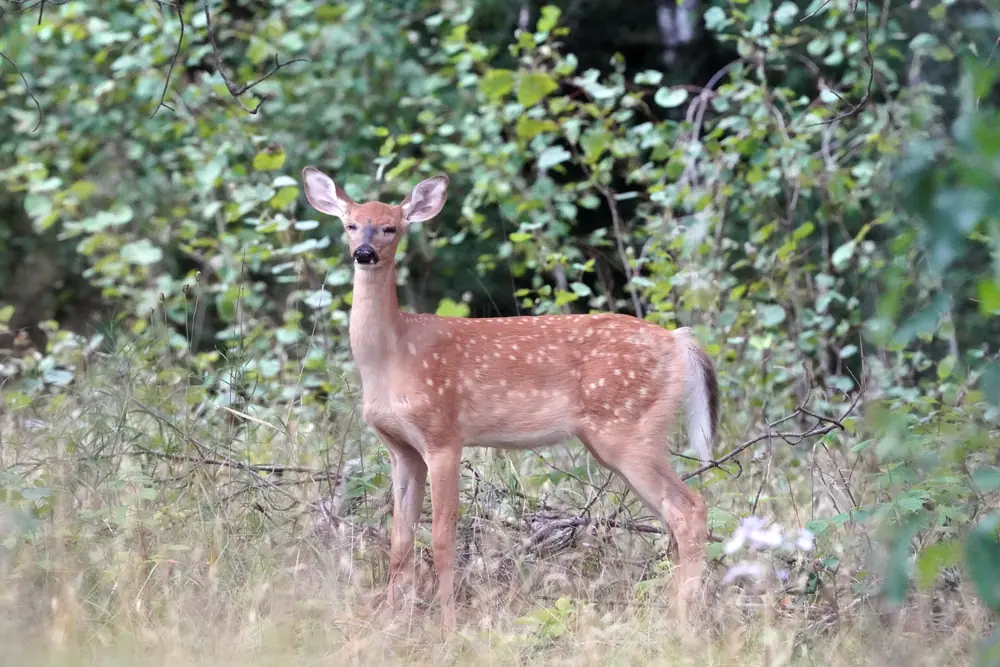
For fawns, nothing. DWR says fawns, born from May through July, are purposely left alone by their mothers, and that most fawns found alone are not orphaned.
-
White-tailed fawns
Born May through July · Tall grass, field edges and yards statewide
The doe stays away to avoid leading predators to her young, and she comes back only a few minutes at a time, several times a day. The spotted coat blends into vegetation and a fawn will not usually run. DWR asks people to give the animal space. If it is injured or clearly orphaned, phone the DWR wildlife conflict helpline, 1-855-571-9003 (weekdays only, per the release), or use DWR’s site to locate a permitted rehabilitator, because only permitted rehabilitators can legally raise fawns. Keep dogs leashed near mown field edges.
-
Wild turkeys
Gobbling usually peaks around the turn from April to May, then fades · Field edges and woods statewide
A DWR blog about the spring gobbler season puts the gobbling peak at the turn from April into May, though it may come sooner, and that one-year-old hens may stay with gobblers well into May. A few days after a warm, calm dawn you may see hens leading small groups along woodland roads. The same blog is from 2019, so treat its timing as typical, not as a forecast for 2027.
-
Fireflies
Warm evenings from late spring; the sources we read give no dates for Virginia · Meadows, forest edges and lawns that are left unlit
The Xerces Society says not all fireflies flash and that some are active by day, and it names light pollution, pesticides and lost habitat as threats. Its advice includes switching off outdoor lights at night and joining community science projects that follow fireflies. Look at dusk on a mild, humid evening, and use your own notes to find the date they start in your yard.
Mother animals are everywhere in May. If you are unsure, watch from a distance for a while before concluding that a young animal needs help.
What blooms in Virginia’s mountains in May, from pink azaleas to lady’s slippers?
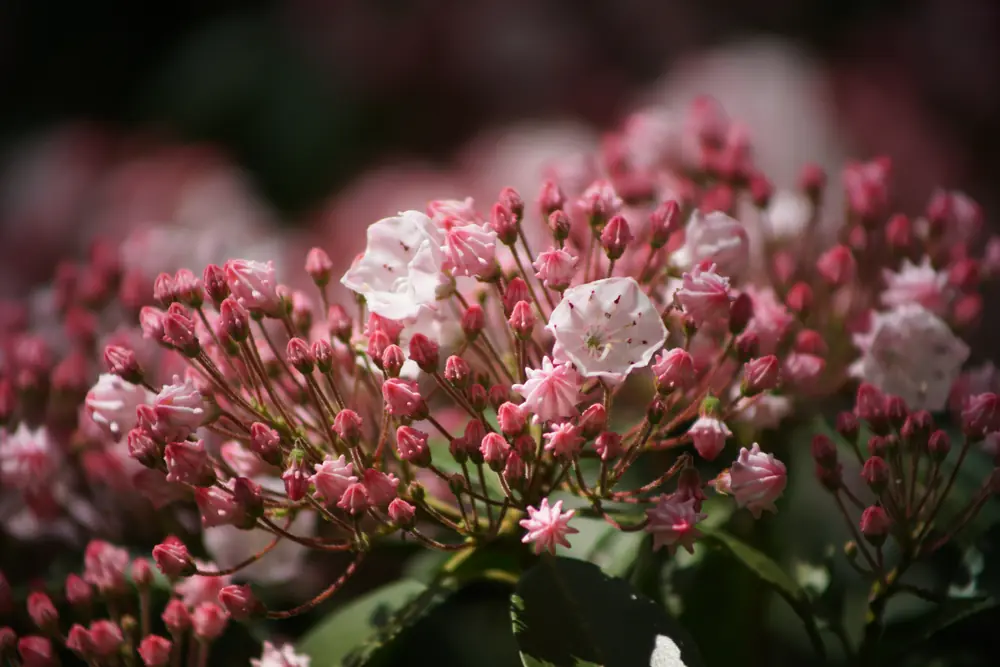
The high country is a few weeks behind the lowlands, so May is its main bloom month. Shenandoah National Park’s wildflower page says May is the time for pink azaleas to bloom in the forest and along Skyline Drive, with mountain laurel following in June.
-
Pink azaleas along Skyline Drive
May, according to the national park · Forest and roadsides along Skyline Drive, Shenandoah National Park
The park does not give a day-by-day date and says the high country can still see snow in spring. Check its alerts for road conditions, and use the park’s wildflower calendar to see what else is open. A Wildflower Weekend ran on May 2 and 3 in 2026, but we saw no 2027 dates, so ask the park.
-
Pink lady’s slipper
Flowers generally between May and July (U.S. Forest Service) · Acidic, well-drained woodland under pine, hemlock and hardwoods
The Forest Service says this orchid depends on a soil fungus and takes many years to go from seed to a mature plant, and it adds that taking wild roots for the trade cannot be sustained. Look and photograph, and never dig one up for the garden.
-
Mountain laurel and rhododendron
Mountain laurel follows the azaleas in the national park in June; no bloom date for Grayson Highlands · Shenandoah National Park; Grayson Highlands State Park in the southwest
Grayson Highlands State Park has a Rhododendron Trail and says its nature programs run from mid-May through mid-October, but its page does not give bloom dates. Call the park office at 276-579-7092 before driving for the flowers. Its wild ponies are real animals that can bite and kick; do not feed them or approach.
If you are in the Piedmont instead, the early flowers have gone to seed and the shade is deepening. Our April page covers the bluebells, redbud and dogwood.
When is the last spring freeze in Virginia, and can a freeze still happen in May?
Rarely, and only in the mountains and the northwest. By NOAA’s 1991–2020 normals, the middle spring has its last 32-degree night in March at Norfolk and Washington, in early April at Richmond, Roanoke and Charlottesville, and on April 21 at Abingdon, the latest station listed. One spring in ten, Abingdon still dips to freezing on or after May 10. The May normals show 0.2 nights at or below freezing at Dulles, Lynchburg and Bristol, and 0.3 at Bluefield, West Virginia.
| Station | One year in ten | Median | Nine years in ten |
|---|---|---|---|
| Abingdon 3S | Apr 5 | Apr 21 | May 10 |
| Roanoke Rgnl Ap | Mar 19 | Apr 3 | Apr 18 |
| Winchester | Mar 30 | Apr 11 | Apr 29 |
| Fredericksburg Sewage | Mar 23 | Apr 6 | Apr 22 |
| Richmond Intl Ap | Mar 19 | Apr 3 | Apr 18 |
| Charlottesville Ap | Mar 19 | Apr 3 | Apr 23 |
| Norfolk Intl Ap | Feb 27 | Mar 17 | Mar 31 |
| Washington Reagan Ap | Mar 7 | Mar 24 | Apr 6 |
The gardener’s rule is to wait until the nine-in-ten date has passed before putting out tomatoes and other tender plants. For a specific town, use the frost dates for Virginia page.
How much daylight does Virginia gain in May?
Roughly 50 minutes between the first and last day. The gain keeps shrinking as the June solstice nears, and every city listed is picking up close to 1.6 or 1.7 minutes of light daily. The clocks changed on March 14, so these figures, which measure sunrise to sunset, are not affected.
Remember that the latest sunsets of the year come in late June, not at the solstice itself. For clock times in one town, try the daylight page.
| City | May 1 | May 31 | Gained | Per day |
|---|---|---|---|---|
| Winchester | 13 h 52 m | 14 h 43 m | 51 min | 1.7 min |
| Arlington | 13 h 50 m | 14 h 42 m | 52 min | 1.7 min |
| Charlottesville | 13 h 47 m | 14 h 37 m | 50 min | 1.7 min |
| Richmond | 13 h 45 m | 14 h 34 m | 49 min | 1.6 min |
| Roanoke | 13 h 44 m | 14 h 33 m | 49 min | 1.6 min |
| Norfolk | 13 h 43 m | 14 h 30 m | 47 min | 1.6 min |
| Chincoteague | 13 h 46 m | 14 h 36 m | 50 min | 1.7 min |
| Bristol | 13 h 42 m | 14 h 29 m | 47 min | 1.6 min |
What is May weather like in Virginia, and what are the hazards?
Warm, green and increasingly humid. NOAA’s 1991–2020 normals put May highs at about 77 degrees in Richmond, Norfolk and Roanoke, near 73 on the Eastern Shore and near 70 at Bluefield, West Virginia, the nearest long-record station to the Southwest highlands. Nights are mostly in the 50s, and monthly precipitation runs about 3 to 5 inches. There is no normal snow anywhere on the table.
-
Thunderstorms and tornadoes
Any afternoon or evening in the month · Statewide
Virginia Places, a state geography site, says Virginia’s tornadoes peak in April and again late in summer and that storms crossing the Appalachians can produce locally heavy rain. It gives no May figure, so we do not either. Have a way to receive warnings, and know where your safest room is.
-
Open burning after April 30
The 4 p.m. burn law ends April 30 · Statewide
The Department of Forestry says the 4 p.m. Burning Law is in effect from February 15 to April 30. In May that statewide rule is over, but local ordinances and common sense still apply on dry, windy days. Never leave a fire alone.
-
Late freezes in the highlands
Rare after May 10 · Southwest highlands and the high valleys
See the freeze table above. Abingdon’s nine-in-ten date is May 10, so a few springs still bring a late frost to gardens there.
| Station | High (°F) | Low (°F) | Nights below 32 °F | Precipitation (in.) | Snowfall (in.) |
|---|---|---|---|---|---|
| Norfolk | 77.4 | 59.1 | 0.0 | 3.78 | 0.0 |
| Wallops Island (Eastern Shore) | 72.7 | 55.5 | 0.0 | 3.20 | 0.0 |
| Richmond | 77.8 | 55.7 | 0.0 | 4.00 | 0.0 |
| Washington (Reagan National), for Northern Virginia | 76.5 | 58.0 | 0.0 | 3.94 | 0.0 |
| Dulles Airport | 75.0 | 53.0 | 0.2 | 4.72 | 0.0 |
| Lynchburg | 75.9 | 52.5 | 0.2 | 3.98 | 0.0 |
| Roanoke | 77.2 | 55.0 | 0.0 | 4.31 | 0.0 |
| Bristol (Tri-Cities Airport, just over the Tennessee line) | 77.1 | 52.3 | 0.2 | 3.82 | 0.0 |
| Bluefield (Mercer County Airport, West Virginia) | 69.7 | 50.9 | 0.3 | 4.61 | 0.0 |
Mid-month, NOAA’s Climate Prediction Center releases a new three-month outlook, which you can open on its outlook page; we leave their interpretation to the agency. For the coming days see our forecast page, and the cloud guide helps with reading a front by eye.
What is in Virginia’s night sky in May 2027?
A dark-moon start and a bright-moon middle. New moon on May 6 gives the Eta Aquariid meteors an excellent year, and the full Flower Moon on May 20 lights the second half of the month before Mercury makes a late appearance at dusk. Phase times come from the Naval Observatory and are the same everywhere once converted to Eastern daylight time, which is what the table uses. Moonrise and planet times in the text are our own calculations for mid-northern latitudes and could differ by half an hour in your town.
-
The Eta Aquariid meteors
Best mornings May 5, 6 and 7 in the last hours before dawn; active from about April 19 to May 28 · The eastern sky, away from lights
The shower’s maximum falls in daylight, so the best mornings are the three around it. The Moon is a 1 to 2 percent crescent at the new moon on May 6, which makes this an excellent year. For the southern two-thirds of the country, observers quote somewhere between 10 and 30 an hour in the pre-dawn hours. Aquarius, where the meteors seem to start, climbs above the eastern horizon only one or two hours before sunrise at our latitude, so we would expect Virginia to land toward the low end. Let your eyes adapt for at least twenty minutes.
-
The Flower Moon, a seasonal Blue Moon
Full at 6:59 a.m. EDT on Thursday, May 20; best evening is Wednesday, May 19 · The east-southeast near sunset on the 19th
The Moon is full just after dawn, so it will be setting in the west as the sun comes up and will rise nearly full on the evening of the 19th at around 8 p.m., so a moonrise table for your own town will give the exact minute. Spring runs from the March 20 equinox to the June 21 solstice, and it holds four full moons. If you count by seasons, the third of those four wears the Blue Moon label, so May 20 qualifies; by the calendar-month rule, none occurs this year. Either way it is the Flower Moon first.
-
Mercury at dusk
Best evenings from about May 12 to June 5; greatest elongation May 28 · Low in the west-northwest, 45 to 90 minutes after sunset
This is the best evening appearance of the planet for the northern United States this year. Mercury is farthest from the Sun on May 28, at 9:14 a.m. EDT, which makes the 27th and 28th nearly equal choices for an evening look. By our calculations at 40 degrees north it sets about 97 minutes after sunset in the middle of the month, at magnitude about -0.6; Virginia is a little farther south, so treat the times as a guide. Find a flat western horizon, and bring binoculars to help.
-
Jupiter, Mars and the Moon, and Venus with Saturn at dawn
The Moon passes Jupiter on the evening of May 12 and Mars on May 13; Venus and Saturn about 1 degree apart on May 6 to 8 · Jupiter high in the evening sky; Venus and Saturn very low in the east before sunrise
Look to the Jupiter side of the sky on May 12, when a nearly half-lit Moon sits alongside it; the tightest gap, 1.2 degrees, occurs in late afternoon daylight. On the 13th the Moon slides past Mars at roughly 3 degrees. By our calculations Jupiter is up for roughly seven hours after dark when May begins. Venus and Saturn come within 0.6 degrees on the morning of May 7, yet both hang just 3 to 6 degrees up half an hour ahead of sunrise. That calls for a clear eastern horizon and binoculars.
-
The Milky Way before dawn
Dark windows around May 1 to 14 and May 25 to 31 · A dark site, facing south before dawn
The brightest part of our galaxy is a low southern object from Virginia. Pick the nights around the new moon and the dark days at the end of the month, and find a spot away from Richmond, Norfolk and Northern Virginia. The Shenandoah Valley and the Southwest are good bets.
| Phase | Date | Time |
|---|---|---|
| New moon | Thursday, May 6 | 6:58 a.m. |
| First quarter | Thursday, May 13 | 12:44 a.m. |
| Full moon, the Flower Moon | Thursday, May 20 | 6:59 a.m. |
| Last quarter | Friday, May 28 | 9:58 a.m. |
| New moon | Friday, Jun 4 | 3:40 p.m. |
The moon phases page tracks the Moon through the whole cycle. There are no eclipses in May.
What can Virginia families do outdoors in May 2027?
- Finish the City Nature Challenge. City Nature Challenge 2027 has photo-taking on April 30 to May 3, uploads and identification on May 4 to 16, and results posted May 20. Photos you took on the first weekend can still be added in the second window.
- Join World Migratory Bird Day. This bird-themed celebration is split across a May day and an October day; the 2026 pair was 9 May and 10 October. We found no 2027 dates, so look at the organizers’ site.
- Try a nature program at Douthat State Park. The state parks calendar lists Homeschool Naturalists: Insect Detectives on May 5, 2027, from 10:30 a.m. to 12:30 p.m., at the Discovery Center. Other parks list self-guided activities all month, so look at the calendar.
- Watch a nest. Newcomers to Cornell’s NestWatch start with its conduct rules, then pick a nest and enter sightings in the app or online.
- Hike a mountain at first light. Shenandoah’s May average is about 55 degrees and mornings on the crest can feel wintry next to the valley floor, so bring layers and a rain shell.
- Take an evening beach walk on the Bay. Aim for dusk near the May 6 and May 20 moons, when horseshoe crabs may be spawning, and bring a flashlight with a red filter.
Schedules shift, so check with each park or organizer first. For earlier spring sights, see the April page; you can compare notes with other states through the nature index page.
Safety notes for May in Virginia
- Spring turkey season. The turkey page at DWR names no year, but its spring dates (a youth and apprentice weekend April 3 and 4, a first segment April 10 to 25 until noon, and a second segment April 26 to May 15 until sunset) fall on a Saturday and Sunday in 2027, so they look like the 2027 dates. Confirm them with DWR before going afield. The page did not mention blaze orange, so check the general regulations, and wear bright clothing on public land during hunting seasons.
- Ticks. The Virginia Department of Health says blacklegged and lone star ticks carry several illnesses in the state, among them Lyme disease and alpha-gal syndrome. The health department recommends a repellent with DEET, picaridin or lemon eucalyptus, trousers tucked into socks, a hot tumble in the dryer, and a thorough check of everyone, pets included.
- Fawns and mother animals. Leave a lone fawn alone, and keep dogs leashed near field edges.
- Turtles on roads. Slow down on wet mornings and evenings, and if you must move a turtle, set it on the side it was walking toward.
- Beaches and nesting birds. Respect closures and signs; nesting birds on the barrier islands run from April through August.
- Thunderstorms. Leave ridges, open water and exposed trails early when the sky builds, and turn around if you hear thunder.
- Cold, fast streams. Mountain streams are still chilly and quick in May; skip deep wading unless you wear a life jacket.
- Memorial Day weekend. The holiday falls on Monday, May 31, and popular trails, parks and Skyline Drive fill up, so start early or pick a weekday.
Sources (40)
- National Park Service: wildflowers of Shenandoah National Park
- National Park Service: spring in Shenandoah National Park
- National Park Service: birds of Shenandoah National Park
- Virginia DWR: if you find a fawn, leave it alone (2026 reminder)
- The Nature Conservancy: Virginia Coast Reserve migratory bird conservation
- Virginia Marine Resources Commission: recreational fishing rules
- Virginia DWR: turkey hunting regulations
- Virginia DWR blog: Virginia’s spring gobbler season
- U.S. Fish and Wildlife Service: Back Bay National Wildlife Refuge species
- U.S. Fish and Wildlife Service: Back Bay National Wildlife Refuge rules and policies
- U.S. Fish and Wildlife Service: Chincoteague National Wildlife Refuge species
- U.S. Fish and Wildlife Service: Chincoteague National Wildlife Refuge, visit us
- U.S. Fish and Wildlife Service: Eastern Shore of Virginia National Wildlife Refuge species
- U.S. Fish and Wildlife Service: Great Dismal Swamp National Wildlife Refuge species
- U.S. Fish and Wildlife Service: Great Dismal Swamp National Wildlife Refuge activities
- World Migratory Bird Day
- Virginia DWR blog: spring migration begins in Virginia
- Virginia DWR: eastern box turtle
- Virginia DWR: loggerhead sea turtle
- Virginia DWR blog: motorists, give turtles a brake
- Virginia Herpetological Society: frogs and toads of Virginia
- U.S. Forest Service: pink lady’s slipper
- Chesapeake Bay Program field guide: horseshoe crab
- Chesapeake Bay Program field guide: diamondback terrapin
- Chesapeake Bay Program field guide: cownose ray
- Chesapeake Bay Program field guide: blue crab
- Chesapeake Bay Program field guide: ruby-throated hummingbird
- Journey North: hummingbirds
- Xerces Society: fireflies
- Virginia State Parks: Grayson Highlands State Park
- Virginia State Parks: events calendar, May 2027
- Virginia Department of Health: tick safety tips
- Virginia Department of Forestry: fire laws (4 PM Burning Law)
- Virginia Places: tornadoes and derechos in Virginia
- NOAA NCEI: 1991–2020 monthly normals for Virginia stations (data service)
- Climate Prediction Center: 90-day outlooks
- U.S. Naval Observatory: moon phases, May 2027 (data service)
- City Nature Challenge
- Cornell Lab of Ornithology: NestWatch
- Photos via Wikimedia Commons; licenses and photographers are credited under each picture