What to look for in nature in Washington this April
April is when Washington's coast, orchards and sagebrush hills all turn at once. On the outer coast, hundreds of thousands of sandpipers and dunlin work the mudflats at Grays Harbor before flying on to Alaska. East of the Cascades, balsamroot colors the hillsides gold, and in Skagit County the tulip fields take their turn. Western toads and treefrogs sound off at the pond edges, and the first Calliope hummingbirds and Vaux's swifts arrive. Seattle gains an hour and a half of daylight across the month.
Other months in Washington: October, November, December, January, February, March.
Start here
- Watch the shorebirds at Grays Harbor. If you can reach the coast near Hoquiam, plan a morning at the refuge's Sandpiper Trail. Thousands of small birds work the flats in April, and the flocks wheel as one.
- Find a balsamroot slope. On the east side, look for hillsides of bright yellow flowers on sunny, open ground. Go on a weekday morning to avoid the crowds, and stay on the paths.
- Listen at a pond at dusk. Pick a mild evening and stand by a pond or wet ditch. Pacific treefrogs, the state's most commonly heard frogs, may be calling, and western toads begin breeding in the lowlands.
Keep a record: log the first Calliope hummingbird or Vaux's swift in birds I have seen, mark the maple leaf-out on a tree through the seasons, note every chorus on a map of sounds, jot each pond visit in the daily field log, watch the tide flats at dawn and dusk in the dusk and dawn watch, and go back to one slope for the same place twice.
Regions used below: Puget Sound and Seattle; Olympic Peninsula and the coast; Southwest and the lower Columbia; North Cascades and the Methow; Central Washington and the Yakima Valley; Columbia Basin and the Tri-Cities; Spokane and the Palouse.
When do shorebirds reach the Washington coast in April?
April on the outer coast belongs to small birds with long journeys. Grays Harbor, the broad estuary at Hoquiam and Aberdeen, is one of the last good feeding stops before the Alaska nesting grounds. The Coastal Interpretive Center puts the first migratory shorebirds on rocky shores, sandy beaches, mudflats and estuaries in April. The peak is short and follows the tides, so one morning can look very different from the next.
-
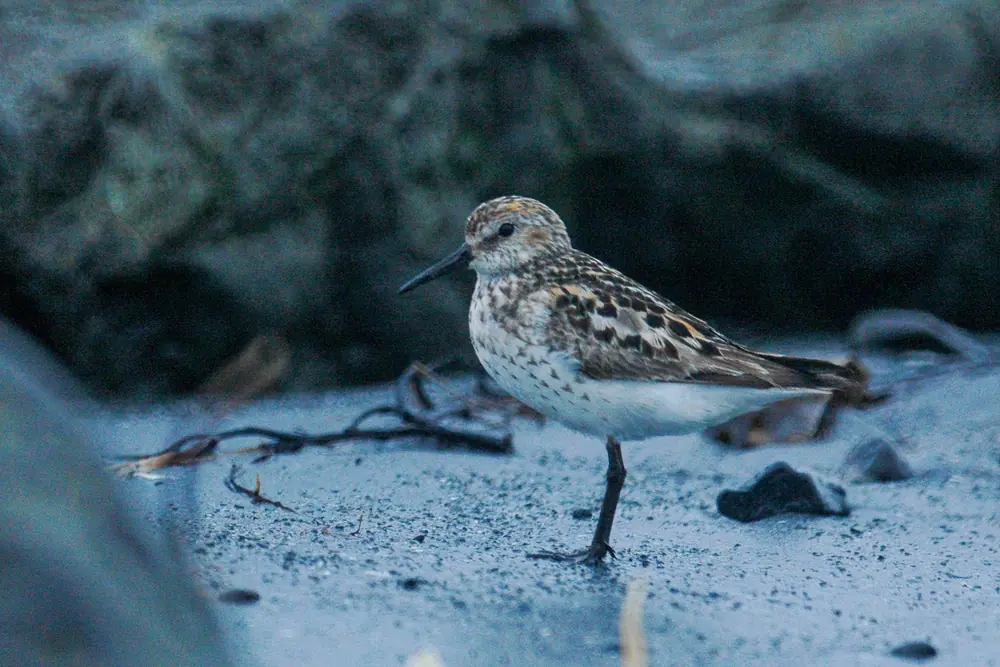
Western sandpipers and dunlin at Bowerman Basin
Western sandpiper passage peaks mid to late April; dunlin numbers peak from the end of March into April · Grays Harbor National Wildlife Refuge, Bowerman Basin, near Hoquiam
The refuge reports hundreds of thousands of shorebirds in spring and says Bowerman Basin hosts up to half the migrants even though it holds only about 2 percent of the intertidal habitat. Western sandpipers and dunlin make up 80 percent of the spring birds, joined by short-billed and long-billed dowitchers and semipalmated plovers. Seattle Audubon's BirdWeb says western sandpipers become increasingly common from early April, and that the Western Hemisphere Shorebird Reserve Network rates Grays Harbor a site of hemispheric significance. The Sandpiper Trail reaches into the salt marsh, so flocks can lift off beside you. BirdWeb warns that so much of the species gathers in so few places that disturbance counts, so keep to the trail.
-
The Grays Harbor Shorebird and Nature Festival
April 30 to May 2, 2027, per the festival's own site · Grays Harbor area
The festival's website lists those dates and says plans are still underway, so watch it for the program and any registration. Its species pages feature semipalmated plovers, ruddy turnstones, least sandpipers and dowitchers. The refuge trail stays open in daylight hours all year, so you do not need a ticket to see the birds.
-
Gray whales passing the outer coast
Northbound migration runs February to June; coast watchers say March and April are usually best · High headlands and beaches on the Olympic coast, including La Push
WDFW describes the northbound trip as lasting from February to June. A Peninsula Daily News coast report suggests clear mornings with the sun behind you, from a headland if possible, since wind chop hides spouts; find the spray first, then scan around it. A few whales, locally called Sounders, detour into Puget Sound, mainly from March to May according to Cascadia Research Collective. WDFW wants sightings sent in, with photos and coordinates.
Pick a day with a rising tide and watch one mudflat for an hour. The flock you count on the first of the month may be gone by the end of the week, which is part of what makes the log worth keeping. Our March guide follows the brant and snow geese heading out just as these birds come in.
Where are the wildflowers east of the Cascades in April?
The dry side of the state blooms fast once the sun gets going. Washington State Parks' spring wildflower guide points visitors to open, sunny hillsides, mostly in the south and east, and gold on the slopes usually means balsamroot.
-
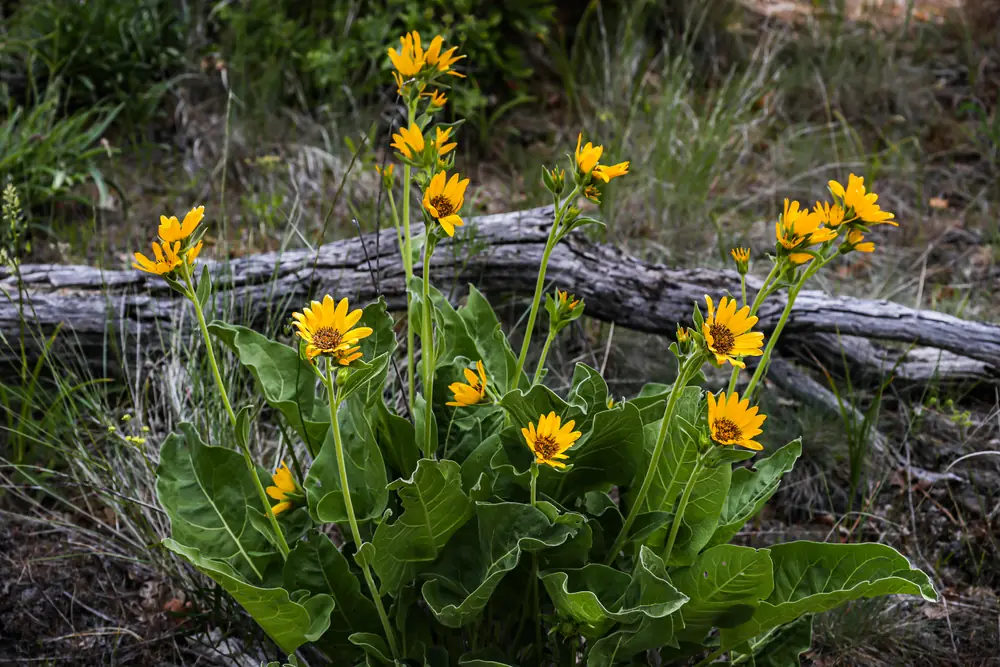
Balsamroot, lupine and paintbrush at Columbia Hills
State Parks says peak week often falls in early April; Northwest Wildflowers gives a wider window of late March through April into late May · Columbia Hills State Park and Dalles Mountain Ranch, Klickitat County
State Parks lists balsamroot, lupine and paintbrush for this park and suggests going on a weekday, early or late in the day, to avoid the crowds. The Northwest Wildflowers site points out that bloom can start as early as March and run into early June, so timing differs year to year. Farther up the Klickitat Trail near Lyle, State Parks says balsamroot lasts until late May.
-
Golden hills at Ginkgo Petrified Forest
April · Ginkgo Petrified Forest State Park
State Parks writes that the golden hills here are dotted with balsamroot, woolly pod, milkvetch and phlox in April.
-
Palouse Falls and its canyon
Spring, with flow varying from year to year · Palouse Falls State Park Heritage Site
The Palouse River drops about 200 feet into a churning basin at the official state waterfall. The 94-acre day-use park has seasonal wildflowers, and State Parks states that all trails into the canyon and to the base of the falls are permanently closed. Stay at the designated viewpoints.
-
The Apple Blossom Festival in Wenatchee
April 22 to May 2, 2027, per the festival's website · Memorial Park and downtown Wenatchee
The festival's site lists those dates and the 2027 theme, "Having the Time of Our Lives." The festival is built around the valley's orchard bloom, but the trees follow the weather rather than the calendar, so nobody can say this far ahead which week the petals peak.
Eastside flowers are short-lived, and a cold snap or a hot spell can shift the show by a week. Look for recent trip reports before a long drive.
What blooms and leafs out in western Washington in April?
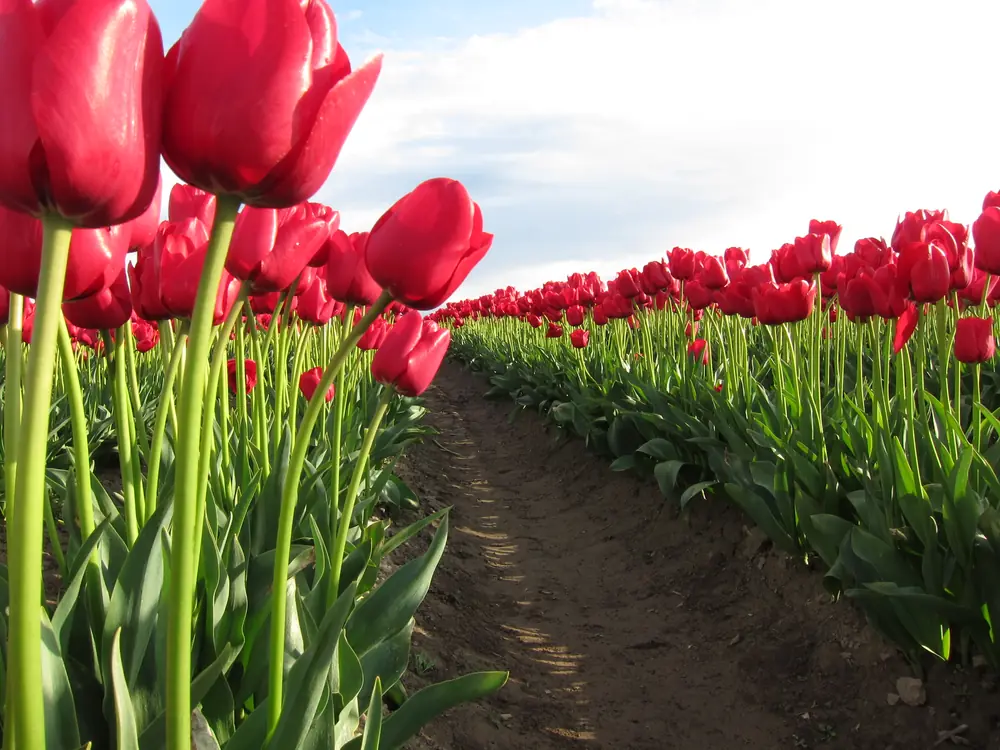
The west side is leafing out now, with maples opening, camas coming into flower and rhododendron buds swelling. In Skagit County the biggest spectacle of the year is planted in rows.
-
Skagit Valley tulips
The festival has run April 1 to 30 in past years; 2027 dates and bloom timing are not yet posted · Skagit Valley farms near Mount Vernon and La Conner
The festival's website says only "See you in spring 2027" for now. Bloom depends on the weather. In 2026, Cascadia Daily News reported that one farm expected a plateau of color from April 10 to 14, against a typical April 15 to 25 window, and that another farm expected blooms a week early. A grower quoted by KVAL said temperature matters more than rain, and that a hard freeze, hail or heavy rain are the real dangers.
-
Bigleaf maple blossoms and new leaves
March through June, per the Washington Native Plant Society; the flowers appear with or just before the leaves · Moist woods and forest edges on both sides of the Cascades
The tree hangs loose clusters of pale yellow flowers, ten to fifty in a cluster and about two inches long, among the opening leaves. The plant society notes that the big, multi-trunked trees give birds and small mammals places to nest and that insects drawn to rotting limbs feed warblers, nuthatches, woodpeckers and finches. When the huge leaves open, it is a good week to start a leaf record.
-
Pacific madrone in bloom
Mid-March through June, according to Native Plants PNW · Dry, sunny, south or west-facing coastal bluffs, including the San Juan Islands and Port Angeles
White, urn-shaped flowers hang in big drooping clusters and draw bees and hummingbirds. The bark peels in summer, so April is the time for blossom rather than bark. BirdWeb adds that on the San Juan Islands the yellow-rumped warbler nests in madrone rather than in conifers.
-
Camas in the meadows
Blooms April through July, per one conservation district · Wet prairies, oak woodlands and shallow marshes, mostly west of the Cascades
Common camas sends up spikes of blue-purple flowers, each one an inch or two long, from plants that stand a foot to three feet tall. The Benton Soil and Water Conservation District calls it a historically important food for indigenous peoples. Never dig camas or pick a bulb for food: a poisonous look-alike, death camas, grows in similar places.
-
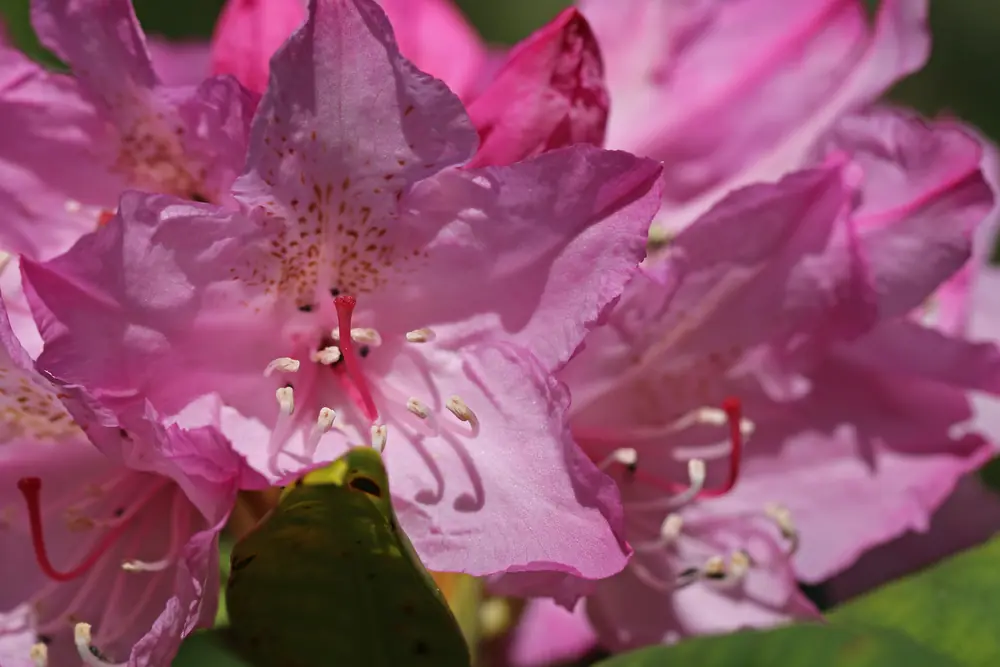
Pacific rhododendron
Expected to burst into color from late April to May, per the Coastal Interpretive Center · Woodlands and clearings on the west side
The center names the Pacific rhododendron as Washington's state flower and expects color from late April into May. Look in shady woods on the west side.
Pick one maple, madrone or rhododendron and visit it weekly through May; the Naturalist's Field Journal has a page for exactly that kind of slow looking.
Which frogs and toads are calling in Washington in April?
March belonged to newts and salamander eggs. In April the frogs and toads take over the soundtrack, and each species keeps its own calendar by region and elevation. Cascades frogs, which breed at snowmelt above about 2,000 feet from April to June, are a later story.
-
Pacific treefrogs
Calls are produced through the year except in the driest and coldest weather; choruses build in spring · Ponds, ditches, wet meadows and yards across the state
WDFW calls the Pacific treefrog the most commonly heard frog in Washington. Males give a two-part "rib-it" or "crek-ek" call, and choruses carry for long distances. Much of the activity is at night. Go out at dusk and listen.
-
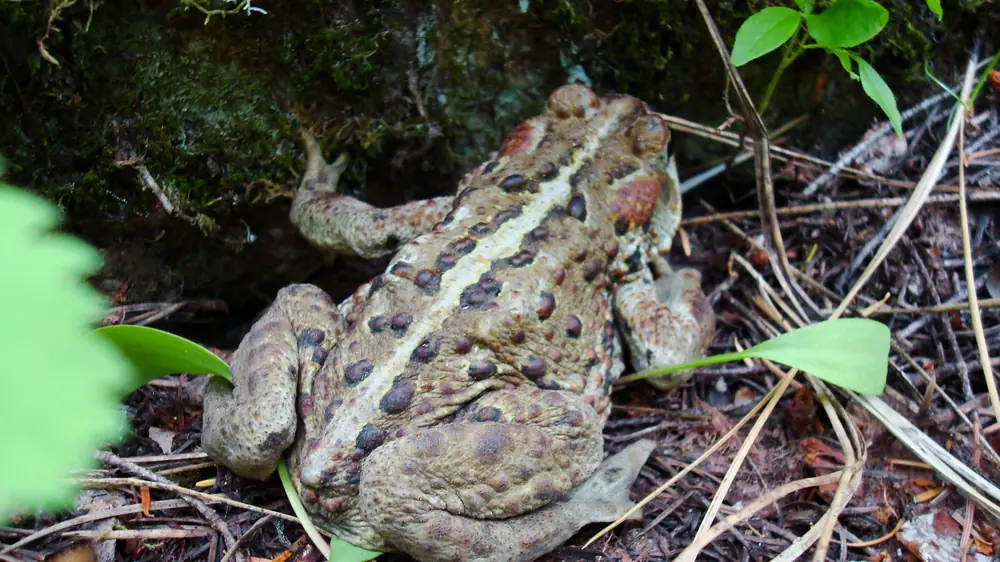
Western toads
Breeding starts mid-April at low elevations in western Washington and late April or early May at low sites in the east; later at higher elevations · Shallow water near shore in lakes, ponds and wetlands
Females lay long strings of eggs, about 12,000 per clutch on average, on bare sediment or wrapped in plants. The species is a state candidate for protection, so look and do not collect. WDFW notes that a grabbed toad gives a rapid chirp and pulses its body.
-
Columbia spotted frogs
Late March to early April in the Columbia Basin; late April through early June in the Okanogan Highlands · East of the Cascade crest, from the Columbia Basin to the Okanogan and Blue Mountains
The call is a faint series of six to nine low clucks, so you may need to be within about 16 feet to hear it. WDFW lists the frog as a state candidate species and a species of greatest conservation need, because Columbia Basin populations are declining.
-
Great Basin spadefoots
Breeding begins in late March in the Columbia Basin and is over within days; active until late October or early November · Shrub-steppe of the Columbia Plateau and Okanogan, in springs, seasonal pools, irrigation ditches and ponds
These toads are explosive breeders, and their call is a monotonous, grating wa-wa-wa that WDFW compares to a snore or a low quack. Outside breeding they live on land and can remain buried for months. Warm, humid nights bring them out, though they often turn up on roads at night regardless of rain.
Woodland Park Zoo's amphibian monitoring program has about 100 volunteers watching 17 sites each year and logging results in the Amphibians of Washington project on iNaturalist. The Oregon spotted frog is protected by state law at every life stage, so report one through WDFW's wildlife form instead of picking it up. WDFW says it breeds in February and March, so April is about eggs and tadpoles.
Which birds arrive in Washington in April?
Several of the month's arrivals are tiny, secretive or easiest to find by sound, so listen as much as you look.
-
Orange-crowned warbler
Arriving early in spring; as early as late March · Shrubby thickets and deciduous woodlands, especially aspen and willow; alder and mountain ash stands in migration
Listen for an accelerating trill that drops in pitch at the end. BirdWeb says migrants use red-osier dogwood and blackberry thickets along lowland streams, so brushy creek edges are good places to wait.
-
Yellow-rumped warbler
Common from April, one of the first warblers to return · High in conifers during the breeding season; migrants anywhere with insects
Two forms occur in the state. The Audubon's form, which breeds here, has a yellow throat, while the myrtle form, a migrant and winter visitor, has a white throat.
-
Calliope hummingbird
Late April to mid-May · Ponderosa pine zone, brushland and forest openings, mostly east of the Cascades
BirdWeb says it is the smallest bird that breeds north of Mexico and the smallest long-distance migrant in the world, yet it is a Washington species of concern. It is a fairly common summer resident in the east and rare in the west.
-
Vaux's swifts
Late April and the beginning of May · Over rivers and forests; migrating flocks roost in large industrial chimneys
The swifts nest in hollow trees, not chimneys, but BirdWeb says migrating birds increasingly use big man-made structures to roost.
-
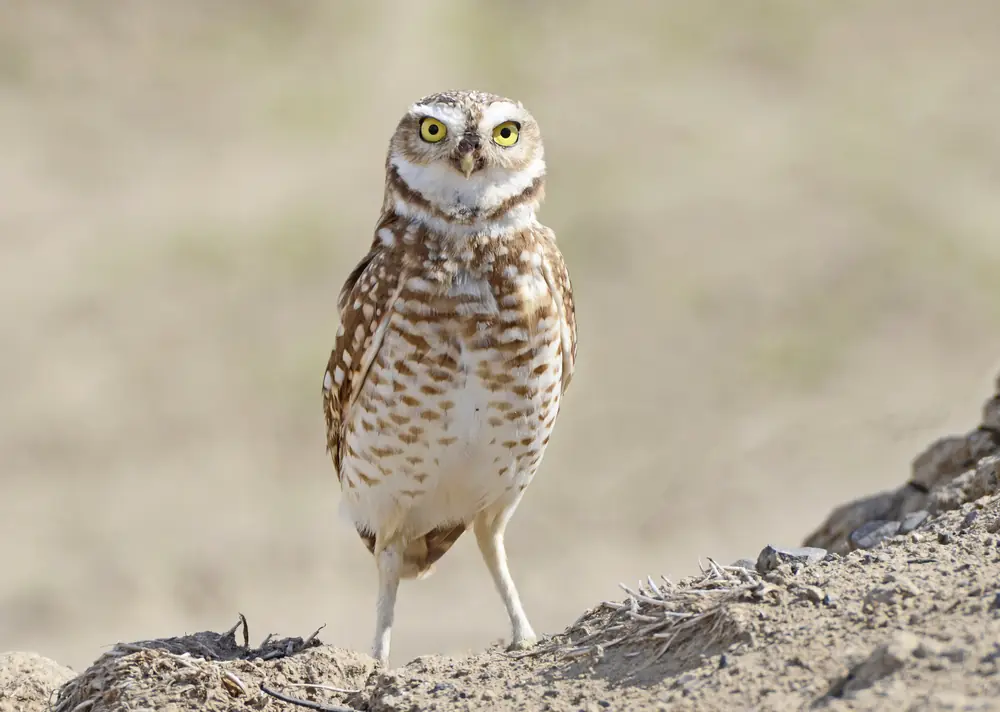
Burrowing owls
Present from mid-March through August · Shrub-steppe of eastern Washington; the highest concentration is at the Hanford site and around the Tri-Cities
The U.S. Fish and Wildlife Service lists them as a species of concern, and BirdWeb says they are seriously declining, especially in the Channeled Scablands, the Okanogan Valley and southeastern Washington. They nest in burrows they do not dig, and the females incubate seven to ten eggs for nearly a month. Watch from a distance.
-
Spring waterfowl at Turnbull
Spring migration mid-March through mid-May · Turnbull National Wildlife Refuge near Cheney
The refuge says waterfowl use the wetlands along the auto tour route. Foot and vehicle traffic is limited to marked trails and roads from March 1 into mid-August, and no Discover Pass is needed because the refuge is federally managed. Hours change with the season, so check the refuge page before you drive.
The black-headed grosbeak, which BirdWeb says is back from about mid-May, is still a month away. Log first-of-year dates in birds I have seen and compare them with May.
What fishing and shellfish seasons open in Washington in April?
For many families, spring starts with a fishing opener. The dates below follow long-standing rules, because 2027 dates were not published yet.
-
Lowland lakes opener
Traditionally the last Saturday in April; confirm the 2027 date in WDFW's rules · Hundreds of lowland lakes and ponds statewide
WDFW has long said the last Saturday in April marks the start of the lowland-lakes season, and a 2010 release called it an opener that draws more than 300,000 anglers. In 2026 it fell on Saturday, April 25, when about 525 lakes and ponds were stocked with nearly 15.5 million trout and kokanee, including more than 2.1 million catchable-size trout. Not every lake follows the same dates, so read the lake's entry in the rules before you go.
-
Razor clams
No 2027 spring digs were posted when this page was written · Long Beach, Twin Harbors, Copalis and Mocrocks
WDFW said in fall 2026 that all recreational razor clam digging was postponed because of elevated marine toxins. Digs return only after two tests taken 7 to 10 days apart fall below the health limit. Summer 2026 surveys found fewer clams at Copalis and Mocrocks than in recent years.
Opening day is crowded, and April water is still cold, so wear a life jacket.
When is the last spring freeze in Washington?
Gardeners start asking in April whether it is safe to plant. By the 1991 to 2020 normals, the middle of the range for the last freeze is March 2 at Seattle-Tacoma, March 31 at Bellingham and April 8 at Wenatchee's Pangborn Airport. The coast at Quillayute follows on April 20, Spokane on April 26, Pasco in the Tri-Cities on April 27 and Olympia on April 29, while Yakima, at its air terminal, clears last, on May 8. The late column matters for blossoms and tender seedlings: nine springs in ten are freeze-free by May 15 at Olympia, by May 10 at Quillayute, Pasco and Spokane, and by May 27 at Yakima.
| Station | One year in ten | Median | Nine years in ten |
|---|---|---|---|
| Bellingham Intl Ap | Mar 10 | Mar 31 | Apr 18 |
| Seattle Tacoma Intl Ap | Feb 5 | Mar 2 | Mar 23 |
| Olympia Ap | Apr 11 | Apr 29 | May 15 |
| Quillayute State Ap | Mar 29 | Apr 20 | May 10 |
| Wenatchee Pangborn Ap | Mar 20 | Apr 8 | Apr 23 |
| Yakima Air Terminal | Apr 24 | May 8 | May 27 |
| Pasco Tri Cities Ap | Apr 8 | Apr 27 | May 10 |
| Spokane Intl Ap | Apr 9 | Apr 26 | May 10 |
The table gives normals for one main station per place, so a low spot, river bottom or hillside can differ by weeks. To check your own town, use the last spring frost dates for Washington. The earliest blossoms are the ones a late freeze catches.
What is April weather like in Washington, and what hazards come with it?
April is drier and milder than March in the Puget Sound lowlands, yet the coast and the high Cascades stay soaked. In NOAA's 1991 to 2020 normals Quillayute collects 8.11 inches in April and Paradise on Mount Rainier 8.35, against 0.57 at Wenatchee and 0.55 at Yakima. Seattle-Tacoma averages a 59.3 high and a 43.3 low, with 3.18 inches of rain, while Paradise's average high is only 40.0.
| Station | Average high | Average low | Precipitation | Snowfall | Days with 1 in or more of snow on the ground |
|---|---|---|---|---|---|
| Seattle-Tacoma airport | 59.3 | 43.3 | 3.18 | 0.0 | 0.0 |
| Olympia airport | 58.9 | 37.5 | 3.67 | 0.0 | 0.0 |
| Quillayute (coast, near Forks) | 54.8 | 38.9 | 8.11 | not published | not published |
| Paradise, Mount Rainier | 40.0 | 26.4 | 8.35 | not published | not published |
| Winthrop (Methow Valley) | 61.1 | 32.2 | 0.84 | 0.1 | 0.4 |
| Wenatchee airport | 61.8 | 40.4 | 0.57 | not published | not published |
| Yakima airport | 64.7 | 35.2 | 0.55 | 0.0 | 0.0 |
| Walla Walla airport | 62.5 | 42.5 | 1.98 | 0.0 | 0.0 |
| Spokane airport | 56.9 | 37.0 | 1.25 | 0.7 | 0.1 |
The Office of the Washington State Climatologist's summary for April 2026 shows how much a single April can vary. It was the sixth straight month with above-normal statewide temperatures, 2 to 4 degrees above normal in most places. Western Washington got 30 to 70 percent of normal precipitation, while Wenatchee, Pullman, Ephrata and the Tri-Cities got more than 150 percent. A thunderstorm complex on April 15 brought heavy downpours, hail and a waterspout over Puget Sound, and stalled thunderstorms on the 28th led to flood advisories in the Spokane area.
Mountain roads follow the snow, not the calendar. WSDOT's records show the North Cascades Highway (State Route 20) opened April 22 in 2025, April 19 in 2024 and May 11 in 2023, while Chinook Pass and Cayuse Pass opened in late May in those years. In 2026 flood damage from the previous December kept the highway closed until June 14, though a partial reopening was listed for April 30. Check WSDOT before planning a mountain trip. For the latest three-month maps, see NOAA's 90-day outlooks; for this week, try our Washington forecasts.
How much daylight does Washington gain in April?
Seattle's days run from 12 hours 51 minutes on April 1 to 14 hours 26 minutes on April 30, a gain of 95 minutes, or about 3.3 minutes a day. Bellingham adds 99 minutes and Vancouver, in the south, 89. Daylight time has been in effect since March 14, so every clock time in this month's guide is Pacific Daylight Time. By our own calculation, Seattle's sunset passes 8:00 p.m. from about April 16.
| City | Apr 1 | Apr 30 | Gained | Per day |
|---|---|---|---|---|
| Bellingham | 12 h 53 m | 14 h 32 m | 99 min | 3.4 min |
| Seattle | 12 h 51 m | 14 h 26 m | 95 min | 3.3 min |
| Aberdeen | 12 h 51 m | 14 h 23 m | 92 min | 3.2 min |
| Vancouver | 12 h 48 m | 14 h 17 m | 89 min | 3.1 min |
| Wenatchee | 12 h 51 m | 14 h 26 m | 95 min | 3.3 min |
| Yakima | 12 h 49 m | 14 h 21 m | 92 min | 3.2 min |
| Kennewick | 12 h 49 m | 14 h 19 m | 90 min | 3.1 min |
| Spokane | 12 h 52 m | 14 h 27 m | 95 min | 3.3 min |
Evenings are now long enough for a walk after dinner. The sunrise and day length calculator gives times for your own town, and your dusk and dawn page can log the first birdsong of the morning.
What can you see in Washington's night sky in April 2027?
April is a quiet month for the sky, with the evening planets dominating, a poor meteor shower and a full Moon in the afternoon. All clock times here are Pacific Daylight Time. Saturn is lost in the Sun's glare all month, and the Eta Aquariid meteors (peak May 5 to 6) are just starting. Planet rise and set times are calculated for the central United States and can differ by up to half an hour in Washington.
-
Venus and a thin Moon at dawn
The mornings of April 3 and 4 · Low in the east before sunrise
Venus is still brilliant, at about magnitude -3.9, but it is sinking toward the Sun. Early in the month it comes up some seventy-odd minutes ahead of the Sun, and a little less each week. A slim crescent Moon, about 9 percent lit, sits near it on those two mornings.
-
Jupiter and Mars with the Moon
The evenings of April 14 and 15 · High in the evening sky, in Leo and Cancer
Jupiter is the brightest steady light after dark and is up until the small hours at the start of the month. On the 15th a Moon 68 percent lit passes within a degree or so of it; the nearest pass is in daylight, so look on either evening. Mars, faded to about magnitude 0.0, lies roughly 3 degrees from the Moon that day.
-
The Lyrid meteors, a poor year
Active about April 14 to 30; peak predicted around April 22 to 23 · Northeast sky in the evening, with the radiant in Lyra
The International Meteor Organization predicts the maximum near 6:41 p.m. Pacific time on April 22, still daylight here, and the American Meteor Society lists the night of April 21 to 22. Either way the Moon is nearly full. In Seattle it rises about 10:58 p.m. on the 22nd, so the dark window between evening twilight and moonrise is short, with the radiant still low. Plan on a handful of meteors an hour at most.
-
The Pink Moon
Full at 3:27 p.m. PDT on Tuesday, April 20; best evening is the 20th · Rising in the east in Seattle about 8:31 p.m. that evening
Pink Moon is the common almanac name for April's full Moon; the names are traditions, not astronomy, and the Moon itself is not pink. The full moment comes in the afternoon, so the Moon that rises that evening already looks full.
| Phase | Date | Time |
|---|---|---|
| New moon | Tuesday, Apr 6 | 4:51 p.m. PDT |
| First quarter | Tuesday, Apr 13 | 3:56 p.m. PDT |
| Full moon, the Pink Moon | Tuesday, Apr 20 | 3:27 p.m. PDT |
| Last quarter | Wednesday, Apr 28 | 1:18 p.m. PDT |
On clear dark nights in the far north of the state, aurora is possible; the Space Weather Prediction Center has the short-term outlook. Calculations for 40 degrees north show the Milky Way's bright center up in the dark hours before dawn from April 1 to 14 and again from April 28 to 30; Washington is farther north, so the center sits lower and the window is shorter. Check the cloud forecast first, and find moonrise times on the moon phase calendar.
What can Washington families do outside in April?
- See the shorebirds. The Grays Harbor Shorebird and Nature Festival is listed for April 30 to May 2, 2027. The refuge trail is open in daylight all year.
- Go to the tulip fields. The Skagit Valley Tulip Festival has not yet posted 2027 dates. Watch its website for bloom updates and go on a weekday if you can.
- Plant a tree on Arbor Day. Washington observes Arbor Day on the second Wednesday in April, which is April 14, 2027, and individual cities may celebrate on another day.
- Mark Earth Day on April 22. Earth Day was a free Discover Pass day on the 2026 list; the 2027 days are not posted, so confirm first.
- Join the City Nature Challenge. The 2027 count is April 30 through May 3, followed by two weeks to upload and identify; results come out May 20. A photo of any wild plant or animal on iNaturalist counts.
- Walk at Nisqually. Billy Frank Jr. National Wildlife Refuge posts a weekly birding morning and a Saturday nature walk, among other regular walks; confirm times on its events calendar.
- Help the amphibians. Woodland Park Zoo's monitoring program trains volunteers to record egg masses and adults; contact the zoo for details.
A treefrog chorus, a western toad or a balsamroot slope each makes a fine iNaturalist record, and your bird lists belong on eBird. There are nature guides for every state if you travel.
Safety notes for April in Washington
- Hunting in April. WDFW's 2026 spring turkey pamphlet, effective April 1, 2026 to March 31, 2027, lists a youth season of April 1 to 7 and a general season of April 15 to May 31, with shooting hours running from 30 minutes before sunrise through sunset. The 2027 pamphlet takes effect April 1, 2027, so confirm those dates there. Only male turkeys or turkeys with visible beards may be taken, and the combined limit is three statewide, with lower limits in some places. Spring black bear hunting is by special permit only; WAC 220-415-080 sets the permit season at April 15 to June 15. Check the pamphlet for clothing rules.
- Fishing openers and cold water. The lowland lakes opener is traditionally the last Saturday in April. Spring water temperatures are low, so wear a life jacket.
- Rattlesnakes. WDFW says western rattlesnakes in most of the Columbia Basin leave their dens in April. They rarely strike unless harassed, handled or stepped on, so step and reach with care around sunny rock outcrops.
- Bears. WDFW says black bears are coming out of dens in spring and are hungry. Keep garbage locked up, bring in pet food and take down seed and hummingbird feeders.
- Ticks. The Department of Health places the western blacklegged tick in dense forest or brush, and says it probably has to stay attached about a day to pass on Lyme disease. Use repellent and do a body check after hikes.
- Thunderstorms and hail. April can bring downpours, hail and even a waterspout, as in 2026. Leave ridges and open water when thunder sounds.
- Sensitive wildlife. Stay on the trails at Grays Harbor and Turnbull, keep your distance from burrowing owls and from heron colonies, and do not handle toads or frogs.
- Mountain roads and cliffs. Passes can be wintry into May, so check WSDOT before you cross. At Palouse Falls, stay at the viewpoints.
Sources (58)
- Grays Harbor Shorebird and Nature Festival (2027 dates)
- U.S. Fish and Wildlife Service: Grays Harbor National Wildlife Refuge
- Seattle Audubon BirdWeb: Western sandpiper
- Seattle Audubon BirdWeb: Dunlin
- Coastal Interpretive Center, Ocean Shores: 10 signs of spring
- WDFW: Gray whale (Eschrichtius robustus)
- Peninsula Daily News: Whale-watching season blows in
- Cascadia Research Collective: gray whales in Puget Sound
- Washington State Parks: Where to see wildflowers and avoid the crowds
- Northwest Wildflowers: Columbia Hills and Dalles Mountain Ranch
- Washington State Parks: Palouse Falls State Park Heritage Site
- Washington State Apple Blossom Festival (2027 dates)
- Skagit Valley Tulip Festival
- Cascadia Daily News: false spring and early Skagit tulips (March 2026)
- KVAL: Cool spring and the Skagit Valley tulip schedule
- Washington Native Plant Society: Bigleaf maple (Acer macrophyllum)
- Native Plants PNW: Pacific madrone
- Benton Soil and Water Conservation District: Common camas
- WDFW: Pacific treefrog
- WDFW: Western toad
- WDFW: Columbia spotted frog
- WDFW: Great Basin spadefoot
- WDFW: Cascades frog
- WDFW: Oregon spotted frog
- Woodland Park Zoo: Amphibian monitoring
- Seattle Audubon BirdWeb: Orange-crowned warbler
- Seattle Audubon BirdWeb: Yellow-rumped warbler
- Seattle Audubon BirdWeb: Calliope hummingbird
- Seattle Audubon BirdWeb: Vaux's swift
- Seattle Audubon BirdWeb: Burrowing owl
- Seattle Audubon BirdWeb: Black-headed grosbeak
- U.S. Fish and Wildlife Service: Turnbull National Wildlife Refuge
- WDFW news release (2010): lowland lakes open April 24
- Odessa Record: Lowland lakes open for fishing April 25 (2026)
- WDFW: Razor clam seasons and beaches
- NOAA NCEI: U.S. Climate Normals 1991–2020
- NOAA NCEI data service: April monthly normals for the Washington stations in the table
- Office of the Washington State Climatologist: April 2026 climate summary
- Washington State Department of Transportation: Mountain pass closure and opening dates
- Cascadia Daily News: North Cascades Highway reopens (June 2026)
- NOAA Climate Prediction Center: seasonal (90-day) outlooks
- U.S. Naval Observatory: Moon phases, April 2027
- American Meteor Society: 2027 meteor shower calendar
- NOAA Space Weather Prediction Center
- City Nature Challenge (2027 dates)
- Earth Day
- Washington Department of Enterprise Services: Arbor Day celebration
- Peninsula Daily News: Port Angeles proclaims Arbor Day
- Discover Pass: Free parking days
- U.S. Fish and Wildlife Service: Billy Frank Jr. Nisqually NWR events
- WDFW 2026 Spring Wild Turkey Season pamphlet
- WDFW: Hunting regulations
- WAC 220-415-080: Spring black bear special permits
- WDFW: Prevent conflicts with hungry bears this spring
- WDFW: Western rattlesnake
- Washington State Department of Health: Lyme disease
- Northwest Avalanche Center
- Photos via Wikimedia Commons; licenses and photographers are credited under each picture
