What to look for in nature in Washington this March
March is the month when Washington's two halves answer the same warm days in different ways. In the Columbia Basin, sandhill cranes drop into the cornfields near Othello by the thousands. Around the Salish Sea, snow geese and brant are packing up for the Arctic while gray whales nose into the shallows to dig for ghost shrimp. Under the alders, skunk cabbage lights its yellow hoods in the mud, and newts begin their slow walk to the nearest pond. Seattle gains nearly an hour and three-quarters of daylight by month's end, and the clocks move forward on the 14th. Below you will find the month's stories sorted by what you can see, with notes for every corner of the state.
Other months in Washington: October, November, December, January, February, April.
Start here
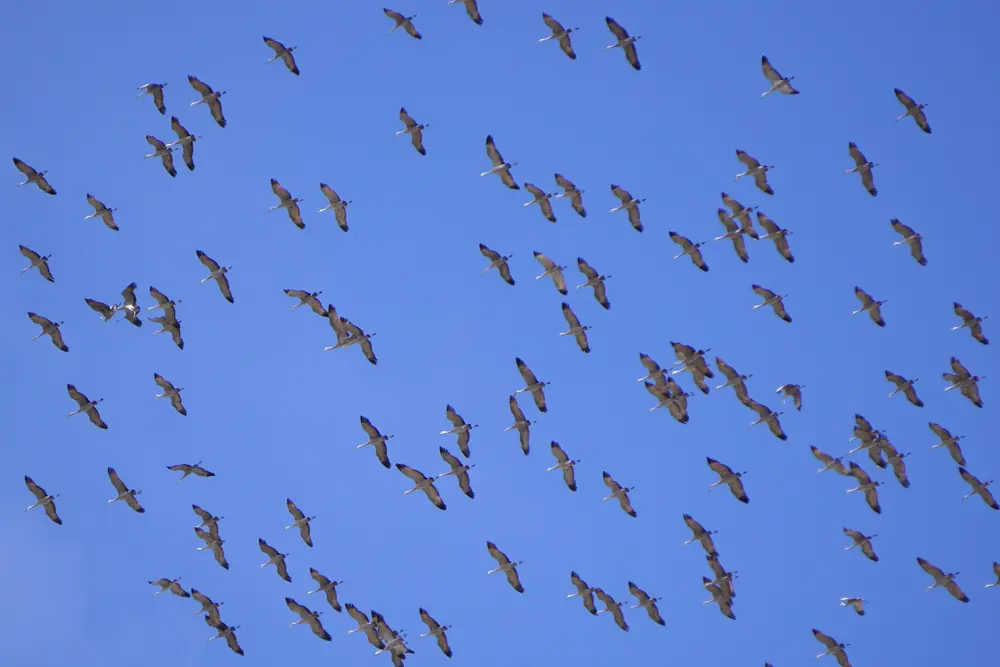
- Go and see the sandhill cranes. If you can reach the Columbia Basin, plan a morning near Othello. The birds spend roughly a month in the area, arriving in early March, and their bugling carries a long way. Even a roadside stop with binoculars will do.
- Find a skunk cabbage hood. Walk a wet woodland trail or a creek edge on the west side and look for a bright yellow hood rising from the mud. Smell it, but leave it where it grows.
- Check a pond edge on a mild day. Rough-skinned newts and northwestern salamanders are heading to or sitting in breeding ponds. Look from the bank for orange-bellied newts, and for firm, football-sized jelly masses fastened to twigs.
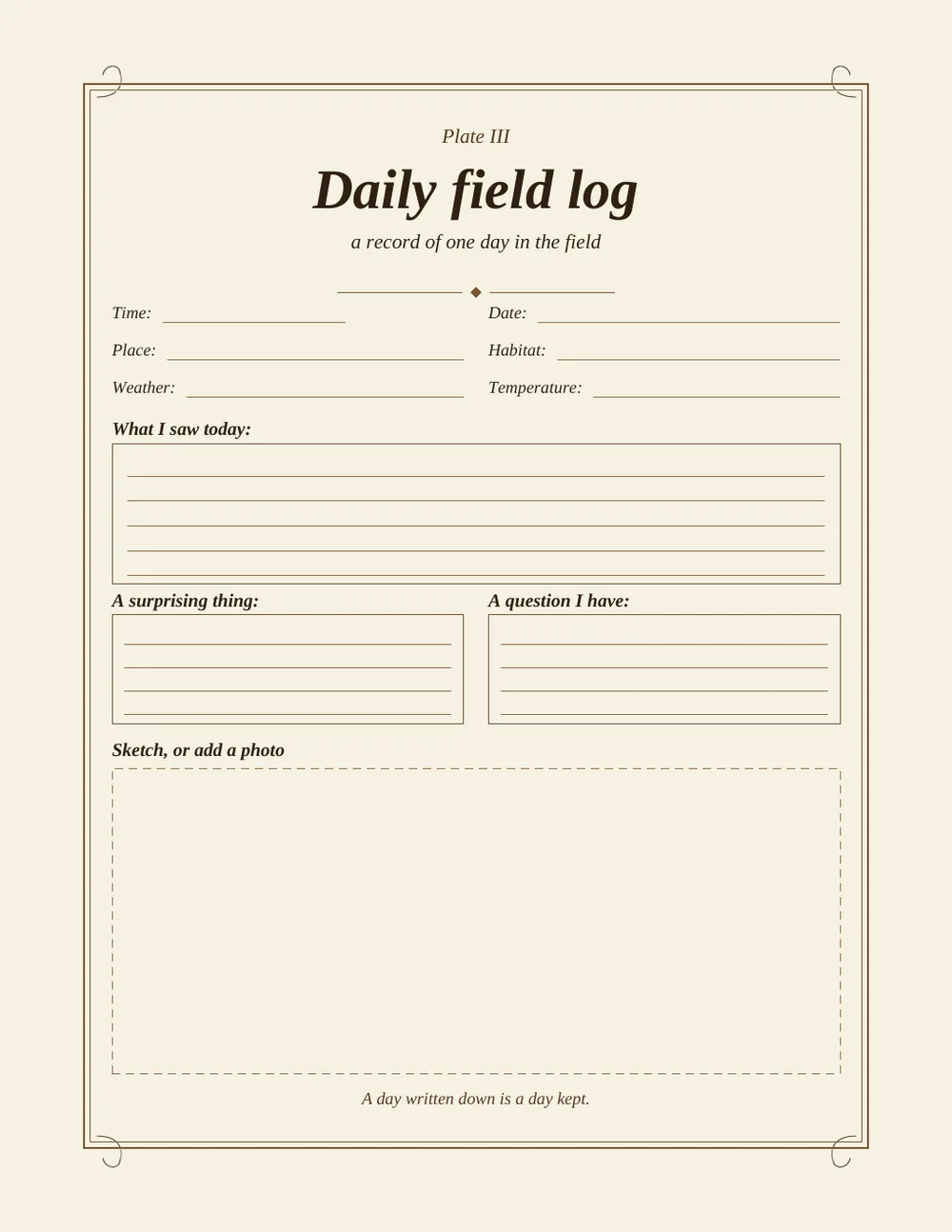
Keep a record: log the first crane flock or rufous hummingbird in birds I have seen, mark skunk cabbage and trillium on a tree through the seasons or a map of sounds, write the clock-change evening into the dusk and dawn watch, jot every pond visit in the daily field log, and go back to one wet spot for the same place twice.
Regions used below: Puget Sound and Seattle; Olympic Peninsula and the coast; Southwest and the lower Columbia; North Cascades and the Methow; Central Washington and the Yakima Valley; Columbia Basin and the Tri-Cities; Spokane and the Palouse.
When do the sandhill cranes come through eastern Washington in March?
The big gray cranes arrive from California's Sacramento Valley, feed on farm fields and roost on wetlands near Othello, and then push on toward Alaska. A Spokesman-Review feature from March 2026 puts the gathering at about 30,000 birds, arriving in early March, typically peaking in mid-March and staying about a month. Seattle Audubon's BirdWeb gives a later peak, with up to 15,000 near Othello in early April. With the sources disagreeing, go anywhere from mid-March into early April.
-
Sandhill cranes at Othello
Arriving in early March; sources put the peak between mid-March and early April · Farm fields and wetlands around Othello and Columbia National Wildlife Refuge, Adams County
Refuge staff report that the largest concentrations of ducks, geese and lesser sandhill cranes arrive in March and April, at times over 75,000 birds in all, and about 35,000 lesser cranes pass through eastern Washington on the Pacific Flyway. Biologist Allison Anholt told the Spokesman-Review the cranes gather because spent grain and corn feed them for the next leg. Listen as well as look: the same story quotes Cornell Lab describing a loud, rattling bugle that carries up to two and a half miles. One small part of the refuge is closed from February 1 to April to protect the roost; call (509) 488-2668 for current closures.
-
The Othello Sandhill Crane Festival
March 18 to 21, 2027, per the festival's own site · Othello, with tours into crane country
The festival has posted its 2027 dates. Pre-festival tours run Thursday and Friday, the festival opens Friday evening, March 19, the full schedule is on Saturday, March 20, and select tours and hikes continue Sunday. The organizers say the full program arrives in January 2027 and tickets go on sale February 6, 2027.
-
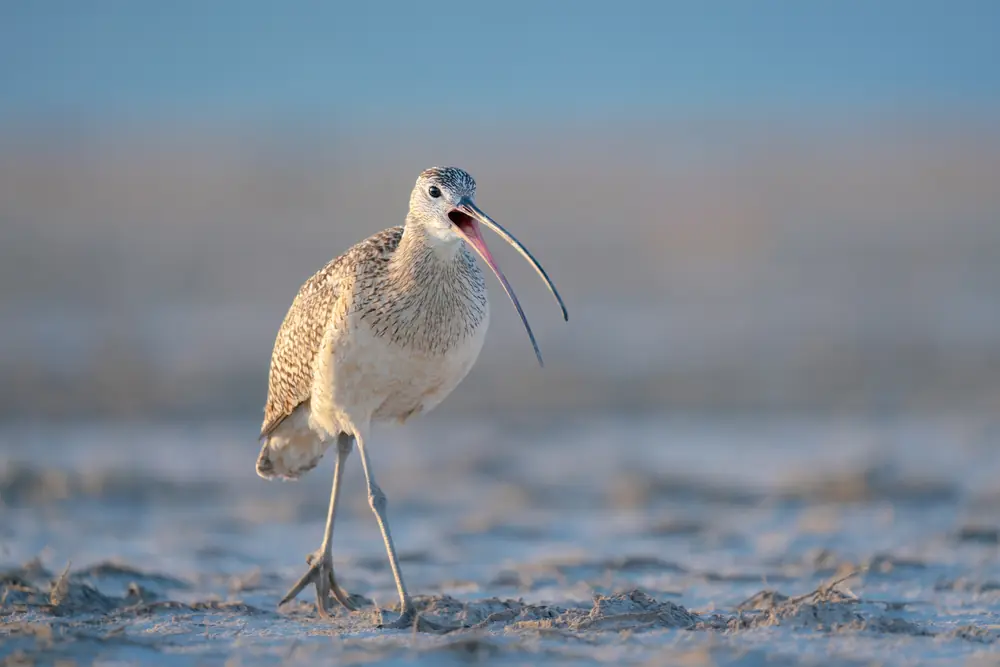
Mountain bluebirds and long-billed curlews
Bluebirds return in March; curlews in mid-March · Open meadows and logged ridges (bluebirds, such as Umtanum Ridge in Yakima County); the central Columbia Basin and Okanogan Valley (curlews)
BirdWeb says mountain bluebirds winter in the southwestern states and Mexico and come back to their nesting grounds in March. Long-billed curlews, early nesters that return from California and Mexico in mid-March before their nesting grounds dry out, are a Washington species of concern. A sky-blue flash on a fence post or a long, curved bill over a pasture is worth stopping for.
-
Turnbull's swans and waterfowl
Spring migration from mid-March through mid-May · Turnbull National Wildlife Refuge near Cheney
Trumpeter swans and redheads are among the refuge's common spring birds, with 25 species of nesting and migrating waterfowl in all. Visitors must stay on designated trails and roads from March 1 through August 15. No Discover Pass is needed, and the refuge is open from 6 a.m. to 6 p.m. from November through April.
-
Grouse dances to read about, not visit
Spring, on leks at first light · Moses Coulee and the Yakima Training Center (sage-grouse); Douglas, Lincoln and Okanogan counties (sharp-tailed grouse)
Both species are state-endangered. WDFW lists greater sage-grouse as falling from an estimated 744 birds in 2016 to 699 in 2021, in a few remnant areas covering about 8 percent of the historic range, and Columbian sharp-tailed grouse as fewer than 1,000 birds in seven unstable subpopulations. Males gather on leks in spring. Do not seek out a lek; if you chance on grouse, report it with a photo and coordinates on WDFW's wildlife reporting form.
Meadowlarks and Say's phoebes were already back last month; see the Washington February guide for them.
When do the snow geese, swans and brant leave Washington's salt water?
The Skagit and Whatcom flats still hold their winter crowds in March, but the pull north has started. It is a slow leaving, which gives you weeks to see the flocks.
-
Snow geese and swans on the Skagit
Snow geese through the end of March, some into early May; trumpeter swans November through April · Fir Island Farm Reserve and the Skagit delta; Padilla Bay, Samish Bay and the Samish Flats
WDFW says its Fir Island Farm Reserve, where hunting and trapping are prohibited, holds snow geese through March 31. BirdWeb adds that Washington's snow geese nest on Wrangel Island in Russia, up to 55,000 winter in western Washington, and most gather in the Skagit delta from mid-October to early May. Trumpeter swans winter in Skagit and Whatcom fields and estuaries and leave early, often before northern waters finish thawing. The reserve is closed in the dark, access is limited to the entrance road, parking area and a short dike-top trail, and a Discover Pass is required unless you hold a Vehicle Access Pass from a hunting or fishing license.
-
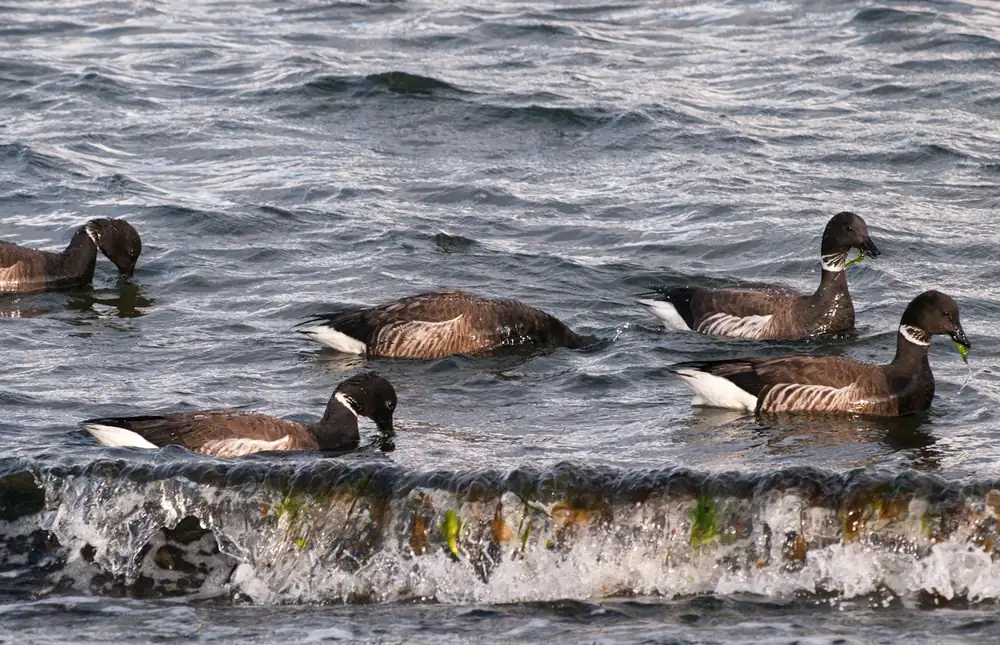
Brant on the Strait
Peak counts in March and April; present from November well into May · Dungeness Spit and West Sequim Bay; Three Crabs beach, Jamestown and Ediz Hook
Olympic Peninsula Audubon writes that March and April are the peak time to see brant in the Strait of Juan de Fuca, and that surveys at Three Crabs found the highest counts from February to April, timed to the northward flight. These small dark geese live on eelgrass and sea lettuce, so look over tide flats and eelgrass beds. BirdWeb notes that the gray-bellied form that winters mainly in Skagit County totals only about 8,000 birds.
A goose on Fir Island this month may reach Wrangel Island, across the Bering Strait, by June. Pack a scope if you own one, and jot down the date of the last big flock you see.
Are gray whales in Puget Sound in March, and what is on the coast?
Each spring a small group of gray whales leaves the coastal migration route, a detour of more than 150 kilometers, and enters Washington's inland sea. March is when the regulars start to show up.
-
The Sounders
Mostly March to May; a few now arrive earlier · Whidbey and Camano islands, Saratoga Passage, Port Susan, Possession Sound and the Snohomish delta
Cascadia Research Collective says a stable core of just under a dozen whales returns each spring, primarily March to May, to feed before heading north; WDFW calls them the Sounders. They dig for ghost shrimp in very shallow water at high tide, so shore-watchers on Whidbey Island scan the water around a high tide. The Encyclopedia of Puget Sound notes that in recent years some have arrived as early as December and January.
-
Whales passing offshore
Northbound migration February to June · The outer coast
WDFW describes the northbound migration as more spread out and farther from shore than the southbound run. The Coastal Interpretive Center in Ocean Shores lists gray whales among its signs of spring, easy to spot from shore in late March. Anyone who followed them in our February guide is seeing the second half of the same story.
-
How close is too close?
Whenever you see a whale · Boats, kayaks and the shoreline
Be Whale Wise advises 100 yards from marine mammals in general and 200 yards from baleen whales that are resting or have calves. It discourages drones without permits and asks kayakers to stay inshore. WDFW wants gray whale sightings reported on its wildlife reporting form, with photos and coordinates.
-
Razor clam digs
Spring digs follow good morning low tides after mid-March · Long Beach, Twin Harbors, Copalis, Mocrocks and Kalaloch
WDFW bases its schedule on summer population surveys and tries to offer openers each month from October to May. No 2027 spring dates were posted when this page was written. You need a razor clam license, and digging on a closed beach can bring a fine. The agency's page noted a postponement in fall 2026 because of marine toxins, so confirm the current status before you travel.
Seeing a whale from shore takes patience and a tide table. Pick a high tide, watch one stretch of water for an hour, and write down the answer even if it is nothing.
What flowers bloom in Washington in March?
The Coastal Interpretive Center in Ocean Shores says wildflower season in western Washington begins in March, with pops of color in the forest. East of the Cascades the first flowers are small and low.
-
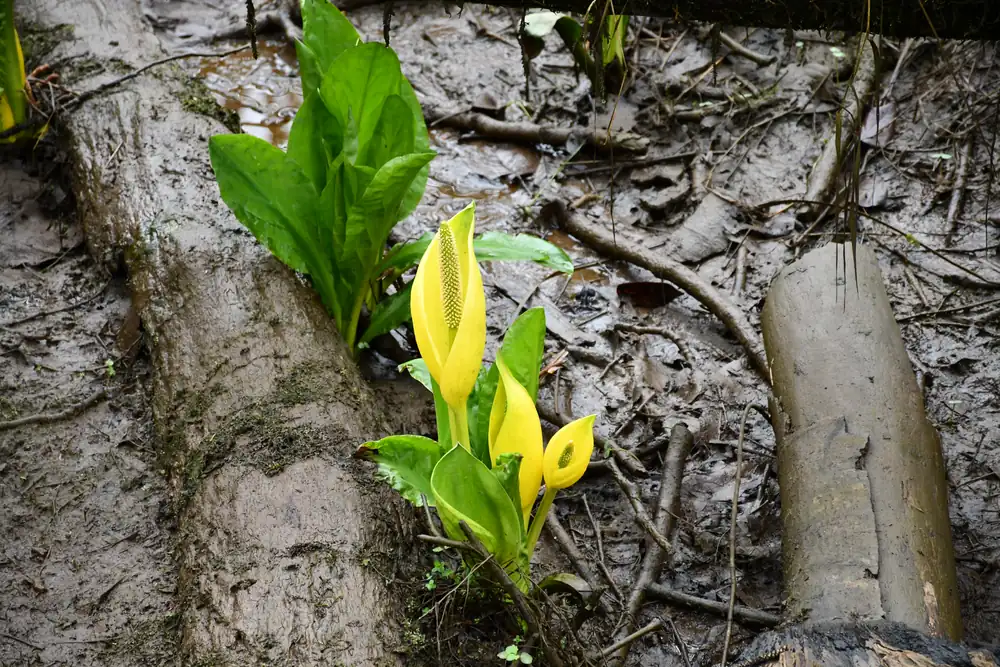
Western skunk cabbage in full hood
Flowering March through July, per the Washington Native Plant Society · Wet woods, creek channels and swamps; Washington Park Arboretum and Yesler Swamp in Seattle; Nisqually refuge
The University of Washington Botanic Gardens calls it among the earliest native species to flower, its yellow bract appearing before the leaves fully emerge. It needs year-round water and early-season sun before the trees leaf out. The Native Plant Society lists honey bees and other pollinators among its visitors. Look, sniff and leave it alone.
-
Western trillium
Late February through April, per the U.S. Forest Service · Conifer and mixed forests and alder thickets; Icicle Canyon and Lake Wenatchee east of the crest
The Forest Service notes that the white flowers often turn pink, purple or even red with age, so one patch can hold several colors. The Ocean Shores center adds the nickname wake robin, since it blooms when robins return. Photograph it and leave it growing.
-
Red-flowering currant
February through April · Open woods, rocky slopes and gardens, mostly on the west side
Native Plants PNW calls the pink-and-red flower clusters beacons to migrating rufous hummingbirds, with insects and hummingbirds pollinating them. A currant in bloom is a fine place to wait for the year's first hummingbird.
-
Cherry blossoms in the University of Washington Quad
Peak bloom typically between March 12 and April 3, averaging March 23 · The Quad, University of Washington, Seattle
KUOW, citing the university, reports 29 Yoshino cherry trees making the Quad's pink canopy, and that peak bloom, meaning 70 percent of blossoms open, has historically fallen between March 12 and April 3, averaging March 23. A UW doctoral student said in the university's news release that warm temperatures and sunlight usually drive bloom timing, and cool, dry, calm weather helps blossoms last. The university runs live webcams and a bloom-status website. Expect weekend crowds.
-
Glacier lilies on the east slope
Late March and early April, above the foothill towns · Above Leavenworth, Twisp and Mazama; sagebrush slopes near Wenatchee
Wenatchee Outdoors lists the sagebrush buttercup as the first flower to open, the yellow bell a day or two behind, then the bluebell, and says glacier lilies begin their show above Leavenworth, Twisp and Mazama in late March and early April. Timing follows each year's snowmelt.
Choose a single shrub or patch and check it every week; a tree-through-the-seasons page in the Naturalist's Field Journal holds those notes nicely.
Where are Washington's newts and salamanders in March?
The frogs get the attention, but in March the quieter amphibians are the ones on the move, heading for ponds, ditches and slow creeks on mild, damp days.
-
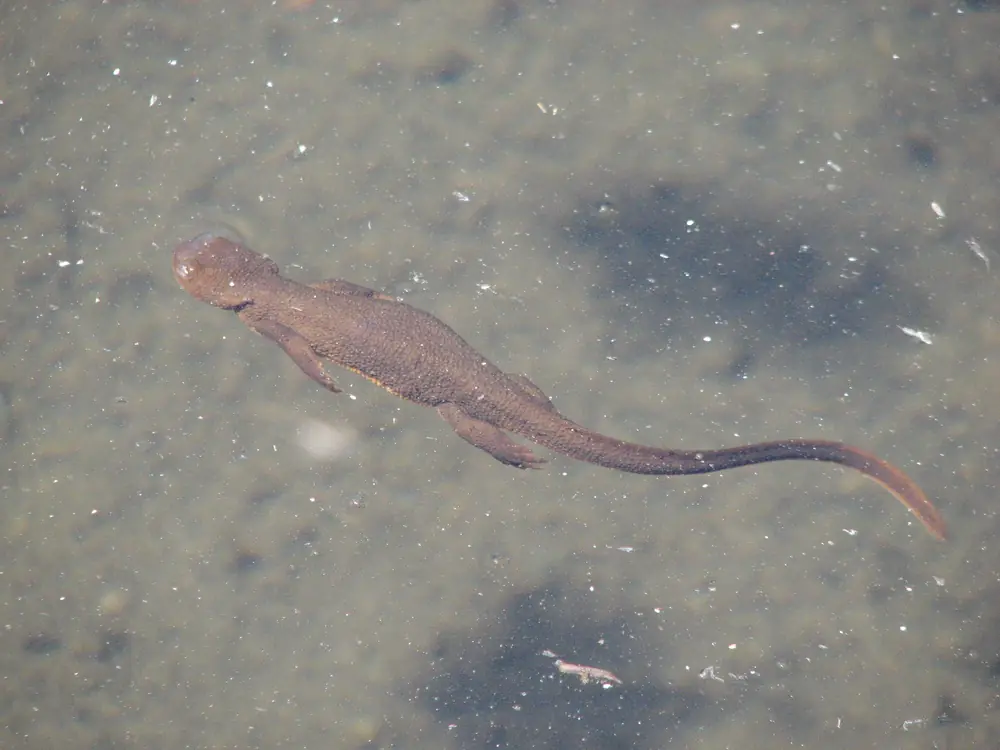
Rough-skinned newts, orange-bellied and poisonous
Migrating to ponds from January at low elevations; courtship most obvious in March and April · Streams, ponds and wetlands across western Washington
WDFW writes that adults migrate along streams and creeks to ponds starting in January, and that courtship displays and mating pairs are most obvious in March and April at low-elevation sites. Their skin carries tetrodotoxin, potent enough that few predators survive eating one, and a threatened newt arches its head and tail to flash its orange belly. Look without handling, and wash your hands if you do. Where newts cross a busy road in large groups, WDFW warns, deaths can be high.
-
Northwestern salamander egg masses
Late January through March below 1,000 feet, later at higher elevations · Ponds, wetlands, lakes, road ditches and slow creeks
WDFW describes globular egg masses, firm to the touch and three to six inches across, fastened to sturdy plant stalks and twigs, tinted white when fresh and greenish later from symbiotic algae. The adults live underground and come out at night, so the egg masses are the thing to look for.
-
Long-toed salamanders
From January in western lowlands; egg laying in the Columbia Basin mostly March and April · Ponds, ditches, spring boxes and large puddles, usually without fish
The state's page says eggs are laid singly or in masses on vegetation, logs or bare sediment, and that the species persists in many urban and disturbed areas but is typically sparse or absent where fish live.
Woodland Park Zoo's amphibian monitoring program has used about 100 volunteers at 17 sites each year since 2012, trained to identify the egg masses of eight species, with records logged to the Amphibians of Washington project on iNaturalist. Western toads, WDFW says, start breeding in mid-April at low elevations in western Washington, so an adult toad now is worth reporting. Slow down on roads that cross wetlands on wet nights.
Which birds return to Washington in March?
The main songbird rush comes later, yet a handful of pioneers get here before the trees leaf out.
-
Rufous hummingbirds
Late February to early March, timed with currant and salmonberry bloom · Western Washington edges, gardens and feeders
BirdWeb says they feed on red-flowering currant, salmonberry, honeysuckle and sugar water, and that the Breeding Bird Survey showed a significant decline from 1982 to 1991; the species is on both Audubon Washington's and Partners in Flight's lists of at-risk birds. Keep feeders clean, and take them down when bears are active, as WDFW advises.
-
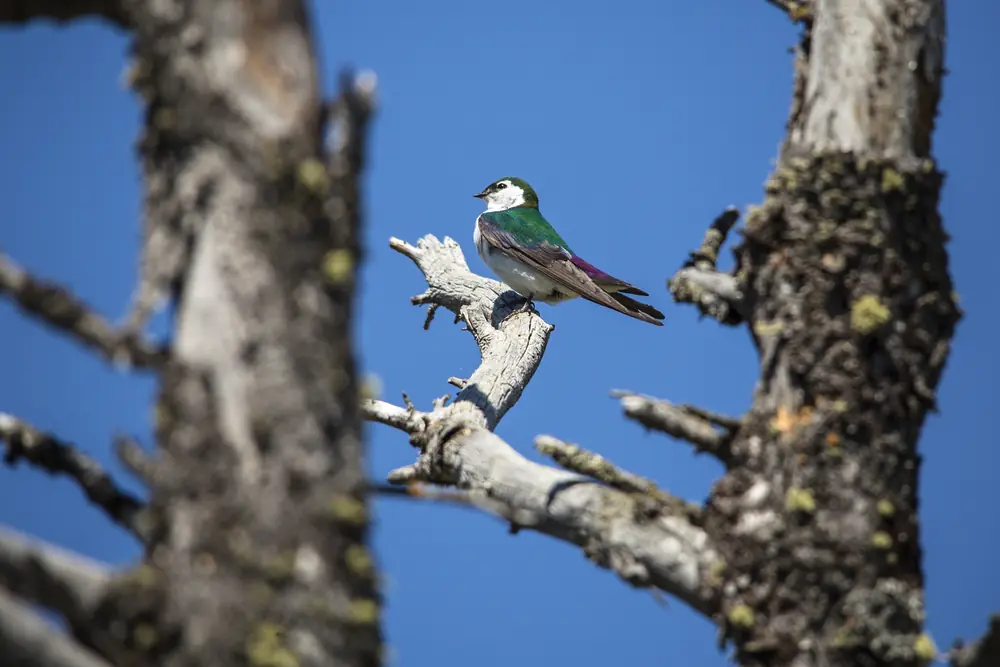
Violet-green swallows
From mid-March; as early as late February in Yakima County · Tree cavities, cliffs, buildings and nest boxes, especially on the east side
BirdWeb calls them one of the first returning migrants, nesting in pairs or small colonies of up to 25 nests, and says their numbers have increased significantly since 1966.
-
Ospreys and turkey vultures
Vultures begin returning in February; ospreys generally in late March or early April · Vultures over many habitats, especially the Puget Trough; ospreys near water, with the most nests on the Pend Oreille River and the Everett waterfront
Per BirdWeb, osprey nests can exceed seven feet across, and the species has recovered since DDT was banned. Watch known nest poles from a distance toward the end of the month.
-
Great blue herons at their colonies
Nest building from February; chicks usually in April · Tall trees near water
BirdWeb warns that disturbance in the breeding season can cause nest failure or colony abandonment and recommends a 1,000-foot buffer, so view colonies through a scope.
The date you first notice a bird is rarely its true arrival, only the first time someone looked. Record the date and place in birds I have seen and compare with next spring.
When is the last spring freeze in Washington?
Gardeners start asking this in March, and the answer depends on where you stand. At Seattle-Tacoma Airport the median last freeze is March 2, with nine years in ten done by March 23. Bellingham's median is March 31, and Aberdeen's and Vancouver's are both March 29. East of the Cascades the Tri-Cities (Kennewick) come in at March 28, Wenatchee at April 4 and Yakima at April 8, and Spokane is the latest in this list at April 26, with its late date May 10.
| Station | One year in ten | Median | Nine years in ten |
|---|---|---|---|
| Bellingham | Mar 10 | Mar 31 | Apr 18 |
| Seattle | Feb 5 | Mar 2 | Mar 23 |
| Aberdeen | Feb 25 | Mar 29 | Apr 20 |
| Vancouver | Mar 6 | Mar 29 | Apr 18 |
| Wenatchee | Mar 17 | Apr 4 | Apr 19 |
| Yakima | Mar 23 | Apr 8 | Apr 28 |
| Kennewick | Mar 9 | Mar 28 | Apr 10 |
| Spokane | Apr 9 | Apr 26 | May 10 |
These are NOAA 1991 to 2020 normals at one main station per city, not forecasts, and hilltops, frost pockets and river bottoms can differ from the airport by a couple of weeks. Look up your own town on our last spring frost dates for Washington. A plum or cherry in bloom does not prove the freeze is over.
What is March weather like in Washington, and what hazards come with it?
March is still wet on the west side, with spring snow possible east of the Cascades and deep snow in the mountains. NOAA's normals show the spread: Quillayute on the coast averages 11.78 inches of precipitation for the month and Paradise on Mount Rainier 13.21, while Yakima gets 0.64 and Wenatchee 0.73. Winthrop's Methow Valley normal counts 20.8 days with at least an inch of snow cover.
| Station | Average high | Average low | Precipitation | Snowfall | Days with 1 in or more of snow on the ground |
|---|---|---|---|---|---|
| Seattle-Tacoma airport | 54.2 | 39.9 | 4.17 | 0.4 | 0.2 |
| Olympia airport | 53.7 | 34.5 | 5.68 | 0.1 | 0.0 |
| Quillayute (coast, near Forks) | 51.2 | 36.7 | 11.78 | not published | not published |
| Paradise, Mount Rainier | 35.7 | 23.6 | 13.21 | not published | not published |
| Winthrop (Methow Valley) | 50.0 | 25.4 | 1.23 | 3.4 | 20.8 |
| Wenatchee airport | 52.5 | 33.7 | 0.73 | not published | not published |
| Yakima airport | 56.6 | 30.2 | 0.64 | 0.6 | 0.3 |
| Walla Walla airport | 55.8 | 37.8 | 2.11 | 0.2 | 0.3 |
| Spokane airport | 48.6 | 31.5 | 1.83 | 3.9 | 3.9 |
The Office of the Washington State Climatologist described March 2026 as a case study of how much can happen in weeks. A windstorm on the 11th left 35,000 customers without power in western Washington and caused one wind-related death, and record daily rain fell at Sea-Tac (1.15 inches), Olympia (2.17) and near Leavenworth (1.55). On the 13th Sea-Tac had 3.0 inches of snow and Spokane 8.2, its snowiest day of that winter, while Paradise took in 4.20 inches of precipitation, a daily record. An atmospheric river from the 14th to the 18th caused minor to moderate flooding, and three landslides struck near Bellingham on the 19th and 20th.
No two Marches match, so plan for the range: wind, flooding and slides in the west, wet snow at pass level, and hard freezes on clear eastside nights. A warm spell on a snowy pack makes wet avalanches likely, and a National Weather Service Spokane bulletin warned that wet and glide avalanches are difficult to predict and may occur at any time of day. NOAA refreshes its three-month maps every month at the CPC 90-day outlooks, and our Washington forecasts cover the coming week.
How much daylight does Washington gain in March?
The gain is fastest right now. Seattle's days stretch from 11 hours 4 minutes on March 1 to 12 hours 48 minutes on March 31, 104 minutes in all, or about 3.5 minutes a day. Bellingham adds 107 minutes and Vancouver, the southernmost city in the table, 97. The clocks move forward an hour on Sunday, March 14, which shifts every sunrise and sunset on the clock without changing how long the day is.
| City | Mar 1 | Mar 31 | Gained | Per day |
|---|---|---|---|---|
| Bellingham | 11 h 02 m | 12 h 49 m | 107 min | 3.6 min |
| Seattle | 11 h 04 m | 12 h 48 m | 104 min | 3.5 min |
| Aberdeen | 11 h 06 m | 12 h 47 m | 101 min | 3.4 min |
| Vancouver | 11 h 08 m | 12 h 45 m | 97 min | 3.2 min |
| Wenatchee | 11 h 04 m | 12 h 47 m | 103 min | 3.4 min |
| Yakima | 11 h 06 m | 12 h 47 m | 101 min | 3.4 min |
| Kennewick | 11 h 07 m | 12 h 46 m | 99 min | 3.3 min |
| Spokane | 11 h 04 m | 12 h 48 m | 104 min | 3.5 min |
Saturday, March 20 brings the equinox, at 1:25 p.m. Pacific time, when daylight and darkness are close to equal. Get sunrise and sunset times for your town from the sunrise and day length calculator. For the journal's dusk and dawn page, note the first dinner you eat in daylight after the clocks change.
What can you see in Washington's night sky in March 2027?
March brings two planets to the dawn, two to the evening, a Moon that sweeps past Jupiter, and a clock change in the middle. The clocks change at 2 a.m. on March 14, so earlier events are in Pacific Standard Time and later ones in Pacific Daylight Time. No eclipse touches the month. Planet visibility figures come from calculations for the central United States, so in Washington the timing may shift by up to half an hour.
-
Mercury in the morning
Best from about March 8 to 25; greatest western elongation the night of March 16 to 17 · Low in the east-southeast, about an hour before sunrise
Look for Mercury low in the dawn glow. Its widest gap from the sun, about 28 degrees, comes at 04:20 Universal Time on March 17, which is 9:20 p.m. PDT on the evening of March 16 in Washington. Through mid-March it rises about an hour ahead of the sun, brightening from magnitude +1.0 to +0.3. A spring dawn puts Mercury at a shallow angle, so find a flat eastern horizon, and use far higher Venus as a marker.
-
Venus, brilliant and sinking
All month; the thin Moon close by on the mornings of March 4 and 5 · Low in the eastern sky before dawn
Venus blazes at about magnitude -4.1 and clears the horizon nearly two hours before sunrise at the month's start and sits a little lower each week. By our own computation a slim crescent Moon, 12 percent illuminated, pairs with it on those two mornings.
-
Jupiter and Mars after dark
All month; the Moon near Jupiter on March 18 and 19; Mars 4.3 degrees from Jupiter on the evening of March 30 · Well up in the evening sky, near Cancer and Leo
Jupiter, near magnitude -2.5, stands out as the brightest steady light. By our own computation the Moon, about 88 percent lit, sits within a degree or so of it on the 18th and 19th. Reddish Mars is far fainter, and by the same computation the pair is 4.3 degrees apart on the 30th, both high by about 8 p.m. daylight time.
-
Saturn's last evenings
The first half of March · Low in the west after sunset, in Pisces
Saturn, near magnitude +0.8, is fading out of the evening sky. By these calculations it sets roughly 155 minutes after sunset on March 1, about 93 minutes after on March 15, and only about 20 minutes after on April 1. It meets the sun on April 7.
-
The Worm Moon
Full at 3:44 a.m. PDT on Monday, March 22; best evening is Sunday, March 21 · Rising in the east about 7:01 p.m. in Seattle on the 21st
The full Moon arrives before dawn Monday, so the evening to watch is Sunday. Folk names include Worm Moon, the one most common in almanacs, along with Crow Moon and Sap Moon; they are traditions, not astronomy. By our computation the Moon sits near the Pleiades on March 13.
-
The equinox and the clock change
Clocks spring ahead at 2 a.m. Sunday, March 14; equinox at 1:25 p.m. PDT on Saturday, March 20 · All of Washington
On March 13, Seattle's sunset is 6:12 p.m. standard time; the next evening, after the clocks move, it is 7:13 p.m. daylight time. Spring begins astronomically at 20:25 Universal Time, per the Naval Observatory.
| Phase | Date | Time |
|---|---|---|
| New moon | Monday, Mar 8 | 1:29 a.m. PST |
| First quarter | Monday, Mar 15 | 9:25 a.m. PDT |
| Full moon, the Worm Moon | Monday, Mar 22 | 3:44 a.m. PDT |
| Last quarter | Monday, Mar 29 | 5:54 p.m. PDT |
March is a poor month for the Milky Way: by our calculations the galactic core rises only before dawn, in a short window around the March 8 new moon at mid-latitudes, and is not practical at 48 degrees north. Aurora can show on any clear night in the north of the state, and storms tend to be more frequent near the equinoxes; check NOAA's Space Weather Prediction Center for its 30-minute forecast and storm watches. Look at the cloud forecast before you go, and see each moonrise on the moon phase calendar.
What can Washington families do outside in March?
- Plan for the Othello Sandhill Crane Festival. It is listed for March 18 to 21, 2027, with tours, talks, hikes and workshops, and the full schedule on Saturday, March 20. Tickets go on sale February 6, 2027.
- Or head to Blaine. The Wings Over Water Northwest Birding Festival lists March 19 to 21, 2027 for Blaine, Birch Bay and Semiahmoo, with guided field trips, kid-friendly activities, vendor exhibits and keynote speakers. It overlaps Othello, so pick a side of the mountains.
- Visit the cherry blossoms. Check the University of Washington's webcams and bloom page first; the long-term average peak is March 23, but it moves with the weather.
- Take a guided walk at Nisqually. The Billy Frank Jr. Nisqually refuge has listed Wednesday birding at 8 a.m. and a Saturday nature walk at 10 a.m.; confirm on its events calendar.
- Look for a free day. The 2026 Discover Pass list included March 9 and March 19, but the 2027 list had not been posted yet; look at the Discover Pass site.
- Snowshoe at Mount Rainier. Free ranger-led snowshoe walks are generally offered on weekends and holidays from late December to March, with snowshoes provided and 25 places per walk; check the park's page for 2027 dates.
- Volunteer for wildlife. Woodland Park Zoo's amphibian monitoring and the Puget Sound Seabird Survey (monthly October through April, with September training) are good projects to plan for.
A newt crossing, a flock of brant and a skunk cabbage patch all make good iNaturalist records, and bird lists belong on eBird. Our nature guides for every state cover other places, and the Naturalist's Field Journal gives a child somewhere to keep notes.
Safety notes for March in Washington
- Hunting in March. The 2026-27 rules for eastern Washington list a late white goose season (snow, Ross's and blue-phase geese) in Goose Management Area 4 from February 20 to March 10. Under WAC 220-416-010, bobcat, raccoon, cottontail and snowshoe hare seasons run through March 15 and coyote is open year-round. The cougar general season runs through March 31, 2027, or until a hunt area reaches its harvest cap, with closures updated Thursdays. Spring turkey and bear seasons fall after March, so check WDFW's pamphlet for them. WAC 220-414-080 sets an orange-clothing rule for gun hunters of upland birds or rabbits (muzzleloaders excepted) and for modern-firearm deer and elk hunters: 400 square inches, worn above the waist and visible from every side. Migratory bird hunters are exempt. Wear a bright layer in wildlife areas and farm country regardless.
- Wet avalanches. Warm spells on a snowy pack bring wet loose and glide avalanches at any hour. Read the Northwest Avalanche Center forecast before leaving groomed routes.
- Floods and landslides. March rain can raise rivers fast and loosen hillsides. Stay off rising gravel bars, and never drive into floodwater.
- Ticks. The state Department of Health says the western blacklegged tick lives in heavily forested or brushy areas, and that the few Lyme cases acquired in the state mostly involve exposure west of the Cascades. Dress in long sleeves, use repellent and check your body, since transmission is likely to need at least 24 hours of attachment.
- Bears and newts. WDFW says black bears usually leave dens in mid-to-late April, though warm weather can bring them out earlier, so secure garbage, pet food and feeders. Newts carry a toxin, so do not handle them.
- Sensitive wildlife. Stay 1,000 feet from heron colonies, out of crane roost closures and on the trails at Turnbull, and 100 yards from marine mammals. Do not visit grouse leks.
- Mountain roads. Passes can be wintry all month. Check WSDOT pass reports and chain rules before crossing the Cascades, and expect wind across the Columbia Basin.
Sources (62)
- Othello Sandhill Crane Festival (2027 dates)
- U.S. Fish and Wildlife Service: Columbia National Wildlife Refuge
- U.S. Fish and Wildlife Service: Columbia National Wildlife Refuge, species
- Spokesman-Review: Cool Critters, sandhill cranes in eastern Washington (March 22, 2026)
- Seattle Audubon BirdWeb: Sandhill crane
- Seattle Audubon BirdWeb: Mountain bluebird
- Seattle Audubon BirdWeb: Long-billed curlew
- U.S. Fish and Wildlife Service: Turnbull National Wildlife Refuge
- WDFW: Greater sage-grouse
- WDFW: Columbian sharp-tailed grouse
- WDFW: Fir Island Farm Reserve Wildlife Area Unit
- WDFW: Skagit Wildlife Area
- Seattle Audubon BirdWeb: Snow goose
- Seattle Audubon BirdWeb: Trumpeter swan
- Seattle Audubon BirdWeb: Brant
- Olympic Peninsula Audubon Society: The story of brant
- WDFW: Gray whale (Eschrichtius robustus)
- Cascadia Research Collective: gray whales in Puget Sound
- Encyclopedia of Puget Sound: Gray whales of the Salish Sea
- Be Whale Wise: marine wildlife viewing distances
- WDFW: Razor clam seasons and beaches
- Coastal Interpretive Center, Ocean Shores: 10 signs of spring
- University of Washington Botanic Gardens: March plant profile, western skunk cabbage
- Washington Native Plant Society: Western skunk cabbage (Lysichiton americanus)
- U.S. Forest Service: Western white trillium
- Native Plants PNW: Red flowering currant
- KUOW: When will University of Washington cherry blossoms bloom in 2026?
- University of Washington News: Quad cherry blossoms expected to peak last week of March (2020)
- Wenatchee Outdoors: Earliest spring wildflowers
- WDFW: Rough-skinned newt
- WDFW: Northwestern salamander
- WDFW: Long-toed salamander
- WDFW: Western toad
- Woodland Park Zoo: Amphibian monitoring
- Seattle Audubon BirdWeb: Rufous hummingbird
- Seattle Audubon BirdWeb: Violet-green swallow
- Seattle Audubon BirdWeb: Turkey vulture
- Seattle Audubon BirdWeb: Osprey
- Seattle Audubon BirdWeb: Great blue heron
- NOAA NCEI: U.S. Climate Normals 1991–2020
- NOAA NCEI data service: March monthly normals for the Washington stations in the table
- Office of the Washington State Climatologist: March 2026 notable weather events
- Office of the Washington State Climatologist: March 2026 climate summary
- National Weather Service Spokane: warm spells and avalanche concerns
- Northwest Avalanche Center
- NOAA Climate Prediction Center: seasonal (90-day) outlooks
- U.S. Naval Observatory: Moon phases, March 2027
- U.S. Naval Observatory: Earth's seasons, 2027
- Fred Espenak: Sky Event Almanac 2027
- NOAA Space Weather Prediction Center
- Wings Over Water Northwest Birding Festival, Blaine (2027 dates)
- U.S. Fish and Wildlife Service: Billy Frank Jr. Nisqually NWR events
- Discover Pass: Free parking days
- Mount Rainier National Park: Ranger-led programs
- Puget Sound Bird Observatory: Puget Sound Seabird Survey
- WDFW 2026–27 Migratory Waterfowl and Upland Game Seasons (official pamphlet): eastern Washington goose management areas
- WAC 220-416-010: Small game and other wildlife seasons
- WDFW 2026 Big Game Hunting Seasons and Regulations (official pamphlet): cougar general seasons
- WAC 220-414-080: Hunter orange and hunter pink clothing requirements
- Washington State Department of Health: Lyme disease
- WDFW: Prevent conflicts with hungry bears this spring
- Photos via Wikimedia Commons; licenses and photographers are credited under each picture
