What to look for in nature in Washington this October
October splits Washington in two. East of the Cascades the air turns crisp, the larches on the high ridges go gold for a few short weeks, and Yakima and Spokane usually see their first freeze. West of the crest the rain comes back, salmon crowd into the creeks, orcas follow the chum into Puget Sound, and Seattle may not freeze until almost Thanksgiving. Here is what to watch, and when, across the state.
Start here
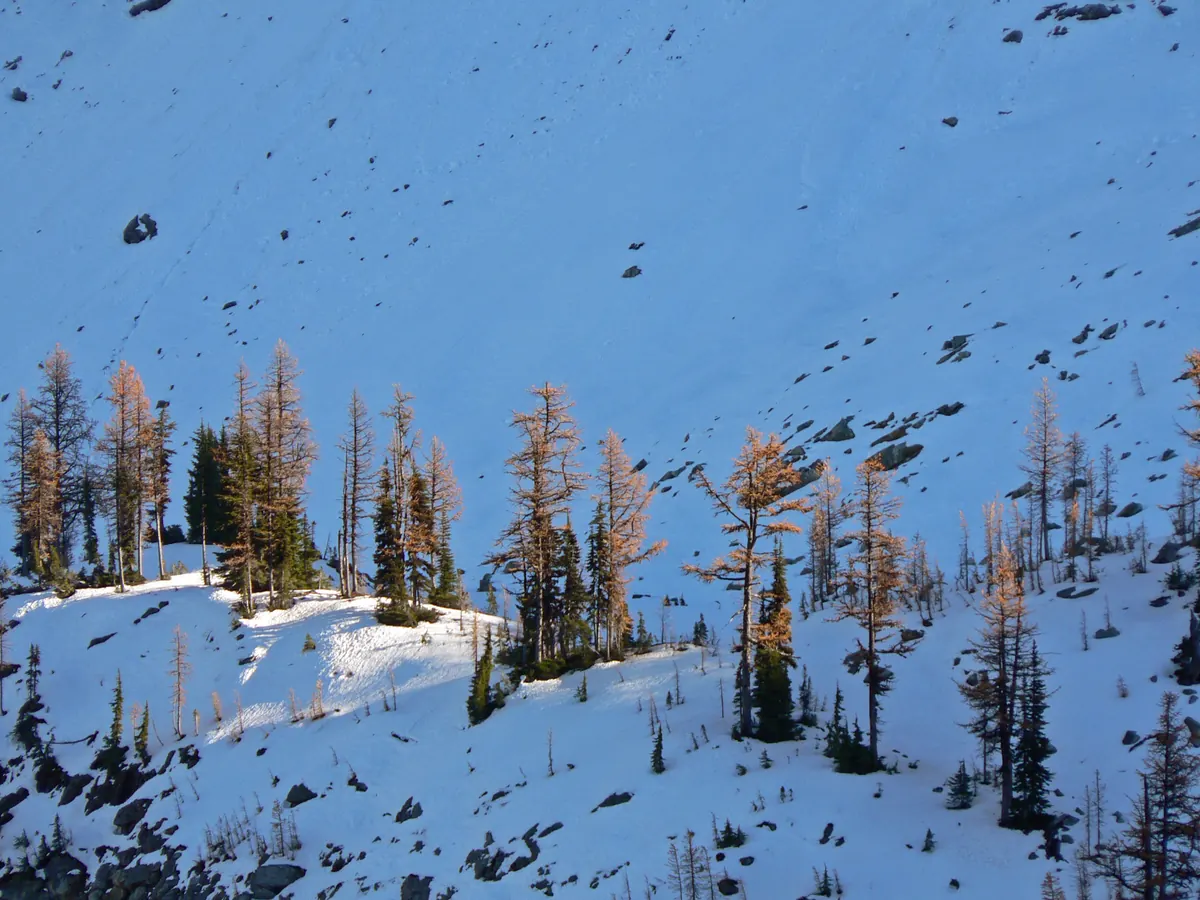
- Larches before the snow. Subalpine larch, a needle-shedding conifer, goes greenish gold in late September and orange-gold by early October on the high eastern slopes of the Cascades, between about 5,800 and 7,500 feet. The first ten days of October are usually the window. Go on a weekday, and remember that modern firearm deer season opens October 17.
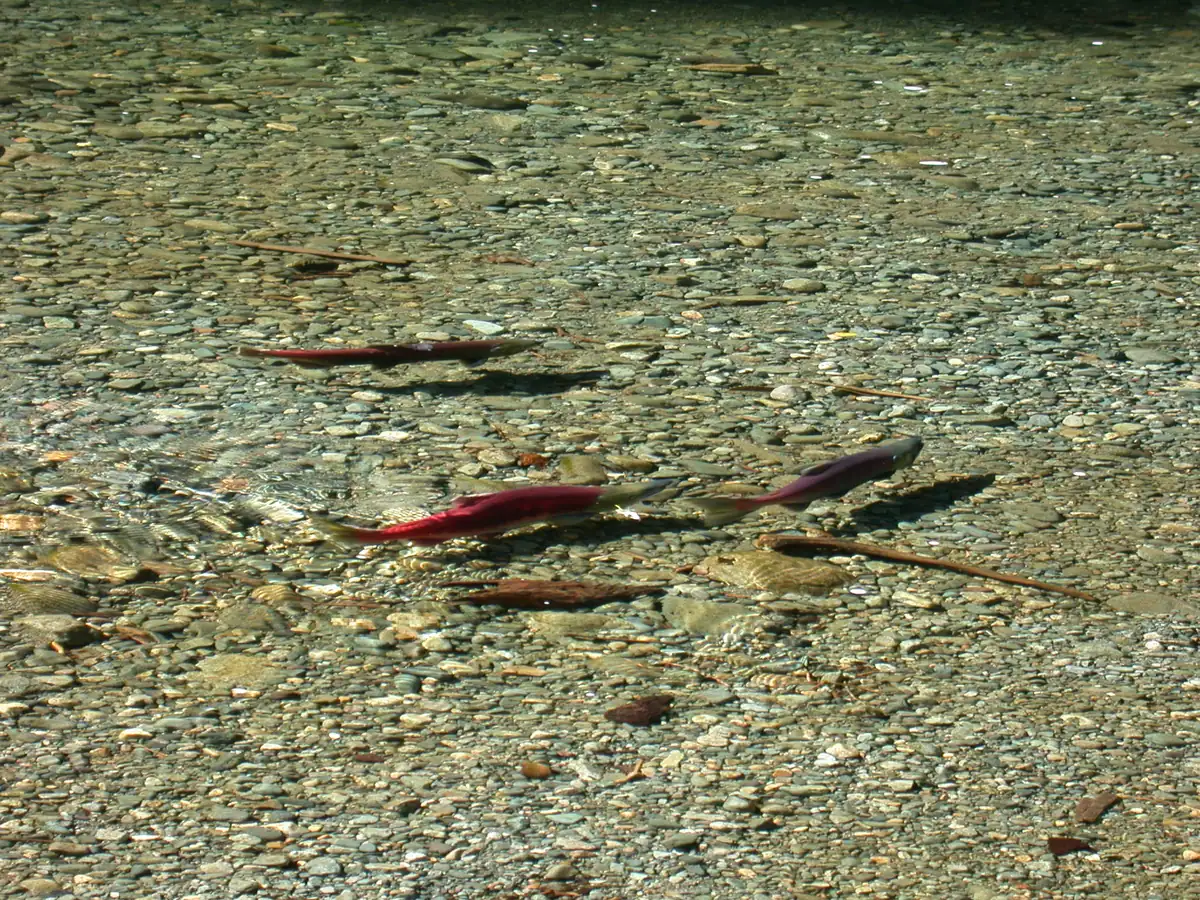
- Salmon in the creeks. Chinook fill Issaquah Creek through mid-October and coho follow into November; Salmon Days is October 3–4. Seattle Aquarium naturalists stand on the Cedar River in Renton and Maple Valley on October weekends, and the Kennedy Creek Salmon Trail near Olympia opens for chum on Saturday, October 31.
- Orcas, cranes and geese. J pod came back into inland Puget Sound on September 3, and the Southern Residents usually spend more of the fall there hunting salmon. Sandhill cranes are back at Ridgefield for BirdFest on October 3, and the first snow geese reach the Skagit flats toward the end of the month.
Keep a record: follow one vine maple or bigleaf maple near home on the Naturalist’s Field Journal’s tree-through-the-seasons pages, add the cranes and the first snow geese to the “birds I have seen” list, sketch Garry oak acorns on the seeds-pods-and-cones plate, put a bugling elk or an orca’s blow on the map of sounds, and let the daily field log hold the date of the first real rain.
Regions used below: Puget Sound and Seattle; Olympic Peninsula and the coast; Southwest and the lower Columbia; North Cascades and the Methow; Central Washington and the Yakima Valley; Columbia Basin and the Tri-Cities; Spokane and the Palouse.
When do the larches turn gold in Washington?
Washington’s best-known fall color is not a maple. It is a conifer. Subalpine larch grows in open, parklike groves near timberline on the dry east side of the Cascades, where it sheds its needles every autumn like a hardwood. Washington State Parks describes the change plainly: in late September the trees start turning greenish gold, and by early October they are orange. The Forest Service notes that the tree’s fall dormancy is set by day length, so the timing wobbles less from year to year than a lowland maple’s. These are old trees, too: dominant subalpine larches usually live 400 to 500 years and the oldest may approach 1,000.
| Species and places | Elevation | Typical color |
|---|---|---|
| Subalpine larch: Maple Pass and Easy Pass (North Cascades Highway), Cutthroat Pass, Carne Mountain, Esmeralda Basin, Tronsen Ridge | About 5,800 to 7,500 feet | Greenish gold in late September; gold to orange in the first half of October |
| Western larch: Mount Spokane and Fields Spring state parks, Lake Wenatchee, Riverside and other eastern parks | About 2,000 to 5,500 feet | Yellow in October |
| Vine maple and bigleaf maple: west-side valleys, Mount Rainier’s lower forests | Sea level to about 3,000 feet for bigleaf maple | Yellow and red through October; leaf drop peaks late in the month |
The WTA explains why you will not find larches on the wet side of the mountains: they are shade-intolerant trees of open, fire-prone forest, so they stop near the crest. Maple Pass, off the North Cascades Highway, is a steep loop of about seven miles; the western larches at Mount Spokane and Fields Spring state parks need no alpine hike at all. High trails can take their first snow in October, so carry winter layers even under a blue sky.
Where can you watch salmon spawn in Washington in October?
October is the heart of the fall run in western Washington. Chinook are finishing, coho are pushing up the smaller creeks after each rain, sockeye are turning red in the Cedar River, and the chum, the big late run that feeds the orcas, begin to appear at month’s end.
-
Issaquah Salmon Hatchery and Salmon Days
Chinook mid-September to mid-October; coho late September to late November; festival October 3–4 · Issaquah Creek, downtown Issaquah, King County
The Friends of the Issaquah Salmon Hatchery say the first chinook usually show up in late August and the bulk arrive between mid-September and mid-October; coho trickle in between late September and late November, and a few sockeye with them. You can watch fish dig nests below the hatchery bridge or look them in the eye through the glassed-in fish ladder. The 57th Salmon Days festival fills downtown on Saturday and Sunday, October 3–4, with a parade and a children’s area; admission is free.
-
Cedar River sockeye with a naturalist
October 3, 4, 10, 11, 17, 18, 24 and 25, mostly 10 a.m. to 2 p.m. · Renton Library, Cedar River Park, Riverview Park, Belmondo Reach and Cedar Grange #534, Renton and Maple Valley
Sockeye are the easy salmon for beginners: they spawn in groups and turn bright red with green heads. Seattle Aquarium naturalists staff the Cedar River on October weekends: the Renton Library on the 3rd and 11th; Cedar River Park on the 3rd, the 10th (10 a.m. to noon only) and the 11th; Riverview Park and Belmondo Reach on the 17th and 24th; and Cedar Grange on the 4th, 18th and 25th (11 a.m. to 2 p.m.).
-
Kennedy Creek chum
Opens Saturday, October 31; weekends through November 29 · Kennedy Creek Salmon Trail, off U.S. 101 at the head of Totten Inlet, northwest of Olympia
The South Puget Sound Salmon Enhancement Group opens its gravel creekside trail from 10 a.m. to 4 p.m. on October 31 and November 1, then on November weekends (plus Veterans Day, November 11) through the 29th; it is closed on Thanksgiving. Typically 20,000 to 30,000 chum return to spawn, and in a big year as many as 80,000. Leave the dog at home: the organizers put it bluntly, salmon carry a microorganism that is “DEADLY to dogs.”
-
Hanford Reach fall chinook
Spawning October into November · The free-flowing Columbia above the Tri-Cities
East of the mountains, large numbers of fall chinook spawn in the Hanford Reach, the Columbia’s last long free-flowing stretch in the country, protected as a national monument. In clear, shallow water near shore you may see the pale, scrubbed patches of gravel where females have dug their nests.
Coho often hold in the lower river until the first big October storm raises the creeks, so the weekend after a soaking is a good time to look. Log the date and species each year and your creek’s own calendar builds itself.
Are the orcas back in Puget Sound in October?
They are, at least some of the time. Members of J pod, one of the three families of endangered Southern Resident killer whales, were seen in inland Puget Sound on September 3 for the first time since February 24, according to the South Whidbey Record. The Southern Residents eat salmon, chinook above all, but in fall and early winter they follow chum into the Sound; researchers at the Center for Whale Research have said chum make up most of what they eat in that season. So the same run that fills Kennedy Creek brings the whales down past Whidbey, Bainbridge and West Seattle.
The Whale Trail maps public shore viewpoints from the west side of San Juan Island to Alki and Point Robinson on Maury Island. Bigg’s killer whales, which hunt seals rather than fish, also pass through much of the year.
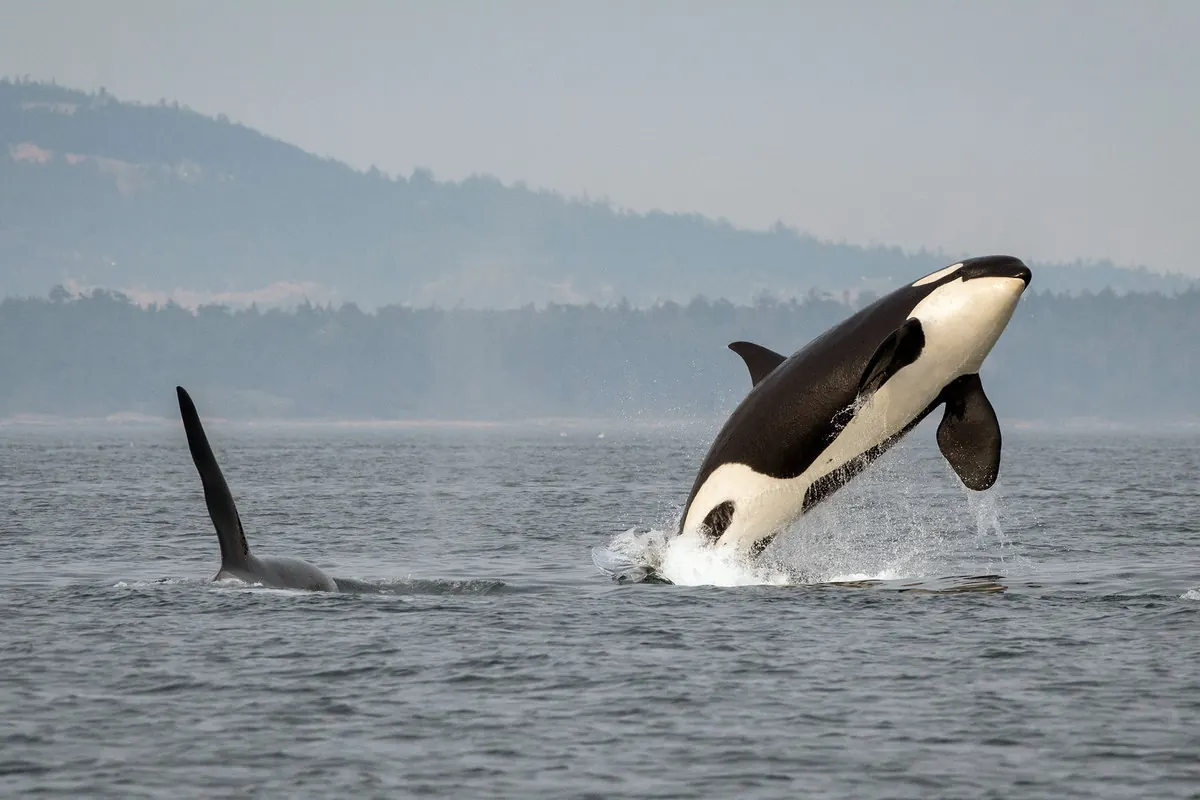
Boaters must stay at least 1,000 yards from Southern Residents under state law, and if whales surface within 400 yards, powered boats must take the engine out of gear when it is safe to do so. Orca Network collects public sighting reports, and a dated orca sighting, with the direction the pod was traveling, belongs on the map-of-sounds page of the journal.
What birds arrive in Washington in October?
On the Pacific Flyway, October brings the first of the winter crowd: cranes on the lower Columbia, raptors riding the Cascade ridges south, and the white snow geese the Skagit is famous for.
-
Sandhill cranes and BirdFest at Ridgefield
Fall migration; BirdFest & Bluegrass Saturday, October 3 · Ridgefield National Wildlife Refuge, Clark County
Ridgefield was set up in 1965 to shelter wintering waterfowl, especially the dusky Canada goose, and sandhill cranes come through in spring and fall; the Friends of the refuge note the crane is endangered in Washington. The free BirdFest & Bluegrass festival on October 3 opens at 9 a.m. at the Carty Unit with guided walks, including nature journaling, and family crafts, while Vancouver Audubon sets up spotting scopes at the River ‘S’ Unit from 9 a.m. to 1 p.m. The auto tour route there is open all day. From October 5 the route closes to walkers for the season, so plan to watch from the car after that.
-
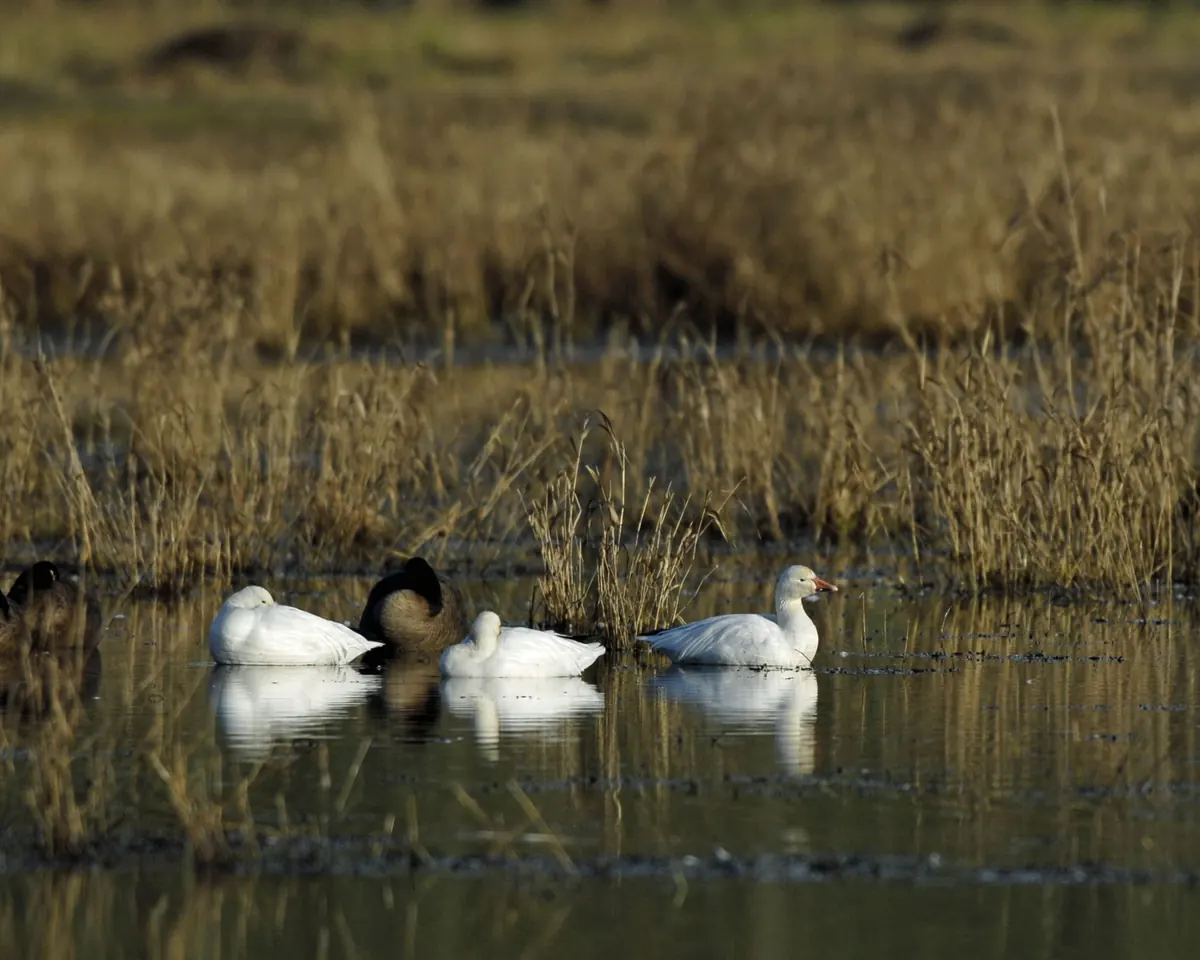
Snow geese on the Skagit flats
First flocks usually late October; the bulk from November into March · Fir Island and farmland west of Conway and Mount Vernon; Port Susan Bay
Lesser snow geese that nest on Russia’s Wrangel Island winter on the Skagit and Stillaguamish deltas. News reports put the first arrivals in late October, and WDFW’s March 2023 survey counted 91,608 birds in the region. WDFW manages the Fir Island Farm Reserve as part of its Skagit Wildlife Area, which covers more than 18,000 acres of estuary and farmland managed for wintering ducks, geese and swans. When a flock lifts all at once, the sound is worth a line in the journal.
-
Hawks over Chelan Ridge
Late August into late October · Chelan Ridge, about 13 miles north-northwest of Chelan, Okanogan-Wenatchee National Forest
HawkWatch International and the national forest began counting migrating raptors from a lookout on Chelan Ridge in 1997. In 2014, a below-average year, the crew tallied 1,384 birds of 16 species between late August and late October; sharp-shinned hawks made up 38 percent, followed by Cooper’s hawks, red-tails and golden eagles. Visitors have been welcome in past seasons; ask HawkWatch whether the site is staffed this year before driving up.
Regular duck season opens October 17, so expect shotguns near wetlands at dawn. Every October checklist you enter in eBird adds to the record of when these birds arrive; eBird usually runs a global October Big Day in mid-month, so check its site for this year’s date. Put the first snow goose and the first bufflehead of the fall on your “birds I have seen” page.
When is the first frost and freeze in Washington?
No state has a wider spread. In the Methow Valley, Winthrop has its median first freeze on September 22, and Yakima reaches its median on October 4. Across the Cascades, Olympia, out on the prairie south of town, freezes by October 14 in a typical year, while Sea-Tac Airport, warmed by the Sound and the city, waits until November 23. Spokane International Airport and Pasco sit in between, with medians of October 12 and October 11. Frost on car roofs, on a still, clear night with the air in the mid-30s, often arrives ten days or so earlier than a hard freeze.
| Station | One year in ten | Median | Nine years in ten |
|---|---|---|---|
| Bellingham International Airport (north Sound) | Oct 12 | Oct 30 | Nov 17 |
| Seattle Tacoma International Airport | Nov 6 | Nov 23 | Dec 15 |
| Olympia Airport (south Sound) | Sep 28 | Oct 14 | Nov 1 |
| Quillayute State Airport (coast, near Forks) | Oct 2 | Oct 26 | Nov 19 |
| Vancouver Pearson Airport (lower Columbia) | Oct 22 | Nov 9 | Nov 30 |
| Wenatchee Pangborn Airport | Oct 12 | Oct 24 | Nov 5 |
| Yakima Air Terminal | Sep 23 | Oct 4 | Oct 17 |
| Pasco Tri Cities Airport | Sep 28 | Oct 11 | Oct 27 |
| Spokane International Airport | Sep 29 | Oct 12 | Oct 28 |
Your nearest station, one of 154 in the state, is listed on the Washington frost dates page. In the Yakima Valley and around Wenatchee, October frost is part of the orchard calendar; in Seattle, the tomatoes usually rot in the rain before any frost can get them. Either way, bring the geraniums in before the first clear, still night, and record the morning the grass first crunches.
How much daylight does Washington lose in October?
More than most of the country. Washington is far enough north that the days shrink by more than three minutes a day in October: Bellingham loses 102 minutes over the month and ends it with under ten hours of daylight, Seattle loses 98 and Spokane 100. Seattle’s sunrise moves 43 minutes later, from 7:09 to 7:52 a.m., and sunset 55 minutes earlier, from 6:48 to 5:53 p.m. After the clocks change (2 a.m., Sunday, November 1), Seattle’s sun is down before 5 p.m.
| City | Oct 1 | Oct 31 | Lost | Per day |
|---|---|---|---|---|
| Bellingham | 11 h 38 m | 9 h 56 m | 102 min | 3.4 min |
| Seattle | 11 h 39 m | 10 h 01 m | 98 min | 3.3 min |
| Olympia | 11 h 40 m | 10 h 04 m | 96 min | 3.2 min |
| Aberdeen | 11 h 40 m | 10 h 03 m | 97 min | 3.2 min |
| Wenatchee | 11 h 40 m | 10 h 01 m | 99 min | 3.3 min |
| Yakima | 11 h 40 m | 10 h 05 m | 95 min | 3.2 min |
| Kennewick | 11 h 41 m | 10 h 07 m | 94 min | 3.1 min |
| Spokane | 11 h 40 m | 10 h 00 m | 100 min | 3.3 min |
Short, gray days add up in western Washington, so the midday walk matters more now than in summer. Run the same arithmetic for your own street with the Field almanac.
When does the rainy season start in Washington, and what will El Niño bring?
West of the Cascades, October is when the wet season switches on. NOAA’s 1991–2020 normals give Sea-Tac 1.61 inches of rain in September, 3.91 in October and 6.31 in November, and Quillayute, on the Olympic coast, 10.68 inches in October alone. The dry side barely notices: Spokane averages 1.37 inches in October, Walla Walla 1.66 and Yakima just 0.64. Normal October highs are near 58 °F in Spokane, 60 °F in Seattle and 64 °F in Yakima, and Spokane’s normal October snowfall is half an inch.
Much of the west-side rain arrives in atmospheric rivers, long plumes of subtropical moisture that hit the Northwest hardest from October through March. Windstorms start now too. On October 12, 1962, the leftovers of Typhoon Freda, remembered as the Columbus Day Storm, drove gusts past 100 mph on the Washington coast and to 80 mph in Seattle and killed nine people in the state; HistoryLink notes that the National Weather Service later ranked it the state’s worst weather disaster of the twentieth century.
Then there is El Niño, which federal forecasters on September 10 gave better than 90 percent odds of reaching very strong status by winter. Deputy State Climatologist Karin Bumbaco says El Niño years usually run warmer than normal across the Pacific Northwest and drier, “particularly west of the Cascades,” and that mountain snowpack often suffers even with normal precipitation, “because more of it falls as rain rather than snow.” The state climate office adds a caution: El Niño and La Niña explain only about 30 percent of the swing in winter weather patterns, and some very strong events still brought the Northwest above-normal precipitation. That matters this year because the Department of Ecology declared drought across the whole state, and by its count Washington has been in drought in seven of the last ten years. This month’s weather is only faintly tied to El Niño; watch for NOAA’s winter outlook around the middle of October.
Check the local forecast before any mountain trip.
What can you see in the night sky over Washington this October?
Clear October nights are more common east of the Cascades; on the west side, grab any dry night between storms. Goldendale Observatory State Park has cancelled its evening programs for now for lack of staff, so do not count on a night there. All times below are Pacific.
-
Jupiter beside the crescent moon
Tuesday, October 6, from moonrise, about 2:10 to 2:40 a.m. PDT · Low in the east-northeast
Much of North America sees the moon cover Jupiter this morning, but Washington lies past the western edge. The International Occultation Timing Association lists no Washington site; its nearest predictions have Jupiter coming back out from behind the moon at 2:01 a.m. PDT at Helena, Montana, and 2:09 a.m. PDT at Salt Lake City, with the moon just one degree up. Here, by Naval Observatory tables, the moon rises at 2:09 a.m. in Spokane, 2:30 in Seattle, 2:34 in Olympia and 2:38 in Aberdeen. Spokane is borderline; from Seattle west, Jupiter is already free of the moon’s edge at moonrise. Either way, binoculars show the planet hugging a thin crescent once both climb out of the haze.
-
The Hunter’s Moon
Evenings of Sunday, October 25, and Monday, October 26 · Low in the east around sunset
Full at 9:12 p.m. PDT on the 25th. In Seattle it rises at 5:27 p.m. that evening, more than half an hour before the 6:03 sunset, and at 5:54 on the 26th, seven minutes before the sun goes down; in Spokane the times are 5:07 and 5:33 p.m. This one is not a supermoon; it only looks huge because it is near the horizon.
-
Orionid meteors
Active October 2 to November 7; best before dawn on October 21 and 22 · Anywhere dark, facing southeast after 3:30 a.m.
These are bits of Halley’s Comet, and they streak fast; the peak is broad, centered on the 21st and 22nd. The gibbous moon spoils the evening, but it sets early on the morning of the 22nd: at 3:08 a.m. in Spokane, 3:17 in Kennewick and 3:29 in Seattle. That leaves two hours or more of real darkness before the eastern sky starts to pale a little before 6.
-
Draconid meteors
Evening of Thursday, October 8 · High in the northwest after dark
Slow, sparse and unpredictable, the Draconids are best in early evening, a shower for kids in pajamas. No moon interferes until it rises near 5 a.m. A handful an hour would be a good night.
-
Saturn all night; Jupiter and Mars before dawn
Saturn at opposition October 4; Mars at the Beehive October 11; moon near Saturn October 23–24 · Saturn low in the east at dusk; Jupiter and Mars in the east before sunrise
On October 4 Saturn stands opposite the sun, rising around sunset and staying up until dawn; any small telescope shows its rings, and on the 23rd and 24th a gibbous moon drifts past it. Venus, sinking into the dusk over the Olympics or the Cascades during October’s opening days, reaches inferior conjunction on the 23rd. Dawn belongs to Jupiter, the brilliant light low in the east, and to ruddy Mars higher up; on the 11th the red planet is parked inside the Beehive (M44), and binoculars catch both at once.
| Phase | Date | Time |
|---|---|---|
| Last quarter | Saturday, Oct 3 | 6:25 a.m. PDT |
| New moon | Saturday, Oct 10 | 8:50 a.m. PDT |
| First quarter | Sunday, Oct 18 | 9:12 a.m. PDT |
| Full moon, the Hunter’s Moon | Sunday, Oct 25 | 9:12 p.m. PDT (looks full the evenings of Oct 25 and 26) |
| Last quarter | Sunday, Nov 1 | 12:28 p.m. PST |
On the wet side, clouds decide everything, so look at Today’s sky first; moonrise for your own town is on the moon phases page.
What is changing color, ripening and coming up from the forest floor in Washington in October?
-
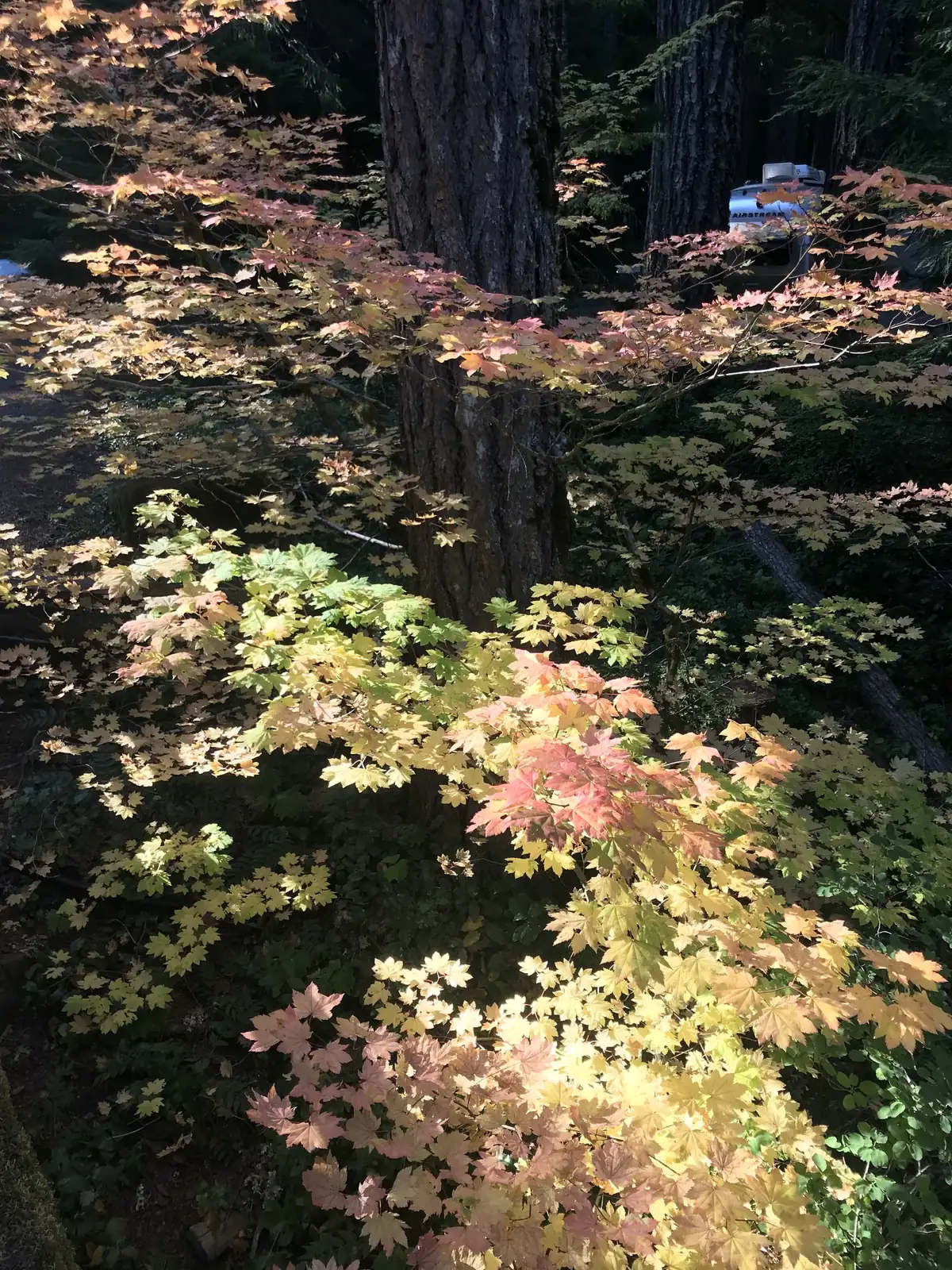
Vine maple, the west side’s red
Color through October; leaf fall peaks late in the month · Forest edges and stream banks from the coast to the Cascades
Vine maple grows as a sprawling shrub or small tree under the big conifers of western Washington, and before its leaves drop they turn shades of yellow or red. Its winged seeds ripen in September or October and spin down on the wind through November. On the drive up to Mount Rainier’s Ohanapecosh and Longmire, it is the red at eye level under the dark firs.
-
Bigleaf maple and its moss coats
Yellow in October; seeds fall October to January · Lowland forests and river valleys, up to about 3,000 feet
Bigleaf maple has the largest leaves of any North American maple, 4 to 10 inches across, and they turn butter yellow before dropping in soggy heaps on west-side sidewalks. The Forest Service notes it carries a heavier load of moss than any other tree in the Northwest; mosses, liverworts and licorice fern hang from its limbs. After the leaves fall, those green mantles are easier to see.
-
Garry oak acorns
Ripen August to November · South Puget Sound prairies, the Columbia Gorge, Klickitat County
Oregon white oak, often called Garry oak here, grows scattered through western Washington with pockets east of the mountains. Its acorns ripen in a single season, from August to November. At Fort Lewis, researchers watched western gray squirrels, a state-listed species, gather and bury them in August and September, and black-tailed deer eat them readily. Collect a few for the seeds-pods-and-cones page, but leave most on the ground.
-
Chanterelles and the mushroom show
October is the heart of the season; show October 24–25 · Douglas-fir and hemlock forests west of the Cascades
The fall rains wake the fungi, and the golden chanterelles under second-growth Douglas-fir are the famous ones. The Puget Sound Mycological Society holds its Wild Mushroom Show at Shoreline Community College on Saturday, October 24, from noon to 6 p.m. and Sunday, October 25, from 10 a.m. to 5 p.m., with up to 400 kinds of wild mushrooms laid out and labeled edible, poisonous or neither. Admission is $10 for adults, $5 for students and free for children under 12, and you can bring in your own finds for experts to identify. Deadly Amanitas grow in the same woods; eat nothing without an expert’s confirmation, and keep the Washington Poison Center number, 1-800-222-1222, handy.
Choose one vine maple or bigleaf maple along a daily route and log it in the tree-through-the-seasons pages: first color, full color and the day it goes bare.
What are Washington’s elk, bears and other animals doing in October?
-
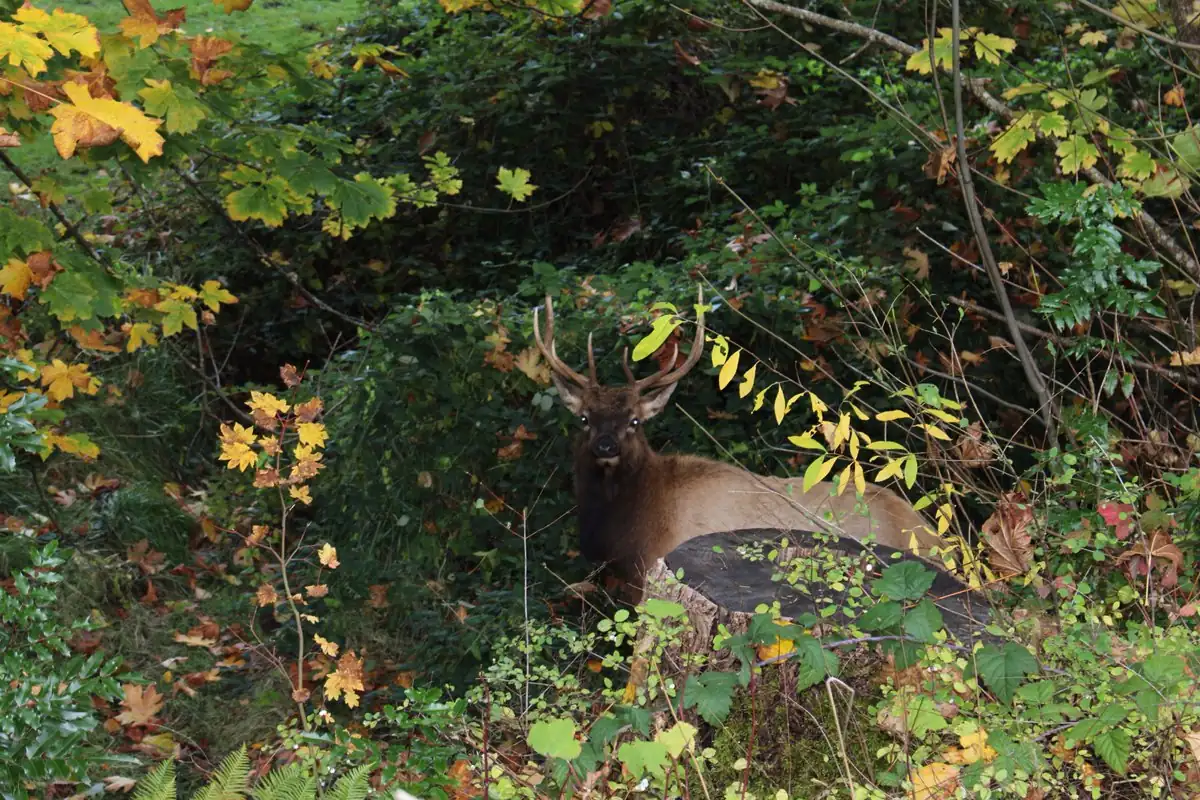
Elk: the end of the rut
Bugling into early October; breeding wraps up by mid-October · Olympic Peninsula and southwest Washington (Roosevelt elk); the Blue Mountains, Yakima and Colockum country (Rocky Mountain elk), and the shrub-steppe of eastern Washington
WDFW describes the bull’s bugle as a guttural groan that climbs into a high whistle and often ends in a few low grunts, and says the breeding season is over by mid-October. Washington has both kinds: Roosevelt elk on the coast and west slopes, including about 5,000 in and around Olympic National Park, the largest number anywhere, and Rocky Mountain elk in the east, many descended from animals brought from Yellowstone in the early 1900s. A bull still full of hormones is dangerous, so watch from a car or from well over a hundred yards away.
-
Black bears eating all day
Through October; into dens as the snow comes · Forests statewide, and the edges of towns
WDFW estimates about 22,000 black bears in Washington. In fall they are packing on fat before winter, and when berries run short they come looking for garbage, fruit and bird seed. The agency says more than 90 percent of human-bear conflicts start with bears learning to link people with food, so take feeders down, pick up fallen apples and keep the trash in the garage until pickup day.
An elk bugle before dawn or a flock of geese overhead in the dark are both good entries for the dusk-and-dawn watch pages.
What can Washington families do outside this October?
- Saturday, October 3: BirdFest & Bluegrass at Ridgefield. Free, from 9 a.m., with family bird walks and spotting scopes. The same weekend, October 3–4, Salmon Days fills downtown Issaquah, a short walk from the hatchery.
- October weekends on the Cedar River. Seattle Aquarium naturalists point out spawning sockeye in Renton and Maple Valley on the 3rd, 4th, 10th, 11th, 17th, 18th, 24th and 25th.
- Early October: a larch hike. Mount Spokane or Fields Spring State Park for young legs; Maple Pass for strong ones. Go before the October 17 rifle opener, or wear bright orange if you go after.
- Thursday, October 8: the Draconids after dinner, with no moon in the way. Two nights later the moon is new, the darkest weekend of the month.
- Thursday, October 15, 10:15 a.m.: the Great Washington ShakeOut. Practice drop, cover and hold on at home or school, then check your emergency kit before storm season.
- October 24–25: the Wild Mushroom Show at Shoreline Community College (free for children under 12).
- Saturday, October 31: Kennedy Creek opens for chum, 10 a.m. to 4 p.m. A good Halloween morning before the costumes come out.
- Citizen science. Enter bird checklists in eBird, report orca sightings to Orca Network with the time, place and direction of travel, and photograph salmon, mushrooms or larches for iNaturalist.
Crossing into Oregon or Idaho? The nature hub links their pages too, and the Naturalist’s Field Journal keeps room for all of it.
Safety notes for October in Washington
- Hunting seasons and hunter orange or pink. Early muzzleloader deer runs September 26–October 4 and early muzzleloader elk October 3–9. The modern firearm general deer season opens Saturday, October 17: black-tailed deer in western Washington through November 1, mule deer in eastern Washington through October 27, and white-tailed deer through October 30 in the northeast units (GMUs 101–124) and through October 27 elsewhere. Eastern modern firearm elk opens October 31. Regular duck season runs October 17–25 and again from October 28, eastern Washington’s youth waterfowl day is October 3, and eastern pheasant opens October 17. Under WAC 220-414-080, deer and elk hunters using modern firearms, upland bird and rabbit hunters using firearms other than muzzleloaders, and anyone hunting anything but migratory birds during the modern firearm deer and elk seasons are required to have on 400 square inches or more of fluorescent orange, fluorescent pink or a mix of the two, worn above the waist where it can be seen from every side. Hikers are not required to, but the October 17 opener falls on larch weekends on national forest land; wear something bright, and put a bright vest on the dog.
- Storms, floods and falling trees. The first atmospheric rivers can raise rivers fast, and wind on soaked ground topples trees onto power lines. Keep flashlights ready.
- Earthquakes. Western Washington sits above the Cascadia subduction zone. Use the October 15 ShakeOut to practice, and if you are on the coast and the ground shakes hard for a long time, go to high ground without waiting for a siren.
- Cold water and whales. Puget Sound stays cold enough year round that a fall overboard is an emergency; wear a life jacket in any small boat, and give Southern Resident orcas 1,000 yards.
- Dogs and raw salmon. Salmon carry an organism that can kill dogs that eat raw fish; keep dogs away from carcasses on salmon streams.
- Mountain roads and early snow. Snow can hit the passes and high trails any time in October. The North Cascades Highway closes each winter over Washington and Rainy passes; its median final closure date is November 24, but an early storm can shut it sooner.
- Bears, mushrooms and wet leaves. Secure food and trash, eat no wild mushroom without an expert’s confirmation, and take care on slick leaves and mossy rocks at waterfalls.
Sources
- Washington State Parks: Tree ID, the larch tree
- Washington Trails Association: The science of larches
- USDA Forest Service FEIS: Larix lyallii, subalpine larch
- USDA Forest Service FEIS: Acer circinatum, vine maple
- USDA Forest Service FEIS: Acer macrophyllum, bigleaf maple
- USDA Forest Service FEIS: Quercus garryana, Oregon white oak
- Friends of the Issaquah Salmon Hatchery: Fall at the hatchery
- Salmon Days Festival, Issaquah (October 3–4, 2026)
- Visit Issaquah: Salmon Days 2026
- Seattle Aquarium: Cedar River Salmon Journey 2026
- South Puget Sound Salmon Enhancement Group: Kennedy Creek Salmon Trail
- Hanford Reach National Monument (fall chinook spawning)
- The Whale Trail: Southern Resident orcas and shore viewing sites
- South Whidbey Record: Orcas return, boaters urged to keep their distance (Sept. 15, 2026)
- Puget Sound Institute: Chum salmon and the orcas’ return
- Friends of Ridgefield National Wildlife Refuge: BirdFest & Bluegrass 2026
- U.S. Fish and Wildlife Service: Ridgefield National Wildlife Refuge
- Northwest Public Broadcasting: Snow geese winter population in Skagit on the rise
- WDFW: Skagit Wildlife Area
- HawkWatch International: Fall 2014 raptor migration report, Chelan Ridge
- BirdNote: Hawkwatch, Chelan Ridge
- NOAA NCEI: U.S. Climate Normals 1991–2020 (monthly station data)
- NOAA NWS Western Region: Climate of Seattle, Washington (Technical Memorandum WR-257)
- Washington Secretary of State: Remembering 1962’s Columbus Day Storm
- HistoryLink: Columbus Day windstorm ravages Puget Sound region, October 12, 1962
- NOAA Climate Prediction Center: ENSO diagnostic discussion, September 10, 2026
- UW College of the Environment: What to expect from a very strong El Niño in the Pacific Northwest (August 2026)
- Office of the Washington State Climatologist: How might El Niño affect Washington this winter? (Sept. 10, 2026)
- Washington Department of Ecology: Water supply update, June 2026
- U.S. Naval Observatory: Sun and moon rise and set data
- International Occultation Timing Association: occultation of Jupiter, October 6, 2026
- Goldendale Observatory State Park
- Puget Sound Mycological Society: Wild Mushroom Show 2026
- Puget Sound Mycological Society: ID clinics and poison center information
- WDFW: Elk (Cervus canadensis)
- WDFW: Black bear (Ursus americanus)
- WDFW: Big game hunting regulations
- Washington hunting regulations 2026: deer general seasons
- Washington hunting regulations 2026: elk general seasons
- Washington hunting regulations 2026–27: migratory game bird seasons
- Washington hunting regulations 2026–27: resident game bird seasons
- WAC 220-414-080: Hunter orange and hunter pink clothing requirements
- WDFW: Fluorescent hunter pink now legal (fact sheet)
- University of Washington Emergency Management: 2026 Great ShakeOut, October 15
- Great ShakeOut: Washington
- Washington State Route 20 (North Cascades Highway) winter closure history
- Photos via Wikimedia Commons; licenses and photographers are credited under each picture
