What to look for in nature in Washington this November
November is the month Washington goes gray and gets busy. The chum run peaks in the small creeks around Puget Sound, white geese and swans settle onto the Skagit and Snohomish farm fields by the tens of thousands, and the first bald eagles drift down the rivers to pick over spent salmon. East of the Cascades the ground freezes hard, the deer rut is on, and Spokane’s sun sets at 4 p.m. by the last day of the month. Below, the month’s best sights, from the Skagit flats to Spokane.
Other months in Washington: October, December.
Start here
- Chum in the creeks. The chum run at Kennedy Creek, northwest of Olympia, usually peaks in mid-November; the trail is open weekends through November 29, plus Veterans Day and the day after Thanksgiving. On Saturday, November 7, the free Kitsap Salmon Tours put docents at eight streams around Bremerton, Poulsbo and Silverdale.
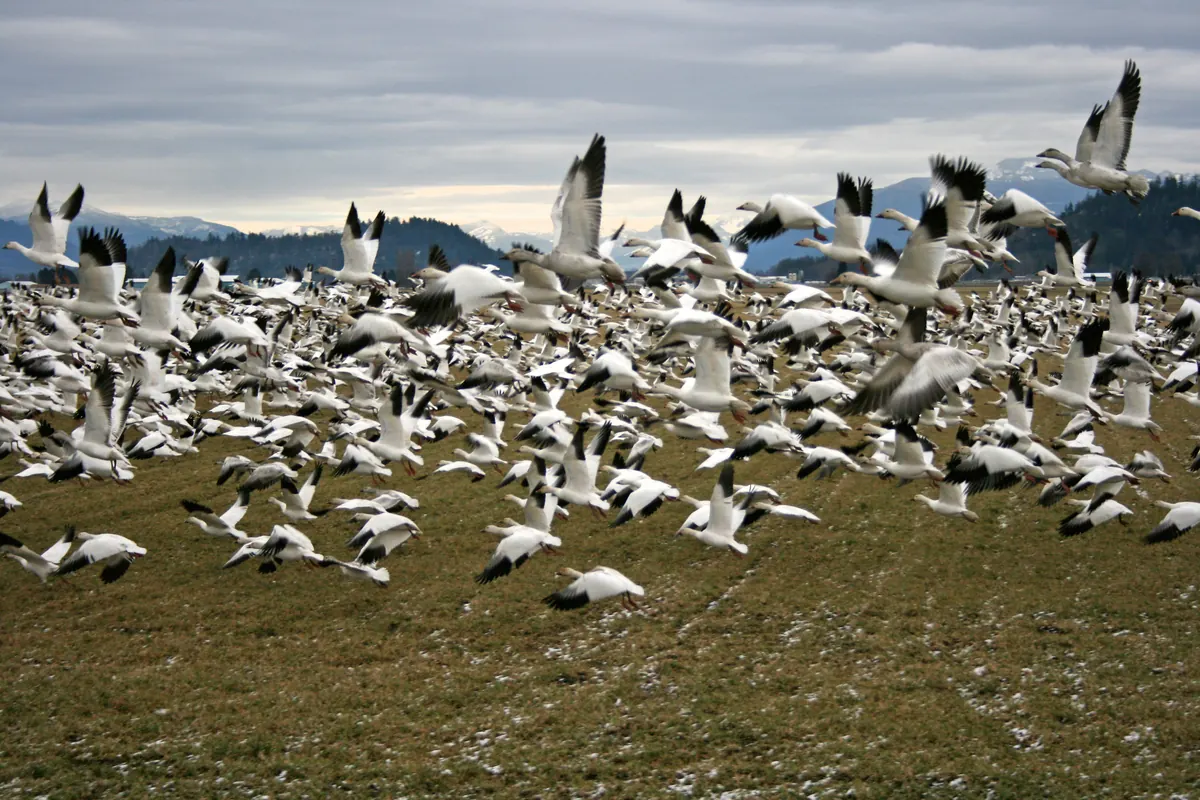
- White birds on the Skagit flats. Snow geese from Russia’s Wrangel Island and thousands of trumpeter and tundra swans spend the winter on the farmland of Skagit and Snohomish counties. Drive the back roads around Fir Island and Conway and scan the fields; WDFW says the first swans generally arrive in late October.
- The king tides. The first king tides of the winter come November 25–30. Seattle’s peak, 12.70 feet, is predicted for 7:39 a.m. on Friday, November 27. Walk a seawall or a beach park that morning, keep well back from logs in the surf, and send a photo to the state’s king tide project.
Keep a record: put the first snow goose flock and the first trumpeter swan on the “birds I have seen” list, sketch a chum salmon with its purple-banded flanks in the daily field log, note the morning of the king tide on the reading-the-signs plate, add a varied thrush’s buzzy whistle to the map of sounds, and use the dusk-and-dawn watch pages for the four o’clock sunsets.
Regions used below: Puget Sound and Seattle; Olympic Peninsula and the coast; Southwest and the lower Columbia; North Cascades and the Methow; Central Washington and the Yakima Valley; Columbia Basin and the Tri-Cities; Spokane and the Palouse.
Where can you see chum salmon spawning in Washington in November?
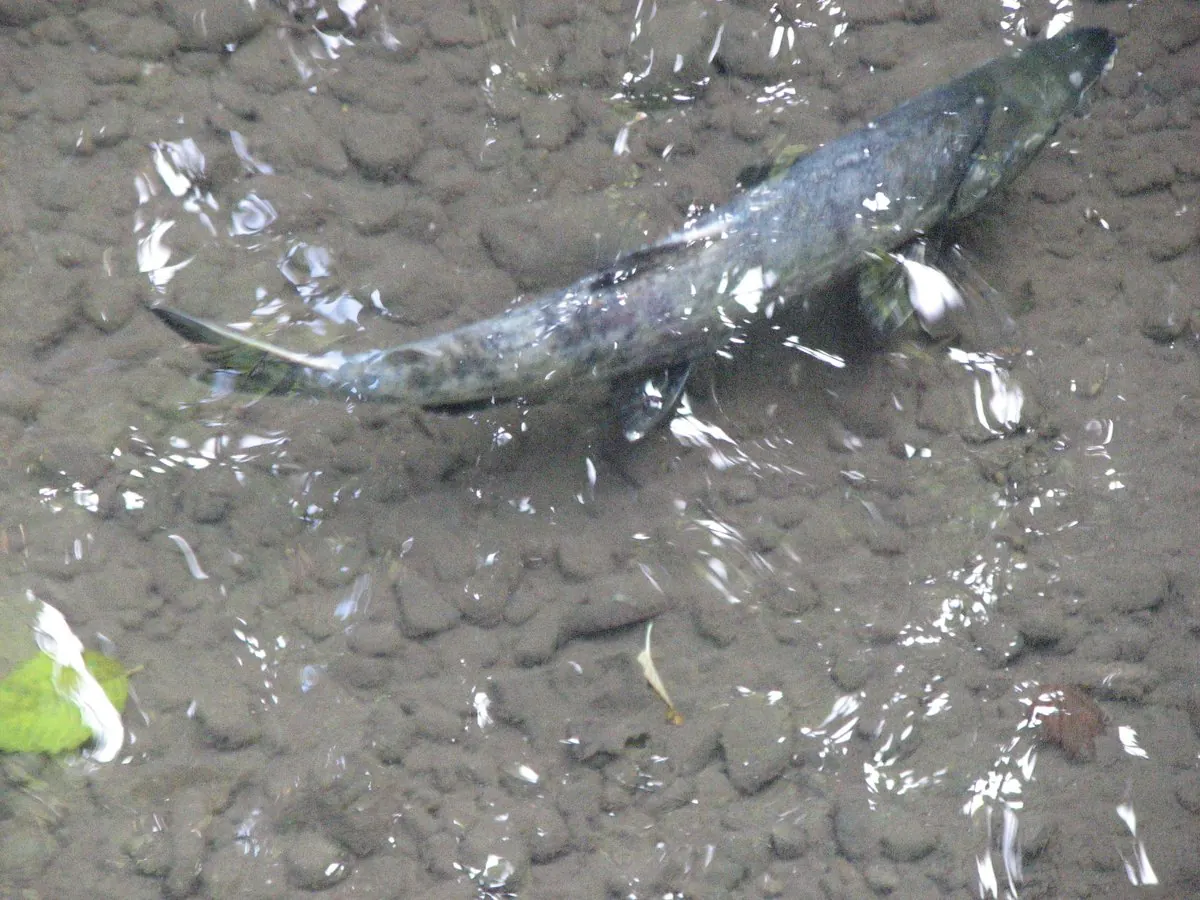
In western Washington, November belongs to the chum. They make up the year’s final large run of salmon: broad, heavy fish whose spawning colors are olive with jagged purple and green bars, and the males grow hooked jaws and doglike teeth (an old nickname is dog salmon). Chum need only a short run of clean gravel near salt water, so they crowd into small creeks that a family can walk beside. After spawning they die, and the carcasses feed everything from eagles and gulls to the streamside alders.
-
Kennedy Creek Salmon Trail
Weekends October 31 to November 29, plus November 11 and 27, 10 a.m. to 4 p.m.; the run usually peaks in mid-November · Off U.S. 101 at the head of Totten Inlet, Mason County, northwest of Olympia
The South Puget Sound Salmon Enhancement Group runs this free creekside trail, and few spots in Washington put you closer to spawning chum. In a normal year 20,000 to 30,000 spawners come back, and in an exceptional one up to 80,000. The organizers say the peak usually falls in mid-November, with spawning still visible into early or mid-December. The trail is closed on Thanksgiving Day but open the Friday after, and the gate is locked at 4 p.m. sharp. Dogs are not allowed, and visitors carry out their own trash.
-
Kitsap Salmon Tours
Saturday, November 7, 11 a.m. to 3 p.m. · Eight stream sites in Bremerton, Silverdale and Poulsbo, including the Chico Salmon Viewing Park and the Chico Estuary
WSU Extension in Kitsap County coordinates a free one-day open house at eight salmon streams, each staffed by biologists, local groups and trained docents, with guided walks and children’s activities. Chico Creek, which runs into Dyes Inlet near Bremerton, is the county’s best-known chum stream. The tours go ahead in any weather, so bring rubber boots. The same sites are open all year if you would rather go on a quieter weekday.
-
Piper’s Creek in Carkeek Park
Chum through November; the volunteer survey runs November 1–30 · Carkeek Park, northwest Seattle
Seattle’s own chum run comes up Piper’s Creek, a short stream that falls through Carkeek Park to Puget Sound. The Carkeek Watershed Community Action Project counts the fish every November, and volunteer Salmon Stewards have in past years stood along the creek on November weekends to point them out. Seattle Parks and Seattle Public Utilities also put on a free Salmon Celebration, with music and hands-on displays, on a November weekend; the 2026 date had not been posted in early October, so check with Seattle Public Utilities before you go. Parking is tight; take the bus if you can.
-
Orcas on the trail of the chum
Fall and early winter, unpredictably · Central and south Puget Sound, from Whidbey Island to Vashon
The same fish draw the Southern Resident killer whales. The Puget Sound Institute reports that chum make up most of what the residents eat in fall and early winter, which is why they push into inland waters this time of year. In November 2022, all three pods, about 73 whales, foraged around Vashon Island from the 7th to the 10th, the Vashon Beachcomber reported, and in 2024 the Puget Sound Institute noted that J pod had stayed inside the Sound for 19 straight days as of November 7. Nobody can promise a repeat, but a calm-day ferry crossing is a cheap way to try.
Rain is the trigger. Chum wait in the bays until a storm lifts the creeks, then run up in a rush, so the clear day after a soaking is the time to go. Stay on the bank: the eggs are buried in the gravel, and one boot in the wrong place can crush a nest.
Where can you see snow geese and swans in Washington in November?
The flats where the Skagit and Stillaguamish rivers meet salt water are one of the great winter bird sights on the Pacific coast. White snow geese, which nest on Wrangel Island off Arctic Russia, graze the fields in flocks that lift off all at once with a sound like surf. Swans, both the trumpeter and the slightly smaller tundra, feed in the potato and corn stubble and roost on nearby lakes. Smaller crowds gather at refuges on the lower Columbia and near Spokane.
-
Snow geese at Fir Island
Fall through March 31 · Fir Island Farm Reserve, about 2.7 miles west of the South Fork Skagit River bridge at Conway; nearby farm roads
WDFW manages the Fir Island Farm Reserve as a game reserve, with no hunting or trapping of any kind, and plants winter cover crops so the geese have something to graze. A short trail along the top of the dike looks out over Skagit Bay, and an active bald eagle nest is visible from the entrance road. Parking needs a Discover Pass, there are no restrooms, and the site is closed after dark. The geese move between fields every day, so the flock may be a mile away; creep along the farm roads, park well clear of traffic, and stay in your vehicle to watch.
-
Trumpeter and tundra swans
Arriving from late October; common from November to April · Farm fields and lakes of Skagit, Snohomish and Whatcom counties; tundra swans also at Ridgefield and Turnbull refuges
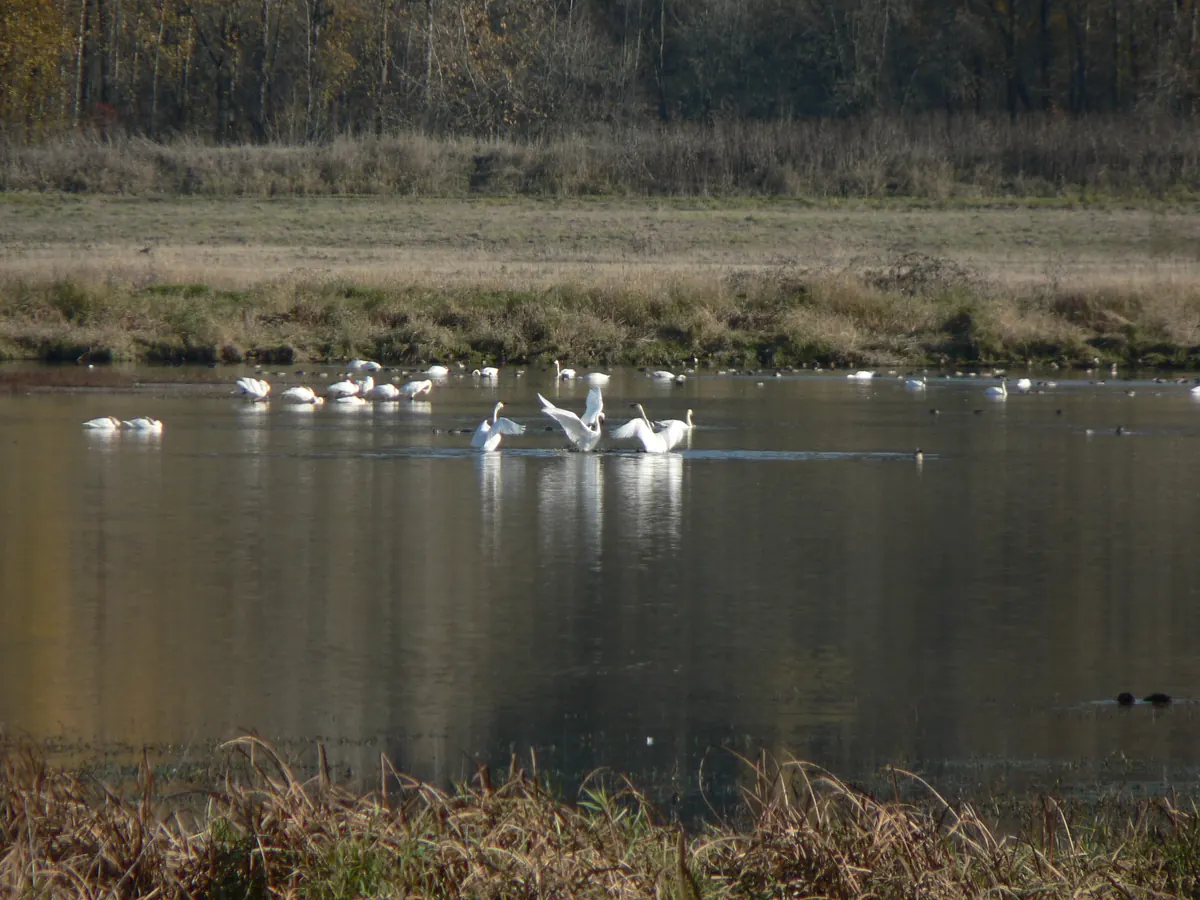
WDFW says nearly three-quarters of the trumpeter swans that migrate on the Pacific Flyway winter in Washington, mostly in Whatcom and Skagit counties, and that a trumpeter can weigh 28 pounds, the heaviest native bird in North America. Seattle Audubon’s BirdWeb counts nearly 2,000 tundra swans wintering in Skagit County alone. To tell them apart, look at the face: a tundra swan usually shows a yellow fleck ahead of each eye, while on a trumpeter the black of the bill runs broadly up to the eye. WDFW notes that about two percent of the swans wintering in western Washington die each year from power lines or from swallowing old lead shot and fishing weights.
-
Ridgefield from the car
Fall and winter · River S Unit auto tour, Ridgefield National Wildlife Refuge, Clark County
From fall into spring the River S auto tour is open to vehicles only, and you stay in the car except at the entrance kiosk, the restrooms and the viewing blind. That turns out to be an advantage: ducks, geese and swans tolerate a slowly moving car far better than a person on foot. The refuge lists sandhill cranes, a state-listed species, along with hawks and deer. BirdWeb puts about 1,000 wintering tundra swans in the Ridgefield area. The seasonal Carty Lake and Kiwa trails are closed for the season.
-
Turnbull’s late migrants
Fall migration September through November · Turnbull National Wildlife Refuge, south of Cheney, Spokane County
Southwest of Spokane, Turnbull’s pine-ringed marshes on the channeled scablands catch the tail end of migration. The refuge says tundra swans come back each fall along with redheads, gadwall, mallards and Canada geese, resting on its hundreds of small wetlands. Entry is free; from November through April the gates are open 6 a.m. to 6 p.m.
Snow goose hunting is open in the Skagit area (Goose Management Area 1) from October 17 through November 29, so expect shots on the private fields at dawn; the Fir Island reserve itself is closed to hunting. Count the swans in one field and log the number with the date; over several winters your own notes will show when they arrive and how many stay.
When do bald eagles come to the Skagit and Nooksack rivers?
Washington has its own nesting bald eagles all year, but in winter many more arrive. WDFW explains that birds that nest in Canada and Alaska come south for the cold months and gather along rivers carrying spawned-out salmon, especially chum. The best-known gatherings are on the upper Skagit between Rockport and Marblemount and on the Nooksack near Deming in Whatcom County. Those are mostly December-to-February events: the Skagit River Bald Eagle Interpretive Center in Rockport opened for winter weekends on December 6 last season (its 2026–27 dates are not posted yet), and Whatcom County Parks names December through March as the big months at Deming Homestead Eagle Park.
November is the run-up. As the chum finish spawning and the carcasses wash onto gravel bars, the first eagles of the winter turn up in the cottonwoods, and the numbers build toward the holidays. Look for white heads in the bare trees along the rivers, and for eagles squabbling with ravens and gulls over a fish on the bar.
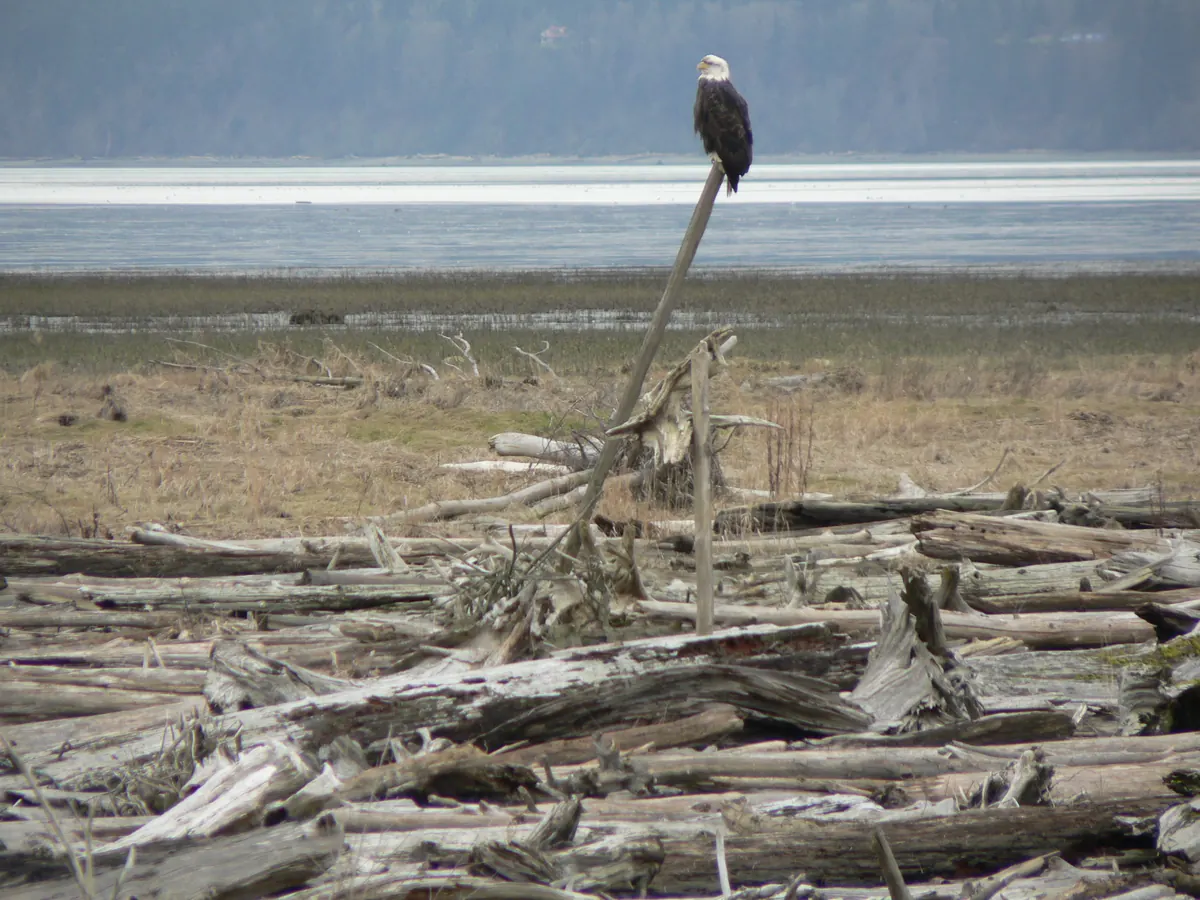
A feeding eagle that gets flushed may abandon a meal it needs, so watch from road pullouts and park trails, not the gravel bars. Gray, overcast mornings are often the busiest.
When is the deer rut in Washington?
WDFW says deer breed during a rut that normally runs through November and December. Bucks that spent the summer quiet and hidden start to travel, rub their antlers on saplings, and follow does across roads in daylight. Whitetails in the northeast, mule deer east of the crest and blacktails on the west side are all on the move.
-
White-tailed deer in the northeast
Through November · Stevens, Pend Oreille and Spokane counties, and the farmland of the Palouse
Whitetails are the common deer of northeastern Washington. The general late buck season in units 105 through 124 is scheduled for the rut, November 7–19, which tells you when the bucks are most active and least careful.
-
Mule deer heading for winter range
November, as snow builds up high · Methow and Okanogan valleys; shrub-steppe foothills east of the Cascades
The Methow deer belong to the state’s largest migratory mule deer herd, which spends summer in the high country and winter on the valley floor. As the snow deepens in the high country, the deer drop down to the sagebrush foothills of the lower Methow, rutting along the way. WDFW has closed large parts of the Methow Wildlife Area from mid-December in recent winters to keep people from spooking them, because every flight costs energy a deer cannot spare.
WDFW says more than half of the state’s deer-vehicle collisions happen in October and November. With sunrise and sunset now inside rush hour, ease off the gas in those twilight hours; a deer crossing the road is often followed by a second. A fresh rub or a scrape is a good find for the reading-the-signs page of the journal.
Which winter birds come to Washington feeders in November?
When the cold sets in, some mountain birds move downslope and some northern birds move south, so backyard feeders get busier. Here is what to look for and how to make your sightings count.
-
Varied thrush
Fall through early spring in the lowlands · Wooded yards and parks on both sides of the Cascades
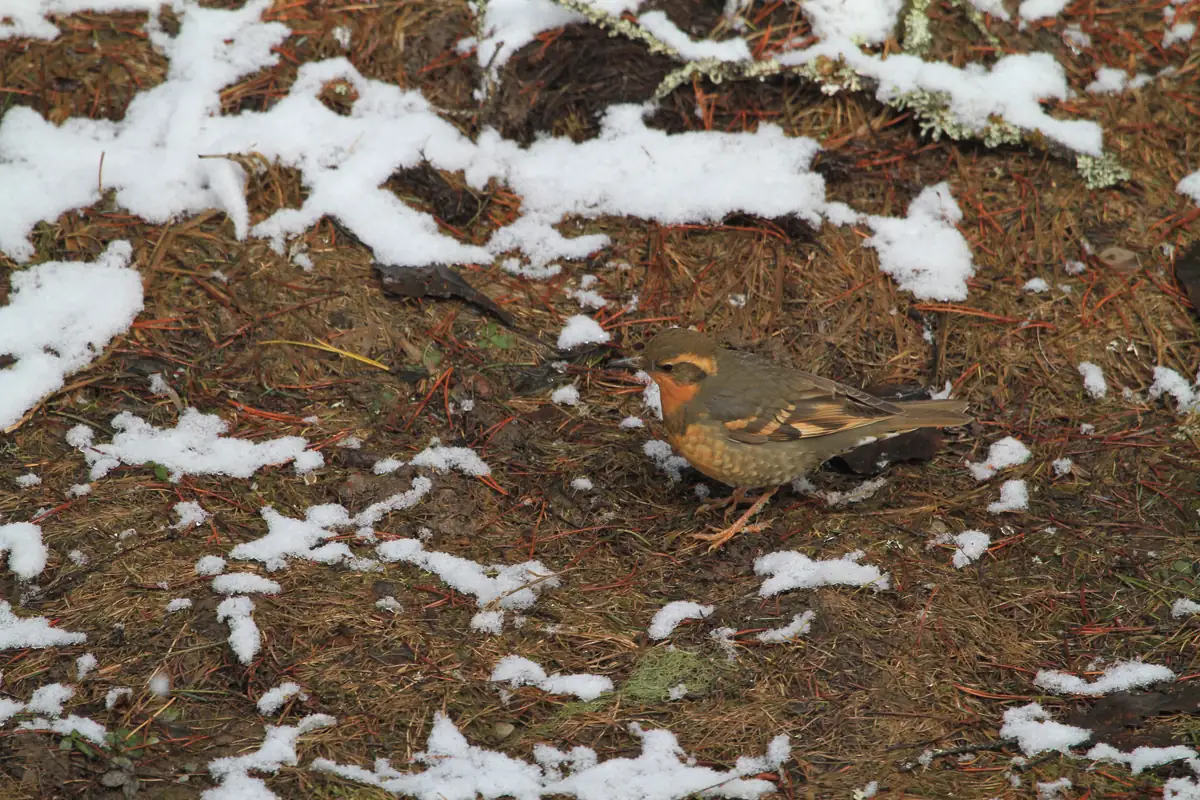
This robin-sized thrush, with an orange eyebrow and a dark band across an orange breast, breeds in the mountain forests and comes down to the lowlands for the winter, according to BirdWeb. It usually feeds on the ground, flipping leaves under shrubs, and will pick up seed spilled beneath a feeder. Its song is a single long, buzzy whistle, each note on a different pitch, and is easy to miss as a sound from the woods.
-
Anna’s hummingbird
All winter · Western Washington, especially the Puget Trough
Fifty years ago this was a California bird. BirdWeb notes that the first Washington nest was found in Tacoma in 1976, and that Anna’s hummingbirds are now common year round in the Puget lowlands, helped by feeders and gardens of winter-flowering plants. If you keep a sugar-water feeder going, refresh the nectar every few days and take it indoors overnight when a hard frost is due.
-
Winter finches: probably not a big year
Through the winter · Statewide
The Finch Research Network’s 2026–27 forecast, by Tyler Hoar, reports good seed crops from British Columbia to Alaska, mostly poor crops from western Manitoba to Alberta, and pine cone crops that failed across the interior West, which pushed Type 2 red crossbills eastward. In its reading, pine siskins will move toward the good seed in British Columbia and the Northeast, while plentiful mountain-ash berries keep Bohemian waxwings up north. The forecast does not discuss Washington directly, so treat it as background rather than a promise of a big finch year here.
-
Project FeederWatch
Season starts November 1 and runs into April · Any yard, balcony, school or nature center
FeederWatch, run by the Cornell Lab with Birds Canada, is a winter survey built from what people see at their own feeders. Count on whatever days suit you, weekly or just once, and report online or in the app.
Keep feeders clean, and if bears still visit your neighborhood, wait until they have denned for the winter before putting seed out. List the new arrivals on the journal’s “birds I have seen” pages with the date each one first appears.
When are the king tides in Washington this November?
“King tide” is the popular name for the highest tides of the year, which in Washington come mostly from November through February, around new and full moons that coincide with a close moon. Washington Sea Grant publishes the dates for each winter so people can photograph how high the water reaches on seawalls, roads and marshes, a glimpse of everyday water levels in a future with higher seas. This year the November window falls over Thanksgiving week, and the Beaver Moon, full on the morning of the 24th, is also near perigee.
| Place | Window | Peak | Height |
|---|---|---|---|
| Seattle | Nov 25–29 | Nov 27, 7:39 a.m. | 12.70 ft |
| Tacoma | Nov 25–29 | Nov 27, 7:39 a.m. | 13.03 ft |
| Port Townsend | Nov 26–29 | Nov 28, 8:23 a.m. | 9.69 ft |
| Bellingham | Nov 26–30 | Nov 27, 8:16 a.m. | 9.65 ft |
| Westport | Nov 23–27 | Nov 25, 12:24 p.m. | 11.03 ft |
These are predicted astronomical tides. A storm with low pressure and an onshore wind can push the water higher, and the state climate office warns that strong El Niño winters lift coastal sea level for months at a time, which adds to the flood risk. Go at the peak, stay off the logs on the beach (a wave can roll one over a person), and do not drive through water over the road.
Has the first freeze come yet in Washington?
In most of Washington it has. Only two stations in the table below still have their median freeze date ahead of them on November 1. Yakima’s typical date is October 4, Pasco’s October 11, Spokane’s October 12 and Olympia’s October 14, and even the coast at Quillayute (October 26) and Bellingham (October 30) usually freeze before Halloween is over. The exceptions sit by big water and pavement. Vancouver, on the lower Columbia, has a median of November 9, and Sea-Tac Airport waits until November 23; in one year in ten, Sea-Tac does not reach 32 °F until December 15.
| Station | One year in ten | Median | Nine years in ten |
|---|---|---|---|
| Bellingham International Airport (north Sound) | Oct 12 | Oct 30 | Nov 17 |
| Seattle Tacoma International Airport | Nov 6 | Nov 23 | Dec 15 |
| Olympia Airport (south Sound) | Sep 28 | Oct 14 | Nov 1 |
| Quillayute State Airport (coast, near Forks) | Oct 2 | Oct 26 | Nov 19 |
| Vancouver Pearson Airport (lower Columbia) | Oct 22 | Nov 9 | Nov 30 |
| Wenatchee Pangborn Airport | Oct 12 | Oct 24 | Nov 5 |
| Yakima Air Terminal | Sep 23 | Oct 4 | Oct 17 |
| Pasco Tri Cities Airport | Sep 28 | Oct 11 | Oct 27 |
| Spokane International Airport | Sep 29 | Oct 12 | Oct 28 |
Near the Sound in Seattle or along the Columbia in Clark County, frost-tender pots may last into mid-November; east of the Cascades the season is done. Look up your closest station on the Washington frost dates page, and note the first morning you scrape ice off the windshield.
How early does it get dark in Washington in November?
Very early, and suddenly. Pacific Standard Time is back as of 2 a.m. Sunday the 1st, which drops Seattle’s sunset that same afternoon to 4:51. By November 30 it sets at 4:20 and rises at 7:36. Spokane, near the Idaho line at the eastern edge of the Pacific time zone, gets the earliest evenings: its sun goes down at 4:00 p.m. on the last day of the month. Every city in the table loses more than an hour of daylight during November, and Bellingham ends the month with just 8 hours 35 minutes between sunrise and sunset.
| City | Nov 1 | Nov 30 | Lost | Per day |
|---|---|---|---|---|
| Bellingham | 9 h 52 m | 8 h 35 m | 77 min | 2.7 min |
| Seattle | 9 h 57 m | 8 h 44 m | 73 min | 2.5 min |
| Aberdeen | 10 h 01 m | 8 h 50 m | 71 min | 2.4 min |
| Vancouver | 10 h 06 m | 8 h 59 m | 67 min | 2.3 min |
| Wenatchee | 9 h 59 m | 8 h 46 m | 73 min | 2.5 min |
| Yakima | 10 h 02 m | 8 h 52 m | 70 min | 2.4 min |
| Kennewick | 10 h 04 m | 8 h 55 m | 69 min | 2.4 min |
| Spokane | 9 h 58 m | 8 h 44 m | 74 min | 2.6 min |
Each day’s loss gets smaller as late November arrives. If you work indoors, plan your outdoor time around lunch. Any town’s sunrise and sunset are on the daylight calculator.
Is November the wettest month in Washington, and what could El Niño bring this winter?
For Seattle, it is. NOAA’s 1991–2020 normals give Sea-Tac Airport 6.31 inches of precipitation in November, more than any other month, with a normal high of 52 °F and a low near 41 °F. The rain usually comes as a long series of Pacific storms, and the wettest of them are atmospheric rivers, narrow streams of tropical moisture that can stall over the Olympics and the Cascades for days. November 2006 brought Sea-Tac 15.63 inches, the wettest month on record there, and Mount Rainier National Park took 18 inches of rain in 36 hours on November 6 and 7 that year, wrecking roads and campgrounds. In November 2021, a five-day atmospheric river that began on the 12th sent the Nooksack and Skagit to record floods, and the Department of Ecology says the water damaged about 85 percent of the homes and buildings in Sumas.
East of the mountains, November is when winter starts. Spokane’s normals are 2.06 inches of precipitation, 6.2 inches of snow, and a high of only 42 °F; Yakima gets less than an inch of precipitation and about 3 inches of snow.
This winter looks to be shaped by El Niño. The CPC’s mid-September discussion (dated the 10th) puts the odds that El Niño becomes very strong over the coming cold season above nine in ten. The Office of the Washington State Climatologist, looking back at the strongest El Niño winters since 1950, finds that they have reliably run warm in Washington, and that lower-than-normal mountain snowpack is the usual result. Precipitation is less dependable: the average leans a little dry, but some of the strongest events, 1957–58, 1982–83 and 2015–16 among them, were wet. The office also reminds readers that El Niño accounts for only a part of the year-to-year swing and that every event behaves a little differently.
NOAA releases its winter outlook in mid-October (the 15th this year); after that date you can read its temperature and precipitation maps at the CPC 90-day outlooks. For this week’s rain, wind and snow levels, see our forecast page.
What is in Washington’s night sky in November?
With sunset before 5 p.m., you can stargaze before dinner, if the clouds allow. They often will not on the west side, so the Columbia Basin and the Palouse have the best odds of a clear night. All times are Pacific Standard Time.
-
The Beaver Moon, a supermoon
Full at 6:53 a.m. on Tuesday, November 24; looks full the evenings of the 23rd and 24th · Rising in the east-northeast around sunset
November’s full moon is called the Beaver Moon in the old almanac naming. Perigee (the closest the moon swings to us in November) comes about 30 hours later, enough for EarthSky and others to count this as a supermoon, if a mild one. Overnight on the 23rd the bright moon slides across the Pleiades, drowning out most of the cluster.
-
Leonid meteors
Active November 6–30; best before dawn on Wednesday, November 18 · Anywhere dark, after the moon sets around midnight
The IMO’s 2026 calendar calls for a quiet year, around 15 meteors an hour in ideal conditions and no burst. The half-lit moon drops out of sight around midnight, and Leo is highest at the end of the night, so watch from roughly 2 a.m. until dawn. The 17th and 19th can also produce a few.
-
The planet parade before dawn
Through the month, best November 14–25 · Low in the east-southeast and up in the south before sunrise
Mornings are where the planets are. Venus climbs quickly out of the dawn twilight and reaches its greatest brilliancy around November 24–27. Mars and Jupiter share Leo, and before sunrise on the 15th and 16th they are only about a degree apart, a pair you can hide behind one fingertip held at arm’s length. Mercury climbs highest before dawn around November 18–25 (greatest western elongation is the evening of the 20th). After dark, only Saturn is on show, sitting due south as twilight fades.
| Phase | Date | Time |
|---|---|---|
| Last quarter | Sunday, Nov 1 | 12:28 p.m. |
| New moon | Sunday, Nov 8 | 11:02 p.m. |
| First quarter | Tuesday, Nov 17 | 3:48 a.m. |
| Full moon, the Beaver Moon | Tuesday, Nov 24 | 6:53 a.m. (looks full the evenings of Nov 23 and 24) |
| Last quarter | Monday, Nov 30 | 10:08 p.m. |
Solar activity has passed its maximum, yet large solar storms still happen, and long November nights give northern Washington a fair chance at an aurora if one comes. Check what the sky is doing before heading out, and find moonrise for your town on our moon calendar.
What can Washington families do outside in November?
- Weekends from October 31: Kennedy Creek. Free, 10 a.m. to 4 p.m., with docents on the trail; the run usually peaks around mid-month. Leave dogs at home.
- Saturday, November 7: Kitsap Salmon Tours. Eight free salmon-stream sites from 11 a.m. to 3 p.m., with coloring stations and guided walks.
- Wednesday, November 11: a Discover Pass free day. Veterans Day is the year’s last free day for parking at state parks and on WDFW and DNR lands. (The day after Thanksgiving is not a free day in Washington, though Kennedy Creek is open that Friday.)
- Saturdays at Nisqually. The Billy Frank Jr. Nisqually National Wildlife Refuge lists a volunteer-led nature walk every Saturday at 10 a.m., about two hours and a mile, starting at the observation deck by the visitor center; on the fourth Saturday, November 28, a longer bird walk starts at 9 a.m. Confirm on the refuge’s events page before you drive.
- Weekends at Piper’s Creek. Look for chum in Seattle’s Carkeek Park; check with Seattle Public Utilities for the date of this year’s Salmon Celebration.
- Tuesday, November 17 to Wednesday the 18th: Leonids before school. Set an alarm for 5 a.m., go out on the porch for ten minutes, and count.
- Friday, November 27: the king tide. Seattle’s highest water is about 7:39 a.m., and Tacoma’s is at the same time. Take a photo of a familiar seawall or boat ramp and compare it with a summer picture.
- Citizen science. Sign up for FeederWatch (its season opens November 1), count swans and geese for eBird, and add salmon, eagles and king tide photos to iNaturalist or Washington Sea Grant’s king tide project.
The nature pages for every state cover Oregon and Idaho too, and if you missed the salmon in October, the Washington October guide is still up. A field journal of your own keeps the dates in one place.
Safety notes for November in Washington
- Hunting seasons and hunter orange. Western Washington’s modern firearm elk season runs November 7–18, and the eastern firearm elk season that opened October 31 continues through November 8. Late modern firearm deer seasons are November 7–19 for white-tailed bucks in the northeast (units 105–124) and November 19–22 for black-tailed deer in many western units; late archery and muzzleloader seasons open in many units between November 20 and 25 and run into December. Duck season is open all month, Skagit-area snow goose hunting runs through November 29, and pheasant, quail and grouse are open, with western Washington pheasant ending November 30. Under state rule WAC 220-414-080, anyone after upland birds or rabbits with a shotgun or rifle (muzzleloaders excepted), deer and elk hunters with modern firearms, and nearly anyone hunting where a modern firearm deer or elk season is open have to wear a minimum of 400 square inches of fluorescent orange or pink, alone or mixed, as an outer layer above the belt, not covered by a pack and visible from front, back and sides. Hikers have no such rule, but it is sensible to dress the same way in the woods this month.
- Floods and landslides. Atmospheric rivers can raise rivers in hours. Stay off riverbanks in high water, and watch for slides on steep, soaked slopes; windstorms on wet ground also topple big trees, so keep a flashlight handy.
- Mountain passes. The North Cascades Highway (SR 20) closes for the winter when the snow comes; WSDOT’s records show final closures from November 3 (2022) to December 11 (2019) over the last ten years. Chinook and Cayuse passes near Mount Rainier usually close between late October and late November. Carry chains, and check WSDOT before you cross Snoqualmie or Stevens Pass.
- Short days and cold rain. Start hikes early so you are out by 4 p.m., carry a headlamp, and pack a dry layer. Wet cotton at 40 °F can bring on hypothermia.
- Dogs and salmon. Raw salmon can carry a parasite-borne infection that is often fatal to dogs. Keep them on a leash and away from carcasses on the creek banks.
Sources
- South Puget Sound Salmon Enhancement Group: Kennedy Creek Salmon Trail (2026 season)
- WSU Extension Kitsap County: Kitsap Salmon Tours, November 7, 2026
- Carkeek Watershed Community Action Project: events (salmon survey, November 1–30, 2026)
- Seattle Public Utilities: Salmon Stewards and Salmon Celebration
- Seattle Parks and Recreation: Witness the salmon return at Carkeek Park (November 2025)
- Puget Sound Institute: Chum salmon and the orcas’ return
- Vashon Beachcomber: Rare Southern Resident orca superpod visits Vashon (Nov. 17, 2022)
- Puget Sound Institute: Some orcas extend their stay in Puget Sound
- WDFW: Fir Island Farm Reserve Wildlife Area Unit
- WDFW: Trumpeter swan (Cygnus buccinator)
- WDFW: Tundra swan (Cygnus columbianus)
- Seattle Audubon BirdWeb: Tundra swan
- U.S. Fish and Wildlife Service: Ridgefield National Wildlife Refuge
- U.S. Fish and Wildlife Service: Ridgefield NWR auto tour
- U.S. Fish and Wildlife Service: Turnbull National Wildlife Refuge
- WDFW: Bald eagle (Haliaeetus leucocephalus)
- Skagit River Bald Eagle Interpretive Center, Rockport
- Whatcom County Parks: Deming Homestead Eagle Park
- WDFW: Living with wildlife, deer (rut timing and collisions)
- Methow Valley News: Parts of Methow Wildlife Area will close to protect mule deer (Dec. 11, 2025)
- Seattle Audubon BirdWeb: Varied thrush
- Seattle Audubon BirdWeb: Anna’s hummingbird
- Finch Research Network: Winter Finch Forecast 2026–2027
- Project FeederWatch (Cornell Lab of Ornithology and Birds Canada)
- Washington Sea Grant: King tides calendar 2026–27
- NOAA NCEI: U.S. Climate Normals 1991–2020 (monthly station data)
- Office of the Washington State Climatologist: 2006 record November rainfall
- Washington Department of Ecology: Working to reduce Washington flood risks (December 2021)
- NOAA: What are atmospheric rivers?
- NOAA Climate Prediction Center: ENSO diagnostic discussion, September 10, 2026
- NOAA Climate Prediction Center: seasonal (90-day) outlooks
- Office of the Washington State Climatologist: How might El Niño affect Washington this winter? (Sept. 10, 2026)
- U.S. Naval Observatory: Moon phases, November 2026
- International Meteor Organization: 2026 Meteor Shower Calendar
- EarthSky: What is a supermoon?
- Farmers’ Almanac: November’s full Beaver Moon
- EarthSky: Mercury before sunrise, greatest western elongation
- NOAA Space Weather Prediction Center: Solar cycle progression
- Washington State Parks: Mark your calendars, no Discover Pass required on these 2026 days
- U.S. Fish and Wildlife Service: Billy Frank Jr. Nisqually NWR events
- WDFW 2026 Big Game Hunting Seasons and Regulations (official pamphlet): deer general seasons
- WDFW 2026 Big Game Hunting Seasons and Regulations (official pamphlet): elk general seasons
- WDFW 2026–27 Migratory Waterfowl and Upland Game Seasons (official pamphlet): migratory game bird seasons
- WDFW 2026–27 Migratory Waterfowl and Upland Game Seasons (official pamphlet): western Washington goose management areas
- WDFW 2026–27 Migratory Waterfowl and Upland Game Seasons (official pamphlet): resident game bird seasons
- WAC 220-414-080: Hunter orange and hunter pink clothing requirements
- WSDOT: Mountain pass closure and opening dates
- Photos via Wikimedia Commons; licenses and photographers are credited under each picture
