What to look for in nature in Washington this January
January is the middle of meteorological winter, and in Washington it is a month of crowds: eagles along the upper Skagit, brant on the eelgrass flats, larks and buntings drifting across the snowy wheat country around Waterville. Gray whales pass the headlands on their way to Mexico, a small band of them turns into Puget Sound instead, and the first native flowers of the year open on bare hazel twigs. Seattle's sun sets after 5 p.m. again before the month is out. Here is what to go and see, from the coast to the Palouse.
Other months in Washington: October, November, December, February.
Start here
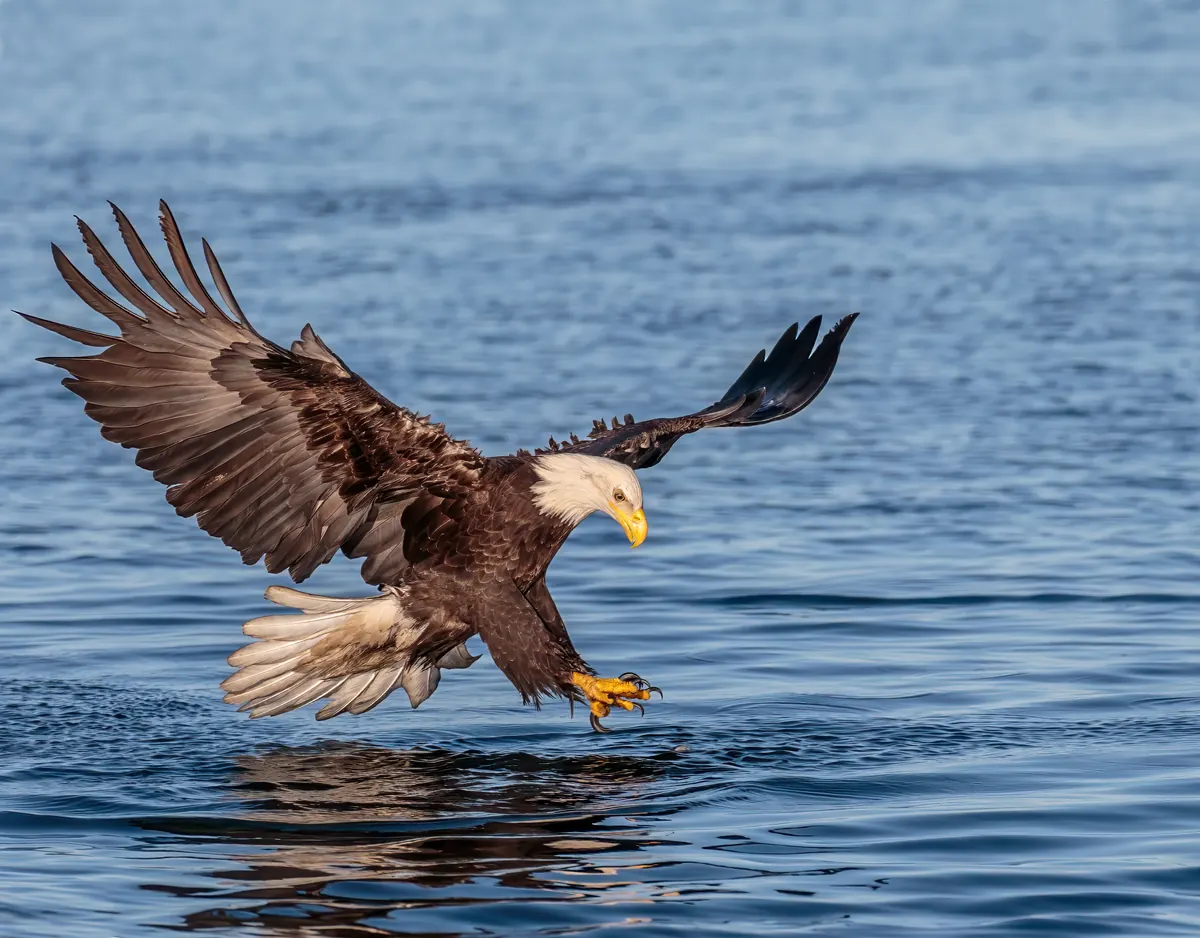
- Catch the eagles before the count drops. On the Skagit between Rockport and Marblemount, rafting volunteers counted around 100 bald eagles into the second week of January in some past winters, and far fewer a week later once the salmon carcasses were gone. Plan an early-January morning on State Route 20 rather than a late-January one.
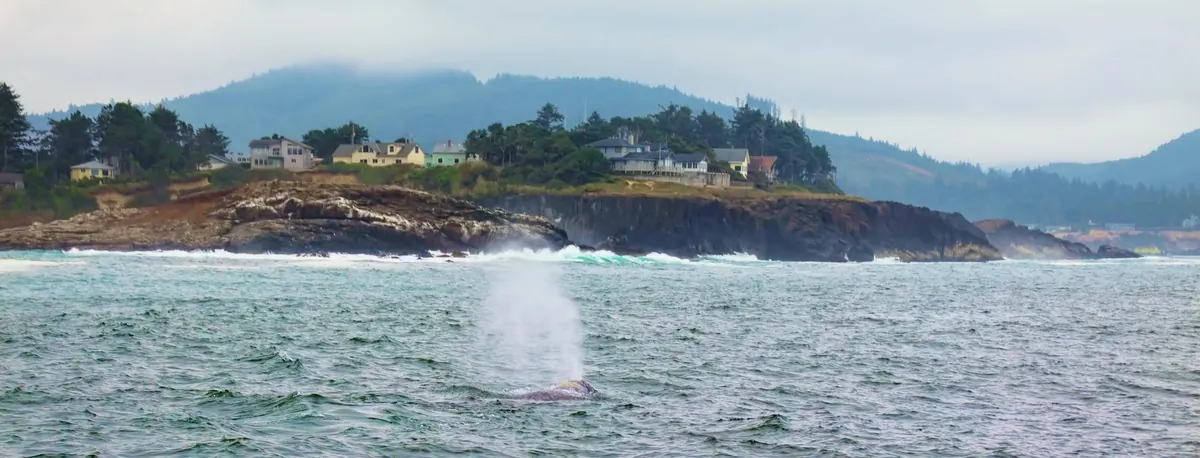
- Watch for a whale blow. A study of the southbound migration projected the median passage date off Washington at about January 5. Pick a calm, clear day, take binoculars to a high headland such as North Head at Cape Disappointment, and scan for the low, bushy spout.
- See the year's closest full moon. No full moon of 2027 comes closer than January's Wolf Moon, which peaks before dawn on Friday the 22nd. Seattle sees it rise at 3:59 p.m. on Thursday the 21st, ahead of sunset, so Thursday evening is the one to watch the east.
Keep a record: write each eagle tally in the daily field log of the Naturalist's Field Journal, put a whale sighting or a herd of elk on the mammal watch page, add the first evening of owl hooting to a map of sounds, sketch a hazel twig with catkins on a tree through the seasons, and add the brant and snow buntings to birds I have seen.
Regions used below: Puget Sound and Seattle; Olympic Peninsula and the coast; Southwest and the lower Columbia; North Cascades and the Methow; Central Washington and the Yakima Valley; Columbia Basin and the Tri-Cities; Spokane and the Palouse.
Are there still bald eagles on the Skagit River in January?
Yes, and early January is often the best of it. Eagles from Canada and Alaska line the upper Skagit, picking over the last chum salmon that spawned in late fall. But the food runs out: once floods or the birds themselves strip the carcasses from the gravel bars, the eagles scatter downstream and to other rivers, and the roadside numbers drop fast.
-
Rockport to Marblemount
Strongest from the holidays into mid-January in most past seasons · State Route 20, eastern Skagit County: Howard Miller Steelhead Park, Rockport, the Marblemount hatchery area
The Skagit River Bald Eagle Interpretive Center publishes the weekly counts its volunteers make by raft along this stretch, including birds on banks the public can't reach. In 2018–19 the tally was still 102 on January 12, then just 20 a week later. The year before, it fell from 117 just before Christmas to 41 by mid-January. In 2016–17, a week of icy roads stopped the count, and by January 19 the observers found none at all. So go in the first half of the month, early in the day, and check the cottonwoods as well as the bars.
-
Eagle festival weekends
Weekends in January, in most years · Concrete, Rockport and Marblemount
Concrete, Rockport and Marblemount usually host eagle festival events on January weekends, with walks, talks and volunteer-staffed spotting scopes. The interpretive center at Howard Miller Steelhead Park ran weekends from December 6 to February 15 last season, with nature programs at 11 a.m. and 1:30 p.m.; its 2026–27 calendar is not posted yet, so check the center's site before driving up.
-
Arlington's eagles
Early February in recent years · Stillaguamish River, Arlington, Snohomish County
Closer to Seattle, the City of Arlington and the Arlington Arts Council hold an Eagle Festival for the birds that work the Stillaguamish for salmon and hunt the snow geese wintering in the nearby fields. Last year it fell on February 6 and 7; no 2027 date has been announced.
| Week of | 2016–17 | 2017–18 | 2018–19 |
|---|---|---|---|
| Dec 1 | – | 40 | 70 |
| Dec 8 | 28 | 74 | 83 |
| Dec 15 | 45 | 92 | 99 |
| Dec 22 | 67 | 117 | not counted (power outage) |
| Dec 29 | 56 | 86 | 111 |
| Jan 5 | not counted (icy roads) | 56 | not counted (flooding) |
| Jan 12 | 18 | 41 | 102 |
| Jan 19 | 0 | 41 | 20 |
| Jan 26 | – | – | 32 |
Stay off the gravel bars and keep to pullouts and park trails: an eagle chased from a carcass in January may not find another meal before dark. If you tallied eagles on the same stretch in December (see our Washington December guide), keep going, and the drop will show up in your own numbers.
When do gray whales pass the Washington coast in January?
Gray whales feed in Arctic waters in summer and winter in the lagoons of Baja California, which puts Washington's coast on their route twice a year. WDFW describes the southbound leg as running from October to January, more concentrated and closer to shore than the return trip, which runs from February to June. January is the tail of the southbound pulse and, in recent winters, the start of a smaller local story inside Puget Sound.
-
Southbound migrants off the outer coast
Mostly December and January; projected median passage around January 5 · Headlands from Cape Flattery to the Long Beach Peninsula; North Head and the Lewis and Clark Interpretive Center at Cape Disappointment
A study of decades of California counts, in the Journal of Cetacean Research and Management, found the southbound run shifted about a week later after 1980; using a typical travel speed, the authors projected a median date of January 5 off Washington, with most whales passing within about five weeks. At Cape Disappointment, the National Park Service notes that trained volunteers come to the interpretive center in winter and spring to help visitors find migrating gray whales. The blow is low and bushy, and the back shows a hump and a row of knuckles in place of a fin.
-
The Sounders come back early
Often from March to May; in recent winters as early as late December · Waters around Whidbey and Camano islands; the Snohomish River delta
A handful of gray whales leave the migration each year to feed inside Puget Sound, and locals call them the Sounders. Cascadia Research Collective, which has followed them since the early 1990s, writes in the Encyclopedia of Puget Sound that five of them arrived around the turn of the year in 2025–26, well ahead of their usual spring timing. They feed at high tide on ghost shrimp in water only a few meters deep, leaving pits in the mud flats. Scan the shallows from Whidbey and Camano beaches near high tide.
-
Fewer whales than a decade ago
Counted each winter from December through February · Granite Canyon, central California, where NOAA counts the southbound whales
NOAA Fisheries estimated roughly 13,000 eastern North Pacific gray whales from its 2024–25 survey, one of the lowest counts since the shore counts began in the late 1960s. Its July 2026 update put the population between 15,930 and 20,530, but the agency cautions that such a jump is faster than gray whales can breed, and calf numbers have stayed low since 2019.
Pick a morning with light wind and flat water, when a blow is easy to spot against the sea. On the outer coast, check the tide before walking any beach below a headland. A whale sighting, with date, place and direction of travel, makes a good entry on the journal's mammal watch page.
What winter birds can you find in eastern Washington's open country in January?
East of the Cascades, the snowy wheat country looks empty until a flock lifts off. Birds from the Arctic and the high peaks winter here, with predators close behind. It is mostly private farmland, so bird from the car on county roads.
-
Snow buntings and horned larks
Mid-October through March; flocks shift around from week to week · The Waterville Plateau in Douglas County; open fields along U.S. Route 2
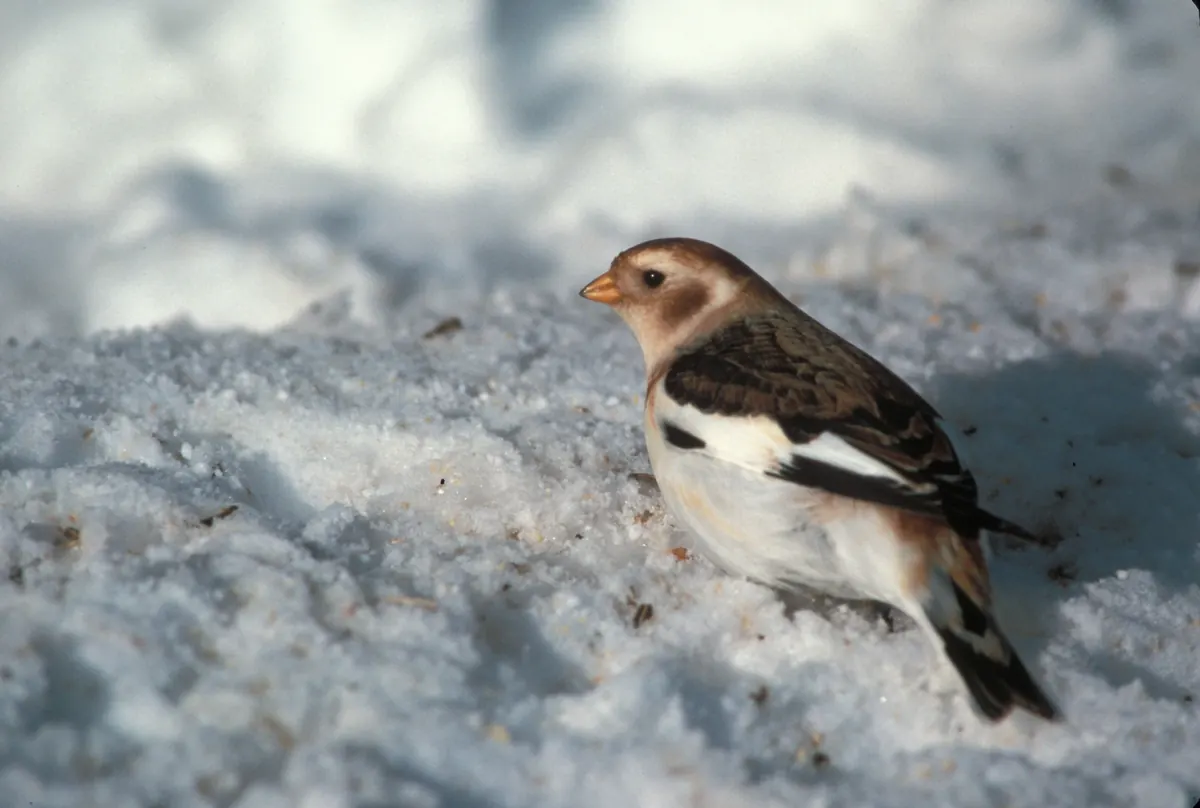
North Central Washington Audubon calls the Waterville Plateau excellent in winter, a big upland bounded by the Columbia River on the west and north and Grand Coulee on the east, where the target birds are raptors, redpolls, rosy-finches, snow buntings, longspurs and gray partridge. The chapter suggests the east-west roads, Slusser and Sprauer among them. Seattle Audubon's BirdWeb describes how a snow bunting flock seems to roll across a field as birds at the back leapfrog to the front. In flight they flash mostly white wings with black tips.
-
Gray-crowned rosy-finches
Late October to mid-May · Grand Coulee and Moses Coulee, often near cliffs
These sparrow-sized finches nest high in the mountains and spend the winter lower down, mostly east of the Cascades. BirdWeb says they may share flocks with snow buntings, Lapland longspurs and horned larks, and that on cold nights they sometimes roost in old cliff swallow nests. In winter the bill turns yellow, and from below the wings look frosted.
-
Bohemian waxwings in town
Winter, with BirdWeb's highest numbers in January and February · Fruit trees and ornamental plantings in northeastern towns: Okanogan, Ferry, Stevens and Pend Oreille counties; sometimes Spokane
Bohemian waxwings live almost entirely on fruit in winter, mountain-ash, juniper and holly berries and orchard fruit, and they turn up wherever the berries are. Compared with the cedar waxwing they are bigger and grayer, with rusty feathers under the tail and white and yellow marks on the wings. This winter may be a quiet one: the Finch Research Network's 2026–27 forecast expects plentiful mountain-ash fruit in the boreal forest to hold many waxwings up north.
-
A gyrfalcon, if you are lucky
Mid-October through March, rare · Open lowlands; the Samish Flats in Skagit County on the west side
The world's largest falcon reaches Washington only in small numbers, BirdWeb says, mostly young females that hunt ducks and other big birds over open ground. On a plateau this size, the Audubon chapter admits, most visitors miss them.
Drifting snow can close the plateau's gravel roads with little warning; the Audubon chapter suggests carrying a shovel, and a full tank and a blanket are sensible too. Pull fully onto the shoulder to look, and never block a farm gate.
Where do brant and sea ducks spend January on Washington's salt water?
In January the eelgrass meadows, river mouths and shorelines of Puget Sound fill with small geese, diving ducks, loons and grebes that nested far to the north.
-
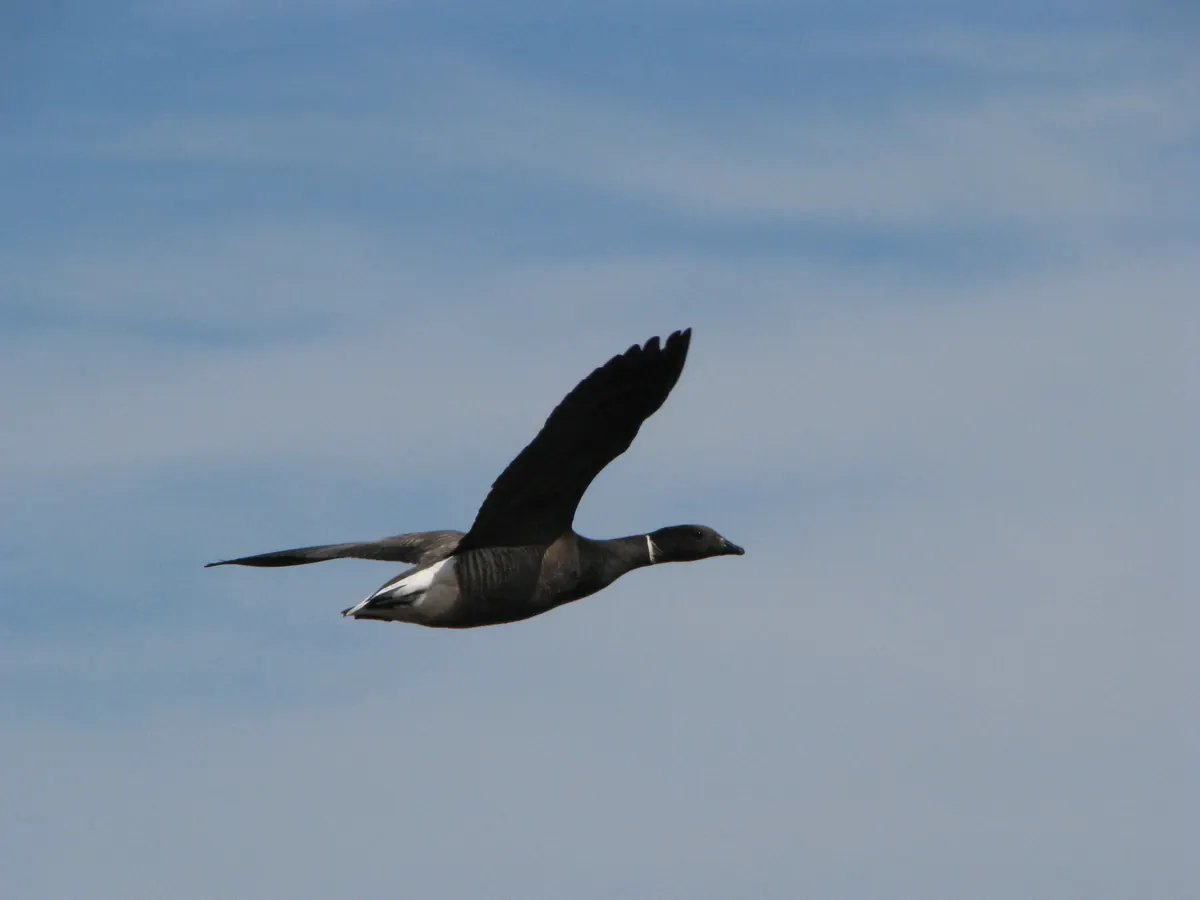
Gray-bellied brant at Padilla Bay
December through the winter · Padilla and Samish bays, Skagit County; the Padilla Bay shore trail and Breazeale Interpretive Center
Brant are small, dark sea geese that live on eelgrass, and Padilla Bay protects one of the largest eelgrass beds in the lower 48 states, close to 8,000 acres, as part of a National Estuarine Research Reserve run by the Department of Ecology. BirdWeb notes that the gray-bellied form, a population of only about 8,000 birds, reaches Padilla and Samish bays in December and stays through the winter. Try the shore trail near high tide, when the flocks drift closer.
-
Black brant on the coast and the straits
November into May · Dungeness Spit, Clallam County; Willapa Bay, Pacific County
The darker black brant gather in large numbers at Dungeness Spit and Willapa Bay.
-
Seabirds once a month
One survey day a month, October to April; the project sets the January date · Shoreline sites around the southern Salish Sea
The Puget Sound Seabird Survey, started by Seattle Audubon in 2007 and coordinated by the Puget Sound Bird Observatory since 2022, sends small volunteer teams to more than 190 beaches once a month from October through April, on a survey date the project sets by the tides. They tally loons, grebes, scoters and other diving ducks, murres and murrelets, and the raptors that spook them. Training is in September, so use this winter to learn the birds.
Brant are hunted only on a few set days in January, and in Skagit County only if a winter aerial survey finds enough birds (see the safety notes below). A field guide page of ducks in winter plumage pays off here; note the date and tide for each flock you see.
Is it too late to join a Christmas Bird Count in Washington?
Not quite. Audubon's count window closes on January 5, and several Washington circles use the first weekend of the new year. Teams cover a 15-mile-wide circle in one day, and newcomers are welcome in the field or at a home feeder inside the circle once they register.
-
Everett-Marysville
Saturday, January 2, 2027 · Everett and Marysville, Snohomish County
Pilchuck Audubon Society runs this count and welcomes field teams and feeder watchers. Sign up through the chapter's count page.
-
Spokane
Sunday, January 3, 2027 · Spokane and its surroundings
Spokane Audubon Society lists its count for January 3, 2027. The chapter's page also lists nearby counts such as Chewelah, usually held around the turn of the year; check with the organizer for this season's date.
-
Other circles
Through Tuesday, January 5 · Statewide
Last winter Skagit Bay, Grays Harbor, Wenatchee, the Yakima Valley and Vashon were among the circles counting in early January. The Washington Ornithological Society's list has this season's dates and compilers.
When the counts end, keep going with Project FeederWatch from the Cornell Lab and Birds Canada, which runs through April, and add your sightings to eBird. Copy count-day species onto the journal's birds I have seen list.
Which Washington birds start nesting in the middle of winter?
While the rest of the woods waits for spring, two big predators are already setting up house. Step outside at dusk when the air is calm, and scan tall trees near water.
-
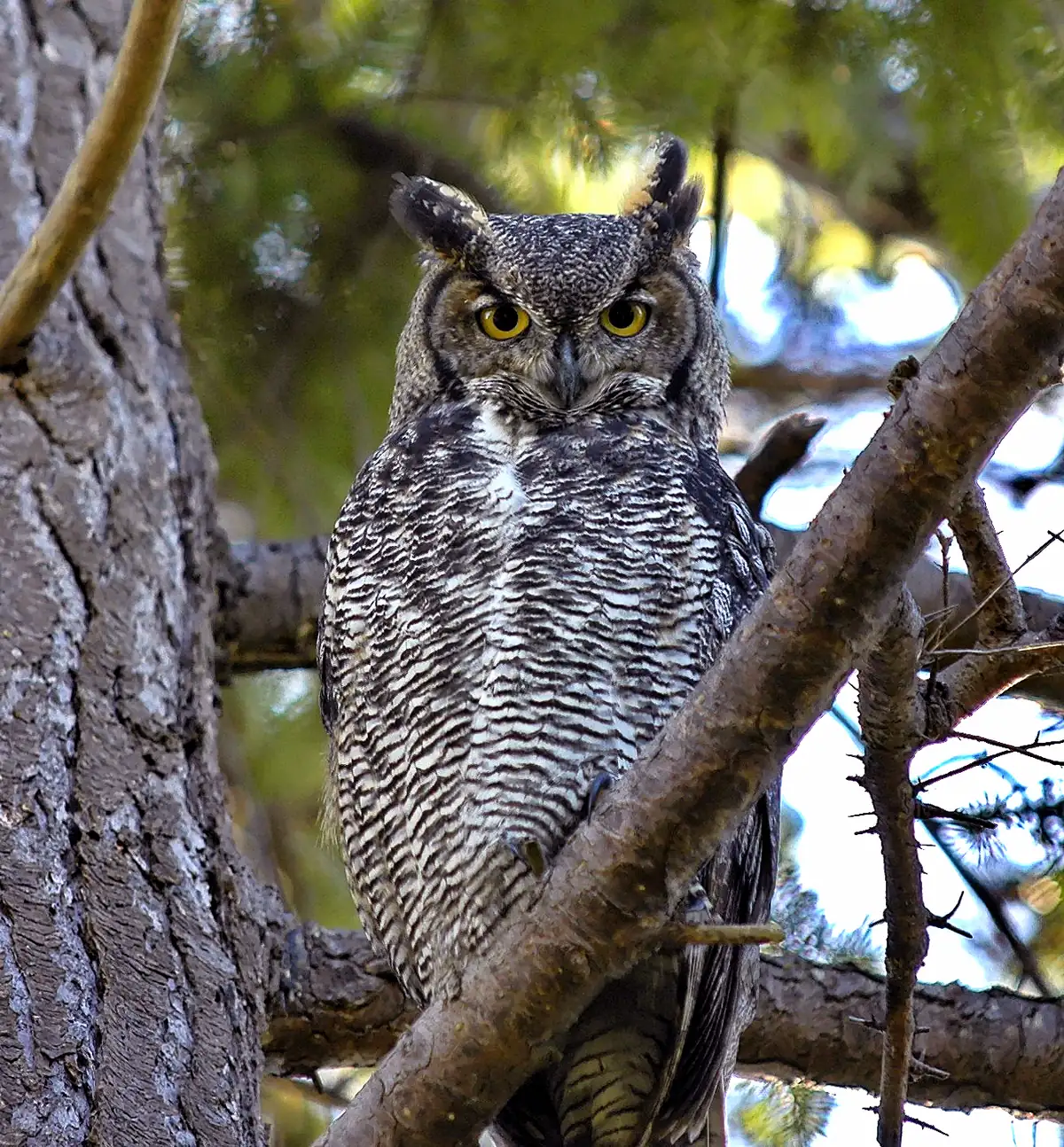
Great horned owls
Calling from early winter; nesting begins in late January or February · Open or patchy woodland across most of the state; city parks, farm woodlots and cottonwood bottoms
BirdWeb says great horned owls begin courtship calling in early winter and that nesting typically starts in late January or February, before the trees leaf out. The species is common in the Okanogan and fairly common in most of the rest of Washington.
-
Bald eagles at the nest
Courtship and nest repair in winter; eggs in late February or early March in western Washington · Shorelines, lakes and rivers statewide, including urban parks
Washington now has more than 550 active bald eagle nests, many in cities, according to BirdWeb. Resident pairs stay near their territories all winter and add sticks to the same huge nest year after year; BirdWeb puts egg laying in western Washington in the last days of February and the first days of March. A January walk is a good time to find the nest while the alders and maples are bare.
Keep well back from any nest you find, and don't use recorded calls to draw owls in. The first evening you hear an owl duet is worth a note on the journal's map of sounds.
What is the first native plant to flower in Washington?
West of the Cascades, the answer is usually beaked hazel, and it blooms in January. With most deciduous trees bare, January is also the easiest month to see bark, buds and the shapes of branches.
-
Beaked hazel catkins
January and February at low elevations; later higher up · Forest edges, roadsides and stream banks in western Washington
The Washington Native Plant Society calls beaked hazel the earliest native flowering plant in western forests. Its pollen-bearing catkins hang in yellow chains from bare twigs, and on a sunny edge a shrub looks hazy gold from a distance. Look closely at the twig and you will find the female flowers too: tiny buds with a tuft of bright red stigmas. Hazel is pollinated by the wind, so it blooms before the leaves are out to get in the way.
-
Indian plum, next in line
Flowers February through April · Open forest and stream banks west of the Cascades
The Coastal Interpretive Center in Ocean Shores counts Indian plum, or osoberry, among the earliest heralds of spring in westside woods, with small white flowers opening from February. In late January, check its twigs for fat green buds; the first leaves and flower clusters are not far off.
Pick one hazel along a path you walk often and sketch the same twig every week or two on the journal's tree through the seasons page, from tight catkin to open flower.
How snowy is a Washington January, and what does a strong El Niño usually mean?
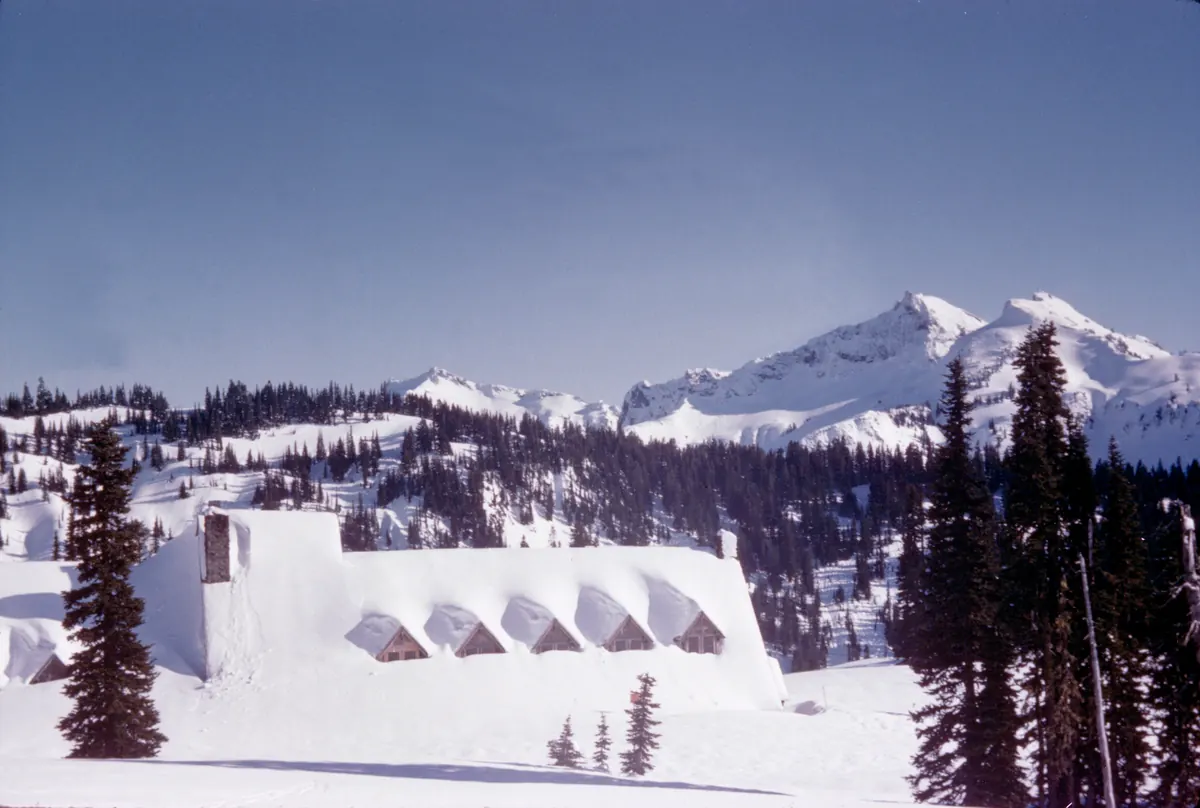
January sits in the middle of the three coldest months, and the gap between the two sides of the state is wide. Quillayute, near Forks, gets more than 15 inches of precipitation in a normal January and Paradise on Mount Rainier gets more than 17, most of it falling as snow. In the Methow, snow lies on the ground at Winthrop on all 31 days of an average January, and Spokane averages a little over 12 inches of snowfall for the month.
| Station | Average high | Average low | Precipitation | Snowfall | Days with 1 in or more of snow on the ground |
|---|---|---|---|---|---|
| Seattle-Tacoma airport | 48.0 | 37.7 | 5.78 | 1.8 | 0.9 |
| Olympia airport | 46.0 | 33.2 | 7.80 | 2.0 | 1.1 |
| Quillayute (coast, near Forks) | 47.5 | 35.9 | 15.59 | not published | not published |
| Paradise, Mount Rainier | 34.5 | 23.8 | 17.22 | not published | not published |
| Winthrop (Methow Valley) | 29.9 | 15.4 | 2.06 | 16.6 | 31.0 |
| Wenatchee airport | 33.6 | 24.1 | 1.02 | not published | not published |
| Yakima airport | 39.5 | 24.0 | 1.19 | 6.2 | 10.9 |
| Walla Walla airport | 41.9 | 30.7 | 2.10 | 1.0 | 3.1 |
| Spokane airport | 34.5 | 24.7 | 1.97 | 12.3 | 15.9 |
Behind it all sits an unusually hot tropical Pacific. The federal ENSO team’s bulletin of September 10 gave the present El Niño nine-plus chances in ten of climbing into its top tier before spring. For Washington the clearest signal is warmth. Deputy State Climatologist Karin Bumbaco told UW's College of the Environment that El Niño usually tilts the Northwest warm and, west of the Cascades especially, dry, and that warm storms drop rain where snow would otherwise pile up. Still, the record holds surprises: in 1982–83, 1997–98 and 2015–16, the most extreme El Niño winters, the state's snowpack came out close to normal.
Spokane's Weather Service office tallied El Niño winters from 1949–50 through 2011–12: the city averaged 34.4 inches of snow in those seasons, 72 percent of its usual total, with a range from 78 inches in 1968–69 to less than 20 in five other El Niño winters. The latest NOAA seasonal maps, issued each month from mid-October, live on the CPC 90-day outlook page. Before crossing a pass, see our Washington weather forecasts; gardeners planning ahead can look up the last spring freeze for Washington towns.
How much daylight does Washington gain in January?
About an hour. Seattle's day stretches by 62 minutes over the month, slowly at first (less than a minute on New Year's Day) and close to three minutes a day by early February. The evenings get most of it. Seattle's sunset slides from 4:28 p.m. on January 1 to 5:00 p.m. on the 25th, while sunrise is only ten minutes earlier by January 21, at 7:48 a.m.
| City | Jan 1 | Jan 31 | Gained | Per day |
|---|---|---|---|---|
| Bellingham | 8 h 21 m | 9 h 25 m | 64 min | 2.1 min |
| Seattle | 8 h 30 m | 9 h 32 m | 62 min | 2.1 min |
| Aberdeen | 8 h 36 m | 9 h 36 m | 60 min | 2.0 min |
| Vancouver | 8 h 46 m | 9 h 43 m | 57 min | 1.9 min |
| Wenatchee | 8 h 32 m | 9 h 32 m | 60 min | 2.0 min |
| Yakima | 8 h 39 m | 9 h 37 m | 58 min | 1.9 min |
| Kennewick | 8 h 42 m | 9 h 39 m | 57 min | 1.9 min |
| Spokane | 8 h 31 m | 9 h 31 m | 60 min | 2.0 min |
Northern towns gain the most because they started deepest in the dark. To find the times for your own street, use our daylight calculator, and note the first evening you notice light after work in the journal's dusk and dawn watch.
What is in Washington's night sky in January 2027?
Long nights help, clouds don't. West of the mountains, wait for the cold, clear spells between storms, or head east of the Cascades, where January skies are more often open. All times are Pacific Standard Time, and there is no eclipse this month.
-
The Quadrantid meteors
Night of Sunday, January 3, into Monday, January 4 · Any dark spot with a clear view to the northeast
The Quadrantids peak for only a few hours, and the forecasts differ: around 7:30 p.m. Sunday from the American Meteor Society, around 9:47 p.m. from EarthSky. Either way, the shower's radiant sits near Washington's northern horizon in the evening and climbs as the night goes on, so Monday's predawn sky usually beats the evening. A thin old crescent doesn't clear Seattle's horizon until 5:51 a.m. A dark rural site might deliver a few dozen in a good hour.
-
Earth's closest pass to the sun
Saturday, January 2, 6:33 p.m. · Everywhere
At perihelion only some 91.4 million miles separate us from the sun, the shortest gap of 2027. Our winter is a product of axial tilt, not distance, so being nearer the sun changes nothing outdoors.
-
Venus before dawn
All month; greatest elongation Sunday, January 3 · Low in the southeast before sunrise
Sunday the 3rd brings this morning star's greatest elongation; with 47 degrees of separation, it is high and obvious in the southeast an hour before the sun comes up. Nothing but the moon outshines it, and through a telescope it looks like a tiny half moon.
-
The Wolf Moon, 2027's closest full moon
Full moon at 4:17 a.m. on Friday, January 22 · Rising in the east-northeast on the evening of Thursday, January 21
Perigee falls less than a day ahead of the full phase, which brings the moon to about 222,229 miles, its closest full moon this year; every supermoon list includes it. Seattle's moonrise is 3:59 p.m. on Thursday the 21st, nearly an hour before sunset, and the moon doesn't set until 8:07 a.m. Friday. Friday evening's rising will look just as round.
-
Planets after dark
All month · Jupiter in the east in the evening; Saturn in the southwest
In the evening Jupiter is already up in the east, and it stays visible all night on its way to February's opposition. Saturn hangs in the southwest at dusk and sinks a little lower week by week, and in the last days of January Mercury may be glimpsed just above the west-southwest horizon after sunset.
| Phase | Date | Time |
|---|---|---|
| New moon | Thursday, Jan 7 | 12:24 p.m. |
| First quarter | Friday, Jan 15 | 12:34 p.m. |
| Full moon, the Wolf Moon | Friday, Jan 22 | 4:17 a.m. |
| Last quarter | Friday, Jan 29 | 2:55 a.m. |
Solar activity has eased since the cycle's maximum in late 2024, but big geomagnetic storms remain possible. If one comes, Washington's long nights and high latitude help, especially in the dark evenings around the January 7 new moon; NOAA's Space Weather Prediction Center issues the alerts. Ahead of any stargazing trip, check the cloud-cover forecast; nightly moonrise times are on our moon phase page.
What can Washington families do outside in January?
- New Year's Day: start with a ranger-led hike. On New Year's Day 2026 dozens of Washington state parks offered free ranger-led hikes, snowshoe outings and other events, and New Year's Day has been a Discover Pass free day in recent years. The 2027 list usually appears in December; some events need registration, and parks that become Sno-Parks in winter also need a Sno-Park permit.
- January 2 and 3: the last bird counts. Sign up for Everett-Marysville or Spokane.
- Early Monday, January 4: meteors. Wake the family an hour before first light, bundle up outside, and allow 15 minutes for eyes to adjust.
- Early-January weekends: the Skagit eagles. Combine a morning drive on State Route 20 with the Rockport interpretive center, if it keeps weekend hours as it did last season.
- Saturday mornings at Nisqually. Billy Frank Jr. Nisqually refuge lists a free weekly Saturday walk at 10 a.m., roughly two hours over a mile of trail; confirm on its calendar.
- Winter weekends at Paradise. Mount Rainier offers free ranger-guided snowshoe walks on weekends and holidays from late December into March, with snowshoes provided, a 1.5-mile route and a limit of 25 people; sign-up opens an hour before the walk at the Jackson Visitor Center. The park's 2026–27 listing gives an 11 a.m. start but says details are still to come.
- Monday, January 18, Martin Luther King Jr. Day. A Discover Pass free day in 2026; check the 2027 list.
For citizen science at home, keep up Project FeederWatch, post hazel catkins and owl sightings to iNaturalist, and report whales and eagles to eBird or the regional sighting networks. To see what other places are watching this month, browse our state nature guides, and for a child who wants to keep notes of their own, look at the Naturalist's Field Journal.
Safety notes for January in Washington
- Hunting seasons and hunter orange. Duck, coot and snipe seasons stay open statewide through January 31, and in the Skagit-Snohomish goose area (Goose Management Area 1) geese are open December 12 to January 31, so expect shooting on farm fields and marshes at first light. Brant may be hunted in Pacific County on January 16, 17, 19, 21, 23, 24, 26, 28, 30 and 31, and in Clallam and Whatcom counties on January 23, 27 and 30; Skagit County's brant season opens only if the winter aerial count finds at least 3,000 birds. In eastern Washington, pheasant, quail and gray partridge run through January 18, chukar through January 31, and forest grouse statewide through January 15. General deer seasons are over, but a few late elk hunts continue in eastern Washington: an antlerless archery hunt in GMU 163 and Master Hunter hunts in Elk Areas 3911 and 3912 run to January 20, and Master Hunter hunts in GMUs 334 and 371 run through January 31. Under WAC 220-414-080, anyone hunting deer or elk with a modern firearm must wear fluorescent orange or pink, and anyone hunting upland birds or rabbits during an upland bird season with a gun (muzzleloaders excepted) must show 400 or more square inches of fluorescent orange, pink or both, on clothing above the waist, unblocked from any angle; the rule does not cover waterfowl hunters. Wear a bright layer yourself near hunting areas.
- Avalanches. January storms load steep slopes in the Cascades and Olympics quickly. Read the Northwest Avalanche Center forecast before any snowshoe or ski trip beyond groomed trails, and carry beacon, shovel and probe if you go into avalanche terrain.
- Ice. WDFW says ice must be at least four inches thick to walk on, and it does not check ice conditions anywhere. Popular ice fishing lakes in Okanogan, Stevens, Spokane and Grant counties freeze unevenly; drill test holes as you go, never go alone, and carry ice picks.
- Atmospheric rivers and flooding. A warm storm can turn snow to rain and lift rivers in hours, especially in a warm El Niño winter. Keep clear of riverbanks and gravel bars when water is high, and turn around at any flooded road.
- Passes, wind chill and short days. Check WSDOT pass reports and carry chains for Snoqualmie, Stevens and White passes. On the east side, wind across the open plateau makes a 20-degree day feel far colder, so dress in layers and cover your face and hands. Daylight runs out fast, so start hikes in the morning, carry a headlamp, and give a friend your plan.
Sources
- Skagit River Bald Eagle Interpretive Center
- Skagit River Bald Eagle Interpretive Center: Eagle counts
- City of Arlington: Eagle Festival
- WDFW: Gray whale (Eschrichtius robustus)
- Journal of Cetacean Research and Management: Timing of the gray whale southbound migration
- Encyclopedia of Puget Sound (Cascadia Research Collective): Gray whales of the Salish Sea
- NOAA Fisheries: Gray whale population abundance
- NOAA Fisheries: West Coast gray whale estimate shows increase (July 2026)
- NOAA Fisheries: Eastern North Pacific gray whales continue decline (2025)
- National Park Service: Cape Disappointment State Park, Lewis and Clark Interpretive Center
- North Central Washington Audubon Society: Waterville Plateau
- Seattle Audubon BirdWeb: Snow bunting
- Seattle Audubon BirdWeb: Gray-crowned rosy-finch
- Seattle Audubon BirdWeb: Bohemian waxwing
- Seattle Audubon BirdWeb: Gyrfalcon
- Finch Research Network: Winter finch forecast 2026–2027
- Seattle Audubon BirdWeb: Brant
- Washington Department of Ecology: About Padilla Bay
- NOAA Office for Coastal Management: Padilla Bay National Estuarine Research Reserve
- Puget Sound Bird Observatory: Puget Sound Seabird Survey
- National Audubon Society: Christmas Bird Count
- Washington Ornithological Society: Christmas Bird Counts in Washington
- Pilchuck Audubon Society: Christmas Bird Count
- Spokane Audubon Society: Christmas Bird Count
- Project FeederWatch (Cornell Lab of Ornithology and Birds Canada)
- Seattle Audubon BirdWeb: Great horned owl
- Seattle Audubon BirdWeb: Bald eagle
- Washington Native Plant Society: Beaked hazel (Corylus cornuta)
- Coastal Interpretive Center, Ocean Shores: Indian plum
- NOAA NCEI: U.S. Climate Normals 1991–2020
- NOAA NCEI data service: January normals for the Washington stations in the table
- NOAA Climate Prediction Center: ENSO diagnostic discussion, September 10, 2026
- NOAA Climate Prediction Center: seasonal (90-day) outlooks
- UW College of the Environment: What to expect from a very strong El Niño in the Pacific Northwest (Aug. 2026)
- Office of the Washington State Climatologist: How might El Niño affect Washington this winter? (Sept. 10, 2026)
- National Weather Service Spokane: El Niño pattern and Inland Northwest snow stats
- U.S. Naval Observatory: Moon phases, 2027
- U.S. Naval Observatory: Earth's seasons and perihelion, 2027
- U.S. Naval Observatory: Sun and moon rise and set, Seattle, January 21, 2027
- American Meteor Society: Meteor shower calendar
- EarthSky: Quadrantid meteor shower
- EarthSky: What is a supermoon?
- Fred Espenak: Sky Event Almanac 2027
- NOAA Space Weather Prediction Center: Solar cycle progression
- Washington State Parks: First Day Hikes
- Discover Pass: Free parking days
- U.S. Fish and Wildlife Service: Billy Frank Jr. Nisqually NWR events
- Mount Rainier National Park: Ranger-led programs
- WDFW 2026–27 Migratory Waterfowl and Upland Game Seasons (official pamphlet): migratory game bird seasons
- WDFW 2026–27 Migratory Waterfowl and Upland Game Seasons (official pamphlet): western Washington goose management areas and brant
- WDFW 2026–27 Migratory Waterfowl and Upland Game Seasons (official pamphlet): resident game bird seasons
- WDFW 2026 Big Game Hunting Seasons and Regulations (official pamphlet): elk general seasons
- WDFW 2026 Big Game Hunting Seasons and Regulations (official pamphlet): deer general seasons
- WAC 220-414-080: Hunter orange and hunter pink clothing requirements
- Northwest Avalanche Center
- WDFW: Washington winter ice fishing (ice safety)
- WSDOT: Mountain pass reports
- Photos via Wikimedia Commons; licenses and photographers are credited under each picture
