What to look for in nature in Washington this February
Meteorological winter ends with February, and in Washington spring is already creeping in around the edges. Herring lay their eggs in Puget Sound bays, red-legged frogs breed in lowland ponds, and Anna's hummingbirds are already nesting in city shrubs. East of the mountains the first meadowlarks sing from fence posts, and in the western woods Indian plum hangs out its small white flowers. Seattle gains almost an hour and a half of daylight before the month is out. What follows is a region-by-region guide, from the ocean beaches to the Palouse.
Other months in Washington: October, November, December, January.
Start here
- Listen for frogs on a mild, wet night. On an evening when the rain eases and the air feels soft, walk to a pond or marshy ditch. In western Washington, Pacific treefrogs begin moving to their breeding water in February, and red-legged frog egg masses may already be in the shallows.
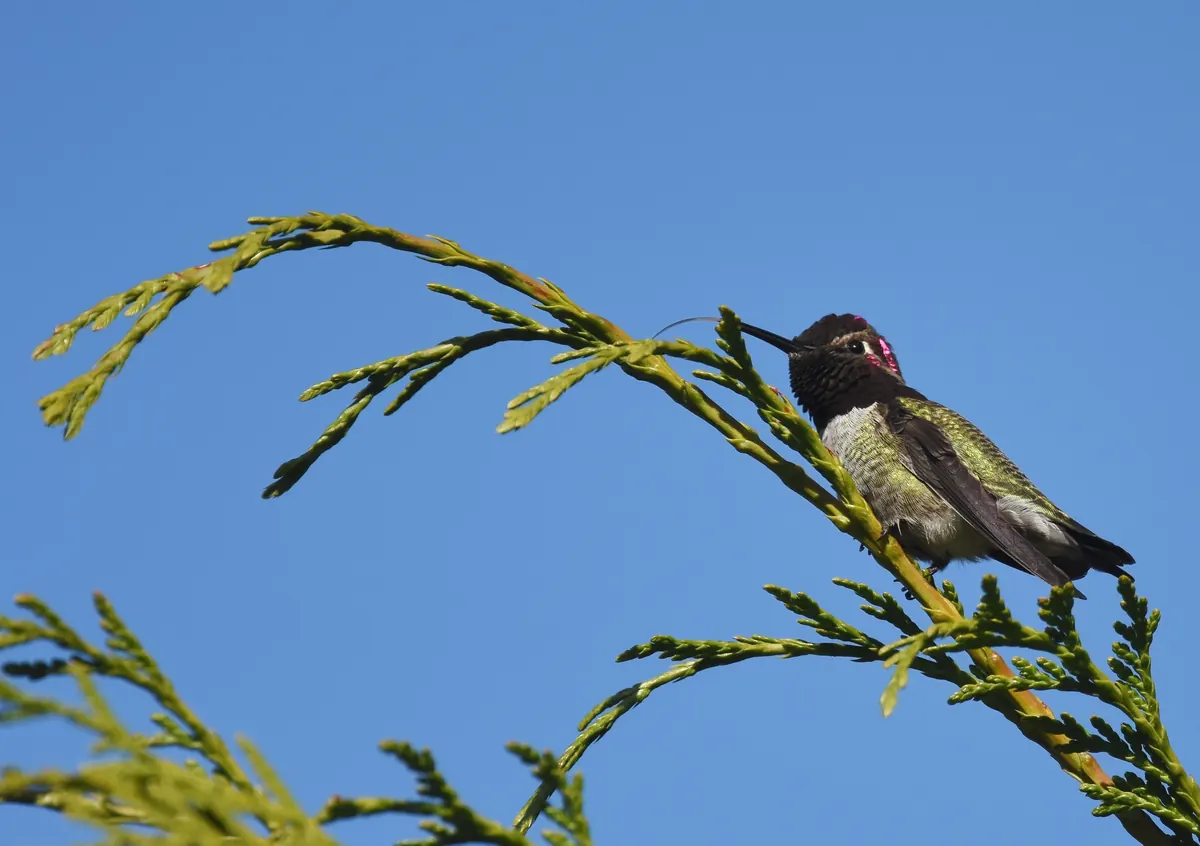
- Watch a feeder for a nesting hummingbird. Female Anna's hummingbirds build tiny nests in late winter. If one keeps coming to your feeder and then flies off the same way each time, she may be nesting nearby. Watch for the males' steep courtship dives too.
- See two planets at their best. Jupiter's opposition falls on Wednesday the 10th, and Mars follows nine days later on Friday the 19th. On any clear evening that week and the next, look east after dark: Jupiter is the brightest point of light, and Mars, fainter and orange-red, is nearby in Leo.
Keep a record: note the first treefrog chorus on a map of sounds in the Naturalist's Field Journal, add an Anna's hummingbird or a returning meadowlark to birds I have seen, sketch an Indian plum branch on a tree through the seasons, log herring spawns and eagle nests in the daily field log, and return to one frog pond for the same place twice.
Regions used below: Puget Sound and Seattle; Olympic Peninsula and the coast; Southwest and the lower Columbia; North Cascades and the Methow; Central Washington and the Yakima Valley; Columbia Basin and the Tri-Cities; Spokane and the Palouse.
When do herring spawn in Puget Sound, and what comes to eat them?
For most of Washington's herring, spawning starts in January and runs through April; WDFW puts the full span from January into June, depending on the stock. Schools crowd into shallow bays to lay sticky eggs on eelgrass and seaweed, and for a few days the water itself changes. February is a good month to go looking, because the earliest stocks are at it while the rest of the shoreline is still quiet.
-
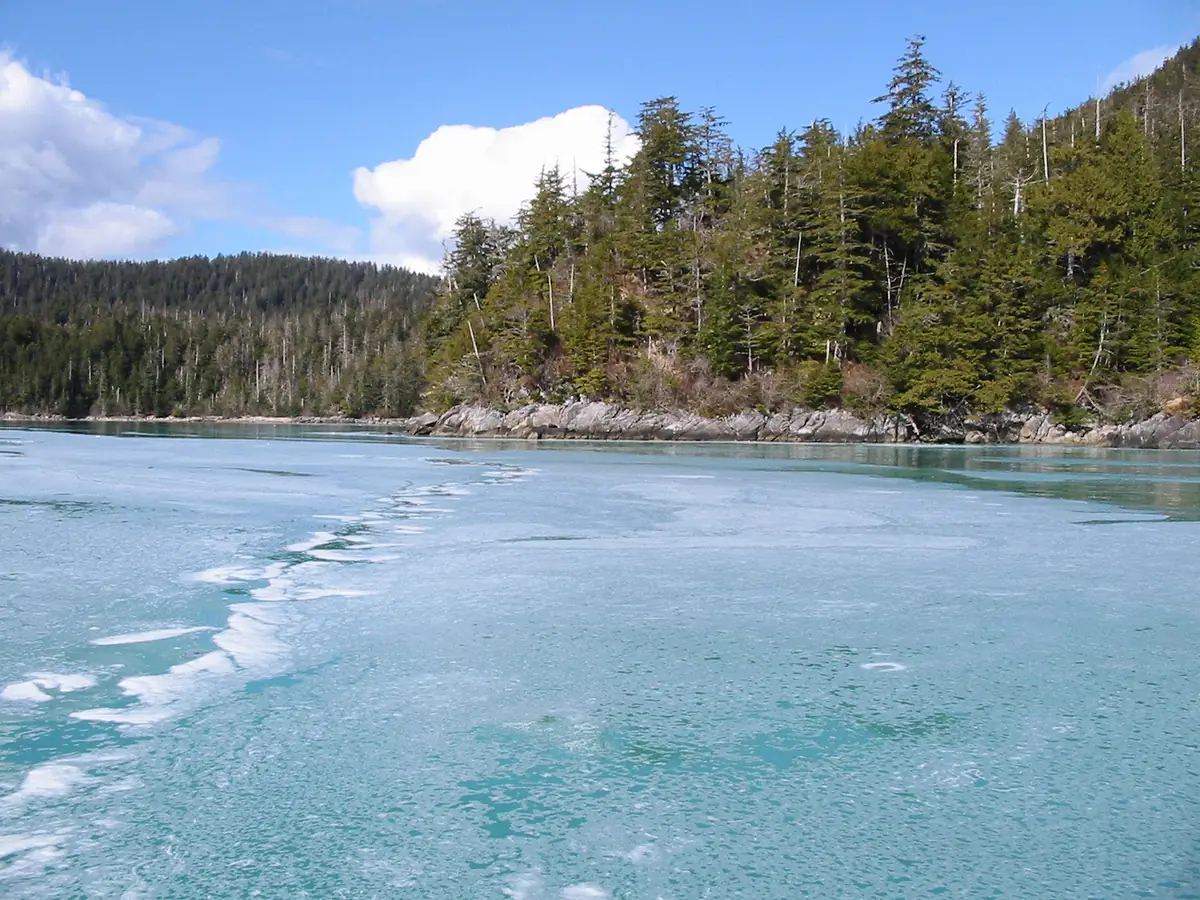
A blue-green bay
Spawning events through February and on into spring · Shallow bays of Puget Sound and Hood Canal; Quilcene Bay in Jefferson County is one of the biggest
The Encyclopedia of Puget Sound describes how milt from the males turns big patches of water a vivid, almost glowing blue. That is the sign to scan with binoculars. WDFW counts 21 known spawning areas in the Puget Sound region, and the Quilcene stock in Hood Canal has long been one of the largest in Puget Sound, though its spawning biomass has fallen in recent years. At a low tide after a spawn, look for tiny translucent eggs clinging to eelgrass blades and seaweed at the water's edge, and leave them where they are.
-
The crowd at the table
During and just after a spawn · Wherever a spawn is under way
A spawn is a feast. Surf scoters, gulls and cormorants gorge on the eggs, sea slugs graze the roe, and seals, sea lions and seabirds go after the adult fish; WDFW warns that seals, sea lions and seabirds are likely to be busier wherever a spawn is under way. A raft of scoters diving over and over in one small bay, with gulls wheeling overhead, is worth a closer look.
-
Cherry Point, the warning
Later in spring than most stocks · Cherry Point, Whatcom County
Not every stock is thriving. The Encyclopedia of Puget Sound reports that Cherry Point's genetically distinct herring have dropped about 97 percent since 1979, and the state's Puget Sound indicator says it remains well below its baseline.
-
Gray whales turning north
The return trip runs from February to June · The outer coast; the Whidbey and Camano shallows
WDFW describes the northbound gray whale migration past Washington as running from February into June, more spread out and farther offshore than the southbound run. Most of the Puget Sound feeders known as the Sounders are present from March to May, so late February is when to start watching the mud flats around Whidbey Island near high tide. If you followed the southbound whales in our Washington January guide, this is the other half of the story.
Herring spawns are hard to predict a week ahead. Note the date, the bay and the tide in the journal's daily field log whenever you see blue water or a sudden gathering of scoters, and over a few years you will learn when your nearest bay comes alive.
When do frogs start calling and laying eggs in Washington?
Earlier than most people expect. On mild, rainy February nights in the western lowlands, the first frogs move to ponds and ditches to breed, often while there is still frost on the lawns. Two species to know start the year.
-
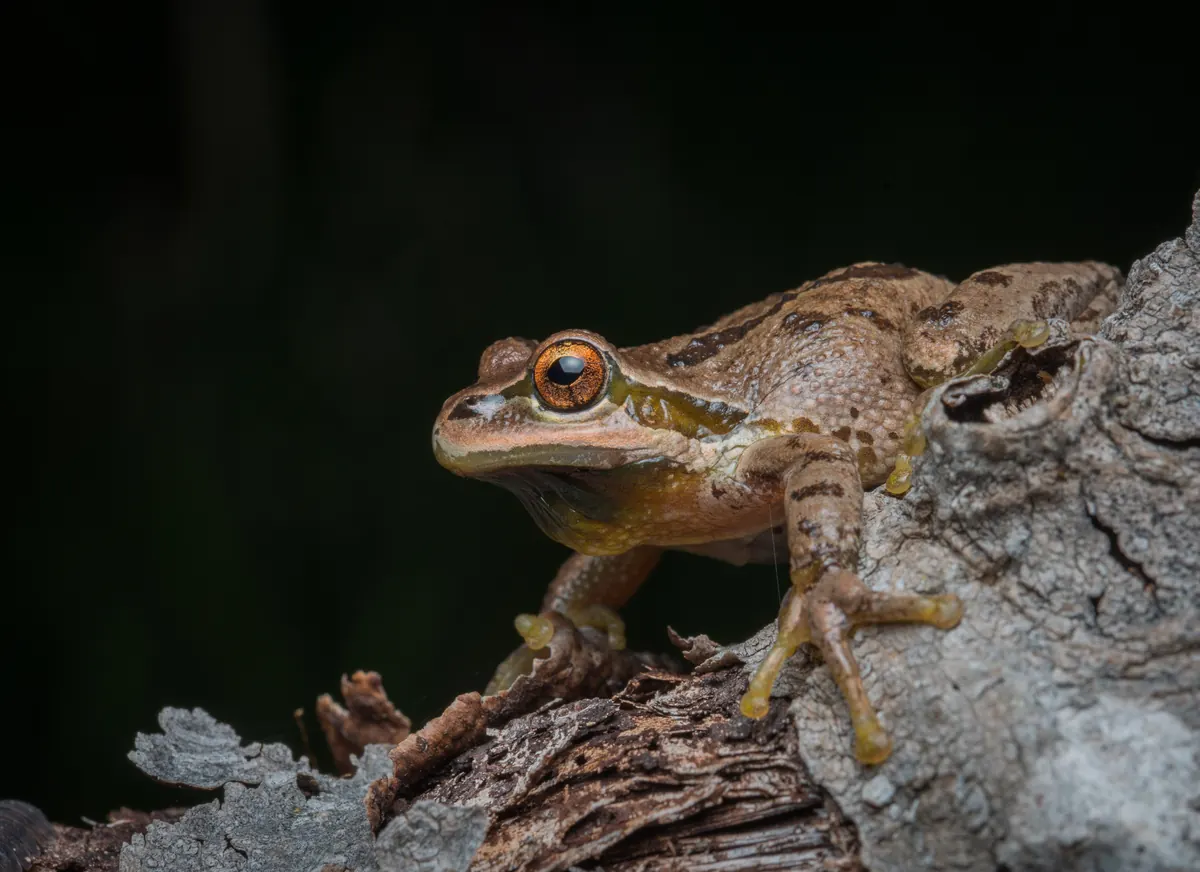
Northern red-legged frogs, the quiet early ones
Breeding from late January or early February at low elevations · Ponds, wetlands and slow water in western Washington, the Puget Trough and the Cascade foothills
WDFW says breeding in lowland Thurston County, around 50 to 100 feet above sea level, begins in late January or early February, and most eggs at a given pond are laid within two or three weeks. You will probably miss the males: their call is a weak, stuttering run of four to seven low notes, made mostly underwater, and you have to stand close to hear it. The egg masses are easier. Look for fist-sized gelatinous clumps attached to sticks or stems below the surface; they hatch in about three to five weeks, depending on the water temperature. The species is still common here, though it has declined sharply in Oregon, California and British Columbia.
-
Pacific treefrogs, the loud ones
Moving to breeding sites from February near the coast, later inland and uphill · Almost anywhere with standing water: wetlands, roadside ditches, flooded fields, even a wading pool
WDFW calls the Pacific treefrog, also known as the Pacific chorus frog, the most widespread frog in Washington and the one people hear most often. Depending on where you live, the frogs move into breeding sites anytime from February, on the coast, through July. The two-part rib-it, or crek-ek, is the sound most of us think of as a frog. Females lay small loose packets of roughly 9 to 70 eggs, each packet one or two inches across, usually fastened to a plant stem.
-
Frogs on the road
Wet, mild nights from late winter into spring · Roads between woods and wetlands
Frogs and salamanders cross roads on wet nights to reach their ponds; WDFW suggests that neighbors post signs at known crossings. Drive slowly near wetlands, and carry any frog across in the direction it was going.
Woodland Park Zoo runs an annual amphibian monitoring program with partners including WDFW, in which trained volunteers learn to identify the egg masses of eight local frogs, toads, newts and salamanders and visit the same pond each month; join the interest list on the zoo's site for the next season. On your own, the first night you hear treefrogs is a good entry for the journal's map of sounds.
Do hummingbirds really nest in Washington in winter?
Yes. The Anna's hummingbird, which now lives year-round in western Washington and is spreading east, gets a head start on Washington's other songbirds. Olympic Peninsula Audubon notes that some females lay their first eggs while it is still winter, and by February the courtship over Seattle gardens is hard to miss.
-
Males diving for an audience
Through winter, strongest as nesting begins · Yards, parks and gardens in the Puget Sound lowlands and other western towns
BirdWeb describes the male's courtship display: he climbs high, then plummets toward a female and pulls out at the bottom with a loud, sharp popping sound, the dive noise. If you hear an odd metallic pop from above a feeder, look up.
-
A tiny nest, tended by the female
Late winter into spring · Shrubs and low tree branches, often near feeders and gardens
The female builds and tends the nest alone. BirdWeb gives an incubation of 14 to 19 days, and she feeds the young until they are independent at 18 to 23 days. The first Washington breeding record came from Tacoma in 1976; feeders and gardens full of winter-flowering plants helped the species spread north from California and settle in.
-
Getting through a cold snap
Freezing nights · Wherever Anna's live, including Yakima, where numbers have risen in recent years
On cold nights these birds slow their metabolism almost to nothing, a kind of very short hibernation, as Yakima Audubon puts it. A frozen feeder can matter at dawn. The chapter's advice is to keep two feeders filled and swap them, bringing one indoors to thaw while the other is outside.
Watch a hummingbird visit the first native flowers of the year (see the plants section below) and you will see why they nest so early. A nest you happen to find should be watched from well back, with pets kept indoors. Put the Anna's hummingbird on the journal's birds I have seen page and note the day you first catch a male diving.
What are the first signs of spring in eastern Washington in February?
East of the Cascades, February can still be full winter, with snow on the plateau and fog in the valleys. Even so, by the last week of the month a few birds are returning to the shrub-steppe and the canyon country, and their songs are the first sign that the season is about to turn.
-
Say's phoebe, the early flycatcher
As early as late February · Columbia Basin canyons, ranch buildings and bridges; the Blue Mountain foothills; northeastern river valleys
BirdWeb calls this hardy, medium-distance migrant one of the earliest breeders to come back to eastern Washington, sometimes in the last days of February. It is a soft gray-brown flycatcher with a peachy belly that pumps its tail from a fence post or rock. It nests on cliffs and outcrops, and just as happily on bridges, barn rafters and eaves.
-
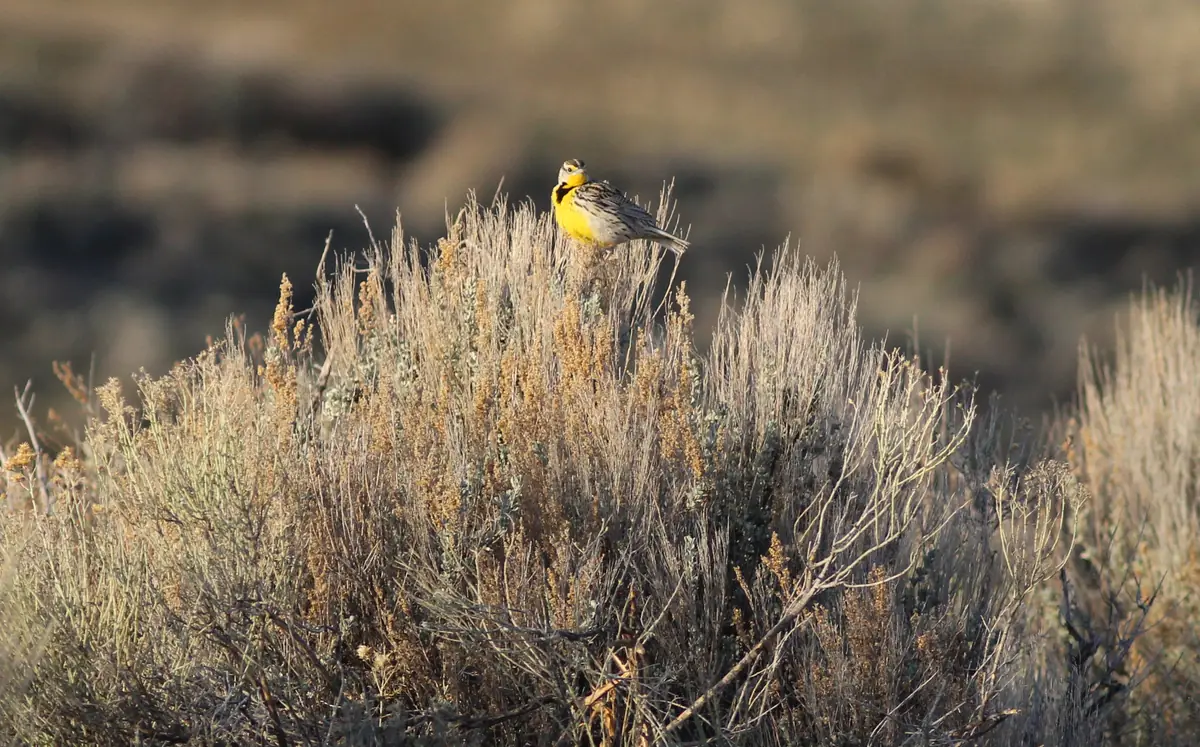
Western meadowlarks singing again
Returning from late February; common by mid-April · Sagebrush and grasslands of the Columbia Basin; fields near feedlots in the Columbia and Snake valleys, where a few spend the winter
BirdWeb says meadowlarks start coming back to the shrub-steppe in late February. A few winter near feedlots along the Columbia and Snake, so the first bright, gurgling song may come from a bird that never left. Once territories are set, the males sing from shrub tops, fence posts and power poles.
-
Sandhill cranes: plan ahead
Main arrival in March; peak in mid-March · Columbia National Wildlife Refuge and the fields around Othello and Royal City
Othello's spring cranes spend the winter in California's Central Valley. A WDFW biologist told the Spokesman-Review they begin reaching eastern Washington in early March and peak around the middle of that month, so February visitors will mostly find empty fields. The Othello Sandhill Crane Festival has posted its 2027 dates: March 18 to 21. Southwest Washington has its own cranes: BirdWeb lists Ridgefield National Wildlife Refuge and nearby farm fields as regular wintering spots.
On a still February morning, stop by a sagebrush slope and just listen for five minutes. Writing down the date of the first meadowlark song each year, in the journal's map of sounds, gives you your own spring record for the place.
Are Washington's eagles and owls on eggs yet?
Some are. January was for courtship and repairing nests. By February many great horned owls are sitting on eggs, and late in the month the first bald eagles in western Washington begin to lay.
-
Great horned owls incubating
Breeding begins in late January or February · Woodlots, cottonwood bottoms, city parks and farm shelterbelts statewide
Great horned owls don't build nests; according to BirdWeb they take over old nests made by hawks, crows, magpies or herons. The female sits on one to four eggs for 30 to 37 days while the male brings food. The giveaway is often just two feathered horns showing over the edge of an old hawk nest high in a leafless cottonwood. The young stay in the nest about six weeks, so a nest you find now may have fuzzy owlets showing by April.
-
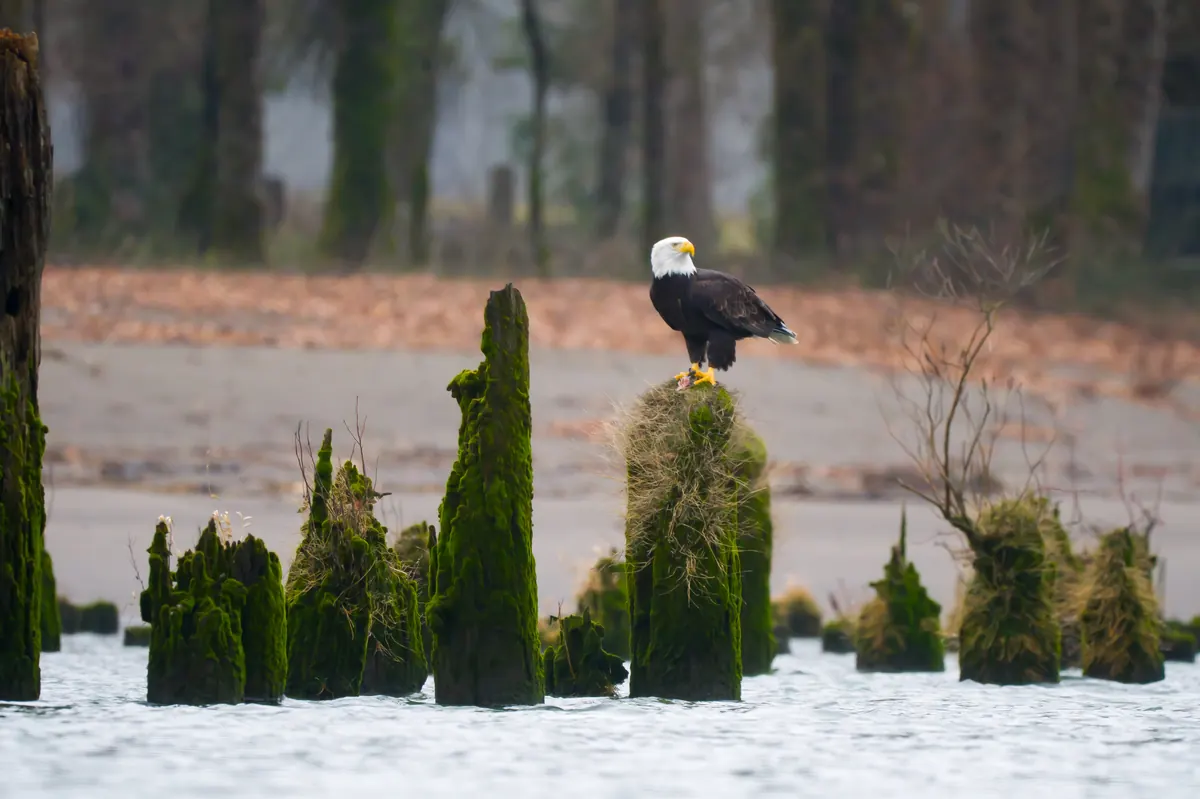
Bald eagles laying
Last days of February and first days of March in western Washington · Large trees near shorelines, lakes and rivers, including in town
According to BirdWeb, western Washington females lay around the turn from February to March, usually two eggs, which the pair take turns warming for 34 to 36 days. A pair that suddenly seems to vanish may simply have one bird low in the nest bowl, so watch for the swap: one eagle flies in, the other leaves.
-
Red-tailed hawks courting
Late winter, at the start of the nesting season · Open country and roadsides across the state
The most common hawk in North America starts its breeding season with high, circling courtship flights and shrill screams, BirdWeb says. On a sunny February day, two red-tails soaring together over a field, sometimes with legs dangling, are likely a pair.
Nesting raptors are easy to disturb. Watch from at least a few hundred feet away, and leave if a bird stands up, calls or flies off the nest. A nest you can see from a path makes a good subject for the journal's nest observed page, with a visit every week or two through spring.
What wildflowers bloom in Washington in February?
Not many, but the ones that do stand out against bare woods. West of the Cascades, Indian plum leads the way in February, and several familiar shrubs and trees are close behind.
-
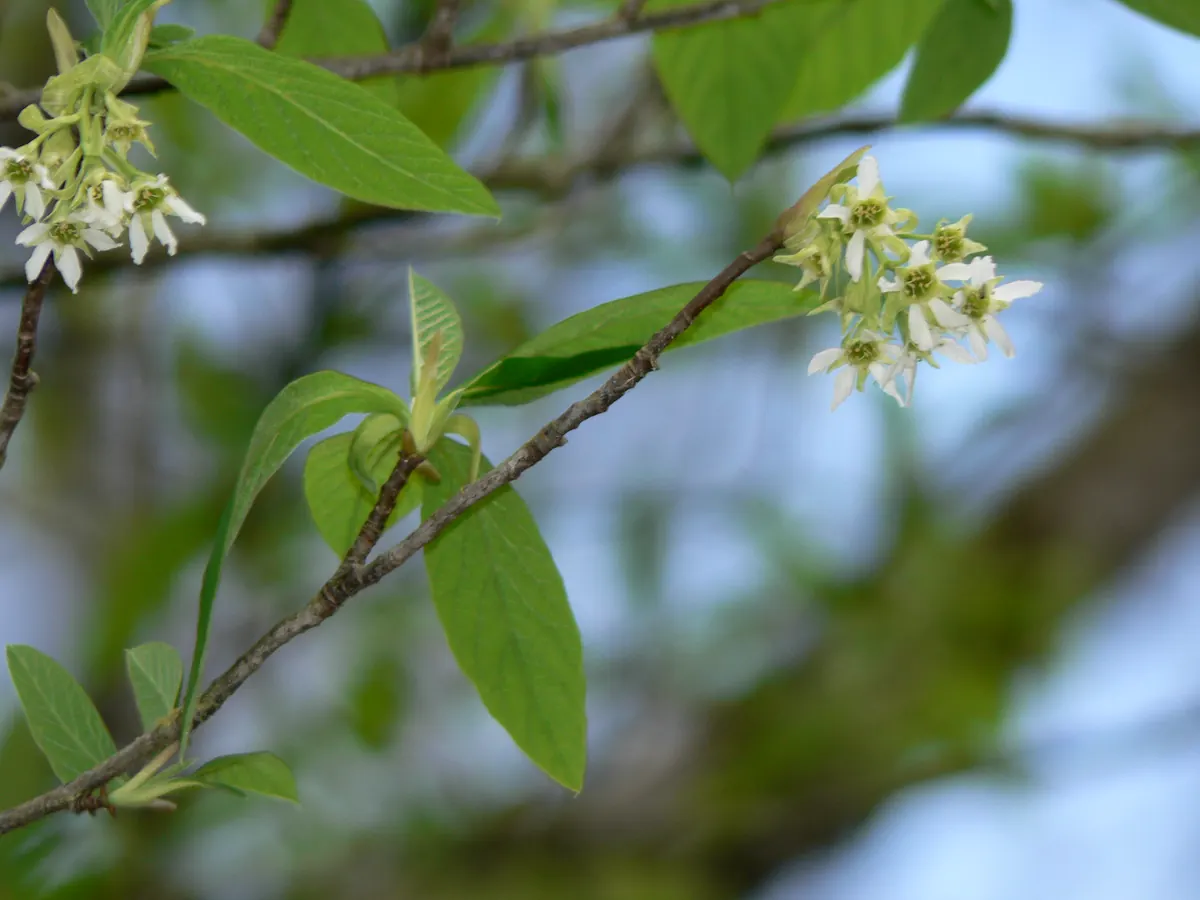
Indian plum in flower
Flowering February through April · Open forest, forest edges and stream thickets west of the Cascades and along the coast
The Washington Native Plant Society lists Indian plum, also called osoberry, as flowering from February to April, one of the earliest natives to bloom. Small greenish-white, bell-like flowers hang in drooping clusters as the first bright green leaves unfold, so a whole shrub looks lit up in a gray wood. Each shrub is either male or female, and only females go on to carry the bluish-black fruit that coyotes, foxes, deer and bears eat.
-
Western skunk cabbage, hood first
WNPS lists flowering from March; watch for the first yellow hoods late in winter · Swamps, seeps, stream banks and forested wetlands statewide
Skunk cabbage pushes a big yellow hood, the spathe, out of the mud before its leaves, wrapped around a club-like spike packed with tiny flowers. Its rank smell, unpleasant to people, draws a species of rove beetle that feeds and mates in the flower and carries pollen as it goes, the Washington Native Plant Society explains. In mild winters, check boggy spots in late February for the first hoods.
-
Red alder and salmonberry, next in line
WNPS lists March and April for alder flowers, and March into June for salmonberry · Stream banks, clearings, forest edges and wet ground on both sides of the Cascades
Red alder's male catkins, two to four and a half inches long and reddish-orange touched with yellow, lengthen on bare branches through February before they shed pollen. Salmonberry's magenta, five-petaled flowers follow; WNPS notes they are an early source of nectar for hummingbirds that spent the winter here, as well as bees and butterflies. Watch the buds swell now and you will be ready for the first flowers.
On the dry side of the mountains, the first shrub-steppe flowers, sagebrush buttercup and grass widows among them, usually wait for March, though a warm spell can bring a few out earlier. Anyone who began drawing a hazel twig in January can add an Indian plum or alder branch to that tree through the seasons record now and keep sketching into spring.
What is February weather like in Washington, and what does El Niño mean for the end of winter?
Winter's final month on the meteorologists' calendar is usually a little milder than January across Washington, but it can still bite. Sea-Tac's normal February snowfall is 2.2 inches, a touch more than its January figure, and February 2019 showed what a cold month can do: NOAA's national climate report for that month lists Seattle's 20.2 inches of snow among the February records broken across the northern states. In the Methow, Winthrop's normals count 28.2 days of snow cover an inch or deeper, so in most years the ground stays white all month.
| Station | Average high | Average low | Precipitation | Snowfall | Days with 1 in or more of snow on the ground |
|---|---|---|---|---|---|
| Seattle-Tacoma airport | 50.3 | 37.7 | 3.76 | 2.2 | 1.1 |
| Olympia airport | 49.1 | 32.3 | 5.09 | 0.6 | 0.3 |
| Quillayute (coast, near Forks) | 49.1 | 35.2 | 9.73 | not published | not published |
| Paradise, Mount Rainier | 34.1 | 22.6 | 12.93 | not published | not published |
| Winthrop (Methow Valley) | 38.4 | 18.0 | 1.28 | 8.8 | 28.2 |
| Wenatchee airport | 41.6 | 27.4 | 0.76 | not published | not published |
| Yakima airport | 47.2 | 26.1 | 0.81 | 2.7 | 3.9 |
| Walla Walla airport | 46.5 | 32.9 | 1.59 | 2.2 | 2.0 |
| Spokane airport | 39.5 | 26.3 | 1.44 | 7.8 | 10.2 |
Behind it all is El Niño. In a mid-September update dated the 10th, the government’s ENSO team put a top-tier event over fall and winter at upward of 90 percent likely. The state climatologist's office says such winters lean warm, slightly favor dry, and on average deliver less snow, but adds that each event plays out differently and El Niño accounts for only about 30 percent of the swings in winter circulation. February is when the snowpack question starts to settle: UW researcher Aaron Levine told the Spokesman-Review that an event this strong could leave Washington with much less snow and snowpack, which would raise next summer's drought and fire risk; the Department of Ecology points out that the state has had drought in seven of the past 10 years. The Spokane forecast office describes the mechanism: the Pacific jet sends storms toward California, and the polar jet holds the Arctic air back over eastern Canada.
Each month NOAA refreshes its three-month maps, posted on the CPC 90-day outlooks. Our Washington forecasts cover the coming week, and gardeners can look up when the last spring frost usually comes in Washington.
How much daylight does Washington gain in February?
Close to an hour and a half in the north of the state, and the pace is still picking up. Seattle goes from 9 hours 35 minutes on February 1 to 11 hours 1 minute on the 28th, 86 minutes in four weeks, and each day adds about 2.9 minutes early in February and about 3.4 by its last day. By February 28 the sun rises at 6:52 a.m. and sets at 5:53 p.m. in Seattle, and the gains keep speeding up until the March equinox. Clocks move to daylight time on March 14.
| City | Feb 1 | Feb 28 | Gained | Per day |
|---|---|---|---|---|
| Bellingham | 9 h 28 m | 10 h 58 m | 90 min | 3.3 min |
| Seattle | 9 h 35 m | 11 h 01 m | 86 min | 3.2 min |
| Aberdeen | 9 h 38 m | 11 h 02 m | 84 min | 3.1 min |
| Vancouver | 9 h 45 m | 11 h 05 m | 80 min | 3.0 min |
| Wenatchee | 9 h 36 m | 11 h 01 m | 85 min | 3.1 min |
| Yakima | 9 h 40 m | 11 h 03 m | 83 min | 3.1 min |
| Kennewick | 9 h 42 m | 11 h 04 m | 82 min | 3.0 min |
| Spokane | 9 h 35 m | 11 h 01 m | 86 min | 3.2 min |
Punxsutawney's forecast comes on Tuesday, February 2, yet winter's astronomical midpoint, equally far from solstice and equinox, waits until February 3 to 4. Look up sunrise and sunset for your own town with our sunrise and day length calculator, and in the journal's dusk and dawn watch, note the first evening you can walk outside after dinner in daylight.
What can you see in Washington's night sky in February 2027?
Two oppositions in nine days make this a planet month: first Jupiter, then Mars, with Mercury low in the evening twilight during the opening week. Times are given in Pacific Standard Time, and neither of the month's eclipses reaches Washington skies.
-
Mercury at dusk
Late January to about February 10; farthest from the sun on the evening of February 2 · Low in the west-southwest, 30 to 45 minutes after sunset
Mercury is at greatest eastern elongation late on Tuesday, February 2, Pacific time, about 18 degrees from the sun. Find an open view low to the west-southwest, and on the wet side of the state be ready to grab a clear evening between storms. On Sunday the 7th, the slimmest sliver of a young moon hangs beside it in the afterglow.
-
Jupiter at opposition
Wednesday, February 10, 4:21 p.m. · Rising in the east as the sun sets; due south around midnight
With Earth lined up between it and the sun, Jupiter climbs over the Cascades at dusk and stays in view until dawn, brighter than Sirius. Steadied binoculars pick up the Galilean moons, pinpricks in a row whose order changes nightly.
-
Mars at opposition
Friday, February 19, about 7 a.m.; closest to Earth on February 20 · In the east after dark, in Leo near the bright star Regulus
Mars reaches the far end of its orbit in early March, so this opposition is a modest one: even at its nearest, about 63 million miles separate us. Still, it burns a steady orange-red through the night, and it will be a couple of years before it is this close again, in 2029.
-
The Snow Moon
Full at 3:23 p.m. on Saturday, February 20 · Rising in the east about 5:47 p.m. in Seattle
The moon turns full in the afternoon and rises around dusk. Almanacs disagree about calling it a supermoon, so near-supermoon is the fair label. Leo is crowded that night, with the moon, Jupiter, Mars and Regulus all within a few hand-widths, and the previous night, Friday the 19th, the almost-full moon slides very close by Jupiter.
-
Two eclipses Washington can't see
February 6 and February 20 · Not visible from Washington
On February 6 the moon's ring-of-fire shadow falls on Chile, Argentina and West Africa, and Washington sees none of it. The February 20 penumbral eclipse of the moon ends at 5:13 p.m. Pacific time, about half an hour before Seattle's moonrise, and even back East it amounts to no more than a faint gray tint.
| Phase | Date | Time |
|---|---|---|
| New moon | Saturday, Feb 6 | 7:56 a.m. |
| First quarter | Saturday, Feb 13 | 11:58 p.m. |
| Full moon, the Snow Moon | Saturday, Feb 20 | 3:23 p.m. |
| Last quarter | Saturday, Feb 27 | 9:16 p.m. |
Solar activity has passed its peak, yet big geomagnetic storms can still happen. If NOAA's Space Weather Prediction Center issues a watch, the dark, moon-free evenings of roughly February 2 through 11 give Washington its best chance of a glow low in the north. Look at the cloud cover forecast before heading to a dark site, and find each night's moonrise on our moon phase calendar.
What can Washington families do outside in February?
- One day in February: count seabirds. The Puget Sound Seabird Survey sends trained volunteer teams to more than 190 shoreline sites once a month, October through April, on a date the project sets by the tides. New surveyors train in the fall, but families can watch the same loons, grebes and scoters from any beach and learn the birds for next season.
- Presidents' Day weekend: the Great Backyard Bird Count. Co-organizer Birds Canada gives the 2027 count as February 12 through 15. Tally birds for 15 minutes or longer at a spot of your choosing, as many days as you like, and send the list in with the Merlin app or eBird. A feeder with Anna's hummingbirds, a park pond or a farm road east of the mountains all count.
- A rainy-night frog walk. Bring flashlights and boots to a pond edge on a mild evening and listen. Stay on the bank and leave any egg clumps you spot exactly where they are.
- Hunt for the first flowers. Walk a westside trail and count how many Indian plum shrubs are in bloom; go back a week later and count again.
- A Saturday refuge walk. The Nisqually refuge near Olympia has offered a free guided walk at 10 on Saturday mornings; confirm on its events calendar.
- Snowshoeing at Paradise. Mount Rainier's ranger-guided snowshoe walks on weekends and holidays usually continue into March, with snowshoes lent free; check the park's program page for this season's schedule.
- Mark March 18 to 21. The Othello Sandhill Crane Festival has set its 2027 dates, with tours and talks in the crane country.
Feeder counters can stay with Project FeederWatch into April. Frog egg masses, blue herring water and Indian plum blossoms all make good iNaturalist records, and any bird list belongs on eBird. To see what is happening in other places, browse our nature guides for every state, and if your child wants to keep a record of the season, look at our Naturalist's Field Journal.
Safety notes for February in Washington
- Hunting in February. The regular duck, coot, snipe and upland bird seasons are over by February 1, but some hunting continues. Saturday, February 6 is the statewide youth, veterans and active military waterfowl day. Late white goose seasons run February 13 to 21 in Goose Management Area 1 (the Skagit and Snohomish flats) and February 20 to March 10 in Goose Management Area 4 in eastern Washington, and a goose season extension in the Inland part of Goose Management Area 2 in southwest Washington runs February 7 to 15 on Saturdays, Sundays and Wednesdays only, with national wildlife refuges and WDFW wildlife areas closed to goose hunting. Cottontail and snowshoe hare, bobcat and raccoon seasons stay open statewide to March 15, as does fox outside national forest boundaries, cougar to March 31 or until an area's harvest cap is reached, and coyote year-round. Washington's clothing rule, WAC 220-414-080, calls for a 400-square-inch minimum of fluorescent orange, pink or both, worn on the upper body so it shows from every direction; it covers modern-firearm deer and elk hunting, and gun hunting for upland birds or rabbits while an upland bird season is open (muzzleloaders excepted), and it never applies to migratory bird hunters. With those seasons closed in February, most hunters you meet won't be wearing orange, so wear a bright layer yourself on wildlife areas and farm country.
- Avalanches. Late-winter storms keep loading the slopes of the Cascades and Olympics, and a sunny day after new snow can be the most dangerous of all. Check the Northwest Avalanche Center's daily forecast before leaving groomed routes, and anyone entering avalanche terrain needs a beacon, shovel and probe plus the training to use them.
- Rain on snow and flooding. A warm atmospheric river can melt low snow and push rivers up quickly, more likely in a warm El Niño winter. Stay off gravel bars and riverbanks when the water is rising, and never drive into a flooded road.
- Ice. WDFW checks no lake's ice for the public, and its guidance is to stay off anything thinner than four inches of clear ice. By late February, daytime warmth can weaken ice on eastside lakes, especially near inlets, docks and shorelines. Test the ice as you go, fish with a partner and carry ice picks.
- Cold, wind and mountain passes. Check WSDOT pass reports and chain requirements before crossing the Cascades. Wind across the open plateau and the Palouse can make a mild-looking day bitterly cold, so dress in layers and cover hands and face.
Sources
- WDFW: Forage fish ecology in Washington waters (Pacific herring)
- Encyclopedia of Puget Sound: The herring defenders
- Puget Sound Info: Biomass of spawning Pacific herring
- WDFW: Gray whale (Eschrichtius robustus)
- Encyclopedia of Puget Sound (Cascadia Research Collective): Gray whales of the Salish Sea
- WDFW: Northern red-legged frog
- WDFW: Pacific treefrog
- WDFW: Living with wildlife, frogs
- Woodland Park Zoo: Amphibian monitoring
- Olympic Peninsula Audubon Society: Anna's vs. rufous hummingbirds
- Seattle Audubon BirdWeb: Anna's hummingbird
- Yakima Valley Audubon Society: Hummingbirds in winter
- Seattle Audubon BirdWeb: Say's phoebe
- Seattle Audubon BirdWeb: Western meadowlark
- Seattle Audubon BirdWeb: Sandhill crane
- U.S. Fish and Wildlife Service: Columbia National Wildlife Refuge, species
- Spokesman-Review: Cool Critters, sandhill cranes in eastern Washington (March 22, 2026)
- Othello Sandhill Crane Festival
- Seattle Audubon BirdWeb: Great horned owl
- Seattle Audubon BirdWeb: Bald eagle
- Seattle Audubon BirdWeb: Red-tailed hawk
- Washington Native Plant Society: Indian plum (Oemleria cerasiformis)
- Washington Native Plant Society: Western skunk cabbage (Lysichiton americanus)
- Washington Native Plant Society: Roaming rove beetles and naive bumblebees
- Washington Native Plant Society: Red alder (Alnus rubra)
- Washington Native Plant Society: Salmonberry (Rubus spectabilis)
- Washington Native Plant Society: Grass widows (Olsynium douglasii)
- Wenatchee Outdoors: Earliest spring wildflowers
- NOAA NCEI: U.S. Climate Normals 1991–2020
- NOAA NCEI data service: monthly normals for the Washington stations in the table
- NOAA NCEI: Assessing the U.S. climate in February 2019
- NOAA Climate Prediction Center: ENSO diagnostic discussion, September 10, 2026
- NOAA Climate Prediction Center: seasonal (90-day) outlooks
- Office of the Washington State Climatologist: How might El Niño affect Washington this winter? (Sept. 10, 2026)
- Spokesman-Review: What a very strong El Niño could mean for Washington (April 27, 2026)
- Washington Department of Ecology: Washington water supply update (June 2026)
- National Weather Service Spokane: El Niño and Inland Northwest winters
- U.S. Naval Observatory: Moon phases, 2027
- U.S. Naval Observatory: Sun and moon rise and set, Seattle, February 20, 2027
- U.S. Naval Observatory: Earth's seasons, 2027
- Fred Espenak: Sky Event Almanac 2027
- NASA eclipse website: solar eclipses 2021–2030
- NASA eclipse website: lunar eclipses 2021–2030
- NOAA Space Weather Prediction Center
- Puget Sound Bird Observatory: Puget Sound Seabird Survey
- National Audubon Society: Great Backyard Bird Count (February 12–15, 2027)
- Birds Canada: Great Backyard Bird Count (February 12–15, 2027)
- U.S. Fish and Wildlife Service: Billy Frank Jr. Nisqually NWR events
- Mount Rainier National Park: Ranger-led programs
- Project FeederWatch (Cornell Lab of Ornithology and Birds Canada)
- WDFW 2026–27 Migratory Waterfowl and Upland Game Seasons (official pamphlet): migratory game bird seasons
- WDFW 2026–27 Migratory Waterfowl and Upland Game Seasons (official pamphlet): western Washington goose management areas
- WDFW 2026–27 Migratory Waterfowl and Upland Game Seasons (official pamphlet): eastern Washington goose management areas
- WDFW 2026–27 Migratory Waterfowl and Upland Game Seasons (official pamphlet): resident game bird seasons
- WAC 220-416-010: Small game and other wildlife seasons, 2024–2027
- WDFW 2026 Big Game Hunting Seasons and Regulations (official pamphlet): cougar general seasons
- WAC 220-414-080: Hunter orange and hunter pink clothing requirements
- Northwest Avalanche Center
- WDFW: Washington winter ice fishing (ice safety)
- WSDOT: Mountain pass reports
- Photos via Wikimedia Commons; licenses and photographers are credited under each picture
