What to look for in nature in Wisconsin this April
April is when Wisconsin stops thawing and starts growing, though the weather does not always agree. NOAA’s 1991 to 2020 normals put Madison’s typical afternoon high at 51 °F on April 1 and 63 °F on April 30, with Green Bay running from 47 °F to 61 °F, and the Hurley snowbelt still averages more than 9 inches of snow in the month. Behind that unsteady weather the natural calendar is busy. Lake sturgeon crowd the Wolf River’s rapids and shallows in the second half of the month, greater prairie-chickens stamp and boom at dawn on a few central grasslands, volunteers count sandhill cranes before sunrise on one Saturday morning, great egrets and shorebirds drop into Horicon Marsh, and the first warblers arrive just before the peak of songbird migration. Frogs call on warm nights, pasque flowers open on dry prairie slopes, and woodland wildflowers race the canopy. What follows sticks to places and windows we could support from agency sources, and it flags every date you should confirm with the organizer.
Other months in Wisconsin: October, November, December, January, February, March.
Start here
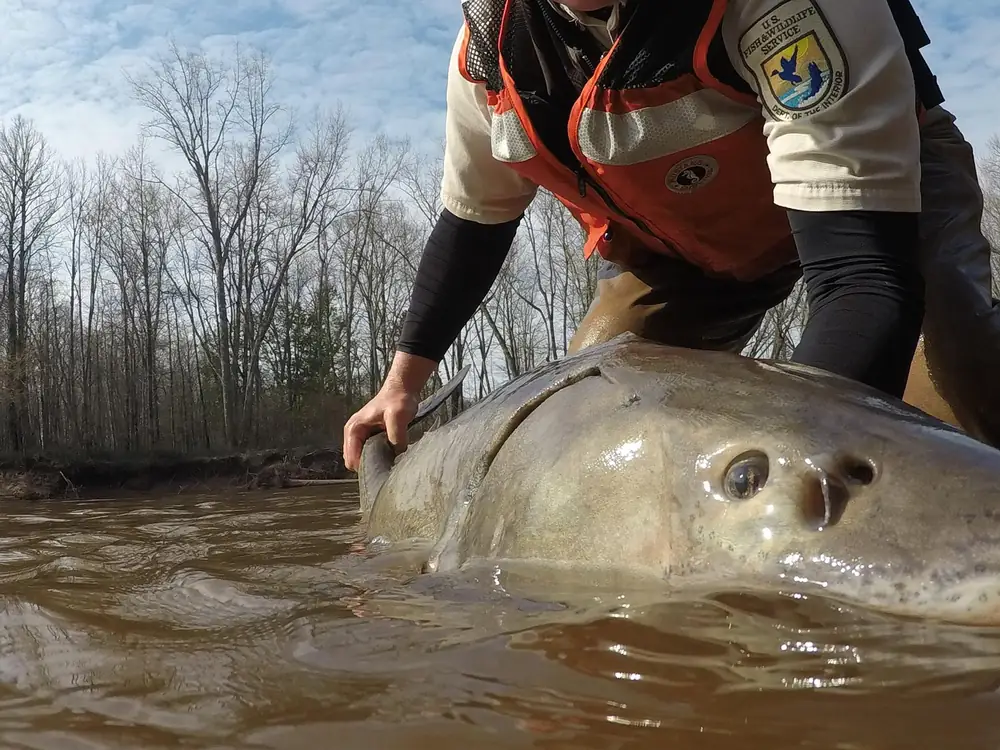
- Go and watch lake sturgeon spawn. The DNR expects the run to begin by mid to late April in the Wolf and other big rivers. Pick a viewing spot such as Bamboo Bend at Shiocton or the Sturgeon Trail near New London, dress warmly, and check local sources first, because the run starts when the water warms, not on a date.
- Listen for frogs after dark on a mild night. The state’s volunteer frog survey treats April 8 to 30 as the early-spring listening window, when water is at least 50 °F. Stand beside a pond, flooded field or woodland wetland on a calm, cloudy, humid evening and learn the wood frog, the spring peeper and the chorus frog.
- Walk a woodland before the leaves close the canopy. Hepatica, bloodroot, trout lily and marsh marigold bloom before the trees leaf out. Go on a sunny afternoon, stay on the trail, and note which flowers are open so you can compare next year.
Keep a record: log the temperature and the date of your first spring peeper in the daily field log, and add the egrets, loons and warblers to birds I have seen. Marshes and ponds with several frog species suit a map of sounds. If you will come back to a woodland in May, the same place twice makes the flower comparison easy, and a red maple is a fine subject for a tree through the seasons, from bud to flower to leaf. A prairie-chicken morning belongs on dusk and dawn watch.
Regions used below: Northwoods and the Lake Superior shore; Northwest and the St. Croix; Central Sands and the Wisconsin River; Fox Valley, Green Bay and Door County; Southeast and the Lake Michigan shore; South Central and the Driftless Area.
When do lake sturgeon spawn on the Wolf River, and what else runs in April?
Spring runs of big fish are one of the most reliable April spectacles in the state. The Winnebago System, which takes in Lake Winnebago, the Upper Fox River and the Wolf River with its tributaries, has had its sturgeon spawning run surveyed every year since 1975. The timing is set by water temperature, so read each date here as a typical window, not a guarantee.
-
Sturgeon on the Wolf River
Mid to late April into early May, depending on the water temperature · Shawano Dam, Bamboo Bend at Shiocton, the Wolf River Sturgeon Trail west of New London, Highway 156 near Navarino State Wildlife Area, and the Lower Fox River at De Pere
In its year-of-fishing calendar, the DNR expects lake sturgeon to start their spawning run by mid to late April in the Wolf and other large rivers of the state. The agency’s sturgeon-spawning page lists four main viewing areas on the Wolf, plus the walkway below the De Pere Dam on the Lower Fox and a site on the Peshtigo River, and suggests contacting DNR Fisheries Management for current conditions.
The 2025 spring shows how the timing unfolds in a fairly ordinary year. The DNR’s assessment of that year says spawning started at Princeton around April 19, at New London and Shiocton on April 20, and at the Shawano Dam on April 24. That is one spring, not an average, and a cold or flooded April can shift every date.
-
What the biologists find
Late April to the first days of May · More than 70 spawning sites across the Winnebago System
The DNR has run annual spawning surveys on this system since 1975. In 2025, crews and volunteers handled 1,741 sturgeon between April 21 and May 1, most of them on the Wolf River. They recorded 66 females longer than 70 inches and 23 males that long, which the agency says is the most large males it has ever captured during a spawning season. The same report says harvest is permitted only during the February spearing season, so April is a month for watching.
-
Walleye and steelhead
April · Rivers with open seasons, and Lake Michigan tributaries
The DNR’s calendar says walleye fishing is often excellent in April on rivers with open seasons, naming the Menominee, Mississippi, Fox, Wolf, Rock and Crawfish. It also says steelhead runs on Great Lakes tributaries are near their peak and that rain often brings a fresh run on Lake Michigan streams. Regulations differ by water, so read the current rules for the river you plan to visit.
Where can you watch greater prairie-chickens boom in Wisconsin?
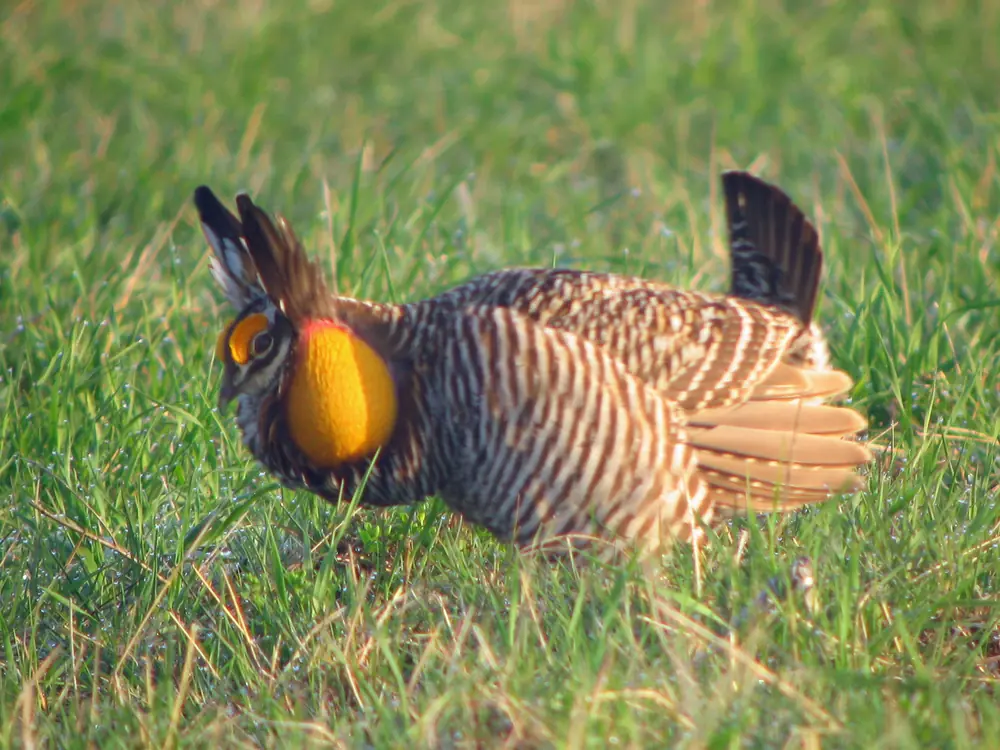
The greater prairie-chicken is a state-threatened grassland grouse, and its spring display is one of the oldest rituals on the Wisconsin landscape. Only a handful of places in the state still hold the birds, so a visit is something you plan for.
-
The strongholds
April, around dawn · Buena Vista, Leola and Paul J. Olson Wildlife Areas, central Wisconsin
The DNR calls these three wildlife areas the remaining strongholds for greater prairie-chickens in the state. Buena Vista, in southwestern Portage County, holds the largest concentration of the birds in Wisconsin and was bought in the 1950s to manage grassland for them. The Natural Resources Board approved a management plan for the species for 2022 to 2032 at its June 2022 meeting, and annual survey reports are posted on the DNR’s prairie-chicken page.
-
Watching from a blind
April; check the reservation process for 2027 · Buena Vista Marsh and Paul J. Olson Wildlife Area
The DNR says reservations can be made to view the birds from observation blinds in spring. A regional travel guide describes the viewing as an April activity organized through the University of Wisconsin-Stevens Point, with plywood blinds at the edge of the marsh; its writer arrived at 4:15 a.m. and stayed in the blind until about 8. We could not confirm 2027 booking dates, so look at the DNR and university pages in winter, and treat blind spaces as limited. Do not walk onto a booming ground yourself; a person on foot can scatter the birds and spoil a morning for everyone else.
Which birds arrive in Wisconsin in April, and where do you see them?
March brings the first waves of geese and cranes; April brings variety. Wading birds and shorebirds fill the shallows, loons return as lakes open, and the first warblers appear a few weeks before the peak. The DNR’s account of Horicon Marsh says mid-April through the end of May is the peak of activity for most spring migrants there, with mid-April to mid-May the best stretch for the greatest variety of species.
-
Egrets and shorebirds at Horicon Marsh
Early to mid-April for egrets; April for shorebirds · Horicon Marsh, Dodge and Fond du Lac Counties
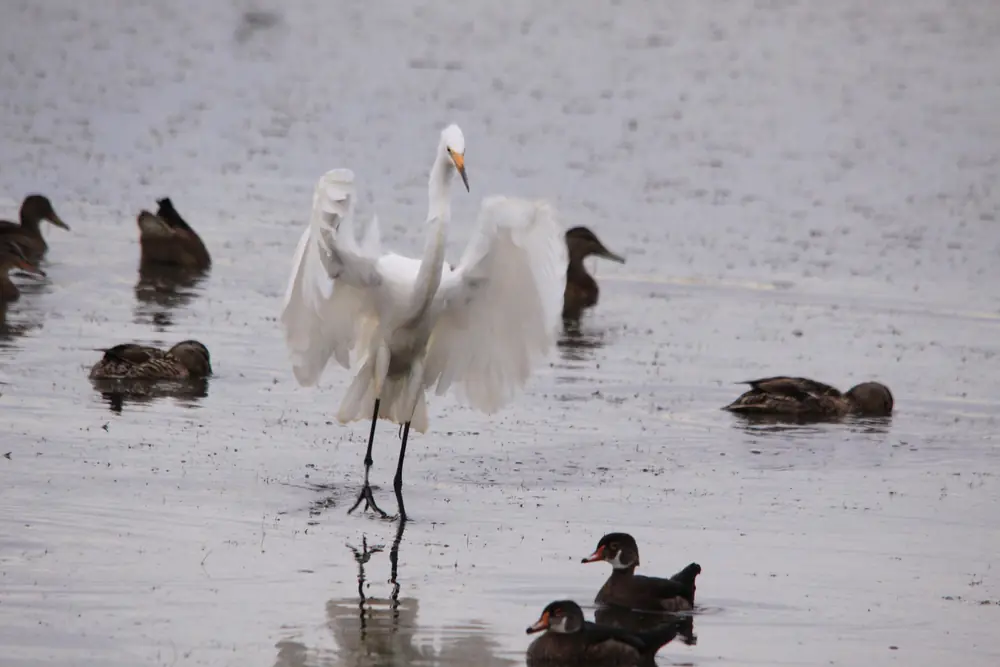
The DNR says great egrets lag the great blue herons by two to three weeks, with most arriving in early to mid-April, and that shorebirds return in April and can be very abundant when the water falls enough to expose mudflats. The first warblers show up around mid-April, but the big waves come in the second and third weeks of May. On the refuge side, the Fish and Wildlife Service reports that the auto tour opens March 16 and stays open until late November if weather allows, while the main dike road is open year-round.
-
Count day for sandhill cranes
Saturday, April 10, 2027, in the early morning; ask your county coordinator for the exact hours · More than 150 counties across seven Midwest states, including Wisconsin
The International Crane Foundation lists this year’s Midwest Crane Count for that Saturday morning. More than 2,000 volunteers go to local wetlands to look and listen for sandhill and whooping cranes, and the program marked its 50th anniversary in 2026. Volunteers must first contact their county coordinator for an assignment, so ask well ahead of the date.
-
Whooping cranes nest at Necedah
April is the start of nesting · Necedah National Wildlife Refuge, Juneau County, and a few other central and western counties
The International Crane Foundation’s May 2026 report on the Eastern Migratory Population says April brought the beginning of that year’s nesting season. As of May 4, 2026, it counted at least 52 whooping cranes in Wisconsin, out of an estimated population of 64, and it described five nests completed in Juneau County, several of them disrupted by black flies, with other active nests in Green Lake, Portage and St. Croix Counties. Necedah refuge lands are open from sunrise to sunset, and the visitor center runs from May to November, so April trips are on your own. Watch from a road or distance with binoculars and never approach a nesting pair.
-
Loons and ice
As lakes open, usually in the second half of April · Northern lakes and large rivers
Loons need open water to land and take off, because their legs are set far back and they cannot walk. In April 2023, a cold, turbulent spell coated migrating loons with ice, and Wisconsin Public Radio reported that at least 25 downed birds had been rescued from pavement and fields by April 21. If you find a stranded loon, contact a wildlife rehabilitator and do not carry it to a small pond; the radio report notes that loons need a long stretch of water to get airborne.
Which frogs are calling in Wisconsin in April, and how do you tell them apart?
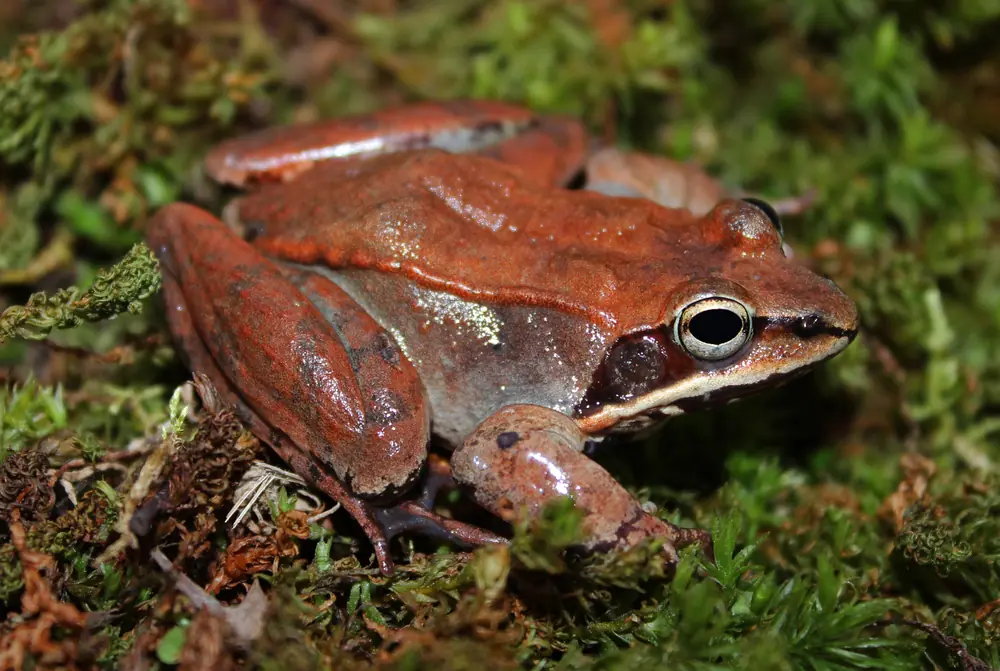
By April, wood frogs and spring peepers are usually in full voice or just past it, and other frogs join them. The DNR’s volunteer Frog and Toad Survey, the longest-running community frog-calling survey in North America according to a DNR biologist quoted by WXPR, builds its calendar around what actually calls when.
-
The early-spring chorus
April 8 to 30 is the survey’s early-spring window; water at least 50 °F · Ponds, flooded fields, wet woods and marsh edges
The survey manual lists wood frog, boreal chorus frog, spring peeper, northern leopard frog and pickerel frog as the species whose calling peaks in this period. American toads and gray treefrogs come later, in a May 20 to June 5 window, and cricket frogs, mink frogs, green frogs and bullfrogs follow in July. The UW-Green Bay phenology record for April 2004 shows how loose the calendar can be: toads were singing at one pond on April 19, about ten days earlier than usual, and gray treefrogs on April 28. One spring does not make a norm.
-
What makes a good listening night
After dark, on a warm, cloudy evening · Anywhere with standing water and little traffic noise
The survey’s instructions favor evenings with winds under 12 miles per hour (7 or less is better), high humidity or a light drizzle, and warm air. Steady rain is a poor bet, and a sudden temperature drop silences most frogs. Listeners stay five minutes at each stop, because a car door or a footstep can stop a chorus for a while. Where one species drowns out the others, volunteers sometimes make a loud noise and listen for the quieter callers as the chorus resumes.
-
Join the survey
Routes are assigned in late winter and spring · Roadside routes of ten stops, statewide
The manual says new volunteers should contact the DNR’s Bureau of Natural Heritage Conservation first, because the program aims for two routes per county and assigns people where it needs help. Cooperators on established routes get their packets in late March or early April. The traditional survey involves three nights, once in each period, and a separate phenology option asks volunteers to record the first calling date at one wetland. WXPR’s March 2026 report says route information is on the survey’s website.
Where do pasque flowers and other early prairie flowers bloom in Wisconsin?
Dry prairies on steep, sunny slopes warm first, and they carry the earliest wildflowers of the open country. These sites are small and rugged, so bring a compass, topographic map or GPS unit, wear good boots, and stay on the existing footpaths.
-
Rock River Prairie
Spring; the DNR does not give dates, and the timing follows the season · Rock County, 37 acres near Beloit
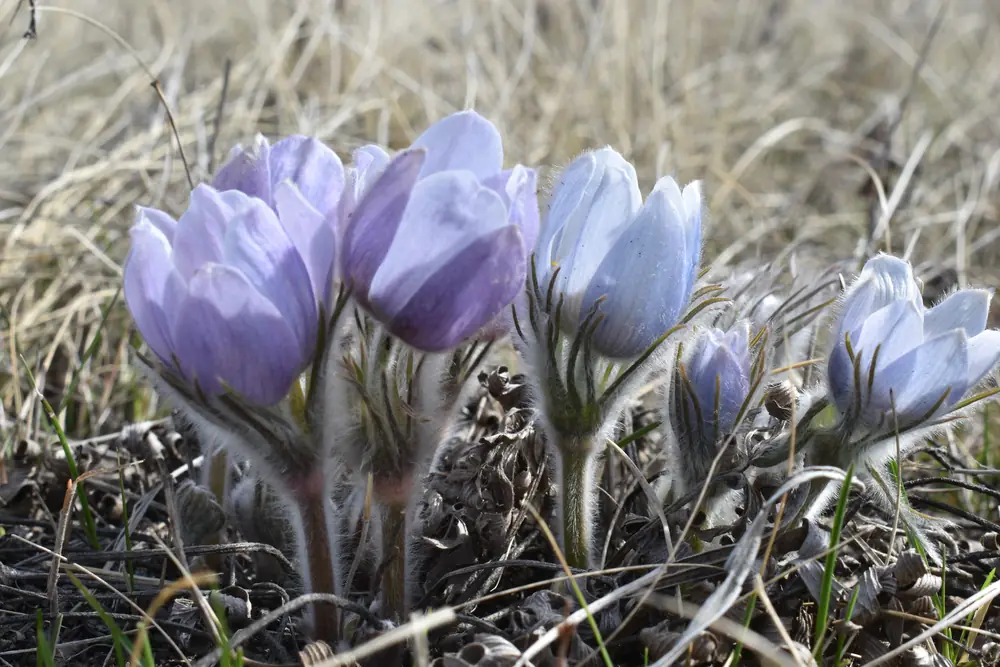
The DNR says pasque flower carpets the steep east-facing slope of this state natural area in spring, and that May brings large numbers of cream wild indigo and rock sandwort. The site has no restrooms or picnic areas, no entrance fee, and a small parking area east of Walters Road. Collecting plants is prohibited.
-
Muralt Bluff Prairie
Spring · Green County, west of Albany
The DNR lists pasque flower, shooting star, wood betony and bird’s-foot violet among the spring flowers on this bluff, and its page warns that the trails are mostly undeveloped footpaths, with a small parking lot on County Highway F. Campfires and collecting are not allowed.
What blooms in Wisconsin woods in April, and when do the trees leaf out?
Woodland wildflowers get a brief window. Light reaches the forest floor only until the trees put out leaves, and the display fades once the canopy closes in May. Bloom dates swing by weeks between years, and the southern counties run well ahead of the north.
-
Bloodroot, hepatica and marsh marigold
Mid to late April in many years · Floodplains, wet woods and rich hardwood forest
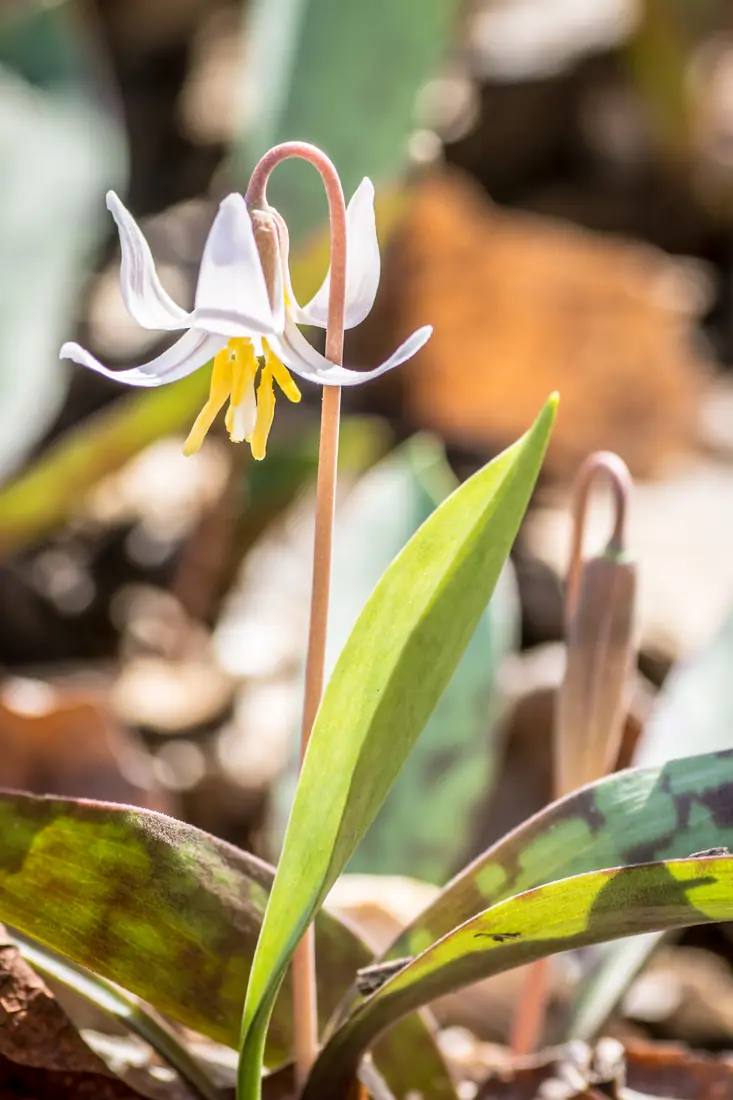
The UW-Green Bay phenology record for April 2004 logs marsh marigold and American elm flowers on April 14, and bloodroot and hepatica across Brown County on April 17. For large-flowered trillium, the same record puts the earliest blooms at April 28 or 29 and the 19-year average first bloom at May 3. These are one observer’s dates and an average from that record, not forecasts for 2027, but they show the sequence: the water-edge plants first, the trilliums last.
-
Where to look
April into May · Plover River Woods, Marathon County; Tellock’s Hill Woods, Waupaca County; Pleasant Valley Conservancy, west of Madison; Ellison Bluff, Door County
The same article names these among its favorite spring ephemeral sites. It lists bloodroot, spring beauty, trillium and Dutchman’s breeches at Plover River Woods, large-flowered trillium and spring beauty at Tellock’s Hill, Jacob’s ladder and yellow lady’s slipper at Pleasant Valley, and large-flowered trillium and downy yellow violet on the bluff in Door County. In Madison, the UW Arboretum highlights hepatica and trout lily in its woods and 35 acres of flowering cherries, magnolias, lilacs and crabapples, and points visitors to its Arboretum Explorer page to see what is in bloom.
What can you see in the Wisconsin night sky in April 2027?
Wisconsin spends all of April on daylight time, so each clock reading in this section is CDT. We calculated planet positions for the middle of the country; Wisconsin’s own horizon times run a little different, so give yourself a margin.
-
The Pink Moon
Tuesday, April 20, full at 5:27 p.m. CDT · Rising in the east at dusk
The full moon comes while the Sun is still up, so the best night for watching it climb is Tuesday evening. Moonrise that evening is about 7:50 p.m. at Chicago and 8:21 p.m. at Minneapolis, which brackets most of the state. SeaSky says the Pink Moon name marks the emergence of spring wildflowers, and lists Sprouting Grass Moon and Fish Moon as other names.
-
The Lyrids, in a poor year
Night of Thursday, April 22, with the peak around 8:41 p.m. CDT; activity runs a few nights either side · Lyra, low in the northeast in the early evening
Lyrid activity tops out, according to an International Meteor Organization excerpt, at 01:41 UT on April 23, or 8:41 p.m. CDT on Thursday the 22nd; our own computation puts it about 14 minutes later. SeaSky ranks the shower as average, about 20 meteors an hour under ideal skies. The Moon spoils it this year: roughly 95 percent lit, it clears the eastern horizon near 10 p.m. at Chicago and near 10:45 p.m. at Minneapolis. That leaves a dark window only in the early evening, when Lyra still hugs the northeast. Expect a few meteors per hour, a few more of the bright ones after the Moon is up, and the occasional short outburst that nobody can forecast.
-
Planets, morning and evening
All month · Venus before sunrise; Jupiter and Mars in the evening
Venus, near magnitude -4, spends April in the eastern sky before sunrise, a bright steady light that shows up more than an hour ahead of the Sun in the first days and a little less by month’s end. The thinnest of old Moons, 9 percent lit, hangs beneath Venus at daybreak on the 3rd and 4th, about 3 degrees apart.
Jupiter, in Leo near the Cancer line, is the brightest evening light in the Wisconsin sky to the south, and at April’s start it does not set until the hours before dawn. Mars is far dimmer, near magnitude 0.0 by midmonth. Watch the evening Moon, 68 percent lit, slide beside Jupiter on the 14th and 15th, nearest on the 15th, when Mars lies about 3 degrees from the Moon.
Saturn is out of sight until it returns before sunrise in late April, having passed behind the Sun on the 7th. Mercury, low in dawn twilight on April’s first mornings, goes behind the Sun on the 28th, by our own computation.
| Phase | Date | Time |
|---|---|---|
| New moon | Tuesday, Apr 6 | 6:51 p.m. |
| First quarter | Tuesday, Apr 13 | 5:56 p.m. |
| Full moon, the Pink Moon | Tuesday, Apr 20 | 5:27 p.m. |
| Last quarter | Wednesday, Apr 28 | 3:18 p.m. |
Our moon phases page lists every month, and the March page for this state covers the woodcock, sap run and first frog choruses.
How warm, wet and stormy is April in Wisconsin?
April warms quickly but unevenly. NOAA’s 1991 to 2020 normals put the average high near 46 to 51 °F along Lake Superior, in Door County and in the Northwoods and from 54 to 60 °F in the south and along the Mississippi, with average lows below freezing in the north. The daily normal high at Madison climbs from 51 °F on April 1 to 63 °F on April 30, and the normal low goes from 31 °F to 41 °F. Green Bay runs from a normal high of 47 °F to 61 °F and a low of 30 °F to 40 °F. Snow has not quite quit: Hurley and Minocqua average 9 inches in April, while Milwaukee and Madison average 2 to 3.
-
Spring flooding
March and April, especially after heavy rain on frozen or saturated ground · River valleys
The National Weather Service in Milwaukee says river flooding in Wisconsin typically happens in March and April, and that the greatest risk comes when heavy rain falls on frozen ground while rivers are already high. Its flood outlooks weigh snowpack, frost depth and the current state of the rivers.
-
Severe weather season
Starting in April; most tornadoes come May through August · Statewide
The same office says Wisconsin averages 23 tornadoes a year, with June the busiest month, and that most tornadoes strike between 3 and 9 p.m. In 2026, the state held Severe Weather Awareness Week from April 13 to 17; the statewide drill planned for April 16 was cancelled. We found no announced dates for 2027, so check with your county emergency management and the National Weather Service in the spring.
-
Fire danger on dry, windy days
Spring, whenever grass and leaf litter are dry · Grassland, pine woods and brush
The DNR calls spring the most dangerous fire season in the state, because grass and leaf litter dry within days. On May 4, 2026, it reported very high fire danger across much of the state and suspended burn permits in 43 counties, citing dry vegetation, low humidity, warm temperatures and gusts up to 35 miles an hour. Before you burn anything, check the DNR’s WisBurn page, and never leave a campfire unattended.
-
Late freezes
All month, and into May in the north · Gardens and fruit-growing areas
NOAA’s normals show that Madison has a low of 32 °F or below on average 10.4 nights in April, Green Bay 12.1, Eau Claire 14.1, and Minocqua 23.9. A warm week that opens buds can be followed by a freeze, which is why the median last freeze, shown in the table further down, comes in late April or May at nearly every station.
| Station | Snowfall | Average high | Average low | Precipitation | Nights at or below 32 °F |
|---|---|---|---|---|---|
| Hurley (Iron County snowbelt) | 9.4 in | 49 °F | 28 °F | 2.90 in | 20.7 |
| Minocqua (Northwoods) | 8.8 in | 49 °F | 26 °F | 2.88 in | 23.9 |
| Superior (Lake Superior shore) | 1.7 in | 46 °F | 32 °F | 2.64 in | 14.6 |
| Sturgeon Bay (Door County) | 4.0 in | 50 °F | 32 °F | 3.07 in | 14.5 |
| Green Bay | 4.7 in | 54 °F | 35 °F | 3.00 in | 12.1 |
| Eau Claire (Chippewa Valley) | 4.3 in | 57 °F | 33 °F | 3.08 in | 14.1 |
| La Crosse (Mississippi valley) | 2.9 in | 60 °F | 38 °F | 3.75 in | 8.2 |
| Madison (south central) | 2.6 in | 57 °F | 36 °F | 3.78 in | 10.4 |
| Milwaukee (Lake Michigan shore) | 2.1 in | 55 °F | 38 °F | 3.86 in | 6.1 |
The Climate Prediction Center updates its 90-day outlook monthly at cpc.ncep.noaa.gov, and we leave its contents to that page. For your own town’s forecast, see the weather page; the cloud page helps with reading the sky before a front.
How much daylight does Wisconsin gain in April?
Each city in the table adds between 80 and 93 minutes of daylight across April, about 3 minutes a day, and finishes with 14 h 4 m to 14 h 22 m of sun. Superior, farthest north, gains the most (93 minutes); Milwaukee and Madison, farthest south, gain the least (80 and 81 minutes). Day length is already past 12 hours everywhere on April 1, and every listed city tops 14 hours before the month is out. Because all of April is on daylight time, no clock change muddies the picture.
| City | Apr 1 | Apr 30 | Gained | Per day |
|---|---|---|---|---|
| Superior | 12 h 49 m | 14 h 22 m | 93 min | 3.2 min |
| Rhinelander | 12 h 48 m | 14 h 16 m | 88 min | 3.0 min |
| Eau Claire | 12 h 46 m | 14 h 13 m | 87 min | 3.0 min |
| Wausau | 12 h 47 m | 14 h 13 m | 86 min | 3.0 min |
| Green Bay | 12 h 46 m | 14 h 11 m | 85 min | 2.9 min |
| La Crosse | 12 h 45 m | 14 h 07 m | 82 min | 2.8 min |
| Madison | 12 h 44 m | 14 h 05 m | 81 min | 2.8 min |
| Milwaukee | 12 h 44 m | 14 h 04 m | 80 min | 2.8 min |
The table gives hours of daylight rather than clock times of sunrise and sunset. For any date at your own town, try our daylight page.
When is the last spring freeze in Wisconsin?
Gardeners lean on this table. At the NOAA 1991 to 2020 normals stations, half of springs have seen their last freeze by about April 19 at Milwaukee and April 23 at La Crosse, but not until the last third of May in the Northwoods. In the earliest tenth of years the final freeze can come as soon as about April 6 in the south, while in the latest tenth the Northwoods can still freeze into the first ten days of June. April is for preparing beds, not for setting out tender plants.
| Station | One year in ten | Median | Nine years in ten |
|---|---|---|---|
| Superior (Lake Superior shore) | Apr 24 | May 6 | May 25 |
| Hayward Municipal Airport (Northwoods) | May 5 | May 23 | Jun 6 |
| Rhinelander Oneida Airport (Northwoods) | May 9 | May 26 | Jun 8 |
| Eau Claire Regional Airport (Chippewa Valley) | Apr 24 | May 8 | May 21 |
| Wausau Dwtn Airport (central) | Apr 24 | May 6 | May 21 |
| Sturgeon Bay Experiment Farm (Door County) | Apr 25 | May 8 | May 21 |
| La Crosse Municipal Airport (Mississippi valley) | Apr 9 | Apr 23 | May 6 |
| Madison Dane Regional Airport (south central) | Apr 16 | May 1 | May 16 |
| Milwaukee Mitchell Airport (Lake Michigan shore) | Apr 6 | Apr 19 | May 2 |
Our Wisconsin frost page has the dates for your own town.
What can Wisconsin families do outdoors in April?
April rewards patient, short outings: a dawn at a marsh, an evening listening for frogs, a woodland walk on a sunny afternoon. Dress for mud and cold wind, and bring a thermos.
-
Earth Day, a Wisconsin idea
Thursday, April 22 · Anywhere outdoors
Earth Day grew from a teach-in idea by Gaylord Nelson, who was born in Clear Lake, served as Wisconsin’s governor from 1959 to 1963 and as a U.S. senator from 1963 to 1981, and announced the first national teach-in for April 22, 1970. The Wisconsin Historical Society’s biography and the Nelson Earth Day site tell the story. A good family version needs only a trash bag, gloves and a stretch of trail or roadside, after checking with the land manager.
-
Arbor Day and Forest Appreciation Week
From Earth Day to Arbor Day; Arbor Day is the last Friday in April, which is April 30 in 2027 · Schools, parks and yards
A Wisconsin governor’s proclamation describes Arbor Day as celebrated on the last Friday in April and defines Forest Appreciation Week as the period from Earth Day to Arbor Day. It says the DNR has for four decades provided seedlings to the state’s fourth-graders, over 55,000 in 2026, and that 196 Wisconsin communities had earned Tree City USA status. Check with your local forestry office or Extension for planting events.
-
Log what you see
All month · Your own backyard or park
Journey North, which has tracked migrations since 1994, takes sightings online, with featured projects on monarchs and hummingbirds at last look. The Aldo Leopold Foundation’s 2027 phenology calendar, with photographs and monthly sidebars by Dr. Stan Temple, has space for your own dated observations, in the tradition of Leopold’s records at the Shack.
Our Naturalist’s Field Journal has pages for these outings, and the nature index links to other states and months.
Safety notes for April in Wisconsin
April hazards include fast cold water, ticks and fire, and, for hunters, the first spring turkey seasons.
-
Spring turkey season
Youth hunt April 17 and 18; Period A April 21 to 27; Period B April 28 to May 4 · Public and private land statewide; check your zone
The DNR lists six periods for spring 2027, running from April 21 to June 1 after the youth hunt, with Periods C through F starting May 5. The DNR page says hunters need a harvest authorization through Go Wild, and that the drawing application deadline is December 10 each year, which falls before this page is read. Its safety advice is to put on a blaze orange cap or gloves when walking, since most shooting accidents occur when one hunter mistakes another for game. Hikers on public land should wear bright colors during these weeks.
-
Trout seasons
Early catch-and-release season ends the Friday before the first Saturday in May; the regular season opens May 1, 2027 · Inland trout streams
The DNR’s trout page says the early catch-and-release season runs from the first Saturday in January until midnight on the Friday before the first Saturday in May, when the regular season opens at 5 a.m. and runs to October 15. May 1 is the first Saturday of 2027. Read the current regulations for gear rules and special waters.
-
Ticks are out
Spring, on any mild day · Brushy edges, leaf litter, woodland trails
A UW-Madison Extension page calls spring peak tick activity in the Midwest and names the deer tick as the Lyme-disease carrier in Wisconsin. Its advice: wear long sleeves, use a repellent with DEET or picaridin, and check yourself daily, since transmission usually takes 48 to 72 hours of attachment.
-
Cold water and flooded rivers
April · Spawning rivers, flooded trails, ice-out lakes
April water is cold, and rivers can be high and fast after rain or melt. Stay behind rails at sturgeon viewing sites, never drive through standing water on a road, and keep children and dogs away from fast banks.
Sources (38)
- Wisconsin DNR: A year of fishing in Wisconsin
- Wisconsin DNR: Lake sturgeon spawning viewing
- Wisconsin DNR: 2025 Lake Sturgeon Spawning and Population Assessment, Winnebago System
- Wisconsin DNR: Greater prairie-chicken management
- Wisconsin DNR: Buena Vista Wildlife Area
- Midwest Weekends: Prairie chicken viewing in Wisconsin
- Wisconsin DNR: Wildlife of Horicon Marsh Wildlife Area
- U.S. Fish and Wildlife Service: Horicon National Wildlife Refuge
- U.S. Fish and Wildlife Service: Necedah National Wildlife Refuge
- International Crane Foundation: Annual Midwest Crane Count
- International Crane Foundation: Whooping crane Eastern population update, May 2026
- Wisconsin Public Radio: Rehabilitators report loon fallout in northern Wisconsin (2023)
- Wisconsin DNR: Spring peeper
- Wisconsin Frog and Toad Survey: volunteer instructions
- WXPR: Wisconsin residents asked to listen for frogs (March 2026)
- University of Wisconsin-Green Bay: April phenology observations (2004)
- Wisconsin DNR: Rock River Prairie State Natural Area
- Wisconsin DNR: Muralt Bluff Prairie State Natural Area
- Wisconsin Conservation Voice: Celebrating a season of spring ephemerals on state natural areas
- UW-Madison Arboretum: Springtime blossoms (2026)
- SeaSky: Astronomy calendar 2027
- U.S. Naval Observatory: Moon phases, 2027
- NOAA NCEI: 1991–2020 monthly normals, Milwaukee, Madison, Green Bay, La Crosse, Eau Claire
- NOAA NCEI: 1991–2020 monthly normals, Hurley, Superior, Minocqua, Rhinelander, Sturgeon Bay
- NOAA NCEI: 1991–2020 daily normals, Madison, Milwaukee, Eau Claire, Green Bay
- National Weather Service Milwaukee/Sullivan: Spring flood outlook, southern Wisconsin
- National Weather Service Milwaukee/Sullivan: Severe weather awareness
- Wisconsin DNR news release: Fire danger, May 4, 2026
- NOAA Climate Prediction Center: 90-day outlooks
- Wisconsin DNR: Turkey hunting seasons and spring 2027 dates
- Wisconsin DNR: Trout seasons
- UW-Madison Extension Horticulture: Spring is tick season in Wisconsin
- Wisconsin Governor: Arbor Day and Forest Appreciation Week proclamation, 2026
- Journey North
- Aldo Leopold Foundation: 2027 phenology calendar
- Wisconsin Historical Society: Nelson, Gaylord, 1916-2005
- Nelson Earth Day: Tracing Earth Day’s origins
- Photos via Wikimedia Commons; licenses and photographers are credited under each picture
