What to look for in nature in Wisconsin this October
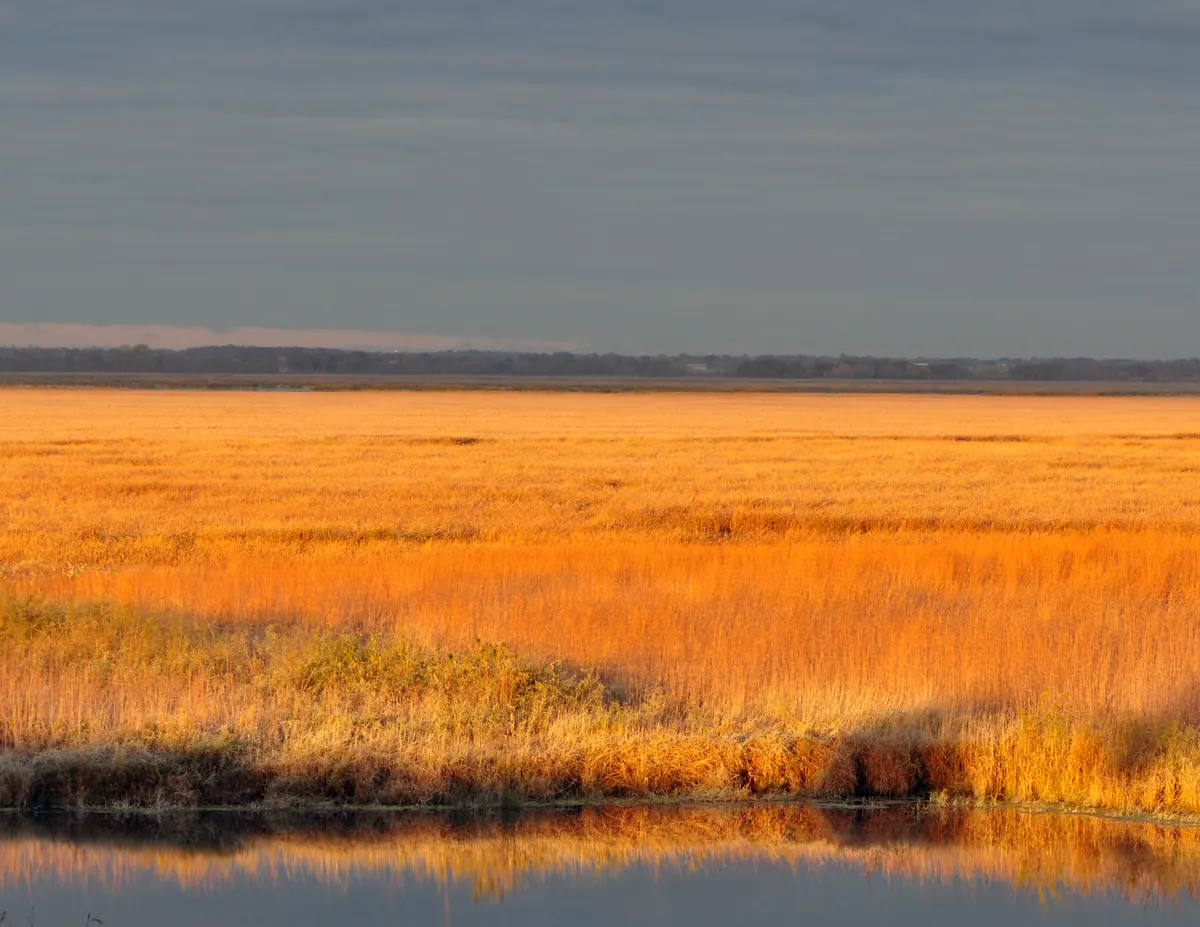
Wisconsin’s October opens with the Northwoods near peak color and closes with the oaks of the Driftless and the Kettle Moraine still bronze. Thousands of sandhill cranes pour into the sedge marshes of Burnett County each evening, Canada geese build toward their peak at Horicon, chinook salmon crowd the fish ladders at Kewaunee and Racine, and the cranberry beds are flooded and raked red. This year a deep drought grips the far northwest and a very strong El Niño is building for winter. Below, each part of the state gets its dates and its best places.
Start here
- Cranes by the thousand at Crex Meadows. Friends of Crex estimate that 15 to 20 percent of the world’s greater sandhill cranes gather in western Burnett County in October and early November, with counts of 15,000 to 20,000. Watch them fly in to roost from Main Dike Road at sunset, or book a free Sunset with the Sandhills tour on October 14, 20, 22 or 24.
- Color from north to south. The DNR’s rule of thumb puts color in the far north at the turn of the month, central Wisconsin at mid-October and the southern counties in the second half. Summer drought is expected to dull the display in the north and center this year; Travel Wisconsin’s volunteer reporters track it county by county.
- A crescent moon swallows Jupiter. Before sunrise on Tuesday the 6th, the slim waning moon slides over Jupiter. From Madison and Milwaukee the planet winks out at about 3:24 a.m. CDT and reappears near 4:16, with the sky still fully dark. Find an open view to the east.
Keep a record: crane evenings belong on the dusk-and-dawn plate of the Naturalist’s Field Journal, and their rolling bugle on the map of sounds. Write your first junco of the season into “birds I have seen,” choose a tamarack or sugar maple for the tree-through-the-seasons page, and sketch a witch hazel capsule among the seeds, pods and cones. Put a date and the wind direction on everything.
Regions used below: Northwoods and the Lake Superior shore; Northwest and the St. Croix; Central Sands and the Wisconsin River; Fox Valley, Green Bay and Door County; Southeast and the Lake Michigan shore; South Central and the Driftless Area.
When is peak fall color in Wisconsin in 2026?
The Wisconsin DNR’s long-standing guide: the far north changes during the final week of September and the opening week of October, central Wisconsin peaks around mid-month, and the southern counties follow in the latter half of October. Its forest ecologists say the brightest reds need sunny days and cool nights that stay above freezing; warm nights mute them. This year there is a complication. Summer drought that carried into September is expected to make the display less vivid across the north and center, and some stressed trees there colored and dropped early. Travel Wisconsin’s Fall Color Report, fed by about 100 volunteer reporters in all 72 counties, went live on September 22.
-
The Northwoods
Late September through the first week of October · Vilas, Oneida, Price, Phillips and Mercer; the Chequamegon-Nicolet National Forest
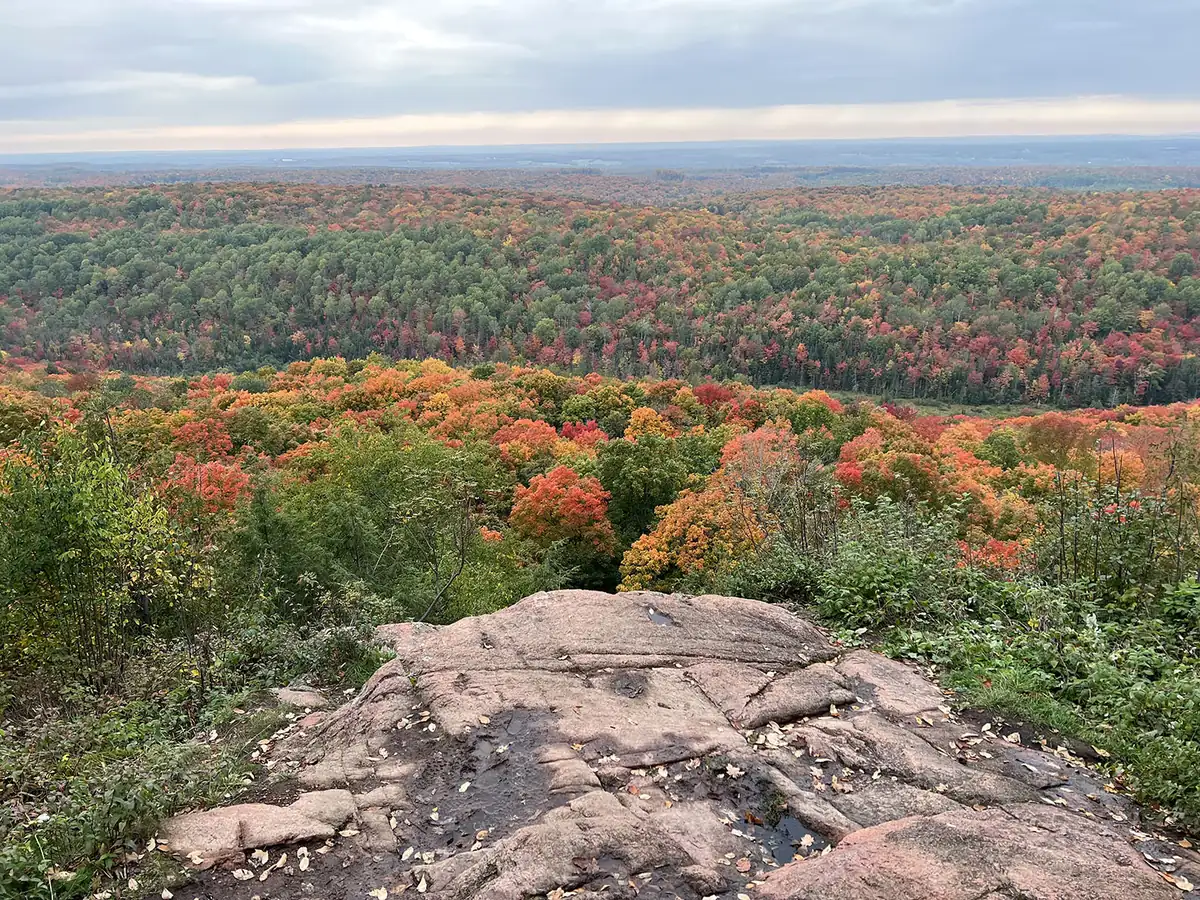
By September 30, spotters had Mercer, Phillips and southern Price County at about 70 percent, and most of the Northwoods was expected to peak in the first full week of October. Maples supply the scarlet and orange; quaking aspen and paper birch go butter yellow. One windy night or a hard frost can end it, so go early rather than wait for perfect weather.
-
The Fox Valley and Green Bay
Mid-to-late October · Shawano, Oshkosh, Green Bay, the Door Peninsula
Shawano and Oshkosh were near 50 percent at the end of September, and Brown County’s spotter put Green Bay at about 20 percent, with its peak forecast for the fourth week of October; she named Bay Shore Park, the Bay Beach Wildlife Sanctuary and the UW–Green Bay campus as the best places to look. Lake Michigan keeps the Door shoreline mild, so its maples tend to hold on later than those inland.
-
The south and the Driftless
The week before Halloween · Madison, the Baraboo Hills, the Kettle Moraine, the Kickapoo valley and the Mississippi bluffs
Drought in Dane County and the south was only moderate, and the State Climatology Office’s Amanda Latham said it should not do much harm to the color there; she expected south central Wisconsin to peak the week before Halloween unless an early frost cut it short. Oak, hickory and sumac on the bluffs, with cottonwoods yellow in the river bottoms, are usually the last to turn.
-
Tamaracks, the last gold
Late October, after the hardwoods · Sphagnum bogs and wet lowlands, most of all in the north
Tamarack is a conifer that behaves like a hardwood: the USDA plant guide describes its soft needles “yellowing and shed in the fall.” It grows in poorly drained sphagnum bogs and muskegs, so a Northwoods bog glows gold after the maples are bare. Its small upright cones stay on the twigs through winter.
Adopt a maple on your block: snap it weekly from one fixed spot, and mark the date its last leaf falls. For a satellite-based estimate of when leaves come and go at your address, open the Field almanac and compare it with your photos.
Where can you see sandhill cranes and geese in Wisconsin in October?
The state’s great October spectacle is on its wetlands. Cranes and geese spend the day in harvested fields and return to the marshes at dusk to roost, so the last hour before sunset is the time to be there, with binoculars and a warm coat.
-
Crex Meadows, Burnett County
Building from early October; peak at the end of the month or early November · Crex Meadows Wildlife Area, Grantsburg
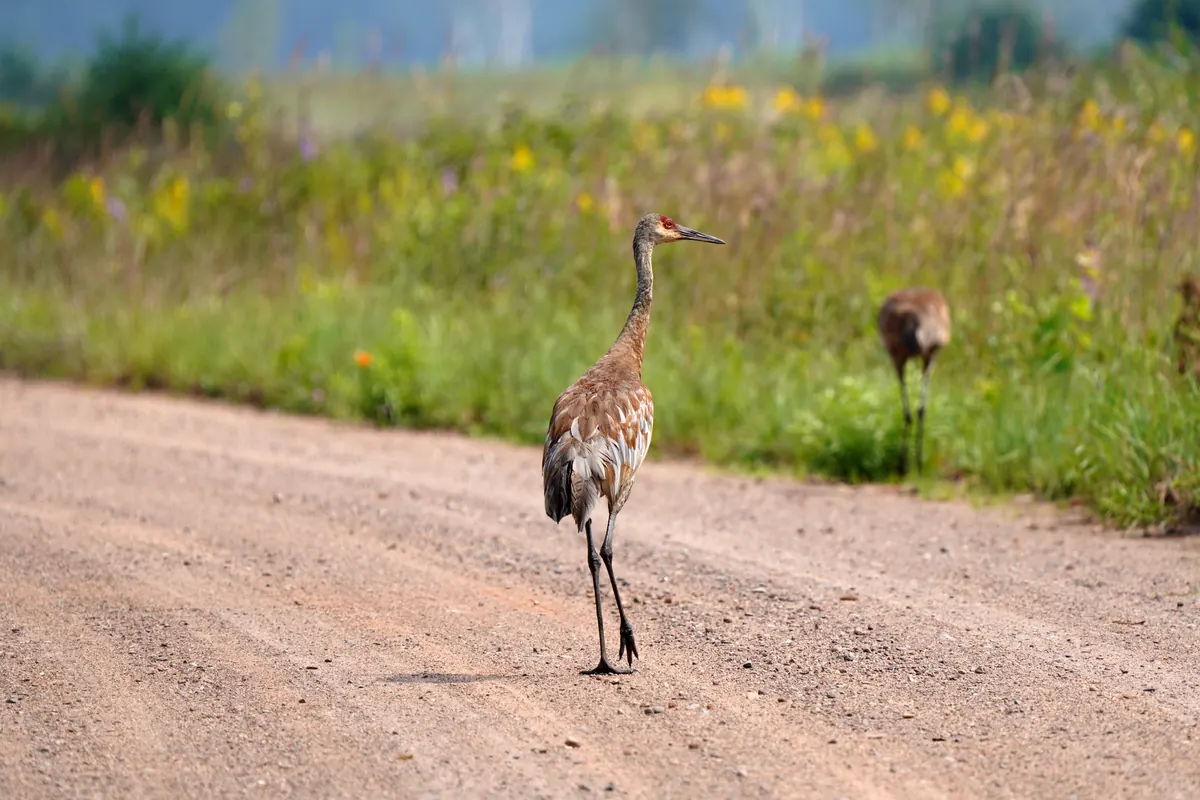
Crex is 30,000 acres of restored wetland and brush prairie run by the DNR, and it holds the biggest fall crane gathering in the state. Friends of Crex say the birds increase daily from early October to a peak at the end of the month or in early November, depending on weather, and stay until the marshes freeze, usually by mid-to-late November. Watch from Main Dike Road as they leave in the morning and return at dusk. The free Sunset with the Sandhills tours run 5 to 7 p.m. on October 14, 20, 22 and 24, with an RSVP, and the annual Fall Festival fills the wildlife area with talks and tours on Saturday, October 10.
-
Horicon Marsh
Geese from mid-September; peak late October to mid-November · Horicon National Wildlife Refuge and Horicon Marsh State Wildlife Area, Dodge and Fond du Lac counties
At more than 33,000 acres, Horicon is one of the largest freshwater marshes in the country; the federal refuge holds the northern two-thirds and the state the southern third. The DNR says 100,000 to 200,000 Canada geese of the Mississippi Valley Population stop each fall, peaking from late October to mid-November, and ducks reach their numbers in October. The state’s free Evening Marsh and Crane Watch at the Education and Visitor Center on Highway 28 is Saturday, October 10, 5 to 6:30 p.m., with soup and no registration; its guided bus tour, Ducks, Geese, Cranes Oh My!, is Saturday, October 17, 3 to 6:15 p.m., $15 with pre-registration. The refuge’s three-mile auto tour stays open until the day before the gun deer season.
-
Whooping cranes
Through October · Horicon and Necedah national wildlife refuges; the International Crane Foundation near Baraboo
A few endangered whooping cranes of the eastern flock summer in Wisconsin and linger into fall among the sandhills. The International Crane Foundation leads monthly guided whooping crane walks, 9 to 10 a.m., at Horicon and, new this year, Necedah, through October; the Horicon refuge lists one for Thursday, October 8, so confirm with the Foundation before you go. Its own grounds near Baraboo, home to all of the world’s crane species, close for the season after Saturday, October 31, and on October 24 it holds a Good Neighbor Day with a food-pantry donation as the price of admission; check the Foundation’s calendar before you go.
-
Canvasbacks and swans on the Mississippi
Mid-October until freeze-up · Upper Mississippi River National Wildlife and Fish Refuge, from Alma to Prairie du Chien
The refuge follows the river for about 261 miles through four states, and the Fish and Wildlife Service says big flocks of tundra swans and rafts of canvasbacks gather there “between mid-October and the winter freeze-up.” The canvasbacks come for wild celery in the backwater pools; the swans build later, into November. In late October, scan the pools below La Crosse from the river roads and landings for the first long white lines on the water.
If you have just one evening, spend it at a marsh on a calm, clear day. Log the minute the first crane flock crosses and the minute the last one lands; the gap widens as the month goes on.
What other birds are moving through Wisconsin in October?
Two shorelines steer the fall flight. Birds heading south along Lake Michigan follow the coast rather than cross open water, and raptors from the Lake Superior basin funnel around the lake’s western tip at Duluth and Superior. Inland, the Mississippi bluffs and the Wisconsin River valley carry a broader stream.
-
Hawks along Lake Michigan
Mid-August to mid-November; big birds in October · Cedar Grove (Sheboygan County); Forest Beach Migratory Preserve near Belgium; Concordia University in Mequon
Cedar Grove, on an old beach ridge of glacial Lake Algonquin, has trapped and banded migrating raptors since the 1940s, the longest such record in North America, with more than 38,000 birds of 24 species handled. It is a research station and State Natural Area that needs permission to visit, so watch from the public counts instead: HawkCount lists fall watches at Forest Beach and Concordia on the same shore, Rib Mountain near Wausau and Eagle Valley on the Mississippi. October brings red-tails, harriers, the first rough-legged hawks and golden eagles on northwest winds behind a cold front.
-
Across the bay at Hawk Ridge
Daily through November 30 · Duluth, a short drive from Superior
For Superior and Douglas County, the best raptor show is just over the bridge. Hawk Ridge averages more than 60,000 raptors each fall and calls October the month of the big birds: eagles, red-tails, rough-legs and goshawks. This September it also logged more than 13,000 blue jays in a single day.
-
Winter finches
October into November · Conifers and forest edges before feeders
The Finch Research Network’s forecast of September 25 expects plenty of pine siskins in the region, drawn to cedar and hemlock seed, and at most a small-to-modest redpoll flight in the western Great Lakes. It sees few pine grosbeaks or bohemian waxwings, a small purple finch flight, and good cone crops keeping most red-breasted nuthatches farther north. With wild food abundant, many birds will stay in the woods rather than visit feeders, while sparrows and the first juncos fill the backyard brush piles.
Two dated counts share one weekend. The Big Sit, October 10–11, asks for every species you can detect without leaving a 17-foot circle, and eBird’s global October Big Day falls on that Saturday, the 10th. A single backyard checklist counts for both.
When do salmon run up Wisconsin rivers in the fall?
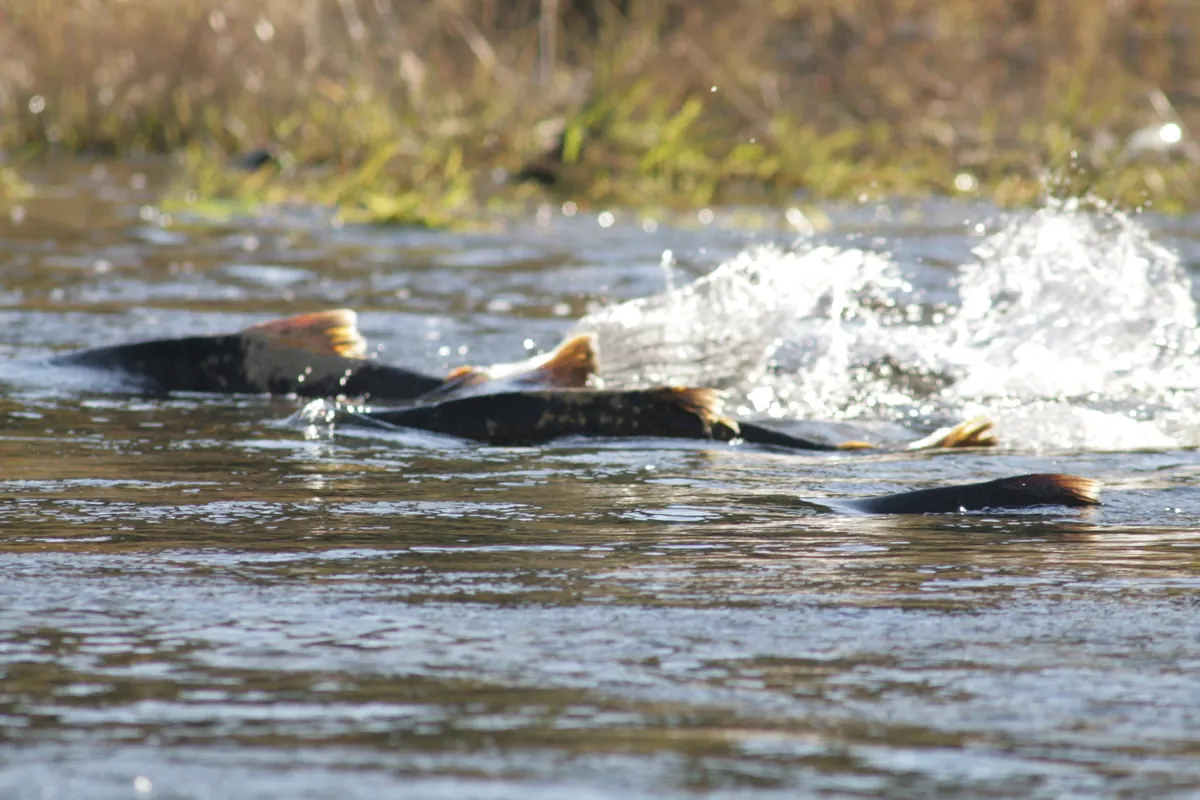
Chinook and coho salmon stocked in Lake Michigan return to the streams where they were released, and October is when the DNR gathers their eggs to raise the next generation. The runs start after the first cool rains of late summer; a dry spell holds the fish off the river mouths, and a good rain sends them upstream.
-
Strawberry Creek, Door County
Usually the first three weeks of October · East of Sturgeon Bay
This is the DNR’s chinook station, and it typically runs for the first three weeks of October, open to visitors from 9 a.m. to 2 p.m. while crews are working. Fish that have spent several years in the lake crowd the pond below the ladder, dark and battered from the trip.
-
Open houses at Kewaunee and Racine
Saturday, October 10, 9 a.m. to 3 p.m. · C.D. Besadny Anadromous Fish Facility, Kewaunee; Root River Steelhead Facility, Lincoln Park, Racine
Both stations open their doors the same Saturday, free. At Kewaunee, staff demonstrate salmon egg collection and give guided tours, and local sport fishermen run wagon rides from the parking area until 2 p.m. At Racine, the DNR explains how steelhead, coho and chinook are captured and why the eggs are taken, with fly-casting and fly-tying for children and a trolling boat to climb aboard. On other days the Root River viewing window is open in daylight whenever the station is running.
Record the date, the river, the water color and the fish you count in the daily field log. After a few autumns you will know which rain starts the run on your river.
When is the first frost and freeze in Wisconsin?
Wisconsin’s first freeze arrives over about five weeks. In the Northwoods the typical first 32 °F night comes before October starts: Hayward’s median is September 22 and Rhinelander’s September 23. Eau Claire and Wausau freeze around October 4, Madison around October 10, and La Crosse, low in the Mississippi valley, on October 17. The Great Lakes hold the shores back: Superior’s median of October 9 is more than two weeks behind the inland north, and Milwaukee waits until October 29, with the lake still giving up summer heat. White frost on lawns usually shows up one to two weeks ahead of those dates, on clear, still nights.
| Station | One year in ten | Median | Nine years in ten |
|---|---|---|---|
| Superior (Lake Superior shore) | Sep 24 | Oct 9 | Oct 24 |
| Hayward Municipal Airport (Northwoods) | Sep 5 | Sep 22 | Oct 6 |
| Rhinelander Oneida Airport (Northwoods) | Sep 5 | Sep 23 | Oct 7 |
| Eau Claire Regional Airport (Chippewa Valley) | Sep 20 | Oct 4 | Oct 17 |
| Wausau Dwtn Airport (central) | Sep 21 | Oct 4 | Oct 18 |
| Sturgeon Bay Experiment Farm (Door County) | Sep 28 | Oct 13 | Oct 30 |
| La Crosse Municipal Airport (Mississippi valley) | Oct 3 | Oct 17 | Nov 1 |
| Madison Dane Regional Airport (south central) | Sep 26 | Oct 10 | Oct 24 |
| Milwaukee Mitchell Airport (Lake Michigan shore) | Oct 15 | Oct 29 | Nov 10 |
Look up any other station, including the one closest to you, on our Wisconsin frost dates page. Before the first still, starry night, move the potted geraniums indoors, harvest the green tomatoes, and note the first morning you need an ice scraper.
How much daylight does Wisconsin lose in October?
Roughly an hour and a half, a bit more in the north. Superior, the northernmost of these cities, loses 96 minutes, about 3.2 a day, while Madison and Milwaukee lose 84. In Madison, sunrise moves from 6:55 to 7:31 a.m. CDT over the month and sunset from 6:39 to 5:51 p.m. On November 1, when daylight time ends at 2 a.m., Madison’s sunset drops to before 5 p.m., and the after-work walk happens in the dark.
| City | Oct 1 | Oct 31 | Lost | Per day |
|---|---|---|---|---|
| Superior | 11 h 41 m | 10 h 05 m | 96 min | 3.2 min |
| Rhinelander | 11 h 42 m | 10 h 10 m | 92 min | 3.1 min |
| Eau Claire | 11 h 42 m | 10 h 13 m | 89 min | 3.0 min |
| Wausau | 11 h 42 m | 10 h 12 m | 90 min | 3.0 min |
| Green Bay | 11 h 43 m | 10 h 14 m | 89 min | 3.0 min |
| La Crosse | 11 h 43 m | 10 h 17 m | 86 min | 2.9 min |
| Madison | 11 h 44 m | 10 h 20 m | 84 min | 2.8 min |
| Milwaukee | 11 h 44 m | 10 h 20 m | 84 min | 2.8 min |
The Field almanac works out the same numbers for any address, week by week, twilight included.
What is October weather like in Wisconsin, and what will El Niño mean this winter?
October is the month Wisconsin cools fastest. By NOAA’s 1991–2020 normals the average daily high for the month is 62 °F at La Crosse, 61 °F at Milwaukee, 60 °F at Madison, 58 °F at Green Bay and Eau Claire and 55 °F at Rhinelander, with average lows from 45 °F at Milwaukee down to 34 °F at Rhinelander. Normal rain is two and a half to three inches. Snow is usually a trace or a few tenths in the south, but Duluth, across the bay from Superior, averages 2.7 inches in October and 14.1 in November.
This fall starts dry. The U.S. Drought Monitor now shows exceptional drought, its worst category, in parts of Douglas, Bayfield, Ashland, Iron and far northern Sawyer counties, where the year’s shortfall is as much as a foot of precipitation and the Brule River is running low. September showers kept the fire danger at moderate for now.
El Niño is the bigger story for winter. Odds of a very strong event topped 90 percent in the Climate Prediction Center’s September 10 update; NOAA’s seasonal outlook for winter is due in the middle of October. The State Climatology Office describes the usual effect: the polar jet shifts north and the coldest air stays in Canada, so winters tend to be milder, with no strong tie to total precipitation but more chance that some falls as rain or sleet. The last strong event brought the warmest winter on record, 2023–24, when the statewide average was 31.8 °F and the north came up 20 to 60 inches short of normal snow. NWS Milwaukee’s review found southern Wisconsin near normal to 6 °F above normal in strong El Niño winters, with snowfall near or below average in six of seven. For October itself the signal is weak: an assistant state climatologist has noted that autumns in past strong events came out slightly warm in some years and slightly cool in others.
For radar, warnings and the next few days at your own town, open weather now.
What can you see in the Wisconsin night sky in October?
-
The moon passes in front of Jupiter
Tuesday, October 6, about 3:24 to 4:17 a.m. CDT · Low in the east; the moon 9 to 11 degrees up at the start, 16 to 20 at the end
A crescent moon, one-fifth lit, clears the eastern horizon a little after 2 a.m. with Jupiter almost touching it. IOTA’s tables put the disappearance, at the moon’s sunlit edge, at 3:24 a.m. for Madison and Milwaukee, 3:27 for Green Bay, 3:28 for Antigo and 3:32 for Duluth, the nearest listed point to Superior. Jupiter slides back into view at the unlit edge around 4:17 in Milwaukee, 4:16 in Madison, Green Bay and Antigo, and 4:13 in Duluth. Sunrise is not until about 7, so both moments happen in a black sky. Binoculars show Jupiter’s moons vanishing one by one. You need a low, clear eastern horizon, which along Lake Michigan means the shore itself.
-
The Hunter’s Moon
Evenings of Sunday, October 25, and Monday, October 26 · Low in the east at dusk
Full phase arrives at 11:12 p.m. CDT Sunday. In Madison the moon rises at 5:24 p.m. that evening, 35 minutes before the 5:59 sunset, and at 5:55 on Monday, three minutes before sunset; Milwaukee’s Sunday moonrise is 5:18. It is not a supermoon, whatever you read, just a fine orange moon over the corn stubble.
-
Orionid meteors
Active October 2 to November 7; best before dawn on October 21 and 22 · Anywhere dark, looking high in the southeast
Debris from Halley’s Comet makes this shower, and its peak is broad and gentle. The waxing gibbous moon spoils things until moonset: about 3:09 a.m. in Milwaukee, 3:15 in Madison and 3:23 in Superior on Thursday the 22nd, roughly an hour earlier the day before. That leaves three-plus dark hours before the eastern sky starts to pale around 6:45 to 7. Drive away from town lights and give it an hour.
-
Draconid meteors
Evening of Thursday, October 8 · High in the north after dusk
Slow and usually sparse, the Draconids favor the hours right after dark, so children can watch without staying up late. With a waning sliver of moon not due up till near dawn, Thursday evening is moonless. Count what you see in 20 minutes and write the number down.
-
Saturn all night, Venus leaving, Jupiter and Mars before dawn
Saturn at opposition October 4; Mars at the Beehive October 11 · Saturn in the east at dusk; Jupiter and Mars in the east before sunrise
Opposition night for Saturn is October 4: over Wisconsin it lifts above the eastern tree line around sunset, sinks in the west near sunrise, and glows as a steady pale-yellow point, with the moon keeping it company on the 23rd and 24th. Catch Venus, if you can, just above the west-southwest horizon in the first few evenings; it then vanishes into the sunset glow and passes inferior conjunction on the 23rd. Get up before the school bus and Jupiter is the dazzler in the east, with fainter, orange Mars above it. On October 11 Mars wanders across the Beehive cluster, a pretty pairing in binoculars.
-
Dark skies and candlelight
October 23 and 24 · Newport State Park, Door County; Yerkes Observatory, Williams Bay
Newport State Park, at the tip of the Door Peninsula, was named Wisconsin’s first International Dark Sky Park. Yerkes Observatory holds its Candlelight Walk on Friday and Saturday, October 23 and 24, 7 to 9:30 p.m., with about 2,000 candles across the 50-acre grounds and the great dome lit inside; tickets are $15 for adults and $10 for those 18 and under, with parking and a shuttle at Williams Bay High School.
| Phase | Date | Time |
|---|---|---|
| Last quarter | Saturday, Oct 3 | 8:25 a.m. CDT |
| New moon | Saturday, Oct 10 | 10:50 a.m. CDT |
| First quarter | Sunday, Oct 18 | 11:12 a.m. CDT |
| Full moon, the Hunter’s Moon | Sunday, Oct 25 | 11:12 p.m. CDT (looks full the evenings of Oct 25 and 26) |
| Last quarter | Sunday, Nov 1 | 2:28 p.m. CST |
Our moon phases page lists moonrise and moonset wherever you live, and Today’s sky shows whether clouds will spoil the view.
What is blooming, ripening and dropping in Wisconsin in October?
-
Cranberries come off the marsh
Late September through October · Central Sands around Wisconsin Rapids and Warrens; the Northwoods around Eagle River and Manitowish Waters
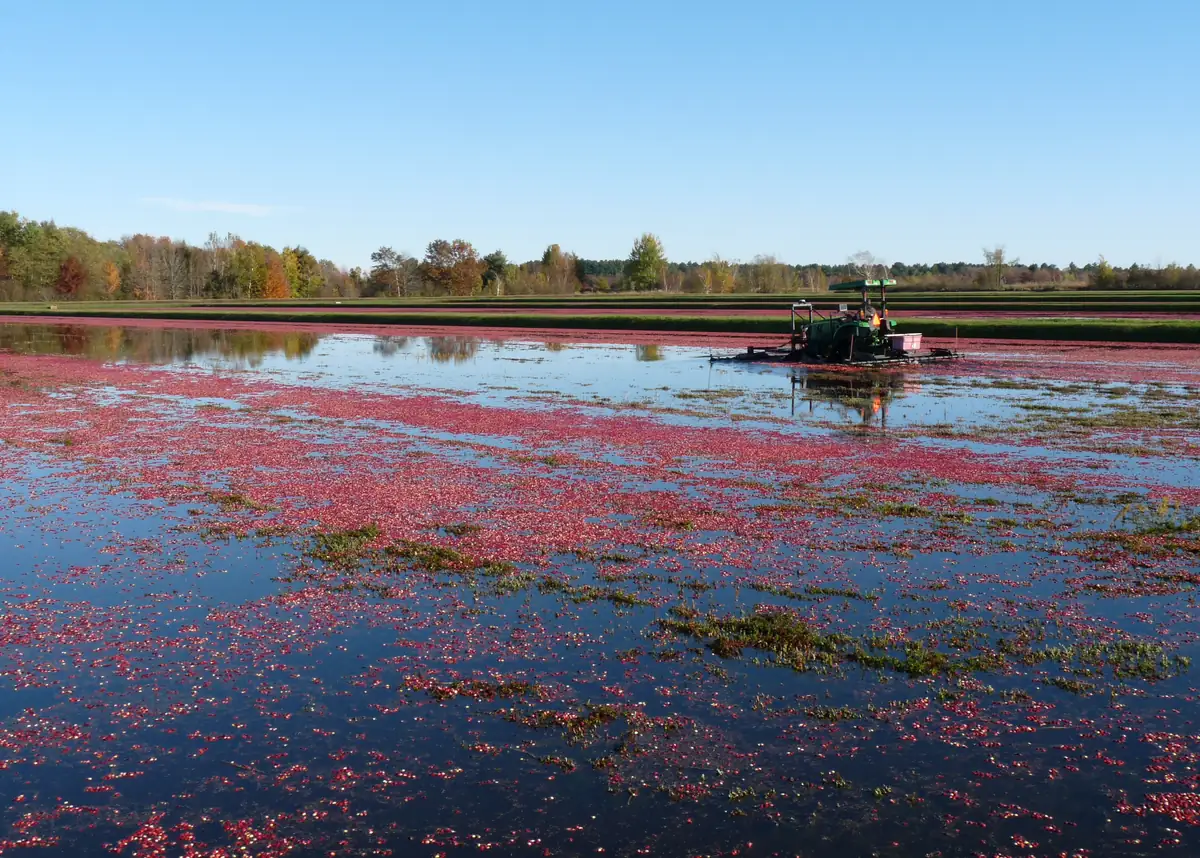
The cranberry is Wisconsin’s state fruit and its largest fruit crop, and the harvest begins in the last days of September. Growers flood the beds, churn the vines so the berries float free, and corral them with booms into a red raft. The Eagle River Cranberry Fest is Saturday and Sunday, October 3–4, at the Vilas County Fairgrounds and downtown, and marsh tours leave from the Eagle River chamber office October 1–4 ($10 adults, $5 ages 6 to 12; reservations recommended). The growers’ association also lists a cranberry festival with marsh tours at Stone Lake, in Sawyer County, on October 3; confirm with the organizers before driving up.
-
Witch hazel, the year’s last flower
October into November · Moist hardwood slopes and ravines in the southern and central counties
American witch hazel blooms as its own leaves yellow and fall. Per the Wildflower Center, it flowers from September through December: fragrant yellow blossoms with crumpled, ribbon-like petals about an inch long. Last year’s capsules, still on the same twigs, dry and split, and can throw seeds up to 30 feet. On a dry afternoon, stand still near a shrub and listen for the click.
Press an oak leaf and a tamarack sprig flat and tape them onto the seeds-pods-and-cones page of the Naturalist’s Field Journal, noting where and when you picked them up.
What are elk, deer, insects and other animals doing in October?
-
Elk in the Clam Lake and Black River country
Rut in September; the elk hunt runs October 17 to December 13 · Around Clam Lake (Sawyer, Ashland, Bayfield, Price and Rusk counties) and near Black River State Forest in Jackson County
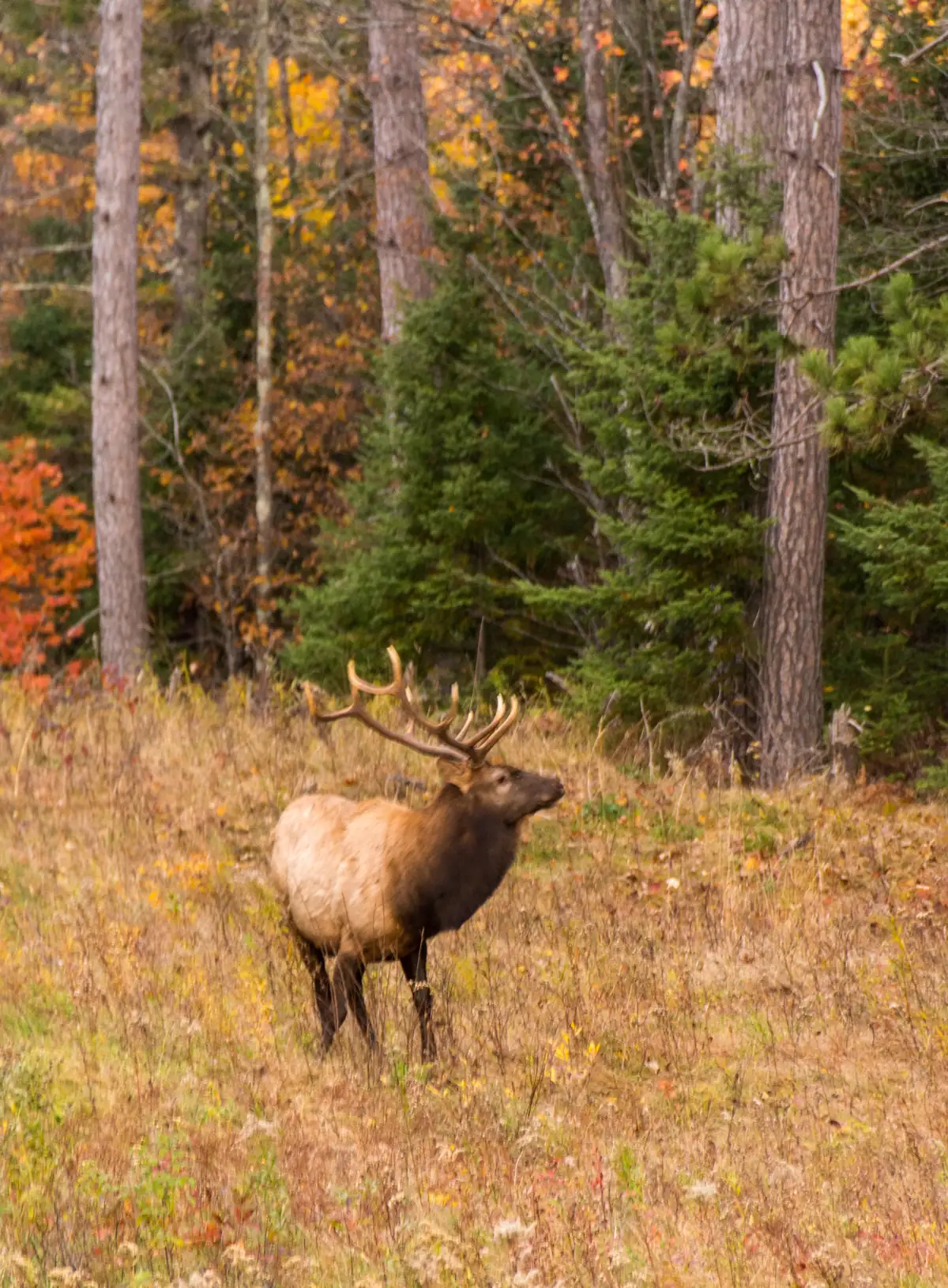
Wisconsin’s elk, reintroduced from 25 animals in 1995, number about 383 in the northern herd and a projected 226 in the central herd, by DNR estimates as of July 2026. Bulls bugle through the September rut, and the DNR asks visitors not to pressure or call to elk while it lasts. The DNR’s advice: go at dawn or dusk, drive slowly, stay in the car, and never call to or approach the animals. A kiosk at Highways 77 and GG in Clam Lake has maps.
-
Deer on the move
Scrapes and rubs from mid-October; breeding peaks in November · Farm edges, woodlots and every rural road at dusk
October is the run-up to the rut. Bucks strip the bark from saplings and scrape bare patches beneath overhanging limbs. Expect more deer on the pavement at first light and in the first hour of darkness.
-
Lady beetles on the west wall
Late September through October, on warm afternoons after a cold night · Sunny west and southwest sides of houses
UW–Madison Extension says multicolored Asian lady beetles gather first on a building’s west or southwest side, and many leave again by nightfall; the rest look for a crack to winter in. Seal gaps around windows and siding now. Indoors, vacuum them rather than crush them, because they bleed a staining yellow fluid from their leg joints.
-
Monarchs: stragglers only
The main flight passed in early and mid-September · Aster and goldenrod patches on warm days
By Monarch Watch’s latitude table, the heaviest flight crosses 45° N, the latitude of Wausau and Eau Claire, from August 29 to September 10, and at 43° N, Madison and Milwaukee, September 3–15. Any monarch still here in October is running late; send the sighting to Journey North and noting on the pollinator watch page with the date and the temperature.
What are the best outdoor outings for Wisconsin families in October?
- Saturday, October 3: candlelight hikes. Kohler-Andrae State Park near Sheboygan lights its trails 6:30 to 8:30 p.m., with a campfire sing-along after; Blue Mound State Park lights its 40-foot East Tower and the 1.4-mile John Minix Trail 6:30 to 9, with free s’mores. A park vehicle pass is required, and bad weather cancels both.
- October 3–4: the Eagle River Cranberry Fest, with marsh tours from October 1.
- Saturday, October 10: a full day. Free fish-facility open houses at Kewaunee and Racine (9 to 3), the Fall Festival at Crex Meadows, the evening crane watch at Horicon (5 to 6:30), eBird’s October Big Day, and the first day of The Big Sit.
- October 14, 20, 22 and 24: Sunset with the Sandhills at Crex Meadows, 5 to 7 p.m., free with an RSVP.
- Saturday, October 17: the Horicon bus tour, or the Lake Kegonsa State Park candlelight hike near Stoughton, 6 to 9 p.m., with a beach bonfire.
- October 23–24: the Yerkes Candlelight Walk in Williams Bay; October 24 is Good Neighbor Day at the International Crane Foundation, and October 31 its last open day of the year.
- Citizen science. Send late monarch sightings to Journey North, enter your Big Day list in eBird, and register a feeder with Project FeederWatch ahead of its November 1 start.
A printable October checklist for the glove box is in the Field almanac, and guides for neighboring states are on our nature pages.
Safety notes for October in Wisconsin
- Hunting seasons and blaze orange. Archery and crossbow deer seasons opened September 12 and run to January 3. The youth gun deer hunt is statewide October 10–11, and the gun hunt for hunters with disabilities runs October 3–11 on sponsored properties and October 10–11 statewide; the nine-day gun deer season is November 21–29. Ducks are open in the Northern Zone from September 26, in the Southern Zone October 3–11 and again from October 17, and on open water from October 17. Pheasant, bobwhite, Hungarian partridge and Zone B ruffed grouse open October 17 (the upland birds at 9 a.m.), and the elk season runs October 17 to December 13. The DNR rule: when and where a firearm deer season is open, anyone hunting anything except waterfowl must have at least half of their outer clothing above the waist in blaze orange or fluorescent pink, and any hat must be at least half orange or pink as well. That covers the youth hunt weekend. Hikers on public hunting land should wear bright orange all month and dress the dog in orange too.
- Drought and fire. The far northwest is in exceptional drought. Check the DNR’s daily fire danger and burning restrictions before any campfire or debris burn, and keep ATVs off exposed riverbeds, which the DNR says damages habitat.
- Cold Great Lakes water. Lake Superior and Lake Michigan are cold enough in October to make a fall from a pier, breakwall or kayak an emergency within minutes. Wear a life jacket and stay off breakwalls when waves are running.
- Ticks. The Department of Health Services says the ticks that carry Lyme disease live in every Wisconsin county. Check everyone, dogs included, after walks through leaves or tall grass.
- Deer at dusk. The return to standard time on November 1 puts the drive home in darkness just as the rut begins. Brake hard and hold your lane if a deer appears; a swerve into the ditch or oncoming traffic is worse. Before a long drive north late in the month, check the forecast for early snow.
Sources
- Wisconsin DNR: Find your adventure, explore Wisconsin’s fall foliage (timing by region, conditions for color)
- Travel Wisconsin: Fall Color Report launch, September 22, 2026
- WJJQ: Travel Wisconsin launches annual fall color tracker (Northwoods status)
- WBAY: Green Bay’s fall colors reach about 20% ahead of October peak (September 30, 2026)
- WSAW: drought likely to impact fall foliage vibrancy across Wisconsin (September 24, 2026)
- FOX47: beautiful fall colors expected in south central Wisconsin
- USDA NRCS Plant Guide: tamarack (Larix laricina)
- Friends of Crex Meadows: sandhill cranes, visitor center hours
- Friends of Crex Meadows: events (Fall Festival, Sunset with the Sandhills tours)
- Wisconsin DNR: wildlife of Horicon Marsh Wildlife Area (Canada goose migration)
- Wisconsin DNR: birding at Horicon Marsh Wildlife Area
- Wisconsin DNR events: Evening Marsh/Crane Watch, October 10, 2026
- Wisconsin DNR events: Ducks, Geese, Cranes Oh My! bus tour, October 17, 2026
- U.S. Fish and Wildlife Service: Horicon National Wildlife Refuge
- International Crane Foundation: events (whooping crane walks, Good Neighbor Day, closing day)
- U.S. Fish and Wildlife Service: Upper Mississippi River National Wildlife and Fish Refuge, about us
- Wisconsin DNR: Cedar Grove Hawk Research Station State Natural Area
- HawkCount (Hawk Migration Association of North America): Wisconsin hawk watch sites
- Hawk Ridge Bird Observatory: fall visitor’s guide
- Hawk Ridge Bird Observatory: bird monitoring
- Finch Research Network: winter finch forecast 2026–2027
- The Big Sit! 2026
- BirdsCaribbean: October Big Day 2026 (Saturday, October 10)
- Wisconsin DNR: spawning (egg-taking) facilities
- WisPolitics: DNR to host two open houses at fish facilities on Saturday, Oct. 10 (2026)
- Wisconsin DNR: Root River Steelhead Facility open house
- NOAA NCEI: U.S. climate normals 1991–2020 (monthly normals for Milwaukee, Madison, Green Bay, La Crosse, Eau Claire, Rhinelander, Duluth)
- Northern News Now: drought reaches exceptional levels in northwest Wisconsin (September 29, 2026)
- U.S. Drought Monitor / Drought.gov: Wisconsin
- Climate Prediction Center: ENSO diagnostic discussion, September 10, 2026
- Wisconsin State Climatology Office: ENSO, El Niño–Southern Oscillation
- NWS Milwaukee/Sullivan: El Niño and southern Wisconsin
- WPR: strong El Niño may bring greater chances of warmer fall and winter in Wisconsin (August 28, 2026)
- U.S. Naval Observatory: moon phases 2026 and sun and moon rise and set (data API)
- U.S. Naval Observatory: sunrise, sunset, moonrise and moonset (data API; Madison, October 25, 2026)
- International Occultation Timing Association: lunar occultation of Jupiter, October 6, 2026
- EarthSky: visible planets and night sky guide
- EarthSky: meteor shower guide (Draconids, Orionids)
- American Meteor Society: meteor shower calendar
- DarkSky International: Newport State Park, Wisconsin’s first International Dark Sky Park
- Yerkes Observatory: Candlelight Walk 2026
- Wisconsin State Cranberry Growers Association: festivals
- Eagle River Area Chamber of Commerce: Cranberry Fest 2026 and marsh tours
- Lady Bird Johnson Wildflower Center: Hamamelis virginiana (witch hazel)
- Wisconsin DNR: elk in Wisconsin
- UW–Madison Extension: multicolored Asian lady beetle
- Monarch Watch: peak migration dates by latitude
- Journey North: monarch sightings and fall roost reports
- Project FeederWatch: how to participate (season begins November 1)
- Wisconsin DNR events: Fall Candlelight Hike, Kohler-Andrae State Park, October 3, 2026
- Wisconsin DNR events: Candlelight Hike, Blue Mound State Park, October 3, 2026
- Wisconsin DNR events: Lake Kegonsa State Park Candlelight Hike, October 17, 2026
- Wisconsin DNR: 2026 Wisconsin hunting and trapping season dates (PUB-CS-076-2026)
- Wisconsin DNR: don’t miss Wisconsin’s youth deer hunt Oct. 10–11
- Wisconsin DNR: get ready for the 2026 waterfowl hunting seasons
- Spectrum News 1: many Wisconsin hunting, trapping seasons open in October (September 28, 2026)
- Wisconsin DNR: highly visible clothing (blaze orange and fluorescent pink)
- Wisconsin DNR: deer hunting (CWD testing, 2026 changes)
- Wisconsin Department of Health Services: Lyme disease
- Photos via Wikimedia Commons; licenses and photographers are credited under each picture
