What to look for in nature in Wisconsin this November
November is when Wisconsin turns from fall toward winter, often within a single week. Tundra swans from the Arctic crowd the Mississippi backwaters south of La Crosse, the great crane flocks of Burnett County hang on until the marshes skim with ice, and the first snowy owls drop onto open fields. Bucks are on the move, brook and brown trout are digging nests in cold Driftless creeks, and tamaracks shed the last gold of the year. The clocks fall back on the first, so evenings go dark by five. What follows covers each region: what to watch, the best places, the likely dates.
Other months in Wisconsin: October, December.
Start here
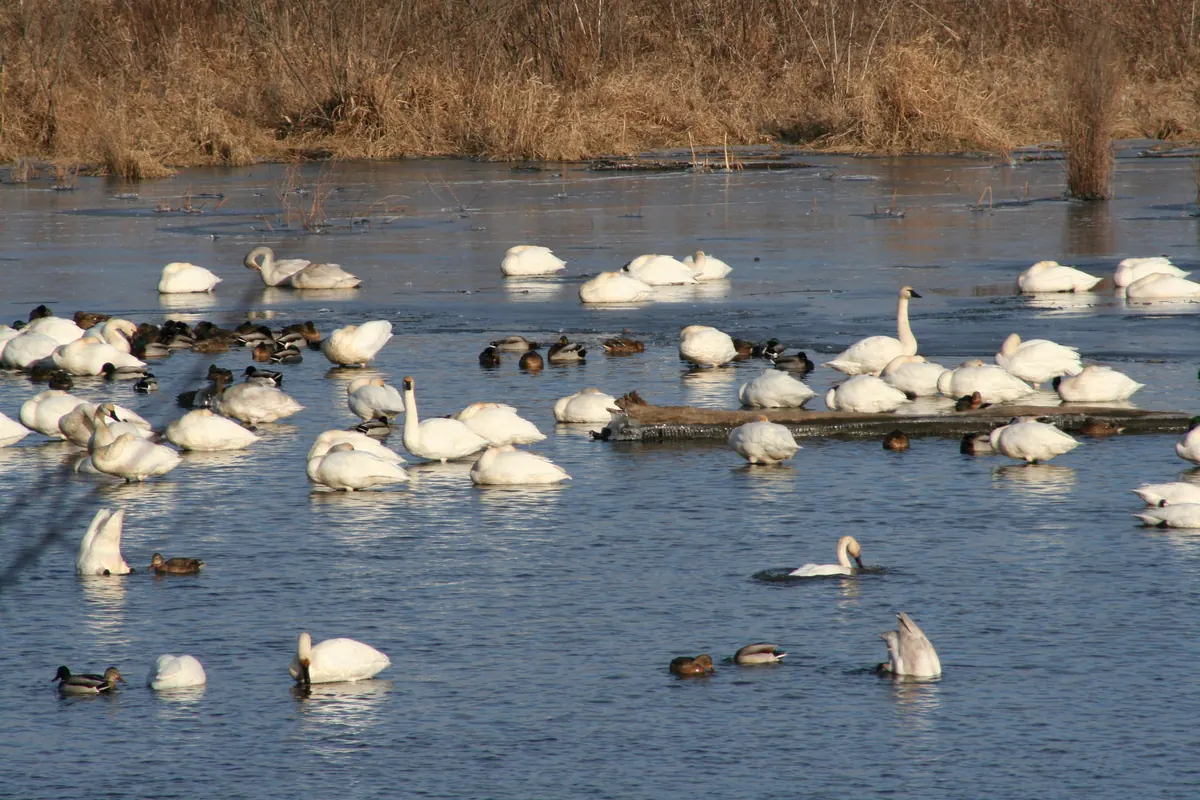
- Swans on the river at Shady Maple. The Upper Mississippi refuge says tundra swans usually peak on the second or third weekend of November, when 10,000 to 45,000 birds may crowd the pools. From Highway 35 about three miles south of La Crosse, the Shady Maple Overlook looks out over the backwaters where they rest.
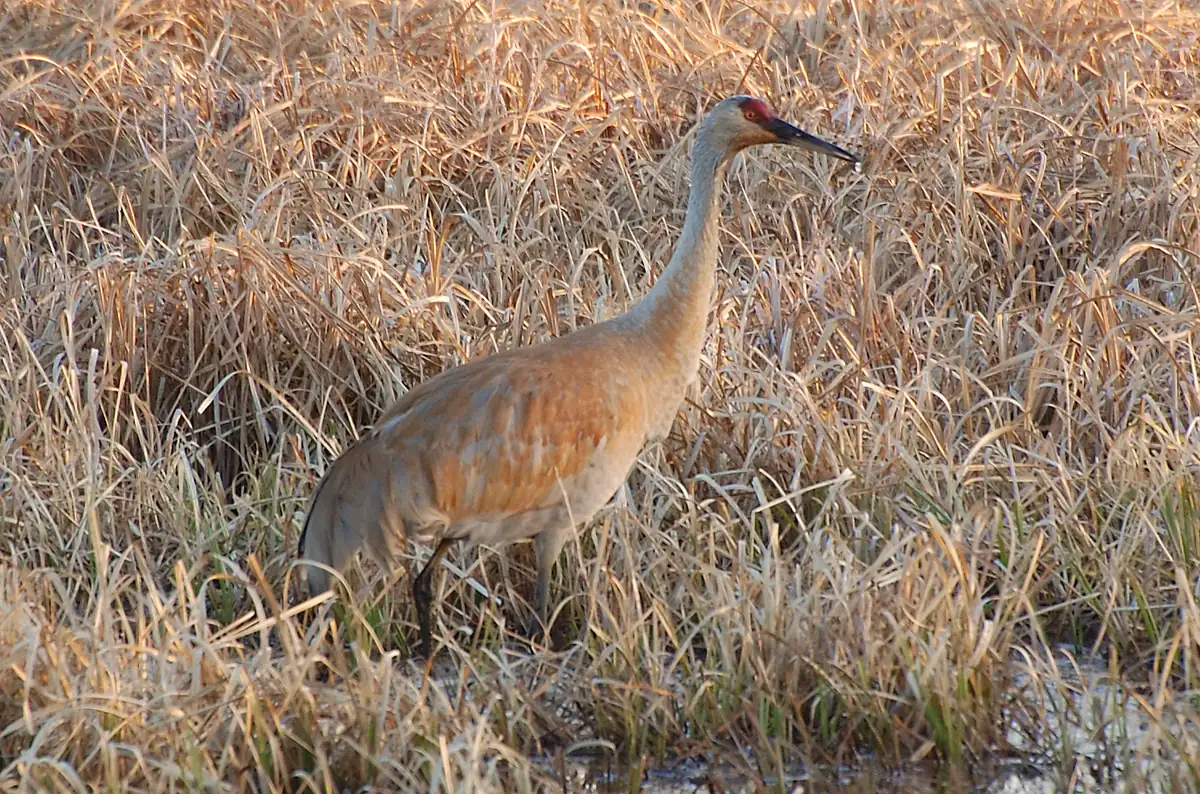
- The last crane evenings at Crex. Burnett County’s sandhill cranes stay until the marshes ice over, which the Friends of Crex say usually happens between mid-November and the end of the month. Go on a calm evening early in the month, when thousands may still fly in to roost at sunset.
- Mars meets Jupiter before dawn. Before sunrise on the 15th and 16th, look high in the south for orange Mars hugging bright Jupiter, about 1.2 degrees apart and easy to frame together in binoculars. Venus, much brighter, blazes lower in the east-southeast.
Keep a record: put a swan raft or the season’s final crane flight on the Field Journal’s dusk and dawn watch page, and a snowy owl, if you are lucky, in “birds I have seen.” Sketch a buck rub or a fresh scrape on the reading-the-signs page, press a tamarack sprig among the seeds, pods and cones, and log the first snow in the daily field log with the hour it started.
Regions used below: Northwoods and the Lake Superior shore; Northwest and the St. Croix; Central Sands and the Wisconsin River; Fox Valley, Green Bay and Door County; Southeast and the Lake Michigan shore; South Central and the Driftless Area.
When do tundra swans peak on the Mississippi in Wisconsin?
Wisconsin’s most beautiful November sight is on its western border. Tundra swans from the Arctic stop on the Upper Mississippi River National Wildlife and Fish Refuge to rest and feed in the backwater pools on their way to wintering waters around Chesapeake Bay. The refuge says they begin arriving around late October or early November, peak on the second or third weekend of the month, and keep feeding until the river itself freezes. At the high point the refuge counts anywhere from 10,000 to 45,000 of them.
-
Shady Maple Overlook, south of La Crosse
Best from early November until freeze-up; peak usually November 14–15 or 21–22 this year · Off Highway 35, about one mile south of Goose Island County Park and three miles south of La Crosse
This is the refuge’s Wisconsin-side swan overlook, in Pool 8, with parking and a wide view. The refuge notes that the wetlands beyond hold thousands of migrating waterfowl from mid-September through freeze-up, so even before the swans peak you will see ducks by the raft. Inside Goose Island County Park, the 1.18-mile Shady Maple Interpretive Trail loops through bottomland forest. The swans tend to rest far out, so a spotting scope helps.
-
Diving ducks among the swans
Through November, thinning as ice forms · Pools 7, 8 and 9, from Trempealeau down to Lynxville
The refuge’s birding guide says canvasbacks, ring-necked ducks, lesser scaup, goldeneyes, buffleheads and redheads are often seen together in fall. The brown swans sitting with the white adults are this year’s young, still in their first gray-brown plumage.
-
Rieck’s Lake at Alma
November · Rieck’s Lake Park, off Highway 35 just north of downtown Alma, Buffalo County
Rieck’s Lake was long Wisconsin’s best-known swan stop, and two observation decks remain. The Alma chamber of commerce warns that natural habitat loss has sharply cut the numbers there, so scan the main channel along Highway 35 as well.
Count swans by tens, estimate the rest, and note the date; a return trip a week later shows whether the peak has come.
Are sandhill cranes and geese still in Wisconsin in November?
Yes, for a few more weeks. The big October gatherings at Crex Meadows and Horicon Marsh do not end on a fixed date; they end when the water freezes. An early cold snap shortens the show and a mild fall stretches it, so go early in the month if you can.
-
Crex Meadows, Grantsburg
Early November; most leave by mid-to-late November · Crex Meadows Wildlife Area, western Burnett County
According to the Friends of Crex, somewhere between a sixth and a fifth of all greater sandhill cranes on Earth use this corner of Burnett County during October and the first days of November. The birds linger until the marshes ice over, usually by the middle to end of November, then head south through Illinois and Indiana to winter along the Gulf Coast in Mississippi, Alabama and Florida. The visitor center keeps weekend hours (10 a.m. to 4 p.m.) only until mid-November; after that it is open weekdays only, so plan a Saturday trip for the first half of the month.
-
Horicon Marsh geese
Peak from late October to mid-November; gone by early to mid-December · Horicon Marsh State Wildlife Area and Horicon National Wildlife Refuge, Dodge and Fond du Lac counties
The DNR says the migrant Canada geese arrive around mid-September, stay four to eight weeks, peak from late October to mid-November, and leave by early to mid-December as snow and ice bury their food. Tundra swans may stop to rest on the marsh in November on their way east. The refuge’s three-mile auto tour closes to vehicles the day before the gun deer season, which this year means Friday, November 20, weather permitting.
When the marsh freezes, write the date down. Over several Novembers, the date cranes leave your marsh becomes one of the best records you can keep.
Which winter birds and owls show up in Wisconsin in November?
As waterbirds leave, birds of the boreal forest and tundra move in.
-
Snowy owls
Usually from mid-November to the end of March · Open country: big farm fields, grasslands, and the Lake Michigan and Lake Superior shores
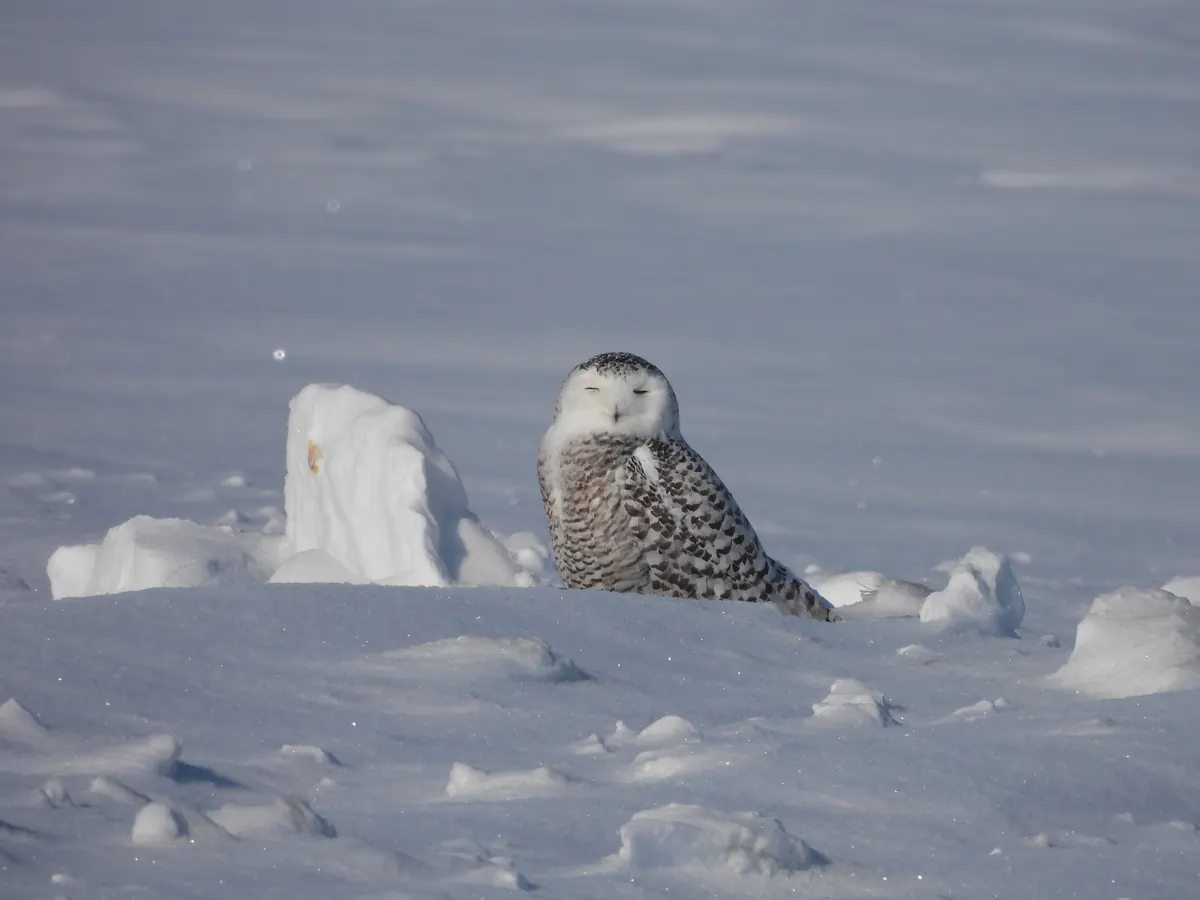
The DNR says snowy owls usually arrive around mid-November and leave by the end of March, and at least a few reach Wisconsin every winter. Every few years a large irruption brings many more: 224 owls reported by early January in 2017–18, and 143 by early January in the smaller 2021–22 event. The DNR asks watchers not to approach closely, flush the bird repeatedly, play recordings, use flash or feed it, and to stay in the car with the engine off. Sightings go into eBird, which the department uses to follow them.
-
Winter finches
Building through November · Spruce, fir, cedar and hemlock in the north; feeders statewide later in winter
Tyler Hoar’s winter finch forecast for the Finch Research Network, out in late September, calls for a sizable pine siskin movement, with more than a thousand a day already passing Hawk Ridge in Duluth in September. It also sees small to medium flocks of evening grosbeaks possible in the Great Lakes region, Type 2 red crossbills dominating in the western Great Lakes, white-winged crossbills roaming wherever cones are good, and maybe a small redpoll flight. Heavy mountain-ash berry crops up north probably mean few pine grosbeaks or bohemian waxwings here.
-
Project FeederWatch begins
Season opens November 1 · Any yard, balcony or schoolyard with a feeder
The Cornell Lab of Ornithology’s FeederWatch season starts November 1. Sign up on the project website, then choose one regular window or patch of yard to watch all winter.
-
Eagles and the last month at Ferry Bluff
Bluff open through November 30 · Ferry Bluff State Natural Area, on the Wisconsin River west of Sauk City
The sandstone bluffs at Ferry Bluff, more than 300 feet above the Wisconsin River, close to all entry from December 1 to March 31 so that wintering bald eagles can roost undisturbed. November is your last chance this year to climb for the view. The Ferry Bluff Eagle Council, which has counted the area’s eagles since 1988, notes that they concentrate in the Sauk Prairie roosts anywhere from early December to late February, so the big eagle weeks are still ahead.
Put a feeder where you can see it from the kitchen table, and keep a running list of first arrival dates on the inside cover of your journal.
When is the deer rut in Wisconsin, and when does gun deer season open?
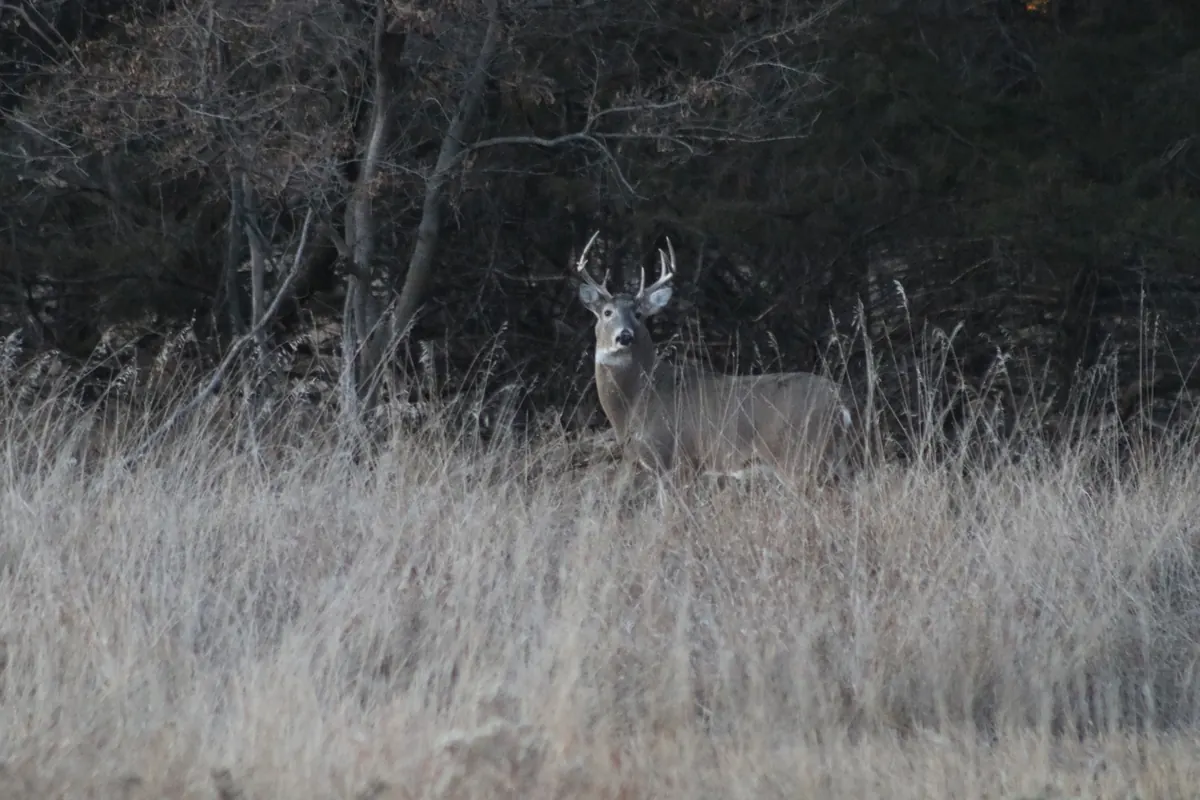
The DNR has measured the rut rather than guessed at it. Researchers fitted GPS collars to nearly 200 bucks in southwest Wisconsin from 2017 to 2020 and also backdated fawn birth dates to conception. Most fawns were conceived between October 23 and November 12, and buck movement more than doubled from mid-October to an absolute peak around November 1 to 7, tapering off slowly after that. In other words, the first week of November is when bucks travel farthest, day and night.
-
Rubs and scrapes
Fresh through the first half of November · Woodlot edges, field corners, trail crossings
Rubs are pale, peeled stems on saplings, marked by antlers between knee and belt height. Scrapes are patches of earth a buck has pawed clear, usually below an overhanging twig he has mouthed and marked with scent from his forehead. Both are scent posts.
-
The nine-day gun season
Saturday, November 21, through Sunday, November 29 · Statewide; metro subunits run through December 9
Opening weekend fills Wisconsin’s woods with blaze orange. If you hike on public land that week, read the safety notes below first.
-
Deer on the roads
Highest in October and November · Every rural highway, especially at dawn and dusk
The DNR says most deer-vehicle collisions happen in October and November, while deer are most active during breeding. Its advice: drive slowly in the evening and at night and keep scanning the roadsides. Once the clocks fall back, the drive home lands in the dark during the very week bucks travel most.
What are trout, bears and bats doing in a Wisconsin November?
Much of November’s wildlife is out of sight: under gravel, in a den, or in a mine.
-
Brook and brown trout on their redds
Early October to December; peak around mid-November · Cold, spring-fed streams of the Driftless Area, the Central Sands and the north
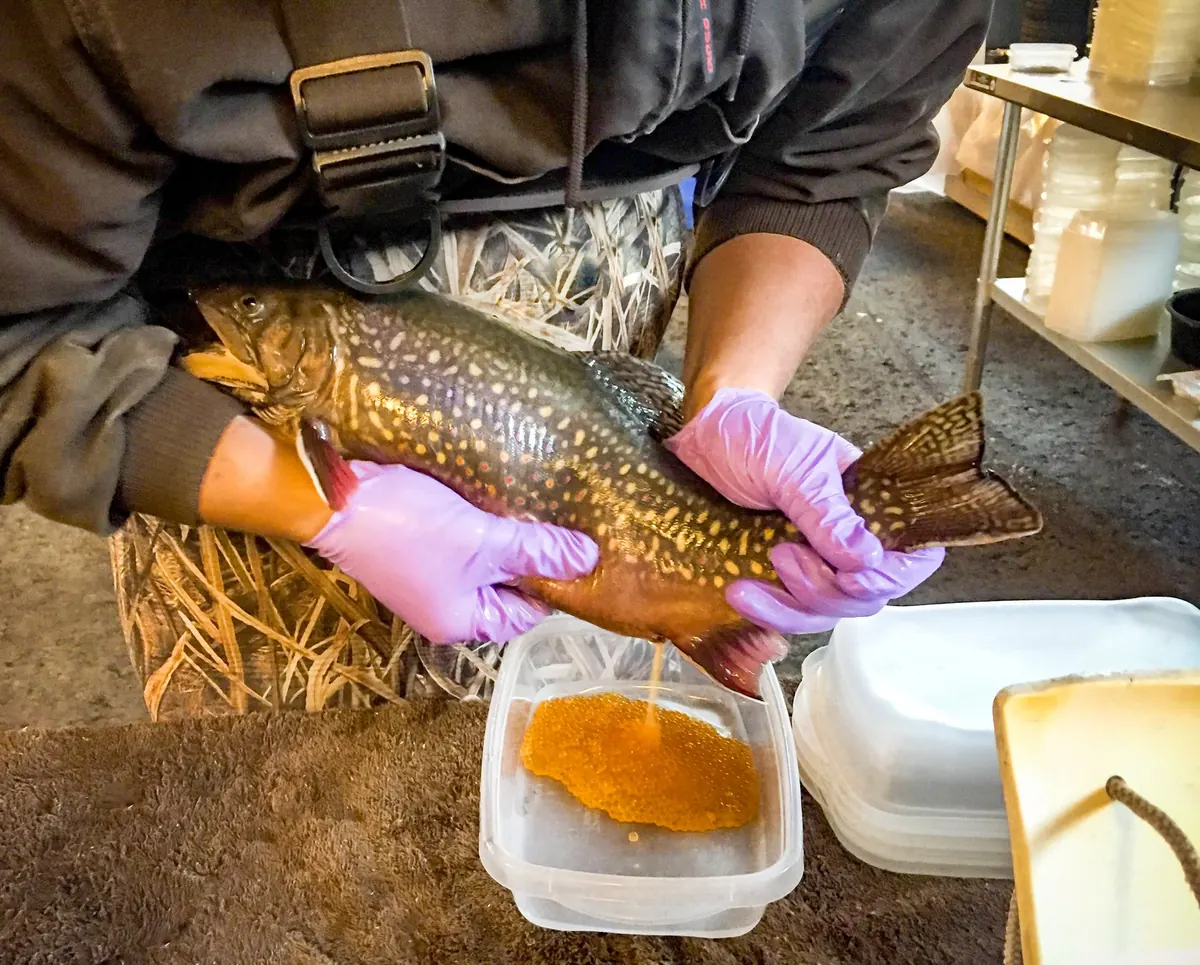
The DNR’s inland trout management plan says brook and brown trout in Wisconsin usually spawn from early October into December, with the peak around mid-November. The female sweeps out a shallow pit in clean gravel, lays her eggs, and covers them; the eggs incubate there all winter. From a bridge or high bank on a sunny day, look for oval patches of gravel brighter than the streambed around them, sometimes with a dark fish holding over each one. The general inland trout season closed October 15, and the early catch-and-release season does not open until January, so the fish have the streams to themselves. Stay out of the water and off the gravel bars where you see nests.
-
Black bears already denned
Most enter dens in October · Forested country, especially the north
The DNR says most of Wisconsin’s roughly 24,000 black bears den sometime in October and emerge in late March or early April. A bear still moving in November is a straggler; give it room, and bring feeders in at night if bears visit your area.
-
Bats in the mines
Hibernating now until spring · Caves and abandoned mines
Four Wisconsin bats, the little brown, big brown, northern long-eared and tricolored, hibernate in caves and mines; the other four, the tree bats, migrate south. White-nose syndrome has caused declines approaching 99 percent in some cave bat populations. The DNR asks people not to enter caves or mines with bats from October 1 through May 15, because each disturbance that wakes a bat burns fat it needs to last until spring.
A bare November woods is the best time to find a squirrel’s leaf nest high in an oak or a bird’s nest you never noticed in summer. Mark them on the same place twice page and check them again in spring.
Which trees still hold color or leaves in a Wisconsin November?
-
Tamaracks, the last to go
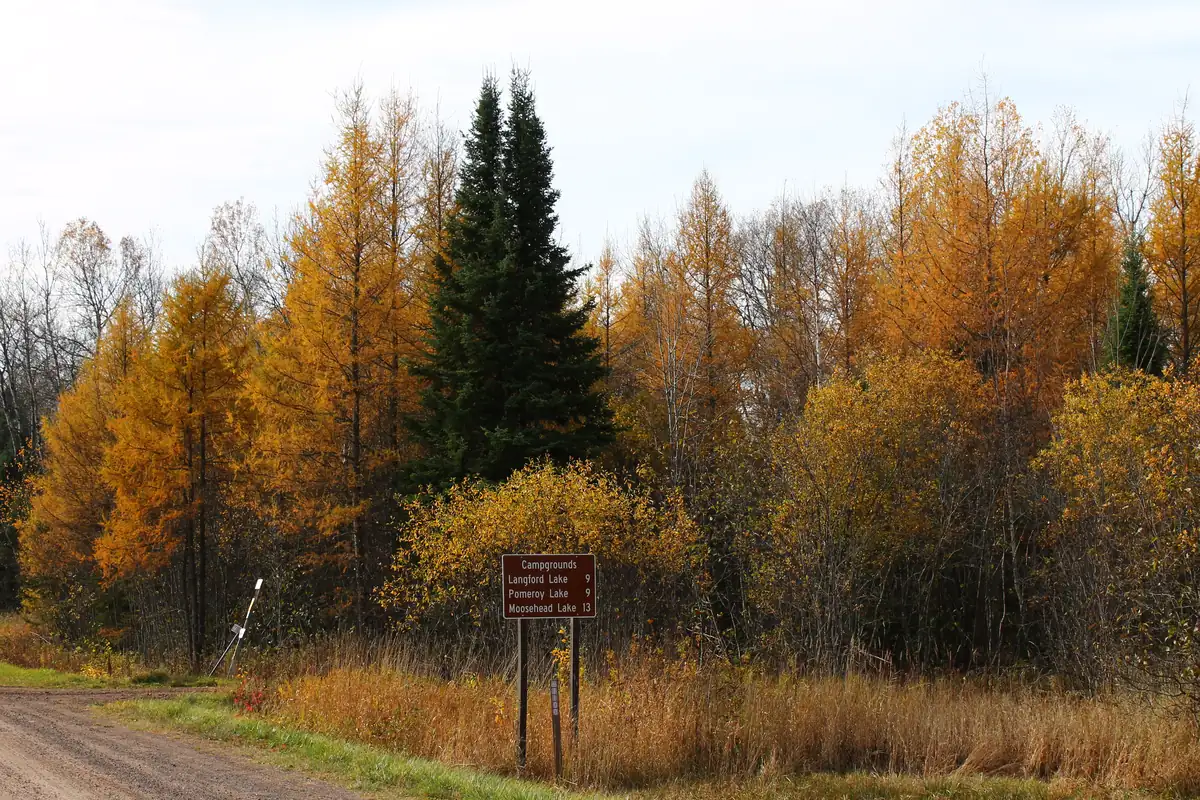
Gold in the first days of November, bare by mid-month · Northwoods bogs, Central Sands wetlands, Door County swamps
Tamarack is the only Wisconsin conifer that drops all its needles. Door County naturalists Roy and Charlotte Lukes wrote that the golden needles are gone by mid-November, leaving “genuine deciduous conifers.” A bog of bare tamaracks looks dead to a newcomer, but look closely at the twigs: tiny knobby spurs hold next year’s needle buds, and the small cones stay on through winter.
-
Oaks that refuse to let go
All winter, until new leaves push the old ones off · Young oaks and the lower branches of older ones, statewide
Holding dead leaves into winter has a name, marcescence, and University of Illinois Extension says it is common in oaks and beeches, most of all on young trees and low branches. Nobody is certain why. The leading ideas are that the leaves shield buds from cold and drying winds, discourage deer from browsing the twigs, or drop in spring as a timely mulch.
-
Witch hazel still blooming
Into November and sometimes later · Shaded slopes and ravines, mostly in the south and center
The Lady Bird Johnson Wildflower Center lists American witch hazel as blooming from September through December. In November its spidery yellow flowers are often the only blossoms in the woods, set on bare twigs beside last year’s woody capsules.
-
A Christmas tree from the national forest
Permits on Recreation.gov; many families cut after Thanksgiving · Chequamegon-Nicolet National Forest
A permit to cut one tree on the national forest costs $5 plus a handling fee on Recreation.gov, and fourth graders can get one free through Every Kid Outdoors. Balsam fir is the favorite; red and Scotch pine are popular on the Washburn district. Trees may be up to 20 feet tall, cedar and hemlock are off limits, and wilderness areas and lakeshores are excluded. Read the permit page for this year’s details before you go.
Photograph one oak and one tamarack each week; the Naturalist’s Field Journal has a tree-through-the-seasons page made for exactly that.
Has Wisconsin had its first freeze by November?
Almost everywhere, yes. By the first of November, the typical first 32 °F night has already passed at every station below. The Northwoods went first, with medians of September 22 at Hayward and September 23 at Rhinelander; Eau Claire and Wausau followed on October 4, Superior on October 9, Madison on October 10, Sturgeon Bay on October 13 and La Crosse on October 17. Milwaukee, warmed by Lake Michigan, is the last, with a median of October 29. A few places can still be waiting in some years: one autumn in ten, Milwaukee has not frozen by November 10, and La Crosse in the Mississippi valley can hold out to about November 1.
| Station | One year in ten | Median | Nine years in ten |
|---|---|---|---|
| Superior (Lake Superior shore) | Sep 24 | Oct 9 | Oct 24 |
| Hayward Municipal Airport (Northwoods) | Sep 5 | Sep 22 | Oct 6 |
| Rhinelander Oneida Airport (Northwoods) | Sep 5 | Sep 23 | Oct 7 |
| Eau Claire Regional Airport (Chippewa Valley) | Sep 20 | Oct 4 | Oct 17 |
| Wausau Dwtn Airport (central) | Sep 21 | Oct 4 | Oct 18 |
| Sturgeon Bay Experiment Farm (Door County) | Sep 28 | Oct 13 | Oct 30 |
| La Crosse Municipal Airport (Mississippi valley) | Oct 3 | Oct 17 | Nov 1 |
| Madison Dane Regional Airport (south central) | Sep 26 | Oct 10 | Oct 24 |
| Milwaukee Mitchell Airport (Lake Michigan shore) | Oct 15 | Oct 29 | Nov 10 |
Our Wisconsin frost dates page has the freeze dates for every station in the state, including the hard-freeze (28 °F) dates that finish off kale and Brussels sprouts. Drain and store the hoses before the ground freezes.
How much daylight does Wisconsin lose in November?
A little over an hour. Superior, farthest north, drops from 10 h 02 m of daylight on November 1 to 8 h 52 m on November 30, 70 minutes in all; Madison and Milwaukee each lose 61. The change that people feel, though, is the clock. Central Standard Time resumes before dawn on Sunday, November 1, and by that evening Madison’s sun sets at 4:49 p.m. CST, about an hour earlier than on Saturday. By the 30th, sunset is 4:24 in Madison and 4:23 in Superior.
| City | Nov 1 | Nov 30 | Lost | Per day |
|---|---|---|---|---|
| Superior | 10 h 02 m | 8 h 52 m | 70 min | 2.4 min |
| Rhinelander | 10 h 06 m | 8 h 59 m | 67 min | 2.3 min |
| Eau Claire | 10 h 10 m | 9 h 05 m | 65 min | 2.2 min |
| Wausau | 10 h 09 m | 9 h 04 m | 65 min | 2.2 min |
| Green Bay | 10 h 11 m | 9 h 07 m | 64 min | 2.2 min |
| La Crosse | 10 h 14 m | 9 h 11 m | 63 min | 2.2 min |
| Madison | 10 h 17 m | 9 h 16 m | 61 min | 2.1 min |
| Milwaukee | 10 h 17 m | 9 h 16 m | 61 min | 2.1 min |
To see sunrise, sunset and twilight for your own street through the rest of the year, open the Field almanac.
What is November weather like in Wisconsin, and what will El Niño bring this winter?
NOAA’s 1991–2020 normals give average November highs of about 48 °F at Milwaukee, 46 °F at La Crosse, 45 °F at Madison, 44 °F at Green Bay, 42 °F at Eau Claire and 39 °F at Rhinelander, with average lows from 33 °F on the lakefront down to 23 °F in the north. Precipitation is close to two inches. Average November snowfall is modest outside the north: 2.5 inches at Milwaukee, 3.0 at Madison, 3.1 at Green Bay, 3.4 at La Crosse and 4.7 at Eau Claire.
First snow arrives from the north. The National Weather Service office in Green Bay gives average dates for a first snowfall of at least 0.1 inch of October 18 at Lac Vieux Desert, on the Michigan line, October 30 at St. Germain, November 2 at Wausau and November 5 at Rhinelander, with the first inch soon after. Green Bay averages its first measurable snow on November 13, while the lakeshore towns wait longest: November 27 at Manitowoc and November 29 at Two Rivers. NWS Milwaukee/Sullivan puts Madison’s average first measurable snow on November 12 and its first inch on November 25; Milwaukee’s come on November 14 and December 2.
For the winter ahead, the signal is El Niño. Wisconsin heads into winter with a Pacific warm event of rare strength nearly locked in: better than nine chances in ten of a very strong El Niño, per the Climate Prediction Center’s mid-September ENSO discussion. Its official temperature and precipitation maps for December through February are due October 15; find them with the seasonal outlooks from CPC. The Wisconsin State Climatology Office explains the usual pattern: the polar jet stream sits farther north and Arctic air stays in Canada, which tends to make Wisconsin winters milder, with no strong link to total precipitation but a better chance that some of it falls as rain or sleet instead of snow. Its prime example is 2023–24, the state’s warmest winter on record, which averaged 31.8 °F statewide, more than 12 degrees above normal. NWS Milwaukee/Sullivan’s review of past strong El Niños found southern Wisconsin winters near or above normal in temperature every time, up to about 6 degrees above, and snowfall near or below average in five of six, from near normal to about 18 inches short; one strong El Niño winter instead brought about 18 inches more than average.
For the radar, the hourly forecast and any winter storm watch for your town, open weather now.
What can you see in the Wisconsin night sky in November?
All times below are Central Standard Time.
-
The Beaver Moon, a modest supermoon
Evenings of Monday, November 23, and Tuesday, November 24 · Rising in the east around sunset
The moon is exactly full at 8:53 on Tuesday morning, so both evenings show a round moon; Tuesday’s is the closer match. EarthSky counts it as a supermoon, since the moon is near its closest point to Earth, but perigee comes about 30 hours after full, so it is only slightly larger than average. Overnight on the 23rd into the 24th it passes over or beside the Pleiades, but its glare drowns the cluster.
-
Leonid meteors
Best after moonset before dawn on Wednesday, November 18 · Look high in the east and south; the radiant in Leo rises near midnight
Per the International Meteor Organization, the Leonids should crest on the evening of the 17th in Wisconsin, at roughly 15 per hour in ideal darkness; no outburst is predicted for 2026. Once the half moon goes down around midnight, the sky before dawn on the 18th turns dark while Leo climbs. The mornings of the 17th and 19th are worth a look too.
-
Taurid fireballs
Southern Taurids peak November 5; Northern Taurids November 12 · Taurus, high in the southeast by late evening
Rates stay low (single digits, ten at most hourly), but Taurids drift slowly and now and then flare into fireballs. Their source is grit shed by Comet Encke, and a new moon on November 9 keeps the nights between the two maxima moonless.
-
Four planets before sunrise
Mid-November mornings; Mars and Jupiter closest on November 15 and 16 · The east and south before dawn
Get up an hour before sunrise for this month’s planets. Venus, newly a morning object, rises a little earlier each day, hits peak dazzle in the days just before and after Thanksgiving, and on November 9 stands roughly one degree from Spica. Higher up, in Leo, Jupiter and fainter Mars draw together; their closest approach, about 1.2 degrees, comes on the 15th and 16th. Small Mercury shows best low in the east-southeast during roughly the 18th through the 25th. A very thin crescent moon sits near Venus on the 7th, though it will be hard to see so low in the twilight.
-
Saturn in the evening, Uranus at opposition
All month; Uranus at opposition November 25 · Saturn in the south after dark; Uranus near the Pleiades
Evening watchers get one bright planet, Saturn, glowing pale gold and unblinking low in the south to southwest. Uranus is at opposition on the 25th, as close and bright as it gets; with binoculars and a star chart you can find it in Taurus, not far from the Pleiades.
-
A chance of aurora
Any clear night; no forecast is possible weeks ahead · The northern horizon, best from the Northwoods and Lake Superior shore
NOAA’s Space Weather Prediction Center dates the peak of this solar cycle to October 2024; sunspots have been declining since. Strong storms still happen in the declining years, and Wisconsin’s long November nights help. Northern Wisconsin has the best odds. Check the SWPC aurora forecast on a clear evening and look north from a dark spot.
| Phase | Date | Time |
|---|---|---|
| Last quarter | Sunday, Nov 1 | 2:28 p.m. CST |
| New moon | Monday, Nov 9 | 1:02 a.m. CST |
| First quarter | Tuesday, Nov 17 | 5:48 a.m. CST |
| Full moon, the Beaver Moon | Tuesday, Nov 24 | 8:53 a.m. CST (looks full on the evenings of Nov 23 and 24) |
| Last quarter | Tuesday, Dec 1 | 12:08 a.m. CST |
Look up when the moon rises over your own rooftop on the moon phases page, and check Today’s sky for the cloud forecast before you head out.
What can Wisconsin families do outdoors in November?
- Sunday, November 1: start Project FeederWatch. The season opens the same day the clocks fall back.
- Sunday, November 8: a night hike in the Kettle Moraine. The Southern Unit leads a 1.5-mile walk on the Ice Age Trail from forest headquarters near Eagle, 6 to 8 p.m., rain or shine, on moderate hills; bring flashlights. In Madison, the UW–Madison Arboretum leads a free nature hike aimed at adults and older kids that afternoon, 1 to 2:30 p.m.
- Saturday, November 14: a beginners’ bird walk in Milwaukee. Havenwoods State Forest’s Second Saturday walk runs 8:30 to 10:30 a.m. over less than a mile of mostly flat ground, with binoculars to borrow at the nature center.
- Sunday, November 15: two choices. The Kettle Moraine Southern Unit’s second night hike, 6 to 8 p.m., follows the half-mile paved Paradise Springs Nature Trail, which works for strollers and wheelchairs (a state park sticker is needed). Or take younger children to the Arboretum’s free Family Nature Program, “Turkey Time,” 1:30 to 3:30 p.m.
- The weekends of November 14–15 and 21–22: swans. These are the refuge’s usual peak weekends at the Shady Maple Overlook south of La Crosse.
- Friday, November 27: the day after Thanksgiving. With gun deer season open, pick a city park or a trail closed to hunting, or wear orange. Families cutting a tree on the Chequamegon-Nicolet can buy the $5 permit online.
- Saturday, November 28: Havenwoods’ monthly animal feeding, 1:30 to 2:30 p.m., when the nature center’s turtles and snakes get their lunch. Sunday, November 29: the Arboretum’s next free nature hike, 1 to 2:30 p.m.
- Citizen science. Send snowy owl sightings to eBird, tally feeder birds for FeederWatch, and log the day your nearest lake or pond first skims with ice.
For other months in Wisconsin, start with October’s guide, and for other states see our nature pages.
Safety notes for November in Wisconsin
- Gun deer season and blaze orange. Gun deer hunting runs for nine days, November 21–29 (metro subunits through December 9), followed by the muzzleloader season from November 30 to December 9; archery and crossbow seasons run until January 3. The DNR rule: whenever any firearm deer season is in progress, at least 50 percent of each hunter’s clothing above the waist must be blaze orange or blaze pink, and a cap or hat, if worn, needs the same 50 percent orange or pink. Duck seasons also run into the month (Northern Zone to November 24, Southern Zone to December 6, Open Water Zone to December 15), along with geese, pheasant, grouse, fall turkey, small game, furbearers and elk (through December 13). If you hike anywhere hunting is allowed, wear an orange hat and vest, keep dogs in orange too, and stay on marked trails.
- Deer and dark roads. The rut and the end of daylight time arrive together. Slow down after dark, use high beams where you can, and if a deer appears, brake hard and hold a straight line rather than swerving.
- Thin first ice. Ponds and small lakes may skim over in the north this month, and the DNR repeats every year that ice is never 100 percent safe. It does not monitor ice statewide; ask local bait shops or fishing clubs, carry ice picks and a rope, and keep children and pets off new ice entirely.
- Cold water and short days. November lakes and rivers can disable a swimmer in minutes after a capsized canoe or a slip off an icy rock, so keep a life jacket on in any boat. Sunset comes before 5 p.m. after November 1, so start hikes early and carry a headlamp.
- First snow on the road. The first slick roads of the season catch many drivers off guard. Check the forecast before a drive up north, and keep a blanket, scraper and shovel in the car from now until April.
Sources
- U.S. Fish and Wildlife Service: birding at Upper Mississippi River National Wildlife and Fish Refuge (tundra swan peak, diving ducks, Shady Maple Overlook)
- U.S. Fish and Wildlife Service: wildlife watching at Upper Mississippi River refuge (10,000 to 45,000 tundra swans)
- U.S. Fish and Wildlife Service: visit Upper Mississippi River refuge (Shady Maple Interpretive Trail, waterfowl through freeze-up)
- Alma Area Chamber of Commerce: birding in Alma (Rieck’s Lake Park)
- Friends of Crex Meadows: sandhill cranes and visitor center hours
- Friends of Crex Meadows: events
- Wisconsin DNR: wildlife of Horicon Marsh Wildlife Area (goose migration timing, tundra swans)
- U.S. Fish and Wildlife Service: Horicon National Wildlife Refuge (auto tour closing)
- Wisconsin DNR: snowy owls in Wisconsin
- Finch Research Network: winter finch forecast 2026–2027 (September 25, 2026)
- Cornell Lab of Ornithology: Project FeederWatch
- Wisconsin DNR: Ferry Bluff State Natural Area (winter closure for roosting eagles)
- Ferry Bluff Eagle Council: roost counts
- Wisconsin DNR: deer hunting, 2026–27 season dates and blaze orange rule
- Wisconsin DNR: hunting season dates, 2026
- Wisconsin DNR: elk hunting, 2026 season
- Wisconsin DNR Field Notes, December 2023: when is the rut? (buck GPS collar study)
- Wisconsin DNR: wildlife-vehicle collisions
- Wisconsin DNR: Wisconsin Inland Trout Management Plan, 2020–2029 (spawning timing)
- Wisconsin DNR: trout and salmon fishing seasons
- Wisconsin DNR: black bears in Wisconsin
- Wisconsin DNR: Wisconsin bat program
- Door County Pulse: Roy and Charlotte Lukes, the smoky gold tamarack
- University of Illinois Extension: the stubborn beauty of oak leaves, marcescence explained
- Lady Bird Johnson Wildflower Center: Hamamelis virginiana (American witch hazel)
- USDA Forest Service: Chequamegon-Nicolet National Forest holiday tree permits
- NOAA NCEI: U.S. climate normals 1991–2020, monthly normals for Wisconsin stations
- National Weather Service Green Bay: average first date of measurable snow
- National Weather Service Milwaukee/Sullivan: snow climatology for Milwaukee and Madison
- Climate Prediction Center: ENSO diagnostic discussion, September 10, 2026
- Climate Prediction Center: seasonal (90-day) outlooks
- Wisconsin State Climatology Office: ENSO and Wisconsin winters
- NWS Milwaukee/Sullivan: El Niño and southern Wisconsin
- U.S. Naval Observatory: moon phases from November 1, 2026
- U.S. Naval Observatory: sun and moon data for Madison, November 1, 2026
- International Meteor Organization: 2026 meteor shower calendar (archived copy)
- EarthSky: what is a supermoon? (2026 full supermoons)
- EarthSky: Mercury’s greatest western elongation
- Star Walk: planetary conjunctions (Mars and Jupiter, November 2026)
- In-The-Sky.org: Venus at greatest brightness, November 2026
- EarthSky: Uranus at opposition
- RASC Observer’s Handbook 2026: lunar occultations (Pleiades, November 24)
- NOAA Space Weather Prediction Center: solar cycle progression
- Wisconsin DNR events: Night Hike, Kettle Moraine State Forest Southern Unit, November 8, 2026
- Wisconsin DNR events: Night Hike, Paradise Springs, November 15, 2026
- Wisconsin DNR events: Second Saturday Bird Walks, Havenwoods State Forest
- Wisconsin DNR events: Animal Feeding, Havenwoods State Forest
- UW–Madison Arboretum: events calendar
- Wisconsin DNR: DNR urges caution on early ice covers (December 5, 2025)
- Photos via Wikimedia Commons; licenses and photographers are credited under each picture
