What to look for in nature in Wisconsin this March
March is when Wisconsin’s winter comes apart, and it never does so evenly. By NOAA’s normals, Madison’s typical afternoon warms from 37 °F on March 1 to 50 °F on March 31, yet the snowbelt around Hurley still averages 18 inches of new snow in the month, and a week that feels like April can be followed by a week of blowing snow. The order of arrivals is steadier than the weather. Canada geese push north behind the melting snow, sandhill cranes and red-winged blackbirds follow, the first open water fills with ducks and tundra swans, and on the first warm rainy night the woods suddenly ring with wood frogs and spring peepers. Woodcock begin their evening spirals above brushy fields, maple sap runs when days thaw and nights freeze, and steelhead start up the Lake Michigan streams. Below are the places and windows we can support, and the dates you should confirm yourself.
Other months in Wisconsin: October, November, December, January, February, April.
Start here
- Listen on the first mild, wet night. When rain falls after dark and the air stays above freezing, stand near a woodland pond or a flooded field and listen for wood frogs (a clacking like ducks) and spring peepers (a shrill, repeated peep). Note the date; it shifts by weeks from one year to the next.
- Visit a brushy field edge at dusk for woodcock. In the twilight just after sunset on a calm evening above freezing, stand beside an opening bordered by shrubs and young trees and listen for a buzzy “peent.” You will probably hear the display before you see it. Remember that clocks jump an hour on Sunday, March 14.
- Scan open water for swans, geese and ducks. As soon as a river bend, marsh or flooded field opens, look for migrants. The Mississippi River refuges, Horicon Marsh and Crex Meadows all see waterfowl in March, with more arriving in the second half of the month.
Keep a record: start a daily field log with the temperature and the time of the first frog chorus, add your first sandhill crane, killdeer, red-winged blackbird and woodcock to birds I have seen, and use reading the signs for the first sap bucket and the first skunk cabbage hood. If a pond or marsh sits near you, a map of sounds that marks where wood frogs and peepers call makes a good project, and dusk and dawn watch is where to log what time the first woodcock starts to buzz. Return to the same spot in April and fill in the same place twice page.
Regions used below: Northwoods and the Lake Superior shore; Northwest and the St. Croix; Central Sands and the Wisconsin River; Fox Valley, Green Bay and Door County; Southeast and the Lake Michigan shore; South Central and the Driftless Area.
When does the ice go out in Wisconsin, and what does the thaw bring?
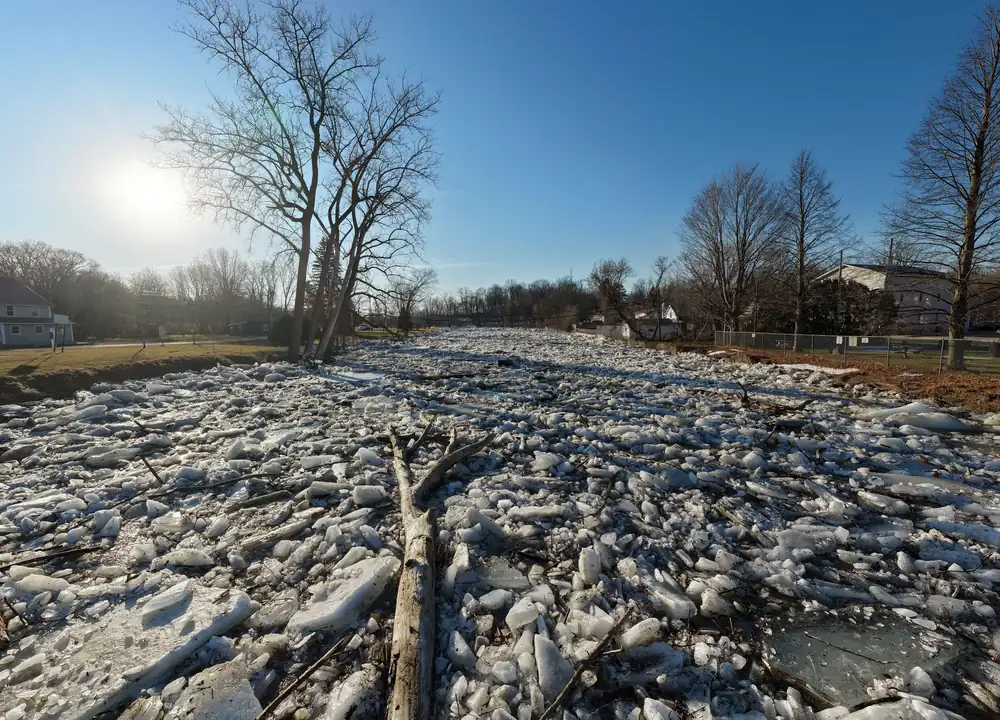
Lake ice sets the clock for much of March. When it softens and recedes, rivers open, fish move, waterfowl drop in, and anglers and snowmobilers have to leave. The timing differs by hundreds of miles and by weeks from one year to the next, so read every date below as a window rather than a promise.
-
Ice-out on the Madison lakes
Median early April; the last three winters opened between late February and mid March · Lakes Mendota and Monona, Madison
The Wisconsin State Climatology Office has kept ice records for the Madison lakes for well over a century and a half. One of its summaries gives April 5 as the median opening date for Lake Mendota and March 31 for Lake Monona. Its history page lists ice-out on February 28 in 2023-24, March 15 in 2024-25 and March 13 in 2025-26.
A university limnology blog notes that the lakes are, on average, freezing later and thawing sooner, and that the average number of days under ice has fallen by a month or more. No one can say whether Mendota will open before the equinox or in April of 2027, so follow the climatology office’s lake ice page.
-
Shanty deadlines and the last safe ice
Early to mid March; set by the DNR each year · Inland waters, Lake Michigan, Green Bay and Lake Superior
Permanent ice shanties must come off the ice by regional deadlines that the Department of Natural Resources announces each winter. In 2026 the deadline was March 8 for inland waters south of Highway 64 and March 15 for Lake Michigan, Green Bay, Lake Superior and inland waters north of Highway 64. The 2027 dates were still unpublished in October 2026.
Portable shelters can stay in use after the deadline if they leave the ice whenever they are not in use and at the end of every day.
-
The Apostle Islands sea caves
Winter, in rare years; typically January through March · Mainland sea caves near Meyers Beach, Bayfield County
The National Park Service says Lake Superior ice permitted access to the frozen sea caves on only about 2 percent of days between 2000 and 2023. The latest openings were nine days in 2015 and one day in 2026. If you plan to go, use the park’s ice line or social media instead of driving north on a hope, and stay off Lake Superior ice unless the park says the caves are open.
-
Steelhead and brown trout enter the streams
March into May, starting in the south · Lake Michigan tributaries from the Root and Milwaukee Rivers northward
The DNR’s year-of-fishing calendar says that as Lake Michigan tributaries open up in March, steelhead and brown trout fishing picks up, and that steelhead runs are near their peak in April. By mid to late April lake sturgeon start their spawning run on the Wolf River and other large rivers, which the same page calls a spectacular sight from shore. Check the current regulations for the stretch you plan to fish.
Which birds return to Wisconsin in March, and where do you see them?
The first big wave of migrants follows the thaw. Geese and cranes move up ahead of the ice line, ducks stop at the first open water, and songbirds come in behind them. The state’s large wetlands are the best places to stand and watch.
-
The Horicon sequence
Late February through March · Horicon Marsh, Dodge and Fond du Lac Counties
The DNR’s account of Horicon Marsh gives a handy order of arrival. Canada geese return by late February or early March, depending on when melting snow uncovers food. Red-winged blackbirds and grackles follow the geese, the first sandhill cranes come before the middle of the month, and robins, song sparrows and killdeer are back by mid-March. Ducks usually appear on the first open water in mid to late March. Great blue herons show up in early to mid March, though most wait until nearly month’s end.
The Aldo Leopold Foundation notes that Leopold recorded the arrival of geese in March, and the geese still make that a good month to watch for them.
-
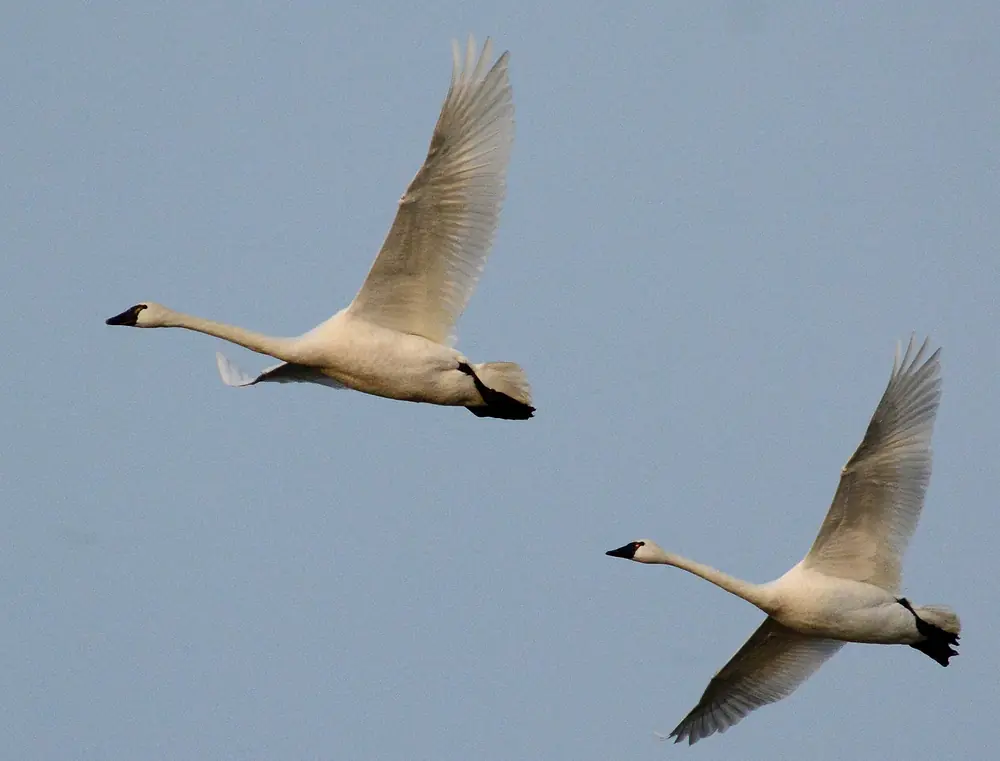
Tundra swans, eagles and ducks on the Mississippi
Mid March into April · Trempealeau National Wildlife Refuge and the Upper Mississippi refuge, western Wisconsin
Trempealeau National Wildlife Refuge says bald eagles, tundra swans, geese and ducks use its pools from mid-March well into April, and it points visitors to the observation deck beside the visitor center. Warblers arrive later, best in late April or early May. The Upper Mississippi River refuge says that in March the call of the red-winged blackbird announces spring in its wetlands, and that songbird migration peaks in April and May.
-
Trumpeter swans and sharp-tailed grouse at Crex Meadows
March and early April · Crex Meadows Wildlife Area, Burnett County
In its wildlife update for March 2, 2026, the Friends of Crex Meadows reported trumpeter swans back to stake out nesting territories, mallards feeding in crop fields, and sharp-tailed grouse moving to their dancing grounds on warm days, while rough-legged hawks and snow buntings lingered. It also warned that frost melt can leave roads wet and soft. Conditions change weekly, so call the visitor center before you drive in.
-
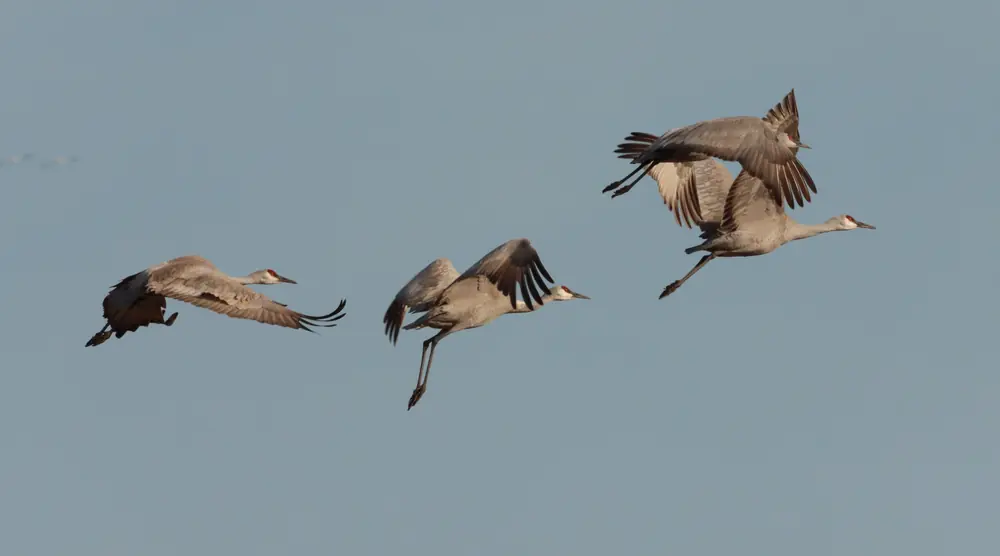
Sandhill cranes return
By March · Wetlands and fields statewide
The DNR says sandhill cranes return to Wisconsin by March from their wintering grounds in the southeastern United States. Nesting pairs lay eggs that hatch after about a month of incubation, and the chicks fledge after roughly two and a half months.
-
Eagles on nests
All month · Rivers and lakes statewide
Bald eagles now nest in all 72 counties. The DNR relies on volunteers who watch nests from February to June, and young birds typically fledge in May or June, according to a Spectrum News report on the program. Watch from a distance with binoculars and leave the nest tree alone.
When does the woodcock’s sky dance begin in Wisconsin?
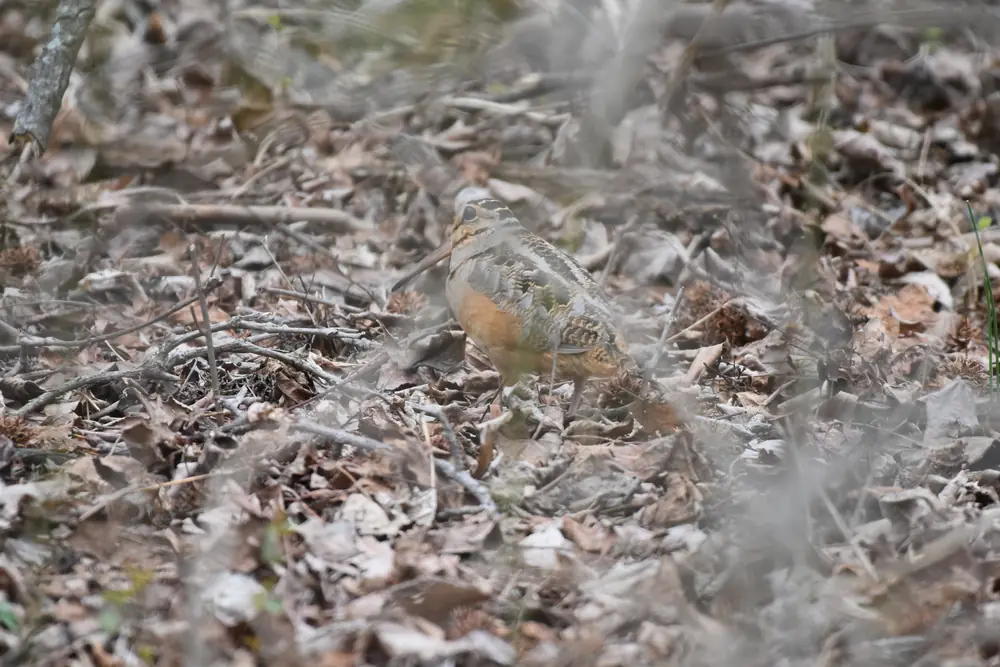
The American woodcock is a stocky, long-billed bird of young forest and brushy fields, and it is among the earliest migrants to return. Its courtship display is one of the odder performances in the state.
-
What you will see and hear
Mid March to early April on arrival, then evenings into May · Fields and meadows beside young woods and shrubs
The Carpenter Nature Center says woodcock arrive in Wisconsin from mid-March to early April, and a Madison magazine feature describes the dusk display as most active through early April. Males call a nasal “peent” from the ground, then spiral up 200 to 300 feet before tumbling down with a twittering sound. In dim light you are likelier to hear it than see it.
The birds perform mostly just before dusk and dawn, when temperatures are above freezing and the wind is calm, so a cold, gusty evening is a poor bet.
-
Where to go
Evening, any calm mild night · Madison-area conservation lands and similar openings elsewhere
The magazine’s 2025 guide named Faville Grove Sanctuary, Cherokee Marsh Conservation Park, Pheasant Branch Conservancy and Governor Nelson State Park as places to listen, and advised looking for a prairie bordered by woodland. Any such edge in the state can hold a displaying male. Arrive early and keep your lights off, since walking in late can startle the birds away.
-
Counting woodcock
Each spring · Survey routes in Wisconsin and 18 other states
The U.S. Fish and Wildlife Service explains that its singing-ground survey, run with state agencies and volunteers, counts displaying males along fixed routes to build an index of the population. Wisconsin is one of 19 states in the survey, and the results are the major information used when woodcock hunting seasons are set.
When do wood frogs, spring peepers and salamanders start moving in Wisconsin?
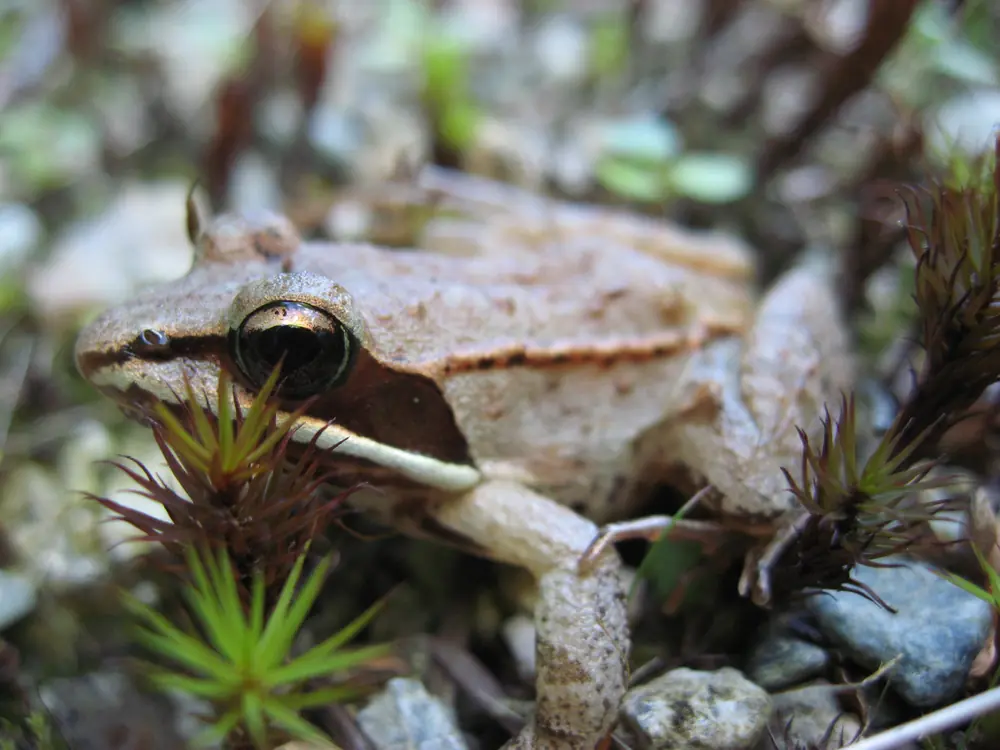
Amphibians break the winter silence as soon as frost leaves the ground and rain fills the low spots. The DNR describes wood frogs as breeding in ephemeral, fishless ponds fed by snowmelt and spring rain, called vernal pools, and because those pools have no fish, eggs and larvae there face fewer predators.
-
Wood frogs
Soon after frost-out; the timing shifts by weeks from year to year · Vernal pools and flooded woods
The DNR says wood frogs have the shortest breeding window of any Wisconsin frog, about two weeks, beginning right after the frost comes out of the ground. The call is likened to a quacking duck. The frogs measure 1.5 to 2.5 inches and wear a dark mask behind each eye. With the chorus so brief, going out on the first few warm, wet nights matters more than the calendar.
-
Spring peepers
Early spring, among the first frogs to call · Wet woods and wetlands beside forest
The DNR reports that spring peepers are one of the first frogs to call, with a very shrill and repetitious peep from animals only 0.7 to 1.1 inches long. They prefer fishless wetlands in or beside woodlots, and each wears a dark X on its back. The agency calls the species widespread and common.
-
The first big night for salamanders
The first warm, rainy night of spring, often in March or early April · Roads between woodlands and vernal pools
Wisconsin Public Radio quoted DNR conservation biologist Rori Paloski on how salamanders move: rather than trickling to ponds over weeks, they tend to go all on the same night at a given site. A slow night may show 10 to 15 animals on a road, a busy one hundreds. The Wisconsin Wetlands Association notes that blue-spotted, spotted and eastern tiger salamanders all depend on vernal pools. If you drive near woods on a warm, wet night, slow down and watch for dark shapes on the pavement; some volunteers wear reflective gear while helping animals cross.
-
The Frog and Toad Survey
Volunteer listening starts in April · Roadside routes statewide
The DNR’s long-running Wisconsin Frog and Toad Survey uses volunteers who drive set routes and record calls. A WXPR report on the program says surveys begin in April, so March is a good time to learn the early callers and to sign up through the program’s website or its listed email address.
When does maple sap run in Wisconsin, and what blooms first?
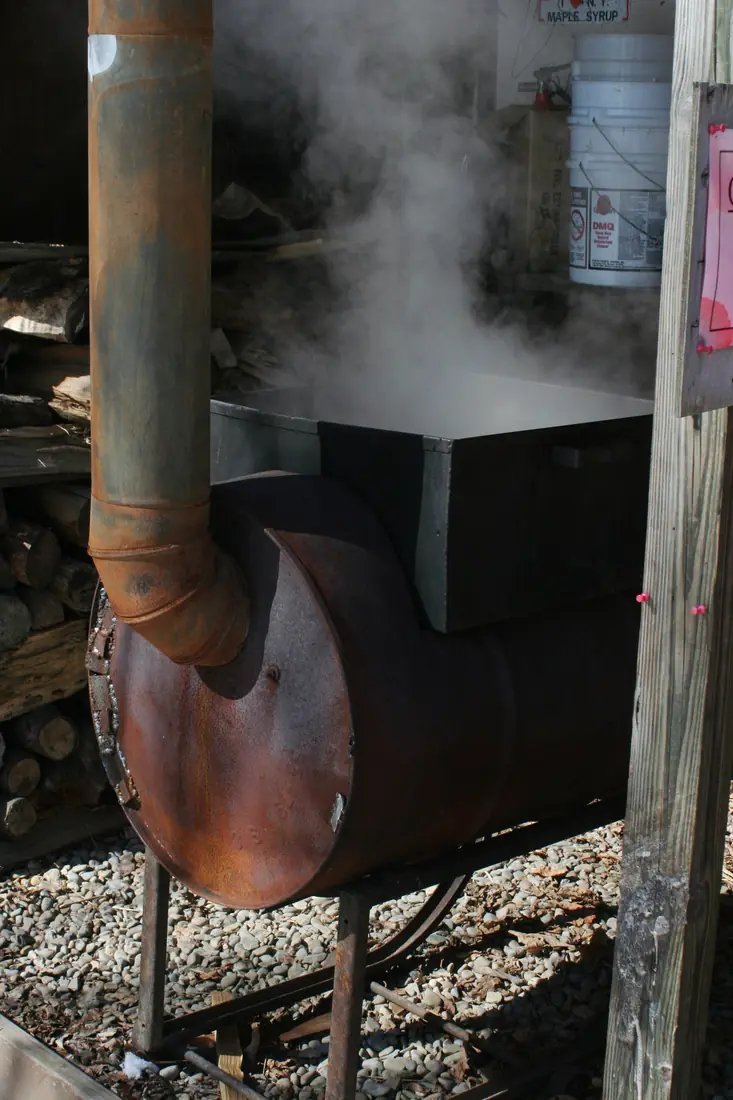
Sap and early flowers respond to the same trigger: a run of thawing days. The state climatology office writes that sap flows best with sunny days at or above 40 °F and nights near 25 °F, and that Wisconsin’s sugaring season generally falls from late March to early April, beginning as flower buds start to swell.
-
The sap run
Late March to early April in a typical year · Sugar maple woods statewide
The climatology office says a maple can produce one to three gallons of sap on a favorable day. A warm spell can end the run abruptly: March 2012’s record warmth cut the season to under ten days, and a prolonged freeze in 2014 left the state roughly 100,000 gallons short. One producer told WPR about a season that lasted just nine days after temperatures climbed from 19 °F to 78 °F in a week.
-
Maple weekends
Often a March weekend; 2027 dates are not yet posted · Sugarbushes and nature centers
Farm Wisconsin Discovery Center held its Maple Days on Friday and Saturday, March 10 and 11, in 2023, with sap tapping, syrup grading and taffy, plus stops at nearby sugarbushes. Look for 2027 dates with the center and with your nearest sugarbush. The UW-Madison Extension maple program also runs a webinar series called the Maple Hour for producers.
-
Silver maple, skunk cabbage and the first blossoms
Mid to late March into April · Floodplains and wet woods
Silver maple flowers open on bare branches in the thaw, and the date swings by weeks from spring to spring. Skunk cabbage, which Schlitz Audubon calls one of the earliest perennial wildflowers, produces its own heat and keeps its flowering spadix about 20 degrees warmer than the air. Look for its mottled purple and green hood in wet woods and along stream edges once the snow melts.
What can you see in the Wisconsin night sky in March 2027?
The clock change comes at 2 a.m. on March 14, which moves all later readings forward an hour. In the moon table, the March 8 new moon appears in standard time and the three phases after the 14th in daylight time. Meteor showers are not a feature of this month.
-
Venus and Mercury before dawn
Early to late March · Low in the east and southeast before sunrise
Look east well before sunup for Venus, a morning star near magnitude -4.1 that comes up roughly two hours before sunrise in early March, then edges closer to the glow each week. Mercury is as far west of the sun as it gets this spring, 27.6 degrees, at 11:20 p.m. CDT on March 16, which is 04:20 UTC on March 17 by our computation. The best window is roughly March 8 to 25, with the planet clearing the horizon an hour ahead of sunrise; use binoculars toward the east-southeast, with Venus far higher up. By our computation a slim old crescent moon sits close to Venus on the mornings of March 4 and 5. Both mornings precede the clock change.
-
Jupiter and Mars after dark
All month · High in the south and southwest in the evening
Jupiter, near magnitude -2.5 in Leo, outshines every other starlike point in the evening sky and remains up until nearly dawn, a consequence of its February 10 opposition. Mars, about magnitude -1.1, also sits in Leo. Around the 18th and 19th, a gibbous moon about 88 percent lit passes Jupiter in the evening. On the evening of Tuesday, March 30, a gap of 4.3 degrees separates Mars from Jupiter, and both are high up near 8 p.m. CDT. We computed these positions for the central United States.
-
Saturn’s last evenings
Early March · Low in the west-southwest after sunset
Saturn is already sinking: by our computation for 40 N, 95 W, it stays up roughly two and a half hours past sunset on March 1 and about an hour and a half past sunset on March 15. It slips behind the sun in early April and returns before dawn later in the spring.
-
Equinox and the Worm Moon
March 20 to 22 · Anywhere with a clear eastern horizon
Astronomical spring starts on Saturday, March 20, at 3:25 p.m. CDT (20:25 UTC, per USNO). Full moon follows on Monday, March 22, at 5:44 a.m. CDT, an hour or so before sunrise. That makes Sunday evening, March 21, the better night for watching it climb, and it rises between roughly 6:30 and 7 p.m. depending on where you stand in the state. SeaSky says the Worm Moon name refers to softening ground and returning earthworms.
-
Aurora
Any clear dark night · Northern Wisconsin, away from town lights
NOAA’s Space Weather Prediction Center posts an aurora forecast with a lead time of 30 to 90 minutes. A strong storm can push displays south into Wisconsin, but none can be predicted months ahead.
| Phase | Date | Time |
|---|---|---|
| New moon | Monday, Mar 8 | 3:29 a.m. |
| First quarter | Monday, Mar 15 | 11:25 a.m. |
| Full moon, the Worm Moon | Monday, Mar 22 | 5:44 a.m. |
| Last quarter | Monday, Mar 29 | 7:54 p.m. |
For the phases through the year, see our moon phases page; our February page covers the eagles and sturgeon that come just before this month.
How cold, snowy and changeable is March in Wisconsin?
March has the widest swings of the year. NOAA’s 1991 to 2020 station normals set the average high in the mid-30s °F in the far north and the mid-40s °F along the Mississippi and the Lake Michigan shore, with average lows under 15 °F at Minocqua and Hurley. The daily normal high at Madison goes from 37 °F on March 1 to 50 °F on March 31; Milwaukee runs from 39 °F to 49 °F, Eau Claire from 34 °F to 49 °F and Green Bay from 34 °F to 47 °F. Snow is the other half of the story: Hurley and Minocqua average 17 to 18 inches in March, while Madison and Milwaukee average about 7.
-
Snowmelt flooding
March and April · River valleys, especially after fast melts or heavy rain
The National Weather Service in Milwaukee says Wisconsin river flooding usually happens in March and April, when rapid snowmelt or heavy rain arrives. Its spring flood outlook for southern Wisconsin lists snowpack, frost depth and river levels as the main factors and repeats the slogan “Turn Around, Don’t Drown.”
-
Spring fire season
Spring, whenever the grass is dry · Dry grass, pine woods and brush
The DNR states that spring is the most critical fire season in Wisconsin, because grasses, pine needles and leaf litter dry out after only a few days without rain. In a May 2026 alert it suspended burning permits in 43 counties. Check the DNR’s WisBurn site before burning brush, and never leave a campfire unattended.
-
Severe weather starts to wake up
April through summer, mostly · Statewide
The NWS Milwaukee office reports that Wisconsin averages about 23 tornadoes a year, most of them from May through August, with June the busiest month. Severe Weather Awareness Week has been held in April in recent years (April 13 to 17 in 2026); the 2027 week had not been announced as of October 2026, so look for it in early spring.
| Station | Snowfall | Average high | Average low | Precipitation | Nights at or below 32 °F |
|---|---|---|---|---|---|
| Hurley (Iron County snowbelt) | 18.2 in | 36 °F | 15 °F | 1.96 in | 28.1 |
| Minocqua (Northwoods) | 16.9 in | 37 °F | 13 °F | 1.72 in | 29.2 |
| Superior (Lake Superior shore) | 9.1 in | 36 °F | 21 °F | 1.41 in | 26.9 |
| Sturgeon Bay (Door County) | 8.6 in | 38 °F | 21 °F | 1.90 in | 26.2 |
| Green Bay | 8.1 in | 40 °F | 24 °F | 1.96 in | 25.2 |
| Eau Claire (Chippewa Valley) | 9.6 in | 41 °F | 21 °F | 1.97 in | 25.5 |
| La Crosse (Mississippi valley) | 7.3 in | 46 °F | 26 °F | 2.04 in | 23.5 |
| Madison (south central) | 7.0 in | 44 °F | 25 °F | 2.26 in | 23.3 |
| Milwaukee (Lake Michigan shore) | 6.7 in | 44 °F | 29 °F | 2.20 in | 21.0 |
The Climate Prediction Center issues new 90-day outlooks every month near mid-month at cpc.ncep.noaa.gov; we do not quote them here. For your own town’s weather, see our weather page, and our cloud page helps with reading what the sky is about to do.
How much daylight does Wisconsin gain in March?
Every city in the table adds between 88 and 100 minutes of daylight over March, roughly 3 minutes more each day, and finishes the month with 12 h 41 m to 12 h 46 m between sunrise and sunset. Superior, farthest north, gains the most (100 minutes); Madison and Milwaukee, farthest south, gain the least (88 minutes). The sun crosses the equator on Saturday, March 20, the date when day and night are nearly matched, and by March 31 each listed city has passed 12 hours of light. Sunrise and sunset also move an hour later on the clock after Sunday, March 14, which makes evenings feel suddenly longer.
| City | Mar 1 | Mar 31 | Gained | Per day |
|---|---|---|---|---|
| Superior | 11 h 06 m | 12 h 46 m | 100 min | 3.3 min |
| Rhinelander | 11 h 08 m | 12 h 44 m | 96 min | 3.2 min |
| Eau Claire | 11 h 09 m | 12 h 43 m | 94 min | 3.1 min |
| Wausau | 11 h 09 m | 12 h 44 m | 95 min | 3.2 min |
| Green Bay | 11 h 10 m | 12 h 43 m | 93 min | 3.1 min |
| La Crosse | 11 h 11 m | 12 h 42 m | 91 min | 3.0 min |
| Madison | 11 h 13 m | 12 h 41 m | 88 min | 2.9 min |
| Milwaukee | 11 h 13 m | 12 h 41 m | 88 min | 2.9 min |
These figures are lengths of daylight, not clock readings, which is why the change to daylight time on the 14th does not alter them. Our daylight page lets you look up any date for your town.
When is the last spring freeze in Wisconsin?
March is too early to plant outdoors almost anywhere in the state, and the table shows why. At the main stations NOAA uses for its 1991 to 2020 normals, the median last freeze falls on about April 19 at Milwaukee and in late May in the Northwoods. Even in the earliest tenth of years, the last freeze arrives in early to mid April at the southern stations and not until early May in the Northwoods.
| Station | One year in ten | Median | Nine years in ten |
|---|---|---|---|
| Superior (Lake Superior shore) | Apr 24 | May 6 | May 25 |
| Hayward Municipal Airport (Northwoods) | May 5 | May 23 | Jun 6 |
| Rhinelander Oneida Airport (Northwoods) | May 9 | May 26 | Jun 8 |
| Eau Claire Regional Airport (Chippewa Valley) | Apr 24 | May 8 | May 21 |
| Wausau Dwtn Airport (central) | Apr 24 | May 6 | May 21 |
| Sturgeon Bay Experiment Farm (Door County) | Apr 25 | May 8 | May 21 |
| La Crosse Municipal Airport (Mississippi valley) | Apr 9 | Apr 23 | May 6 |
| Madison Dane Regional Airport (south central) | Apr 16 | May 1 | May 16 |
| Milwaukee Mitchell Airport (Lake Michigan shore) | Apr 6 | Apr 19 | May 2 |
For the dates at your own town, use our Wisconsin frost dates page.
What can Wisconsin families do outdoors in March?
March suits short trips with a purpose: a muddy walk to a vernal pool, an evening at a field edge, a morning on a refuge deck. Dress for wet feet and wind, and plan a place to warm up afterward.
-
Sign up for the crane count
The count itself is Saturday, April 10, 2027; sign up in March · Counties across Wisconsin and six other states
The International Crane Foundation lists the 2027 Midwest Crane Count for Saturday, April 10, from 5:30 to 7:30 a.m. Central Time. Volunteers first contact their county coordinator to receive a site. More than 2,000 people take part each year across more than 150 counties.
-
Log what you see and hear
All month · Your own backyard or local park
Journey North lets anyone report sightings and explore its maps, and its featured projects at last look were monarchs and hummingbirds, so you can set up an account now. For frogs, the DNR survey described above starts in April.
-
Visit a maple event if one is posted
Usually a March weekend; check with the host · Nature centers and farms
Farm Wisconsin Discovery Center’s Maple Days were held on March 10 and 11 in 2023, and similar programs run elsewhere. Dates for 2027 are not yet posted, so check each organizer’s calendar.
Notes from these outings suit the Naturalist’s Field Journal; our nature pages list other states and months.
Safety notes for March in Wisconsin
The hazards that hurt people in March are mostly about water, mud and ticks, not wildlife.
-
Ice gets unreliable fast
All month · Lakes, rivers and flowages
The DNR says no ice is completely safe, that it does not monitor local ice conditions, and that ice near inlets, outlets and currents can be thinner. If you break through, keep your clothes on, head back toward where you came from, kick and pull yourself out with ice picks, and roll away from the hole before you stand.
-
Bears are leaving dens
Early spring · The northern half of the state mostly, with bears spreading south
The DNR says black bears leave their dens in early spring, when natural food is scarce. Take bird feeders down completely, even for daytime, and keep garbage and pet food inside and grills clean. If a bear approaches, wave your arms, make noise and back away slowly.
-
Ticks can be active in a mild spell
Any day above 40 °F with little snow cover · Brushy edges, leaf litter, trail margins
Wisconsin health officials say deer ticks become active when temperatures rise above 40 °F and snow cover is minimal, and in 2024 DHS and UW-Madison began finding them in February, almost two months ahead of schedule. UW Extension recommends long sleeves, repellents with DEET or picaridin and a daily tick check.
-
Fishing and hunting seasons
Check before you go · Statewide
The DNR’s seasons page lists the general inland season, including walleye and northern pike, running through March 7, 2027; many waters have special rules. Its trout page describes an early catch-and-release season on inland trout streams that begins on the first Saturday in January, so read the current regulations for the end date and gear rules. The spring turkey season starts after March: the DNR lists a youth hunt on April 17 and 18 and Period A from April 21 to 27, and suggests wearing a blaze orange cap or gloves while walking.
Sources (51)
- Wisconsin DNR: Wildlife of Horicon Marsh Wildlife Area
- U.S. Fish and Wildlife Service: Horicon National Wildlife Refuge
- U.S. Fish and Wildlife Service: Trempealeau National Wildlife Refuge, birding
- U.S. Fish and Wildlife Service: Upper Mississippi River National Wildlife and Fish Refuge, birding
- Friends of Crex Meadows: Wildlife update, March 2, 2026
- Wisconsin DNR: Sandhill crane
- Aldo Leopold Foundation: 2027 phenology calendar
- Spectrum News 1: Bald eagles in Wisconsin (2022)
- Carpenter Nature Center: Feature Friday, American woodcock
- Madison Magazine: Witness the woodcock’s sky dance this spring
- U.S. Fish and Wildlife Service: American Woodcock Singing-Ground Survey
- Wisconsin DNR: Wood frog
- Wisconsin DNR: Spring peeper
- Wisconsin Public Radio: Researchers hope more salamanders avoided becoming roadkill
- Wisconsin Wetlands Association: Unique wetlands serve a critical role for Wisconsin salamanders
- WXPR: DNR seeks volunteers for the Frog and Toad Survey
- Wisconsin State Climatology Office: The sweet side of Wisconsin forests, maple sap tapping
- Wisconsin Public Radio: Wisconsin maple syrup producers see strong start to season
- Midwest Farm Report: Maple Days returns to Farm Wisconsin Discovery Center (2023)
- UW-Madison Extension: Maple program and Maple Hour
- Schlitz Audubon Nature Center: Wisconsin’s first spring flowers, skunk cabbage
- Wisconsin State Climatology Office: Madison lake ice
- Wisconsin State Climatology Office: History of ice freezing and thawing on Lake Mendota
- Wisconsin State Climatology Office: Madison lakes ice summary
- UW-Madison Center for Limnology: Where does Lake Mendota’s 2025 freeze date rank in the 170-year record
- WBAY: Wisconsin DNR says any shanties still on ice must be removed soon (March 2026)
- Wisconsin DNR: Ice shanty removal deadlines news release
- Wisconsin DNR: Ice safety
- National Park Service: Apostle Islands mainland sea caves in winter
- Wisconsin DNR: A year of fishing in Wisconsin
- Wisconsin DNR: Fishing seasons
- Wisconsin DNR: Trout seasons
- Wisconsin DNR: Turkey hunting seasons and spring 2027 dates
- Wisconsin DNR: Hunting season dates and application deadlines
- Wisconsin DNR news release: Be bear aware, take steps to avoid conflicts with black bears
- UW-Madison Extension Horticulture: Spring is tick season in Wisconsin
- Wisconsin Public Radio: Wisconsin sees ticks active months ahead of schedule (2024)
- National Weather Service Milwaukee/Sullivan: Spring flood outlook, southern Wisconsin
- National Weather Service Milwaukee/Sullivan: Severe weather awareness
- Wisconsin DNR news release: Spring fire danger, May 4, 2026
- NOAA NCEI: 1991–2020 monthly normals, Milwaukee, Madison, Green Bay, La Crosse, Eau Claire
- NOAA NCEI: 1991–2020 monthly normals, Hurley, Superior, Minocqua, Rhinelander, Sturgeon Bay
- NOAA NCEI: 1991–2020 daily normals, Madison, Milwaukee, Eau Claire, Green Bay
- NOAA Climate Prediction Center: 90-day outlooks
- U.S. Naval Observatory: Moon phases, 2027
- U.S. Naval Observatory: Earth’s seasons, 2027
- SeaSky: Astronomy calendar 2027
- NOAA Space Weather Prediction Center: Aurora 30-minute forecast
- International Crane Foundation: Annual Midwest Crane Count
- Journey North
- Photos via Wikimedia Commons; licenses and photographers are credited under each picture
