What to look for in nature in Wisconsin this January
January is the deep middle of a Wisconsin winter. On average the coldest days of the whole year fall in its third and fourth weeks, the snowbelt near Lake Superior collects more than three feet of snow, and Lake Mendota in Madison usually closes over sometime in the month. Open water becomes the thing to find: below the dams, eagles gather by the dozen and towns hold festivals for them, while trumpeter swans and diving ducks crowd the few rivers and harbors that never freeze. Under the snow and in the woods, the year’s first families are already starting: great horned owls sit on eggs, wolves and red foxes pair up, and mother bears deliver cubs while still deep in winter sleep. A very strong El Niño could keep this January on the mild side. Here is where to look and when.
Other months in Wisconsin: October, November, December, February.
Start here
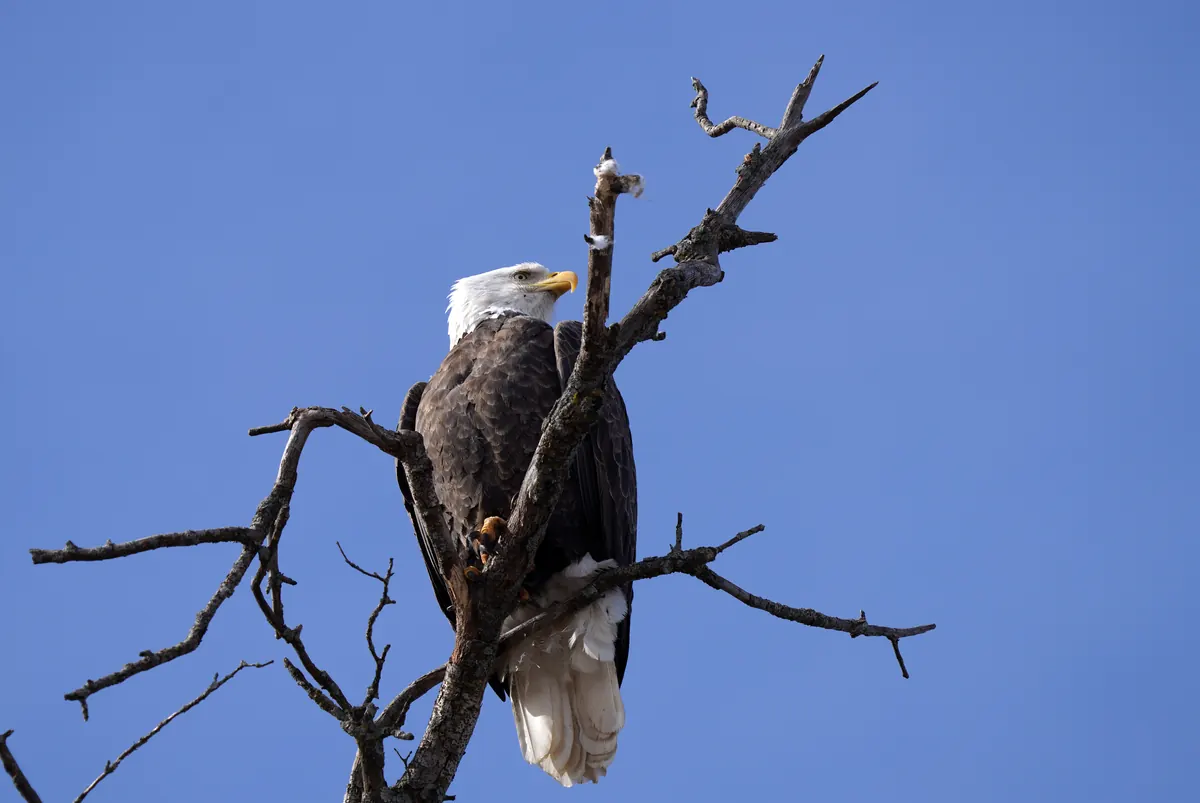
- Eagle Days at Kaukauna, January 23. The 1000 Islands Environmental Center holds its free Eagle Days on Saturday, January 23, 2027, from 7 a.m. to 5 p.m., with a live bald eagle, a life-size nest replica and crafts for children. Arrive early in the morning, when eagles leave their roosts to fish the open rapids of the Fox River.
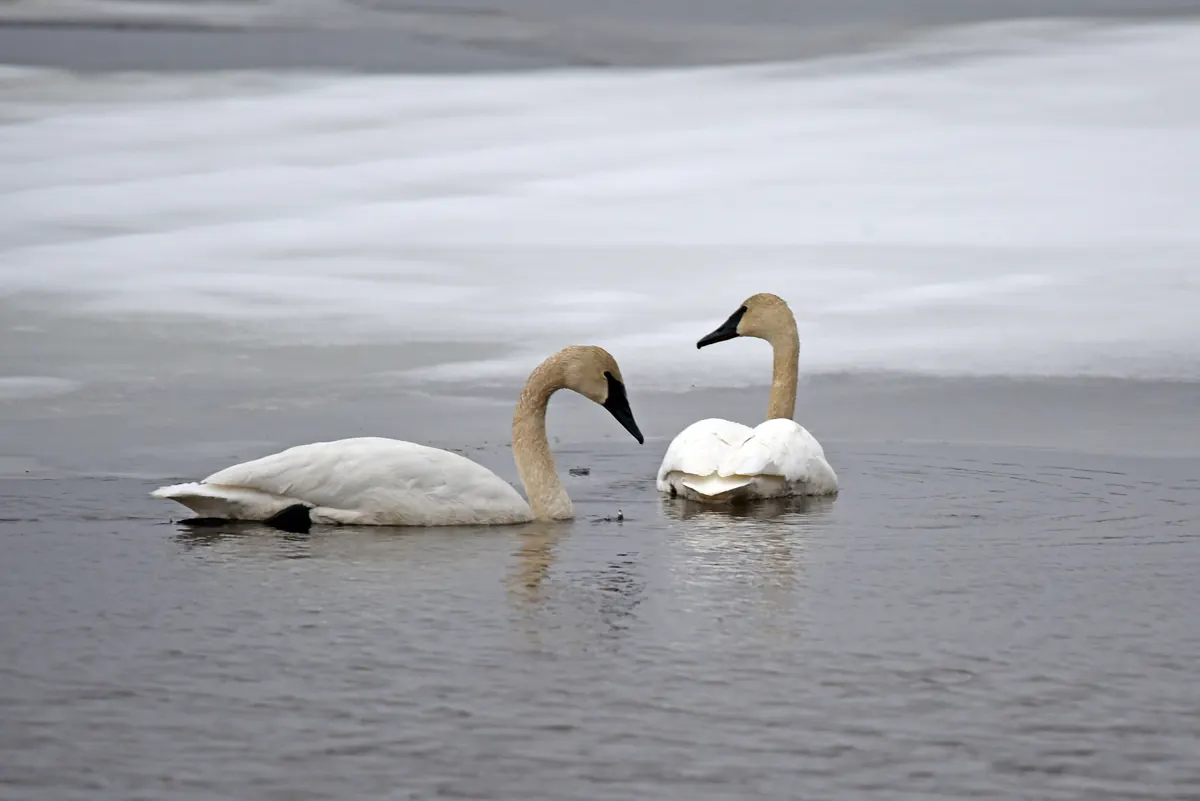
- Swans on the St. Croix at Hudson. Where the Willow River meets the St. Croix at Hudson, the water stays open all winter, and the Wisconsin Society for Ornithology says large numbers of trumpeter swans, goldeneyes and mergansers gather there. Park at the boat landing east of First and St. Croix streets and walk the riverfront.
- Quadrantids before dawn on January 4. The Quadrantid shower is strongest in the small hours after Sunday night, January 3, and a slim crescent moon barely interferes. Find a dark spot and look up in the last dark hours before Monday’s dawn, when the shower’s radiant stands highest.
Keep a record: list the first trumpeter swan, goldeneye and eagle of the year in the Field Journal’s birds I have seen, and log one eagle-watching morning on the daily field log with the temperature and how many birds were adults. Sketch a maple, a hickory and an oak twig on reading the signs, start a tree through the seasons page for one beech or maple you can visit monthly, and write down the New Year’s Day sunset and the January 31 sunset side by side on a dusk and dawn watch page.
Regions used below: Northwoods and the Lake Superior shore; Northwest and the St. Croix; Central Sands and the Wisconsin River; Fox Valley, Green Bay and Door County; Southeast and the Lake Michigan shore; South Central and the Driftless Area.
Where are the best places to see bald eagles in Wisconsin in January?
January is festival month. By now most lakes and backwaters are frozen, so eagles that fish have only the open stretches below dams and rapids, and they stay put there in numbers big enough for whole towns to plan a weekend around them. The DNR points to three rivers: the Fox from Neenah down to Kaukauna, the Mississippi along the Great River Road, and the Wisconsin from the Petenwell Dam south to Sauk Prairie and Boscobel. Its advice on timing is simple: go between 8 and 11 in the morning, when birds move from their roosts to feed, or in the last hour or two before dark, when they head back.
-
Kaukauna and the lower Fox River
All winter; Eagle Days is Saturday, January 23, 2027 · 1000 Islands Environmental Center, Kaukauna, and 16 mapped viewing spots between Neenah and Kaukauna
The City of Kaukauna explains why the eagles come: a hydroelectric dam, the mills and a steep drop in the river keep the Fox open when most water nearby has frozen. The 1000 Islands Environmental Center has mapped 16 viewing spots along the river, and the Wisconsin Society for Ornithology describes a sizable wintering eagle population at the center itself. Its Eagle Days, held every year on the fourth Saturday of January, falls on January 23 in 2027, from 7 a.m. to 5 p.m.; everything is free.
-
Sauk Prairie and the lower Wisconsin River
Bald Eagle Watching Days are held each January; 2027 dates not yet posted · The overlook on Water Street in Prairie du Sac, and pull-offs on State Highway 60 west toward Boscobel
The Ferry Bluff Eagle Council has organized Sauk Prairie’s Bald Eagle Watching Days every January for decades; in 2026 it ran January 17 and 18. The 2027 dates will appear on the council’s website. Between events, the council’s self-guided tour along the Lower Wisconsin State Riverway and the DNR’s suggested pull-offs on Highway 60, including one just east of Boscobel, let you watch on your own schedule.
-
Cassville and La Crosse on the Mississippi
Cassville’s Bald Eagle Days come in January (date to be announced); La Crosse all winter · Riverside Park and Nelson Dewey State Park in Cassville; the La Crosse Eagle Watch wayside just south of Exit 3 on Interstate 90
Grant County names January as the month of Cassville’s Bald Eagle Days, with viewing from Riverside Park and the bluff-top overlooks at Nelson Dewey State Park; call Cassville Tourism at 608-725-5855 for the 2027 weekend. Farther upriver, the DNR lists the La Crosse Eagle Watch wayside off Interstate 90. Prairie du Chien’s Bald Eagle Appreciation Days follow in February.
Count the brown birds as well as the white-headed ones. Brown or blotchy eagles are birds still too young for the white head and tail of an adult, which takes years to grow. Stay in or beside the car, as the DNR asks, so the birds keep feeding. The DNR’s aerial surveys found 1,684 occupied nests in 2019, against 108 in the 1970s.
Where do trumpeter swans spend the winter in Wisconsin?
A century ago there were none. Market hunting and drained wetlands wiped trumpeter swans out of Wisconsin by the late 1800s, and the DNR began bringing them back in the late 1980s with eggs gathered in Alaska, hatched and raised here. The goal was 20 nesting pairs by 2000; there were 44 that year, and the DNR’s 2025 spring waterfowl survey put the population above 15,000 birds. Some fly south for the winter, but others stay wherever water stays open, and in January they crowd onto the last open patches, which makes them easy to find.
-
Hudson, where the Willow meets the St. Croix
December through February, while other water is frozen · The riverfront in Hudson; park at the boat landing east of First Street and St. Croix Street
The Wisconsin Society for Ornithology’s site guide says that because so little water stays open nearby, large numbers of trumpeter swans, common goldeneyes and common mergansers can be seen here in winter, and its bird list for the spot also includes canvasbacks, redheads, buffleheads and common loons. A walk along the river from the landing gives close views without disturbing the birds.
-
Telling a trumpeter at a glance
Any winter visit · Open rivers in the northwest and the Driftless, and spring-fed ponds statewide
Swans of either kind still dressed in gray-brown are last summer’s young, often feeding beside their parents.
Please don’t feed the swans bread or corn; it harms them. Watch from the bank instead.
What winter ducks can you see on Lake Michigan in January?
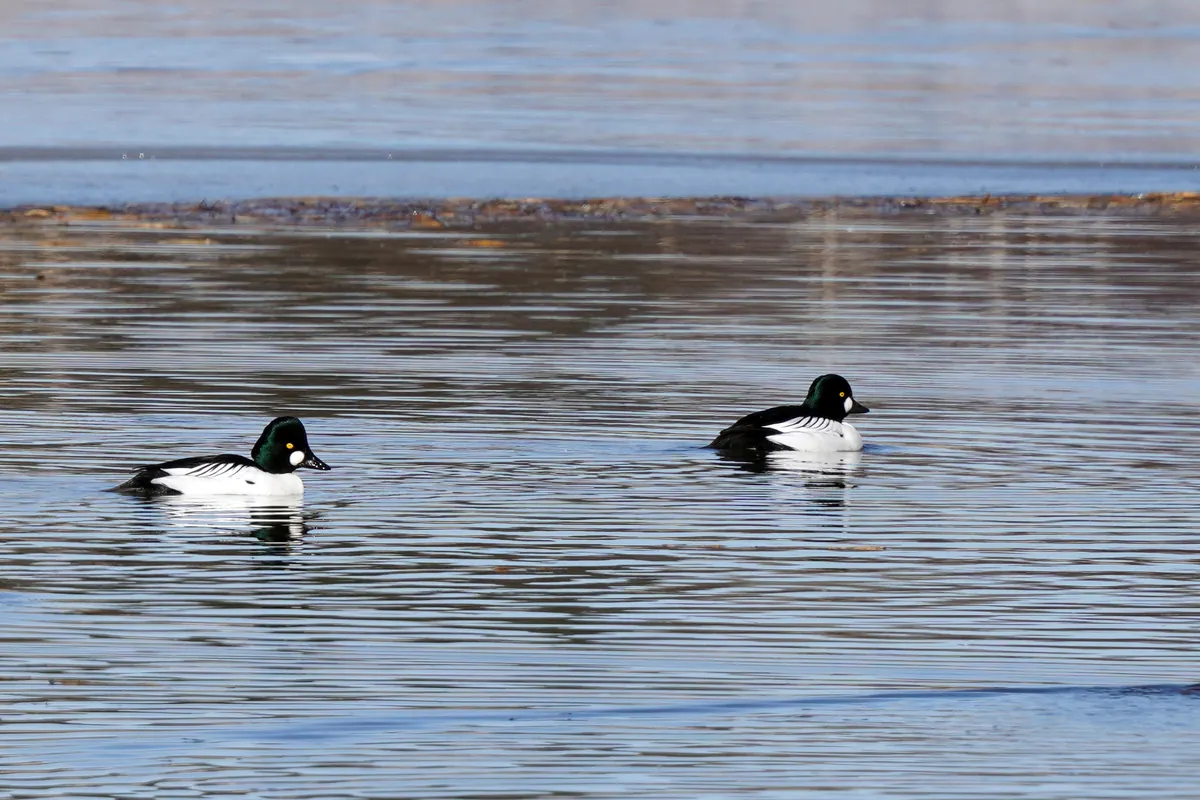
The shoreline from Milwaukee north to Port Washington is the state’s best place for winter sea ducks. Lake Michigan rarely freezes far out, and the harbors, breakwalls and warm-water outflows draw birds that nested on Arctic and boreal lakes. Every January the Wisconsin Society for Ornithology runs a field trip along this shore; on January 11, 2026, it stopped at the South Shore Yacht Club, the Lake Express ferry dock, the North Point snack bar overlook, the Linnwood water treatment plant and Coal Dock Park in Port Washington, and found 25 species.
-
Goldeneyes, scaup and mergansers
December through March · Milwaukee harbor and the North Point overlook; Coal Dock Park, Port Washington
Common goldeneyes, greater and lesser scaup, buffleheads and red-breasted mergansers made up most of the 2026 trip’s ducks, with redheads, ring-necked ducks and American black ducks among the mallards.
-
Long-tailed ducks, scoters and loons
Best on calm days, December through early spring · Virmond Park in Mequon, a 63-acre bluff park above the lake; Port Washington
Farther out, scan for long-tailed ducks and the three scoters; the 2026 trip found five white-winged scoters, a long-tailed duck and three red-throated loons. The society’s guide to Virmond Park recommends scoping the lake there in winter for scoters, long-tailed ducks and the occasional Barrow’s goldeneye, and notes that its conifers can draw winter finches in years when they come south.
Gulls follow the ducks into the harbors; the society’s Virmond Park guide lists glaucous and Iceland gulls among the winter possibilities.
Which Wisconsin animals mate or give birth in the middle of winter?
For several species, the coldest weeks are the start of the new year’s family. Mating now, or giving birth now, lines up the young with spring’s food, and a few animals have shelter good enough to raise newborns in the snow.
-
Great horned owls on eggs
Courtship from December; egg-laying in midwinter · Woodlots, parks and farm windbreaks statewide, often in an old hawk nest
The courting duets of December turn into nesting this month. Schlitz Audubon Nature Center notes that breeding can begin as early as December, so the owls raise young before migrating hawks return to compete with them. A clutch holds one to five eggs, which both parents keep warm for up to five weeks, sometimes under a dusting of snow. A large stick nest left by red-tailed hawks last year is worth scanning from far off with binoculars; an owl’s ear tufts may poke above its edge.
-
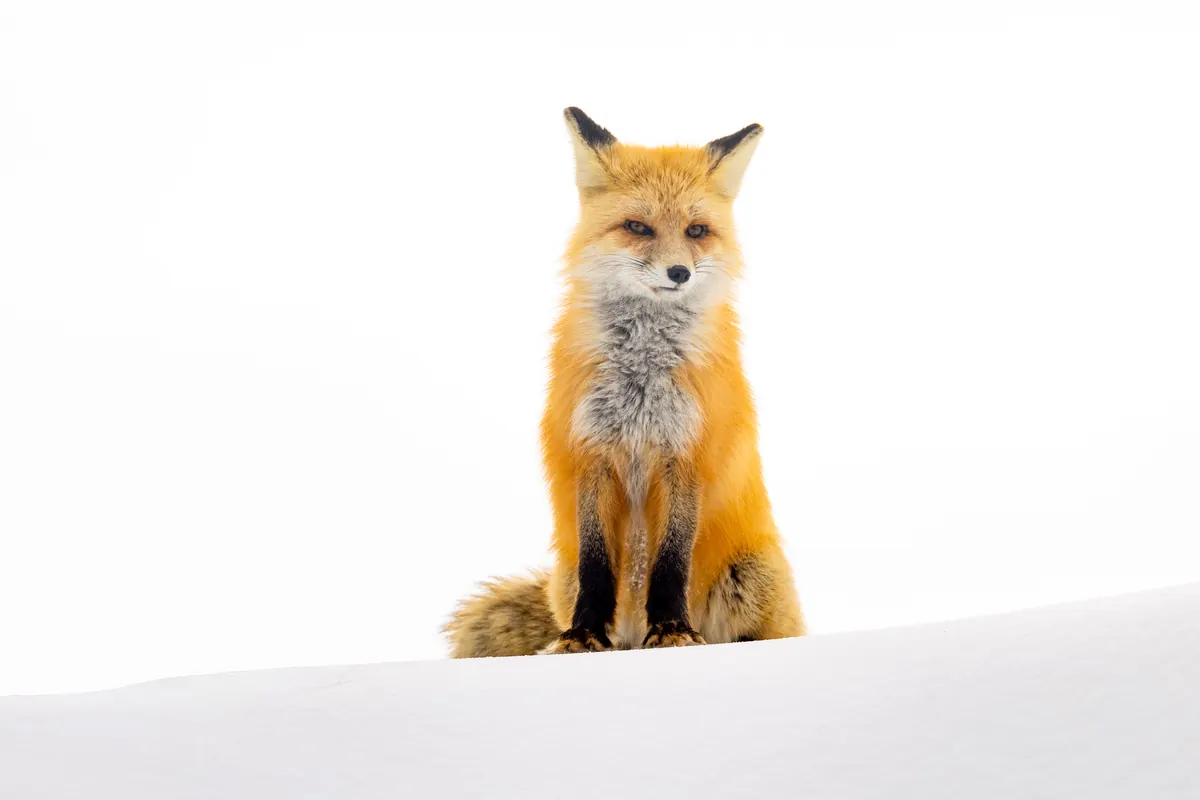
Wolves and red foxes pair up
Red foxes from mid-January; wolves late January into February · Foxes statewide, including farm country and town edges; wolves in the northern and central forests
The DNR says red foxes breed in mid-January and give birth to five or six kits in mid-March, usually in an old badger or woodchuck burrow. A fox seen trotting across a field at noon this month is often a male out searching. Wolves breed in late January and February, the DNR says, and pups arrive about two months later. Paired tracks in the snow, a fox and its mate moving side by side, are one of the signs of the season. Gray foxes start a little later, from mid-February.
-
Black bear cubs born in the den
Late January and early February · Winter dens in bear country, mostly in the northern and central forests
Female bears mated last summer, but the cubs are born now, still in the den. According to the DNR, they weigh under a pound at birth, usually come two to a litter (sometimes one to five), and may first appear outside in mid-March at 5 to 8 pounds. They are noisy: people find dens because they hear cubs squeaking, grunting or humming while they nurse. In January 2026 the DNR asked the public to report occupied dens from at least 30 yards away for a research study; check its newsroom to see if it repeats the request this winter, and never approach a den.
Note any owl hoots, fox screams or howls you hear on the map of sounds page, with the hour, and look for paired fox or wolf tracks after a fresh snow.
How can you identify Wisconsin’s hardwood trees in winter?
With no leaves to help, look at three things: how the twigs are arranged, the buds at their tips, and the bark. UW–Madison Extension points out that buds form in the growing season and stay on all winter, and that the terminal bud at the very end of a twig is usually the largest and most telling. The DNR’s guide Forest Trees of Wisconsin gives the details below.
-
Opposite twigs: maples and ashes
All winter · Sugar maple in mesic forests statewide; red and silver maple in wet ground and on river bottoms
If twigs grow in matched pairs across from each other, the tree is almost certainly a maple, an ash or a dogwood, Extension says; nearly every other wild broadleaf tree here alternates. Then read the buds. Sugar maple has smooth, reddish-brown twigs with sharp-pointed buds. Red maple buds are small, red and rounded, and silver maple buds are rounded and red or reddish-brown, so check the bark: silver maple’s older bark breaks into long flakes. Black ash has a large, pointed terminal bud.
-
Hickories, oaks and butternut
All winter · Southern and western Wisconsin woodlands and oak savannas
Shagbark hickory is easy from a distance: gray bark peels in long vertical strips, and the terminal buds are large, hairy and egg-shaped. Bitternut hickory has smooth, plated bark and flattened buds of bright sulfur yellow, half an inch long or more. Oaks hold a cluster of buds at the twig tip; bur oak’s are pointed, and red oak’s thick and pointed. Slice a butternut twig lengthwise and the pith inside is chambered, like a stack of tiny rooms, and chocolate brown.
-
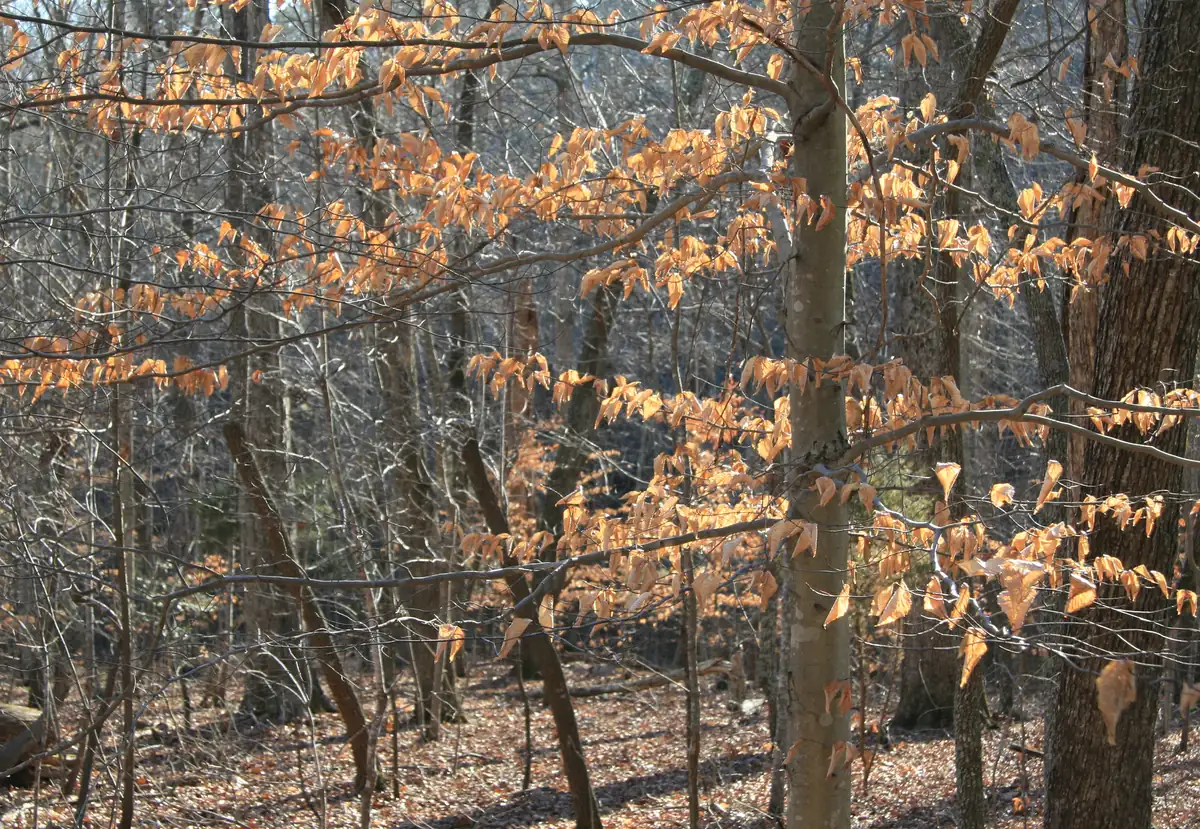
Beech leaves and birch twigs
All winter · Beech in eastern Wisconsin, west to the Wolf River in Langlade County; yellow birch in northern forests
American beech keeps its smooth, steel-gray bark for life, and many of its pale, papery leaves hang on through winter, rattling in the wind. The DNR’s guide places it only in the east, on soils over limestone. Yellow birch has yellow-gray bark that curls in thin layers, and if you scrape a twig and sniff, it smells faintly of wintergreen. Black cherry’s mature bark is blocky and dark, which Extension compares to burnt potato chips.
Draw one twig and its end bud now, then return to the same branch monthly on the Field Journal’s tree through the seasons page.
Will the Apostle Islands ice caves open this winter, and when do Wisconsin lakes freeze?
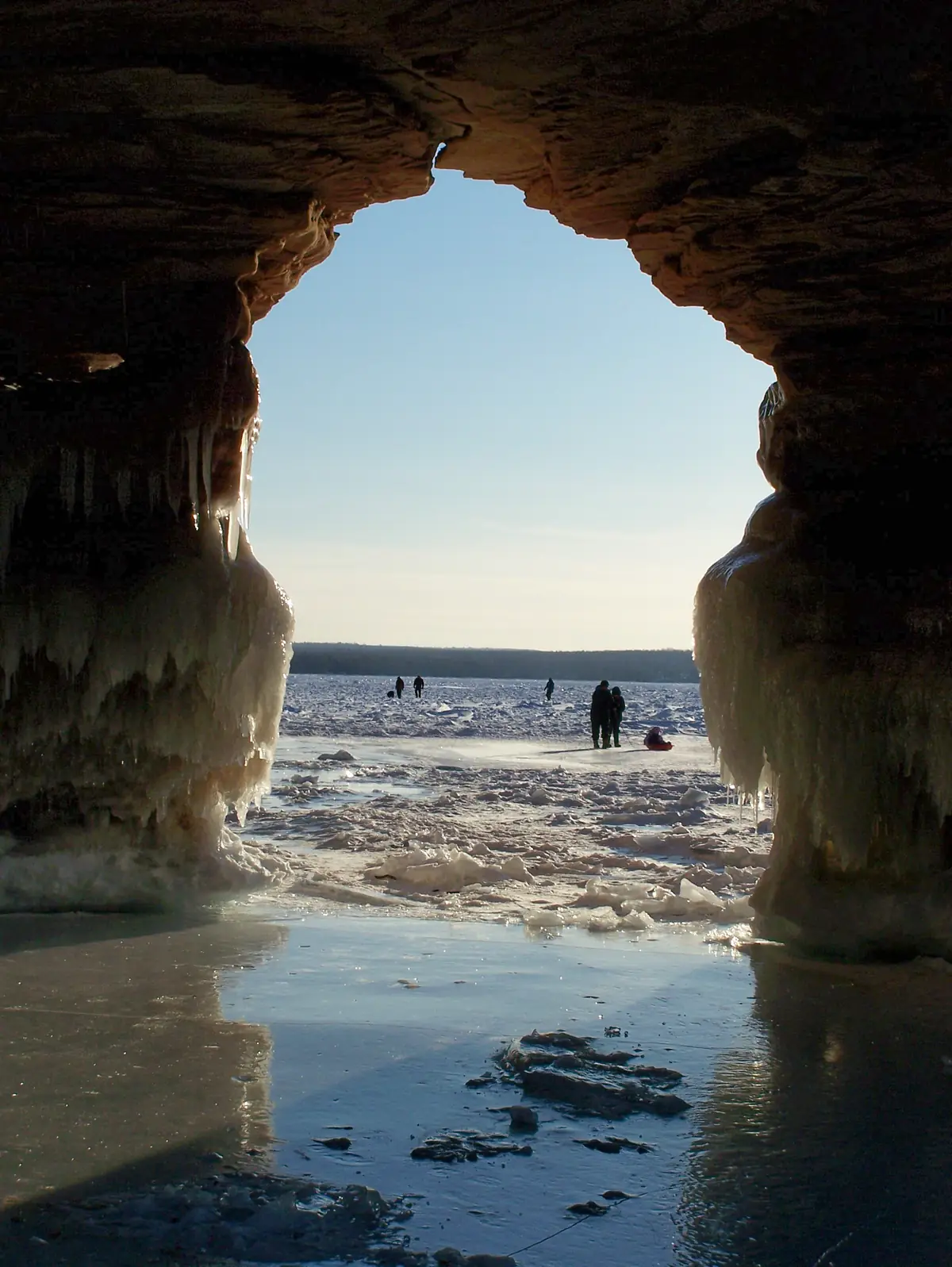
Every winter people ask whether they can walk out to the mainland sea caves near Meyers Beach, where Lake Superior’s spray builds icicles and columns inside the sandstone arches. The honest answer from the National Park Service is: probably not. From 2000 to 2023 the ice was safe enough for access on just 2 percent of days, mostly in four unusual winters (2004, 2008, 2009 and 2014). Since then the caves have opened for nine days in 2015 and for a single day in 2026.
-
What it takes for the caves to open
If at all, usually late in winter, once Lake Superior’s ice is near its seasonal maximum · Meyers Beach, Apostle Islands National Lakeshore, west of Cornucopia
The park lists the conditions: weeks of subzero temperatures, little wind, frozen ground on shore, and a shelf of thick ice anchored at three points of land and reaching miles out into the lake, confirmed by auger tests. Access has only come in winters when more than 90 percent of Lake Superior froze, while the average yearly maximum is about 60 percent. NOAA’s Great Lakes lab says Superior’s ice usually peaks between the end of February and early March, so January visits are rarely possible. Since 1975 the local ice season has started 11.7 days later and ended 3 days earlier per decade, the park adds. Before any trip, call the ice line, 715-779-3398 extension 3, or check the park’s ice caves page.
-
Lake Mendota and the inland lakes
Late December or January in recent winters · Madison, and smaller lakes statewide
The Wisconsin State Climatology Office keeps Lake Mendota’s freeze dates back to the 1850s. The last four: December 25 in 2022–23, January 15 in 2023–24, January 7 in 2024–25 and January 1 in 2025–26. Smaller lakes closed weeks earlier, and by mid-January the ice fishing shanties are out across much of the state. That is no promise of safe ice: currents, springs and snow cover leave thin spots on every lake.
On a clear, cold day, photograph a shoreline you visited in December and pair the two pictures on the same place twice page.
How cold and snowy is January in Wisconsin, and what could El Niño do?
NOAA’s daily normals for 1991–2020 put the low point of the year in the second half of January. At Eau Claire the normal daily average reaches its minimum from January 18 to 24, at Madison from January 20 to 24, at Milwaukee on January 23 and 24, and at Green Bay from January 22 to 26. After that the normals begin, very slowly, to climb. In the far north, a normal January brings 11 to 15 nights at or below zero; along Lake Michigan, Milwaukee averages three or four. Iron County’s snowbelt is again the snow champion: Hurley’s January normal is 38.8 inches, more than in any other month.
| Station | Snowfall | Average high | Average low | Days staying at or below 32 °F | Nights at or below 0 °F |
|---|---|---|---|---|---|
| Hurley (Iron County snowbelt) | 38.8 in | 20 °F | 3 °F | 26.8 | 13.3 |
| Minocqua (Northwoods) | 20.4 in | 20 °F | 1 °F | 26.6 | 14.7 |
| Rhinelander (Northwoods) | 12.0 in | 21 °F | 0 °F | 25.7 | 13.1 |
| Superior (Lake Superior shore) | 14.5 in | 23 °F | 6 °F | 24.7 | 11.6 |
| Eau Claire (Chippewa Valley) | 13.5 in | 23 °F | 6 °F | 23.2 | 11.4 |
| Sturgeon Bay (Door County) | 15.6 in | 25 °F | 10 °F | 22.3 | 6.8 |
| Green Bay | 14.3 in | 26 °F | 11 °F | 22.0 | 8.4 |
| La Crosse (Mississippi valley) | 11.8 in | 27 °F | 11 °F | 20.2 | 9.0 |
| Madison | 13.7 in | 27 °F | 12 °F | 20.0 | 7.3 |
| Milwaukee (Lake Michigan shore) | 14.9 in | 31 °F | 17 °F | 17.9 | 3.5 |
This winter starts with the tropical Pacific heading toward a very strong El Niño: A September 10 assessment from NOAA rated a very strong event during the winter as more than 90 percent likely. In Wisconsin, the State Climatology Office explains, El Niño tends to push the polar jet stream north and hold the coldest air in Canada, so mild weather is the usual result, though the size of the El Niño does not reliably predict the size of the effect. The NWS office in Sullivan looked at the past seven strong El Niños: December-to-February temperatures in southern Wisconsin ran from near normal to 6 degrees above, and snowfall was near or below normal in six of them, by as much as 18 inches. Two strong events set records: 1997–98 was by far the warmest Wisconsin winter known at the time, and 2023–24 beat it: the State Climatology Office calls that season, with its deep snow deficits, the warmest winter in the state since records began in 1895. Lake Mendota had only 62 days of ice in 2015–16. NOAA revises its official three-month outlook every month; the newest maps are at the Climate Prediction Center. Current Wisconsin conditions are on our weather page, and to put a name to the high, thin cirrus that often runs ahead of a snowstorm, try our cloud identification guide. Our Wisconsin frost page lists fall and spring freeze dates by town.
How much daylight does Wisconsin gain in January?
Daylight returns slowly at first. Across the eight cities below, January 31 has 51 to 58 more minutes of daylight than New Year’s Day, with the most in Superior and the least in Madison and Milwaukee. The rate itself grows through the month, from less than a minute each day in the first week to roughly three times that by month’s end. Most of the early gain comes at the evening end of the day, since sunsets have been creeping later since mid-December while sunrise barely moves in the first half of January. Later in January the sunrises start coming earlier as well.
| City | Jan 1 | Jan 31 | Gained | Per day |
|---|---|---|---|---|
| Superior | 8 h 38 m | 9 h 36 m | 58 min | 1.9 min |
| Rhinelander | 8 h 46 m | 9 h 42 m | 56 min | 1.9 min |
| Eau Claire | 8 h 52 m | 9 h 46 m | 54 min | 1.8 min |
| Wausau | 8 h 51 m | 9 h 46 m | 55 min | 1.8 min |
| Green Bay | 8 h 54 m | 9 h 48 m | 54 min | 1.8 min |
| La Crosse | 8 h 59 m | 9 h 51 m | 52 min | 1.7 min |
| Madison | 9 h 04 m | 9 h 55 m | 51 min | 1.7 min |
| Milwaukee | 9 h 04 m | 9 h 55 m | 51 min | 1.7 min |
Check sunrise and sunset in Rice Lake, Racine or anywhere else with the Field almanac.
What can you see in the Wisconsin night sky in January 2027?
Times are Central Standard Time. Clear January nights are long, still and dry, ideal for stargazing if you dress for it.
-
Perihelion and Venus at its farthest
Perihelion 8:33 p.m. Saturday, January 2; Venus at greatest elongation Sunday, January 3 · Venus in the southeast before sunrise
Saturday evening is perihelion: Earth swings within about 91.4 million miles of the sun, its smallest gap of 2027. Madison is shivering at the very moment the sun is nearest, proof that a Wisconsin winter is about the sun’s low path across the southern sky, not about distance. Sunday brings Venus to its widest swing from the sun this time around, 47 degrees on the morning side, a brilliant light low in the southeast before sunrise. Through a small telescope the planet looks like a half moon.
-
The Quadrantid meteor shower
Peak during the night of Sunday, January 3, into Monday, January 4 · Anywhere dark; the radiant lies low in the northern sky in the evening and climbs through the night
Forecasts put the brief peak somewhere between mid-evening Sunday and around midnight. A waning crescent moon, up only in the last few hours of darkness, leaves most of the night dark. Because the radiant gains height all night, the predawn hours of Monday give the best rates: perhaps dozens an hour from a dark rural spot, many fewer in town. A thermos and a sleeping bag make the predawn watch bearable.
-
The Wolf Moon, a supermoon
Full at 6:17 a.m. Friday, January 22; best on the night of Thursday, January 21 · Rises in the northeast near sunset Thursday
No full moon of 2027 comes closer to Earth; it arrives less than a day after perigee, so it appears slightly larger and brighter than usual. The exact full moment comes just before Friday’s sunrise, which makes Thursday night the roundest view, though Friday evening’s moon looks full as well. The next night, Saturday the 23rd, the moon slides past Jupiter, the brightest point beside it, with Regulus also in the group.
-
Saturn, Mercury and dark-sky nights
All month; Mercury from late January · Saturn in the southwest after dark; Mercury very low in the west-southwest after sunset
Saturn shows as a steady, pale light in the southwest at dusk, a bit lower every week. In the final week of the month look for Mercury, a small, bright point low toward the west-southwest after sundown, heading for its best evening appearance of this winter in early February. New moon falls on January 7, so for roughly a week on each side of it the evening sky stays free of moonlight. The 11-year sunspot cycle is on its downslope, yet a big solar outburst can still light the northern horizon over Wisconsin, so glance at NOAA’s aurora forecast when the sky is clear.
| Phase | Date | Time |
|---|---|---|
| New moon | Thursday, Jan 7 | 2:24 p.m. |
| First quarter | Friday, Jan 15 | 2:34 p.m. |
| Full moon, the Wolf Moon (a supermoon) | Friday, Jan 22 | 6:17 a.m. (looks fullest the night of Jan 21) |
| Last quarter | Friday, Jan 29 | 4:55 a.m. |
To plan around moonlight later in the winter, use our moon calendar.
What can Wisconsin families do outdoors in January?
- Friday, January 1: a First Day Hike. Wisconsin state parks, forests and trails hold free guided and self-guided New Year’s Day hikes every year as part of a national state parks program; on January 1, 2026, 25 properties took part, some with snowshoeing, skiing and bonfires. The 2027 list should appear on the DNR’s events pages in December. A vehicle admission or trail pass may still be needed.
- January 1 to 5: final days for the Christmas Bird Count. The 127th count ends on the 5th. Each circle picks its own day, so look on Audubon’s Circle Finder for one that has not yet counted and ask the compiler if you can join or report your feeder.
- Saturday and Sunday, January 16–17: Free Fishing Weekend. No license or trout or salmon stamp is needed on Wisconsin waters open to fishing; all other rules apply. It is a good weekend to try ice fishing with an experienced friend on a lake the local bait shop says is safe.
- Saturday, January 23: Eagle Days at 1000 Islands, Kaukauna, 7 a.m. to 5 p.m., free, with a live eagle program and crafts.
- Eagle weekends to confirm. Sauk Prairie’s Bald Eagle Watching Days and Cassville’s Bald Eagle Days are both held every January; check the Ferry Bluff Eagle Council and Cassville Tourism for the 2027 dates.
- Candlelight nights. Many state parks hold candlelight ski, hike and snowshoe evenings in winter, most of them in February in recent years. Watch the DNR’s events calendar.
- Citizen science. Keep counting for Project FeederWatch, which runs through April, and enter eagle and swan counts in eBird.
For the first month of this winter, see December in Wisconsin, and browse every state and month on our nature pages.
Safety notes for January in Wisconsin
- Hunting seasons and blaze orange. The antlerless-only holiday deer hunt, open only in selected deer management units, ends on January 1, and the statewide archery and crossbow deer seasons close January 3; in metro subunits and some farmland counties archery continues to January 31. Pheasant and Zone A ruffed grouse also close on January 3. Squirrel and cottontail rabbit seasons stay open to February 28, crows from November 21 into March, fox and coyote trapping and fox and raccoon hunting to February 15, the second bobcat period through January 31, and coyote hunting all year. Whenever a gun deer hunt is underway, DNR rules require hunters to wear blaze orange or pink on half or more of the clothing above the waist, and on half or more of any hat. That applies on New Year’s Day where the holiday hunt is open. On public land, wear something bright all month, keep dogs leashed near trapping areas, and teach older children to recognize a trap set.
- Ice. No ice is guaranteed safe, the DNR warns, and the department does not track ice thickness on any lake. Ask local bait shops, fishing clubs or resorts, avoid inlets, outlets, narrows, snow-covered ice and ice with bubbles in it, never go alone, and pack ice picks, a throw rope, a life jacket and a phone sealed against water. Never walk onto Lake Superior or Lake Michigan shelf ice; it can break away in hours.
- Cold and wind chill. On the coldest nights in the north a normal January low is near zero, and arctic outbreaks go much lower. Dress children in layers, cover ears and fingers, and come in at the first numb, white patch of skin.
- Short days and winter driving. Days are still under ten hours long all month, so set out early and pack a light in case a walk runs past sunset. Keep a blanket, shovel and snacks in the car, and before driving into the snowbelt check the forecast, since a squall off Lake Superior can bury a highway quickly.
Sources
- Wisconsin DNR: Eagles in Wisconsin (viewing sites, events, nest surveys)
- City of Kaukauna: 1000 Islands Conservation (Eagle Days, January 23, 2027)
- Wisconsin Society for Ornithology: 1000 Islands Environmental Center
- Ferry Bluff Eagle Council
- Wisconsin DNR news release: Bald Eagle Watching Days in Sauk Prairie, January 17, 2026
- Grant County: Cassville community information (Bald Eagle Days in January)
- Grant County: Bird watching (Cassville Tourism contact)
- Travel Wisconsin: Bald eagle watching, Cassville
- Wisconsin Society for Ornithology: St. Croix River, Hudson
- Natural Resources Foundation of Wisconsin: Trumpeter swan, 2026 Birdathon Bird of the Year
- Wisconsin Society for Ornithology: Milwaukee Lakefront 2026 field trip report
- Wisconsin Society for Ornithology: Virmond Park
- Schlitz Audubon Nature Center: Knowing your neighborhood great horned owl
- Wisconsin DNR: Red fox
- Wisconsin DNR: Gray fox
- Wisconsin DNR: Wolves in Wisconsin
- Wisconsin DNR: Black bear (orphaned wildlife)
- Wisconsin DNR news release: Report black bear den locations (January 29, 2026)
- UW–Madison Extension Forestry: Tree identification
- Wisconsin DNR: Forest Trees of Wisconsin, How to Know Them (PUB-FR-053)
- National Park Service: How rare is rare? Apostle Islands ice caves access
- National Park Service: Apostle Islands ice caves
- NOAA Great Lakes Environmental Research Laboratory: Great Lakes ice cover
- Wisconsin State Climatology Office: Lake Mendota freeze and thaw history
- NOAA NCEI: 1991–2020 monthly normals, Milwaukee, Madison, Green Bay, La Crosse, Eau Claire
- NOAA NCEI: 1991–2020 monthly normals, Hurley, Superior, Minocqua, Rhinelander, Sturgeon Bay
- NOAA NCEI: 1991–2020 daily normals, Madison, Milwaukee, Eau Claire, Green Bay
- NOAA NCEI: Normals documentation (threshold day counts)
- NOAA Climate Prediction Center: ENSO diagnostic discussion, September 10, 2026
- NOAA Climate Prediction Center: 90-day outlooks
- Wisconsin State Climatology Office: ENSO and Wisconsin
- Wisconsin State Climatology Office: Recent history of El Niño in Wisconsin
- National Weather Service Milwaukee/Sullivan: El Niño and southern Wisconsin
- U.S. Naval Observatory: Moon phases from December 30, 2026
- U.S. Naval Observatory: Earth's seasons and apsides, 2027
- Fred Espenak: Sky Event Almanac 2027
- American Meteor Society: Meteor shower calendar
- EarthSky: What is a supermoon?
- EarthSky: Venus at greatest elongation
- NOAA Space Weather Prediction Center: Aurora dashboard
- Wisconsin DNR: Hunting season dates, 2026–27
- Wisconsin DNR: Deer hunting (holiday hunt, extended archery, blaze orange)
- Wisconsin DNR: Ice safety
- Wisconsin DNR: Fishing seasons (Free Fishing Weekend, January 16–17, 2027)
- Wisconsin DNR news release: First Day Hikes, January 1, 2026
- Wisconsin DNR: State park events and programs
- National Audubon Society: Join the Christmas Bird Count
- Project FeederWatch
- eBird
- Photos via Wikimedia Commons; licenses and photographers are credited under each picture
