What to look for in nature in Wyoming this March
March in Wyoming is the month when winter loosens its grip without letting go. Snow is still deepest in the east and the mountains, and blizzards and gales can close the interstates, yet the first sage-grouse are strutting on their leks before sunrise. Pronghorn and mule deer begin drifting toward their summer ranges, grizzlies leave their dens around Yellowstone, and the first mountain bluebirds and sandhill cranes reappear. On the sagebrush slopes the buttercups and pasqueflowers break through at the edge of the snow. The days stretch by 83 to 94 minutes across the month in our table, and the clocks move forward on March 14. Each entry that follows gives the place, the usual timing and where we found it.
Other months in Wyoming: October, November, December, January, February, April.
Start here
- Watch a sage-grouse lek at first light. From a parked car, an hour before sunrise, listen for the popping of males on a public lek. Late March into early April is the usual peak.
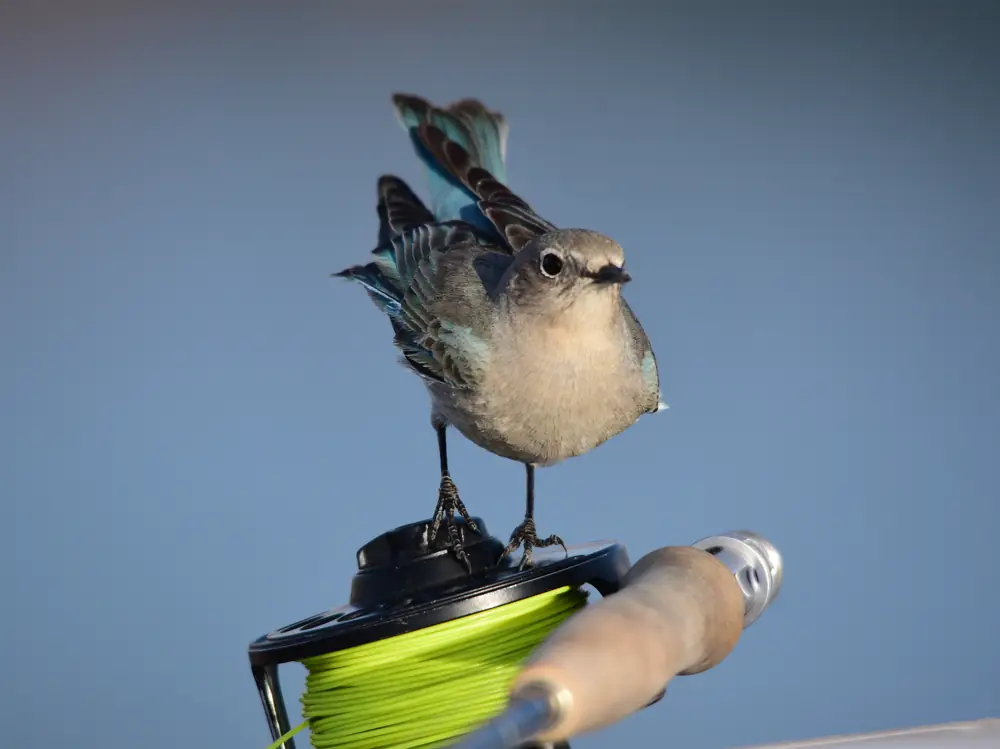
- Log the first mountain bluebird. Look along fence lines and open sagebrush country for a flash of blue, and write down the date. Meadowlarks and cranes follow.
- Hunt for a pasqueflower. On a gravelly, south-facing slope at the snowline, search for the first small blooms. Look slowly: there may be several in one spot.
Wyoming’s March fits a handful of Field Journal plates. The first bluebird, meadowlark or crane belongs on birds I have seen, and a lek morning suits dusk and dawn watch. Add pronghorn or bear tracks to tracks to know, the first wildflower to the same place twice, and a gale or snow squall to reading the signs.
Regions used below: Southeast plains, Cheyenne and Laramie; Central Wyoming and Casper; Northeast: the Powder River Basin and Black Hills; Sheridan and the Bighorn Mountains; The Bighorn Basin and Cody; Wind River country, Riverton and Lander; Southwest: the Red Desert, Green River and Rock Springs; Jackson Hole, Pinedale, Grand Teton and Yellowstone.
When and where can you watch greater sage-grouse dance on a Wyoming lek?
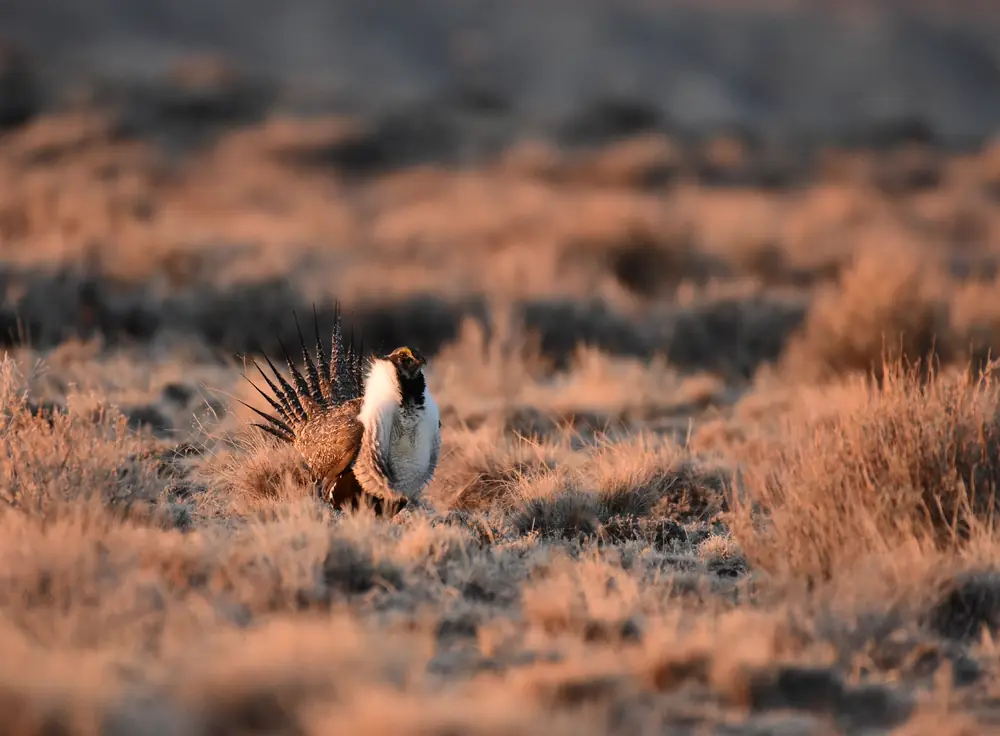
No March sight in Wyoming beats a sage-grouse lek at first light. Males gather on traditional display grounds in the sagebrush, fan their tails, puff out their chests and make their strange popping calls while hens look on. Game and Fish says March and April are the months when viewing is most popular, and that breeding activity usually peaks from late March into early April. The state holds a big share of the species: its species account says 37 percent of North America’s greater sage-grouse live in Wyoming.
-
What a lek is, and how big the show is
Spring breeding season; the peak is usually late March to early April · Open sagebrush country across the western two-thirds of the state
Game and Fish describes a lek as a traditional site where males perform courtship displays. Hens are generally bred there and then nest within about 5 miles (8.5 km) of it, with chicks hatching in late May or early June. The department counts males at the known leks each spring to track the population.
-
How to watch without disturbing them
Arrive at least an hour before sunrise · Any public lek, from a parked vehicle
Game and Fish’s viewing advice is simple. Park away from the edge of the lek and never drive onto it, switch off the engine and lights, stay inside the vehicle, and use binoculars or a spotting scope. Avoid loud noises and sudden movements, let the birds leave first, leave pets at home, and respect private land. The department also warns against muddy roads, which are common on thawing two-tracks. Remember that daylight time begins on Sunday, March 14, which pushes every sunrise an hour later by the clock.
-
Finding a lek that is open to the public
Check the viewing guide each spring · Statewide; Game and Fish regional offices, (307) 777-4600
The department publishes a Sage Grouse Lek Viewing Guide listing publicly accessible leks with directions and downloadable maps. Audubon’s Wyoming birding guide names the Seedskadee refuge along the Green River as a place for sage-grouse displays, besides its nesting waterfowl. Ask a regional office before you go, because road conditions and lek activity change from year to year.
Go on a still, clear morning if you can. Wind muffles the popping sound and scatters the birds early. A lek morning also fits the dusk-and-dawn watch plate in the Naturalist’s Field Journal.
Which Wyoming animals start moving in March, and what about shed antlers?
March is when the snow retreats up the slopes and animals follow it. The big spring migrations of pronghorn, mule deer and elk usually run from March into May, and the first movements show up on the roads before the grass turns green. Sources do not agree on exact weeks, and a mild or hard winter can shift everything, so treat the timing below as a window, not a date.
-
Pronghorn and mule deer at Trappers Point
Spring movements typically March to May · U.S. 191 west of Pinedale
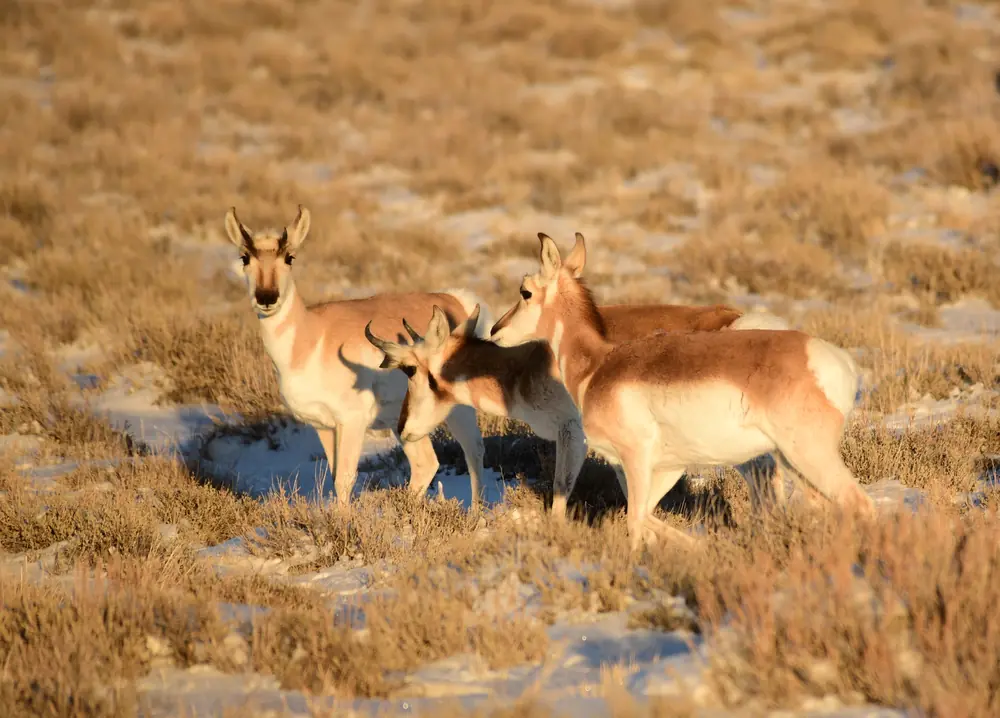
Each spring a few hundred pronghorn travel from the Red Desert near Rock Springs toward Grand Teton National Park, according to Travel Wyoming. Game and Fish says that in the three years after the Trappers Point crossing structures opened, pronghorn and mule deer used the six underpasses and two overpasses more than 60,000 times, and collisions on that stretch of highway fell by more than 80 percent. Drivers on U.S. 191 near Pinedale should still slow down at dawn and dusk.
-
The longest mule deer migration on record
A trip of about four months each year · From the Red Desert near Rock Springs to the Hoback Basin
The Wyoming Migration Initiative reports that mule deer in this herd travel about 150 miles each way, past sand dunes, rivers, highways and more than 100 fences, and spend around four months of each year on the move.
-
Elk leaving the National Elk Refuge
Late winter into spring · Jackson Hole
The refuge says elk are scarce there during spring and summer, and that regular sightings do not resume until mid-November or early December. In February 2026 a mild, low-snow winter had elk drifting off the refuge unusually early, and a local photographer said they had little reason to stay when higher ground was open. The refuge’s own sleigh-ride season, per the operator, runs through April 3, 2027, conditions permitting, so the last weeks are a good time to see the herd, if any remain.
-
When can you pick up shed antlers?
West of the Continental Divide, closed from January 1 until 6 a.m. on May 1 (residents) or May 8 (nonresidents) · Public land west of the Divide, except the Great Divide Basin and some land west of Laramie
Game and Fish’s January 2024 notice describes the closure, which covers national forest, Bureau of Land Management, state, and Game and Fish Commission land. “Collect” includes searching for or possessing antlers, and violations can bring fines, loss of the antlers and loss of hunting and fishing privileges. An older Game and Fish page gave the end as April 30, so confirm the current dates on the department’s website. Collecting on private land without the owner’s permission is illegal all year. On the National Elk Refuge itself, the April antler collection is a Boy Scouts event, not an open-to-all search.
Slow down at dawn and dusk, especially where fences funnel animals toward a crossing.
Which Wyoming mammals are waking up or breeding in March?
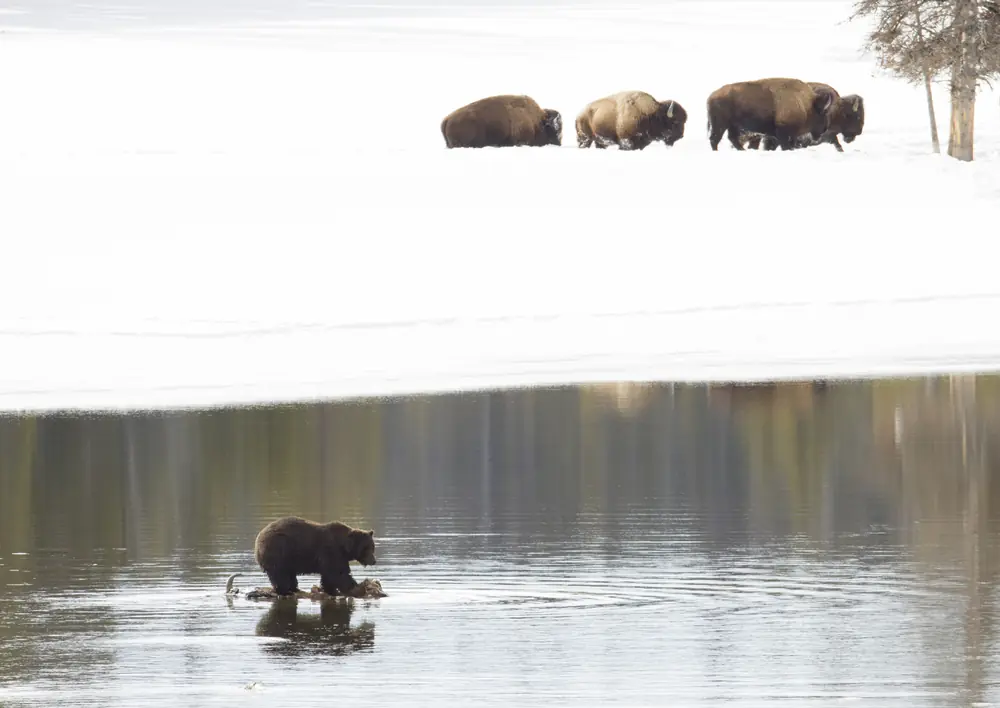
Bears are the first big headline of March in the Yellowstone country, while a rare weasel mates underground in prairie-dog colonies near Meeteetse and in Shirley Basin. Most of what these animals do in March is out of sight, but a few clues are worth knowing.
-
Grizzlies leave their dens
Males from early March; females with cubs in April and early May · Greater Yellowstone, including the Tetons and the Absarokas
The National Park Service reported the first Yellowstone grizzly of 2023 on March 7, and says adult males come out in early March while females with cubs wait until April or early May. Emerging bears head for winter-killed elk and bison, and the park cautions that they may react aggressively when feeding on a carcass. In 2023 the park began its restrictions in some bear management areas on March 10. Game and Fish adds that black bears and grizzlies alike are drawn to unsecured garbage, birdseed and pet food.
-
Black-footed ferrets breed underground
Mid-March through early April · Prairie-dog colonies near Meeteetse and in Shirley Basin
Ferrets breed from mid-March into early April, the Fish and Wildlife Service reports, and the kits are born underground after 42 to 45 days. Ferrets were rediscovered near Meeteetse in 1981, and the largest reintroduced population lives at Shirley Basin near Medicine Bow, with an average of around 100 breeding adults as of 2012. Game and Fish biologists count them in fall with night-time spotlight surveys, so the March story is one to read about rather than to see.
-
Yellowstone’s wolves are past their mating season
Mating in February; pups born around mid-April · Yellowstone National Park
The park’s wolf pages say wolves mate in February and give birth around mid-April after a 63-day gestation. Elk make up about 90 percent of what they kill in winter.
Put the bear-spray can on your belt, not in the pack, and read the park or forest notice at the trailhead for closures. Our field journal has a mammal-watch page for noting where you saw tracks, even if you never saw the animal.
What is open in Yellowstone and Grand Teton in March, and when do the roads reopen?
March sits in the gap between winter and spring in the parks. Oversnow tours are ending, most roads are closed to ordinary cars, and the first plowing machines are only starting to move. None of the 2027 spring opening dates had been posted when this page was written.
-
Yellowstone’s oversnow season ends in mid-March
Closure dates vary by road, through March 15, 2027 · Yellowstone National Park
The park says commercially guided snowmobiles and snowcoaches reach most roads from mid-December to mid-March, with different closing dates along the way, the last on March 15, 2027. Most park roads are closed to regular vehicles from early November to late April. The road from the North Entrance to the Northeast Entrance and Cooke City is generally the only one open year-round to regular vehicles.
-
When wheeled traffic returned in 2026
April 17 to May 22 last year; 2027 dates not yet posted · Yellowstone National Park
For 2026 the park planned to open the West Entrance corridor and the road from Mammoth Hot Springs to Norris on April 17, the East Entrance on May 1, the South Entrance on May 8, and the high passes on May 22. A storm with up to a foot of wet snow delayed the April 17 opening by four hours.
-
The Teton Park Road becomes a bike path
Closed to cars November 1 through April 30 · Grand Teton National Park, Taggart Lake trailhead to Signal Mountain
Grand Teton grooms this road for skiing, snowshoeing and walking from mid-December to mid-March. Once the snow melts, bicycles are allowed until it opens to vehicles. The Moose-Wilson Road stays closed until mid-May, depending on conditions. The main highways, U.S. 89/191 and U.S. 26/287, stay plowed all year, but can be dangerous in a storm.
Check the park road pages and Wyoming’s 511 service before every drive, since a spring storm can shut a pass at short notice.
Which birds return to Wyoming in March, and where do the sandhill cranes gather?
Wyoming’s spring migration starts as a trickle. The big waves of warblers and shorebirds come in April and May, but a few hardy species show up in March, as soon as the first bare ground appears. Dates differ a lot between low basins and mountain valleys, and two of the sources below disagree, so use the notes below as rough guides.
-
Mountain bluebirds, then meadowlarks
Bluebirds from early March in warm years; meadowlarks late March to early May · Basins, ranchland and the sagebrush edge of the parks
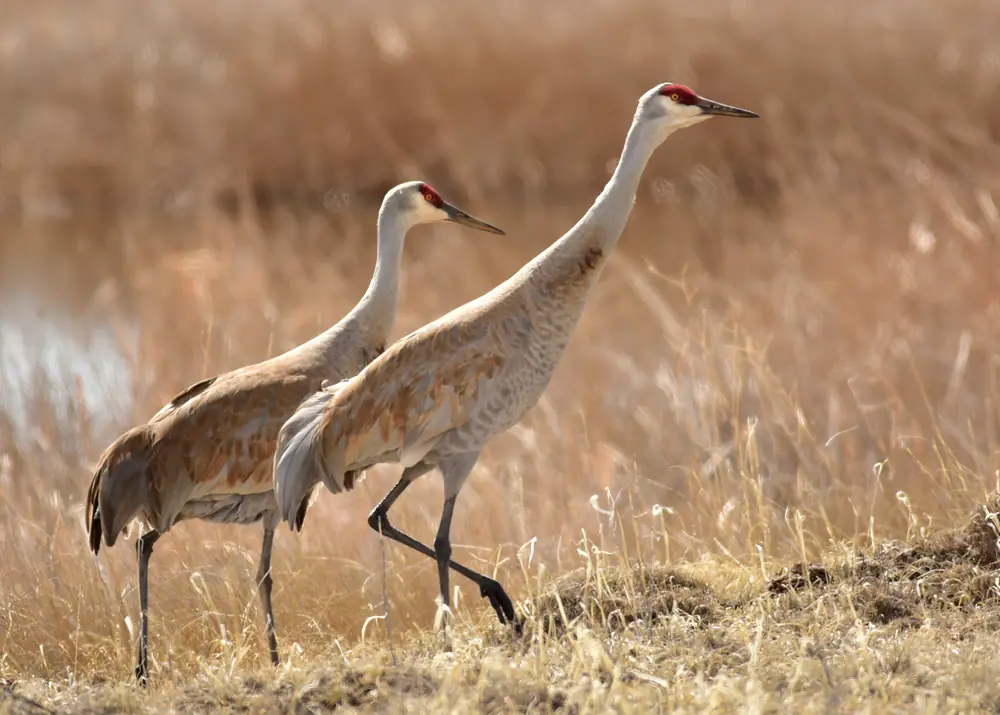
Yellowstone Forever’s field educator logged the first mountain bluebird near Mammoth on March 10 in 2024, and said the species usually appears in the first week of March. That year American robins came in mid-March, and kestrels and red-winged blackbirds on March 18, with western meadowlarks in late March. Game and Fish dates the meadowlark’s arrival to late April or early May. Both can be right, since the high country lags the lowlands. Bluebirds are cavity nesters, so an early arrival wins the best box.
-
Sandhill cranes pass through
Migration peaks in March and early April · Table Mountain Habitat Management Area, Ocean Lake, Seedskadee, the Tetons
Cowboy State Daily reported in 2025 that the crane migration peaks in March and early April, and that Wyoming sees both the Rocky Mountain and the much larger mid-continent populations. Suggested viewing sites include Table Mountain in Goshen County, Ocean Lake in Fremont County, Seedskadee National Wildlife Refuge, and Grand Teton and Yellowstone. An occasional whooping crane turns up among the flocks.
-
Bald eagles on eggs at Seedskadee
Egg laying begins in early March · Green River, Seedskadee National Wildlife Refuge
The refuge says bald eagles begin laying and incubating in early March and stay on the nest through bad weather, while trumpeter swan pairs choose and defend nest sites. Spring there starts when the first red-winged blackbirds return and the river ice softens. Stay well back from any nest.
Note the day of your first bluebird in the Naturalist’s Field Journal, in the birds I have seen plate, beside the date of your first crane or meadowlark.
What blooms and calls first when the snow retreats in Wyoming?
The first flowers appear on rocky, gravelly ground at the snowline, long before the meadows turn green. Wyoming has more than 2,500 native plant species, according to its native plant society, and the earliest are small and easy to miss.
-
Sagebrush buttercup, turkey peas and steer’s head
As the snow melts, from March at low elevations · Gravelly south-facing sagebrush slopes
Teton Science Schools names these as the three earliest wildflowers around Jackson Hole. The sagebrush buttercup has bright yellow petals against brown ground, turkey peas form low clumps of small white flowers, and steer’s head is a pinkish-white bloom that stands only an inch or two tall. Once you find one, others are usually near.
-
Pasqueflowers and Rocky Mountain bluebells
Pasqueflowers as the snow recedes; bluebells around April · Prairie and foothills
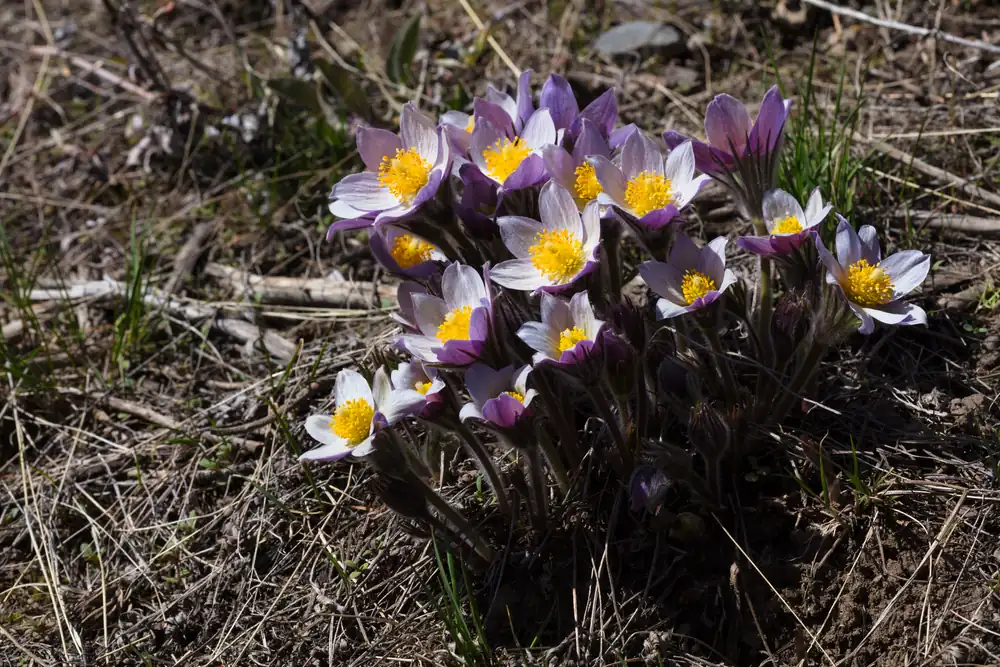
Wyoming Public Media reported that pasqueflowers, phlox and star lilies were starting to bloom in the prairie and high country as the snowpack receded, and featured Rocky Mountain bluebells blooming around April. April has been proclaimed Native Plant Month in recent years. The native plant society’s Wildflower Weekend was May 29 to 31 in 2026; the 2027 place and date were not posted.
-
Boreal chorus frogs and boreal toads
Chorus frogs call as ponds thaw; toads emerge soon after snowmelt and breed from April · Shallow, snowmelt-fed ponds
The National Park Service calls the boreal chorus frog by far the loudest amphibian in Yellowstone, though males are only about an inch long, and says their breeding depends on shallow seasonal wetlands filled by snowmelt. Game and Fish says boreal toads typically emerge shortly after snowmelt, with breeding from April to early August depending on elevation. Neither source gives a March date, so listen on the first mild evening beside a thawing pond.
Record the first date you see each flower in your journal. Over several years the notes show how the season shifts; the tree through the seasons and daily field log pages work well for it.
When is the last spring freeze in Wyoming?
Do not plant tender seedlings in March. At the warmest stations listed, the typical last freeze arrives in May, and in Jackson Hole it holds off until the second half of June. The table lists three dates per town, using the 1991 to 2020 averages from the main weather station.
| Station | One year in ten | Median | Nine years in ten |
|---|---|---|---|
| Cheyenne | May 1 | May 12 | May 26 |
| Laramie | May 21 | Jun 2 | Jun 18 |
| Casper | Apr 28 | May 12 | May 26 |
| Gillette | May 1 | May 15 | May 27 |
| Sheridan | May 7 | May 21 | Jun 6 |
| Cody | Apr 27 | May 12 | May 27 |
| Rock Springs | May 5 | May 22 | Jun 9 |
| Moose (Jackson Hole) | Jun 5 | Jun 20 | Jul 9 |
Use the Wyoming frost dates page to look up your own town. Gardeners can start hardy seeds indoors now, and wait for the date in the right-hand column before moving anything tender outside.
How cold, windy and snowy is March in Wyoming?
March is the snowiest stretch of the year for much of eastern Wyoming. The National Weather Service in Riverton says March and April are the favored months for snow east of the Continental Divide, while Jackson and Pinedale see their heaviest snow from December to early March. NOAA’s 1991 to 2020 normals show that daytime highs have climbed to the 40s by March everywhere in the table, and that snow still falls on about three days of the month in most places.
| Station | Average high | Average low | Snowfall | Precipitation | Nights below 0 °F | Snow days |
|---|---|---|---|---|---|---|
| Cheyenne | 49.1 | 25.1 | 9.7 | 0.96 | 0.4 | 3.0 |
| Laramie Regional Airport | 44.5 | 19.2 | not published | 0.48 | 1.4 | not published |
| Casper Natrona County Airport | 48.8 | 22.7 | 10.3 | 0.84 | 1.1 | 3.2 |
| Sheridan County Airport | 49.0 | 22.4 | not published | 1.02 | 1.4 | not published |
| Lander Hunt Field Airport | 48.6 | 23.4 | 14.4 | 1.29 | 0.7 | 3.0 |
| Rock Springs Airport | 43.9 | 24.1 | 6.4 | 0.58 | 0.4 | 2.3 |
| Jackson | 40.2 | 18.2 | 9.2 | 1.33 | 2.1 | 3.1 |
Wind and fire are the other March stories. On March 13 and 14, 2019, a bomb cyclone set an all-time Colorado pressure record and closed every highway through eastern Wyoming and the Nebraska Panhandle for 36 hours, per the Cheyenne office of the National Weather Service. That office also reported that through March 24, 2025, Cheyenne was having its windiest March in 22 years, with 10 high wind warnings issued by then, the second-highest count on record for March. In the other direction, after what WyoFile called the warmest winter on record, critical fire weather arrived in March 2026: a four-day red flag warning stretched from Cody to Kaycee to Evanston to Pinedale, ending the evening of March 21, and Riverton was forecast to set record highs four days running. As a measure of the water stored in the mountains, the Natural Resources Conservation Service put the statewide snowpack at 76 percent of the median on March 1, 2026, with the Yellowstone basin at 106 percent and the South Platte basin at 25 percent. NOAA’s Climate Prediction Center posts its latest outlooks at cpc.ncep.noaa.gov; check the newest one there. Our weather page handles the coming days.
How fast do the days lengthen in Wyoming in March?
Wyoming’s days lengthen fast in March. Between March 1 and March 31 the towns in the table gain between 83 minutes at Cheyenne and Laramie and 94 minutes at Sheridan, or roughly 2.8 to 3.1 minutes a day. That is among the fastest rates of the year. By March 31 every town has about 12 hours 39 minutes to 12 hours 43 minutes of daylight between sunrise and sunset.
| City | Mar 1 | Mar 31 | Gained | Per day |
|---|---|---|---|---|
| Cheyenne | 11 h 16 m | 12 h 39 m | 83 min | 2.8 min |
| Laramie | 11 h 16 m | 12 h 39 m | 83 min | 2.8 min |
| Rock Springs | 11 h 15 m | 12 h 39 m | 84 min | 2.8 min |
| Casper | 11 h 14 m | 12 h 41 m | 87 min | 2.9 min |
| Jackson | 11 h 12 m | 12 h 41 m | 89 min | 3.0 min |
| Gillette | 11 h 11 m | 12 h 43 m | 92 min | 3.1 min |
| Sheridan | 11 h 09 m | 12 h 43 m | 94 min | 3.1 min |
| Cody | 11 h 10 m | 12 h 43 m | 93 min | 3.1 min |
The figures count hours of daylight, which the move to daylight time on March 14 leaves untouched. The change shows up in the clock times of sunrise and sunset, which both slide an hour later, so the sun rises well into the morning and sets in the evening once daylight time begins. The daylight page shows any date for your own town.
What can you see in Wyoming’s night sky in March 2027?
Wyoming’s dark, high country makes March a good month for the moon and a handful of planets. All times below are Mountain time. The moon table switches from standard to daylight time, since daylight time begins on the second Sunday of the month. Planet rise and set figures here were worked out for a mid-country spot, so shift them by as much as half an hour for Wyoming.
-
The Worm Moon rises full on Sunday evening
Full at 4:44 a.m. MDT Monday, March 22; best evening is Sunday, March 21 · Any clear eastern horizon
The moon turns full before dawn, so the best look comes at moonrise the evening before, when it is already round and bright. The Old Farmer’s Almanac offers two explanations for the March moon’s name: earthworms surfacing in warming soil, or the beetle larvae that Captain Jonathan Carver reported emerging from thawing bark in the 1760s.
-
The equinox arrives Saturday, March 20
2:25 p.m. MDT · Everywhere
The sun crosses the celestial equator at 2:25 p.m. MDT, the astronomical start of spring. Day and night are close to equal that weekend, and day length stays above 12 hours until the autumn equinox.
-
Mercury and Venus before dawn, Jupiter and Mars in the evening
Mercury is farthest from the sun at 10:20 p.m. MDT on Tuesday, March 16; the best mornings are about March 8 to 25 · Low in the east-southeast before sunrise; Jupiter and Mars high in the evening
Mercury is a morning object this month, up about an hour ahead of the sun through mid-March and best on clear mornings near the 16th, low toward the east-southeast. Much brighter Venus hangs higher above it. By our own computation a slim waning crescent keeps company with Venus, roughly two degrees away, at dawn on March 4 and 5, and the nearly full moon sits beside Jupiter after dusk on March 18 and again the next night. By the same computation Mars slides to within 4.3 degrees of Jupiter late on Tuesday the 30th. Saturn, still setting two and a half hours behind the sun on March 1, disappears into twilight before April. By our computation the Pleiades sit about a degree from the crescent moon on the evening of March 13.
-
Milky Way and aurora
Milky Way core before dawn near the March 8 new moon; aurora any dark clear night · Dark sites away from town lights
The glowing galactic core clears the southeastern horizon only in the last hours before dawn this month. Calculations for 40 degrees north suggest the best nights fall between about March 5 and 16 around the new moon, with at most around an hour and a half of dark sky, and the window shrinks farther north. Aurora appears on the NOAA Space Weather Prediction Center’s 30-minute forecast when a storm arrives. Geomagnetic storms tend to cluster around the equinoxes, though no agency forecasts them months ahead.
| Phase | Date | Time |
|---|---|---|
| New moon | Monday, Mar 8 | 2:29 a.m. MST |
| First quarter | Monday, Mar 15 | 10:25 a.m. MDT |
| Full moon, the Worm Moon | Monday, Mar 22 | 4:44 a.m. MDT |
| Last quarter | Monday, Mar 29 | 6:54 p.m. MDT |
Our moon phases page shows each night’s moon, and the cloud guide helps you plan around thin cirrus that dims the stars before a storm.
What can Wyoming families do outside in March 2027?
Hardly any organizers had posted March 2027 dates when this page was written. We give usual timing and the dates the organizer has already posted, so confirm everything before the drive. Visiting another state? Our nature guides for every state may help.
-
A dawn at a sage-grouse lek
Usually late March to April; no set dates · Public leks listed in Game and Fish’s viewing guide
Children who can sit quietly in a car for an hour will love the show. Dress warmly and let the birds leave first.
-
Last sleigh rides among the elk
Through April 3, 2027, conditions permitting, daily 10 a.m. to 4 p.m. · National Elk Refuge, 532 North Cache Street, Jackson
The operator posts the 2026–27 season dates and says rides depend on conditions. Call ahead, because a warm spring can leave few elk on the refuge.
-
Walk or bike the Teton Park Road
After the snow melts and before May 1 · Grand Teton National Park
Once the road is clear, the park allows bicycles on it until cars return. Watch for plows, which keep working after late storms.
-
Count your feeder birds
Through April 30 · Your own yard
Project FeederWatch counts continue to April 30; the program stops there because its methods were built for winter feeder birds. It is a good way to learn who is at your feeder before the migrants arrive.
-
Native Plant Month in April
April; 2027 events not yet posted · Local chapters of the Wyoming Native Plant Society
The society has chapters in Teton and Sublette counties, and has run volunteer days and a statewide poster contest for grades six to eight. Look for events once April nears.
Have children sketch one bird, one track and one cloud each week in the Naturalist’s Field Journal. Our February page, what to look for in February, is a good place to compare.
Safety notes for March in Wyoming
- Hunting seasons. Mountain lion seasons under the July 2025 version of Chapter 42 end on March 31 in most hunt areas, and a few stay open into April or later. Cottontail rabbit, snowshoe hare and tree squirrel seasons close March 31, per the Chapter 11 rules dated April 22, 2026. The light goose conservation order, which has no federal duck stamp requirement, runs from February 15 to April 30 in the Central Flyway under Chapter 14. Spring turkey seasons begin in April; their 2027 dates come from the turkey chapter, so check the department before applying. Confirm everything in the current regulations.
- Orange or pink. Game and Fish requires fluorescent orange or pink for big and trophy game hunters during open firearm seasons, so a hunter after lion in March is covered. Small game and bird hunters are only urged to wear it, and so are hikers in hunting country.
- Bears. Males are leaving dens, so carry EPA-approved bear spray where you can reach it fast, keep food and birdseed locked away, hike in a group, and keep a hundred yards between you and any bear. Give a carcass a wide berth.
- Ticks. The Wyoming Department of Health says tick season approaches in spring, with people usually seeking care from May. The diseases to know are Colorado tick fever, Rocky Mountain spotted fever and tularemia; the ticks that spread Lyme disease are not known to live here. Use repellent, stay on the trail center and check yourself after a hike.
- Wind and whiteouts. March storms can close interstates fast. Check Wyoming 511 at 1-888-996-7623 before you leave, carry water, food and warm clothes, and slow down for animals on the road.
- Avalanches. Backcountry snow still lies deep in the mountains. The Bridger-Teton Avalanche Center publishes forecasts for the Tetons, Snake River Range, Salt River and Wyoming Ranges, and Togwotee Pass; read them before travel, and carry a beacon, probe and shovel.
- Thawing ice. Late-winter ice weakens first near inlets and springs. Stay off any ice you have not tested, and keep pets leashed near water.
Sources (54)
- Wyoming Game and Fish: spring is a good time to view sage grouse
- Wyoming Game and Fish: species account, greater sage-grouse
- Audubon Magazine: Birding in Wyoming
- Travel Wyoming: where to find Wyoming wildlife on the move
- Wyoming Game and Fish, Wyoming Wildlife magazine: Safe Passage
- Wyoming Migration Initiative: Red Desert to Hoback mule deer migration
- Cowboy State Daily: mobs of elk leave the National Elk Refuge (February 27, 2026)
- U.S. Fish and Wildlife Service: wildlife watching at the National Elk Refuge
- National Elk Refuge Sleigh Rides: 2026–27 season dates and hours
- Wyoming Game and Fish: shed antler and horn hunting season closed for western and southern Wyoming (January 2024)
- Wyoming Game and Fish: what do I need to know about hunting shed antlers and horns in Wyoming?
- National Park Service: first Yellowstone grizzly of 2023 and bear safety
- Wyoming Game and Fish: Wyoming bears are starting to wake up and become active (March 2024)
- National Park Service: Yellowstone safety (distances from wildlife, bear spray)
- U.S. Fish and Wildlife Service: black-footed ferret
- Wyoming Game and Fish: black-footed ferret surveys (October 2016)
- National Park Service: wolves in Yellowstone (breeding, diet)
- National Park Service: Yellowstone park roads and seasonal dates
- National Park Service: Yellowstone spring 2026 road openings
- National Park Service: Grand Teton park roads
- Yellowstone Forever: naturalist notes, spring birds (May 2024)
- Wyoming Game and Fish: western meadowlark emergence marks the beginning of spring
- Buckrail: wildlife becoming more active as spring approaches (March 2021)
- Cowboy State Daily: thousands of cranes pour into Wyoming (March 29, 2025)
- U.S. Fish and Wildlife Service: seasons of wildlife at Seedskadee National Wildlife Refuge
- Project FeederWatch: why does the season end?
- Teton Science Schools: early spring wildflowers in Jackson Hole
- Wyoming Public Media: April is Native Plant Month in Wyoming (2025)
- Wyoming Native Plant Society: annual meeting and Wildflower Weekend
- National Park Service: taking the pulse of wetlands (boreal chorus frogs)
- Wyoming Game and Fish: species account, western (boreal) toad
- National Weather Service Riverton: Wyoming snowfall climatology
- National Weather Service Cheyenne: March 13-14, 2019 blizzard
- KOWB: Cheyenne having the windiest March in 22 years (2025)
- WyoFile: heat dome, record highs and critical fire weather (March 2026)
- USDA NRCS: Wyoming Basin and Water Supply Outlook Report, March 1, 2026
- NOAA NCEI: U.S. Climate Normals 1991–2020, March monthly normals for seven Wyoming stations
- NOAA Climate Prediction Center: seasonal outlooks
- Amphibian Publishing: Wyoming frost dates
- Wyoming Game and Fish: Chapter 42, mountain lion hunting seasons (July 2025)
- Wyoming Game and Fish: Chapter 11, upland game bird and small game seasons (April 22, 2026)
- Wyoming Game and Fish: Chapter 14, migratory game bird seasons and light goose conservation order (April 22, 2026)
- Wyoming Game and Fish: spring turkey season dates news release (March 2021)
- Wyoming Game and Fish: who should wear fluorescent orange or pink when hunting?
- Wyoming Department of Health: don’t let ticks steal warm weather enjoyment (April 2024)
- Cowboy State Daily: tick season begins in Wyoming (March 2022)
- Bridger-Teton Avalanche Center
- Wyoming Department of Transportation: Wyoming 511 road conditions
- U.S. Naval Observatory: phases of the moon
- U.S. Naval Observatory: Earth’s seasons (equinox and solstice)
- Fred Espenak, AstroPixels: Sky Event Almanac 2027
- Old Farmer’s Almanac: March full moon, the Worm Moon
- NOAA Space Weather Prediction Center: aurora 30-minute forecast
- Photos via Wikimedia Commons; licenses and photographers are credited under each picture
