What to look for in nature in Wyoming this November
November is when Wyoming’s wildlife settles onto its winter ground. Bighorn rams on the Whiskey Basin slopes near Dubois begin the late-autumn clashes of their rut, trumpeter swans from interior Canada drop onto whatever rivers stay unfrozen, bald eagles crowd the Green River where kokanee salmon are spawning and dying, and elk begin filtering onto the National Elk Refuge at Jackson. With standard time back on November 1, the sun is down before five o’clock everywhere in the state by month’s end, and snow is no longer a surprise. Below, region by region and source by source: what to watch for, where, and when.
Other months in Wyoming: October, December.
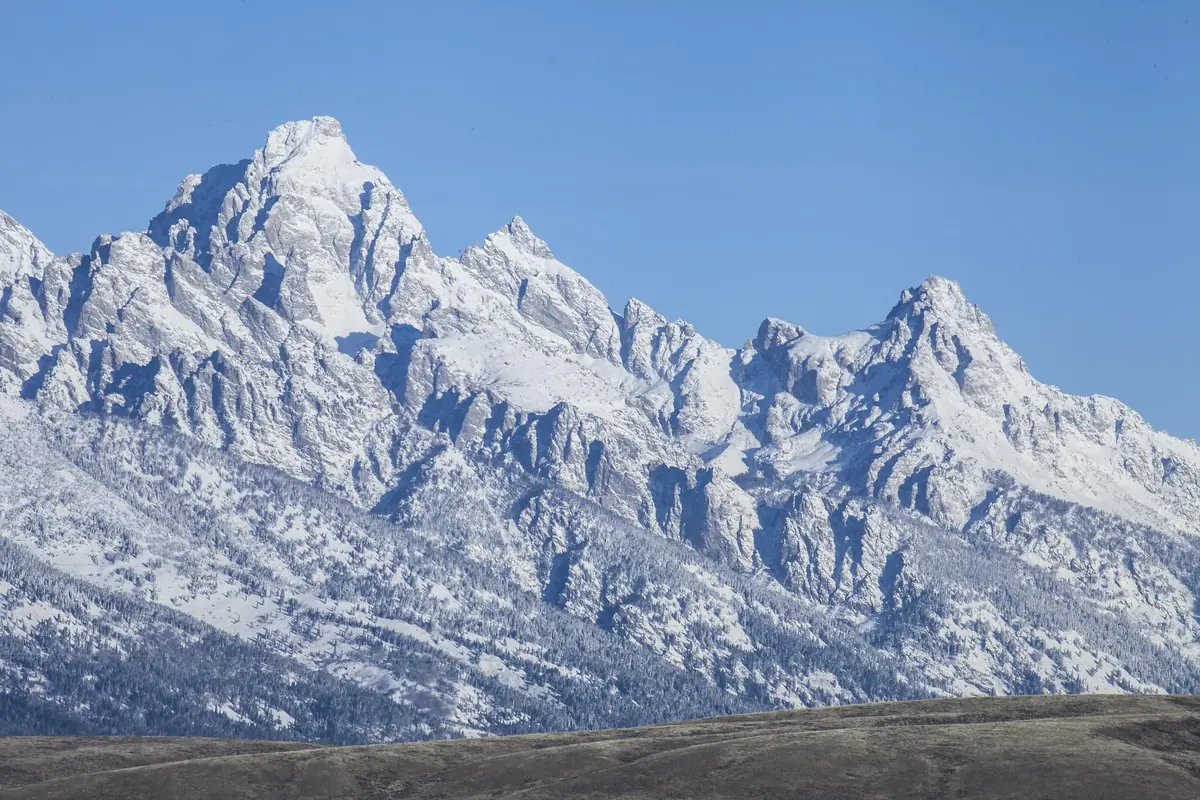
Start here
- Rams on Whiskey Mountain. Game and Fish’s field manual places the bighorn rut in late November through mid-December, when the sheep are gathered on winter range. Its Whiskey Basin habitat area, four miles east of Dubois, is the place to watch: stay in your vehicle, and go before December 1, when the area closes to motor traffic until spring.
- Swans and eagles on open water. Canadian trumpeter swans pour into western Wyoming from November on, swelling the summer flock several times over. Seedskadee National Wildlife Refuge on the Green River is a fine place to see them, along with bald eagles drawn to the late kokanee run.
- A planet pairing before dawn. Before sunrise on November 15 and 16, look east: Mars and Jupiter stand only about a degree apart, with brilliant Venus lower down. The Leonid meteors follow before dawn on the 18th, and the Beaver Moon turns full early on Tuesday the 24th.
For the Naturalist’s Field Journal, try a mammal watch page for rams, rutting mule deer and the first elk on the refuge, a birds-I-have-seen list for swans, rough-legs and rosy-finches, the tracks-to-know plate for prints in new snow, and a dusk-and-dawn watch to log how early the light now fails. Go back to wherever you sat in October and fill in “the same place twice.”
Regions used below: Southeast plains, Cheyenne and Laramie; Central Wyoming and Casper; Northeast: the Powder River Basin and Black Hills; Sheridan and the Bighorn Mountains; The Bighorn Basin and Cody; Wind River country, Riverton and Lander; Southwest: the Red Desert, Green River and Rock Springs; Jackson Hole, Pinedale, Grand Teton and Yellowstone.
When do bighorn sheep rut in Wyoming, and where can you watch?
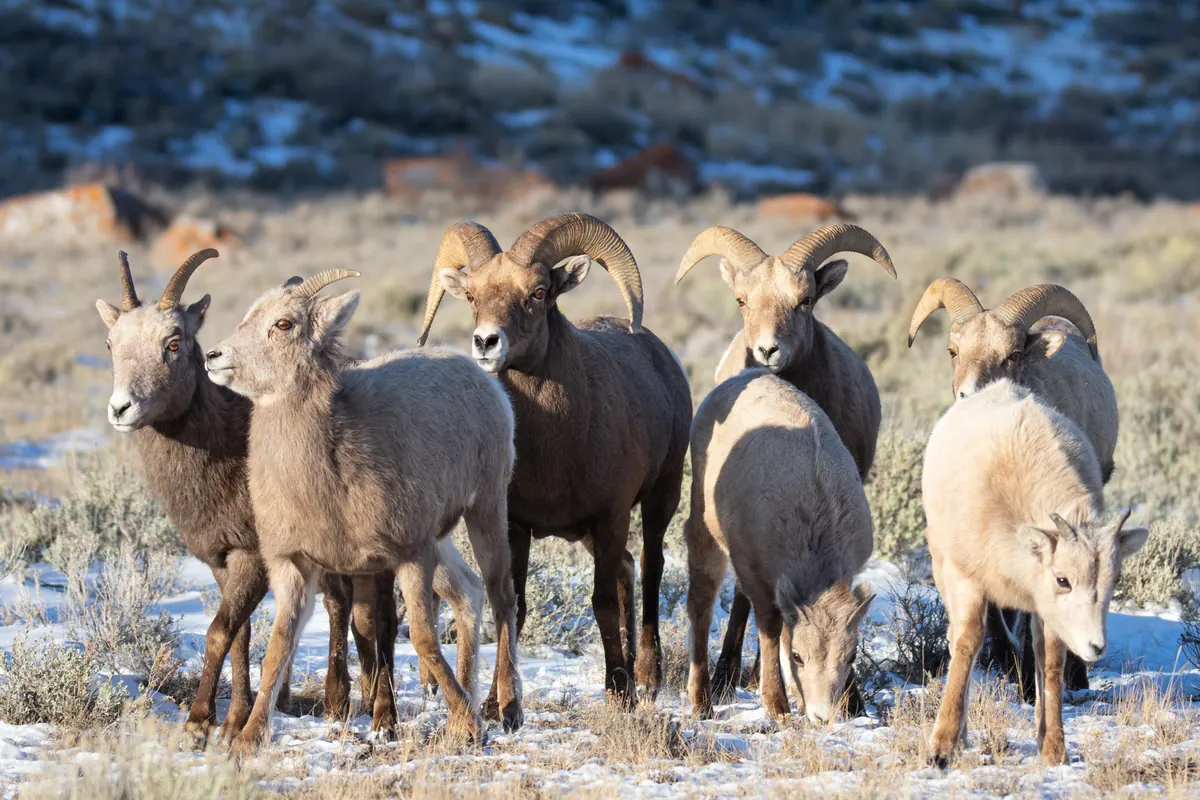
Wild sheep breed late in the year, and November is when Wyoming’s rams start butting heads in earnest. The famous place is the Whiskey Mountain herd above Dubois, but Jackson Hole has sheep too, on the cliffs of the National Elk Refuge.
-
Whiskey Basin, near Dubois
Late November through mid-December for the rut; sheep on the range into April · Whiskey Basin Wildlife Habitat Management Area, four miles east of Dubois off U.S. 26/287; Torrey Lake and the slopes of Whiskey Mountain
Game and Fish set this 12,800-acre habitat area aside in 1954 as crucial winter range for bighorns, and its page puts the herd at about 1,200 animals. Sheep can be seen from late November through April, and the department’s biologists count them from late November to mid-December, after the hunting seasons, because that is when the sheep are bunched on winter range and the rams are rutting. That is the spectacle: rams rear back and slam their curled horns together. Watch from your car, which Game and Fish says keeps disturbance down for animals that must make their fat last until spring. The area closes to motor vehicles from December 1 to May 15; foot and horse travel stay open.
-
National Bighorn Sheep Center
Winter tours may be scheduled from November through March; call ahead · 10 Bighorn Lane, Dubois
The center’s dioramas and exhibits tell the bighorn’s story, and it has run guided winter trips onto the Whiskey Mountain range. Tours depend on weather, so phone (307) 455-3429 before planning around one.
-
Miller Butte on the National Elk Refuge
From late fall through winter · The Refuge Road, northeast of downtown Jackson
The Fish and Wildlife Service says patient visitors on the Refuge Road can pick out bighorn sheep on and around Miller Butte, the rocky hill that rises out of the refuge. Sheep often come right down to the road edge here. Pull fully off the gravel and let them cross.
On a still morning you may hear the knock of horn on horn before you find the rams.
Where can you see trumpeter swans in Wyoming in November?
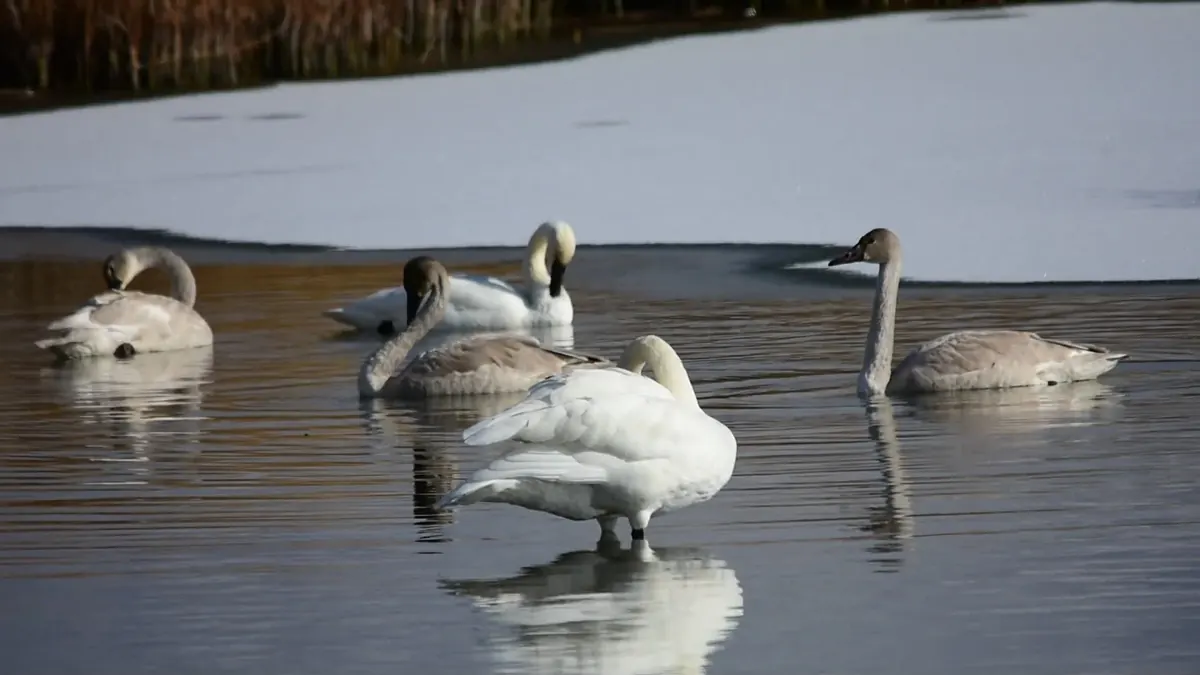
Game and Fish calls the trumpeter the largest waterfowl in the world. Wyoming has a small nesting population, and from November on, migrants from interior Canada arrive in such numbers that the state can hold four to five times more swans in winter than in summer.
-
The Canadian arrivals
Late October through November, as northern lakes freeze; they stay until March · The Snake, Salt and Green river drainages, and pockets of the Wind River basin
Game and Fish’s species account says the Canadian migrants winter in and around Greater Yellowstone, arriving from late October through November and leaving in March. Its February 2015 count found 931 trumpeters in Wyoming, about three times the September number. Because they need unfrozen water, wintering swans follow springs, dam releases and fast-flowing reaches.
-
Seedskadee on the Green River
From November, with numbers building as the winter goes on · Seedskadee National Wildlife Refuge, on the Green River below Fontenelle Dam
Releases from Fontenelle Dam keep stretches of the Green River open through the cold, and the refuge says its swan count can top 200 as other waters freeze and birds move in. Scan the slow bends for big white birds with long, straight necks.
-
Flat Creek and the Elk Refuge
Through the winter · The National Elk Refuge wetlands along U.S. 89 north of Jackson
The Fish and Wildlife Service lists trumpeter swans among the winter wildlife visitors can see on the refuge, along with elk, bighorn sheep, bald eagles and coyotes. Scan the open water of Flat Creek, which winds through the refuge beside the highway, and use the pullouts rather than stopping on the shoulder.
Telling them from tundra swans: a tundra swan is smaller and often shows a small yellow mark near the eye, while a trumpeter’s bill is all black and meets the eye in a straight line. Swans feed with their heads underwater for long stretches, so give them time.
Where do bald eagles gather in Wyoming in late fall?
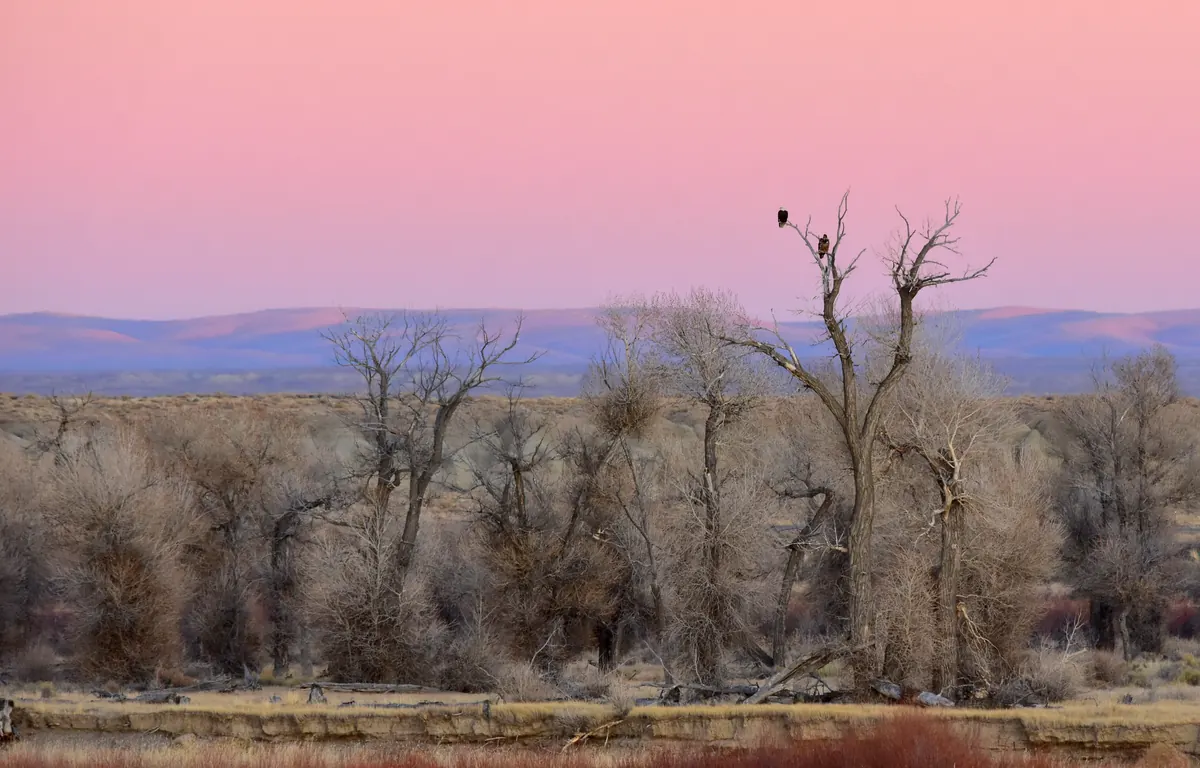
In southwest Wyoming the late fall show is a fish run. Kokanee, a landlocked form of sockeye salmon stocked in Flaming Gorge Reservoir, swim up the Green River to spawn, turn red, and die, and eagles come to eat them.
-
The late kokanee run
Game and Fish describes an early run in August and September and a late run in October and November · The Green River above Flaming Gorge, including the town of Green River’s greenbelt and the reach below Fontenelle Dam at Seedskadee
Kokanee live about four years, turn red and green, spawn once and die. The refuge describes October redds so thick that the river looks red in places, and by November the dead fish on the gravel bars draw scavengers. Brown trout spawn here in the same season. Stay off the gravel where fish are spawning.
-
Bald eagles at the feast
Fall and early winter · Cottonwoods along the Green River on Seedskadee
The refuge says bald eagles gather in the fall to catch salmon. Game and Fish notes that all of Wyoming lies within the bald eagle’s winter range, and that many adults here do not migrate at all, simply moving to wherever rivers stay open and food is easy. Check snags along the river, and look for the mottled brown young eagles too.
-
Golden eagles in sagebrush country
Through the winter · Open basins statewide, on power poles and rimrock
Game and Fish’s species account says golden eagles pass through Wyoming in September and October, likely into November, and that large gatherings of migrants can build up through the winter wherever carrion, rabbits or waterfowl are plentiful. Look for a big, uniformly brown eagle with a golden nape perched on rimrock or a power pole above the sagebrush.
Seedskadee’s roads are gravel and services are far apart; check the refuge page before a winter drive and carry water and warm layers.
When is the deer rut in Wyoming, and when do elk reach the refuge?
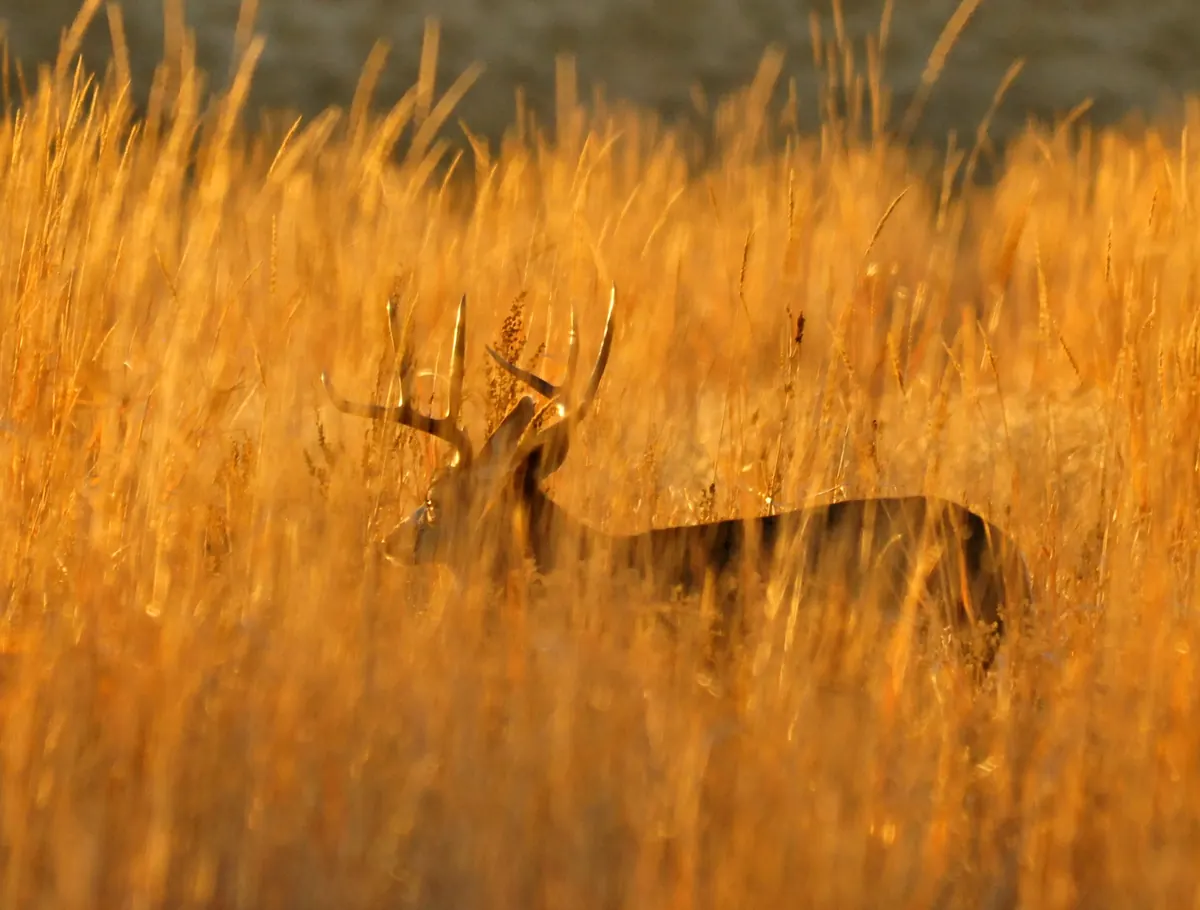
October’s migrations end on winter range, and November is courting season there. Mule deer bucks with polished antlers and swollen necks trail does through the sagebrush, and Jackson Hole’s elk start coming down to the valley floor.
-
Mule deer and white-tailed deer
Mule deer mating season runs through November and December · Winter ranges in the basins and foothills statewide; the Red Desert, the Green River valley and river bottoms
The National Park Service gives November and December as the mule deer rut, with fawns born from late May to early August. A rutting buck trails a doe with his head low and nose out, ignoring nearly everything else, traffic included. Game and Fish schedules its after-season herd counts for about November 10 to January 10, when deer have gathered on winter ranges; that same gathering puts many deer in view of the roads. White-tailed deer breed in the same weeks along northern and eastern river bottoms.
-
Elk onto the National Elk Refuge
Mostly from mid-November or early December, building into January · The National Elk Refuge, Jackson
The Fish and Wildlife Service says elk are rarely seen on the refuge until mid-November or early December, and that small groups keep arriving through December until the herd levels off for the winter. Roughly 8,000 elk spend the winter there in a typical year. The timing follows the snow: in a mild autumn the elk come later, after a hard early storm sooner. The refuge visitor center on North Cache Street in Jackson stays open all year and is the place to ask where the elk are this week.
-
Pronghorn on winter range
All month · The Upper Green River basin around Pinedale and the sagebrush basins of central and southern Wyoming
Pronghorn rut earlier in autumn; by November they are bunching into herds on wind-scoured flats where the snow stays thin. They crawl under fences rather than jump them, so a smooth bottom wire matters on winter range.
Herds you watched in October have likely reached winter ground; our October page follows the migrations that took them there.
Which winter birds come to Wyoming in November?
As the summer songbirds leave, hardy birds from the Arctic and from Wyoming’s own alpine peaks move into the towns and open country.
-
Rosy-finches at feeders
From late fall into spring · Towns and ranch yards near the mountains, especially in southeast Wyoming and the valleys below the Wind River, Teton and Absaroka ranges
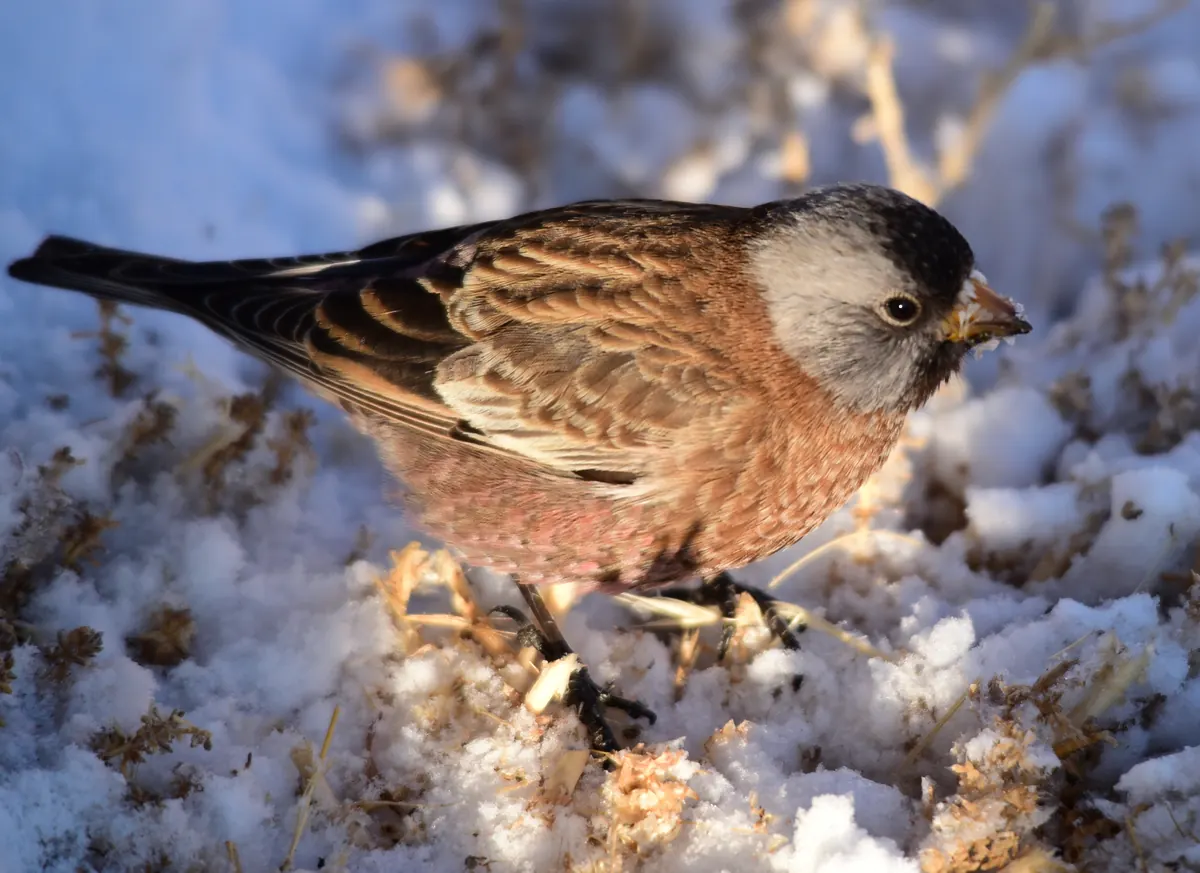
All three North American rosy-finches are on Wyoming’s list. Black rosy-finches nest on alpine cliffs in the Tetons, Wind Rivers, Absarokas, Beartooths and Bighorns, usually drop lower in October, and come into valleys and to bird feeders once snow covers the high slopes. Gray-crowned rosy-finches, the most widespread of the three, often join them in big swirling flocks. The brown-capped, a Southern Rockies bird that Game and Fish rates very rare here, nests only in the high Snowy Range. Black-oil sunflower seed on a platform feeder is the classic draw.
-
Rough-legged hawks and northern shrikes
All month and through the winter · Hay meadows, sagebrush flats and fence lines
Rough-legs from the Arctic tundra hover over hay meadows hunting voles all winter, and northern shrikes, gray with a black mask and hooked bill, watch from shrub tops and fence posts.
-
The last days of the hawk count
Through Thursday, November 5 · Commissary Ridge, north of Kemmerer
HawkWatch International’s autumn count on Commissary Ridge closes on November 5. The site is known for eagles, and by now most of the small September hawks have gone through. Check HawkWatch’s page for access first; the road and ridge may be snowy.
-
A thin cone year in the mountains
This winter · Limber, whitebark, pinyon and ponderosa pine country
In its winter forecast for 2026–27, by Tyler Hoar, the Finch Research Network reports that limber, whitebark, pinyon and ponderosa pines produced few cones this year across the interior mountain West, and that Type 2 red crossbills have left for the east as a result. The forecast does not discuss Wyoming directly, but with the pines bare, a spruce or fir stand with cones is the likelier place to find crossbills this winter.
Project FeederWatch, a joint project of Birds Canada and Cornell’s ornithology lab, starts its new season November 1; you count the birds at your feeder over two consecutive days every week or two. Other sightings can go to eBird.
What is open in Yellowstone and Grand Teton in November?
November is the quietest month in the two parks: most roads are closed to cars, oversnow travel has not begun, and the animals have the place nearly to themselves.
-
The Teton Park Road, car-free
From November 1 until spring · Grand Teton National Park, Taggart Lake Trailhead to Signal Mountain Lodge
From November 1 through April 30 this stretch is open only to non-motorized travel. Until snow buries it, that means walking, running or biking a smooth paved road under the Teton peaks with no traffic at all; later the park grooms it intermittently for skiing and snowshoeing. Leashed pets (six-foot leash at most) are allowed on the unplowed road; elsewhere the park limits them to plowed roads and parking areas. The Craig Thomas Discovery and Visitor Center is closed for the winter; in Jackson, the National Elk Refuge and Greater Yellowstone Visitor Center stays open.
-
Yellowstone between seasons
November 1 to December 15 · Yellowstone National Park
Most park roads closed to ordinary vehicles at the end of October. The exception is the road from the North Entrance at Gardiner, Montana, via Mammoth, Tower and the Lamar to Cooke City, which stays open all year and is the way in for anyone hoping to see bison, elk and perhaps wolves against new snow. Groomed roads from the West, South and East entrances open to oversnow travel on December 15, 2026, and close March 15, 2027.
-
Bears heading for their dens
Females den first, often in October; nearly all males are denned by late November · The northwest mountains, the Absarokas, the Wind Rivers and the Bighorns
Game and Fish’s black bear chapter says females usually den in October, males later, and all but a few adult males are in their dens by late November. Until the snow is deep, keep bear spray within reach, especially near hunters’ carcasses.
All dates are the Park Service’s and can shift with weather.
Has Wyoming had its first freeze by November?
Almost certainly, yes. By November every part of Wyoming has normally had its first freezing night, and usually several weeks of them. In the table below, even the right-hand column, when 90 percent of past autumns had already frozen, falls no later than October 19, at Casper 1 SW. Cheyenne, Gillette 4 SE and Cody have the latest medians, October 1; Rock Springs Airport’s is September 28, Riverton’s September 24, Sheridan’s airport September 23 and Laramie’s September 15. At Moose, on the floor of Jackson Hole, half of all years have frozen by August 31. No region is still waiting in an ordinary year. For your own town’s dates, see our Wyoming frost dates.
| Station | One year in ten | Median | Nine years in ten |
|---|---|---|---|
| Cheyenne | Sep 18 | Oct 1 | Oct 14 |
| Laramie Regional Airport | Sep 3 | Sep 15 | Sep 27 |
| Casper 1 SW | Sep 18 | Oct 1 | Oct 19 |
| Gillette 4 SE | Sep 15 | Oct 1 | Oct 14 |
| Sheridan County Airport | Sep 9 | Sep 23 | Oct 6 |
| Cody | Sep 17 | Oct 1 | Oct 14 |
| Riverton (Wind River Basin) | Sep 11 | Sep 24 | Oct 7 |
| Rock Springs Airport | Sep 14 | Sep 28 | Oct 9 |
| Moose (Jackson Hole) | Aug 12 | Aug 31 | Sep 13 |
What November adds is deeper cold. Average lows at the main stations sink into the high teens and low twenties, the ground begins to freeze, and any garden hose still connected should come in.
How short do Wyoming’s days get in November?
Wyoming loses roughly an hour of daylight over November, with the northern towns losing slightly more. Cheyenne goes from 10 h 24 m on November 1 to 9 h 28 m on the 30th, 56 minutes less, while Sheridan and Cody each lose 65 minutes and finish the month with only about nine hours and five minutes between sunrise and sunset. By November 30 the sun sets between about 4:30 and 4:50 p.m. across the state, earliest in Sheridan and latest in Jackson and Rock Springs, which sit far west in the time zone. The clock change makes it feel sudden: when Mountain Daylight Time ends at 2 a.m. on November 1, a sunset that came near 6 p.m. on Saturday arrives about an hour sooner.
| City | Nov 1 | Nov 30 | Lost | Per day |
|---|---|---|---|---|
| Cheyenne | 10 h 24 m | 9 h 28 m | 56 min | 1.9 min |
| Laramie | 10 h 23 m | 9 h 26 m | 57 min | 2.0 min |
| Rock Springs | 10 h 22 m | 9 h 25 m | 57 min | 2.0 min |
| Casper | 10 h 17 m | 9 h 17 m | 60 min | 2.1 min |
| Jackson | 10 h 15 m | 9 h 13 m | 62 min | 2.1 min |
| Gillette | 10 h 12 m | 9 h 08 m | 64 min | 2.2 min |
| Sheridan | 10 h 10 m | 9 h 05 m | 65 min | 2.2 min |
| Cody | 10 h 11 m | 9 h 06 m | 65 min | 2.2 min |
An afternoon walk begun at 3:30 may end in twilight. Look up your own town on our daylight page.
How cold and snowy is November in Wyoming, and what might El Niño bring?
November is the month Wyoming trades autumn for early winter. NOAA’s 1991–2020 normals put average afternoon highs at 47.5 °F in Cheyenne, 46.7 in Sheridan, 45.9 in Casper, 44.3 in Lander, 42.5 in Laramie and 40.5 in Rock Springs, with average lows from 24.7 °F at Cheyenne down to 18.0 at Laramie. Total moisture is small (0.40 inch at Rock Springs, 0.61 at Cheyenne, 0.78 at Lander), but light snow piles up out of proportion: normal November snowfall is 6.0 inches at Rock Springs, 7.5 at Cheyenne, 8.9 at Casper and 10.6 at Lander. Add wind, and a dusting on the I-80 corridor can become a ground blizzard.
Last winter set a record: the Weather Service office in Riverton reported that all nine climate stations it follows had their warmest winter on record in 2025–26, and Lander measured only 8.2 inches of snow from December through February. This year the Pacific is swinging toward El Niño; NOAA’s ENSO forecasters, writing on September 10, give better than nine chances in ten that the event becomes very strong by winter. NOAA’s broad El Niño pattern is milder across the northern states and stormier across the southern tier, with Wyoming near the boundary. Mike Natoli of the Weather Service in Cheyenne told WyoFile in September that calmer winters with fewer high-wind events are the most reliable local effect, that the south of the state leans wetter and the north, above all the northwest, drier, and that big snows may come more in fall and spring than in midwinter. The Western Regional Climate Center calls the El Niño signal in southern Wyoming ambiguous, so read all this as shifted odds. Wyoming’s odds for December through February get their official NOAA treatment on October 15, in the Climate Prediction Center’s seasonal maps.
Our weather page has the local forecast for any Wyoming town.
What can you see in Wyoming’s night sky in November?
Long, dry November nights at Wyoming’s altitude are superb for stargazing if you dress for a wind chill near zero. Every time here is Mountain Standard Time, which the whole state keeps from November 1.
-
The Beaver Moon, a modest supermoon
Full at 7:53 a.m. MST on Tuesday, November 24 · Rising in the east-northeast around sunset
Full moon comes at breakfast time on Tuesday, so the moon rising on Monday evening and again on Tuesday evening looks equally round to the eye. It makes the supermoon lists only narrowly, since perigee follows about 30 hours later; the Cold Moon in December comes closer still. Before dawn on the 24th the moon also slips across the Pleiades, though its glare hides most of the cluster.
-
Leonids and Taurids
Leonids best before dawn on Wednesday, November 18; Taurid peaks around November 5 and 12 · Any dark site; Leo is high in the southeast before dawn, Taurus well up by late evening
From a dark ranch road, a Leonid rate of perhaps 15 per hour is the most to hope for; forecasters see no outburst in 2026. The first-quarter moon is down soon after midnight, so the hours before dawn on the 18th (and the 17th and 19th) are dark just when Leo climbs highest. The two Taurid streams, crumbs of Comet Encke, are weaker, perhaps five to ten an hour, but their meteors are slow and now and then one blazes as a fireball. With the moon new on the 9th, the week between those peaks has dark evenings.
-
Planets at dawn
All month; Mars and Jupiter closest on the mornings of November 15 and 16 · East and southeast before sunrise
Venus has become the morning star, a little higher every dawn and at its most dazzling in the last week of the month; on the 9th, look for the star Spica just a degree from it. Jupiter and dimmer, orange Mars come up near midnight in Leo and close to about 1.2 degrees apart by the 15th and 16th. Mercury shows best from about the 18th to the 25th, low in bright twilight. On the morning of November 2, a moon just under half lit hangs beside Mars, with Jupiter and the Beehive cluster close by.
-
Saturn, Uranus and a chance of aurora
Evenings all month; Uranus at opposition November 25 · Saturn south and southwest after dusk; Uranus in Taurus; aurora low in the north
After dusk, Saturn alone among the bright planets is up, glowing a steady pale yellow. Uranus is at its nearest on the 25th, a binocular object near the Pleiades, though this month’s full moon sits close by. The sun has passed the top of its 11-year cycle yet still throws off storms, so northern lights remain possible on long November nights, especially in northern Wyoming; NOAA’s Space Weather Prediction Center posts alerts.
| Phase | Date | Time |
|---|---|---|
| Last quarter | Sunday, Nov 1 | 1:28 p.m. MST |
| New moon | Monday, Nov 9 | 12:02 a.m. MST (just after midnight at the end of Sunday, Nov 8) |
| First quarter | Tuesday, Nov 17 | 4:48 a.m. MST |
| Full moon, the Beaver Moon | Tuesday, Nov 24 | 7:53 a.m. MST (looks full the evenings of Nov 23 and 24) |
| Last quarter | Monday, Nov 30 | 11:08 p.m. MST |
Moonrise and moonset times for any night are on our moon phase calendar, and the cloud cover map shows whether the sky will cooperate.
What can Wyoming families do outside in November?
These programs were on the hosts’ own calendars as of October 2, 2026. Details can change and some need registration or a fee, so confirm with the organizer first. Our nature guides cover other states too.
-
Cheyenne Botanic Gardens
Fridays, November 6, 13, 20 and 27 at 11 a.m.; Tuesday, November 3, 6 to 7:30 p.m.; exhibits through Saturday, November 7 · Cheyenne Botanic Gardens, Lions Park, Cheyenne
A free Friday story time with a small project for young children; a candle-lighting Día de los Muertos remembrance workshop on November 3 ($10); and free exhibits on Día de los Muertos and the Manito Trail through November 7. The conservatory is a warm, green refuge on a cold afternoon.
-
Murie Audubon, Casper
Thursday, November 12, 7 p.m.; Saturday, November 14 · Izaak Walton League lodge at Fort Caspar; Casper Mountain
Casper’s Audubon chapter holds its monthly meeting on November 12 and lists a Casper Mountain field trip, starting from the Game and Fish office, on November 14; ask the chapter for the start time.
-
Laramie Audubon programs
Monday, November 9, 6 p.m.; Wednesday, November 18, 6:30 p.m. · Trinity Lutheran Church, Laramie
A talk on invasive plants in backyards on November 9, and on November 18 an introduction to Laramie’s Dark Skies Advocates with a presentation on how artificial light affects moths, a good fit for a month of long nights.
-
Buffalo Bill Center of the West
Friday, November 13, 10 to 11 a.m. · Plains Indian Museum, Cody
Wiggly West Tours are unhurried museum visits for children 5 and under with their grown-ups. The Draper Natural History Museum in the same building is worth the rest of the morning. Regular admission applies.
-
Places to go any day
All month · Jackson, Thermopolis, Grand Teton
The National Elk Refuge visitor center in Jackson gives out Junior Naturalist books and patches and lends binoculars; afterwards, drive the Refuge Road to look for bighorns. Bikes and strollers can use the car-free Teton Park Road while it is still clear. In Thermopolis, Hot Springs State Park’s free bath house and steaming terraces are at their best on a frosty morning.
-
Science you can help with
From November 1 · Your yard or window
Sign up for Project FeederWatch and count rosy-finches, juncos and chickadees through April, send sightings to eBird, or measure snowfall for CoCoRaHS, the volunteer rain and snow network. The UW Biodiversity Institute also lists community science projects for all ages.
A notebook of tracks, birds and first snowfalls makes November feel less dark. Our field journal for young naturalists has plates for exactly that.
Safety notes for November in Wyoming
- Hunting seasons. Seasons are set hunt area by hunt area, so read the 2026 regulations for the exact place you plan to be. In the Black Hills (deer hunt areas 1 to 6) the general deer season runs November 1 to 20; many white-tailed deer seasons elsewhere close November 30, and some antlerless seasons last into December or January. Elk seasons continue over much of the state: in Grand Teton National Park (area 75) the limited antlerless hunt runs November 14 to December 6, and on the National Elk Refuge (area 77) hunting runs November 1 to 25, with a youth-only hunt November 26 to 29 and another period November 30 to December 6. Pheasant season opens November 1 in most areas, Pacific Flyway duck season runs to January 8, and fall turkey season is open.
- Orange or pink. Game and Fish requires big and trophy game hunters in an open firearm season to wear an outer garment of fluorescent orange or fluorescent pink (a cap, jacket or vest, for example) visible from all sides; camo in those colors is legal. The rule also covers archers and crossbow hunters when a firearm season is open, wild bison hunters, and pheasant hunters on Game and Fish habitat areas and the Reclamation lands at Glendo. Hikers and dog walkers in hunting country should wear it as well.
- Thin first ice. Ponds can glaze over well before the ice will hold anyone. Game and Fish’s guideline is at least four inches of clear ice, doubled for white or cloudy ice; reservoir ice is weakened by shifting water levels and wind. Carry ice picks, test often, and stay off frozen rivers.
- Storms and dark. Wind-blown snow regularly closes I-80 and mountain passes; check WYDOT road reports and keep a blanket, water, food and a shovel in the car. With the sun setting around 4:30 to 4:50 p.m. by late November, start hikes early and carry a headlamp.
- Wildlife on the roads. Rutting bucks and wintering herds cross highways at dawn and dusk, now the commuting hours. Slow down.
Sources
- Wyoming Game and Fish: Whiskey Basin Wildlife Habitat Management Area (bighorn sheep, viewing season, December 1 to May 15 vehicle closure)
- Wyoming Game and Fish: bighorn sheep chapter, handbook of biological techniques (classification during the rut, late November to mid-December)
- U.S. Fish and Wildlife Service: wildlife watching on the National Elk Refuge (bighorns at Miller Butte, elk arrival)
- U.S. Fish and Wildlife Service: Where are the elk? (National Elk Refuge)
- U.S. Fish and Wildlife Service: National Elk Refuge events and Junior Naturalist program
- Wyoming Game and Fish: trumpeter swan species account
- Wyoming Game and Fish: how and why Game and Fish surveys trumpeter swans
- U.S. Fish and Wildlife Service: Seedskadee National Wildlife Refuge
- U.S. Fish and Wildlife Service: Seedskadee NWR featured species and seasons (kokanee, eagles, swans)
- Wyoming Game and Fish: local students learn about kokanee salmon spawning in the Green River
- Wyoming Game and Fish: bald eagle species account
- Wyoming Game and Fish: golden eagle species account
- National Park Service: mule deer in Yellowstone (rut timing)
- Wyoming Game and Fish: mule deer chapter, handbook of biological techniques (postseason classification timing)
- Wyoming Game and Fish: black rosy-finch species account
- Wyoming Game and Fish: brown-capped rosy-finch species account
- National Audubon Society field guide: rough-legged hawk
- HawkWatch International: Commissary Ridge HawkWatch
- Finch Research Network: winter finch forecast 2026–2027 (Tyler Hoar)
- Project FeederWatch (Cornell Lab of Ornithology and Birds Canada)
- eBird: Wyoming region explorer
- National Park Service: winter in Grand Teton (Teton Park Road non-motorized November 1 to April 30, pets)
- National Park Service: Grand Teton operating hours and seasons
- National Park Service: Yellowstone park roads and seasonal dates, 2026–27
- Wyoming Game and Fish: black bear chapter, handbook of biological techniques (denning dates)
- Wyoming Game and Fish: hunting and fishing in bear country
- Amphibian Publishing: Wyoming frost dates (NOAA 1991–2020 normals)
- NOAA NCEI: U.S. climate normals 1991–2020, monthly normals for Cheyenne, Casper, Lander, Laramie, Rock Springs and Sheridan
- U.S. Naval Observatory: sun and moon rise and set data
- WyoFile: Wyoming just wrapped up its warmest winter ever (March 3, 2026; NWS Riverton)
- NOAA Climate Prediction Center: ENSO diagnostic discussion, September 10, 2026
- NOAA Climate Prediction Center: typical El Niño winter impacts over North America
- NOAA Climate Prediction Center: seasonal outlooks (winter outlook due October 15, 2026)
- WyoFile, via County 17: what will ‘super’ El Niño bring to Wyoming? (September 2026; NWS Cheyenne)
- Western Regional Climate Center: El Niño and La Niña in the West, frequently asked questions
- U.S. Naval Observatory: phases of the moon
- International Meteor Organization: 2026 meteor shower calendar
- EarthSky: what is a supermoon? (2026 full supermoons)
- NASA JPL Horizons: planetary positions (Mars and Jupiter conjunction, Venus, Uranus opposition)
- NOAA Space Weather Prediction Center: solar cycle progression
- Cheyenne Botanic Gardens: events, November 2026
- Murie Audubon Society, Casper: events
- Laramie Audubon Society: events, summer and fall 2026
- Buffalo Bill Center of the West: events, November 2026
- University of Wyoming Biodiversity Institute: community science
- CoCoRaHS: Community Collaborative Rain, Hail and Snow Network
- Wyoming Game and Fish: Chapter 6, deer hunting seasons, 2026
- Wyoming Game and Fish: Chapter 7, elk hunting seasons, 2026
- Wyoming Game and Fish: Chapter 11, upland game bird and small game seasons, 2026
- Wyoming Game and Fish: Chapter 14, migratory game bird seasons, 2026–27
- Wyoming Game and Fish: Chapter 20, wild turkey seasons, 2026
- Wyoming Game and Fish: who should wear fluorescent orange or pink when hunting?
- Wyoming Game and Fish: stay safe on the ice this winter
- Wyoming Department of Transportation: road and travel information
- Photos via Wikimedia Commons; licenses and photographers are credited under each picture
