What to look for in nature in Wyoming this October
October is the month Wyoming’s animals start walking. Mule deer leave the Hoback and the Wyoming Range for the Red Desert, pronghorn file out of Grand Teton toward the Upper Green, elk drift down toward the National Elk Refuge, and hawks and eagles ride the wind south over Commissary Ridge. Across most of the state the first frost is already behind it when October starts, the park roads start closing on the 12th, and the rifle seasons fill the sagebrush with hunters in orange and pink. Below, section by section: what is happening, where to see it, and which agency or observer says so.
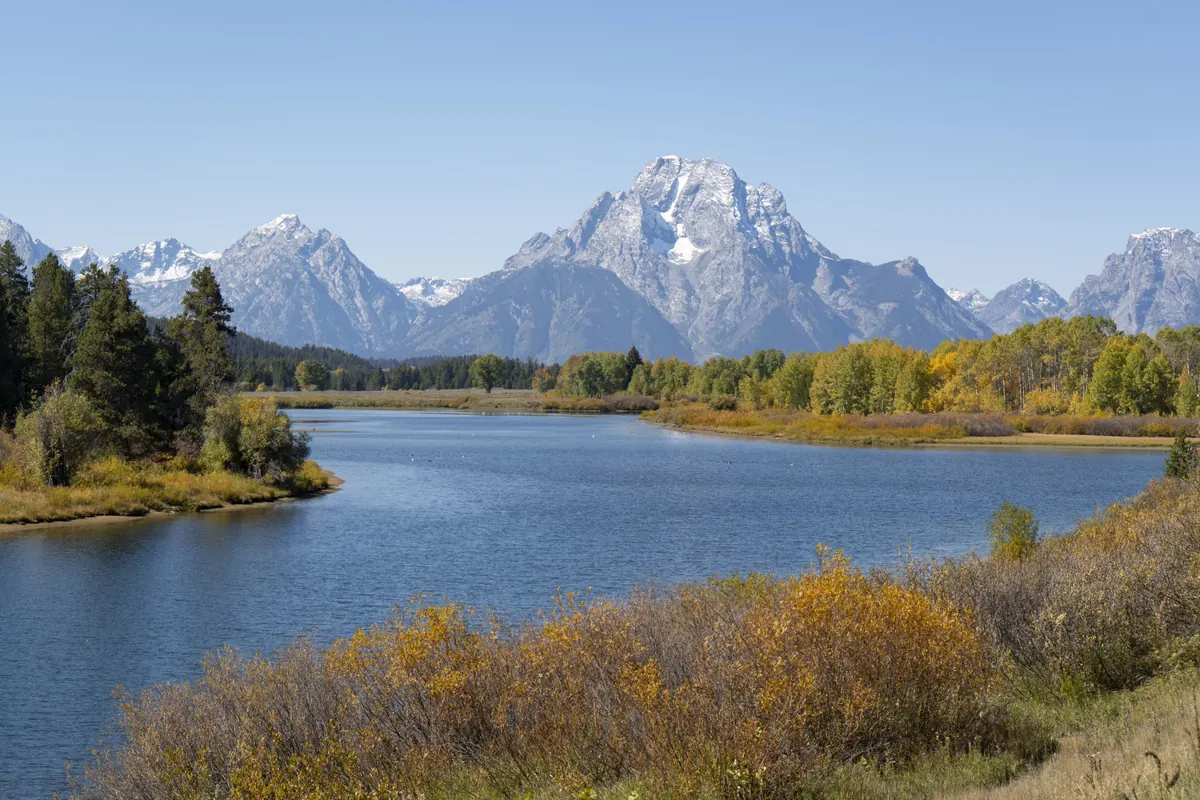
Start here
- The long walks south. The Red Desert mule deer, whose one-way trip from the Hoback Basin is about 150 miles, and the Grand Teton pronghorn, which cross Trappers Point west of Pinedale on their way to the Upper Green River basin, are both on the move in autumn. Watch the sagebrush flats and the highway shoulders around Pinedale, and slow down.
- The parks’ last open weeks. Dunraven Pass in Yellowstone is scheduled to close for the season on October 12, and most other park roads on October 31. In Grand Teton the Jenny Lake Visitor Center closes October 12 and the Teton Park Road shuts for winter at the end of the month. The elk rut winds down by about mid-October.
- Jupiter comes back from behind the moon. Early on Tuesday, October 6, the waning crescent climbs over eastern and central Wyoming with Jupiter already hidden behind it. Around 3:10 a.m. MDT the planet pops back out beside the dark edge. Orionid meteors follow before dawn on the 21st and 22nd, then the Hunter’s Moon, full on the night of Sunday the 25th.
Keep a record: use the tracks-to-know plate in the Naturalist’s Field Journal for deer and pronghorn prints in the first skiff of snow, a birds-I-have-seen list for hawks and eagles, a seeds-pods-and-cones page for sagebrush seed heads and pine cones, and a map-of-sounds page for a bugling elk or a honking flock overhead. Write the date and place on every entry.
Regions used below: Southeast plains, Cheyenne and Laramie; Central Wyoming and Casper; Northeast: the Powder River Basin and Black Hills; Sheridan and the Bighorn Mountains; The Bighorn Basin and Cody; Wind River country, Riverton and Lander; Southwest: the Red Desert, Green River and Rock Springs; Jackson Hole, Pinedale, Grand Teton and Yellowstone.
When do mule deer and pronghorn migrate in Wyoming?
Wyoming is where biologists first put numbers on how far big-game animals really walk, and autumn is the southbound half of the story. The Wyoming Migration Initiative at the University of Wyoming has mapped the routes with GPS collars and published them as an atlas of the state’s ungulate migrations. No source gives a fixed calendar date: the animals leave when cold and snow push them off the summer range.
-
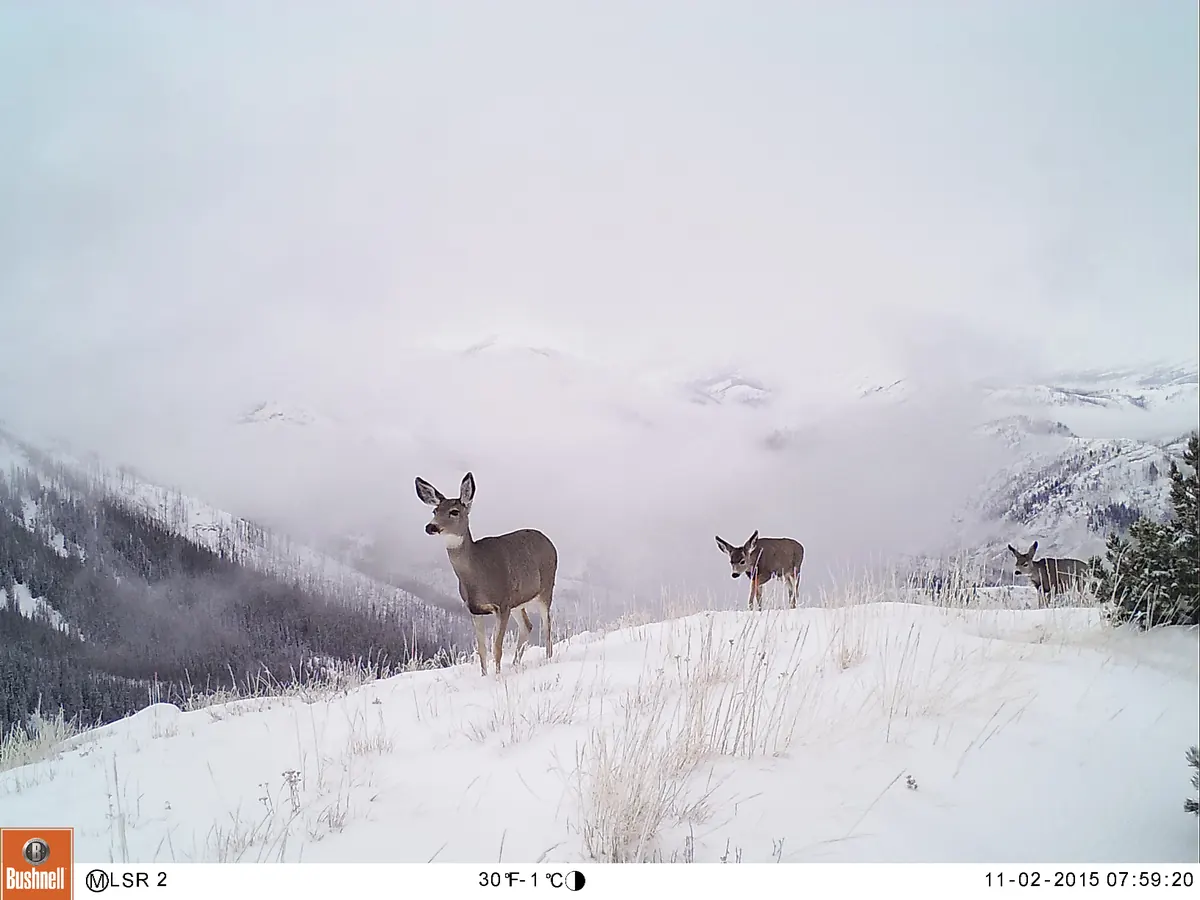
Red Desert to Hoback mule deer
Autumn, as snow comes to the high country; the trip south can take weeks · From the Hoback Basin south of Jackson, through the Wyoming Range foothills and the Green River valley, to the Red Desert north of Rock Springs
This is the longest mule deer migration ever recorded: about 150 miles each way, or a 300-mile round trip. The Wyoming Migration Initiative found that the collared deer spend around four months of every year migrating, crossing sand dunes, rivers, lakes, several highways and more than 100 fences. Look for small groups in sagebrush at dawn and dusk, and for fresh tracks after the first light snow.
-
Path of the Pronghorn
Autumn, before deep snow settles on Jackson Hole · From Grand Teton National Park over the Gros Ventre divide to the Upper Green River basin; Trappers Point, six miles west of Pinedale
Every fall a small herd of pronghorn that summers in Grand Teton leaves the park for the sagebrush basins around Pinedale, because snow in Jackson Hole piles up too deep for them to survive a winter there. Teton Science Schools puts the distance at about 100 miles; a 2012 report in High Country News described a trek of roughly 120 miles attempted by 300 to 400 animals. The narrowest point is Trappers Point, where the Green and New Fork rivers pinch the route into an hourglass and, in HCN’s words, thousands of pronghorn cross the highway each spring and fall.
-
Where the routes meet the roads
All month, worst at dawn, dusk and after dark · U.S. 191 around Pinedale, the Interstate 80 corridor and highways crossing sagebrush country
Interstate 80, fenced on both sides, is a wall across several routes, and the Wyoming Migration Initiative lists barrier projects along it among its current work. Where one pronghorn or deer crosses a road, others usually follow.
Watch from a pullout with binoculars and give the animals room; a deer that has already walked 100 miles has no calories to waste running from people.
What changes in Yellowstone and Grand Teton in October?
October is the quiet shoulder in the northwest corner. The summer crowds are gone, bulls are still bugling through about mid-month, and one road after another closes for winter. All of these dates come from the National Park Service and can change with the weather; an early storm can close a pass before its scheduled date.
-
Yellowstone road closures
Dunraven Pass closes October 12; most roads close October 31 · Yellowstone National Park
The park lists Dunraven Pass, the high road between Canyon and Tower Fall, as open through October 12, 2026, and most other roads, including the East Entrance over Sylvan Pass, through October 31. The Beartooth Highway northeast of the park is open until mid-October, weather permitting. The one road the park keeps open to ordinary cars all year runs from the North Entrance at Gardiner through Tower Junction and the Lamar Valley to Cooke City.
-
Grand Teton closures
October 10, October 12 and October 31 · Grand Teton National Park
The Gros Ventre Campground and Colter Bay RV Park close October 10, the Jenny Lake Visitor Center October 12, and the Craig Thomas Discovery and Visitor Center at Moose October 31. The Park Service lists October 31 as the start of the Teton Park Road’s winter closure to cars.
-
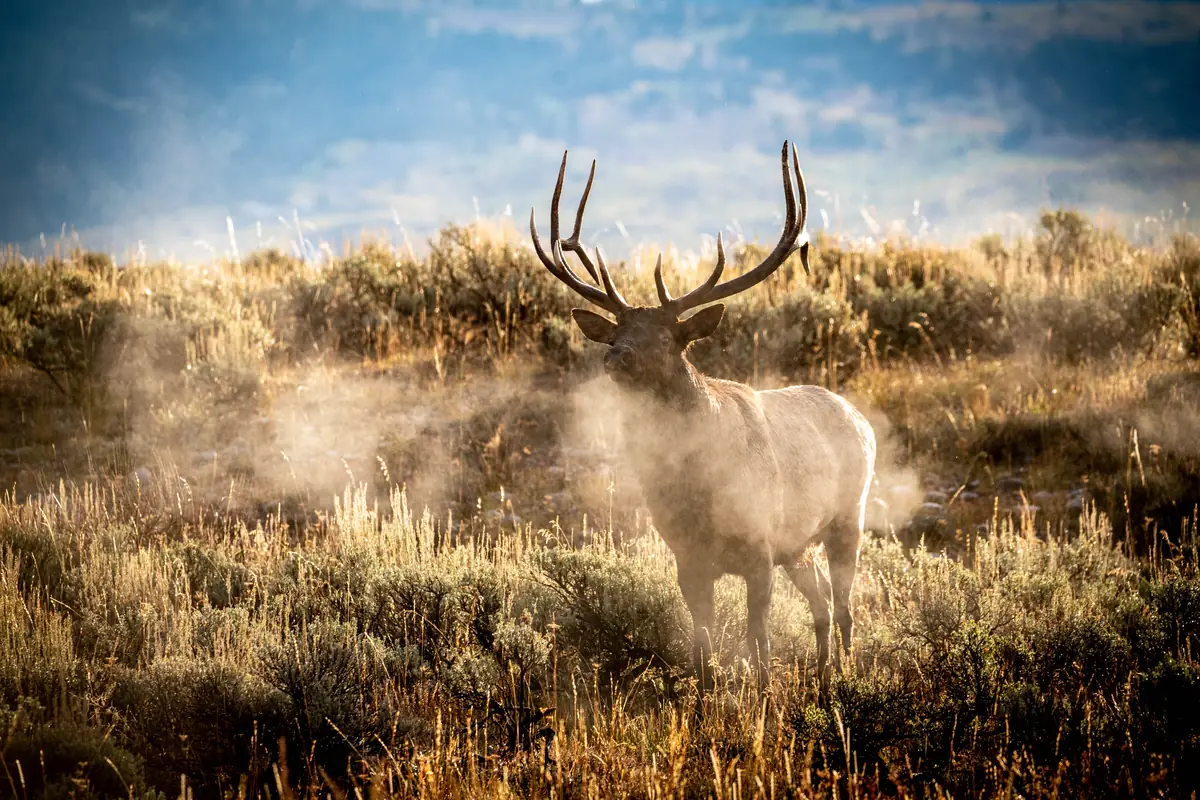
The end of the elk rut
Early September to about mid-October · Yellowstone’s northern range, including Mammoth Hot Springs, and the Madison River; meadows in Grand Teton
The Park Service gives the rut as early September to mid-October, which leaves roughly the first fortnight of October for hearing bulls bugle. A bull will challenge anything it sees as a rival, including a car. Yellowstone’s rule is to stay at least 25 yards from elk at all times.
-
Elk heading for the refuge
October through December · National Elk Refuge, on the north edge of Jackson
As snow deepens between October and December, elk leave the high country for lower ground in Jackson Hole, looking for food and shelter, and many spend the winter on the refuge. The Fish and Wildlife Service has released a draft bison and elk management plan and environmental impact statement for the refuge, and it is taking public comments through Tuesday, October 13, 2026.
What birds are migrating through Wyoming in October?
In October the birds worth a drive are raptors and water birds: hawks and eagles funneling down a windy ridge north of Kemmerer, and ducks, geese and swans on whatever water stays open.
-
Commissary Ridge HawkWatch
Counts run August 27 to November 5; the busiest weeks are late September into mid-October · South end of Commissary Ridge, about 15 miles north of Kemmerer off Wyoming 233
HawkWatch International has run a standardized count here since 2002, the state’s first long-term raptor migration site. Crews typically count between 3,000 and 4,300 migrants a season across 17 or more species; the three most common are red-tailed, sharp-shinned and Cooper’s hawks, which peak from late September to mid-October. The ridge is also known for northern species, especially bald eagles. By October 23 last year the crew had tallied 4,079 birds. Visitors are welcome; the camp is about seven miles in from Wyoming 233 near the Lake Viva Naughton dam, and HawkWatch warns it averages twice the wind of its other count sites.
-
Ducks, geese and swans
Through the month · Seedskadee National Wildlife Refuge on the Green River, the reservoirs and any open water
Waterfowl hunting seasons give a rough guide to when ducks are around: they opened September 26 west of the Continental Divide and in the southeast and northeast, and open October 3 in the Bighorn Basin, the Wind River country, Natrona, Converse, Goshen and Platte counties. At Seedskadee, the cottonwood and shrub stretches of the river are the refuge’s tip for migration-time birding, and trumpeter swans live there. Northern trumpeters drift south only as their lakes freeze.
-
Sandhill cranes
Into mid-October in the Wind River basin; into November on the eastern plains · Fields around Riverton and Boysen, and the eastern counties
Game and Fish keeps sandhill crane hunting open until October 18 in its Riverton–Boysen area and until November 8 across the eight eastern counties, which gives a sense of how late migrating cranes stay. Listen for their rolling calls high overhead on calm mornings.
-
Rough-legged hawks arrive
Late in the fall · Open grassland, hay meadows and fence lines statewide
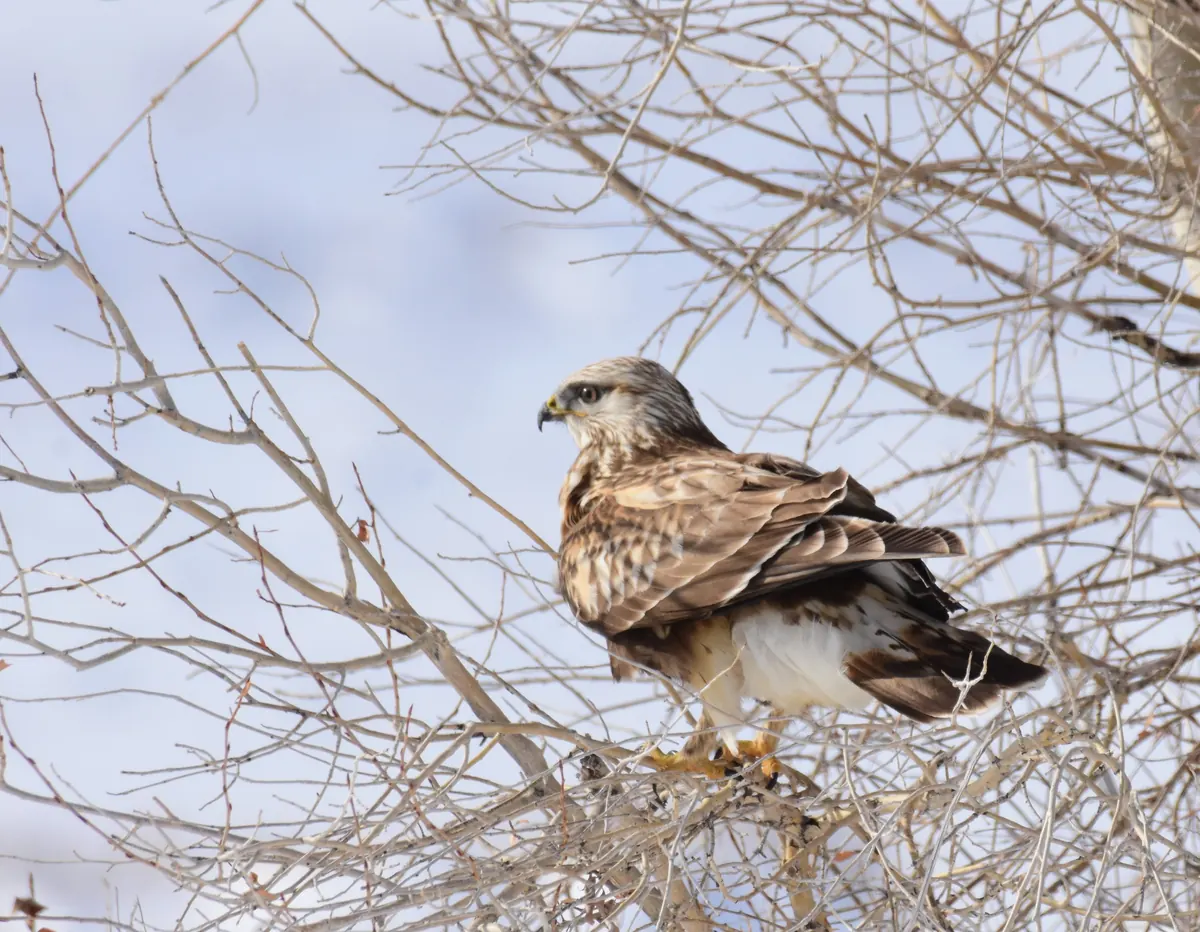
These Arctic-nesting hawks migrate late in fall, so the first ones show up over Wyoming’s open country as October goes on. Look for a hawk hovering in one spot over a field, facing the wind; red-tails rarely do that for long. Legs feathered to the toes are a key field mark.
-
Townsend’s solitaires and Clark’s nutcrackers
All month · Juniper and limber-pine slopes; high whitebark pine forests
The solitaire, a slim gray thrush, stakes out a patch of juniper berries to guard all winter; a soft, bell-like call note gives it away. Up high, Clark’s nutcrackers bury whitebark pine seeds to eat later. The tree depends almost entirely on them to plant its seeds, and it has been listed as threatened since December 2022.
eBird’s Wyoming pages show what other birders are seeing county by county, which is the quickest way to learn when the first rough-legs or swans turn up near you.
Where do the big brown trout run in Wyoming in the fall?
Fall fishing in Wyoming means fewer people on the water and fish feeding hard before winter. Brown trout spawn in autumn and run upstream to do it, putting big fish in the rivers below reservoirs.
-
The Miracle Mile of the North Platte
Typically from October into December · The North Platte between Seminoe and Pathfinder reservoirs, southwest of Casper
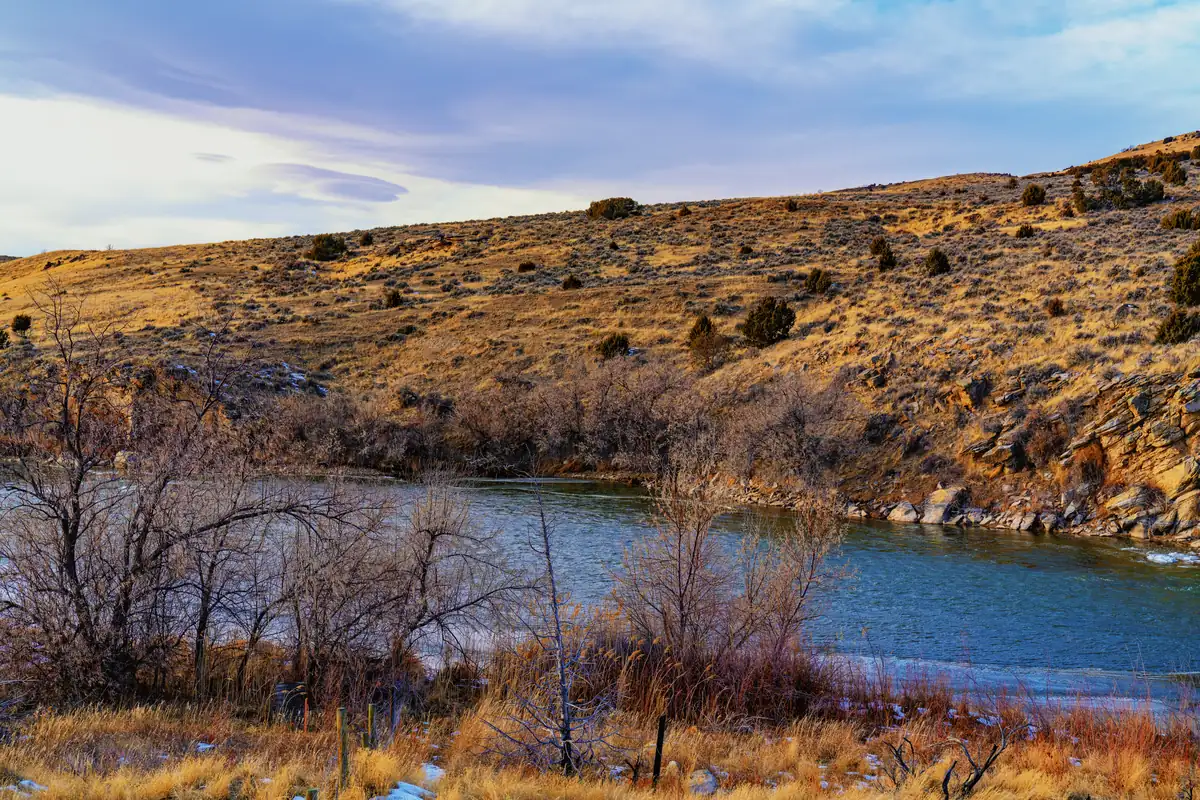
Large brown trout begin moving out of Pathfinder Reservoir into the river in October, according to Game and Fish. The Gray Reef, Cardwell and Saratoga stretches also hold browns that take streamers and nymphs this time of year. Walk carefully in shallow gravel runs, where the fish may be building redds, and let them spawn in peace.
-
Lake trout in the shallows
Starting in October, once nights drop into the 30s · Fremont, Boulder, Half Moon and New Fork lakes near Pinedale
Lake trout that spend the summer deep come up onto the rocky shallows in fall, when shore anglers have their best chance at them. The Laramie Plains lakes have fall-spawning rainbow trout that cruise close to the bank at the same season.
-
Walleye and other reservoir fish
Through October · Boysen, Glendo, Pathfinder and Keyhole reservoirs
Walleye feed heavily in the cooling water. At Glendo they chase dying gizzard shad, which is why Game and Fish suggests trolling shad-colored crankbaits.
Boat owners take note: Game and Fish stops selling 2026 watercraft registrations during October and resumes November 1 with 2027 registrations, though aquatic invasive species stickers are still available.
When do the aspens and cottonwoods turn in Wyoming?
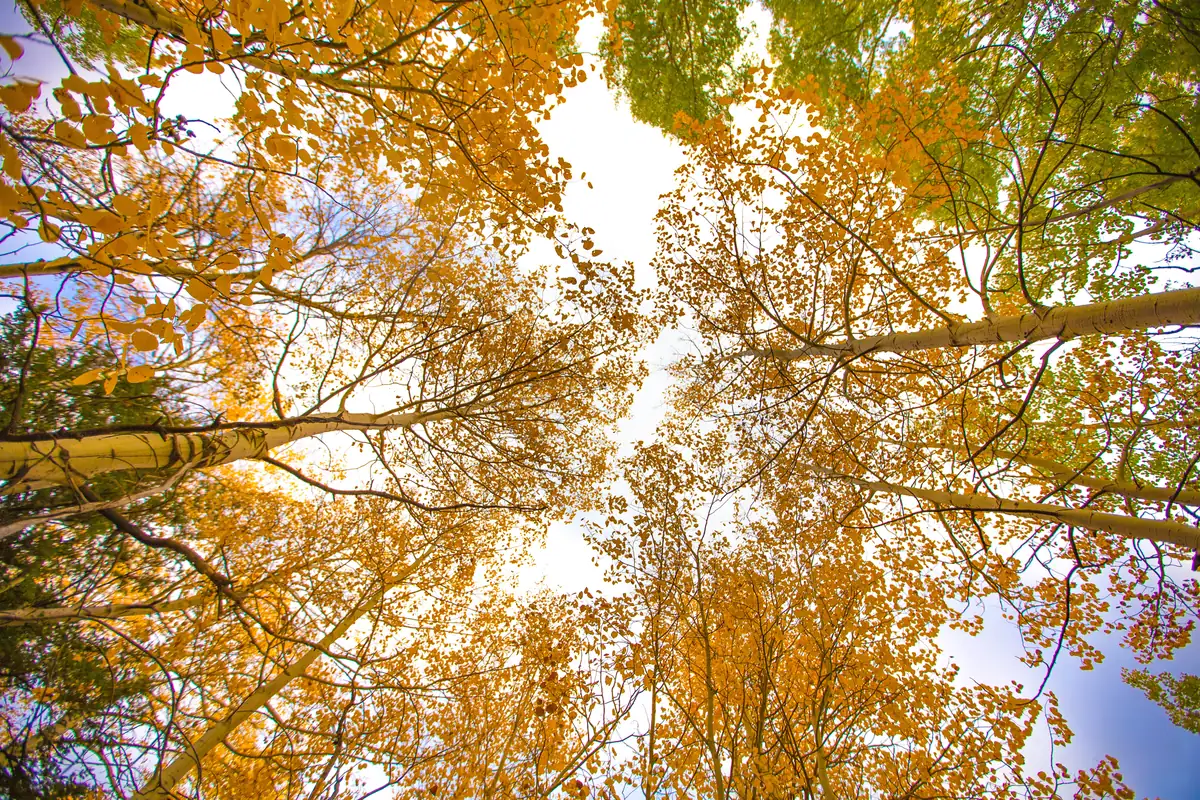
Wyoming’s fall color runs downhill. Travel Wyoming says it starts in the first week of September at high elevations and can last until the end of October in the lowest valleys. In practice that means the mountain aspens are usually past their best by early October, and the color moves down to the cottonwoods along the rivers.
-
Cottonwoods along the rivers
Early to mid-October in most lower valleys, later in warm years · The North Platte through Casper, the Wind River, the Bighorn River, the Green River at Seedskadee
Casper’s tourism office points to Edness Kimball Wilkins State Park and the 11 miles of Platte River Trails for cottonwood gold in September and October; similar yellow ribbons follow rivers through every basin.
-
Late aspens
Any leaves left are at lower elevations in early October · Casper Mountain, the Moose-Wilson Road, the lower slopes of the Bighorns and the Snowy Range
One windy cold front can leave a grove bare overnight; your best odds are low, sheltered slopes in the first week of October.
-
Big sagebrush in seed
Seed ripens from early October through December · Basins and foothills statewide
Big sagebrush flowers late, and the USDA plant guide says its seed is collected in the wild from early October to the end of December, depending on the subspecies, much of it for replanting burned rangeland. Rub a leaf between your fingers to release its sharp scent.
-
Pine cones and juniper berries
All month · Whitebark pine near treeline; Rocky Mountain juniper on rocky slopes
Look under whitebark pines for cone scales dropped by nutcrackers and squirrels working over the cones. The waxy blue juniper berries are the winter food that Townsend’s solitaires stake out and defend.
When is the first freeze in Wyoming?
For much of Wyoming, freezing nights are old news by October. Of the nine stations below, every one has a median first 32 °F night on or before October 1, and at Moose, in Jackson Hole, the median is August 31. The later dates belong to the warmer, lower basins: Cheyenne, Casper 1 SW, Gillette 4 SE and Cody all have medians of October 1, and even there nine years in ten have frozen by mid-October, or October 19 at Casper 1 SW. Laramie, at more than 7,000 feet, has a median of September 15, and Sheridan’s airport September 23. For your own town, see our Wyoming frost dates.
| Station | One year in ten | Median | Nine years in ten |
|---|---|---|---|
| Cheyenne | Sep 18 | Oct 1 | Oct 14 |
| Laramie Regional Airport | Sep 3 | Sep 15 | Sep 27 |
| Casper 1 SW | Sep 18 | Oct 1 | Oct 19 |
| Gillette 4 SE | Sep 15 | Oct 1 | Oct 14 |
| Sheridan County Airport | Sep 9 | Sep 23 | Oct 6 |
| Cody | Sep 17 | Oct 1 | Oct 14 |
| Riverton (Wind River Basin) | Sep 11 | Sep 24 | Oct 7 |
| Rock Springs Airport | Sep 14 | Sep 28 | Oct 9 |
| Moose (Jackson Hole) | Aug 12 | Aug 31 | Sep 13 |
High, dry air cools fast after sunset, which is why valley floors like Moose and Laramie freeze so early: cold air drains downhill and pools there on clear, calm nights. Gardeners who still have tomatoes out should cover them or pick them now; by the time October ends, a hard freeze is all but certain everywhere in the state.
How much daylight does Wyoming lose in October?
Wyoming gives up between 78 and 90 minutes of daylight in October, and the loss grows toward the north. Cheyenne drops from 11 hours 45 minutes to 10 hours 27 minutes, about 2.6 minutes a day. Sheridan and Cody, near the Montana line, lose 89 and 90 minutes, a full 3.0 minutes a day. Because Jackson and Rock Springs sit far west in the Mountain time zone, their sunrises and sunsets come later by the clock than Cheyenne’s, even though the day length is similar.
| City | Oct 1 | Oct 31 | Lost | Per day |
|---|---|---|---|---|
| Cheyenne | 11 h 45 m | 10 h 27 m | 78 min | 2.6 min |
| Laramie | 11 h 45 m | 10 h 26 m | 79 min | 2.6 min |
| Rock Springs | 11 h 44 m | 10 h 25 m | 79 min | 2.6 min |
| Casper | 11 h 43 m | 10 h 21 m | 82 min | 2.7 min |
| Jackson | 11 h 43 m | 10 h 18 m | 85 min | 2.8 min |
| Gillette | 11 h 42 m | 10 h 15 m | 87 min | 2.9 min |
| Sheridan | 11 h 42 m | 10 h 13 m | 89 min | 3.0 min |
| Cody | 11 h 43 m | 10 h 13 m | 90 min | 3.0 min |
When standard time returns (2 a.m., Sunday, November 1), sunset that day lands about an hour sooner on the clock. Our daylight calculator gives sunrise, sunset and day length for any place and date.
What is October weather like in Wyoming, and what will El Niño mean for the winter?
October in Wyoming is a month of clear, cool days broken by the first real snowstorms. NOAA’s 1991–2020 normals put afternoon highs at 56 °F in Laramie and Rock Springs and about 59 to 60 °F in Cheyenne, Casper, Lander and Sheridan; the average low ranges from about 28 °F at Laramie to 34 °F at Cheyenne. It is a dry month by most standards, from 0.81 inch of precipitation at Rock Springs and 0.83 at Laramie to 1.40 at Lander and 1.57 at Sheridan. Some of that falls as snow: the October normal is 5.9 inches at Cheyenne, 6.6 at Rock Springs, 7.0 at Casper and 10.5 at Lander, where storms pile up against the Wind River Range.
Behind all of this is a Pacific El Niño that NOAA, in its September 10 discussion, judged over 90 percent likely to turn very strong by winter; the next discussion is due October 8 and the winter outlook in mid-October. Wyoming straddles the classic pattern, with mild, dry winters across the northern tier of states and wet ones across the southern tier. The surest local effect, Mike Natoli of the Weather Service office in Cheyenne told WyoFile on September 25, is less wind: El Niño winters bring lower average speeds and fewer high-wind events almost statewide. Past events have tilted southern Wyoming wetter than average and the north, above all the northwest mountains, drier, though the Western Regional Climate Center rates the southern signal as ambiguous. October itself is barely touched; its storms still come from ordinary fronts.
For a forecast for your own place, try our weather page.
What can you see in Wyoming’s night sky in October?
-
Jupiter reappears from behind the moon
Tuesday, October 6, about 3:10 a.m. MDT · Low in the east-northeast; you need a clear, flat eastern horizon
The moon passes in front of Jupiter early on October 6, but from Wyoming the disappearance happens before the pair clear the horizon. Instead you can watch the end of the event. In Cheyenne the crescent rises at 2:31 a.m. with Jupiter hidden, and IOTA, the International Occultation Timing Association, gives 3:10 a.m. for Jupiter’s return, with the moon about 6 degrees up. In Casper the moon rises at 2:34 and Jupiter returns at 3:09, about 5 degrees above the horizon. Laramie’s timing should be close to Cheyenne’s. Farther west, in Rock Springs and Jackson, the moon rises later (2:49 and 2:51 a.m.), and IOTA shows the reappearance at Salt Lake City only a degree above the horizon, so western Wyoming will probably see the two already separating as they clear the hills. Binoculars help: Jupiter emerges beside the dark, unlit edge of the moon.
-
Saturn at its best
Opposition October 4; the moon is close by on October 23 and 24 · Rising in the east at dusk, up all night
Saturn reaches opposition on October 4, meaning Earth lies directly between it and the sun: it comes up at dusk and stands highest around midnight. It shines with a steady, pale yellow light, and any small telescope shows its rings. The fattening moon parks near the ringed planet on October 23 and 24.
-
Venus, Jupiter and Mars
Venus only in the first days of October; Jupiter and Mars before dawn all month; Mars in the Beehive on the morning of October 11 · Venus very low in the west after sunset; Jupiter and Mars in the east before sunrise
Catch Venus in the first few evenings, if at all, just above the western horizon at dusk; by the 23rd the planet sits directly sunward of us and is lost in the glare. In the hour before sunrise, look east for Jupiter, outshining every star. Fainter, orange Mars slides past the Beehive, a loose star cluster in Cancer, before sunrise on October 11; with the moon just new, binoculars show the pairing well.
-
Draconid meteors
Evening of Thursday, October 8 · Face north after dark
An evening shower, so children can watch it before bedtime, and the moon, two days from new, does not rise until the next morning. A handful of meteors an hour is a good showing.
-
Orionid meteors
Active October 2 to November 7; best before dawn on October 21 and 22 · Away from town lights, looking up and to the south and east
These are fast meteors from dust shed by Halley’s Comet, and the peak is broad. A bright gibbous moon is in the sky in the evening, so wait until it sets: on the morning of October 22 moonset is 3:21 a.m. in Cheyenne and 3:44 a.m. in Jackson, and darkness lasts until dawn twilight begins at about 6:51 a.m. in Cheyenne and 7:17 a.m. in Jackson. On the 21st the moon is down about an hour earlier still.
-
The Hunter’s Moon
Evenings of Sunday, October 25 and Monday, October 26 · Rising in the east-northeast around sunset
The exact moment of full moon is 10:12 p.m. MDT, Sunday the 25th. Cheyenne sees it come up at 5:31 p.m. on Sunday, about 33 minutes ahead of the 6:04 sunset, then at 6:04 p.m. on Monday, two minutes after the sun goes down. In Jackson the moonrise times are 5:50 and 6:21 p.m. This is not a supermoon; the moon is not especially close to Earth this month.
| Phase | Date | Time |
|---|---|---|
| Last quarter | Saturday, Oct 3 | 7:25 a.m. MDT |
| New moon | Saturday, Oct 10 | 9:50 a.m. MDT |
| First quarter | Sunday, Oct 18 | 10:12 a.m. MDT |
| Full moon, the Hunter’s Moon | Sunday, Oct 25 | 10:12 p.m. MDT (looks full the evenings of Oct 25 and 26) |
| Last quarter | Sunday, Nov 1 | 1:28 p.m. MST |
Clouds are the only thing that can spoil any of this. Our cloud cover forecast shows the night ahead, and the moon phases page lists moonrise and moonset for any date.
What can Wyoming families do outside in October?
These are October 2026 programs confirmed on the hosts’ own calendars as of September 30. Some cost money or need registration, and weather can change plans, so check with the organizer before you go. If you are planning a longer trip, our nature pages cover other states too.
-
Cheyenne Botanic Gardens
Fridays, October 2, 9, 16, 23 and 30 at 11 a.m.; Saturday, October 3; October 27 to November 7 · Cheyenne Botanic Gardens and the Paul Smith Children’s Village, Cheyenne
A free Friday story time with a craft for young children, a haunted terrarium workshop with mosses and lichens on Saturday, October 3 ($50), and Día de los Muertos exhibits from October 27 through November 7, with a luminary-decorating workshop on the evening of Thursday, October 29 ($5).
-
Buffalo Bill Center of the West
Thursday, October 1, noon; Friday, October 30, 2 to 5 p.m. · Cody
A lunchtime talk on the Yellowstone wolverine, one of the region’s rarest and least-seen animals, on October 1, and Hootin’ Howlin’ Halloween, a drop-in family afternoon, on October 30 ($5 per child and adult, members free).
-
Live raptors in Jackson Hole
Thursday, October 1, and Friday, October 2 · Teton Raptor Center, Wilson; the Cloudveil hotel, downtown Jackson
Teton Raptor Center has hour-long programs with its resident birds at 11 a.m. on both days (raptor adaptations on the 1st, Wyoming habitats on the 2nd), plus an informal program in the Cloudveil hotel lobby at 4 p.m. on the 2nd. Across the valley, the National Museum of Wildlife Art runs Fables, Feathers & Fur, a free story-and-art hour for ages 3 to 6, on Friday, October 2, at 10:30 a.m.
-
Places to go any day
All month · Kemmerer, Jackson, Thermopolis
Older children who can stand a cold wind will enjoy a morning at the Commissary Ridge hawk count, where the crew often traps and bands birds. The National Elk Refuge visitor center at 532 North Cache Street in Jackson has a Junior Naturalist patch program and rents binoculars. At Hot Springs State Park in Thermopolis, a bison herd grazes a short drive from the mineral terraces and the free state bath house.
-
Science you can help with
Any time · From home or on a walk
Report birds to eBird. The University of Wyoming’s Biodiversity Institute runs community science projects that anyone can join, including Vulture Watch Wyoming and the Rocky Mountain Amphibian Project. CoCoRaHS, a national network of volunteers who measure rain and snow in their yards, welcomes new observers, and October is a good time to start before the first big snow. Hunters can help too, by submitting deer and elk samples for chronic wasting disease testing.
Children who keep a nature notebook might like our Naturalist’s Field Journal, with plates for tracks, feathers and the birds they see.
Safety notes for October in Wyoming
- Hunting seasons. Wyoming sets its big-game seasons hunt area by hunt area, so there is no single opening day, but October is the heart of rifle season almost everywhere. Special archery seasons mostly ran through September 30. Many general deer seasons run October 1–14 or 15, or October 15–31; many elk seasons run through October; and pronghorn rifle seasons, most of which opened in mid-to-late September or on October 1, are under way. Waterfowl seasons are open (from September 26 in the Pacific Flyway and eastern Zone C2, from October 3 in Zones C1 and C1A), fall wild turkey opens October 1, and most pheasant areas open November 1. Check the 2026 regulations for the exact dates where you are going.
- Orange or pink. Anyone hunting big or trophy game during an open firearm season must wear at least one exterior garment of fluorescent orange or fluorescent pink, such as a hat, shirt, jacket, coat, vest or sweater, visible from all sides; fluorescent orange or pink camouflage counts. Archers hunting during an open firearm season must wear it too; those in special archery-only seasons do not. Pheasant hunters on Game and Fish habitat management areas, Glendo State Park and Bureau of Reclamation lands, and wild bison hunters, also must wear it. Hikers, riders and dog owners in hunting country should do the same.
- Bears. Grizzlies and black bears in the northwest part of the state are feeding hard before denning, and they find hunters’ gut piles quickly. Keep bear spray on your belt or chest, not in a pack. Game and Fish advises moving a carcass well away from the gut pile, hanging quarters 10 to 15 feet up and 4 feet out from the trunk, and getting meat out of the field quickly. In Yellowstone, stay at least 100 yards from bears and wolves.
- Early winter weather. Snow and ice can close mountain passes and I-80 with little warning, and wind makes a 40-degree day feel far colder. Game and Fish notes that hypothermia most often catches people when it is between 40 and 60 °F and they are wet or underdressed. Pack extra layers, food and water, and if you get lost, stay put.
- Chronic wasting disease. Game and Fish calls CWD a continuing management priority for deer and elk. Game and Fish names focus areas each year for monitoring and mandatory sampling; results are usually available within three weeks in your online account. Follow the carcass disposal rules.
- Animals on the road. With migrating deer and pronghorn crossing highways, and darker evenings coming after November 1, slow down at dawn and dusk.
Sources
- Wyoming Migration Initiative (University of Wyoming): migration projects and atlas
- Wyoming Migration Initiative: Red Desert to Hoback migration assessment
- Teton Science Schools: pronghorn migration to Grand Teton National Park
- High Country News: the perilous journey of Wyoming’s migrating pronghorn (January 2012)
- National Park Service: Yellowstone park roads and seasonal opening dates, 2026
- National Park Service: Grand Teton operating hours and seasons, 2026
- National Park Service: elk in Yellowstone
- National Park Service: Yellowstone safety (wildlife distances, bear spray)
- U.S. Fish and Wildlife Service: National Elk Refuge (elk arrival, draft bison and elk management plan comment period)
- U.S. Fish and Wildlife Service: National Elk Refuge events and Junior Naturalist program
- HawkCount: Commissary Ridge, Wyoming, site profile (count dates, species, access)
- HawkWatch International: 2025 fall migration update, Commissary Ridge
- HawkWatch International: 2024 migration update, Commissary Ridge
- U.S. Fish and Wildlife Service: Seedskadee National Wildlife Refuge
- U.S. Fish and Wildlife Service: Seedskadee NWR activities and wildlife viewing
- National Audubon Society field guide: rough-legged hawk
- National Audubon Society field guide: Townsend’s solitaire
- National Audubon Society field guide: trumpeter swan
- U.S. Fish and Wildlife Service: whitebark pine, threatened species
- eBird: Wyoming region explorer
- Wyoming Game and Fish: big walleye and hungry trout top fall fishing around the state (October 2017)
- Wyoming Game and Fish: watercraft registration closing for fall
- Travel Wyoming: autumn in Wyoming, fall 2026 media release
- Visit Casper: best places to see fall foliage in Casper
- USDA NRCS plant guide: big sagebrush
- Amphibian Publishing: Wyoming frost dates (NOAA 1991–2020 normals)
- NOAA NCEI: U.S. climate normals, 1991–2020 (Cheyenne, Casper, Laramie, Lander, Rock Springs, Sheridan)
- U.S. Naval Observatory: sun and moon rise and set data (one-day API)
- U.S. Naval Observatory: phases of the moon
- International Occultation Timing Association: occultation of Jupiter, October 6, 2026
- NOAA Climate Prediction Center: ENSO diagnostic discussion, September 10, 2026
- NOAA Climate Prediction Center: typical El Niño winter impacts over North America
- WyoFile, via County 17: what will ‘super’ El Niño bring to Wyoming? (September 25, 2026; NWS Cheyenne comments)
- Western Regional Climate Center: El Niño and La Niña in the West, frequently asked questions
- Cheyenne Botanic Gardens: events calendar, October 2026
- Buffalo Bill Center of the West: events, October 2026
- Teton Raptor Center: events, October 2026
- National Museum of Wildlife Art: events, October 2026
- University of Wyoming Biodiversity Institute: community science projects
- CoCoRaHS: Community Collaborative Rain, Hail and Snow Network
- Wyoming Game and Fish: 2026 hunting regulations (Chapters 5–9, 11, 14 and 20)
- Wyoming Game and Fish: Chapter 6, deer hunting seasons, 2026
- Wyoming Game and Fish: Chapter 7, elk hunting seasons, 2026
- Wyoming Game and Fish: Chapter 5, antelope hunting seasons, 2026
- Wyoming Game and Fish: Chapter 11, upland game bird and small game seasons, 2026
- Wyoming Game and Fish: Chapter 14, migratory game bird seasons, 2026–27
- Wyoming Game and Fish: Chapter 20, wild turkey seasons, 2026
- Wyoming Game and Fish: who should wear fluorescent orange or pink when hunting?
- Wyoming Game and Fish: safety first for hunting season (September 29, 2026)
- Wyoming Game and Fish: hunting and fishing in bear country
- Wyoming Game and Fish: chronic wasting disease
- Wyoming Game and Fish: 2026 hunt forecast
- Photos via Wikimedia Commons; licenses and photographers are credited under each picture
