What to look for in nature in California this March
March is when California tips into spring, and it does so in several places at once. Along the coast the northbound gray whale migration swings into its busiest stretch, with mothers and newborn calves hugging the shore. On the elephant seal beaches the big bulls have gone and the weaned pups are practicing for the sea. Inland, vernal pools fill with flowers in rings, desert fans and the poppy fields of the Antelope Valley come into color, and the great winter flocks of cranes, ducks and geese begin to leave. The swallows have their celebration at the old mission on March 19, the equinox arrives on March 20, and the clocks jump ahead on the 14th. The sections below take each of these in turn, with places, typical timing and sources.
Other months in California: October, November, December, January, February, April.
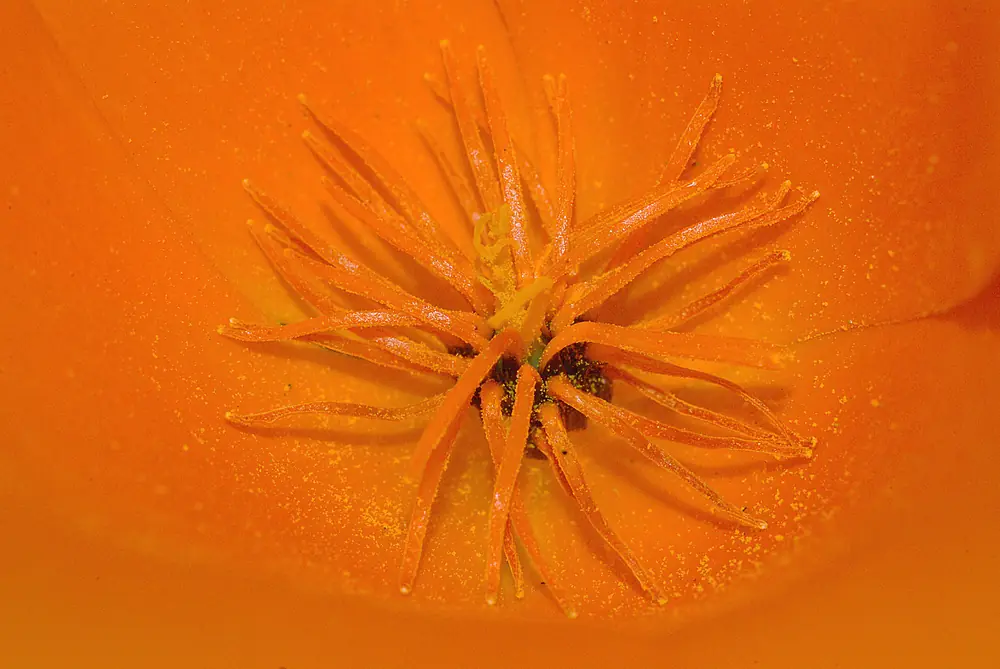
Start here

- Watch for mothers and calves. NOAA Fisheries says gray whale mothers with new calves travel north past the central coast between March and May, usually within about 500 meters of its observers at Piedras Blancas. Choose a headland on a windless morning and watch for a short, heart-shaped spout close to shore.
- Visit a poppy field or a vernal pool. The Antelope Valley California Poppy Reserve says its peak is usually late March or early April, and Jepson Prairie in Solano County hosts guided walks through its vernal pools on spring weekends. Call or check the organizer first, because both depend on the season’s rain.
- Catch the equinox weekend. The Sun crosses the equator at 1:25 p.m. Pacific time on Saturday, March 20, and the Worm Moon rises full on the evening of Sunday, March 21. Take a walk at both ends of the day and note where the Sun sets compared with a month ago.
In the Naturalist’s Field Journal, tally whale blows on the mammal watch page, log the swallows, brant and hummingbirds on your “birds I have seen” page, press a poppy sketch into the tree through the seasons or seeds pods and cones page, watch dusk and dawn on the equinox, start a map of sounds for the first frog chorus you hear, and use the same place twice page to compare a vernal pool in mid-March with the same pool in April.
Regions used below: North Coast and the redwoods; Shasta Cascade and the far north; Sacramento Valley; Bay Area; Central Coast; Sierra Nevada and the Eastern Sierra; San Joaquin Valley; Southern California coast and Los Angeles; Mojave and Colorado deserts; San Diego.
What can I see on the California coast in March: whales, elephant seals and tidepools?
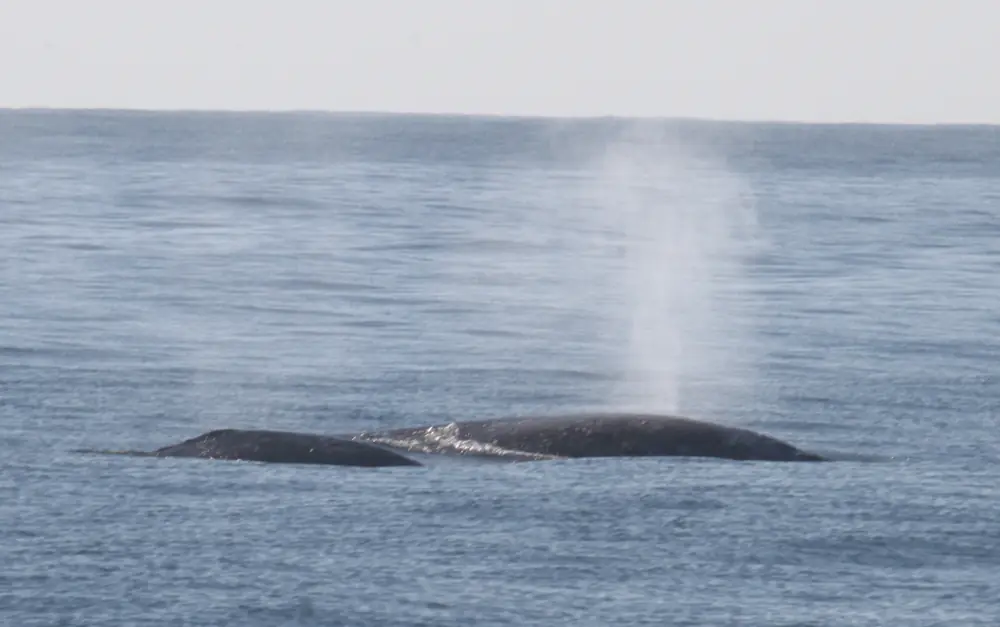
March is the northbound migration’s busiest month for the part of the gray whale population that matters most to the scientists who study it: mothers with newborn calves. NOAA Fisheries biologists have counted these pairs at the Piedras Blancas Light Station every year from 1994 and says they pass northward between March and May. The same page records that calf production has been low since 2019, and that its 2025 estimate of 85 calves was the lowest in the whole time series. Down the coast, the American Cetacean Society’s volunteers at Point Vicente report that the 2025–26 census ended with 445 northbound whales, only 16 of them calves, after 214 southbound whales (17 of them calves) earlier in the season. Every calf that is seen this spring is a data point worth writing down.
-
Whales close to the headlands
March into May for mothers and calves · Piedras Blancas, Point Reyes, Point Vicente and other high points
The Point Reyes National Seashore recommends higher coastal viewpoints such as the lighthouse, notes that calm days are best because spouts can be mistaken for whitecaps, and says a gray whale’s spout is short and heart-shaped. Cabrillo National Monument offers a caution for the far south: in spring the whales are generally too far offshore to see from that park, even with binoculars. Head for a point that sticks out into the water instead, and give each whale a few minutes of watching so you can note its direction.
-
The Point Vicente census
Daily from December 1 through late May · Point Vicente Interpretive Center, Rancho Palos Verdes
Trained volunteers count from a patio 125 feet above the sea, in daylight, every day of the census season, and they log other marine life too, including humpbacks, fin whales, minke whales, dolphins and sea lions. Their daily tally is posted on the American Cetacean Society Los Angeles chapter’s page, so you can compare what you see with what they have recorded that day.
-
Elephant seals in swim school
All month; most weaned pups leave by spring · Piedras Blancas rookery north of San Simeon; Año Nuevo State Park
The Friends of the Elephant Seal say the adult males that arrived in December leave the beach in March, having fasted for more than three months and lost as much as 40 percent of their weight. The older weaned pups are in what the group calls swim school: they practice swimming, holding their breath and seeing underwater, mostly at night. One by one, when they feel ready, they go to sea on a foraging trip that brings them back in the fall. At Año Nuevo, State Parks says visitors must be on a guided walk to see the seals from December through March, and its page says bookings for the 2026–27 season open on October 20, 2026, so check ReserveCalifornia for what remains. Keep at least 25 feet from any elephant seal.
-
Tidepools at a good low tide
Around the lowest tides of each tide cycle · Rocky shores from Cabrillo National Monument to the North Coast
Cabrillo’s rangers say a tide of 0.7 or lower gives the best chance to explore, and negative tides are better still. They suggest arriving about two hours before low tide and leaving about two hours after, and they ask visitors to touch animals as gently as they would touch their own eyeball and to leave rocks where they lie. March low tides still fall in daylight in many places, so look up the day’s predictions for your nearest NOAA tide station before you go.
Winds often pick up in spring, so check the coastal wind forecast before a long wait on a bluff. For the birthing season at the seal rookeries, see California’s January page, and for the first northbound whales, see February.
When is the best time for California poppies and desert wildflowers in March?
It depends on rain, elevation and the year, but March is the month when the lowland bloom is usually in progress and the state’s best-known flowers are on show. California State Parks says the peak bloom season typically begins in mid-February in the desert and moves onward from there, and that a good display depends on a mix of rain and its timing, sunshine, temperature patterns and wind. No agency can promise a bloom months ahead, so use the places and timings below as a map of where to look and whom to call.
-
Antelope Valley California Poppy Reserve
Bloom generally runs from mid-March through May; peak is usually late March or early April · Near Lancaster, Los Angeles County
The reserve’s own page gives those timings and says the bloom varies from year to year. Its Jane S. Pinheiro Interpretive Center is open from March 1 through Mother’s Day, from 10 a.m. to 4 p.m. on weekdays and 9 a.m. to 5 p.m. on weekends, and the park is open from sunrise to sunset every day. Stay on the official trails, do not pick anything and avoid stepping on plants that are already flattened. The Poppy Reserve wildflower hotline is (661) 724-1180. Poppies tend to close their petals in cloudy weather, according to Calscape, so a bright afternoon shows the most color.
-
Death Valley and the Mojave in tiers
Low elevations mid-February to mid-April; 3,000 to 5,000 feet mid-April to early May · Alluvial fans and foothills, then higher bajadas
Death Valley National Park lists the bloom by elevation: desert gold, notch-leaf phacelia and golden evening primrose along the lowest fans in the first half of the season, then desert dandelion, brittlebush and princesplume higher up from mid-April. Its explanation is that seeds need a half inch of rain to germinate, followed by rain at fairly even intervals, and that an early storm in September or October combined with a wet winter makes the strongest displays. March is the month to watch the transition between the tiers.
-
Anza-Borrego and Carrizo Plain
Varies with rain; call ahead · Borrego Springs; the Carrizo Plain National Monument in San Luis Obispo County
The Anza-Borrego visitor center, at the west end of Palm Canyon Drive in Borrego Springs, can say which roads and washes are in color that week (760-767-4205). The Carrizo Plain is remote: BLM warns of limited towing, no fuel, food or water nearby and muddy dirt roads after rain, and recommends a high-clearance vehicle. Its Goodwin Education Center operates from December 1 to May 31, and staff can describe current road conditions at 661-391-6191.
Take a hat, water and a charged phone, and remember that cell service is poor in much of the desert and on the Carrizo Plain. If the bloom is poor where you are, other flowers are likely open nearer home. Use the Naturalist’s Field Journal to sketch a single flower and note what is pollinating it: Calscape records 101 native bee species visiting California poppy alone.
What are vernal pools, and can I see them in bloom in March?
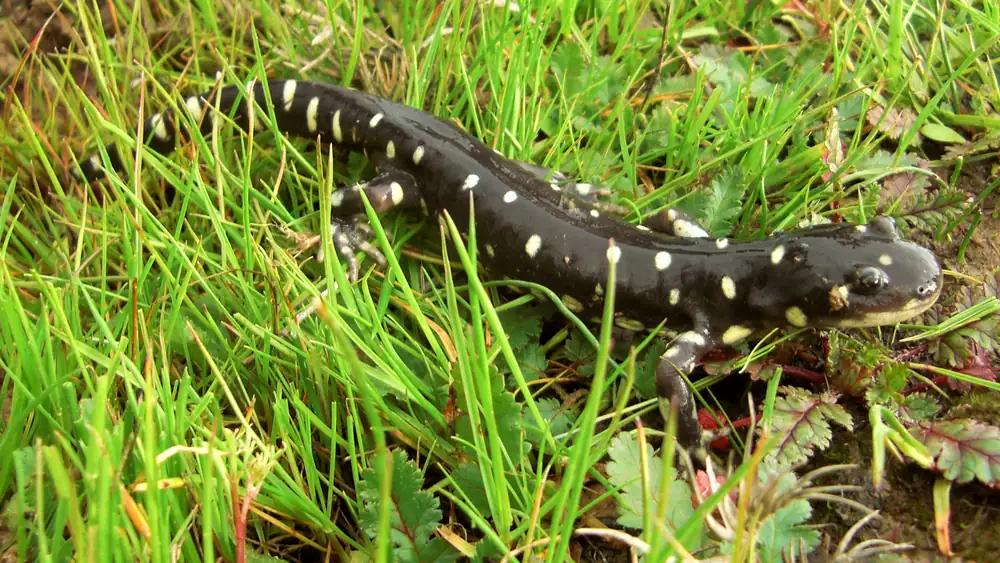
Vernal pools are shallow basins that fill with rain over a hard clay layer, hold water in winter and early spring, and dry completely by summer. As the water recedes, the flowers grow in colored rings around the edge. Jepson Prairie Preserve in Solano County, run by the Solano Land Trust, is one of the best remaining examples in the state. Its list of showy species includes meadowfoam, goldfields, yellow carpet, dwarf downingia, Baker’s navarretia and Solano popcornflower, and its pools shelter endangered conservancy and vernal pool fairy shrimp, vernal pool tadpole shrimp and the California tiger salamander.
-
Wildflower and Critter Walks
Weekend mornings in spring; check with the organizer for 2027 · Jepson Prairie Preserve, 4845 Cook Lane, Dixon
The Solano Land Trust’s walks pair a look at the crustaceans and salamanders that docents dip from the pools with a tour of the uplands in flower. In 2026 the walks ran on Saturdays and Sundays from March 14 to May 10, starting at 10 a.m. and ending around noon, with a minimum $5 donation requested and an email RSVP for groups of five or more. The trust has not posted a 2027 schedule, so check with it before you drive. The preserve says self-guided access is restricted to protect sensitive habitat, and the trails are very wet in early spring, so waterproof footwear is wise. No pets, bicycles or drones are allowed.
-
California tiger salamander
Adults breed in winter; larvae in the pools through spring · Vernal pools and ponds in the Central Valley and surrounding grasslands
CaliforniaHerps.com says adults emerge on rainy nights between November and May, breed mostly from December through February in fish-free temporary ponds, and that larvae spend roughly three to six months in the water, changing into land animals mainly from mid-June to mid-July. Adults live underground in burrows dug by ground squirrels and gophers, so the grassland around the pools matters as much as the water. Three populations are protected under the federal Endangered Species Act, so this is a species to look at only on an organized walk, never to search for.
Because vernal pools are fragile, stay on trails and never wade in unless a docent invites you. The pools are shallow and may be gone by the time the May heat arrives, so mid-March to April is the window to see them full. For a gentler start, compare the same pool in two weeks using the “same place twice” page of the journal.
Which frogs and newts are breeding in California in March?
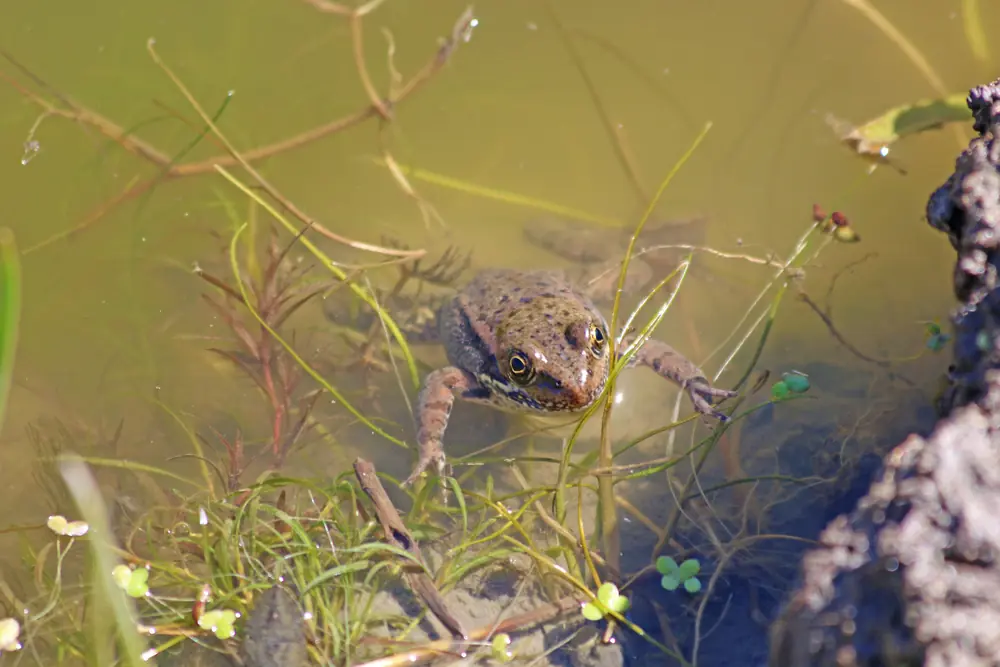
Several, and some are rare. By March the first rush of newts has mostly finished, but the later breeders are just getting going and the red-legged frog, California’s state amphibian, is still calling in some places.
-
California red-legged frog
Breeds late November through April, calling for only one to two weeks at a given pond · Coastal ponds and marshes from Marin to Monterey and Santa Cruz counties; reintroduction sites at Pinnacles, the Golden Gate National Recreation Area and the Santa Monica Mountains
CaliforniaHerps.com says the frog became the official state amphibian in 2014, yet it has been federally listed as threatened since 1996 and is a state species of special concern. Calling lasts only a week or two at any one pond. Introduced bullfrogs and fish, habitat loss and pesticides are the main threats. If you hear a call at a pond, record the date and place rather than going closer.
-
Newts that breed in streams
Mostly March and April · Coast Ranges and the southern Sierra foothills
The population that lays eggs in stream pools migrates later than the ones using ponds, according to CaliforniaHerps.com: typically in March and April, once winter floods have subsided. A Bay Area observation cited there had larvae in the water from March until October. A newt on a trail in March is moving, so step around it and keep dogs back, and never handle one because its skin carries a toxin.
-
Treefrog choruses
Evenings after warm rain · Ponds, ditches and wet meadows statewide
The Pacific treefrog complex breeds anywhere from November to July depending on the place, so a March pond can be in full voice. Males give a two-part, rising “rib-it” call. The group was split in 2006 into three species by range, and CaliforniaHerps.com notes that the split is still debated. For a quick project, stand at a pond edge for five minutes after dusk and count the voices.
Wash your hands after any field day by a pond, and clean boots and nets between sites so you do not carry fungus or seeds from one pond to another.
When do cranes, ducks, geese and brant leave California in spring?
March is the turning point for the vast winter flocks of the Pacific Flyway. The cranes of the Central Valley thin out first, the big waterfowl push comes next in the north, and a coastal goose that feeds on eelgrass lingers on the bays.
-
Cranes leaving the Cosumnes
Gone by about mid-March · Cosumnes River Preserve, Sacramento County
By the preserve’s account the sandhill cranes are usually gone by the middle of March, after the flock peaks in mid-December. A March visit is therefore a chance at the last flocks, best at sunrise and sunset when the birds fly between roost and field. The Wetlands Walk boardwalk is open from sunrise to sunset, and Desmond Road is a good roadside view at dawn and dusk. CDFW’s Woodbridge docent tours are a fall program.
-
Klamath Basin waterfowl
Peak spring numbers usually late March or early April · Lower Klamath and Tule Lake national wildlife refuges, Siskiyou and Modoc counties
The Klamath Basin Birding Trails guide says the peak number of spring migrant waterfowl usually occurs in late March or early April, and describes the spring and fall waterfowl movements as running from mid-March through mid-April. Its figures for bald eagles show their numbers peaking in mid-February, with wintering eagles in impressive numbers from early December through mid-March, so March is also the month those birds depart.
-
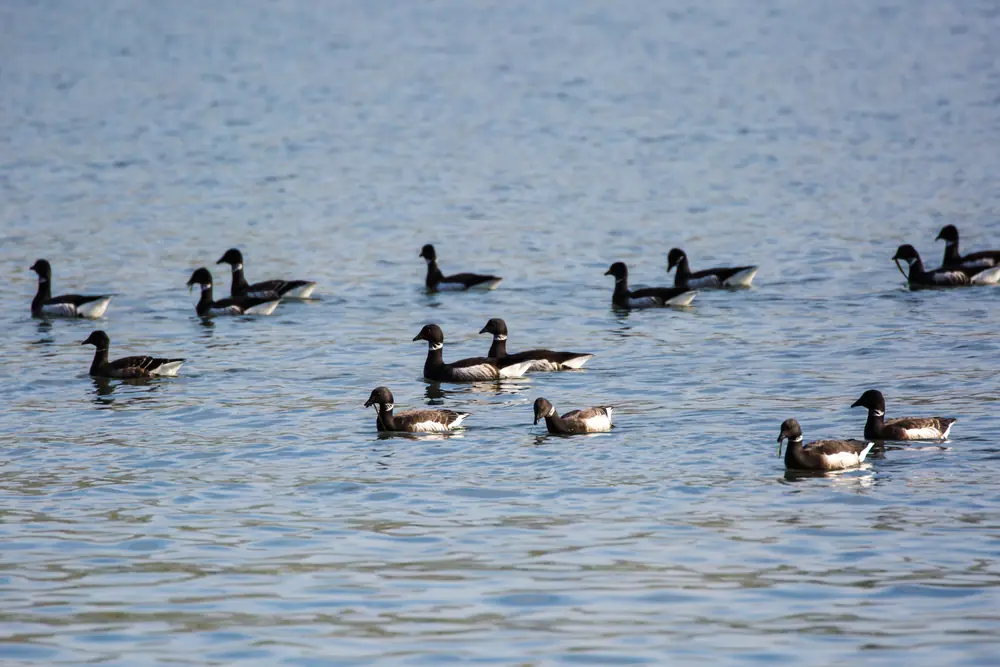
Pacific brant on the bays
March · Humboldt Bay National Wildlife Refuge; Morro Bay
The refuge says brant move through Humboldt Bay in March, along with shorebirds such as marbled godwits. Audubon describes the brant’s diet on the Pacific coast as mainly eelgrass, and says wintering birds may linger later in spring than most geese because their high Arctic breeding grounds stay unsuitable until summer. Look for a small dark goose with a white neck mark in shallow bays at high tide, and check the refuge for the current trail and unit conditions.
When you sit at a refuge, scan every flock: March puts ducks, geese, swans and shorebirds in one view. Report what you find to eBird so scientists see the same picture you do.
Do the swallows really come back to San Juan Capistrano on March 19?
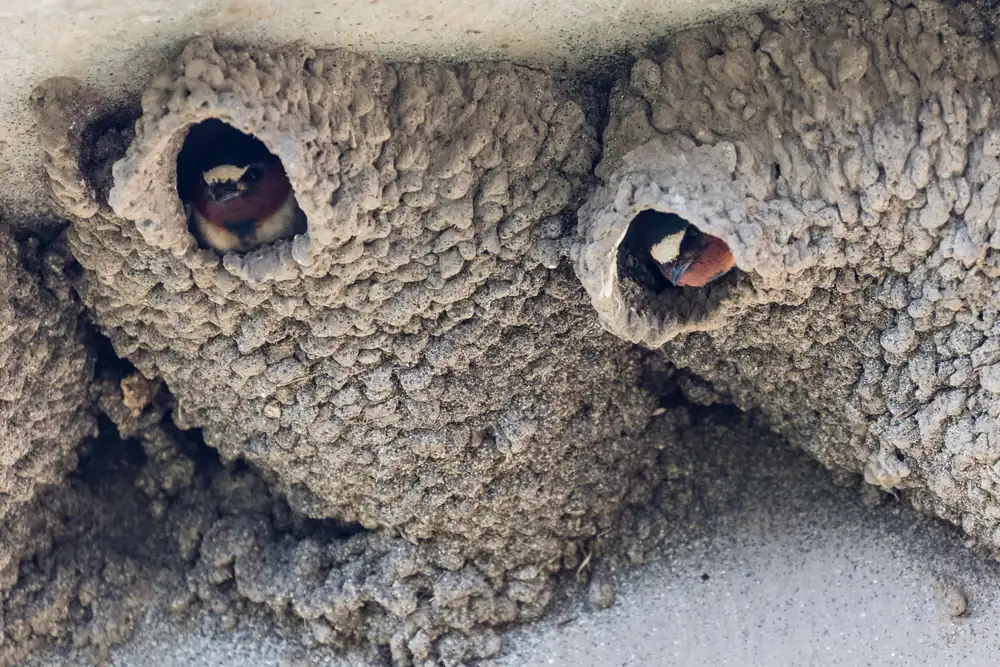
The celebration is certainly held on March 19, St. Joseph’s Day, and the Mission says it has marked the swallows’ return since the 1920s, when it was started by Father O’Sullivan. The birds themselves are less punctual. Audubon says cliff swallows, which winter in southern South America, typically arrive in late February. So March 19 is best treated as the festival day rather than the exact date the first bird shows up.
-
Mud nests under the eaves
Building from late winter into spring · Mission San Juan Capistrano; barns, bridges and culverts statewide
Cliff swallows make gourd-shaped nests of mud, and Audubon says they often nest in colonies with hundreds of nests crowded together. Historically they built on cliffs, but now they mostly use barns, bridges and culverts. The Mission’s St. Joseph’s Day program in 2026 included mariachi music, storytelling, flamenco and lectures, ending at 3 p.m. The Mission had not posted 2027 details when we checked, so confirm with it before planning a trip.
-
Allen’s hummingbirds nesting
Late winter into spring · Brushy canyons, parks and gardens, especially in coastal California
Audubon reports that Allen’s hummingbirds work their way up the Pacific Coast beginning in late winter, and calls them one of the two common nesting hummingbirds in northern California gardens, along with Anna’s. Females lay two white eggs, incubate for 17 to 22 days, and the chicks fledge 22 to 25 days after hatching. Watch a flowering shrub from a bench for ten minutes and see who visits.
-
The first monarchs away from the coast
March and April · Gardens and fields with young milkweed
Journey North collects first sightings of monarch adults, caterpillars and eggs each spring, with a reporting form at app.journeynorth.org/report-observation. If you see a monarch away from the coast in March, a note of the date and place helps researchers track where the spring generation begins.
Admire the nests from a distance and leave them undisturbed: a nest is a big investment of mud and time for a small bird.
What is March weather like in California, and what hazards should I plan for?
March can still bring storms to the north and the Sierra, but warmth arrives quickly in the valleys and the south. The table gives NOAA’s 1991–2020 monthly normals at six airport stations, from the cool, damp North Coast to the dry southern coast. Redding, at the head of the Sacramento Valley, has the wettest March of the six, while San Diego is the driest.
-
Snow in the mountains and the April 1 benchmark
All month · The Sierra Nevada, Cascades and Trinity ranges
The Department of Water Resources describes April 1 as typically the time when the snowpack reaches its maximum volume, and says snowpack supplies about 30 percent of California’s water needs on average. The state’s snow data page, CDEC, posts each station’s water content as a percent of the April 1 average, so you can follow it as March goes by. The Sierra Avalanche Center issues forecasts daily at 7 a.m.; check the danger rating before you leave groomed trails.
-
High roads and waterfalls
Tioga Road plowing usually starts around April 15 · Yosemite National Park
Yosemite says the Tioga Road is not open in March, that clearing typically begins on or about April 15, and that plowing can take one to two months, so it can’t predict the opening. Glacier Point Road is typically open from late May to November. In the valley, Bridalveil, Vernal, Nevada, Illilouette and several other falls flow all year, while Sentinel, Ribbon and Horsetail falls begin around March. Peak runoff comes in May or June, and the park warns that the rock beside waterfalls is slick even when dry.
-
Surf, rip currents and storms
All month · Every beach
The National Weather Service advises swimming only at lifeguarded beaches, checking the local beach forecast first and never turning your back on the ocean, and warns that rip currents can develop on calm, sunny days. After a heavy storm, avoid steep canyons below recent burn scars, and turn around at flooded dips on roads.
| Station | Average high | Average low | Precipitation |
|---|---|---|---|
| Redding (municipal airport) | 65.7 | 43.2 | 4.62 |
| San Francisco (international airport) | 63.4 | 47.6 | 2.73 |
| Sacramento (Executive Airport) | 66.3 | 44.5 | 2.68 |
| Fresno (Yosemite International Airport) | 67.5 | 47.3 | 1.90 |
| Los Angeles (international airport) | 66.1 | 52.2 | 1.73 |
| San Diego (Lindbergh Field) | 67.0 | 54.5 | 1.46 |
NOAA’s Climate Prediction Center issues its 90-day outlook around the middle of each month; the latest is on the CPC seasonal outlooks page. For the next week or two, follow your local forecast, and compare it with the sky on the cloud outlook.
When is the last spring freeze in California?
Highly dependent on where you live. For the mild coast and the southern valleys, NOAA’s normal dates fall in December or January, which in practice means a freeze after the new year is unusual and the garden is largely safe by March, though a cold snap can still bite. In the table below, Eureka’s median last freeze is February 22 and Redding’s is March 3, and its nine-in-ten date is April 9. The high country is much later: NOAA’s normals put Tahoe City’s median last freeze at June 9. For a station near your own town, look it up on California’s frost date tables.
| Station | One year in ten | Median | Nine years in ten |
|---|---|---|---|
| Eureka | Dec 31 | Feb 22 | Mar 23 |
| Redding | Jan 31 | Mar 3 | Apr 9 |
| Sacramento | Jan 10 | Feb 22 | Apr 1 |
| San Francisco | Dec 11 | Dec 29 | Jan 13 |
| Fresno | Dec 22 | Jan 14 | Feb 11 |
| Palm Springs | Dec 12 | Jan 1 | Jan 18 |
| San Diego | Dec 13 | Jan 6 | Feb 5 |
Treat the columns as a risk guide, not a promise: half of years have a freeze after the median date, and one year in ten has one after the last column. Cover tender seedlings when a clear, still night is forecast, since cold air pools in low spots.
How much daylight does California gain in March, and what changes on March 14?
From an hour in San Diego to nearly an hour and a half on the North Coast, and the pace is among the quickest of the year. Day length passes 12 hours at the equinox on Saturday, March 20, which falls at 1:25 p.m. Pacific time. The clocks change before that: at 2 a.m. on Sunday, March 14, California springs forward. In Los Angeles, the sunset time jumps from about 5:59 p.m. on March 13 to about 7:00 p.m. on March 14, which is the clock change, not a sudden change in the sky.
| City | Mar 1 | Mar 31 | Gained | Per day |
|---|---|---|---|---|
| Eureka | 11 h 17 m | 12 h 38 m | 81 min | 2.7 min |
| Redding | 11 h 18 m | 12 h 38 m | 80 min | 2.7 min |
| Sacramento | 11 h 21 m | 12 h 36 m | 75 min | 2.5 min |
| San Francisco | 11 h 22 m | 12 h 35 m | 73 min | 2.4 min |
| Fresno | 11 h 23 m | 12 h 33 m | 70 min | 2.3 min |
| Los Angeles | 11 h 27 m | 12 h 31 m | 64 min | 2.1 min |
| Palm Springs | 11 h 28 m | 12 h 31 m | 63 min | 2.1 min |
| San Diego | 11 h 30 m | 12 h 30 m | 60 min | 2.0 min |
To find sunrise and sunset for one beach or trailhead, try the daylight calculator. Arizona, which does not change its clocks, will keep the same time as California’s Pacific daylight time from March 14.
What can I see in California’s night sky in March?
The Worm Moon, a morning planet or two, a pair of bright evening planets, and the first of the spring Milky Way hours before dawn. All times below are Pacific; they are daylight time from March 14, and standard time before then.
-
The Worm Moon
Full at 3:44 a.m. PDT, Monday, March 22; best evening Sunday, March 21 · Rising in the east around sunset
The Moon is exactly full in the small hours of Monday the 22nd, which makes the previous evening the one to catch: in Los Angeles it climbs over the horizon at about 6:41 p.m. on Sunday, March 21, nearly full and still very bright. The name comes from the time of year when ground softened and earthworms reappeared, as SeaSky describes; other names for this moon include the Crow, Crust and Sap Moon.
-
The equinox
Saturday, March 20, 1:25 p.m. PDT · Anywhere with a clear western horizon
The Sun crosses the celestial equator heading north, and on this date it rises very nearly due east and sets very nearly due west. Mark your sunset point against a fence or a hill, and compare it with the same view in June.
-
Mercury, Venus and a thin crescent in the morning
Mercury best about March 8 to 25; widest on the evening of March 16, Pacific time · Low in the east-southeast before sunrise; Venus higher
Mercury’s widest morning gap from the Sun, about 27.6 degrees, comes just after midnight UTC on March 17, so in California it is still the evening of March 16. Through the first half of March, look for it low in the east-southeast an hour before dawn. It is modest in brightness, so a clear eastern horizon and binoculars help. Venus is far brighter and higher, a morning star all month. By our calculation the thin old crescent Moon hangs close to Venus before sunrise on March 4 and 5.
-
Jupiter, Mars and the Moon in the evening
Moon beside Jupiter on the evenings of March 18 and 19; Mars and Jupiter about 4 degrees apart on the evening of March 30 · High in the east to south after dark, in Leo
Jupiter, which was at opposition in February, is still brilliant and up for most of the night. By our calculation (USNO and SeaSky do not list the pairing), on those two nights a fat, mostly lit Moon (about 88 percent) slides to within a degree of the planet. Mars, fading but still bright and orange, sits about 4 degrees from Jupiter on March 30. Saturn is slipping into the evening twilight: it stays up about 155 minutes after the Sun on March 1 but only about 95 minutes on the 15th (central-U.S. figures; allow a few minutes either way), and reaches conjunction with the Sun in April.
-
Milky Way hours before dawn
Around the new moon, about March 5 to 16 and again near March 31 · Dark sites in the southeast, in the last hours of the night
The bright center of the Milky Way is back for early risers, but only briefly. Our calculations for the central United States find roughly an hour and a half of dark, moonless sky with the center well up before dawn at the best dates, and a little more in southern California. These are rough windows and the figures come from our own calculations, so treat them as a guide. Choose a night far from town, allow about twenty minutes for your eyes to adapt, then face southeast.
| Phase | Date | Time |
|---|---|---|
| New moon | Monday, Mar 8 | 1:29 a.m. PST |
| First quarter | Monday, Mar 15 | 9:25 a.m. PDT |
| Full moon (Worm Moon) | Monday, Mar 22 | 3:44 a.m. PDT; looks full Mar 21 to 23 |
| Last quarter | Monday, Mar 29 | 5:54 p.m. PDT |
The moon phase calendar helps with trip planning; check cloud cover the day before. The darkest evenings in March are around the new moon on the 8th. Aurora is rarely seen from California, but March is statistically one of the more active months, so it is worth a glance north on a clear night when NOAA’s Space Weather Prediction Center forecasts a strong storm.
What can families do outdoors in California in March?
- Whale spotting. Pick a headland, give each child a tally sheet for blows, and note the direction. Mothers and calves are the prize.
- A vernal pool walk. The Solano Land Trust’s Wildflower and Critter Walks at Jepson Prairie have run on spring weekends; check with the organizer for 2027 dates and bring waterproof shoes.
- A poppy picnic. Visit the Antelope Valley California Poppy Reserve on a sunny afternoon, stay on the trails, and look at one flower closely rather than picking it.
- Swallow day. The Mission San Juan Capistrano marks St. Joseph’s Day on March 19 every year; confirm the 2027 program with the Mission, and look for mud nests under local eaves.
- Tidepool visit. Go at a low tide, move slowly, touch gently and leave every animal where it is.
- Equinox sunset game. On March 20, mark where the Sun sets and compare it in June.
- A frog listening walk. After a warm rain, stand at a pond at dusk and count the voices without handling anything.
- Planet spotting. Find Jupiter and the Moon together on March 18 or 19, and Mars near Jupiter on March 30.
The nature calendar covers other months, and the Naturalist’s Field Journal gives children a page for each outing.
What should I watch out for in California in March?
- Spring turkey season. CDFW’s 2027 regulations list the general spring wild turkey season as March 27 to May 2, a junior hunt on March 20 and 21 and again from May 3 to 16, and an archery-only extension from May 3 to 16. The bag limit is one bearded turkey, three per season, and nonlead ammunition is required when hunting with firearms. The page I read did not mention a blaze-orange rule for turkey, so check CDFW’s regulations for the area you visit, and wear bright colors on public land. Hunters may be calling and wearing camouflage, so do not stalk turkey sounds in the woods.
- Remote roads. The Carrizo Plain and parts of the desert have no fuel, food, water or towing, and dirt roads turn muddy after rain. Carry extra water and tell someone your route.
- Snow and avalanches. Sierra roads can need chains at short notice. Anyone going off groomed trails should read the Sierra Avalanche Center’s daily forecast first. Roads such as the Tioga Road are closed in March.
- Waterfalls and swift streams. Snowmelt and storm runoff make creeks cold and fast, and the rock beside falls is slick even when dry, as Yosemite warns.
- Big surf and rip currents. Stay well back on rocks and bluffs, keep an eye on the waves at all times, and swim only where a lifeguard is on duty.
- Marine mammals. Stay at least 25 feet from elephant seals, as Año Nuevo requires, and keep dogs on leashes. Do not approach beached or resting animals.
- Toxic and protected animals. Do not handle newts or tiger salamanders. Watch your step for rattlesnakes on warm days, especially on sunny rock and trail edges.
- Desert travel. Plan for sun, wind and no cell signal, and stay out of closed washes when storms threaten.
Sources (41)
- NOAA Fisheries: gray whale condition and calf production
- American Cetacean Society Los Angeles: gray whale census and today’s count
- National Park Service: whale watching at Cabrillo National Monument
- National Park Service: tidepool visiting advice at Cabrillo National Monument
- National Park Service: whale watching at Point Reyes
- Friends of the Elephant Seal: March at Piedras Blancas
- California State Parks: Año Nuevo State Park
- California State Parks: Antelope Valley California Poppy Reserve
- California State Parks: colorful wildflower displays expected at desert state parks (January 23, 2026)
- California State Parks: Anza-Borrego Desert State Park
- National Park Service: Death Valley wildflowers
- Bureau of Land Management: Carrizo Plain National Monument
- Calscape (California Native Plant Society): California poppy
- Solano Land Trust: Jepson Prairie Preserve
- Solano Land Trust: Wildflower and Critter Walks at Jepson Prairie
- CaliforniaHerps.com: California tiger salamander
- CaliforniaHerps.com: California red-legged frog
- CaliforniaHerps.com: California newt
- CaliforniaHerps.com: Pacific treefrogs in California
- Cosumnes River Preserve: see the sandhill cranes
- Klamath Basin Birding Trails: frequently asked questions
- U.S. Fish and Wildlife Service: Humboldt Bay National Wildlife Refuge
- Audubon Guide to North American Birds: Brant
- Audubon Guide to North American Birds: Cliff swallow
- Audubon Guide to North American Birds: Allen’s hummingbird
- Mission San Juan Capistrano
- Mission San Juan Capistrano: St. Joseph’s Day and the return of the swallows
- Journey North: monarch sightings
- National Park Service: Yosemite waterfalls
- National Park Service: Tioga Road opening and closing
- California Data Exchange Center: snow water equivalent
- Association of California Water Agencies: snowpack near the end of the wet season
- Sierra Avalanche Center: avalanche forecasts
- National Weather Service: rip current safety
- NOAA NCEI: monthly climate normals, 1991–2020 (March)
- Climate Prediction Center: seasonal outlooks
- California Department of Fish and Wildlife: upland game birds and wild turkey seasons
- U.S. Naval Observatory: moon phases, March 2027
- U.S. Naval Observatory: Earth’s seasons, 2027
- SeaSky: astronomy calendar 2027
- Photos via Wikimedia Commons; licenses and photographers are credited under each picture
