What to look for in nature in California this February
February is when California’s winter starts to turn. Out on the ocean the first gray whales swing around and head back toward the Arctic, while on the elephant seal beaches the mothers slip away to sea and leave their fat, silvery pups behind. Monarchs that have hung in coastal eucalyptus since fall wake, mate and scatter inland. On wet nights, newts walk to their breeding ponds. In the low desert, this is the month the bloom can begin, and Death Valley National Park says its best blooms come when an early autumn soaking is followed by an El Niño pattern. Overhead, Jupiter and then Mars face the Sun across Earth, nine nights apart, in the constellation Leo. The sections below take each of these stories in turn, with places, timing and sources.
Other months in California: October, November, December, January.
Start here

- Look for whales going the other way. Cabrillo National Monument says some gray whales begin heading north in late February, while mothers with calves stay in the Mexican lagoons into March or April. From a high bluff, note which way each spout is travelling: the first northbound whales are the season’s turning point.
- Visit the weaned pups. At Piedras Blancas the Friends of the Elephant Seal describe February as the month mating peaks and mothers return to sea, leaving weaned pups gathered in pods. The free boardwalk north of San Simeon is open every day.
- Count birds for the Great Backyard Bird Count. This year’s four-day window is February 12 through Presidents’ Day, February 15. A quarter hour of birding on any of those days counts, whether at a kitchen window, a city park or a marsh; then submit the list.
In the Naturalist’s Field Journal, use the mammal watch page for a pod of weaned elephant seals, log the cranes, hummingbirds and whatever turns up for the Great Backyard Bird Count on your “birds I have seen” page, sketch a manzanita flower cluster on the tree through the seasons page, keep a dusk and dawn watch for cranes leaving their roost, and start a map of sounds on the first wet evening when the treefrogs call.
Regions used below: North Coast and the redwoods; Shasta Cascade and the far north; Sacramento Valley; Bay Area; Central Coast; Sierra Nevada and the Eastern Sierra; San Joaquin Valley; Southern California coast and Los Angeles; Mojave and Colorado deserts; San Diego.
When do gray whales start heading north past California?
Late in February, by Cabrillo National Monument’s account, though NOAA Fisheries puts the start of the northward migration in mid-February. Most of the population spends the first half of the month in or near the warm lagoons of Baja California, where calves were born in January. Cabrillo says that in late February some grays start swimming north, and that cows with calves are the last to leave, staying in the lagoons until March or April. So a February whale watch in California is a month of overlap: stragglers still heading south, the first adults and juveniles heading back, and long gaps when nothing passes at all.
-
Reading the direction of travel
Calm mornings all month · High headlands from Point Loma to Point Reyes
Pick one whale and follow its blows for a few minutes. Southbound whales on this coast keep the land on their left; northbound whales keep it on their right. Volunteers at the American Cetacean Society’s Point Vicente count record both directions separately each day from December through late May, and their season tally shows when the northbound numbers begin to climb. Write down the time and heading of each animal you see, and compare your notes with the posted count.
-
Where the northbound whales run close
From late February into spring · Point Vicente, Point Dume, Point Piedras Blancas, Point Reyes
Headlands that push out into the ocean shorten the distance to passing whales, which is why the long-running counts sit on points. NOAA Fisheries has counted northbound mothers and calves from the Piedras Blancas Light Station since 1994; it says the pairs travel up the coast between March and May, generally within 500 meters of the observers, and sometimes pause to nurse in the shelter of the rocky point.
-
A population that has been through hard years
Background for the season · The whole eastern North Pacific
NOAA’s shore counts trace a steep fall from the 2016 estimate to a low in 2024–25, through an unusual mortality event and years of poor calving, followed by an apparent rebound in the 2025–26 count (see the table). The scientists note that calf production has stayed low since 2019, so every mother and calf seen this spring matters to the people who study them.
| Survey season | Estimated number of whales |
|---|---|
| 2015–16 | 25,000 to 30,000 |
| 2022–23 | about 13,300 to 16,000 |
| 2024–25 | about 11,700 to 14,200 (the low point) |
| 2025–26 | 15,930 to 20,530 |
Spring winds pick up toward March, so the calm mornings of February are worth using. Check the wind forecast for your stretch of coast before you go, and bring a folding chair: watching for northbound whales is a patient business.
What happens on the elephant seal beaches in February?
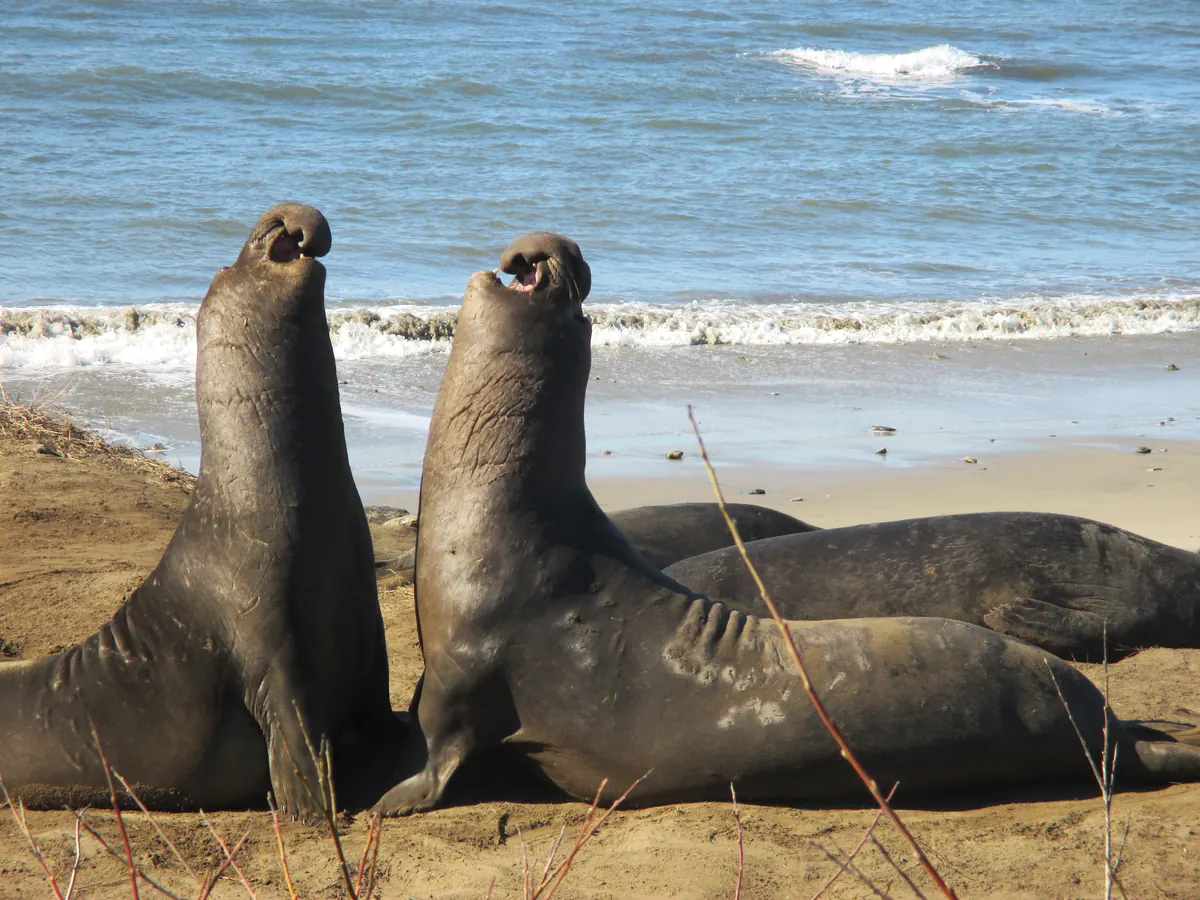
The nursery turns into a weaning ground. Births are tapering off after their January peak, and mating reaches its height in mid-February, so the big bulls are at their noisiest and most combative. Each mother, having fasted ashore for about five weeks, mates and then heads back to the ocean to feed. Her pup stays behind. The Friends of the Elephant Seal put the exchange plainly: for every pound the pup gained while nursing, its mother lost two.
-
Weaner pods
Building through February · Piedras Blancas boardwalks, Highway 1 north of San Simeon
Weaned pups, called weaners, gather in loose groups at the back of the beach and lie about together, living off their blubber. Look at their coats: the black birth fur is being shed, and silvery new hair shows through in patches. Some weaners already venture into the shallows at the water’s edge before their first real trip to sea.
-
Bulls at the height of the season
Mid-February · Any of the big rookeries
With most females ready to mate, the dominant bulls guard their harems hard. A challenger rears up, chest to chest with the beachmaster, and the two slam their heads and necks together, trumpeting through their long noses. Count how many bulls you can see and which one the others give way to.
-
Año Nuevo walks
Guided walks only, through March · Año Nuevo State Park, San Mateo County
The guided walks continue through the season, and February brings a different scene from December: fewer births, more weaners, and mothers leaving. Walks are booked through ReserveCalifornia 56 days ahead, according to State Parks, so a February visit needs to be planned in December or early January.
Weaned pups look tame and curious, but they are wild animals that bite, and an adult female can move fast. Watch from the boardwalks and overlooks. The busy birthing weeks are covered on California’s January page.
Will the desert bloom early in an El Niño year?
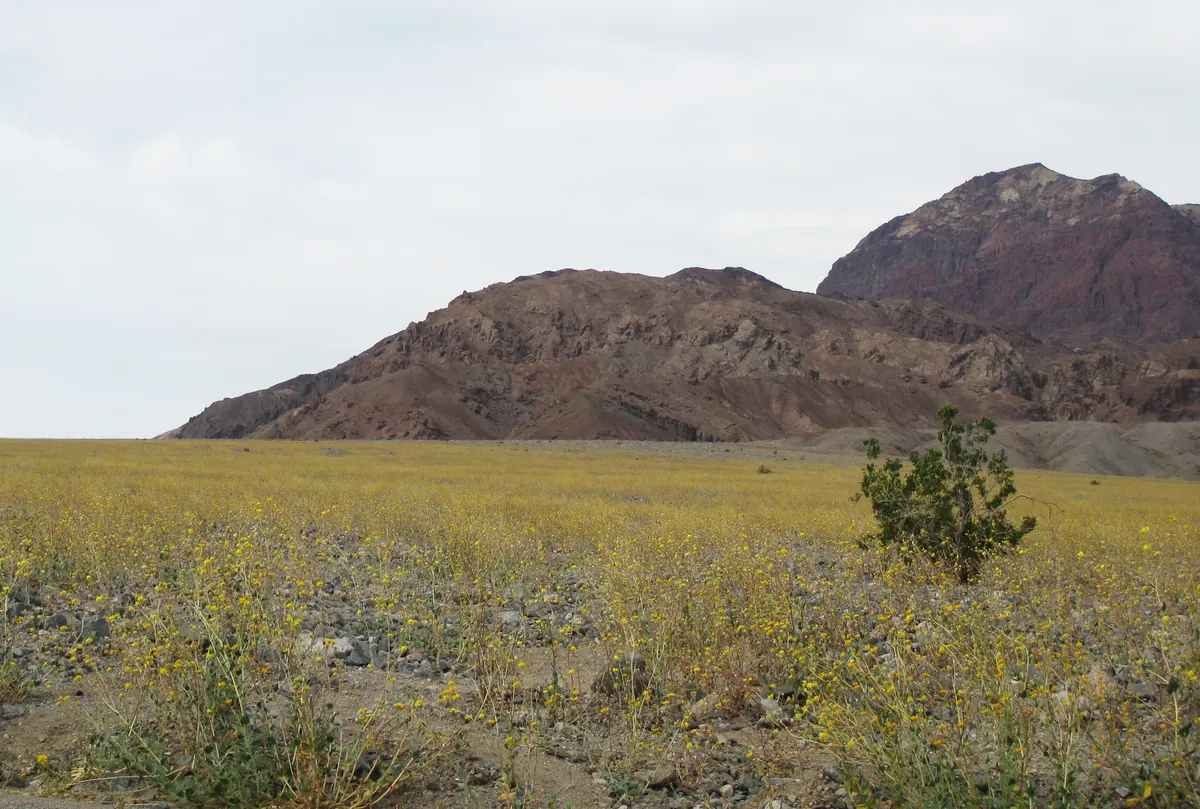
It might, and February is when to start watching. Death Valley National Park says the lowest elevations bloom from mid-February to mid-April on alluvial fans and foothills, led by desert gold and phacelia. The park counts a true superbloom about once a decade, naming 2026, 2016, 2005 and 1998 as the most recent. Its explanation of what makes one is the interesting part for this winter: an early soaking storm in September or October, then an El Niño pattern bringing above-average rain to the desert Southwest. The 1997–98 and 2015–16 winters were both very strong El Niños.
-
What the seeds need
Rain from fall through early spring · Low desert valleys and fans
Death Valley’s rangers say it takes a rainstorm of at least half an inch to wash the protective coating off wildflower seeds, and that storms then have to keep coming at fairly even intervals through winter and spring. Too little rain and seeds stay dormant; a long dry gap or early heat and the young plants wither. In 2026 the park’s superbloom lasted only about two weeks before early heat ended it in late March.
-
Death Valley's low country
Mid-February onward in a good year · Badwater Road and the fans south of Furnace Creek
In bloom years, desert gold, a sunflower relative with bright yellow heads, can carpet the gravel fans beside Badwater Road. Look also for brown-eyed and golden evening primroses. The park warns that phacelia, with its curled clusters of purple flowers, can cause an itchy rash, so don’t handle it.
-
Anza-Borrego
Main season typically from mid-February · Borrego Springs and the valley floor of Anza-Borrego Desert State Park
California State Parks said in its January 2026 bloom notice that the main wildflower season at Anza-Borrego usually begins in mid-February. The visitor center west of Borrego Springs is the place to ask which washes and roads are showing color that week.
No one can promise a bloom in advance. Rain at the right times matters more than the total, and the El Niño signal is only a tilt in the odds. Stay on roads and trails, never pick, and leave room for others on narrow shoulders.
When do monarchs leave California’s winter groves?
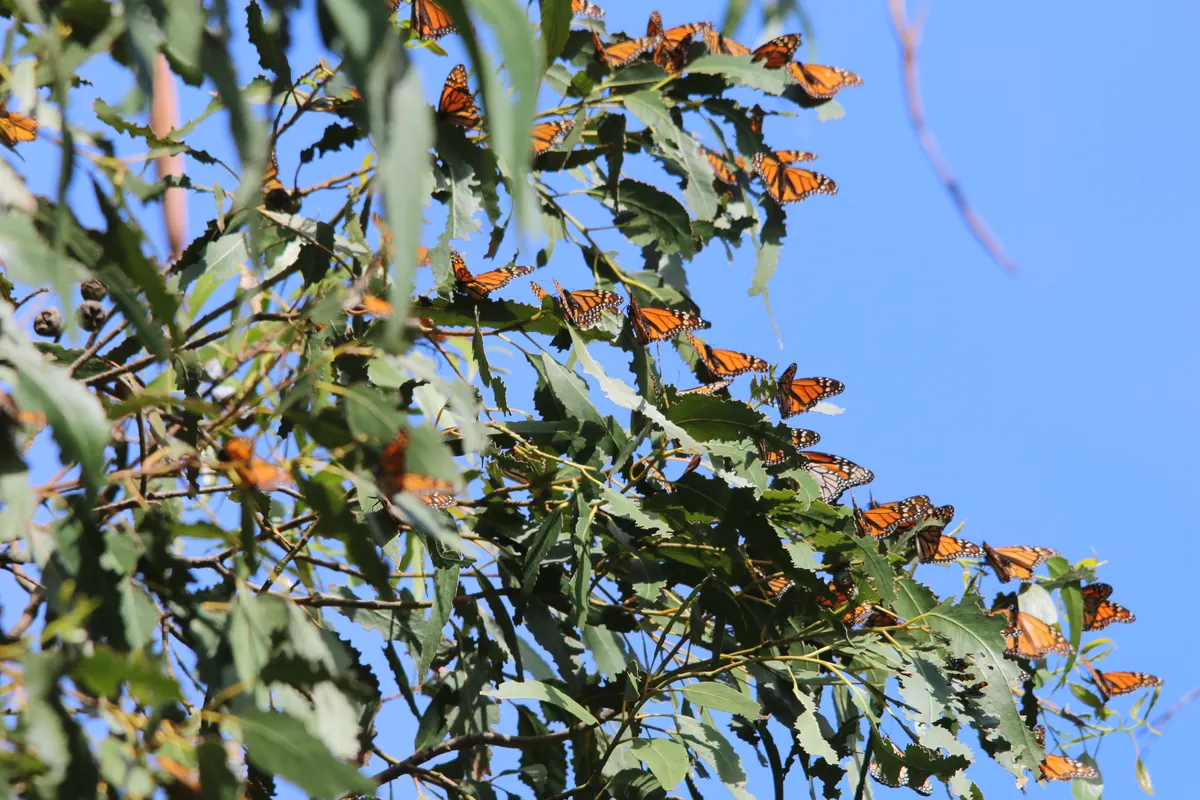
Mostly in February and March. Through the cold months the western monarchs sit in tight clusters on eucalyptus, Monterey pine and cypress, barely feeding. As the days lengthen and warm, they end their winter dormancy, mate at the grove, and disperse inland to look for young milkweed. The Western Monarch Milkweed Mapper, run by the Xerces Society and partners, says monarchs leave the overwintering sites in February and March, and that their descendants reach the northern edge of the western range by early to mid-June.
-
Mating flights at the groves
Warm, sunny February days · Pismo State Beach Monarch Butterfly Grove; Natural Bridges State Beach, Santa Cruz
On a warm afternoon the clusters loosen, butterflies open their wings to bask, and pairs tumble to the ground or a low branch, joined end to end. State Parks gives the Pismo grove’s season as November through February, with butterflies present until about mid-February. Go early in the month, on a sunny day, and look up into the sunlit branches rather than the shade.
-
Following them inland
February and March · Gardens and roadsides with sprouting milkweed
The Xerces Society reported in late February 2026 that cluster break-up and the spring migration were already well under way, with radio-tagged monarchs found up to 90 miles inland from Central Coast groves. Report the first monarch you see away from the coast to Journey North; early sightings help researchers track where the spring generation begins.
-
A small population
This winter · Coastal overwintering sites
The final Western Monarch Count of last winter, ending January 11, 2026, found 6,464 monarchs at 193 sites, 47 percent below the mid-season count of 12,260, a decline within the 35 to 58 percent seen over the past ten years. Xerces warned that numbers this low make a quick rebound less likely. Even a few dozen butterflies in a grove are worth a quiet visit.
Don’t touch, shake or net clustered monarchs; a grove is a resting place, and every butterfly that survives the winter matters for the spring generation.
Why are newts crossing roads on rainy nights in February?
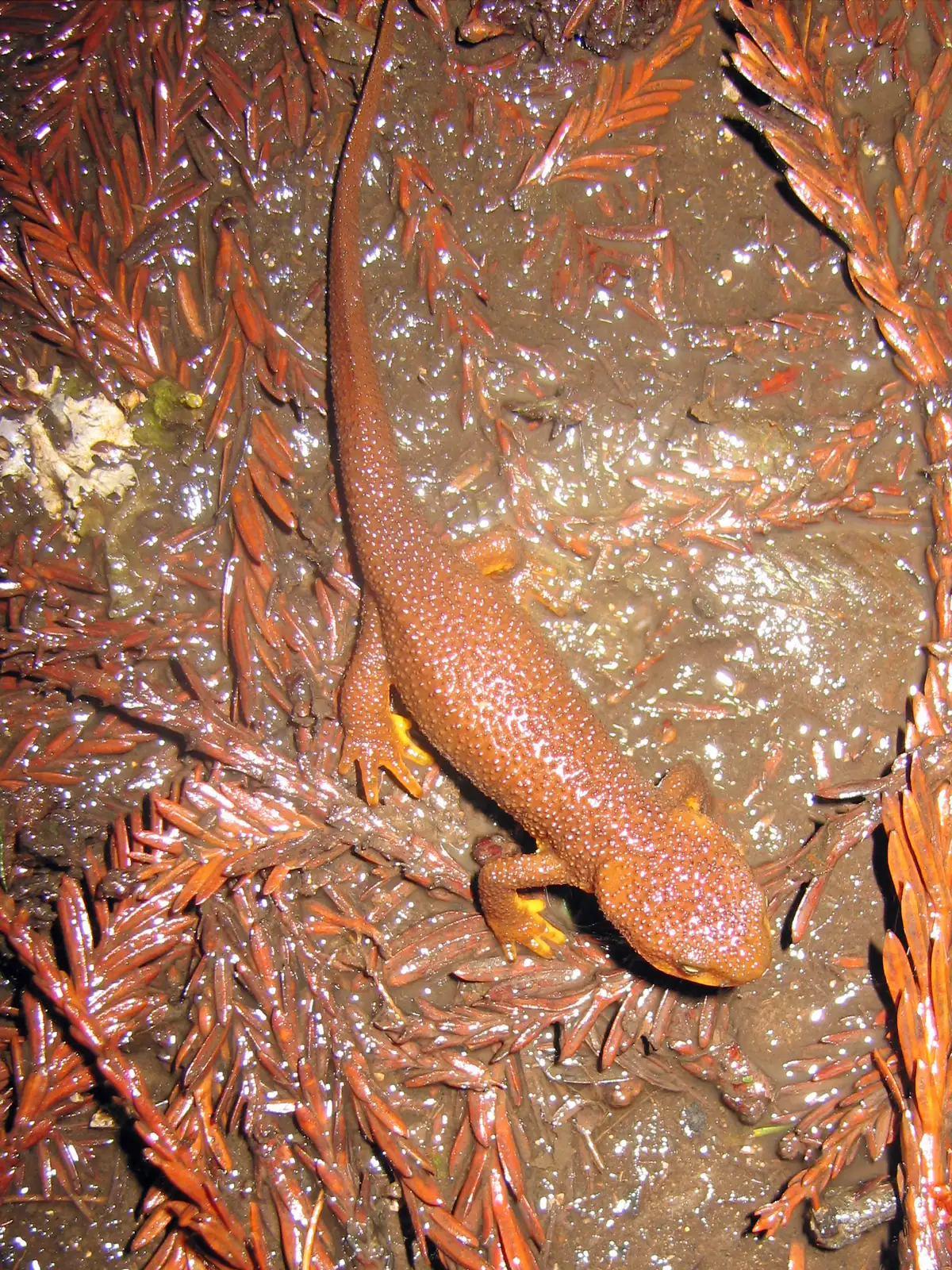
They are walking to their breeding pools. California newts spend the dry months underground in woods and grassland, then move to ponds, reservoirs and slow creeks once the rains have soaked in. CaliforniaHerps.com says the migration typically begins anywhere from late December to February depending on rainfall, while populations that breed in stream pools migrate later, typically in March and April. A wet, mild evening in February can bring hundreds of them across a single stretch of trail or road.
-
California newt
Rainy nights; also overcast days · Coast Ranges from Mendocino County to San Diego County; a separate population in the southern Sierra foothills
A chunky, rough-skinned salamander about three inches long, brown above and yellow-orange below, with eyes that bulge past the outline of its head. The skin carries tetrodotoxin, the same nerve poison found in puffer fish, so look but don’t pick one up. Females attach round egg masses of 7 to 47 eggs to underwater plants and rocks, and lay several masses each.
-
The Alma Bridge Road crossing
November through March, heaviest after rain · Lexington Reservoir, Santa Clara County
Newts moving down from the hills of Sierra Azul Open Space Preserve to Lexington Reservoir must cross Alma Bridge Road. Midpeninsula Regional Open Space District counts it among the largest recorded wildlife roadkill events in California, with more than 34,000 dead newts logged by volunteers since 2017, and about 39 percent of some 14,000 adults killed in the winter of 2020. Midpen and Santa Clara County are working on designs for wildlife passages under the road. If you drive there on a wet night, go slowly.
-
Treefrog choruses
Evenings after rain · Ponds, ditches and wet meadows statewide
California’s small treefrogs (now split into three species: Northern Pacific, Sierran and Baja California treefrogs) breed from November into July depending on place, so on a wet February evening many lowland ponds already ring with them. The call is the classic two-part “rib-it,” rising at the end. Stand quietly at a pond edge after dark and count how many voices you can pick out.
Volunteer Newt Patrol surveys along Alma Bridge Road help document the problem; the Green Foothills species page explains how to join. Wash your hands after any field day near ponds, and never move amphibians between sites.
Which birds are leaving, arriving and nesting in California in February?
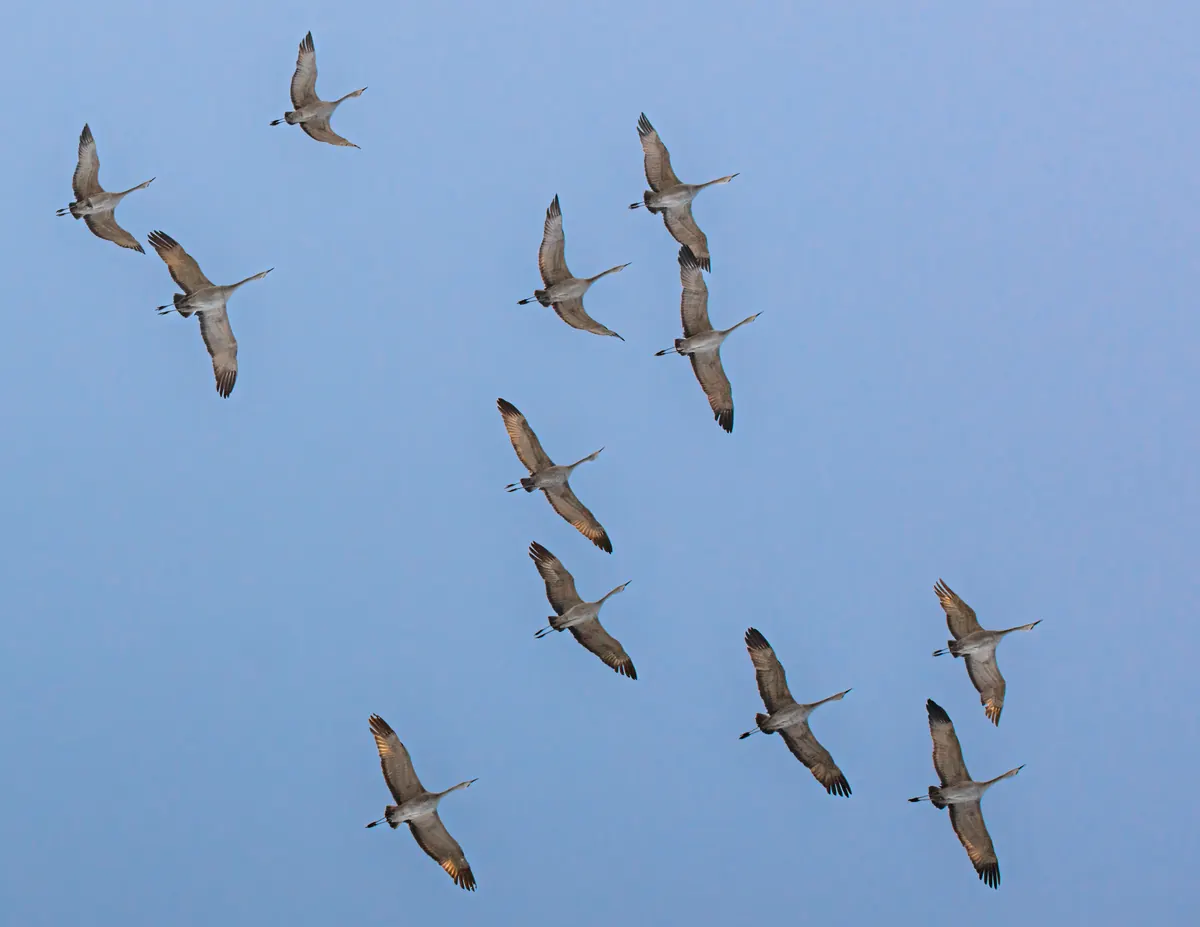
All three at once. Cranes and geese that have wintered in the Central Valley begin to drift north, the first spring hummingbirds arrive along the coast, and the resident hummingbirds and owls are already raising young. It is also the month of the Great Backyard Bird Count.
-
Sandhill cranes on the move
Leaving from early February; mostly gone by mid-March · Cosumnes River Preserve, Woodbridge Ecological Reserve, Staten Island Road
The Cosumnes River Preserve says its cranes begin leaving in early February and are generally gone by mid-March, so the earlier in the month you go, the more you will see. Sunrise and sunset are the best times to watch them flying out from the roost and back in. CDFW normally schedules its docent-led Woodbridge walks for the opening three weekends of every month in the season, February being the last, and opens bookings for a given month at midday on the first workday of the preceding one. This season’s calendar was still blank when we checked, so confirm with CDFW before planning around it.
-
Allen's hummingbird returns
Late winter · Coastal scrub and gardens from Southern California north
Audubon notes that the migratory Allen’s hummingbirds move north up the Pacific Coast in late winter, while a second, nonmigratory population lives year-round on the Channel Islands and parts of the nearby mainland, such as the Palos Verdes Peninsula. The male’s courtship flight is a deep J-shaped dive ending in a metallic whine. Anna’s hummingbirds, which can begin nesting in December, may by now be sitting on tiny cup nests bound with spider silk and decorated outside with lichen.
-
Bald eagles in the Klamath Basin
Mid-February · Lower Klamath and Tule Lake national wildlife refuges
The Klamath Basin Birding Trails guide says bald eagle numbers in the basin generally peak in mid-February, with good numbers from early December to mid-March. The big waterfowl push north follows later, with the guide placing the spring peak in late March or early April.
-
Great Backyard Bird Count
Friday to Monday, February 12–15, 2027 · Anywhere
Audubon and Birds Canada both list the 30th annual count for February 12 to 15, 2027, across the Presidents’ Day weekend. Count for at least 15 minutes on one or more days and enter your list through eBird or the Merlin app. In California a single morning at a marsh edge can produce wintering ducks, the last of the geese and a hummingbird or two at the flowering shrubs.
Great horned owls are deep into nesting now. If you notice a large owl hunkered motionless in a borrowed hawk or crow nest high in a eucalyptus or cottonwood, it is probably brooding eggs or downy chicks, so keep your distance and keep voices low.
What is blooming in California in February?
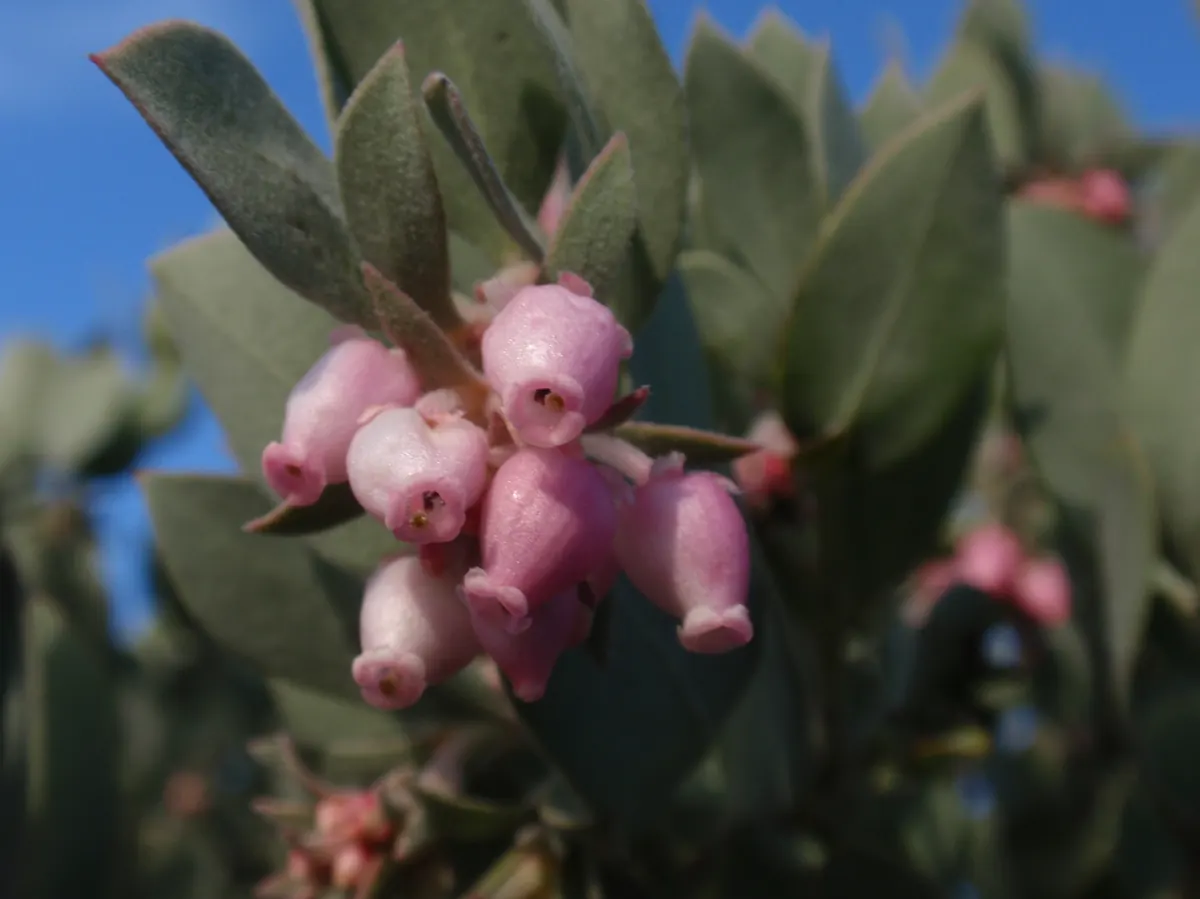
Shrubs and small wildflowers in the coastal hills and foothills. With the soil wet and the days lengthening, February is a good month for manzanitas, which flower in winter and spring, and the first woodland wildflowers open under the oaks.
-
Manzanita
Winter into spring · Chaparral and rocky slopes, coast to foothills
Look for hanging clusters of small urn-shaped flowers, white to pink, against smooth red bark. Calscape, the California Native Plant Society’s plant site, says bigberry manzanita alone is visited by 81 species of native bees, and that Anna’s and Allen’s hummingbirds take its nectar. Put your ear to a blooming bush on a sunny day and listen to the hum.
-
Warrior's plume
Winter and spring · Chaparral, oak woodland and pine forest at low elevation
Dense spikes of deep red to bright pink flowers rising from fern-like leaves, about two feet tall. Calscape explains that this plant can tap into the roots of manzanitas and other heath-family shrubs for water and nutrients, so it often grows beneath them. Finding one is a good reason to look for its host nearby.
-
Milkmaids
January to May in the Bay Area · Shady slopes, open woodland and grassland
One of the earliest wildflowers in the hills: a low plant with four-petaled white or faintly pink flowers about half an inch across. Calscape records it from Washington to Baja California. Look for it on north-facing slopes and trail banks under oaks, often the only thing in bloom on a gray February walk.
Inland valleys can still freeze on clear February nights. Before planting out tender seedlings, look up your nearest station on California’s frost date tables.
Does a strong El Niño make February wet in California?
Sometimes very wet, but not reliably. The two strongest El Niños before this one show both sides. In February 1998, the National Weather Service office in San Diego lists storm after storm over Southern California: heavy rain on February 3 and 4, catastrophic flooding in Orange County from February 6 to 9, a powerful storm on the 14th and 15th, and on the 23rd and 24th a storm that dropped 2 to 5 inches of rain, sent mud through homes in Laguna Beach, killed two people and caused an estimated $100 million in damage. February 2016, in another very strong El Niño, went the other way: the Weather Service office in Hanford reports no measurable rain in the central California interior from the 3rd until the 17th, and record highs around 15 to 20 degrees above average on the 9th.
Climate.gov’s review of past El Niño winters finds that very strong events such as 1982–83 and 1997–98 brought much-above-median rain to the whole state, but that results in other strong years were mixed. The September 10, 2026 ENSO discussion from NOAA’s forecasters put the odds of a very strong event above nine in ten through the 2026–27 winter, and the state’s Weather Service offices, in their mid-September 2026 guide, put it simply: even very strong El Niños do not bring the expected impacts everywhere. They also note that warm storms raise the snow line, while still piling snow on the high Sierra. NOAA’s seasonal outlooks, updated each month, are posted at the CPC seasonal outlooks link, where the newest maps replace the old each month. For storms in the coming week or two, follow the forecast for your area, and see what the sky is doing on the cloud outlook.
How much daylight does California gain in February?
From just under 50 minutes in San Diego to more than an hour on the North Coast, and the pace quickens each week. The gain grows until the March equinox, so February adds more than January did. On the 28th, Los Angeles has a day about 11 hours and 25 minutes long. The groundhog has its say on Tuesday, February 2, a day or so ahead of the real hinge of the season: measured between solstice and equinox, astronomical winter reaches its halfway mark on February 3 to 4.
| City | Feb 1 | Feb 28 | Gained | Per day |
|---|---|---|---|---|
| Eureka | 10 h 07 m | 11 h 15 m | 68 min | 2.5 min |
| Redding | 10 h 08 m | 11 h 15 m | 67 min | 2.5 min |
| Sacramento | 10 h 16 m | 11 h 18 m | 62 min | 2.3 min |
| San Francisco | 10 h 19 m | 11 h 19 m | 60 min | 2.2 min |
| Fresno | 10 h 24 m | 11 h 21 m | 57 min | 2.1 min |
| Los Angeles | 10 h 33 m | 11 h 25 m | 52 min | 1.9 min |
| Palm Springs | 10 h 34 m | 11 h 26 m | 52 min | 1.9 min |
| San Diego | 10 h 38 m | 11 h 27 m | 49 min | 1.8 min |
Clocks spring forward at 2 a.m. on Sunday, March 14, pushing California sunsets an hour later in one jump. For sunrise and sunset at a particular beach or trailhead, use the daylight calculator.
What can I see in California’s night sky in February?
-
Mercury's best evening showing
Late January to about February 10; best around February 2 · Low in the west-southwest, 30 to 45 minutes after sunset
In Pacific time, Mercury’s widest evening separation from the Sun comes on February 2. Five evenings later, on Sunday the 7th, a hairline crescent moon one day old hangs close to the planet in the afterglow. An ocean horizon is ideal for catching both.
-
Jupiter at opposition
Wednesday, February 10 · Rises in the east at sunset; up all night
Earth lines up between the Sun and Jupiter at 4:21 p.m. Pacific, so the giant planet comes up in the east as the Sun goes down, outshining every star at magnitude −2.5. Brace binoculars on a fence rail and look for the Galilean moons strung out beside it like beads.
-
Mars at opposition
Friday, February 19 · East after dark, near Jupiter in Leo
Opposition comes during the morning of the 19th, Pacific time, and the closest approach on the 20th, at roughly 63 million miles. Because Mars is almost at aphelion this year, it stays small even in a telescope and reads to the eye as a strong orange star. Overnight from the 19th to the 20th, the almost-full moon slides right past Jupiter.
-
The Snow Moon
Saturday, February 20 · Rises in the east at dusk
Full at 3:23 p.m. Pacific, so in California it rises already full; Los Angeles sees it come up at 5:46 p.m. Some almanacs count it as a supermoon, while others don’t, so call it a near-supermoon. A faint penumbral eclipse happens that afternoon, but it ends at about 5:13 p.m. Pacific, before the moon clears the horizon, so none of it is visible in California. The ring-of-fire eclipse on February 6 is a South American and African event, with no part of it seen from any U.S. state.
-
Venus and Saturn
All month · Venus in the southeast before dawn; Saturn low in the west-southwest after dusk
Venus remains a brilliant morning star. Saturn slips a little deeper into the dusk every week, heading toward its April conjunction with the Sun.
| Phase | Date | Time |
|---|---|---|
| New moon | Saturday, Feb 6 | 7:56 a.m. |
| First quarter | Saturday, Feb 13 | 11:58 p.m. |
| Full moon (Snow Moon) | Saturday, Feb 20 | 3:23 p.m.; looks full Feb 19 to 21 |
| Last quarter | Saturday, Feb 27 | 9:16 p.m. |
The darkest evenings for the desert and mountain skies fall from about February 2 to 11, around the new moon. Plan a trip with the moon phase calendar and check cloud cover the day before.
What can families do outdoors in California in February?
- Great Backyard Bird Count, February 12–15. A 15-minute count at a feeder or park is enough to take part; birdcount.org has the instructions.
- A weaner visit. The Piedras Blancas boardwalk is free and open daily, and the pods of weaned pups are easy for small children to watch.
- A crane evening. Watch cranes fly in at sunset from the Cosumnes River Preserve boardwalk, or check CDFW’s Woodbridge tour page for the season’s schedule, since tours have run the first three weekends of each month through February and require advance registration.
- A last look at the monarchs. The Pismo grove’s season runs into mid-February; choose a warm, sunny day.
- Whale direction game. At Point Vicente or Cabrillo, each person keeps a tally of whales heading north and south. Cabrillo usually holds a whale watch weekend in late January or early February; check the park calendar for the 2027 date.
- A treefrog listening walk. After a rain, visit a pond at dusk and count calling frogs. Look, don’t touch, if a newt crosses the path.
- A desert flower drive. If the bloom starts, Anza-Borrego and Death Valley’s Badwater Road make good day trips; call the visitor centers first.
- Planets from the porch. Find Jupiter on February 10 and Mars on February 19, side by side in the evening sky.
Project FeederWatch continues through the winter for families who want a weekly count. Plan other months on the nature calendar, and record what the children find in the Naturalist’s Field Journal, one page per trip.
What should I watch out for in California in February?
- Hunting seasons. General duck seasons closed in January, but CDFW’s 2026–27 waterfowl regulations still have hunts in February: veterans and active military days on February 6–7 and youth waterfowl days on February 13–14 in the Balance of State, Southern San Joaquin Valley and Southern California zones (youth days also in the Colorado River zone); late seasons in the Balance of State zone for Canada geese on February 20–21 and for white geese and whitefronts on February 20–24; a Northeastern zone late season for white geese and whitefronts from February 5 to March 10; Canada geese in the North Coast Special Management Area from February 12 to March 10; and white geese on set dates in the Imperial County Special Management Area. Falconry seasons for upland birds run to February 28, rabbits and tree squirrels closed January 31 (rabbits stay open to falconers until March 21), jackrabbits and wild pigs are open year-round, and spring turkey season opens March 27. California has no general blaze-orange rule, but CDFW makes it mandatory on its junior hunts and recommends it in hunter education. Wear something bright on refuges and wildlife areas and check each area’s shoot days.
- Storms, floods and debris flows. Turn around at any flooded dip or crossing. When a soaking storm is on the way, stay out of steep canyons downslope of recent wildfire scars, and leave promptly if officials order it.
- Big surf. Winter swells can run far up beaches and over rocks without warning. Keep children well back while watching seals and whales.
- Mountain snow and avalanches. Mountain highways can require chains at short notice, so pack them with extra food and layers. Anyone heading off groomed trails should first check the day’s danger rating from the Sierra Avalanche Center.
- Toxic and itchy things. Don’t handle newts, and wash your hands if you do by accident. Avoid brushing against phacelia in the desert.
- Desert travel. Even in February, carry plenty of water, tell someone your route, and expect no phone signal in much of Death Valley and Anza-Borrego.
Sources
- National Park Service: whale watching at Cabrillo National Monument
- American Cetacean Society Los Angeles: gray whale census and today’s count
- NOAA Fisheries: gray whale population abundance (updated July 17, 2026)
- NOAA Fisheries: gray whale condition and calf production
- National Park Service: whale watching at Point Reyes
- Friends of the Elephant Seal: February at Piedras Blancas
- Friends of the Elephant Seal: visiting the rookery
- California State Parks: Año Nuevo State Park
- National Park Service: Death Valley wildflowers
- California State Parks: colorful wildflower displays expected at desert state parks (January 23, 2026)
- California State Parks: Anza-Borrego Desert State Park
- Western Monarch Milkweed Mapper: western monarch biology
- Xerces Society: western monarchs head into spring with a small migratory population (February 27, 2026)
- Xerces Society: Western Monarch Count
- California State Parks: Pismo State Beach Monarch Butterfly Grove
- California State Parks: Natural Bridges State Beach
- Journey North: monarch sightings
- CaliforniaHerps.com: California newt
- CaliforniaHerps.com: Pacific treefrogs in California
- Midpeninsula Regional Open Space District: Newt Passage Project reaches a major milestone
- Green Foothills: species spotlight, California newts
- Cosumnes River Preserve: see the sandhill cranes
- CDFW: Sandhill Crane Wetland Tours, Woodbridge Ecological Reserve
- Audubon Guide to North American Birds: Allen’s hummingbird
- Audubon Guide to North American Birds: Anna’s hummingbird
- Klamath Basin Birding Trails: frequently asked questions
- Audubon: Great Backyard Bird Count, February 12–15, 2027
- Birds Canada: Great Backyard Bird Count
- Great Backyard Bird Count
- Calscape (California Native Plant Society): bigberry manzanita
- Calscape (California Native Plant Society): warrior’s plume
- Calscape (California Native Plant Society): milkmaids
- National Weather Service San Diego: a history of significant weather events in Southern California
- National Weather Service Hanford: February 2016 weather summary for the central California interior
- NOAA Climate.gov: United States El Niño impacts
- Climate Prediction Center: ENSO diagnostic discussion, September 10, 2026
- Climate Prediction Center: seasonal outlooks (winter outlook issued October 15, 2026)
- National Weather Service California offices: El Niño in California, information and preparedness guide (mid-September 2026)
- U.S. Naval Observatory: moon phases, February 2027
- U.S. Naval Observatory: Earth’s seasons, 2027
- Fred Espenak: Sky Event Almanac 2027
- EarthSky: Jupiter at opposition
- NASA eclipse website: lunar eclipses 2021–2030
- NASA eclipse website: solar eclipses 2021–2030
- Old Farmer’s Almanac: eclipse dates
- Project FeederWatch: how to participate
- CDFW: 2026–27 waterfowl seasons by zone
- CDFW: 2026–27 upland game bird seasons
- CDFW: wild pig hunting
- CDFW: junior hunt information (blaze orange mandatory)
- CDFW: hunter education course materials (fluorescent orange)
- Sierra Avalanche Center: avalanche forecasts
- Photos via Wikimedia Commons; licenses and photographers are credited under each picture
