What to look for in nature in California this January
Midwinter on the calendar, January is California’s month of births and big numbers. More elephant seal pups arrive now than in any other month, the gray whale procession past the headlands reaches its height, bald eagles gather by the hundreds over the marshes and fields of the far north, and the coastal hills, green after the rains, put out their first currant and gooseberry flowers. The Sierra snowpack deepens toward its spring peak, the supermoon of January 22 lifts the winter’s last king tides, and the afternoons stretch: Los Angeles sees its first 5 p.m. sunset of the year on January 7. What follows covers each of these, with the places, the dates and the sources.
Other months in California: October, November, December, February.
Start here
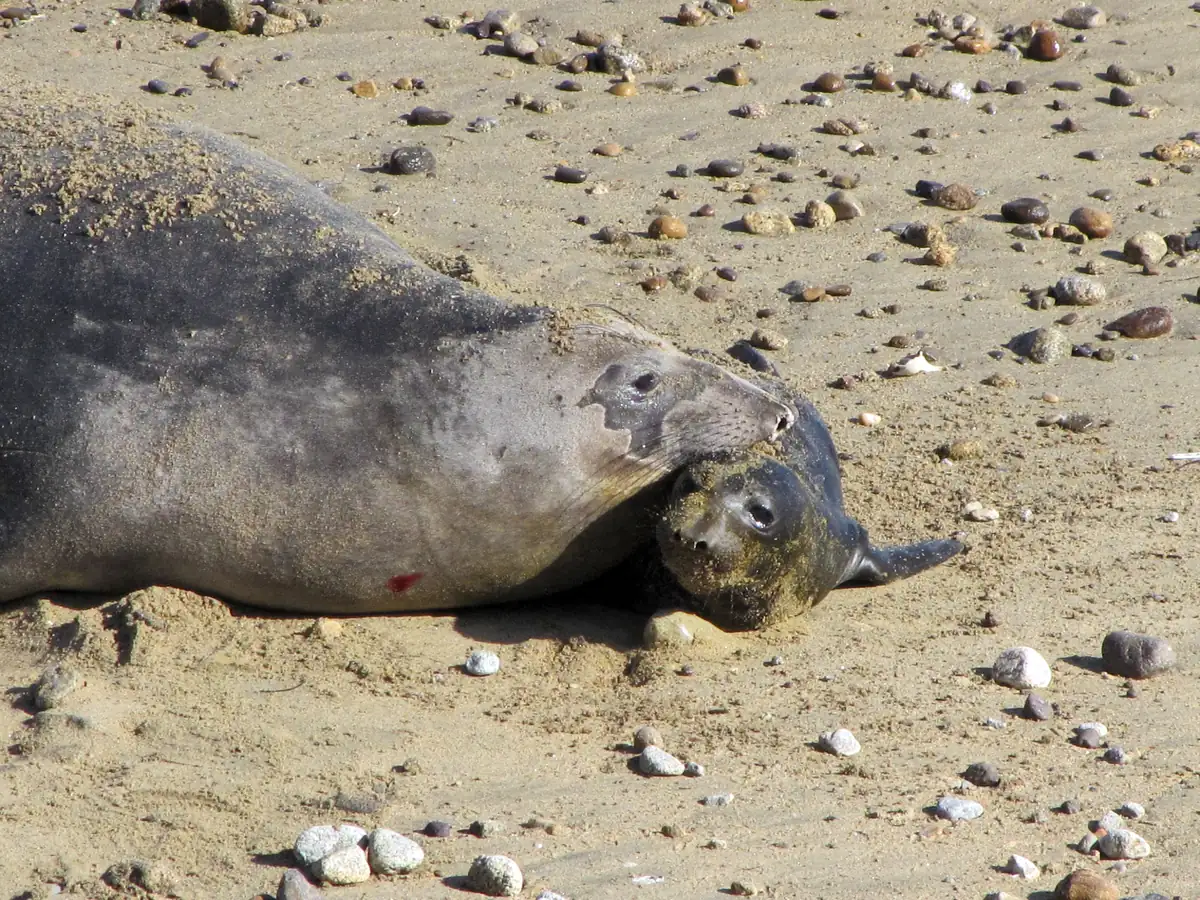
- Visit a seal nursery. January is the top month for births at the Piedras Blancas rookery, and Point Reyes biologists expected seal numbers on their beaches to peak in the last week of January 2026. The Piedras Blancas boardwalk is free every day; Año Nuevo is seen only on a reserved guided walk.
- Watch for blows at the peak of the migration. Cabrillo National Monument names mid-January as the high point of the gray whale passage. Choose a calm morning, a high bluff and a pair of binoculars, and watch for a short, bushy spout that hangs for a moment and fades.
- Go out for the king tides. The Coastal Commission lists January 21 and 22 as this winter’s last statewide king tides, which coincide with the nearest full moon of 2027. Photograph a familiar shoreline at the morning high, then come back for the afternoon minus tide.
In the Naturalist’s Field Journal, keep a mammal watch for a nursing elephant seal and her pup, log every eagle and goose on your “birds I have seen” page, draw a currant or gooseberry twig on the tree through the seasons page, turn to tracks to know after a mountain snowfall, and fill in the same place twice at one cove, first at the king-tide high and then at the minus tide.
Regions used below: North Coast and the redwoods; Shasta Cascade and the far north; Sacramento Valley; Bay Area; Central Coast; Sierra Nevada and the Eastern Sierra; San Joaquin Valley; Southern California coast and Los Angeles; Mojave and Colorado deserts; San Diego.
When are most elephant seal pups born in California?
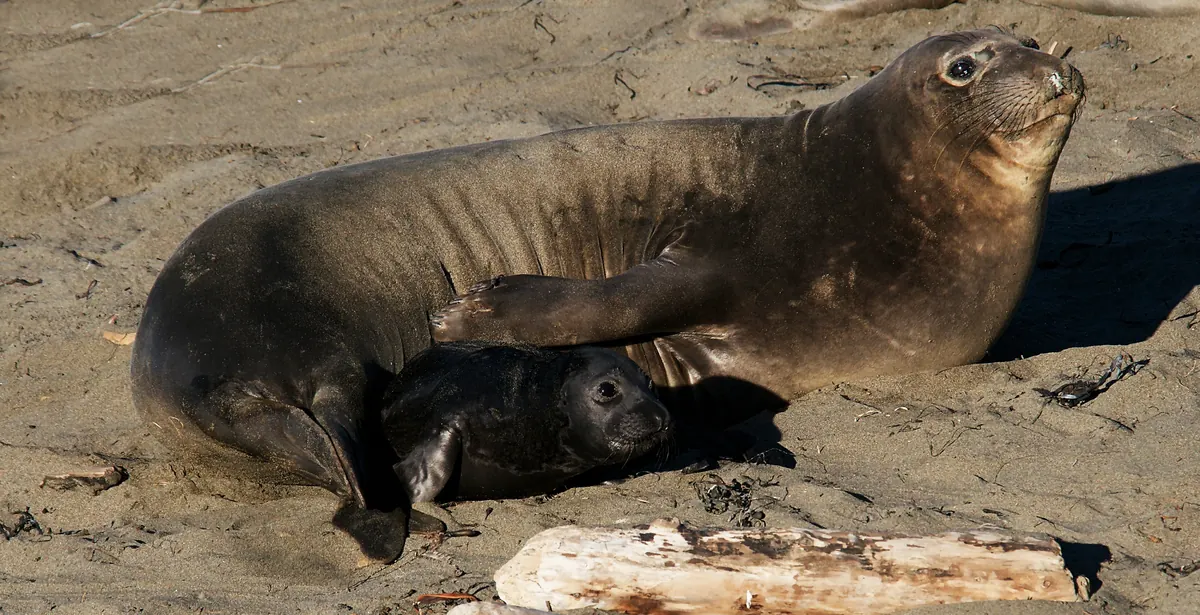
In January. December’s bulls have settled their ranking, and now the beaches fill with pregnant females who give birth within days of hauling out. The Friends of the Elephant Seal call January “the month with the most births” at Piedras Blancas. A pup is born at about 70 pounds and, on milk that grows from 12 to 60 percent fat, reaches roughly 300 pounds in a month, while its mother, fasting through her five weeks ashore, loses about 40 percent of her weight. Late in nursing she mates with the harem bull and returns to sea, leaving the weaned pup to live on its blubber for two or three months before its first trip into the ocean.
-
Piedras Blancas
Daily, dawn to dusk; births busiest in January · Viewing boardwalks on Highway 1, about 7 miles north of San Simeon
The easiest nursery in the state to watch: no fee, no booking, and a boardwalk right above the sand. Watch a mother roll to let a black, bleating pup nurse while nearby a bull rears up and bellows at a rival. Count the pups you can see, and note which still have the loose, wrinkled skin of their first days and which have begun to fill out.
-
Año Nuevo State Park
Guided walks only, December to March · San Mateo County coast, south of Pescadero
State Parks says up to 10,000 elephant seals use this colony over the year. In the breeding season you can see them only on a guided walk, a moderate three- to four-mile round trip over dunes taking two and a half to three hours. Walks are booked on ReserveCalifornia 56 days ahead, so a January visit has to be planned in November or December.
-
Point Reyes National Seashore
Most seals ashore in late January · Elephant Seal Overlook near Chimney Rock; Drakes Beach near the Kenneth C. Patrick Visitor Center
The park’s biologists expected the 2025–26 count to peak around the last week of January and said on January 30 that the peak had passed; the season’s maximum was 1,248 adult females and 1,080 pups on park beaches, with 988 weaned pups counted by March 2. Pregnant females have reached Drakes Beach in late January in recent winters, but access there is limited, so check the park’s current conditions page. The Chimney Rock fish dock area is closed December 15 to March 31, and the beach below Chimney Rock and the southern end of South Point Reyes Beach are closed to protect pups, so watch from the overlook, where docents help on weekends and holidays.
Stay at least the length of a school bus from any seal on an open beach, and never step between a mother and her pup. The arrival of the bulls is covered on the December page for California.
When is the peak of the gray whale migration in California?
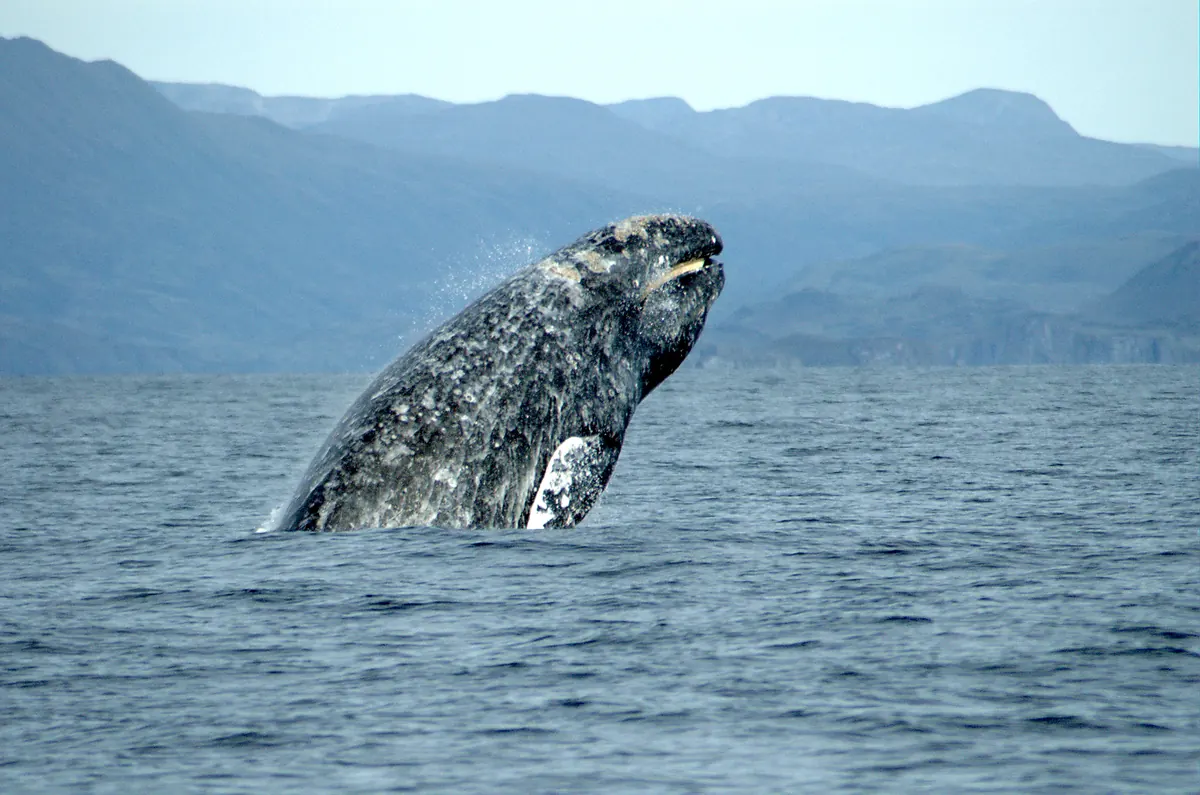
Mid-January. The whales left their Arctic feeding grounds in the fall and are bound for the warm lagoons of Baja California, swimming close to shore for much of the way. Cabrillo National Monument puts the peak of the southbound migration at mid-January and says your chances are best in good weather in January and February. NOAA Fisheries has counted the same passage since 1967 from a field station at Granite Canyon, south of Monterey, where observers work three-hour shifts with binoculars and infrared cameras pick up the warm breath of whales passing at night. The survey runs from December through February.
-
How to recognize a gray whale from shore
Calm mornings · Any high headland, such as the Point Reyes Lighthouse or Chimney Rock
Point Reyes rangers describe the gray whale spout as short and heart-shaped, where a humpback’s is tall and straight. A blow is warm breath condensing in cool air and lasts only seconds, so wind and whitecaps hide it easily. After the spout, look for a long, mottled back with no dorsal fin.
-
The Point Vicente count
Every day of the season, daylight hours · Point Vicente Interpretive Center, Rancho Palos Verdes
Volunteers of the American Cetacean Society’s Los Angeles chapter keep a running tally of every gray whale they see from the bluff and post it online each day. Their 42nd season, which ended in May 2026, logged 214 southbound grays and 445 northbound, after a 2024–25 season in which the southbound count of 130 was the lowest they had recorded. Check the daily number before you drive out.
-
Cabrillo’s whale weekend
Late January or early February each year · Cabrillo National Monument, Point Loma, San Diego
The park holds a Whale Watch Weekend and Intertidal Festival every year in late January or early February. The park had not announced its 2027 weekend by early October; watch its event calendar. On any clear day, stand on the high ground by the Kelp Forest Overlook or beside the old lighthouse and face west.
Wind is the whale watcher’s enemy. Pick a morning when the local forecast shows light wind and a smooth sea, and record each blow in your journal: the time, the direction of travel, and how many animals.
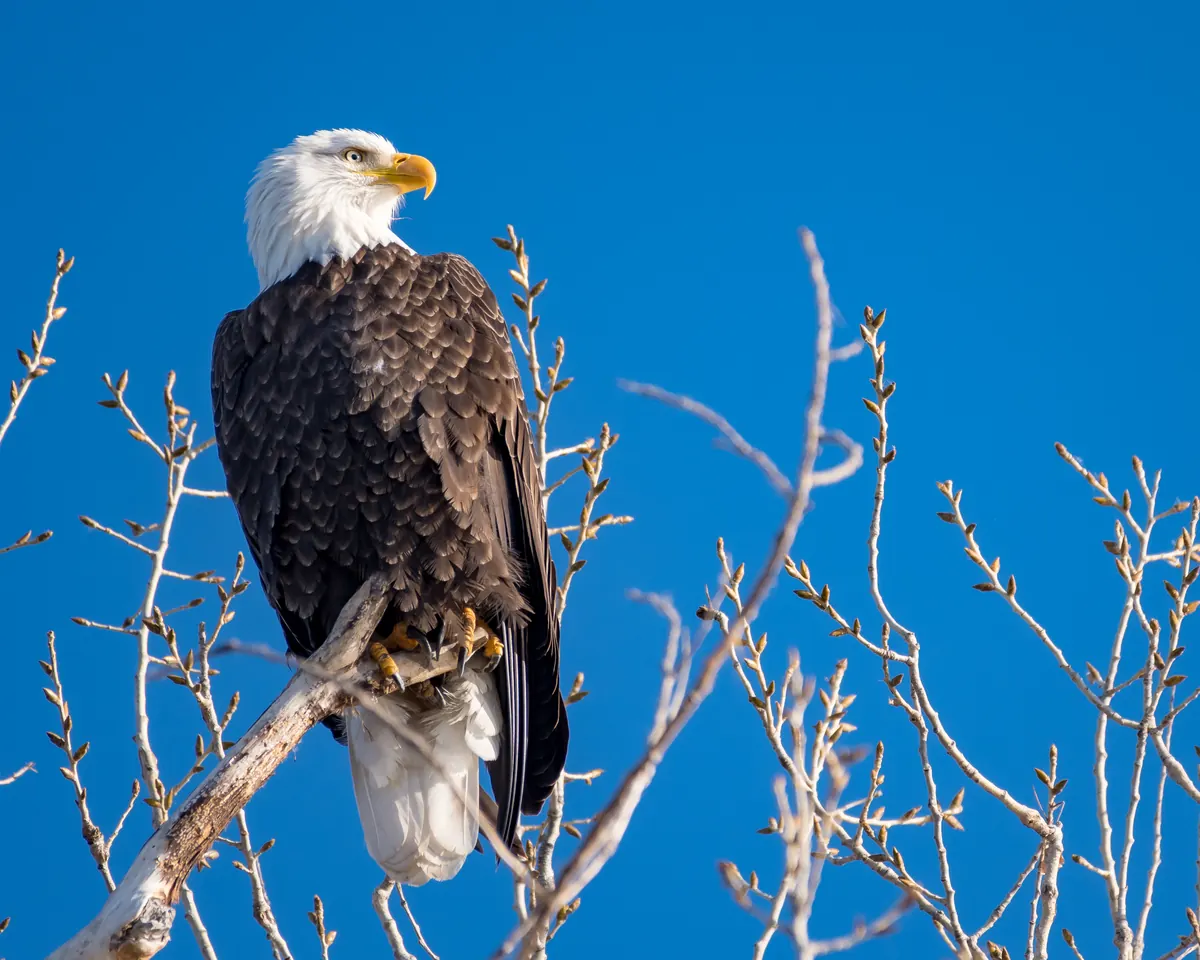
Where can I see bald eagles in California in January?
The biggest winter gathering in the state is on the Oregon line, in the Klamath Basin, where eagles come to hunt the ducks and geese that winter on the refuges. Smaller numbers spread across the Central Valley refuges and the reservoirs of the mountains and coast, and a few pairs, including the one at Big Bear, are usually already working on their nests.
-
Lower Klamath and Tule Lake refuges
January and February; numbers build from November · Lower Klamath and Tule Lake national wildlife refuges, near Tulelake, Siskiyou and Modoc counties
The two local authorities describe the peak slightly differently. Klamath Basin Audubon says migrant bald eagles start arriving in November and are most numerous in January and February, when over 500 are usually present; the Klamath Basin Birding Trails guide says numbers generally peak in mid-February, with impressive counts from early December to mid-March. Either way, January is prime time. Drive the refuge auto tours slowly and scan the ice edges and the dikes where eagles sit near flocks of waterfowl. The U.S. Fish and Wildlife Service suggests starting at the Tule Lake Visitor Center at 4009 Hill Road, Tulelake, to ask where the eagles are concentrated that week.
-
The dawn fly-out
First light · Bear Valley National Wildlife Refuge (Oregon side) toward Lower Klamath and the Township Road fields
Many of the basin’s eagles roost together overnight in Bear Valley, just north of the state line, and leave at first light for their feeding grounds on Lower Klamath and the wet fields nearby. Klamath Basin Audubon says the basin hosts the largest wintering concentration of bald eagles in the lower 48 states, many of which roost together in Bear Valley. Be in place on the California side before sunrise, dress for a hard frost, and watch the northern sky.
-
The Big Bear nest
Eggs have usually come in January · Friends of Big Bear Valley nest cam, San Bernardino National Forest
Friends of Big Bear Valley streams this nest, which it estimates at about 145 feet up near the top of a Jeffrey pine. Its records show the female, Jackie, laying her first egg between January 6 and January 25 in every season from 2020 through 2026. The group says Jackie died on August 10, 2026, so this winter is a new chapter at the nest: check the nest-cam page for who is there and whether eggs arrive on the usual schedule; the free livestream will show it.
A 2019 news report says the U.S. Forest Service ended its 40-year winter eagle census in the San Bernardino National Forest, so check with the Big Bear Discovery Center before planning around an old count notice. Statewide, a white head on a bare snag beside a reservoir or below a dam is worth a long look this month.
What bird festivals and bird events happen in California in January?
Two of the state’s biggest bird festivals fall in January, both timed for the height of the wintering season.
-
Morro Bay Bird Festival
Thursday to Monday, January 14–18, 2027 · Morro Bay, San Luis Obispo County
The festival’s own site lists January 14 to 18, 2027, over the Martin Luther King Jr. Day weekend, with early check-in on the 13th. Registration opens at 8 a.m. Pacific on November 7, 2026, and popular field trips fill fast. The estuary, the sandspit and the hills around the bay are the festival’s territory, and its eBird checklists from past years give a sense of what turns up.
-
Snow Goose Festival of the Pacific Flyway
Thursday to Sunday, January 28–31, 2027 · Chico and the Sacramento Valley refuges
The 27th festival is set for January 28 to 31, 2027, with field trips, workshops and family activities. Its organizers point to an explore.org webcam at the Sacramento National Wildlife Refuge where snow geese, northern pintails and greater white-fronted geese can be watched from home, which is a good way to judge the flocks before a drive up the valley.
-
Owls in the long nights
Evenings and before dawn · Oak woodland, river corridors, city parks
Great horned owls start nesting early in the year, and Audubon’s field guide describes their low hooting carrying through the woods in the middle of winter. Two owls calling back and forth in January often mean a nest is close. A clutch is usually two or three eggs, incubated mostly by the female for 28 to 35 days.
Duck and goose seasons stay open to January 31 in most of the state, so some refuge areas are busy with hunters on shoot days; check each refuge’s rules before a visit. CDFW’s guided sandhill crane tours at the Woodbridge Ecological Reserve near Lodi have been scheduled for the opening three weekends of each month between October and February, with required pre-registration; check CDFW’s page for the 2026–27 schedule.
What is flowering in California in January?
In much of California, January is spring’s opening act. Rains have greened the hills, and a handful of native shrubs bloom in winter, in time for the hummingbirds that stay through the cool months. In the low desert, a wet fall can bring the first wildflowers before the month is out.
-
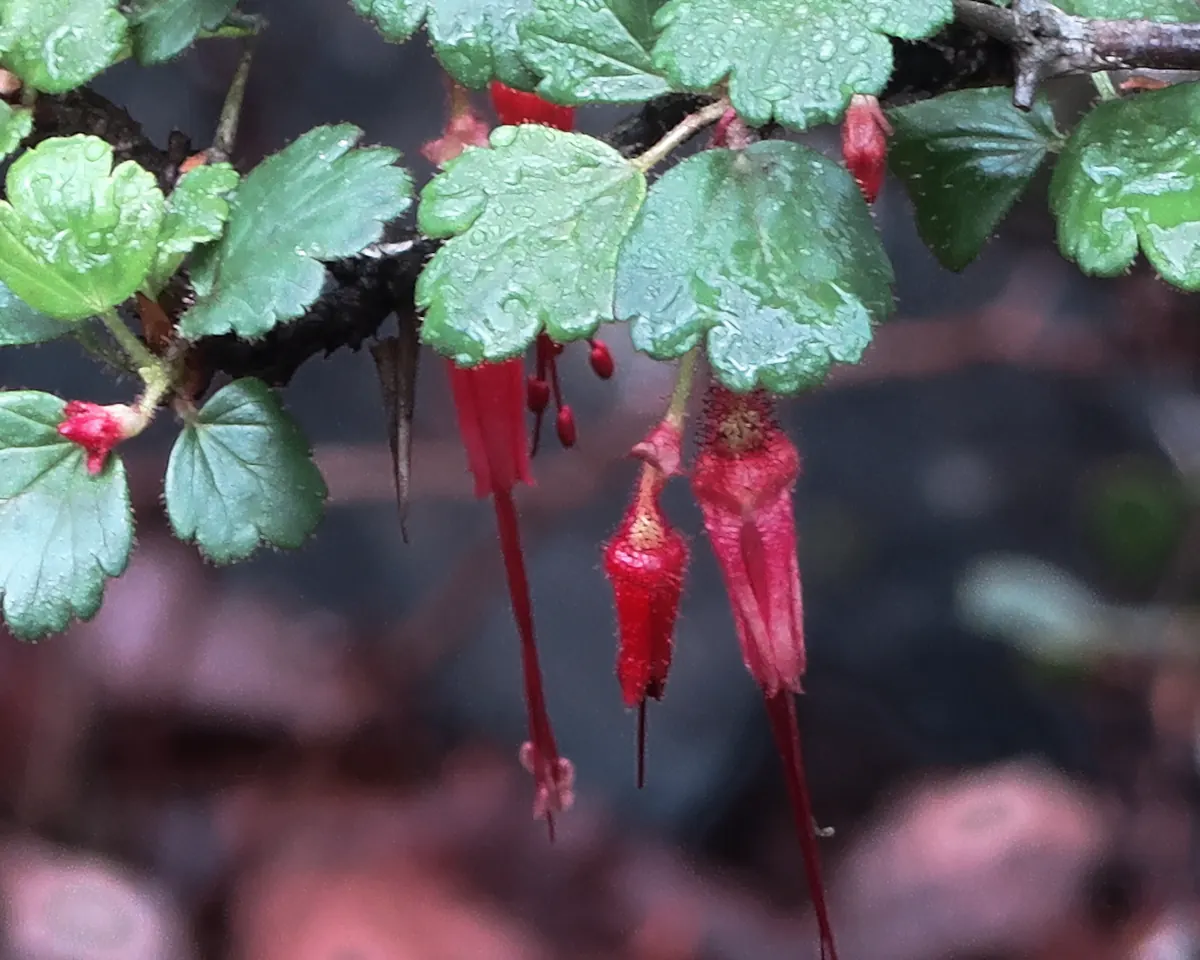
Fuchsia-flowered gooseberry
Winter into spring · Coastal sage scrub, chaparral and shady woodland, often under oaks
Calscape lists this spiny, glossy-leaved shrub as flowering in winter and spring. Its hanging red flowers, with stamens and stigmas poking out like dancers in a line, attract hummingbirds. It grows in coastal sage scrub, chaparral and shady woods, often under oaks or bigger shrubs where the soil stays moist, and it drops its leaves in the dry summer, which is why it looks so fresh now.
-
Pink-flowering currant
Winter to spring · The coast and the Coast Ranges
A close relative of the gooseberry, with drooping clusters of pink flowers that open from winter into spring. Calscape describes it as a fast-growing shrub up to about 10 feet tall, found mainly along the coast and in the Coast Ranges. Hummingbirds and insects visit the flowers, and fruit-eating birds take the dark purple berries later in the year. Look closely at a branch tip and sketch how the flower cluster unfolds from the bud scales.
-
The first desert flowers
Late January in a wet year; peak usually from mid-February · Anza-Borrego Desert State Park, especially Henderson Canyon Road
After good fall rains the low desert does not wait for spring. On January 23, 2026, California State Parks reported early color in Anza-Borrego, brightest along Henderson Canyon Road, with desert sand verbena, primroses, desert sunflowers, apricot mallow and even desert lilies in bloom, and said the main season typically begins in mid-February. Whether 2027 repeats that depends on how much rain this El Niño brings to the south, and when.
Picking wildflowers in state parks is against the law, so take photos and stay on the trail.
When are the king tides in January 2027?
Thursday and Friday, January 21 and 22. The California Coastal Commission lists them as the third and final set of statewide king tides for the 2026–27 winter, adding that some Northern California spots may also see extreme tides on January 20 or 23. They line up with the Wolf Moon, full at 4:17 a.m. Pacific on January 22, the nearest full moon of 2027. Expect high water in the morning and very low water in the afternoon.
| Station | Morning high tide | Afternoon low tide |
|---|---|---|
| Crescent City | 10:40 a.m., 8.7 ft | 5:44 p.m., −1.7 ft |
| North Spit, Humboldt Bay | 10:52 a.m., 8.6 ft | 5:52 p.m., −1.8 ft |
| San Francisco | 10:33 a.m., 7.1 ft | 5:24 p.m., −1.6 ft |
| Monterey | 9:22 a.m., 6.8 ft | 4:44 p.m., −1.7 ft |
| Santa Barbara | 8:42 a.m., 6.9 ft | 3:55 p.m., −1.9 ft |
| Los Angeles | 8:24 a.m., 7.1 ft | 3:32 p.m., −1.9 ft |
| San Diego | 8:25 a.m., 7.4 ft | 3:30 p.m., −2.0 ft |
The Coastal Commission’s King Tides Project invites anyone to photograph a flooded shoreline at the high and upload it, building a picture of what higher seas will mean. The afternoon lows bring the best tide pooling of the month, in mid-afternoon in the south but close to sunset on the North Coast, so carry a light and watch the returning water. The Weather Service warns that the warm seas of a strong El Niño can worsen coastal flooding at high tide, so a storm on these dates deserves respect.
How deep is the mountain snow in California in January?
Deep, and getting deeper. January sits in the middle of the season when the Sierra and the southern Cascades build the snowpack that California drinks all summer. At Lassen Volcanic National Park, Department of Water Resources surveyors have measured the snow at the Lower Lassen Peak course since 1930, checking an automated sensor by hand four times each winter from January to April. The record there, 331 inches of snow on the ground, more than 27 feet, was measured in April 1983, at the end of the 1982–83 El Niño, which NOAA’s Climate.gov ranks with 1997–98 as the strongest of recent decades and a winter of heavy rain and flooding across California.
-
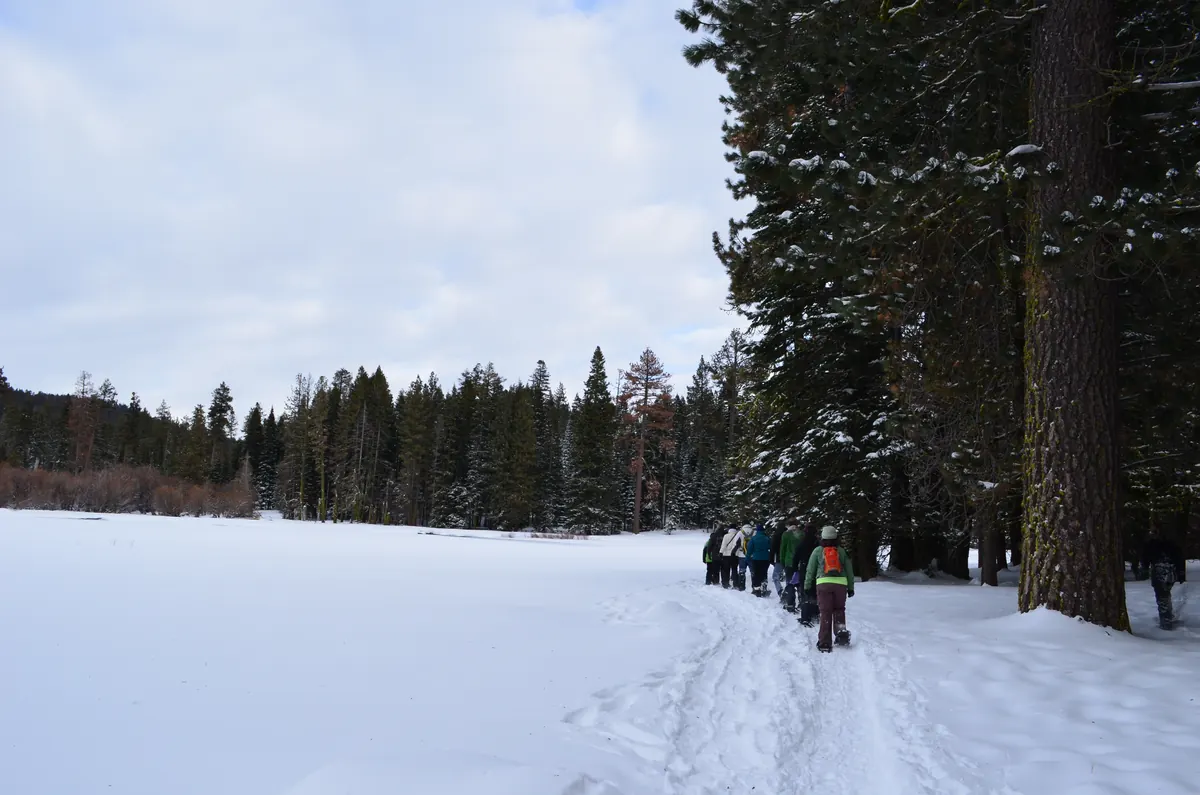
Snowshoeing at Lassen
Usually December through April · Manzanita Lake area (northwest entrance) and the Kohm Yah-mah-nee Visitor Center area (southwest)
In winter the park road closes beyond the two entrances. Manzanita Lake, at 5,800 feet, has gentle slopes and the easiest snowshoe and ski routes in the park, with Lassen Peak rising white behind the lake; the southwest area gets the most snow and has steeper terrain for experienced skiers. The park has led ranger snowshoe walks in past winters; check its calendar for this season’s schedule.
-
Yosemite in winter
Badger Pass road plowed mid-December to early April · Yosemite Valley, Badger Pass, the Mariposa Grove trail
Yosemite Valley and Wawona stay open by car all winter, while the Tioga and Glacier Point roads are closed. The road is plowed as far as the Badger Pass ski area, where cross-country trails start, and the two-mile Washburn Trail leads up to the Mariposa Grove of giant sequoias, where snowshoes may help. The park says chains are often required, and every driver must carry them when they are.
-
Reading tracks in fresh snow
The morning after a storm · Any snowy trail or meadow edge
A night of new snow turns a meadow into a record of who was out. Look for the paired bounding prints of a weasel or marten, the neat single line of a coyote, and small holes where voles and mice surface from their runways under the snow. Measure a print and its stride, and sketch it.
Snow levels in a warm El Niño storm can climb high up the mountains, turning snow to rain at middle elevations. Look at the latest sky and cloud outlook before a long drive, and read the backcountry safety notes below.
How wet is a California January, and what does a strong El Niño usually mean for late winter?
January is the core of the rainy season everywhere but the far north. In the 1991–2020 normals, Sacramento, Los Angeles and San Diego all average more rain in January than in December, while Arcata, on the North Coast, averages a little less. The table gives a January for every corner of the state, from 7½ inches of rain on the redwood coast to barely a third of an inch in Death Valley, and nearly 44 inches of snow at Truckee.
| Station | Precipitation (in) | Snowfall (in) | Average high (°F) | Average low (°F) |
|---|---|---|---|---|
| Arcata–Eureka airport | 7.52 | no normal | 56.4 | 40.5 |
| Mount Shasta | 7.11 | 18.2 | 44.4 | 27.2 |
| Redding | 6.04 | 1.1 | 57.2 | 37.7 |
| Sacramento Executive | 3.66 | no normal | 56.0 | 39.2 |
| San Francisco airport | 3.89 | no normal | 58.0 | 44.5 |
| Fresno | 2.16 | 0.0 | 55.4 | 40.6 |
| Yosemite Park headquarters | 6.98 | no normal | 47.5 | 28.5 |
| Tahoe City | 6.21 | 37.9 | 39.6 | 20.6 |
| Truckee | 5.68 | 43.6 | 41.8 | 16.1 |
| Bishop | 1.14 | no normal | 56.3 | 23.5 |
| Los Angeles airport | 2.86 | no normal | 66.3 | 49.4 |
| San Diego Lindbergh | 1.98 | no normal | 66.4 | 50.3 |
| Palm Springs | 1.42 | 0.0 | 70.6 | 47.2 |
| Death Valley | 0.37 | 0.0 | 67.2 | 42.5 |
This winter the Pacific is stacking the deck. On September 10, federal forecasters gave the event better than a nine-in-ten chance of reaching the very strong class and holding it through the cold months. For January and February, the useful point is that El Niño’s hold on California rainfall tends to grow as the season goes on. A 2016 study in Environmental Research Letters, based on records back to 1901, found the El Niño signal strengthens from early to late winter and is stronger in the south than the north: in eight of ten moderate-to-strong events, late winter put Southern California among its wettest third of years, and never left Northern California in its driest third. The state’s Weather Service offices stress in their El Niño guide that these are tilted odds, not promises. Warm storms can lift the snow line while still burying the high Sierra, and heavy rain on saturated or burned slopes raises the risk of debris flows. For NOAA’s own January to March odds, issued October 15 and refreshed each month, open its three-month outlook maps; individual storms show up in the forecasts only one to two weeks out, so follow current conditions. Valley gardeners can check the chance of a hard freeze at their nearest station on the frost dates for California.
How much daylight does California gain in January?
From about half an hour in San Diego to three-quarters of an hour on the North Coast, and nearly all of it in the evening. Our planet is near its closest point to the Sun and travelling fastest along its orbit, so solar noon keeps sliding later on the clock: the sunsets pull away first, while the mornings stay dark into the second week of the month before sunrise starts to come earlier. Los Angeles gets its first 5 p.m. sunset on January 7.
| City | Jan 1 | Jan 31 | Gained | Per day |
|---|---|---|---|---|
| Eureka | 9 h 19 m | 10 h 05 m | 46 min | 1.5 min |
| Redding | 9 h 20 m | 10 h 06 m | 46 min | 1.5 min |
| Sacramento | 9 h 32 m | 10 h 15 m | 43 min | 1.4 min |
| San Francisco | 9 h 37 m | 10 h 17 m | 40 min | 1.3 min |
| Fresno | 9 h 42 m | 10 h 22 m | 40 min | 1.3 min |
| Los Angeles | 9 h 56 m | 10 h 31 m | 35 min | 1.2 min |
| Palm Springs | 9 h 57 m | 10 h 32 m | 35 min | 1.2 min |
| San Diego | 10 h 03 m | 10 h 36 m | 33 min | 1.1 min |
The pace picks up through the month and keeps accelerating until the March equinox. Hills, canyon walls and coastal fog all steal minutes from the official figures, so for a particular trailhead or beach use the daylight calculator.
What can I see in California’s night sky in January?
-
The Quadrantid meteors
Night of Sunday, January 3, into Monday, January 4 · Northeast, after midnight and before dawn
Active from late December to January 12, the Quadrantids have a sharp peak lasting only a few hours, and forecasters disagree on its timing: the American Meteor Society expects it near 7:30 p.m. Pacific on the 3rd, EarthSky near 9:47 p.m. In California the radiant, in the northern sky below the Big Dipper’s handle, is still low in the evening, so the best chance is the dark hours before dawn on Monday, when it has climbed high but the shower is already fading. The waning crescent moon comes up late and does little harm. Expect fewer meteors than observers farther east.
-
Earth at perihelion
Saturday, January 2, 6:33 p.m. Pacific · No special view; a fact to know
Earth reaches the nearest point of its orbit to the Sun, roughly 91.4 million miles, in the heart of the northern winter. Seasons come from the planet’s tilt, not its distance. Being closer also means moving faster, which is what shifts sunrise and sunset in the daylight section above.
-
Venus at its farthest from the Sun
Sunday, January 3, and all month before dawn · Southeast, before sunrise
Venus reaches greatest western elongation on January 3, 47 degrees from the Sun, shining at about magnitude −4.3, far brighter than any star. A small telescope shows it half-lit, like a tiny first-quarter moon. It stays a brilliant morning star through the spring.
-
The Wolf Moon, a supermoon
Night of Thursday, January 21, into Friday, January 22 · Rises in the east-northeast at dusk on the 21st
Full at 4:17 a.m. Pacific on the 22nd, about 222,229 miles away, the nearest full moon of 2027. Watch it rise at dusk on Thursday and set near dawn on Friday at its fullest, and look again at moonrise Friday evening. A night later, on the 23rd, the just-past-full moon sits close to the bright planet Jupiter, with the star Regulus nearby.
-
The planets of the evening
All month · East and south after dark; low in the west-southwest at dusk late in the month
Jupiter rises earlier each night as it nears its February 10 opposition and dominates the eastern sky in the evening. Mars, reddish and fainter, brightens toward its own opposition on February 19. Saturn sinks toward the southwestern horizon after dusk. Late in January, look low in the west-southwest 30 to 45 minutes after sunset for Mercury, which reaches its best evening showing of the winter on February 2. The darkest evenings fall in the week or so after January 3, either side of the new moon on the 7th.
| Phase | Date | Time |
|---|---|---|
| New moon | Thursday, Jan 7 | 12:24 p.m. |
| First quarter | Friday, Jan 15 | 12:34 p.m. |
| Full moon (Wolf Moon, supermoon) | Friday, Jan 22 | 4:17 a.m.; looks full the nights of Jan 21 and 22 |
| Last quarter | Friday, Jan 29 | 2:55 a.m. |
Storms in an El Niño winter come and go quickly, so grab the clear nights between them. Check the cloud forecast before setting out for the desert or the mountains, and find your own town’s moonrise on the moon calendar.
What can families do outdoors in California in January?
- New Year’s Day, Friday, January 1. California State Parks leads guided First Day Hikes every January 1; the 2027 list will go up on its First Day Hikes page.
- The last Christmas Bird Counts, to January 5. Audubon’s map shows the circles; ask a compiler whether a team can take one more pair of eyes.
- Monarch count, to January 10. The Xerces Society’s late-season Western Monarch Count runs December 26 to January 10, and anyone can report sightings to Journey North. At Natural Bridges State Beach in Santa Cruz, where about 10,000 monarchs wintered in 2024, the visitor center beside the grove is open daily from 11 a.m. to 4 p.m. through January 31, and the butterflies usually stay until mid-February.
- An elephant seal morning. The free Piedras Blancas boardwalk is the easiest wildlife trip of the winter for small children.
- A whale tally. Take a thermos to Point Vicente, Point Reyes or Point Loma and keep a sheet of blows; whoever spots the first whale picks the next stop.
- Morro Bay Bird Festival, January 14–18. Registration opens November 7.
- King tides, January 21–22. Photograph the morning high for the Coastal Commission, then explore the afternoon minus tide.
- Snow Goose Festival, January 28–31. A junior naturalist program and family activities in Chico.
- Tracks in the snow. At Manzanita Lake or near Badger Pass, follow one set of prints to see where the animal went.
Project FeederWatch runs all winter, so a weekly feeder count can become a family habit. For other months, browse the nature calendar, and write up each trip in the Naturalist’s Field Journal.
What should I watch out for in California in January?
- Hunting seasons. Under CDFW’s 2026–27 waterfowl regulations, duck season ends January 13 in the Northeastern zone and January 31 in every other zone. Geese also close January 31 outside the Northeast; in that zone Canada geese close January 10 and white and white-fronted geese January 13. Quail, chukar, snipe, tree squirrels and rabbits all run to January 31, wild pig is open all year, and no general deer season is open in January. CDFW’s regulations set no general blaze-orange rule, but the department requires it on its junior hunts, and its hunter-education course urges fluorescent orange in the field even where it is not required. On wildlife areas, refuges and national forest land, wear something bright and keep dogs close.
- Atmospheric rivers, floods and debris flows. Never drive into a flooded road or wade a running creek. Keep out of canyons below recent fire scars when a big storm is coming, and follow evacuation orders.
- King tides and winter surf. Around January 21–22 especially, waves can sweep over beaches, jetties and bluff paths without warning. Face the sea, and keep children close on minus-tide walks.
- Mountain cold, chains and avalanches. Truckee’s average January low is 16 °F. Carry chains, a shovel, warm layers, food and water on Sierra and Cascade highways, stay off frozen ponds unless the ice has been checked, and read the Sierra Avalanche Center forecast before heading beyond groomed areas.
- Short afternoons. January days are still short even with the gains in the daylight table, and a canyon or a cloud deck brings dusk sooner. Aim to finish a hike while the sun is still up, and carry a headlamp.
Sources
- Friends of the Elephant Seal: January at Piedras Blancas
- Friends of the Elephant Seal: visiting the rookery
- California State Parks: Año Nuevo State Park (guided walks, 2026–27 reservations)
- National Park Service: elephant seal viewing at Point Reyes
- National Park Service: elephant seal monitoring season summary, winter 2025–2026
- National Park Service: whale watching at Cabrillo National Monument
- NOAA Fisheries: gray whale population abundance and the Granite Canyon survey
- National Park Service: whale watching at Point Reyes
- American Cetacean Society Los Angeles: today’s whale count and season totals
- Klamath Basin Audubon Society: basin birds (wintering bald eagles)
- Klamath Basin Birding Trails: frequently asked questions (eagle peak, Bear Valley roost)
- U.S. Fish and Wildlife Service: winter is prime time for viewing eagles on national wildlife refuges
- Friends of Big Bear Valley: bald eagle nest quick reference, 2012–2026 seasons
- Friends of Big Bear Valley: eagle nest cam FAQ
- Friends of Big Bear Valley: eagle nest livestream
- CBS Los Angeles: Forest Service ends 40-year count of bald eagles in San Bernardino National Forest
- Morro Bay Bird Festival: 2027 festival, January 14–18
- Snow Goose Festival of the Pacific Flyway: January 28–31, 2027
- Audubon: join the Christmas Bird Count (December 14, 2026 to January 5, 2027)
- Santa Barbara Audubon Society: Santa Barbara Christmas Bird Count
- Monterey Audubon Society: Christmas Bird Counts 2026–27
- Audubon Guide to North American Birds: great horned owl
- Calscape (California Native Plant Society): fuchsia-flowered gooseberry
- Calscape (California Native Plant Society): pink-flowering currant
- California State Parks: colorful wildflower displays expected at desert state parks (January 23, 2026)
- California Coastal Commission: California King Tides Project, 2026–27 dates
- NOAA Tides and Currents: tide predictions, January 2027
- National Park Service: Lassen Volcanic National Park snowpack
- National Park Service: Lassen Volcanic National Park in winter
- National Park Service: Lassen, Manzanita Lake area winter routes
- National Park Service: Yosemite in winter
- NOAA NCEI: U.S. Climate Normals 1991–2020, monthly station normals
- Climate Prediction Center: ENSO diagnostic discussion, September 10, 2026
- Climate Prediction Center: seasonal outlooks (winter outlook issued October 15, 2026)
- NOAA Climate.gov: United States El Niño impacts
- CDFW: Sandhill Crane Wetland Tours, Woodbridge Ecological Reserve
- Jong, Ting and Seager (2016), El Niño’s impact on California precipitation: seasonality, regionality, and El Niño intensity, Environmental Research Letters (NOAA repository)
- National Weather Service California offices: El Niño in California, information and preparedness guide (mid-September 2026)
- U.S. Naval Observatory: moon phases, January 2027
- U.S. Naval Observatory: Earth’s seasons and perihelion, 2027
- American Meteor Society: meteor shower calendar
- EarthSky: Quadrantid meteor shower
- EarthSky: what is a supermoon
- Fred Espenak: Sky Event Almanac 2027
- California State Parks: First Day Hikes
- Xerces Society: Western Monarch Count, 2026–27 survey windows
- Journey North: monarch sightings
- California State Parks: Natural Bridges State Beach
- Project FeederWatch: how to participate
- CDFW: 2026–27 waterfowl seasons by zone
- CDFW: 2026–27 upland game bird seasons
- CDFW: wild pig hunting
- CDFW: approved 2026 deer seasons by zone (PDF)
- CDFW: junior hunt information (blaze orange mandatory)
- CDFW: hunter education course materials (fluorescent orange)
- Sierra Avalanche Center: avalanche forecasts
- CDFW: 2026–27 small game mammal seasons (tree squirrel, rabbits)
- Photos via Wikimedia Commons; licenses and photographers are credited under each picture
