What to look for in nature in California this October
October is the month California’s dry season ends, or nearly does. The first monarchs drift into the coastal groves, cranes and geese pour into the valleys, the aspens go yellow down the Eastern Sierra, and the salmon come home. It is also among the most dangerous fire months of the year, because the winds turn offshore before the rains arrive. What follows is the month, region by region, with dates.
Start here

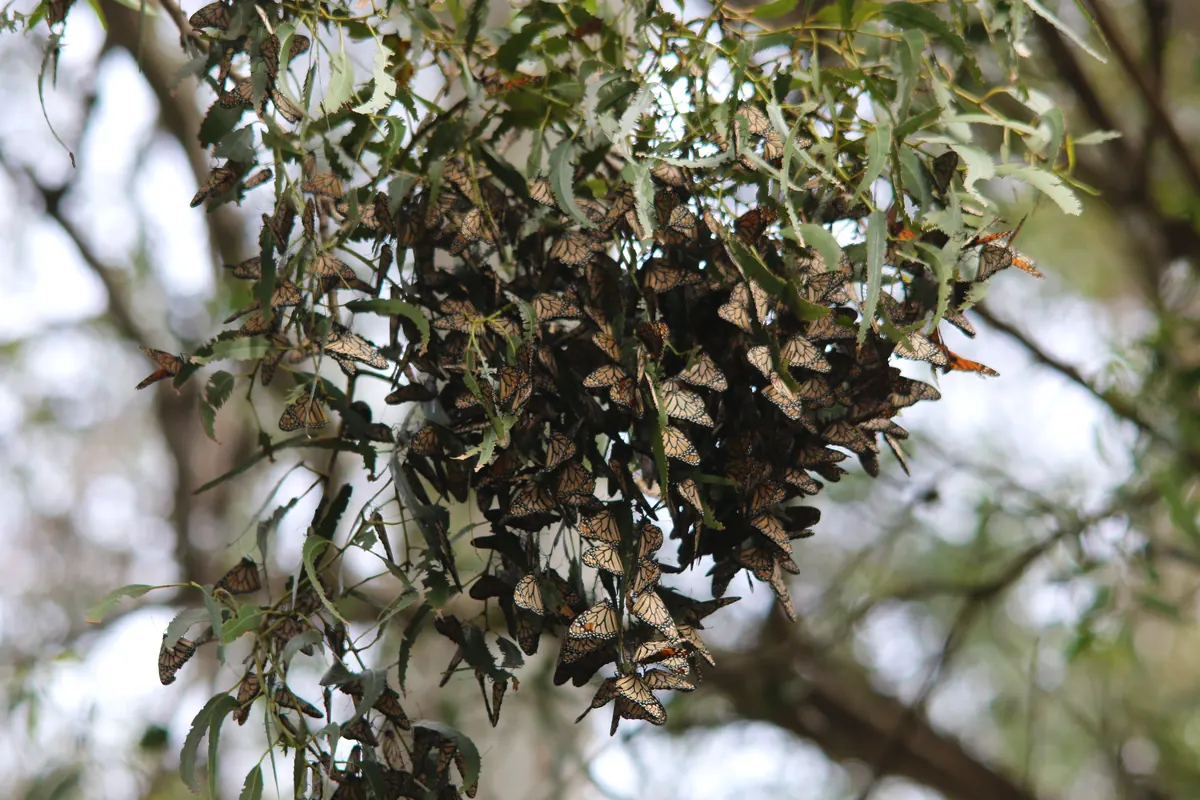
- Monarchs at the coast. The first western monarchs trickle into the overwintering groves from about the middle of the month, Pacific Grove’s docents say, and build toward a late-November peak. Natural Bridges in Santa Cruz welcomes them back on October 11, and the Xerces Society’s early-season count runs October 17 to November 1. After a 2025 count of only about 12,000 butterflies, every one matters.
- The aspens, now. Sagehen Summit and Rock Creek were at 75 to 90 percent color on September 25. The Eastern Sierra peaks from the top down through the first half of October, with June Lake and Conway Summit last; the western slope and the valleys follow in November.
- The winds, then the rain. October’s offshore winds, Diablo in the north and Santa Ana in the south, blow across the driest fuels of the year, which is why it is such a dangerous fire month. Then the first Pacific storm arrives: on the North Coast in October, most years, and later farther south. Watch the pressure, and the day the wind swings around.
Write it down: the Naturalist’s Field Journal’s pollinator watch plate was built for a monarch grove, its “birds I have seen” list for the cranes and geese, its tree-through-the-seasons page for one aspen or valley oak, and its map of sounds for bugling elk and cranes passing overhead. One entry an evening is plenty.
Regions used below: North Coast and the redwoods; Shasta Cascade and the far north; Sacramento Valley; Bay Area; Central Coast; Sierra Nevada and the Eastern Sierra; San Joaquin Valley; Southern California coast and Los Angeles; Mojave and Colorado deserts; San Diego.
When do monarchs arrive at California’s coastal groves?
Most western monarchs do not fly to Mexico. They winter in a few hundred groves of eucalyptus, Monterey pine and Monterey cypress along the coast from Mendocino County to Baja, and October is the month they begin to arrive. The Pacific Grove Museum of Natural History, which runs the docents at that city’s sanctuary, says monarchs “start to arrive in a slow trickle in mid-October, with peak populations around the end of November.” The Xerces Society’s Western Monarch Count, in its thirtieth year, opens its early-season window on October 17. So: a few butterflies in the trees by the third week of October in a good year, clusters by Thanksgiving.
| Place or count | Where | Timing |
|---|---|---|
| Natural Bridges State Beach | Santa Cruz; the only state monarch preserve | Welcome Back Monarchs Day Sunday, Oct 11, 11 a.m. – 4 p.m.; numbers build through November |
| Pacific Grove Monarch Sanctuary | 250 Ridge Road, Pacific Grove | First arrivals mid-October; peak about the end of November; docents about 11 a.m. – 3 p.m., weather permitting |
| Pismo State Beach Monarch Butterfly Grove | Pismo Beach, Central Coast | Season November to February; docent trailer 10 a.m. – 4 p.m. daily in season |
| Early-season count (Western Monarch Count) | Registered sites statewide (249 last Thanksgiving) | Oct 17 – Nov 1; volunteer registration closes Oct 17 |
| Thanksgiving count | Same sites | Nov 14 – Dec 6 |
| New Year’s count | Same sites | Dec 26 – Jan 10 |
The Thanksgiving 2025 count found about 12,260 monarchs at 249 sites, the third-lowest total since the count began in 1997; 2024 had 9,119, the record low of 2020 was 1,901, and in the 1980s the western population “numbered in the low millions regularly.” Local news put last winter’s Pismo Beach tally at 471. With so few butterflies, the etiquette matters more: stay on the paths, keep voices down, no dogs, never touch a cluster. Report any roost you find to Journey North, which wants fall roosts in particular, and the Western Monarch Count trains volunteers to count a site properly.
When do the cranes, geese and hawks arrive?
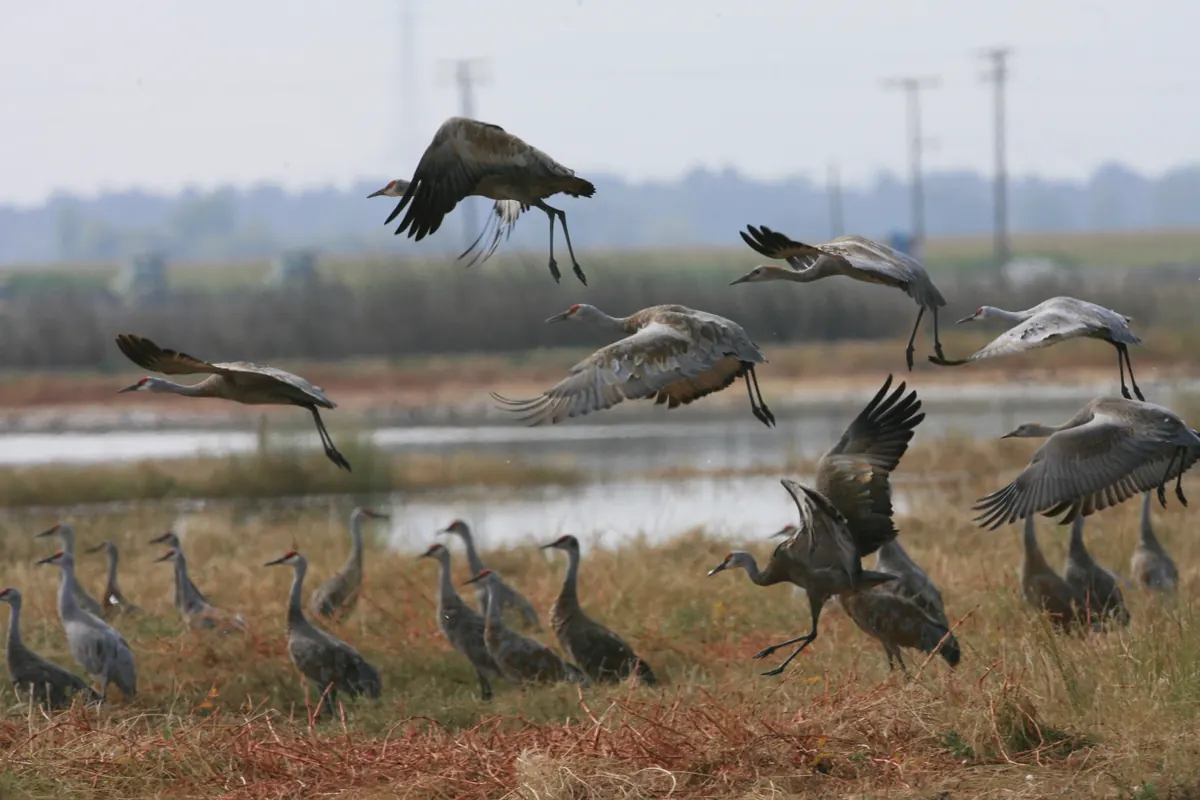
The Pacific Flyway funnels through California, and October is the month the funnel fills. Northern pintail have been arriving at the Sacramento National Wildlife Refuge complex since mid-August and white-fronted geese since September; the white geese, snow and Ross’s, “begin to appear in October.” Sandhill cranes come back to the Delta and the San Joaquin Valley in the last days of September, and you hear them before you see them.
-
Hawk Hill and the raptor flight
Best 10 a.m. – 2 p.m., September and October · Marin Headlands, Golden Gate National Recreation Area
Migrating raptors avoid crossing open water when they can, so the Marin Headlands squeeze the whole coastal flight to the narrowest point of the Golden Gate. Volunteers with the Golden Gate Raptor Observatory have tallied 19 species there for four decades, and on a good day, the National Park Service says, watchers “can see more than 1,000 birds in just 6 hours.” The heaviest flights have historically come in late September and the first week of October, and the count continues into early December. Hawk Hill reopened in November 2025 after a renovation of the summit; check the observatory’s page for this fall’s public programs before you drive out.
-
Vaux’s swifts in the brickyard chimneys
About August 15 to mid-October · San Rafael, and other old chimneys on the flyway
Each fall thousands of Vaux’s swifts, small sooty cousins of the chimney swift, funnel into the brick chimneys of the McNear brickyard in San Rafael at dusk. Golden Gate Bird Alliance counters logged nights of more than 40,000 birds in 2018 and a poorer year’s peak of 8,947. Early October is the tail of the movement. The brickyard is a working private business, so do not go on your own; watch only with an organized Audubon group. The Vaux’s Happening project has documented more than 140 roosts along the flyway and wants to hear of any chimney that swifts pour into at dusk.
| Place | Region | What happens in October |
|---|---|---|
| Sacramento NWR complex | Sacramento Valley, near Willows | Ducks arrive in numbers; snow and Ross’s geese begin to appear; peak Nov – Dec at 500,000-plus ducks and 250,000 geese; auto tour |
| Lower Klamath and Tule Lake NWRs | Far north, Klamath Basin | Build-up toward 1 to 2 million ducks, geese and swans; the largest numbers usually in mid-November |
| Cosumnes River Preserve | Delta, south of Sacramento | Sandhill cranes from late September to early March, peak mid-December; Desmond Road at dawn and dusk |
| Woodbridge Ecological Reserve (Isenberg) | Lodi | Cranes from late September; CDFW evening tours October – February on the first three weekends of each month, 90 minutes before sunset |
| Merced NWR | San Joaquin Valley | Cranes abundant September – March, up to 20,000 with 60,000 arctic geese by winter; five-mile auto tour |
| Sonny Bono Salton Sea NWR | Imperial Valley, low desert | Ponds flooded since late August; migration peaks in November; 200-plus species through the winter |
The 28th Lodi Sandhill Crane Festival is November 6–8 at Hutchins Street Square, with guided crane tours through the weekend. CDFW’s crane tours book at noon on the first working day of the month before (November’s dates on Thursday, October 1), and anyone 16 or older needs a $5.66 one-day lands pass. Bring the “birds I have seen” list.
What are the elk, elephant seals and whales doing?
-
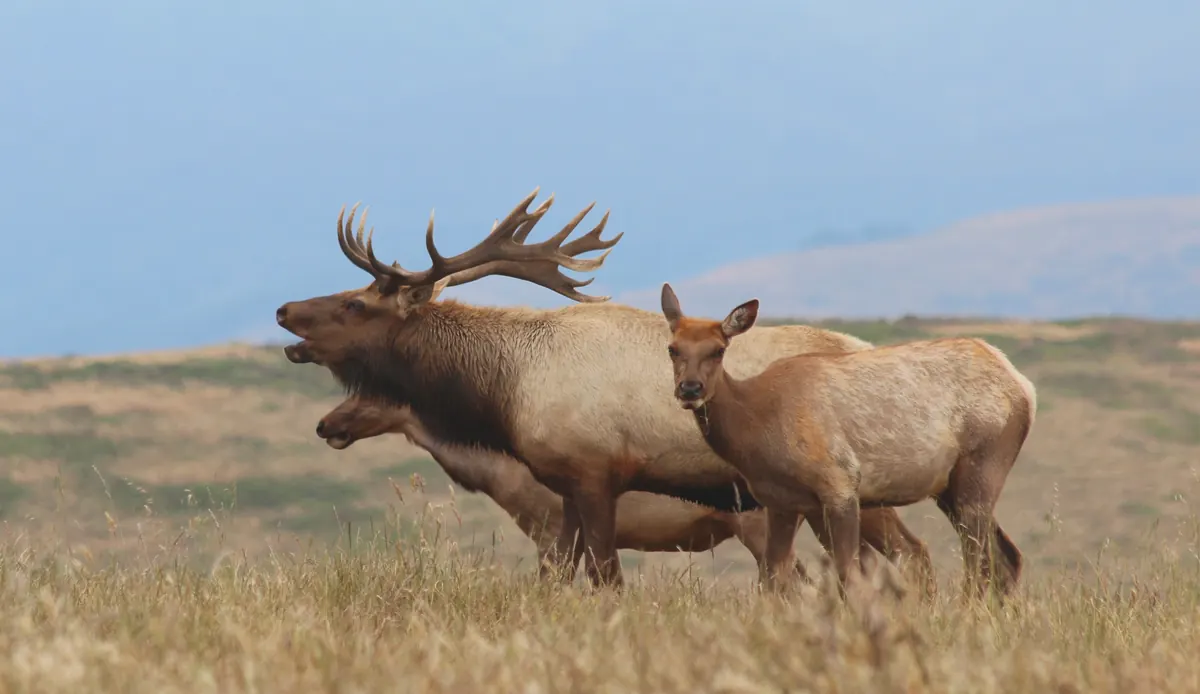
Tule elk rut at Tomales Point
Mid-August through October · Point Reyes National Seashore
The bulls bugle and spar through October on Tomales Point, where the 2023 census found at least 315 elk; the free-ranging herds at Drakes Beach (188) and Limantour (199) are the others. Ask at the Bear Valley Visitor Center whether docents with spotting scopes will be at the trailhead. The park’s distance rule: at arm’s length, if your thumb cannot hide the animal, you are too close. San Luis National Wildlife Refuge near Los Banos has its own herd on an auto tour route.
-
Elephant seals: the juveniles, not yet the bulls
Juvenile haul-out peaks late October; bulls from late November · Piedras Blancas, Año Nuevo, Point Reyes
What is on the beach in October is the fall haul-out of juveniles, which at Piedras Blancas peaks in late October; the mature males arrive at the end of November, the pregnant females behind them, and the pups come in winter. At Point Reyes the juveniles have been back since mid-September and the males come in December. Año Nuevo State Park is on self-guided permits during the haul-out, everyone out by 5 p.m.; the guided-walk season is December to March, and reservations open October 20 for dates 56 days ahead.
-
Whales: a lull between seasons
Gray whales not until mid-to-late December · Channel Islands, Monterey Bay, the whole coast
Channel Islands National Park lists blue and humpback whales as summer visitors and gray whales “from mid- to late-December through mid-March,” with common dolphins all year. Humpbacks still feed along the coast in many Octobers, but the southbound gray whale parade is a December event.
-
Bears in their hungriest weeks
Through October, until the snow · Sierra Nevada, the Cascades, the North Coast ranges
Black bears feed hardest in fall before denning, and October is when they test every cooler and car. Yosemite’s rules: 50 yards from any bear, all food in the lockers, nothing in a car after dark. If one approaches, CDFW says, back away slowly, do not run, look big, make noise, and fight back if it makes contact.
Where can I see salmon run in October?
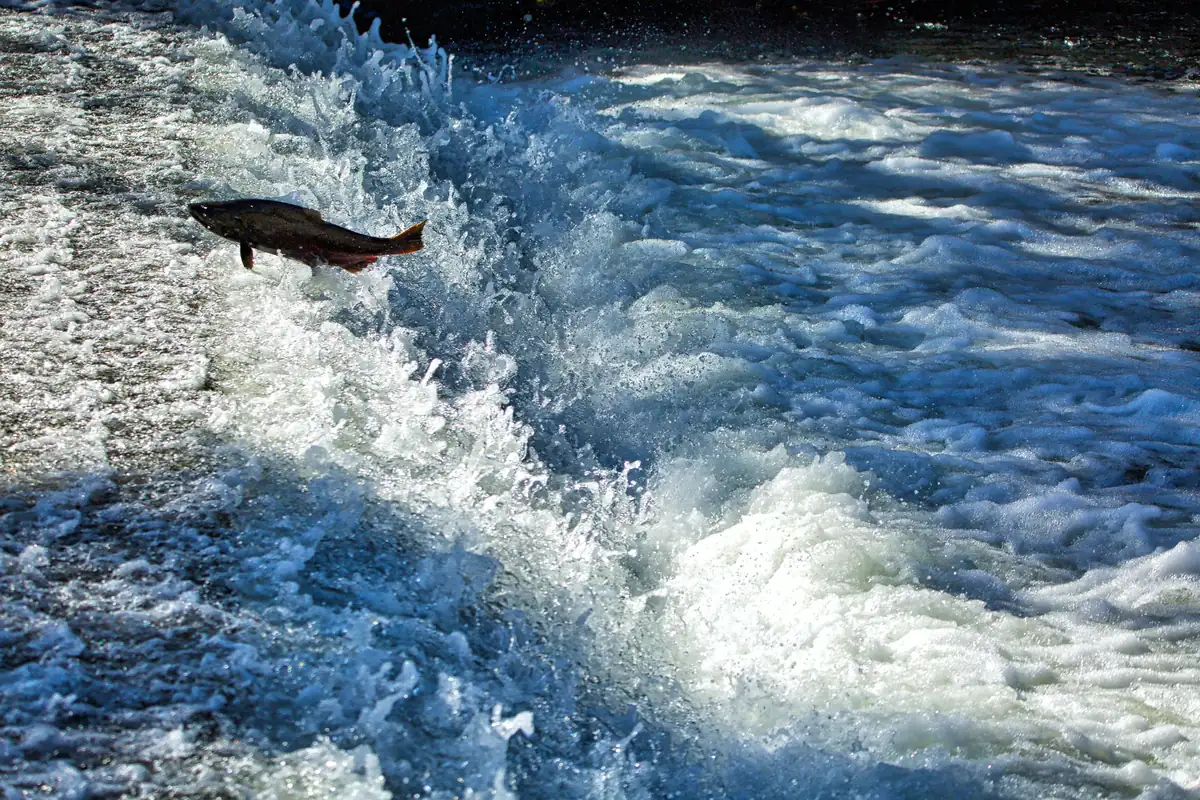
Fall-run Chinook, the Central Valley’s great salmon run, come up the Sacramento and its tributaries through September and October and spawn from October into December; this is the month to see them at a hatchery ladder or over a clear gravel riffle. Lake Tahoe adds a run of its own.
-
Coleman National Fish Hatchery
Best viewing in October; festival Saturday, Oct 17 · Battle Creek, near Anderson, Shasta County
Adults begin returning to Battle Creek in September, and “large numbers of salmon are gathered at the barrier weir by late-September and early-October,” the U.S. Fish and Wildlife Service says; “the best time for adult salmon viewing is typically the month of October.” The hatchery is open daily 8 a.m. to 4 p.m., and holds its Return of the Salmon Festival on October 17.
-
Feather River Fish Hatchery
Ladder open since mid-September · Oroville
The state hatchery opens its ladder in mid-September (September 15 in 2025) and has an underwater window where you watch the fish climb; its Salmon Festival is a late-September event, so it has passed, but the run has not.
-
Nimbus Fish Hatchery and the lower American River
Fish in the river now; hatchery operations from early November · Rancho Cordova, Sacramento
Nimbus runs its salmon operations “from the beginning of November through mid-December,” and its ladder stays closed through October, so this month look at the river itself: the riffles of the American River Parkway below Nimbus Dam, where the first spawners dig redds from late October. Stay off the gravel bars where fish are holding.
-
Kokanee at Taylor Creek
October · South Lake Tahoe, Highway 89
Lake Tahoe’s kokanee, a landlocked sockeye stocked in the 1940s, turn scarlet and push up Taylor Creek each October, and the Forest Service’s Stream Profile Chamber puts you at eye level with them through a window. The Fall Fish Festival has traditionally been the first weekend of October, but it does not appear to have been held in 2025 and we could not confirm a 2026 date; call the visitor center at (530) 543-2674 before you drive up.
Why are tarantulas walking across the trails?
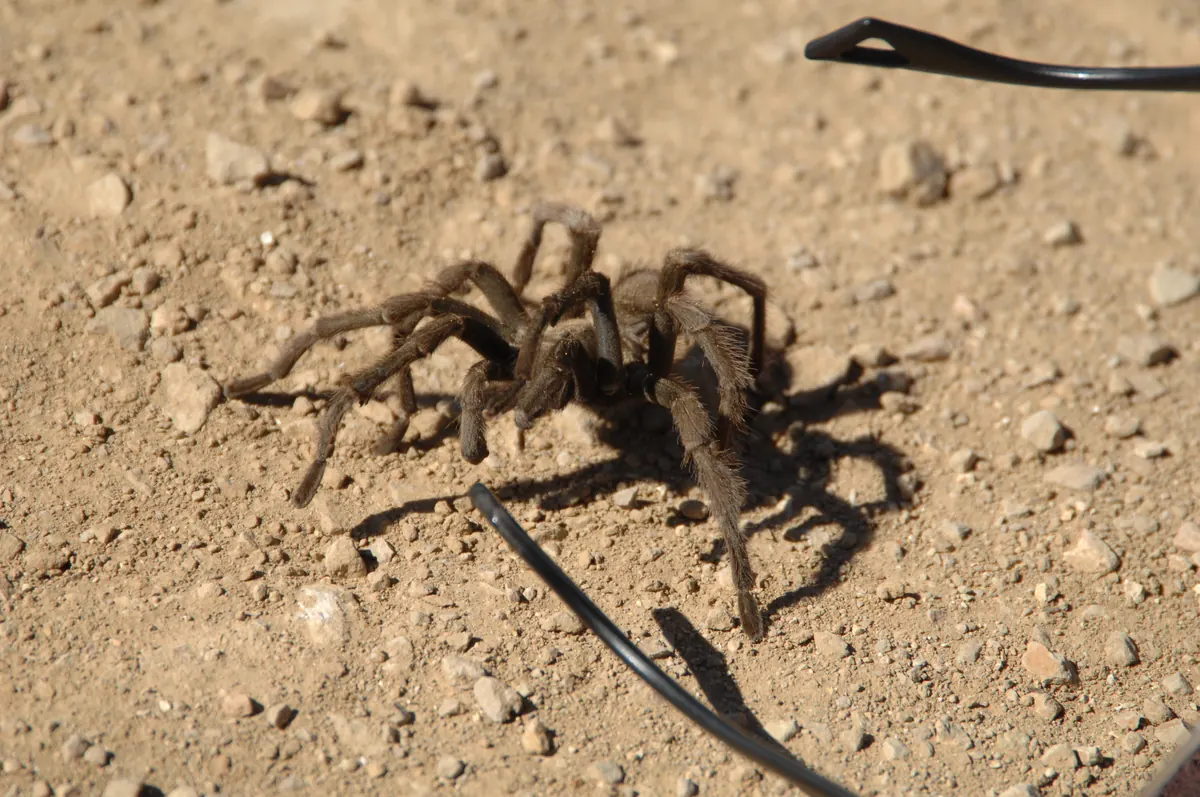
They are males, and they are looking for females. California’s tarantulas spend most of their lives in burrows; in September and October the mature males leave them and walk, mostly around dusk, across the grassy hills of the Coast Ranges and the Sierra foothills, and Mount Diablo’s north side is the famous place to see it. The Mount Diablo Interpretive Association’s “How I Learned to Love Tarantulas” evening walks leave the Mitchell Canyon Visitor Center at 4:30 p.m. on October 3, 4, 10 and 11, reservations required; the Lindsay Wildlife Experience’s hikes on October 3 and 4 are sold out. On your own, walk a north-slope dirt road in the last hour of daylight and watch for a slow, hand-sized spider crossing it. Leave it on the ground: the bite is mild, the barbed hairs it flicks are not, and a dropped spider can die of the fall. The gates close at sunset; log what you saw on the journal’s dusk-and-dawn watch plate.
When do the aspens turn, and what else is changing?
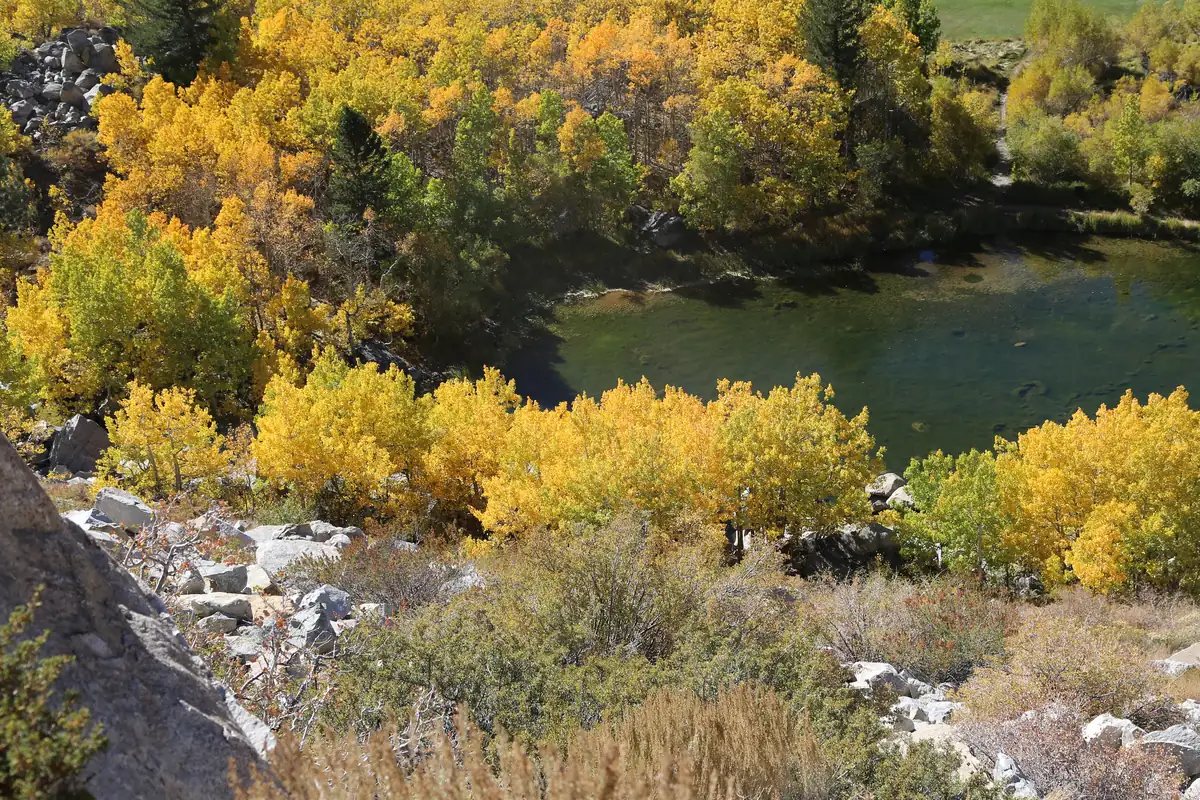
California’s fall color starts at the top and comes down. The Eastern Sierra’s aspens at 9,000 to 10,000 feet began turning in mid-September this year, and California Fall Color called Bishop Creek Canyon “near peak” on September 24. The lower canyons follow through the first half of October, and “color moves and changes from the highest elevations down through the valleys,” as Mono County’s guide says, reaching the West Walker River towns at 5,200 feet in October. The table is a snapshot; a windstorm can strip a peaking grove in a night.
-
The western slope and the lowlands
Late October into November · Yosemite Valley, the foothills, wine country, city streets
West of the crest the show is later and less about aspens: black oaks and dogwoods in Yosemite Valley, bigleaf maples in the coastal canyons, vineyards, and the planted liquidambars and pistaches of the valley towns, most of it in November. Those are typical windows from past seasons, not this year’s report; to see how far along the leaves are near you, the Field almanac charts satellite leaf-out and leaf-fall for any spot on the map.
-
Valley oak acorns
October · Central Valley, foothills, oak savanna
“Over most of the range, acorns fall in October,” Calscape says of the valley oak, the largest oak in North America. Acorn woodpeckers, scrub-jays, yellow-billed magpies and ground squirrels take them, and the woodpeckers jam them by the thousand into their granary trees. Count the acorns under one tree and note the number; a mast year is worth being able to prove.
-
California fuchsia, coyote brush and toyon
Now, into November · Chaparral, coastal scrub, canyon walls, roadsides
California fuchsia’s scarlet trumpets are the last big nectar of the dry season and, Calscape says, there is “probably no better California native plant for attracting hummingbirds”; the Anna’s that stay all winter work them into November. Coyote brush’s small cream flowers hum with late flies, wasps and bees (Calscape lists 23 confirmed pollinators), and toyon’s berries are coloring toward the winter scarlet that robins, waxwings and mockingbirds strip. And this is planting season for natives: the first soaking rain, not the calendar, is the signal.
-
First snow in the high country
Any October storm · Sierra Nevada, the Cascades
Snow “may fall as early as September or October” in Yosemite’s high country, the park says, and by mid-November the ground is usually cold enough for it to stay. The October normal is 2.4 inches at Tahoe City and 2.8 at Truckee, against 9 to 12 inches in November. Tioga Road and Glacier Point Road close for the winter “usually from sometime in November” (Glacier Point Road was already shut at the end of September for smoke and firefighting, so check conditions); overnight parking on both is prohibited from October 15, and the Crane Flat, Tamarack Flat and Porcupine Flat campgrounds close October 11–12. In these months, in the park’s words, “warm, sunny days can suddenly become stormy.”
| Place | Elevation | Color on Sept 25 |
|---|---|---|
| Virginia Lakes | 9,819 ft | 65 percent; mixed, some groves past peak |
| Rock Creek (Aspen Campground to the lake) | 9,600 ft road | 75 percent; go now |
| North Lake, Bishop Creek | about 9,300 ft | 35 percent; just beginning |
| Lake Sabrina, Bishop Creek | about 9,100 ft | 75 percent; peaking |
| Aspendell, Bishop Creek | about 8,400 ft | 25 percent |
| Sagehen Summit | 8,139 ft | 90 percent; past peak soon |
| Conway Summit | about 8,100 ft | 10 percent; two more weeks |
| June Lake Loop | 7,654 ft | Just starting |
| Walker, Coleville, Topaz | 5,200 ft | Green; usually turns in October |
When does the dry season end, and why is October so dangerous for fire?
California’s water year begins October 1, and in most of the state October is the hinge: not yet wet, no longer reliably dry. In the table below, normal rainfall roughly triples from September to October at Arcata and grows eightfold at Sacramento, then doubles again in November. The first real Pacific storm reaches the North Coast in October most years and the rest of the state in late October or November, though a rainless October is common south of the redwoods, and the deserts’ October is drier than their September. On the coast October is nearly as warm as September, the warmest month at San Francisco and Arcata: the fog’s season is over and the storms’ has not begun.
| Station | Sept | Oct | Nov | Oct high (°F) |
|---|---|---|---|---|
| Arcata–Eureka airport | 0.85 | 2.71 | 5.71 | 64 |
| Redding | 0.45 | 1.92 | 3.53 | 79 |
| Sacramento Executive | 0.09 | 0.85 | 1.66 | 79 |
| San Francisco airport | 0.07 | 0.79 | 2.04 | 72 |
| Fresno | 0.05 | 0.56 | 0.87 | 79 |
| Bakersfield | 0.05 | 0.28 | 0.51 | 80 |
| Los Angeles airport | 0.11 | 0.49 | 0.82 | 74 |
| San Diego Lindbergh | 0.12 | 0.50 | 0.79 | 75 |
| Palm Springs | 0.24 | 0.20 | 0.23 | 91 |
| Death Valley | 0.20 | 0.12 | 0.10 | 93 |
| Tahoe City | 0.42 | 1.89 | 3.21 | 59 |
| Truckee | 0.63 | 1.77 | 2.81 | 65 |
Before the rain comes the wind. The fall’s offshore winds, Diablo in the north and Santa Ana in the south, carry dry desert air downslope across fuels that have not been wet since spring. A San José State climatology counts about 2.5 Diablo wind events a year and finds that “the highest monthly frequency occurs in October when live fuel moisture is at its driest”; in October 2019 one gusted to 103 mph at Pine Flat Road during the Kincade Fire. In Southern California a 2022 study in the International Journal of Wildland Fire found Santa Ana winds rise from about one every two years in September to more than seven a year in November, and that 90 percent of the autumn-and-winter area burned came from fires that started before the season’s first meaningful rain. The winds arrive before the water; that is October.
Behind all of this sits a Pacific warming that could be one for the record books. The Climate Prediction Center’s September 10 discussion put the odds of a very strong El Niño this fall and winter above 90 percent, and the odds of a historic one, +2.5 °C or more in October–December, at 75 percent; its next discussion is October 8, and NOAA issues the winter outlook on October 15. Strength matters for California: the giants of 1982–83 and 1997–98 roughly doubled the rain on the Southern and Central coasts, yet 2015–16, also very strong, left that coast below average, and NOAA’s Climate.gov finds weaker events split about evenly among wet, near-normal and dry winters. Whatever comes, it comes from December to March; October itself hardly feels it. The Weather now page shows the first real pressure fall, and Today’s sky shows the thin high cloud that often streams in a day before a Pacific storm.
When is the first freeze in California?
Almost nowhere in California freezes in October, and some of it never does. The exception is the mountains: Tahoe City’s median first freeze is September 24, and nine years in ten it has frozen by October 10, while the Truckee station carries NOAA’s code for year-round frost risk, a freeze possible in any month. In the valleys the first freeze is a late-November or December event, on the coast December or later, and for Los Angeles International and San Diego’s Lindbergh Field the 1991–2020 normals give no date at all, because a freeze there is too rare to compute. For most Californians October is planting weather, not frost weather.
| Station | One year in ten | Median | Nine years in ten |
|---|---|---|---|
| Tahoe City | Sept 7 | Sept 24 | Oct 10 |
| Truckee | Any month (year-round frost risk) | — | — |
| Eureka (Arcata airport) | Nov 1 | Nov 30 | Jan 4 |
| Redding | Nov 4 | Nov 22 | Dec 13 |
| Fresno | Nov 25 | Dec 11 | Jan 8 |
| Sacramento | Nov 28 | Dec 16 | Jan 14 |
| Bakersfield | Nov 30 | Dec 15 | Jan 12 |
| San Francisco (airport) | Dec 11 | Dec 26 | Jan 13 |
| Palm Springs | Dec 11 | Dec 31 | Jan 16 |
| San Diego (Brown Field) | Dec 11 | Dec 31 | Jan 30 |
| Los Angeles (LAX) and San Diego (Lindbergh) | No computable date | — | — |
The California frost dates page has the same three dates for hundreds of stations. Cold air pools in hollows and canyon bottoms on clear, still nights, so a garden in a low spot freezes before the station does; log the first frost when it comes, which for most of you is not this month.
How fast is California losing daylight?
Roughly an hour over the month, with the north losing most: 77 minutes at Eureka, 58 at San Diego, or about two and a half minutes a day on the North Coast and just under two in the south. Day length, not temperature, is the signal the birds and the trees are reading. Daylight saving time ends at 2:00 a.m. on Sunday, November 1, and the evenings go dark an hour earlier from then on.
| City | Oct 1 | Oct 31 | Lost | Per day |
|---|---|---|---|---|
| Eureka | 11 h 45 m | 10 h 28 m | 77 min | 2.6 min |
| Redding | 11 h 45 m | 10 h 28 m | 77 min | 2.6 min |
| Sacramento | 11 h 46 m | 10 h 35 m | 71 min | 2.4 min |
| San Francisco | 11 h 47 m | 10 h 38 m | 69 min | 2.3 min |
| Fresno | 11 h 47 m | 10 h 41 m | 66 min | 2.2 min |
| Bakersfield | 11 h 49 m | 10 h 45 m | 64 min | 2.1 min |
| Palm Springs | 11 h 49 m | 10 h 49 m | 60 min | 2.0 min |
| San Diego | 11 h 50 m | 10 h 52 m | 58 min | 1.9 min |
By October 22 the sun rises in San Francisco at 7:25 a.m. and sets at 6:23 p.m.; for a ridge in the Sierra or a beach in Mendocino, put your own point into the Field almanac and it works out the same numbers there.
What is in California’s night sky this October?
-
The Hunter’s Moon over the crest
Sunday, October 25, up at sunset · Any low eastern horizon
Full at 9:12 p.m. Pacific on October 25, so it rises large and orange at dusk on both the 25th and the 26th; from the Owens Valley it comes up over the White Mountains, as good a moonrise as the state offers. It is not a supermoon under the strict perigee definition, whatever the headlines say.
-
The Orionids
Before dawn, October 21 and 22 · Any dark sky; look southeast
The Orionids run from October 2 to November 7 and peak broadly on October 21 and 22, at 10 to 20 meteors an hour under a dark sky. This year the waxing gibbous moon is the obstacle, and it clears out late: moonset is 2:34 a.m. in San Francisco on the 21st and 3:37 a.m. on the 22nd (3:22 in Los Angeles, 3:33 in Sacramento, 3:19 in San Diego), leaving a couple of hours of full dark before the eastern sky begins to lighten.
-
The Draconids, an early-evening shower
Thursday evening, October 8 · North, after dark
The Draconids are slow and sparse, perhaps ten an hour at best, but they favor the evening, and this year’s predicted peak, 1:00 UTC on October 9, falls at 6 p.m. Pacific on the 8th, just before California’s sunset, with a thin waning crescent moon that stays below the horizon until after midnight. A children’s shower: out at 8, in by 10.
-
Saturn at opposition
October 4, and with the Moon Oct 23–24 · East at dusk, then all night
Opposition on October 4 puts Saturn opposite the sun: up at dusk, down at dawn, and as bright as it gets this year, the one steady point in the faint sky where Pisces meets Cetus. If you cannot pick it out, wait for the 23rd or 24th, when the swelling moon slides past and points the way.
-
Venus goes, Jupiter and Mars stay
Venus only in the first days; Jupiter and Mars before dawn · Dusk in the west; dawn in the east
Venus hangs very low in the western twilight and drops out of California’s evening sky after the first few days of October; it slides between us and the sun on the 23rd. The morning belongs to Jupiter, high and bright in the east before dawn, with fainter Mars above it. On the morning of October 11 Mars sits among the stars of the Beehive cluster, a fine sight in binoculars.
-
The Moon and Jupiter rise together
About 2:40–2:55 a.m. PDT, Tuesday, October 6 · Very low in the east-northeast; needs an open horizon
Over much of North America the moon passes in front of Jupiter that morning. The International Occultation Timing Association’s predictions list no California location: here the event is over, with Jupiter back out from behind the moon’s edge around 2:10 a.m. PDT, before the pair has risen. What California gets is the aftermath: Jupiter clears the horizon first, and the thin waning crescent, less than a fifth lit, follows it up at 2:41 a.m. in Los Angeles and 2:52 in San Francisco, the two still within about a moon’s width of each other and easily in one binocular field, with Jupiter’s four big moons in the same view. They climb together into the dawn, worth setting an alarm for if your eastern horizon is flat.
| Phase | Date | Time |
|---|---|---|
| Last quarter | Saturday, Oct 3 | 6:25 a.m. |
| New moon | Saturday, Oct 10 | 8:50 a.m. |
| First quarter | Sunday, Oct 18 | 9:12 a.m. |
| Full moon (Hunter’s Moon) | Sunday, Oct 25 | 9:12 p.m.; looks full on both Oct 25 and 26 |
| Last quarter | Sunday, Nov 1 | 12:28 p.m. PST |
Coastal fog can hide all of this, so look at the Today’s sky cloud forecast before a drive inland, and use the moon phases page to time moonrise and moonset where you will be standing.
What can families do outdoors in California in October?
- Welcome the monarchs back at Natural Bridges, Sunday, October 11, 11 a.m. to 4 p.m. Free, with $10 day-use parking; afterward walk the grove boardwalk, quietly.
- Count for the Western Monarch Count: register by October 17 for the October 17 – November 1 window; adults count, children spot.
- Tarantula walks on Mount Diablo, 4:30 p.m. on October 3, 4, 10 and 11, reservations required.
- Return of the Salmon Festival at Coleman National Fish Hatchery, Saturday, October 17, 9 a.m. to 3 p.m.
- A crane fly-in. Book a CDFW Woodbridge tour (November’s dates open at noon on Thursday, October 1), or stand on Desmond Road at Cosumnes at dusk for free.
- World Migratory Bird Day and eBird’s October Big Day, Saturday, October 10. One checklist from the yard counts.
- Meteors: the Draconids at dusk on October 8, the Orionids before dawn on October 21 or 22.
- Book ahead. Año Nuevo’s December–March seal walks open for reservations October 20; the Lodi Sandhill Crane Festival is November 6–8; Project FeederWatch begins November 1.
Local Audubon chapters and California Native Plant Society chapters post more free October walks than we can list.
What should I watch out for in California in October?
- Fire weather. A Red Flag Warning means no campfires, no target shooting, no parking or idling on dry grass, no mowing or chain saws in the afternoon, and a way out planned before you go in. In a serious Diablo or Santa Ana event canyon gusts can top 60 mph, and one hit 103 mph in October 2019. Never drive into smoke, and check CAL FIRE and the National Weather Service before a trip inland.
- Heat. Death Valley’s October normal high is still 93 °F and Palm Springs’s 91, down from 108 and 102 in September; the San Joaquin Valley runs about 80. A strong Santa Ana can still push the inland valleys of Los Angeles toward 100 in October. Carry water; start desert walks at dawn.
- Sneaker waves and cold water. An unexpectedly large wave can run far up a North Coast or Central Coast beach and drag a person into water that, at Point Reyes, “rarely exceeds 50 degrees.” Never turn your back on the surf, keep children and dogs off the wet sand, and if a rip current takes you, swim along the shore, not against it.
- Rattlesnakes. California has seven species, all still active on warm October days, and most bites happen when a snake is handled or touched by a hand or foot placed near it. Watch where you step and reach; if bitten, keep still and call 911. No cutting, sucking or tourniquets.
- Mountain lions and bears. Lions are most active at dawn, dusk and night; do not run, face the animal, look big, make noise, and put small children on your shoulders. Attacks are extraordinarily rare, fewer than 50 verified in California since 1890. For black bears, keep your distance and store food properly (see Bears in their hungriest weeks, above).
- Hunting seasons. General deer seasons are open over much of the state this month: hunting guides summarizing CDFW’s schedule give September 19 to October 25 for most B and C zones, with the D and X zones opening on staggered dates from mid-September to late October and some running into November; Zone A closed September 20. Check your zone in CDFW’s 2026 Deer Seasons by Zone. Quail opens October 17 in zones Q1 and Q3 (Q2 opened September 26), as does chukar; ducks and geese opened October 3 in the Northeastern zone and open October 23 on the Colorado River and October 24 everywhere else; fall turkey and pheasant open November 14. California does not require hunter orange, though hunter-education materials strongly encourage it; on national forest and BLM land this month, hikers and dog-walkers should wear it too, and keep dogs leashed.
- Early Sierra snow. Any October storm can drop snow at pass level; carry chains and warm layers, and expect Tioga, Sonora, Ebbetts and Monitor passes to close, at least for a few days, after a big storm.
- Ticks. The coast’s ticks carry Lyme disease; check after grassland walks.
Sources
- Pacific Grove Museum of Natural History: Monarch Sanctuary (arrival mid-October, docent hours)
- California State Parks: Pismo State Beach Monarch Butterfly Grove
- Visit Santa Cruz County: Welcome Back Monarchs Day, Natural Bridges State Beach, October 11, 2026
- Xerces Society: Western Monarch Count survey dates 2026–27
- Xerces Society press release, January 29, 2026: western monarch numbers remain at historic low
- KSBY: Pismo Beach monarch numbers near record low, 2025–26 season
- Journey North: monarch sightings and fall roost reports
- U.S. Fish and Wildlife Service: Sacramento National Wildlife Refuge, species and arrival dates
- Klamath Basin Birding Trails: fall migration numbers and timing
- Cosumnes River Preserve: see the sandhill cranes
- CDFW: Sandhill Crane Wetland Tours, Woodbridge Ecological Reserve
- U.S. Fish and Wildlife Service: Merced National Wildlife Refuge
- U.S. Fish and Wildlife Service: Sonny Bono Salton Sea National Wildlife Refuge
- Lodi Sandhill Crane Festival, November 6–8, 2026
- National Park Service: raptors at Hawk Hill
- Golden Gate Raptor Observatory: program and 2025 season summary
- Golden Gate Bird Alliance: Vaux’s swift monitoring at the McNear brickyard
- Vaux’s Happening: Pacific Flyway swift roost project
- National Park Service: tule elk at Point Reyes (rut, census, viewing, the Tomales Point Trail)
- U.S. Fish and Wildlife Service: San Luis National Wildlife Refuge
- Friends of the Elephant Seal: the Piedras Blancas rookery through the year
- California State Parks: Año Nuevo State Park, elephant seal seasons and walks
- National Park Service: elephant seals at Point Reyes
- National Park Service: whale watching, Channel Islands
- National Park Service: bears in Yosemite
- CDFW Human–Wildlife Conflicts: black bears
- CDFW Human–Wildlife Conflicts: mountain lions
- CDFW Human–Wildlife Conflicts: snakes and rattlesnakes
- U.S. Fish and Wildlife Service: Coleman National Fish Hatchery and the Return of the Salmon Festival
- California Department of Water Resources: Lake Oroville update, Feather River Fish Hatchery ladder
- CDFW: Nimbus Fish Hatchery
- Tahoe Trail Guide: kokanee salmon at Taylor Creek
- Mount Diablo Interpretive Association: October 2026 events and tarantula walks
- Lindsay Wildlife Experience: fall 2026 neon scorpion and tarantula hikes
- California State Parks: Mount Diablo State Park hours
- California Fall Color: reports, September 2026
- Flying Dawn Marie: Eastern Sierra fall color report, September 25, 2026
- Mono County Tourism: fall colors by location and elevation
- Calscape (California Native Plant Society): valley oak, California fuchsia, coyote brush and toyon
- National Park Service: Yosemite seasons, current conditions and winter road closures
- NOAA NCEI: U.S. Climate Normals 1991–2020 (monthly precipitation, temperature, snowfall and first-freeze probabilities)
- NOAA NCEI: annual normals documentation (special values for freeze dates)
- Bowers, San José State University: the Diablo winds of Northern California, climatology
- NWS San Francisco Bay Area: the October 2019 fire-weather events
- International Journal of Wildland Fire (2022): autumn precipitation versus Santa Ana winds in Southern California fire outcomes
- Climate Prediction Center: ENSO diagnostic discussion, September 10, 2026
- NOAA Climate.gov: United States El Niño impacts
- CBS News Bay Area: what past strong El Niño years say about California’s 2026–27 winter
- U.S. Naval Observatory: sunrise, sunset, moonrise and moonset (data API), and moon phases 2026
- EarthSky: meteor shower guide and visible planets, October 2026
- American Meteor Society: 2026 meteor shower calendar
- High Point Scientific: lunar occultation of Jupiter, October 6, 2026 (West Coast sees the pair rise together)
- Tahoe.com: Fall Fish Festival at Taylor Creek (traditionally the first weekend of October; 2026 unconfirmed)
- World Migratory Bird Day: October 10, 2026
- Project FeederWatch: how to participate
- National Park Service: beach safety at Point Reyes (sneaker waves, rip currents, cold water)
- CDFW: 2026 deer seasons by zone (PDF)
- CDFW: 2026–27 waterfowl seasons by zone
- Hunter-Ed: blaze orange regulations by state (California: not required, strongly encouraged)
- HuntWise: California deer season 2026, dates by zone (summary of CDFW’s schedule)
- CDFW: 2026–27 upland game bird seasons (quail, chukar, turkey, pheasant)
- International Occultation Timing Association: occultation of Jupiter, October 6, 2026 (predictions by location)
- eBird: October Big Day, October 10, 2026
- Coastside Buzz: volunteer registration for the 30th Western Monarch Count closes October 17, 2026
- Photos via Wikimedia Commons; licenses and photographers are credited under each picture
