What to look for in nature in California this May
May is the month California’s mountains and coast both come alive. In the Sierra, the snow turns to water and Yosemite’s falls reach full flow, while the toads in high meadows lay their eggs in the melt. On the coast, humpbacks return to Monterey Bay, pups lie on the beaches and plovers, pelicans and warblers get on with raising families. Inland, the deserts are already hot, and the south coast wakes under gray May skies. Nights offer a dark-sky meteor shower and a full moon with a second name. Each section names places, typical timing and who published the facts, and wherever an organizer has not yet posted a 2027 date, the page says so.
Other months in California: October, November, December, January, February, March, April.
Start here
- See a Sierra waterfall at its fullest. The National Park Service says Yosemite’s peak runoff typically comes in May or June. Go on a weekday, stay on the trail and behind the railings, and remember that the rock is slick even when it looks dry.
- Take a boat out on Monterey Bay. NOAA says humpbacks start arriving in Monterey Bay in March to feed on anchovies and krill, and a 2024 study found transient killer whale sightings there peak from March to May. Ask what has been seen that week, and book a calm day.
- Get up early for the Eta Aquariids. The new moon on May 6 leaves the sky dark. Go outside in the last two hours before dawn on May 5, 6 or 7, find a spot with a wide view to the east and count shooting stars for half an hour.
In the Naturalist’s Field Journal, list the warblers and thrushes on a “birds I have seen” plate, sketch a streamside willow on the tree through the seasons plate, draw a waterfall or an elk herd on the daily field log, record the first frog chorus or the dawn chorus on a map of sounds page, watch the Flower Moon rise with the dusk and dawn watch page, and compare one meadow in May with the same meadow later in the year on the same place twice plate.
Regions used below: North Coast and the redwoods; Shasta Cascade and the far north; Sacramento Valley; Bay Area; Central Coast; Sierra Nevada and the Eastern Sierra; San Joaquin Valley; Southern California coast and Los Angeles; Mojave and Colorado deserts; San Diego.
What happens in the Sierra Nevada in May: waterfalls, snowmelt and road openings?
May is when the mountains give back the winter. Snow that fell from November to March turns to water, creeks swell, and the high roads that were buried begin to open. The timing swings from one year to the next with the size of the snowpack, so the dates below are typical windows with their sources, not promises.
-
Yosemite’s waterfalls at their fullest
Peak runoff is typically in May or June; Nevada and Vernal Falls usually peak in late May or June · Yosemite Valley and the Merced River
The National Park Service says peak runoff in Yosemite typically happens in May or June, that most falls crest in May, and that Nevada Fall and Vernal Fall crest later, in late May or June. The same page says Yosemite Falls is often only a trickle or completely dry by August, so May is its roaring month. The park also warns that the rock near the falls is extremely slick even when dry and that river and creek currents are very strong. Keep to the trail and hold children’s hands near the water.
-
Mountain roads that open when the snow lets them
Plowing of Tioga Road normally starts in mid-April · Tioga Road in Yosemite; Lassen Park Road in Lassen Volcanic National Park
The Yosemite page on Tioga Road says crews normally begin clearing around mid-April, that the work usually runs one to two months, and that the opening date cannot be predicted, because April and May weather changes plowing progress. Lassen Volcanic National Park says that every spring it must clear 30 to 40 feet of snow from its main road. On May 7, 2026, its page showed no snow at the visitor center (6,707 feet) or Manzanita Lake (5,900 feet), but 112 inches at a snow sensor on lower Lassen Peak (8,300 feet) from the May 1 survey. That is one year’s snapshot, not a forecast. Before driving up, check the park’s own road page, and do not assume a 2027 opening date.
-
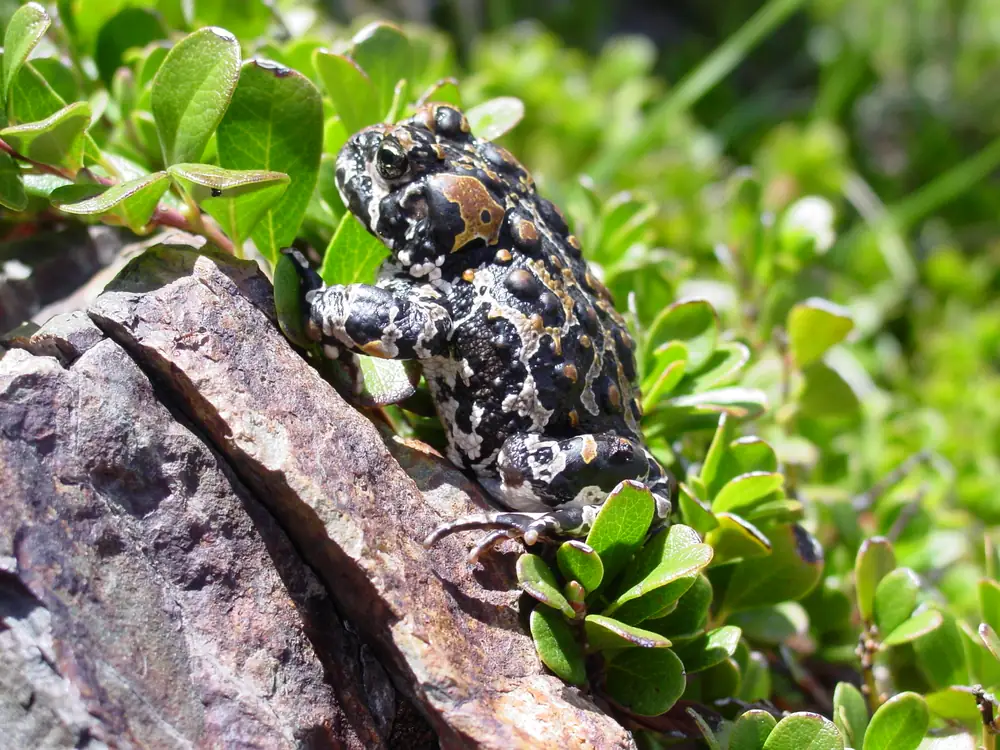
Yosemite toads in snowmelt pools
Breeding from May through July, earlier at low sites and later at high ones · Wet meadows and shallow ponds in the Sierra, from Alpine to Fresno County
Federal wildlife biologists put the Yosemite toad’s breeding season at May through July, in wet meadows, slow streams and shallow ponds, and it holds federal threatened status, granted in 2014. The Forest Service says the eggs hatch in seven to ten days. If you walk in a high meadow in late spring, keep to the trail and out of the shallow pools, which are the nurseries.
-
Sierra Nevada yellow-legged frogs wait for warmth
Breeding starts around April at low elevations and June or July at high ones · High lakes and streams, mostly above about 6,000 feet
California Fish and Wildlife says the mountain yellow-legged frog has disappeared from 70 to 90 percent of its historic localities since about 1970, and that most historic populations lived above about 6,000 feet. Tadpoles need two to four years to change into frogs, depending on water temperature, so a tadpole in a May lake may have been there for a winter or two already. You are unlikely to find these frogs by accident, and it is best to leave them undisturbed.
Which songbirds pass through or arrive in California in May?
California sits on the Pacific Flyway, and May is the month the last wave of insect-eating songbirds settles in to nest or moves north and into the mountains. The state’s best long record of that arrival comes from the Palomarin Field Station at Point Reyes National Seashore, where Point Blue Conservation Science has banded birds since 1979.
-
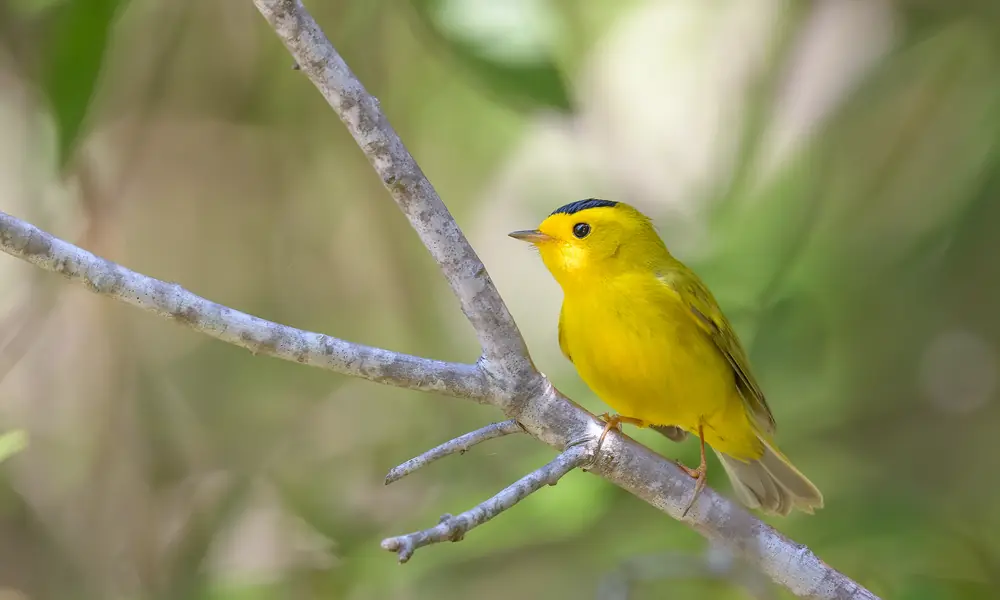
Wilson’s and orange-crowned warblers
Both were among the most common spring migrants in Point Blue’s April and May 2020 nets · Coastal scrub and willow thickets; Palomarin and similar sites
In Point Blue’s report for April and May 2020, the nets were catching mostly orange-crowned warblers, Wilson’s warblers and Swainson’s thrushes, as migrants replaced the resident song sparrows and wrentits. A National Park Service article on the 1979 to 2015 banding record reports that Wilson’s warblers have been arriving later while orange-crowned warblers have been arriving earlier, and that the cause is not yet explained. A bright yellow bird with a black cap in streamside willows in May is probably the first of these.
-
Late May surprises
The station’s late May captures in 2020 included a MacGillivray’s warbler and a Brewer’s sparrow · Point Reyes and other coastal banding sites
Point Blue’s 2020 update says late May brought a nine-year-old Swainson’s thrush, a MacGillivray’s warbler and only the fourth Brewer’s sparrow ever caught at Palomarin. The same update mentions warbling vireos and a black-headed grosbeak at its other sites in the second half of May. The lesson for a backyard watcher is that migration does not end on a date: odd travelers keep turning up through the last days of the month.
-
Count with the rest of the world
World Migratory Bird Day: the organizer’s page lists 9 May and 10 October for 2026 and had not posted 2027 dates · Anywhere
The World Migratory Bird Day organizers publish the dates each year, and their site showed only 2026 when this page was written. Look for the 2027 date there before planning an event, and in the meantime keep a list of the birds you see on your own walks.
Which birds nest on California beaches and islands in May?
Some of the state’s rarest birds nest in the open, on sand or bare slopes, where a single walker can ruin a nest without seeing it. May is the heart of that season, and the rules that follow are there to protect eggs the size of a pebble.
-
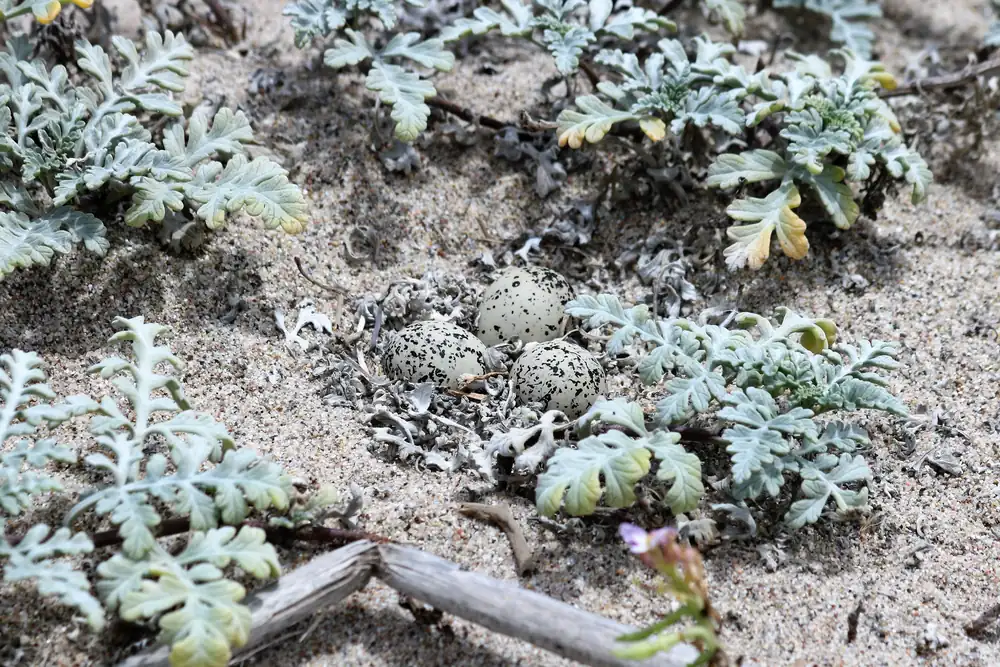
Western snowy plovers on the sand
The Point Reyes beach closure runs weekends and federal holidays from the Saturday before Memorial Day through Labor Day; the dog ban runs March 1 to September 30 · Point Reyes Beach and other open coast beaches
The National Park Service’s closures page, updated in May 2026, says a stretch of Point Reyes Beach between the North Beach parking lot and the mouth of Abbotts Lagoon is closed to all public use on weekends and federal holidays from the Saturday before Memorial Day through Labor Day, to protect nesting western snowy plovers, a federally threatened species. It also bars pets from the beach between the North Beach parking lot and Kehoe Beach from March 1 through September 30. Closures can change from year to year, so read the park’s current notices before you go, and keep to the wet sand below the high tide line when you see signs or string fencing.
-
Brown pelicans on the Channel Islands
Nesting can run January through October; egg-laying peaks in March or April but continues through June · West Anacapa and Santa Barbara Islands, Channel Islands National Park
The National Park Service says the only long-term breeding colonies of California brown pelicans in the United States are on West Anacapa and Santa Barbara Islands. West Anacapa is closed to visitors from January 1 through October 31, and boats are kept well offshore. Pelicans usually feed within about five miles of land. From a boat or the mainland shore you can watch them fold their wings and dive from 10 to 30 feet above the water.
What is happening in the ocean in May: humpbacks, orcas and seal pups?
By May the northbound gray whale parade is thinning, and the water off the central coast fills with life of a different kind. Upwelling feeds plankton, anchovies and krill, and everything that eats them comes to dinner.
-
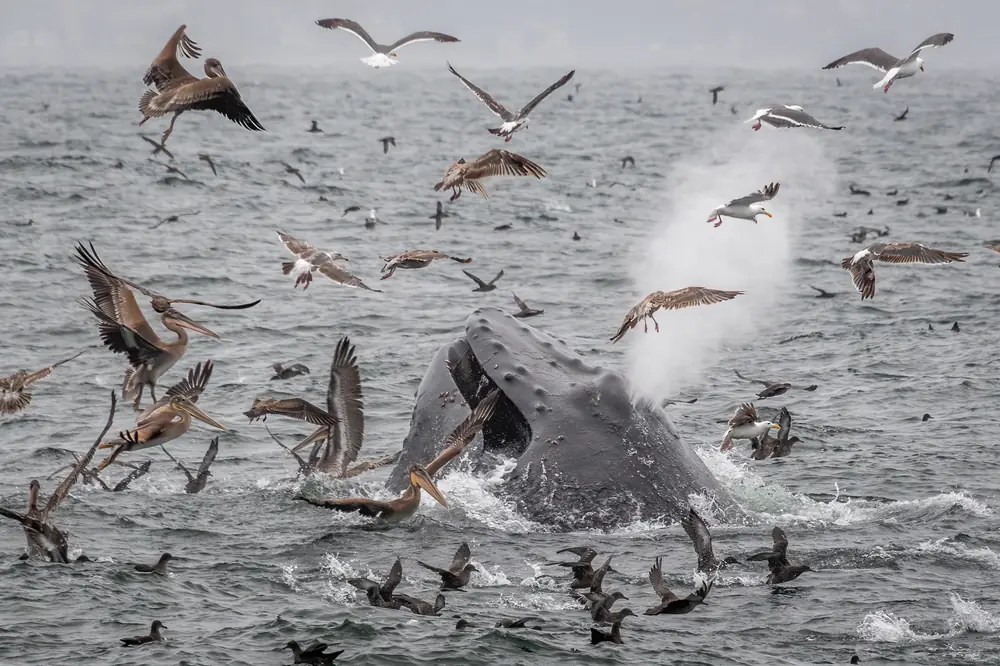
Humpback whales feeding in Monterey Bay
Arriving from March and feeding through summer into November, per NOAA · Monterey Bay
NOAA’s Monterey Bay National Marine Sanctuary says humpbacks start arriving in March to feed on large schools of anchovies or krill in the nutrient-rich water, and that they can be seen throughout the summer into November. Whale numbers on any one day depend on where the prey is, so treat the season as a pattern and not a forecast. Book a trip on a day with a calm forecast, and ask the operator what has been seen that week.
-
Transient orcas
Encounters peaked in spring, March to May, in a 2006 to 2021 study · Monterey Bay
A 2024 study in PLoS One of the Monterey Submarine Canyon recorded transient killer whales, the mammal-eating kind, 261 times from 2006 to 2021, with more encounters in spring as gray whales migrated north. The sanctuary lists gray whale cows and calves nearshore from March through May. Sightings are not daily, so ask an operator what has been seen that week.
-
Seal pups on the sand
Pupping runs March to May south of Marin and March to June farther north, per the Marine Mammal Center · Beaches and rocks along the coast
The Marine Mammal Center advises staying at least 50 yards (150 feet) away from a seal pup, not touching it, and keeping people and dogs back, because the mother is usually feeding nearby and a pup alone is often just resting. If a pup looks injured, call the center’s response hotline at 415-289-7325 instead of intervening. Harassing a marine mammal is against federal law.
Which baby animals are out in California in May, and what should I do?
The rule for nearly every young animal you meet this month is the same: look, take a photo from a distance, and leave. A youngster that seems alone almost always has a parent close by.
-
Black-tailed and mule deer fawns
Late spring and early summer are the peak fawning period · Grass, brush and gardens statewide
California Fish and Wildlife says does often hide fawns in tall grass or brush while they forage, sometimes for hours, and that well-meaning residents shorten the lives of dozens of fawns across the state each year. Anyone who takes a young wild animal from the wild must notify the department or deliver it to a permitted rehabilitator within 48 hours. If a fawn looks hurt, sick or orphaned, call your local CDFW regional office. Feeding deer or keeping them is a misdemeanor.
-
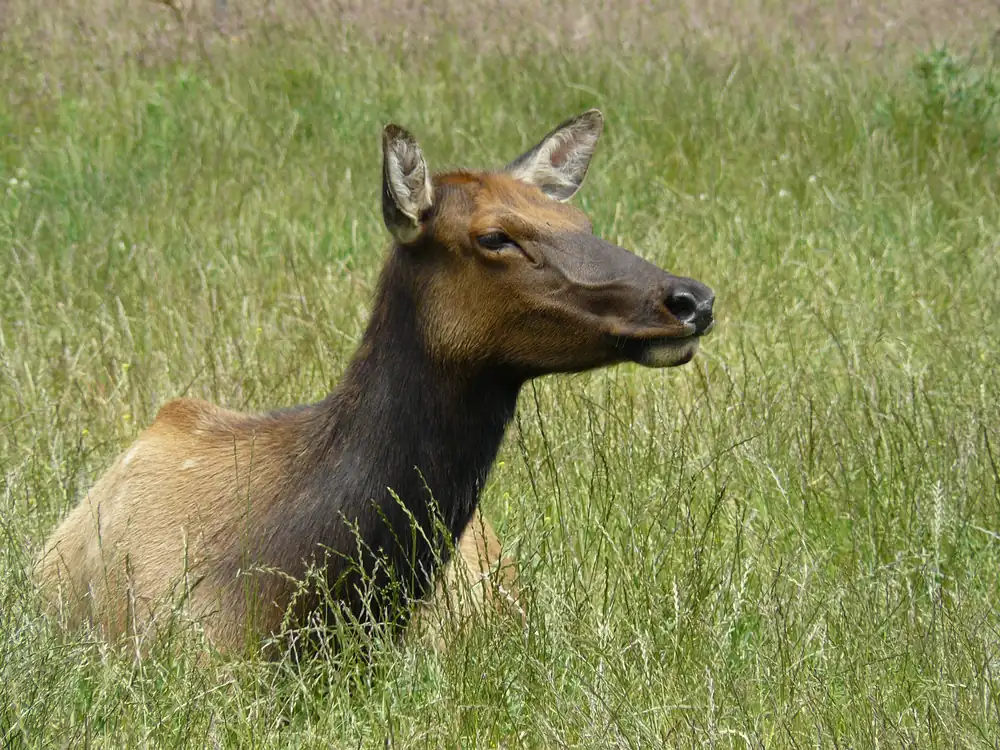
Roosevelt elk calves
Calving season runs from late May through June · Elk Prairie, Gold Bluffs Beach, Elk Meadow, Orick Valley and the Bald Hills, Redwood National and State Parks
The National Park Service says cow elk may be extremely defensive during calving, recommends 25 yards (75 feet) of viewing distance in general, and advises going farther in spring and fall. Seven herds live in the parks, and the largest, in the Bald Hills, numbers about 250 animals. A telephoto lens, a car window and patience beat a close approach.
-
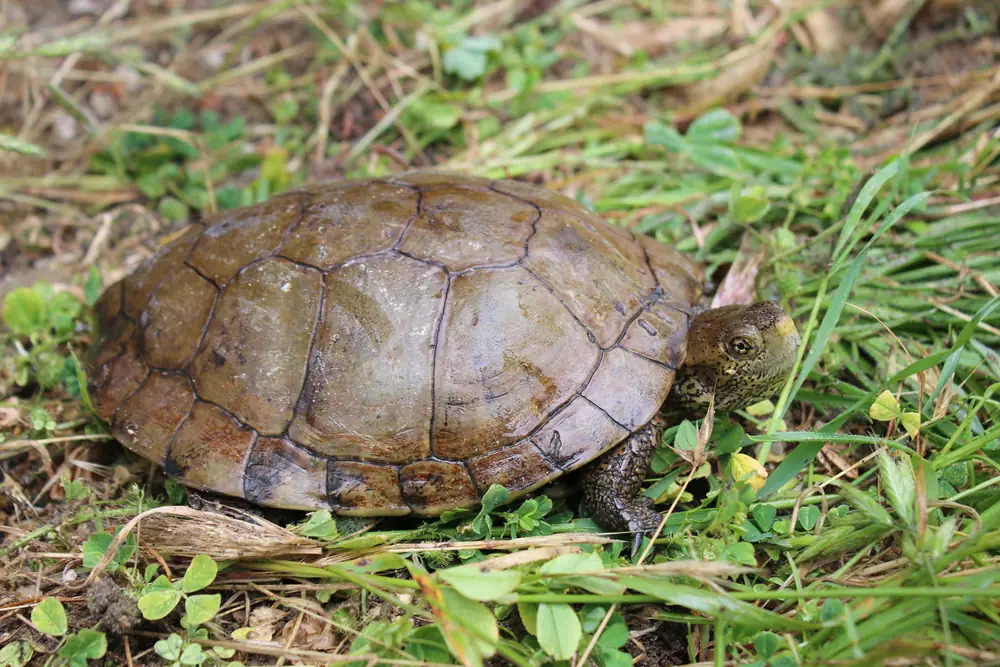
Western pond turtles nesting
Females nest from late May to mid-July · Slow streams, ponds and the dry banks above them
Federal biologists report that a nesting female wants dry soil, little plant cover and a sunny slope facing south, and that the eggs spend 90 to 130 days underground, longer in a cool summer. That means a turtle on a dry bank, or crossing a path, in June is probably a mother. Give her room, drive slowly near ponds and creeks, and do not move her or dig at a nest.
-
Free-tailed bats return to the Yolo Causeway
Summer; the foundation’s bat talks run from late June through September · Yolo Causeway near Davis and Sacramento
The Yolo Basin Foundation says about 250,000 Mexican free-tailed bats roost in crevices under the Yolo Causeway, possibly the largest colony in California. That figure is the foundation’s own estimate. Its Bat Talk and Tours programs run from late June through September and sold out for summer 2026, so ask the foundation for 2027 dates before you plan.
What is May weather like in California, and what hazards should I plan for?
May is the month California’s climate shows its widest range. NOAA’s 1991 to 2020 normals put Death Valley’s average high at 100.7 °F and Tahoe City’s at 59.2 °F, a gap of 41.5 degrees. The table below lists May normals for eleven stations, using NCEI’s station names. At Tahoe City the average low is 33.9 °F, just above freezing, and nights below it are still common.
| Station | Average high | Average low | Precipitation |
|---|---|---|---|
| Arcata Eureka AP | 59.7 | 46.0 | 2.10 |
| Redding Muni AP | 82.0 | 54.3 | 1.81 |
| Sacramento Executive AP | 80.3 | 52.0 | 0.75 |
| San Francisco Intl AP | 68.3 | 51.6 | 0.48 |
| Fresno Yosemite Intl AP | 82.7 | 57.6 | 0.42 |
| Bishop AP | 82.8 | 44.2 | 0.23 |
| Tahoe City | 59.2 | 33.9 | 1.57 |
| Los Angeles Intl AP | 69.5 | 57.6 | 0.28 |
| San Diego Lindbergh Fld | 69.5 | 60.0 | 0.28 |
| Palm Springs Rgnl AP | 94.7 | 65.9 | 0.02 |
| Death Valley NP | 100.7 | 75.0 | 0.03 |
Several hazards follow from the table. On the south coast, May is the start of the gray mornings people call May Gray: Scripps Institution of Oceanography explains that cool, moist air over cold coastal water is trapped under a temperature inversion that acts as a lid, so low clouds form a gray sheet that is most likely from April to August and that local winds most often push over coastal land in May and June. In the desert, the National Park Service lists Death Valley’s record May high as 122 °F and advises at least a gallon of water a day and avoiding low-elevation hikes in the heat. In the mountains, the danger is the snowmelt: the National Weather Service says cold shock can occur in water at 50 to 60 °F, that warm air does not mean warm water, and that a life jacket and clothing suited to the water temperature matter. NOAA’s Climate Prediction Center issues a new 90-day outlook near the middle of each month, at its 90-day outlook page; read the newest issue there, because we do not restate it. Forecast links for your own town sit on our weather page; the cloud guide decodes the clouds overhead.
When is the last spring freeze in California?
In most of the state the last freeze is long over by May. The exceptions are in the mountains: Tahoe City’s median last freeze is June 9, and only by June 25 have nine springs in ten finished. Bishop’s median is April 29, with its late date on May 27. For the valley and coastal stations, the median came between late December and early March. Your own town’s dates are on California’s frost date tables.
| Station | One year in ten | Median | Nine years in ten |
|---|---|---|---|
| Tahoe City | May 26 | Jun 9 | Jun 25 |
| Bishop Ap | Apr 12 | Apr 29 | May 27 |
| Redding Muni Ap | Jan 31 | Mar 3 | Apr 9 |
| Sacramento Metro Ap | Jan 10 | Feb 22 | Apr 1 |
| Fresno Yosemite Intl Ap | Dec 22 | Jan 14 | Feb 11 |
| San Francisco Intl Ap | Dec 11 | Dec 29 | Jan 13 |
| Palm Springs | Dec 12 | Jan 1 | Jan 18 |
| San Diego Brown Fld | Dec 13 | Jan 6 | Feb 5 |
Half of all springs have a later last freeze than the median shown. In the high country, wait until after the late date before setting out tender plants, and cover them if a clear, still night is forecast. Cold air drains into low spots, so a frost can strike a valley floor when a slope above it stays clear.
How much daylight does California gain in May?
Over the month the days lengthen by 41 minutes in San Diego and 55 minutes in Eureka, roughly 1.4 to 1.8 minutes each day, and by May 31 even San Diego has 14 hours and 9 minutes of daylight. The gains are smaller than in April because the Sun is nearing its highest path, and they shrink to zero at the June solstice on June 21.
| City | May 1 | May 31 | Gained | Per day |
|---|---|---|---|---|
| Eureka | 13 h 58 m | 14 h 53 m | 55 min | 1.8 min |
| Redding | 13 h 56 m | 14 h 52 m | 56 min | 1.9 min |
| Sacramento | 13 h 49 m | 14 h 40 m | 51 min | 1.7 min |
| San Francisco | 13 h 46 m | 14 h 35 m | 49 min | 1.6 min |
| Fresno | 13 h 43 m | 14 h 30 m | 47 min | 1.6 min |
| Los Angeles | 13 h 33 m | 14 h 16 m | 43 min | 1.4 min |
| Palm Springs | 13 h 33 m | 14 h 14 m | 41 min | 1.4 min |
| San Diego | 13 h 28 m | 14 h 09 m | 41 min | 1.4 min |
For the exact sunrise and sunset at a particular trailhead or overlook, use the daylight calculator. The state stays on daylight time for all of May, so the figures are untouched by any clock change. The longest day of the year, June 21, is three weeks after this table ends.
What can I see in California’s night sky in May?
May brings a meteor shower on a moonless morning, a full moon with an extra name, and the best evening view of Mercury this year. Times are Pacific daylight time throughout.
-
Eta Aquariid meteors on a dark morning
Active about April 19 to May 28; the American Meteor Society lists the peak night as May 5 to 6; best mornings May 5, 6 and 7 · A dark site with an open eastern horizon, in the last two hours before dawn
The new moon arrives at 3:58 a.m. on May 6, so the Moon is a thin crescent that is nearly absent from the sky. The American Meteor Society lists usually 10 to 30 meteors an hour just before dawn from the equator northward, and SeaSky says about 30 an hour from the Northern Hemisphere. In California the shower’s source point, in Aquarius, clears the eastern horizon only shortly before dawn, so the final two hours of darkness are the productive ones; allow your eyes 20 minutes to adjust.
-
Flower Moon and seasonal Blue Moon
Full at 3:59 a.m. PDT, Thursday, May 20; best evening Wednesday, May 19 · Rising in the east soon after sunset
The Moon is full in the small hours of May 20, so it is the rise on Wednesday evening that matters; by our computation it clears the horizon in Los Angeles at about 7:37 p.m. Spring’s four full moons fall on March 22, April 20, May 20 and June 19, and SeaSky labels the third of them a Blue Moon under the old seasonal rule. Under the modern calendar-month rule May does not qualify, since it holds only one full moon. Flower Moon is the usual name for the May full moon in almanac lists.
-
Mercury at its best evening view of the year
Greatest eastern elongation 6:14 a.m. PDT, Friday, May 28; look on the evenings of May 27 and 28, and from about May 12 to June 5 · Near the west-northwest horizon, from 45 to 90 minutes after sunset
Mercury reaches 22.8 degrees from the Sun, and SeaSky lists 22.9. Near 40 degrees north, our calculation has Mercury setting about 97 minutes after the Sun on May 15, at magnitude −0.6 and about 105 minutes after on June 1; timing shifts by up to half an hour in other places, and it fades quickly in June. Find a view down to the west-northwest horizon over the ocean or a flat plain.
-
Venus meets Saturn, and the Moon meets Jupiter and Mars
Venus and Saturn: mornings of May 6 to 8; Moon, Jupiter and Mars: May 12 and 13 · Venus and Saturn near the eastern horizon at dawn; Jupiter and Mars in the evening sky
Our calculation puts Venus and Saturn 0.6 degree apart on May 7, about 1 degree on the mornings of May 6 and 8, both close to the horizon; a flat horizon and binoculars are essential. On the evening of May 12 the first-quarter Moon sits next to Jupiter, within about 1.2 degrees at closest, and the next day the Moon is about 3 degrees from Mars. All are calculations, not almanac values.
-
Milky Way hours after midnight
About May 1 to 14 and May 25 to 31 for latitudes near 40 degrees north · Dark sites away from city lights
Our own calculation finds up to about 3.8 hours of dark, moonless sky with the bright core of the Milky Way at least 10 degrees up at 40 degrees north in these windows, around the May 6 new moon. No almanac lists such windows; this is our own estimate.
| Phase | Date | Time |
|---|---|---|
| New moon | Thursday, May 6 | 3:58 a.m. PDT |
| First quarter | Wednesday, May 12 | 9:44 p.m. PDT |
| Full moon (Flower Moon, seasonal Blue Moon) | Thursday, May 20 | 3:59 a.m. PDT; looks full May 19 to 21 |
| Last quarter | Friday, May 28 | 6:58 a.m. PDT |
The moon phase calendar shows each night’s phase, and the cloud guide is worth a look the evening before you set out.
What can families do outdoors in California in May?
- City Nature Challenge. The organizers list May 4 to 16, 2027 for identifying observations and May 20 for results; photographs are taken April 30 to May 3. California regions were not listed on the organizers’ page; the California Academy of Sciences and the Natural History Museum of Los Angeles County, who help run the event, can tell you which areas take part.
- An elk calf watch, from the car. At Redwood National and State Parks, calving begins in late May. Park at Elk Prairie or Elk Meadow and keep 25 yards or more away.
- A dawn meteor morning. Set an alarm for the last two hours before dawn on May 6 and lie back with a blanket.
- A waterfall visit. Go on a weekday to Yosemite Valley and stay behind the railings.
- A whale trip. Ask a Monterey Bay operator what has been seen that week.
- Flower Moon picnic. Eat dinner outside on May 19 and watch the moonrise.
- World Migratory Bird Day. No 2027 date was posted on the organizers’ site at the time of writing; when it appears, keep a list of every bird you see that day.
Memorial Day is Monday, May 31. Entrance fees at national parks are waived only on a few set days, and the 2027 list had not been posted when this was written. Other months are on the nature calendar, and the field journal has space for notes from each outing.
What should I watch out for in California in May?
- Spring turkey season. The department’s 2027 page shows the general season ending May 2, then an archery-only season from May 3 to May 16, plus a junior hunt that also runs May 3 to 16 (junior dates in March were March 20 to 21). Each hunter may take one bearded turkey a day and three in the season. The department requires nonlead ammunition when taking any wildlife with a firearm. The page did not mention a blaze-orange rule, so read the rules for the land you visit, dress brightly on public land, and never creep toward a gobble.
- Trout. CDFW called April 25 the general opener in 2026, the last Saturday in April, and some waters follow other dates. Confirm 2027 rules in its freshwater regulations; anglers 16 and older need a license.
- Ticks. University of California pest notes say the western blacklegged tick has been reported in 56 of California’s 58 counties. In the northwest, nymphs are most active March to July, peaking mid to late spring, and early Lyme cases peak May to July. Wear long pants, treat clothing with permethrin, stay in the middle of the trail and shower within two hours.
- Bears. Yosemite says to stay at least 50 yards from a bear in undeveloped areas and to use food lockers and canisters.
- Elk and fawns. Keep 25 yards or more from elk, and leave any fawn where it lies.
- Snowmelt rivers. Cold water can kill, the National Weather Service says; wear a life jacket and keep out of fast water.
- Slick rock at waterfalls. Yosemite warns that wet or dry, the rock beside waterfalls can send you sliding.
- Seals and nesting birds. Stay at least 50 yards from seal pups and obey beach signs and fencing near nesting plovers.
- Desert heat. Carry water, up to a gallon a day in Death Valley, and avoid low-elevation hikes in the afternoon.
Sources (35)
- National Park Service: Yosemite waterfalls
- National Park Service: Yosemite road and trail conditions
- National Park Service: Tioga Road opening and closing dates, Yosemite
- National Park Service: Lassen Volcanic National Park conditions
- California Department of Fish and Wildlife: mountain yellow-legged frog
- National Park Service: migration timing changing for birds at Point Reyes
- Point Blue Conservation Science: Palomarin Field Station spring update, April and May 2020
- World Migratory Bird Day
- National Park Service: brown pelican, Channel Islands National Park
- California Department of Fish and Wildlife: living with wildlife
- National Park Service: Roosevelt elk, Redwood National and State Parks
- U.S. Fish and Wildlife Service: western pond turtle
- NOAA NCEI: U.S. climate normals 1991–2020
- NOAA NCEI: monthly climate normals data service for the May table
- National Weather Service: cold water safety
- National Park Service: Death Valley weather
- National Park Service: Death Valley safety
- NOAA Climate Prediction Center: 90-day outlook
- California Department of Fish and Wildlife: upland game birds, 2027 spring turkey season
- California Department of Fish and Wildlife: trout season 2026
- University of California IPM: western blacklegged tick
- National Park Service: bears in Yosemite
- SeaSky: astronomy calendar 2027
- American Meteor Society: meteor shower calendar
- U.S. Naval Observatory: moon phases 2027
- City Nature Challenge
- NOAA Monterey Bay National Marine Sanctuary: seasons in the sanctuary
- PLoS One (2024): foraging behaviour and ecology of transient killer whales within a deep submarine canyon system
- The Marine Mammal Center: your guide to seeing harbor seal pups in California
- National Park Service: closures at Point Reyes (snowy plover)
- U.S. Fish and Wildlife Service: Yosemite toad
- California Department of Fish and Wildlife: let sleeping fawns lie (April 29, 2022)
- Yolo Basin Foundation: Bat Talk and Tours
- Scripps Institution of Oceanography: can May Gray be predicted?
- Photos via Wikimedia Commons; licenses and photographers are credited under each picture
