What to look for in nature in California this December
To a weather forecaster, winter starts on the first of this month, because the trio of December, January and February is the coldest stretch of the average year. In California it is also the wet season in earnest. The first gray whales slip south past the headlands, elephant seal pups are born on beaches that were empty in summer, cranes and swans fill the flooded fields of the Central Valley, and the coast redwoods quietly flower in the rain. Sunset hits its earliest clock time between the 4th and the 8th, depending on how far north you live, and the year ends with king tides under a full moon. Here is December, with the places and the dates.
Other months in California: October, November.
Start here
- Watch for the first gray whales. Volunteer counters of the American Cetacean Society take up their posts at Point Vicente on December 1 and stay until late May. Cabrillo National Monument says the first southbound whales show off San Diego from mid to late December. Take binoculars to a high headland on a calm morning and look for the puff of a spout.
- Elephant seal pups. The Friends of the Elephant Seal expect newborn pups on the Piedras Blancas beaches by mid-December, among bulls that weigh as much as a small car. The boardwalk north of San Simeon is free and open every day; Año Nuevo’s guided walks begin December 15.
- Count birds for Christmas. The 127th Christmas Bird Count runs December 14 to January 5, and California has dozens of count circles, from Morro Bay and San Diego on December 19 to Santa Barbara on January 2. Beginners are welcome, and a backyard feeder count still counts.
In the Naturalist’s Field Journal, use the “birds I have seen” list on count day, the dusk and dawn watch for a crane fly-in or a Geminid night, the seeds, pods and cones page for a redwood branch and its tiny new cones, and the same place twice for one beach at the morning king tide and again at the afternoon low.
Regions used below: North Coast and the redwoods; Shasta Cascade and the far north; Sacramento Valley; Bay Area; Central Coast; Sierra Nevada and the Eastern Sierra; San Joaquin Valley; Southern California coast and Los Angeles; Mojave and Colorado deserts; San Diego.
When do gray whales start passing California?
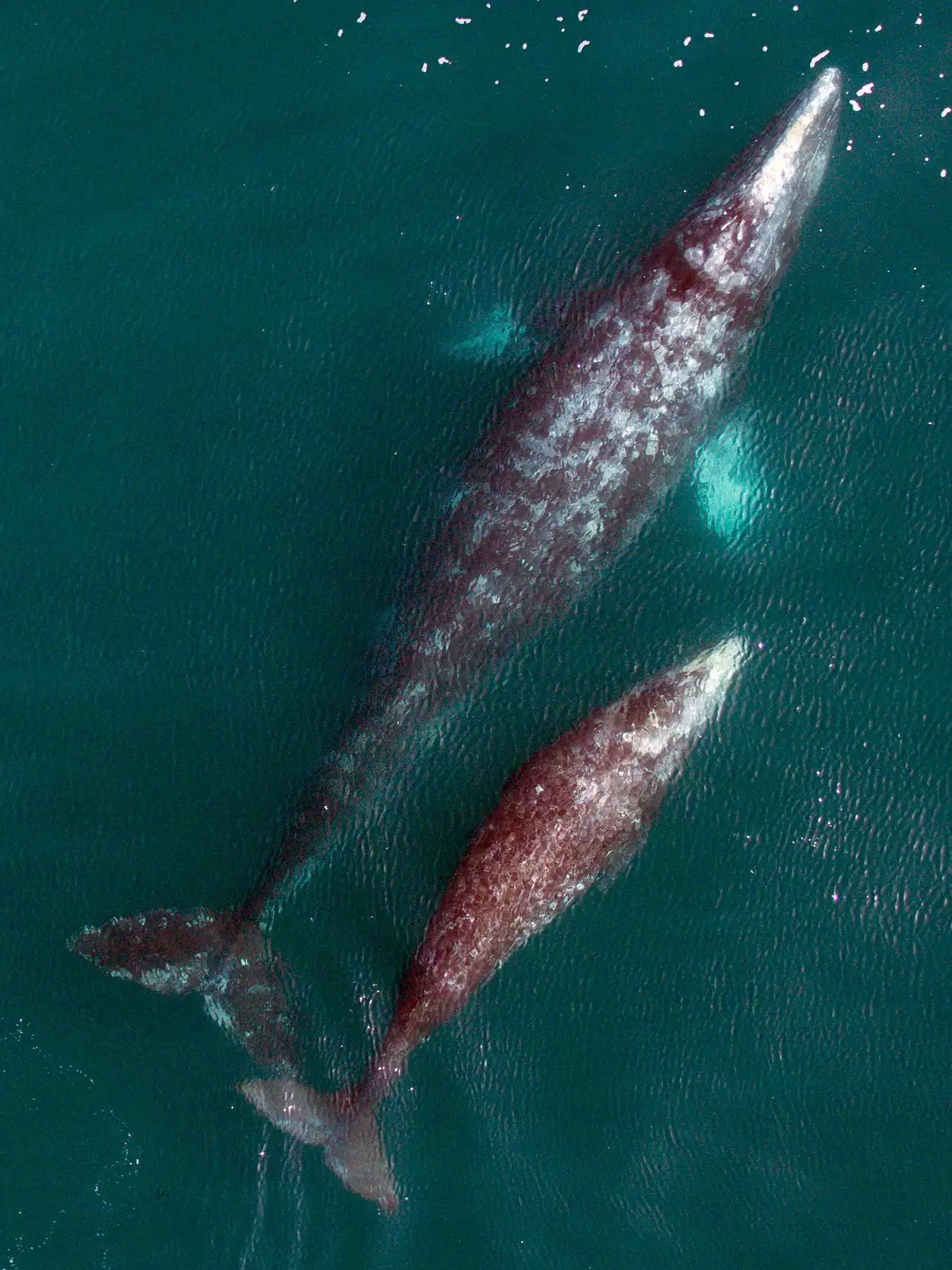
Gray whales spend the summer feeding in the Bering and Chukchi seas and swim the length of the West Coast in winter to the lagoons of Baja California, where they mate and calve. The southbound leg reaches California in December. It is a nearshore migration, which is what makes it the easiest whale watching in the state: on a calm day you can see them from a parking lot.
-
The Point Vicente census
Daily from December 1 to late May, daylight hours · Point Vicente Interpretive Center, Rancho Palos Verdes
For more than four decades volunteers with the Los Angeles chapter of the American Cetacean Society have counted every gray whale they can see from the center’s patio, 125 feet above the water, seven days a week. The season that ended on May 25, 2026, their 42nd, logged 214 grays going south, including 17 calves, their second-lowest southbound tally, and a record-low 445 heading north. The chapter posts each day’s total on its website, so you can see whether the whales are moving before you drive out.
-
Cabrillo National Monument
Whales from mid to late December; most in mid-January · Point Loma, San Diego
The park says gray whales are visible off Point Loma “from mid- to late December through March,” and that the migration peaks in mid-January. Its recommended lookouts are the heights near the Kelp Forest Overlook and the Old Point Loma Lighthouse. Face west, scan slowly, and watch for a low, bushy puff of spray, then the slow roll of a mottled gray back with no dorsal fin.
-
How many whales are out there
Latest estimate: winter 2025/2026 · The eastern North Pacific
NOAA Fisheries estimates 15,930 to 20,530 gray whales for 2025/2026, a rise from about 11,700 to 14,200 a year earlier, but calf production has stayed low since 2019 and the agency treats the jump with caution.
Calm, overcast mornings are best, before the afternoon wind roughs up the water. Check the local weather for a still day, and note each sighting: time, direction of travel, and how many blows.
When are elephant seal pups born in California?
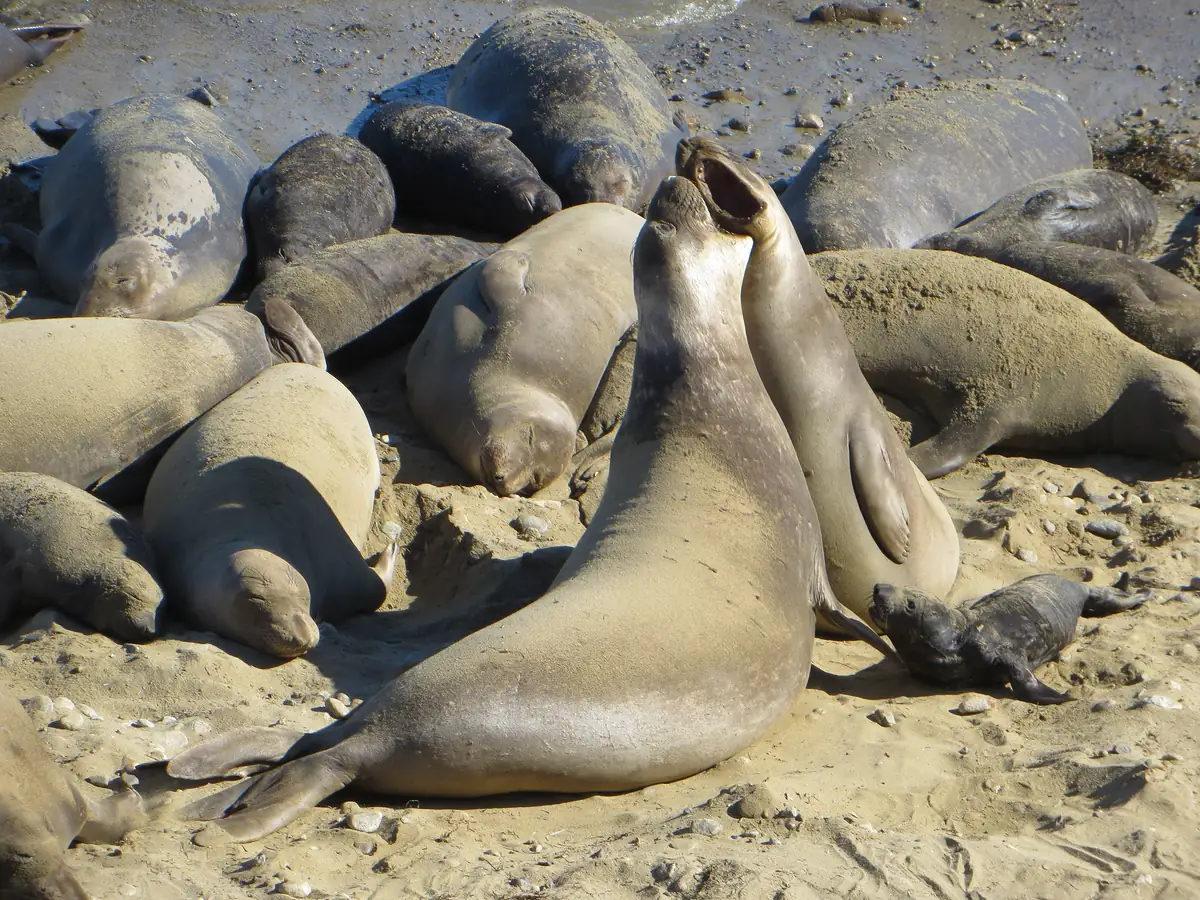
From mid-December. Mature bulls, which the Friends of the Elephant Seal put at 3,500 to 5,000 pounds, keep arriving through December and settle their rank by threat and by fighting; the fights are bloody but, the docents say, “almost never fatal.” Only the strongest becomes an alpha bull with a harem, commonly 20 to 50 females. The pregnant females come ashore through the month, and the first pups are born within days of landing. Births peak in January.
-
Piedras Blancas
Every day; first pups by mid-December · Highway 1, north of San Simeon
The rookery’s viewing areas are open daily with no fee and no reservation, and volunteer docents are often on hand to answer questions. Watch a female with a newborn: the pup is black, loose-skinned and bleating, and the mother will snap at any seal that crowds them. Afternoons are often cold and windy, so bring a jacket.
-
Año Nuevo State Park
Closed December 1–14; guided walks from December 15 · San Mateo County coast, near Pescadero
The park closes its natural preserve for the first two weeks of December while the bulls and the pregnant females arrive, then runs docent-led walks every day from December 15 to the end of March. You can only see the breeding colony on one of these walks. They book on ReserveCalifornia 56 days ahead, so dates in mid-February open in late December.
-
Point Reyes
Bulls in December; road closure from December 15 · Elephant Seal Overlook near Chimney Rock; South Beach Overlook; Drakes Beach
At Point Reyes the bulls arrive in December to stake out the beaches, and the females follow to give birth. From December 15 to March 31 the park closes the road past the Chimney Rock gate down to the Fish Dock, and the beaches next to it, to protect nursing pups. Trained docents staff the Elephant Seal Overlook and Drakes Beach on weekends and holidays.
Keep well back even when a seal looks asleep; a bull moves faster on sand than you expect. Last month’s page, November in California, covers the bulls’ arrival.
How do I join a Christmas Bird Count in California?
This is the 127th season of Audubon’s census, and California’s circles pick their days between December 14 and January 5. Every count covers one day within a set circle 15 miles in diameter, where teams tally every bird they find between dawn and dusk. It is free, all levels are welcome, and new birders are paired with experienced ones. Homes inside a circle can send in a feeder count instead. Find your nearest circle and its compiler on Audubon’s circle finder, or through the local chapter.
| Count | Region | Date |
|---|---|---|
| Morro Bay (73rd count) | Central Coast | Saturday, Dec 19 |
| San Diego | San Diego | Saturday, Dec 19 |
| Santa Cruz | Central Coast | Saturday, Dec 19 |
| Crystal Springs | Bay Area, San Mateo County | Saturday, Dec 19 |
| Big Sur | Central Coast | Sunday, Dec 20 |
| San Francisco | Bay Area | Monday, Dec 28 |
| Santa Barbara | Southern California coast | Saturday, Jan 2, 2027 |
| Año Nuevo | San Mateo County coast | Saturday, Jan 2, 2027 |
| Pinnacles National Park | Inner Coast Ranges | Saturday, Jan 2, 2027 |
| Panoche Valley | San Benito County | Sunday, Jan 3, 2027 |
California’s counts are among the richest anywhere. Santa Barbara’s found 214 species in the winter of 2024–25, its best in ten years; a year later, wind and rain held it to 178, its lowest in half a century. San Francisco’s count on December 29, 2025 put 214 birders in the field and tallied 183 species. Oakland’s count, run by the Golden Gate Bird Alliance, usually falls in mid-December; its 2026 date was not yet posted when we checked. Put every species on your “birds I have seen” list.
Where are the cranes, swans and geese in December?
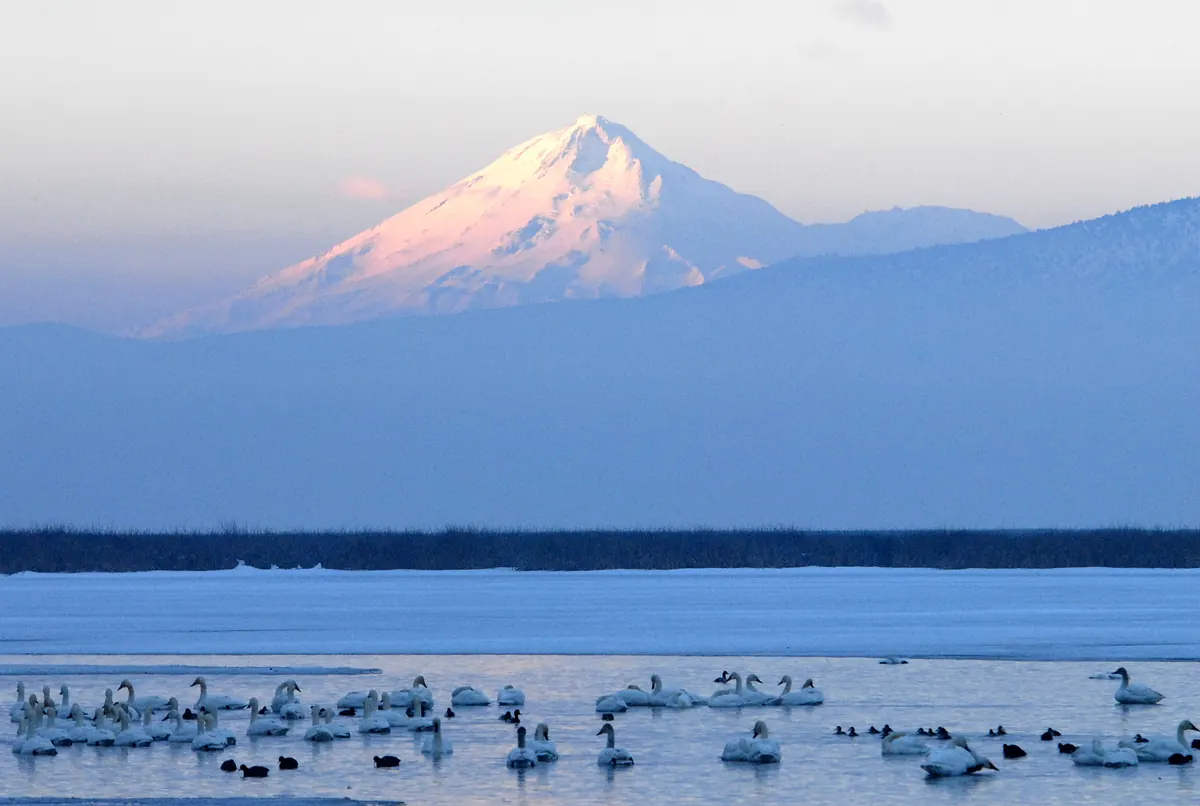
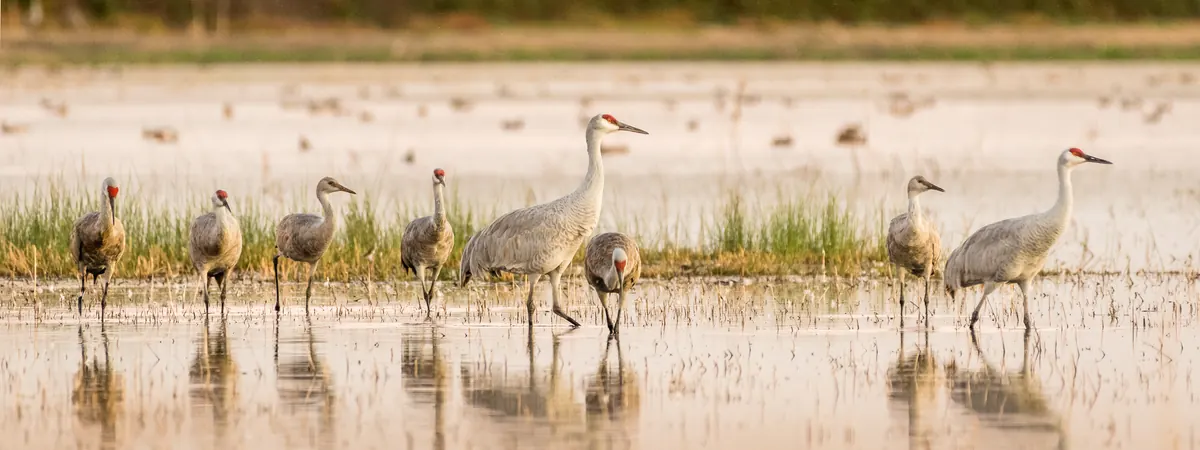
The Central Valley’s winter birds are at full strength. Federal refuge staff at Sacramento say ducks and geese stay at their peak through November and December, so the great white rafts of snow and Ross’s geese are still there through the holidays. December adds two things: the sandhill crane numbers top out, and the tundra swans arrive in force.
-
Sandhill cranes at their peak
Highest numbers around mid-December · Cosumnes River Preserve, Staten Island Road, Woodbridge Ecological Reserve
The Cosumnes River Preserve says its cranes reach their maximum around the middle of December and stay until mid-March. Three migratory subspecies winter here: the lesser, at 3 to 4 feet, the Canadian, and the greater, at 4 to 5 feet. Watch at sunrise, when they lift off to feed, or at sunset, when they come back to roost. CDFW’s guided tours at Woodbridge usually run on the first three weekends of each month from October through February, which in December would mean the 5th–6th, 12th–13th and 19th–20th; they begin an hour and a half before sundown and take roughly two hours. The 2026–27 schedule was not posted when we checked, so confirm dates and booking with the department. Visitors 16 and older need a one-day lands pass ($5.66).
-
Tundra swans
In good numbers from early December; leave in mid-February · Sacramento Valley rice fields, the Delta, the Klamath Basin
The Pacific Flyway Council calls the Sacramento Valley and the Delta the “primary winter terminus” of the western population of tundra swans, and on average California holds about 83 percent of them in winter. Since the late 1990s they have spread into the flooded rice of the lower American basin. A Forest Service review notes they are not present in great numbers near San Francisco Bay until early December, and in the Klamath Basin not until late November or early December. Look for big white birds with all-white wings, straight necks and black bills, many showing a yellow fleck before the eye; their call is a mellow, high whoo.
Dense tule fog can blank out a valley morning; check Today’s sky before you set out, and save the trip for an afternoon if the fog is forecast to sit.
Where do ladybugs spend the winter in California?
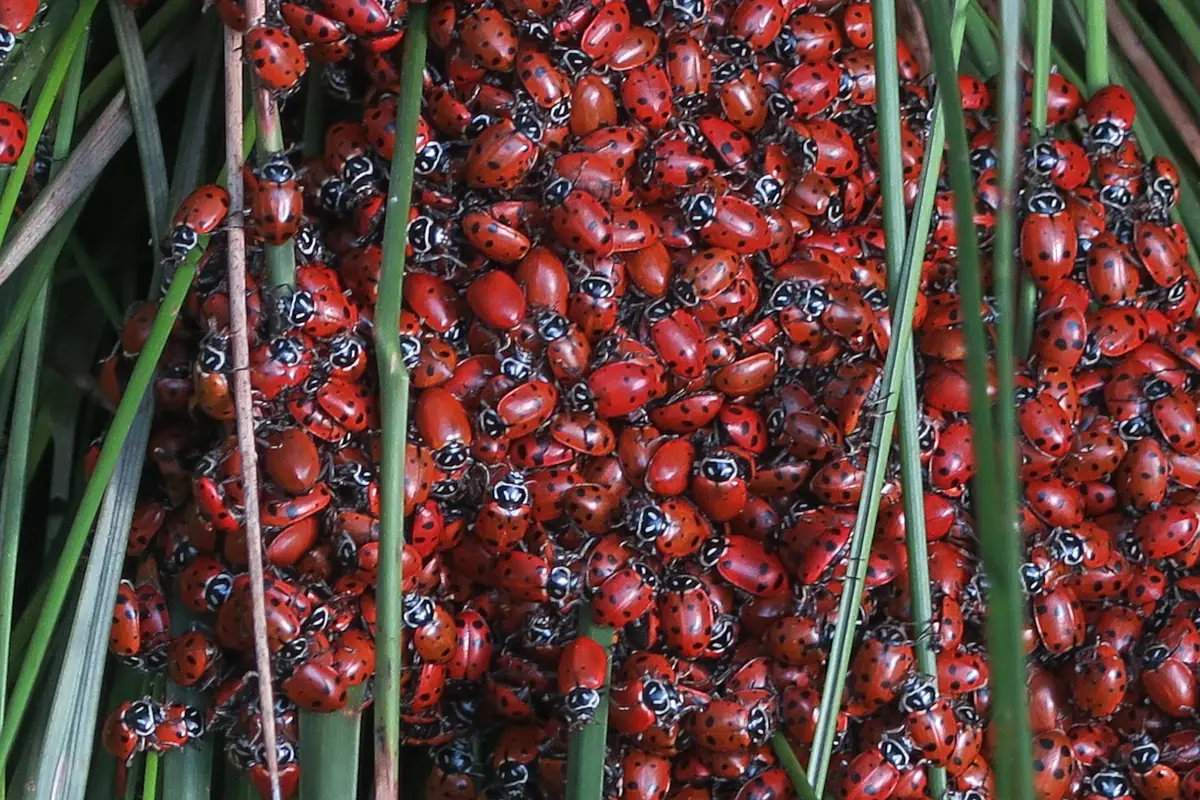
In piles, in cool, damp canyons. California’s commonest ladybug, the convergent lady beetle, does not die off or migrate south for the winter. Adults fly up from the valleys to the hills and mountains in late spring, fatten on pollen, and then pass a dormancy that can last up to nine months, packed together in clusters that the National Park Service calls aggregates. December is a good month to find one.
-
Pinnacles National Park
Through the winter, until warm spring days break the clusters up · Bear Gulch Trail, Old Pinnacles Trail, Moses Spring Picnic Area
The park says the beetles overwinter “under fallen leaves and ground litter near streams,” and that the best places to look are along the Bear Gulch and Old Pinnacles trails and at the Moses Spring picnic area. On a windless day of 55 °F or more, the lowest temperature at which they can fly, they start to stir; in early spring they disperse to mate and return to the valleys. Look in the leaf litter and on the bases of shrubs beside the creek, and do not disturb them.
-
Reinhardt Redwood Regional Park
Fall and winter · Stream Trail, Oakland hills
The East Bay Regional Park District’s park brochure says thousands of convergent ladybugs can often be seen along the Stream Trail in fall and winter, in the cool redwood canyon of the Oakland hills. Walk the trail slowly and scan leaves, fence posts and fallen logs at the creek side. Look without touching, and if a cluster spills onto the path, step around it. Some winters bring far more beetles than others, so treat any cluster as a bonus.
-
The monarchs’ New Year count
December 26, 2026 to January 10, 2027 · Overwintering groves from Mendocino to San Diego
By December the monarchs in the coastal groves have stopped arriving and are waiting out the cold. The Xerces Society’s late-season count window opens the day after Christmas; set beside the Thanksgiving tally, it shows how many butterflies held on in each grove through the first storms.
-
Coho on the redds
After the December rains · Lagunitas Creek, west Marin
Some animals do not wait out the winter at all. Marin Water’s fisheries staff call December “coho salmon time” on Lagunitas Creek, when fish that held in deep pools through the fall move up on each rise of water to spawn, and then die. Stand at the Leo T. Cronin fish viewing area or along Devil’s Gulch in Samuel P. Taylor State Park, and look for pale, scoured patches of gravel where a female has dug her nest.
What is flowering and fruiting in a California December?
California’s plants keep their own calendar. The rains turn the hills green, a surprising number of natives flower in midwinter, and with the valley oaks and buckeyes bare and the live oaks still in leaf, it is a good month to learn which tree is which.
-
Redwoods in flower
December and January · Coast redwood groves, from Big Sur to the Oregon line
California State Parks says coast redwoods “flower during the wet and rainy months of December and January.” There are no petals: look at the branch tips for tiny male cones, which shed clouds of yellow pollen on a dry, breezy day after rain, and for the even smaller female cones that will ripen next fall into woody cones about an inch long. Most new redwoods start as sprouts around the base of an old tree rather than from seed, which is how the circles called fairy rings form.
-
Manzanita bells and nesting hummingbirds
Bloom from winter into spring; nesting may start in December · Chaparral and foothills; any yard with flowers
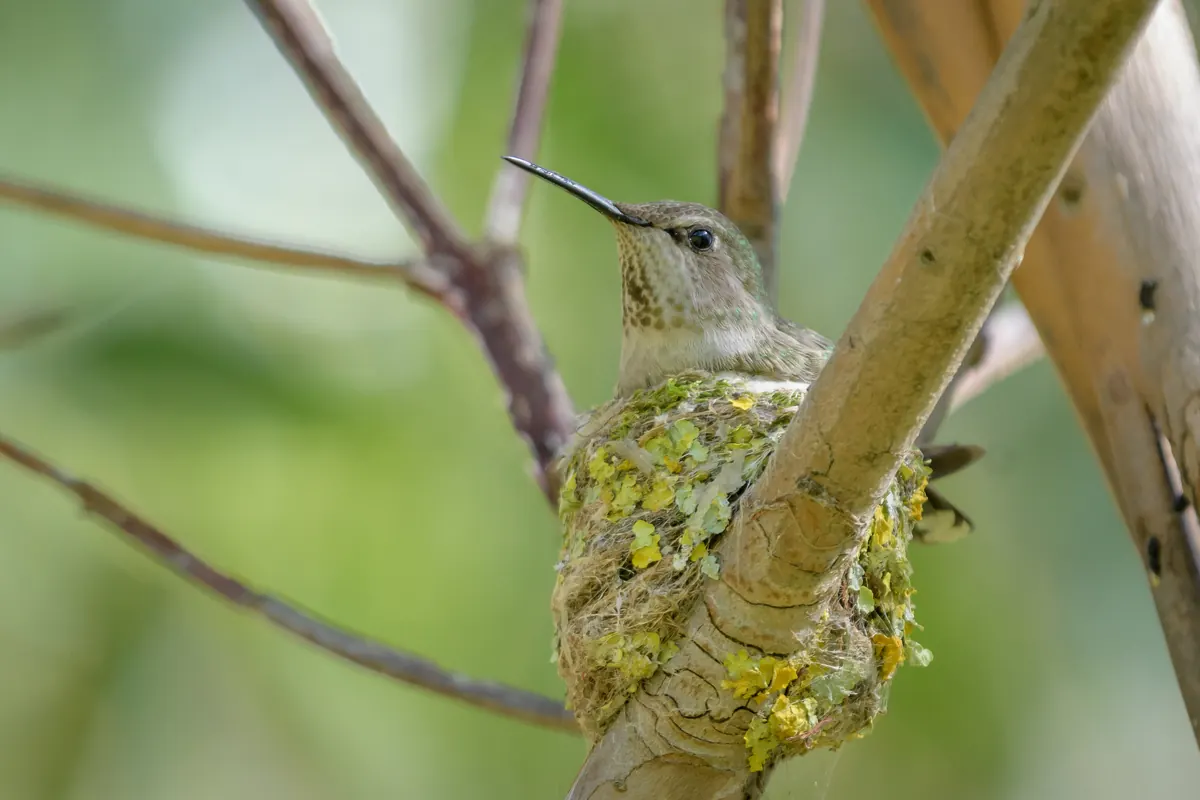
Bigberry manzanita, a chaparral shrub with smooth red bark and blue-gray leaves, flowers in winter and spring, and Calscape lists 81 species of native bee that use it. Anna’s hummingbirds, which stay all year in much of California, nest in the middle of winter: Audubon says they may begin in December, or even earlier. The female builds a cup of plant fibers and spider silk, camouflaged with lichen, and lays two white eggs. Listen for the male’s courtship dive, which ends in a loud, sharp pop.
-
Mistletoe on the bare oaks
Easiest to see now · Valley oaks, cottonwoods, walnuts, street trees
Once the leaves are down, the round green clumps of native mistletoe show up in deciduous trees across the lowlands. UC’s pest management program says the small, sticky, pale berries form between October and December and that birds spread the seeds by leaving them on branches. At Hastings Reserve in Carmel Valley, researchers found that western bluebirds defend clumps of oak mistletoe as winter feeding territories, so a mistletoe-laden valley oak is a good place to wait for blue.
-
Mushrooms after rain, and a fungus fair
Sunday, December 6, 10 a.m. to 5 p.m. · El Camino High School, 1320 Mission Road, South San Francisco
A week or two after a soaking storm, the oak woodlands and pine forests of the coast fill with mushrooms. The Mycological Society of San Francisco’s annual Fungus Fair brings displays of locally gathered fungi, identification tables, talks and children’s activities, across the street from the South San Francisco BART station. Never eat a wild mushroom on anyone’s say-so but an expert’s in person.
How much rain and snow does California get in December, and what will El Niño do?
December is one of the wettest months of the year across the northern half of the state, and the month the Sierra snowpack begins to build in earnest. In NOAA’s 1991–2020 normals, the Arcata–Eureka airport averages nearly 9 inches of rain in December, more than in November or January, while Sacramento gets about 3½ inches, San Francisco just over 4 and the south coast about 2. The deserts barely notice. In the mountains the numbers turn to snow: about 3 feet in an average December at Tahoe City and more than 44 inches at Truckee.
| Station | Precipitation (in) | Snowfall (in) | Average high (°F) | Average low (°F) |
|---|---|---|---|---|
| Arcata–Eureka airport | 8.95 | — | 56 | 40 |
| Mount Shasta | 7.78 | 26.1 | 43 | 27 |
| Redding | 6.31 | 0.7 | 56 | 37 |
| Sacramento Executive | 3.43 | — | 56 | 39 |
| San Francisco airport | 4.14 | — | 58 | 45 |
| Fresno | 1.79 | 0.0 | 55 | 40 |
| Tahoe City | 6.00 | 36.2 | 40 | 21 |
| Truckee | 5.15 | 44.2 | 41 | 15 |
| Bishop | 0.66 | — | 55 | 22 |
| Los Angeles airport | 2.23 | — | 66 | 49 |
| San Diego Lindbergh | 1.67 | — | 66 | 50 |
| Palm Springs | 0.82 | 0.0 | 69 | 45 |
| Death Valley | 0.26 | 0.0 | 66 | 41 |
Over all of this hangs a powerful El Niño. Federal forecasters, in their September 10 ENSO discussion, judged it better than 90 percent likely to be a very strong event through the cold season. For California that tilts the dice without loading them. Speaking on October 1, the state climatologist at the Department of Water Resources called El Niño years “a mixed bag, with moderately higher chances of more precipitation in the southern part of the state,” and NOAA’s Climate.gov analysis notes that, of the strongest recent events, 1982–83 and 1997–98 were very wet across much of California while 2015–16 left the south short of rain. The Weather Service’s California forecast offices add that warm El Niño storms tend to raise snow levels, even as the highest Sierra can still bury itself in snow, and that the details of any one storm only come into view a week or two ahead. NOAA’s winter outlook comes out on October 15, two weeks after this page was finished; the outlook and its monthly revisions will appear on the CPC three-month outlook page for California readers to check. Reservoirs, at least, start the water year in good shape: 107 percent of average statewide on October 1.
In the valleys, the median first freeze falls in mid-December at Fresno, Sacramento and Bakersfield. The California frost dates page has the odds for your nearest station, and Weather now shows the next storm coming in off the Pacific.
When are the king tides in California this December?
December 23 to 25. The California Coastal Commission’s King Tides Project lists those three days, along with November 24–26 and January 21–22, as this winter’s highest tides statewide. The December set lines up with the Cold Moon, full at 5:28 p.m. Pacific on December 23 and only about seven hours from its closest approach to Earth, which makes it the nearest full moon of 2026. A close, full moon pulls hardest on the oceans, so the morning high tides run unusually high and the afternoon lows drop well below zero.
| Station | Morning high tide | Afternoon low tide |
|---|---|---|
| North Spit, Humboldt Bay | 10:57 a.m., 8.8 ft | 6:10 p.m., −2.0 ft |
| San Francisco | 10:37 a.m., 7.2 ft | 5:42 p.m., −1.8 ft |
| Monterey | 9:27 a.m., 7.0 ft | 5:06 p.m., −1.8 ft |
| Santa Barbara | 8:46 a.m., 7.2 ft | 4:17 p.m., −1.9 ft |
| Los Angeles | 8:27 a.m., 7.3 ft | 3:52 p.m., −1.9 ft |
| San Diego | 8:29 a.m., 7.6 ft | 3:50 p.m., −1.9 ft |
The Commission warns that this winter’s strong El Niño, with warm Kelvin waves crossing the Pacific, could lift the water above the predicted heights, and a storm surge or big swell on top of a king tide is how coastal roads and parking lots flood. Anyone can photograph a familiar spot at the high tide and upload it, building a record of what rising seas will look like. The same days bring the best minus tides of the winter for tide pooling: in Southern California the lowest water comes in mid-afternoon, while from Monterey north it falls around or after dark, so take a headlamp and watch the incoming water.
When is the earliest sunset in California?
Not on the solstice. The shortest day of the year is Monday, December 21, when the solstice falls at 12:50 p.m. Pacific time, yet California’s darkest evenings arrive a couple of weeks ahead of that date and its darkest mornings a couple of weeks behind it. Because our planet leans on its axis and travels faster near its closest point to the sun in early January, the moment of solar noon creeps later through December, so the afternoons begin to lengthen while the mornings are still getting darker. Across California the earliest sunset falls between December 4 and December 8, later in the north, with the sunset clock stuck within a minute of its low for several days around it; Los Angeles bottoms out at 4:43 p.m. around December 4, and Eureka at 4:49 p.m. around December 8. In the mornings the trend runs the other way, and the latest Los Angeles sunrise, 6:59 a.m., does not come until January 7.
| City | Dec 1 | Dec 21 | Dec 31 | Earliest sunset |
|---|---|---|---|---|
| Eureka | 9 h 28 m | 9 h 14 m | 9 h 18 m | 4:49 p.m., Dec 8 |
| Redding | 9 h 29 m | 9 h 16 m | 9 h 19 m | 4:42 p.m., Dec 8 |
| Sacramento | 9 h 40 m | 9 h 28 m | 9 h 31 m | 4:45 p.m., Dec 7 |
| San Francisco | 9 h 45 m | 9 h 33 m | 9 h 36 m | 4:51 p.m., Dec 6 |
| Fresno | 9 h 50 m | 9 h 39 m | 9 h 41 m | 4:43 p.m., Dec 6 |
| Los Angeles | 10 h 04 m | 9 h 53 m | 9 h 56 m | 4:43 p.m., Dec 4 |
| Palm Springs | 10 h 04 m | 9 h 55 m | 9 h 57 m | 4:37 p.m., Dec 4 |
| San Diego | 10 h 09 m | 10 h 00 m | 10 h 02 m | 4:42 p.m., Dec 4 |
At the solstice San Diego still has 10 hours of daylight, while Eureka has 9 h 14 m, and over the last ten days of the year each listed city wins back two to four minutes. Palm Springs, tucked under the San Jacinto Mountains, shows the earliest clock sunset in the table, 4:37 p.m.; in practice the mountain wall puts the town in shadow well before that. Your own valley or canyon will do the same, which is why a sunset you can actually see can come many minutes before the official one. To get the times for a trailhead or a particular beach, use the Field almanac.
What is in California’s night sky in December?
-
The Geminids, the best shower of the year
Night of Sunday, December 13, into Monday the 14th · Anywhere dark; look high in the east and overhead
The International Meteor Organization expects the Geminid maximum around 14:00 UT on December 14, which is 6 a.m. Pacific, so California’s best viewing is the night just before. The IMO’s ideal-sky figure is about 150 an hour; a suburban yard sees far fewer, though a dark desert site can still deliver one a minute after midnight. The waxing crescent moon sets in the first half of the evening and leaves the sky dark. The radiant, near the bright pair of stars Castor and Pollux, climbs all night and stands highest around 2 a.m. Geminids are fairly slow and often bright, which makes them a good shower for beginners.
-
The Cold Moon, the year’s closest full moon
Wednesday, December 23, at moonrise · Low in the east-northeast at sunset
Full at 5:28 p.m. Pacific, just after California’s sunset, so the moon comes up round and copper-colored in the dusk. The moon swings nearest Earth that same night, around midnight Pacific, so California sees 2026’s biggest-looking full moon, a supermoon on every common yardstick. The Ursid meteors peak the night before, on the 22nd, but this bright moon drowns them out.
-
Venus, the morning star
Before sunrise, all month · Southeast, before dawn
Venus dominates the dawn, far brighter than anything else in the sky but the moon, and keeps climbing away from the sun until its greatest elongation on January 3. A slim crescent moon joins it before dawn on December 4, with Spica, Virgo’s brightest star, in between, and slides closer to Venus on the 5th. Little Mercury fades into the dawn glow by mid-month.
-
Jupiter and Mars
Jupiter rises in mid-evening by late December · East in the evening; high in the south before dawn
Jupiter, in Leo, rises earlier each night and by the end of the month is up by mid-evening, the brightest point in the eastern sky after dark. Mars, much fainter and reddish, is a morning planet, brightening slowly through December. The ringed planet Saturn is alone in the evening southwest after dusk, and California loses it in the west some four hours after sundown as the year ends.
| Phase | Date | Time |
|---|---|---|
| New moon | Tuesday, Dec 8 | 4:52 p.m. |
| First quarter | Wednesday, Dec 16 | 9:42 p.m. |
| Full moon (Cold Moon) | Wednesday, Dec 23 | 5:28 p.m.; rises full at dusk, nearly as full on Christmas Eve |
| Last quarter | Wednesday, Dec 30 | 10:59 a.m. |
| New moon | Thursday, Jan 7, 2027 | 12:24 p.m. |
Long nights give stargazers extra dark hours this month, and winter storms extra chances to hide them. Check the cloud forecast before a drive to the desert or the mountains, and the moon phase calendar gives the Cold Moon’s rising time for your own town.
What can families do outdoors in California in December?
- Whale counting from December 1. Visit the Point Vicente Interpretive Center in Rancho Palos Verdes on a clear morning and watch the water from the bluff where the American Cetacean Society counters work.
- A crane fly-in at dusk. CDFW’s Woodbridge tours, usually on the first three weekends of the month (check the 2026–27 schedule), start 90 minutes before sunset; or stand on Desmond Road at the Cosumnes River Preserve at dusk for free.
- The Fungus Fair, Sunday, December 6. The Mycological Society of San Francisco, 10 a.m. to 5 p.m. in South San Francisco; buy tickets ahead, since workshops fill.
- Geminid night, December 13. Older children can stay up after the crescent moon sets; younger ones can catch the early meteors before bedtime.
- Count for Audubon between December 14 and January 5. Walk a route with a field team, or, living inside a circle, report what visits your own feeder; Audubon’s online finder shows the circles.
- Elephant seal walks from December 15. Book Año Nuevo’s guided walks on ReserveCalifornia, or go to the free Piedras Blancas boardwalk any day.
- The solstice, Monday, December 21. Mark where the sun sets on the horizon and compare it with a photo from June.
- King tides, December 23 to 25. Photograph a beach, harbor or marsh at the morning high and send it to the Coastal Commission; come back for the afternoon low and the tide pools.
- Monarch New Year count, December 26 to January 10. Visit a grove such as Natural Bridges or Pacific Grove and report what you see to Journey North.
- A First Day Hike, January 1, 2027. California State Parks led more than 80 guided hikes in over 60 parks on New Year’s Day 2026; this year’s list will be posted at parks.ca.gov/FirstDayHikes.
Project FeederWatch runs all winter; any December day you count a feeder can go in. More nature notes for other months and states are on the nature calendar, and each outing fits on a page of the Naturalist’s Field Journal.
What should I watch out for in California in December?
- Hunting seasons. Waterfowl seasons are open in every zone through December: ducks run to January 13 in the Northeastern zone and to January 31 elsewhere, with white and white-fronted geese in the Northeastern zone closed from November 30 until January 1. Pheasant is open to December 27, fall turkey to December 13 and the late dove season to December 28; quail and chukar run to January 31, and bear season closes December 27 unless 1,700 bears are reported first. No general or archery deer zone in CDFW’s approved 2026 table runs into December. California has no statewide hunter-orange law, though CDFW requires blaze orange on its own junior hunts and its hunter-education course urges it. If you hike on a wildlife area, national forest or BLM land, wear a bright color and keep dogs close.
- Storms and debris flows. A strong El Niño winter raises the odds of long, heavy rain. Do not cross a flooded road or a running creek, avoid canyons below burn scars when heavy rain is forecast, and follow evacuation orders.
- King tides and big surf. High tides plus winter swells can sweep over beaches, jetties and coastal paths. Stay well back, and on minus-tide walks keep track of when the water turns.
- Mountain cold and snow. Truckee’s average December low is 15 °F. Carry chains, food, water and warm layers on any Sierra highway, stay off thin early-season ice on mountain ponds, and check the Sierra Avalanche Center before heading into the backcountry.
- Short days. Every city in the daylight table above has its sun down before 5 p.m. in early December. Start hikes early and carry a headlamp.
- Wild mushrooms. Several deadly species, including the death cap, grow in California’s oak woodlands. Do not let children taste any wild mushroom.
Sources
- American Cetacean Society Los Angeles: today’s whale count and 2025–26 season totals
- National Park Service: whale watching at Cabrillo National Monument
- NOAA Fisheries: gray whale population abundance
- Friends of the Elephant Seal: December at Piedras Blancas
- Friends of the Elephant Seal: visiting the rookery
- California State Parks: Año Nuevo State Park
- California State Parks: seal viewing seasons
- National Park Service: elephant seal viewing at Point Reyes
- Audubon: join the Christmas Bird Count (December 14, 2026 to January 5, 2027)
- Morro Coast Audubon Society: Morro Bay Christmas Bird Count
- San Diego Bird Alliance: Christmas Bird Count
- Monterey Audubon Society: Christmas Bird Counts 2026–27
- Golden Gate Bird Alliance: SF Christmas Bird Count 2026
- Golden Gate Bird Alliance: Christmas Bird Counts
- Santa Barbara Audubon Society: Santa Barbara Christmas Bird Count
- U.S. Fish and Wildlife Service: Sacramento National Wildlife Refuge, species and seasons
- Cosumnes River Preserve: see the sandhill cranes
- CDFW: Sandhill Crane Wetland Tours, Woodbridge Ecological Reserve
- Pacific Flyway Council: management plan for the Western Population of tundra swans (2017)
- USDA Forest Service Fire Effects Information System: tundra swan
- National Park Service: ladybugs of Pinnacles National Park
- National Park Service: convergent lady beetle, Yosemite wildlife sightings
- East Bay Regional Park District: Reinhardt Redwood Regional Park map and brochure (PDF)
- Xerces Society: Western Monarch Count, 2026–27 survey windows
- Journey North: monarch sightings
- Marin Water: Spawners make a splash (December is coho time)
- California State Parks: about coast redwoods
- Calscape (California Native Plant Society): bigberry manzanita
- Audubon Guide to North American Birds: Anna’s hummingbird
- UC Statewide IPM Program: mistletoes
- PLOS ONE (2014): spatial distribution of oak mistletoe and the habits of oak woodland fruit-eating birds, Hastings Reserve
- Mycological Society of San Francisco: Fungus Fair, December 6, 2026
- NOAA NCEI: U.S. Climate Normals 1991–2020, monthly station normals
- Climate Prediction Center: ENSO diagnostic discussion, September 10, 2026
- Climate Prediction Center: seasonal outlooks (winter outlook issued October 15, 2026)
- California Department of Water Resources: as new water year begins, California prepares for strong El Niño (October 1, 2026)
- NOAA Climate.gov: United States El Niño impacts
- National Weather Service California offices: El Niño in California, information and preparedness guide (mid-September 2026)
- California Coastal Commission: California King Tides Project
- NOAA Tides and Currents: tide predictions, December 2026
- U.S. Naval Observatory: moon phases 2026
- U.S. Naval Observatory: Earth’s seasons, 2026
- International Meteor Organization: 2026 meteor shower calendar
- EarthSky: what is a supermoon (2026 list)
- NASA JPL Horizons: planet and moon positions, December 2026
- California State Parks: First Day Hikes
- California State Parks: First Day Hikes 2026 news release
- Project FeederWatch: how to participate
- CDFW: 2026–27 waterfowl seasons by zone
- CDFW: 2026–27 upland game bird seasons
- CDFW: approved 2026 deer seasons by zone (PDF)
- CDFW: bear hunting, 2026 season
- CDFW: junior hunt information (blaze orange mandatory)
- CDFW: hunter education instructor policy and course materials (fluorescent orange)
- Sierra Avalanche Center: avalanche forecasts
- Photos via Wikimedia Commons; licenses and photographers are credited under each picture
