What to look for in nature in Colorado this May
May is the month Colorado turns over. Snow becomes creeks, and Medano Creek begins to send waves across the sand. Lark buntings return to the prairie, boreal toads move toward high ponds, elk cows slip away to calve, and the passes finally open for the summer. Thunderstorms start to grow over the plains, and the sky offers a meteor shower at new moon and a seasonal Blue Moon. This page follows the month from the first week to the last. For the month before, see Colorado in April.
Other months in Colorado: October, November, December, January, February, March, April.
Start here

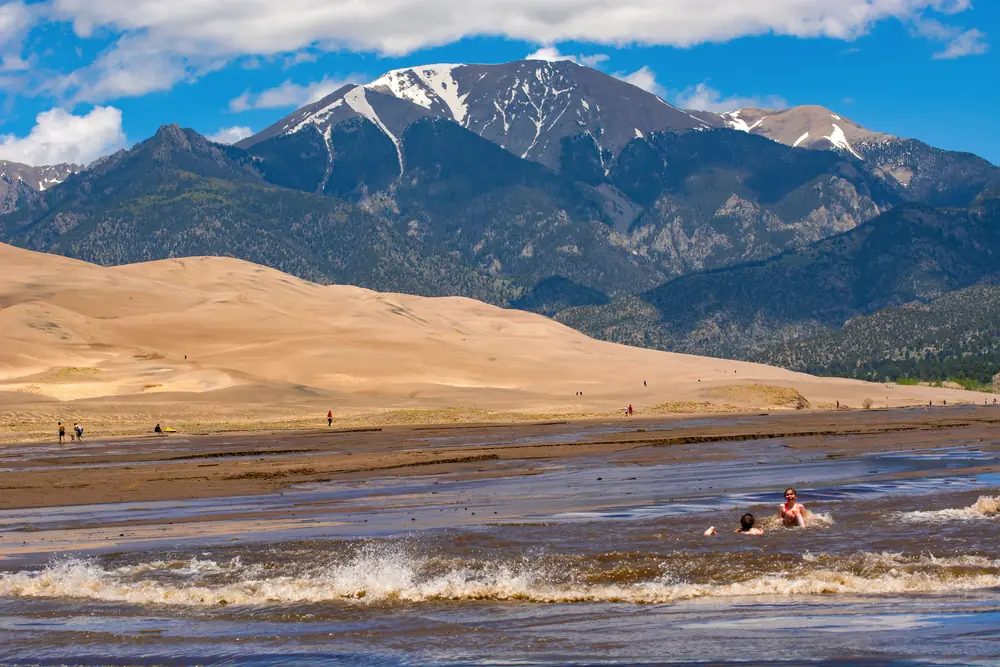
- Watch a surge wave. On a weekday in late May, walk to Medano Creek at Great Sand Dunes and watch the water arrive in waves across the sand. Check the park's flow page first, since a low-snow year may leave it dry.
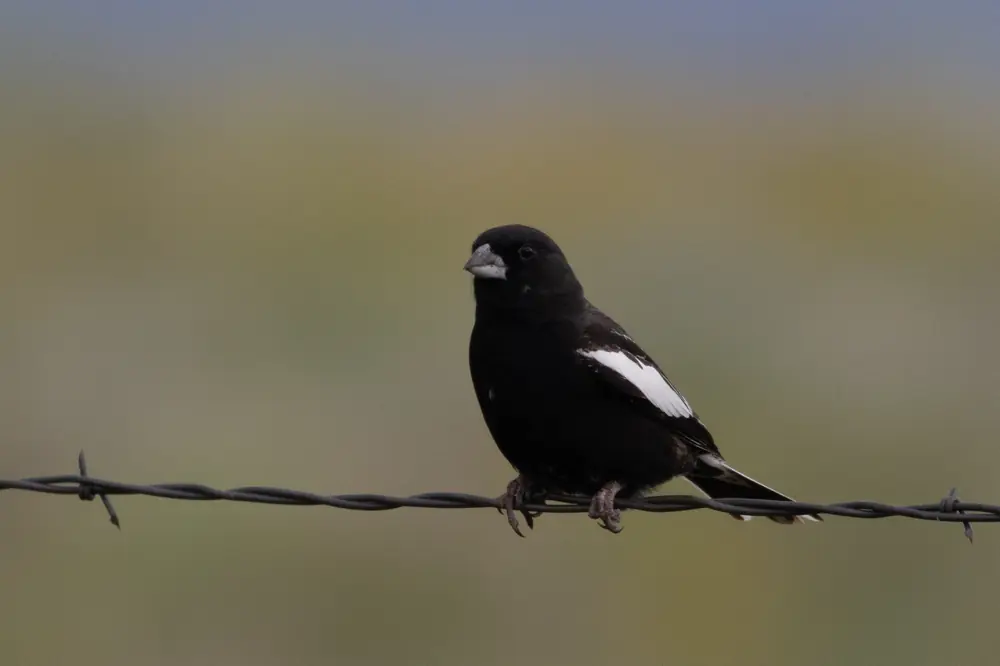
- Find a lark bunting. Drive the roads of the Pawnee National Grassland early in the morning and look for a black bird with white wing patches on a fence or yucca. Stay in the car and note the date.
- Watch the young from far away. Take binoculars to a meadow or refuge and look for elk calves, bison calves or prairie dog pups. Keep your distance, and leave any lone young animal where it is.
Field Journal plates for May: "birds I have seen" for the first lark bunting and hummingbird; "mammal watch" for elk and bison calves from a distance; "nest observed" for a magpie or robin nest; and "the same place twice" for a creek you visit once as May opens and once as it closes.
Regions used below: Front Range and the Denver metro; Eastern Plains; Northern Mountains and Rocky Mountain National Park; Central Mountains and the high parks; San Luis Valley; Western Slope and the Four Corners.
What is happening along Colorado's creeks, rivers and ponds in May?
May is when the mountains begin to hand their winter back. Snow that fell from November to April turns into creeks, ponds fill at the foot of the peaks, and the first warm evenings of the year bring out insects, toads and the people who watch for them. How much of it you see depends on the snowpack that particular winter, so treat each date below as a usual range, not a guarantee. Check the park or river conditions the week you plan to go.
-
Medano Creek and its surge waves
Flow builds through May; late May and early June are the best odds for surge waves · Great Sand Dunes National Park and Preserve, San Luis Valley
Medano Creek runs along the base of the great dunes, and in a good year it does something rare: it moves in waves. The National Park Service calls this surge flow, water pulsing across the sand in swells. The creek usually reaches the main dunes parking area in April as a trickle, then deepens through May. In an average year the park puts the peak at roughly 40 cubic feet per second, a reading taken about five miles upstream of the main parking area, so it shows the trend rather than what you will find at the dunes. In average or wetter years the waves can be high enough for children to float short stretches on flat inflatable toys.
Snowpack decides everything. The park notes that not every year brings enough water for floating or for surge waves, and that by late June the creek is usually an inch or two deep or drying up. Late May and early June weekends are very crowded, and the park suggests going on a weekday. Memorial Day weekend in 2027 is May 29 to 31. Mosquitoes become numerous around the second week of June, so May is the more comfortable month. The park posts live creek flow and a conditions page; look at it before the drive, and leave plants and animals alone.
-
The Mother's Day caddis hatch on the Arkansas River
Usually late April into May; set by water temperature, not the calendar · The Arkansas River, with Salida a center of the local festival
Anglers call the first big insect hatch of the Arkansas River season the Mother's Day caddis hatch, although it often starts weeks before Mother's Day, which is May 9 in 2027. A fly-fishing retailer's guide says the hatch typically starts in late April and peaks in early May, set off when the water reaches about 54 °F, and warns that extra snowmelt can chill the river and delay it. That is a commercial source, so treat the timing as a rule of thumb. Trout Unlimited's Collegiate Peaks Chapter has held a Caddis Festival banquet and auction in Poncha Springs; we found no 2027 date, so check with the chapter.
You do not have to fish to enjoy it. A good caddis evening shows up as insects bouncing over the surface and trout rising to meet them. If the river is high and brown with runoff, the hatch can be washed out for the year.
-
Boreal toads at high ponds
Breeding runs from about mid-May to early July, depending on snowpack · Ponds and wet meadows from about 8,000 to 11,500 feet, including Rocky Mountain National Park
The boreal toad is the only toad of Rocky Mountain National Park, according to the park service, and it is in trouble. The park says the population has declined steeply over thirty years, that breeding was documented at twenty historic sites but in the past fifteen years at only six areas, and that a fungal disease called chytrid is thought to be a major cause. The toad has been on Colorado's endangered species list since November 1993. In spring the toads leave their winter hiding places and gather at communal breeding ponds; a female can lay up to 16,500 eggs, and in cold high ponds development can take about 75 days.
You are unlikely to meet one by accident, and because the species is in decline you should keep to trails near any pond and never handle a toad. Simply knowing that the gathering is under way, high above the towns while the snow melts, is part of what May means in the mountains.
-
Plains spadefoots after a storm
After heavy rain in spring or summer · Eastern plains and the San Luis Valley, in rain-filled pools and stock ponds
A plains spadefoot spends most of its life buried in the soil and comes out to breed only after heavy rain fills a temporary pool. Colorado Parks and Wildlife describes the call as a brief snore, much faster than the stuttering snore of the New Mexico spadefoot, and says tadpoles usually change into small toads within three to ten weeks, which is fast enough to beat a drying pond. The species is described as common on the eastern plains and in the San Luis Valley. If a thunderstorm soaks a pasture on a warm May night, a flooded roadside ditch or stock pond may be loud by dark. Drive carefully on wet roads; the toads are small and easy to miss.
-
Runoff and the cold river
Rising through May and June in most mountain valleys, with timing set by the winter's snowpack · Mountain rivers and creeks statewide
Mountain rivers and creeks rise as the snowpack melts, and the size and timing of the crest depend on how much snow fell that winter. Colorado Parks and Wildlife says the water here stays cold until at least midsummer, which is why a river that looks inviting on a warm afternoon can be dangerous. Cold-water details are in the safety notes below.
For what the spring weather is doing in your county on a given day, our weather guide covers the basics, and the cloud guide helps with the afternoon sky over the mountains.
Where can I see lark buntings and prairie wildlife in Colorado in May?
The shortgrass prairie east of the Front Range looks plain from the highway and busy from a parked car. In May the grass is greening, the air is full of song, and the young of the prairie start to appear. Colorado's state bird belongs to this landscape, and so does a former arsenal near Denver that is now a wildlife refuge.
-
Lark buntings
Flocks arrive in spring; males are displaying and pairs are settling in May · Plains and prairie, especially the Pawnee National Grassland in Weld County
A breeding male lark bunting is black with a bold white wing patch, and it is Colorado's state bird. A Summit Daily nature column describes the display: the male flies almost straight up on rapid wingbeats, hangs for a moment near the top of a climb of about 10 to 30 feet, then drifts down on jerky, butterfly-like wingbeats while singing. The courtship period lasts about two weeks, after which the flocks spread out to nest sites. The nest is a cup on the ground, usually under a low branch or in a shrub, with two to six pale blue eggs that hatch after about 12 days. The same column notes that numbers swing from year to year.
Look for them on fence wires, yucca stalks and low shrubs, and listen for the song carrying across open ground. Stay in the vehicle or on the road.
-
A morning on the Pawnee National Grassland
Open all year in daylight; May is a good month to go · Pawnee National Grassland, western section, northeast of Greeley
The Colorado Birding Trail lists the western section of the Pawnee as a stronghold for prairie specialists: ferruginous hawk, mountain plover, long-billed curlew, burrowing owl, McCown's and chestnut-collared longspurs, grasshopper sparrow and lark bunting, with pronghorn, black-tailed prairie dogs and, occasionally, a swift fox. The listing does not say when each species is present, so treat the list as a menu rather than a schedule. It does say you can watch from the car, parking is by the roadside, and there are no restrooms, water, trails or camping on site. Crow Valley Campground is the nearest camping, and lodging is in Greeley.
The same page warns that the grassland is a remote patchwork of federal, private and leased land, so a good map is essential, and to beware of rattlesnakes and bring water. Respect fences and signs.
-
Spring babies at Rocky Mountain Arsenal
Spring into early summer · Rocky Mountain Arsenal National Wildlife Refuge, near Denver
The refuge's seasonal guide lists what to look for in spring: cinnamon-colored bison calves beside their mothers, prairie dog pups and black-footed ferret kits venturing out of burrows, fawns appearing from the locust thickets, and the loud begging calls of black-billed magpie chicks from their enormous stick nests. Bullock's orioles, warblers, finches and other migrating songbirds pass through the woodlands. Burrowing owls are listed under summer, when they nest in unused prairie dog burrows. Visit in the early morning or late afternoon, keep to the trail, and let the young animals come and go on their own terms.
April's story of the plovers and grouse on the same grasslands is in Colorado in April.
Which birds pass through Colorado in May, and where can I join in?
May is the busiest month of the spring migration at the reservoirs, river bottoms and ranch woodlots of the Front Range and the plains, where trees and water stand out in dry country. Warblers, thrushes, sparrows and flycatchers stop to feed, then move on, sometimes within a day. The best way to see how many birds pass is to watch the people who catch and release them for science.
-
Spring bird banding stations
Spring seasons ran from late April to the end of May or early June in 2026 · Chatfield (with Denver Audubon), Chico Basin Ranch (with Aiken Audubon) and Pineridge in Fort Collins
Bird Conservancy of the Rockies lists three Colorado stations that band birds in spring. In 2026 Chatfield ran April 24 to May 31, Pineridge April 25 to May 30 and Chico Basin Ranch April 27 to June 6. The birds most often caught include yellow and yellow-rumped warblers, gray catbirds, Lincoln's sparrows and house wrens at Chatfield; Wilson's and orange-crowned warblers, Swainson's thrushes and brown thrashers at Chico Basin; and spotted towhees, white-crowned sparrows and house wrens at Pineridge. Those are the 2026 dates, and we found nothing yet for 2027, so ask the organization or the Audubon chapter whether visitors are welcome and when the stations will run.
-
Broad-tailed hummingbirds and the Hummingbird Festival
Hummingbirds are arriving through May; ask the city for the 2027 festival date · Mountain foothills, streamside meadows and feeders; the festival is at Starsmore Visitor and Nature Center in North Cheyenne Cañon Park, Colorado Springs
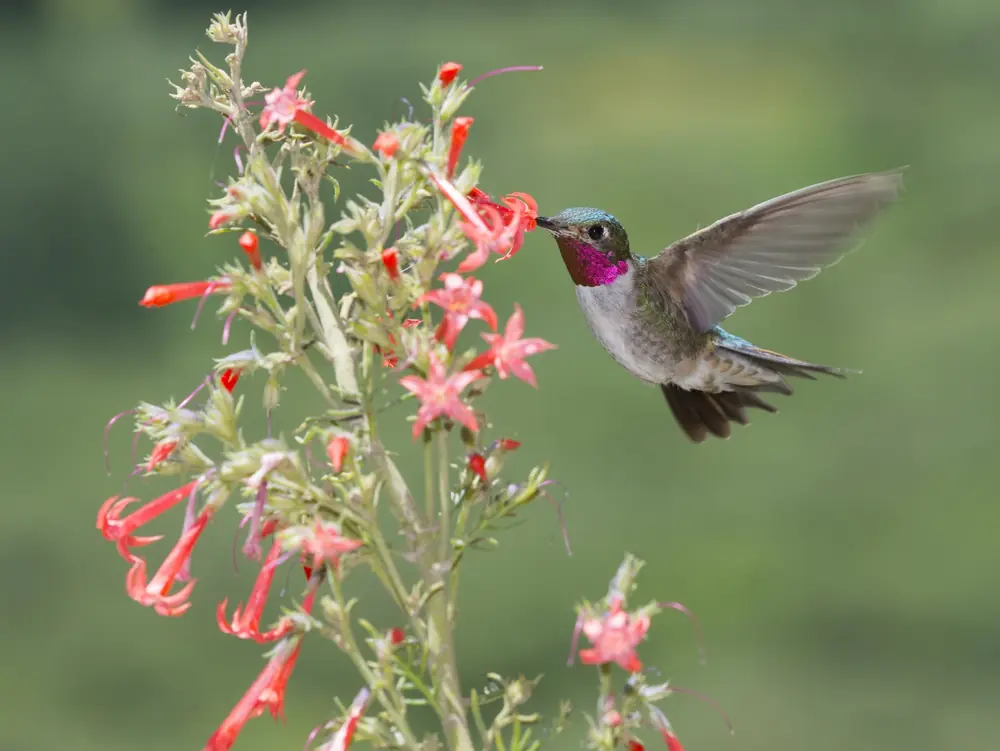
The hummingbirds we followed back in April keep arriving through May, and the males' trilling wings are the sound of a foothill morning. Journey North takes hummingbird sightings from across North America and uses them to map the progress north each spring, and a first-of-year report from a Colorado yard helps. Colorado Springs holds an annual Hummingbird Festival at Starsmore; the city's page for the 33rd edition lists hummingbird talks, guided bird walks, a raptor talk with ambassador birds from the Pueblo Raptor Center, and crafts for children. That page did not give a date, so check with the city for 2027.
A caution for anyone with a feeder: Colorado Parks and Wildlife treats bird feeders as bear feeders. See the safety notes before you hang one.
-
World Migratory Bird Day
The 2026 edition was May 9; the 2027 date was not yet posted · Worldwide, with Colorado events listed on the Colorado Birding Trail
The international day for migratory birds is held twice a year, in May and October. The official site gave the 2026 dates as May 9 and October 10, and the Colorado Birding Trail's events page listed a statewide observance running from May 9 to October 10, 2026. Neither page showed a 2027 date when we read them, and secondary calendars disagree, so look at the official World Migratory Bird Day site for the confirmed day.
-
The Ute Mountain Mesa Verde Birding Festival
Annual, in early May; the 2026 festival ran May 6 to 10 and no 2027 date was listed · Cortez, in southwestern Colorado
The festival bills itself as the only annual birding festival in southwestern Colorado, offering field trips around Cortez, and its proceeds benefit the Cortez Cultural Center. Registration is through the festival's own website. Because the dates move from year to year, check with the organizers before you book lodging.
What blooms in Colorado in May, and how far up the mountain has spring reached?
Spring climbs a mountain slowly. The foothills and plains turn green in April and May, while the same flowers may not open at 10,000 feet until June or later, so a single drive up a canyon runs the season backward. The early blossoms we described in April carry on into May, and new ones join them.
-
Golden banner
Opening in May, per Wild Ones · Part-shade spots in the foothills; look along trails and edges of woods
Wild Ones' Front Range chapter calls golden banner a May arrival, with flowers of bright, sunshiny yellow, and notes that it can grow in part shade. Treat that as a rough window that shifts with elevation and weather.
-
Pasqueflower
April to June · Open slopes and meadows; Castlewood Canyon near Franktown is named as a place to look
Pasqueflower is still in bloom through May at higher spots, and after the petals fall it makes feathery seed heads that are worth a second visit. A kneeling look at a pasqueflower is a good way to teach children that the smallest flowers are often the earliest.
-
Star lily
April to June, per Wild Ones · William F. Hayden Green Mountain Park in Lakewood is the place the chapter names
The star lily is a white flower that sits right on a rosette of narrow leaves close to the ground. Because it is so low, look for it from a trail edge, and do not step off to photograph it.
Tender garden plants should wait for the last freeze, and the freeze table a couple of sections down gives typical dates by town. Record each opening date in your Naturalist's Field Journal to compare one spring with the next.
Which young animals appear in Colorado in May, and what should I do when I find one?
May is the start of the season when mothers hide their young and people find them. The right response is almost always to walk away. Colorado Parks and Wildlife says the guidance applies from May through the end of June, when wildlife is at its most visible.
-
Elk calves
Calving runs from late May into June · Mountain meadows and valleys; Rocky Mountain National Park is the best known place
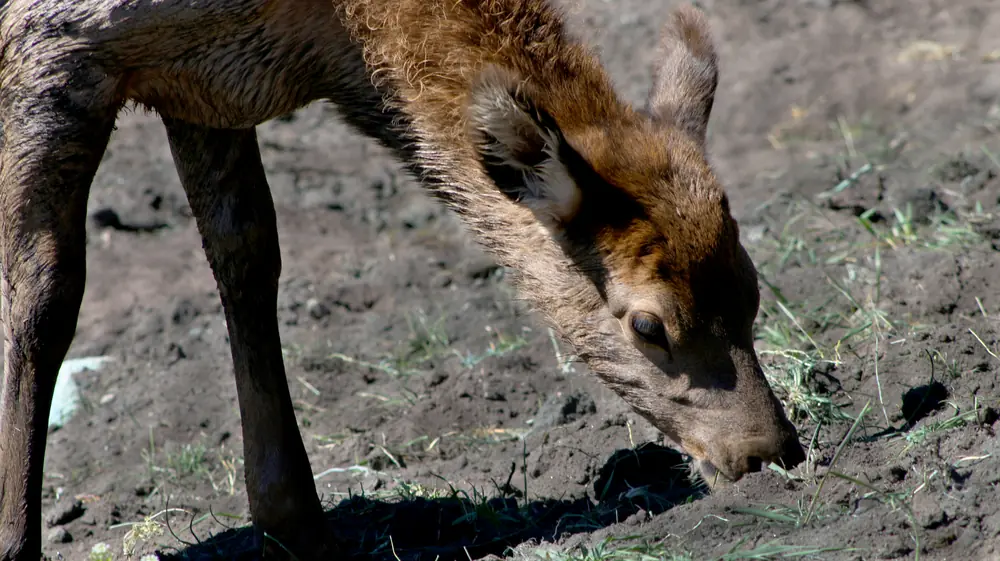
The park service says elk cows give birth from late May into June, usually away from the herd in tall grass or brush. A newborn calf weighs about 30 pounds and is spotted, and the spots fade by late summer. Most cows have one calf, a few have two, and the calf can join the herd about two weeks after birth. The park warns that cows are extremely protective and asks visitors to keep at least 75 feet away. If you come across a calf that appears to be alone, the mother is almost certainly nearby; back away and give the area a wide berth.
-
Fawns and other hoofed young
Late spring and early summer · Anywhere with deer, elk, pronghorn or moose
Colorado Parks and Wildlife names deer, elk, pronghorn and moose among the species whose young are about now. Its advice for a fawn or calf is to take a quick look, leave it in place, keep pets away, and watch from a distance, ideally through binoculars, without getting so close that the parent will not return. Human handling can lead to abandonment, especially in deer, because a mother may not recognize a baby that smells of people. Elk and moose can become aggressive to defend their young.
-
Fledglings on the ground
From late May on · Lawns, trails and gardens
A bird with its eyes open and feathers, hopping on the ground and unable to fly, is a fledgling, and its parents are still feeding it. The state agency says not to pick it up. A nestling with closed eyes and no feathers that has fallen from a nest you can see and safely reach may be put back, wearing gloves and a mask. Keep cats indoors, never touch a sick or dead bird, and be careful, since a parent bird may become aggressive near its young.
-
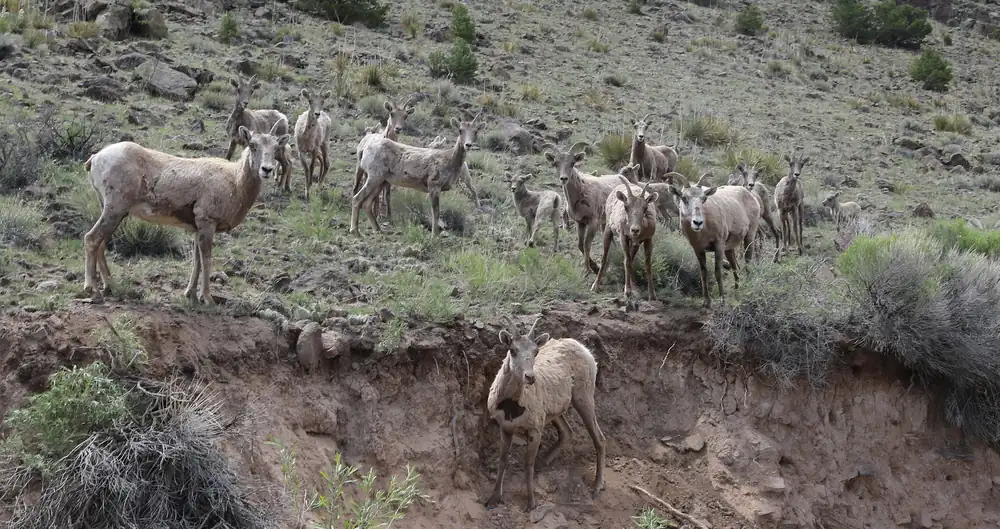
Bighorn lambs
Late spring and early summer · Steep, open and rocky country
Bighorn sheep ewes gather with their lambs on steep, open slopes, and the lambs are easiest to watch from far off with a spotting scope. Treat sheep like elk and keep your distance, and do not feed any wildlife; Colorado law makes feeding wildlife illegal.
-
Bats back at their summer roosts
Spring migration; pupping season runs June through August · Eaves, porches, shutters, gutters and trees
Colorado Parks and Wildlife says bats roosting under eaves, porch overhangs, shutters or gutters during migration are normal, and that if left alone they usually move on. The agency asks people not to seal bats out of buildings during pupping season, June through August, because pups can be trapped inside. Do not handle a bat; cover a grounded one with a box or can and call your local CPW office.
Is the high country open in May: Trail Ridge Road and Mount Blue Sky?
The highest paved roads in Colorado are the last places to lose their snow, and May is the month crews dig out. Opening dates move with the weather and with plowing progress, so no date here is firm.
-
Trail Ridge Road, Rocky Mountain National Park
Usually around Memorial Day weekend (May 29 to 31 in 2027), but plowing and weather set the date · Estes Park to Grand Lake over 12,183 feet
The park’s conditions page says the road usually opens around Memorial Day weekend. A National Park Service release from 2014, now archived, adds that the road climbs to 12,183 feet and that the Alpine Visitor Center sits at 11,796 feet. The earliest opening on that list was May 7, 2002, and the latest June 26, 1943. Crews begin clearing snow in mid-April from both sides, and in 2014 drifts averaged 18 to 22 feet. After it opens, the park has used night closures starting at 8 p.m. when daytime melting and nighttime freezing made the road hazardous. Above 9,000 feet the backcountry can still look and feel like winter in late May. The park posts road status online and on a recorded line at 970-586-1222.
-
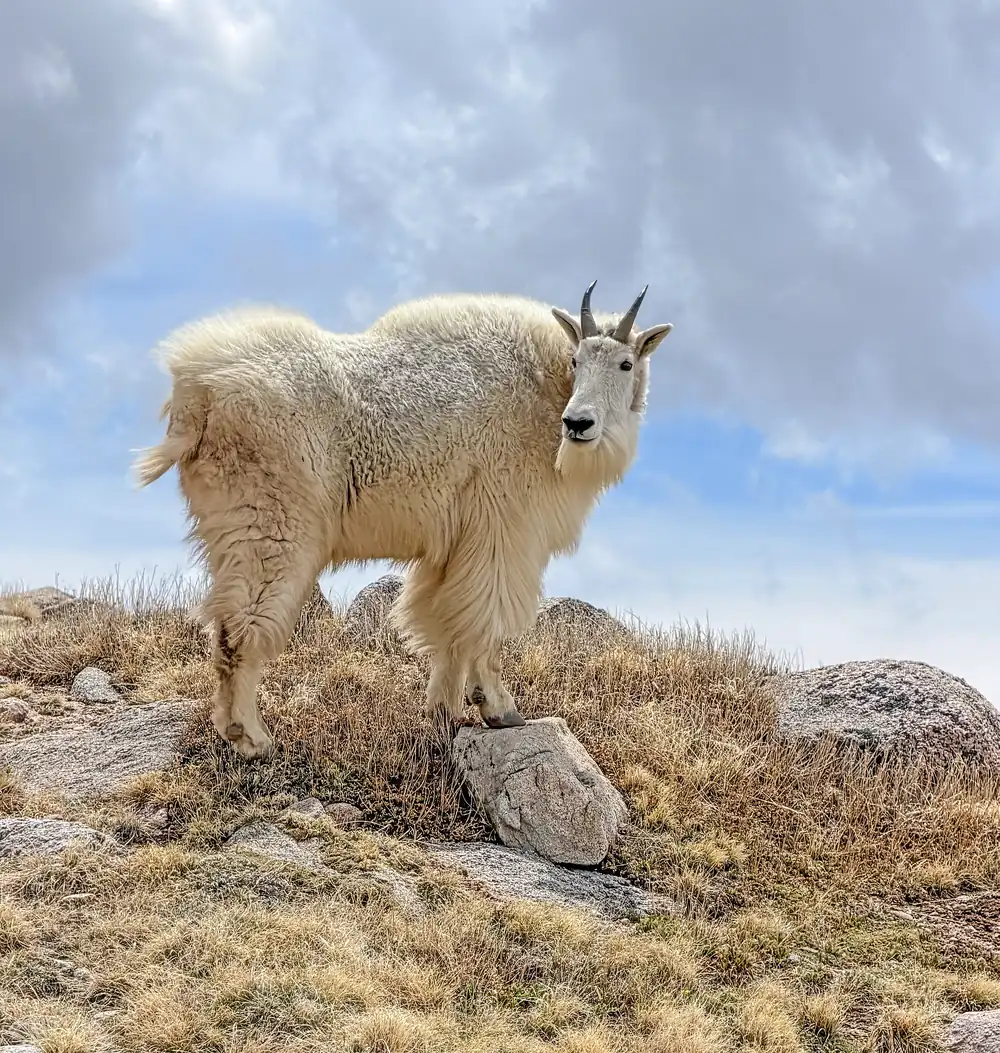
Mount Blue Sky and its mountain goats
Summit road open Memorial Day through Labor Day only, per CDOT; the 2027 plan is not posted · Echo Lake to the summit of Mount Blue Sky, west of Denver
The Colorado Department of Transportation’s byway page says the summit is open from Memorial Day through Labor Day only, that vehicle entry requires a reservation made through recreation.gov, and that the road from Echo Lake Lodge to the summit was scheduled to open on Memorial Day weekend 2026, weather permitting. The road climbs to 14,130 feet, which the department calls the highest paved road in North America, and the byway is known for its rock-jumping mountain goats above timberline. Check the 2027 reservations and opening date, and never feed or crowd the goats.
For the weather those roads face, see the climate section further down this page.
What is May weather like in Colorado, and what should I watch for?
May is the transition month. Denver's normal May precipitation is about 2.12 inches, according to the Weather Service's Boulder office, and its normal mean temperature is about 57 °F. The same office keeps a list of extremes since 1872: the wettest May on record was 1876 at 8.57 inches, the driest was 1974 at 0.06 inch, and the snowiest was 1898 at 15.5 inches. On the plains the afternoons begin to build thunderstorms, and in the mountains it can still snow. The table shows what May normally brings in thirteen towns.
-
Severe storm season ramps up
The threat rises quickly from about mid-May; tornado reports peak in early June · Mostly east of the mountains
The Colorado Climate Center says the threat of severe thunderstorms and tornadoes in the state rises rapidly in mid-May, that average daily tornado reports climb through May and peak in early June, and that hail peaks later, in mid-June. Severe storms are far more frequent in eastern Colorado than on the Western Slope, because moisture and instability line up there more often. The center cautions that reports cluster near cities and major roads where people are watching. The Weather Service's advice is to turn on Wireless Emergency Alerts, carry a NOAA Weather Radio on trips without cell service, and know where you will shelter.
-
Landspouts over Weld County in 2020
An example from May 20, 2020 · Near Eaton and Greeley
The Weather Service's Boulder office recorded six landspout tornadoes near Eaton and Greeley on the evening of May 20, 2020, all rated EF-0, with minor damage at three farmsteads and no injuries. It explains that a landspout is a narrow, rope-like funnel that forms under a growing storm cloud without a rotating updraft, along a boundary where two air masses meet, in this case a dry line. They are weak but real, and they show how the plains can turn from hot and gusty to stormy within an afternoon.
-
Snow in the mountain stations
May normals · Estes Park, Crested Butte, Telluride and Steamboat Springs
NOAA's 1991 to 2020 normals put May snowfall at 9.5 inches at Estes Park, 6.7 at Crested Butte, 5.1 at Telluride and 2.8 at Steamboat Springs, against about 2 inches or less at the lower stations. A May storm that closes a high pass can melt in a day, and still count for the year.
| Station | May precipitation | May snow | May high | May low |
|---|---|---|---|---|
| Fort Collins | 2.72 | 1.6 | 70.9 | 44.1 |
| Boulder | 3.21 | 2.0 | 71.3 | 42.7 |
| Estes Park 3 SSE | 2.27 | 9.5 | 61.2 | 34.7 |
| Colorado Springs Municipal Airport | 1.99 | 0.6 | 70.7 | 43.5 |
| Pueblo Memorial Airport | 1.57 | 0.0 | 77.2 | 45.6 |
| Lamar | 1.93 | 0.1 | 77.7 | 46.8 |
| Grand Junction Walker Field | 0.83 | 0.1 | 76.8 | 47.1 |
| Durango | 1.18 | 0.2 | 71.3 | 37.2 |
| Alamosa San Luis Valley Airport | 0.60 | 0.8 | 69.8 | 33.6 |
| Gunnison 3SW | 1.00 | 0.6 | 65.8 | 30.2 |
| Steamboat Springs | 2.65 | 2.8 | 65.2 | 34.0 |
| Telluride 4WNW | 1.60 | 5.1 | 60.4 | 28.8 |
| Crested Butte | 1.52 | 6.7 | 58.3 | 28.5 |
The Climate Prediction Center issues fresh 90-day outlooks every month, usually near the middle of it, and the latest set sits on its seasonal outlook page.
When is the last spring freeze in Colorado, and is it safe to plant in May?
For most of the state, the last 32 °F night arrives in the first half of May, according to NOAA's 1991 to 2020 normals, but the high valleys keep their frost into June. The Grand Valley is earliest, with a median of April 28, followed by Pueblo on April 30 and Fort Collins and Lamar on May 2. Colorado Springs is May 3 and Denver International Airport May 5. At the other end, Durango's median is June 1, Alamosa's June 7 and Steamboat Springs' June 9. For frost-tender plants, the last column is the one to read: by May 19 nine springs in ten are frost-free at Denver International Airport, but not until June 15 to 24 at the three high stations.
| Station | One year in ten | Median | Nine years in ten |
|---|---|---|---|
| Fort Collins (northern Front Range) | Apr 18 | May 2 | May 14 |
| Denver International Airport | Apr 23 | May 5 | May 19 |
| Colorado Springs Municipal Airport | Apr 22 | May 3 | May 15 |
| Pueblo Memorial Airport (Arkansas Valley) | Apr 18 | Apr 30 | May 12 |
| Lamar Municipal Airport (southeast plains) | Apr 19 | May 2 | May 17 |
| Grand Junction Walker Field (Grand Valley) | Apr 11 | Apr 28 | May 14 |
| Durango La Plata County Airport (Four Corners) | May 17 | Jun 1 | Jun 15 |
| Alamosa San Luis Airport (San Luis Valley) | May 24 | Jun 7 | Jun 24 |
| Steamboat Springs (Yampa Valley) | May 25 | Jun 9 | Jun 24 |
Every town's normals are on our Colorado frost tables. Where the median is still weeks away, a row cover beats a lost seedling.
How much daylight does Colorado gain in May?
Denver's days stretch from about 13 hours 53 minutes on May 1 to about 14 hours 47 minutes on May 31, a gain of about 54 minutes, and Fort Collins gains 55. The pace has slowed to under two minutes a day, and in June it eases further toward the solstice on June 21. The table counts sun-up to sun-down hours, so the clock change of March 14 has no effect on it, and every clock time on this page is daylight time.
| City | May 1 | May 31 | Gained | Per day |
|---|---|---|---|---|
| Fort Collins | 13 h 57 m | 14 h 52 m | 55 min | 1.8 min |
| Steamboat Springs | 13 h 56 m | 14 h 51 m | 55 min | 1.8 min |
| Denver | 13 h 53 m | 14 h 47 m | 54 min | 1.8 min |
| Grand Junction | 13 h 51 m | 14 h 42 m | 51 min | 1.7 min |
| Colorado Springs | 13 h 50 m | 14 h 42 m | 52 min | 1.7 min |
| Pueblo | 13 h 48 m | 14 h 38 m | 50 min | 1.7 min |
| Alamosa | 13 h 45 m | 14 h 33 m | 48 min | 1.6 min |
| Durango | 13 h 44 m | 14 h 33 m | 49 min | 1.6 min |
Sunrise and sunset for your own trailhead are a click away in the daylight calculator.
What is in the Colorado night sky in May 2027?
May brings a meteor shower timed for a moonless sky, a full moon with a second title, and a fine run of evenings for spotting Mercury. Every clock time below is Mountain Daylight Time, and no eclipses are due.
-
Eta Aquariid meteors at new moon
Active from about April 19 to May 28; peak night May 5 to 6, with May 5, 6 and 7 before dawn all good · Look toward the east before dawn, from a dark site
The American Meteor Society puts the peak night at May 5 to 6, 2027, with the Moon only 2 percent lit, and Sea and Sky calls it an excellent year for this shower because the Moon is nearly absent. The new moon itself falls at 4:58 a.m. on May 6. For observers from the equator northward, the society describes medium activity, about 10 to 30 meteors per hour before first light. The shower's source point, in Aquarius, clears the horizon only a couple of hours ahead of sunrise from Colorado, so counts will fall short of what observers farther south enjoy; set the alarm for the final stretch of the night. Bring a blanket and give your eyes 20 minutes.
-
Venus and Saturn close together at dawn
Mornings of May 6 to 8; closest on May 7 · Very low in the east before sunrise
By our own calculation, Venus and Saturn pass about 0.6 degrees apart on May 7, at a moment that falls in daytime, and sit within about a degree of each other on the mornings just before and after. Both sit in Pisces and very low: Venus rises only about an hour before the Sun, so at 40 degrees north they are only 3 to 6 degrees high 30 minutes before sunrise. Plan on binoculars and an unobstructed view to the east; this one is a challenge, not an easy catch. Venus shines at magnitude -3.9 and Saturn at about +0.7.
-
Jupiter and the first-quarter Moon
Evening of Wednesday, May 12 · High in the south after dark
The first-quarter Moon sits next to Jupiter on May 12; our calculation puts the closest approach at about 3:52 p.m., in full daylight, so the pairing is one to enjoy later that evening. Jupiter, in Leo and Cancer, sets about 7 hours after the Sun on May 1, and Mars, in Leo, sets about the same time. The Moon passes about 3 degrees from Mars on May 13, also in daytime.
-
The Flower Moon, a seasonal Blue Moon
Full at 4:59 a.m. on Thursday, May 20; best evening is Wednesday, May 19 · Rising in the east around sunset on May 19
The Flower Moon is the traditional name of May's full moon. The full instant falls before sunrise on May 20, so May 19 is the evening to watch it come up; Denver's moonrise that evening is about 7:59 p.m., by our calculation. Astronomical spring holds four full moons this year and this is the third, which older almanac tradition names a seasonal Blue Moon; Sea and Sky labels it that way. Under the newer rule that wants two full moons inside one calendar month, 2027 has none.
-
Mercury's best evening of the year
About May 12 to June 5; greatest elongation May 28 · Low in the west-northwest, 45 to 90 minutes after sunset
Mercury swings farthest east of the Sun, 22.8 degrees away, at 7:14 a.m. on May 28, which makes the dusk of May 27 and May 28 nearly equal in quality. Sea and Sky calls it the best time to view the planet in the evening sky. On May 15, by our calculation, the planet drops below the horizon about an hour and a half (97 minutes) after the Sun and shines at magnitude -0.6; it then fades quickly through early June. These figures are for the central United States and shift by up to about 30 minutes elsewhere. Find a clear northwest horizon.
-
The Milky Way's core after dark
May 1 to 14 and May 25 to 31, when the Moon is out of the way · Low in the south to southeast, in the hours before dawn, from a dark site
This is our own calculation, since no almanac publishes it: near 40 degrees north, those nights offer as much as about 3.8 hours of full darkness with the bright core at least 10 degrees up. The windows are computed for 95 degrees west and shift by at most a day across Colorado. Get away from town lights, and let your eyes adjust.
| Phase | Date | Time |
|---|---|---|
| New moon | Thursday, May 6 | 4:58 a.m. MDT |
| First quarter | Wednesday, May 12 | 10:44 p.m. MDT |
| Full moon, the Flower Moon | Thursday, May 20 | 4:59 a.m. MDT |
| Last quarter | Friday, May 28 | 7:58 a.m. MDT |
The moon phase guide explains what each phase looks like, and our cloud guide helps you decide whether a night will be clear.
What can families do outdoors in Colorado in May 2027?
- Join the City Nature Challenge. Observation days run from April 30 through May 3, 2027, with identifying from May 4 to 16 and results announced May 20, according to the City Nature Challenge. The site listed no Colorado city, so look for a local iNaturalist project first.
- Report the first hummingbird. Journey North takes sightings through the year; a child can enter the date and place.
- Find a lark bunting. A morning drive to the Pawnee National Grassland gives children a bird that looks like a painted sign.
- Plan a weekday creek visit. Medano Creek is quieter midweek; Memorial Day weekend, May 29 to 31, is among the busiest.
- Count and watch from far away. At a refuge or a park, tally the bison, prairie dogs or elk calves from a safe distance. The goal is to keep the animals unaware.
- Keep a first-of-the-season list. Mark the dates of the first lark bunting, golden banner and hummingbird, then compare next year.
Our nature guides cover each month; the one before this is Colorado in April.
Safety notes for May in Colorado
- Ticks. MedlinePlus says Colorado tick fever is usually seen from March through September, with most cases in April, May and June, and the CDC says the Rocky Mountain wood tick carries it at roughly 4,000 to 10,000 feet. Wear closed shoes and long sleeves, tuck pants into socks, wear light colors, check yourself and pets, and remove ticks promptly with tweezers.
- Rattlesnakes. Colorado Parks and Wildlife says prairie rattlesnakes emerge from winter dens around late March or early April and are found up to about 7,500 to 9,500 feet. If you hear a rattle, freeze until you find the snake, then move away slowly and keep at least five feet back. Call 911 for any bite.
- Cold, fast water. Runoff makes rivers high and cold. CPW says water stays cold until at least midsummer, and two kayakers rescued at Ridgway Reservoir after 15 minutes had been in water in the low 40s. Wear a life jacket and keep kids and pets away from the bank.
- Mothers with young. Elk, moose and other mothers defend their young. The park service sets a minimum distance of 75 feet from elk in Rocky Mountain National Park. Keep dogs leashed.
- Bears and feeders. CPW's guidance is that bird feeders become bear feeders. Hang feeders only in winter, and use flowers, nest boxes and bird baths from spring on.
- Lightning and hail. Afternoon storms build quickly on the plains and foothills. Leave open ridges and exposed shorelines early, and use alerts.
- Late snow. Trail Ridge Road and passes can close for snow, and conditions above 9,000 feet can still feel like winter.
- Bats. Do not handle a bat. CPW says bats and skunks are the most common rabies carriers in Colorado, that fewer than 1 percent of bats may be infected, and that anyone bitten or scratched should wash the wound and contact a doctor and public health official right away.
- Spring turkey. In 2026 the state's turkey brochure put over-the-counter spring licenses on sale March 1, ran the season from April 11 to May 31, set hunting hours at 30 minutes before sunrise until sunset, allowed two bearded turkeys, and closed five units. No 2027 brochure was out when we looked, so verify the 2027 dates, units and rules with CPW before any hunt. We saw no fluorescent orange requirement in the sections we read.
Sources (37)
- National Park Service, Great Sand Dunes: Medano Creek
- Fishwest: Mother's Day and the caddis hatch on the Arkansas River
- Colorado Trout Unlimited, Collegiate Peaks Chapter: the caddis are coming (2018)
- National Park Service, Rocky Mountain: amphibians and reptiles
- Colorado Parks and Wildlife: plains spadefoot
- Colorado Parks and Wildlife: cold water presents danger, life jackets can help save lives
- Summit Daily: Colorado's state bird, the lark bunting
- Colorado Birding Trail: Pawnee National Grasslands (western section)
- U.S. Fish and Wildlife Service: Rocky Mountain Arsenal, seasons of wildlife
- Bird Conservancy of the Rockies: bird banding stations
- Journey North: hummingbirds
- City of Colorado Springs: Hummingbird Festival
- World Migratory Bird Day
- Colorado Birding Trail: events calendar
- Black Canyon Audubon: Ute Mountain Mesa Verde Birding Festival
- Wild Ones Front Range: Colorado native wildflowers, favorite early spring bloomers
- Colorado Parks and Wildlife: not abandoned, just growing (leave young wildlife alone)
- National Park Service, Rocky Mountain: elk
- Colorado Parks and Wildlife: living with bats
- National Park Service, Rocky Mountain: Trail Ridge Road opens for the season (2014 release)
- National Park Service, Rocky Mountain: conditions and road status
- NWS Boulder: May 2020 climate summary for Denver (with May records since 1872)
- NOAA NCEI: monthly 1991–2020 normals for the Colorado stations in the May table (data access)
- Colorado Climate Center: ramping up to peak severe thunderstorm and tornado season in Colorado
- Climate Prediction Center: 90-day outlooks
- U.S. Naval Observatory: moon phases for 2027 (data API)
- American Meteor Society: 2027 meteor shower calendar
- Sea and Sky: astronomy calendar 2027
- City Nature Challenge
- MedlinePlus: Colorado tick fever
- Centers for Disease Control and Prevention: Colorado tick fever causes and spread
- Colorado Parks and Wildlife: prairie rattlesnake
- Colorado Parks and Wildlife: turkey hunting
- Colorado Parks and Wildlife: 2026 Colorado Turkey brochure (PDF, state publications library)
- Photos via Wikimedia Commons; licenses and photographers are credited under each picture
- Colorado Department of Transportation: Mount Blue Sky scenic byway
- Colorado Parks and Wildlife: feeding wildlife (bird feeders and bears)