What to look for in nature in Colorado this November
November is when Colorado settles into its winter arrangement. The elk have gone quiet, the bears are bedding down, and the animals that make the cold months worth watching start to show: bighorn rams squaring off on the cliffs above I-70, bald eagles claiming cottonwoods along the big rivers, and flocks of rosy-finches dropping out of the alpine. Snow comes and goes on the Front Range, the wind picks up, and the evenings end before five. Here is what to look for, and where, from the plains to the Four Corners; other states and months are in our nature calendar.
Other months in Colorado: October, December.
Start here
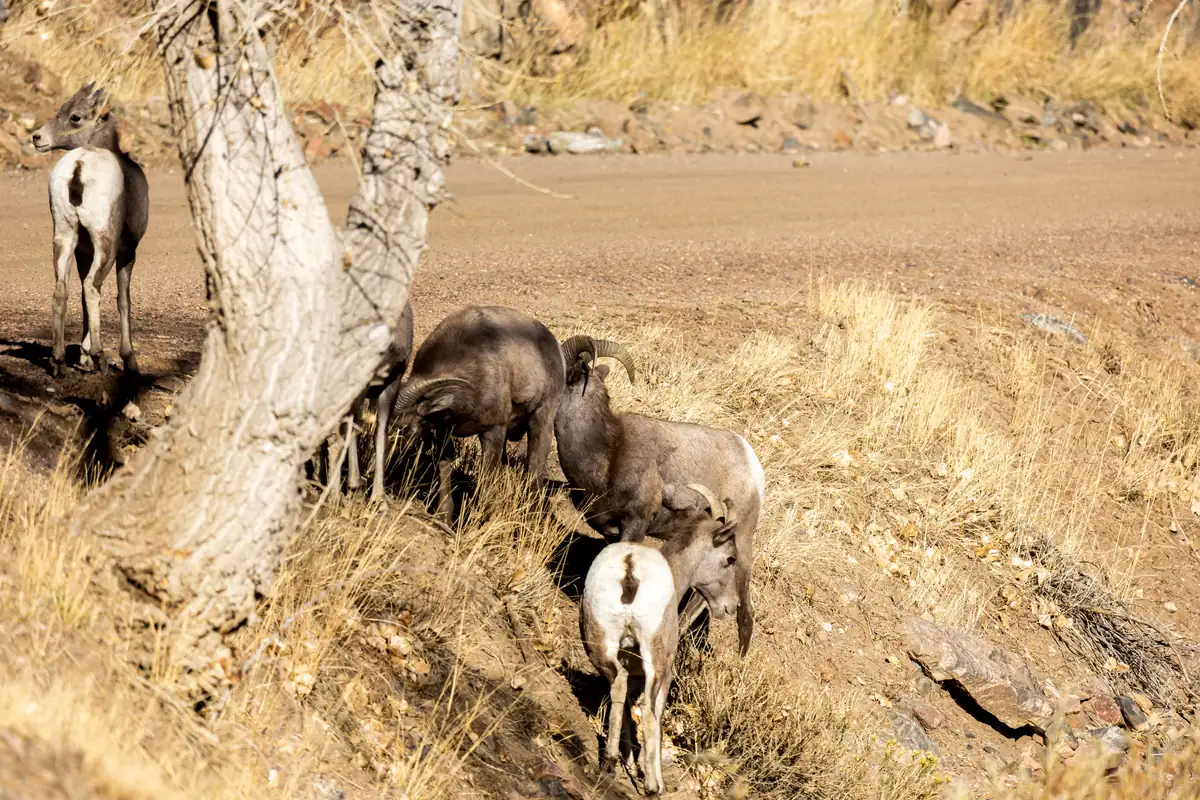
- Rams on the slopes at Georgetown. Colorado’s state animal breeds in November and December. Scan the rock bands above the Georgetown viewing station for rams squaring off, or go on Saturday, November 14, when the town’s bighorn festival brings volunteers and spotting scopes (weather permitting).
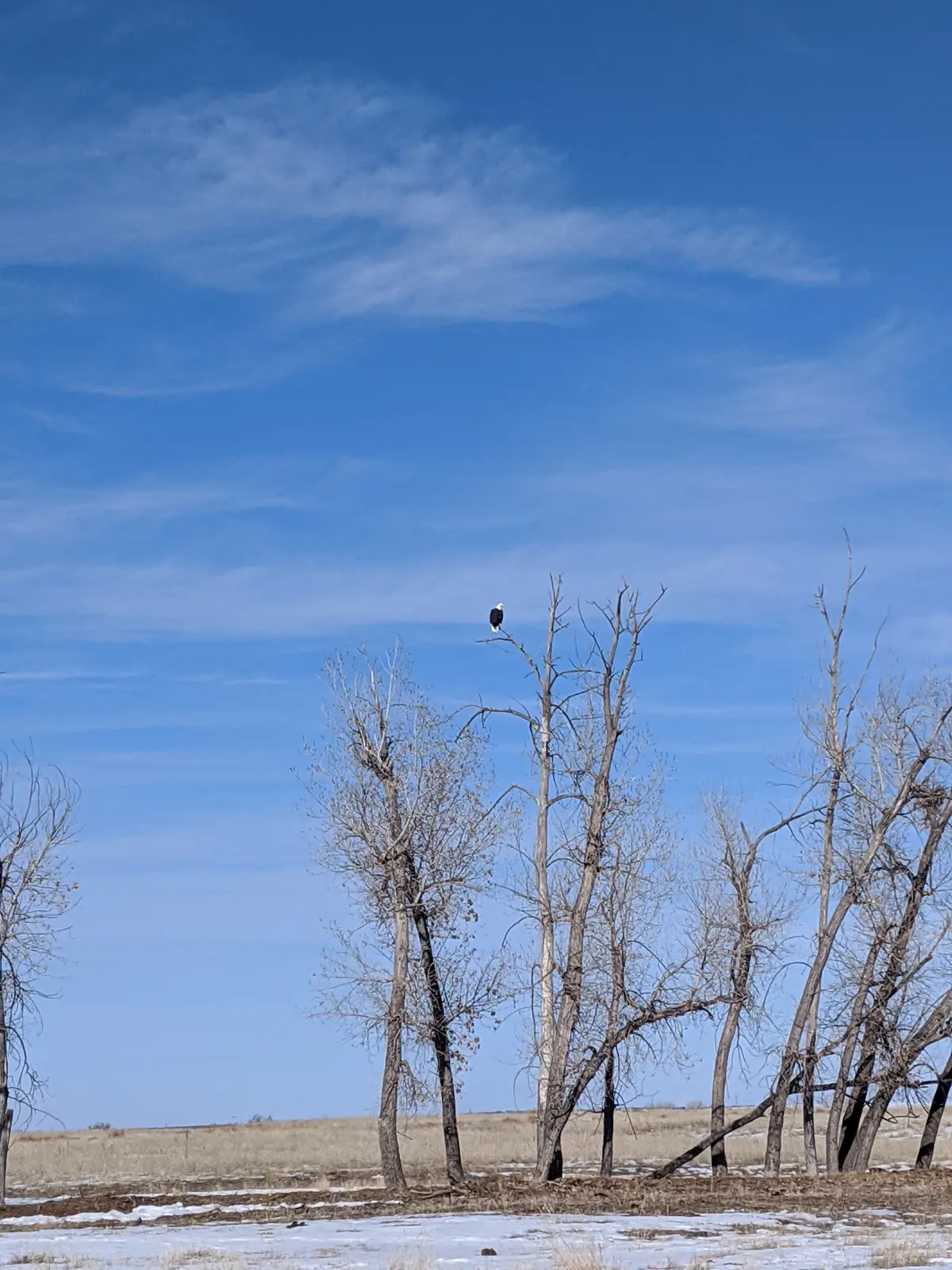
- Eagles back on the water. Bald eagles from the north start turning up along the South Platte, the Arkansas and the plains reservoirs this month. Look for a white head in a bare cottonwood near open water, especially early in the morning.
- A supermoon and the Leonids. The Beaver Moon is full at 7:53 a.m. Mountain time on Tuesday, November 24, a modest supermoon; Monday and Tuesday evenings will both show a round Moon. A week earlier, the Leonid meteors are best after midnight on the morning of November 18.
Write it down: the Naturalist’s Field Journal’s mammal watch plate fits a morning of rams or rutting bucks, a first rosy-finch earns its own line on “birds I have seen,” and the first snow that sticks is the day to open tracks to know. A daily field log kept through the month shows how quickly the light goes.
Regions used below: Front Range and the Denver metro; Eastern Plains; Northern Mountains and Rocky Mountain National Park; Central Mountains and the high parks; San Luis Valley; Western Slope and the Four Corners.
When is the bighorn sheep rut in Colorado, and where can I watch it?
The Rocky Mountain bighorn is Colorado’s state animal, and November is the start of its most watchable season. Colorado Parks and Wildlife says the sheep breed in November and December, with the peak in early December. For most of the year mature rams live apart from the ewes; during the rut they rejoin the bands and settle rank by rearing back and slamming their horns together, a crack that can carry across a canyon. A big ram’s coiled horns can account for a tenth of its weight. CPW estimates about 7,000 bighorns statewide and describes them as abundant again.
Look on steep, open, south- and west-facing slopes, where sun and wind keep the grass bare of snow and cliffs are close for escape. Sheep are busy at all hours during the rut, but CPW’s magazine suggests early to mid-morning as the most reliable spotting time.
-
Georgetown and the I-70 corridor
November into January; festival Saturday, November 14, 10 a.m. to 3 p.m. · Georgetown Bighorn Sheep Viewing Station, on the frontage road east of town; the Georgetown Gateway Visitor Center
CPW calls the Georgetown herd, 250 to 350 animals, one of the most popular sheep-watching sites in the country. The Bighorn Sheep Festival, run by the town with CPW on the second Saturday of November, sets up scopes with volunteers who will find the rams for you, along with talks and children’s crafts. The 2024 festival was called off for snow, so check before driving up. On other days, bring binoculars to the viewing station and scan the rock above the highway yourself.
-
Waterton Canyon
Open a half hour before sunrise to a half hour after sunset · Denver Water’s canyon road southwest of Littleton, the start of the Colorado Trail
A level, 6.2-mile gravel road follows the South Platte up to Strontia Springs Dam, and a resident herd of bighorns often grazes or rests beside it. Because of the sheep, Denver Water bans dogs and other pets from the canyon entirely, leash or no leash. Horses are allowed. It is an easy walk or bike ride with a good chance of rams within a few hundred feet.
-
Give them room
All season · Anywhere sheep come down to roads
Rams in the rut are distracted and may wander near roads. Pull fully off the road, stay in or by your car, and never try to coax an animal closer for a picture. Sheep that are pushed off their winter range burn energy they cannot easily replace.
When do bald eagles arrive in Colorado for the winter?
Colorado has a growing population of nesting bald eagles, and in winter it gains a much larger crowd of visitors from farther north. CPW’s magazine describes the wintering birds arriving in November and leaving in March. They follow open water and fish: the South Platte, the Arkansas, the Rio Grande, the Yampa and the Colorado, and the reservoirs along them. At night they gather in communal roosts in big trees for shelter and warmth.
November is the front edge of the season, not the peak. Numbers build as northern lakes freeze, and the big gatherings come in the depth of winter. CPW’s raptor guidelines treat November 15 as the start of the winter roost season, asking that people and machinery keep a quarter mile or more from an active night roost until March 15.
-
Barr Lake State Park
Arrivals in November; more as winter deepens · Northeast of Denver off I-76; the cottonwoods along the south and east shores
CPW’s park page says many bald eagles spend the winter around the lake, and one pair regularly nests there in summer, raising its young in a tree at the water’s edge; CPW’s magazine adds that a pair has been present every year since 1986. The tall cottonwoods along the shore give the birds their perches. Walk the shoreline trail with binoculars in the first hour of daylight and check the treetops over the water.
-
Rocky Mountain Arsenal National Wildlife Refuge
Daily; the 11-mile wildlife drive is free · Commerce City, ten minutes from downtown Denver
The refuge drive takes about an hour and passes prairie, lakes and old farm shelterbelts where eagles perch in winter, along with bison, deer and hawks. Bison roam part of the drive, and visitors must remain in their cars there.
-
The Arkansas Valley
Late fall through winter · John Martin Reservoir State Park near Hasty; Huerfano Lake; Holbrook Reservoir
Lake Pueblo once held hundreds of wintering eagles in the 1990s. CPW’s magazine reports that the birds have since spread out, and that wintering eagles are now found more widely down the Arkansas, including at John Martin Reservoir and smaller lakes nearby. Check the trees closest to open water.
Where do the cranes and geese go in a Colorado November?
The San Luis Valley crane season ends this month. The Fish and Wildlife Service’s crane brochure says the fall birds usually leave the valley by mid-November, after a peak in early October, heading for the Rio Grande in New Mexico and the Bosque del Apache refuge near Socorro. Almost every greater sandhill in the Rocky Mountain flock stops in the valley on both legs of the trip. A cold snap can move the stragglers out overnight, so a first-week-of-November trip is a gamble: some years there are still flocks in the stubble at sunrise, some years the fields are quiet.
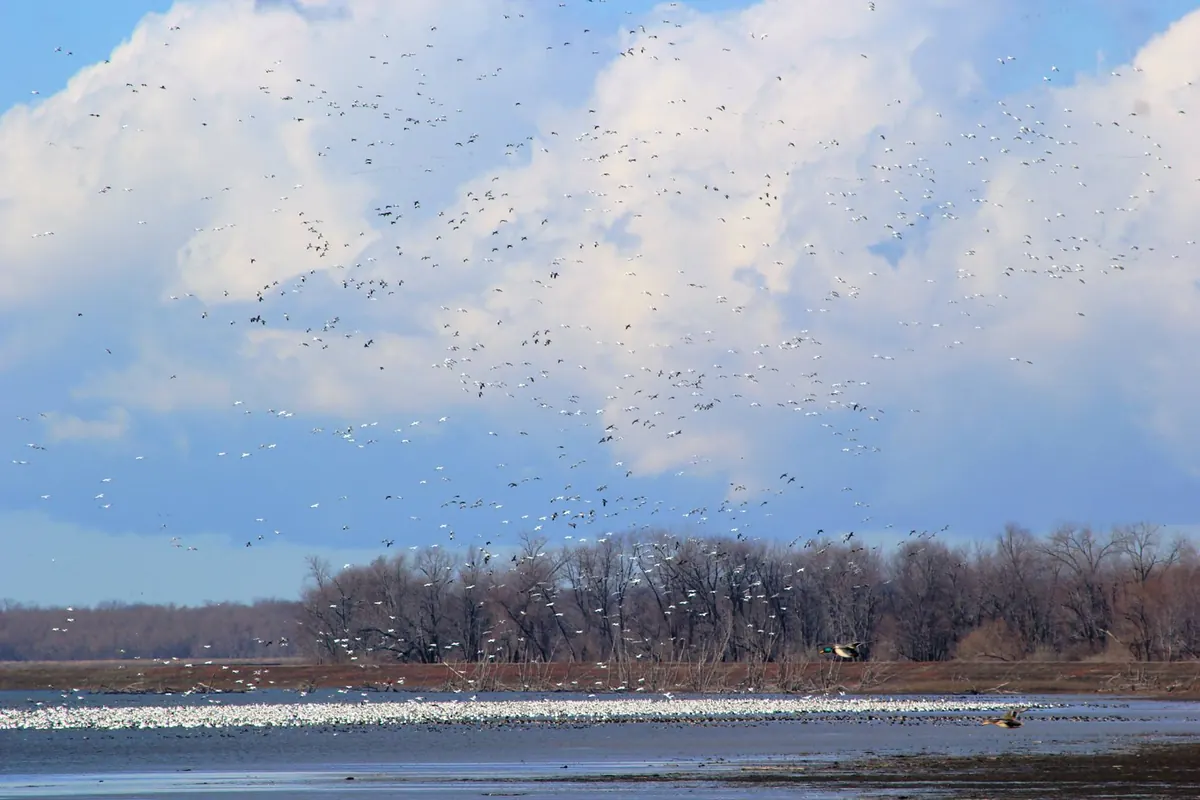
As the cranes go, the geese build. On the southeastern plains the reservoirs and playa lakes take in snow geese and the smaller Ross’s goose, and the Colorado Birding Trail notes that tens of thousands of them stay through the whole winter there. November is the build-up; the biggest flocks, white rafts that lift off the water in a roar, are a January and February sight.
-
The last cranes
Early November; most gone by mid-month · Monte Vista National Wildlife Refuge auto tour; County Road 8S pullouts
The refuge’s auto tour opens one hour ahead of sunrise and closes one hour past sunset. Watch the fields first thing in the morning, when family groups feed, and listen for the rolling bugle overhead as they leave the roosts.
-
Snow and Ross’s geese on the plains
Building through November and December · Thurston Reservoir and Nee Gronde Reservoir (Queens State Wildlife Area) near Lamar and Eads; John Martin Reservoir
The Birding Trail lists Thurston as sometimes holding thousands of snow geese in winter, and Nee Gronde for big goose flocks and many bald eagles. Visitors 16 and older need a valid hunting or fishing license or a State Wildlife Area pass on the Queens reservoirs, and this is also waterfowl hunting country, so wear bright colors.
-
Ducks and grebes near Denver
All month · Cherry Creek, Chatfield and Barr Lake state parks
The metro reservoirs gather diving ducks as the month goes on, and goldeneyes, buffleheads and mergansers are typical late-fall arrivals. A spotting scope from a dam or a parking lot over the water shows far more than walking the shore.
When do rosy-finches come to feeders in Colorado, and what is the winter finch outlook?
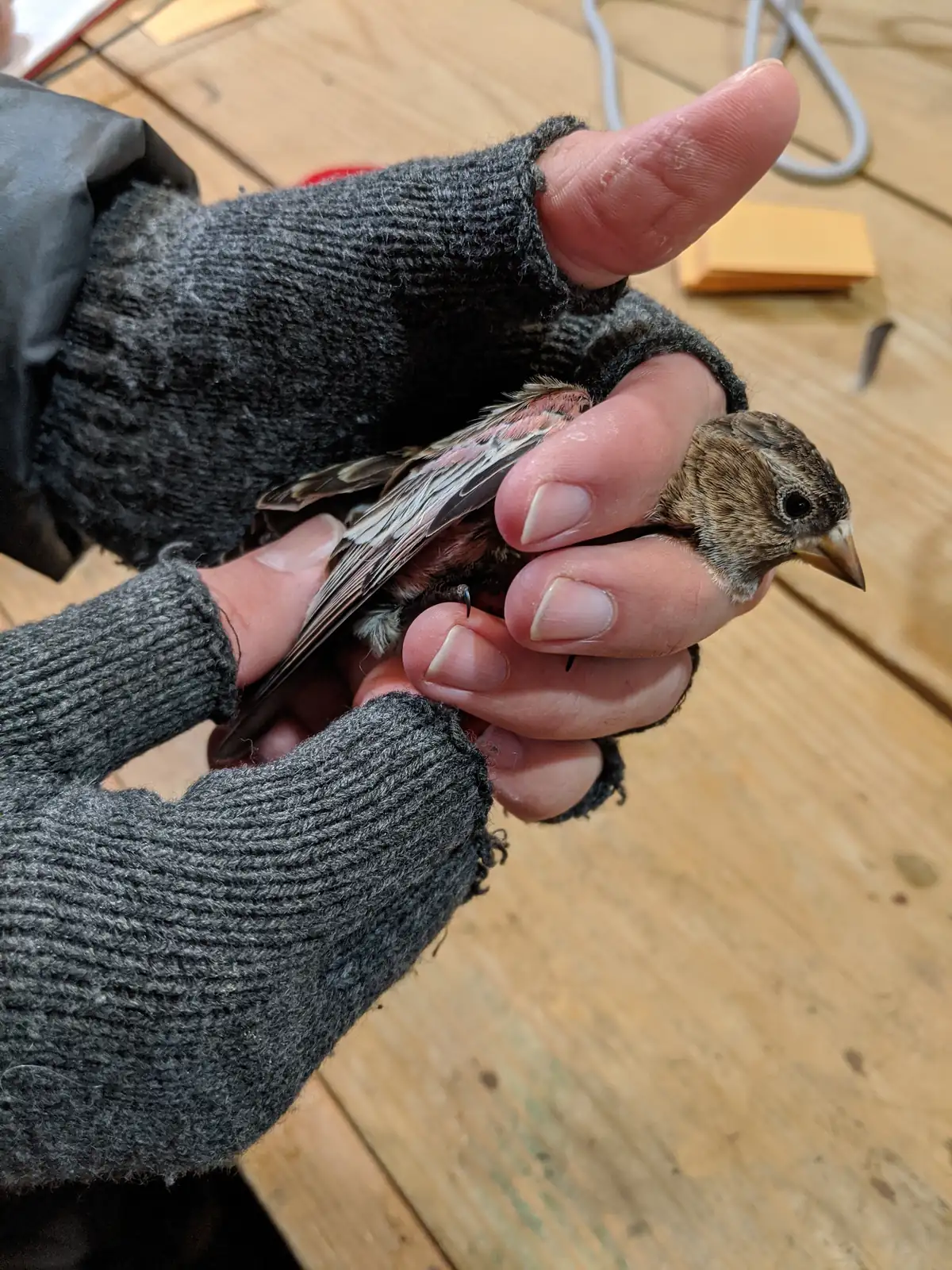
The brown-capped rosy-finch is found only in the Southern Rockies, mostly in Colorado’s high country, nesting in rock crevices on summits and high ridges. In winter it comes down in flocks to feed on wind-scoured ridges, snow-free roadsides and, sometimes, seed feeders in mountain towns. The Colorado Avian Research and Rehabilitation Institute, which has banded rosy-finches since 1999, finds brown-capped birds at its feeders from October through late November; from mid-November into early February the flocks are mostly gray-crowned and black rosy-finches that migrate in from the north and the Great Basin, with a few brown-capped mixed in. The institute once estimated more than 10,000 rosy-finches in its area on a single day.
So November is when the rosy-finch season opens, not when it peaks. Storms push the flocks lower; the Aspen-area nature center, ACES, notes that late winter is often the best time to catch them at feeders.
-
What the 2026–27 finch forecast says for Colorado
Winter 2026–27 · Pine and pinyon country statewide
The Finch Research Network’s forecast, released September 25, mostly covers eastern Canada and the Northeast. Its one clear Western note matters here: pine cone crops failed widely across the interior mountain West this year, on limber, whitebark, pinyon and ponderosa pines, and Type 2 red crossbills have been moving east out of the region because of it. Expect a thin year for crossbills and other cone-eaters in the Colorado forests; that is a reason to note any you do find.
-
Project FeederWatch
November 1 to April 30 · Any yard, balcony or patch you can watch
Cornell Lab and Birds Canada run FeederWatch through the cold half of the year: you choose two back-to-back days, record the largest flock of each species seen at one moment, and report it, every week or just once all winter. The U.S. fee is $18. In bear country, wait until the bears are denned before putting seed out, and take feeders down when they wake.
What are deer, bears, moose and other Colorado animals doing in November?
-
Mule deer and white-tailed deer in the rut
Mid-November into December; aggressive bucks until late December · Foothill neighborhoods, river bottoms, town parks from Boulder to Durango
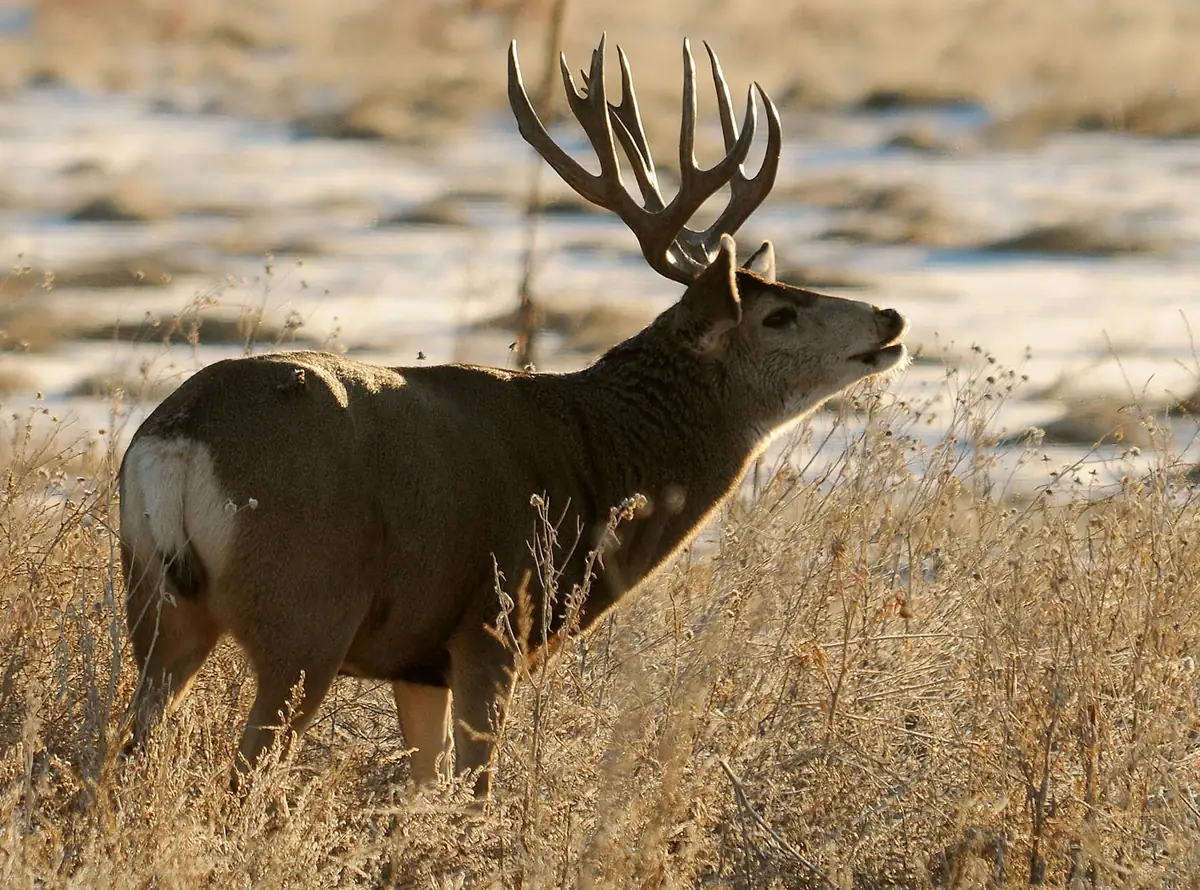
CPW’s magazine notes that white-tailed deer start a week or so ahead of mule deer, and by early December the agency describes deer across the state as at the peak of the season. Bucks chase does with their necks swollen and noses low, and they will hold their ground against people. CPW asks for extra distance, leashed dogs and a quick look around the yard before letting pets out, since bucks have gored both people and dogs. Hang holiday lights firmly, at least eight feet up: deer tangle their antlers in loose strings, netting and hammocks, and should only be freed by wildlife officers.
-
Bears going to sleep
Early November for most · Mountains, foothills and oak brush
CPW gives early November as the time most of the state’s black bears stop moving about for the year. The cubs come into the world over the winter, inside the den, while their mother sleeps on, and come out in May weighing 10 to 15 pounds. Until you are sure the bears near you have gone to their dens, keep trash, pet food and bird seed locked away, as you would in summer.
-
Moose
All month · North Park, the Never Summer Range, the upper Colorado and Grand Mesa
CPW puts the moose breeding season from late September through November, so bulls are still testy early in the month. Look in thick willow along streams. Ears laid back, raised neck hair, a lowered head or a licked snout all mean back away now; a moose can run 35 miles an hour, and it sees a dog the way it would see a wolf.
-
Gambel oak holding on
Through winter · Foothills and mesas of southern and western Colorado
Gambel oak keeps many of its dead brown leaves into winter, which is why the oak brush stays rust-colored long after the cottonwoods are bare. The U.S. Forest Service notes that elk lean on the oak as winter browse and that mule deer use it moderately in winter and spring. The dry leaves also make the stands burn easily from October until real snow falls.
Has everywhere in Colorado had its first freeze by November?
Almost always. Every station in the table has, in nine years out of ten, recorded its first 32 °F night before October is out. The mountain valleys froze in September: Steamboat Springs’ median is September 12 and Alamosa’s September 15. Durango’s is September 27; Fort Collins, Denver, Colorado Springs, Pueblo and Lamar all fall between October 7 and October 9. The one place where November can still arrive frost-free is the Grand Valley: Grand Junction’s median first freeze is October 26, and in roughly one fall in ten the orchards there are still waiting when the month begins.
| Station | One year in ten | Median | Nine years in ten |
|---|---|---|---|
| Fort Collins (northern Front Range) | Sep 24 | Oct 7 | Oct 20 |
| Denver International Airport | Sep 27 | Oct 9 | Oct 20 |
| Colorado Springs Municipal Airport | Sep 26 | Oct 8 | Oct 19 |
| Pueblo Mem Airport (Arkansas Valley) | Sep 27 | Oct 9 | Oct 21 |
| Lamar Municipal Airport (southeast plains) | Sep 28 | Oct 7 | Oct 19 |
| Grand Junction Walker Field (Grand Valley) | Oct 3 | Oct 16 | Oct 29 |
| Durango La Plata County Airport (Four Corners) | Sep 15 | Sep 27 | Oct 9 |
| Alamosa San Luis Airport (San Luis Valley) | Sep 4 | Sep 15 | Sep 26 |
| Steamboat Springs (Yampa Valley) | Aug 31 | Sep 12 | Sep 24 |
For your own town’s first and last frost, with odds for every week, see the Colorado frost dates for 210 stations. In November the question on the Front Range is not frost but snow: the National Weather Service in Boulder puts Denver’s average first measurable snow in mid-October, and November storms come in quick, often melting off the sunny side of the street within a day or two. Up high, November snow starts the snowpack that becomes next summer’s water, and after the record-low snowpack of 2025–26, hydrologists will be watching every storm.
Why is November so windy along Colorado’s Front Range?
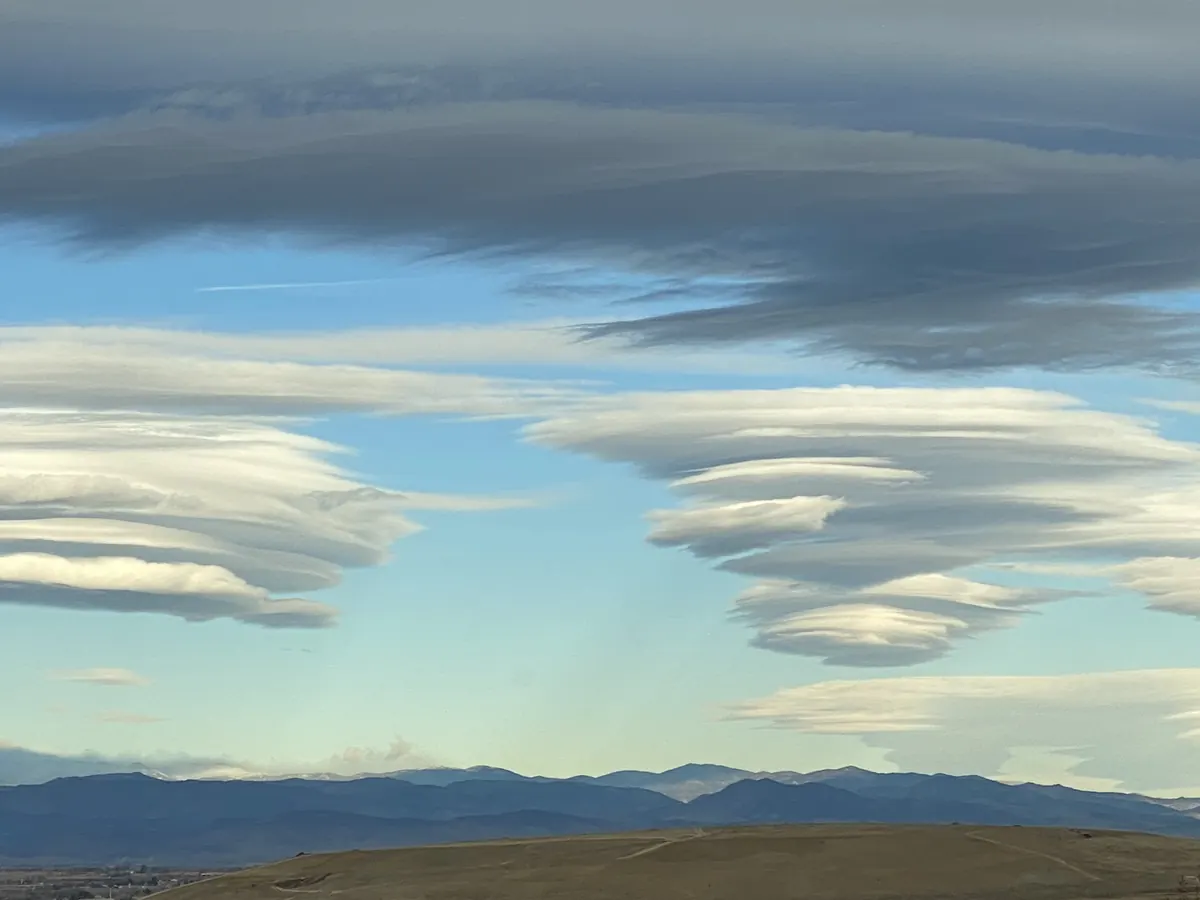
When strong westerly winds cross the Continental Divide and pour down the east face of the Front Range, they can arrive in Boulder, Golden and the foothill towns as violent gusts, sometimes warm and dry (a chinook), sometimes cold. NOAA’s Physical Sciences Laboratory keeps a list of every Boulder gust of 70 mph or more since 1969: 262 events in its own monthly table. The count jumps in November, with 26 such events in the record against 10 for October, and peaks in December and January. On November 26, 1977, a midday gust of 109 mph blew out windows in Boulder, and on November 29–30, 2019, a storm that reached 107 mph at the top of Eldora downed trees and closed roads.
On a windy day, stay out of burned and beetle-killed forest, where trees fall without warning, and remember that wind and dry grass make the first weeks before steady snow a fire season too. Check the gusts and pressure for your area on our live weather page, and watch the sky over the mountains: a smooth, lens-shaped cloud parked over the peaks often means the wind is already strong aloft. Our cloud guide shows what those wave clouds look like.
How dark does it get in Colorado in November?
The change you notice first is the clock, not the sun. Colorado switches back to Mountain Standard Time overnight into Sunday, November 1; that evening Denver’s sunset comes at 4:58 p.m., an hour earlier on the clock than the night before. By November 30 it sets at 4:36 p.m., and sunrise has moved from 6:29 to 7:01 a.m. Over the month the cities in the table lose 49 to 56 minutes of daylight, 1.7 to 1.9 minutes a day, with Fort Collins and Steamboat Springs losing the most and Alamosa and Durango the least.
| City | Nov 1 | Nov 30 | Lost | Per day |
|---|---|---|---|---|
| Fort Collins | 10 h 26 m | 9 h 30 m | 56 min | 1.9 min |
| Steamboat Springs | 10 h 27 m | 9 h 31 m | 56 min | 1.9 min |
| Denver | 10 h 29 m | 9 h 35 m | 54 min | 1.9 min |
| Grand Junction | 10 h 31 m | 9 h 39 m | 52 min | 1.8 min |
| Colorado Springs | 10 h 32 m | 9 h 40 m | 52 min | 1.8 min |
| Pueblo | 10 h 34 m | 9 h 44 m | 50 min | 1.7 min |
| Alamosa | 10 h 37 m | 9 h 48 m | 49 min | 1.7 min |
| Durango | 10 h 37 m | 9 h 48 m | 49 min | 1.7 min |
Deep mountain valleys lose the direct sun far earlier than those times suggest; in some, the sun drops behind the ridge by mid-afternoon. To get sunrise, sunset and twilight for a trailhead and see how many minutes this week is losing, use the daylight calculator.
What does a strong El Niño mean for Colorado’s winter?
Colorado goes into this winter with a powerhouse El Niño all but certain; federal forecasters put that outcome above 90 percent in mid-September (CPC, September 10 update), with the event expected to last through the 2026–27 cold season. For Colorado the most dependable consequence is temperature, not snow. The Colorado Climate Center’s summary of the state’s El Niño record finds that the clearest statewide signal is a colder-than-average winter, while precipitation shows no consistent pattern across Colorado as a whole: the memorable El Niño storms are real, but they do not happen reliably enough to bank on.
The pattern that does show up is regional. The Weather Service office in Boulder notes that in El Niño winters, storm systems tracking out of the Southwest tend to give northeast Colorado above-average precipitation from November into spring, through deep upslope flow, while the northern and central mountains, fed by northwest flow, often run near average or a little short. The climate center adds a caution for this winter in particular: Colorado is warmer than it was in 1982–83, so even a wet storm track may deliver more rain and less snow at lower elevations than the old cases did.
This page was written before NOAA issued its winter outlook, scheduled for October 15, 2026; once out, it will be posted with the other seasonal maps on the CPC 90-day outlook page.
What is in the Colorado sky in November 2026?
-
The Leonids
Best before dawn on Wednesday, November 18 (also the 17th and 19th) · Face east to south after the Moon sets, around midnight or a little later
The International Meteor Organization puts this year’s peak late on November 17 (UTC), and expects an ordinary year, about 15 an hour for an observer far from city lights, with no outburst. The radiant in Leo rises around midnight and climbs until dawn, and the half-lit Moon sets around then, so the hours between moonset and first light are the ones to use. These are swift meteors, and the brightest Leonids sometimes leave a faint, fading trail across a dark Colorado sky.
-
The Taurids and their comet
Southern peak around November 5, northern around November 12 · The radiant, in Taurus, is well up by late evening
Both Taurid branches are slow and sparse, a handful of meteors an hour, but known for occasional bright fireballs. Both are debris from Comet Encke, which itself will brighten to binocular range in early 2027. With the Moon new on November 9, the week between the peaks is moonless in the evening.
-
A planet line-up before sunrise
Mornings of November 14 to 16; Mercury best about November 18 to 25 · East to south before dawn
Venus has jumped into the morning sky after passing the sun in October and climbs higher each day, brilliant and low in the east-southeast; it is near its brightest around Thanksgiving. Jupiter and fainter, reddish Mars sit high in Leo, and at first light on November 15 and again the 16th the red planet and the giant sit only about 1.2 degrees apart, a pair that fits easily in one binocular field. Mercury shows up low in the dawn twilight from mid-month, at its best for about a week around November 20. In the evening sky, Saturn is the lone planet, in the south after dark.
-
The Beaver Moon, a supermoon
Full 7:53 a.m. MST, Tuesday, November 24 · Rising in the east around sunset on November 23 and 24
Because full moon falls on Tuesday morning, both Monday and Tuesday evening give a round Moon at moonrise, Tuesday’s a few hours nearer the exact moment. Perigee, the closest pass of the month, follows some 30 hours afterward, which makes this a mild supermoon, a little larger and brighter than average; the Cold Moon on December 23 will come nearer still, the nearest full moon of 2026. Overnight from the 23rd to the 24th it crosses near the Pleiades, but its light drowns the little star cluster.
| Phase | Date | Time |
|---|---|---|
| Last quarter | Sunday, Nov 1 | 1:28 p.m. |
| New moon | Monday, Nov 9 | 12:02 a.m. |
| First quarter | Tuesday, Nov 17 | 4:48 a.m. |
| Full moon, the Beaver Moon | Tuesday, Nov 24 | 7:53 a.m. (looks full the evenings of Nov 23 and 24) |
| Last quarter | Monday, Nov 30 | 11:08 p.m. |
Mountain time gets two last-quarter Moons this November, on the 1st and the 30th; in the Eastern and Central zones the second falls on December 1. Local moonrise and moonset times are on this month’s Moon; check the cloud forecast on Today’s sky before a cold night out.
What can families do outdoors in Colorado in November 2026?
- See the bighorns at Georgetown on Saturday, November 14. The festival runs 10 a.m. to 3 p.m. with scopes, wildlife talks, crafts and music; dress for snow and confirm on the festival page if the weather looks bad.
- Story time at Cherry Creek State Park. Little Nature Explorers, a nature story and craft for young children at the Swim Beach, meets at 9 a.m. on Wednesdays, November 18 and 25. Registration is required through CPW, and a park pass is needed to enter. The park’s November 14 archery clinic was already waitlisted at the time of writing.
- Head outside the day after Thanksgiving. For about a decade CPW has opened every state park free on the Friday after Thanksgiving, calling it Fresh Air Friday; in 2026 that would be November 27. CPW had not announced this year’s at the time of writing, so check cpw.state.co.us before you go.
- Walk Waterton Canyon. Flat, wide and close to Denver, with a fair chance of bighorns and mule deer and more than 40 kinds of birds recorded. No dogs.
- Start a feeder count. Project FeederWatch opens November 1. A child can keep the tally sheet, and the first rosy-finch or junco of the winter makes a good entry in the Naturalist’s Field Journal.
- Measure the first snows. CoCoRaHS, born in Fort Collins at the Colorado Climate Center and now a nationwide network of backyard weather observers, takes new observers all year; a snowboard and a ruler are all a child needs to report snow depth.
Safety notes for November in Colorado
- Rifle season is on for most of the month. CPW’s 2026 calendar has the second combined deer and elk season ending November 1 and plains rifle deer ending November 3. The third combined season runs November 7 to 15 and the fourth November 18 to 22, with plains rifle bear open through November 22. Late rifle elk hunts in some units can start November 23, regular mountain lion season opens the same day, and plains archery deer reopens November 4. Late plains rifle deer follows December 1 to 14.
- Wear color. Colorado requires firearm hunters for deer, elk, pronghorn, moose and bear to wear a solid daylight-fluorescent orange or pink garment above the waist, at least 500 square inches of it, and a hat of orange or pink, visible from every side; camouflage patterns in orange do not count. Hikers are not bound by the rule, but on national forest, BLM and state wildlife areas in November, copy it, and give your dog a bright vest too.
- Short days catch hikers out. With sunset before 5 p.m. and early dark in the canyons, turn around earlier than you would in summer and pack a light, a puffy jacket and a charged phone, even for a two-hour Front Range walk. Shaded trails and boardwalks stay icy for days after a storm; microspikes help.
- Roads and passes. Trail Ridge Road through Rocky Mountain National Park is closed for the winter once the snow settles in; call the park’s road status line before planning a crossing. Check CDOT for the I-70 passes and chain law before a mountain drive.
- Ice is not safe yet. Ponds and reservoirs that skin over in November are thin and uneven; stay off.
- Bucks, moose and sheep. Rutting animals of all three can charge. Keep your distance, keep dogs leashed, and remember that Waterton Canyon bans dogs outright.
Sources
- Colorado Parks and Wildlife: Rocky Mountain bighorn sheep
- Colorado Outdoors (CPW): viewing Colorado’s bighorn sheep
- Georgetown Bighorn Sheep Festival: November 14, 2026, 10 a.m. to 3 p.m.
- Clear Creek County Tourism Bureau: Bighorn Sheep Festival
- Colorado Birding Trail: events, Georgetown Bighorn Sheep Fest, November 14, 2026
- Denver Water: Waterton Canyon and Strontia Springs Reservoir
- Colorado Parks and Wildlife: bald eagle
- Colorado Outdoors (CPW): bald eagles, a majestic mystery
- Colorado Parks and Wildlife: recommended buffer zones and seasonal restrictions for Colorado raptors (PDF)
- Colorado Outdoors (CPW): Barr Lake State Park installs bald eagle nests (pair present every year since 1986)
- U.S. Fish and Wildlife Service: Rocky Mountain Arsenal National Wildlife Refuge activities
- U.S. Fish and Wildlife Service: San Luis Valley sandhill crane viewing (PDF)
- U.S. Fish and Wildlife Service: Monte Vista National Wildlife Refuge
- Colorado Birding Trail: Snow Goose trail (Queens State Wildlife Area reservoirs)
- Colorado Avian Research and Rehabilitation Institute: rosy-finch research
- Aspen Center for Environmental Studies: winter rosy-finch study
- Finch Research Network: Winter Finch Forecast 2026–2027
- Project FeederWatch: project overview
- Colorado Outdoors (CPW): be cautious around deer during the peak of mating season
- Colorado Outdoors (CPW): a weekend in the rut
- Colorado Parks and Wildlife: living with bears
- Colorado Parks and Wildlife: living with moose
- USDA Forest Service Fire Effects Information System: Gambel oak
- NOAA NCEI: U.S. climate normals, 1991–2020
- NWS Denver/Boulder: Denver fall and winter statistics
- Colorado Climate Center: 2026 mountain snowpack almost gone (April 2, 2026)
- NOAA Physical Sciences Laboratory: Boulder windstorms of 70 mph or more
- Climate Prediction Center: ENSO diagnostic discussion, September 10, 2026
- Climate Prediction Center: 90-day outlooks (winter outlook issued October 15, 2026)
- Colorado Climate Center: ENSO and Colorado
- Colorado Climate Center: what a super El Niño means for Colorado (September 3, 2026)
- NWS Denver/Boulder: El Niño and the winter precipitation outlook
- U.S. Naval Observatory: moon phases from November 2026 (data API)
- U.S. Naval Observatory: sunrise, sunset, moonrise and moonset
- International Meteor Organization: 2026 meteor shower calendar (PDF)
- EarthSky: what is a supermoon? (2026 full supermoons)
- EarthSky: Mercury at greatest western elongation
- NASA JPL Horizons: planetary ephemerides
- Royal Astronomical Society of Canada: 2026 lunar occultations (PDF)
- NIST: daylight saving time
- Colorado Parks and Wildlife: Cherry Creek State Park events (CPW Connect)
- Colorado Parks and Wildlife: free state park entry the day after Thanksgiving (2024 release)
- KJCT: Colorado state parks free for Fresh Air Friday, November 28, 2025
- CoCoRaHS: about the network
- Colorado Parks and Wildlife: 2025–2029 big game season structure, with 2026 dates (PDF)
- Colorado Parks and Wildlife: deer in the field, fluorescent orange and pink
- National Park Service, Rocky Mountain: current conditions and Trail Ridge Road status
- Colorado Parks and Wildlife: Barr Lake State Park highlights (wintering bald eagles, nesting pair)
- Photos via Wikimedia Commons; licenses and photographers are credited under each picture
