What to look for in nature in Delaware this May
May is Delaware Bay’s biggest month. Horseshoe crabs spawn at their peak, flocks of red knots and other shorebirds fatten on their eggs before an Arctic flight, and warblers pour through the woods while piping plovers, least terns and oystercatchers settle onto the sand. Fawns arrive at the very end of the month, terrapins start to nest, and the swamps fill with bullfrogs. The sky joins in with a moonless Eta Aquariid morning, a Flower Moon on May 20 that earns the old seasonal Blue Moon label, and Mercury low in the evening glow. Below you will find what to look for, where to go, and how to watch without crowding the wildlife.
Other months in Delaware: October, November, December, January, February, March, April.
Start here

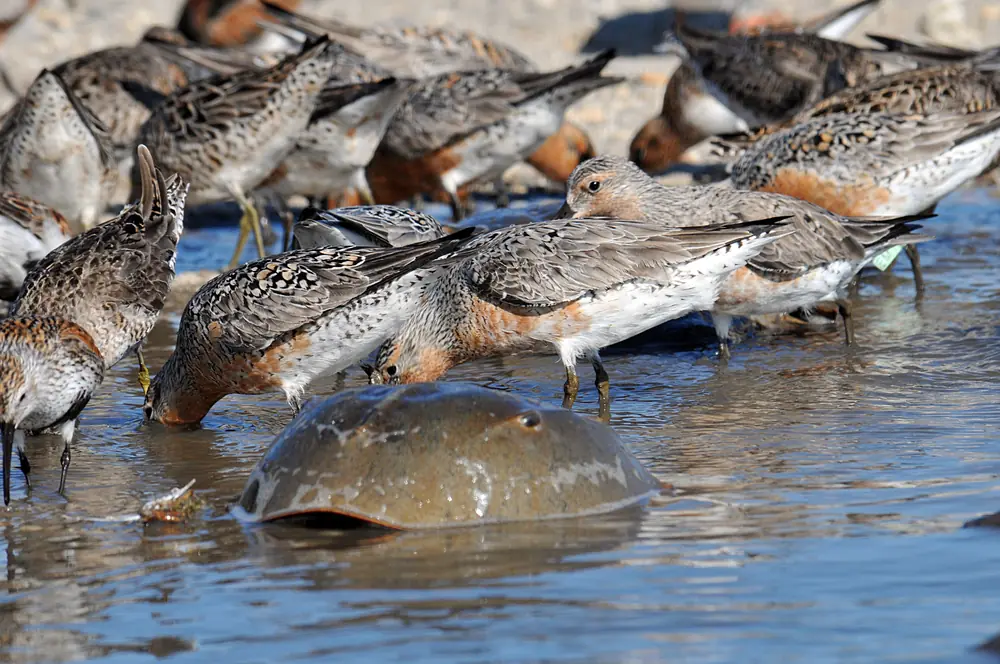
- Go to the bay after a high tide. In the second half of May, head for a Kent County bay beach (Slaughter Beach and Kitts Hummock are two) and arrive a few hours after high tide. Stay back from the flocks and look for red knots, turnstones and sanderlings among the eggs.
- Listen before you look for warblers. On a still morning in the first three weeks of May, stand under tall trees in a park or refuge and listen for ten minutes. Then raise the binoculars toward the sound.
- Wake early on May 6 or 7. With no moon in the sky, the Eta Aquariid meteors are at their best in the dark hour before dawn. Dress warmly, lie back, and look toward the east-southeast.
Keep a record: the day you see your first red knot or ruddy turnstone belongs on the birds-seen plate of the Naturalist’s Field Journal; a plover or tern chick watched from the roped-off distance fits the nest-observed plate; the calls of green frogs and bullfrogs earn an entry on your map of sounds; a tulip tree in flower makes a good page for a tree through the seasons; a fawn you left alone, a terrapin track or a snapping turtle crossing is a ready-made mammal watch or tracks-to-know entry; and the Eta Aquariid morning suits the dusk-and-dawn watch.
Regions used below: Piedmont: Wilmington, Hockessin and the Brandywine valley; Newark and White Clay Creek; Upper Bayshore and the C&D Canal: Blackbird Creek, Lums Pond; Dover, Kent County and Bombay Hook; Western Sussex: Seaford, Laurel, Trap Pond and the Great Cypress Swamp; Cape Region: Lewes, Milton, Cape Henlopen and Prime Hook; Rehoboth, the Inland Bays and Fenwick Island.
When do horseshoe crabs spawn at their peak on Delaware Bay?
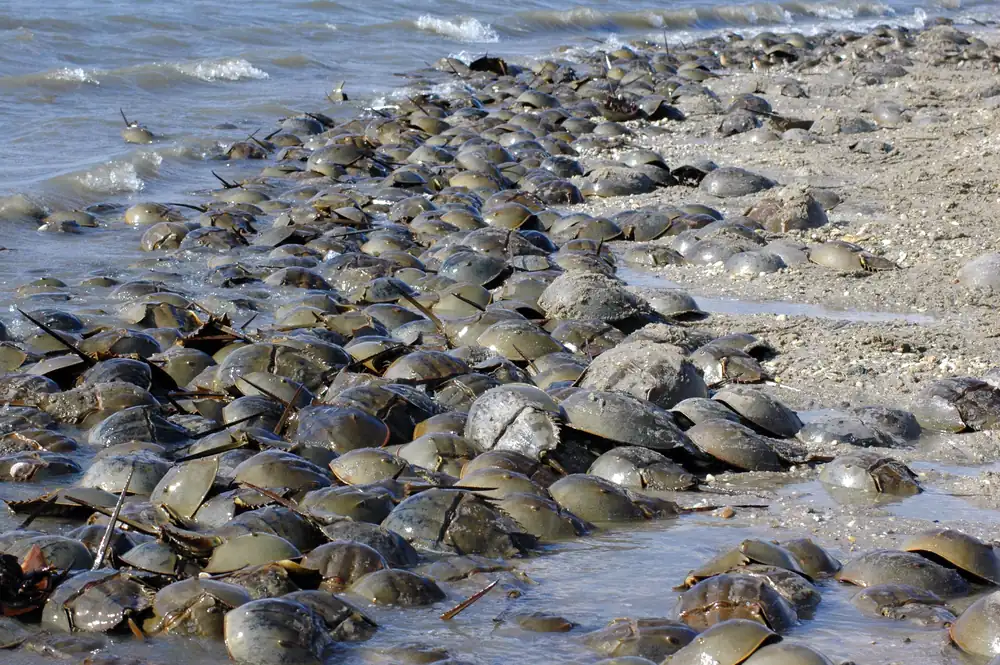
April only set the stage. May is the month the state’s own wildlife biologists name as the peak of spawning, when horseshoe crabs come out of the bay in large numbers to bury their eggs in the sand of the Kent County shore. The Delaware Division of Fish and Wildlife says spawning runs from late April through June and that the peak usually comes on the high tides around the new and full moons in May. This year those moons are the new moon on Thursday, May 6, and the full Flower Moon on Thursday, May 20, so plan around the high tides in the days just before and after each.
-
The spawning peak
Mostly May, strongest on the high tides near the new moon (May 6) and the full moon (May 20) · Bay beaches of Kent County: Slaughter Beach, Kitts Hummock, Pickering Beach, Bowers Beach, Woodland Beach and Mispillion Harbor
The crabs come in on the rising tide, and they are most active on the beach after dark. The state’s DuPont Nature Center page says any high tide from May into early June can bring crabs, and that the biggest nights tend to follow the new and full moon tides. The nature center’s page points to NOAA’s tide predictions, so look up the hour for the bay shore and arrive early. Step carefully on the upper beach, because the eggs are laid in the sand.
-
Watching without harming
Any spawning tide · Beaches with public access
Central Delaware’s tourism office suggests a red flashlight for night watching, because red light bothers wildlife less than white. A crab stuck upside down can be righted by tipping it over at the edge of its shell; the tail is never a handle. The same page says to keep noise down, step carefully and bring binoculars, so that you do not scare off feeding birds. Check each community’s beach rules before you go.
-
A guided evening on the tide
Saturday, May 22, 2027, 2 to 6 p.m. · DuPont Nature Center, Milford, then Slaughter Beach
The society’s calendar lists “High Tide, Horseshoe Crabs and Happy Hour with Anthony Gonzon” on that date, timed to the rising high tide during peak spawning and shorebird migration. The group will bird around the Nature Center and then drive to Slaughter Beach. The page we saw did not give a price or registration rules, so look at the society’s event page before you go.
For the opening act, see April in Delaware.
Which shorebirds are on the Delaware Bay beaches in May, and for how long?
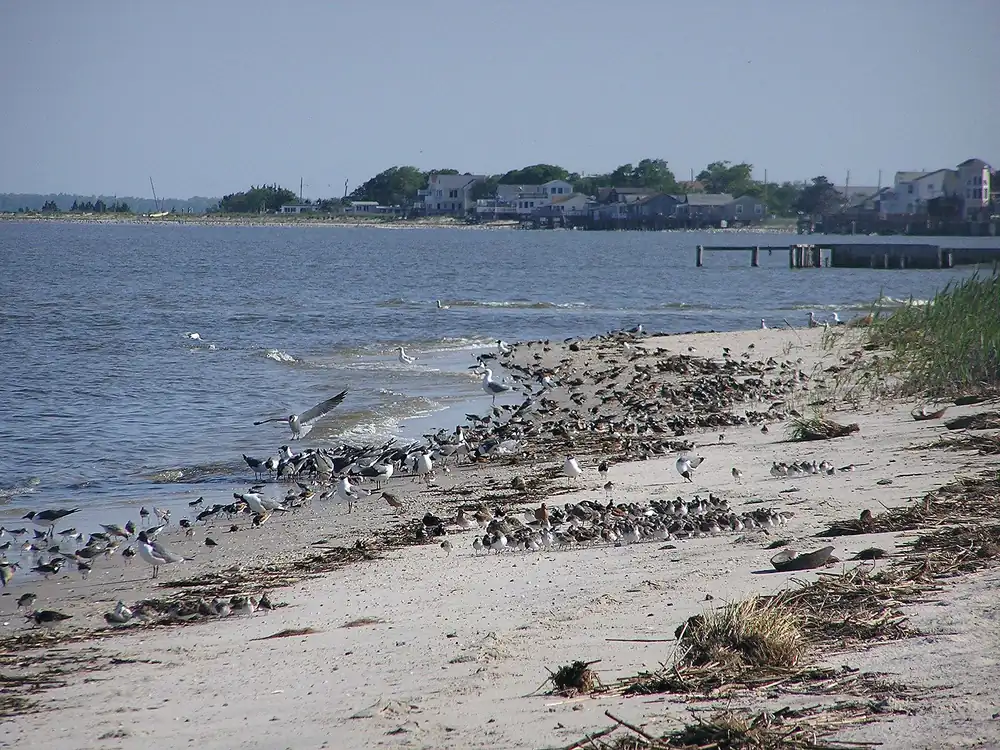
The bay shore is the last great refueling stop for shorebirds flying to the Arctic. DNREC counts up to 30 shorebird species on the bay in May. The commonest are the red knot, ruddy turnstone, semipalmated sandpiper, sanderling and dunlin. The best weeks for watching, according to the DuPont Nature Center page, run from the middle of May to the beginning of June, shortly after a high tide, when the flocks are packed onto the narrow beaches.
-
Red knots
Mid-May to early June · Mispillion Harbor, Slaughter Beach and the Kent County beaches
Red knots are the bird that made this beach famous, and the state’s biologists say more than half of the Western Hemisphere’s red knots may be in Delaware Bay in May. More than 90 percent of their diet here is horseshoe crab eggs, and the weight they put on in about two weeks carries them on a nonstop flight to their Arctic breeding grounds and helps them through the first days of nesting. The state’s shorebird program notes that nearly 100,000 knots once stopped in the bay and about 40,000 did in 2019. Look for a robin-sized, brick-red bird in a close flock with its bill probing the wet sand.
-
Turnstones, sandpipers and sanderlings
Mid-May to early June · Same beaches, plus the Mispillion Harbor flats
Ruddy turnstones, with their calico backs, flip stones and seaweed in the wrack line, and sanderlings run at the edge of the waves. The smaller semipalmated sandpipers and dunlins pack in tight flocks. Many are in breeding plumage by May, which makes identification easier than in the fall. The Delaware Ornithological Society recommends the DuPont Nature Center, Bombay Hook and Cape Henlopen for the shorebird peak.
-
A viewing code
All of May · Any beach where birds are feeding
The state asks the public to stay at least 400 feet from flocks, to respect fenced and closed areas, to keep dogs leashed and away from feeding birds, and not to feed gulls. A disturbed flock burns fuel the birds need for the Arctic. The DuPont Nature Center’s deck above Mispillion Harbor stays open daily from dawn until dusk, even when the building is shut, and the Center itself was listed as open Tuesday through Saturday from 9 a.m. to 4 p.m. in May on the page we read. Confirm the 2027 hours before you drive.
For the sky above the beach, see the moon notes below: the Flower Moon on May 20 is a good reason to stay for the high tide after dark.
When does the warbler migration peak in Delaware?
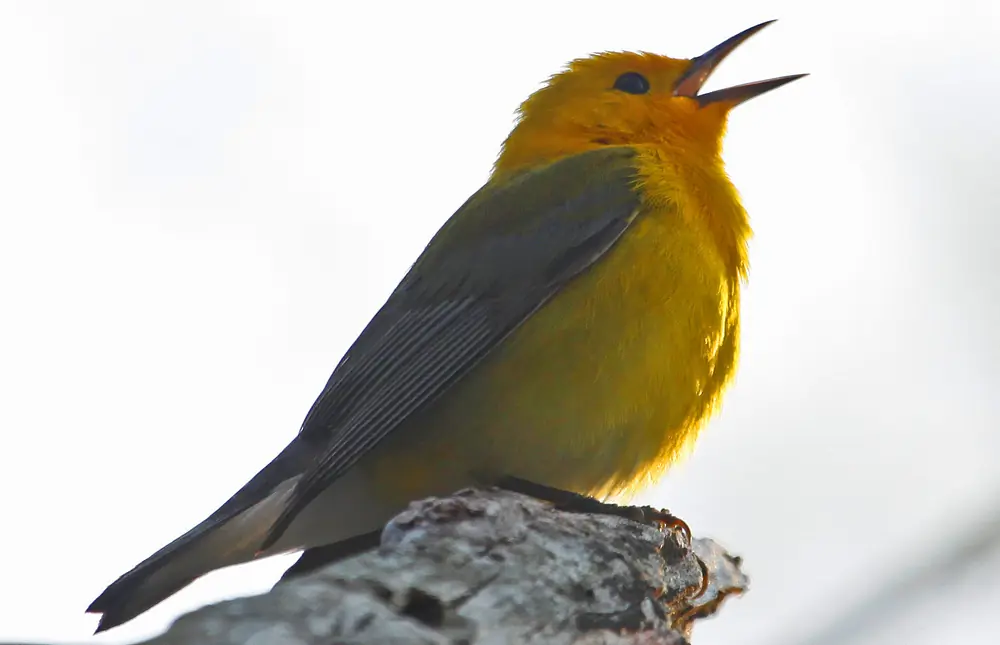
Bombay Hook refuge’s own calendar of wildlife puts the warbler migration peak in May, and a Delaware Ornithological Society newsletter from a past year agrees, counting 15 warbler species that breed in the state and about 20 more that only pass through. The treetops are loud, the leaves are partly out, and a patient hour with binoculars after dawn can be worth a morning’s birdwatching anywhere else.
-
Where to find them
The first three weeks of May · White Clay Creek State Park in the north (a society walk was held there one May); Bombay Hook’s wooded edges; the Nanticoke River forests in Sussex County
Look for warblers in the canopy of oaks and tulip trees in the morning, when they feed hardest. A society field trip in a past spring went to the Nanticoke Wildlife Area for newly arrived songbirds such as prothonotary warblers, vireos and tanagers, which suggests that the river swamps of western Sussex are a good bet for that golden warbler, though that was a single trip report.
-
How to practice
Early morning · Any wooded park
Stand still under a flowering tree for ten minutes and listen before you look. The eBird bar charts for Delaware, which the society recommends, show when each species is most common, so you can see which warblers are likely in the second week and which come only at the end of the month.
-
Count days and dates to check
Check with the organizers · Online and in the field
World Migratory Bird Day is held on two dates a year, and the organizers’ page lists May 9 and October 10 for 2026 but had not posted 2027 dates when we read it. Cornell’s Global Big Day, a one-day worldwide bird count, also falls in May, and Cornell announces its date each year. The Delaware Ornithological Society holds a spring Bird-a-Thon fundraiser in early May in some years, so look at its calendar rather than relying on this page for a date.
What is nesting on Delaware’s beaches in May?
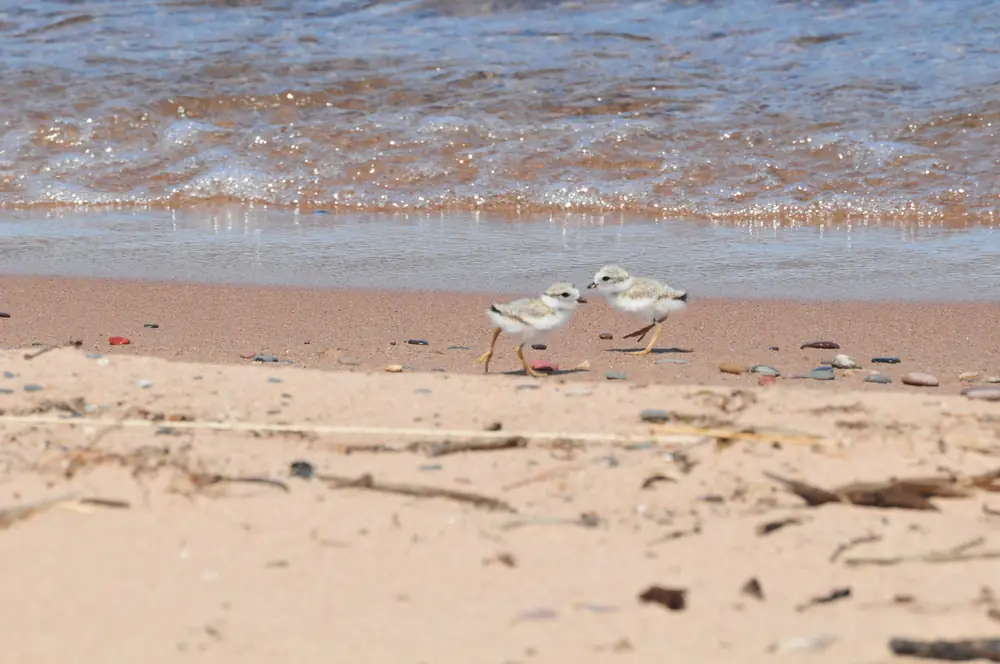
Beach-nesting birds lay their eggs right on the sand, and in May the eggs and first chicks are the reason big parts of the shore stay roped off. DNREC says suitable nesting areas are closed to create disturbance-free zones, and it asks the public to stay out of them.
-
Piping plover chicks
Nesting under way; chicks hatch and fledge into the summer · The Point at Cape Henlopen State Park and Fowler Beach in Prime Hook National Wildlife Refuge
Delaware’s plovers arrive in March, and the state counted 30 breeding pairs in 2025. That year Fowler Beach had 18 fledglings from 21 pairs, and The Point had nine fledglings from nine pairs, for a statewide 0.90 fledglings per pair against a goal of 1.5. The state’s plover page names predators, May storms and June heat among the causes of the low result. Chicks are tiny and sand-colored, which is why the closures matter.
-
Least terns arrive
May or June · Fowler Beach and The Point
The state says least terns typically reach the beaches in May or June and head south by September. In 2025 Fowler Beach had 92 breeding pairs out of a statewide total of 127, and The Point held about 35. Colonies are sometimes ringed with electric fence against red foxes. If terns hover and dive at your head, you are too close to a colony.
-
American oystercatchers
Nesting since April · Fowler Beach, the Inland Bays marshes and the ocean beaches
These black-and-white birds with orange bills nest on bare sand and in salt marsh. DNREC counted 11 breeding pairs in 2025 and five fledglings, all of them from the Inland Bays rather than the ocean beaches. If you see one with dark green leg bands starting with the letter F, the state asks that you report it.
-
The Point is closed
Through the summer · Cape Henlopen State Park
Delaware Public Radio reported that the closure at The Point began on March 1 in 2026, with the ocean-side beach reopening on September 1 and the bayside beach on October 1. We expect a similar schedule in 2027, but the park can change the dates, so check with the park. The dunes are off limits all year.
Where can you see Delaware’s heron and egret colony?
The Pea Patch Island heronry, in the Delaware River off Delaware City, is the state’s best-known wading bird colony, and in late spring the colony is busy with nests. Great blue herons, great egrets, snowy egrets and glossy ibises nest there, according to the Delaware Ornithological Society, which also lists bald eagles and ospreys among the other birds nearby.
-
A colony on an island
Nesting season, spring into summer · Pea Patch Island, reached by ferry from Delaware City
A society field trip in 2026 started at the ferry dock at 45 Clinton Street in Delaware City. Tickets come from Delaware State Parks, and the fare includes admission to Fort Delaware, the Civil War fort on the island. The group viewed the heronry from a new viewing platform. The state’s ferry season and 2027 dates were not available to us, so check Delaware State Parks before planning a trip.
-
Young eagles
June · Bombay Hook, Prime Hook, the Nanticoke River and the DuPont Nature Center
Bombay Hook’s calendar lists baby eagles leaving the nest in June, so the young are growing in the big stick nests through May. DNREC names the same places as good spots to see eagles, and asks the public to report nests through its website.
When are fawns, ducklings, baby turtles and bats born in Delaware?
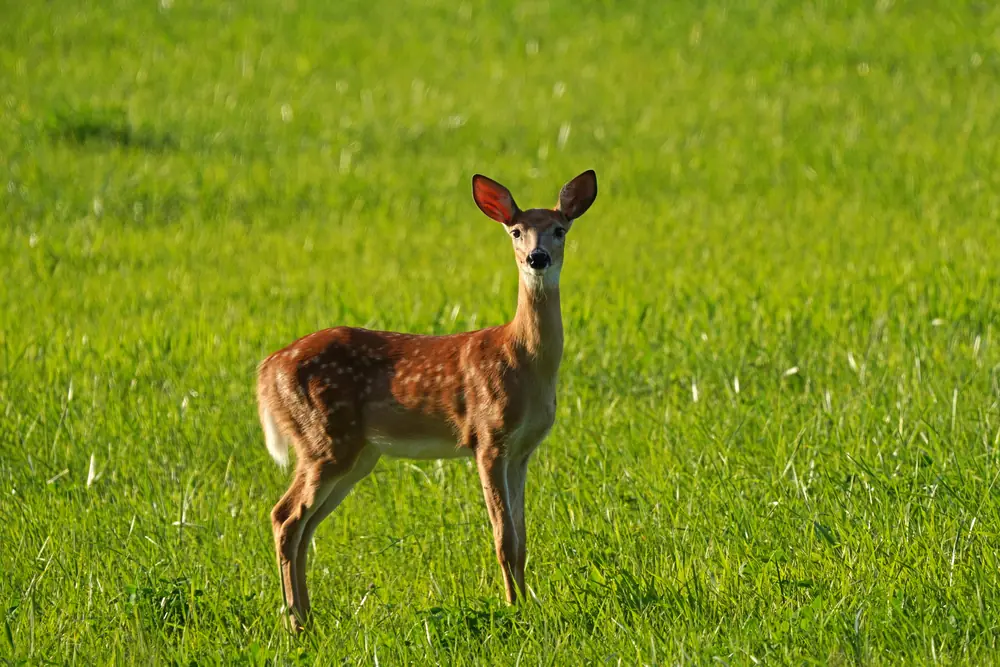
May is the month of babies, and the best thing most people can do for them is leave them alone. Bombay Hook’s calendar notes duck broods and the first white-tailed deer fawns, and snapping turtles laying eggs, in May, and diamondback terrapins laying on the dikes in June.
-
Fawns
Most are born from the last week of May through the first week of June · Fields, woodland edges and suburban yards statewide
In a 2017 release, DNREC’s deer biologist said that even if a fawn appears to be alone, its mother is likely close by, coming back only to feed it so that she does not draw predators. A fawn lying still in the grass is hiding, not lost. The Chesapeake Bay Program’s field guide says fawns can walk at birth, are spotted, and lie very still when the doe is away. In Delaware it is illegal to possess or try to raise a live deer or other native wildlife without a state permit. If you are worried, call DNREC’s Division of Fish and Wildlife at 302-735-3600.
-
Diamondback terrapins
Females come ashore from late May through July · Port Mahon Road near Little Creek, and Route 1 along the coast in June and July
The state says female terrapins leave the bay for sandy, bare roadsides to nest, and that Port Mahon Road in Kent County is a hot spot. DNREC has asked volunteers to help turtles around the rocks along that road during nesting shifts tied to high tide. On the coast, the Center for the Inland Bays says to watch for terrapins on Route 1 in June and July, and to carry any you move to the bay side of the fence, holding the shell by its sides.
-
Bats and their pups
Pups born from about mid-May · Barns, attics and woodland roosts
DNREC says nine bat species live in Delaware, with the big brown and red bats the most common. A 2018 state release said to finish any exclusion of bats from a building before May 15, when females start giving birth, so that flightless young are not shut in; DNREC’s current page simply points to the Division of Fish and Wildlife (302-735-3600) or a permitted wildlife control company. Check with the Division of Fish and Wildlife before you do anything: the little brown, tricolored and northern long-eared bats are on the state endangered list. DNREC adds that all known little brown bat colonies have disappeared since white-nose syndrome arrived.
What is in bloom and calling in a Delaware May?
By May the woods are green and the swamps are loud. Bombay Hook’s calendar says tulip trees and spring wildflowers are in full bloom, and that bullfrogs and green frogs join the swamp chorus, a deeper and later cast than the peepers of March and April.
-
Tulip trees in flower
May · Piedmont woods, Kent County hedgerows and Sussex County swamp edges
The tall, straight tulip tree is the state’s most striking May bloomer. Its tulip-shaped, green-and-orange flowers sit high in the crown, so you will often find the fallen petals on the trail before you spot the blossoms.
-
The deeper chorus
May evenings · Ponds, mill ponds and swamp edges
Green frogs make a banjo-string twang, and bullfrogs a deep, repeated drone. Both are summer voices in this part of the country, and the state’s calendar has them joining the chorus in May. Warm, damp nights are best.
-
Baldcypress in fresh leaf
May · Trap Pond State Park and the Great Cypress Swamp, Sussex County
Trap Pond is home to the nation’s northernmost natural stand of baldcypress, according to the National Park Service. In spring the trees come into a fresh, airy green, and the knees stand up out of the dark water. DNREC suggests canoeing there, and the Great Cypress Swamp, held by Delaware Wild Lands, holds the largest freshwater wetland and block of forest in the state, with baldcypress, black tupelo and remnant Atlantic white cedar. Public access to the swamp is not described on the group’s page, so check before you visit.
-
The first fireflies?
Late May at the earliest · Lawns and meadow edges at dusk
DNREC’s page on fireflies says the common eastern firefly is the species most often seen in Delaware, flashing a J-shape about every six seconds, and the state’s rare Bethany Beach firefly flashes from late June to early August. May is early, so treat a late-month flicker on a warm, humid evening as a bonus. Flashing begins roughly 35 minutes after sunset in the case of the Bethany Beach species.
What is May weather like in Delaware, and is a late freeze still possible?
May is mild and pleasantly green. NOAA’s 1991–2020 normals put the typical May high at 73.5 °F at the Wilmington airport, 74.4 °F at Dover, 74.5 °F at Georgetown and 74.6 °F at Lewes, with the Newark farm warmest at 75.6 °F and Greenwood coolest at 73.3 °F. Normal lows run from 51.9 °F at Newark and Greenwood to 56.0 °F at Lewes. The Wilmington airport’s daily normals climb from a high of 69.6 °F and a low of 48.7 °F on May 1 to 77.5 °F and 58.2 °F on May 31. At Lewes the same days run from 71.1 and 51.6 °F to 78.5 and 60.6 °F. The monthly rainfall normal is between 3.38 inches at Lewes and 3.89 inches at Dover.
| Station | One year in ten | Median | Nine years in ten |
|---|---|---|---|
| Wilmington New Castle County Airport | Mar 26 | Apr 7 | Apr 21 |
| Newark Ag Farm | Mar 26 | Apr 7 | Apr 21 |
| Dover | Mar 22 | Apr 4 | Apr 17 |
| Greenwood 2 NE (Kent–Sussex line) | Mar 29 | Apr 11 | Apr 28 |
| Georgetown Sussex County Airport | Mar 22 | Apr 4 | Apr 16 |
| Lewes | Mar 13 | Mar 29 | Apr 9 |
Freezing nights are almost gone: the normal count is 0.0 at most of these stations and 0.1 at Greenwood. Even Greenwood, the last station to finish, is clear of freezing in nine springs out of ten by April 28, which makes a May freeze unusual. Tender transplants are usually safe after the right-hand date, and the Delaware frost dates page lists more towns. The risks of May are thunderstorms and the rip currents at the beach. The state climate office at the University of Delaware reports that damaging wind from thunderstorms is the state’s most frequent severe weather, that hail comes mostly between April and August, and that tornadoes are uncommon. When thunder is audible, go inside. The Weather Service’s rip current page warns that these channels often form on calm, sunny days, and says to swim where a lifeguard is on duty. The Climate Prediction Center’s newest 90-day outlook lives on its seasonal outlook maps page. For the days just ahead, try our forecast page for the coming week.
How much daylight does Delaware gain in May?
About 51 to 53 minutes. Statewide the day is 13 hours 49 to 53 minutes long on May 1 and 14 hours 40 to 46 minutes on May 31, a gain of 1.7 to 1.8 minutes a day, slower than in April as the sun nears the solstice. In Dover, May 6 runs from a 5:58 a.m. sunrise to an 8:00 p.m. sunset, and May 27 from 5:40 a.m. to 8:19 p.m. (Naval Observatory, Eastern Daylight Time). Civil twilight ends at 8:43 p.m. on May 20, so a frog walk or a firefly watch starts later than it did in April.
| City | May 1 | May 31 | Gained | Per day |
|---|---|---|---|---|
| Wilmington | 13 h 53 m | 14 h 46 m | 53 min | 1.8 min |
| Newark | 13 h 53 m | 14 h 46 m | 53 min | 1.8 min |
| Dover | 13 h 51 m | 14 h 44 m | 53 min | 1.8 min |
| Milford | 13 h 50 m | 14 h 41 m | 51 min | 1.7 min |
| Georgetown | 13 h 50 m | 14 h 41 m | 51 min | 1.7 min |
| Seaford | 13 h 49 m | 14 h 40 m | 51 min | 1.7 min |
| Lewes | 13 h 50 m | 14 h 41 m | 51 min | 1.7 min |
| Fenwick Island | 13 h 49 m | 14 h 40 m | 51 min | 1.7 min |
The Dover times above are the Naval Observatory’s. To get them for your street, use the daylight calculator here. The clouds are building too: for how to read them, see the cloud guide.
What is in the night sky over Delaware in May 2027?
All times are Eastern Daylight Time. May has a good meteor shower with no moonlight, a full Moon with an unusual name, and an evening planet that is easy only for a short spell. For the phase of the Moon on any night, see the moon phase guide.
-
The Eta Aquariids, a dark-sky year
Mornings of May 5, 6 and 7, in the hours before dawn · Low in the east-southeast, with the radiant rising only an hour or two before the sky brightens
The new moon falls on May 6, so no moonlight spoils the shower from Halley’s Comet. Published peak nights differ by a day (May 5 into 6 in one list, May 6 into 7 in Sea and Sky), so give yourself the three mornings from May 5 through 7. Rates are higher in the tropics; for Delaware, ten to thirty per hour is the optimistic end, and only from a dark site in the final stretch of night. Dawn’s first light (civil twilight) arrives at Dover at 5:29 a.m. on May 6, so set up around 4:30.
-
The Flower Moon, a seasonal Blue Moon
Full at 6:59 a.m. on Thursday, May 20; best on the evenings of May 19 and 20 · Rising in the east-southeast at Dover at 7:54 p.m. on May 19 and 8:58 p.m. on May 20
The Moon, 99 percent lit on May 19, rises at Dover about 18 minutes before the 8:12 p.m. sunset. Counting from the March one, this spring has four full moons: the Worm Moon, the Pink Moon, this Flower Moon and the Strawberry Moon (the evening of June 18 in Delaware), and the older seasonal rule gives the name Blue Moon to the third of a four-moon season. Sea and Sky uses that rule here. Under the newer calendar-month rule, which wants two full moons in one month, 2027 has none.
-
Mercury in the evening
Best on the evenings of May 27 and 28; greatest elongation May 28 · Low in the west-northwest, roughly 45 to 90 minutes after sunset
On May 28 the innermost planet stands farthest from the Sun in the evening sky, about 23 degrees, which makes late May the year’s finest dusk look at Mercury from the northern states. Dover’s sunset on May 27 is 8:19 p.m. and civil twilight ends at 8:50 p.m., so the planet should show between roughly 9:05 and 9:50 p.m. Find a clear northwest horizon. The time window is our own conversion, so allow a few minutes either way.
-
Venus and Saturn at dawn
Mornings of May 6, 7 and 8 · Very low in the east before sunrise
Venus and Saturn come within roughly 0.6 degrees on May 7 (about a degree apart on the mornings either side). Venus lifts off the horizon barely an hour before sunrise, so both planets sit just a few degrees high in the glow of dawn; take binoculars and find a clean eastern horizon. Treat it as a bonus for early risers.
-
Jupiter and the Moon
Evening of May 12 · High in the southwest after dark
A half Moon passes close to Jupiter on May 12; the nearest approach comes in the late afternoon, still daylight, so go out after dark and look for the bright pair high in the southwest, with Jupiter the steadier, whiter dot.
| Phase | Date | Time |
|---|---|---|
| New moon | Thursday, May 6 | 6:58 a.m. EDT |
| First quarter | Thursday, May 13 | 12:44 a.m. EDT |
| Full moon, the Flower Moon | Thursday, May 20 | 6:59 a.m. EDT |
| Last quarter | Friday, May 28 | 9:58 a.m. EDT |
| New moon | Friday, Jun 4 | 3:40 p.m. EDT |
What can families do outdoors in Delaware in May 2027?
- Take part in the City Nature Challenge. Observations are photographed from April 30 to May 3, 2027, identified through May 16, and tallied on May 20. Their page did not name a Delaware region, so check the participation list.
- Spot a shorebird flock. Pick a Kent County beach for late in the month, arrive a few hours past high water, and keep your distance from the birds.
- Watch a nest. Cornell’s NestWatch is open to anyone and lets families follow a nest through the season.
- Look for your first monarch. Journey North takes sightings of monarchs and hummingbirds; add the date of the first one you see.
- Walk with a local group. The society’s calendar lists a walk on the Brandywine Valley with Declan O’Neil on May 2, the horseshoe crab outing on May 22 and a morning at Fair Hill for bobolinks on May 29, a place just over the Maryland line.
- Try Prime Hook. The refuge lists a free first-Saturday bird walk with the Sussex Bird Club (usually the first Saturday; call 302-684-8419 to register and confirm), a Sunday afternoon walk, and Saturday volunteer ambassadors on the boardwalk.
The DuPont Nature Center runs programs from April through September; call 302-422-1329 for the schedule. The Delaware Nature Society had not posted May 2027 programs when we looked, so check its calendar. For the month before, see April in Delaware, or browse the seasonal nature guides.
Safety notes for May in Delaware
- Spring turkey season closes on May 9. Hunters may take turkeys until May 9 (the season began April 10), between 30 minutes ahead of sunrise and 1 p.m., and Sundays are now open. On public land, permits are by segment, and the last segment is May 1 to 9. The hunting guide does not mention blaze orange for turkey, but it bars hunters from wearing red, white or blue, the colors of a gobbler’s head, so hikers in the first week of May are wise to avoid those colors in the woods and to stay on marked trails. Refuge hunt closures change with the season, and the Bombay Hook rules page says to check the signs.
- Beach and bay. Rip currents form even on calm, sunny days, and the Weather Service recommends swimming only near a lifeguard. Memorial Day is Monday, May 31, the traditional start of the beach season, so check lifeguard schedules with Delaware State Parks.
- Ticks. The state says ticks are active year-round and that spring into summer is prime time. Tuck long pants into your socks, apply repellent, look over people and pets once you are home, and pull off any attached tick with tweezers.
- Young animals. Leave fawns and fledglings where you find them, and stay out of roped-off nesting areas on the beach.
- Biting insects. Bombay Hook says mosquitoes and biting flies are very high from June through September, so pack repellent in late May for the marsh trails.
- Storms. Go indoors when you hear thunder, and watch the Mount Holly office of the National Weather Service for warnings.
Sources (46)
- U.S. Fish and Wildlife Service: Bombay Hook wildlife calendar (May and June)
- U.S. Fish and Wildlife Service: Bombay Hook rules and policies (Wildlife Drive hours, pass, leashes)
- U.S. Fish and Wildlife Service: Prime Hook events (bird walks, ambassadors)
- DNREC: horseshoe crabs and shorebirds at the DuPont Nature Center (spawning peak, viewing places)
- DNREC: DuPont Nature Center (hours, observation deck, cameras)
- DNREC: Delaware Shorebird Project (red knot counts, viewing distance)
- DNREC: shorebird and horseshoe crab ecology of Delaware Bay
- Visit Central Delaware: why millions of shorebirds depend on one Delaware beach
- DNREC: piping plovers in Delaware (2025 counts, closures)
- DNREC: least terns in Delaware
- DNREC: American oystercatchers in Delaware
- Delaware Public Radio, March 1, 2026: the annual closure at The Point
- DNREC: bald eagles in Delaware
- Delaware Ornithological Society: events calendar for May 2027
- Delaware Ornithological Society: High Tide, Horseshoe Crabs and Happy Hour (May 22, 2027)
- Delaware Ornithological Society newsletter, May 2022 (warblers, shorebirds, field trips)
- Delaware Ornithological Society: Pea Patch Island heronry trip (2026 listing)
- World Migratory Bird Day (2026 dates)
- State of Delaware news, May 24, 2017: DNREC advises on newborn fawns
- Chesapeake Bay Program field guide: white-tailed deer
- Chesapeake Bay Program field guide: diamondback terrapin
- DNREC: Operation Terrapin Rescue (Port Mahon Road)
- Center for the Inland Bays: drivers cautioned to watch for terrapins on Route 1
- DNREC: hanging with the bats
- State of Delaware news, May 1, 2018: bat pupping season approaches
- DNREC: the Bethany Beach firefly
- National Park Service: exploring cypresses at Trap Pond State Park
- DNREC: Outdoor Delaware in spring
- Delaware Wild Lands: Great Cypress Swamp
- Delaware Hunting and Trapping Guide 2026–27: spring turkey season 2027
- State of Delaware news, June 2022: DNREC and Division of Public Health tips about ticks
- National Weather Service: rip current safety
- Delaware State Climate Office: Delaware severe weather
- National Weather Service Mount Holly (Philadelphia)
- Climate Prediction Center: seasonal outlooks (issued monthly near mid-month)
- NOAA NCEI: monthly normals data service, Delaware stations (May temperature, precipitation, freeze-night counts)
- NOAA NCEI: daily normals data service, Wilmington and Lewes (May 1 and May 31 highs and lows)
- U.S. Naval Observatory: sun and moon rise and set, Dover, May 6, 2027
- U.S. Naval Observatory: sun and moon rise and set, Dover, May 19, 2027
- U.S. Naval Observatory: sun and moon rise and set, Dover, May 20, 2027
- U.S. Naval Observatory: sun and moon rise and set, Dover, May 27, 2027
- Sea and Sky: astronomy calendar 2027 (Eta Aquariids, Blue Moon, Mercury)
- City Nature Challenge 2027
- Cornell Lab of Ornithology: NestWatch
- Journey North
- Photos via Wikimedia Commons; licenses and photographers are credited under each picture
