What to look for in nature in Delaware this December
Meteorological winter, which counts December, January and February as one season because they are the coldest three months, begins on December 1, and Delaware settles into its winter shape. The waterfowl that poured in during November now sit tight on the bayshore impoundments, bald eagles perch over the marsh and start carrying sticks to their nests, short-eared owls quarter the fields at Port Mahon as the light fails, and gray and harbor seals haul out on the stone breakwaters off Lewes. Volunteers fan out across seven Christmas Bird Count circles, sunset hits its earliest clock time of the year around December 7, and the closest full moon of 2026 rises on December 23. Here is where and when to look.
Other months in Delaware: October, November.
Start here
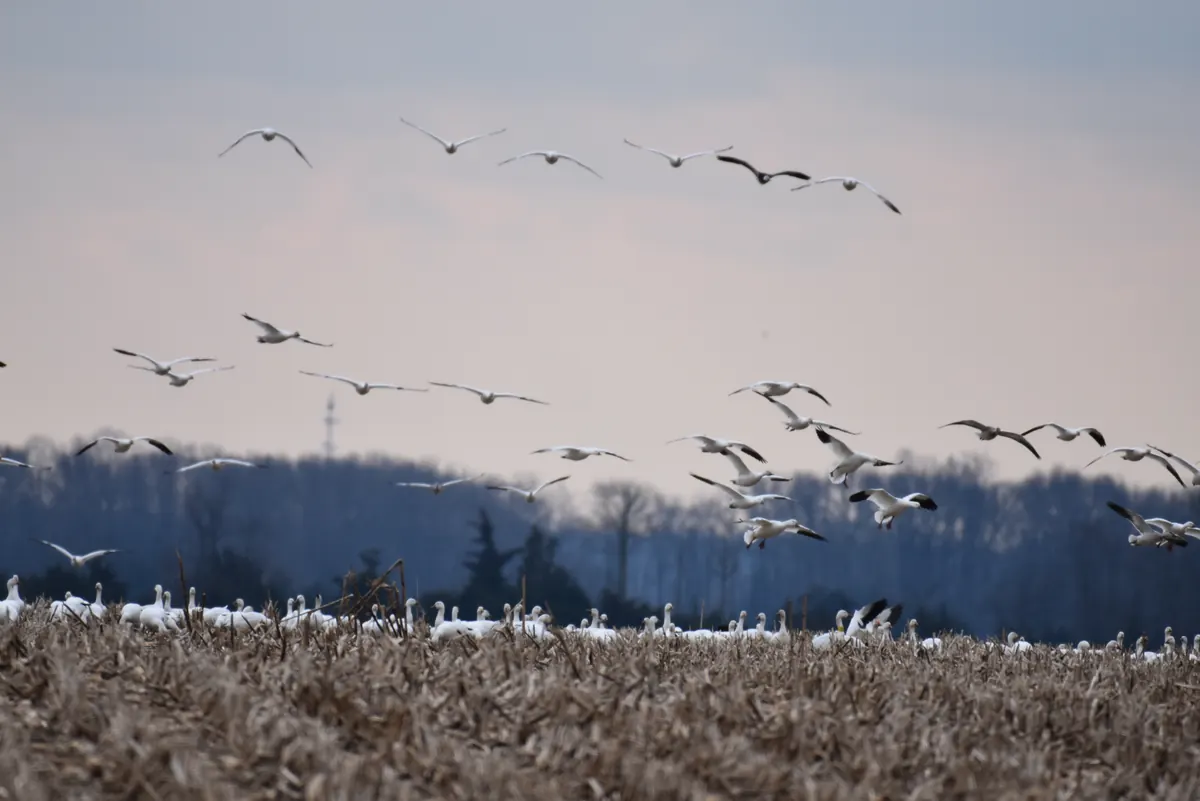
- Dawn at Bombay Hook. The refuge expects large numbers of wintering ducks and geese to stay through December unless a hard freeze sends them south, and its calendar notes eagles perched on the bare branches. Arrive as the gates open, half an hour before sunrise, for the snow geese lifting off the pools. Skip Wednesday, December 16, when a refuge hunt closes every road and trail.
- Join a Christmas Bird Count. Delaware has seven count circles, and the Delaware Ornithological Society runs six of them, from Wilmington to Rehoboth. Counts fall between December 14 and January 5, beginners are welcome, and you can even count from your own window. Contact the compiler for the circle you live in once this season’s dates are posted.
- A meteor night and a near full moon. The Geminids are best through the late hours of Sunday, December 13, and before dawn on Monday, under a thin crescent that sets in the evening, so the late hours stay dark. Ten nights later the Cold Moon turns full at 8:28 p.m. on Wednesday, December 23, about seven hours from perigee, so no full moon of 2026 looks larger.
Keep a record: your Christmas Bird Count tally can go straight onto the Naturalist’s Field Journal plate for birds you have seen, an eagle nest you can watch from a road belongs on the nest-observed plate, fox or otter prints in the mud of a tidal creek are what the tracks-to-know page is for, and an afternoon at Port Mahon waiting for the owls is a ready-made dusk-and-dawn watch.
Regions used below: Piedmont: Wilmington, Hockessin and the Brandywine valley; Newark and White Clay Creek; Upper Bayshore and the C&D Canal: Blackbird Creek, Lums Pond; Dover, Kent County and Bombay Hook; Western Sussex: Seaford, Laurel, Trap Pond and the Great Cypress Swamp; Cape Region: Lewes, Milton, Cape Henlopen and Prime Hook; Rehoboth, the Inland Bays and Fenwick Island.
Where do the snow geese and ducks spend December in Delaware?
By December the fall flight is over and the birds that will winter here have arrived. The Fish and Wildlife Service’s calendar for Bombay Hook National Wildlife Refuge describes the month as one of high numbers of wintering waterfowl, staying put unless a hard freeze forces them farther south. National Audubon singles out the refuge’s vast winter flocks of snow geese and says their roaring dawn departures alone justify a cold-weather trip.
-
Snow geese in the winter flock
All month; most active at first light · The Bombay Hook impoundments and the farm fields around them
Audubon’s advice is to come at dawn, when the flocks rise together with a roar of wings and head out to feed. Drive the loop slowly and stop often. When a resting flock bursts up without warning, look around for the cause: bald eagles hunt waterfowl, especially in winter, according to the Chesapeake Bay Program. Scan the white mass for the darker blue-morph geese too.
-
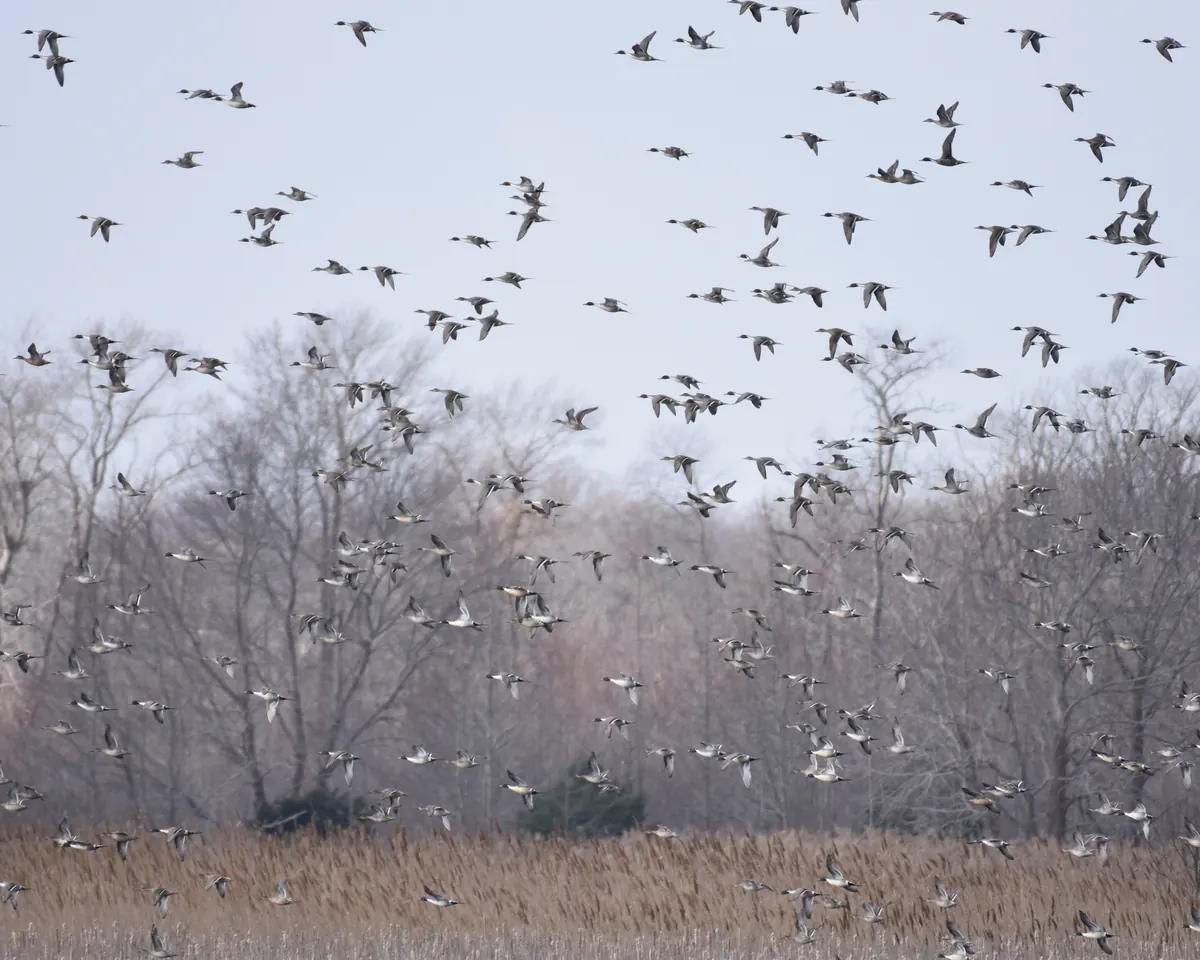
Pintails, buffleheads and black ducks
December through February · Impoundments at Bombay Hook and Prime Hook; mill ponds and the Inland Bays
Male northern pintails are the elegant ones, with a chocolate head, a white stripe running up the neck and a long, needle-pointed tail. American black ducks look like very dark mallards with a pale face. On deeper water look for little black-and-white buffleheads diving and popping back up.
-
Swans, loons and cormorants elsewhere
All winter · Trap Pond; Holts Landing; Fox Point on the Delaware River
State Parks lists Trap Pond’s baldcypress swamp as a winter gathering place for tundra swans and many ducks. At Holts Landing, on Indian River Bay, the crabbing pier is a good place to scan for loons, grebes and ducks in winter, and at Fox Point, north of Wilmington, great and double-crested cormorants gather in winter roosts along the river.
Bombay Hook’s roads and trails are open from 30 minutes before sunrise to 30 minutes after sunset; buy the entrance pass in advance on recreation.gov. The regular duck season reopens on December 16, the same day as the refuge’s hunt closure, so expect gunfire from the marshes beyond the refuge from then on. For how the flocks built up in autumn, see our Delaware November guide.
When do bald eagles start nesting in Delaware?
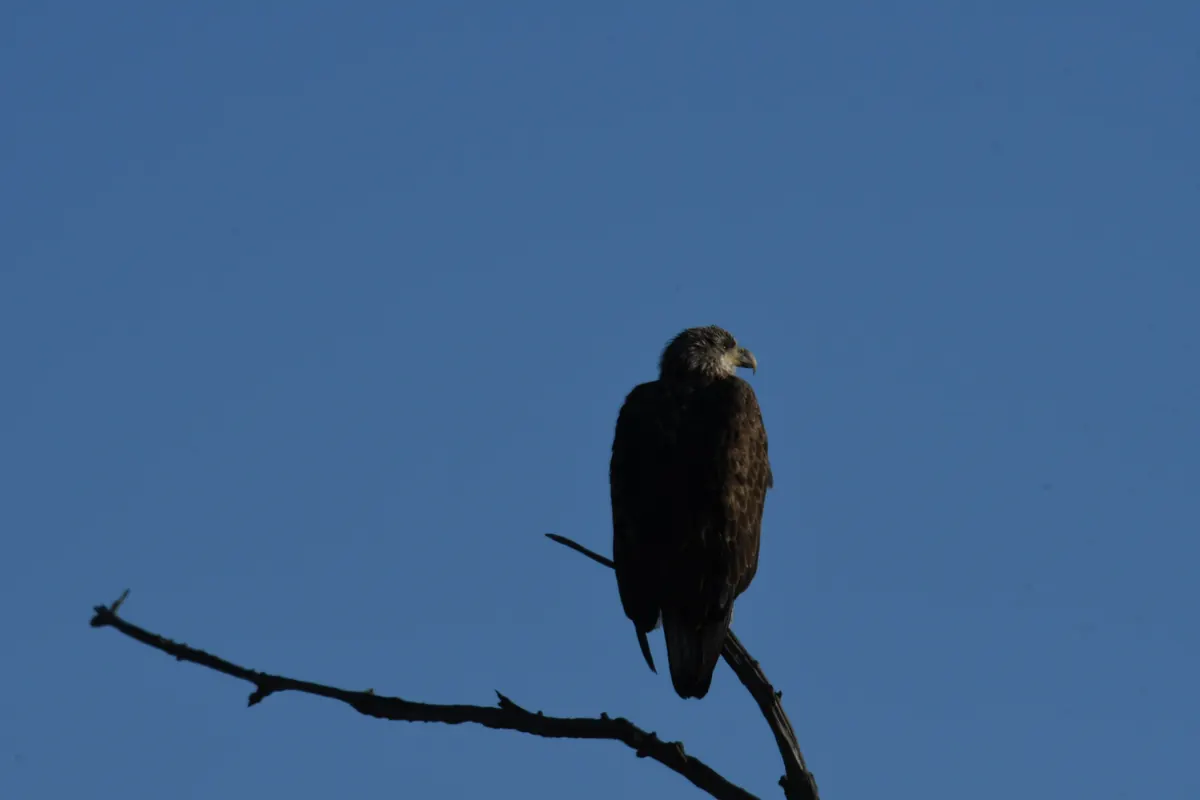
Right about now. The Chesapeake Bay Program notes that pairs build new nests or repair old ones in early winter, and Bombay Hook’s calendar has eagles working on their nests by January. Eggs, usually two, follow between January and March. December is therefore the month to find a nest, while the trees are bare and before the birds become sensitive to disturbance.
-
A recovery you can see from the car
Year-round; nest building from December · Tall trees near water in all three counties
When DNREC biologists flew over the state in March 2023 they checked 173 known or reported nest sites and confirmed 121 as eagle nests, 82 of them active. In 1987 the state had only four active nests. Eagles favor the tallest trees close to water, where fish are easy to reach, and the nests are enormous: in the Chesapeake region they can weigh up to two tons after years of additions.
-
Courtship flights
Early winter · Over the bayshore marshes and rivers
Watch for pairs flying together, and now and then for the famous display in which two eagles lock talons high in the air and tumble toward the ground, breaking apart just before they hit the water. Young eagles, mottled brown all over until they are about five years old, hold no territory and roam the region looking for food, so many of the eagles you see around the refuges in winter are these brown birds.
-
Report a nest
Any time · Statewide
DNREC asks people who find an eagle nest to log it through the online reporting form on its eagle survey page; the reports guide the next aerial count. Watch from a distance, preferably from your car, and leave if the birds call or flush.
Where can you see short-eared owls in Delaware?
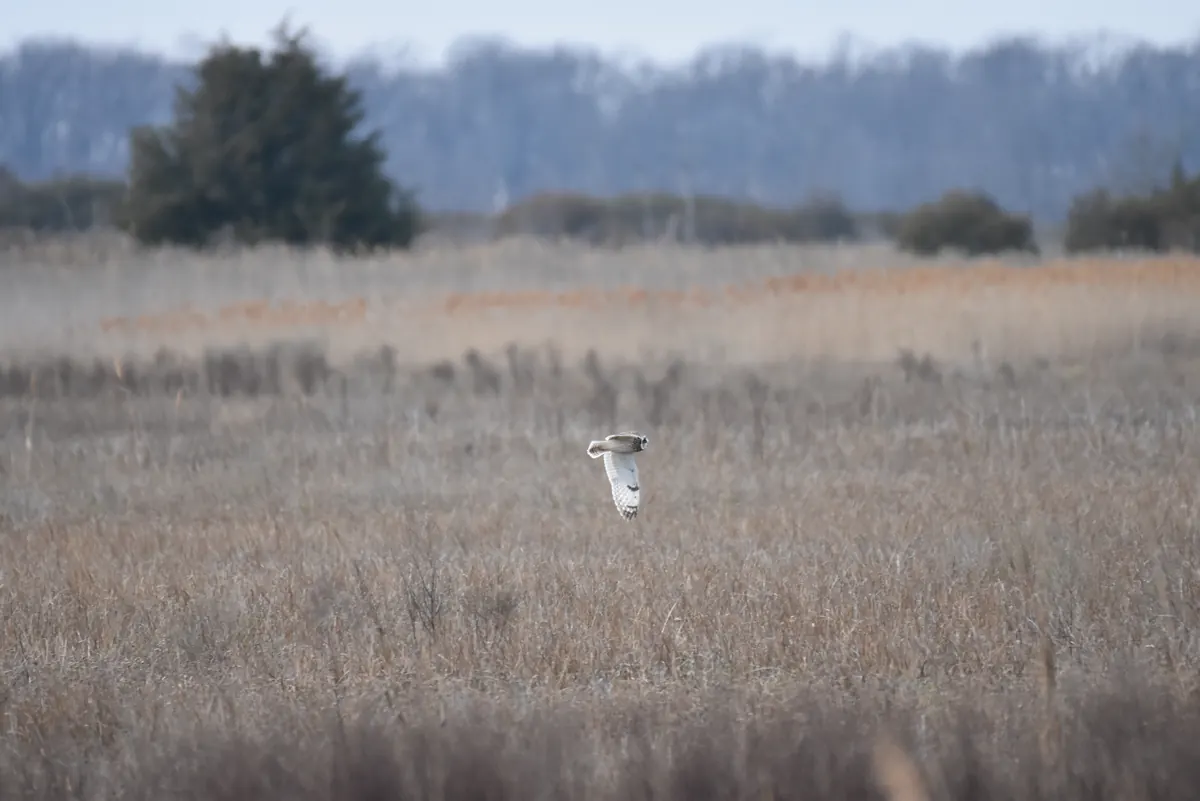
The short-eared owl is the winter owl of open country, and Delaware’s bayshore marshes and fields are some of the best places on the East Coast to watch one. National Audubon points birders to Little Creek Wildlife Area, east of Dover, and to Port Mahon Road in particular, which runs out across the marsh to the bay.
-
Owls that hunt in daylight
The last hour before dark, and at first light · Port Mahon Road and Little Creek Wildlife Area; marsh edges at Bombay Hook and Prime Hook
Audubon’s field guide describes a pale, buff-colored owl about 16 inches long with dark patches around the eyes and ear tufts you rarely notice. It hunts by coursing low over grass and marsh, sometimes hovering, then dropping onto a vole, with loose, floppy wingbeats that make it look like a huge moth. Park where it is safe, stay in or beside the car, and wait: the birds often appear one after another just as the sun goes down.
-
A bayshore field trip, Saturday, December 5
1 to 5 p.m. · Pickering Beach to Port Mahon, starting at Little Creek Wildlife Area’s Main Tract
The Delaware Ornithological Society’s afternoon trip works its way along the public lands of the bayshore for migrants and winter residents, beginning with forest songbirds and raptors and ending on the marsh in the late light. Check the society’s calendar for meeting details before you go.
Short-eared owls follow the voles, so a marsh that is busy one winter can be empty the next. Keep your distance, skip playback and flash, and add what you see to eBird.
How do you join a Christmas Bird Count in Delaware?
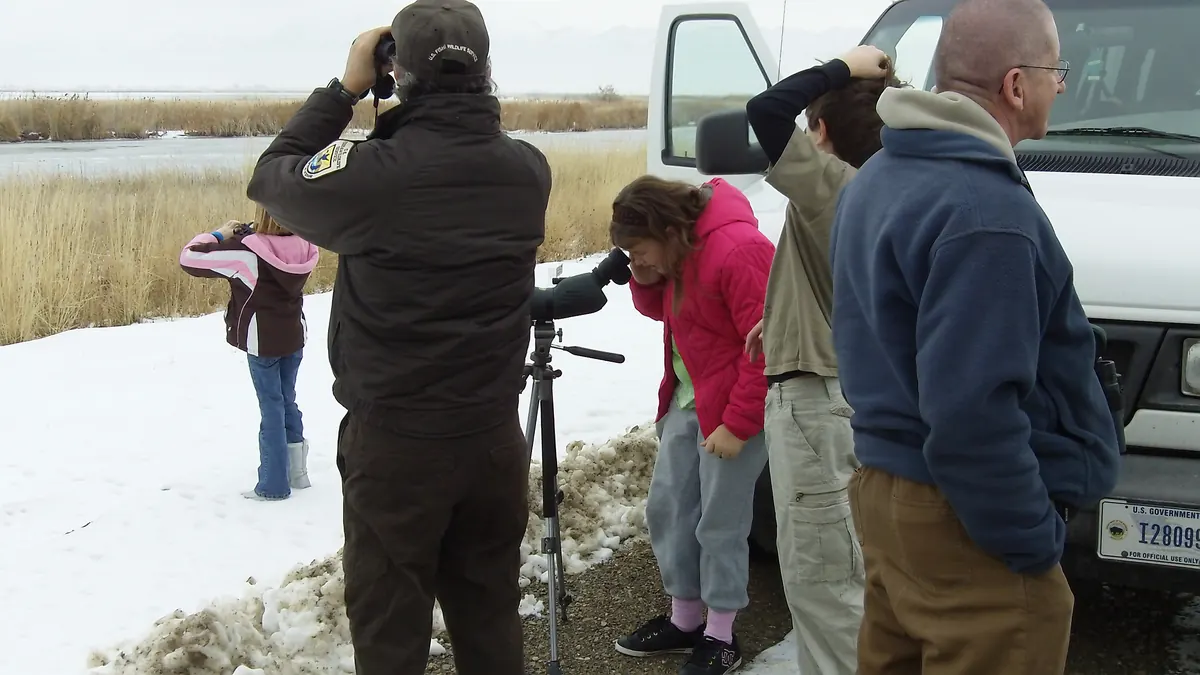
The Christmas Bird Count started on Christmas Day in 1900, and Audubon now runs it every year between December 14 and January 5. Counters split up a fixed circle 15 miles wide and, in a single day, try to log each bird within it. Delaware’s first count was held at Bombay Hook in 1939. Today the state has seven circles; the Delaware Ornithological Society organizes six and the Seaford count is run by others.
| Count circle | 2025–26 count day | Organized by |
|---|---|---|
| Bombay Hook | Sunday, December 14, 2025 | Delaware Ornithological Society |
| Wilmington | Saturday, December 20, 2025 | Delaware Ornithological Society |
| Middletown | Sunday, December 21, 2025 | Delaware Ornithological Society |
| Milford | Tuesday, December 30, 2025 | Delaware Ornithological Society |
| Rehoboth | Saturday, January 3, 2026 | Delaware Ornithological Society |
| Cape Henlopen/Prime Hook | Sunday, January 4, 2026 | Delaware Ornithological Society |
| Seaford | Not listed by the society | Other organizers |
The society’s count page welcomes every skill level, including people who would rather watch a feeder at home inside a circle. Choose the circle nearest you and write to its compiler through the society; newcomers usually join an experienced team leader for a section of the circle. Speaking to Delaware Public Media last December, the society’s longtime coordinator said that repeating the count year after year reveals whether a species is declining or increasing. On days without a count, the Cornell Lab’s Project FeederWatch takes tallies from any yard all winter.
When do seals come to Delaware’s coast?
Every winter, seals return to the mouth of Delaware Bay. The Lewes-based MERR Institute, which answers marine mammal and sea turtle strandings in the state, says four seal species visit Delaware in the colder months, and dozens gather on the outer breakwater and the old ice piers off Lewes, known locally as the haystacks. Cruises from Lewes run seal-watching trips from roughly December to April.
-
Harbor seals
Winter into spring · Lewes breakwaters; Indian River Inlet; now and then on a beach
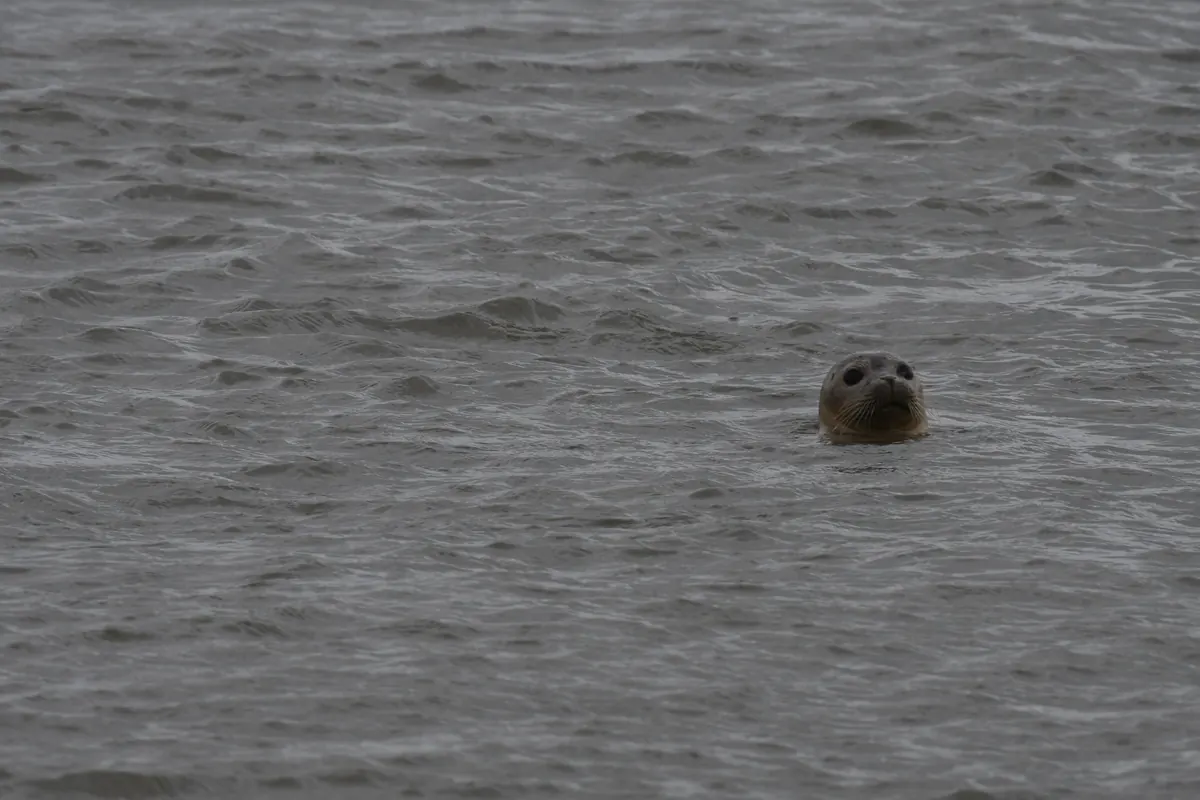
The common one. NOAA Fisheries puts adults at four to five feet, and the Chesapeake Bay Program points to the dog-like face, V-shaped nostrils and a tan or gray coat with dark spots. On land it humps along on its belly like a caterpillar. In winter up to 30 percent of its weight is blubber, which is why a seal can doze on a cold rock in a north wind.
-
Gray seals
Winter · The breakwaters at the mouth of the bay
NOAA Fisheries describes gray seals as much bigger, seven to eight feet long and up to 850 pounds, with a long, horse-like head. Their pups are born from December to February on colonies farther north; the region’s population has been growing by several percent a year.
-
A seal on the beach
Any time in winter · Anywhere from Fenwick Island to the bay beaches
A seal resting on the sand is normal behavior, not a sign of trouble. MERR asks people to stay 150 to 300 feet away, keep dogs leashed and well back, and never try to feed, cover or push the animal toward the water; the Marine Mammal Protection Act makes it illegal to harass one. If the seal looks injured or thin, or people are crowding it, call MERR’s 24-hour line at 302-228-5029.
The colonies sit offshore, so the best views come from a seal-watching boat or through a telescope. Seals at Indian River Inlet are often seen swimming in the current, with only the round head showing.
How do Delaware’s animals get through the winter?
-
Bats asleep in the old forts
Roughly November to March · Fort Delaware on Pea Patch Island; Fort DuPont near Delaware City
DNREC says the old masonry forts on the Delaware River give bats the cool, humid, cave-like conditions they need to hibernate. Five species that hibernate live in the state: little brown, big brown, tri-colored, northern long-eared and eastern small-footed bats. White-nose syndrome, a fungal disease that thrives in the same cold, damp places, was first confirmed killing bats at both forts in 2012, and DNREC’s winter surveys at Fort Delaware counted 40 percent fewer bats in 2015 than in 2013. If you find bats in an attic or outbuilding this winter, leave them be and report the colony to DNREC.
-
Foxes that store their dinner
All winter, mostly at dawn and dusk · Field edges, parks and suburbs statewide
Red foxes stay active all winter. The Chesapeake Bay Program notes that a fox can hear a vole moving under the ground, then leaps high and comes down on it with its forepaws; extra food is often buried and dug up later. Listen at night for the short, high series of barks, often mistaken for an owl.
-
Otters on the move
Dawn and evening · Tidal creeks, Trap Pond, the Brandywine and the bayshore
River otters keep fishing through the cold and are most active from dawn to mid-morning and again in the evening. They may cross several miles of land to reach another stream, and they slide on paths of mud, snow or ice; a smooth, polished chute down a creek bank is a sure sign of them.
-
Reading tracks without snow
After rain or a high tide · Muddy creek banks, beach sand above the tide line, farm lanes
Snow seldom lasts here, so look in mud and sand instead. A fox walks in a neat, almost straight line of oval prints, a raccoon leaves marks like small hands, and deer leave split hearts. Draw one track a week with its date and place.
For the smallest naturalists, Ashland Nature Center’s Knee High Naturalists session on Friday, December 11, 10 to 11:30 a.m. ($15, ages 3–5), is a hibernation celebration about which animals sleep through the winter and which do not.
Which trees and shrubs keep their color in a Delaware December?
-
Atlantic white cedar
Evergreen all year · Swamps and wet woods of the Sussex coastal plain
A narrow, spire-shaped conifer with flat sprays of tiny scale-like leaves, green to bluish-green, and small round cones that start bluish. The Chesapeake Bay Program says it forms dense stands in low, wet ground and grows in only a narrow strip of the coastal plain, Delaware included. Deer and songbirds feed on it, and a cedar stand is noticeably quieter and darker than the bare woods around it.
-
Sweetbay magnolia
Leaves hang on, half evergreen · Swamp edges and stream banks
Look for a small tree whose oval leaves are shiny on top and chalky white underneath; in winter many stay on, some turning brown. Crush one and it smells spicy. Colonists called magnolias beaver trees, because they baited beaver traps with the fragrant roots.
-
Winterberry
Berries from fall through late winter · Wet thickets, pond margins and native gardens
A deciduous holly: the leaves fall, and the bare gray twigs stay crowded with bright red berries, which is how most people first notice it. Only female shrubs bear fruit, and 48 species of birds, along with small mammals and deer, eat the berries through the winter. Check a laden bush on a cold morning to see who is feeding.
-
Christmas trees and wreaths from the land
December 4 to 6; workshops through December 12 · Coverdale Farm Preserve, Greenville; Abbott’s Mill Nature Center, Milford
The Delaware Nature Society’s Celebrate the Season weekend at Coverdale (December 4–6, 10 a.m. to 5 p.m.) sells Christmas trees beside a winter market, and Coverdale’s Winter Wreath Workshop on Saturday, December 12, 11 a.m. to 1 p.m. ($18, ages 8 and up), begins with a walk to gather greenery. Abbott’s Mill makes holly wreaths on December 5.
American holly, Delaware’s state tree, and the loblolly pines of the coast are covered in our November guide. Pick one evergreen near home and draw a sprig of it on the seeds, pods and cones page of the Naturalist’s Field Journal, cones and all.
When is the earliest sunset in Delaware, and how short is the shortest day?
Astronomical winter starts at 3:50 in the afternoon (EST) on Monday, December 21, and Delaware’s shortest day is then a little over nine hours long: 9 h 21 m in Wilmington, 9 h 27 m in Lewes and 9 h 29 m at Fenwick Island. But the evenings have already turned. Wilmington’s earliest sunset, 4:37 p.m., falls around December 7, and the Sussex towns bottom out on the same date a few minutes later, at 4:39 p.m. in Lewes and Fenwick Island and 4:41 p.m. in Seaford. The clock minute barely changes for a week or more on either side, and from then on the evenings slowly lengthen while mornings keep getting darker until early January. Blame the calendar’s mismatch with the sun: because of Earth’s tilt and its elliptical path, local noon drifts a little later every December day, dragging sunset and sunrise with it.
| City | Dec 1 | Dec 21 | Dec 31 | Earliest sunset |
|---|---|---|---|---|
| Wilmington | 9 h 34 m | 9 h 21 m | 9 h 25 m | 4:37 p.m., Dec 7 |
| Newark | 9 h 34 m | 9 h 22 m | 9 h 25 m | 4:38 p.m., Dec 7 |
| Dover | 9 h 38 m | 9 h 25 m | 9 h 28 m | 4:39 p.m., Dec 7 |
| Milford | 9 h 39 m | 9 h 26 m | 9 h 29 m | 4:39 p.m., Dec 7 |
| Georgetown | 9 h 39 m | 9 h 27 m | 9 h 31 m | 4:40 p.m., Dec 7 |
| Seaford | 9 h 40 m | 9 h 28 m | 9 h 31 m | 4:41 p.m., Dec 7 |
| Lewes | 9 h 39 m | 9 h 27 m | 9 h 30 m | 4:39 p.m., Dec 7 |
| Fenwick Island | 9 h 41 m | 9 h 29 m | 9 h 32 m | 4:39 p.m., Dec 7 |
Pick a date and a spot on the map in our sunrise and sunset tool to see how much light a winter afternoon walk really has, twilight included.
Does it snow in Delaware in December, and what could El Niño bring?
Sometimes, but less often than the averages suggest. NOAA’s 1991–2020 normals put December snowfall at 2.9 inches at the Wilmington airport, 2.6 at Dover and 1.0 at Lewes. The medians tell the truer story: half of all Decembers bring 0.3 inch or less to Wilmington and nothing measurable to Dover or Lewes, and the averages are pulled up by the occasional big storm. Nights at or below freezing are the rule inland, about 20 a month in New Castle County, but only about 13 at Lewes, where the bay and ocean keep the air milder. Every station has normally seen its first freeze well before December; the dates are mapped on our Delaware frost page.
| Station | High | Low | Nights ≤ 32 °F | Precipitation | Snowfall, average | Snowfall, median |
|---|---|---|---|---|---|---|
| Wilmington New Castle County Airport | 46.0 | 30.3 | 20.1 | 3.85 | 2.9 | 0.3 |
| Newark Ag Farm | 47.0 | 29.8 | 20.7 | 4.04 | – | – |
| Dover | 48.6 | 32.1 | 17.8 | 3.99 | 2.6 | 0.0 |
| Greenwood 2 NE | 48.2 | 29.3 | 20.9 | 3.78 | 1.8 | 0.3 |
| Georgetown Sussex County Airport | 49.9 | 32.7 | 18.6 | 3.47 | – | – |
| Lewes | 49.9 | 35.0 | 13.4 | 4.17 | 1.0 | 0.0 |
The winter of 2026–27 has an unusual backdrop. Federal forecasters, writing on September 10, judged a very strong El Niño by this winter to be more than 90 percent likely. For Delaware the clearest El Niño signal is along the coast rather than in snowfall totals. A regional El Niño fact sheet produced by NOAA with the Northeast Regional Climate Center observes that the Eastern Seaboard generally runs wetter than normal in El Niño winters, and points to a study that counted roughly two extra coastal storms per El Niño winter, of the kind that forms off the Carolinas and runs north along the coast; strong events show the increase most. Those storms bring beach erosion, coastal flooding and high wind, along with heavy snow when cold air is in place. The same summary says coastal snowfall typically runs above average in El Niño winters, though the storm track decides rain versus snow, and other patterns such as the North Atlantic Oscillation can override it. The official NOAA winter outlook lands in mid-October (the 15th); once it is out, you can read it on the 90-day outlook maps. Nearer term, our forecast page covers the week ahead.
What is in the night sky over Delaware in December 2026?
All times below are Eastern Standard Time.
-
The Geminids
Night of Sunday, December 13, into Monday, December 14 · Anywhere dark; face whichever part of the sky is darkest
The richest shower of the year. The International Meteor Organization gives a peak rate near 150 an hour, a theoretical figure that assumes the radiant straight overhead and a flawless sky; from a real backyard or beach you will see fewer, but more than in any other shower. In 2026 a slender crescent goes down by mid-evening and leaves the productive hours after midnight dark; the IMO calls it a moon-free maximum. Geminids appear from mid-evening, unlike most showers, and rates climb toward about 2 a.m., when Gemini stands highest.
-
The Cold Moon
Evening of Wednesday, December 23; nearly as full on Christmas Eve · Rising in the northeast around sunset
Full at 8:28 p.m. EST and only about seven hours from perigee, the Moon’s nearest point in its orbit, the Moon will never be nearer at full this year, and it rises looking its largest of 2026. It comes up in the late afternoon dusk of the 23rd over the Delaware Bay and the Atlantic, a good reason to be on the beach at Cape Henlopen or Fenwick Island at moonrise. Two evenings earlier, on the solstice, the waxing gibbous Moon passes close to the Pleiades, though its glare will swamp the fainter stars.
-
The solstice
Monday, December 21, 3:50 p.m. EST · Watch where the sun sets
This is the moment the sun stands farthest south for the year. Note where it sets behind a landmark this week, then look again in March; the swing along the horizon is bigger than most people expect.
-
Venus and the morning planets
All month before dawn · Southeast before sunrise
Venus is the brilliant morning star, unmistakable in the southeast, and it keeps rising higher each morning until its widest separation from the Sun, on January 3. Before sunrise on Friday, December 4, and again on Saturday, December 5, a slim waning Moon hangs close by, Spica glinting between the two. Jupiter, in Leo, rises by mid-evening late in the month and stands high in the south by morning twilight; Mars, orange and gaining brightness, keeps it company.
-
Saturn at dusk, and two weaker showers
Saturn all month; Ursids December 22; Quadrantids January 3–4 · Saturn in the south and southwest after dark
After dark, steady yellowish Saturn has the evening sky to itself; by late December it is gone below the western horizon around four hours after sunset. The Ursids, peaking December 22, are drowned by a nearly full Moon. The Quadrantids fare better: the IMO puts their brief peak at 10:25 p.m. EST on January 3, just before new moon.
| Phase | Date | Time |
|---|---|---|
| Last quarter | Tuesday, Dec 1 | 1:08 a.m. |
| New moon | Tuesday, Dec 8 | 7:52 p.m. |
| First quarter | Thursday, Dec 17 | 12:42 a.m. |
| Full moon, the Cold Moon | Wednesday, Dec 23 | 8:28 p.m. (a supermoon, the closest full moon of 2026) |
| Last quarter | Wednesday, Dec 30 | 1:59 p.m. |
| New moon | Thursday, Jan 7, 2027 | 3:24 p.m. |
December skies over Delaware are clear one night and gray for three, so check the hourly cloud cover map before a meteor night, and see when the Moon rises and sets on our Moon phase calendar.
What can families do outdoors in Delaware in December 2026?
- Christmas trees at Coverdale, December 4–6. The Delaware Nature Society’s Celebrate the Season weekend at Coverdale Farm Preserve in Greenville runs 10 a.m. to 5 p.m. each day, free to attend, with trees to choose and a winter market. Preschoolers (ages 3–5) can join a Knee High Naturalists session there on Friday the 4th, 10 a.m. ($15).
- A gingerbread house for the birds, Saturday, December 5. Ashland Nature Center in Hockessin, 10 to 11:30 a.m. ($40): decorate a birdhouse with seed and fixings and drink cocoa. The same afternoon Abbott’s Mill near Milford runs its holly wreath workshops.
- Bayshore birding, Saturday, December 5. The ornithological society’s afternoon trip from Pickering Beach to Port Mahon, 1 to 5 p.m., finishes in owl light.
- Hibernation for preschoolers, Friday, December 11. Ashland, 10 a.m. ($15, ages 3–5).
- Holiday crafts from the marsh, Saturday, December 12. Natural Holiday Crafts, at the riverfront DuPont Environmental Education Center in Wilmington, 10:30 a.m. to noon ($20), makes ornaments and cards from natural materials; the free half-hour Meet Marsh Animals boardwalk walk follows at 1:45 p.m., and repeats on December 5, 19 and 26.
- Count birds, December 14 to January 5. Join a Christmas Bird Count team or count from your window, and keep Project FeederWatch going all winter.
- Free weekday stops. Storytime at the Marsh at the DuPont center (10:45 a.m.) and Lunch Time With the Animals at Ashland (11:30 a.m.) run free on Wednesdays, December 2, 9, 16, 23 and 30.
- Evergreens for little ones, Friday, December 18. A Knee High Naturalists winter stroll at Coverdale to learn and gather evergreens, 10 a.m. ($15).
- First Day Hikes, Friday, January 1, 2027. Delaware State Parks takes part in this America’s State Parks tradition, which dates to 2012; last New Year’s Day it offered 21 free hikes in 16 parks, from Alapocas Run and Brandywine Creek to Cape Henlopen and Killens Pond. This year’s list had not been announced when we checked; look for it at destateparks.com in December.
State park program calendars for December were still empty in early October, so check the parks’ site again in November for holiday walks and owl programs. Every program here can sell out or change, so confirm with the organizer the week before. Guides for other months and states are listed on our nature pages.
Safety notes for December in Delaware
- December deer seasons. A special antlerless deer season runs Saturday, December 12, through Sunday, December 20, when firearms are in the field statewide; archery and crossbow seasons continue through January 31. Since this season Delaware permits Sunday hunting of every game species, on private property where the landowner allows it and on public tracts the state designates, so both Sundays in that stretch can have hunters out; Delaware State Parks allows no hunting on Sundays at all. January brings a handgun and straight-walled rifle season (January 2–10) and the second general firearm season (January 16–24).
- Waterfowl and small game. The final split of regular duck season, sea ducks included, opens December 16 and runs to January 31; brant December 19 to January 2; migratory Canada geese from December 23; snow geese all month. Rabbit, pheasant and pen-raised quail seasons are open, and gray squirrel continues through February 28. Expect shooting near marshes and fields at dawn.
- Hunter orange. Delaware’s rule: whenever a deer may lawfully be taken with a firearm, anyone hunting any wildlife other than migratory game birds must display hunter orange on head, chest and back, at least 400 square inches combined. This month that covers December 12–20. The rule applies to hunters only, but walkers on wildlife areas, state forests and trails beside farm fields are wise to wear an orange hat or vest those days.
- Bombay Hook is closed to visitors on Wednesday, December 16, for a refuge hunt; the visitor center and restrooms stay open.
- Thin ice. Delaware’s ponds rarely freeze thick enough to trust. The National Weather Service advises at least 4 inches of clear, solid ice for walking or skating, says white ice is only about half as strong, and warns that no ice is ever completely safe. Keep children and dogs off mill ponds and tidal creeks.
- Stay off the dunes. DNREC reminds visitors that sledding, snowboarding and walking on the dunes at Cape Henlopen and Delaware Seashore are prohibited except at marked crossings; the dunes shelter wildlife and protect the beach towns from storms.
- Nor’easters and early dark. A winter coastal storm can flood the bayshore roads to Bombay Hook, Port Mahon and Prime Hook at high tide, so check the forecast and the tide before a trip. With the sun down before 5 p.m. all month, carry a headlamp on any afternoon walk and tell someone your route.
Sources
- U.S. Fish and Wildlife Service: Bombay Hook wildlife calendar (December wintering waterfowl and perched eagles; January nest building)
- U.S. Fish and Wildlife Service: Bombay Hook National Wildlife Refuge (2026 hunt closure December 16, entrance passes)
- U.S. Fish and Wildlife Service: Bombay Hook rules and policies (hours)
- National Audubon Society: birding in Delaware (Bombay Hook snow geese, Little Creek and Port Mahon short-eared owls)
- National Audubon Society field guide: short-eared owl
- Delaware State Parks: birding by park (Trap Pond, Holts Landing, Fox Point)
- DNREC: bald eagles soar in Delaware as survey reveals population growth (2023 survey)
- Chesapeake Bay Program field guide: bald eagle
- Delaware Ornithological Society: Christmas Bird Counts (circles, 2025–26 dates, history)
- Delaware Ornithological Society: December 2026 calendar (Pickering Beach to Port Mahon, December 5)
- Delaware Public Media, December 25, 2025: Delaware Ornithological Society hosts three more Christmas Bird Counts
- National Audubon Society: Christmas Bird Count (December 14 to January 5)
- Project FeederWatch: how to participate
- eBird: submit sightings
- Cape Gazette: winter in Lewes Harbor gets the seal of approval (MERR on the breakwater colonies)
- Cape Gazette: keep safe distance from seals and report sightings to MERR (four species, distances, hotline)
- MERR Institute: marine mammal and sea turtle stranding response, Lewes
- Cape Water Tours: seal watching from Lewes (December to April)
- NOAA Fisheries: share the shore with seals in New England and the Mid-Atlantic
- Chesapeake Bay Program field guide: harbor seal
- State of Delaware news, August 19, 2016: DNREC grant for white-nose syndrome research (Fort Delaware and Fort DuPont bats)
- Chesapeake Bay Program field guide: red fox
- Chesapeake Bay Program field guide: river otter
- Chesapeake Bay Program field guide: Atlantic white cedar
- Chesapeake Bay Program field guide: sweetbay magnolia
- Chesapeake Bay Program field guide: winterberry
- Delaware Nature Society: December 2026 events (Coverdale, Ashland, Abbott’s Mill, DuPont Environmental Education Center)
- State of Delaware news, December 30, 2025: First Day Hikes in Delaware State Parks
- Delaware State Parks: program calendar
- NOAA NCEI: U.S. climate normals 1991–2020
- NOAA NCEI: monthly normals data service, Delaware stations (December temperature, freezing nights, precipitation, snowfall and snowfall percentiles)
- Climate Prediction Center: ENSO diagnostic discussion, September 10, 2026
- Climate Prediction Center: seasonal outlooks (winter outlook due October 15, 2026)
- NOAA and Northeast Regional Climate Center: El Niño impacts and outlook, Northeast region (nor’easters, coastal snowfall)
- U.S. Naval Observatory: moon phases (data API)
- U.S. Naval Observatory: Earth’s seasons 2026 (solstice time)
- International Meteor Organization: 2026 meteor shower calendar (Geminids, Ursids)
- International Meteor Organization: 2027 meteor shower calendar (Quadrantids)
- EarthSky: what is a supermoon (2026 full supermoons)
- EarthSky: Venus at greatest western elongation (January 3, 2027)
- NASA JPL Horizons: planetary and lunar positions
- Delaware Hunting and Trapping Guide 2026–27: deer seasons
- Delaware Hunting and Trapping Guide 2026–27: deer hunting (hunter orange, Sunday hunting)
- Delaware Hunting and Trapping Guide 2026–27: migratory bird seasons
- Delaware Hunting and Trapping Guide 2026–27: small game seasons
- State of Delaware news, August 26, 2026: 2026–27 hunting season, Sunday hunting for all game
- Delaware State Parks: hunting rules 2026–27 (no Sunday hunting in state parks)
- National Weather Service Duluth: winter hazards awareness (ice thickness guidance)
- State of Delaware news, January 2, 2025: DNREC reminds public not to sled or snowboard on dunes
- Photos via Wikimedia Commons; licenses and photographers are credited under each picture
