What to look for in nature in Delaware this October
Delaware sits on two migration highways at once, and October is when both are busiest. Sharp-shinned hawks and kestrels slip south over the Piedmont hills at Hockessin and along the dunes at Lewes, avocets sweep the impoundments at Bombay Hook as the first snow geese drop into the bayshore marsh, and the baldcypress at Trap Pond begin to go russet. The first freeze typically reaches the farm country around Greenwood near Halloween but holds off at Lewes until mid-November. This guide runs from the Brandywine valley to the Inland Bays, with the dates worth putting on a calendar.
Start here

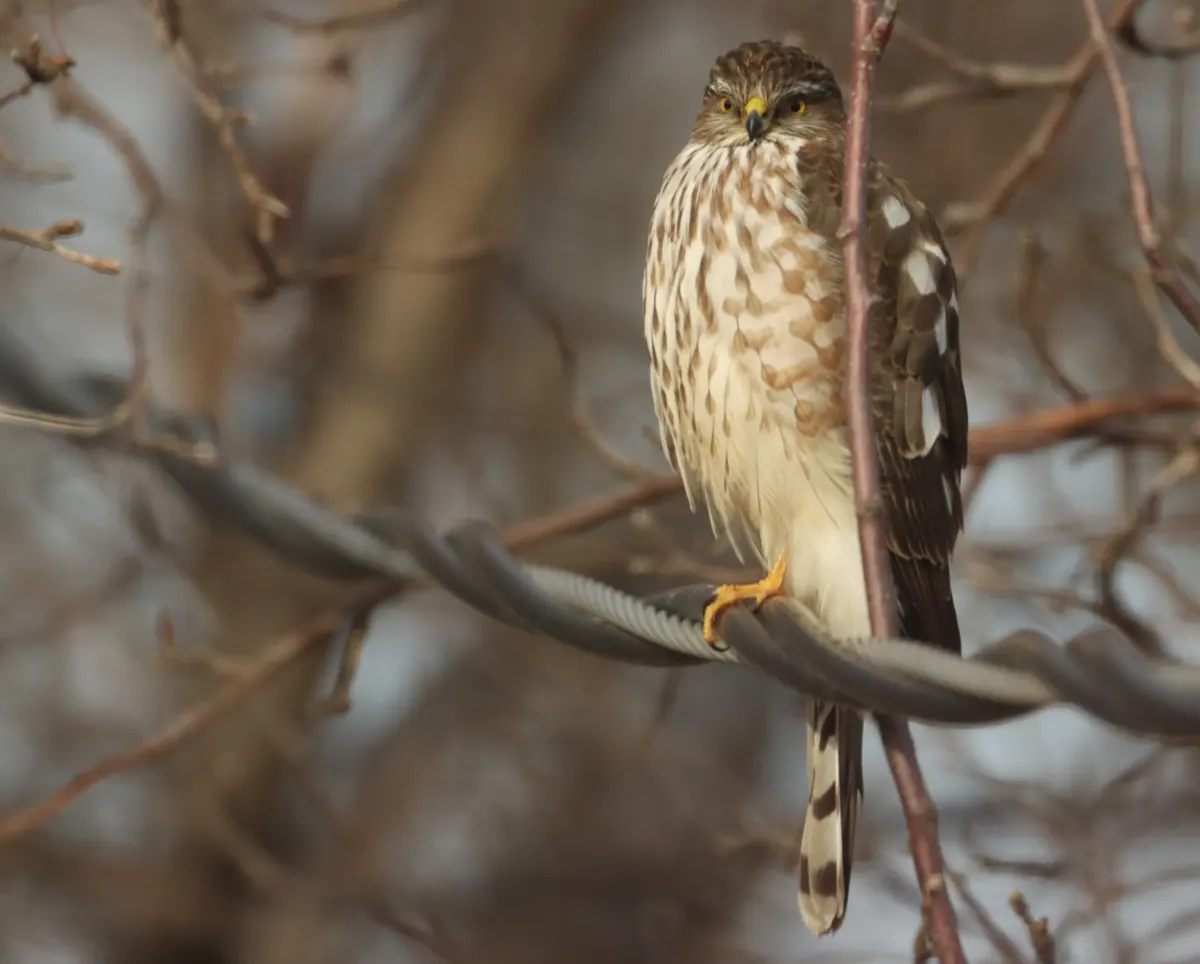
- A hawk watch on the right wind. Delaware keeps two fall hawk counts, at Ashland Nature Center near Hockessin and on the old bunker at Cape Henlopen, each staffed daily from September 1 to November 30 and free to drop in on. Sharp-shinned hawks peak at both in mid- to late October. Inland, pick a sunny day with a north or northwest wind; on the coast, avoid days of onshore easterlies or fog.
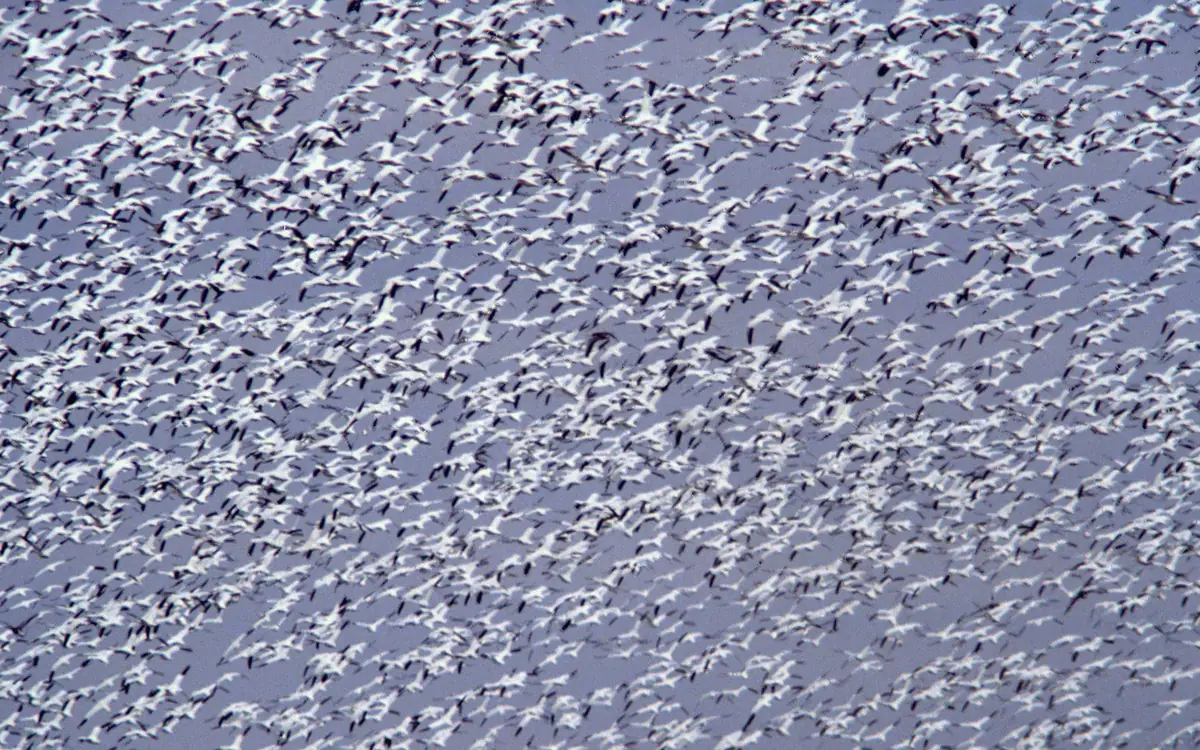
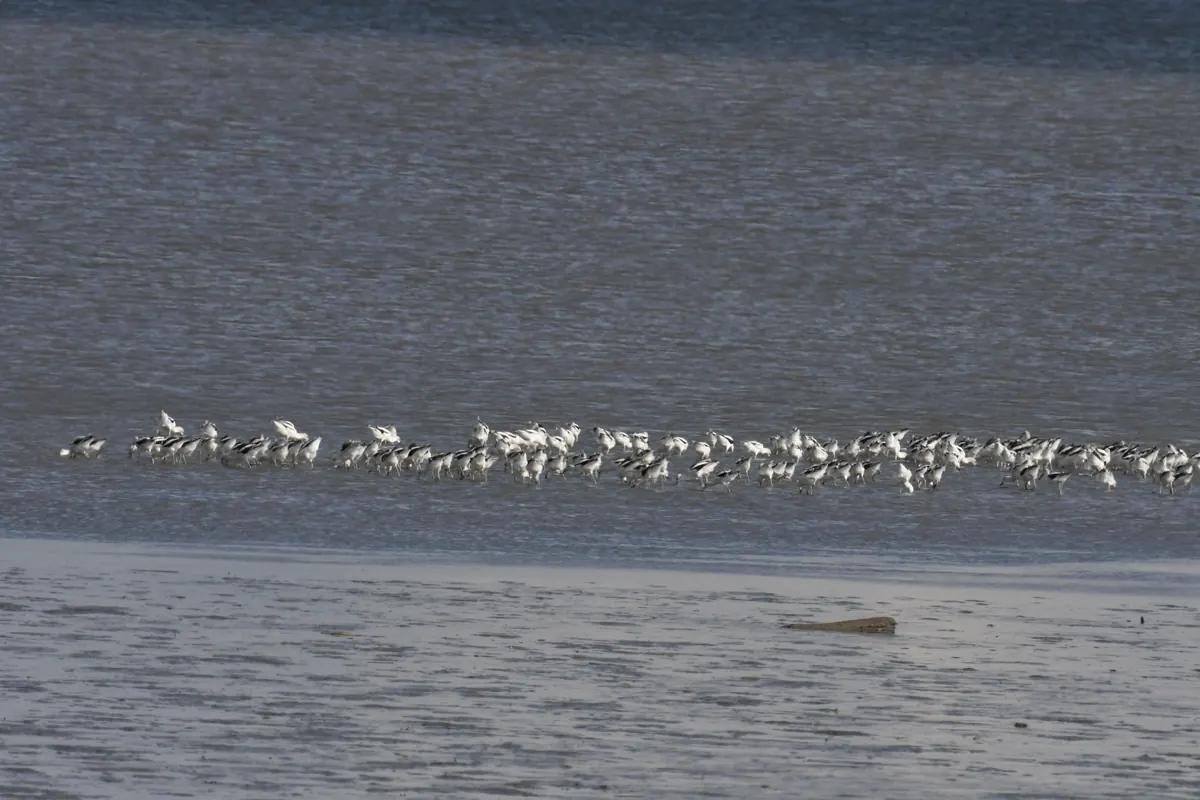
- Avocets at Bombay Hook. The refuge’s own wildlife calendar calls October its best month for American avocets, and it is also when large flocks of Canada and snow geese start to arrive. Drive the loop early, bring an entrance pass, and skip Friday, October 9, when a hunt closes the roads and trails.
- Cypress color, the first freeze and the Hunter’s Moon. Trap Pond runs fall-foliage pontoon trips through the baldcypress on Thursdays, October 22 and 29. The median first freeze falls on October 30 at Greenwood and November 14 at Lewes. The Hunter’s Moon rises at 5:34 p.m. on Sunday, October 25, in both Wilmington and Lewes, about half an hour before sunset.
Keep a record: a day’s hawk tally fits the “birds I have seen” pages of the Naturalist’s Field Journal, one baldcypress or sweetgum you can revisit belongs on the tree-through-the-seasons plate, the round cypress cones ripening this month fit the seeds-pods-and-cones page, and an owl walk at dusk is what the dusk-and-dawn watch was made for.
Regions used below: Piedmont: Wilmington, Hockessin and the Brandywine valley; Newark and White Clay Creek; Upper Bayshore and the C&D Canal: Blackbird Creek, Lums Pond; Dover, Kent County and Bombay Hook; Western Sussex: Seaford, Laurel, Trap Pond and the Great Cypress Swamp; Cape Region: Lewes, Milton, Cape Henlopen and Prime Hook; Rehoboth, the Inland Bays and Fenwick Island.
Where can you watch hawks migrate in Delaware in October?
Delaware counts raptors on both of its migration routes. The Division of Fish and Wildlife describes Ashland Nature Center’s Hawk Watch Hill in Hockessin as the station for the Piedmont route and the platform on a World War II bunker at Cape Henlopen State Park, about 20 meters above sea level, as the station for the coastal route, where birds arrive either across the bay mouth from Cape May or down the Delaware River. The Delaware Ornithological Society says a professional counter is on duty every day from September 1 through November 30, and visitors are welcome. Both stations have topped 20,000 birds in a season.
This year’s September totals are posted. Ashland tallied 6,029 raptors, 4,559 of them broad-winged hawks, with 2,078 on September 19 alone. Cape Henlopen, where broad-wings barely register, counted 1,292, led by 766 ospreys, plus 101 merlins and 29 peregrines; on September 29 it logged 223 raptors, 125 of them sharp-shinned hawks, a sign the October flight has begun.
| Raptor | Ashland (Piedmont) | Cape Henlopen (coast) |
|---|---|---|
| Broad-winged hawk | Peak mid-September; season average 5,428; record day 9,503 on Sept 20, 2023 | Rare here; one counted in September 2026 |
| Sharp-shinned hawk | Late September through October; average 1,569 | Surges mid- to late October; average 2,135 |
| Osprey | September and October | Peak early September; average 2,586 |
| American kestrel | 243 in September 2026 | Strong late September through October; average 849 |
| Merlin | n/a | Mostly October |
| Turkey vulture | October into early November; average 2,282 | Average 1,006 |
| Red-tailed hawk | Late October and November; average 805 | n/a |
| Bald eagle | Steady from September to mid-November | 85 in September 2026 |
The two hills want different weather. DNREC notes that hawks lean on the thermals of warm, sunny days and on north winds, which suits Ashland. Cape Henlopen’s profile adds a coastal twist: light southwest breezes and thermals off the dunes help, but strong onshore easterlies or fog can stop the flight while it is sunny a few miles inland. Daily totals post on HawkCount each evening.
When are the avocets and snow geese at Bombay Hook and Prime Hook?
Bombay Hook National Wildlife Refuge, on the bay east of Smyrna, guards one of the biggest surviving tidal salt marshes in the mid-Atlantic, according to the Fish and Wildlife Service. Its seasonal calendar is short and useful. September brings late shorebirds and songbirds, rising duck numbers and the first Canada geese. October is the “best month for avocets,” with large numbers of Canada and snow geese arriving and pintails, mallards and black ducks beginning their migration. November is the peak of the fall waterfowl flight.
-
American avocets in the impoundments
Through October · Shallow pools along the Bombay Hook wildlife drive
The Chesapeake Bay Program describes the avocet as a slender shorebird with an upturned bill that feeds by sweeping its head from side to side with the bill underwater, sieving small crustaceans, insects and seeds. Look for tight groups working the shallows together. By late October most have traded the rusty head and neck of summer for plain gray and white, so the bill and the black-and-white wings are the marks to go by.
-
Snow geese: the first flocks
First arrivals in October; the big numbers later · Bombay Hook, Prime Hook, bayshore fields
Bombay Hook lists October as the month large numbers of snow geese arrive, while the Chesapeake Bay Program puts the main arrival on the Delmarva Peninsula in late November, with the flocks heading north again in early March. Read together: October brings the vanguard, and the great white clouds rising off the marsh belong mostly to November through February.
-
Prime Hook in the fall
All month · Near Milton, Sussex County
Prime Hook National Wildlife Refuge covers more than 10,000 acres, about 80 percent of it wetland, with more than 245 bird species recorded and 7.5 miles of trails. Fowler Beach was closed through September for nesting plovers and terns, so check its status before you go.
Bombay Hook rules in brief: the drive and trails run from 30 minutes before sunrise until 30 minutes after sunset, the entrance pass is bought ahead through recreation.gov, dogs stay on a leash of ten feet or less, and on the 2026 hunt days (October 9, November 13 and December 16) every road and trail closes while the visitor center stays open. Duck season opens statewide on October 31.
What is happening at Cape Henlopen and on the Delaware beaches in October?
-
The Point opens again
From October 1 · Cape Henlopen State Park, Lewes
The tip of Cape Henlopen, where Delaware’s only viewable piping plovers nest, is closed to walkers during the nesting season. State Parks celebrates its reopening with a 1.7-mile guided evening hike on October 1 (ages 7 and up; register at 302-645-6852), and then the spit where bay meets ocean is open to all.
-
Gannets, scoters and loons offshore
Building through October into winter · The Point and Herring Point overlooks; Indian River Inlet
State Parks points birders to the Point and Herring Point for migrating sea ducks, loons and northern gannets in fall and early spring. Farther south, the rock jetties at Indian River Inlet in Delaware Seashore State Park hold purple sandpipers from late fall to early spring, with scoters, common eiders and the occasional harlequin duck through the winter. A telescope and a calm morning with the sun behind you make the difference.
-
Seaside goldenrod and the last monarchs
Goldenrod blooms August to October · Dunes and marsh edges from Lewes to Fenwick Island
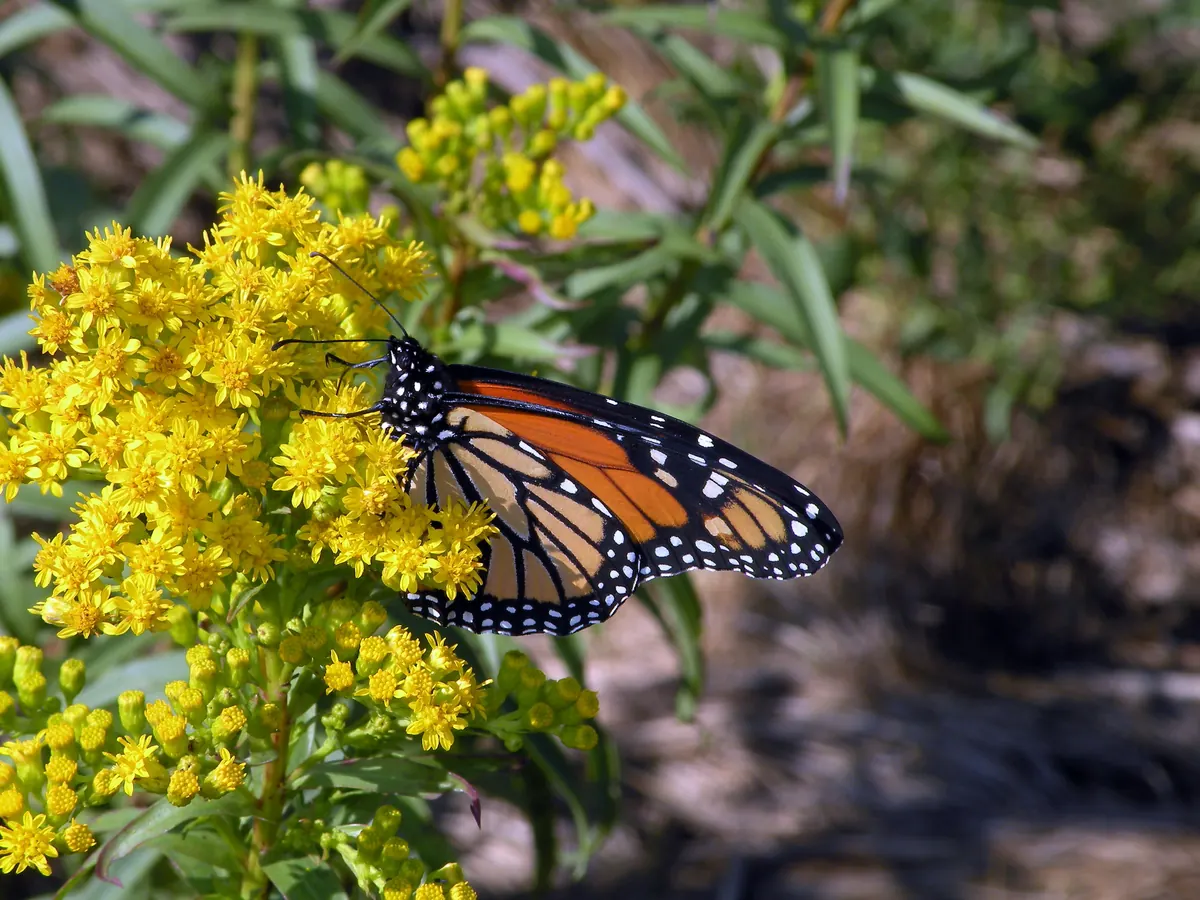
Seaside goldenrod, a waxy-leaved plant three to six feet tall, grows on dunes, beaches and the high edges of salt and brackish marshes and flowers from August into October. On the coast it is the late fuel stop for migrating butterflies. By Monarch Watch’s latitude table, monarchs pass the 39th parallel, roughly Dover, mostly between September 14 and 26, so October brings the stragglers; a cluster roosting in a pine at dusk is worth reporting to Journey North.
-
Coast Day, Sunday, October 4
10 a.m. to 3 p.m. · University of Delaware Hugh R. Sharp Campus, Lewes
The University of Delaware’s free open house on its marine campus: ship and lab tours, touch tanks, the oyster hatchery, the weather station and talks on marine wildlife.
-
Stranded seals, dolphins and turtles
Any time · Delaware beaches and bay shore
If you find a seal, dolphin or turtle on the beach, keep people and dogs back and call the MERR Institute in Lewes, 302-228-5029.
When do the leaves and the baldcypress turn in Delaware?
Delaware has no official foliage report, and its color comes late. Last year the Delaware News Journal, drawing on a commercial prediction map, put the state near peak in the week of October 20, at peak from about October 27 and fading after November 3; take that as a rough guide. Its suggested places ran from Brandywine Creek State Park and Mt. Cuba Center in the north to Lums Pond, Redden State Forest and Trap Pond in the south.
-
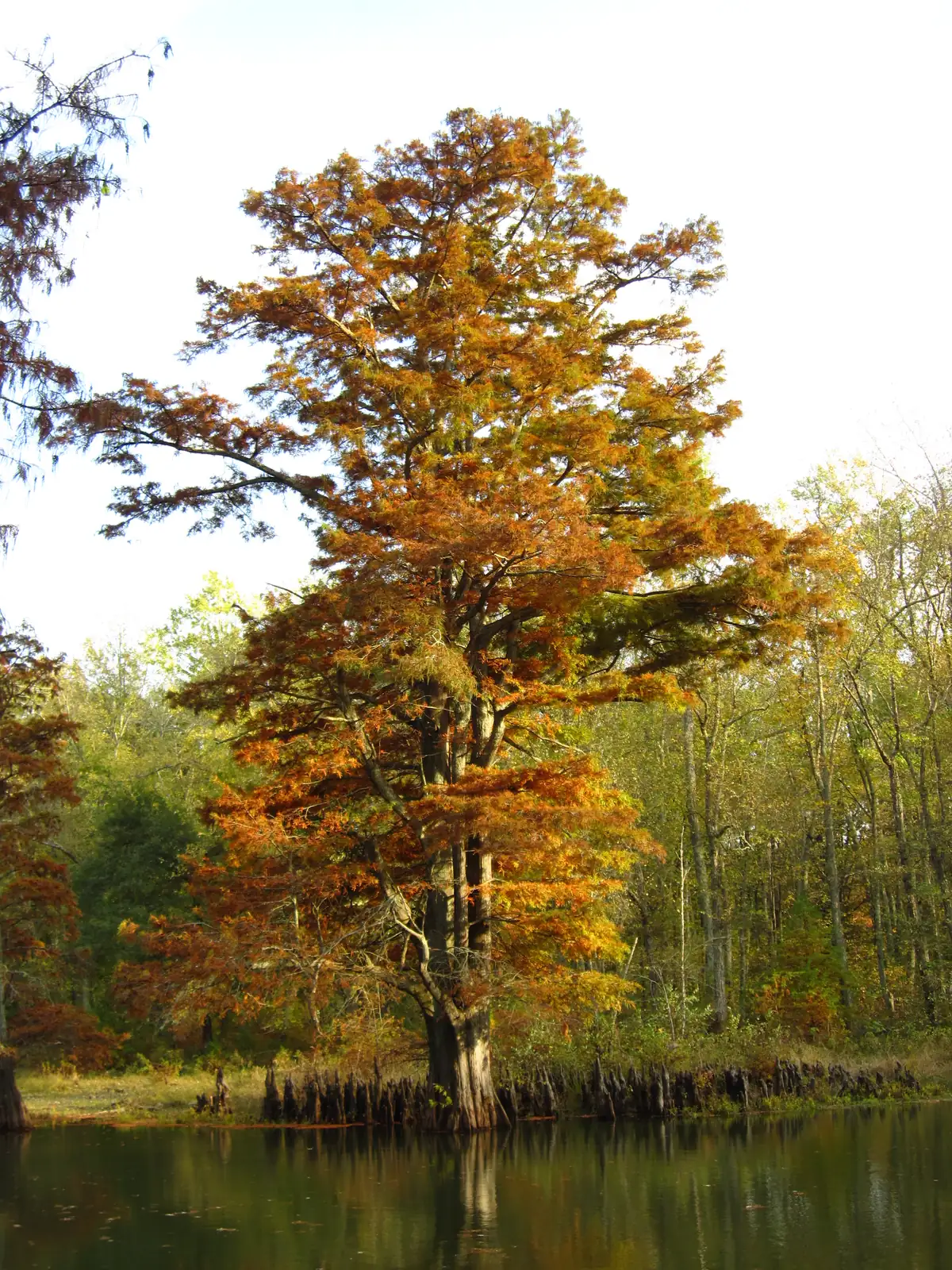
Baldcypress at Trap Pond
Needles go rusty from late October; cones ripen in October · Trap Pond State Park near Laurel
State Parks calls Trap Pond’s swamp the northernmost naturally occurring stand of baldcypress in the country; the species’ wild range edges a little farther north into Ellendale State Forest. Baldcypress is a conifer that drops its needles: the Chesapeake Bay Program notes they turn golden brown before they fall, and the round cones mature in October. Loggers dammed the swamp in the late 1800s to run a cypress sawmill; in 1951 it became Delaware’s first state park, and more than nine miles of water trails now wind through it.
-
Pontoon trips into the swamp
Weekends through October; foliage trips October 22 and 29 · Trap Pond boathouse
One-hour pontoon tours with reserved seats run at 9 a.m. on Saturdays and 1 p.m. on Sundays (October 3–4, 10–11, 17–18 and 24–25). The Fall Foliage Pontoon Tour, with snacks, runs Thursdays, October 22 and 29, from 2 to 3:30 p.m.; tickets are $15 for adults and $8 for children 12 and under, and online sales close 48 hours ahead. Households can call the Baldcypress Nature Center at 302-875-5163 to book a group.
-
The Great Cypress Swamp
Autumn color with the cypress · Southern Sussex County, straddling the Maryland line
About 50 square miles of wooded swamp, the largest unbroken forest on Delmarva. Logging and a peat fire in 1930 that smoldered for eight months earned it the name “Burnt Swamp.” The nonprofit Delaware Wild Lands manages it and has been replanting baldcypress; check its site for access.
-
A leaf-peeping walk at White Clay Creek
Sunday, October 11, 10 a.m. · White Clay Creek State Park, Newark
A free two-mile Autumn Discovery Hike, with paid park entry, looks at the changing colors and why they happen; register by calling 302-368-6989.
Pick one tree near home, a red maple, a sweetgum or a cypress by the water, and sketch or note its color each Sunday until the leaves are down. A handful of dated entries in the Naturalist’s Field Journal says more about this year’s autumn than any map.
Which songbirds, sparrows and owls pass through Delaware in October?
-
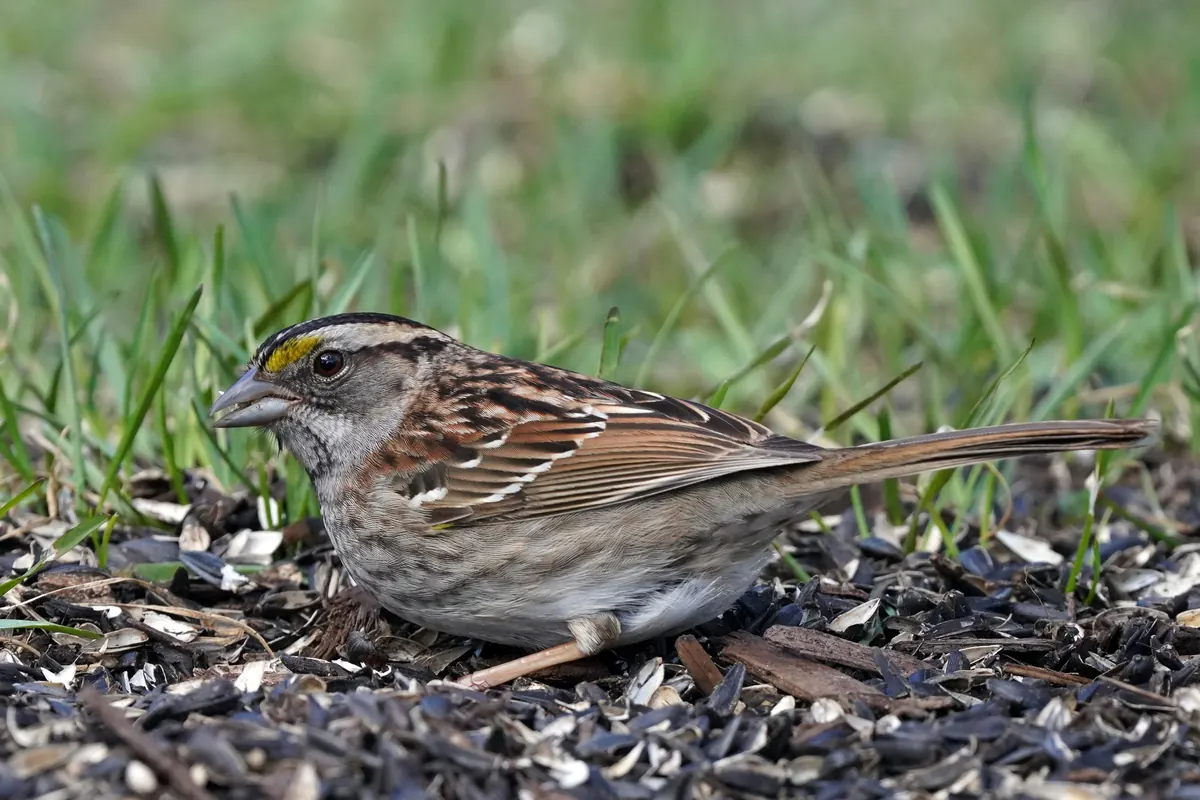
Sparrows in the fields and hedgerows
Building through October · Piedmont fields, marsh edges, park meadows
“October is the perfect time to find migrating sparrows,” the Delaware Ornithological Society says in announcing its October 4 sparrow walk at Burrows Run. State Parks singles out the fields and scrub at Alapocas Run in Wilmington for winter sparrows, and a DOS early-evening walk on October 25 at the Russell W. Peterson Urban Wildlife Refuge, beside the DuPont Environmental Education Center, targets marsh birds and wintering sparrows. Check the thickets, then the ground below them.
-
Warblers in the northern woods
Early October · White Clay Creek, Middle Run, the Brandywine valley
State Parks calls White Clay Creek a delight for warblers and migrant songbirds, and the Delaware Nature Society counts more than 190 bird species at Middle Run Natural Area. The DOS trip on October 3 in the Brandywine Valley tract of First State National Historical Park follows the creekside trail for late warblers and early sparrows. The warbler tide ebbs through the month as kinglets and sparrows replace it.
-
Owls after dark
Programs October 14 and 28 · Trap Pond; White Clay Creek
At Trap Pond’s Baldcypress Nature Center, “Silent Hunters of the Night” on Wednesday, October 14, 5 to 6:30 p.m., has participants dissect an owl pellet and then walk out to listen for calls; register online. White Clay Creek’s Owl Prowl is Wednesday, October 28, 6:30 to 7:30 p.m., on an accessible paved trail, $6 a person and prepaid. In Dover, Fork Branch Nature Preserve has nesting great horned and barred owls, according to State Parks.
-
Counting for science
October 6 and 13; Big Day October 10 · Cape Henlopen and anywhere
Cape Henlopen, with more than 300 species on its eBird list, runs a Cape 75 Bird Walk Challenge on Tuesday, October 6, 8 to 10 a.m., gathering eBird data to mark State Parks’ 75th year, and a Fall Bird Walk on Tuesday, October 13, 8 to 10 a.m. (ages 10 and up); both meet at the Seaside Nature Center, register at 302-645-6852. Any checklist submitted on Saturday, October 10, joins eBird’s worldwide October Big Day.
What is blooming, ripening and crawling in October?
-
Goldenrods and asters
Until a hard freeze · Roadsides, meadows, dunes
Mt. Cuba Center in Hockessin ran a three-year trial of goldenrods and counted about 20,000 insect visits, monarchs and bumblebees among them; goldenrods feed the caterpillars of more than 100 species of butterflies and moths. The center’s write-up also clears up an old confusion: the pollen that makes people sneeze in autumn comes from ragweed. Mt. Cuba’s gardens and trails are open Wednesday through Sunday, 10 a.m. to 6 p.m., into November.
-
Native plants for next year
Saturday, October 3, 9 a.m. to noon · Abbott’s Mill Nature Center, Milford
The Delaware Nature Society’s fall native plant sale comes on the same day as the nature center’s 45th-anniversary festival. At the Blackbird Creek Fall Festival on October 17 the Tree for Every Delawarean program gives away native trees while they last.
-
Spotted lanternflies laying eggs
Until a hard frost kills the adults · All three counties
The Delaware Department of Agriculture’s quarantine now covers the whole state. The adults die with a hard frost, but the egg masses laid this fall survive the winter and each hatches 30 to 50 nymphs in late April or early May. Fresh masses wear a gray, mud-like coating; scrape them off trees, stones, trailers and patio furniture, and look over the car before a trip, since the insect travels as a hitchhiker.
When is the first freeze in Delaware?
The first 32 °F night usually arrives between late October and mid-November, and open farmland and distance from water matter more than latitude. At Greenwood, in the flat fields where Kent and Sussex meet, the median first freeze is October 30 and one year in ten has frozen by October 14. Across New Castle County the medians fall on November 1 at the airport, November 2 at the university farm in Newark and November 4 at Wilmington’s Porter station; Dover also averages November 4 and Georgetown November 6. Lewes, between the bay and the ocean, holds out until a median of November 14, and in nine years out of ten has had its first freeze by December 1.
| Station | One year in ten | Median | Nine years in ten |
|---|---|---|---|
| Greenwood 2 NE (Kent–Sussex line) | Oct 14 | Oct 30 | Nov 13 |
| Wilmington New Castle County Airport | Oct 19 | Nov 1 | Nov 15 |
| Newark Ag Farm | Oct 19 | Nov 2 | Nov 17 |
| Wilmington Porter Rsch (north Wilmington) | Oct 21 | Nov 4 | Nov 19 |
| Dover | Oct 23 | Nov 4 | Nov 18 |
| Georgetown Sussex County Airport | Oct 23 | Nov 6 | Nov 22 |
| Lewes | Nov 1 | Nov 14 | Dec 1 |
So a freeze by Halloween comes in about half of years around Greenwood; at the airports, Newark and Dover the median falls within a week after it, so a late-October freeze there is not unusual; at Lewes one before November is roughly a one-in-ten event. The Delaware frost dates page maps these same stations along with last spring freezes. Snow is not an October worry: the normal October snowfall at the Wilmington airport is zero.
How much daylight does Delaware lose in October?
Between 72 and 75 minutes over the month, or 2.4 to 2.5 minutes each day; New Castle County loses slightly more than Sussex. In Wilmington the sun comes up at 7:03 a.m. and goes down at 6:36 p.m. on October 6; by October 25 those times are 7:23 and 6:09. Once standard time returns on Sunday, November 1, the Wilmington sun sets at 5:00 p.m.
| City | Oct 1 | Oct 31 | Lost | Per day |
|---|---|---|---|---|
| Wilmington | 11 h 46 m | 10 h 31 m | 75 min | 2.5 min |
| Newark | 11 h 46 m | 10 h 31 m | 75 min | 2.5 min |
| Dover | 11 h 47 m | 10 h 33 m | 74 min | 2.5 min |
| Milford | 11 h 46 m | 10 h 34 m | 72 min | 2.4 min |
| Georgetown | 11 h 47 m | 10 h 35 m | 72 min | 2.4 min |
| Seaford | 11 h 47 m | 10 h 35 m | 72 min | 2.4 min |
| Lewes | 11 h 46 m | 10 h 34 m | 72 min | 2.4 min |
| Fenwick Island | 11 h 47 m | 10 h 35 m | 72 min | 2.4 min |
The Field almanac gives the same numbers, plus twilight times, for any spot you choose on the map.
How warm and wet is a Delaware October, and what might El Niño do to the winter?
October is mild and fairly wet across the state, with about 3.7 inches of rain at the Wilmington airport and 4.0 to 4.4 inches at the other stations. Afternoons average the upper 60s everywhere; the difference is at night, when Newark’s farm station averages 46 °F and Lewes, beside the water, 52 °F.
| Station | High | Low | Precipitation |
|---|---|---|---|
| Wilmington New Castle County Airport | 67.0 | 47.3 | 3.68 |
| Newark Ag Farm | 69.1 | 46.2 | 4.00 |
| Dover | 68.9 | 49.5 | 4.06 |
| Georgetown Sussex County Airport | 69.3 | 49.4 | 4.11 |
| Lewes | 69.3 | 52.4 | 4.41 |
The long view belongs to the tropical Pacific. As of September 10, federal forecasters put the odds that El Niño reaches very strong status by late fall and winter above 90 percent; the next discussion is due October 8, with NOAA’s seasonal winter outlook in the middle of the month. For Delaware the signal is faint. A meteorologist at the National Weather Service office in Mount Holly, which forecasts for the state, told the Delaware News Journal this month that the correlation with El Niño here “isn’t as strong as other portions of North America.” The paper’s own comparison shows why: the last two very strong events produced 22.7 inches of snow in 2015–16 and only a trace in 1997–98, though both winters ran mild and wet. NOAA’s ENSO bloggers see only a slight, statistically shaky tilt toward more snow in mid-Atlantic El Niño winters; a normal season at the Wilmington airport brings about 20 inches. October itself is barely touched. We will summarize the outlook here once it is out; for the next few days, the weather page has the forecast.
What is in the sky over Delaware this October?
-
The Moon covers Jupiter
Tuesday, October 6, about 4:21 to 5:26 a.m. EDT · East-southeast, low but clear of the trees
The thin waning crescent Moon rises around 2:31 to 2:34 a.m. across Delaware and, about two hours later, passes directly in front of Jupiter. Using the International Occultation Timing Association’s predictions for Dover and for nearby Philadelphia and Salisbury, the planet slips behind the Moon’s bright limb at 4:21 or 4:22 a.m., with the Moon 18 to 19 degrees above the horizon, and pops back out beside the unlit limb near 5:26, the Moon then about 31 degrees high in a sky that is still dark. Be in place ten minutes early, since the exact minute shifts with your location; binoculars show the planet’s disk emerging over a second or two.
-
The Hunter’s Moon
Evenings of Sunday, October 25, and Monday, October 26 · Low in the east at dusk
Full at 12:12 a.m. on the 26th. On Sunday the 25th it rises at 5:34 p.m. in Wilmington and Lewes, with sunset at 6:09, so it climbs out of the bay haze in daylight, orange and swollen by the horizon illusion. On Monday it comes up at 6:07 in Wilmington, the same minute the sun goes down. Its distance is unremarkable this year, so no supermoon.
-
Saturn at opposition
October 4, and all month; the Moon alongside October 23–24 · Rising in the east at sunset
At opposition on October 4 Saturn lies directly across the sky from the Sun: up at dusk, due south near midnight, down at dawn, a steady pale-yellow light with no bright stars around it; a small telescope shows the rings. On October 23 and 24 the gibbous Moon sits close by.
-
Venus goes, Jupiter and Mars stay
Venus in the first evenings; Jupiter and Mars before dawn · West at dusk; east before sunrise
For the first few evenings Venus sits very low in the west-southwest after sunset; it soon sinks into the glare, reaching inferior conjunction on October 23. Before dawn, Jupiter blazes in the east. Mars, fainter and orange, threads through the Beehive in Cancer in the predawn hours of October 11, with the cluster and planet together in one binocular view.
-
Draconids and the darkest nights
Evening of Thursday, October 8; new moon October 10 · Face north after dark
The Draconids are an early-evening shower, best soon after dark, when the Dragon’s head is high in the north; EarthSky suggests about ten an hour under a dark sky, and the thin waning crescent stays below the horizon until close to dawn. The new moon on the 10th makes October 8 to 12 the darkest stretch of the month: good nights for Trap Pond, the Bombay Hook area or the beach at Cape Henlopen, well away from the lights of Wilmington.
-
Orionid meteors
Active October 2 to November 7; best before dawn on October 21 and 22 · Anywhere dark, looking high in the southeast
The American Meteor Society puts a normal peak at 10 to 20 meteors per hour, and this year a bright gibbous moon interferes. It sets at about 2:15 a.m. on the 21st and 3:20 a.m. on the 22nd across Delaware, leaving roughly three and a half to four and a half dark hours before civil twilight starts near 6:50. The Orionids are fast and sometimes leave glowing trails.
| Phase | Date | Time |
|---|---|---|
| Last quarter | Saturday, Oct 3 | 9:25 a.m. |
| New moon | Saturday, Oct 10 | 11:50 a.m. |
| First quarter | Sunday, Oct 18 | 12:12 p.m. |
| Full moon, the Hunter’s Moon | Monday, Oct 26 | 12:12 a.m. (looks full on the evenings of Oct 25 and 26) |
| Last quarter | Sunday, Nov 1 | 3:28 p.m. EST |
Clouds decide most of these nights; Today’s sky shows the cover expected over your town hour by hour, and the moon page lists when the Moon is up.
What can families do outdoors in Delaware in October 2026?
- Count hawks, any day. The Ashland Hawk Watch in Hockessin is free, ages 8 and up, 9 a.m. to 4 p.m.; at Cape Henlopen, climb the steps beside the picnic pavilion lot. Ask the counter to point out a sharp-shin.
- Autumn at Abbott’s, Saturday, October 3. Abbott’s Mill Nature Center near Milford marks its 45th year, noon to 4 p.m., with nature hikes, mill talks, hayrides and crafts; free for members, and everyone is asked to register. The native plant sale runs 9 a.m. to noon that morning.
- Coast Day, Sunday, October 4. Touch tanks, ship tours and oyster hatchery tours at the University of Delaware campus in Lewes, 10 a.m. to 3 p.m., free.
- Journal in the parks. Free with park entry: drawing birds at Bellevue State Park, Monday, October 5, 1 to 3 p.m., and fall flowers at Auburn Valley, Tuesday, October 13, same hours (register at 302-793-3046).
- Big Day and a fire, Saturday, October 10. Enter a bird list for eBird’s October Big Day, then go to Mt. Cuba Center’s Fall Fun by the Fire, 5 to 8 p.m., with tree identification, crafts, hayrides and s’mores. Lums Pond holds its Pond Fest the same day, with pumpkin painting; check the State Parks calendar for times.
- Leaves and owls with a ranger. White Clay Creek’s Autumn Discovery Hike, Sunday, October 11, 10 a.m.; Trap Pond’s owl-pellet evening, October 14, 5 p.m.; White Clay Creek’s Owl Prowl, October 28, 6:30 p.m.; the Burton Island walk in Delaware Seashore State Park, Friday, October 23, 10 a.m., free (302-227-6991).
- Blackbird Creek Fall Festival, Saturday, October 17. The Delaware National Estuarine Research Reserve’s festival near Townsend, 10 a.m. to 4 p.m., has estuary exhibits, hayrides, music and free native trees; check the reserve’s page for any admission.
- Young birders. The Delaware Ornithological Society’s youth walk at Middle Run Natural Area is Sunday, October 18, 8 to 10 a.m. (RSVP through DOS), and its Bird-a-Thon 20th-anniversary evening at the Delaware Museum of Nature and Science is Wednesday, October 21, 6 to 9 p.m., free with advance registration.
- Keep counting into winter. Project FeederWatch, the Cornell Lab’s backyard feeder count, starts its season on November 1.
Times change and programs fill; confirm with the organizer first. Other states’ October guides are collected on the nature pages.
Safety notes for October in Delaware
- Hunting seasons open in October: archery and crossbow deer statewide from September 1 through January 31; special antlerless deer seasons, with shotguns, muzzleloaders, handguns and straight-walled pistol-caliber rifles as well as bows, on October 2–4, 23–25 and 30–31; muzzleloader deer October 9–18; gray squirrel from September 15; rails through November 9; regular duck season from October 31. The general firearm deer season is November 13–22. Sunday hunting is now allowed for all game on private land with the owner’s permission and on designated public lands.
- Hunter orange. During any period when deer may legally be shot with a firearm, a person hunting anything other than migratory birds must show hunter orange totaling 400 square inches or more, spread over head, chest and back; small-game hunters on State Wildlife Areas wear it at all times. This October the firearm days are October 2–4, 9–18, 23–25 and 30–31. The rule binds hunters only; we found no requirement for hikers or birders, but an orange hat and vest on those days, on wildlife areas, state forests and park trails near hunting zones, costs nothing.
- Where hunting happens. Nine state parks run deer hunts, never on Sundays; state forests have no Sunday hunting either. Bombay Hook closes to visitors on October 9. Any registered vehicle entering a State Wildlife Area needs a Conservation Access Pass, whatever the visit is for.
- Ticks. The CDC says exposure can happen in any month. Permethrin-treated clothes, a repellent such as DEET or picaridin, a shower soon after the walk, a careful check and ten minutes in a hot dryer for your clothes cover most of the risk.
- The ocean. Rip currents form on calm, sunny days too; the Weather Service advises swimming only where a lifeguard is on duty, and in Delaware’s state parks the beach patrol guards Cape Henlopen, Delaware Seashore and Fenwick Island in season.
- Lanternflies do not bite or sting; the harm is to plants, so scrape the eggs and check your vehicle.
Sources
- DNREC Division of Fish and Wildlife: Delaware hawk watch (Ashland and Cape Henlopen, 2024 totals)
- Delaware Ornithological Society: hawk watches (season, daily counter)
- HawkCount: Cape Henlopen site profile (peaks, winds, averages)
- HawkCount: Cape Henlopen monthly summary (September 2026)
- HawkCount: Ashland Nature Center site profile (peaks, averages, record)
- HawkCount: Ashland Nature Center monthly summary (September 2026)
- Delaware Nature Society: Ashland Hawk Watch and bird conservation
- Delaware Nature Society: programs and events, October 2026
- Delaware Nature Society: Autumn at Abbott’s, October 3, 2026
- U.S. Fish and Wildlife Service: Bombay Hook National Wildlife Refuge (2026 hunt closures)
- U.S. Fish and Wildlife Service: Bombay Hook wildlife calendar
- U.S. Fish and Wildlife Service: Bombay Hook rules and policies (hours, pets)
- U.S. Fish and Wildlife Service: Prime Hook National Wildlife Refuge
- Chesapeake Bay Program field guide: American avocet
- Chesapeake Bay Program field guide: snow goose
- Chesapeake Bay Program field guide: bald cypress
- Chesapeake Bay Program field guide: seaside goldenrod
- Delaware State Parks: birding by park (Cape Henlopen, Delaware Seashore, Trap Pond, White Clay Creek)
- Delaware State Parks: Trap Pond (northernmost baldcypress stand, history)
- Delaware State Parks: October 2026 program calendar (pontoon tours, bird walks, owl programs, hikes, nature journaling)
- Delaware State Parks: Fall Foliage Pontoon Tour, Trap Pond
- Delaware State Parks: hunting rules for 2026–27 (no Sunday hunting in parks)
- Delaware State Parks: Beach Patrol (guarded beaches)
- State of Delaware news, September 18, 2026: Take the ultimate Delaware fall road trip (Pond Fest, wagon rides)
- State of Delaware news, September 28, 2026: Blackbird Creek Fall Festival set for October 17
- University of Delaware: Coast Day, October 4
- MERR Institute: marine mammal and sea turtle stranding hotline
- Monarch Watch: peak migration dates by latitude
- Journey North: monarch sightings and fall roost reports
- Mt. Cuba Center: hours and October 2026 programs
- Mt. Cuba Center: goldenrods for the garden and beyond (trial results)
- Delaware News Journal (via Yahoo), October 2025: where to see peak fall foliage in Delaware
- Wikipedia: Great Cypress Swamp
- Wikipedia: Trap Pond State Park (range into Ellendale State Forest)
- Delaware Ornithological Society: events and field trips, October 2026
- Delaware Ornithological Society: Bird-a-Thon 20th anniversary meeting, October 21
- Delaware Department of Agriculture: spotted lanternfly (statewide quarantine)
- NOAA NCEI: U.S. climate normals 1991–2020 (freeze dates, October temperature and precipitation, annual snowfall)
- Climate Prediction Center: ENSO diagnostic discussion, September 10, 2026
- Delaware News Journal (via AOL), September 2, 2026: strong El Niño forecast raises questions for Delaware
- NOAA Climate.gov: United States El Niño impacts
- U.S. Naval Observatory: sunrise, sunset, moonrise and moonset (data API; Wilmington example)
- U.S. Naval Observatory: moon phases 2026 (data API)
- International Occultation Timing Association: occultation of Jupiter, October 6, 2026 (predictions for Dover, Philadelphia, Salisbury)
- EarthSky: meteor shower guide (Draconids and Orionids 2026)
- EarthSky: visible planets (Saturn at opposition, Venus, Jupiter and Mars, October 2026)
- American Meteor Society: 2026 meteor shower calendar
- eBird: October Big Day, October 10, 2026
- Project FeederWatch: how to participate
- Delaware Hunting and Trapping Guide 2026–27 (eRegulations): deer seasons
- Delaware Hunting and Trapping Guide 2026–27: deer hunting (hunter orange, Sunday hunting)
- Delaware Hunting and Trapping Guide 2026–27: small game (seasons, orange on wildlife areas)
- Delaware Hunting and Trapping Guide 2026–27: migratory bird seasons
- Delaware Hunting and Trapping Guide 2026–27: public lands (Sunday hunting on state forests and parks)
- State of Delaware news, August 26, 2026: 2026–27 hunting season opens September 1 (Sunday hunting for all game)
- DNREC: hunters, what you need to know (hunter orange)
- DNREC: Conservation Access Pass
- CDC: preventing tick bites
- National Weather Service: rip current safety
- Photos via Wikimedia Commons; licenses and photographers are credited under each picture
