What to look for in nature in Delaware this January
Delaware’s coldest month sits squarely in the middle of meteorological winter, yet January is when the new breeding year quietly begins. Great horned owls pair off and claim old nests, bald eagles keep adding sticks, and before February the earliest skunk cabbage hoods may poke through frozen Piedmont mud. Over the bayshore a state biologist in a small plane tallies the wintering ducks, geese and swans, while harriers and the odd rough-legged hawk from the Arctic hunt the marsh below. Afternoons stretch a little every day, the Quadrantid meteors fly under a dark sky in the first week, and 2027’s nearest full moon arrives on January 22. Below is what to watch for and the best places to find it.
Other months in Delaware: October, November, December, February.
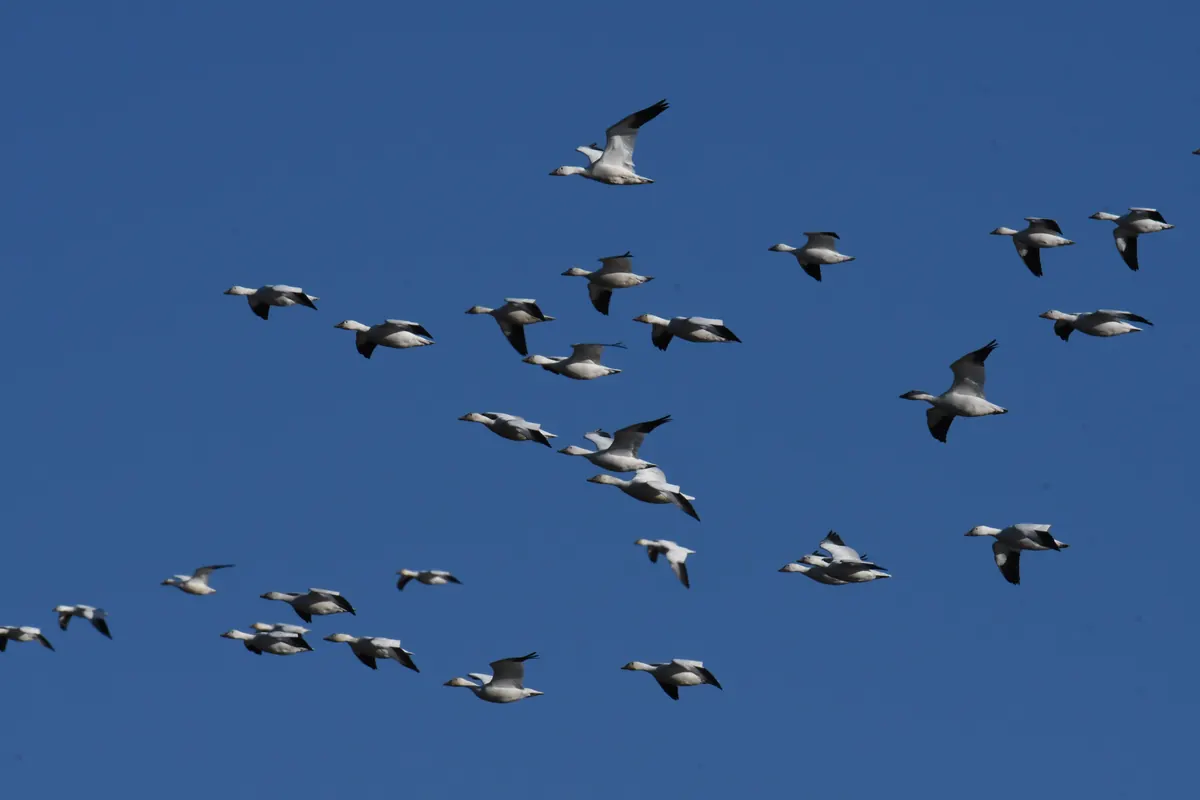
Start here
- Listen for owls at dusk. Stand at a wood edge on a still evening and wait for the deep, stuttering hoots of a great horned owl, often answered by its mate. January is when Delaware’s first owls settle on a nest. The Delaware Nature Society’s Owl Prowl at Ashland Nature Center, on Saturday, January 23, is a guided way to start.
- Drive Bombay Hook for winter hawks. The refuge’s own calendar lists red-tailed hawks, northern harriers and rough-legged hawks as common in January, with tundra swans and thousands of ducks on the pools. Aim for the late afternoon, when harriers course low over the cordgrass and deer herds drift out into the fields.
- Meteors, then a supermoon. The Quadrantids are best in the dark hours of Sunday night, January 3, and before dawn on Monday, with only a thin crescent coming up near daybreak. Nineteen days later the Wolf Moon, the nearest full moon of 2027, is full at 7:17 a.m. on Friday, January 22; the night before, it rises full-faced at dusk.
Keep a record: a great horned owl pair hooting back and forth is a natural first entry for the map of sounds in the Naturalist’s Field Journal, an evening at the marsh edge waiting for harriers makes a dusk-and-dawn watch, a muskrat house sketched from the dike road is exactly what the reading-the-signs page is for, and a red maple twig drawn now, buds and all, starts your tree-through-the-seasons page.
Regions used below: Piedmont: Wilmington, Hockessin and the Brandywine valley; Newark and White Clay Creek; Upper Bayshore and the C&D Canal: Blackbird Creek, Lums Pond; Dover, Kent County and Bombay Hook; Western Sussex: Seaford, Laurel, Trap Pond and the Great Cypress Swamp; Cape Region: Lewes, Milton, Cape Henlopen and Prime Hook; Rehoboth, the Inland Bays and Fenwick Island.
When do owls start nesting in Delaware?
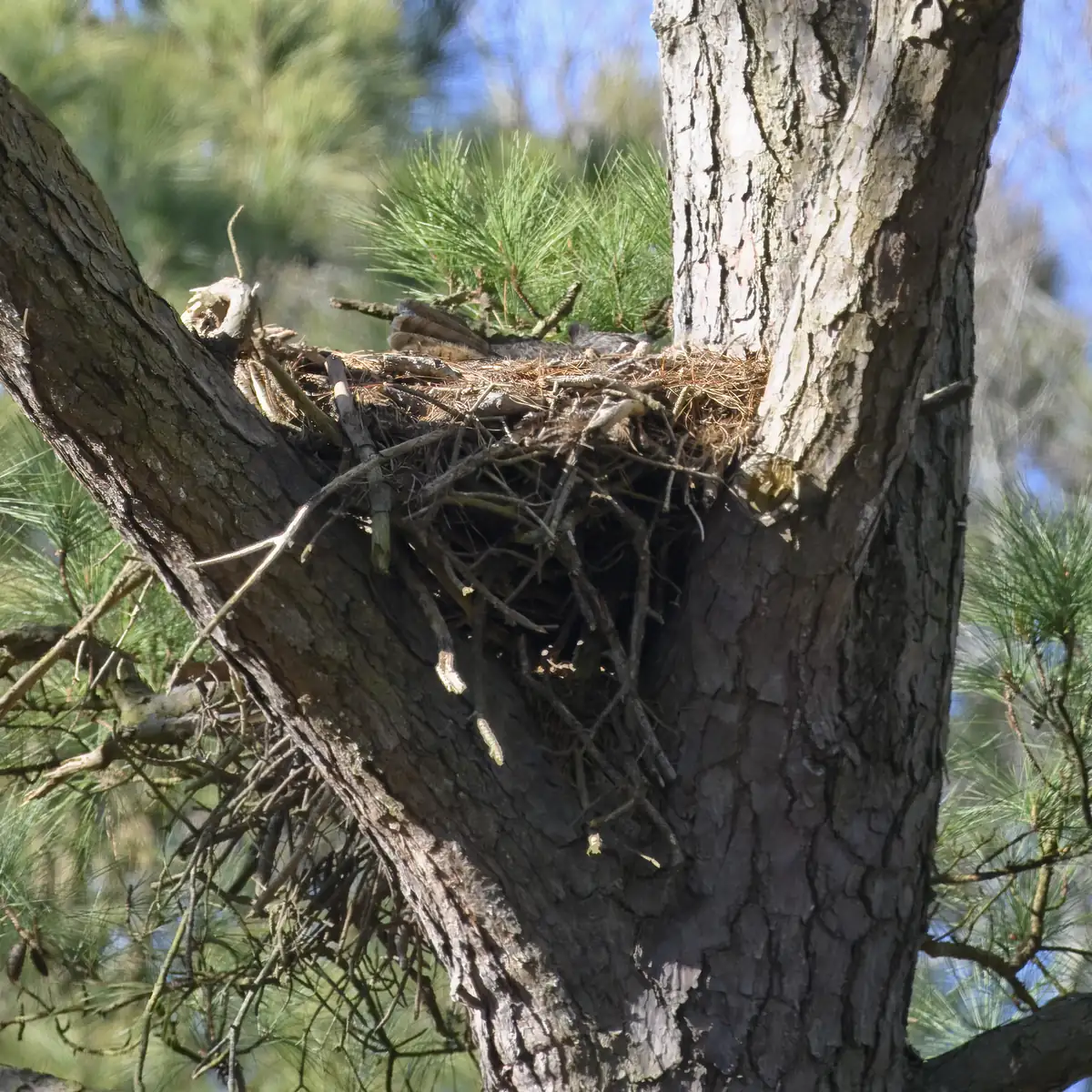
Earlier than almost any other bird. The University of Delaware’s news service, drawing on state, museum and Delaware Nature Society biologists, reported in 2013 that the owl breeding season here gets going at the end of January: great horned owls first, then barred owls, barn owls and finally the eastern screech-owl. Great horned pairs have usually chosen each other by December, says the Chesapeake Bay Program, and settle on a site in January or February, usually an old nest built by a hawk, crow or heron.
-
Great horned owls calling in pairs
Dusk and the first hours of darkness, loudest in January and February · Woodlots, farm hedgerows, parks and suburban edges statewide
Delaware’s biggest owl reaches 25 inches with a wingspan near five feet, and wears feathered ear tufts and a white throat patch. In courtship the two birds hoot back and forth and bow, and the male’s voice is the deeper one because his voice box is larger. Most nests hold two eggs, which the female incubates for about a month, so owlets may hatch while snow is still possible. A Delaware Nature Society naturalist advised setting out after dark, especially on windless nights.
-
Barred owls in the bottomland woods
Calling all winter; nesting from about December to March · Brandywine Creek and White Clay Creek valleys, Trap Pond, the Great Cypress Swamp
Birders remember the barred owl’s eight- or nine-note hooting by the phrase who cooks for you. It has dark brown eyes in a round gray face, no ear tufts, bars across the chest and streaks down the belly. It nests in tree cavities in wet woods with a mix of hardwoods and evergreens, and a pair tends to keep the same patch of woods for life, so an owl you hear this January will probably be calling there next winter too.
-
Barn owls and screech-owls
Screech-owls are the last to nest, in early spring · Farm country in Kent and Sussex; nest boxes on state wildlife areas
Barn owls are a species of special concern in Delaware; state biologists have banded them since 1996 and set out nest boxes on wildlife areas. The small eastern screech-owl, gray or rusty with short ear tufts, is the only one of the four that is also active in bursts at dawn and dusk.
-
A snowy owl, in some winters
Irregular; only in irruption winters · Dunes at Cape Henlopen’s Point and Indian River Inlet; Port Mahon; Bombay Hook
A state biologist told the Cape Gazette during the big influx of 2013 that Delaware normally sees one or two snowy owls a winter. That year they turned up on the dunes at Cape Henlopen and Indian River Inlet, near Port Penn, at Bombay Hook and on Port Mahon Road. Arctic owls wander south in numbers when lemmings crash. If one appears, watch from well back and never offer food.
The Delaware Nature Society’s Nature at Night: Owl Prowl, at Ashland Nature Center in Hockessin on Saturday, January 23, 7 to 8:30 p.m. ($15, all ages, registration required), starts indoors with calls and adaptations and finishes on a night hike; the society expects it to sell out. Near a known nest, skip recorded calls and flashlights, which can keep a female off her eggs in the cold. Short-eared owls stay on the bayshore marsh through January; see our December guide for where to watch them.
How many ducks, geese and swans winter in Delaware?
Tens of thousands, and the state counts them from the air. Since 1974 the Division of Fish and Wildlife has flown regular aerial waterfowl surveys, with a pilot and a biologist following the same east-west lines over the same 11 zones in the eastern half of the state each time. The January flight lines up with the Midwinter Waterfowl Inventory, a nationwide count coordinated by the U.S. Fish and Wildlife Service, and the results go on the state’s open data portal. Geese, being big and pale, are counted most reliably; small dark ducks scattered in the marsh are harder.
-
Tundra swans
All January; they leave for the Arctic in early spring · Bombay Hook pools, Trap Pond, flooded and planted fields in Kent and Sussex
Delaware’s wild swans are tundra swans, about four and a half feet long and all white, with a black bill that often shows a little yellow patch just ahead of the eye. Their old name, whistling swan, comes from the high, mellow woo-hoo calls a flock makes. Besides underwater plants they graze winter wheat, so look in farm fields too. Families travel together, and this winter’s young, called cygnets, are still brownish gray, turning white as the season ends.
-
Black ducks and mallards
December through February · Tidal marsh and impoundments along the whole bayshore
On the January 2026 flight the American black duck outnumbered every other duck, the mallard included. It looks like a very dark female mallard with a paler head and a violet wing patch, and the two often share the same pools.
-
No spring snow goose order in 2027
Regular snow goose season runs in splits to March 10 · Statewide
In some springs Delaware has opened a special conservation order to reduce greater snow geese. DNREC has announced that, based on the 2026 spring population survey of greater snow geese, there will be no conservation order in 2027. The geese are still hunted in the regular season, which runs in splits into March. Meanwhile, the refuge calendar at Bombay Hook says large flocks of pintails arrive with the first mild weather of February.
| Species | Counted, January 2026 |
|---|---|
| Canada goose | 84,257 |
| Snow goose | 24,174 |
| American black duck | 22,649 |
| Mallard | 18,363 |
| Northern pintail | 5,190 |
| Green-winged teal | 3,966 |
| Tundra swan | 3,113 |
| Gadwall | 2,408 |
| Bufflehead | 2,060 |
| American wigeon | 1,702 |
| Common merganser | 990 |
| Ruddy duck | 800 |
For the snow geese and their dawn lift-offs, see our Delaware December page; the same flocks are on the bayshore through January. You can explore the counts behind this table, from 1974 to now, on the Delaware Open Data Portal.
Which hawks and eagles hunt the Delaware bayshore in January?
The wildlife calendar for Bombay Hook National Wildlife Refuge sums up January in two lines: red-tailed, marsh and rough-legged hawks are commonly seen, and bald eagles begin working on their nests. It adds that herds of white-tailed deer come out into the fields at dusk.
-
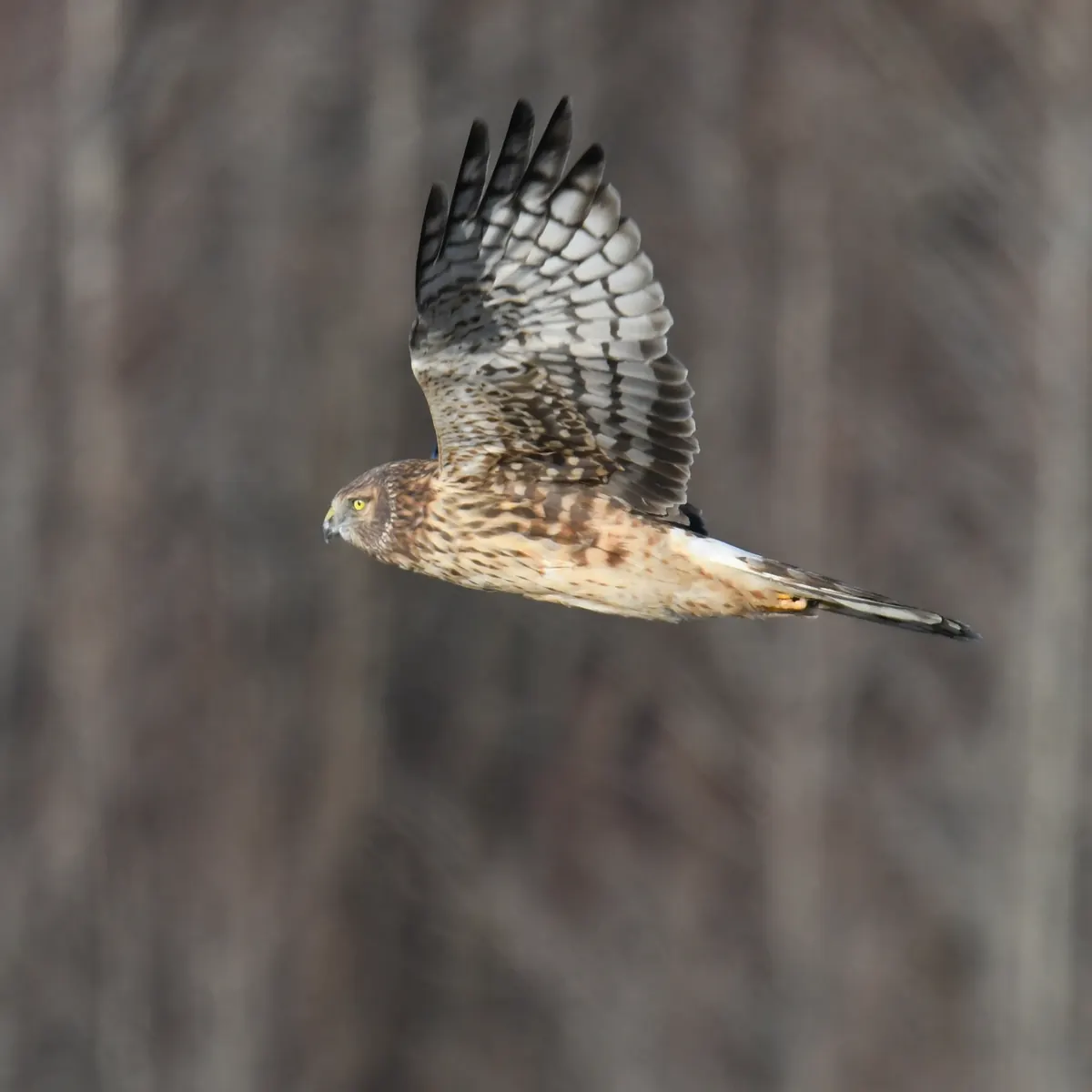
Northern harriers
All winter; most active by day, often late in the afternoon · Over the salt marsh at Bombay Hook, Little Creek, Prime Hook and Port Mahon
The marsh hawk of older field guides. Adult males are gray above and white below, females and young brown, and both show a bright white rump and a flat, owl-like face that helps them hunt by ear, says the Chesapeake Bay Program. A harrier flies slowly and low over the grass and drops when it locates a vole; it is the hawk you are most likely to see on a January drive around the refuge pools.
-
Rough-legged hawks
Some winters; more in years when lemmings fail in the Arctic · Big open fields and marsh edges in Kent County and along the bay
Audubon’s field guide calls it the only one of our soaring hawks tied to cold climates. It nests on the Arctic tundra, and only a few travel farther south than the central United States in winter, which makes a Delaware bird a good find. Feathers cover its legs down to the toes, insulation that suits a bird of the tundra. It often hunts by hovering on beating wings above a field, like an outsized kestrel, then dropping onto a vole. In winter it eats mostly mice and voles and will feed on carrion.
-
Bald eagles on the nest
Nest building in January; eggs mostly in February at Bombay Hook · Tall trees near water in all three counties
The refuge calendar puts egg laying and the start of incubation in February. By late January pairs spend long spells perched by their nests and keep adding sticks. Watch from your car or from a public road, well back, because disturbance now can make a pair abandon the attempt. How to find a nest and report it to DNREC is in our December guide.
Wildlife Drive hours at Bombay Hook run from 30 minutes ahead of sunrise to 30 minutes past sunset, and every vehicle needs an entrance pass. When we checked, the refuge had published hunt closure dates only for 2026 (the last was December 16), so check its website before a January visit in case later closures are added.
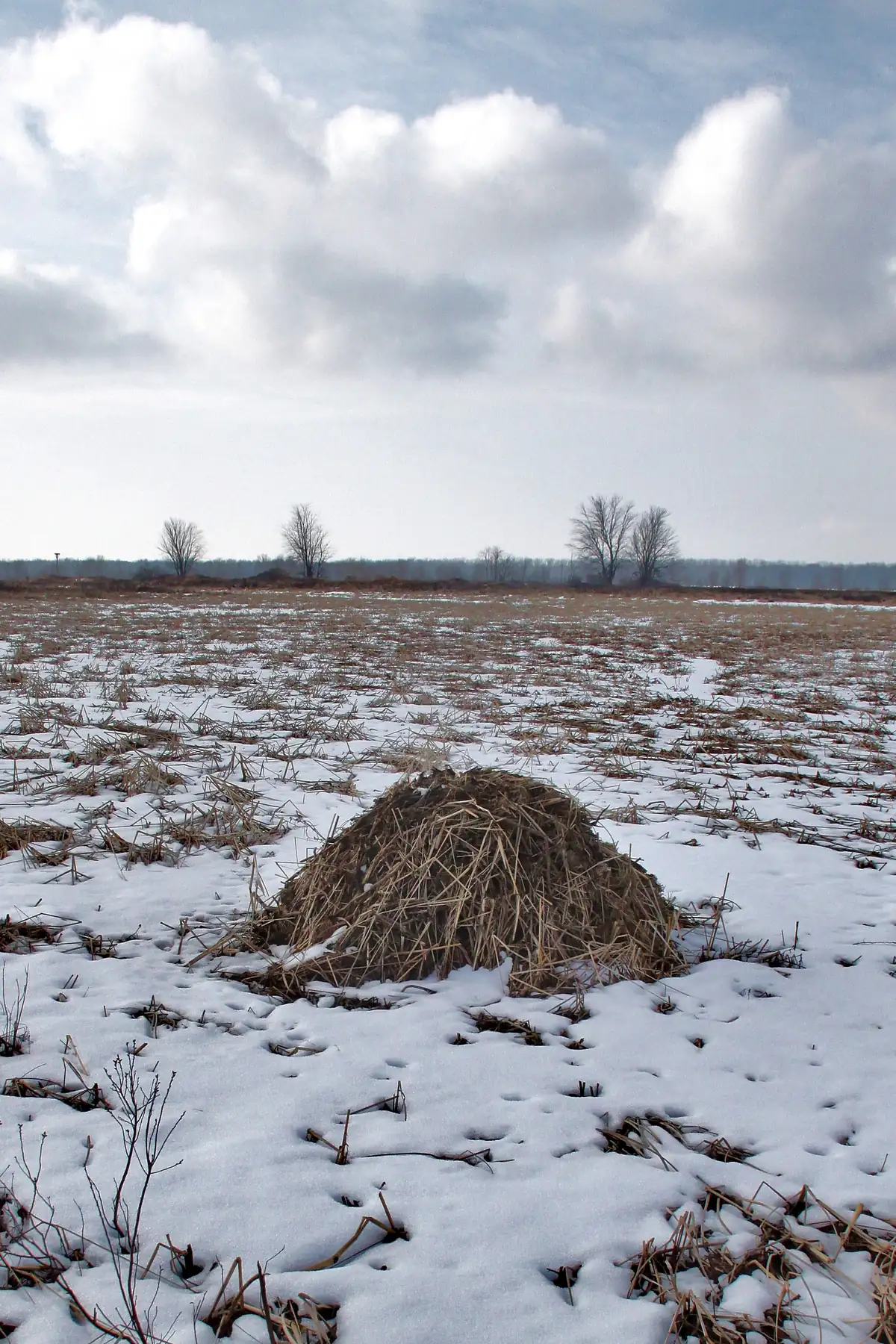
What are the mounds in Delaware’s winter marsh?
Most are muskrat houses. With the cordgrass and cattails flattened and brown, the low domes stand out across the tidal marsh in a way they never do in summer. DNREC’s wetland monitoring program notes that muskrats live year-round in tidal salt marshes all over the state and build these small mounds wherever they settle.
-
Muskrat houses and feeding platforms
Easiest to see from December to March · Marsh along the Bombay Hook and Prime Hook roads, Port Mahon Road, Blackbird Creek
The Chesapeake Bay Program describes the house as a dome of mud and marsh plants, up to about three feet tall, often built on a stump in shallow water, with entrances below the waterline. Smaller heaps nearby are feeding platforms, where the animal climbs out to eat. Muskrats dig out the roots and underground stems of marsh plants, especially cattails and rushes, and also take frogs, fish and shellfish, eating roughly a third of their weight every day.
-
The muskrat itself
Any time of day in winter · Ditches and open leads in the marsh, pond edges
A muskrat is 16 to 24 inches long, tail included, and weighs up to four pounds, with thick, glossy brown fur. The giveaway is the tail: about ten inches, scaly, nearly hairless and flattened from side to side. Muskrats breed through most of the year, raising one to three litters of five or six young.
-
A Delaware marsh tradition
Trapping season December 1 to March 10 · Tidal marshes and impoundments, mostly on private land
Muskrat trapping in Delaware goes back to colonial times. The wetland program writes that the meat is still a local delicacy, sold to restaurants and wild game dinners, and the pelts are shipped mostly overseas. If February is unusually snowy or cold, the state’s rules allow the season to be lengthened by a week or two, as it did after one February when 19 inches of snow and a mean temperature below freezing kept trappers off the marsh. Remember that traps may be set in marsh ditches all winter, so keep dogs leashed on wildlife areas.
Count the muskrat houses you can see from one fixed spot, such as a Bombay Hook observation tower, and repeat the count in March. Draw one on the reading-the-signs page of your field journal, noting the date, the tide and whether frost whitens its top.
How can you identify Delaware trees in winter?
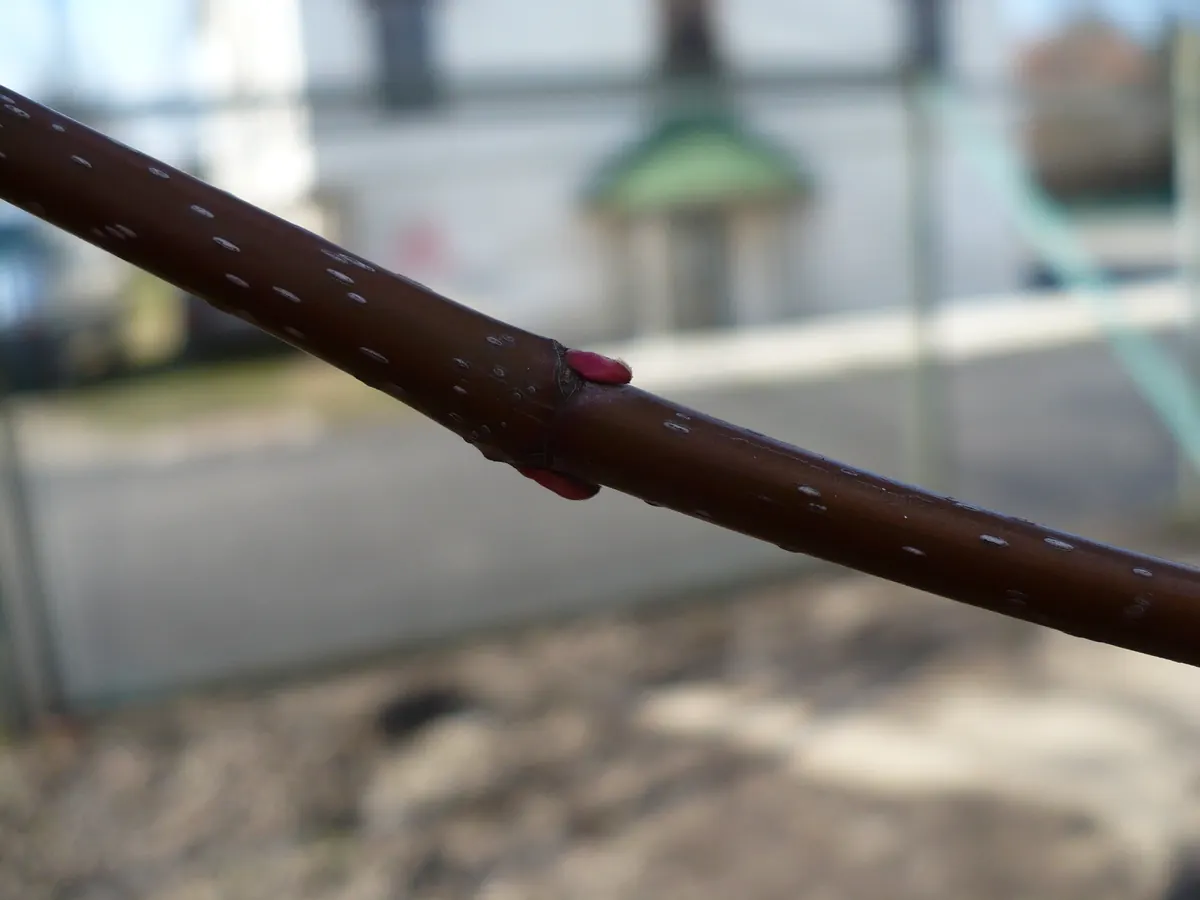
By their buds, bark and branching. Without leaves, a tree shows its twigs, and every native species has its own pattern: whether buds sit opposite each other or alternate along the twig, what color and shape they are, and how the bark breaks up as the trunk ages. January, when nothing else is in the way, is a good month to learn a handful of them.
-
Red maple
Red buds all winter; flowers open in March · Wet woods and swamp edges statewide, and many yards
The Chesapeake Bay Program notes that this common tree is named for its red leaves in fall and its red flowers, fruits and twigs, which makes it one of the easiest trees to learn in winter: look for shiny reddish twigs with small, rounded red buds set in opposite pairs. Young bark is smooth and gray; on old trees it turns dark and scaly. The flower buds swell toward the end of winter and open in drooping pinkish-red clusters in March and April, among the first color in the swamp.
-
A guided winter tree walk, Saturday, January 30
12:30 to 2:30 p.m. · Abbott’s Mill Nature Center, near Milford
The Delaware Nature Society’s Winter Tree Identification walk covers about a mile and a half of Abbott’s Mill trails with the site director, a forester, who teaches native species by bud, bark and branching rather than leaves ($15, all ages, registration required). Bring a tree field guide. Earlier that day, 10 a.m. to noon, the center offers an introduction to lichens, the gray-green crusts and leafy flakes on bark that are easiest to notice in winter.
Choose one tree near home and draw a twig with its buds this month on the tree-through-the-seasons page of your journal; come back to the same twig in March, May and October.
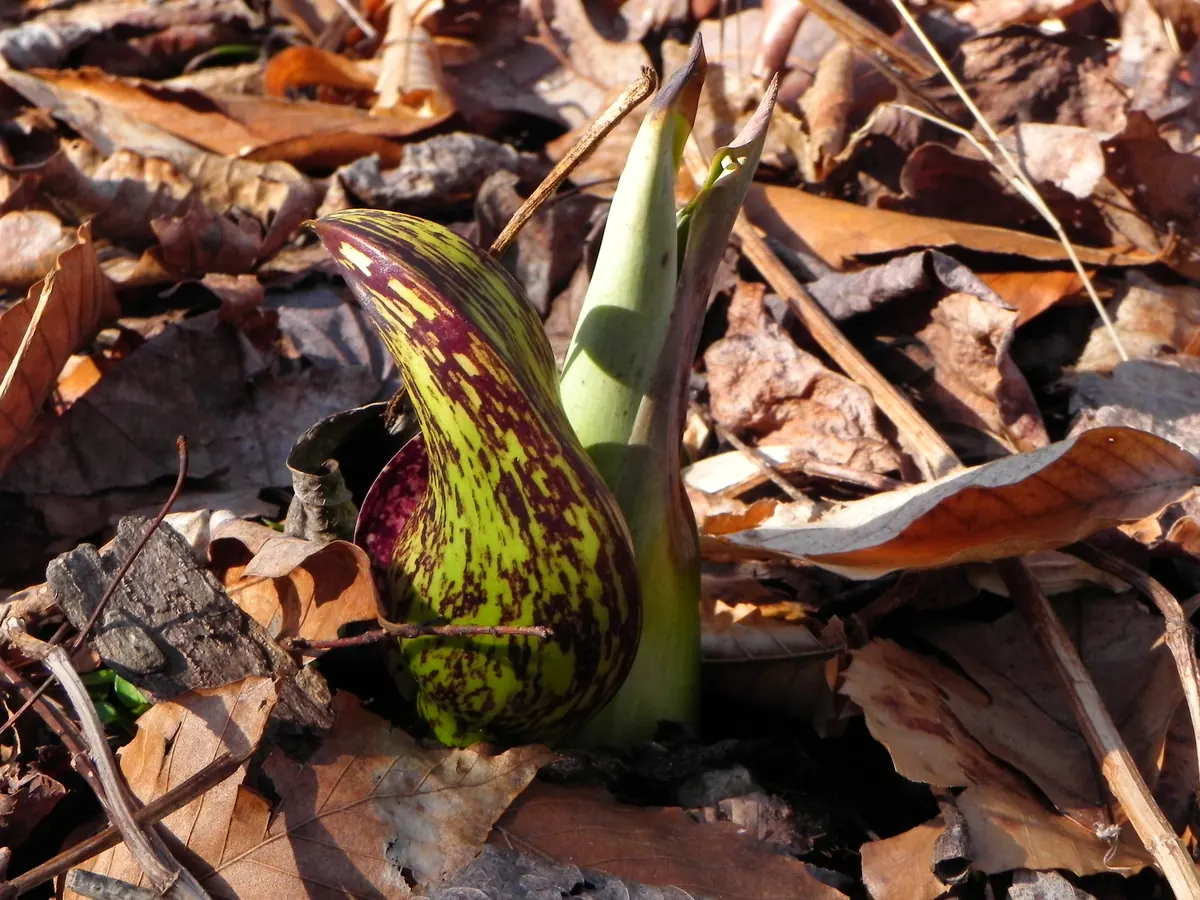
When does skunk cabbage bloom in Delaware?
Often before winter is over. Skunk cabbage is the first native wildflower of the year in the region, and it can flower through snow because it makes its own heat. The Chesapeake Bay Program says the inside of the hood is often about 20 degrees warmer than the air around it; New Jersey’s Division of Fish and Wildlife gives a range of roughly 27 to 63 degrees above air temperature and puts its bloom in February. Sources agree on late winter but not on the exact week, and a mild spell matters more than the calendar, so start looking in the last days of January.
-
The first hoods
Late January into March, depending on the winter · Springs, seeps and muddy stream banks, especially in Piedmont valleys such as the Brandywine and White Clay Creek
What comes up first is not a leaf but a hood called the spathe, four to six inches tall, maroon blotched and streaked with green, curled around a knob covered in tiny petal-less flowers. Look for a small melted patch in frost or snow where the plant has warmed the ground around it; the Virginia Outdoors Foundation calls the hood a heating tent for the flowers and the insects that visit them.
-
Why it smells
On warmer days of the bloom · Close up, on your knees
The odor draws flies and early bees, and the warmth helps spread it. Each plant’s female flower parts ripen before its male parts, so it cannot pollinate itself. Big green leaves, up to three feet long, follow later and die back under the summer canopy. They contain calcium oxalate, which badly irritates skin, so look and sniff but do not pick.
Note the date you first find a hood and the place, and compare it with next year’s. A plant that appears in a warm January may sit unchanged through a cold February.
How much daylight does Delaware gain in January?
About three quarters of an hour. Delaware’s day grows from a little over nine and a quarter hours on New Year’s Day to just over ten hours by January 31, and the gain speeds up as the month goes on: barely a minute a day at first, closer to two minutes a day by the end. Most of it comes in the afternoon. Delaware mornings stop darkening in early January and then slowly brighten, while sunset has been moving later since early December.
| City | Jan 1 | Jan 31 | Gained | Per day |
|---|---|---|---|---|
| Wilmington | 9 h 25 m | 10 h 09 m | 44 min | 1.5 min |
| Newark | 9 h 25 m | 10 h 09 m | 44 min | 1.5 min |
| Dover | 9 h 29 m | 10 h 12 m | 43 min | 1.4 min |
| Milford | 9 h 30 m | 10 h 13 m | 43 min | 1.4 min |
| Georgetown | 9 h 31 m | 10 h 14 m | 43 min | 1.4 min |
| Seaford | 9 h 32 m | 10 h 14 m | 42 min | 1.4 min |
| Lewes | 9 h 31 m | 10 h 13 m | 42 min | 1.4 min |
| Fenwick Island | 9 h 32 m | 10 h 14 m | 42 min | 1.4 min |
Northern New Castle County, being farther north, gains a couple of minutes more over the month than Fenwick Island. To see exactly when the sun sets on the afternoon you plan to visit the marsh, use our daylight calculator.
How cold and snowy is a Delaware January, and what could El Niño mean?
It is the coldest month of Delaware’s year. NOAA’s 1991–2020 daily normals hold the Wilmington airport’s typical high at 41 °F from about January 17 to 23 and drop its typical low to its yearly bottom, near 25 °F, from January 23 to 27; at Lewes the normal low sits at about 30 °F from January 19 to 27. Inland, more than 20 nights in an average January reach freezing and one or two reach 10 °F or lower. Snow is likelier than in December but uneven: Wilmington averages 6.1 inches, yet half of all Januaries bring 3.5 inches or less, and the Lewes median is zero.
| Station | High | Low | Nights ≤ 32 °F | Nights ≤ 10 °F | Precipitation | Snowfall, average | Snowfall, median |
|---|---|---|---|---|---|---|---|
| Wilmington New Castle County Airport | 41.4 | 25.6 | 23.6 | 2.0 | 3.23 | 6.1 | 3.5 |
| Newark Ag Farm | 42.5 | 25.1 | 23.8 | 2.6 | 3.43 | – | – |
| Dover | 44.4 | 27.6 | 21.6 | 1.4 | 3.43 | 4.1 | 2.0 |
| Greenwood 2 NE | 43.6 | 25.4 | 23.3 | 2.0 | 3.61 | 3.3 | 1.5 |
| Georgetown Sussex County Airport | 45.2 | 28.6 | 22.3 | 1.6 | 3.01 | – | – |
| Lewes | 46.2 | 30.2 | 17.6 | 0.5 | 3.38 | 2.0 | 0.0 |
El Niño is gathering strength along the equatorial Pacific, and federal forecasters, updating their outlook on September 10, gave odds above nine in ten that it becomes very strong and lasts the winter. What that does to a Delaware January is far less certain than in Florida or California. Delaware sits at the southern edge of a 2018 NOAA El Niño summary for the Northeast, and the pattern it sketches for a typical event goes like this: storms tracking up the coast more often, wetter than normal along the Eastern Seaboard, and extra coastal lows forming off the Southeast in strong events. Their review adds a warning that the North Atlantic Oscillation, the pressure seesaw between the Icelandic Low and the Azores High, can swamp the El Niño signal and is hard to forecast far ahead. During 2015–16, the strongest event on record, temperatures ran above normal from Maine to Delaware, and still the Mid-Atlantic finished with more snow than usual. That winter included the nor’easter of January 22 to 24, 2016, for which the Weather Service’s storm summary lists 14.2 inches at Dover and 12 at Newark but only 2.6 at Lewes, a 62 mph gust at Lewes Beach, and moderate to major tidal flooding on the Delaware beaches. NOAA’s official winter outlook comes out on October 15 and is revised monthly; Delaware readers can find the current maps at the Climate Prediction Center. For this week’s weather, try our local forecast; spring’s last-freeze dates by station are on our Delaware frost page.
What is in the night sky over Delaware in January 2027?
All times are Eastern Standard Time. January opens with a fine meteor shower and the planet Venus at its best before dawn, and closes with a supermoon and Jupiter climbing high in the evening.
-
The Quadrantids
Late Sunday, January 3, through dawn Monday, January 4 · Anywhere dark; the radiant climbs in the northeast after midnight
This year the conditions are close to ideal. The Moon is a thin crescent, about a sixth lit, that does not clear the eastern horizon until late in the night. The American Meteor Society’s forecast puts the peak near 10:30 that Sunday evening, while EarthSky’s comes later, near 12:47 a.m. Monday. The burst is brief, and the shower’s radiant point gains altitude as the night wears on, which favors the hours before Monday’s dawn. Under dark skies at Trap Pond or out near Bombay Hook, several dozen in an hour would count as a fine show; town lights cut that sharply.
-
Venus at its widest, and Earth nearest the Sun
Perihelion Saturday, January 2, 9:33 p.m.; Venus farthest from the Sun Sunday, January 3 · Venus low in the southeast before sunrise
Perihelion, Earth’s nearest point to the Sun, falls at 9:33 p.m. on Saturday, January 2, at about 91.4 million miles. Delaware is cold anyway because the axis tilts our half of the planet away from the Sun, keeping its light low and brief. Next morning Venus reaches greatest elongation, 47 degrees from the Sun, blazing in the southeast before dawn; a backyard telescope shows a half-lit disk. It remains the morning star well into spring.
-
The Wolf Moon, a supermoon
Full at 7:17 a.m. on Friday, January 22; best on the evening of Thursday, January 21 · Rising in the east-northeast at dusk
The full moon comes about 14 and a half hours after perigee, at roughly 222,000 miles away, the smallest distance of any full moon in 2027. Because the exact moment of full is just after sunrise on the 22nd, Thursday, January 21, is the better night: moonrise comes around sunset and moonset near dawn, and the disk looks every bit as full. Two evenings later, Saturday the 23rd, it comes up a little after dark with Jupiter close beside it; one almanac puts the pair about one and a half degrees apart around 7:24 p.m.
-
Mercury, Saturn and dark-sky nights
Saturn all month after dark; Mercury in the last days of January; darkest skies January 3 to 12 · Saturn in the southwest; Mercury very low in the west-southwest after sunset
Saturn sinks a little lower in the southwest after dark each week. Toward month’s end Mercury makes its one good evening showing of the season, hugging the west-southwest horizon 30 to 45 minutes after sunset; a bay beach or wide field helps. With no Moon in the evening sky from roughly January 3 through January 12, that stretch is the month’s best for the Milky Way.
| Phase | Date | Time |
|---|---|---|
| New moon | Thursday, Jan 7 | 3:24 p.m. |
| First quarter | Friday, Jan 15 | 3:34 p.m. |
| Full moon, the Wolf Moon | Friday, Jan 22 | 7:17 a.m. (a supermoon, the closest full moon of 2027) |
| Last quarter | Friday, Jan 29 | 5:55 a.m. |
| New moon | Saturday, Feb 6 | 10:56 a.m. |
A meteor night is only as good as the clouds allow, so look at the cloud cover forecast the afternoon before, and find rise and set times for every night of the month on our Moon calendar.
What can families do outdoors in Delaware in January 2027?
- First Day Hikes, Friday, January 1. Delaware State Parks joins this America’s State Parks tradition each New Year’s Day; for 2026 it offered 21 free guided walks in 16 parks, Brandywine Creek and Fox Point to Killens Pond and Cape Henlopen. When we looked, the 2027 schedule was not yet out, so check destateparks.com once December arrives.
- The last Christmas Bird Counts, through Tuesday, January 5. Audubon’s count period ends January 5. Last season the Rehoboth and Cape Henlopen/Prime Hook circles counted on the first weekend of January; the Delaware Ornithological Society posts this season’s dates and compilers on its count page, and beginners are welcome.
- Free boardwalk strolls, every Saturday. Meet Marsh Animals, a half-hour naturalist walk plus a visit with live animals at the DuPont Environmental Education Center in Wilmington, starts at 1:45 p.m. on January 2, 9, 16, 23 and 30. Free Storytime at the Marsh follows on Wednesday mornings (January 6, 13, 20 and 27, 10:45 a.m.).
- Preschool naturalists on Fridays. Knee High Naturalists sessions for three- to five-year-olds and a grown-up run 10 to 11:30 a.m.: New Year in Nature at Coverdale Farm Preserve on January 8, Owl Babies at Ashland on January 15 ($15), Snowy Day at Coverdale on January 22 and Winter Birds at Ashland on January 29.
- Citizen Science Symposium, Saturday, January 16. Ashland Nature Center, 9 a.m. to 2 p.m. ($25, ages 14 and up, lunch included), with talks on Delaware’s hawk watches, pollinators, iNaturalist and nesting birds; a good way for a teenager to find a project.
- Owls and birds, January 23 and 24. The Owl Prowl at Ashland on Saturday evening ($15, all ages), and Guided Winter Birding by van to private preserves on Sunday, 8:30 a.m. to 12:30 p.m. ($25, adults new to birding).
- Winter trees, Saturday, January 30. Abbott’s Mill Nature Center near Milford, 12:30 p.m. ($15).
- Count from the kitchen window. Project FeederWatch runs all winter, and eBird accepts a single sighting from anywhere. The Great Backyard Bird Count normally falls on a long weekend in mid-February; birdcount.org will post the 2027 dates.
Every Delaware Nature Society program needs advance registration and can fill or change, so confirm the week before. Our nature guides for every state and month list what comes next.
Safety notes for January in Delaware
- Firearm deer seasons fill most of the month. Under the 2026–27 Delaware Hunting and Trapping Guide, the handgun and straight-walled pistol-caliber rifle season runs January 2 to 10 (closed in Wildlife Management Zones 1A and 1B), the second general firearm season January 16 to 24, and the late muzzleloader season January 25 to 31. Bowhunters and crossbow hunters can be out every day until the 31st. Sunday hunting is legal for every game species this season on private land where the owner allows it and on designated public land, though Delaware State Parks permits no hunting on Sundays.
- Hunter orange. On every day of a firearm deer season, Delaware requires anyone hunting anything other than migratory game birds to be dressed in blaze orange: 400 square inches minimum, some of it on the head, some on the chest and some on the back. In January 2027 that covers January 2 to 10 and January 16 to 31. Hikers on wildlife areas, state forests and field-edge trails should wear an orange hat or vest on those days as well.
- Waterfowl, small game and traps. Duck season, sea ducks included, and the migratory Canada goose season run through January 31; brant January 16 to 30; snow geese through January 31, reopening February 1; tundra swans by permit only, through January 31. Rabbit, gray squirrel, pheasant and pen-raised quail seasons run to February 28. Trapping for muskrat, mink, otter, raccoon and opossum runs to March 10, so keep dogs leashed on wildlife areas and marsh edges.
- Ice. Delaware’s ponds seldom freeze thick enough to hold a person, and tidal creeks almost never do. National Weather Service guidance asks for four inches or more of fresh, clear ice before anyone walks on it, with white or snow-covered ice about half as strong, and no ice ever guaranteed safe.
- Nor’easters, tides and wind. A January coastal storm can push water over the bayshore roads and the beach highways, so check the forecast and tide tables before driving to Port Mahon, Bowers, Slaughter Beach or the Prime Hook beach roads, and never drive through moving water. A raw northwest wind over open marsh makes a 30 °F afternoon feel far colder; dress in layers.
- Dunes are off limits. DNREC bans sledding and snowboarding on the dunes of Cape Henlopen and Delaware Seashore State Parks, and walking on them anywhere but the posted crossings, because the dunes shield the beach towns and wildlife.
- Short afternoons. The marsh roads have no lights; carry a headlamp and tell someone your route.
Sources
- University of Delaware UDaily, January 2013: owl breeding season has begun in Delaware
- Chesapeake Bay Program field guide: great horned owl
- Chesapeake Bay Program field guide: barred owl
- Cape Gazette, December 9, 2013: Arctic conditions pushing rare snowy owls into Delaware (DNREC biologist)
- Delaware Nature Society: January 2027 events calendar
- Delaware Nature Society: Nature at Night, Owl Prowl, Ashland Nature Center (January 23)
- Delaware Nature Society: Knee High Naturalists, Owl Babies (January 15)
- Delaware Nature Society: Citizen Science Symposium (January 16)
- Delaware Nature Society: Guided Winter Birding (January 24)
- Delaware Nature Society: Winter Tree Identification, Abbott’s Mill (January 30)
- Delaware Nature Society: An Introduction to Lichen Diversity, Abbott’s Mill (January 30)
- Delaware Nature Society: Winter Sowing and Bird Walk (January 9)
- DNREC: waterfowl surveys (aerial survey program since 1974, January flight and the Midwinter Waterfowl Inventory)
- Delaware Open Data Portal: Waterfowl Survey Data, by Year (DNREC)
- Delaware Open Data Portal: Aerial Waterfowl Survey Data (survey flights by month and zone)
- DNREC: snow goose conservation order (none in 2027)
- Chesapeake Bay Program field guide: tundra swan
- U.S. Fish and Wildlife Service: Bombay Hook wildlife calendar (January hawks, eagle nest building, deer; February eagle eggs and pintails)
- U.S. Fish and Wildlife Service: Bombay Hook National Wildlife Refuge (2026 hunt closure dates)
- U.S. Fish and Wildlife Service: Bombay Hook rules and policies (hours)
- Chesapeake Bay Program field guide: northern harrier
- National Audubon Society field guide: rough-legged hawk
- DNREC: bald eagles soar in Delaware as survey reveals population growth
- DNREC Wetland Monitoring and Assessment Program blog, December 1, 2018: hunting the way of wetlands (muskrats in Delaware marshes)
- Chesapeake Bay Program field guide: muskrat
- WHYY: Delaware extends muskrat trapping season after a harsh February
- Delaware Hunting and Trapping Guide 2026–27: furbearer trapping and hunting seasons
- Chesapeake Bay Program field guide: red maple
- Chesapeake Bay Program field guide: eastern skunk cabbage
- New Jersey Division of Fish and Wildlife, Ask a Naturalist: skunk cabbage
- Virginia Outdoors Foundation, February 6, 2026: skunk cabbage, the warm winter flower
- NOAA NCEI: U.S. climate normals 1991–2020
- NOAA NCEI: monthly normals data service, Delaware stations (January temperature, cold nights, precipitation, snowfall and snowfall medians)
- NOAA NCEI: daily normals data service, Wilmington and Lewes (January and February highs and lows)
- Climate Prediction Center: ENSO diagnostic discussion, September 10, 2026
- Climate Prediction Center: seasonal outlooks (winter outlook issued October 15, 2026, then monthly)
- National Weather Service Mount Holly: winter storm summary, January 22–24, 2016
- NOAA and Northeast Regional Climate Center: El Niño impacts and outlook, Northeast region
- U.S. Naval Observatory: moon phases (data API)
- U.S. Naval Observatory: Earth’s seasons and perihelion 2027
- Fred Espenak, Sky Event Almanac 2027 (Moon, planets, Jupiter pairing)
- American Meteor Society: meteor shower calendar (Quadrantids)
- EarthSky: Quadrantid meteor shower
- EarthSky: what is a supermoon
- EarthSky: Venus at greatest western elongation (January 3, 2027)
- Delaware Ornithological Society: Christmas Bird Counts
- National Audubon Society: Christmas Bird Count (December 14 to January 5)
- State of Delaware news, December 30, 2025: First Day Hikes in Delaware State Parks
- Project FeederWatch: how to participate
- Great Backyard Bird Count
- eBird: submit sightings
- Delaware Hunting and Trapping Guide 2026–27: deer seasons
- Delaware Hunting and Trapping Guide 2026–27: deer hunting (hunter orange, Sunday hunting)
- Delaware Hunting and Trapping Guide 2026–27: migratory bird seasons
- Delaware Hunting and Trapping Guide 2026–27: small game seasons
- State of Delaware news, August 26, 2026: 2026–27 hunting season, Sunday hunting for all game
- Delaware State Parks: hunting rules (no Sunday hunting in state parks)
- National Weather Service Duluth: winter hazards awareness (ice thickness guidance)
- State of Delaware news, January 2, 2025: DNREC reminds public not to sled or snowboard on dunes
- Photos via Wikimedia Commons; licenses and photographers are credited under each picture
