What to look for in nature in Illinois this April
April in Illinois is the month spring gets loud. Piping plovers touch down on the Chicago lakefront, Virginia bluebells carpet the floor of Illinois Canyon, and the first bison calves of the year appear on the prairie at Nachusa and Midewin. At Prairie Ridge, the last greater prairie-chickens boom at dawn, while peepers, toads and the first gray treefrogs fill the evening. Hummingbirds and orioles return to feeders, redbuds open, and morel hunters head into the woods. Severe weather season begins, the median last freeze moves north across the state, and the Pink Moon climbs over the horizon on April 20. Read on for sections that run from the Chicago shore down to the southern tip.
Other months in Illinois: October, November, December, January, February, March.
Start here

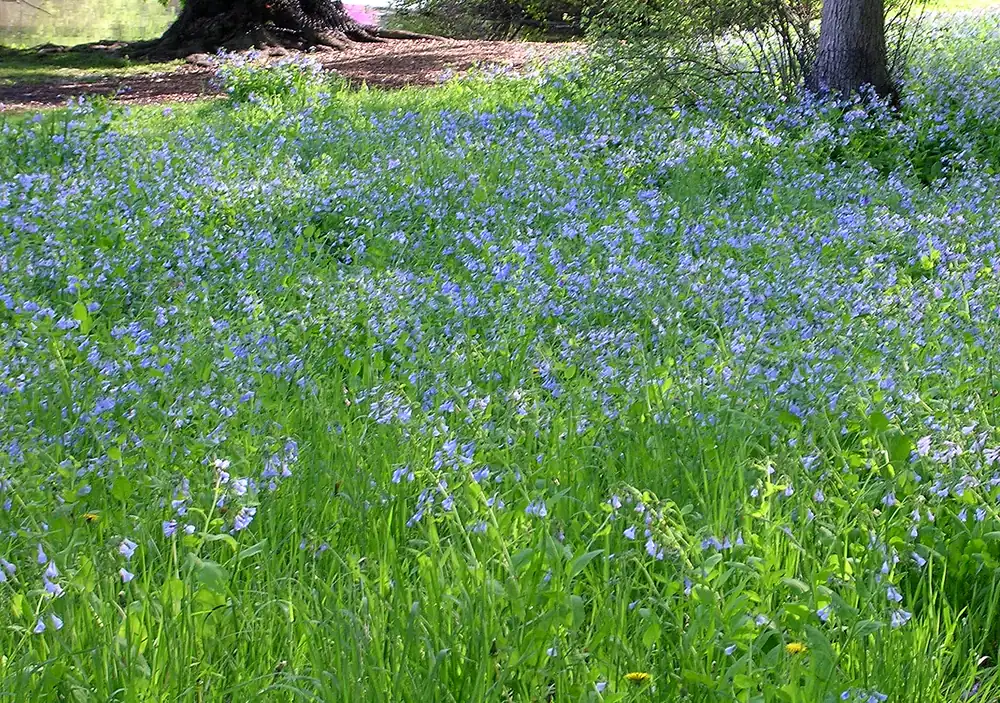
- Find the bluebells while they last. Pick a mid-to-late April morning and walk the Illinois Canyon trail at Starved Rock, or any rich floodplain woods near you, and look for blue and pink bells on the forest floor. Bring a camera, stay on the path, and return a week later to see how the patch has changed.
- Watch Montrose Beach for plovers. Check the Chicago Piping Plovers updates and, if birds are on the beach, watch from the posted line with binoculars. The first bird may land in late April or in May.
- Listen at dusk on a warm night. Stand by a pond or ditch an hour after sunset and learn the trill of the American toad, the whistle of the peeper and, late in the month, the buzz of the gray treefrog.
Fill the birds I have seen plate with a first hummingbird, barn swallow, wood thrush and oriole; put every frog and toad night on a map of sounds; follow one redbud or bluebell patch with two photographs from one spot, on the first and last days, for the same place twice; log budding on a tree through the seasons; and keep the Pink Moon evening for a dusk and dawn watch.
Regions used below: Chicago and the Lake Michigan shore; Northern Illinois and the Rock River; Central Illinois and the Illinois River valley; Western Illinois and the Mississippi; Southern Illinois and the Shawnee Hills.
When do piping plovers return to Chicago's beaches in April?
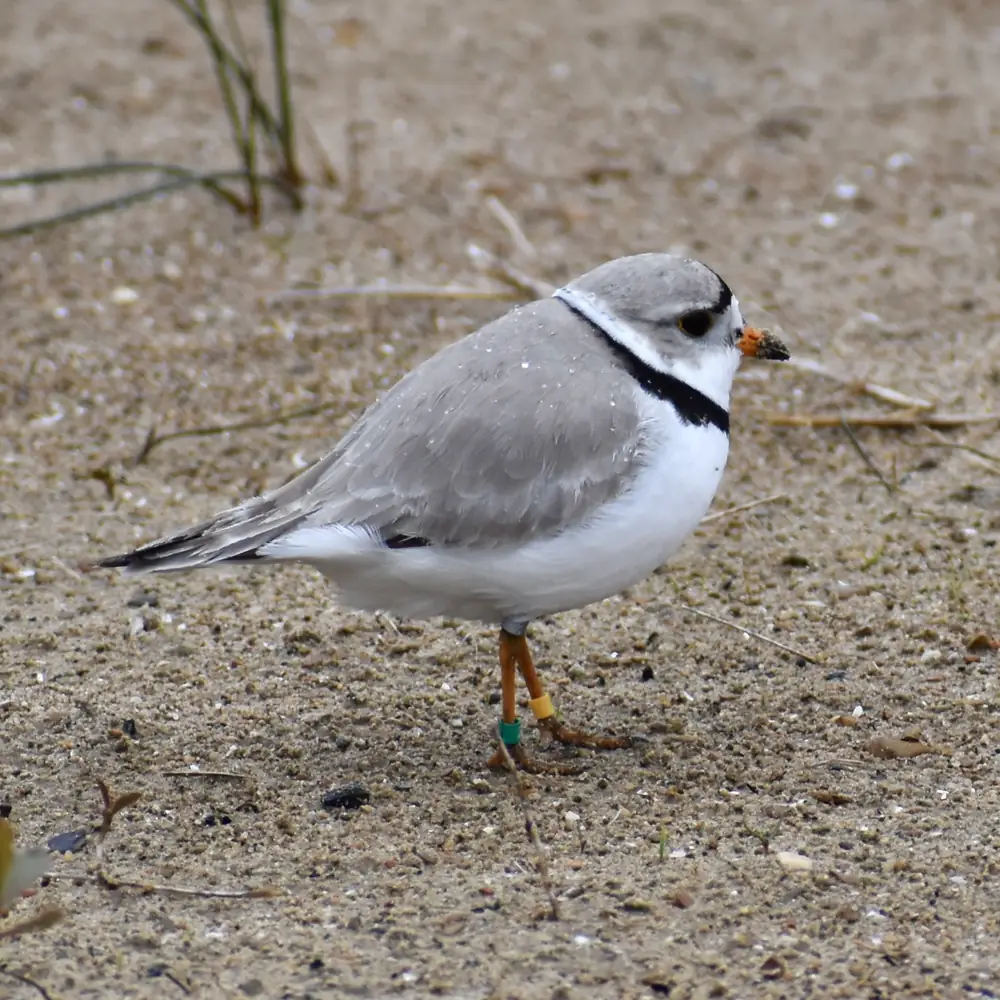
April is when one of the Midwest's most closely watched birds comes back to the Chicago lakefront. Per the federal species profile, piping plovers start reaching their breeding grounds in early April, court and nest in mid-to-late April, with chicks hatching between late May and early June; at Chicago’s Montrose Beach arrivals have run later, as the next item explains. The population has been federally endangered since December 11, 1985. In Chicago, the Chicago Piping Plovers partnership (the Chicago Bird Alliance, the Chicago Ornithological Society and the Illinois Audubon Society) says a pair nesting at Montrose Beach in 2019 fledged the first chicks in Chicago and Cook County in 71 years.
-
First plovers at Montrose Beach
Late April or May; the Chicago Piping Plovers partnership lists Monty arriving in late April in 2022 and birds returning in May in 2023 and 2024 · Montrose Beach on the Chicago lakefront
The partnership’s own account of recent seasons shows how much the first-bird date varies: Monty arrived in late April in 2022, and other birds returned in May in 2023 and 2024. A Chicago Sun-Times report counted two male plovers at Montrose on April 11, 2025, so an earlier arrival is possible. The first bird of 2027 could show up before or after the end of April, and the partnership posts sightings as they happen, which is the best way to find out whether anyone has landed yet. -
Giving plovers room
April through July · Any nesting beach on Lake Michigan
The federal profile advises visitors to stay well back from nesting shoreline between April and July. A bird that keeps leaving its scrape to avoid you is a bird that is not guarding its eggs, so watch from the posted line with binoculars, and photograph from a distance with a long lens rather than creeping closer.
-
Night-herons at Lincoln Park Zoo
March to August · Pritzker Family Children's Zoo, Lincoln Park, Chicago
Lincoln Park Zoo says the largest black-crowned night-heron colony in Illinois roosts on its grounds from March to August, and that warbler season in Chicago starts in April. It is an easy, free place to see wild herons from the sidewalk.
For other Chicago-area spring birds, see the migrant section below. Record your first plover, heron or warbler in the journal.
Which migrant birds arrive in Illinois in April, and when do hummingbirds come back?
The Illinois Department of Natural Resources (IDNR) wildlife pages read like a calendar for April. Barn swallows, house wrens and the first ruby-throated hummingbirds arrive this month, purple martins that came back in late March are building toward nesting, and the forest thrushes and orioles wait for the last third of the month. The Chautauqua National Wildlife Refuge on the Illinois River puts the warbler window plainly: April and May are the time to strain your eyes, necks and ears for migrating warblers. Most of the big warbler waves come later, but April starts the show.
-
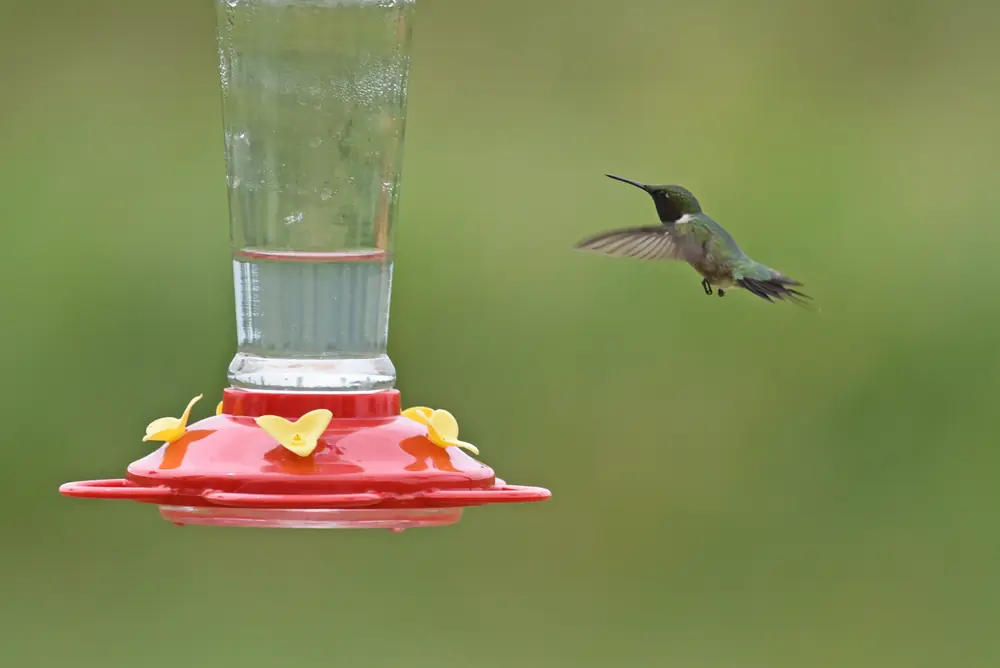
Ruby-throated hummingbirds
Mid-April to late April in most of the state; University of Illinois Extension says the arrival date varies from year to year · Gardens, woodland edges and feeders statewide
IDNR says spring migrants begin showing up in Illinois around mid-April, and Extension describes mid-to-late April as the usual window, with 2026 an early year. Males come first. If you put out a feeder, Extension recommends a plain mix of four parts water and one part white sugar, and cleaning feeders every other day when possible. It says feeders should supplement, not replace, the flowers and insects that hummingbirds need. You can report your first hummingbird to Journey North, which maps the northward wave.
-
Swallows, martins and house wrens
Barn swallows arrive in early April; purple martin males in late March to early April; house wrens in April · Farms, open water, bridges, martin houses and backyard boxes
IDNR calls the barn swallow the most common swallow in the state and says early April is the usual arrival time. It calls the purple martin a common migrant and summer resident whose males come first, with egg-laying running from mid-April on, and says most martins now nest in boxes people provide. The Chicago Botanic Garden notes that its martins return year after year to the same housing. House wrens move into any small cavity, so a nest box hung in April may be claimed within days.
-
Wood thrushes and orioles
Wood thrushes in late April; Baltimore orioles in southern Illinois by mid-to-late April and statewide by early May · Bottomland forests and wooded ravines (thrush); yards, edges and tall trees (orioles)
The wood thrush's flutelike dawn and dusk song is one of the first sounds of Illinois bottomland woods in late April, according to IDNR. The Outdoor Illinois Journal reports that Baltimore orioles reach southern Illinois by mid-to-late April and spread north by early May, and that both Baltimore and orchard orioles will visit hummingbird feeders and take orange halves and grape jelly.
-
Prairie arrivals at Midewin and Nachusa
April · Midewin National Tallgrass Prairie near Wilmington; Nachusa Grasslands near Dixon
The Nature Conservancy's Illinois seasonal guide lists ruby-crowned kinglets, blue-winged teal, loggerhead shrikes and upland sandpipers among the April returnees at Midewin, and eastern bluebirds, turkey vultures and sandhill cranes holding territory at Nachusa. The Forest Service describes Midewin as one of the Midwest's important sites for grassland birds, including dickcissels, bobolinks and Henslow's and grasshopper sparrows.
Most songbirds migrate at night. BirdCast, run by Cornell Lab of Ornithology and partners, publishes migration forecasts and live radar maps and says more than 80 percent of North American migratory species travel after dark, so a forecast of heavy flights is a good reason to turn off unneeded lights and to go out at dawn.
Where do Virginia bluebells and other Illinois spring wildflowers peak in April?
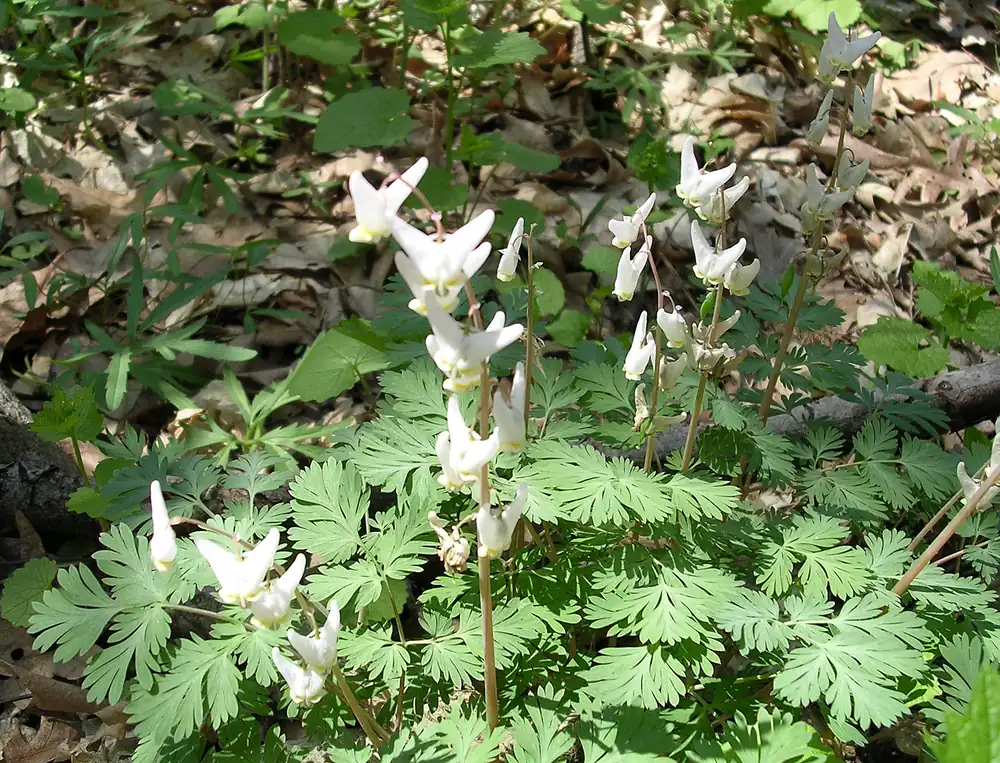
The Illinois woodland wildflower season moves from its quiet opening in March into its crowded middle in April. An Illinois Public Media naturalist writes that bloodroot, Dutchman's breeches and spring beauty flower over the course of April, and that the show reaches its climax in early May, when more than a dozen species may bloom at once. Trees follow: redbuds open before their leaves, and the first bud break shows at the end of the month.
-
Virginia bluebells at Starved Rock
Mid-to-late April; bluebells were in bloom on April 13 in 2026 and at peak on April 22 in 2025 · Illinois Canyon trailhead, Starved Rock State Park, near Oglesby
Shaw Local photographers found tens of thousands of Virginia bluebells carpeting the Illinois Canyon trailhead on April 22, 2025, with cutleaf toothwort, spring beauty, bristly buttercup, false rue anemone, blue violet and redbud in bloom nearby. Their 2026 photos, taken on April 13, already showed bluebells in bloom, so the timing clearly shifts from year to year. Check the park's current reports before you drive, and stay on the trail so the carpet survives.
-
Bloodroot, Dutchman's breeches and spring beauty
Over the course of April · Allerton Park (Piatt County), Busey Woods in the Champaign-Urbana area, Forest Glen Preserve (Vermilion County) and similar rich woods
The Illinois Public Media piece names these three as the stars of April and points to Allerton Park, Busey Woods, Forest Glen and the Middle Fork of the Vermilion River natural areas. Bloodroot's white flowers last only a day, so a single patch can look different from one morning to the next.
-
Redbud and the first trees
April into May in northern Illinois · Woodland edges, yards and the shores of lakes and ponds
University of Illinois Extension calls the eastern redbud one of the earliest trees to bloom, with flowers appearing before the leaves, and says its blossoms are an early food source for bumble bees and carpenter bees. At The Morton Arboretum in Lisle, staff describe April as the mid-season for bloom: East Woods wildflowers, the daffodils in Daffodil Glade and redbuds along Lake Marmo, with crabapples and magnolias usually later, in May. Lincoln Park Zoo adds that bud break arrives on Chicago's trees in April.
-
Arbor Day
The last Friday in April, which is April 30, 2027 · Statewide
Illinois observes Arbor Day on the last Friday in April under state law (5 ILCS 490/10), the same Friday as the national observance, according to a Congressional Research Service fact sheet. In 2027 that is April 30. It is a good day to plant a native redbud, serviceberry or oak, and to put up a nest box.
Photograph one bluebell patch or one redbud on the first and last days of April, from the same spot each time, and record it on the same place twice plate. The Morton Arboretum posted a weekly spring bloom report on Wednesdays from late March to mid-May in 2026, which is a handy way to see how far along the Chicago region is.
Where can you see baby bison and booming prairie-chickens in April?
Illinois's remnant prairies have two April spectacles that do not happen anywhere else in the state: the first bison calves of the year and the last booming prairie-chickens. Both are easy to harm by getting too close, and both repay patience.
-
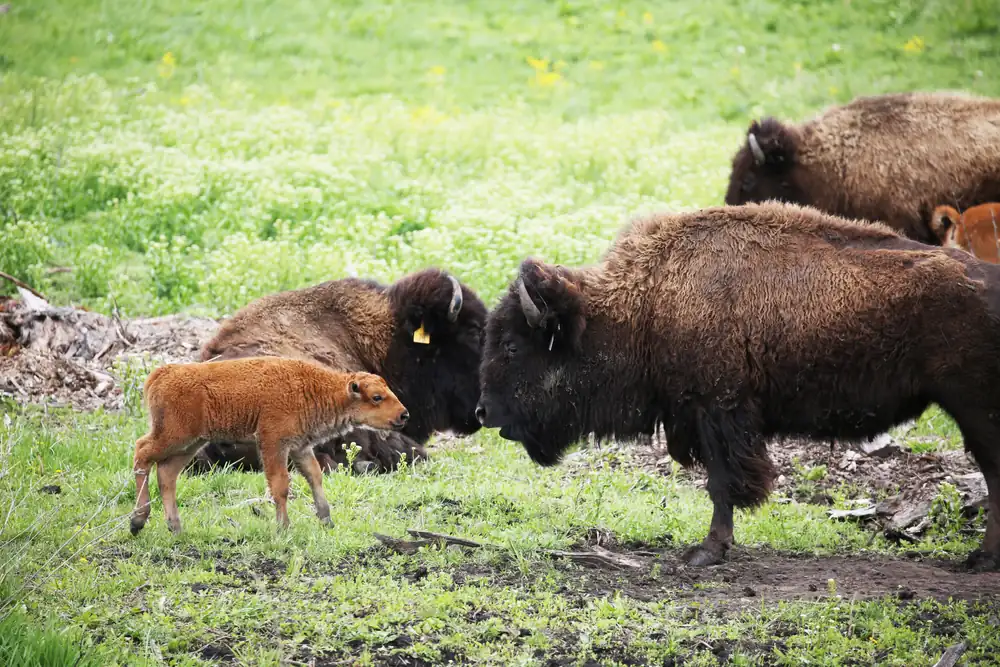
Bison calves at Nachusa and Midewin
Calves are born in April, May and June · Nachusa Grasslands near Dixon (the herd roams about 1,500 acres); Midewin National Tallgrass Prairie near Wilmington (southeast bison pasture)
The Nature Conservancy says the Nachusa herd numbers about 100 animals, and that newborn calves weigh about 50 pounds and can stay with the herd within hours. The Friends of Nachusa Grasslands list roadside viewing from the visitor center overlook, Lowden Road, Naylor Road and Stone Barn Road, and say the animals move unpredictably, so sightings are not guaranteed. Cows defend calves hard, and bison can run faster than 30 miles per hour. The Conservancy asks for at least 100 yards of distance and the Friends group says 100 feet, so use the larger number. Nobody may walk into the fenced bison units, and the Forest Service points visitors to the southeast bison pasture at Midewin.
-
Greater prairie-chickens at Prairie Ridge
Booming season is April through early June; females visit the booming grounds in highest numbers close to April 10, according to a 2022 IDNR account · Prairie Ridge State Natural Area, Jasper and Marion counties
The state agency classes the greater prairie-chicken as endangered and reports that the species hangs on only on managed preserves in these two counties; the male's hollow boom has been compared to a breath across a glass bottle. The 2022 account counted about 52 males in Jasper County and 18 in Marion County, up from a low of 12 males in Jasper County in 2014 after birds were brought in from elsewhere in 2014, 2016 and 2017. We found no public 2027 viewing program posted, so inquire first. Never walk onto a booming ground. The Illinois Audubon Society owns a 160-acre preserve within the natural area and bought another 80 acres in 2025, so contact the Society or IDNR for any visits they may offer in 2027.
Binoculars and a spotting scope matter more here than a long lens. Watch bison from the car whenever you can.
Which frogs and toads are calling in Illinois in April?
The March rush of salamanders and wood frogs is mostly over, though IDNR says spotted salamander females lay 300 to 400 eggs in woodland ponds and the larvae change into land animals between late June and mid-August. April brings the full chorus. IDNR says spring peepers breed from early March to early June, and The Nature Conservancy notes that warmer April nights bring the peepers out at wetlands such as Spunky Bottoms. At The Morton Arboretum, staff noted chorus frogs singing among the magnolias on April 1, 2026. Cold snaps can quiet the pond overnight; a warm rain starts it up again.
-
American toad and Fowler's toad
Spring, with Fowler's toads calling at urban ponds in April · Gardens, lawns, ponds and ditches; American toads everywhere in Illinois except the southeastern quarter
IDNR describes the American toad's call as a high, musical trill, and says a female lays between 2,000 and 20,000 eggs in long strings on the bottom of shallow water, with tadpoles changing into toads by early June. Lincoln Park Zoo says Fowler's toads begin calling at city ponds in April. Toads are often the first amphibian a child finds at a porch light.
-
Northern leopard frog
Mid-March through May · Ponds, lakes, sloughs and flooded fields in the northern half of Illinois
IDNR gives mid-March through May as the breeding period and says the call can be imitated by rubbing a thumb across an inflated balloon. In summer these frogs wander into prairies and field edges.
-
Cope's gray treefrog
Late April into August · Woodlands next to water, statewide
Late April is when the first gray treefrogs join the chorus. IDNR describes the call as a high buzzing trill that sounds a little like a red-bellied woodpecker, and says the frogs shelter in dead trees, under bark and in rotting logs.
-
Snake Road stays closed
Through May 15 · Forest Service Road 345, LaRue-Pine Hills, Shawnee National Forest
The Forest Service keeps this road closed to vehicles from March 15 through May 15 so that snakes and amphibians can cross from the bluffs to LaRue Swamp. Foot traffic is allowed, collecting and handling are not, and volunteer Snake Sentinels help visitors with identification. The agency says the area holds about two-thirds of the state's amphibians and 59 percent of its reptiles.
Learn the calls one at a time and mark the date of each first call on the map of sounds plate. Carry a dim red light if you are out after dark, and leave animals where you find them.
When do morel mushrooms and spring trout season come to Illinois?
April is the month when people head into the woods and to the water for food. Both come with rules, and in both cases the calendar depends on the weather more than the date.
-
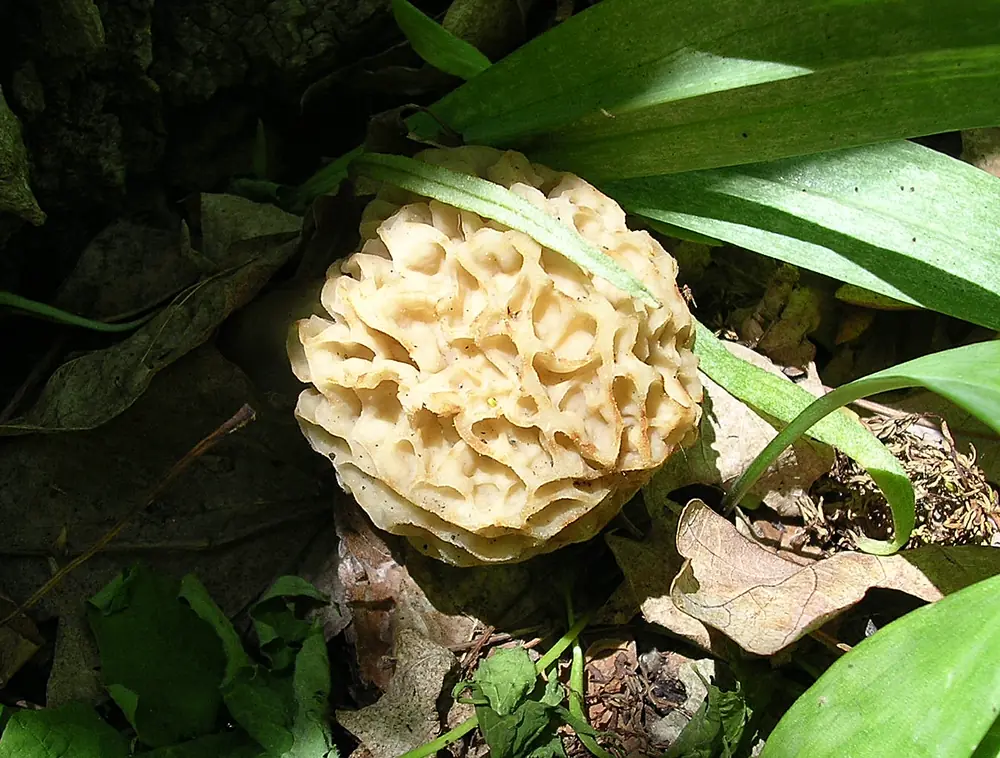
Morel mushrooms
Black morels can appear as early as mid-March in southern Illinois and the common (yellow) morel in early April, according to IDNR; University of Illinois Extension says they spread across the state over the following weeks, depending on spring weather · Forested areas; Giant City State Park and the Shawnee National Forest region are well-known southern destinations
IDNR’s Kids for Conservation archive (2015) says Illinois permits morel hunting in state parks for personal use only, with no sales, and not in nature preserves. At some IDNR sites that offer spring turkey hunting, mushroom collecting is held back until the afternoon, so ask the site about its current rule. The same page says a mushroom you cannot positively identify should not be eaten, that morels need thorough cooking and that alcohol should be avoided with them. Allerton Park's natural areas manager told Extension that the damage comes from human disturbance, not the picking, and that Allerton's rule is to stay on trails. Call the site before you go, because rules vary.
-
Spring trout season
Usually catch-and-release at select sites in late March, then the regular season in early April; IDNR has not posted 2027 dates yet · Stocked ponds, lakes and streams statewide; see the IDNR iFish site for the list
Illinois Department of Natural Resources says an additional 80,000 trout are stocked for the spring season, which begins in April, and that anglers need a fishing license and an inland trout stamp unless exempt. Before the opener, only designated catch-and-release sites are open, and fishing elsewhere is not allowed. Dates change from year to year, so check the IDNR iFish site in March 2027; it carries the list of trout sites, fishing regulations and upcoming events. -
White bass below Starved Rock Dam
Spring; one 2010 magazine account puts the white bass feeding near mid-April · Illinois River below the dam at Starved Rock State Park, down to Peru
Writer Ted Peck wrote in Game and Fish magazine that white bass feed heavily around mid-April below Starved Rock Dam, and that sauger and walleye also run in the tailwater in late March or April. This is one angler's account from 2010 rather than an agency forecast, so use the timing only as a loose guide and ask a local bait shop or IDNR fisheries staff.
If you cannot name a mushroom for certain, leave it in the woods.
What is April weather like in Illinois, and when does severe weather start?
April keeps winter's tricks even as it warms. In NOAA's 1991–2020 normals, the typical April afternoon reaches 59.7 °F at Rockford and 59.0 °F at Chicago O'Hare, then 65.6 °F at Springfield and 71.4 °F at Anna near the southern tip. The average low is still near 38 to 40 °F in the north. Average precipitation runs 3.75 inches at Rockford and O'Hare and rises to 5.55 inches at Carbondale and 5.63 inches at Anna. Snow is rare, with a normal of 1.3 inches at O'Hare and none in the south. The Climate Prediction Center keeps its newest 90-day outlook online; we leave the reading to NOAA.
-
Severe weather season
April through September; the first big outbreaks can come in April · Statewide; National Weather Service forecast offices including Chicago and Central Illinois (Lincoln)
The National Weather Service in Chicago defines its severe weather season as April through September. A reminder of what April can do came on April 9, 2015, when 11 tornadoes touched down in Illinois, including an EF4 that ran 30.2 miles through Lee, Ogle and DeKalb counties near Fairdale and Rochelle, killing 2 people and injuring 22. The Central Illinois forecast office advises having a shelter place on the lowest floor of the building in an interior room or basement, receiving alerts through NOAA Weather Radio, phone alerts, TV, radio or the NWS apps, and not counting on outdoor sirens, which are not designed to be heard indoors.
| Station | Average high | Average low | Precipitation | Snowfall |
|---|---|---|---|---|
| Rockford (Greater Rockford Airport) | 59.7 | 38.5 | 3.75 | 0.9 |
| Moline (Quad City Airport) | 63.0 | 39.9 | 3.81 | 1.1 |
| Chicago O'Hare | 59.0 | 40.3 | 3.75 | 1.3 |
| Peoria (Greater Peoria Airport) | 63.7 | 42.1 | 3.99 | 0.5 |
| Springfield (Capital Airport) | 65.6 | 43.3 | 3.97 | 0.3 |
| Carbondale (sewage plant station) | 67.7 | 44.3 | 5.55 | 0.0 |
| Anna (2 NNE) | 71.4 | 46.4 | 5.63 | 0.0 |
Late freezes are still possible in northern Illinois into early May (see below). For your own town's forecast, use our weather tool.
When is the last spring freeze in Illinois?
Most of Illinois is still gambling on frost through the first half of April. The median last freeze in NOAA's 1991–2020 station normals is April 2 at Cairo, April 9 at Carbondale, April 14 at Springfield, April 16 at O'Hare and Peoria, April 19 at Champaign-Urbana and April 24 at Rockford and the Quad Cities. In the latest tenth of years the northern stations are still freezing on May 8 or 9, so frost-tender seedlings in northern Illinois belong indoors until then. See the town-level dates on our Illinois frost page.
| Station | One year in ten | Median | Nine years in ten |
|---|---|---|---|
| Rockford | Apr 10 | Apr 24 | May 8 |
| Quad Cities | Apr 9 | Apr 24 | May 9 |
| Chicago O'Hare | Apr 3 | Apr 16 | May 1 |
| Peoria | Apr 2 | Apr 16 | May 4 |
| Champaign-Urbana | Apr 6 | Apr 19 | May 5 |
| Springfield | Apr 1 | Apr 14 | Apr 29 |
| Carbondale | Mar 24 | Apr 9 | Apr 25 |
| Cairo | Mar 19 | Apr 2 | Apr 17 |
These are climate normals, not forecasts. Cover tender plants on any night the forecast low is near 34 °F, and watch the NWS freeze warnings.
How much daylight does Illinois gain in April?
Daylight keeps lengthening, though more slowly than in March. Chicago's day grows from 12 hours 42 minutes on April 1 to 14 hours on April 30, a gain of 78 minutes, or about 2.7 minutes per day. Rockford gains 79 minutes and Carbondale and Cairo each gain 65, so northern Illinois gets a bit more extra evening. All of April is on central daylight time, which began March 14.
| City | Apr 1 | Apr 30 | Gained | Per day |
|---|---|---|---|---|
| Rockford | 12 h 43 m | 14 h 02 m | 79 min | 2.7 min |
| Chicago | 12 h 42 m | 14 h 00 m | 78 min | 2.7 min |
| Moline | 12 h 42 m | 13 h 58 m | 76 min | 2.6 min |
| Peoria | 12 h 41 m | 13 h 55 m | 74 min | 2.6 min |
| Champaign | 12 h 40 m | 13 h 53 m | 73 min | 2.5 min |
| Springfield | 12 h 40 m | 13 h 52 m | 72 min | 2.5 min |
| Carbondale | 12 h 38 m | 13 h 43 m | 65 min | 2.2 min |
| Cairo | 12 h 36 m | 13 h 41 m | 65 min | 2.2 min |
Sunrise and sunset for a particular address are one click away in the daylight tool.
What can you see in the Illinois night sky in April 2027?
April has the Pink Moon, a poor year for the Lyrid meteors, a bright evening Jupiter and a brilliant morning Venus. All times are central daylight time, and the planet positions come from our own calculations.
-
The Pink Moon
Full at 5:27 p.m. CDT on Tuesday, April 20; the best evening is April 20 · Rising in the east about 7:50 p.m. in Chicago
Sea and Sky says the Pink Moon takes its name from spring wildflowers. The full moon peaks before the moon rises, so watch the moon come up on the evening of April 20, and check again the evening before and after.
-
Lyrid meteors in a bright-moon year
Active about April 14 to 30; the peak is predicted for about 8:41 p.m. CDT on Thursday, April 22 · Look low in the east-northeast early in the evening, in the direction of Lyra
The Moon is nearly full (about 95 percent lit) three days after the Pink Moon and rises around 10 p.m. in Chicago on April 22. Only the early evening is moonless, when the radiant is still low. Sea and Sky rates the Lyrids an average shower, usually near 20 meteors an hour at the peak, but notes the nearly full moon will drown out fainter streaks; the likely count is only a few per hour. SeaSky adds that brighter meteors may still show after midnight from a dark site. Short, unpredictable outbursts have caught observers off guard in other years.
-
Jupiter, the Moon and Mars in the evening
All month; the Moon passes Jupiter on the evenings of April 14 and 15, and is near Mars on the evening of April 15 · High in the south after dark
Jupiter is a bright, steady point in the evening sky all month and sets in the early hours of the morning. A gibbous moon, roughly two-thirds lit, comes within a degree of Jupiter during the daytime on April 15, so the nights before and after show the pair at their closest after dark. On the evening of April 15 the Moon also sits a few degrees from Mars, a modest orange star of about magnitude 0.
-
Venus before dawn
All month; the Moon, a thin 9 percent crescent, is near Venus on the mornings of April 3 and 4 · Low in the east before sunrise
Brilliant Venus clears the horizon about 75 minutes before sunrise as April opens (our estimate for the central United States), and that lead shrinks to near an hour by early May. Because Saturn sits in the Sun's direction on April 7, it stays hidden until it starts to show in morning twilight in early May.
| Phase | Date | Time |
|---|---|---|
| New moon | Tuesday, Apr 6 | 6:51 p.m. CDT |
| First quarter | Tuesday, Apr 13 | 5:56 p.m. CDT |
| Full moon, the Pink Moon | Tuesday, Apr 20 | 5:27 p.m. CDT |
| Last quarter | Wednesday, Apr 28 | 3:18 p.m. CDT |
Evenings near the April 6 new moon are the darkest. Wait for a clear night on the cloud forecast and find your local moonrise on the moon phase page.
What can Illinois families do outside in April?
- Look for Virginia bluebells. Starved Rock's Illinois Canyon trailhead is the best-known bluebell display; state naturalists led a "Chasing Spring" waterfalls and wildflowers hike there on Saturday, April 25, 2026, and the 2027 event is not posted yet, so check the IDNR calendar.
- April 22: Earth Day. Earth Day is on a Thursday in 2027, and Earth Day Network's theme is "Food for Our Planet". A garden bed, a pollinator patch or a nest box counts.
- April 30: Arbor Day. Plant a tree on the last Friday in April and learn the birds that visit it.
- Join NestWatch. Cornell Lab's NestWatch teaches you how to find nests, monitor them with its protocol and code of conduct, and log them in an app; start now so you are ready when nesting begins.
- Report your first hummingbird. Journey North takes sightings and maps the migration.
- Watch bison calves from the road at Nachusa Grasslands, from the visitor center overlook or a pull-off, and keep the distance rules in mind.
- Follow the bloom. The Morton Arboretum publishes weekly Spring Bloom Reports, and the East Woods and Daffodil Glade peak in mid-to-late April.
March's cranes, geese and first amphibians are on the Illinois March page; browse everything else from the nature index.
Safety notes for April in Illinois
- Spring turkey season. IDNR's 2027 spring turkey program lists these season dates. South zone: April 5 to 9, April 10 to 15, April 16 to 21, April 22 to 28 and April 29 to May 6. North zone: April 12 to 16, April 17 to 22, April 23 to 28, April 29 to May 5 and May 6 to 13. Permit lotteries run from October 6, 2026 through February 9, 2027, with over-the-counter sales starting March 9, 2027. Some state sites that offer turkey hunting limit other uses, including mushroom collecting, during morning hunting hours, so check the site’s rules before you go. Wild turkey hens nest on the ground, and IDNR says nesting begins in March, so keep to trails in woodlots. Hunting hours and any clothing rules are in the IDNR hunting digest; read them before you go.
- Ticks. State public health officials note that young deer ticks can be pinhead-sized. Dress in light long sleeves with pants in your socks, apply repellent, stay on the center of the trail, look yourself over afterward, and lift off any tick with tweezers, pulling steadily straight out.
- Severe weather. Know your shelter place, have more than one way to get warnings and do not rely on outdoor sirens. If a storm forecast is posted, change plans for trails, river bluffs and open water.
- Bison, plovers and prairie-chickens. Keep well back from bison with calves, from plover nesting areas and from booming grounds.
- Wild mushrooms. Eat only mushrooms you can name with certainty, cook morels all the way through, and skip nature preserves.
- Trout and river fishing. Check that you have the license and trout stamp, and stay out of fast, high water after heavy April rain.
Keep any dog on a leash on trails and beaches.
Sources (56)
- NOAA NCEI: U.S. Climate Normals 1991–2020, monthly normals for Illinois stations (data API)
- Climate Prediction Center: 90-day seasonal outlooks
- National Weather Service Chicago: severe weather climatology
- National Weather Service Chicago: April 9, 2015 tornadoes
- National Weather Service Central Illinois: severe weather preparedness
- U.S. Fish and Wildlife Service: Great Lakes piping plover
- Chicago Piping Plovers: about the Chicago plovers
- Chicago Sun-Times: piping plovers have returned to Montrose Beach (April 11, 2025)
- Lincoln Park Zoo: what city animals do in the spring
- University of Illinois Extension: attracting hummingbirds (April 10, 2026)
- IDNR Wild About Illinois Birds: ruby-throated hummingbird
- IDNR Wild About Illinois Birds: purple martin
- IDNR Wild About Illinois Birds: barn swallow
- IDNR Wild About Illinois Birds: northern house wren
- IDNR Wild About Illinois Birds: wood thrush
- IDNR Wild About Illinois Birds: yellow-rumped warbler
- IDNR Wild About Illinois Birds: wild turkey
- IDNR Wild About Illinois Birds: greater prairie-chicken
- Outdoor Illinois Journal (IDNR): orioles of Illinois
- Outdoor Illinois Journal (IDNR): status of the greater prairie-chicken in Illinois (May 2, 2022)
- Chicago Botanic Garden: purple martin
- The Nature Conservancy: Illinois nature through the seasons
- U.S. Fish and Wildlife Service: Chautauqua National Wildlife Refuge, seasons of wildlife
- U.S. Forest Service: Midewin National Tallgrass Prairie, animals
- The Nature Conservancy: Nachusa Grasslands bison FAQs
- Friends of Nachusa Grasslands: bison viewing
- Illinois Audubon Society: another 40 acres purchased for prairie-chickens
- Illinois Public Media Environmental Almanac: woodland wildflower show in Illinois
- Shaw Local: wildflowers flourish at Starved Rock State Park (April 23, 2025)
- Shaw Local: Starved Rock's bluebell spectacle begins (April 20, 2026)
- IDNR calendar: Chasing Spring hike, waterfalls and wildflowers (April 25, 2026)
- University of Illinois Extension: redbuds are a great addition to any landscape
- Reconnect with Nature (Forest Preserve District of Will County): eastern redbud
- The Morton Arboretum: spring bloom report
- The Morton Arboretum: understanding spring blooms
- Congressional Research Service: Arbor Day fact sheet (Illinois: 5 ILCS 490/10)
- Earth Day Network: Earth Day 2027
- IDNR Wild About Illinois Frogs: American toad
- IDNR Wild About Illinois Frogs: northern leopard frog
- IDNR Wild About Illinois Frogs: Cope's gray treefrog
- IDNR Wild About Illinois Frogs: spring peeper
- IDNR Wild About Illinois Salamanders: spotted salamander
- U.S. Forest Service, Shawnee National Forest: Snake Road closes for spring migration
- IDNR Kids for Conservation: morels (May 2015)
- University of Illinois Extension: spring brings opportunity to forage wild mushrooms
- Game and Fish: Illinois white bass near Starved Rock (Ted Peck, 2010)
- IDNR: 2027 spring turkey program
- Illinois Department of Public Health: Lyme disease
- Journey North: tracking migrations and seasons
- NestWatch (Cornell Lab of Ornithology)
- BirdCast (Cornell Lab of Ornithology and partners)
- U.S. Naval Observatory: moon phases 2027 (data API)
- Sea and Sky: astronomy calendar of celestial events, 2027
- iFish Illinois (IDNR): fishing information and trout sites
- Photos via Wikimedia Commons; licenses and photographers are credited under each picture
- I Fish Illinois: catchable trout stocking program